Goddesses and Gods – Celtic – Medb – Legendary Queen of Ireland and Belenos – The Shining God

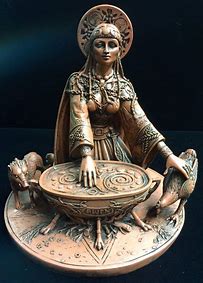
Celtic Goddess Medb – Legendary Queen of Ireland

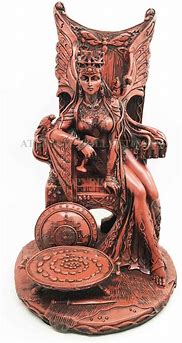
The story of Queen Medb is one of Ireland’s greatest legends. This goddess in the flesh was fierce, seductive, beautiful, and most importantly powerful. No man could be king of Ireland’s ancient sites of Tara or Cruachan without first becoming her husband.

Table of Contents

Celtic God – Belenos The Shining God

A Celtic Deity, also known as Belen, Belenus, Belinus, Bellinus, Bélénos, Belennos, Belenos, Bel, Bilé: The Shining God

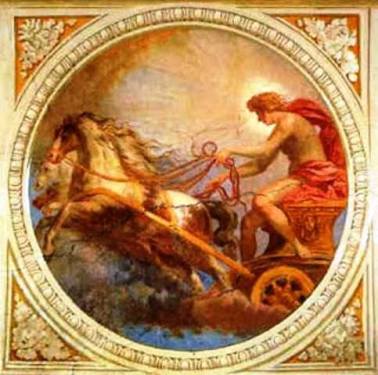
Belenos is unusual in Celtic belief, as this deity (under the various version of his name) is known throughout the Celtic world. He is also remembered in place names and personal names throughout the Celtic lands. His symbols are the horse an wheel and his name means ‘The Shining God’. He is one of the Celtic high gods, and is probably a solar deity.

Possibly one of the most widespread of all the Celtic deities he is known from Italy (Cis-Alpine Gaul), Gaul, Britain and Ireland.

In Britain the personal name Bellinus occurs at Binchester (Vinovia), County Durham a name derived from the god-form Belenus, the native Brythonic form of which would be Belenus. Traces of this name having been found at Maryport. To the continental Brython the Cult of Belenus possessed a particular status in that it is mentioned in a number of Classical Literary sources. Ausonius was a poet from Bordeaux, writing in the later 4th century AD and alludes to sanctuaries to Belenus in Aquitania. Tertullian talks of the cult of Belenus in the Norican Alps (Apologeticus 24,7); and Herodian mentions Belenus’ worship at Aquileia in North Italy (History of the Empire after Marcus,8,3.6). In Ireland Beli is known as Bilé and is referred to as ‘The Father of Gods and Men’.

The Celtic fire festival on the first of May, known as Beltane, (the fires of Bel) is probably derived from the name of this deity. Beltane fires were lit to encourage the sun’s warmth. These fires also had restorative properties and cattle were herded between them before being loosed on the new spring pastures. From this it is likely that Beli was a fire deity, a patron of flame and the sun’s restorative powers (which explains his classical association with Apollo). Originally he may have been a pastoral deity and in Cymric myth is associated with cattle, sheep and cropt. Though this may be because Beltane was the time that herds were moved to the high pastures.

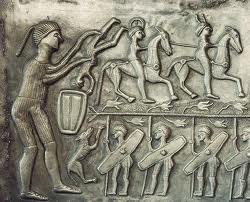
His symbols were the horse (as shown, for example, by the clay horse figurine offerings at Belenos’ Sainte-Sabine shrine in Burgundy), and also the Wheel (as illustrated on the famous Gundestrup Cauldron).

The Irish Bilé is a god of death and husband to Dana. In the tale of Lludd and Llefelys, the folk memory of Beli represents him as Belen o Lŷn, son of Manogan and father to Lludd and Llefelys. Both Beli and Lludd lend their names to sites in London; Billingsgate and Ludgate, respecitvely. Beli’s name is also found in the name of one of the most notable Brythonic chieftains before the Roman invasion, Cunobelinos (or, in Brythonic, Cunobel), the hound of Bel.

In Gaulish mythology Belenus’ consort was the goddess Belisama.

It is unlikely, as some have suggested, that the Cymric deity Beli Mawr is etymologically related to Belenos, as though the migration of Brython to old and middle Cymric this is far more likely to yield the name Belen or Belyn. Indeed, this is the name which we see in the Cymric form (Cynfelen) of the Catuvellauni leader during the Claudian invasion of Britain, Cunobelinos (the hound of Belinos). Inded, the tribe name Catuvellauni itself means ‘The Host of Belinos’ and their most well-known leader Cassivellaunos’ name means ‘The Devotee of Belenos’. There is also the figure of ‘Belen o Leyn’ who figures in triad 62 0f the Trioedd Ynys Prydain and is preserved today in the place-name Tyddyn Belyn near Tudweilog on the Llŷn Peninsula ELlSG. Rather, Beli Mawr is more likely derived from the name of the Gaulish deity Bolgios.

Belenos’ name is derived from the reconstructed proto-Celtic elements *belo- (bright/shining), the deicific particle -n- and the masculine ending -os. Thus Belenos is ‘The Shining God’.

Goddesses and Gods – Greek Titans – Rhea, Goddess of Fertility and Motherhood and Hyperion, God of Light and Sunlight

Greek Titans – Rhea, goddess of fertility and motherhood

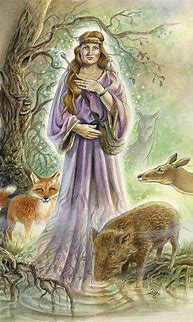
Rhea (Rheia, Opis, Ops) was a Titan goddess of fertility and motherhood. She was very gentle and comfortable. Her name actually means “ease” as “at ease” and therefore this was probably the reason she was interpreted and worshiped as a goddess of comfort and ease. According to some authors, she is also described as the supreme mother goddess, just like her mother Gaea was and what later her daughter Hera became, but in Orphic hymn Rhea was even described as the supreme goddess, mother of all gods and men and it is said that even Uranus and Gaea derived from her. And as if there were not enough confusion yet, according to various authors, Rhea is also described as Cybelean goddess whose home was in Phyrgia which means that they are equating her with Cybelle, Anatolian earth goddess, but to return back to mainstream belief, backed by most authors, Rhea was a daughter of Uranus and Gaea and, because she was married to her brother Cronus, she was also a queen of the Cosmos. Together they represented “eternal flow” as they gave birth to a new generation of gods who then took control of the world, just like they and other titans had done it in the past. Therefore, she was also identified as a goddess of generations.

Birth of Olympians and plot against Cronus

Rhea was very much like her mother and loved her children unconditionally but unfortunately Cronus was like his father, jealous of his children’s powers and in fear of being overthrown. She became mad when Cronus forced her to give him their children to swallow upon birth. She started plotting against him and by the time he had swallowed HestiaHeraPoseidonHades, and Demeter, Rhea decided that enough is enough. She gave birth to her last childZeusin secrecy and gave Cronus a rock, wrapped in a blanket, to swallow instead. Cronus was pleased, not knowing that Zeus was still out there, and thought he was safe from the prophecy. In Hesiod’s Theogony, it is said that Rhea brought infant Zeus to Crete and gave it to Gaea to look after him. Gaea then guided him to the secret cave beneath Mount Aegeum or Mount Dicte. Zeus was raised there and, when grown up, came to Mount Othrys as a cupbearer and mixed a potion into Cronus’ drink which made him vomit all of his children. Later, in a ten-year war, Zeus and Olympians defeated Cronus and the Titans. They became the next rulers, just like Cronus and his brothers had done in the past, when overthrowing Uranus. In the end, Rhea was the main reason that history repeated itself.

According to Diodorus Siculus, it is said that Poseidon too had escaped the cannibalism of his father and that it was Rhea who had given him to the Telchines to look after him. However, according Pausanias, Rhea had hidden Poseidon among a flock of lambs when he was next to be swallowed.

The desire of motherhood

Like mentioned in Ovid’s Fasti, Rhea was mad and angry because she was often pregnant but never truly a mother of her children due to cannibalism of Cronus who ate most of them while Zeus and, variously, Poseidon on the other hand had to be hidden away from Cronus. She was mentioned to be often in company of lions which she nursed and took care of. The goddess is also said to have helped nurturing the young Dionysus when he was brought to her by Hermes, on Zeus’ orders who had to hide him from jealous and angry Hera. She was also, according to Homeric hymn to Apollo, involved in the birth of Apollo on the island of Delos. Upon the god’s birth, she, along her sisters Tethys and Theia, washed him with pure clean water and placed him in a white garment and took care of him until Leto recovered.

Other myths

Rhea was also involved in the return of Demeter to Mount Olympus. Demeter, in grief and sorrow, withdrew herself from the rest of the gods when Persephone was abducted. When the two were reunited, Demeter, still in anger of Persephone being bound to the underworld, declined to return. However, Rhea came to Demeter and convinced her that her place is among her brothers and sisters on Mount Olympus. In Nonnus’ Dionysiaca, Rhea is also said to had given an Amethyst to Dionysus that protected him from the tyranny of madness when drinking wine.

Greek Titan – Hyperion, god of light and sunlight

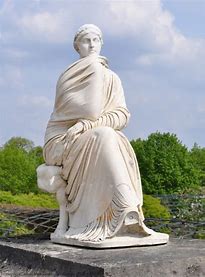
Hyperion was a Titan god of light or sunlight and was associated with watching and observation from above. He was also known as a Pillar of east. Together with his other three brothers, CriusCoeus and Iapetus, they presided as the Pillars of holding Heaven and Earth apart. He was one of six sons of Uranus and Gaea and is mentioned by Apollodorus as one of the five brothers, all but Oceanus, who participated in rebellion against Uranus and later attacked him. When they overcame him, the four brothers probably held him down while Cronus castrated him. While most of the authors are identifying Hyperion as a unique character, Homer is equating Helios and Hyperion as one and the same character and it can be seen in both of his epics, the Iliad and the Odyssey.

Establishing a rhythm of days and months

Due to his diligent observation, he was first to understand the movements of the sun and the moon, as well as the other stars and seasons. He was believed to have ordered the cycles of the sun, the moon and the dawn. During his time, he married her sister Theia with whom he had three children who presided over these cycles. Helios presided over sun, Selene over the moon and Eos presided over the dawn.

If you want to learn a bit more about Selene, check the page of Theia or Sky deities.

Titanomachy

Although there are notes of Hyperion participating in Titanomachy, there is no reference of his role in the war. It is only known that he sided with his brothers and fellow Titans against younger Olympians. And that he was in the end, after losing the war, imprisoned in Tartarus with his brothers and relatives. However, according to Aeschylus’ lost play , he was later released byZeus from Tartarus with the rest of the titans.


Goddesses and Gods – Who are the main Celtic Gods and Goddesses?

(The lists below name the more well known Irish Celtic gods and goddesses. There are lessor know ones as well.)

Who are the Celtic Gods and Celtic Goddesses?

Celtic pagan gods and goddesses were thought to have special influential powers over aspects of daily life and the natural world.

The ancient Celts were polytheistic and are thought to have worshiped over 400 Celtic gods and goddesses, although it is difficult to pinpoint an exact figure.

Some of these gods and goddesses of Celtic mythology were revered across the Celtic world, whereas others seemed to have been less well known and worshiped only in certain regions or specific locations.

Table of Contents

1 Who are the Celtic Gods and Celtic Goddesses?

2 Celtic Deities vs Roman Deities

3 Who are the main Celtic Gods and Goddesses?

4 Celtic Gods and Goddesses in Irish Mythology

5 Irish Gods

6 Irish Goddesses

7 Celtic Deity Types

The names of Celtic gods and the names of Celtic goddesses that occur often in Celtic mythology are listed below.

List of Celtic Gods

Lugh – Celtic God of Justice and Mischief

The Dagda – Celtic God of Agriculture, Fertility and Seasons and King of the Gods

Aengus – Celtic God of Love, Youth, Summer and poetry

Manannan – Celtic God of the Sea

Cú Chullain – Demigod and Warrior Hero

Belenus – Celtic God of Fire

Donn – Celtic God of Death

Neit – Celtic God of War

List of Celtic Goddesses

Danu – Celtic Mother Goddess

The Morrigan – Celtic Goddess of War

Áine – Celtic Goddess of Love, Wealth and Sovereignty

Brigid – Celtic Goddess of Healing, Poetry and Blacksmithing

Flidas – Celtic Goddess of Cattle and Fertility

Bébinn – Celtic Goddess of Birth

Airmed – Celtic Goddess of Herbalism

Celtic Gods and Goddesses in Irish Mythology


Goddesses and Gods – Greek Titans – Phoebe, Goddess of Prophetic Radiance and Crius, God of Heavenly Constellations

Greek Titans – Phoebe, goddess of prophetic radiance

Phoebe (Phoibe) was a Titan goddess of prophetic radiance, often associated with Selene (goddess of the moon). She, however, had never been referred as the goddess of the moon. The misinterpretation probably comes because her granddaughter Artemis was also called Phoebe, after her, just like her grandson Apollo was called Phoebus. And latin authors were all referring Phoebe as the moon goddess or moon itself, but they clearly had Artemis in mind doing so. That is why the Titaness is often misidentified as the moon goddess. To the Greeks it was pretty simple and obvious that Selene was the correct goddess. Romans on the other hand associated Artemis, Hera and Selene to the moon amongst others, but there was no mentioning of Titaness Phoebe. However, some researchers believe that Artemis (Diana, Phoebe) became known as the goddess of the moon because of her grandmother whom she got the name after. Anyhow, Phoebe was rather associated with being prophetic, like her sister Themis and her mother Gaea. She was also one of the twelve titans who were the descendants of Uranus and Gaea. She was, like all of her sisters, never involved in the war between Titans and Olympian gods, and was spared from being imprisoned in Tartarus. Instead, she took her place at the oracle of Delphi.

Prophet of the Delphic Oracle

She became the third prophet at the Oracle of Delphi, where she was believed to have heard her mother’s voices. Her predecessors were Gaea and Themis. Gaea honorably gave away her place to her daughter Themis who then gave it to her sister Phoebe. However, according to Aeschylus‘s myth, Phoebe had felt like having extreme burden to carry and gave away her place to her grandson Apollo as a present for his birthday, probably to motivate him. Apollo then presided over the prophetic power of light and heavens.

Asteria and Leto

Phoebe consorted with her brother Coeus, with whom she had two daughters. One of the daughters, called Leto, plays an important role in the later ages, in the time of Olympians. In those times, Phoebe had also developed a lust for mortal men, but her affairs never came to any fruition. According to Hyginus, who also mentions Asteria and Leto, she was also the mother of Perses and Pallas by Coeus.


Asteria – Titan goddess of oracles and prophecies. With her cousin Perses, she gave birth to goddess Hecate. She was also very beautiful like her sister and therefore pursued by Zeus. However, in order to escape from his embraces, she transformed herself into an island Asteria, later known as Delos.

Leto – Titan goddess of modesty and motherhood. She had very beautiful eyes, with which she charmed Zeus and he soon got her pregnant. Because of it, she was pursued relentlessly by jealous Zeus’s wife Hera who drove her from island to island, preventing her to rest and give birth. In the end Leto was finally provided with refuge by her sister Asteria who welcomed her to literally reside on her.

Greek Titans – Crius, god of heavenly constellations

Crius (Krios, the Ram, Aries) was a Titan god of heavenly constellations and was also known as a Pillar of the south pole. Crius, which means “Ram”, was often referred as a starting season of the Greek year, because his constellation was called Aries which nowadays means the start of spring. Together with his other three brothers CoeusHyperion and Iapetus, they presided as the Pillars of holding Heaven and Earth apart. He was one of six sons of Uranus and Gaea and is mentioned by Apollodorus as one of the five brothers, all but Oceanus, who participated in rebellion against Uranus and later attacked him. When they overcame him, the four brothers probably held him down, while Cronus castrated him. According to Pausanias, Crius was the father of Python, a dragon slain by Apollo, and was also closely related with the island of Euboea. The author even names two rivers after the titan.

Titanomachy

In a time of war, he was mentioned siding with the Titans against the younger Olympian gods. After the war, where the titans had lost, Crius was along his brothers and many relatives imprisoned in Tartarus beneath the underworld. Although there is no clear statement made, he was supposed to be condemned to eternal punishment. However, according to Aeschylus’ lost play , he was later released byZeus from Tartarus with the rest of the titans.

Father of the Astraeus, Pallas, and Perses

In his time, he consorted with his half-sister Eurybia, a daughter of Gaea and Pontus. Together they had three children:

Astraeus – Titan god of the stars and the art of astrology. He was also the god of the dusk and father of the Four Winds and the Stars of the Heaven by Eos(goddess of dawn). They also had children who are often associated with the time of twilight.

Pallas – Titan god of warcraft who was defeated during Titanomachy by younger goddess Athena. He was a father of RivalryVictoryStrength and Power.

Perses – Titan god of destruction. He was married with his cousin Asteria with whom he fathered Hecate.

Goddesses – Don (Welsh – Celtic)

Don – Welsh Celtic Goddess of the Heavens, Air, Sea, and the Moon

Dôn was a Welsh mother goddess, the counterpart of the Irish Danu. She is the mother of Arianrhod, Gwydion, Gilfaethwy, Gofannon, Eufydd, Elestron and Amaethon. Llys Dôn (“The Court of Dôn”) is the traditional Welsh name for the constellation Cassiopeia.

She is the power of family and trust, and the powers of fertility that nourish the soil as well as the water of the earth. Don and her children represent all that is light, and battle darkness and evil. The Donwy River is named after her. In some refrences are so ancient she is sometimes known as a goddess and a god. She is all aspects of the triple goddess, maiden, mother and crone, She was also a ruler of the otherworld where the entrances were always in the burial mounds of the sidhe.

–~Attributes and Correspondences~–

Area of Influence:
Heavens, Air, Seas, Moon

Pantheon:Welsh

Abode:Animals:Snakes, Fish, Mares, Seagull, Goats

Colours:Green, Silver, Blue, Black

Consort:Beli

Crystal:Onyx, Jet, Amber,H ag stones, Lead, Gold

Day:Direction:North, East, West

Element:Earth, Air, Water

Incense:Holly, Juniper, Yew, Myrrh, Cypress

Musical Instrument:Offerings:Planet:Cassiopeia

Plant/Tree:Comfrey, Elm, Ivy, Juniper, Apple trees

Rune:Symbols:Cauldron

Tarot Card:The Empress

Time:Yule, Imbolc

Gods – Gwydion (Welsh – Celtic)

Gwydion (Celtic Welsh)

Gwydion fab Dôn is a magician, hero and trickster of Welsh mythology, appearing most prominently in the Fourth Branch of the Mabinogi, which focuses largely on his relationship with his young nephew, Lleu Llaw Gyffes. He also appears prominently in the Welsh Triads, the Book of Taliesin and the Stanzas of the Graves.

The name Gwydion (which should more properly be spelled Gwyddien in Modern Welsh, as can be adduced from its Old Welsh form Guidgen; cognate with Old Irish Fidgen) may be interpreted as “Born of Trees”.[1]

War with the South
Gilfaethwy, nephew to the Venedotian king, Math fab Mathonwy, falls in love with his uncle’s virgin foot-holder, Goewin. His brother Gwydion conspires to start a war between the north and the south, so as give the brothers the opportunity to rape Goewin while Math is distracted. To this end, Gwydion employs his magic powers to steal a number of otherworldy pigs from the Demetian king, Pryderi, who retaliates by marching on Gwynedd. Meanwhile, Gwydion and Gilfaethwy attack and rape Goewin.

Pryderi and his men march north and fight a battle between Maenor Bennardd and Maenor Coed Alun, but are forced to retreat. He is pursued to Nant Call, where more of his men are slaughtered, and then to Dol Benmaen, where he suaffers a third defeat. To avoid further bloodshed, it is agreed that the outcome of the battle should be decided by single combat between Gwydion and Pryderi. The two contenders meet at a place called Y Velen Rhyd in Ardudwy, and “because of strength and valour and magic and enchantment”, Gwydion triumphs and Pryderi is killed. The men of Dyfed retreat back to their own land, lamenting over the death of their lord.

Birth of Lleu
When Math hears of the assault on Goewin, he turns his nephews into a series of mated pairs of animals: Gwydion becomes a stag for a year, then a sow and finally a wolf. Gilfaethwy becomes a hind deer, a boar and a she-wolf. Each year they produce an offspring which is sent to Math: Hyddwn, Hychddwn and Bleiddwn. After three years, Math releases his nephews from their punishment and begins the search for a new foot-holder. Gwydion suggests his sister Arianrhod, who is magically tested for virginity by Math. During the test, she gives birth to a “sturdy boy with thick yellow hair” whom Math names Dylan and who takes on the nature of the seas until his death at his uncle Gofannon’s hands.

Ashamed, Arianrhod runs to the door, but on her way out something small drops from her, which Gwydion wraps up and places in a chest at the foot of his bed. Some time later, he hears screams from within the chest, and opens it to discover a baby boy. Some scholars have suggested that in an earlier form of the Fourth Branch, Gwydion was the father of Arianrhod’s sons.[2]

The tynghedau of Arianrhod
Some years later, Gwydion accompanies the boy to Caer Arianrhod, and presents him to his mother. The furious Arianrhod, shamed by this reminder of her loss of virginity, places a tynged on the boy: that only she could give him a name. Gwydion however tricks his sister by disguising himself and the boy as cobblers and luring Arianrhod into going to them in person in order to have some shoes made for her. The boy throws a stone and strikes a wren “between the tendon and the bone of its leg”, causing Arianrhod to make the remark “it is with a skillful hand that the fair-haired one has hit it “. At that Gwydion reveals himself, saying Lleu Llaw Gyffes; “the fair-haired one with the skillful hand,” is his name now”. Furious at this trickery, Arianrhod places another tynged on Lleu: he shall receive arms from no one but Arianrhod herself. Gwydion tricks his sister once again, and she unwittingly arms Lleu herself, leading to her placing a third tynged on him: that he shall never have a human wife.

So as to counteract Arianrhod’s curse, Math and Gwydion:
“ [take] the flowers of the oak, and the flowers of the broom, and the flowers of the meadowsweet, and from those they conjured up the fairest and most beautiful maiden anyone had ever seen. And they baptized her in the way that they did at that time, and named her Blodeuwedd. ”
Lleu’s death and resurrection
Blodeuwedd has an affair with Gronw Pebr, the lord of Penllyn, and the two conspire to murder Lleu. Blodeuwedd tricks Lleu into revealing how he may be killed, since he can not be killed during the day or night, nor indoors or outdoors, neither riding nor walking, not clothed and not naked, nor by any weapon lawfully made. He reveals to her that he can only be killed at dusk, wrapped in a net with one foot on a cauldron and one on a goat and with a spear forged for a year during the hours when everyone is at mass. With this information she arranges his death.

Struck by the spear thrown by Gronw’s hand, Lleu transforms into an eagle and flies away. Gwydion tracks him down and finds him perched high on an oak tree. Through the singing of an englyn (known as englyn Gwydion) he lures him down from the oak tree and switches him back to his human form. Gwydion and Math nurse Lleu back to health before reclaiming his lands from Gronw and Blodeuwedd. In the face-off between Lleu and Gronw, Gronw asks if he may place a large stone between himself and Lleu’s spear. Lleu allows him to do so, then throws his spear which pierces both the stone and Gronw, killing him. Gwydion corners Blodeuwedd and turns her into an owl, the creature hated by all other birds. The tale ends with Lleu ascending to the throne of Gwynedd.

The Battle of the Trees
A large tradition seems to have once surrounded the Battle of the Trees, a mythological conflict fought between the sons of Dôn and the forces of Annwn, the Welsh Otherworld. Amaethon, Gwydion’s brother, steals a white roebuck and a whelp from Arawn, king of the otherworld, leading to a great battle.

Gwydion fights alongside his brother and, assisted by Lleu, enchants the “elementary trees and sedges” to rise up as warriors against Arawn’s forces. The alder leads the attack, while the aspen falls in battle, and heaven and earth tremble before the oak, a “valiant door keeper against the enemy”. The bluebells combine and cause a “consternation” but the hero is the holly, tinted with green.

A warrior fighting alongside Arawn cannot be vanquished unless his enemies can guess his name. Gwydion guesses the warrior’s name, identifying him from the sprigs of alder on his shield, and sings two englyns:

“Sure-hoofed is my steed impelled by the spur;
The high sprigs of alder are on thy shield;
Bran art thou called, of the glittering branches.”

Sure-hoofed is my steed in the day of battle:
The high sprigs of alder are on thy hand:
Bran by the branch thou bearest
Has Amathaon the good prevailed.”

Other traditions
Caer Gwydion, the castle of Gwydion, was the traditional Welsh name for the Milky Way.

In the 10th century, Old Welsh “Harleian” genealogies (Harleian MS 3859), mention is made of Lou Hen (“Lou the old”) map Guidgen, who most scholars identify with Lleu and Gwydion (who is implied to be Lleu’s father in the Mabinogi of Math, though this relationship isn’t explicitly stated). In the genealogy they are made direct descendants Caratauc son of Cinbelin son of Teuhant (recte Tehuant), who are to be identified with the historical Catuuellaunian leaders Caratacus, Cunobelinus and Tasciovanus.

A number of references to Gwydion can be found in early Welsh poetry. The poem Prif Gyuarch Taliessin asks “Lleu and Gwydion / Will they perform magics?”, while in the same corpus, the poem Kadeir Cerridwen relates many familiar traditions concerning Gwydion, including his creating of a woman out of flowers and his bringing of the pigs from the south. This poem also refers to a lost tradition concerning a battle between Gwydion and an unknown enemy at the Nant Ffrangon. Another Taliesin poem, Echrys Ynys refers to Gwynedd as the “Land of Gwydion” while in the Ystoria Taliesin, the legendary bard claims to have been present at Gwydion’s birth “before the court of Don”.

The Welsh Triads name Gwydion as one of the “Three Golden Shoemakers of the Island of Britain” alongside Manawydan fab Llyr and Caswallawn fab Beli, and records that Math taught him one of the “Three Great Enchantments”. The Stanzas of the Graves record that he was buried at Dinas Dinlle, the city of Lleu.

A reference to Gwydion is also made in the Dialogue of Taliesin and Ugnach, a dialogue-poem found in the Black Book of Carmarthen. Within the narrative, the character of Taliesin states:

“When I return from Caer Seon
From contending with Jews
I will come to the city of Lleu and Gwydion.”

From: Wiki

The warrior god. Gwydyon was the god of magic, poetry and music.

Gwydyon was the son of Don and Beli. Gwydyon was the son of Amathon, Aranrhod, Gilvaethwy, Govannon, and Nudd. Gwydyon adopted the children of his sister Aranrhod: Dylan and Lleu.

Gwydyon served as the chief adviser of his uncle Math, king of Gwynedd, in northern Wales. He killed Pryderi in single combat over some pigs.

Gwydyon helped Lleu overcome the curses or taboos set by Lleu’s mother (Aranrhod), and rescued his nephew when he was transformed into an eagle.

From: Gwydyon

Gwydion, one of the nephews of Math ap Mathonwy, and brother of Arianrhod. He contrived Gilfaethwy’s rape of the maiden Goewin, Math’s foot holder. He did this by starting a war with Pryderi of Dyfed, stealing his pigs, and thus taking Math away on campaign. But he and Gilfaethwy doubled back and Gwydion forced the other women to leave Goewin with Gilfaethwy, who raped her. When she confessed this to Math, he levied as punishment on his nephews that they spent three years as animals, Gwydion as a stag, a wild sow, and a wolf, breeding each year with his brother Gilfaethwy who was hind, boar, and she-wolf. They produced three offspring, whom Math made human and raised at his court. Afterward, they were restored to the court. Gwydion raised Arianrhod’s virgin-born son Llew Llaw Gyffes, winning for him his name and arms by tricking his mother, and created a woman out of flowers to marry him. After that woman, Blodeuwedd, betrayed Llew to his death, Gwydion restored him to life and turned her into an owl.

From: here

Gwydion fab Dôn is a Cymric (Welsh) god known from the Mabinogi of Math mab Mathonwy and the Welsh Triads. He ranks amongst the foremost and most important of the Cymric gods. He is the arch mage, god of magic and wisdom.

(…)

Gwydion is the elder members of the Plant Dô and also the senior member of the primary triad of deities, Gwydion, Gofannon (great smith) and Amaethon (great husbander) that mark their mother Dôn as a ‘Great Mother’ archetype.

Gwydion is primarily known from the fourth branch of the Mabinogi, the tale of Math mab Mathonwy. Gwydion starts out as the foil of this tale, before emerging as its hero. He starts a war with Pryderi of Dyfed and steals the swine of Annwfn by exchanging them for gifts of steeds and greyhounds he has engendered from mushrooms. All of which is done so that his uncle Math mab Mathonwy goes to war, allowing Gwydion to aid his brother Gilfaethwy.html in raping Math’s foot-holder, Goewin. During the ensuing war Gwydion kills Pryderi and secures the magical swine of Annwfn for Math. As punishment for the rape of Goewin (whom Math marries) Gwydion and Gilfaethwy.html are turned successively into male and female deer, swine and wolves to spend a year in each form and to bear sons one upon the other. This punishment concluded and the rift between Gwydion and Math is healed.

(…)

Gwydion is the archetypal great mage; able to create animals from mushrooms, leather and boats from seaweed, a woman from flowers and able to create the illusion of an invading fleet almost at will. He is great in knowledge (which is also the literal meaning of his name). Indeed, Gwydion could be considered as the deified personification of a druid. Indeed, the Cymric form of druid, Derwydd contains the same same component Gwydd (meaning knowledge) that is also found in Gwydion’s name.

For the full article: Celtnet

Also see:
Mary Jones Celtic Encyclopedia entry

Goddesses – Mnemosyne, Greek Titan Goddess of Memory and Remembrance

Mnemosyne, Greek Titan Goddess from greek-gods.org

Mnemosyne (Mnemosine, Juno Moneta, Memory) was a Titan goddess of memory and remembrance. She was believed to be the inventress of speech and writings. In Hesiod’s Theogony, her daughters, the Muses, are described as the spirits who possessed kings and poets, whom the gods favoured and gave them special powers of authoritative speech and wisdom. Mnemosyne was one of the six daughters of primeval deities Uranus and Gaea in the first generation of Titans. Mnemosyne was also known to be a mother of Muses and represented the memorisation of stories and myths preserved in history before the discovery of writing.

The mother of Muses

Mnemosyne dwelled over the hills of Eleuther (in Pieria, near Mount Olympus) where Zeus came to lie with her for nine nights, away from other immortal gods. Together in those nine nights they gave birth to nine Muses:

Calliope – muse of epic poetry was believed to have possessed Homer and gave him inspiration for the Odyssey and the Iliad. She is often depicted as carrying a book or a writing tablet. She was also the mother of two sons by Apollo, called Linus and Orpheus. (Side Note Calliope has been helping me write since before I had my first website. Not a witchy one but for dog obedience training – really I was training humans to be kind to their companion when correcting them 😄)

Clio – muse of history. She is usually depicted of holding an open scroll or is seated beside a chest of books.

Erato – muse of love and erotic poetry. Most of the time she is depicted playing a kithara or a lyre, but in some cases she is shown with a wreath of myrtle and roses.

Euterpe – muse of music. She is often depicted sitting on a chair and playing her double flute.

Melpomene – muse of tragedy. However, she was originally a muse of singing and dancing which came from her name or more precisely from greek verb melpô (“to celebrate with dance and song.”). She is usually depicted wearing cothurnus boots(boots worn by tragic actors) and holding a tragic mask in her hand.

Polyhymnia – muse of sacred hymns. She is depicted as serious or meditative, often standing, wearing long cloak and supporting her arm with a part of the cloak.

Terpsichore – muse of dancing. Usually, she is depicted in a sitting position and playing a lyre with her special plectrum. She is also mentioned to be the mother of Sirens.

Thalia – muse of comedy. Most of the time, she is depicted holding a comic mask in her hand and wearing a cloak and a crown made of ivy.

Urania  muse of astronomy. She is depicted with a globe in her hand. Urania was believed to be able of fortelling the future by arrangement of the stars and is often associated with Universal Love and the Holy Spirit.

Gods – Coeus, Greek Titan God of Intelligence and Farsight

Coeus, Greek Titan God from greek-gods.org

Coeus (Koios, Polos) was a Titan god of intelligence and farsight, meaning that, due to his inquisitive mind and desire to learn, he was with gained knowledge and understanding able to see beyond the obvious. He was also identified as a god of wisdom and heavenly oracles. Coeus was also known as a Pillar of the north pole from which constellations revolved and, therefore, controlled the axis between Heaven and Earth. Together with his other three brothers CriusHyperion and Iapetus, they presided as the Pillars of holding Heaven and Earth apart. He was one of six sons of Uranus and Gaea and is mentioned by Apollodorus as one of the five brothers, all but Oceanus, who participated in rebellion against Uranus and later attacked him. When they overcame him, the four brothers probably held him down, while Cronus castrated him. His latin name was Polos or Polus and according to Hyginus the name Coeus was used for a giant instead of titan. They are clearly two different characters mentioned by not only Hyginus, but also by Virgil, another latin author.

Titanomachy

In the time of war Coeus fought bravely with his brothers against Olympians but was after defeat imprisoned in Tartarus like the rest of his brothers. When in Tartarus, according to Valerius Flaccus, Coeus had escaped free of his adamantine bonds and in his madness wanted to escape from the underworld and reach heavens, seeking revenge. But was in the end restrained by Cerberus, the three-headed beast, which guarded gates of Hades and prevented anyone from leaving. However, according to Aeschylus’ lost play , he was later released byZeus from Tartarus with the rest of the titans. Also, it is said by some researchers that Coeus then fled back to his north pole and became known as the north star.

Prophetic family

As mentioned above, Coeus was also a god of heavenly oracles. He was believed to be able to hear prophetic voices of his father Uranus(heaven), just like Phoebe could hear prophetic voices of her mother Gaea(earth). Together they had two daughters who inherited powers of their parents. Leto was a goddess of modesty and motherhood and was associated with prophetic power of light and heaven, while Asteria was a goddess of oracles and prophecies. She was associated with prophetic power of night and the dead. Leto represented the light time of a day, while, in contrast, Asteria represented with the night time of a day. These contrary qualities were also passed to their descendants. Apollo inherited the power of the light from his mother Leto and Hecate inherited the power of the night from Asteria.

Still there is no source with clear statement of Coeus being prophetic except having a prophetic family. Being able to predict the future in his case might have come from his intelligence and divine knowledge that he was so eager to gain from his predecessors. Perhaps that is why he was also identified as the god of wisdom. Having knowledge is one thing, but being able to truly understand it and use it for predicting future natural occurrences and events is being wise.


Goddesses – Gaea Greek Earth or Land

Greek Goddess Gaea ( Gaia ) from greekgodsandgoddesses.net

Known as both Gaia and Gaea, the Goddess Gaia is a figure from Greek mythology. Her name essentially means earth or land and shows that she was the human version of the earth. Some refer to her as the ancestral mother and claim that she gave birth to all of the elements of the world. Gaia birthed URANUS, also known as Ouranos and THE TITANS as well as other major figures such as the Gigantes and CYCLOPES. Terra is the Roman version of the goddess.

In the creation myth, CHAOS came before everything else. He was made of Void, Mass and Darkness in confusion; and then earth in the form of Gaea came into existence. From “Mother Earth” sprang the starry heavens, in the shape of the SKY GOD Uranus, and from Gaea also came the mountains, plains, seas and rivers that make up the Earth we know today.

Meaning of Her Name – Gaia/Gaea

Though some Greek gods and goddesses have names that scholars later established, Gaia’s name dates back to before Greek civilization. Her name in other languages includes Doric and Attic, but all of the names mean earth. Mycenean Greeks called her Ma-Ka or Ma-Go, both of which mean Mother Gaia.

GAIA FACTS

Name(s): Gaia/ Gaea
Rules over: The Earth
Title: Goddess Of The Earth Mother Earth
Gender: Female (primoridal elemental)
Symbols: Fruit, Grain
Sacred animals:
Items: The Earth
Parents:
Consort: Uranus, Pontus, Aether and Tartarus
Other significant others: Retinue: – Carpi, Horae, Panes
Children: Uranus, Pontus, Nereus, Thaumus, Phorcys, Ceto, Eurybia, Aergia, Typhon, Python, and Antaeus the Ourea, the Hecatonchires, the Cyclopes, the Titans, the Gigantes
Roman name: Terra

The Titans and Earth

Gaia was the first of the immortals. She arose during the chaos period. Greeks refer to this period as the time before gods and goddesses. Christians use the same term to describe the world before God separated heaven and earth. She would become the eternal seat on Mount Olympus where all Olympians sat. Many refer to those men and women as the 12 Olympians. During the early years, many called her Mother Earth.

As soon as she arose, she took possession of Mount Olympus and began overseeing the world. TARTARUS was the next immortal and known for helping pave the earth, followed by EROS who was the god of love. After spending many years as the only creature, she became so lonely that she created Uranus. To make him happy, she gave him control over the sky and heaven. She believed that he would help and protect her. Gaia then created both PONTUS to oversee the ocean and OUREA to take over the mountains. These two beings were unique in that she created them alone and without the assistance of a father/male.

The creation of the Titans was equally as interesting. One night, the goddess and her son lay together. This resulted in the birth of CRONUS, who was the original Titan. While her other children loved and respected their mother, Cronus was different. He thought his mother was lusty and sinful. Knowing the truth behind his birth, he was often awful to her and acted out.

Other Children

As one of the more prolific goddesses in Greek mythology, Gaia had multiple children. Their births helped her become known as Mother Goddess. She and Uranus laid together a second time and sired Cyclopes. They also had Brontes and STEROPES, who became known as Thunder and Lighting along with Arges known as Bright. HECATOCHIRES, Gyges, Cottus and Briareos were other children the mother and son had together. Legend says that all three had 50 heads and 100 arms. Worried about their creation, Uranus tucked them away and hid his children from the world.

Gaia was unhappy but didn’t know to take control of the situation until she came up with a new plan. She used a piece of gray flint to create a sickle and convinced her other children to help with her plan. Uranus returned to his mother with amorous plans. He instead found Cronus who grabbed the sickle and cut off his father’s testicles. Even as his blood ran, Gaia used him to father more children. Sh bore both the MELIAE who were tree nymphs and the Giants as well as Erinyes. Many know this group as the furies. As his blood rushed into the sea, Aphrodite sprung forward.

After laying with her son Pontus, the goddess of the earth had several more children. These children include EURYBIANEREUS and CETO as well as Thaumas and PHORCYS. All of her children with this son are sea deities. This led to her connection to both the water and earth. She also had Triptolemos wit her son OCEANUS.
Cronus later became obsessed with a warning He received from both Uranus and Gaia.

They told him that he would have success in life but that one of his children would gain control over him. When he lay with Rhea who was his sister, he was so worried about what might happen that he swallowed their children immediately after she birthed them. RHEA wanted to have children. After becoming pregnant again, she went to her parents for help. They helped her protect the child and created a stone that they wrapped in cloth. Cronus thought this was his child, which gave Rhea time to escape with their actual child. This baby was ZEUS.

Years later, Zeus went to war with the Titans. Though his mother was a Titan and Gaia was the mother of the Titans, she agreed to help him. Zeus won in his battle and brought an end to the group who wanted to defeat him. Though she helped him, the earth mother and Tartarus had a son Typhon. Not only was TYPHON her last so, but he would later go up against Zeus.

Night and Day

Hyginus claimed that Gaia had a child with Sea and Heaven, which resulted in the births of AETHER and HEMERA. These two children later became known as night and Day. Another early biography of the goddess claims that she and Tartarus were the parents of ECHIDNA. Echidna was a monster who was part snake and part human. She spent much of her life living in a hidden cave and birthed some of the more popular monsters in
Greek mythology.

Gaia often appeared in different ways in early artwork. One of the oldest vase paintings from Athens depicts her as an older woman with half of her body still in the ground and a matronly figure. Other vases show her in a similar position with Erichthonius in her hands. This scene shows her giving the future king of the city to ATHENA who raised him. Other paintings show her as a more beautiful and younger woman relaxing on the ground with small gods nearby.

Gaea – Epithets and Cults

The most common epithet associated with Gaia is Anesidora, which is also one of the oldest names given to her. It means giver of gifts and shows that she gave to those in need. Others referred to her as Pandoros, Eurusternos and Calligenaia. In most stories, people followed both her and DEMETER and worshiped them equally. Some legends claim that her followers sacrificed black animals in honor of her. They would bring a white animal for the Sun and a black animal for the Earth.

Gaia Temples

As one of the more popular GREEK GODDESSES, many people worshiped Gaia and built temples in her honor. One legend claims that she was the creator of Delphi. It says that while clad as a tree, she stood in the center of town and spoke to a stone, which came to life. Before breathing life into the stone, Gaia was the original oracle. When she grew tired of the position, she appointed a nymph by the name of Daphnis to take over. A different legend claims that both Gaia and Poseidon shared the oracle. While she allowed the oracle the freedom to speak, Poseidon only allowed his to say what he wanted him to say. Her share of the oracle would later go to Apollo who eventually gave it back to POSEIDON.

There were other temples dedicated to her honor outside of Delphi. When Homer began writing GREEK MYTHOLOGY, he noted that APOLLO was in control of Delphi. He gained control after murdering Python, who was the goddess’s son. Hera was so unhappy at what he did that she banished him. Apollo worked as a shepherd for nine years before she allowed him to return.

Pausanias mentioned in his early books that there were three temples for Gaia worshippers. One was Gaion, which was a short ride from Krathis. He claimed this was the oldest of her temples and held many wooden images of her. This temple allowed women to apply for priestesses’ roles. They had to drink bull’s blood and then answer a series of questions honestly. When multiple women wanted the position, they competed in a series of challenges. The temple was unique because it allowed female priestesses who previously had relations with men as long as they were never with more than one man at a time.

Another temple designed for Gaia was in Sparta in an area known as Ge Gasepton. It was also a sanctuary of Nurse of the Young and not far from Athens. Like other temples of the time period, it had multiple altars where people could pray and worship her. Priestesses marked other areas as sacred spots designed for other gods and goddesses. EILEITHYIA had a sanctuary in Tegea that had an altar dedicated to her. There were similar altars in both Delphi and Olympia.

The connection she shared with Demeter is clear in the statues found in his temple. One of those is in Achaia and is known as the Temple of Demeter. His followers chose the location because it was in a quiet grove not far away from the ocean. When the weather was nice, followers could take long walks and enjoy their time outside. The area had both a temple to APHRODITE and one to Apollo. The Temple of Demeter has a STATUE of Demeter and Persephone along with one of Gaia. There is also a painting of her on display that shows her in a seated position.

As the mother of Zeus, it’s not surprising that some of his temples also pay homage to her. One of those is the Zeus Olympios in Athens near Kronos. It has a bronze sculpture of the god along with multiple antiques and artifacts. Inside is a portion of the floor with an open section in the middle. It originally had water that came down from the mountains. Visitors would mix honey and wheat into the water to pay their respects once a year. Deukalion built the sanctuary in honor of Zeus and added the water feature for Gaia, but it’s unknown when they did so.

Athens had another statue of the goddess that disappeared years ago. It showed Gaia standing on the Acropolis with a distraught look on her face as she begged Zeus to make it rain. The Areopagus court in Athens also had a statue of her, which was close to those of HERMES and Plouton. Near the statues was a sign that named each one.

Interpretations

There are many modern interpretations about Goddess Gaia that are different than those from the early years. Walker and Mellaart are among those who believe she has a connection to the Great Mother. During Neolithic times, followers worshiped the Great Mother and viewed her as the ultimate ideal of femininity and fertility. She often appears in sculptures and status as a seated woman with a serene look on her face. Scholars on this side believe that the Great Mother concept started in one region and made its way to ancient Greece where it became the Gaia legend.

Other experts in Greek mythology such as Staples and Ruck believe that both Demeter and Gaia were originally the same person. Some take this a step forward and add in the PERSEPHONE legend along with Hectate stories. They believe that all of the stories were originally about the same woman and that Greeks attributed them to different women later. A few books also claim that the story of Potnia came from Gaia. She was a woman known as the Mistress or the Mistress of Animals who later became associated with ARTEMIS. Potnia was a popular deity in Crete.

Mother Earth disappeared from popular mythos for many years until James Lovelock brought her back. Lovelock is a British scientist who released Gaia: A New Look at Life on Earth in 1979. This book introduced the Gaia hypothesis, which is a theory backed by other scientists. The theory claims that both inorganic compounds and living organisms on the planet must work together. Lovelock chose to name his theory after the earth goddess known as the personification of the earth. Though he won several awards for his work, he also attracted some controversy.

During the 1990s, the hypothesis gained attention from those interested in preserving the environment. They claimed that this concept would minimize the risk humans had on the world at large. New age enthusiasts also celebrated the concept.

The controversy came from those who felt it had no scientific basis. One biologist even claimed that the idea belonged in the dark ages. Others thought that humans caused more damage to the environment when they attempted to protect it. Some even thought that it went against the concepts of natural selection and evolution. Many wonder what the goddess would think about the idea if she was around today.

Quick Facts About Goddess Gaia

Gaia had more than 60 children with her sons and grandsons along with her consorts and other romantic partners.

The goddess is unique because she was born without a father and had several children on her own.

Delphi, one of the oldest and most recognizable of all oracles, was a possession of Gaia’s who she created after creating mystical vapors.

Despite the fact that she never settled down with one man, many chose her to oversee their weddings.

At least 11 of her children only occasionally appear in legends as hers. Other legends claim they had different parents.

Ancient Greeks believed that all life and elements of the earth came from her.

LETO, Uranus, Apollo and Aphrodite are among the Olympians in Gaia’s family tree.

The most common names attributed to her are Gaea and Gaia.

SOURCE: <a href=”https://greekgodsandgoddesses.net/goddesses/gaea/”>Goddess Gaea ( Gaia ): https://greekgodsandgoddesses.net</a&gt; – Greek Gods & Goddesses, November 29, 2021

Gods – Uranus Greek Sky God

Uranus – God of The Sky from greekgodsandgoddesses.net

Uranus is one of the old gods in GREEK MYTHOLOGY. He was the god of the sky and the starry heavens.

He ruled the universe, and his name means sky or heaven. He literally was the sky, which the Greeks envisioned as a brass dome studded with stars. He was the husband of GAIA, or Earth. He was not only her husband, but her son.

In some stories Gaia, who is the mother of all living things, conceived him without a father. In others, the father of Uranus is Aether or CHAOS.

Together, Uranus and Gaia had many offspring, including the Titans, pre-Olympian gods and goddesses; the CYCLOPES, the one-eyed giants and the Hecatoncheires, giants who had fifty heads and one hundred hands.

According to myth, Uranus came to Gaia every night and sired the children upon her, but he disliked all of them. He considered them threats to his power. Though his Titan children could be quite beautiful, Uranus was so repelled by the sight of the HECATONCHEIRES that he tried to push them back into Gaia’s womb, which caused her terrible pain. Eventually, Uranus imprisoned the Cyclopes and the Hecatoncheires in TARTARUS, a gloomy place that lay beneath the Earth or Hades.

This caused Gaia to resent Uranus even more, and she plotted with her Titan children to at least overthrow him, since Uranus was immortal and couldn’t be killed. Only her youngest son Cronus agreed to the plot, because he wanted to replace his father as leader of the gods. Gaia fashioned a sickle of flint and gave it to him.

One night, when Uranus came to Gaia, his sons ambushed him and held him down while Cronus used the sickle to castrate him. He threw both the sickle and Uranus’ genitals into the sea. The blood from the mutilation fell on the earth and gave rise to the GIGANTES, or Giants; the ash tree nymphs called THE MELIAE and the Furies, or THE ERINYES. Some myths claim that the Telchines, gods who settled the isle of Rhodes, were also born at this time. The goddess APHRODITE arose from the genitals that were tossed into the sea.

The Giants were not necessarily large, but they were very aggressive and fought the OLYMPIAN GODS. The Meliae helped to raise Cronus and Rhea’s son ZEUS after Rhea needed to hide him from Cronus, who would have swallowed him as he’d swallowed Zeus’ other brothers and sisters.

Goddesses – Cerridwen (Welsh Celtic)

Cerridwen Welsh Celtic – Goddess of the Cauldron from deity-of-the-week.blogspot.com

In Welsh medieval legend, Ceridwen ( /ˈkɛrɪdwɨn/ kair-id-wən), also spelled Cerridwen, was an enchantress, mother of Morfran and a beautiful daughter Creirwy. Her husband was Tegid Foel, and they lived near Bala Lake (Llyn Tegid) in north Wales. Medieval Welsh poetry refers to her as possessing the cauldron of Poetic Inspiration (Awen) and the Tale of Taliesin recounts her swallowing her servant Gwion Bach who is then reborn through her as the poet Taliesin. Ceridwen is regarded by modern Wiccans as the Celtic goddess of rebirth, transformation, and inspiration.

Etymology
There are several possible interpretations of the name ‘Ceridwen’. The earliest recorded form, found in the Black Book of Carmarthen, is Cyrridven.[1] This was interpreted by Sir Ifor Williams as “crooked woman” (cyrrid < cwrr “crooked or bent”? + ben “woman, female”), although the precise meaning of cyrrid is uncertain.[2][3] Another possible meaning for the second element, based on the much more common form ‘Ceridwen’, is “fair, beloved” or “blessed, sacred” (gwen, mutated here to -wen, is a common element in female saints’ names, e.g. Dwynwen).[4]

Legend
According to the late medieval[5] Tale of Taliesin, included in some modern editions of the Mabinogion, Morfran (also called Afagddu) was hideously ugly, so Ceridwen sought to make him wise. She had a magical cauldron that could make a potion granting the gift of wisdom and poetic inspiration. The mixture had to be boiled for a year and a day. Morda, a blind man, tended the fire beneath the cauldron, while Gwion Bach, a young boy, stirred the concoction. The first three drops of liquid from this cauldron gave wisdom; the rest was a fatal poison. Three hot drops spilled onto Gwion’s thumb as he stirred, burning him. He instinctively put his thumb in his mouth, and instantly gained great wisdom and knowledge.

Ceridwen chased Gwion. He turned himself into a hare. She became a greyhound. He became a fish and jumped into a river. She turned into an otter. He turned into a bird; she became a hawk. Finally, he turned into a single grain of corn. She then became a hen and ate him. When Ceridwen became pregnant, she knew it was Gwion and resolved to kill the child when he was born. However, when he was born, he was so beautiful that she couldn’t do it. She threw him in the ocean instead, sewing him inside a leather-skin bag. The child did not die, but was rescued on a Welsh shore – near Aberdyfi according to most versions of the tale – by a prince named Elffin ap Gwyddno; the reborn infant grew to became the legendary bard Taliesin.

From: Wiki

Cerridwen was worshipped by the people of Wales — who call themselves the Cymri or friends, for the term “Welsh” means “foreigner” in the language of their British neighbors.

Cerridwen lived on an island in the middle of Lake Tegid with her two children — the beautiful Creidwy and the ugliest boy in the world, Afagdu. To compensate her son for bestowing such a body on him, the goddess brewed a magical formula that would make her son the most brilliant and inspired of men. For a year and a day, she kept herbs simmering in her caldron, which she left under the care of a little boy named Gwion.

One day, while the goddess was out collecting more herbs for her brew, a few drops of the bubbling liquid splattered onto Gwion’s finger. Scowling in pain, he stuck his hand instantly into his mouth. Miraculously, he was able to hear everything in the world and to understand the secrets of both the past and the future.

His enchanted foresight showed him how angry Cerridwen would be when she found a mere mortal had acquired the inspiration intended for her son. So he ran away; the all-knowing Cerridwen realized what had happened and pursued him. Gwion changed himself into a hare; Cerridwen pursued him as a greyhound. So they ran: he as a fish, she as an otter; he as a bird, she as a hawk; he as a grain of wheat, she as a hen.

It was in the final form that she caught and devoured him, bearing him nine months later as a child. She threw the baby into the water where he was caught by a prince and grew into the poet Taliesin, the greatest poet in his language. Thus the Welsh expressed their understanding that death and rebirth were necessary for true inspiration to be brought into this world, showing the Muse, the goddess of inspiration, in a somewhat more terrible form than she appears in other cultures.

Crone of Wisdom:

In Welsh legend, Cerridwen represents the crone, which is the darker aspect of the goddess. She has powers of prophecy, and is the keeper of the cauldron of knowledge and inspiration in the Underworld. As typical of Celtic goddesses, she has two children: daughter Crearwy is fair and light, but son Afagddu (also called Morfran) is dark, ugly and malevolent.

The Legend of Gwion:
In one part of the Mabinogion, which is the cycle of myths found in Welsh legend, Cerridwen brews up a potion in her magical cauldron to give to her son Afagddu (Morfran). She puts young Gwion in charge of guarding the cauldron, but three drops of the brew fall upon his finger, blessing him with the knowledge held within. Cerridwen pursues Gwion through a cycle of seasons until, in the form of a hen, she swallows Gwion, disguised as an ear of corn. Nine months later, she gives birth to Taliesen, the greatest of all the Welsh poets.

The Symbols of Cerridwen:
The legend of Cerridwen is heavy with instances of transformation: when she is chasing Gwion, the two of them change into any number of animal and plant shapes. Following the birth of Taliesen, Cerridwen contemplates killing the infant but changes her mind; instead she throws him into the sea, where he is rescued by a Celtic prince, Elffin. Because of these stories, change and rebirth and transformation are all under the control of this powerful Celtic goddess.

The Cauldron of Knowledge:
Cerridwen’s magical cauldron held a potion that granted knowledge and inspiration — however, it had to be brewed for a year and a day to reach its potency. Because of her wisdom, Cerridwen is often granted the status of Crone, which in turn equates her with the darker aspect of the Triple Goddess.

As a goddess of the Underworld, Cerridwen is often symbolized by a white sow, which represents both her fecundity and fertility and her strength as a mother. She is both the Mother and the Crone; many modern Pagans honor Cerridwen for her close association to the full moon.

Cerridwen (“White Sow”, or “White Crafty One”) is the Welsh grain and sow-goddess, keeper of the cauldron of inspiration and goddess of transformation. Her son Afagddu was so horribly ugly She set to making a brew of wisdom for him, to give him a quality that could perhaps overcome his ugliness. Every day for a year and a day She added herbs at the precise astrological times, but on the day it was ready the three magical drops fell instead on the servant boy, Gwion Bach, who was set to watch the fire. Instantly becoming a great magician, the boy fled from Her wrath, and as She pursued him they each changed shape–a hound following a rabbit, an otter chasing a salmon, a hawk flying after a sparrow–until finally the boy changed to a kernel of wheat, settling into a pile of grain on a threshing-floor. Cerridwen, becoming a black hen, found him out and swallowed him down.

Nine months later she gave birth to Taliesin, who would be the greatest of all bards.

Called “the White Lady of Inspiration and Death”, Cerridwen’s ritual pursuit of Gwion Bach symbolizes the changing seasons. Her cauldron contains awen, meaning the divine spirit, or poetic or prophetic inspiration. Her link as the Mother of Poetry is seen in Her reborn son Taliesin, and in the Welsh word that makes up part of Her name, cerdd, which also means poetry.

From: ThaliaTook.com

The image of her cauldron, holding the magickal potion of wisdom, is the mythical origin of the Halloween image of a cauldron-stirring hag, making up her witch’s brew 11 . The brew had to simmer for a year and a day, a common passage of time in Celtic lore, and a standard time before magickal initiation. Today, many Druidic pagans believe that her shape-shifting chase after Gwion was meant to represent the different elevations of Druidic initiation rites 12 . The chase can also be seen as representative of the many changes our souls must make, into different forms, and over different human lifetimes, before we can discover the very reason for our existence 13 .

The potent nature of her brew has, today, transformed Cerridwen, in some eyes, into a goddess of fertility, creativity, harvest, inspiration, knowledge and luck 14 . A festival in her honor is celebrated on July 3rd, and the pink sow, a symbol of fertility, good fortune and enrichment, is said to be her matron animal 15 .

From: Here

Neud amug ynghadeir o beir Cerridwen!
Handid rydd fy nhafawd
Yn adddawd gwawd Ogyrwen.

Is not my chair protected by the cauldron of Cerridwen?
Therefore, let my tongue be free
In the sanctuary of the praise of the Goddess.
The Bard Taliesin

The Welsh Goddess Cerridwen brewed a magical potion for her son, to make him the most brilliant and inspired of men. She set a boy named Gwion to stir and guard the cauldron, and a few drops bubbled onto his hand. Gwion instinctively sucked the burned hand, and instantly all the wisdom and knowledge of the universe was apparent to him. Cerridwen, angered, pursued Gwion as he shapeshifted from one animal to another and finally to a grain of corn, whereupon Cerridwen, who had shapeshifted as well and was now in the guise of a hen, ate him.

Nine moons later, Cerridwen gave birth to Taliesin, the greatest of all bards. In him was all the wisdom of his mother’s magic. Cerridwen’s cauldron is but one of many magical cauldrons and vessels in Celtic lore. It is a powerful symbol of transforming magic, and of the lessons learned through change and experience, as well as divine creative inspiration.

Also see:

Gods – Bran Welsh

Welsh/Celtic God Bran from godsandgoddesses.org

A Cymric Hero and God, also known as Bendigaidd Frân; Bendigeidfran: Blessed Raven

Brân (Bendigaidd Frân; Bendigeidfran) is a Cymric (Welsh) deity and hero known from the Mabinogi of Branwen Ferch Llŷr and the poem, the Cad Goddeu where he is represented as an alder deity. He is one of the High Gods of the Celtic pantheon and a Raven god of battle as well as a psychopomp, transferring the spirits of the deat to the otherworld.

Brân is the hero of the second branch of the Mabinogi. He is usually referred to by the apellation bendigeit or blessed. A giant, he was the son of Llŷr and Penarddun he was the brother of Branwen and Mathonwy as well as the half-brother of Nissien and Efnissien.

Literally, Brân is the Cymric word for corvid, whether crow or raven. Though mythologically Brân is associated with the cigfrân., the raven. Brân is an all-purpose father deity, who is a patron of the arts and is accompanied by the raven as a symbol of his wisdom and his leadership of the people in time of need. The attribute of a raven as the symbol of a leader is attested by the fact that the modern Cymric word for king is brenin. Moreover, the mythological leader of the Celtic invasion of Macedonia in the tird century BCE is known as Brennos and it may be that Brennos is a Gaulish version of Brân.

In the Mabinogi of Branwen ferch Llŷr Brân’s chief court lies at Harlech on Cardigan Bay. Desirous to forge an alliance with the Irish Brân marries his sister, Branwen to Matholwch the king of Ireland. However, their brother Efnissien was not well pleased with the match and in outrage he maimed the Irish horses at the wedding feast, causing grave offence. In response to this Brân felt obliged to give his magic cauldron to Matholwch. Though the Irish king was pacified with this offering and despite Branwen giving him a son, Gwern, his courtiers persuaded him to banish her to the kitchens to perform the most menial tasks. She, however, had a pet starling and she sent this across the waves to alert her brother to her predicament.

On learning of Branwen’s plight Brân immediately gathers an army and leads them across the Irish sea. He bestrides the waves, the poets and bards of his court upon his shoulders as the remaining warriors progress in ships behind him. Fording many rivers, in which course Brân utters the famous statement boed ben bïd bont (he who is the leader must be their peoples’ bridge). Brân’s men won the ensuing battle and Matholwch was forced to accept terms ’ that he would abdicate in favour of Gwern and that for the victory feast a house would be built that would house Brân himself (not a small feat because of his prodigious size). However, at the ensuing feast the Iris hid themselves in flour sacks to attack the Cymry. Efnissien, sensing treachery threw the flour sacks onto the celebratory pyre and then he threw Gwern atop the sacks. As a result, battle was rejoined. Using Brân’s cauldron the Irish were able to re-animate their dead, though they could not speak as a result, and the fighting was fiercer than ever. However, in recompense for his misdeeds Efnissien threw himself into the cauldron, managing to destroy it and himself in the process. Eventually the battle ended with neither side triumphant. Brân himself was wounded in the foot with a poisoned dart and only survived long enough to instruct his seven surviving companions that his head be struck off and buried in Gwynfryn (the White Mount in Caer Lunnein or London). At Brân’s death darkenss fell across the face of Britain and all the crops failed.

They brought the head back to Harlech where it continued to talk and entertain them. For fully seven years they knew nothing but joy and happiness. Eventually though they had to make their way to London. However, they sojourned on the island of Gwales (Grassholm) where the head regailed them once more and they lived there for eighty years, entirely unaware of the passage of time until one of their number opened the door facing Cornwall and the spell which was upon them was broken. Dejected the companions made their way to London where they buried Brân’s head, alining him so that he faced the continent as a protection against invasion.

It is this legend that directly leads to the myth of the ravens of Tower Hill (if they fly away then Britain will fall to invasion). Brân’s healing cauldron is also interesting in that there is an image on the Gundesdrup cauldron (shown above) which some have interpreted as a sacrificial scene. But could it be a scene of Brân’s magical cauldron in use?

An interesting echo of this tale is found in the Irish story of Bran: One Irish tale tells how Bran fell asleep, one day, while listening to the beautiful song of a goddess with whom he fell deeply in love. She sang of a mystical Otherworld far away on a Westerly Island. So the following day, Bran and his three foster-brothers and twenty-seven warrior-followers set off in their ships to find this wondrous land. On their journey, Bran encountered his half-brother, Manawyddan, God of the Sea, and eventually reached the land of Women. Here the goddess greeted him and they spent a whole year together happy and fulfilled. Eventually though, some of Bran’s men wished to return home, but the goddess warned them that if they were to step foot on the British Isles, they would crumble to dust for, in reality, many centuries had passed since they had left home. Bran, however, ignored her warning and returned home. On reaching the shore, however, the first man to step ashore found the goddess’ warning to be true, and his fellow mariners were forced to sail the seas for evermore. Again, Bran is associated with an isand where time stands still.

Brân is also mentioned in the Cad Goddeu where he can only be defeated if someone guesses his name. Gwydion does this by recognizing Brân’s tree-emblem of the alder. Thus is Brân defeated and Gwydion becomes victorious. It should be noted in this context that Brân’s nephew (the son of his sister, Branwen) is Gwern (in Cymric Gwern means ‘alder’) and as Brythonic matrilinear succession often went from ruler to his sister’s firstborn then, by association, Brân must also be considered as an ‘alder’ deity, which makes sense of Gwydion’s recognigion of Brân’s tree emblem.

A List of Celtic Gods and Goddesses

(When reading this list keep in mind that the word “Celtic” covers many different areas of Britian and centuries ago different parts of Europe there may be a difference in what they believe or how they follow a god or goddess different from another area of Celts. The Druids also have their own way of following a deity.)

A List of Celtic Gods and Goddesses from thoughtco.com

The Druid priests of the Celts did not write down the stories of their gods and goddesses but instead transmitted them orally, so our knowledge of the early Celtic deities is limited. Romans of the first century BCE recorded the Celtic myths and then later, after the introduction of Christianity to the British Isles, the Irish monks of the 6th century and Welsh writers later wrote down their traditional stories.

Alator

The Celtic god Alator was associated with Mars, the Roman war god. His name is said to mean “he who nourishes the people”.

Albiorix

The Celtic god Albiorix was associated with Mars as Mars Albiorix. Albiorix is the “king of the world.”

Belenus

Belenus is a Celtic god of healing worshiped from Italy to Britain. The worship of Belenus was linked with the healing aspect of Apollo. The etymology of Beltaine may be connected with Belenus. Belenus is also written: Bel, Belenos, Belinos, Belinu, Bellinus, and Belus.

Borvo

Borvo (Bormanus, Bormo) was a Gallic god of healing springs whom the Romans associated with Apollo. He is depicted with helmet and shield.

Bres

Bres was a Celtic fertility god, the son of the Fomorian prince Elatha and the goddess Eriu. Bres married the goddess Brigid. Bres was a tyrannical ruler, which proved his undoing. In exchange for his life, Bres taught agriculture and made Ireland fertile.

Brigantia

British goddess connected with river and water cults, equated with Minerva, by the Romans and possibly linked with the goddess Brigit.

Brigit

Brigit is the Celtic goddess of fire, healing, fertility, poetry, cattle, and patroness of smiths. Brigit is also known as Brighid or Brigantia and in Christianity is known as St. Brigit or Brigid. She is compared with the Roman goddesses Minerva and Vesta.

Ceridwen

Ceridwen is a Celtic shape-shifting goddess of poetic inspiration. She keeps a cauldron of wisdom. She is the mother of Taliesin.

Cernunnos

Cernunnos is a horned god associated with fertility, nature, fruit, grain, the underworld, and wealth, and especially associated with horned animals like the bull, stag, and a ram-headed serpent. Cernunnos is born at the winter solstice and dies at the summer solstice. Julius Caesar associated Cernunnos with the Roman Underworld god Dis Pater.

Source: “Cernunnos” A Dictionary of Celtic Mythology. James McKillop. Oxford University Press, 1998.

Epona

(SIDE NOTE: this goddess are evolved into the goddess of all domestic animals in some modern traditions)

Epona is a Celtic horse goddess associated with fertility, a cornucopia, horses, asses, mules, and oxen who accompanied the soul on its final journey. Uniquely for the Celtic goddesses, the Romans adopted her and erected a temple to her in Rome.

Esus

Esus (Hesus) was a Gallic god named along with Taranis and Teutates. Esus is linked with Mercury and Mars and rituals with human sacrifice. He may have been a woodcutter.

Latobius

Latobius was a Celtic god worshipped in Austria. Latobius was a god of mountains and sky equated with the Roman Mars and Jupiter.

Lenus

Lenus was a Celtic healing god sometimes equated with the Celtic god Iovantucarus and the Roman god Mars who in this Celtic version was a healing god.

Lugh

Lugh is a god of craftsmanship or a solar deity, also known as Lamfhada. As leader of the Tuatha De Danann, Lugh defeated the Fomorians at the Second Battle of Magh.

Maponus

Maponus was a Celtic god of music and poetry in Britain and France, sometimes associated with Apollo.

Medb

Medb (or Meadhbh, Méadhbh, Maeve, Maev, Meave, and Maive), goddess of Connacht and Leinster. She had many husbands and figured in the Tain Bo Cuailgne (Cattle Raid of Cooley). She may have been a mother goddess or historical.

Morrigan

(SIDE NOTE: this goddess is properly referred to as “the Morrigan” amongst other names)

Morrigan is a Celtic goddess of war who hovered over the battlefield as a crow or raven. She has been equated with Medh. Badb, Macha, and Nemain may have been aspects of her or she was part of a trinity of war goddesses, with Badb and Macha.

The hero Cu Chulainn rejected her because he failed to recognize her. When he died, Morrigan sat on his shoulder as a crow. She is usually referred to as “the Morrigan”.

Source: “Mórrígan” A Dictionary of Celtic Mythology. James McKillop. Oxford University Press, 1998.

Nehalennia

Nehalennia was a Celtic goddess of seafarers, fertility, and abundance.

Nemausicae

Nemausicae was a Celtic mother goddess of fertility and healing.

Nerthus

Nerthus was a Germanic fertility goddess mentioned in Tacitus’ Germania.

Nuada

Nuada (Nudd or Ludd) is the Celtic god of healing and much more. He had an invincible sword that would cut his enemies in half. He lost his hand in battle which meant that he was no longer eligible to rule as king until his brother made him a silver replacement. He was killed by the god of death Balor.

Saitada

Saitada was a Celtic goddess from the Tyne Valley in England whose name may mean “goddess of grief.”

Sources and Further Reading 

Monaghan, Patricia. “The Encyclopedia of Celtic Mythology and Folklore.” New York: Facts on File, 2004.

Rutherford, Ward. “Celtic Mythology: The Nature and Influence of Celtic Myth from Druidism to Arthurian Legend.” San Francisco: Weiser Books, 2015. 

MacCana, Prosinsias. “Celtic Mythology.” Rushden, England: Newnes Books, 1983.

McKillop, James. “Fionn mac Cumhail: Celtic Myth in English Literature.” Syracuse NY: Syracuse University Press, 1986. 

SOURCE: Gill, N.S. “A List of Celtic Gods and Goddesses.” ThoughtCo, Apr. 5, 2023, thoughtco.com/celtic-gods-and-goddesses-117625.

Gods and Goddesses – Other Greek deities, minor gods and divine beings

Other Greek deities, minor gods and divine beings

Other Deities

Agricultural deities

Chthonic deities

Health deities

Rustic deities

Sky deities

Water deities

Gods and Goddesses – Overview of the Olympian Gods and Goddesses

I am using just one website greek-gods.org for this overview of Greek Olympian Gods and Goddesses so, if I missed any please let me know in the comments section. Thank you!

If you studied Greek mythology in school these would be the deities you might be most familiar with. There are other names mentioned in books on Greek mythology which I will list tomorrow but will probably not be doing individual posts on in the future.

The Olympian gods, main Greek gods

The Olympian gods or Olympians are younger gods who got the name after their mythical place Mount Olympus. They had gained rank as the rulers of the world after dethroning the elder gods, known also as the Titans, in a ten-year war called Titanomachy. The Olympians, as they called themselves, were the main gods of Ancient Greece and were representing civilization of the world.

The first generation Olympians were descendants of a titan couple Cronus and Rhea. Together they gave birth to six children, three sons and three daughters. The sons were PoseidonHadesZeus and daughters HeraHestia and Demeter. Zeus, Poseidon, Hera and Demeter are always considered as Olympian gods while Hestia and Hades are only included at some point of their existence. Hades was supposed to live on Mount Olympus and had every honour and right to but was given the realm of death under his control, when the three brothers had to split the cosmos after the victory over titans. And Hestia lived there just for a short period. After being granted a place on Mount Olympus by Zeus she eventually, because of her modesty, gave away her place to keep peace among gods because there were only twelve places on Mount Olympus, and the desire for these was huge among gods. The second generation Olympians were AthenaAresHermesDionysusApolloArtemis and HephaestusAphrodite is also sometimes considered as the second generation goddess but is in general referred to be from the titans generation. Anyway, all of these gods are referred as Olympian gods and together they presided over every aspect of human life.

The Olympian Gods

Titans generation

First generation

Click on the hyperlink for each God or Goddess for more information about them. I will post on each individually in the days and weeks to come.

Gods and Goddesses – An Overview of Greek Titans Gods

I am using just one website greek-gods.org for this overview of Greek Titans Gods and Goddesses so, if I missed any please let me know in the comments section. Thank you!

The Titans, elder Greek gods and first divine rulers

The mighty Titans were a powerful race that ruled the world before Olympians, in a time of the Golden Age of men. They were immortal giants of incredible strength and knowledge of old religion rituals and magic. They are also known as the Elder Gods and their dwelling place was at Mount Othrys. In Greek culture they were interpreted as personifications of the earth (Gaea) and the sky or heavens (Uranus).

The first generation of Titans were descendants of Gaea and Uranus who originally gave birth to Twelve Titans, six males and six females. Males were CoeusCronusCriusHyperionIapetus and Oceanus and females were MnemosynePhoebeRheaTheiaThemis and Tethys. They arose to power when Cronus, in a plot with his mother and his brothers, castrated his father Uranus and took the rulership of Cosmos from him. More details about this conflict can be found in the Genesis

During this reign, the titans and other primeval gods decided to pass on the godly genes and gave birth to the second generation of Titans. Hyperion and Theia gave birth to EosHelios and Selene, while Coeus and Phoebe brought forth Leto and Asteria. Oceanus and Tethys gave birth to Oceanids and Potamoi who are in general not referred as Titans. However, an Oceanid Clymene, a daughter of Oceanus and Tethys, helped Iapetus to continue the next generation and bore him AtlasPrometheusEpimetheus and Menoetius. Crius and his half-sister Eurybia, a daughter of Gaea and Pontus, brought forth AstraeusPallas and Perses and, eventually, Cronus and Rhea gave birth to younger gods, ZeusHadesPoseidonHeraHestia and Demeter who rebelled against Cronus and his followers and later defeated them in a ten-year war, known as Titanomachy. They called themselves the Olympian Gods, after Mount Olympus which was their main dwelling place, and became the new rulers of Cosmos.

The Titans

Click on the hyperlink for each God or Goddess for more information about them. I will post on each individually in the days and weeks to come.

First generation

Crius

Cronus

Hyperion

Iapetus

Mnemosyne

Oceanus

Phoebe

Rhea

Tethys

Theia

Second generation

Eos

Epimetheus

Helios

Leto

Prometheus

Gods – Overview of Toltec Deities

Overview of Toltec Deities from lifepersona.com

The Toltec gods And the mythology that surrounds them, are intrinsic part of this Mesoamerican town that had its moment of apogee when they settled down in the Mexican plateau between centuries X and XII, long before the arrival the first settlers to America.

According to historical records, despite being a nomadic culture began a pilgrimage from the north of more than a century in the year 511 until they found the city of Tula, which lasted 348 years until the arrival of the Aztecs.

There they established themselves, created cities, developed their culture and formed a belief system with an influence that extended to Zacatecas and Yucatan.

Their language was Nahuatl, the form of government was a monarchy and left an important artistic, cultural, architectural and mythological legacy in the cultures that survived them.

Tolteca means”Dweller of Tula”, in reference to that after a long pilgrimage anchored its residence in the center of Mexico, but over the years that name was also used to call the artisans.

Its economy was based on agriculture, mainly maize and beans, and society was organized into two groups: the privileged, among them the hierarchs, the military, the officials, the supreme ruler and the priests; And the servants, the workers, and the craftsmen.

Like all the pre-Columbian towns they had a strong mythological imprint, with a nourished pantheon of gods and a gross system of beliefs. His religion was shamanic and had no permanent place of worship.

Worshipers of the forces of nature like the sky, the water and the earth, their system of beliefs was dualistic. The two supreme principles were Quetzalcoatl (beautiful serpent, represents good) and Tezcatlipoca (black mirror, figure of evil).

Like so many other pre-Columbian cultures, the Toltecs also made human sacrifices, as a form of communion and services to the gods. However, they conceived the divinity in a way different from other civilizations, they believed that the Supreme Being has a double condition: it creates the world but also destroys it.

The Toltecs worshiped and adopted all the gods of those who heard, so they had more than 400 gods, many of them shared with other cultures. Here we repair the 30 outstanding figures of his pantheon.

30 of the most important Toltec gods

1- Quetzalcoatl

The main god of the Toltec civilization, shared with the Mayans, the Aztecs and other peoples, represents the god of life, light, wisdom, fertility and knowledge.

It was considered as the pattern of the day and of the winds, residing in the west and was considered”beautiful or feathered serpent”, in reference to its physical and spiritual body, respectively.

In the legend of the five soles, Quetzalcoatl was the one who gave birth to the fifth Sun (in which we live now) and thus together with Xolotl created humanity. That is why he is considered as the main god.

Its name is that of”feathered serpent,”because it is a material physical body, according to the serpent conception in these cultures, and it is also spirit, which is what feathers represent.

2- Tezcatlipoca

It is called the duality of Quetzalcoatl, in its destructive function. He was the god of night and destiny, lord of heaven and earth, also a source of life and shelter of man.

Among other characteristics, it stands out to be a black or smoky mirror, with he could see everything and annihilate his enemies. He was a sorcerer, a diviner, and an expert in black magic.

3- Tlaloc

God of the rain and the waters. He is one of the oldest and venerated deities in Mesoamerica, his name translated as the”nectar of the earth”and he was the one who worshiped during the first month of the year to guarantee a rainy season, The crops.

4- Matlalcueye

Considered in the Toltec pantheon as the goddess of living water and fresh water currents. Her name meant”Owner of the green skirt”, where the cause of the rivers arose. She was the wife of Tlaloc.

5- Huixtocihuatl

It could be considered as a duality of Matlalcueye, although it is not registered in all cultures in the same way. She was the goddess of fertility, mistress of salt and salt water.

Their worship was with human sacrifices in all the women sang and danced around the victim dressed as a goddess.

6- Xochiquétzal

Goddess of beauty, flowers, love, loving pleasure and the arts. It was venerated with flowers of cempasúchil to obtain its grace. She was also the wife of Tlaloc.

7- Cipactli

One of the gods shared with other cultures, he is the god who provides food, represents the first man and his wife. For the Aztecs he was considered the first sea monster.

8- Tonacacihuatl

Considered as the first woman, Toltec culture was the goddess of the protégone of sustenance, stealth, inert and inherent.

9- Mixcoatl

Patron of the hunters, also it is known under the name of Camaxtli. Before leaving hunting, the Toltecs were entrusted to him in search of the fortune and the necessary value.

10- Xipe Tótec

God of the gold workers. He was regarded as a bloodthirsty almighty who demanded human sacrifice to ensure prosperity every year.

11- Ixotecuhtli

God of freedom, he was as fast as the wind and could go through matter. He was depicted with blue wings.

12- Itztlacoliuhqui

One of the dark gods of the Toltec pantheon was considered the god of cold, ice, winter, punishment, sin, human misery, disasters and obsidian, a black stone.

Tribute was paid to him as lord of the sacrifices and knives. He fought with the sun that is why it is related to the low temperatures and frost.

13- Ehécatl

He is the god of the wind and one of the first divinities of the mystical culture of Mesoamerican towns. These civilizations recognized the importance of the four elements: air, earth, fire and water, which served as regents of their beliefs.

The wind was linked with storms, humidity, life and the regeneration of plants. It was represented with a red beak, with which cleared the way to Tlaloc, the god of the rain.

14- Xolotl

God of the sunset, the spirits, the fire of wisdom and bad luck. He was the lord of the evening star and the underworld, which leads to the Sun as it passes through it.

15- Xochipilli

Prince of Flowers, Lord of the Morning Sun, is considered as a festive god, regent of music, spring, dance, musical instruments and vegetation.

It is related to love, entertainment and chance. His cult was one of the most important of the Mesoamerican pantheons.

16- Citlallicue

Goddess of the stars, lady of the Milky Way, her name means”the lack of stars”. Each culture has different legends about their husbands and real names.

17- Citlalatonac

He is the god of the male stars, he is associated with Citlallicue, with whom they would have created the Milky Way. His name in Nahuatl means”bright star.”

18- Ometéotl

God of duality, considered as the creator god of the universe, of men and also supreme god of all that exists. His name means”god of two.” He had as sons four gods, which are located at each cardinal point.

19- Mictlantecuhtli

Another of the divinities shared by different cultures, is considered the god of death and the underworld, companion of souls by the shadows and lord who gives and foster life. He was feared for his character.

20- Huehuecóyotl

The”old coyote”was the god of dance, the arts and plumery, for the Toltecs represented the properties of the beasts: ferocity, courage, struggle, which they considered fundamental elements for war.

21- Xiuhtecuhtli

As he says his name is”the lord of the grass,”he is considered as the god of fire and heat. In different Mesoamerican cultures, this representation was different.

22- Itzpapalotl

His name translates to”obsidian butterfly”and for the Toltecs he represents a central deity of his belief system. She was the goddess of sacrifices and war.

He had knives in his wings and his figure represented rebirth and regeneration. Those who were born under his day were assured of a long life.

23- Tlahuizcalpantecuhtli

This god is associated with the vital energy of the dawn, since its name represents”the star of the dawn”. He is another of the divinities shared by several cultures, in which he was worshiped associated with Venus.

During the Toltec civilization, a huge temple was built in Tula, which still stands.

24- Metztli

This deity was also shared with other civilizations, like the goddess of the Moon. Its name means”face of the serpent,”which was related to its dominions over storms, floods or the joy that water could bring to life.

25- Toci

Her name is the focus of discussions, but her worship is always associated with health care and the maintenance of life, which is why she is considered goddess of doctors, midwives and surgeons.

26- Cihuacóatl

“Woman serpent”, according to its translation is considered the goddess of the birth. His veneration among Mesoamerican cultures is associated with medicine, health, abortions and the wounded.

27- Atlacoya

Another of the shared divinities, goddess of drought, her name means sad water, represents austerity and hopelessness. It is feared for being the fertile devourer.

28- Ixtlilton

It was also for the Toltecs the god of medicine, dances, festivals and games. He was worshiped for his healing domains.

29- Huitzilopochtli

In Tula’s civilization he was the god of war, as in others. “Southern hummingbird or left hummingbird”, was the representation of his name and is associated as regidor of the Sun.

30- Tonacatecuhtli

In Nahuatl its name is conformed by the words that represent the lord of the sustenance. He is considered as one of the creator gods of the whole.

This deity is common to all Mesoamerican culture, with different venerations, but with equal importance for being one of the central deities.

He is the god of creation and fertility, lord of nature, was the source of daily sustenance. She was a kind and brotherly deity, who dominated food.

According to the legends, it was Tonacatecuhtli who blew and divided the waters of heaven and earth, which after creation were together. That is why it is considered as the being of the center.

Not a Goddess but a Wife of a God – Enarete

Greek – ENARETE WIFE OF AEOLUS

Gods – Aeolus

Aeolus – Greek God Of Wind

Aeolus

Aeolus is the name of a few different characters in GREEK MYTHOLOGY, but the one most commonly associated with the name is the god of winds. He plays a key role in Homer’s Odyssey, in which he’s also known as the keeper of the winds. This Aeolus, from the story, was originally human, but in later classical writings he was treated as only a god.

AEOLUS FACTS

Name(s): Aeolus/ Aiolos
Rules over: Wind, Air, Island of Aiolia
Title: God of the Winds and Air
Gender: Male
Symbols: Open Bag
Sacred animals: Kingfisher
Items: Harp
Parents: Hippotes & (possibly) Melanippe
Consort: Cyane
Other significant others: Retinue: – Anemoi
Children: 12 Children according to Homer, though varying accounts across different stories
Roman name: Aeolus

Aeolus – God Of Wind

The god of wind was the son of Hippotes, who was mortal. Aeolus himself was king of the island of Aeolia and befriended ODYSSEUS when his crew was stranded on the island. The friendship led to Aeolus bagging up all the winds except a gentle westerly wind, which would help Odysseus get home (this Aeolia was located near Sicily, and in real life is part of the Lipari Islands). But his crew got greedy and, after deciding the mysterious bag must hold untold wealth, opened the bag and released the other winds, which only prolonged their journey home.

In Other Myths

Aeolus is also the name of a half-human son of POSEIDON, the OLYMPIAN GOD of the sea, and the name of another human who may have been the ancestor of the other two. The god-of-wind and son-of-Poseidon Aeoluses are often confused by writers.

The third Aeolus, the son of Hellen and a nymph, Orseis, married Enarete and lived in another area called Aeolia, which later became Thessaly. This version had a daughter named Arne, who later gave birth to the Aeolus who was the son of Poseidon. The son of Poseidon, when not conflated with the god of wind, is sometimes treated as a grandfather of the god of wind, and also as the founder of Lipara in the Lipari Islands. It was extremely confusing to Greek writers and historians, too.

SOURCE: <a href=”https://greekgodsandgoddesses.net/gods/aeolus/”>Aeolus: https://greekgodsandgoddesses.net</a&gt; – Greek Gods & Goddesses, October 18, 2019

Gods and Goddesses – Creative Deities c. 2012

Creative Deities

Gods/Goddesses– Lugh, Goibniu, Brigit, Cerridwen, the Dagda, Ogma, Taliesin, Merlin, Bran the Blessed, Manannan mac Lir, Diancecht, Nantosuelta, Nuada, Luchtaine, Credne, Druantia, Scathach, Kai, Weyland, Rhiannon, Cernunnos, Athena, Hera, Hestia, the Muses, Apollo, Hermes, Hephaestus, Artemis, Thalia, Euphrosyne, Aglaia, Pan, Terpsichore, Hades, Pan, Euterpe, Orpheus, Minerva, Pales, Juno, Mercury, Vulcan, Diana, Faunus, Vesta, Osiris, Ptah, Khnemu, Thoth, Isis, Neith, Seshat, Anubis, Hathor, Khepera, Ra, Bast, Bes, Xochiquetzal, Itzamna, Pachacamac, Quetzalcoaltl,Tezcatlipoca, Xochipilli, Ishtar, Astarte
Color– True Pure Blue
Incence/Oil– Lily of the Valley
Animals– Dolphin, Whales
Spirits– Mermaid
Stones– Azurite, Torquoise
Metal– Aluminum
Plants– Carnation, Honeysukle, Vervain
Wood– Bramble
Planet– Neptune
Tarot Cards– Four Kings, Four Twos
Magickal Tools– Cauldron, Wand
Direction– South
Rituals– Achieving Equilibrium, Spiritual Manifestations, Creative Force, Divine Inspiration