I’m really sorry but I need to spend the day healing my body. I have zero energy and I’m so congested I had to get my nebulizer out to use last night. My fibromyalgia is in a full flare.
Not asking for sympathy or anything. I just wanted you to know why no posts were going live today.
Please note: This post may contain affiliate links. I don’t actually know. I just recommend things I like and let my affiliate links program do its thing automatically. It doesn’t cost you anything, and it keeps this blog going, so thanks for your support!
1. Work with the Element of Water.
The supermoon creates an especially strong pull on the ocean tides, making it an ideal time to work with the element of water. For ideas on how to use water in witchcraft, check out How to Work with the Element of Water.
2. Burn “supermoon incense” on the altar.
Combine equal parts dried mugwort, lavender and cinnamon sticks to burn on a charcoal disk for the supermoon. I love this blend! Burn it during the ritual or even just as a background incense to draw the energy of the supermoon into your ritual space or the home and hearth.
3. Make a supermoon cookie.
For the kitchen witch: if you’ve made moon cookies before, instead of a large batch of small ones, try making one huge cookie to share for the supermoon! The biggest challenge seems to be getting the temperature/baking times/thickness in the right balance, but if you love working things like this out in the kitchen, this is a great project for you. Your coven or family will appreciate your efforts!
4. Literally magnify it.
Looking for something a little different? Raise power during the supermoon by catching the light in a magnifying glass and charging the altar or spell elements with it. Clever, huh?
5. Try a gravity-based meditation.
While the supermoon exerts its curious effect on the earth’s gravitational pull, take the opportunity to try a gravity-based meditation. Find a local spa that offers sensory deprivation or “zero gravity” tank and schedule a session. Or, simply begin 7-night meditation wherein you close your eyes and imagine you are so heavy you are sinking into the floor. Each subsequent night, imagine yourself getting lighter and lighter, until you are floating in the universe. Intense!
6. Cast, cast, cast.
If you’ve been waiting around for a good time to do some serious spell work, this is it. Pick a goal that serves your or others in a big way.
7. Do a dedication.
Ready to commit to a deity, cause or coven? Doing it under the light of the supermoon gives it special significance. As a bonus, you can opt to do a re-dedication every supermoon.
If you’ve never participated in a drawing down of the moon, many people feel this ceremony carries an especially highly charged power during the supermoon.
9. Get grounded.
Some people feel an especially heightened sensitivity during the full moon, and this multiplies tenfold during a supermoon. If you tend to lean this way, take the time to get grounded. Eat plenty of carbohydrates, tap into your root chakra in meditation or work with the element of earth to balance it out.
10. Store it.
Perhaps your schedule doesn’t permit you to use the supermoon at the height of its power. In that case, leave out some crystals or make some moon water to store this turbo-charged energy for later use.
On Wednesday (Aug. 30), one of the biggest and brightest moons of the year will rise. This full moon is referred to as a Blue Moon, a term that can represent one of two things: Either the third full moon in a season that has four full moons; or, more commonly, the second of two full moons that fall in a calendar month. And just like the previous full moon on Aug. 1, this Blue Moon will also be a “supermoon,” a popular term for a full moon that occurs when our natural satellite is closer to Earth, making it appear just slightly larger in the sky.
After sunset on Wednesday, this Super Blue Moon will rise in the east, as seen from New York City. But if conditions happen to be poor for moonwatching in your area, you’re in luck: The Virtual Telescope Project hosted by astronomer Gianluca Masi of Rome, Italy will host a free livestream of the event starting at 11:30 p.m. on Aug. 30 (0330 GMT on Aug. 31). Watch it here at Space.com, courtesy of the project, or on the project’s YouTube channel.
Because the moon’s cycle takes 29.5 days to complete, there are technically 12.4 full moons every 365 days; that means every 2.8 years on average, there are 13 full moons in 12 months. That’s not an exact average, though. Prior to this year’s Blue Moon, the last time such an event occurred was on Aug. 22, 2021; the next one will take place on Aug. 19, 2024.
This Blue Moon is commonly referred to as a “supermoon” due to its distance from Earth at the time of full moon. Because the moon’s orbit is elliptical, or oval-shaped, there are times when it is closer to Earth than others. When full moons occur while the moon is near its closest point to Earth (known as perigee), the moon can appear up to 14% larger in the sky. Though that size change is not quite enough to be noticeable to most skywatchers, it is enough to make these moons visibly brighter and worth making time to see in the night sky.
These enlarged moons used to be referred to as perigean full moons, until the term “supermoon” caught on roughly a decade ago. Supermoons, while not a monthly occurrence, aren’t exactly rare; they can happen anywhere from two to five times a year. In fact, almost 25% of all full moons are supermoons, according to NASA.
A so-called “Super Blue Moon,” the combination of a Blue Moon and a supermoon, happens less frequently. While it’s possible for there to be two Super Blue Moons in one month, the average time between them is 10 years and they can be separated by as much as 20 years, according to NASA. The next Super Blue Moon won’t occur until 2037, when two will actually occur relatively close together — one in January and another in March.
Joining the Super Blue Moon in the sky will be Saturn, also coming off its biggest and brightest appearance of 2023. The ringed planet will be just above and to the right of the moon, although spotting it might be difficult due to the glare of the bright, full moon.
If you are hoping to catch a look at the Super Blue Moon, our guides to the best telescopes and best binoculars are a great place to start.
Moonwatchers get an extra treat this month with a Blue Moon.
A Blue Moon is typically defined as the third full moon in a season that has four full moons, although the term is sometimes also used to refer to a second full moon in a single month.
The Blue Moon will rise on the night of Aug. 30, at 9:35 p.m. Eastern Daylight Time, according to the U.S. Naval Observatory, and will both a “Blue Moon” and a “supermoon” – not only is it the second full moon in a month, but the moon is as close to Earth as it gets and thus appears slightly larger and brighter than normal. On the same day the moon will make a close approach the planet Saturn.
Blue Moons occur about every two and a half years. “Blue moon,” like “supermoon” is not really an astronomical term. A Blue Moon refers to one of two things: A second Blue Moon in a month (called a calendrical Blue Moon) or a fourth full moon in a season (a seasonal Blue Moon). A season is the period between solstices and equinoxes (so for example the Summer season starts on June 21 – the summer solstice — and ends on Sept. 23, the autumn equinox). Ordinarily one would expect three full moons in a season, but occasionally we see four. In this case there are still three full moons between June 21 and Sept. 23, but we get two full moons in August because the month has 31 days. So this August Blue Moon is a calendrical one, not a seasonal one.
A full moon occurs when the moon is on the opposite side of the Earth from the sun, a position it reaches about every 29.5 days. Technically, its celestial longitude is 180 degrees away from the sun in the sky. The moon’s orbit is tilted some five degrees from the plane of the Earth’s orbit, so even though the moon is “behind” Earth, it isn’t in Earth’s shadow each time it makes a circuit of our planet. When it does pass through the shadow of Earth, we see a lunar eclipse, but that won’t happen this time. Timing of lunar phases depends on one’s time zone, because it depends on the moon’s position relative to the Earth rather than one’s position on Earth.
Supermoons, meanwhile, refer to when a full moon coincides with perigee, the point in the moon’s orbit when it is closest to Earth. At those times the moon appears slightly larger and thus brighter, though it usually isn’t noticeable to the casual observer. This happens because the orbit of the moon isn’t a perfect circle; while the average distance to the moon is 238,855 miles (384,400 kilometers) this time the moon will be 221,942 miles (357,181 kilometers) away. We call this a supermoon, but in reality the moon can be that close at any time – it’s just more notable when it coincides with the full phase. The moon will reach perigee at 11:55 a.m. Eastern Daylight Time, according to NASA, and appear about 7 percent larger than normal.
In New York City, the moon, in the constellation Aquarius, rises the evening of Aug. 30 at 7:44 p.m. and sets the next morning at 6:47 a.m. Saturn will appear above and to the right of the moon as it rises. The closest approach between the moon and Saturn will occur at 2:07 p.m. Eastern according to In-the-Sky-org, so it won’t be visible from the Western Hemisphere. Observers in central Europe, however, are well placed to catch the moment when the moon and Saturn are in conjunction – sharing the same celestial longitude – and when they make their close approach. In Warsaw, for example, the moon and Saturn rise at about 7:37 p.m. local time and the conjunction occurs at 8:07 p.m. At 9:43 p.m. local time the moon will pass within just over 2 degrees of Saturn, with the moon appearing just below the planet.
As one moves eastward the conjunction occurs later in the evening and the moon and Saturn are correspondingly higher in the sky. From Istanbul the moon and Saturn rise at about 7:35 p.m., and the close approach happens at 10:43 p.m. The moon will appear more directly below Saturn than in New York. In New Delhi, the conjunction and close approach both occur after midnight; the close approach is at 1:13 a.m. local time on Aug. 31., about an hour after the moon reaches its highest point in the sky; the moon will be directly below and slightly to the left of Saturn, about 44 degrees high in the south.
In the Southern Hemisphere, the conjunction will look different – Saturn will appear below the moon, since the sky looks “upside down” from there. In Melbourne, Australia, for example, the close approach occurs at 5:43 a.m. local time on August 31, and the pair will be low in the west, with Saturn appearing below the moon and to the right. Both set by about 6:50 a.m. local time.
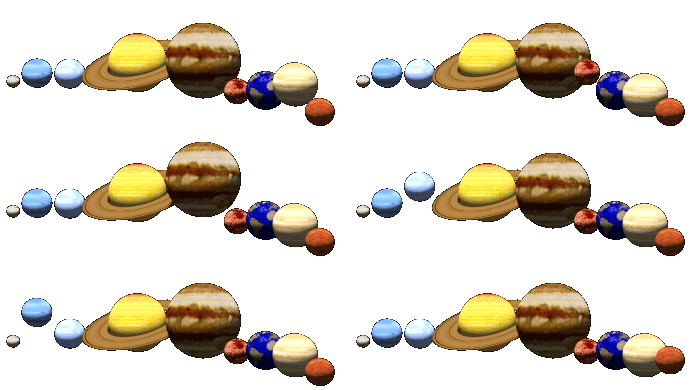
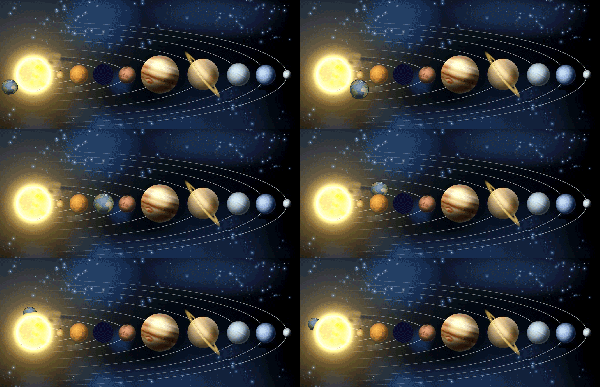
Besides Saturn, which will be closely tracking the moon (even when it isn’t in conjunction it will spend the night within a few degrees of the moon), Jupiter rises on Aug. 30 at 10:16 p.m. local time in New York. In the constellation Aires, the planet is distinct because of its brightness relative to other stars in that region of the sky.
Mars will be just barely visible in the evening; on August 30 in New York the sun sets at 7:31 p.m. Eastern. Mars sets only an hour later, at 8:32 p.m.; it’s possible to see it if one is lucky and has a clear sky and unobstructed horizon, but a half hour after sunset the planet is only 6 degrees above the horizon.
Venus will be a “morning star” – the planet rises on the morning of Aug. 31 at 4:33 a.m. Eastern and is about 10 degrees high by 5:30 a.m., when the sky is just starting to get light. Venus is so bright that it is obvious against the sky and among other stars, and in fact stays visible even after the stars begin to fade; it’s often the last celestial object (besides the moon) that people can spot ahead of sunrise.
CONSTELLATIONS
The constellations visible at the end of August are still largely those of Summer; by about 9 p.m. in mid-northern latitudes the Summer Triangle is still visible near the zenith; the highest of the three bright stars that marks it is Vega, if one is facing south Deneb will appear to the left and slightly closer to the horizon, while Altair is the southernmost – the Summer Triangle looks like a large right triangle with Vega at the 90 degree corner and the hypotenuse connecting Deneb and Altair. Like the Big Dipper one can use it to find one’s way; the line between Vega and Altair always points roughly southwards in the Northern Hemisphere.
Scorpius and Sagittarius will be visible in the south; the latter is about as high in the sky as it gets. Antares is a bright reddish star that is the heart of Scorpius, the Scorpion. Just above Scorpius is a region of sky containing a group of five stars that looks like a tall, narrow box topped with a triangle, like an A-frame house. This is the body of Ophiuchus, the Serpent-bearer. From city locations the constellation is more difficult to see; its stars are relatively faint compared to Antares or visible planets.
Turning westwards, (to the left) and looking towards the moon, one can see the autumn constellations rising; to the left of the moon is Pegasus, the legendary winged horse that can be spotted by looking for the “Great Square” which will appear to be standing on one corner, with that corner pointed directly to the Eastern horizon. The star that is on the left of the Great Square is the head of Andromeda, who was, according to legend, to be sacrificed to the Leviathan (Cetus, which rises later in the night). Andromeda is made of two curving lines of stars that appear to make a banana like shape.
As one continues turning northwards, one can see above and to the left of Andromeda the “W” of stars that is Andromeda’s mother Cassiopeia, the Queen, and if one looks to the left one runs right into Polaris, the Pole Star. Almost exactly opposite Cassiopeia is the Big Dipper, part of Ursa Major, the Great Bear. The Dipper will appear with the “bowl” facing upwards and to the right. If one is in a dark sky location it is also possible to see Draco the Dragon, which is a line of stars that winds between the Big Dipper and Little Dipper (Ursa Minor, the Little Bear).
From the mid-southern latitudes Vega will be almost due north at about 9 p.m., from Santiago, Chile, Cape Town, or Melbourne it will be about 17 degrees above the horizon. Cygnus, the Swan, which contains Deneb, will be to the right (eastwards) and Altair will be at about 45 degrees. In the Southern Hemisphere the sky is reversed, so the Summer Triangle points away from the horizon. If one follows the line from Vega to Altair eastwards and passes the moon and Saturn (Saturn will be above the moon) one can see Fomalhaut, the brightest star in Piscis Austrinus, Southern Fish. Further to the right (now heading towards the southeast) one can spot the fainter group of stars that is Grus, the Crane; it’s easiest to look for a vertical line of three stars that is the body of the bird. In the Southeast, about 20 to 23 degrees high is Achernar, the brightest star in Eridanus, the River, which starts near the foot of Orion in the Northern Hemisphere.
Turning due south, towards the southern celestial pole (there is no equivalent of Polaris there), one will see brighter stars to the right, in the southwest. The Southern Cross, Crux, is lying on its side, a small bright group that also has the distinction of being the smallest of the 88 modern constellations. Above Crux are two bright stars, the higher of which is Rigil Kentaurus, also known as Alpha Centauri. The one below it is Hadar, or Beta Centauri.
BLUE MOON NAMES
Native people in North America had a number of different associations and names for the August lunation and full moon; the Old Farmer’s Almanac says the August full moon is the Sturgeon moon, as that is when the fish are abundant. That said, the Old Farmer’s Almanac names derive from a combination of European traditions and Native Americans in regions where the English, French, and Dutch established their colonies, largely in the northeastern part of the continent.
That doesn’t reflect what Native people in every part of the Americas thought, as the traditions Native peoples developed depended a lot on the local environment and their histories; for example in the Pacific Northwest, the Tlingit refer to the month of August (the eighth lunation) as Sha-ha-yi Dís, which means “berries ripe on the mountain” and the ninth lunation (which the Aug. 30 new moon will be) is Dís Yádi, or young animals moon. Even in the northeast there were differences: the Abenaki (according to the English fur trader William Pynchon, writing in 1645) called the lunations from July through August matter lawawkesos which meant “when the squashes are ripe” and the ninth full moon was micheeneekesos or “when Ind(ian) corne is eatable.”
In England, the Anglo-Saxon derived name for the eighth full moon (which usually occurs in August) is the Fruit moon. The eighth lunar month, according to St. Bede (writing in his book De Temporium Ratione, or “The reckoning of Time” in 725 CE) notes that the “heathens” – the not-yet-Christianized people living in what is now the British Isles – called the eighth lunation Weodmonath, or “plant month” and in Old German the August moon marks Aran-manod, or “harvest month.”
In the southern hemisphere September is in the spring, with the days getting warmer, it’s no surprise that the Māori of New Zealand described the lunar months in August to September as Mahuru: “The Earth has now acquired warmth, as well as vegetation and trees,” according to the Encyclopedia of New Zealand.
Editor’s Note: If you get a great photo of the Blue Moon of August 2023 and would like to share it with Space.com’s readers, send your photo(s), comments, and your name and location to spacephotos@space.com.
Well after having 2 home covid tests coming back positive I’m in quarantine with Big Dog and our furry children. I had the initial vaccination plus 4 boosters and still got this awful, yucky illness again.
I will post what I can when I feel up to sitting at a computer. I am sorry I did not get information for today’s super, blue moon posted yesterday but I slept through most of the day. I will get a couple of things up before I laid back down today. Yesterday’s birthday horoscopes are published under August 29, 2023.
I’m going back to bed with my 101.8 F fever just didn’t want you to go without knowing your daily/birthday horoscopes and current moon phase. See you all tomorrow.
You can use this link to go forward or backward in time for Moon phase information. If you are curious, you can even find out what phase the Moon was in when you or anyone else was born.
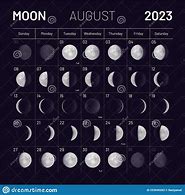
The Moon’s current phase for today and tonight is a Waxing Gibbous phase. Visible through most of the night sky setting a few hours before sunrise. This phase is when the moon is more than 50% illuminated but not yet a Full Moon. The phase lasts about 7 days with the moon becoming more illuminated each day until the Full Moon. This upcoming Full Moon will be the second of August 2023 known as a Blue Moon.
During a Waxing Gibbous the moon rises in the east in mid-afternoon and is high in the eastern sky at sunset. The word Gibbous first appeared in the 14th century and has its roots in the Latin word “gibbosus” meaning humpbacked.
The Waxing Gibbous on August 28 has an illumination of 90%. This is the percentage of the Moon illuminated by the Sun. The illumination is constantly changing and can vary up to 10% a day. On August 28 the Moon is 11.77 days old. This refers to how many days it has been since the last New Moon. It takes 29.53 days for the Moon to orbit the Earth and go through the lunar cycle of all 8 Moon phases.
Phase Details
Phase: Waxing Gibbous
Illumination: 90%
Moon Age: 11.77 days
Moon Angle: 0.55
Moon Distance: 365,287.25 km
Sun Angle: 0.53
Sun Distance: 151,100,270.66 km
Useful Moon Resources
Check the weather before a night of Moon gazing at weather.com
There are 8 lunar phases the Moon goes through in its 29.53 days lunar cycle. The 4 major Moon phases are Full Moon, New Moon, First Quarter and Last Quarter. Between these major phases, there are 4 minor ones: the Waxing Crescent, Waxing Gibbous, Waning Gibbous and Waning Crescent. For more info on the Moon Cycle and on each phase check out Wikipedia Lunar Phase page.
This one rand a bell in my head. When my children were young and have a temper tantrum, I called them Hissy Fits and used it with my grandchildren and a lot of other people too.
You can use this link to go forward or backward in time for Moon phase information. If you are curious, you can even find out what phase the Moon was in when you or anyone else was born.
The Moon’s current phase for today and tonight is a Waxing Gibbous phase. Visible through most of the night sky setting a few hours before sunrise. This phase is when the moon is more than 50% illuminated but not yet a Full Moon. The phase lasts about 7 days with the moon becoming more illuminated each day until the Full Moon. This upcoming Full Moon will be the second of August 2023 known as a Blue Moon.
During a Waxing Gibbous the moon rises in the east in mid-afternoon and is high in the eastern sky at sunset. The word Gibbous first appeared in the 14th century and has its roots in the Latin word “gibbosus” meaning humpbacked.
The Waxing Gibbous on August 27 has an illumination of 82%. This is the percentage of the Moon illuminated by the Sun. The illumination is constantly changing and can vary up to 10% a day. On August 27 the Moon is 10.64 days old. This refers to how many days it has been since the last New Moon. It takes 29.53 days for the Moon to orbit the Earth and go through the lunar cycle of all 8 Moon phases.
Phase Details
Phase: Waxing Gibbous
Illumination: 82%
Moon Age: 10.64 days
Moon Angle: 0.54
Moon Distance: 367,981.81 km
Sun Angle: 0.53
Sun Distance: 151,134,109.46 km
Useful Moon Resources
Check the weather before a night of Moon gazing at weather.com
There are 8 lunar phases the Moon goes through in its 29.53 days lunar cycle. The 4 major Moon phases are Full Moon, New Moon, First Quarter and Last Quarter. Between these major phases, there are 4 minor ones: the Waxing Crescent, Waxing Gibbous, Waning Gibbous and Waning Crescent. For more info on the Moon Cycle and on each phase check out Wikipedia Lunar Phase page.
Northern Hemisphere’s Planetary Positions
If you need to calculate the planetary positions in either hemisphere you can use this for a specific use and time in your local time zone, click on this link
Each Mercury retrograde is in a different sign, so it affects us differently. Some people glide through one, while others are white knuckling it all the way. (This is a vicious one for me.) Mercury will be retrograde until Sept. 15; so, if you’re buying cars, trucks, computers or cell phones, be smart and wait until the shadow is over on Oct. 1. (I’m waiting until then to buy a laptop.) Meanwhile, the Sun is now in Virgo, which means we all want to pull our act together, get organized, eat healthier, drink less booze and exercise. (At least, jog for 10 seconds in front of the fridge.) Ah yes, amateurs only gain weight in the holidays. Professionals gain weight the entire year.
Aries (March 21-April 19)
You have that back-to-school feeling that you have to buckle down, get to work and get organized. “I’m on it!” As I mentioned in All Signs above, you will also be eager to improve your health. When it comes to improving ourselves, it’s generally easier to stop a bad habit then to begin a new healthy one. But maybe you can do both? Venus promises social diversions and fun times, especially with romantic dates or playful activities with kids. However, while Mars is opposite your sign, it’s easy to get annoyed with others, which means patience will be your best friend. Continue to look for ways to boost your income because you can do this!
Taurus (April 20-May 20)
The next several weeks will be easier for you because the Sun will be in your fellow Earth sign, which is a supporting energy. Whatever you do will flow nicely. You will also be more motivated to do something. Having said that, this same window of time is all about play, fun diversions, exploring the arts, the entertainment world and taking a vacation. In other words, work comes second. Keep an eye out for old flames who will be back in the picture. (Something to keep you on your toes?) Basically, your “work hard, party hard” theme continues for the next few weeks. You will also redecorate at home and enjoy entertaining so that you can show off your ingenious efforts.
Gemini (May 21-June 20)
The next few weeks are about home, family and your private life. Many will be involved with a parent. You might have relatives you haven’t seen for a while camped on your doorstep. (Hand them a paintbrush or broom.) Your communication skills are excellent now and will continue for several weeks because fair Venus is in your House of Communications, which will sweeten and soften your words. You’ll be the epitome of tact and diplomacy! Actually, it will be easy because another influence of Venus will make you realize how much affection and beauty there is in your daily world. What a blessing! Meanwhile, competitive sports and fun outings still appeal.
Cancer (June 21-July 22)
For the next few weeks, the pace of your days will accelerate because you suddenly have short trips to take, appointments, errands to run, plus, people to see as you spend more time with siblings, relatives and neighbours. Your dance card is full! Mercury retrograde will continue to stir up goofy mistakes, transportation delays and mixed-up communications and conversations with others. But you can handle this. Many of you will also encounter past acquaintances, which will be interesting because it’s fun to trade lies and talk about the good old days. Meanwhile, you continue to deal with some kind of chaos or increased activity at home. Cope as best you can.
Leo (July 23-Aug. 22)
Money, money, money is on your mind. (Many of you blew a wad during “Celebrate Leo!” season.) Plus, cheques were late in the mail, problems with credit cards, plus delayed business deals due to Mercury retrograde. Oy! Naturally, with Venus in your sign, you will handle all this with grace. In fact, Venus will make it easy to make peace with others and enjoy good times with friends. (Note this is also a great time for a vacation and to shop for wardrobe goodies.) Meanwhile, Mars is in your House of Communications boosting your mental energy, stimulating the tempo of your everyday life, and making you identify strongly with your ideas and opinions. Look out world!
Virgo (Aug. 23-Sept. 22)
The Sun is now in your sign until Sept. 23. This means it’s all about you, dear Virgo! Once a year, the Sun is in your sign for four weeks and when that happens, it’s your turn to recharge your batteries for the rest of year. You will be more concerned with personal matters. You’ll feel a strong need to express yourself. You will more easily attract people and favourable situations to you; and you will make a great impression on everyone! Secret love affairs might be happening, which is not surprising because this year is a stressful time for marriage and partnerships for your sign. Nevertheless, don’t risk a solid, long-term relationship for a mere bonbon. Think of your long-range goals.
Libra (Sept. 23-Oct. 22)
For the next few weeks, the Sun is hiding in your chart before it enters your sign on Sept. 23. This means that likewise, you will be happy to play things low-key and stay in the background. Nevertheless, with fiery Mars in your sign, by no means, will you be a wallflower! Oh no. Mars in your sign (something that happens only once every two years for six weeks) will make you work hard to further your own interests, and also to assert yourself among others! You’ll be much more of a fighter for your own rights than usual. Plus, your physical energy will be high. Meanwhile, old friends are back in your world, promising fun get-togethers.
Scorpio (Oct. 23-Nov. 21)
The next several weeks are popular for you! You’ll enjoy hanging out with friends, plus being involved more with groups and organizations. Many of you will also be in contact with friends from your past. This will also be a lovely time to think about your long-range goals. It so happens that you make an excellent impression on bosses, parents, teachers and the police right now. If you ask for advice or assistance, it will be forthcoming. In fact, bosses might admire you to the point that a flirtation might take place? Meanwhile, keep in mind that this year is a wonderful time for partnerships and marriage. Singles should be open to meeting new people.
Sagittarius (Nov. 22-Dec. 21)
Ta da! This is the only time all year when the Sun sits at the top of your chart for four weeks, casting you in a flattering spotlight. Garbo was right, “Good lighting is everything.” You look super competent to authority figures even if you don’t do anything special, which means this is the perfect opportunity for you to demand the advantage, ask for a raise, seek out a promotion – whatever. (It doesn’t hurt to ask.) Meanwhile, opportunities to travel for pleasure still exist – something dear to your heart. Plus, competitive sports and physical activities are also in the picture for most of you. Remember: This is the year for you to improve your job or get a better one.
Capricorn (Dec. 22-Jan. 19)
Your desire to travel, read, study and learn more will be strong in the next four weeks because you feel the need to expand your horizons. Travel is the obvious choice; but if you can’t travel, then be a tourist in your own city! You can also put out energy to study and learn more because this will stimulate you. And that’s what you want. Stimulation and adventure! Once every two years, Mars is high in your chart, arousing your ambition, and that’s happening right now. Meanwhile, it’s also easy for you to raise money or get a loan or mortgage. Looks good! (Privately, romantic passion is affectionate and memorable!)
Aquarius (Jan. 20-Feb. 18)
You have your eye on the resources and wealth of your partner, inheritances, the government, credit cards or an institution that holds your debt. Perfect! This is an excellent time to wrap up old business with these areas because of Mercury retrograde. On the other hand, initiating new business for example will drag slowly or be delayed because of Mercury retrograde. Meanwhile, the opportunity to travel totally appeals because your sense of adventure is strong now. You want to go places and have fun! With Venus opposite your sign, relations with partners and close friends are excellent. Perfect time to enjoy life with a travel buddy! Continue to look for ways to improve home and family.
Pisces (Feb. 19-March 20)
This is the only time all year when the Sun sits opposite your sign for four weeks. Because this means it is as far away from you as it can get all year (in your chart), and the Sun is your source of energy, your energy will be flagging somewhat and you will need more sleep. Go to bed. Aside from that, relations with coworkers couldn’t be better! People will be supportive and helpful to you. Admittedly, disputes about shared property or debt might occur now. You might disagree with a partner about how to manage money or spend funds. Fortunately, with Jupiter in your House of Communications this year, it’s easy for you to be upbeat and happy! A blessing!
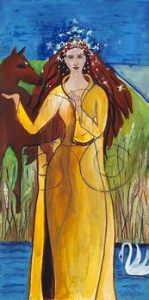
As the goddess of summer and wealth,Áine represents the abundance that the land has to offer during its most plentiful season.
Good, fruitful harvests were required to provide for the people and animals, therefore much emphasis was placed on gods and goddesses that represent fertility, such as Áine.
The goddess Áine is strongly associated with the feast of midsummer and the summer sun. She too, like the Morrigan is thought to have the ability to shapeshift and is represented by a red mare, known for its speed.
Áine is sometimes referred to as the Irish goddess of Love or as the Faery Queen.
There are several stories that connect Áine to rape, including one where she bites off the ear of the King of Munster after an unconsented encounter. By disfiguring him, the Celtic goddess of love made him ineligible to be king (only flawless, unmarred men could rule) and so he was removed from his throne.
In another story of rape, Áine exacted revenge by turned her offender, Gerald, Earl of Desmond into a goose.
The Hill of Knockainy (or Cnoc Áine) in County Limerick was an important site, where ritual blessings to this Irish goddess were carried out. Offerings to Áine have also been made at Lough Gur in County Limerick.
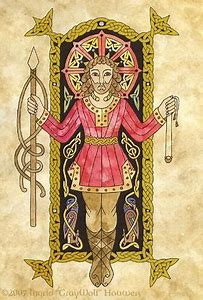
The god Lugh, (also spelled Lug or Luga) is one of the most notable of all the Irish deities and equates to the pan-Celtic god of Lugus.
Lugh was the god associated with justice and held powerover oaths and law. He was also connected with rightfulness, especially in terms of kingship.
He was king of the glorified race of the Tuatha dé Danann, who were known for their superior skills and knowledge, particularly on the battlefield. The inscriptions on some early texts suggest that the Tuath dé Danann were deities, while others allude more to them having magical powers, including shapeshifting.
Lugh was a master craftsman and skilled warrior, known for his ability to throw a spear a very long distance and hence his other name Lugh Lámhfhada. This name means Lugh of the long arm in Irish.
He is believed to have led the Tuatha dé Danann to victory over the invading army of Fomorians as depicted in the Battle of Mag Tuired.
It is said that Lugh initiated a special games event, known as the Tailteann Games or Assembly of Tailti that focused on horse racing and martial arts that ran over the last two weeks in July and culminated with the start of the harvest celebration of Lughnasadh on 1 August. It is said that the games were founded in memory of Lugh’s foster mother Tailtiu, who was also thought to be a goddess.
Legend states that Lugh was also a bit of a trickster and is sometimes known as the Celtic god of mischief.
Lugh is thought to have been the father of demi god and famous Irish warrior, Cú Chulainn.
Are Celtic gods immortal? Seemingly not all of them, Lugh is said to have been speared and drowned in Loch Lugborta (or Loch Lugh) in County Westmeath, by the sons of Cermait after he killed their father.
Both the gods of Lugh and the Dagda are supposedly buried in the sacred center of the island of Ireland, Uisneach.
If only I could. Too much to do for the couple of days it’s going to be cooler here before going back to heat indexes in triple digits. Maybe I’ll pretend Monday or Tuesday is Saturday and just goof off for a change. No posting, replying to emails, do no work for Big Dawgs job, no cooking, no housework just hang out with my fur kids and do a little magickal working.
What will you be doing on your Saturday? Something relaxing and fun I hope!!
Pick your drink….Fill a container to drink from….Raise your beverage container….
I say this toast/prayer for each and every one of my dear WOTC Family and Friends
“May you be in the Summerland’s an hour before Hades knows your dead”
(This toast/prayer is a paraphrase on an old Irish toast. I substitute Summerland’s for Heaven and Hades for the Devil)
You can use this link to go forward or backward in time for Moon phase information. If you are curious, you can even find out what phase the Moon was in when you or anyone else was born.
The Moon’s current phase for today and tonight is a Waxing Gibbous phase. Visible through most of the night sky setting a few hours before sunrise. This phase is when the moon is more than 50% illuminated but not yet a Full Moon. The phase lasts about 7 days with the moon becoming more illuminated each day until the Full Moon. This upcoming Full Moon will be the second of August 2023 known as a Blue Moon.
During a Waxing Gibbous the moon rises in the east in mid-afternoon and is high in the eastern sky at sunset. The word Gibbous first appeared in the 14th century and has its roots in the Latin word “gibbosus” meaning humpbacked.
The Waxing Gibbous on August 26 has an illumination of 72%. This is the percentage of the Moon illuminated by the Sun. The illumination is constantly changing and can vary up to 10% a day. On August 26 the Moon is 9.55 days old. This refers to how many days it has been since the last New Moon. It takes 29.53 days for the Moon to orbit the Earth and go through the lunar cycle of all 8 Moon phases.
Phase Details
Phase: Waxing Gibbous
Illumination: 72%
Moon Age: 9.55 days
Moon Angle: 0.54
Moon Distance: 371,595.67 km
Sun Angle: 0.53
Sun Distance: 151,167,495.54 km
Useful Moon Resources
Check the weather before a night of Moon gazing at weather.com
There are 8 lunar phases the Moon goes through in its 29.53 days lunar cycle. The 4 major Moon phases are Full Moon, New Moon, First Quarter and Last Quarter. Between these major phases, there are 4 minor ones: the Waxing Crescent, Waxing Gibbous, Waning Gibbous and Waning Crescent. For more info on the Moon Cycle and on each phase check out Wikipedia Lunar Phase page.
Northern Hemisphere’s Planetary Positions
If you need to calculate the planetary positions in either hemisphere you can use this for a specific use and time in your local time zone, click on this link
Yes, I went back to the original titles I used for years both on here and Coven Life for A Thought for Today and A Laugh for Today. Granted some of the laughs might be more of a chuckle or outright groan type of humor but that’s they way my sense of humor rolls…LOL
If you start your couple of days off after work today enjoy your weekend. If your weekend starts on a different day of the week than start enjoying your weekend off of work whenever it falls.
You can use this link to go forward or backward in time for Moon phase information. If you are curious, you can even find out what phase the Moon was in when you or anyone else was born.
The Moon’s current phase for today and tonight is a Waxing Gibbous phase. Visible through most of the night sky setting a few hours before sunrise. This phase is when the moon is more than 50% illuminated but not yet a Full Moon. The phase lasts about 7 days with the moon becoming more illuminated each day until the Full Moon. This upcoming Full Moon will be the second of August 2023 known as a Blue Moon.
During a Waxing Gibbous the moon rises in the east in mid-afternoon and is high in the eastern sky at sunset. The word Gibbous first appeared in the 14th century and has its roots in the Latin word “gibbosus” meaning humpbacked.
The Waxing Gibbous on August 25 has an illumination of 62%. This is the percentage of the Moon illuminated by the Sun. The illumination is constantly changing and can vary up to 10% a day. On August 25 the Moon is 8.5 days old. This refers to how many days it has been since the last New Moon. It takes 29.53 days for the Moon to orbit the Earth and go through the lunar cycle of all 8 Moon phases.
Phase Details
Phase: Waxing Gibbous
Illumination: 62%
Moon Age: 8.50 days
Moon Angle: 0.53
Moon Distance: 375,890.89 km
Sun Angle: 0.53
Sun Distance: 151,200,419.62 km
Useful Moon Resources
Check the weather before a night of Moon gazing at weather.com
There are 8 lunar phases the Moon goes through in its 29.53 days lunar cycle. The 4 major Moon phases are Full Moon, New Moon, First Quarter and Last Quarter. Between these major phases, there are 4 minor ones: the Waxing Crescent, Waxing Gibbous, Waning Gibbous and Waning Crescent. For more info on the Moon Cycle and on each phase check out Wikipedia Lunar Phase page.
Northern Hemisphere’s Planetary Positions
If you need to calculate the planetary positions in either hemisphere you can use this for a specific use and time in your local time zone, click on this link
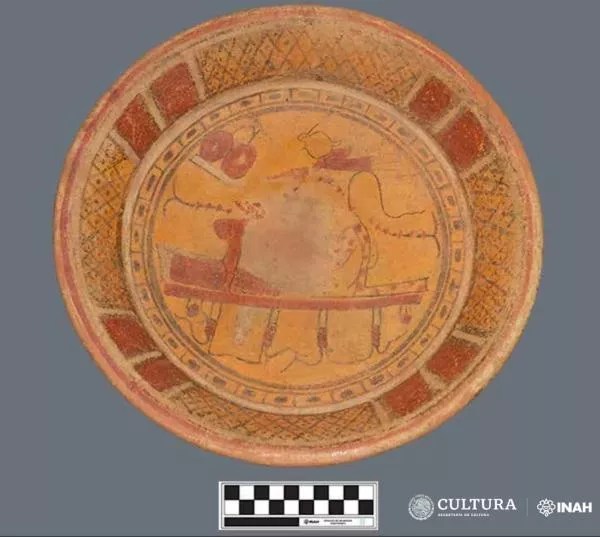
Researchers with the country’s National Institute of Anthropology and History (INAH) uncovered the ceramic dish during excavations at the Cansacbé archaeological site. It is located around 7 miles from the port city of Campeche in the Gulf of Mexico.
The multicolored dish was found in a male burial dated to the Late Classic period (600 to 900 A.D.) of Mesoamerican history, INAH said in a statement.
The Maya civilization dominated what is now southeastern Mexico, Guatemala, Belize, and the western areas of El Salvador and Honduras for more than 3,000 years until the era of Spanish colonization.
The Maya were notable for creating the only fully developed writing system in pre-Columbian America, and for their striking architecture and art, as well as their advanced calendar, mathematics, and astronomical system.
The dish found at Cansacbé features a representation of a “wahyis”—protective spirits or beings found in Maya mythology. The artifact was intended as a funerary offering, INAH said.
Researchers think the individual who was buried with the dish was possibly a member of the local elite.
After its discovery, the artifact was carefully cleaned at a laboratory in Campeche. Despite the fact that the illustrations have faded in some areas, it is possible to see the representation of a jaguar, or a man dressed in the skin of a jaguar, standing on a bench. The scene is framed by small boxes that appear to represent the shells of turtles.
These types of representations are common in Maya ceramics from the Late Classic period, INAH Director General Diego Prieto Hernández said in a statement.
For most of the 20th century, the Cansacbé site was never systematically studied. And unfortunately, in the first half of the century, several of its mounds were used as material for the construction of a highway that connects Campeche to the city of Mérida.
Then, in the 1990s, excavations conducted during the expansion of that highway uncovered the remains of two palace-type buildings.
The latest discovery of the ceramic dish at the site came during prospecting and salvage on a section of the Tren Maya project. This is an almost 1,000-mile-long intercity railway, scheduled to start operating in December 2023, that traverses Mexico’s Yucatán Peninsula—the heart of the ancient Maya civilization, which is rich in antiquities.
“We need the tonic of wildness…At the same time that we are earnest to explore and learn all things, we require that all things be mysterious and unexplorable, that land and sea be indefinitely wild, unsurveyed and unfathomed by us because unfathomable. We can never have enough of nature.”
I Am sorry I wasn’t on yesterday but I wasn’t feeling very good. Today I am a little better but in a mental and emotion turmoil over something happening in one of my children’s lives so I will do posts I feel comfortable with, with the energy I have rolling around inside and out.
You can use this link to go forward or backward in time for Moon phase information. If you are curious, you can even find out what phase the Moon was in when you or anyone else was born.
The Moon’s current phase for today and tonight is a First Quarter phase. This phase occurs roughly 7 days after the New Moon when the moon is one quarter of the way through its orbit around the earth. Exactly half the moon will be illuminated and half dark. On the day of the First Quarter phase the moon is high overhead at sunset and is visible until mid-night when it sets in the west. The First Quarter phase is a one-day event and in the following days enters a Waxing Gibbous phase becoming more illuminated each day until the Full Moon.
The First Quarter on August 24 has an illumination of 51%. This is the percentage of the Moon illuminated by the Sun. The illumination is constantly changing and can vary up to 10% a day. On August 24 the Moon is 7.48 days old. This refers to how many days it has been since the last New Moon. It takes 29.53 days for the Moon to orbit the Earth and go through the lunar cycle of all 8 Moon phases.
Phase Details
Phase: First Quarter
Illumination: 51%
Moon Age: 7.48 days
Moon Angle: 0.52
Moon Distance: 380,598.01 km
Sun Angle: 0.53
Sun Distance: 151,232,872.57 km
Useful Moon Resources
Check the weather before a night of Moon gazing at weather.com
There are 8 lunar phases the Moon goes through in its 29.53 days lunar cycle. The 4 major Moon phases are Full Moon, New Moon, First Quarter and Last Quarter. Between these major phases, there are 4 minor ones: the Waxing Crescent, Waxing Gibbous, Waning Gibbous and Waning Crescent. For more info on the Moon Cycle and on each phase check out Wikipedia Lunar Phase page.
Northern Hemisphere’s Planetary Positions
If you need to calculate the planetary positions in either hemisphere you can use this for a specific use and time in your local time zone, click on this link













 Witches Of The Craft®
You must be logged in to post a comment.