September 12 – Daily Feast

September 12 – Daily Feast


If you are standing deep in trouble don’t talk disparagingly of things spiritual. Spirit is your hope. It is your wisdom and your healing, key to your money and your relationships. If you believe these things are not true – then you have the reason for your emptiness. “Prove me now”, the wisdom goes. Spiritual things are provable. There is wisdom that can be tapped and put to good use when it has made the right connections. Right connections are not just people but Spirit. Breakdowns occur without Him, breakthroughs happen with Him.

~ We want to keep peace; will you help us? ~

RED CLOUD – SIOUX CHIEFTAIN

‘A Cherokee Feast of Days, Volume II’ by Joyce Sequichie Hifler

*<<<=-=>>>*<<<=-=>>>*<<<=-=>>>*<<<=-=>>>*


Your Deck of Ancient Symbols Card for Sept. 12 is The Phoenix

Your Deck of Ancient Symbols Card for Today

The Phoenix

The mythical, endearing Phoenix has long been a symbol of rebirth, renewal, and coming full circle. Tired in both body and spirit the aged Phoenix combust into flames and from its ashes is reborn. The Phoenix does not indicate change so much as it does renewal and revitalization. It denotes the completion of a cycle and beginning anew.

As a daily card, The Phoenix suggest you are at a place where some aspects of your life have reached the end of a cycle. Your energies may be weakened from use and stretched over too many arenas to be as effective as they once were. As a result, now may be a good time for you to take a step back and allow yourself time to revitalize both your physical and spiritual self.

Experimenting with Circles

Experimenting with Circles

When you feel comfortable in your ability to cast a circle, it is time to start finding new ways to do it. There is no limit to what you can do to create sacred space. It can be as simple as sitting and drumming the circle into existence or chanting something to create the energy to draw your circle. Movement is something used in lieu of everything else. It is possible to use a piece of recorded music to cast it, or to dance to the music to cast the circle. You can create a circle by telling stories or sharing your day with others.

Some of the techniques that can be used will be very difficult at first, and that is why you should learn to cast in one of the first two ways before you begin experimenting. If you do, you know what the end result should be and will know when you reach it. As you develop a new way to cast a circle, you will find certain things that work and certain ones that don’t. Don’t be afraid to change elements around or substitute things in or out to make it work. This is one of the first totally creative things that you will do as a witch.

Copyright © 2000, Jet Blackthorn

Lady A’s Spell of the Day for Aug. 21: Enlighten Yourself Spell

Enlighten Yourself Spell

The following ingredients are needed:

Symbols for the Elements

3 Sage Leaves


Put your mind and body back into balance

Enlighten Yourself Spell 

From the Native Americans, this spiritual journey will help to put your mind and body back into balance.

Ideally this ritual should be preformed in open air at noon, with the four elements-earth,air,fire and water naturally present. If this is not possible,use substitute flowers or symbols;or a little soil from the earth;and incense stick for air;a yellow candle for fire;some spring water.

Place these in a circle and sit in the middle. Purify your face and hands by wiping them with sage,then clasp your hands,close your eyes,and let your thoughts drift away.

Open your ears and listen to the elements and nature around you. With your mind’s eye,become part of the water,and feel the warm earth in your hand and the soft breeze of the wind on your face. Feel the harmony and enjoy being at one with the world around you.

Use this ritual at any time to restore balance and harmony to your life.

Meet Your Spirit Guides

Meet Your Spirit Guides

Before retiring, or going to bed, spend a few minutes in bed relaxing. Just
focus on being relaxed. Be relaxed…
While relaxed, imagine a Veil in front of your eyes. A curtain, or a wall.
Imagine the Veil, or the wall, as being void, black. Accept the Veil, or the
wall. Do not be threatened by the Veil, because you are relaxed, and because
you know the Veil is an illusion, and serves purpose. You are still relaxed.
Then, you visualize the Veil (or wall) slowly lifting. You see the Veil lifting,
and you see stars, you see lights. You know you can see things you haven’t seen
before. You are still relaxed. When you are ready, you ask for Spirit to join
you. You ask Spirit to touch you, and to embrace you, because you are ready to
embrace Spirit. You know that Spirit is Divine Love, you know you are safe, you
know you are loved. You know you are ready to meet Spirit. Hold your hands out.
Let your fingertips feel the touch of Spirit. Know that when you are ready, you
can ask Spirit to embrace your arms; ask for Spirit to give you a huge hug. You
will feel it. Accept the love that is given to you, and know that you have
earned it, that the love is yours. You may feel many things. Electricity, and an
urge to cry, is what I felt, and great joy. There are many methods regarding
meeting your spirit guides. I met my guides in delayed stages. I had two human
guides and three critter guides. This is not “common” but is also not unheard-
of. What is common is for people to have two human guides. For those who study
critter-paths, I believe that they also have two human guides, but that they are
working more consciously with critter-wisdom, and therefore it is likely that
they have “critter-medicine”, and may actually have critter guides, as I do.
Names? Gender? These are generally the first two issues we would like to
distinguish within our guides. What I would recommend, as a matter of deduction,
is that you ask your inner voice, if your entity is Male or Female. You WILL
receive a definite impression. Lesson number one – learn to trust yourself. (I
like to ask the gender question first, as it’s an easy one-two, this or that
approach, and helps to distinguish our own emotional responses.) When it comes
to names, let your mind be open to receive impressions. When I first met Elmo,
my bear, I had a hard time believing that was his name, because I am a “serious”
person, I associated “Elmo” as being playful, and therefore antithetical to what
I thought his name should be. (Yet, I’ve learned a lot from Elmo, including “not
being so uptight” I also learned more about not judging a person – or entity –
by their name.) When I first met Garulf, as a spirit, I thought he had a
fascinating name. Weird name, dynamic personality. This was the label I hanged
on him. How was I to know Garulf was a fairly common, respectable name several
hundreds of years ago, in Denmark? How was I to know Garulf was actually a Soul
name, befitting him perfectly as a spirit, and as a person? So, in other words,
whatever name you get in meditation, or whatever, really is their name?
Sometimes, the names of your spirits will help you bust up your own
preconceptions of what names mean – or what roles people should play in your
lives. What it all really comes down to is trusting your impressions. If you can
do that (we salute you!), but more, you are already on a healthy journey of
rediscovery. Your spirits will help you find the way.

The Process of Invocation

The Process of Invocation

Author: Michael ‘Blackthorn’ Furie
Much has been said and written about the fact that witches ‘go directly to the source’ and through invocation, personally commune with our Deities. Unfortunately, very little has been written about the nature or structure of the process (and believe me, it is a process) of invocation, of either the techniques of the process or the actual feeling of such an experience.

Now I know that as witches, many of us pride ourselves on our ability to keep a magical secret and while I do see merit in this, I think that it does a great disservice to many people who are truly seeking to deepen their spiritual connection and walk with the Gods. That is why I have decided to decode this secret, so to speak. I’m not including the personal invocatory rites of my tradition as I do intent to keep them secret. I do however fully intend to give out all the tools necessary for anyone that wishes to create their own rites, to do so successfully.

First, let’s begin at the beginning by defining our understanding of what the Gods are. In my tradition, the Gods are seen as distinct individuals (as opposed to facets or aspects of the whole) and with the exception of the Great Mother Goddess They are, although very powerful, not omnipotent. This is why we must invoke Them if we wish to communicate. We set our intention, call to Them, create a link and stretch our consciousness.

If They wish to commune with us, They will respond and follow our link. There are some that feel that the Gods need our worship and that it sustains Them. Whether you share this view or not, it is true that They need us to send our energy during invocation to help Them manifest. The reason for this is that our doing so creates a current of energy that acts as a beacon, leading back to us. The exception of course would be the Great Goddess, since everything in creation is a part of Her already and She is truly omnipotent. I will say however, that building an energy current to connect to Her will speed the process along and make a stronger connection.

Before attempting any invocation, it is vital to have a preexisting desire to connect to a specific Deity. If you don’t have a chosen Deity yet then, research, research, research! When you have found a Deity that ‘speaks’ to you, study the myths and legends about them and what herbs, stones, animals, colors, and symbols are sacred to Them.

When you have a solid understanding of Their nature and worship, it is a good idea to set up an altar using the colors, herbs, etc. that appeal to Them. As a minimum, have an offering bowl on the altar and a candle of the chosen color. Begin a daily devotional at this altar by lighting the candle and placing a bit of food or drink in the bowl (to be buried later) and then praying or writing verse to your Deity.

This is a minor form of invocation and helps build your connection to the Deity even before you undertake the full invocatory process. During these devotionals, it is a good idea to ask the Deity to send you signs throughout your everyday life if They wish to communicate with you. Keep a journal for at least one full cycle of the moon.

If, after this cycle you feel that the Deity wishes you to commune then, the next step of the conscious building of faith may be taken. This is a very important step in the invocatory process. The subconscious mind is a link to the hidden sphere of our psyche that connects directly to the Gods.

In order to open ourselves to this sphere, we must program the subconscious by a deliberate act of will. What this amounts to, practically speaking is the creation and use of what are known as ‘words of power’ to help our minds open to greater awareness. To create words of power, you first need to have a basic knowledge of your chosen Deity.

As an example, let’s say that your chosen Deity is a Sun Goddess. To create the words of power to connect to Her you will need to be in a sunny location that you would consider a place suited to Her taste. Then, you will need to immerse yourself in total awareness of Her power. In this case, I would recommend sunbathing (safely, with sunscreen of course!) while meditating on Her qualities.

When you feel a connection to Her, state your chosen word, words, or phrase out loud and also state that whenever you say these words, the memory of this experience will fill your mind once more. The words chosen can be anything but, should relate in some way to the chosen Deity. An example would be, ‘The power of Name of Deity fills me now.’ You may repeat this exercise as often as you wish, but let’s now move to the final step; putting our process together.

Invocation

To begin the invocation process, as stated earlier, we must first set our intention; we wish to communicate directly with Chosen Deity. Next, we must clear the mind through meditation and reach a receptive relaxed mental state (this is now recognized as the alpha brain wave level) . We must also release our preconceived notions about how invocation should occur or what the process will be like; just surrender to the process of communion. When we are in a receptive mental state, we must visualize the Deity in whatever concept you have of Them and also, visualize a beam of energy extending from either your ‘third eye’ or heart (depending on personal preference) out to Them in their realm.

Now, call on the Deity and repeat the words of power that you have created while rocking gently back and forth, adding a ‘tugging’ feeling to the beam of energy in order to create a pathway for alignment. After the connection is felt, you may communicate in whatever way you wish. For me, the first time invocation was achieved the Goddess opened my third eye and I began to rapidly develop certain abilities, psi empathy being the primary one. I can only speak for myself and your results may vary.

This process must be repeated, usually several times in order for it to work. Repetition trains the mind and Spirit and creates a strong link to the chosen Deity. Of course, there is a chance for whatever reason, that the Deity will not wish to commune. Always remember that these are conscious, three dimensional beings with a will of their own; they are Gods after all. Never forget this. Never patronize or diminish them or you will feel their wrath.

I hope that this information will help any and all that wish to deepen their connection to the Gods.

Blessed be.


Footnotes:
Power of the Witch by Laurie Cabot
Earth Magic by Marion Weinstein
The Black Book by Blackthorn Furie

Pagan Values: Faith and Magic

Pagan Values: Faith and Magic

Author: Morgan St. Knight

What is faith? That question creates a conundrum for Pagans. We identify ourselves as Pagans because our views differentiate us from other religious groups–specifically, our views about Deity/Deities. It’s how we relate to those Deities that brings up the question of faith.

We’re in a unique position, we Pagans. Those of us who follow traditions such as Wicca and similar systems believe in magic; we believe that we can alter our world in certain ways using ritual, creative visualization and projection, and the proper focus of will and intent. But where do we draw the line between trying to accomplish things with magic, and giving our trust to the Gods to help us find our way, even if the outcome isn’t what we’re expecting? Can we trust–can we really believe –that the outcome, whatever it is, will be the correct one if we turn things over to the Gods? More importantly, do we have the courage to step over the dividing line from the realms of magic into the realm of faith, or do we repeatedly fall back to the option that lets us try to manipulate outcomes to suit our will?

One of the reasons Wicca appeals to so many people is that it theoretically allows us an extra measure of control over our lives through magic. This aspect of the Craft seems, at times, to truly fulfill the definition of a glamour: an illusion that befuddles the mind, hiding the truth, sometimes to the gazer’s downfall.

It’s no blame to anyone who falls under that particular spell. The mantra “Change your life through Magic” is practically shouted from every corner of every New Age or occult bookstore I’ve been to over the past decade. If I didn’t have 30 years in the Craft to ground me, I might leave those bookstores either with armloads of books I couldn’t afford, or the nagging sensation that yes, I should change my life; surely with so many books offering so many solutions, I must have problems I never even knew about, problems I must change through (dramatic pause) … The Magic Power of Witchcraft.

Once upon a time there were stores that didn’t leave me feeling this way. Longer ago than I care to remember, there were little nooks in small arcades, and independent bookstores on out-of-the-way street corners, where I could find a treasure trove of magical tomes. Of course they also sold books of spells for accomplishing great and marvelous things (with prices that guaranteed the publisher, at least, would see great and marvelous profits) , but not every book in the place was about that. One of my most treasured books from those days is Syblil Leek’s The Complete Art of Witchcraft. It is not full of spells, but thoughtful chapters on what some Witches believe, and a chapter of prayers… yes, actual prayers, asking the Goddess for help, but not conjuring or demanding or binding or bargaining for any specific outcome.

Those who have read that book may not be particularly keen on Leek’s brand of Witchcraft, but at least give her credit for putting out a book that was intended to educate, inform, and guide both the general public and aspiring Witches with a good foundation in basic truths, rather than a quick do-it-yourself guide. True, Sybil wrote her share of books with spells as well, but still, they had a good bit of substance. They had background information on methods and ingredients for one, not just a quick “here’s a list of stuff, here’s a choreography routine, go make magic” approach.

I don’t want to come off as downing the magical aspects of Wicca and championing faith alone. Far from it. I have charms for safe travel in my car, amulets to ward my house, and I perform many spells to help others, from healing spells to protection rites to spells for success. Sometimes I perform the same spells for myself. I cast general spells for love for others, aimed at bringing the right person into their lives without binding a specific person. (I hesitate to do that particular magic for myself. I’m always afraid that if I conjure for “my true and perfect love” I’ll open the door and find a giant wheel of Brie waiting for me. Truth hurts.)

I do, however, try to maintain perspective. My first faith must be to the Goddess and the Gods. Belief in magic (and I do draw a distinction between “faith” and “belief”) must come second in my life. I’ve had more than enough experience to believe magic works. That’s not the issue. I can cast and conjure all I want, but if the results are against the laws of the universe and the will of the Lady, I won’t get anywhere.

Whether I’m working for myself or others, I always include the stipulation that any spell I work be correct and for the good of all; this does leave open the possibility that the spell won’t work, or won’t produce the planned results, because doing so would hurt me or someone else. However, if the alternative is to demand to get my way, period, then I could be in for some very unpleasant results. Better to let higher powers weigh in and make the judgement call. That’s one area where faith comes in.

As I’ve indicated, having faith in the Goddess doesn’t mean I just sit back and pray. From my perspective, magic is a tool we are given, and we have the right to use it. Sometimes, we even have an obligation to use it. There is no more fault in using magic than there is in using a more mundane tool such as a dishwasher. Granted, I generally don’t cast a circle and wear flowing black robes to do the dishes (unless the casserole dish is crusted with burnt tomato sauce–all bets are off then) , but there are notable similarities. The key to using both magic and dishwashers is to have reasonable expectations, and to be responsible about it. Just because you can use magic or a dishwasher, doesn’t mean you always should.

For example, I live alone. That means I usually have one bowl, a glass, and perhaps a plate from breakfast, a container or two for the lunch I bring to work, and another plate and glass from dinner, along with the attendant cutlery and a pan or two every day. Not counting the pans, the items would fill less than a quarter of the dishwasher. Can I run it every day with so few items? Sure. Should I run it every day? Just so there’s no question about my eco-responsibility, I don’t. Much of the time I find it’s less wasteful to just do those few daily dishes by hand. I end up using the dishwasher once a week, at most.

Similarly, I can go for a heavy-handed approach and use magic every time a tough situation arises, or I can use it as an aid while taking a more mundane approach.

Suppose I have to deal with an incompetent boob at work, whose messes I have to continually clean up. No problem! Let’s just pull out the poppets and dagydes (how’s that for old-school?) Maybe a little War Water and Hotfoot Powder to push them on their way–after all, I practice root work as well as Wicca. Might as well flex those muscles once in awhile.

If the twit at work is really getting my goat (such layers of meaning in that phrase for a Witch!) maybe I can try a little sortilege to boot. Sure, it’s time-consuming to engrave that lead disk with a lengthy incantation in Demotic Greek, bind the poppet to it with knotted thread, then find a grave to bury it in, but the results could be well worth it.

Or maybe I could just talk to my boss, bring my concerns to her, and if that doesn’t work I can take things up with Human Resources. In my company, dealing with HR is a lot like dealing with the Sidhe. Good luck cornering them, but if you do, you often get what you need. Like doing the dishes by hand, the simple approach can work wonders, and in this case it’s preferable to the risk of being caught sprinkling arcane substances around that obnoxious co-worker’s desk. Ever hear of harassment and creating a hostile workplace? You can bet your employer’s attorneys have heard of it, and they don’t find it amusing.

However, to boost my chances of successfully dealing with the situation, I can easily add a little magic to the mix. Before approaching my boss or HR, I can perform a ritual to ensure there are no blocked communications when I relay my concerns. I can light some blue candles for peace, a yellow candle for Mercury/Air to ensure clear communications, and burn an herb or two of Mercury as incense. I find cinquefoil or cinnamon work well. I can carry an aquamarine when I meet with the person in power, to ensure smooth communication as well as to generate an aura of pleasantness for the meeting. Certainly that will be a welcome aid, since I’m likely to present the case that my co-worker would be far more utilitarian as a harvest scarecrow (how about a little fire?) . In this case, the magical solution is meant to augment, not replace, the mundane solution, just as using dish detergent and a good brush are meant to make it easier to clean dishes by hand.

That scenario is a bit cut-and-dried. It’s a pretty good case of being part of the problem if you refuse to be part of the solution. But things aren’t always so black and white. Sometimes it’s hard to figure out if and when you should start relying more heavily on magic, or if you really do need to let go and let Goddess. It’s a tough one, isn’t it? If you start to give up on magic as a solution to a particular situation, you’re admitting defeat in a way. You’re admitting that your efforts aren’t succeeding… which is tantamount to saying that you aren’t succeeding. All those little goodies in those drawers under your altar–those crystals, herbs, candles, special wands–really do sing a siren song when you’re faced with a knotty situation. If you don’t learn when to let go, you could end up running for the Book of Shadows every time you hit a speed-bump in life. This is not a good thing.

Back to dishwashers, maybe you’ve heard that you can use yours to cook dinner. Yep. Just wrap the food up well in foil and run it through. There are recipes on the internet for cooking everything from salmon to lasagna in your dishwasher. Some even say you can wash your already-dirty dishes along with your meal if it’s wrapped tightly enough. Yum.

Would you want to eat something cooked in a dishwasher with yesterday’s dishes, seasoned with a nice helping of Cascade, just because it was easier than turning on the oven and cleaning up another pan? And really, do you want to spend all of your time at your altar demanding that things go your way, instead of accepting that maybe, just maybe, if you let things go, they’ll work out? That if you just stop waving the wand for a minute and let the universe unfold as it wants to, maybe real magic will happen?

The dishwasher and the wand are waiting. Go ahead and use them for non-reasonable purposes if you’re of a mind, but I predict that either way you’ll have a bad taste in your mouth at some point.

That said, there are times when you not only can, but should use every means at your disposal for a certain end. These are desperate times, times when you or someone you know is in a terrible situation, maybe even imminent danger. Who can forget that scene in the book Mists of Avalon where Igraine dares to perform a magic she doesn’t know well, to send her spirit to Uther to warn him of Gorlois’ pending attack? She pays a heavy price for it, but in the end succeeds.

Romanticism aside, there are sadly far too many situations where innocents are endangered by domestic violence. Spouses and children are killed or injured by domestic violence every day. The numbers are staggering.

If you or someone you know is in this situation, it is perfectly acceptable to pull out all the stops and work magic, so long as you take every practical action as well to get the person at risk out of harm’s way. That mean’s packing, leaving, and seeking shelter as soon as possible. It means being willing to go to the police, swear out complaints, show up in court, and to tell the truth about what happened. It may mean moving to another city or even another state. You must be willing to do it. This is one time where faith alone will not be enough; the Goddess will help you if you make the sincere effort to help yourself and defend your self-worth. But you cannot expect her to ride in like the Morrigan, waving a fiery sword to defend you and whisk you to safety. You must do the real work yourself.

Far be it from me to say you shouldn’t use magic as well, and call upon Hecate and Kali to come to the aid of you or the one at risk, to do whatever is needed to keep the attacker from causing further harm. This could easily be a case where the thin line between a magical working and an act of prayer vanishes entirely. Make your case to She Who Devours, as strongly as you can. If there isn’t time for a formal ritual, if you have only a short time to act while the tormentor is at the store or passed out from their latest binge, then make your plea while you gather what you need and GO! Remember, will and intent are key components of magic, and a prayer born of primal need certainly focuses both will and intent.

In my view there must be no equivocation in these circumstances. While I typically ask that my spells be for the good of all and harm none, I might eschew that in this instance. If domestic abuse is involved, you cannot water down the invocation to Hecate by saying “But please don’t hurt him”. I would counsel against specifically demanding that harm come to the attacker, even though it might well be deserved, but under no circumstances would I want to set limitations on the Powers I invoked to deal with the criminal in question.

For those of us fortunate enough to be in good domestic circumstances, perhaps an act of faith is warranted. When you get up in the morning, do you ever pray to a Deity just to pray? Do you give thanks for all of your blessings, including the blessing of another day in this beautiful world?

I make it a daily morning ritual to give thanks as I’m preparing my morning meal, and again when I step outside to meet the day. As I mentioned above, I do root work, which is based in the traditions of the African Diaspora. Here is a simple prayer I’ll share with you, based on the practice of mojuba, or praise-song, from some African countries. I say this prayer the moment I walk outside my house, rain or shine, for the first time of the day:

“Owner of this day, thank you for the beauty of this day; Owner of this world, thank you for the beauty of this world; Giver of Life, thank you for the gift of Life and the beauty of Life. May all my senses always be open to the gifts You have given us, and may I always have gratitude in my heart for Your blessings.”

If you don’t already do it, I’d like to invite you to join me each morning in spending a little time just giving thanks, and taking time with whatever Deity or Deities you honor. Add that quiet time to the evening hours as well, if you can. You don’t have to talk much, just open your heart. The Gods aren’t always much for talking either, although if you learn to listen you’ll find They’re always communicating in other ways.

The next time you run into a tough (but not dangerous, as outlined above) situation, try bringing it to one of these sessions, and making a conscious act of focusing on it, defining it, then letting it go. Don’t let that stop you from taking mundane action to solve the problem, if that’s an option. But rather than whipping out the athame and casting a circle, try instead to cast your problem to Universe and see what happens.

I predict that if you do this several times, you’ll find solutions come up even though you aren’t specifically performing a ritual to make it happen. They will–yes, as if by magic–appear to you in unexpected ways. Do this, and soon you’ll find that you can ease your case-load of spell-casting. You probably won’t get rid of it entirely; I know I certainly don’t intend to give up the old summon-stir-and-conjure routine. But I’ve found my spell-casting and healing efforts are much more focused and successful when I let some situations resolve themselves. I have more energy to do work that’s really important for myself and others.

Most wonderfully of all, I’ve gotten to the point where I feel the Universe is my friend, and I don’t have to work magic day in and day out just to get by. I can save my energy for the times it’s really needed. Give it an honest try, and I’m sure you’ll find stress easing out of your life, and good energy pouring in.

I have faith in it.

The Work Ethics of Magic

The Work Ethics of Magic

Author: Crick

Every once in awhile I will take a look at what is being offered on the Internet in relation to paganism and as usual I come away slightly amused. Not that the information that is offered is of no consequence, in a basic way it serves its purpose. But then I begin to wonder if folks have taken such information and have enhanced and/or built upon their natural abilities. For the greatest magic in the world comes from within first.

Each of us is born with latent energies and the ability to tap into a source of energy/power that is much greater than any one individual. I personally like the term, “Mannuz” when describing such energy. This term is from the Hindu Vedas, and basically refers to the Self as part of the universal energy.

As a Traditional witch I resonate with such an ancient concept in that I endorse both, the concept of Animism and the ability of the individual to become as one with the universal energy. It is this union of the human psyche with such energy that creates the energy that what we know as magic. The developing of such abilities is not something that can be done instantaneously.

As an analogy, one does not learn to walk all at once. And Mannuz is an ancient primordial energy that takes a consistent effort and desire to learn. And in this time and age of instant gratification, extra effort and concentration may be required from those who wish to achieve their utmost abilities as such. This is in part because the work ethic of society has undergone some serious downward revisions that are not exactly beneficial to the honing of one’s magical skills.

And so what steps does one take you may ask, in order to step beyond the plethora of basic information that is out there? Obviously I don’t have all of the answers, for each of us are students for the duration of our lives here on earth. And each of us has our own unique goals and spiritual lessons to absorb. But as an old witch I do have some general suggestions.

The first and foremost suggestion is to be absolutely honest with one self and examine the goals and expectations one seeks from being aligned with paganism and the mystical arts. This sense of honest assessment will determine the amount of effort you will need to put forth. Many folks are ok with just wearing a title without any real substance.

This is not intended to be a sarcastic comment but rather a pragmatic acceptance of our pagan community as it is today. If you decide that you are one of those who desire to advance spiritually in a meaningful way, then the next step may be determining just which path provides the means necessary for you to advance in your journey. There are many, many choices in this respect due to the advent of the Internet. As you make this decision, you may want to keep in mind that whatever path that you choose should be seen as a supplemental tool to your spiritual and mystical growth.

As an individual, your goals and spiritual experiences should take precedence over anything else. For each of us is going to grow more or less according to our individual needs in life. The mystical arts and one’s individual spiritual goals should never be defined by the needs of the mass, though each individual can and does add substance to the group setting as a whole. This is what separates the mystical arts from the tenets of organized religion. Even when within a group such as a coven, we are still individuals.

Having made the aforementioned assessments, the next step may be to actually hone one’s abilities through daily — yes, I said daily — practice. The mystic arts in general and magic in particular should be a part of our every thought. And not just something that is half-heartedly engaged in on certain days of the year.

Mannuz is a consistent and ethereal part of our lives. We are constantly though not always consciously connected to the energy that forms the basis of our latent abilities. And this brings us to the next consideration when embarking on the path of the mystic arts. Our level of personal responsibility will over the course of our lives, define our spiritual growth and our ability to utilize that energy which we manifest into magic.

For instance, something as mundane as the spoken word carries power. Do you consciously think about what you say to others before releasing such energy at your fellow travelers? When was the last time that you stepped outside and felt the energy that emanates from the stars above?

When was the last time that you looked up at the clouds and saw familiar shapes forming? When was the last time that you felt a gust of wind touch your cheek and felt the energy of those that that gust of wind touched before it came to you?

These examples may seem benign, but it is such a sense of awareness that one develops when one consciously seeks to expand their latent talents. Magic is not just about manifesting energy into tangible results. Nor is it about making requests from Deity, for Deity has provided us with a plethora of tools to be utilized in our spiritual and mystical goals.

We as practitioners have to but put forth a bit of effort that will in turn open up other avenues of advancement. For each time we experiment and arrive at the answer to a mystery of life, there is always yet another mystical mystery waiting to be experienced. Each of us as individuals has the power to determine just how many such experiences we are willing to confront. And it is that will and desire that determines how far each of us will spiritually grow.

Simply reading books and paying lip service will reap only the results that they have sowed.

It is a well-known practice of folks who engage in the mystical arts these days to want to supplement their latent abilities with external tools. And that is all good. Instead of purchasing your crystals or wands from a store, where your selected tools have been handled and infused, with who knows what or whose energies. Perhaps you may want to consider putting forth a bit of personal effort and taking a walk into the woods and/or mountains and actually harvesting your tools directly from Mother Earth?

Yes, it is easy to come up with a thousand excuses as to why you would not want to do this, but then we get back to the question of work ethic and how sincere you are in your efforts to improve yourself spiritually and to enhance your magical talents. As an individual, only you can provide an honest answer to yourself. You have no requirement to answer to anyone else.

But at the end of the day, you may want to keep this in mind: Anything that affects ones spiritual growth and the development of their magical abilities always starts from within oneself.

Each of us has an inner voice, listen to it, it is there as a guide. Some will realize great strides in their mystical abilities, others not as much. But then it is what is. Magic and the mystical arts is not an equal opportunity for all. It requires discipline and a true inner desire and just as importantly a strong work ethic in order to truly succeed.

TO THE DRAGONS, REBORN

TO THE DRAGONS, REBORN

They say the flame wrought winds are dead;
Ethereal dancing, jeweled wings – no more.
Monolithic rationality is the head.
Noble dreams and works – shattered, torn.

Their world was theirs – never doubt.
But the magic and power faded away,
When the light gave way to spiritual drought
and Oppenheimer replaced Morganna Le Fay.

But in some strange souls they found a home:
Those inspired, lost, exiled castaways.
Music and verse and The Craft are the bones
Of these long lost archetypes of elder days.

And it takes a mere seed to create an oak,
and music and light, rain and mirth,
bridging land and sky with it’s growth;
fulfilling the call to renew the Earth.

So nurture these dragons who live within you-
The Burning has ended and they may go free.
Let them grow so that their work may continue.
An it harm none, do what ye will

 
Blessed Be!

Crystal of the Day for August 9th is Apatite

Apatite

Spiritual and Healing Properties of Apatite:

Love of Others

This stone works much like rose quartz except the love is more love of others with this stone than of self as in rose quartz.
~forum post from whitehorse woman

Earth Consciousness

Apatite comes in many colors, the most common being the greens, and yellows. It has a hardness of 5 on a scale of 1-10. It helps those who are Earth conscious to continue on a path of helping our Mother Earth. It is a stone that many psychics use for it helps to open the third eye and brings revelations closer. It brings inner peace and is good for meditations as well.

Apatite Curbs Appetite

This is one stone that many use when trying to stay on diets, as it helps to curb the appetite. It shakes up the inner self and allows you to look at/for your own truth. Then to put those truths into action.
~forum post from stones

Your Deck of Ancient Symbols Card for August 8th is Tree

Your Deck of Ancient Symbols Card for Today

The Tree

The Tree symbolizes spiritual health and growth. The healthy tree is rooted in a rich, nurturing medium, has a strong trunk from which leaf laden branches fan out to capture the sun’s energy. The Tree represents a healthy spirit entrenched in experience and strengthened by wisdom. It is a spirit that is happy with itself, but continues reaching to become even wiser, more complete, happier, stronger. While The Tree represents a strong and independent spirit, it is also a life-force that owes much of its strength and growth to being surrounded by other healthy spirits.

As a daily card, The Tree denotes a time when your spiritual self is especially powerful and open for further growth. Now is a time for you to seek out streams of wisdom and knowledge that you can not only draw from but contribute to as well. Don’t disregard sources that seem improbable, as they often produce the most profound revelations and spiritual expansion.

5-Minute Meditation: Light-Song

5-Minute Meditation: Light-Song – By Avalon De Witt


Sit quietly in a comfortable place with your eyes closed. Take a few deep breaths, in through your nose and out through your mouth. Listening to the rhythm of your breath, feel your body relaxing from the top of your head, all the way down to the tips of your toes…

Begin to form a vivid picture in your mind. See before you a large golden chalice, spilling over with a pale green light. The soft glow of this light is calming to look at and seems to emanate a sound like a thousand angels singing…

Let this light-born music become clearer and more vibrant. Notice how the light-song harmonizes with your heart beat. You can sense a healing power in the lilting melody that is already making you feel lighter…

Visualize yourself reaching out with your hands cupped together and dipping into the green light as though it were a pool of cool water…

Now ease your hands toward your your heart center and let the green light gently penetrate you there. Allow this gentle green light to expand in your heart and throughout your body filling you with immense joy, bringing a smile to your face…

Feel the song of this light dancing within you, moving through your bloodstream, washing away all your stresses and worries. Observe the way your body responds to the comforting, harmonious music freeing your mind, balancing you…

Spend as long as you like reveling in the relaxation of this tender light-song. Hear it flowing through you, cleansing you completely. Enjoy the feelings of peace and contentment, and remember that you can take in this beautiful light song any time you wish…

Gradually deepen your breath and return to the moment. Bring your attention back to the room. Gently move your fingers and toes and slowly open your eyes. This is a wonderful way to release anxiety and lift your spirits any time of day.

Gemstone of the Day for August 4th is Azurite

Azurite

A popular crystal for its beautiful deep blue colour; this stone has a startling blue edge, which is the key to its healing powers. Azurite forms when copper ones oxidize. It is associated with the green mineral malachite, with which it shares a similar chemical structure. In the Middle Ages, powdered azurite was used as a blue pigment in paints and dyes. As it absorbed atmospheric moisture, it used to oxidize to malachite, which explains why the sky is green in some early Renaissance paintings. The two minerals can be found in a form called azurite-malachite, which is excellent, for “cleaning out” deep-rooted emotions. The finest large azurite crystals come from Namibia.

Identification and care

  • Small crystals appear a powdery blue and are often small, round nodules.
  • Large crystals are often very dark and shiny, with an electric blue edge.
  • Crystals are soft, so need careful handling.
  • Do not clean nodules in water.

Magick

  • Helps you to achieve swift, results
  • Reveals mysteries
  • Transmits messages from the unknown

Healing functions

  • Accesses deep levels of body-consciousness
  • Draws out memories or old stress, allowing them to be released in healing
  • Improves communication and creative flow

Practical ideas

  • To encourage expansion of consciousness, place four pieces of azurite on and around the body; one above the crown, one either side of the head and one at the solar plexus.


Your Daily Influences for August 4th

Your Daily Influences
August 4, 2011

Tarot Influence

Rune Influence


Charm Influence
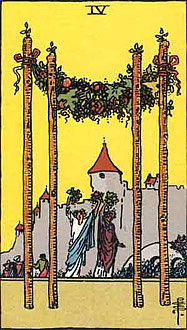
Four of Wands Reversed
Peace and prospertiy will be had, yet something may still seem missing.
Raidho
Raidho may mark the coming of a physical or spiritual journey. Whichever the case, changes in your life are soon to come. Spiritual or material goals may be attained.
The Gnostic Talisman
This aspect will be tested morally. This test is may be well hidden and the solution a mystery to you. You will have to make your way through it blindly. Have faith in yourslef and you will do fine.
Your Daily Influences represent events and challenges the current day will present for you. They may represent opportunities you should be ready to seize. Or they may forewarn you of problems you may be able to avoid or lessen. Generally it is best to use them as tips to help you manage your day and nothing more.

Crystal Lattice Patterns

Cubic

A cube-shaped lattice. Most crystals  of this type consist of a number of interpenetrating cubes, rather than single cubes. Examples: garnet, pyrite, sodalite, diamond, halite, fluorite and copper. Qualities: releasing tension and encouraging creativity

Tetragonal

This lattice is shaped like two pyramids joined base to base, with elongated upper and lower points. Examples: apophyllite pyramid, zircon, rutile and chalcopyrite Qualities: balancing and harmonizing

Orthorhombic

Shaped like a small squashed matchbox, with all sides unequal in length. Examples: danburite blade, peridot, topaz and celestite. Qualities: linking, aiding, the flow of information.

Trigonal

This lattice is shaped like a diamond or a barrel-shaped lozenge. Examples: sapphire, alpha quartz, tourmaline and ruby. Qualities: energizing and anchoring

Monoclinic

Shaped like an elongated squashed matchbox. Examples: selenite wand and kunzite Qualities: affects movement and perception.

Hexagonal

Shaped like a hexagonal prism. Examples: aquamarine, beta quartz, emerald and apatite. Qualities: organizing and supporting.

Triclinic

This lattice is the most variable, having no set angles or lengths. Examples: kyanite blade, labradorite and ulexite Qualities:  opening and protective.

Crystal Systems

Crystals can remain unchanged for millions of years because their constituent atoms are arranged in a stable, regular pattern, called a lattice. This lattice repeats throughout the crystal and ensures that every crystal of the same mineral will show the same geometrical characteristics, with the same number of flat faces always meeting at the same angles. This precise repetition is the same no matter what size the crystal or whether it is a faceted gem or a dull, rough piece. A crystal’s external form is simply a reflection of its internal atomic structure. These shapes have a significant influence over the magickal and healing properties of a crystal.

The lattices fall into seven major types. Different minerals that share the same core pattern will have similar basic shapes. Unfortunately, these simple forms are seldom obvious from the external appearance of crystals owing to the variable conditions in which they form. However, careful scrutiny will allow you to recognize certain identifying traits (for example, the hexagonal cross-section of quartz or emerald).

Your Daily Number for July 26th: 7

You may find yourself changing your priorities today and engaging in self-criticism. A confrontation with a loved one is possible, so keep your cool. Today is about your own spiritual realizations, wisdom, and hope. You’re comfortable being alone today and will probably be in a somewhat self-reflective frame of mind.

Fast Facts

About the Number 7

Theme: Quiet, Insightful, Analytical, Mystical, Intuitive

Astro Association: Cancer

Tarot Association: Chariot

The Pagan Newbie

The Pagan Newbie

Author: Crick

We often hear of someone who considers themselves a ‘newbie’ on the path of the mystical arts, or of others referring to someone as a ‘newbie’. But is either of these descriptions really accurate?

The concepts of paganism and the parameters that define such concepts have always been since the first human took breath and more likely even before the advent of humans. There are some who will say that paganism and thus by association the mystical arts, died out and is just now being re-discovered. But is this really an accurate observation? Or is it really our perception and thus sense of awareness that is new?

How many times as a child did you have an “imaginary friend”? Was this friend really imaginary or was it just that the mind of that child had not yet been brainwashed to deny such a sense of awareness? Was the perception of that child such that they could see/sense otherworldly beings? How many times as a child has one seen faeries?

And yet as adults such sightings have become a desire that is in many cases difficult to achieve.

Why?

Did the faeries cease to appear? Were they, as some would have us think, simply figments of our imagination? Or are such invectives towards the imagination really just subtle denials of that which really does exist but which certain folks feel more comfortable denying the existence of?

Within paganism, imagination, which is visualization by another name, is a necessary tenet or tool of paganism and by association, the mystical arts. And who but a child has such a powerful and unfettered tool as that of imagination/visualization?

And so instead of viewing paganism/mystical arts as some re-discovered form of belief, perhaps it’s simply that our realization and thus acceptance of what has always been is really what is now coming into play. And if this is the case, is anyone really a newbie to paganism/mystical arts?

Could it be that those who now choose paganism/mystical arts are basically just shedding the denial that has been implanted from an early age? When we walk through the woods and a deer silently walks by without one noticing it, is the deer non-existent or is it just our sense of awareness that is the reality here?

When we go fishing we cannot see the fish beneath the surface of the water but we cast our lines in anyway. Do the fish hidden in the depths not exist because we cannot espy them, or do we cast our lines into the murky waters because we know that there is something there even if we cannot physically see it?

Or do we decide that what one cannot see, one cannot acknowledge and thus we move on without bothering to cast our lines in at all.

Paganism/mystical arts are akin to this analogy in many ways. Every person on earth is involved in paganism/mystical arts their entire lives and has always been. For it is such tenets of reality that have immersed us from the very beginning of time as we know it. It is our sense of awareness of this reality that determines whether we once again step onto the path of paganism/mystical arts.

Saint Augustine once said; “Unless you believe, you will not understand”. And so though there are some who will deny the existence of paganism/mystical arts this does not preclude a reality that is ever present and ever evolving. It simply highlights a sense of denial of a profound awareness. And as this denial is pierced and recognition of reality and the higher truths that accompany it are brought into the scope of one’s awareness, that person re-emerges onto the pagan path that in all reality they were always on.

And so in essence, no one is a “newbie” as such in regards to paganism/mystical paths. And so such descriptions as “newbie” should be seen not as an introduction by one to paganism/mystical arts, or as it is in some cases as a diatribe used to elevate one’s own sense of personal status, but rather as a re-awakening of one’s awareness of such a reality.

In my own “personal opinion” such a term as “newbie” should be a cause of celebration much like the birth of a newborn child. For when one opens their awareness beyond the layers of denial that have accumulated over the course of one’s life, that person has emerged from the depths of denial and is once again swimming freely in the waters of self discovery and personal growth.

Is this not a cause for great celebration and adulation by those who willingly walk the pagan/spiritual path?

If we are determined to utilize the word “newbie”, then perhaps we should consider changing the implications of such a word from the current understanding. For in essence, we are all “newbie’s” as we seek to walk the mystical path. For each time we encounter a mystery of life and arrive at an answer that works for our individual lives, we open the door to yet another mystery or experience. Is this not the essence of what it means to be a pagan?

It is this constant seeking that for me at least, defines the difference between being a subservient member of a religion and being a seeker on a spiritual path. The latter has set parameters of which subscribers are expected to follow blindly without question. And of which one is discouraged from questioning even when such questions beg an answer.

As a seeker on the mystical path, one has un-fettered liberties to form and then to seek the answers to the questions of spirituality that we all face, whether as a member of a religion or as a seeker on the spiritual path.

And so if I have to take on the label of “newbie” in order to experience such freedom of the heart, mind and soul, then I personally will wear such a label with humble pride. For as a newbie, I look forward to the rest of my life as being involved in a state of discovery and learning.

If being a newbie equates to being a pagan, I have found my calling, have you?

Your Deck of Ancient Symbols Card for July 21 is The Tree

Your Deck of Ancient Symbols Card for Today

The Tree

The Tree symbolizes spiritual health and growth. The healthy tree is rooted in a rich, nurturing medium, has a strong trunk from which leaf laden branches fan out to capture the sun’s energy. The Tree represents a healthy spirit entrenched in experience and strengthened by wisdom. It is a spirit that is happy with itself, but continues reaching to become even wiser, more complete, happier, stronger. While The Tree represents a strong and independent spirit, it is also a life-force that owes much of its strength and growth to being surrounded by other healthy spirits.

As a daily card, The Tree denotes a time when your spiritual self is especially powerful and open for further growth. Now is a time for you to seek out streams of wisdom and knowledge that you can not only draw from but contribute to as well. Don’t disregard sources that seem improbable, as they often produce the most profound revelations and spiritual expansion.

Vision Quest: Seeking the Spirit the Old-Fashioned Way

Vision Quest: Seeking the Spirit the Old-Fashioned Way

Author: Sunny Dawn

A vision quest is a challenge. The verb in Lakota literally means, “to cry out for a vision”. This means you have to suffer in exchange for a gift. The words “cry out” may also refer to songs or chants sung by the person undertaking the suffering. In my first coven, it was highly desirable, if not precisely required, for third-degree initiation, although I did not attempt a vision quest or receive third-degree initiation from my first coven.

A vision quest has little to do with astral travel or guided “journeys”. Anyone who has ever perused the shelves of a pagan bookstore knows there are plenty of books available on astral travel. Any pagan who has ever attended a workshop, retreat, or festival has probably had an opportunity to participate in a guided “journey”.

Vision quests involve a little more advance planning, and a lot more sacrifice. They can also have a high rate of failure. Both are good reasons why the vision quest tends to scare folks away. But the most important reason why vision quests are no longer that popular in terms of pagan spiritual practice is that there isn’t a whole lot of sensible, contemporary advice on how to do one successfully. With this article, I hope to change this perception a little. A vision quest isn’t easy, but it is more accessible than most pagans think.

First, let’s start with the question of what a vision quest is, and what it probably isn’t. A “vision” is something more than a vivid dream that is easily remembered upon waking. It can be hard to describe to someone who hasn’t had one, but a “vision” is usually of profound personal significance to the person who receives it. It is more than a dream that rehashes the person’s recent experiences. It is almost always a foretelling of one’s personal future. It is often accompanied by some sort of supernatural event (however mild) that “marks” the vision as more than a dream.

If this describes the “vision”, then what is the “quest”? Traditionally, the “quest” involved a four-day fast done outdoors without food or water, and without drug use of any kind. Tobacco was offered, but not consumed [see note below]. Deloria uses the term “fast-vigil” as well as the more common “vision quest”. It was undertaken by young people (more often men than women) as a rite of passage, and not just by children or teen-agers who hoped to grow up and become medicine men someday, but by anyone who was serious about their spiritual path [see note below].

Most people who did a vision quest simply expected to live their lives to the fullest with some protection from the spirits. Others sought to obtain powers that would enhance their capabilities, but this imposed additional responsibilities on them. These responsibilities set them apart from the everyday life of their community, so it is probably fair to say that most hoped for the “vision” and not much more.

Deloria reports that the vision quest was nearly universal among Native American tribes. Because it was difficult to determine the validity of a vision, youths would discuss their vision with one or more elders who would help them decide if this vision was the primary one meant to shape some important part of their future [see note below]. Then they would get help “re-enacting” it down to the smallest detail, to demonstrate their intent to make the vision a reality. In the case of Black Elk, his vision involved the whole tribe, so the entire tribe participated in the reenactment (but this was the exception rather than the norm) .

What does a non-Native American “vision quest” look like today?

It is probably fair to say that the seeker is a “youth” on his or her spiritual path (my primary vision came accidentally during my first year on a pagan path) . Three or four days are still the goal, but the fast is from food only. It should be done outside, but it can even be done at a crowded campground if you have no other options, since your dreaming is most likely going to occur at night when things are quiet. Any vivid dreaming which occurs during this time may be considered sacred, but you will have a pretty strong “feeling” about a dream that is actually a vision.

Even a fast from food scares off a lot of folks. Assuming normal health, it shouldn’t. The fast is a very important part of what you’re doing the whole long day. It will get successively harder each day, and it will leave you pretty strung-out on the second and third day. There is often some loss of motor control on the fourth day, depending on the individual. Fasting only from food is popular because it allows the seeker to undertake the three or four day quest without being attended by someone else, assuming adequate advanced preparation.

There is no requirement that you be bored to tears during the long days. You can read, or play an instrument, or take long walks surrounding yourself by nature on the second or even on the third day, or sleep more than usual (a very common phenomenon on a fast) . None of this is “cheating”.

Fasting makes you more aware of your surroundings, particularly on the second day. In the morning, the smell of wood smoke from a neighbor’s tent site permeates everything. A birdcall really does sound as if it is trying to tell you something. You notice the fresh smell of the earth that comes up at the end of the day and washes out the fish odor next to a river. You are more aware of that honeysuckle scent in a shady alcove along the water, or the sudden splash of a fish that cannot be seen.

You will definitely want to set aside some time to observe the sky at night, to see if there is a prominent star whose god or goddess is “governing” your vigil (this can be meaningful even if you have dedicated your fast to deities that have nothing to do with the Greek or Roman gods normally associated with the night sky) . On the night I observed the sky, Mercury was strikingly close to the Earth, and it made everything else look as if it had lost its batteries. This meant that Hermes, the god of merchants and thieves, and the psychopomp who guides the dead to their just rewards, was guiding my fast. After it was over, I was to find out what this meant.

Choosing a tobacco offering is important. Whether or not you smoke is irrelevant, because the tobacco isn’t for you. I considered buying a pipe, but decided that a pipe is very closely associated with the Thunder Beings, the most powerful natural elements on the Plains, and that I did not know enough about these deities to call on them appropriately. So I spent seven bucks on a fancy cigar instead.

Each night I wrapped it up in the small bag that holds my extra tent stakes so it would stay dry, and the next morning I withdrew it, and lit it as the first offering of the morning. A sage bundle is probably an acceptable substitute for those who cannot tolerate tobacco. Those who are concerned about the purity of their tobacco offering will definitely want to stick with loose pipe tobacco.

Fasting without water is not something I can speak to personally. It will be A LOT more painful, both physically and psychologically, particularly if it is your first time going without water. It is also essential to have someone attend the seeker who abstains from water (this may mean arranging for someone to take off time from work and compensating them for lost earnings) . Your attendant doesn’t have to camp right on top of you but you will want them close enough to check on you frequently. This “someone” had better have competent first aid knowledge, as well as knowledge of the various phases of dehydration from the swelling of extremities like fingers or toes all the way up to hallucination, loss of consciousness, and death. It goes without saying that if you have an extensive background in meditation; you are going to be able to slow down the dehydration progression. If you don’t, you may want to rethink this one.

Say I’ve got a posse with enough time and dinero to make a field trip out of this. Any advice?

The Lakota considered the Black Hills the sacred center of their world, and Native Americans still use the Black Hills extensively when they want to do a vision quest. So do quite a few non-Native Americans as well. On the western end of South Dakota, just north of the motorcycle stomping ground of Sturgis, is a popular spot called Bear Butte (a.k.a. Bear Butt) . It won’t be private, and you will see tourists walking by you on most days, but folks tend to be respectful because this mountain does get a lot of spiritual use. It also has a nice campground adjacent to the mountain that your group can use as a set-up base.

I can’t speak for Harney’s Peak, although I suspect it will be crowded due to its proximity to Rapid City, SD. As the highest peak in the Black Hills, it is very important to Native American spirituality. “Women Killer” General Harney made a sport of killing non-combatants, so the reader may imagine what most Indians think of having their sacred peak named after this dude. “Would you name the highest peak in New York after Hitler or Goebbels? Didn’t think so, ” one remarked to me.

Just over the state line in eastern Wyoming, Inyan Kara Mtn. is said to be less accessible than the other two peaks and therefore more heavily associated with spiritual use.

What is an “accidental” vision?

According to Deloria, visions that simply “came” were a transition between relying on dreams and actively seeking a vision during a traditional experience of four or more days of ceremony. As a young pagan, this is actually what happened to me. With a minimum of fuss, I did a simple ritual, and asked for a “vision”. At the time, I wouldn’t have even known how to go about a traditional vision quest. A few nights later, I got my wish.

Marshall relates that the teen-age Crazy Horse at first did not trust his vision, which was also “accidental”, because he had not pursued it the traditional way (through pain) . Visions that came without sacrifice were distrusted. Still, with his father’s encouragement, his people accepted the first vision.

The vision I received was a “culminating” vision, a fairly common category among visions. It showed me an unavoidable personal disaster, dealt with events that happen to me in old age, and showed me my descendents who are not yet born. Within the vision, it seemed to me that there were also tantalizing glimpses of things that could not be seen. It is of little surprise to me that many people wish to undertake a second vision quest at some point in the future after their original one, in hopes of potentially exploring these tempting gaps.

It can take a very long time to get confirmation of the events one sees in a vision (the first of my descendents was born to a sibling six years later) . A “culminating” vision was considered a special gift because it showed the seeker that he or she would live into relative old age, a precious blessing among traditional communities with high adult mortality. The other side of this is waiting a long time without “knowing” if any part of it will come true. This is rather ironic considering that “knowing” is the whole point of seeking a vision.

Seekers who get a lucky “accident” sometimes wonder whether they should attempt a second vision under traditional circumstances. Unfortunately, I can’t answer this with certainty, since my second attempt failed. The literature relates that Black Elk would say that the biggest mistake he ever made was attempting a second vision in hopes of supplanting the meaning of his original one. Crazy Horse did attempt a second vision some twenty years or so after the first, but his descendents said that no vision came to him.

Seriously, what’s it like going three days without food?

Honestly, somewhere between “no big deal” and “WTF am I doing this, where am I, and why am I in this hand-basket?” You are feeling pretty hungry during the second day, but it still fits the “not that bad” category. If you get hunger headaches, you need to decide whether or not you will permit yourself aspirin (I decided to “work around” my headache, but I don’t see anything wrong with aspirin if it helps.)

You also need to wear more layers at night than you normally would if you were camping outdoors on a reasonably warm night, because your body will be more sensitive to cool temperatures while fasting (I found that I needed four layers on my chest to feel comfortable, in addition to the blankets I was sleeping under.)

It is also important to pay attention to signs in the environment at the beginning of your fast, because these will give you clues to the outcome. As I was setting up my campsite, a pair of scissors I was using broke. One of the handles simply cracked off. My experience has been that when something out of the ordinary like this occurs right at the beginning of spiritual work, it is usually a sign that nothing will come of it. Then it is up to you to decide whether or not to continue, or call it off.

Initially, I thought I would do a four day fast. After this happened, a three day fast seemed more appropriate, because I suspected this would be a purification rite, which is pretty much what you end up with when a “vision quest” fails.

The third day is tough, but the thought that there is only one day left keeps a lot of people going. On the morning of the fourth day, I had trouble buttoning my jeans, and quite a bit of trouble tying the laces on my hiking boots. Having someone attend me if I had wanted to do another full day would have been wise. I broke the fast early the fourth day. You get nearly instant strength from eating, enough to dissemble a campsite. It takes an hour or so to see an improvement in motor control, however, and a strung-out feeling may persist for several hours (although caffeine helps – stash a Coke for the end of your fast) .

Deloria has an interesting point about fasting. He feels that the four days of fasting was not a determining factor. He notes that many Indians had fasted far longer than four days when on a hunt, so four days was not a challenge. Also, some people received messages on the first or second day of their ritual, before any real physical deprivation of their body began to alter perceptions of the environment. It was the intent to do a four day fast that mattered (and still, many would simply report a bird or insect came before them, signaling that their efforts had not been wasted, but there would be no profound communication or interaction) .

What about “failure”?

It can be really disappointing if you have not experienced a vision, and have doubts that you ever will. The powers designate their recipients themselves. Your earnest effort may not move them.

On the other hand, no sincere effort is really a failure. If you successfully complete three days of fasting, and never thought you could do something like that, the sense of empowerment is palpable. Also, pay attention during the days after your fast is completed. The gods have their ways of acknowledging you privately even if they don’t “gift” you with a vision.

What are some other common types of visions?

Seeing an animal was fairly common. In one of Deloria’s examples, a man called Le Bornge saw a graceful peace spirit, the antelope. He did not see a war spirit, like a wolf or grizzly bear. This meant he was to guide his people by counsels, and protect them from the evil of their own feuds and dissensions. He would not gain renown by fighting.

Seeing an animal would be meaningless for a lot of modern folks today. A vision usually comes in a context that the recipient can at least partially understand. You may not feel the need to “reenact” it to demonstrate intent the way traditional practitioners did. But it is a good idea to talk the vision over with someone on your spiritual path whose experience and wisdom you respect, if you have access to such a person.

In my case, I was able to talk about it with the high priestess of my first coven. The first thing she told me was not to “read too much into it”. This was actually wise counsel. Feeling filled with certainty about something as exceptional as a vision is a swell recipe for a big head.

She also helped me distinguish what made the vision “real”. After I described it, she told me flat out it sounded like a dream, not a vision. I felt differently. So I described it again. This time I realized it was important to tell her how I came awake after the first part of the vision, and heard the sound of drumming that seemed as if it was right outside my house. I described how I badly wanted to go downstairs and find the source of that drumming, but ended up going back to sleep and having the final portion of my vision.

When I awoke again, I could see gray morning light coming through the skylight, and the sound of drumming was still there. By the time I got downstairs it was gone.

My priestess gave me an intent look, and said she felt I had in fact had “something more than a dream”. The whole process of defending it to her made me recall it from various angles so I could see myself if it really was valid.

Why do a vision quest at all?

There are a few different answers to this question. Some of them come straight from the journal I kept during my recent vision quest.

On the first day I wrote:

“When a vision comes to you without asking, as it did for me many years ago, you have no idea what it is like to actually ask for one. What will the boredom be like? What will be the hunger be like on the second or third day? Will I do it a fourth day? You come out here to ‘know’ into the future, but there is so much not ‘knowing’.”

On the second night I wrote:

“My stomach is hurting. So is my head. Best thing to do is to stay in the present. If it teaches you anything, a fast teaches you to stay only in the present moment. Don’t worry about the next day of the fast. Just deal with what you are dealing with right now.”

Others expressed different reasons. These range from the pragmatic, to a hard-wired yearning for the future, to a profound respect for the best that an “alien” culture had to offer.

Deloria excerpts the vision of a young man called Siya’ka:

“I was not exactly singing, but more nearly lamenting, like a child asking for something. In the crying or lamenting of a young man seeking a vision two things are especially desired: First, that he may have long life, and second, that he may succeed in taking horses from the enemy.”

The second reason he gives is interesting. It implies he was facing a problem of scarce resources. Some of the warrior chiefs were facing far worse than this.

Dee Brown writes of Crazy Horse:

“Since the time of his youth, Crazy Horse had known that the world men lived in was only a shadow of the real world. To get into the real world, he had to dream….In this real world his horse danced as if it were wild or crazy, and this was why he called himself Crazy Horse. He had learned that if he dreamed himself into the real world before going into a fight, he could endure anything [see note below].”

John Mason Brown writing in the Atlantic Monthly in 1886, observed:

“It cannot be denied that whites, who consort much with the ruder tribes of Indians, imbibe to a considerable degree, their veneration of medicine. The old trappers and voyageurs are, almost without exception, observers of omens and dreamers of dreams. They claim that medicine is a faculty which can in some degree be cultivated, and aspire to its possession as eagerly as do the Indians.”



Footnotes:
A Few Personal Observations

Quests involving peyote or other shamanic plants are a different animal from the vision quest that involves no drug use. The former is “easier” to do, and certainly more popular in certain quarters. But every account I have read suggests that the seeker is more likely to receive general wisdom than a specific vision of their personal future. This does not mean that drugs could not be used to obtain a personal vision of one’s future with the spirits’ blessings. But it is worth considering how much of the vision is actually yours when it comes from a drug, and ends as soon as the drug is metabolized. When seekers aren’t hallucinating from the drug (or from thirst) , they have little doubt where their vision is coming from.

Why the emphasis on determining the “primary” vision? It is important to remember that the average layperson (non-medicine man) relied on many different types of omens from the natural environment, or visions for their divination needs. This meant they would do more frequent vision quests for mundane needs, such as determining the best time and place for finding buffalo, or the best way to raid the neighbor’s horses without catching an arrow or losing their scalp. It was important to acknowledge the more sacred nature of a “primary” vision, as well as its longer lasting impact.

Physical toughness combined with meditation skills acquired through bow-and-arrow hunting may explain in part why Native American youth could successfully handle a four day fast without water. Marshall relates that Crazy Horse learned his bow-and-arrow skills by shooting grasshoppers in high grass before he was old enough to join real hunts. Think about this for a minute. It requires incredible precision to hit a creature as small and quick as a grasshopper. He would have had to slow his breathing, and achieve incredible stillness before and during each shot, and he would have had to practice this over and over again to get it right. Hand me a hand-made bow and arrow, and I’d be lucky to hit the broad side of my cat at fifteen yards, let alone a grasshopper at that distance. Today’s adults no longer possess the meditation skills that Native Americans used to learn as kids.

Dee Brown was trying to explain why Crazy Horse “dreamed”, and his words resonate on an intuitive level. But Marshall relates that Crazy Horse took the name from his father, who gave up his own name because he sensed that his son would need its power. The father of Crazy Horse was then called by a weaker name, so that all power would flow toward his warrior son.

Bibliography

Brown, Dee. Bury My Heart At Wounded Knee: An Indian History of the American West, Henry Holt and Co., New York, NY, 1970.

Only a couple of references are made regarding the vision quest, so I won’t describe this book in detail. This book is considered the primary 20th century history of the Native American struggle to survive a holocaust.

Deloria Jr., Vine. The World We Used to Live In: Remembering the Powers of the Medicine Men, Fulcrum Publishing, Golden, CO, 2006.

This fascinating survey should be mandatory reading for any pagan who has even attempted a sweat lodge, let alone a spiritual quest. In the first chapter titled, “Dreams – The Approach of the Sacred”, the author writes about visions, shared dreams, and sacred intrusions, including many examples of both men’s and women’s visions. Remaining chapters don’t deal specifically with the vision quest, but they all seem to relate some wisdom that someone seeking a vision may somehow find useful. The author was best known for his 1970’s tongue-in-cheek classic, Custer Died For Your Sins. This final work was published a year after his death in 2005.

Marshall, Joseph III. The Journey of Crazy Horse: A Lakota Story, Penguin (Non-classics) , 2004.

This biography of the Lakota leader who was murdered when he was 35 years old was written by a tribal member who interviewed the descendents of Crazy Horse’s relatives. The author’s view of the great warrior’s legacy, and what it means to his people, is different from the way Crazy Horse is remembered by most whites. Crazy Horse’s vision is central to this story; the author alternates the words used to describe his vision with impressionistic glimpses of Crazy Horse’s surrender right before he was killed. Don’t miss the final chapter called A Story: The Lightening Bow, a moving look at the gift of sacrifice that a leader makes on behalf of his tribe, and what happens when the people don’t even understand how much that is worth.

Neihardt, John G. Black Elk Speaks: New Edition, Bison Books, 2004.

It has been so long since I read this book that I hesitate to review it, but I do want to recommend it because Niehardt goes into elaborate detail on Black Elk’s original vision of the slaughter of his people, and his subsequent “false” vision of the Ghost Dance as a possible means of saving his tribe. Black Elk relates that his primary vision was so bitter that he could not bear it, but his subsequent vision was mere wishful thinking because he could not accept the truth. For anyone in search of a subsequent vision, this is wisdom worth pondering.