Tag: God
MAKING AN ATHAME
MAKING AN ATHAME
An athame is traditionally a double-bladed knife with a black handle. Very few
people make their own, although it is possible to do so. Most people obtain one
and personalize it in some way. This is most commonly done by inscribing
symbols or runes on it. In some traditions specific symbols are required and
have been handed down through their lineage. In others and among eclectic Wicca
groups, these can be personal.
How do you do this? You cover the blade with Paraffin. (WAX) Then you let it
cool. Next you take a LONG sharp NAIL and inscribe the symbols in the wax.
Then you use dilute Hydrochloric acid – careful, this stuff is dangerous, and
drop by drop place on the blade where it shows through due to your inscriptions.
When the acid has worked – usually fairly quickly – you rinse the blade under
running water THOROUGHLY and then you use VERY hot water and a lot of elbow
grease to remove the wax.
If ANY ACID FALLS ON THE SKIN RINSE THOROUGHLY UNDER COLD WATER IMMEDIATELY and
if there is a burn of any type, seek immediate medical help. IF it gets in the
eyes, again rinse immediately and completely and CALL THE EMT/PARAMEDIC UNITS.
It is best when doing this if you wear either some type of glasses or goggles
and rubber gloves.
DO NOT INGEST THE ACID OR LEAVE IT WHERE IT COULD BE INGESTED BY A CHILD OR
ANIMAL. Also be careful of how you dispose of the rest of it – do so in an
environmentally SAFE way.
This sounded like a little too much for me, so I tried another method. Koren
made a beautiful athame for me and I personalized it by putting herbs of my
choice in the handle and sealing this with a favorite crystal of mine – again
with his help.
Oh, if you absolutely can’t get a double-bladed knife – in Massachusetts, for
example, possession of such a weapon is a CRIME – get a single-bladed knife and
grind down the other edge as much as you can.
As I said, the Athame is USUALLY black-handled, but there are exceptions – I saw
one Lady use a knife with a deer’s hoof for the handle. She was oriented toward
her Native American heritage as much as her Craft, so it had deep significance
for her. I also saw – in fact a friend of mine was selling it – a BEAUTIFUL
homemade athame with copper tubing forming a cross hilt and crystals in each of
the three tips for the handle. (this was almost a small sword) AS ALWAYS USE
WHAT SPEAKS TO YOUR OWN SOUL!!!!!
The athame is usually NOT used in circle for anything other than ritual and
ceremonial purposed. If you need to inscribe a candle for Magick or slice the
bread for the cakes and wine part of the rite, you usually use a BOLINE or white
– handled knife, often a small dagger or even a pen-knife, set aside for these
purposes.
The Censer
The censer is one of the basical elements in arranging the altar for ritual. Whether we use our incense in sticks, cones or grain, we must have a vessel to hold the ashes and isolates the altar from the heat of the burning incense.
If we’re using sticks, the best will be to have a shallow, wide mouth recipient (like a soup bowl), full of sand, where we’ll nail the sticks to consume. The same if we’re using cones. If we want to use grains, the censer must be heat-proof, for the burning coals will release extreme heat. This last type is the most advisable, since it gives us the freedom of making our own mixes from scratch, using a few basic elements and adding herbs or even flowers if wanting to.
In every case, it’s better if the recipient has some kind of handle, or chains like the old Church censers, to handle it without getting nasty burns. We must keep in mind that in some cases we’ll have to walk around with it, for instance, if we’re doing a house cleansing. The better materials are clay, ceramic or bronce, being the former the cheaper but more fragile, and the later the most expensive.
The censer and the coals slowly consuming, represent the elements of Fire and Air in the rituals, both masculine. Generally, the censer will be placed on the right of the altar, needing a case similar to the one we ought to have with lit candles.
The Broom
The broom might be, along with the cauldron, the most famous tool connected popularly with witches. Traditionally an element symbolising the union of the masculine and feminin principles, was used not for flying, but for the ritual cleaning of the working space, and protection and fertility rites. Some authors suggest the broom was the perfect place to hide the wand during the Witch Hunt, disguising it as an element of daily use.
Sir James Frazer in “The Golden Bough” gathers multiple examples of rituals that involved the use of a broom, generally as a symbol of fertility or fecunding energy. According to one of those, to assest the fertility of the fields a young woman had to circle them once they were sown, naked and riding a broomstick. In these rituals might be seen the remains of the primal fertility rituals, where the High Priest and the High Priestess symbolised the marriage of Earth and Sky, the Goddess and the God, renewing the fertility of the land.
Another version suggests that if we want a cleansing broom, it should be made of willow wands, which was believed of old to cast off evil spirits. This was believed to the point of considering the whipping with willow wands a sure method of exorcism.
The truth is, our ritual broom must be of the old style, made of wigs or straw, and it must be reserved to a symbolic pass to cleanse the place of any type of energies before starting any ritual, and as every tool named so far, must be kept for this purpose only. The best results will be achieved if we make it ourselves, but due to the difficulty of this task, we can safely leave it in someone else’s hands, if we’re careful enough to do the energetical cleansing before using it.
It’s use is not strictly necesary, so let us not despair if we can’t find a broom maker where we are: we can easily go on with our celebrations without the broom, as long as we replace the cleansing action with a similar one.
The Chalice
The chalice is a smaller version of the cauldron as a representation of the eternal feminin and the element of water. We’re talking about a goblet, usually of the round type, in which we’ll have water represented during rituals, even though on ocassions it might contain some other liquid, for example wine during the simple feast.
The selection of the apropriate chalice is a delicate task. We could use a glass one, even though the traditional is made of metal: gold, brass, silver or the like. We must be very careful when choosing, preffering the ones with their inside covered in glass, silver or stainless steel, because metals like copper and brass can be poisonous when in contact with alcohol. We must also consider the size, preffering the middle-sized, to make it easier to handle. It’s not necesary to get a very ornated one; it’s perfectly valid to use, if wanting to, one of grannie’s crystal glasses, if we perform the appropriate ritual cleansing.
Shops specialising in wedding gifts are bound to have sets of two metal gobblets perfectly capable of handling alcoholic beverages (the ones that have problems when reacting chemically with the metal), and so can be a good place to find our chalice. Having an extra one can be useful if we want to perform rituals where we need both water and wine (or similar), and we won’t have the cauldron available or we’ll be using it for other purposes. Personally, I’d rather have two chalices: a brass one for solar celebrations, and a silver one for the lunar ones.
The ritual uses of the chalice centre mainly in being the holder of the chosen liquid, whether it’s water to purify the circle, or the chosen drink for the simple feast or ritual libation. Usually it’s use will be the first, and even if we can replace it with any glass, due to the ease of getting hold of one, I think it’s better to chose once and for all, and use the chalice regularly, not ocassionally.
Walk Your Own Walk
Walk Your Own Walk
You have to walk your own walk in this life. And as you are traveling down your road, don’t look down at your feet. Keep your head up and your eyes focused on what you know to be true. Be neither a follower nor a leader. You are not forsaken; you are forgiven, and when shadows exist simply find higher ground to tread upon. If you come across an obstacle or an impasse, pay mind to it but don’t focus on it for too long or your feet may sink into the quicksand that surrounds it. Find the courage to surmount it and continue on your journey.
Offer your hand to those you come across who are stuck in their own personal sand traps, but do not point them in the direction you feel they must go, that has to be their decision. Only imply to them that they are never alone, and they will eventually find their way. When you get to where you are going and you look back, it is your own footprints you are going to want to see, not someone else’s. The importance of your trials and tribulations is a gift to be beholden, for that is how you will learn whom you truly are.
— Copyright © 2005 Diane Gresham
Rose Dye
Rose Dye
The Native Americans removed the spine by rubbing the cactus in the sand.
Plant: Prickly pear cactus
Harvest time: September
Material: Fruit, fresh
Vessel: Earthenware or enamel kettle
Squeeze the juice from 2 pounds of cactus and strain into 3 gallons of water. Add 1 pound of yarn and soak for 1 week in a warm location. Rub the yarn daily. Rinse several times. To deepen the color, repeat the process a second time.
Your Daily Influences for April 24
| Your Daily Influences April 24, 2011 |
||
![]() Tarot Influence |
Rune Influence |
Charm Influence |
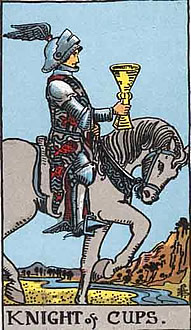
Knight of CupsGrace mixed with laziness. Preoccupation with sensual fantasies. Look for a message, opportunity or invitation. |
||
IsaThe Ice Rune, represents stagnation and a passionless existence. Your life’s course may seem blurry at the moment, but if you persevere you will move onto better days. |
||
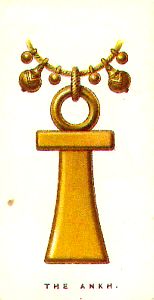
You may need help from a higher law to balance this aspect. This law could be a supervisor, a mediator or even a judgement through a legal venue. |
||
| Your Daily Influences represent events and challenges the current day will present for you. They may represent opportunities you should be ready to seize. Or they may forewarn you of problems you may be able to avoid or lessen. Generally it is best to use them as tips to help you manage your day and nothing more. | ||
Your Animal Spirit for April 18th
Your Animal Spirit for Today
|
||
The CraneCranes have been revered for centuries in many Oriental cultures, symbolizing good fortune and long life. If Crane has flown into your reading today, he brings a message of good tidings. Be prepared for something special today—emotional balance, good health, a spiritual “ah-ha!”, or simply pure joy. |
||
Put The Book Down!
Put The Book Down!
![]()
Author: Siantia
I quarrel about the meaning of the term ‘Wicca’ or ‘Pagan’. I argue over the rules and structures of the various ‘Wiccan paths’. I label myself with the correct label for my position in the craft and demand others do the same. I adhere to set structures and rituals and judge those that do not. I look to occult figures to gather my instructions on how to worship my Goddess and God. I rely on another human being to give me permission to have a spiritual identity. Does this sound like you? If you have ticked any of the ‘boxes’ above then I urge you to read this article. But I’m warning you – there are no labels here for you. No man/woman to tell you the rules of your religion and no words given to you to describe what you are.
How many books on Wicca/Witchcraft/Paganism and any others of a similar nature do you own?
How many of these books have rituals for you to follow, incantations for you to recite and sabbats for you to adhere to?
How many people do you know that say you MUST be in a coven, or you MUST do that or you HAVE TO think this way?
How often, when engaging in a Wiccan/Magickal discussion or argument have you opened your most prestigious Wiccan book to read the answer and then quoted it and sat back happily knowing you must have won the argument because you used the words of an occult icon?
Quarrels about rules and words feature so strongly in Wicca/Witchcraft, everyone has their own opinion and everyone seems to have their biography of Gerald Gardner or Alex Sanders at the ready to use if the argument gets tough. But I ask you – where is your Goddess and God when you are debating this and arguing about that and proclaiming you know more than this person about that subject?
How many times do you put your book down, step away from the laws of your coven, stop listening to the ‘more experienced’ Witch and look inside your heart to talk to your Mother and Father? What do you think they would tell you about all these rules, paths and words?
“Quarrelling about words only serves to ruin those who listen to them” is one of my favorite quotes, and one I read often when I find myself almost getting involved in an argument. There is no piece of information so grand that you need to quarrel and argue over it. There is no right so right that has not come directly from The Goddess and God. I urge people to put their books down and to talk to the source that can give them all the knowledge they’re looking for. It starts by looking inside yourself and not at your favorite author; once you have looked inside yourself you find the Goddess and the God were there all along.
When you next meet someone that refers to him/herself using certain labels, or when you next are involved in a conversation about the rules of a Wiccan ritual ask the goddess and the god to show you the truth of these man-made creations. Listen and feel what you receive. What do you think your Goddess and God would say to the people arguing over the exact meaning of the term Wiccan? What do you think they would say to the couple trying to win the argument about the importance of initiation? Do you think our loving Mother and Father would see the relevance or importance of any of this?
When you feel afraid that something you are doing is not correct, who are you afraid of? The person who wrote the book you are following? The high priestess of the coven you have just joined? Or the judgmental ‘experienced’ witches you socialize with? Out of all the people you are afraid will judge you if you are not adhering to the label you have been given (or have given yourself) do you think any of them have the authority or power to say anything? Do you believe a man or a woman has more knowledge about The Goddess and The God than the Goddess and The God themselves? And do you believe that anyone but yourself can find the right answer to your problems?
Put the book down, and while you’re at it socialize with less rigid people. We are our own masters, because all of us are children of our Mother and Father. No matter what words you read in books, no matter what ‘high’ priest/ess tells you – no being knows more than The Goddess and God. It is to them you should talk, not to ‘man’.
Religion can be a beautiful life choice that makes your incarnation more colorful and interesting; a way of life that inspires you and makes you feel fulfilled as a human experiencing the Earth, knowing deep inside that it is a creation of man and that simple love of your creators will always triumph. Is this you? Or have you become so consumed with your chosen label, so consumed with the words and their meanings that you have forgotten the simplicity of the universe? What is it they say we have here? Ah yes – free will.
Perhaps you feel your religion and structure, fine details and correct interpretation of words are still important to you? Perhaps you feel that the Goddess and God are with you on that, and they wouldn’t like you to throw away labels and boxes? Then, debate away. Open your forum and join with everyone else that wants words to be important. Words have power after all!
I will go and sit beside the Goddess and The God and we shall watch you in your hall of right and wrong. When you are ready…put the book down, and see what the Goddess and God has to discuss with you.
Merry Meet to all the masters of themselves.
Footnotes:
*This article is intended for thought provoking and not direct insult. The opinions expressed are my own and so of course are not being imposed or ordered onto anyone else. Live and let live after all.
Your Animal Spirit for Today
|
||
Blue JayBlue Jay encourages you to be a little sassy today! If there’s something you’ve been wanting, ask for it. If there’s an issue that needs confrontation, don’t sweep it under the rug or Blue Jay will drag it back out into the open. One word of caution, though—Blue Jays will eat the young of other birds—so be direct, but not destructive. |
||
April 14 – Daily Feast
Great strength exists in the smallest things. The spider’s web is so exquisitely formed, a fragile gossamer remnant. But it is stronger in proportion to size and weight than the finest steel. The hummingbird’s wings send out impulses strong enough to resemble the throb of a tiny high speed engine – but early on, it was thought that because of the way its wings were constructed it could never fly. Love can be a mere glance, di ka nv to di, a brief word, a silent touch. But it reaches past time and space and mere existence. Prayer, short, deep – a word from the depth of heart and spirit can work miracles and change a whole world.
~ There is something that whispers to me….to listen to offers of peace. ~
LITTLE TURTLE
‘A Cherokee Feast of Days’, by Joyce Sequichie Hifler
*<<<=-=>>>*<<<=-=>>>*<<<=-=>>>*<<<=-=>>>*
An Amazing Day…Create A Masterpiece!
Welcome to Today!
If you choose, you will find that today is an amazing day.
It is filled with countless blessings and opportunities.
You’ll find plenty of reasons to smile and even more to laugh.
You will be given the chance to say “I love you”, “I’m sorry”, “Thank you”, and anything else you want.
In all truth, today welcomes you with no rules.
The only requirement to see all it has to offer is that you live it.
Will you live today?
I don’t mean exist, I mean LIVE!
Will you truly LIVE today?
So many people will awaken to this beautiful day and embrace all its blessings.
Why not you?
Today is a new day! It’s your day.
Today, you awaken to a day in which you have the power to make and inspire change.
In fact, it is the ONLY day in which you have any power. You have no control over yesterday. Yesterday is gone. Tomorrow is a day you haven’t even met, it is beyond our reach. Tomorrow is waiting to reveal itself depending on the actions of just one day… TODAY!
What will you do with today?
Will you finally break free from the victim mentality and take control of your life?
You have been blessed with immeasurable power to make positive changes in your life.
Change things up today!
You will never convince me that we go through everything we go through just to end up where we were when we started. We are here to evolve… to refine and improve ourselves… to inspire and help others do the same.
Today is a new day!
It’s yours to shape. Create a masterpiece!
— Copyright © 2009 Steve Maraboli
Stop The Abuse! Spirits Have Feelings.
![]()
Author: Zanaffar
The title of the article is pretty strange at first sight, but it will become clear as you advance in the contents. As you already guessed, we will be talking about spirits, entities, and “magical beings”.
Many magic users, “spell casters” so to speak, learn or are taught from the beginning how to attract the aid of spirits when they perform a magical working. Asking the spirit world for help is not an unusual thing; even the followers of major religions include angels, saints, etc in their prayers. From the most ancient of times, the rites of great civilizations (Egyptians, Sumerians, Aztec etc.) included some forms of seeking aid from spirits and other worldly beings. So we can clearly see where the practice originates.
Sadly nowadays many people who work with magic, regardless of their spiritual ideologies, use this practice very incorrectly, be they Wiccans, eclectics, ritualistic Magicians, traditional witches, etc. Some of we magic users draw a faulty conclusion, which leads to further misconception, when we interpret different magical texts, grimoires and conclude that spirits often have the role to serve us. So in our rituals we include spirits to go and carry out our will, to do certain “jobs” for us, and/or to bring results to our workings.
Many people don’t really understand what they are truly doing and what they are dealing with.
First of all, we must know that no matter what type of spirit we are working with… that spirit is “alive” (in a philosophical way, of course) ; it is an intelligent entity, which is self-conscious. Even the most primitive, lesser spirits have some form of consciousness, so you are not dealing with a robot that knows only to follow your command. So what does this involve? This involves a measure of respect: as you would respect every living being, so you should respect every ethereal “living” being.
Every spirit has its own purpose and role in the world, and yes, it has its specific job, what it was created for or what it chose to do. So it has much better things to do than to carry out blindly someone’s will. If you ask it for help with kindness and respect, that is a totally different approach. You give it a choice; you appeal to an Universal law of reciprocal help, and in this way the spirit may choose to help you or ignore you. In all cases, simply asking for help is not offensive to anyone.
The problem is that many people don’t like to be ignored, so they force their wills on the spirit by various magical and psychic techniques, which is immoral and totally wrong. How would you feel if another person did that to you? How did the slaves feel in humanity’s troubled history? You wouldn’t even do that to your cat or dog… so why would you treat a spirit differently?
It doesn’t matter if it’s just a simple elemental spirit, or a very advanced entity of some sphere…as long as it is in existence, it’s totally wrong to force it to do something. And yes, just as the title says, some may have feelings similar to ours. You must realize that every self-conscious being in existence has some form, some level of emotion or instinct or feeling.
Sadly in the ranks of magicians there is a certain practice that is very widespread. Some use certain Solomonic evocation techniques to summon spirits (mostly angelic, demonic, planetary, Olympic) and force information or an action out of them. What they do is they appeal to the representation of the source of all powers and by charging themselves with its power, and of course “highlighting” the superiority of their divine essence, they force spirits to obey them. It’s true that in most cases they only force demons or demonic spirits… but in my opinion, their practices demonstrate a very low moral standard. They consider themselves directly connected to the Supreme God, source of all powers and to angels who represent an aspect of this Omnipotent source.
What I don’t understand is how could angelic beings, and the Lord of Mercy agree to this barbaric practice? These magicians don’t consider their actions as an abuse; they think it is perfectly justified and righteous. I see it as ignorance and arrogance.
Anyway, I am not telling you that it is bad to ask spirits for help. I would never do that because they are part of the magical practice itself. Many magic users are constantly taught, inspired and helped by the representative of the spheres close to them (Gods, Goddesses, lords, ladies etc) . But abusing their help, forcing them to do something, is just as bad as slavery in our modern society.
When you work with a spirit, no matter what kind it is, always treat it with respect. As you would with any other intelligent being, never force a spirit or entity to do something. In the worst case, compromise or negotiate. Remember that respect only draws respect and good will, may that be human, or other in nature.
To finish the article, let me tell you a personal experience. Once I was in an urgent need of money… and I mean real urgent. So I thought to myself, let’s use the quickest method to try and help the situation. I looked up a spirit in a grimoire. I kind of annoyed it with the request to help me solve my situation fast; refusal was not an answer I would take. The next day, I got a call from my ex-employer asking me to stop by because they forgot to give me a part of my salary for the last month when I still worked there. I was really happy that the solution came so fast and I rushed there.
I got all the money in change.
So basically I had LOTS of money, a sac of coins, but the real monetary value was actually rather small. I learned a good lesson that day… the spirit played this joke on me and really humiliated me for my thoughtless action… and you know what? I really deserved it.
Acceptance: Not Just Tolerance
![]()
Author: Aliana Soulfire
I have been a witch (in-progress, really) for six years. My parents were “Christians” or like to think they were, at any rate. But at just barely sixteen I found something new, something that called to my soul. And that was paganism, and magick.
At the beginning of December 2006, I was married in a handfasting-type ceremony I wrote myself. My mother was displeased when she first heard this, but I stood my ground. It was a ceremony I could feel connected to, one in which I could actually feel like I was making a binding between two souls, not just repeating lines. But I digress.
This is about acceptance. Please do not misunderstand me. By acceptance I do not mean that you have to worship everything. I mean, maybe we, as in the world, should accept the fact that maybe the gods for each different religion actually exist. Doesn’t mean we all have to pay respects to each one. Just means they are out there.
Most people, on every side, think I’m a lunatic for saying such things. But really, acknowledging that Allah exists doesn’t make you a Muslim. Acknowledging the Christians’ god is the same.
Saying that Isis, Diana, Ra, The God or Goddess, or any one of them is real doesn’t mean you’re going to have to start burning incense and saying spells to the midnight moon.
What if they all exist, and we just quietly and peacefully choose to worship who we will?
There are flaws to any religion, regardless of who thinks what. There are zealots, too. The Muslim terrorists. The Christians who forced their religion on so many cultures from the past. And the modern Witches/Pagans/Wiccans bad-mouthing Christians constantly.
So what if their God exists? Should it bother you?
If you know in your heart that Diana watches over you, or that your spells work, great! If not, maybe you should study up on lots of different paths and find one that speaks to you.
The anger and hatred we have spread over the world because of religious differences is causing pain everywhere.
I personally think tolerance is just a nicer way to be condescending to another person or people. Seriously, look at what ‘tolerate’ means: to put up with. Now that doesn’t even sound nice. If someone tells another person his/her god doesn’t exist or that he/she is going to hell, it’s more than likely that person is the one who is insecure in his/her own beliefs. But I’m sure most people who read this will disagree.
Look at this country; we can’t even have a war protest that is peaceful. It hurts that we can’t seem to see a different way of life. Look to our future. What do we want our children to believe? That violence is the only way to succeed?
Let go of all the grudges you hold. We have to teach our children that peace is attainable, and the more we teach that, the more the idea will take hold in their hearts. I want this world to be a better place for my kids, when I finally have them. And I still have the hope that it can be.
But it requires effort. Lots of effort, a ton of open-mindedness, and a heart big enough to never give up. Peace is real, and it doesn’t take having a war to gain it. There will be bad people in the world, no matter what we do. Don’t hate everyone else just because of them. Don’t judge based on the worst people or actions of that society.
Seriously, though, there is nothing wrong about having faith in a specific god or group of gods. It shouldn’t matter. We should all respect the difference, of course, but please, don’t fight over faiths or paths.
Just picture this: Our children are all grown, and they didn’t have to suffer through what a lot of us did. On the television there is news of a tenth annual Paths Festival, where people from every religion can go to study, meet others, learn, and enjoy being together. The energy in the air is vibrant, full of life, tranquility, and happiness. You walk out the door wearing your cross or pentacle, or Star of David; you wear it with pride, instead of leaving it at home in fear.
While, of course, there would still be fighting over something, at least that would be one less thing we’d try to battle over. Life will never be springtime forever. As humans, we are obsessed about differences in everyone else. Celebrate those differences. Celebrate life. If we do that, it may help.
Look at our past and present for proof that we need to change. The Middle East has been torn by war with its own people for centuries. Christians killed in the name of god. Jews have had a horrible history of being oppressed by many different peoples. And today in our society, the Middle East is still in conflict.
In America, this country of the “free”, you are looked on with suspicion if you have a Quran, or worship Allah. You are “weird” or a “devil-worshipper” if you wear a pentacle. You are strange or bad for being different than the ruling powers.
What is the good of this free country if we deny those who seek that freedom? We are supposed to welcome people with open arms, not look down on them, or wrongly accuse them.
We have sauntered right off the path our forefathers tried to lay down for us. Thomas Jefferson, a man who owned a Quran, freed his slaves and above all, believed in freedom for the masses. He is what Americans today should be. Open-minded, accepting.
Our American Muslims should not have to live in fear of being thought a terrorist. Our Pagans should not fear Christians denouncing them. Our Christians should not focus on converting the whole country. That was not the original purpose.
Someday everyone will understand what I mean. A better way to peace. A better life for our children. They should be able to bring Qurans, Bibles, or their Book of Shadows to school with them. They should not fear rejection for being themselves, for following their hearts.
No one should ever have to fear that. Least of all, our future.
Elucidating the Divine: A Druid Perspective
![]()
Author: Vetch
Introduction
There are so many deep, theological questions that never seem to be tackled – things that make us question our beliefs, and wonder why we took on that particular aspect of a certain faith’s philosophy – after all, I’ve always been a person who feels I shouldn’t just go with what “feels right”, but I should be secure in my convictions to defend them from attack. In a roundabout way, this is my confession to behaving as something of a Pagan apologist in my studies of Christian witnessing material and conversations regarding my community. What I say I do with regards to my beliefs correlates nicely with apologetics:
Apologetics is the field of study concerned with the systematic defense of a position. Someone who engages in apologetics is called an apologist or an “apologete”. The term comes from the Greek word apologia (áðïëïãßá), meaning defense of a position against an attack.
Anyway, this essay is in two parts. The first is a discussion of a common concept of divinity found in the Pagan community in comparison with the others – polytheism, the belief in multiple deities, and the variations in which it occurs.
The second part of this essay is a more general theorizing on what constitutes a God or Goddess (note, in my generic language, “God” means a male or female deity unless otherwise indicated – taken as an asexual term for both). This is building on a conversation I’ve been having with a Heathen online, following my inflammatory reading of some philosophy of religion and recognizing something I’d never even considered before regarding the Gods.
It should be also noted here as a general disclaimer that I am not as of yet old enough to study with a Druid order and won’t be until June, so my views are my own personal perceptions as a Druid, and I don’t claim to speak for the BDO, OBOD, AODA, ADF, or any of the others, though my views have been shaped in part by the works of older Druids representing the four orders I have mentioned (Emma Restall Orr, OBOD’s website and introductory material, John Michael Greer, and Isaac Bonewits and Rev. Robert Lee (Skip) Ellison.)
Polytheism
It’s always best to choose a dictionary definition to start off a warbling passage of philosophical and theological ideas, so here we are, lifted shamelessly from Wikipedia:
Polytheism is belief in or worship of multiple gods or deities. The word comes from the Greek words poly+theoi, literally “many gods.” In polytheistic belief, gods are perceived as complex personages of greater or lesser status, with individual skills, needs, desires and histories.
These gods are not always portrayed in mythology as being omnipotent or omniscient; rather, they are often portrayed as similar to humans (anthropomorphic) in their personality traits, but with additional individual powers, abilities, knowledge or perceptions
Generally speaking, then, polytheism is what the Reconstructionists and the Heathen community have – they worship multiple distinct Gods and Goddesses, typically of one culture or civilization’s pantheon, viewing the Gods as possessing a hierarchy of importance like humans have the equivalent of classes (there are chiefs of Gods, like Odin and Zeus) and each God has their own personality, likes, dislikes, powers, jurisdictions, sometimes particular area of veneration or pool of worshippers, and as many people with direct experience of the Gods will attest, they tend to have their own preferred votive offerings in ritual.
Philosophy of religion generally assumes that when we say “God”, we are referring to an entity like the Christian God – perfect (or incapable of error), with knowledge of everything past, present and future, powers without limit, and completely benevolent. However, anyone who reads mythology or knows their cultural history knows that the ancients talked of “Wars in Heaven” where the Gods didn’t get on with each other.
The Olympians often squabbled amongst one another, and the Eddas are populated with stories where Loki causes trouble and the Aesir and the Vanir fought for a time before making peace. It was once said that thunder was the Gods going to war.
So we know that, if we are a reconstruction of the “Old Religion” as Neo-Pagans and Heathens, we can’t view the Gods as perfect. They have clearly demonstrated otherwise – that they are capable of error. Likewise, we can assume that as Gods, more powerful than we humans, their mistakes are more colossal and with more consequences than our own.
Our ancestors also made images of their Gods, not as idols to worship (stone gods, the Frosts have called them) but as representations or focuses for their prayers, in the same way a Christian might light votive candles and imagine the rising smoke to be carrying their prayers to God, or the saints if they are Catholic to intercede on their behalf.
The Celts took a long time to produce statues of their Gods – perhaps they, as Muslims do, had a cultural prohibition against making images of the Gods (as Muslims do the Prophet). So we know from archaeological discoveries how people perceived the Gods to look – how they in a sense anthropomorphized the Gods or made them human enough to be understood – and what duties they ascribed to the Gods.
In mythology, gods can have complex social arrangements. For example, they have friends and foes, spouses (Zeus and Hera) and (illegitimate) lovers (Zeus and his consorts and children), they experience human emotions such as jealousy, whimsy or uncontrolled rage (The fight between Tiamat and Marduk) and they may practice infidelity or be punished. They can be born or they can die (especially in Norse mythology), only to be reborn.
Jesus may be the most famous “Son of God”, but he is not the only son of a God, even one in human form – we know Hercules was half-divine and as mortal as the people he protected. We know the Gods behaved a lot like us – they were guilty of all kinds of indiscretions, most commonly having affairs (my patron Manannan mac Lir is guilty of running off from his wife Fand, who then had an affair with the hero Cuchulainn).
Gods are also very human in their behavior – like Dian Cecht, they are capable of doing bad things in their jealousy, like killing their sons and destroying other people’s work so it won’t surpass their own (Dian Cecht scattered Airmid’s herbs out of jealousy). Some even eat their own children to prevent themselves from being overthrown. They live and die as we do. This I’ll come back to later.
So it’s pretty clear how the ancient people thought of the Gods. But we in the Pagan community have made delineation between two types of polytheism – “soft” and “hard”. Soft polytheism is where a modern Pagan views the Gods as being aspects, faces, or manifestations of a single God or Goddess (even a duotheistic pair), or of a Supreme Being or Spirit who is greater than any of them.
We find this theory of divinity in Hinduism, which allows for countless Gods, which are all manifestations of a single, impersonal divine Creator – termed Brahman or Atman. However, this isn’t actually polytheism – it is a concept quite closely related called monism. Commonly expressed by Pagans as “All is One” or “All Gods are one God, and all Goddesses are one Goddess”, monism can be defined as the following:
Monism, the metaphysical and theological view that all is of one essence, and this essence is sometimes called the monad.
Therefore soft polytheism isn’t polytheism at all, only monism. This doesn’t invalidate it, but we’d do better to call it by its real name, rather than pretend associations with what we call “hard” polytheism – the ancient view that the Gods were personal, anthropomorphized beings.
Having spoken to a few Witches and Pagans of many more years than myself, who are monists, and having read in Margot Adler’s Drawing Down the Moon that many of the influential people of the early Pagan movement subscribed to this belief, it’s obvious it is just as valid a theory – and just as old, because Hinduism and systems like it go a long way back. I just think we need to recognize certain facts.
Having finished with my analysis of polytheism, I want to move on to the second part of my essay and the more pertinent part – what constitutes what we conceptualize as a God? This section will discuss modern Pagan conceptions of divinity, the old perception of what constitutes a God, and the difficulties of defining such a thing.
What constitutes a God?
We don’t conceive of the Gods as the philosophers do, as omniscient and omnipotent. I think we can also throw out that the Gods are necessarily by nature benevolent, because we know from the Eddas, the Mabinogion, the Tain and other repositories of ancient lore and mythology that the Gods are a quarrelsome lot when you boil down to it. In a sense, then, we could dismiss that there is a problem of evil, which requires us to think up a theodicy. Otherwise, this would be the inconsistent triad proposed by Epicurus – firstly, evil and suffering exist in the world; secondly, God is all-powerful; thirdly, God is all-loving.
Such a God, Epicurus argues, cannot exist, because a God that is totally benevolent would want to extinguish suffering, and a God that is totally powerful would be capable of extinguishing evil, which causes suffering. Yet he/she does not. In summary, Epicurus’ teachings were:
The opinion of the crowd is, Epicurus claims, that the gods “send great evils to the wicked and great blessings to the righteous who model themselves after the gods.”, when in reality the gods do not concern themselves at all with human beings.
He also stated that there isn’t really such a thing as good or evil, only that as humans place such value in transitory things, we define what is pleasurable or enjoyable as good, and what is painful as bad. If we lose a child, we are in emotional pain, so the death of a child is bad. If we enjoy lazing around on a summery day, then doing so is good. (He did, however, warn against overindulgence, as people are of course aware that too much drinking, however nice at the time, causes hangovers later, which cause pain to your head.)
If we assume that one does not have to be all-loving and all-powerful to be a God, then we don’t need to consider the Gods should be doing anything to erase evil. In fact, it’s more likely that we create what is evil ourselves, through causing pain to others, unconscious or not.
You’ll notice that war gods tend to be in charge of the pantheon, as chief if you like – Teutates, the “God of the Tribes”, is one, and Odin as Lord of the Slain is another, gathering half the best warriors to Valhalla. There are some exceptions, and notable examples are that the jurisdiction of war is not necessarily attributed only to male deities – Sekhmet, Ishtar, Athena, and the Morrigan (in triune form as Macha, Nemain and Badb as well as by herself) are all Goddesses of war and battle.
So already we’ve thought that to be a God, you don’t need to be all-loving, or have a particular desire to end the bad things in the world, because more often than not the Gods do them themselves. Do you need to be immortal in order to be a God? Well, actually, no – take a look at Norse mythology. The Gods are quite capable of living for a long time, but they are dependent on the golden apples of Idunna – shown when Loki happened to lose them and rapidly needed to get them back to stop the Gods from dying. Further, at Ragnarok, the Gods will die, though Heathens generally think they will be reborn or renewed after Ragnarok, along with the rest of the world.
A God doesn’t need to be immortal, or benevolent. I think we could also dismiss that a God needs to be all-powerful. If every copy of the Bible and the Christian and Jewish scriptures disappeared (I am not counting Islam here, because though I don’t believe this theory many Christians reckon the Allah worshipped by Muslims is an old moon god as opposed to “The God” they worship, which is the same as the Jewish God Yahweh as Christianity is an offshoot of Judaism), then the God of the Bible would no longer have any theoretical power. Nobody would believe in him, so if he caused an earthquake, people wouldn’t attribute it to him but “just one of those things”.
I think Gods have a certain amount of power by themselves. That’s one distinguishing feature of a God – that they possess alone earth-changing powers, wielding the natural energy we call magic in a far more skilled way than we do, and to far greater accuracy, and with less effort. But I’d also argue that a second distinguishing feature of a God is, that like the sidhe in Laurell K Hamilton’s Meredith Gentry series, they get more powerful if they are worshipped. The prayers of the faithful give them strength; the focus of people’s belief in them makes them more solid and real, and more capable of doing things on this physical plane.
A third feature of a God is that their influence spreads with their followers. Most Gods have a homeland or place of origin where their worship started, where they first started interacting with the humans – for the Aesir it’s Scandinavia, for the Celtic Gods it’s central Germany and Gaul and Britain (the druids were supposedly trained in Britain, the school posited to be at Anglesey, destroyed by Suetonius).
A Heathen in America calls on Thor and the sky rumbles with thunder – the fact that people who worship him live in the US means that he can exact changes upon natural phenomena there as if it were in his own country. Like the deities of Neil Gaiman’s American Gods, we take our deities with us when we journey away from their original place of worship.
I would argue a fourth feature of what makes a God is that they exist generally in a spirit form, but wear a human form (incarnate) here for an unlimited period of time. After all, if a God is not all-powerful, benevolent, all-seeing (if they fight so much, they can’t be able to see the consequences of their actions – but they must have some foresight because the Norse Gods know about Ragnarok) and immortal, you could define an especially powerful human being that way. However, a powerful human, whilst able to journey between here and the Otherworld in spirit form (you can’t take your body there), they are only in a flesh-shape for a limited period of time. They grow old, weak, and they die. But a God’s human body need not do that – I’m sure Odin can wander around as an old grey man for centuries if he wished.
Characteristics of a God:
(1) A God is an extremely powerful entity by themselves, capable of changing futures and natural phenomena with minimal effort, equivalent to the muscle power needed to flick a fly off your knee;
(2) A God’s power increases when they are worshipped, or their ability to affect changes here in this Middle World increases when there are people whose adoration they feed off, or worshippers they can work through as appointed avatars;
(3) A God’s influence over the world travels with their followers when they uproot from their original homeland and settle elsewhere;
(4) A God is an entity that exists normally in spirit form, but is capable of wearing human flesh in whatever design they like and for as long as they like, instead of being stuck born one way and dying after eighty years.
These are my four criteria for defining what makes a God, which doesn’t have to be able to know everything, or to be all powerful – simply better at these things than humans. I would argue that the Gods are not perfect, as the Christian God and the philosophical God is purported to be – they aren’t omniscient, omnibenevolent, or omnipotent. Further, how could we conceive of perfection? I think we think of the Gods as being like us, and therefore imperfect (as we know we’re not), because then their motives and reasoning capabilities are like ours.
We can then understand why the Gods might do something, or that they are sometimes guided by whimsy or emotion as we are. But a perfect being, a perfect God (let us lay aside our earlier theodicy which prevents a perfect God from existing), would not be like us. Perfection does not equal perfection, and does not resemble it. The motives of a perfect God would be alien and terrifying, as we wouldn’t understand it. Therefore the concept of deciding whether said God’s motives were good or bad is impossible, as it is arbitrary on the part of the God without independent judgment upon it.
I can say I don’t like it that Taranis soaked me with rain, because it made me wet and miserable, and I know that it probably amused him as it would be if I could soak my priest who had too much mouth; a perfect God drenching me with rain would confuse me (I’m assuming here I asked for the rain to keep off me until I got under shelter), because I wouldn’t understand why he did it. This is probably a poor example, but I think you get the idea.
Just quickly, I want to examine why we should think a bit better about some of our other deity concepts. Not to invalidate them, but I don’t understand why anyone would conceive that a God is merely a human archetype, or a symbol, or even an advanced thoughtform through which we focus our magical energies and intentions. A Catholic evangelist asked this niggling question:
Finally, some suppose that the gods do not have independent, objective reality but are just symbols. The question is: symbols of what? On the one hand, if they are symbols of nature and natural forces, then it is difficult to see why they should be worshiped. Electricity is part of nature, but if one does not worship it when it comes from a light socket, it is difficult to see why one should worship it when one imagines and names a symbolic thunder god to represent it.
The problem with this idea of conceiving deity is that it’s pointless. Why should you say you’re evoking a God in your ritual, if all you are doing is using a name with ideas attached to focus your own powers? As said above, it’s like worshipping a light bulb as a receptacle of electricity (cognate with magic, here) that gives light (results of spells).
If the Gods are symbols of a greater force, that is monism, or monotheism in a thin veneer of polytheism. I think we should think about that.
Vetch
Footnotes:
Wikipedia articles
“Anti-Neo-Pagan Apologetics” (Google it to find the Catholic site with the irritating questions that caused this essay)
Aliens The Truth (a great site, and my conversation on “are the Gods perfect or imperfect?” is on there under the “Religion and Faith section”
Also, thanks to Sigurd (Odinist) and givethedogabone (Witch)

Just Be Happy
Just Be Happy
“As a man thinketh in his heart, so is he.”
Proverbs 23:7
Just be happy. Sounds too simplistic, doesn’t it? But, in actuality, we can have much more happiness if we choose to consider things from a positive perspective.
Everyone experiences the ups and downs of life, however, we can make a decision to dwell on the negative or practice what the old saying says to do: “When life give you lemons, make lemonade!”
It really boils down to your attitude and you have the ability to mold your attitude into any shape you like.
Here are some tips:
- Ignore those who tell you that life is too difficult to be happy. What do they know?
- When you awaken each morning, be thankful for another day, even if it’s raining.
- Smile at those you meet, even if they don’t return the favor.
- Don’t borrow trouble. Each day has enough of it’s own.
- Don’t allow trouble to bury you in its gray mire of sorrow.
- Don’t give in to negative thinking.
- Be positive even when others are not.
- Refuse to give up on anything worth having or doing.
- Do something you enjoy each day, even if it’s just a walk in your neighborhood.
- Whistle as you go through the day.
- Work at being happy because it’s worth it.
You’re human, like everyone else, and from time to time you need a little pick-me-up in your decision to be happy. When you reach that stage, find someone else who has decided to be happy. Join forces with him or her and march forward in your decision to be a happy person.
Simply speaking, a happy person is not a person in a certain set of circumstances but rather a person with a certain set of attitudes.
Choose today to just be happy – as much as it depends on you!
— Aseem Kaistha — Submitted by Lauren C. — New Jersey
Motivational Thought of the Day 4/9
“I’m strong of mind… strong of heart… I’m strong in spirit. There’s strength within my soul, strength in my body. I have passion & ambitions. I am driven… determined & I will not go down without a fight because I have fire burning on the inside. There’s something that whispers within & tells me…don’t give.up! I swear it. I won’t give up!”
Written in 2011 by Brianna G. — Pennsylvania
Chicken Soup for the Soul: On Becoming a Grandmother
Chicken Soup for the Soul: Grandmothers
BY: Terrie Todd
Perfect love sometimes does not come until the first grandchild.
~Welsh Proverb
I thought I was prepared. I was a mother, after all. I already knew what it meant to love someone so much it hurt. I understood the old adage that to be a parent is to walk around forever with your heart outside your body. I had written in my journal, revealing all the emotions I’d discovered tag-teaming in my heart: happiness, melancholy, anxiety, joy, anticipation, worry. I had seen the ultrasound pictures. I’d crocheted a soft, fuzzy blue blanket, patiently undoing all my bungled stitches and doing them over so it would be a perfect square. I had memorized the verses in Psalm 139 that tell how God wonderfully forms us in our mother’s womb. I had prayed for this child and for his parents daily since I learned of his existence. I had written letters to his mom and dad, assuring them how proud I was of them both, how I’d be as supportive as I knew how to be, how they would be excellent parents.
I’d prayed for myself, too. I’d wrestled with the idea that I was going to be a grandmother. Shouldn’t I be wiser first? Or sweeter? Or at the very least, a better cook? How exactly did one cram for this event? I had even admitted to myself that I would soon be sleeping with someone’s grandfather. That idea took a little getting used to, let me tell you!
I had bragged to my friends. I had celebrated with my mother. I had gifted my daughter-in-law with maternity clothes and bought the most irresistible little stuffed puppy for the baby.
I had done all of that. I thought I was prepared.
The day he was born, I rode along with his other grandparents to the hospital to meet our mutual little descendant for the first time. We were told to wait in the hallway while the nurses finished up whatever they were doing with him and his mother in the room. While I waited, I studied the instructional posters on the walls, filled with advice for new parents. I remembered how challenging those first few days could be. Given the hospital rules, I fully expected that my first sight of my little grandson would be in his plastic baby bed and I was prepared. But when I turned around, I instantly knew that no amount of groundwork could have prepared me for that moment. Instead of the expected baby bed, I was beholding my own firstborn carrying his firstborn in his arms.
I came unglued. Part of me was carried back twenty-six years to the day I first laid eyes on my son. But those twenty-six years had passed in an instant, and here I was looking at the next generation, with the same dark skin and the same head full of thick, dark hair. He was beautiful and I was smitten. I didn’t even try to check the tears running down my cheeks as I held him in my arms and hugged his dad as tight as I could with the baby between us. What a cherished moment!
This little boy is about to turn three years old and now has a baby brother. Every day brings new adventures, new things to learn, new memories to make, and new opportunities to wonder at the marvelous work of our Creator. These little guys have taught me that sometimes stopping to watch ducks is more important than getting in out of the rain. They’ve uncovered my own impatient ways, the ones I thought I had overcome. They’ve reminded me that time spent cuddling a sleeping baby in a rocking chair trumps pretty much anything.
Most of all, I’ve come to realize that no matter how hard I tried, I could not have prepared to love someone so profusely, or to learn so much from someone so small.
Altar Setup
Altar Setup
I’m a big supporter of Keep It Simple. Altar setups that are overflowing with magical goodies seem to collect a ton of dust, and dust is a magnet for negativity. If you’re a busy person , with friends staying over, siblings or children running through your room, and the cat jumping on and off your altar surface at will, collecting a bunch of stuff to set on your altar may not be such a good idea. If you are in college, especially in a dorm room, there’s no telling what might happen to your magical items. We tend to form an attachment to our magical tools, and a missing wand or cauldron can send anyone into a tizzy. If a magical tool of yours could decide to “walk off,” don’t despair. If it’s gone, it’s suppose to be gone. Sometimes magical things leave us for a good reason. Perhaps something better is coming your way.
In the last few years, the idea of having a personal altar has gained popularity outside of the Craft environment. However, often what people are calling “altars” are actually shrines dedicated to a deity or a particular energy the person would like to bring into the home. The altar, for a Crafter, is a working magical surface, where a shrine is more of representation of your spirituality and a place for daily, weekly or monthly offerings. In some Craft traditions the shrine is called the high altar, and the separate, working surface is called the low altar. Where prayers and petitions are given at the high altar, the messy work (such as grinding herbs, working with wax or spell work that required you to make and then put together a particular object) is done on the low altar.
A basic altar setup requires only the four elements. The beginning Craft altar adds a statue of deity; two illuminator candles (one for the God and one for the Goddess); a flat centerpiece for focus (usually a geometric symbol: pentacle, hexagram, lunar crescent, the zodiac ring, and so on); the wand; and if your family environment supports it, the athame.
If you have more space and plenty of privacy, you may wish to use the traditional altar setup use by most Wiccan practitioners when they first learn about the tools of the Craft of the Wise.


You must be logged in to post a comment.