April 15, 2025 Current Moon Phase for the Northern Hemisphere

Source: nineplanets.org

The current moon phase for today is the Waning Gibbous phase.

On this day, the moon is 16.6 days old and 96.98% illuminated with a tilt of -25.144°. The approximate distance from Earth to the moon is 405,977.85 km and the moon sign is Scorpio.

The Moon phase for today is a Waning Gibbous phase. This is the first phase after the Full Moon where the illumination of the moon decreases each day until it reaches 50% (the Last Quarter phase).

The waning (shrinking) gibbous Moon will rise after sunset in the east, transit the meridian after midnight, before setting after sunrise in the west.

During this phase, the illumination of the moon will go down from 99.% to 50.1%. Technically, the phase starts as soon as the Full Moon has passed, but it can be difficult to calculate and differentiate the first stage of a Waning Gibbous Moon from a Full Moon when 98-99% of the Moon’s surface is illuminated.

Fun fact: the word Gibbous was first used in the 14th century and comes from the latin word gibbosus which means humpbacked.

Phase Details

Phase: Waning Gibbous

Moon age: 16.6 days

Moon illumination: 96.98%

Moon tilt: -25.144°

Moon angle: 0.49

Moon distance: 405,977.85 km

Moon sign: Scorpio

Source: MoonGiant.com

The Moon’s current phase for today and tonight is a Waning Gibbous. During this phase the Moon can be seen in the early morning daylight hours on the western horizon. This is the first phase after the Full Moon occurs. It lasts roughly 7 days with the Moon’s illumination growing smaller each day until the Moon becomes a Last Quarter Moon with an illumination of 50%. The average Moon rise for this phase is between 9pm and Midnight depending on the age of the phase. The moon rises later and later each night setting after sunrise in the morning.

Visit the April 2025 Moon Phases Calendar to see all the daily moon phase for this month.

Today’s Waning Gibbous Phase

The Waning Gibbous on April 15 has an illumination of 94%. This is the percentage of the Moon illuminated by the Sun. The illumination is constantly changing and can vary up to 10% a day. On April 15 the Moon is 17.18 days old. This refers to how many days it has been since the last New Moon. It takes 29.53 days for the Moon to orbit the Earth and go through the lunar cycle of all 8 Moon phases.

Today’s Moon Sign: ♏ Scorpio

The current zodiac moon sign is Scorpio, positioned at 20.40° within the sign. The Moon entered Scorpio on Apr 13, 4:21 PM and will shift into Sagittarius on Apr 16, 4:28 AM. The zodiac moon sign represents the position of the Moon as it moves through the twelve signs of the zodiac. Each zodiac moon sign lasts about 2 to 2.5 days as the Moon travels through that part of the sky.

You can use this link to go forward or backward in time for Moon phase information. If you are curious, you can even find out what phase the Moon was in when you or anyone else was born.

Phase Details

Phase: Waning Gibbous
Illumination: 94%
Moon Age: 17.18 days
Moon Angle: 0.49
Moon Distance: 403,797.54 km
Sun Angle: 0.53
Sun Distance: 150,137,631.60 km

The 8 Lunar Phases

There are 8 lunar phases the Moon goes through in its 29.53 days lunar cycle. The 4 major Moon phases are Full Moon, New Moon, First Quarter and Last Quarter. Between these major phases, there are 4 minor ones: the Waxing Crescent, Waxing Gibbous, Waning Gibbous and Waning Crescent. For more info on the Moon Cycle and on each phase check out Wikipedia Lunar Phase page.

Useful Moon Resources

Check the weather before a night of Moon gazing at weather.com

For a list of all the current meteor showers visit American Meteor Society

April 13, 2025 Current Moon Phase for the Northern Hemisphere

Source: nineplanets.org

The current moon phase for today is the Full Moon phase.

On this day, the moon is 14.54 days old and 99.96% illuminated with a tilt of 106.542°. The approximate distance from Earth to the moon is 405,863.27 km and the moon sign is Libra.

The Moon phase for today is the Full Moon phase. In this phase, the moon is 100% illuminated when seen from Earth (hence the name Full Moon).

The Full Moon happens when the moon is on the opposite side of the Earth from the Sun. The sunlight fully illuminated the moon, and this is what we call being “full”. The moon will be visible throughout the night sky as it rises at sunset in the east, transits the meridian at midnight, before setting at sunrise in the west.

The specific point at which the Full Moon occurs can be measured down to a fraction of a second. The time that passes between full moons is called the Synodic month and is 29.530587981 days long.

Fun fact: lunar eclipses can only happen within a few days of the Full Moon, but they don’t happen for every Full Moon because the moon’s orbit has a 5.1° tilt around the Earth compared to Earth’s orbit around the Sun. Only when the intersection of these two orbits is pointing towards the centre of the Moon do we get a lunar eclipse.

Phase Details

Phase: Full Moon

Moon age: 14.54 days

Moon illumination: 99.96%

Moon tilt: 106.542°

Moon angle: 0.49

Moon distance: 405,863.27 km

Moon sign: Libra

Source: MoonGiant.com

You can use this link to go forward or backward in time for Moon phase information. If you are curious, you can even find out what phase the Moon was in when you or anyone else was born.

The 8 Lunar Phases

There are 8 lunar phases the Moon goes through in its 29.53 days lunar cycle. The 4 major Moon phases are Full Moon, New Moon, First Quarter and Last Quarter. Between these major phases, there are 4 minor ones: the Waxing Crescent, Waxing Gibbous, Waning Gibbous and Waning Crescent. For more info on the Moon Cycle and on each phase check out Wikipedia Lunar Phase page.

Useful Moon Resources

Check the weather before a night of Moon gazing at weather.com

For a list of all the current meteor showers visit American Meteor Society
The Moon’s current phase for today and tonight is a Full Moon phase. The Moon will be visible throughout the night sky rising at sunset in the east and setting with the sunrise the next morning in the west. During a Full Moon the moon is 100% illuminated as seen from Earth and is on the opposite side of the Earth from the Sun. The point at which a Full Moon occurs can be measured down to a fraction of a second. The time it takes between full moons is known as a Synodic month and is 29.530587981 days long. Keep track of all the Full Moons throughout the year on the Full Moon Calendar >

Visit the April 2025 Moon Phases Calendar to see all the daily moon phase for this month.

Today’s Full Moon Phase

The Full Moon on April 13 has an illumination of 100%. This is the percentage of the Moon illuminated by the Sun. The illumination is constantly changing and can vary up to 10% a day. On April 13 the Moon is 15.35 days old. This refers to how many days it has been since the last New Moon. It takes 29.53 days for the Moon to orbit the Earth and go through the lunar cycle of all 8 Moon phases.

Today’s Moon Sign: ♎ Libra

The current zodiac moon sign is Libra, positioned at 25.74° within the sign. The Moon entered Libra on Apr 10, 9:09 PM and will shift into Scorpio on Apr 13, 4:21 PM. The zodiac moon sign represents the position of the Moon as it moves through the twelve signs of the zodiac. Each zodiac moon sign lasts about 2 to 2.5 days as the Moon travels through that part of the sky.

Phase Details

Phase: Full Moon
Illumination: 100%
Moon Age: 15.35 days
Moon Angle: 0.49
Moon Distance: 405,497.25 km
Sun Angle: 0.53
Sun Distance: 150,051,826.99 km

April 12, 2025 Current Moon Phase for the Northern Hemisphere

Source: nineplanets.org

The current moon phase for today is the Waxing Gibbous phase.

On this day, the moon is 13.51 days old and 98.66% illuminated with a tilt of 149.772°. The approximate distance from Earth to the moon is 404,776.10 km and the moon sign is Libra.

The Moon phase for today is a Waxing Gibbous phase. This is the phase where the moon is more than 50% illuminated but has not yet reached 100% illumination (which would be a Full Moon).

In the Northern Hemisphere, the right side will be illuminated, and in the Southern hemisphere it’ll be the left side that is illuminated.

The Waxing Gibbous phase, like all moon phases, will last for just over 7 days. The actual length will vary because of the elliptical shaped orbit of the moon. During this Waxing Gibbous phase the moon will rise in the east in the mid- to late-afternoon and will be high in the eastern sky at sunset.

Assuming it’s a clear night, the Waxing Gibbous moon will then be visible through most of the night before setting just before sunrise.

Fun fact: the word Gibbous was first used in the 14th century and comes from the latin word gibbosus which means humpbacked.

Phase Details

Phase: Waxing Gibbous

Moon age: 13.51 days

Moon illumination: 98.66%

Moon tilt: 149.772°

Moon angle: 0.49

Moon distance: 404,776.10 km

Moon sign: Libra

Source: MoonGiant.com

The Moon’s current phase for today and tonight is a Waxing Gibbous phase. Visible through most of the night sky setting a few hours before sunrise. This phase is when the moon is more than 50% illuminated but not yet a Full Moon. The phase lasts about 7 days with the moon becoming more illuminated each day until the Full Moon.

During a Waxing Gibbous the moon rises in the east in mid-afternoon and is high in the eastern sky at sunset. The word Gibbous first appeared in the 14th century and has its roots in the Latin word “gibbosus” meaning humpbacked.

Visit the April 2025 Moon Phases Calendar to see all the daily moon phase for this month.

Today’s Waxing Gibbous Phase

The Waxing Gibbous on April 12 has an illumination of 100%. This is the percentage of the Moon illuminated by the Sun. The illumination is constantly changing and can vary up to 10% a day. On April 12 the Moon is 14.46 days old. This refers to how many days it has been since the last New Moon. It takes 29.53 days for the Moon to orbit the Earth and go through the lunar cycle of all 8 Moon phases.

Today’s Moon Sign: ♎ Libra

The current zodiac moon sign is Libra, positioned at 15.38° within the sign. The Moon entered Libra on Apr 10, 9:09 PM and will shift into Scorpio on Apr 13, 4:21 PM. The zodiac moon sign represents the position of the Moon as it moves through the twelve signs of the zodiac. Each zodiac moon sign lasts about 2 to 2.5 days as the Moon travels through that part of the sky.

You can use this link to go forward or backward in time for Moon phase information. If you are curious, you can even find out what phase the Moon was in when you or anyone else was born.

Phase Details

Phase: Waxing Gibbous
Illumination: 100%
Moon Age: 14.46 days
Moon Angle: 0.49
Moon Distance: 404,914.48 km
Sun Angle: 0.53
Sun Distance: 150,009,572.97 km

The 8 Lunar Phases

There are 8 lunar phases the Moon goes through in its 29.53 days lunar cycle. The 4 major Moon phases are Full Moon, New Moon, First Quarter and Last Quarter. Between these major phases, there are 4 minor ones: the Waxing Crescent, Waxing Gibbous, Waning Gibbous and Waning Crescent. For more info on the Moon Cycle and on each phase check out Wikipedia Lunar Phase page.

Useful Moon Resources

Check the weather before a night of Moon gazing at weather.com

For a list of all the current meteor showers visit American Meteor Society

April 10, 2025 Current Moon Phase for the Northern Hemisphere

Source: nineplanets.org

The current moon phase for today is the Waxing Gibbous phase.

On this day, the moon is 12.49 days old and 95.5% illuminated with a tilt of 155.322°. The approximate distance from Earth to the moon is 403,021.93 km and the moon sign is Virgo.

The Moon phase for today is a Waxing Gibbous phase. This is the phase where the moon is more than 50% illuminated but has not yet reached 100% illumination (which would be a Full Moon).

In the Northern Hemisphere, the right side will be illuminated, and in the Southern hemisphere it’ll be the left side that is illuminated.

The Waxing Gibbous phase, like all moon phases, will last for just over 7 days. The actual length will vary because of the elliptical shaped orbit of the moon. During this Waxing Gibbous phase the moon will rise in the east in the mid- to late-afternoon and will be high in the eastern sky at sunset.

Assuming it’s a clear night, the Waxing Gibbous moon will then be visible through most of the night before setting just before sunrise.

Fun fact: the word Gibbous was first used in the 14th century and comes from the latin word gibbosus which means humpbacked.

Phase Details

Phase: Waxing Gibbous

Moon age: 12.49 days

Moon illumination: 95.5%

Moon tilt: 155.322°

Moon angle: 0.49

Moon distance: 403,021.93 km

Moon sign: Virgo

Source: MoonGiant.com

You can use this link to go forward or backward in time for Moon phase information. If you are curious, you can even find out what phase the Moon was in when you or anyone else was born.

The Moon’s current phase for today and tonight is a Waxing Gibbous phase. Visible through most of the night sky setting a few hours before sunrise. This phase is when the moon is more than 50% illuminated but not yet a Full Moon. The phase lasts about 7 days with the moon becoming more illuminated each day until the Full Moon.

During a Waxing Gibbous the moon rises in the east in mid-afternoon and is high in the eastern sky at sunset. The word Gibbous first appeared in the 14th century and has its roots in the Latin word “gibbosus” meaning humpbacked.

Visit the April 2025 Moon Phases Calendar to see all the daily moon phase for this month.

Today’s Waxing Gibbous Phase

The Waxing Gibbous on April 10 has an illumination of 95%. This is the percentage of the Moon illuminated by the Sun. The illumination is constantly changing and can vary up to 10% a day. On April 10 the Moon is 12.74 days old. This refers to how many days it has been since the last New Moon. It takes 29.53 days for the Moon to orbit the Earth and go through the lunar cycle of all 8 Moon phases.

Today’s Moon Sign: ♍ Virgo

The current zodiac moon sign is Virgo, positioned at 23.85° within the sign. The Moon entered Virgo on Apr 8, 3:12 AM and will shift into Libra on Apr 10, 9:09 PM. The zodiac moon sign represents the position of the Moon as it moves through the twelve signs of the zodiac. Each zodiac moon sign lasts about 2 to 2.5 days as the Moon travels through that part of the sky.

Phase Details

Phase: Waxing Gibbous
Illumination: 95%
Moon Age: 12.74 days
Moon Angle: 0.50
Moon Distance: 401,280.06 km
Sun Angle: 0.53
Sun Distance: 149,928,225.09 km

The 8 Lunar Phases

There are 8 lunar phases the Moon goes through in its 29.53 days lunar cycle. The 4 major Moon phases are Full Moon, New Moon, First Quarter and Last Quarter. Between these major phases, there are 4 minor ones: the Waxing Crescent, Waxing Gibbous, Waning Gibbous and Waning Crescent. For more info on the Moon Cycle and on each phase check out Wikipedia Lunar Phase page.

Useful Moon Resources

Check the weather before a night of Moon gazing at weather.com

For a list of all the current meteor showers visit American Meteor Society

April 8, 2025 Current Moon Phase for the Northern Hemisphere

Source: nineplanets.org

The current moon phase for today is the Waxing Gibbous phase.

On this day, the moon is 10.43 days old and 83.99% illuminated with a tilt of 155.606°. The approximate distance from Earth to the moon is 397,418.84 km and the moon sign is Virgo.

The Moon phase for today is a Waxing Gibbous phase. This is the phase where the moon is more than 50% illuminated but has not yet reached 100% illumination (which would be a Full Moon).

In the Northern Hemisphere, the right side will be illuminated, and in the Southern hemisphere it’ll be the left side that is illuminated.

The Waxing Gibbous phase, like all moon phases, will last for just over 7 days. The actual length will vary because of the elliptical shaped orbit of the moon. During this Waxing Gibbous phase the moon will rise in the east in the mid- to late-afternoon and will be high in the eastern sky at sunset.

Assuming it’s a clear night, the Waxing Gibbous moon will then be visible through most of the night before setting just before sunrise.

Fun fact: the word Gibbous was first used in the 14th century and comes from the latin word gibbosus which means humpbacked.

Phase Details

Phase: Waxing Gibbous

Moon age: 10.43 days

Moon illumination: 83.99%

Moon tilt: 155.606°

Moon angle: 0.5

Moon distance: 397,418.84 km

Moon sign: Virgo

Source: MoonGiant.com

The Moon’s current phase for today and tonight is a Waxing Gibbous phase. Visible through most of the night sky setting a few hours before sunrise. This phase is when the moon is more than 50% illuminated but not yet a Full Moon. The phase lasts about 7 days with the moon becoming more illuminated each day until the Full Moon.

During a Waxing Gibbous the moon rises in the east in mid-afternoon and is high in the eastern sky at sunset. The word Gibbous first appeared in the 14th century and has its roots in the Latin word “gibbosus” meaning humpbacked.

Visit the April 2025 Moon Phases Calendar to see all the daily moon phase for this month.

Today’s Waxing Gibbous Phase

The Waxing Gibbous on April 8 has an illumination of 84%. This is the percentage of the Moon illuminated by the Sun. The illumination is constantly changing and can vary up to 10% a day. On April 8 the Moon is 10.86 days old. This refers to how many days it has been since the last New Moon. It takes 29.53 days for the Moon to orbit the Earth and go through the lunar cycle of all 8 Moon phases.

Today’s Moon Sign: ♍ Virgo

The current zodiac moon sign is Virgo, positioned at 2.86° within the sign. The Moon entered Virgo on Apr 8, 3:12 AM and will shift into Libra on Apr 10, 9:09 PM. The zodiac moon sign represents the position of the Moon as it moves through the twelve signs of the zodiac. Each zodiac moon sign lasts about 2 to 2.5 days as the Moon travels through that part of the sky.

You can use this link to go forward or backward in time for Moon phase information. If you are curious, you can even find out what phase the Moon was in when you or anyone else was born.

The 8 Lunar Phases

There are 8 lunar phases the Moon goes through in its 29.53 days lunar cycle. The 4 major Moon phases are Full Moon, New Moon, First Quarter and Last Quarter. Between these major phases, there are 4 minor ones: the Waxing Crescent, Waxing Gibbous, Waning Gibbous and Waning Crescent. For more info on the Moon Cycle and on each phase check out Wikipedia Lunar Phase page.

Useful Moon Resources

Check the weather before a night of Moon gazing at weather.com

For a list of all the current meteor showers visit American Meteor Society

April 7, 2025 Current Moon Phase for the Northern Hemisphere

Source: nineplanets.org

The current moon phase for today is the Waxing Gibbous phase.

On this day, the moon is 9.4 days old and 75.89% illuminated with a tilt of 152.779°. The approximate distance from Earth to the moon is 393,520.52 km and the moon sign is Leo.

The Moon phase for today is a Waxing Gibbous phase. This is the phase where the moon is more than 50% illuminated but has not yet reached 100% illumination (which would be a Full Moon).

In the Northern Hemisphere, the right side will be illuminated, and in the Southern hemisphere it’ll be the left side that is illuminated.

The Waxing Gibbous phase, like all moon phases, will last for just over 7 days. The actual length will vary because of the elliptical shaped orbit of the moon. During this Waxing Gibbous phase the moon will rise in the east in the mid- to late-afternoon and will be high in the eastern sky at sunset.

Assuming it’s a clear night, the Waxing Gibbous moon will then be visible through most of the night before setting just before sunrise.

Fun fact: the word Gibbous was first used in the 14th century and comes from the latin word gibbosus which means humpbacked.

Phase Details

Phase: Waxing Gibbous

Moon age: 9.4 days

Moon illumination: 75.89%

Moon tilt: 152.779°

Moon angle: 0.51

Moon distance: 393,520.52 km

Moon sign: Leo

Source: MoonGiant.com

The Moon’s current phase for today and tonight is a Waxing Gibbous phase. Visible through most of the night sky setting a few hours before sunrise. This phase is when the moon is more than 50% illuminated but not yet a Full Moon. The phase lasts about 7 days with the moon becoming more illuminated each day until the Full Moon.

During a Waxing Gibbous the moon rises in the east in mid-afternoon and is high in the eastern sky at sunset. The word Gibbous first appeared in the 14th century and has its roots in the Latin word “gibbosus” meaning humpbacked.

Visit the April 2025 Moon Phases Calendar to see all the daily moon phase for this month.

Today’s Waxing Gibbous Phase

The Waxing Gibbous on April 7 has an illumination of 76%. This is the percentage of the Moon illuminated by the Sun. The illumination is constantly changing and can vary up to 10% a day. On April 7 the Moon is 9.93 days old. This refers to how many days it has been since the last New Moon. It takes 29.53 days for the Moon to orbit the Earth and go through the lunar cycle of all 8 Moon phases.

Today’s Moon Sign: ♌ Leo

The current zodiac moon sign is Leo, positioned at 20.49° within the sign. The Moon entered Leo on Apr 5, 6:39 PM and will shift into Virgo on Apr 8, 3:12 AM. The zodiac moon sign represents the position of the Moon as it moves through the twelve signs of the zodiac. Each zodiac moon sign lasts about 2 to 2.5 days as the Moon travels through that part of the sky.

You can use this link to go forward or backward in time for Moon phase information. If you are curious, you can even find out what phase the Moon was in when you or anyone else was born.

Phase Details

Phase: Waxing Gibbous
Illumination: 76%
Moon Age: 9.93 days
Moon Angle: 0.51
Moon Distance: 389,869.27 km
Sun Angle: 0.53
Sun Distance: 149,798,341.24 km

The 8 Lunar Phases

There are 8 lunar phases the Moon goes through in its 29.53 days lunar cycle. The 4 major Moon phases are Full Moon, New Moon, First Quarter and Last Quarter. Between these major phases, there are 4 minor ones: the Waxing Crescent, Waxing Gibbous, Waning Gibbous and Waning Crescent. For more info on the Moon Cycle and on each phase check out Wikipedia Lunar Phase page.

Useful Moon Resources

Check the weather before a night of Moon gazing at weather.com

For a list of all the current meteor showers visit American Meteor Society

Some of the Witchcraft/Magickal Correspondence for Saturday

Saturday Source: Otherwordly Oracle

Saturday is named after the planet and god Saturn. Therefore everything Saturn rules is appropriate for magick on Saturdays including self improvement and transformation, knowledge-seeking, time, evaluating one’s personal values, banishing negativity and bad habits, etc.

Saturday Magic Correspondences:

Magical Intentions: knowledge, values/morals, time, banishing, self transformation, psychic defense, meditation, locating lost items or people, self defense, liberation

Crystals/stones: onyx, obsidian, smokey quartz, jet, pumice

Herbs: myrrh, moss, thyme, basil, hemlock, nettle, peppermint, pomegranate, hyacinth, mallow, juniper

Gods/Goddesses: Saturn, The Norns, Oshun, Yemaya, Set, Cronus

Saturday Source: flyingthehedge.com

Deriving its name from the god Saturn, this is a great day to use divination and psychic abilities. Furthermore, its energies will aid in magic concerning the elderly, end-of-life issues, death, and binding spells.
Color: Black, dark purple
Planet: Saturn
Deities: Hecate, Saturn,
Crystals: Apache tear, obsidian, hematite
Herbs: Thyme, mullein, cypress
Associations: banishing, protection, wisdom, cleansing, spirituality

What is the meaning of the Sturgeon Moon?

A Sturgeon Full Moon symbolizes endurance and resilience. This fish represents incredible strength and a powerful decision-making. Sturgeon fossils have been found from 170 million years ago and they still live in North America and Eurasia.

The symbolism of fish 🐟 also connect us with the Water Element 🜄, which means awareness and communication with the spiritual realms.

We can also harness the spiritual energy of tonight’s Full Moon by meditating to its current lunar transit. If you practice Astrology or Lunar Magic, find a lunar meditation with today’s Moon transit here: Tonight’s Moon Spell 🌕

The effect of this Full Moon can make things easier in terms of making an important decision or choice. Cast this spell to remove bad habits taking advantage of the significance of the Sturgeon Moon. Set your intention with determination. Know that the journey to quitting may not be easy but you have all of your strengths, including the strength of your positive witchcraft, on your side. 🧹

When’s the next Sturgeon Moon?

  • Sturgeon Moon 2024: August 19, 2024: Full Moon in Aquarius.
  • Sturgeon Moon 2025: August 9, 2025: Full Moon in Aquarius.
  • Sturgeon Moon 2026: August 28, 2026: Full Moon and Lunar Eclipse in Pisces.

🖨️ Print a Lunar calendar here: Printable Lunar Calendar

What other names is August’s Full Moon called?

The Full Moon of August is also known as the Green Corn Moon, the Grain Moon, and the Red Moon. These names were traditionally used for farming by indigenous tribes and early settlers as the seasons changed the landscape.

What color is the Sturgeon Moon?

The Sturgeon Moon is red. The weather and atmospheric conditions during this season can often make the moon look reddish when it rises through a haze, depending on your location.

Source: spells8.com

Rare ‘Supermoon Blue Moon’ Will be Brightest and Biggest This Year – Earth.com

The heavens are laying out a dazzling red carpet for a rare supermoon that’s about to make its appearance. It’s set to outshine and outsize all the other moons we’ve marveled at this year.

Remember to look up on August 19. The August full moon, lovingly dressed up as the ‘Sturgeon moon’, promises to sprinkle its brilliance across the twilight. It will gleam at approximately 30 percent brighter than your everyday moonlit night.

But if you’re concerned about missing out on this heavenly show, don’t you worry. Over the next few months, the sky will be a stage for a sequence of these giant moons.

Prime time to view supermoon

Our Sturgeon moon will reach its zenith at 2:26pm ET on August 19. Those located in the United States may not get a glimpse of it at this time. This is because our lone satellite will be on the other side of our home planet, Earth.

You can still feast your eyes on this celestial marvel at moonrise, which is slated to happen around 8:07 p.m. ET. And you can trust this timing – it’s straight from the Farmer’s Almanac, known for its reliability.

For spectators on the East Coast, the supermoon will arise in the east-southeastern skies. It will ascend about one-third of the way across the sky before taking a bow at approximately 7:00 a.m. in the west-southwest.

Supermoon: When and how?

If you find yourself pondering over why supermoons look so incredibly large and brilliant, allow us to let you in on the secret.

A supermoon comes into its own, appearing at its maximum size and brightness when it’s closest to the horizon. This happens just after moonrise or before moonset.

This spectacle takes place when the full moon is at ‘perigee,’ which is the point in its orbit when it’s its closest to Earth.

Supermoons scatter about 30 percent more light on our planet than the moon at its dimmest. This is because more of the sun’s rays bouncing off the moon’s surface reach us on Earth.

More supermoons coming up

In case you can’t make it for this event, there’s no reason to be upset. More stargazing opportunities are waiting in the wings.

After the Sturgeon moon, the next supermoons of 2024 are scheduled for September 18, October 17, and November 15.

It’s typical to be graced with supermoons three to four times per year, and they always appear in consecutive months.

This supermoon is also a “blue moon”

Even though it won’t actually look blue, the third full moon in a season with four full moons is called a blue moon.

The first time “blue moon” showed up in English was back in 1528. There’s some speculation about where the term comes from — some say it comes from an old English phrase meaning “betrayer moon,” since it messed up the dates for Lent and Easter.

Get set for the show

To make the most of this experience, find a spot with a clear view of the horizon, like a beach, hill, or open field. If you find yourself in an urban setting, darker skies offer a better view as light pollution can put a damper on the moon’s brightness.

To really delve into details like craters, think about bringing binoculars or a telescope. These tools will boost your ability to take in the moon’s beauty up close.

Carefully picking the right place and equipment will turn this into an unforgettable experience. It will let you forge a deeper connection with the marvels of the night sky.

Moonlight magic

Appreciating these celestial shows can be even more enjoyable once we understand the science behind the moon’s light. Moonlight isn’t generated by the moon itself. Instead, it’s sunlight reflecting off the moon’s surface.

This reflection can alter depending on the moon’s phase and position relative to Earth. This, in turn, influences how bright or dim the moon appears in our night sky.

This results in a breathtaking show that grabs attention worldwide. The interplay of light and distance creates an ever-evolving sight that continues to spark scientific interest and artistic inspiration.

Dance between Earth and moon

The distance between Earth and the moon is always changing because of the moon’s elliptical orbit around our planet. This fluctuation can range up to around 226,000 miles.

When the moon is nearest to Earth, it appears larger and brighter, and when it’s farthest, it appears smaller and dimmer. If the moon’s orbit were a perfect circle, we would not see these changes in size and brightness during a full moon.

Understanding this phenomenon sheds light on the dynamic relationship between Earth and its natural satellite, showing us the meticulous ballet of celestial bodies in our solar system.

Like what you read? Subscribe to our newsletter for engaging articles, exclusive content, and the latest updates. 

Check us out on EarthSnap, a free app brought to you by Eric Ralls and Earth.com.


Some of the Full Moon’s Symbolism, Meaning, and Correspondences

(YOU CAN COPY AND PASTE ANY COROSPONDENCES POSTED TO A DOCUMENT TO PRINT AND/OR SAVE ON YOUR COMPUTER)

Wolf Moon

Source: whatismyspiritanimal.com

Table of Contents

Full Moon Symbolism & Meaning

The Full Moon & Femininity

The Full Moon & The Medicine Wheel

Cultural & Religious Full Moon Symbolism

Moon Symbolism & Numerology

Western Astrology & The Full Moon

Full Moon & The Tarot

Animals & Full Moon Symbolism

November 29, 2023 Current Moon Phase

Current Moon Phase

You can use this link to go forward or backward in time for Moon phase information. If you are curious, you can even find out what phase the Moon was in when you or anyone else was born.

Source: MoonGiant.com

The Moon’s current phase for today and tonight is a Waning Gibbous. During this phase the Moon can be seen in the early morning daylight hours on the western horizon. This is the first phase after the Full Moon occurs. It lasts roughly 7 days with the Moon’s illumination growing smaller each day until the Moon becomes a Last Quarter Moon with an illumination of 50%. The average Moon rise for this phase is between 9pm and Midnight depending on the age of the phase. The moon rises later and later each night setting after sunrise in the morning.

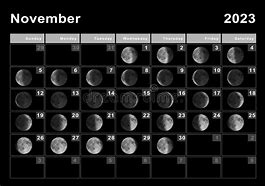
Visit the November 2023 Moon Phases Calendar to see all the daily moon phase for this month.

Phase Details

Phase: Waning Gibbous
Illumination: 95%
Moon Age: 16.89 days
Moon Angle: 0.51
Moon Distance: 392,880.45 km
Sun Angle: 0.54
Sun Distance: 147,550,366.66 km

Today’s Waning Gibbous Phase

The Waning Gibbous on November 29 has an illumination of 95%. This is the percentage of the Moon illuminated by the Sun. The illumination is constantly changing and can vary up to 10% a day. On November 29 the Moon is 16.89 days old. This refers to how many days it has been since the last New Moon. It takes 29.53 days for the Moon to orbit the Earth and go through the lunar cycle of all 8 Moon phases.

Useful Moon Resources

The 8 Lunar Phases

There are 8 lunar phases the Moon goes through in its 29.53 days lunar cycle. The 4 major Moon phases are Full Moon, New Moon, First Quarter and Last Quarter. Between these major phases, there are 4 minor ones: the Waxing Crescent, Waxing Gibbous, Waning Gibbous and Waning Crescent. For more info on the Moon Cycle and on each phase check out Wikipedia Lunar Phase page.

November 28, 2023 Current Moon Phase

Current Moon Phase

You can use this link to go forward or backward in time for Moon phase information. If you are curious, you can even find out what phase the Moon was in when you or anyone else was born.

Source: MoonGiant.com

The Moon’s current phase for today and tonight is a Waning Gibbous. During this phase the Moon can be seen in the early morning daylight hours on the western horizon. This is the first phase after the Full Moon occurs. It lasts roughly 7 days with the Moon’s illumination growing smaller each day until the Moon becomes a Last Quarter Moon with an illumination of 50%. The average Moon rise for this phase is between 9pm and Midnight depending on the age of the phase. The moon rises later and later each night setting after sunrise in the morning.

Visit the November 2023 Moon Phases Calendar to see all the daily moon phase for this month.

Today’s Waning Gibbous Phase

The Waning Gibbous on November 28 has an illumination of 99%. This is the percentage of the Moon illuminated by the Sun. The illumination is constantly changing and can vary up to 10% a day. On November 28 the Moon is 15.91 days old. This refers to how many days it has been since the last New Moon. It takes 29.53 days for the Moon to orbit the Earth and go through the lunar cycle of all 8 Moon phases.

Phase Details

Phase: Waning Gibbous
Illumination: 99%
Moon Age: 15.91 days
Moon Angle: 0.51
Moon Distance: 388,317.56 km
Sun Angle: 0.54
Sun Distance: 147,575,708.64 km

Useful Moon Resources

The 8 Lunar Phases

There are 8 lunar phases the Moon goes through in its 29.53 days lunar cycle. The 4 major Moon phases are Full Moon, New Moon, First Quarter and Last Quarter. Between these major phases, there are 4 minor ones: the Waxing Crescent, Waxing Gibbous, Waning Gibbous and Waning Crescent. For more info on the Moon Cycle and on each phase check out Wikipedia Lunar Phase page.

November 27, 2023 Current Moon Phase

Current Moon Phase

You can use this link to go forward or backward in time for Moon phase information. If you are curious, you can even find out what phase the Moon was in when you or anyone else was born.

Source: MoonGiant.com

The Moon’s current phase for today and tonight is a Full Moon phase. The Moon will be visible throughout the night sky rising at sunset in the east and setting with the sunrise the next morning in the west. During a Full Moon the moon is 100% illuminated as seen from Earth and is on the opposite side of the Earth from the Sun. The point at which a Full Moon occurs can be measured down to a fraction of a second. The time it takes between full moons is known as a Synodic month and is 29.530587981 days long. Keep track of all the Full Moons throughout the year on the Full Moon Calendar >

Visit the November 2023 Moon Phases Calendar to see all the daily moon phase for this month.

Today’s Full Moon Phase

The Full Moon on November 27 has an illumination of 100%. This is the percentage of the Moon illuminated by the Sun. The illumination is constantly changing and can vary up to 10% a day. On November 27 the Moon is 14.9 days old. This refers to how many days it has been since the last New Moon. It takes 29.53 days for the Moon to orbit the Earth and go through the lunar cycle of all 8 Moon phases.

Phase Details

Phase: Full Moon
Illumination: 100%
Moon Age: 14.90 days
Moon Angle: 0.52
Moon Distance: 383,509.35 km
Sun Angle: 0.54
Sun Distance: 147,601,661.29 km

Useful Moon Resources

The 8 Lunar Phases

There are 8 lunar phases the Moon goes through in its 29.53 days lunar cycle. The 4 major Moon phases are Full Moon, New Moon, First Quarter and Last Quarter. Between these major phases, there are 4 minor ones: the Waxing Crescent, Waxing Gibbous, Waning Gibbous and Waning Crescent. For more info on the Moon Cycle and on each phase check out Wikipedia Lunar Phase page.

Hunters Moon 2023: The Spiritual Meaning of the October Full Moon

Hunter’s Full Moon Source: thepeculiarbrunette.com

As the Hunters Moon of 2023 graces our skies, the spiritual bond between the human soul and the October Full Moon connects. It’s a celestial feast full of meaning, a ghostly dance of ritual, and represents the very core of astrology and spirituality.

Throughout the hallowed pages of history, the Hunters Moon has symbolized a time of harvest, abundance, the afterlife, spiritual transformation, and divination. Keep reading, and we’ll explore the spiritual significance of October’s Full Moon!

Every full moon has its own name based on the month or the season in which it appears. Creating a name for each full Moon allowed people to reflect on each season and how it affects them AND the natural world. There can be some variation on the Full Moon names due to the origins from whence they came.

Most Full Moon names are English translations of Native American names; others are rooted in Celtic, European (Anglo-Saxon and Germanic), and more recent Neo-Pagan origins. I created a guide to each Full Moon, complete with their meanings and how you can celebrate.

Table of Contents

Some of the Witchcraft/Magickal Correspondence for Thursday

Thursday is a Jupiter day. Here is the day of the week for prosperity, abundance, and good health. Thursday is “Thor’s day.” This Norse god gave the day his name and many of his attributes, including strength and abundance. Some suggestions for Thursday enchantments would include:

Wearing a regal and royal shade of blue to see how it affects your mood and your magic. Other colors for the day include purple and green.

Carrying a turquoise tumbled stone in your pocket to draw a little protective and healing energy your way

Incorporating honeysuckle blossoms and cinquefoil foliage into prosperity charms

Calling on Thor for abundance, or on the Roman god Jupiter for the ability to peacefully referee a fight

Adding a few oak leaves—which are sacred to these Thursday gods—to your charms to see how much better your spell works out

Casting a charm with wheat stalks for prosperity, and calling on Juno Moneta to bring wealth into your life

Baking up some whole wheat bread and blessing it for abundance. Be sure to thank the gods for your family and your good health.


Spell for October 14, 2023 and Harnessing the Power: Exploring the Ring of Fire Solar Eclipse in Witchcraft Rituals

On October 14, 2023 there will be a Ring of Fire Solar Eclipse. The Ring of Fire Solar Eclipse is a rare astronomical event that has captured the attention of many cultures for thousands of years. For witches and pagans, this eclipse holds special significance as it represents a powerful time for magic and manifestation. The Ring of Fire Solar Eclipse occurs when the moon passes between the Earth and the Sun, creating a “ring of fire” effect. This natural event can be harnessed for magical purposes, making it a perfect time for witches to perform their rituals and spells. In this blog post, we will explore the significance of the Ring of Fire Solar Eclipse in witchcraft, as well as provide some tips on how to harness its power in your own magic. Whether you’re a seasoned witch or just starting out on your magical journey, this post is sure to provide you with valuable insights and inspiration.

Introduction to the Ring of Fire solar eclipse…

Understanding the significance of solar eclipses in witchcraft…

Exploring the symbolism and energy of the Ring of Fire eclipse…

Preparing for a solar eclipse ritual…

Choosing the right tools and ingredients for the ritual…

Crafting a ritual to harness the energy of the eclipse…

Setting intentions and goals for the ritual…

Performing the ritual during the eclipse…

Reflection and integration after the ritual…

Tips for working with eclipse energy in witchcraft practices…

Click here for more in depth information about: Harnessing the Power: Exploring the Ring of Fire Solar Eclipse in Witchcraft Rituals

October 14, 2023 Solar Eclipse Livestream

October 14, 2023, Solar Eclipse Livestream: Source: science.nasa.gov

Join NASA experts on Oct. 14, 2023, for a broadcast of the annular solar eclipse.

Want to see more? Tune in to the streams below for telescope live feeds of the annular solar eclipse across the path, a broadcast in Spanish, and a live stream of sounding rockets launching during the eclipse.

FEATURED BROADCAST

The Ring of Fire

Join NASA experts for a live broadcast of the annular solar eclipse from Kerrville, TX, and Albuquerque, NM. Tune in for views from across the path, expert commentary, live demos, and more.

Saturday, Oct. 14, 2023
11:30 a.m. – 1:15 p.m. EDT

(I thought this will come in handy for parts of the world that is cloud covered like it will be where I live. Please leave comments on your experience below. If you would like to have pictures you take of this event posted, please send them to ladybeltane@witchesofthecraft.com along with First names and last name initial along with the state or country it was taken in to give credit for the picture to please.)

“Ring of Fire” Eclipse Solar Event Set to Dazzle Illinois, Indiana, Wisconsin: Watch Safely

CHICAGO, IL — Residents across the contiguous 48 states are gearing up for a celestial spectacle on Saturday, October 14th, 2023: an annular solar eclipse. 

While residents of the Midwest won’t see the full “ring of fire” but can expect a notable partial eclipse, obscuring nearly 50% of the sun in areas of Illinois, Indiana, and Wisconsin.

The event kicks off at 10:33 AM, reaching its peak at 11:56 AM when 48.5% of the sun is veiled. By 1:24 PM, the display concludes.

Safety is paramount. 

Unlike total eclipses, annular events don’t entirely cloak the sun, making viewing without proper protection risky. Regular sunglasses won’t cut it. Instead, opt for solar glasses/viewers meeting the 12312-2 international standard. Alternatively, wield welding filters, but ensure they’re shade 12 or higher.

For those lacking the recommended eyewear, get crafty! Pinhole projectors or cardboard box setups can provide indirect, safe viewing methods.

For context, annular eclipses occur when the moon’s distance prevents it from fully obscuring the sun, leaving a fiery ring. Total eclipses, on the other hand, present a fully obscured sun when conditions align perfectly.

Keep those solar glasses handy! In April 2024, a total eclipse will streak across the nation. Central Illinoisans will witness over 90% coverage, reminiscent of the 2017 eclipse, while southern parts will bathe in totality.

Eclipse Kickoff: The Sun’s Duel with Georgia and Michigan in College Football’s Spotlight…


Source: countryherald.com

Last supermoon of 2023 rises this week. Don’t miss the Harvest Moon shine with 3 bright planets

Source: www.space.com

Rising on Friday, Sept. 29, the Harvest Moon will be joined in the sky by our solar system’s two largest planets, Jupiter and Saturn, and its smallest, Mercury.

September’s full moon, known as the Harvest Moon, will rise on Friday, Sept. 29 — and it is a special one. Not only will it be the fourth successive supermoon of 2023, but it is also the final supermoon of the year, thus marking the end of a very supermoon summer.

Fittingly for such a special supermoon, the Harvest Moon will also be joined by a parade of planets in the sky, including the solar system’s largest worlds, Jupiter and Saturn, as well as its smallest, Mercury.

From New York City, the fully illuminated moon will rise at around 18:33 EDT (2233 GMT) and set the following day at around 06:52 EDT (1052 GMT), according to In the Sky. Following the full moon, which will be located in the Pisces constellation, the lunar face will recede, a process astronomers call “waning.” After that, Earth‘s natural satellite will head toward its  next intriguing phase, turning into a completely dark new moon on Oct. 14, which will mark the start of a new 29.5-day lunar cycle.

The run of four consecutive supermoons began with the Full Buck Moon on July 3. This was followed by two supermoons in August, the Full Sturgeon Moon on Tuesday, Aug. 1, and the Full Blue Moon on Aug. 30..

Related: Night sky, September 2023: What you can see tonight [maps]

The term “supermoon” refers to full moons that happen around the time when the moon is closest to Earth in its orbit, an approach called perigee. This happens because the moon’s orbit around Earth is an ellipse rather than a perfect circle, meaning there are times when it falls further away from our planet and times when it comes closer.

The proximity of the moon during supermoons means the lunar disk can appear around 30% brighter and around 14% larger as seen from Earth compared to the appearance of the lunar face during “regular” full moons. These differences may be visible to moon-watchers with a lot of experience observing lunar events, but aren’t really that noticeable with the unaided eye to skywatchers who don’t often scrutinize the moon.

The moon will reach perigee in the evening of Wednesday, Sept. 27, at around 21:06 EDT (0106 GMT), two days before the Harvest Moon, according to NASA. By the time the moon’s fully illuminated face is turned toward Earth, it will be around 224,657 miles (361,552 kilometers) from our planet, according to eclipse expert and retired NASA astrophysicist Fred Espanak. This is opposed to the moon’s average distance from Earth, which falls around 238,000 miles (382,900 km).

However, this won’t be the closest or, therefore,  brightest supermoon of 2023. During the Aug. 30 Full Blue Moon, the moon was around 222,043 miles (357,343 km) from Earth, according to Espanak.

The first planet to visit the final supermoon of 2023 on Saturday will be Saturn, the second-largest planet in the solar system, which will rise at around 17:18 EDT (2118 GMT) and will sit in the Aquarius constellation, according to In the Sky. Saturn’s fellow gas giant and the solar system’s largest planet, Jupiter, will rise at 20:17 EDT (0017 GMT). Jupiter will sit to the left of the Harvest Moon in the Aries constellation.

Mercury will be the last planet to pay the Harvest Moon a visit and will be the toughest to spot. The closest planet to the sun, Mercury is currently at its furthest from our host star. Though it appears in the morning sky, it disappears in the evening. On Saturday, the solar system’s smallest planet will rise at around 05:30 (0930 GMT). Mercury will share the sky with the full moon for just over an hour before the final supermoon of the year sets.

Skywatchers who miss the Harvest Moon will have to wait a while for the next supermoon, which will also be a Harvest Moon, rising on Sept. 18, 2024. This will be the first of two supermoons next year, with the second occurring a month later on Oct. 17, 2024.

If you are hoping to catch a look at the Harvest Moon, our guides to the best telescopes and binoculars are a great place to start.

If you’re looking to snap photos of the night sky in general, check out our guide on how to photograph meteor showers, as well as our best cameras for astrophotography and best lenses for astrophotography.

Editor’s Note: If you snap an image of the Harvest Moon and would like to share it with Space.com’s readers, send your photo(s), comments, and your name and location to spacephotos@space.com.

September 5, 2023 Current Moon Phase

You can use this link to go forward or backward in time for Moon phase information. If you are curious, you can even find out what phase the Moon was in when you or anyone else was born.

From MoonGiant.com

The Moon’s current phase for today and tonight is a Waning Gibbous. During this phase the Moon can be seen in the early morning daylight hours on the western horizon. This is the first phase after the Full Moon occurs. It lasts roughly 7 days with the Moon’s illumination growing smaller each day until the Moon becomes a Last Quarter Moon with an illumination of 50%. The average Moon rise for this phase is between 9pm and Midnight depending on the age of the phase. The moon rises later and later each night setting after sunrise in the morning.

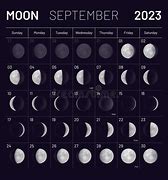
Visit the September 2023 Moon Phases Calendar to see all the daily moon phase for this month.

Today’s Waning Gibbous Phase

The Waning Gibbous on September 5 has an illumination of 65%. This is the percentage of the Moon illuminated by the Sun. The illumination is constantly changing and can vary up to 10% a day. On September 5 the Moon is 20.75 days old. This refers to how many days it has been since the last New Moon. It takes 29.53 days for the Moon to orbit the Earth and go through the lunar cycle of all 8 Moon phases.

Phase Details

Phase: Waning Gibbous
Illumination: 65%
Moon Age: 20.75 days
Moon Angle: 0.52
Moon Distance: 382,767.11 km
Sun Angle: 0.53
Sun Distance: 150,814,420.19 km

Useful Moon Resources

The 8 Lunar Phases

There are 8 lunar phases the Moon goes through in its 29.53 days lunar cycle. The 4 major Moon phases are Full Moon, New Moon, First Quarter and Last Quarter. Between these major phases, there are 4 minor ones: the Waxing Crescent, Waxing Gibbous, Waning Gibbous and Waning Crescent. For more info on the Moon Cycle and on each phase check out Wikipedia Lunar Phase page.