Samhain Gods – Yama – Hindu

Yama

Yama or Yamarāja is a god of death, the south direction, and the underworld, belonging to an early stratum of Rigvedic Hindu deities. In Sanskrit, his name can be interpreted to mean “twin”. In the Zend-Avesta of Zoroastrianism, he is called “Yima”.

According to the Vishnu Purana, Yama is the son of sun-god Surya and Sandhya, the daughter of Vishvakarma. Yama is the brother of Sraddhadeva Manu and of his older sister Yami, which Horace Hayman Wilson indicates to mean the Yamuna. According to the Vedas, Yama is said to have been the first mortal who died. By virtue of precedence, he became the ruler of the departed, and is called “Lord of the Pitrs”.

Mentioned in the Pāli Canon of Theravada Buddhism, Yama subsequently entered Buddhist mythology in East Asia, Southeast Asia and Sri Lanka as a Dharmapala under various transliterations. He is otherwise also called as “Dharmaraja”.

Hinduism

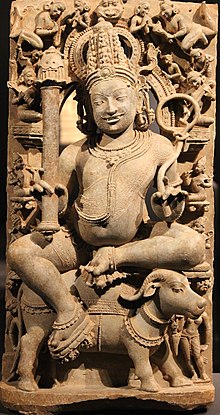
In Hinduism, Yama is the lokapala (“Guardian of the Directions”) of the south and the son of Surya. Three hymns (10, 14, and 35) in the 10th book of the Rig Veda are addressed to him. In Puranas, Yama is described as having four arms, complexion of rain cloud with wrathful expression, surrounded by garland of flames, protruding fangs, dressed in red, yellow or blue garments, holding noose and mace or sword, and riding a water-buffalo. He wields a noose with which he seizes the lives of people who are about to die.

According to Hindu itihasa, Yama is the son of Surya and Saranyu. He is the twin brother of Yami, brother of Shraddhadeva Manu and the step brother of Shani. His wife was Goddess Dhumorna and his son was Katila.

Buddhism

In Buddhism, Yama (Sanskrit: यम) is a dharmapala, a wrathful god or the Enlightened Protector of Buddhism that is considered worldly, said to judge the dead and preside over the Narakas (“Hell” or “Purgatory”) and the cycle of rebirth.

The Buddhist Yama has, however, developed different myths and different functions from the Hindu deity. In Pali Canon Buddhist myths, Yama takes those who have mistreated elders, holy spirits, or their parents when they die. Contrary though, in the Majjhima Nikaya commentary by Buddhagosa, Yama is a vimānapeta – a that has a mixed state.

In other parts of Buddhism, Yama’s main duty is to watch over purgatorial aspects of Hell (the underworld), and has no relation to rebirth. His sole purpose is to maintain the relationships between spirits that pass through the ten courts, similar to Yama’s representation in several Chinese religions.

He has also spread widely and is known in every country where Buddhism is practiced, including China, Korea, Vietnam, Japan, Bhutan, Mongolia, Nepal, Thailand, Sri Lanka, Cambodia, Myanmar, Laos, and United States.

China

In Chinese texts, Yama only holds transitional places in Hell where he oversaw the deceased before he, and the Generals of Five Paths, were assigned a course of rebirth. Yama was later placed as a King in the Fifth Court when texts led to the fruition of the underworld that marked the beginnings of systemizations.

Japan

Yama can be found in one of the oldest Japanese religious works called Nipponkoku Genpō Zenaku Ryōiki, a literary work compiled by the Monk Keikai in 822. Yama was introduced to Japan through Buddhism, where he was featured as a Buddhist divinity. He holds the same position title as other works depict him – a judge who imposes decisions on the dead who have mistreated others.

Naraka (Hindu)

Naraka in Hinduism serves only as a temporary purgatory where the soul is purified of sin by its suffering. In Hindu mythology, Naraka holds many hells, and Yama directs departed souls to the appropriate one. Even elevated Mukti-yogyas and Nitya-samsarins can experience Naraka for expiation of sins.

Although Yama is the lord of Naraka, he may also direct the soul to a Swarga (heaven) or return it to Bhoomi (earth). As good and bad deeds are not considered to cancel each other out, the same soul may spend time in both a hell and a heaven. The seven Swargas are: Bhuvas, Swas (governed by Indra), Tharus, Thaarus, Savithaa, Prapithaa, and Maha (governed by Brahma).

Naraka (Sikhism)

The idea of Naraka in Sikhism is like the idea of Hell. One’s soul, however, is confined to 8.4 million life cycles before taking birth as a human, the point of human life being one where one attains salvation, the salvation being sach khand. The idea of khand comes in multiple levels of such heavens, the highest being merging with God as one. The idea of Hell comes in multiple levels, and hell itself can manifest within human life itself. The Sikh idea of hell is where one is apart from naama and the Guru’s charana (God’s lotus feet (abode)). Without naama one is damned. Naama is believed to be a direct deliverance by God to humanity in the form of Guru Nanak. A Sikh is hence required to take the Amrit (holy nectar/water) from gurubani, panj pyare (khanda da pahul) to come closer to naama. A true Sikh of the Gurus has the Guru himself manifest and takes that person into sach khand.

Naraka (Buddhist)

Naraka is usually translated into English as “hell” or “purgatory”. A Naraka differs from the hells of western religions in two respects. First, beings are not sent to Naraka as the result of a divine judgment and punishment; second, the length of a being’s stay in a Naraka is not eternal, though it is usually very long. Instead, a being is born into a Naraka as a direct result of his or her previous karma(actions of body, speech and mind), and resides there for a finite length of time until his karma has exhausted its cumulate effect.

East Asian mythology

Mandarin Diyu, Japanese Jigoku, Korean Jiok, Vietnamese Địa ngục literally “earth prison”, is the realm of the dead or “hell” in Chinese mythology and Japanese mythology. It is based upon the Buddhist concept of Naraka combined with local afterlife beliefs. Incorporating ideas from Taoism and Buddhism as well as traditional religion in China, Di Yu is a kind of purgatory place which serves not only to punish but also to renew spirits ready for their next incarnation. This is interchangeable with the concept of Naraka.

In Japanese mythology, Enma-O or Enma Dai-O judges souls in Meido, the kingdom of the waiting dead. Those deemed too horrible are sent to Jigoku, a land more comparable to the Christian hell. It is a land of eternal toil and punishment. Those of middle note remain in meido for a period awaiting reincarnation. Others, of high note, become honored ancestors, watching over their descendants.

Related concepts

Yama and Ymir

In a disputable etymology, W. Meid (1992) has linked the names Yama (reconstructed in Proto-Indo-European as *yemos) and the name of the primeval Norse frost giant Ymir, which can be reconstructed in Proto-Germanic as *umijaz or *jumijaz, in the latter case possibly deriving from PIE *ym̥yos, from the root yem “twin”. In his myth, however, Ymir is not a twin, and only shares with Yama the characteristics of being primeval and mortal. However, Ymir is a hermaphrodite and engenders the race of giants.

In Iranian mythology

A parallel character in Iranian mythology and Zoroastrianism is known as Yima Xšaēta, who appears in the Avesta. The pronunciation “Yima” is peculiar to the Avestan dialect; in most Iranian dialects, including Old Persian, the name would have been “Yama”. In the Avesta, the emphasis is on Yima’s character as one of the first mortals and as a great king of men. Over time, *Yamaxšaita was transformed into Jamšēd or Jamshid, celebrated as the greatest of the early shahs of the world. Both Yamas in Zoroastrian and Hindu myth guard hell with the help of two four-eyed dogs.

It has also been suggested by I. M. Steblin-Kamensky that the cult of Yima was adopted by the Finno-Ugrians. According to this theory, in Finnish Yama became the god cult Jumula and Joma in Komi. According to this hypothesis, from this cult, the Hungarians also borrowed the word vara which became vár ‘fortress’ and város ‘town’. (ibid)

In Javanese culture

There is Yamadipati in Javanese culture, especially in wayang. The word adipati means ruler or commander. When Hinduism first came to Java, Yama was still the same as Yama in Hindu myth. Later, as Islam replaced Hinduism as the majority religion of Java, Yama was demystified by Walisanga, who ruled at that time. So, in Javanese, Yama became a new character. He is the son of Sanghyang Ismaya and Dewi Sanggani. In the Wayang legend, Yamadipati married Dewi Mumpuni. Unfortunately, Dewi Mumpuni fell in love with Nagatatmala, son of Hyang Anantaboga, who rules the earth. Dewi Mumpuni eventually left Yamadipati, however.

In Buddhist temples

In the Buddhism of the Far East, Yama is one of the twelve Devas, as guardian deities, who are found in or around Buddhist shrines (Jūni-ten, 十二天). In Japan, he has been called “Enma-Ten”. He joins these other eleven Devas of Buddhism, found in Japan and other parts of southeast Asia: Indra (Taishaku-ten), Agni (Ka-ten), Yama (Emma-ten), Nirrti (Rasetsu-ten), Vayu (Fu-ten), Ishana (Ishana-ten), Kubera (Tamon-ten), Varuna (Sui-ten) Brahma (Bon-ten), Prithvi (Chi-ten), Surya (Nit-ten), Chandra (Gat-ten).

Source

Wikipedia 

c. 2018

Goddesses and Gods – Irish Celtic – Aine and Lugh – God of Justice and Oaths and Master of Crafts

Picture by Judith Shawart

Áine – Goddess of Love, Summer and Wealth

As the goddess of summer and wealth, Áine represents the abundance that the land has to offer during its most plentiful season.

Good, fruitful harvests were required to provide for the people and animals, therefore much emphasis was placed on gods and goddesses that represent fertility, such as Áine.

The goddess Áine is strongly associated with the feast of midsummer and the summer sun. She too, like the Morrigan is thought to have the ability to shapeshift and is represented by a red mare, known for its speed.

Áine is sometimes referred to as the Irish goddess of Love or as the Faery Queen.

There are several stories that connect Áine to rape, including one where she bites off the ear of the King of Munster after an unconsented encounter. By disfiguring him, the Celtic goddess of love made him ineligible to be king (only flawless, unmarred men could rule)  and so he was removed from his throne.

In another story of rape, Áine exacted revenge by turned her offender, Gerald, Earl of Desmond into a goose.

The Hill of Knockainy (or Cnoc Áine) in County Limerick was an important site, where ritual blessings to this Irish goddess were carried out.  Offerings to Áine have also been made at Lough Gur in County Limerick.

Lugh – God of Justice and Oaths and Master of Crafts

The god Lugh, (also spelled Lug or Luga) is one of the most notable of all the Irish deities and equates to the pan-Celtic god of Lugus.

Lugh was the god associated with justice and held power over oaths and law. He was also connected with rightfulness, especially in terms of kingship.

He was king of the glorified race of the Tuatha dé Danann, who were known for their superior skills and knowledge, particularly on the battlefield. The inscriptions on some early texts suggest that the Tuath dé Danann were deities, while others allude more to them having magical powers, including shapeshifting.

Lugh was a master craftsman and skilled warrior, known for his ability to throw a spear a very long distance and hence his other name Lugh Lámhfhada. This name means Lugh of the long arm in Irish.

He is believed to have led the Tuatha dé Danann to victory over the invading army of Fomorians as depicted in the Battle of Mag Tuired.

It is said that Lugh initiated a special games event, known as the Tailteann Games or Assembly of Tailti that focused on horse racing and martial arts that ran over the last two weeks in July and culminated with the start of the harvest celebration of Lughnasadh on 1 August. It is said that the games were founded in memory of Lugh’s foster mother Tailtiu, who was also thought to be a goddess.

Legend states that Lugh was also a bit of a trickster and is sometimes known as the Celtic god of mischief.

Lugh is thought to have been the father of demi god and famous Irish warrior, Cú Chulainn.

Are Celtic gods immortal? Seemingly not all of them, Lugh is said to have been speared and drowned in Loch Lugborta (or Loch Lugh) in County Westmeath, by the sons of Cermait after he killed their father.

Both the gods of Lugh and the Dagda are supposedly buried in the sacred center of the island of Ireland, Uisneach.

Gods – Greek 2nd Generation Titans – Epimetheus and Prometheus

2nd Generation Greek Titan – Epimetheus

2nd Generation Greek Titan – Prometheus

Epimetheus and Prometheus: Representatives of Mankind

Epimetheus

The tale of Epimetheus is one that poets often use to describe the unfavorable habits of humans. His myth involves the creation of man and the disastrous ramifications of acting before thinking. Epimetheus isn’t as well-known as other figures in GREEK MYTHOLOGY, but his story is certainly memorable.

The Origins of Epimetheus

Epimetheus is a second-generation god. He was born from IAPETUS and Clymene. Iapetus is the son of URANUS and GAIA, two primordial beings responsible for starting the succession myth. Clymene was an OCEANID nymph born to Titans OCEANUS and TETHYS.

Epimetheus had three brothers. All of them play important roles in Greek mythology. There was Atlas, who is most famous for the punishment of holding up the heavens put onto him by ZEUS. His second brother was MENOETIUS, who was banished to TARTARUS for his role in the Divine war.

Prometheus was his third brother. PROMETHEUS and Epimetheus share a strong connection due to the part they played in the creation of man. But before that happened, there was the Titanomachy.

THE TITANOMACHY was a vicious ten-year war between the TITANS and the OLYMPIANS. The Titan CRONUS swallowed all of his children in fear of one of them overtaking his spot on the Divine throne. Eventually, his wife RHEA snuck one child away before Cronus could swallow it. That child grew up to be Zeus.

He challenged his father, forcing him to disgorge his siblings. The newly freed children, the Twelve Olympians, waged war against the Titans for revenge. It was a destructive war that lasted an entire decade. Most Titans participated. That included Epimetheus’ brothers ATLAS and Menoetius.

However, Epimetheus and Prometheus did not participate in the Titanomachy. They remained neutral, which would prove to be a smart move that saved them in the end.

The Olympians won the war with help from the three CYCLOPES and the HECATONCHIRES. As the battle concluded, Zeus took the mantle on MOUNT OLYMPUS. He became the King of the gods and swiftly punished the Titans. Once great gods like HYPERION and Cronus were doomed to Tartarus. Epimetheus’ brother, Menoetius, was struck by one of Zeus’ lightning rods during battle. He was subsequently imprisoned before going to Tartarus.

Meanwhile, Epimetheus’ other brother, Atlas, was famously doomed to hold up the heavens for all of eternity!

But Epimetheus and Prometheus? Zeus did not punish them. They were neutral, so he entrusted them with an important task. This is where Epimetheus’ myth truly gets started.

Epimetheus is a second-generation god. He was born from IAPETUS and Clymene. Iapetus is the son of URANUS and GAIA, two primordial beings responsible for starting the succession myth. Clymene was an OCEANID nymph born to Titans OCEANUS and TETHYS.

Epimetheus had three brothers. All of them play important roles in Greek mythology. There was Atlas, who is most famous for the punishment of holding up the heavens put onto him by ZEUS. His second brother was MENOETIUS, who was banished to TARTARUS for his role in the Divine war.

Prometheus was his third brother. PROMETHEUS and Epimetheus share a strong connection due to the part they played in the creation of man. But before that happened, there was the Titanomachy.

THE TITANOMACHY was a vicious ten-year war between the TITANS and the OLYMPIANS. The Titan CRONUS swallowed all of his children in fear of one of them overtaking his spot on the Divine throne. Eventually, his wife RHEA snuck one child away before Cronus could swallow it. That child grew up to be Zeus.

He challenged his father, forcing him to disgorge his siblings. The newly freed children, the Twelve Olympians, waged war against the Titans for revenge. It was a destructive war that lasted an entire decade. Most Titans participated. That included Epimetheus’ brothers ATLAS and Menoetius.

However, Epimetheus and Prometheus did not participate in the Titanomachy. They remained neutral, which would prove to be a smart move that saved them in the end.

The Olympians won the war with help from the three CYCLOPES and the HECATONCHIRES. As the battle concluded, Zeus took the mantle on MOUNT OLYMPUS. He became the King of the gods and swiftly punished the Titans. Once great gods like HYPERION and Cronus were doomed to Tartarus. Epimetheus’ brother, Menoetius, was struck by one of Zeus’ lightning rods during battle. He was subsequently imprisoned before going to Tartarus.

Meanwhile, Epimetheus’ other brother, Atlas, was famously doomed to hold up the heavens for all of eternity!

But Epimetheus and Prometheus? Zeus did not punish them. They were neutral, so he entrusted them with an important task. This is where Epimetheus’ myth truly gets started.

Prometheus

Prometheus was the famous TITAN GOD of fire. His name is thought to mean “forethought’. He is credited with molding mankind out of mud and clay. Unfortunately, his desire to improve the lives of his creations, resulted in constant conflict with Zeus.

Son of the OCEANID Clymene and the Titan IAPETUS, he along with his brother EPIMETHEUS fought for ZEUS and the rest of the OLYMPIANS in the TITANOMACHY. However, after aiding Zeus and helping him win the war, he began to quarrel with him about his unfair treatment of humanity.

Often regarded as a trickster, Prometheus first tested Zeus by tricking the gods during a sacrificial feast. He then stole fire from the gods up in heaven and gave it to mankind, resulting in years of torture.

As punishment for his rebelliousness, Zeus chained him to a cliff and had an eagle feast upon his regenerating liver day in and day out. He also created the first woman, Pandora, to bring misfortune and calamity to the house of man.

Generations later, Zeus’ son, the great hero HERACLES, came to the rescue by shooting the eagle and freeing Prometheus. While he made peace with Zeus afterwards, he would continue to be held in high regard as a spreader of knowledge and romanticized as a hero for his acts.

Prometheus’ Family

Hesiod’s THEOGONY states Prometheus was the son of the Titan Iapetus, and his mother was the Oceanid Clymene. Most scholars agree, but there have been other references to him being the son of Iapetos and Asia, the Titan Eurymedon and HERA, or of URANUS and Clymene.

As far as the rest of his family goes, Prometheus was the brother of fellow Titans MENOETIUSATLAS, and Epimetheus. The duo of Prometheus (Forethought) and Epimetheus (Afterthought) have been referenced countless times throughout Greek mythology.

Prometheus had three children: Deucalion, Hellen, and Aidos. Deucalion was eerily similar to Noah in the Christian Bible. Like Noah, he survived a great flood responsible for wiping out the rest of humanity, and he was able to do so by floating in a massive chest for nine days and nine nights. He and his wife PYRRHA were the only survivors, and they are credited with repopulating the human race.

Prometheus and the Titanomachy

Prior to the creation of humanity, there was a great battle between the Greek gods and a race of giants known as the Titans. The Titans not killed in the battle were driven to TARTARUS to spend their days in eternal hell.

Despite being a Titan himself, Prometheus, whose name translates to foresight, convinced his brother Epimetheus to fight alongside him with the Olympian gods led by Zeus. In fact, Prometheus was one of the battle’s ringleaders, helping Zeus defeat the Titans and take control of the heavens in a struggle said to have lasted over a decade.

He switched sides in support of the victorious Olympians simply because the Titans refused to follow his advice to apply trickery and deception in the battle. His two other brothers, ATLAS and Menoetius, remained loyal and fought with their fellow Titans against Prometheus, Epimetheus, and the Olympians. However, they and the rest of the Titans were defeated, proving it’s wise to follow someone with the name “forethought.”

Prometheus and the Creation of Man

As thanks for fighting alongside the Olympians in the Titanomachy and helping them win the decade long battle, Zeus entrusted the Titan brothers with the responsibility of creating every living thing, including man.

Epimetheus was tasked with blessing creatures with gifts of the gods. He gave flight to some creatures and the ability to race through grass or move through water to others. He gave the beasts sharp claws, soft fur, and glittering scales.

Meanwhile, Prometheus was busy shaping mud to make the first humans. They were formed to reflect the image of the gods. According to some authors, Athena brought the clay figures formed by Prometheus to life.

Despite looking like them, Zeus ordered the humans to remain mortal. They were also ordered to worship the gods of MOUNT OLYMPUS from Earth below.

Why? Well, because Zeus saw the humans as subservient creatures, so he made them dependent on the Olympians for protection from the elements and monstrous creatures like the Hydra, SPHINX, or NEMEAN LION.

However, Prometheus wanted to give his creations a greater purpose and completely opposed Zeus’ decree. So, when asked by Zeus how sacrifices were to be made, the cunning Prometheus devised a trick to give humans a bit more power.

Prometheus’ Crimes

Prometheus is most known as being a punished benefactor to humans. He got that reputation because he did not want humans to go into the world without any skills to help them survive. With Zeus’ refusal to create more attributes, Prometheus decided to steal some.

He chose civilized arts and fire and the gifted skills for humans. He stole the civilized art from ATHENA and fire from Hephaestus. Prometheus quickly gave the attributes and let man go onto Earth. He was successful, but his actions enraged Zeus.

He was punished for essentially covering the mistake of his brother. Prometheus was famously taken to the Caucasus Mountains. There, he was chained up as a crow fed on his regenerating liver for eternity. But before he was whisked away for punishment, he warned his brother not to accept any gifts from Zeus or the Olympians.

Once again, Epimetheus failed to have any forethought.

Gods – Egyptian Geb

Gods – Egyptian Geb

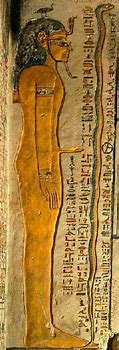
Geb is the Egyptian god of the Earth. He is also a god of fertility and farming, and is associated with birth, death and the life cycle in Egyptian mythology. Geb is also sometimes referred to as “seb” or “keb”. There is some debate over the proper pronunciation and spelling of his name, as well as when different variants of his name were used in ancient Egypt.

Geb Facts

Name(s): Geb
Rules over: Earth, Fertility, Farming
Gender: Male
Symbols: Reeds, Grain
Sacred animals: Goose, Snakes, Rabbits, Bulls
Parents: Shu (Father) and Tefnut (Mother)
Siblings: Seth, Osiris, Nephthys, Isis, Horus
Greek Similar: Gaea, goddess of the earth.
Roman Similar: Terra Mater

Origins

The oldest known depiction of Geb is found in Heliopolis, and is dated to approximately 2600 B.C.E.

Geb was incorporated into the Great Ennead of Heliopolis. Ennead is a Greek term for the number nine, and its meaning relating to Egyptian mythology is “a collection of nine deities”. There were a number of Enneads, or collections of nine deities, created in ancient Egypt at various points of the civilization. The Great Ennead is the most famous of those collections.

The Great Ennead was formed as early as 2600 – 2500 B.C.E. The other eight members of this particular grouping included Atum, Shu, Tefnut, Nut, Osiris, Isis, Seth and Nephthys.

Appearance

In hieroglyphic writings, Geb was usually portrayed in a purely human form. In many of these portrayals, he can be seen covered with plants or vegetation to symbolize fertility in farming. He was sometimes depicted as having green hair or skin, and also at times shown with a goose sitting on top of his head.

He was also shown lying on the ground underneath Nut who was arched high above and covered with stars, or underneath Shu who was between him and Nut.

One example of this is found on the Papyrus of Tentamun, and can be found in other papyrus writings as well. Geb can also at times be found in scenes in a zoomorphic or hybrid form, such as having a snake’s head and human body.

Family

His parents were Tefnut, known as the moisture goddess, and Shu, the god of sunlight, wind and air. Geb also had a twin sister, Nut, who was goddess of the sky.

Geb and Nut produced four offspring – Seth, god of storms and disorder, and OsirisIsis, and Nephthys. At times they were said to have a fifth child, Horus.

According to the Heliopolitan Ennead system, Geb had an important place in the creation story. Some time after he and his sister were born, they began to have a relationship that was incestual. Their father, Shu, was not pleased with them and separated them. Shu held Nut up above his head in the sky, and kept Geb on the earth below him.

In the space between them, Shu created and gave life to nature.1 Even though they were separated, the siblings still had four (or five) children together. Narratives between cities and regions may have differed from this, but many of them had the father Shu holding or supporting Nut and standing on top of Geb.

As a result, Geb became very important to matters relating to the earth. It was said that earthquakes were the result of his laughter. Because of this relation to the earth, he became an important god in farming.

Symbols

Animals associated with him included geese, snakes, rabbits, bulls. Other symbols that were affiliated with him included plants such as grain or reeds.

Worship

There was not a major cult center associated with Geb, but the god did have a high number of appearances in hieroglyphics throughout Egyptian temples, tombs and pyramids. Heliopolis, located near Cairo, is one such place where Geb frequently appears.2

Facts about Geb

  • Depending on the belief system, Geb had four or five siblings, and they were born from Shu and Tefnut.
  • One mythological narrative has Atum becoming angry at Nut and Geb. He curses them so that they can’t have any children in any month. Thoth, the god of knowledge, cunningly adds five days to the lunar calendar to form a new calendar, and the two siblings then had 5 children. This mythological story explained why
    there were 365 days in a calendar year.1
  • An Egyptian Pharaoh or king was known as an ‘heir of Geb’. The god was important during the transfer of power from one Pharaoh or king to the next.2
  • In hieroglyphics, the goose was used to spell the beginning of Geb’s name.

References

  • 1. Schomp, Virginia. “The Ancient Egyptians”, 2007. Marshall Cavendish Publishing.
  • 2. Wilkinson, Toby. “The Egyptian World”, 2007. Routledge.

Gods – Plutus, Greek God of Wealth

Greek God – Plutus

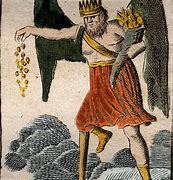
Plutus, which is the Latin spelling of Ploutos, is the god of wealth. He was supposedly born on the Greek island of Crete and is the son of a local hero named Iasion and the goddess DEMETER, who is the goddess of harvest and fertility. He is often depicted as a boy carrying a horn-shaped container of wheat called a cornucopia.

Here are some interesting facts about Plutus:

Plutus Was Originally the God of Agricultural Wealth

The reason Plutus carries wheat was because he was originally meant to only represent wealth in terms of farming output, such as an abundance of crops. But he eventually came to represent wealth in general.

Plutus Was Blind

The Greek god ZEUS blinded Plutus when he was very young, so that he would not just bless wealth onto good people and those who were deserving of it, but onto everybody. Famed ancient Greek playwright Aristophanes once wrote a comedy about Plutus, in which he regains his sight and thereafter only bestows wealth onto those who actually deserve it.

Plutus Was Also Handicapped and Had Wings

Plutus was not just blind, but he was also handicapped. This was to explain why wealth sometimes took a long time to come. He further had wings, which was meant to represent why he left a lot faster than he came.

Often Associated with Pluton

Pluton, which is also written as Plouton, is a Greek god similar to Plutus. He is the god of hidden bounty, and like Plutus, he is often carrying a cornucopia.

Plutus Is Often Depicted as an Infant in the Arms of Goddesses

Many depictions of Plutus show him as baby, sitting in the arms of either TYKHE (TYCHE) — who is the goddess of good fortune — or Eirene (Irene), who is the goddess of peace. This was meant to show that wealth rarely comes alone. It often comes hand-in-hand with good luck or peace.

Plutus is Often Confused with Pluto

While their names may sound similar, Plutus is very different from PLUTO, who is the god of the underworld.

SOURCE: <a href=”https://greekgodsandgoddesses.net/gods/plutus/”>Plutus: https://greekgodsandgoddesses.net</a&gt; – Greek Gods & Goddesses, June 11, 2018

Gods – Greek 2nd Generation Titan – Atlas, God of Endurance and Astronomy

Greek Titan – Atlas

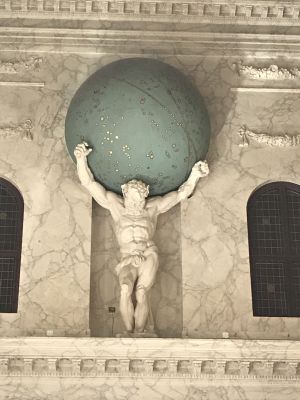
Atlas (the heaven-bearer) was a Titan god of endurance. He was also identified as a god of astronomy because he was the first who instructed mankind in astronomical science which was basically used for navigation and measuring the seasons. It is said, in Library of History by Diodorus Siculus, that he surpassed all others by mastering astrology and was the first to discover spherical nature and therefore being touted as the heaven-bearer. According to Hesiod and Hyginus, Atlas was one of the four sons of Iapetus and oceanid called Clymene but in another source, according to Apollodorus, Iapetus and Asia were his parents. During the war of the gods, unlike his brothers Prometheus and Epimetheus, Atlas sided with the titans along with his other brother Menoetius. After the war he was punished by Zeus who decided not to send him to Tartarus together with his relatives but instead he was sent him to the western edge of the known world, to hold axis between heavens and earth apart and therefore prevent the recurrence of primeval union of Gaea and Uranus and probably a birth of new powerful descendants.

Condemned to a special punishment

During the war against Olympians, Cronusmade Atlas their leader, mostly because of his war skills, extreme orientation and durability. As it turned out, he was quite a leader and it looked like for a long time that they were going to win the war. However, they were outnumbered in the end because Cronus made too many enemies during his ruleage. Atlas was, unlike his relatives, condemned to a special punishment by Zeus himself. He made him as an eternal caretaker of the axis between heavens and earth which were controlled by his predecessors in the past. Because of his endurance, Zeus believed that he was just going to be able to hold them and do nothing else in the meantime. He was right, Atlas was, according to Aeschylus and Ovid, barely supporting the enormous weight of heavens on his shoulders. However, there is an alternative description of the titan by Valerius Flaccus and Virgil who are describing him as an enormous giant standing in the ocean with his feet and his head reaching above the clouds while with ease holding heavens apart from earth.

Descendants of Atlas

But before the punishment, Atlas was in love with Pleione, one of the oceanids, the daughters of Oceanus and Tethys, who gave birth to Pleiades, seven in numbers, that were mentioned by most authors. Their names were AlcyoneAsteropeCelaenoElectra, MaiaMerope and Teygate.

There is a further explanation presented by Hyginus who mentiones in his Fabulae that Atlas and Pleione actually had twelve daughters and a son Hyas. Five of them were Hyades and were named after their brother who was killed by a lion and they had grieved for him so much that they died because of it and were placed among stars. Their names were AmbrosiaCoronisEudoraPhaesyla and Polyxo. And when Hyades died, the rest of the sisters also brought death upon themselves by further grief and were placed among stars known as Pleiades. According to Diodorus Siculus, Atlas also had a brother Hesperus and eventually married one of his daughters by the name of Hesperis. She bore him seven daughters that were named Atlantides, after their father, and Hesperides, after their mother. They were very beautiful and pure and therefore they caught the eye of Egyptian king who dispatched pirates to kidnap them. They were later saved by Heracles.

The account with Heracles

As mentioned above, the daughters of Atlas were kidnapped by pirates while they were playing in their garden and when the pirates stopped to have a meal on their route back to Egypt, Heracles, in one of his last labours, came along. When he found out by the maidens what had happened, he slew the pirates on site and brought ladies back to Atlas. In his gratitude, Atlas helped Heracles in his labour, presumably giving him the apples from his daughter’s garden, and also gave him lessons in astrology.

However, the mainstream belief is that Atlas was encountered by Heracles who came to the titan on the advice of Prometheus in his eleventh labour, when he had to retrieve apples of Hesperides. In need of his services, Heracles offered himself as temporary caretaker. In return he asked the titan to help him with the Golden Apples quest. The garden, controlled by Hera, was tended by Hesperides, the titan’s daughters. Upon return, Atlas tried to convince Heracles to hold the heavens for a bit longer while he was going to deliver the Apples himself which was definitely not the case. Heracles thought of this trickery and asked him to hold the heavens for just a few moments so he could reposition his cloak to serve him as support. The titan fell for the trick and when he reclaimed his position, Heracles took the apples and ran away, and opportunity to escape was gone.

“Released” from his burden

According to Fulgentis’ Mythologies and Ovid’s Metamorphoses, Atlas, with the heavens on his back, was at some point encountered by Perseus who was on his way back to Seriphos Island. Perseus kindly asked the titan for a shelter over night, telling him that he was a son of Zeus. The titan replied by stating that he was a liar which angered the hero and Perseus then in revenge turned Atlas into stone by showing him the head of Medusa and released him from his burden. From that point on he was known as Mount Atlas. Now, this contradicts the story of Atlas meeting Heracles becuase Perseus lived in the times before Heracles and therefore Heracles could not meet Atlas and ask him for help, if he was already turned into a mountain.

Goddesses and Gods – The 21 Main Egyptian Gods and Goddesses

The Egyptian pantheon includes all the gods created by the falcon-headed Sun god Ra. Egyptian gods include many gods with animal heads (Horus, Set, Anubis, Thoth, Bastet, Sekhmet, Ra) and others with human heads (Osiris, Isis, Nephthys, Amun).

We will see together in this article:

  • The gods Ra, Apep, Aten, and Sekhmet involved in the creation of the Universe
  • The gods Set, Osiris, Isis, Nephthys, and Horus involved in the tragedy called “myth of Osiris”
  • The gods Anubis, Thoth, and Ammit involved in the judgment of the Egyptian dead
  • The other important gods: Khepri, Amun, Ptah, Taweret, and Sobek

Let’s begin without further ado by discovering the first of these gods and the creator of the Egyptian world: Ra, the falcon Sun god.

 Ra –

The creation of all the other gods by Ra

The primordial function of Ra in the Egyptian Universe

Apep

Aten

Osiris

Isis

Horus

Set

Nephthys

Sekhmet

Bastet

Hathor

Anubis

Ammit

Thoth

Khepri

Ptah

Amun

Taweret

Sobek

click here to read information presented about the 21 main Egyptian Gods and Goddesses

Goddesses and Gods – A List of Sun Deities

I will use this list to do a more in-depth post on these deities in the future.

Name Nationality/Religion God or Goddess? Notes
Amaterasu Japan Sun Goddess Major deity of the Shinto religion.
Arinna (Hebat) Hittite (Syrian) Sun Goddess The most important of three Hittite major solar deities
Apollo Roman Sun God
Freyr Norse Sun God A fertility god associated with the sun.
Helios Greek Sun God Before Apollo was the Greek sun god, Helios held that position. Helios road a chariot.
Huitzilopochtli (Uitzilopochtli) Aztec Sun God
Hvar Khshaita Iranian/Persian Sun God
Inti Inca Sun God The national patron of the Inca state.
Liza West African Sun God
Lugh Celtic Sun God
Mithras Iranian/Persian Sun God
Ra Egypt Mid-day Sun God An Egyptian god shown with a solar disk. Center of worship was Heliopolis. Later associated with Horus as Re-Horakhty. Also combined with Amun as Amun-Ra, a solar creator god.
Shemesh/Shepesh Ugarit Sun goddess
Sol (Sunna) Norse Sun Goddess She rides in a horse-drawn solar chariot.
Sol Invictus Roman Sun God The unconquered sun. The title was also used of Mithras.
Surya Hindu Sun God Rides the sky in a horse-drawn chariot.
Tonatiuh Aztec Sun God
Utu (Shamash) Mesopotamia Sun God

Goddesses and Gods – 7 Ancient Pagan Gods We Still Love Today

The old pagan gods—those legendary figures out of Norse, Greek, Roman, and many more belief systems—are fascinating subjects. These gods had all of the emotional fallibility of human beings, yet the all the power of the gods they were, and in their stories, they proved capable of shocking levels of pettiness, jealously, and downright cruelty. They were also, however, capable of great kindness, heroism, and justice, making for a set of truly interesting characters. They were us, but moreso.

It’s no wonder, then, that many of these gods that featured in stories thousands of years ago are still prominent in our contemporary fiction. We see them in our superheroes and action stars, who can be thought of as the great grandchildren of the original pagan gods.

But those gods that have survived the millennia with their names and stories intact are the ones we love the most—something about their personalities, their struggles, or their stories intrigues us. They’re the most compelling of them all, so let’s explore them by taking a look at 7 ancient pagan gods we still love today.

Click here to read about the following Gods and Goddesses

Loki

Zeus

Hercules

Odin

Thor

Shinigami

Hel

The Immortality of Entertainment

The fact that we’re still telling stories about these gods and goddesses thousands of years after their heyday is amazing, and these particular 7 beings have a special appeal that goes beyond the norm.

Maybe it’s because they’re powerful. Or perhaps it is because we wish we could affect the world like they do. But likeliest of all is that their larger-than-life personalities and stories simply allow us a glimpse of the extremes of life that few of us ever get to experience.

And that is why the gods will never die.

Goddesses and Gods – Celtic – Medb – Legendary Queen of Ireland and Belenos – The Shining God

Celtic Goddess Medb – Legendary Queen of Ireland

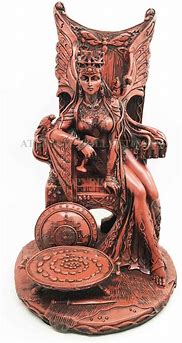
The story of Queen Medb is one of Ireland’s greatest legends. This goddess in the flesh was fierce, seductive, beautiful, and most importantly powerful. No man could be king of Ireland’s ancient sites of Tara or Cruachan without first becoming her husband.

Table of Contents

Celtic God – Belenos The Shining God

A Celtic Deity, also known as Belen, Belenus, Belinus, Bellinus, Bélénos, Belennos, Belenos, Bel, Bilé: The Shining God

Belenos is unusual in Celtic belief, as this deity (under the various version of his name) is known throughout the Celtic world. He is also remembered in place names and personal names throughout the Celtic lands. His symbols are the horse an wheel and his name means ‘The Shining God’. He is one of the Celtic high gods, and is probably a solar deity.

Possibly one of the most widespread of all the Celtic deities he is known from Italy (Cis-Alpine Gaul), Gaul, Britain and Ireland.

In Britain the personal name Bellinus occurs at Binchester (Vinovia), County Durham a name derived from the god-form Belenus, the native Brythonic form of which would be Belenus. Traces of this name having been found at Maryport. To the continental Brython the Cult of Belenus possessed a particular status in that it is mentioned in a number of Classical Literary sources. Ausonius was a poet from Bordeaux, writing in the later 4th century AD and alludes to sanctuaries to Belenus in Aquitania. Tertullian talks of the cult of Belenus in the Norican Alps (Apologeticus 24,7); and Herodian mentions Belenus’ worship at Aquileia in North Italy (History of the Empire after Marcus,8,3.6). In Ireland Beli is known as Bilé and is referred to as ‘The Father of Gods and Men’.

The Celtic fire festival on the first of May, known as Beltane, (the fires of Bel) is probably derived from the name of this deity. Beltane fires were lit to encourage the sun’s warmth. These fires also had restorative properties and cattle were herded between them before being loosed on the new spring pastures. From this it is likely that Beli was a fire deity, a patron of flame and the sun’s restorative powers (which explains his classical association with Apollo). Originally he may have been a pastoral deity and in Cymric myth is associated with cattle, sheep and cropt. Though this may be because Beltane was the time that herds were moved to the high pastures.

His symbols were the horse (as shown, for example, by the clay horse figurine offerings at Belenos’ Sainte-Sabine shrine in Burgundy), and also the Wheel (as illustrated on the famous Gundestrup Cauldron).

The Irish Bilé is a god of death and husband to Dana. In the tale of Lludd and Llefelys, the folk memory of Beli represents him as Belen o Lŷn, son of Manogan and father to Lludd and Llefelys. Both Beli and Lludd lend their names to sites in London; Billingsgate and Ludgate, respecitvely. Beli’s name is also found in the name of one of the most notable Brythonic chieftains before the Roman invasion, Cunobelinos (or, in Brythonic, Cunobel), the hound of Bel.

In Gaulish mythology Belenus’ consort was the goddess Belisama.

It is unlikely, as some have suggested, that the Cymric deity Beli Mawr is etymologically related to Belenos, as though the migration of Brython to old and middle Cymric this is far more likely to yield the name Belen or Belyn. Indeed, this is the name which we see in the Cymric form (Cynfelen) of the Catuvellauni leader during the Claudian invasion of Britain, Cunobelinos (the hound of Belinos). Inded, the tribe name Catuvellauni itself means ‘The Host of Belinos’ and their most well-known leader Cassivellaunos’ name means ‘The Devotee of Belenos’. There is also the figure of ‘Belen o Leyn’ who figures in triad 62 0f the Trioedd Ynys Prydain and is preserved today in the place-name Tyddyn Belyn near Tudweilog on the Llŷn Peninsula ELlSG. Rather, Beli Mawr is more likely derived from the name of the Gaulish deity Bolgios.

Belenos’ name is derived from the reconstructed proto-Celtic elements *belo- (bright/shining), the deicific particle -n- and the masculine ending -os. Thus Belenos is ‘The Shining God’.

Goddesses and Gods – Greek Titans – Rhea, Goddess of Fertility and Motherhood and Hyperion, God of Light and Sunlight

Greek Titans – Rhea, goddess of fertility and motherhood

Rhea (Rheia, Opis, Ops) was a Titan goddess of fertility and motherhood. She was very gentle and comfortable. Her name actually means “ease” as “at ease” and therefore this was probably the reason she was interpreted and worshiped as a goddess of comfort and ease. According to some authors, she is also described as the supreme mother goddess, just like her mother Gaea was and what later her daughter Hera became, but in Orphic hymn Rhea was even described as the supreme goddess, mother of all gods and men and it is said that even Uranus and Gaea derived from her. And as if there were not enough confusion yet, according to various authors, Rhea is also described as Cybelean goddess whose home was in Phyrgia which means that they are equating her with Cybelle, Anatolian earth goddess, but to return back to mainstream belief, backed by most authors, Rhea was a daughter of Uranus and Gaea and, because she was married to her brother Cronus, she was also a queen of the Cosmos. Together they represented “eternal flow” as they gave birth to a new generation of gods who then took control of the world, just like they and other titans had done it in the past. Therefore, she was also identified as a goddess of generations.

Birth of Olympians and plot against Cronus

Rhea was very much like her mother and loved her children unconditionally but unfortunately Cronus was like his father, jealous of his children’s powers and in fear of being overthrown. She became mad when Cronus forced her to give him their children to swallow upon birth. She started plotting against him and by the time he had swallowed HestiaHeraPoseidonHades, and Demeter, Rhea decided that enough is enough. She gave birth to her last childZeusin secrecy and gave Cronus a rock, wrapped in a blanket, to swallow instead. Cronus was pleased, not knowing that Zeus was still out there, and thought he was safe from the prophecy. In Hesiod’s Theogony, it is said that Rhea brought infant Zeus to Crete and gave it to Gaea to look after him. Gaea then guided him to the secret cave beneath Mount Aegeum or Mount Dicte. Zeus was raised there and, when grown up, came to Mount Othrys as a cupbearer and mixed a potion into Cronus’ drink which made him vomit all of his children. Later, in a ten-year war, Zeus and Olympians defeated Cronus and the Titans. They became the next rulers, just like Cronus and his brothers had done in the past, when overthrowing Uranus. In the end, Rhea was the main reason that history repeated itself.

According to Diodorus Siculus, it is said that Poseidon too had escaped the cannibalism of his father and that it was Rhea who had given him to the Telchines to look after him. However, according Pausanias, Rhea had hidden Poseidon among a flock of lambs when he was next to be swallowed.

The desire of motherhood

Like mentioned in Ovid’s Fasti, Rhea was mad and angry because she was often pregnant but never truly a mother of her children due to cannibalism of Cronus who ate most of them while Zeus and, variously, Poseidon on the other hand had to be hidden away from Cronus. She was mentioned to be often in company of lions which she nursed and took care of. The goddess is also said to have helped nurturing the young Dionysus when he was brought to her by Hermes, on Zeus’ orders who had to hide him from jealous and angry Hera. She was also, according to Homeric hymn to Apollo, involved in the birth of Apollo on the island of Delos. Upon the god’s birth, she, along her sisters Tethys and Theia, washed him with pure clean water and placed him in a white garment and took care of him until Leto recovered.

Other myths

Rhea was also involved in the return of Demeter to Mount Olympus. Demeter, in grief and sorrow, withdrew herself from the rest of the gods when Persephone was abducted. When the two were reunited, Demeter, still in anger of Persephone being bound to the underworld, declined to return. However, Rhea came to Demeter and convinced her that her place is among her brothers and sisters on Mount Olympus. In Nonnus’ Dionysiaca, Rhea is also said to had given an Amethyst to Dionysus that protected him from the tyranny of madness when drinking wine.

Greek Titan – Hyperion, god of light and sunlight

Hyperion was a Titan god of light or sunlight and was associated with watching and observation from above. He was also known as a Pillar of east. Together with his other three brothers, CriusCoeus and Iapetus, they presided as the Pillars of holding Heaven and Earth apart. He was one of six sons of Uranus and Gaea and is mentioned by Apollodorus as one of the five brothers, all but Oceanus, who participated in rebellion against Uranus and later attacked him. When they overcame him, the four brothers probably held him down while Cronus castrated him. While most of the authors are identifying Hyperion as a unique character, Homer is equating Helios and Hyperion as one and the same character and it can be seen in both of his epics, the Iliad and the Odyssey.

Establishing a rhythm of days and months

Due to his diligent observation, he was first to understand the movements of the sun and the moon, as well as the other stars and seasons. He was believed to have ordered the cycles of the sun, the moon and the dawn. During his time, he married her sister Theia with whom he had three children who presided over these cycles. Helios presided over sun, Selene over the moon and Eos presided over the dawn.

If you want to learn a bit more about Selene, check the page of Theia or Sky deities.

Titanomachy

Although there are notes of Hyperion participating in Titanomachy, there is no reference of his role in the war. It is only known that he sided with his brothers and fellow Titans against younger Olympians. And that he was in the end, after losing the war, imprisoned in Tartarus with his brothers and relatives. However, according to Aeschylus’ lost play , he was later released byZeus from Tartarus with the rest of the titans.


Goddesses and Gods – Who are the main Celtic Gods and Goddesses?

(The lists below name the more well known Irish Celtic gods and goddesses. There are lessor know ones as well.)

Who are the Celtic Gods and Celtic Goddesses?

Celtic pagan gods and goddesses were thought to have special influential powers over aspects of daily life and the natural world.

The ancient Celts were polytheistic and are thought to have worshiped over 400 Celtic gods and goddesses, although it is difficult to pinpoint an exact figure.

Some of these gods and goddesses of Celtic mythology were revered across the Celtic world, whereas others seemed to have been less well known and worshiped only in certain regions or specific locations.

Table of Contents

1 Who are the Celtic Gods and Celtic Goddesses?

2 Celtic Deities vs Roman Deities

3 Who are the main Celtic Gods and Goddesses?

4 Celtic Gods and Goddesses in Irish Mythology

5 Irish Gods

6 Irish Goddesses

7 Celtic Deity Types

The names of Celtic gods and the names of Celtic goddesses that occur often in Celtic mythology are listed below.

List of Celtic Gods

Lugh – Celtic God of Justice and Mischief

The Dagda – Celtic God of Agriculture, Fertility and Seasons and King of the Gods

Aengus – Celtic God of Love, Youth, Summer and poetry

Manannan – Celtic God of the Sea

Cú Chullain – Demigod and Warrior Hero

Belenus – Celtic God of Fire

Donn – Celtic God of Death

Neit – Celtic God of War

List of Celtic Goddesses

Danu – Celtic Mother Goddess

The Morrigan – Celtic Goddess of War

Áine – Celtic Goddess of Love, Wealth and Sovereignty

Brigid – Celtic Goddess of Healing, Poetry and Blacksmithing

Flidas – Celtic Goddess of Cattle and Fertility

Bébinn – Celtic Goddess of Birth

Airmed – Celtic Goddess of Herbalism

Celtic Gods and Goddesses in Irish Mythology


Goddesses and Gods – Greek Titans – Phoebe, Goddess of Prophetic Radiance and Crius, God of Heavenly Constellations

Greek Titans – Phoebe, goddess of prophetic radiance

Phoebe (Phoibe) was a Titan goddess of prophetic radiance, often associated with Selene (goddess of the moon). She, however, had never been referred as the goddess of the moon. The misinterpretation probably comes because her granddaughter Artemis was also called Phoebe, after her, just like her grandson Apollo was called Phoebus. And latin authors were all referring Phoebe as the moon goddess or moon itself, but they clearly had Artemis in mind doing so. That is why the Titaness is often misidentified as the moon goddess. To the Greeks it was pretty simple and obvious that Selene was the correct goddess. Romans on the other hand associated Artemis, Hera and Selene to the moon amongst others, but there was no mentioning of Titaness Phoebe. However, some researchers believe that Artemis (Diana, Phoebe) became known as the goddess of the moon because of her grandmother whom she got the name after. Anyhow, Phoebe was rather associated with being prophetic, like her sister Themis and her mother Gaea. She was also one of the twelve titans who were the descendants of Uranus and Gaea. She was, like all of her sisters, never involved in the war between Titans and Olympian gods, and was spared from being imprisoned in Tartarus. Instead, she took her place at the oracle of Delphi.

Prophet of the Delphic Oracle

She became the third prophet at the Oracle of Delphi, where she was believed to have heard her mother’s voices. Her predecessors were Gaea and Themis. Gaea honorably gave away her place to her daughter Themis who then gave it to her sister Phoebe. However, according to Aeschylus‘s myth, Phoebe had felt like having extreme burden to carry and gave away her place to her grandson Apollo as a present for his birthday, probably to motivate him. Apollo then presided over the prophetic power of light and heavens.

Asteria and Leto

Phoebe consorted with her brother Coeus, with whom she had two daughters. One of the daughters, called Leto, plays an important role in the later ages, in the time of Olympians. In those times, Phoebe had also developed a lust for mortal men, but her affairs never came to any fruition. According to Hyginus, who also mentions Asteria and Leto, she was also the mother of Perses and Pallas by Coeus.


Asteria – Titan goddess of oracles and prophecies. With her cousin Perses, she gave birth to goddess Hecate. She was also very beautiful like her sister and therefore pursued by Zeus. However, in order to escape from his embraces, she transformed herself into an island Asteria, later known as Delos.

Leto – Titan goddess of modesty and motherhood. She had very beautiful eyes, with which she charmed Zeus and he soon got her pregnant. Because of it, she was pursued relentlessly by jealous Zeus’s wife Hera who drove her from island to island, preventing her to rest and give birth. In the end Leto was finally provided with refuge by her sister Asteria who welcomed her to literally reside on her.

Greek Titans – Crius, god of heavenly constellations

Crius (Krios, the Ram, Aries) was a Titan god of heavenly constellations and was also known as a Pillar of the south pole. Crius, which means “Ram”, was often referred as a starting season of the Greek year, because his constellation was called Aries which nowadays means the start of spring. Together with his other three brothers CoeusHyperion and Iapetus, they presided as the Pillars of holding Heaven and Earth apart. He was one of six sons of Uranus and Gaea and is mentioned by Apollodorus as one of the five brothers, all but Oceanus, who participated in rebellion against Uranus and later attacked him. When they overcame him, the four brothers probably held him down, while Cronus castrated him. According to Pausanias, Crius was the father of Python, a dragon slain by Apollo, and was also closely related with the island of Euboea. The author even names two rivers after the titan.

Titanomachy

In a time of war, he was mentioned siding with the Titans against the younger Olympian gods. After the war, where the titans had lost, Crius was along his brothers and many relatives imprisoned in Tartarus beneath the underworld. Although there is no clear statement made, he was supposed to be condemned to eternal punishment. However, according to Aeschylus’ lost play , he was later released byZeus from Tartarus with the rest of the titans.

Father of the Astraeus, Pallas, and Perses

In his time, he consorted with his half-sister Eurybia, a daughter of Gaea and Pontus. Together they had three children:

Astraeus – Titan god of the stars and the art of astrology. He was also the god of the dusk and father of the Four Winds and the Stars of the Heaven by Eos(goddess of dawn). They also had children who are often associated with the time of twilight.

Pallas – Titan god of warcraft who was defeated during Titanomachy by younger goddess Athena. He was a father of RivalryVictoryStrength and Power.

Perses – Titan god of destruction. He was married with his cousin Asteria with whom he fathered Hecate.

Gods – Coeus, Greek Titan God of Intelligence and Farsight

Coeus, Greek Titan God from greek-gods.org

Coeus (Koios, Polos) was a Titan god of intelligence and farsight, meaning that, due to his inquisitive mind and desire to learn, he was with gained knowledge and understanding able to see beyond the obvious. He was also identified as a god of wisdom and heavenly oracles. Coeus was also known as a Pillar of the north pole from which constellations revolved and, therefore, controlled the axis between Heaven and Earth. Together with his other three brothers CriusHyperion and Iapetus, they presided as the Pillars of holding Heaven and Earth apart. He was one of six sons of Uranus and Gaea and is mentioned by Apollodorus as one of the five brothers, all but Oceanus, who participated in rebellion against Uranus and later attacked him. When they overcame him, the four brothers probably held him down, while Cronus castrated him. His latin name was Polos or Polus and according to Hyginus the name Coeus was used for a giant instead of titan. They are clearly two different characters mentioned by not only Hyginus, but also by Virgil, another latin author.

Titanomachy

In the time of war Coeus fought bravely with his brothers against Olympians but was after defeat imprisoned in Tartarus like the rest of his brothers. When in Tartarus, according to Valerius Flaccus, Coeus had escaped free of his adamantine bonds and in his madness wanted to escape from the underworld and reach heavens, seeking revenge. But was in the end restrained by Cerberus, the three-headed beast, which guarded gates of Hades and prevented anyone from leaving. However, according to Aeschylus’ lost play , he was later released byZeus from Tartarus with the rest of the titans. Also, it is said by some researchers that Coeus then fled back to his north pole and became known as the north star.

Prophetic family

As mentioned above, Coeus was also a god of heavenly oracles. He was believed to be able to hear prophetic voices of his father Uranus(heaven), just like Phoebe could hear prophetic voices of her mother Gaea(earth). Together they had two daughters who inherited powers of their parents. Leto was a goddess of modesty and motherhood and was associated with prophetic power of light and heaven, while Asteria was a goddess of oracles and prophecies. She was associated with prophetic power of night and the dead. Leto represented the light time of a day, while, in contrast, Asteria represented with the night time of a day. These contrary qualities were also passed to their descendants. Apollo inherited the power of the light from his mother Leto and Hecate inherited the power of the night from Asteria.

Still there is no source with clear statement of Coeus being prophetic except having a prophetic family. Being able to predict the future in his case might have come from his intelligence and divine knowledge that he was so eager to gain from his predecessors. Perhaps that is why he was also identified as the god of wisdom. Having knowledge is one thing, but being able to truly understand it and use it for predicting future natural occurrences and events is being wise.


Gods – Uranus Greek Sky God

Uranus – God of The Sky from greekgodsandgoddesses.net

Uranus is one of the old gods in GREEK MYTHOLOGY. He was the god of the sky and the starry heavens.

He ruled the universe, and his name means sky or heaven. He literally was the sky, which the Greeks envisioned as a brass dome studded with stars. He was the husband of GAIA, or Earth. He was not only her husband, but her son.

In some stories Gaia, who is the mother of all living things, conceived him without a father. In others, the father of Uranus is Aether or CHAOS.

Together, Uranus and Gaia had many offspring, including the Titans, pre-Olympian gods and goddesses; the CYCLOPES, the one-eyed giants and the Hecatoncheires, giants who had fifty heads and one hundred hands.

According to myth, Uranus came to Gaia every night and sired the children upon her, but he disliked all of them. He considered them threats to his power. Though his Titan children could be quite beautiful, Uranus was so repelled by the sight of the HECATONCHEIRES that he tried to push them back into Gaia’s womb, which caused her terrible pain. Eventually, Uranus imprisoned the Cyclopes and the Hecatoncheires in TARTARUS, a gloomy place that lay beneath the Earth or Hades.

This caused Gaia to resent Uranus even more, and she plotted with her Titan children to at least overthrow him, since Uranus was immortal and couldn’t be killed. Only her youngest son Cronus agreed to the plot, because he wanted to replace his father as leader of the gods. Gaia fashioned a sickle of flint and gave it to him.

One night, when Uranus came to Gaia, his sons ambushed him and held him down while Cronus used the sickle to castrate him. He threw both the sickle and Uranus’ genitals into the sea. The blood from the mutilation fell on the earth and gave rise to the GIGANTES, or Giants; the ash tree nymphs called THE MELIAE and the Furies, or THE ERINYES. Some myths claim that the Telchines, gods who settled the isle of Rhodes, were also born at this time. The goddess APHRODITE arose from the genitals that were tossed into the sea.

The Giants were not necessarily large, but they were very aggressive and fought the OLYMPIAN GODS. The Meliae helped to raise Cronus and Rhea’s son ZEUS after Rhea needed to hide him from Cronus, who would have swallowed him as he’d swallowed Zeus’ other brothers and sisters.

Gods – Bran Welsh

Welsh/Celtic God Bran from godsandgoddesses.org

A Cymric Hero and God, also known as Bendigaidd Frân; Bendigeidfran: Blessed Raven

Brân (Bendigaidd Frân; Bendigeidfran) is a Cymric (Welsh) deity and hero known from the Mabinogi of Branwen Ferch Llŷr and the poem, the Cad Goddeu where he is represented as an alder deity. He is one of the High Gods of the Celtic pantheon and a Raven god of battle as well as a psychopomp, transferring the spirits of the deat to the otherworld.

Brân is the hero of the second branch of the Mabinogi. He is usually referred to by the apellation bendigeit or blessed. A giant, he was the son of Llŷr and Penarddun he was the brother of Branwen and Mathonwy as well as the half-brother of Nissien and Efnissien.

Literally, Brân is the Cymric word for corvid, whether crow or raven. Though mythologically Brân is associated with the cigfrân., the raven. Brân is an all-purpose father deity, who is a patron of the arts and is accompanied by the raven as a symbol of his wisdom and his leadership of the people in time of need. The attribute of a raven as the symbol of a leader is attested by the fact that the modern Cymric word for king is brenin. Moreover, the mythological leader of the Celtic invasion of Macedonia in the tird century BCE is known as Brennos and it may be that Brennos is a Gaulish version of Brân.

In the Mabinogi of Branwen ferch Llŷr Brân’s chief court lies at Harlech on Cardigan Bay. Desirous to forge an alliance with the Irish Brân marries his sister, Branwen to Matholwch the king of Ireland. However, their brother Efnissien was not well pleased with the match and in outrage he maimed the Irish horses at the wedding feast, causing grave offence. In response to this Brân felt obliged to give his magic cauldron to Matholwch. Though the Irish king was pacified with this offering and despite Branwen giving him a son, Gwern, his courtiers persuaded him to banish her to the kitchens to perform the most menial tasks. She, however, had a pet starling and she sent this across the waves to alert her brother to her predicament.

On learning of Branwen’s plight Brân immediately gathers an army and leads them across the Irish sea. He bestrides the waves, the poets and bards of his court upon his shoulders as the remaining warriors progress in ships behind him. Fording many rivers, in which course Brân utters the famous statement boed ben bïd bont (he who is the leader must be their peoples’ bridge). Brân’s men won the ensuing battle and Matholwch was forced to accept terms ’ that he would abdicate in favour of Gwern and that for the victory feast a house would be built that would house Brân himself (not a small feat because of his prodigious size). However, at the ensuing feast the Iris hid themselves in flour sacks to attack the Cymry. Efnissien, sensing treachery threw the flour sacks onto the celebratory pyre and then he threw Gwern atop the sacks. As a result, battle was rejoined. Using Brân’s cauldron the Irish were able to re-animate their dead, though they could not speak as a result, and the fighting was fiercer than ever. However, in recompense for his misdeeds Efnissien threw himself into the cauldron, managing to destroy it and himself in the process. Eventually the battle ended with neither side triumphant. Brân himself was wounded in the foot with a poisoned dart and only survived long enough to instruct his seven surviving companions that his head be struck off and buried in Gwynfryn (the White Mount in Caer Lunnein or London). At Brân’s death darkenss fell across the face of Britain and all the crops failed.

They brought the head back to Harlech where it continued to talk and entertain them. For fully seven years they knew nothing but joy and happiness. Eventually though they had to make their way to London. However, they sojourned on the island of Gwales (Grassholm) where the head regailed them once more and they lived there for eighty years, entirely unaware of the passage of time until one of their number opened the door facing Cornwall and the spell which was upon them was broken. Dejected the companions made their way to London where they buried Brân’s head, alining him so that he faced the continent as a protection against invasion.

It is this legend that directly leads to the myth of the ravens of Tower Hill (if they fly away then Britain will fall to invasion). Brân’s healing cauldron is also interesting in that there is an image on the Gundesdrup cauldron (shown above) which some have interpreted as a sacrificial scene. But could it be a scene of Brân’s magical cauldron in use?

An interesting echo of this tale is found in the Irish story of Bran: One Irish tale tells how Bran fell asleep, one day, while listening to the beautiful song of a goddess with whom he fell deeply in love. She sang of a mystical Otherworld far away on a Westerly Island. So the following day, Bran and his three foster-brothers and twenty-seven warrior-followers set off in their ships to find this wondrous land. On their journey, Bran encountered his half-brother, Manawyddan, God of the Sea, and eventually reached the land of Women. Here the goddess greeted him and they spent a whole year together happy and fulfilled. Eventually though, some of Bran’s men wished to return home, but the goddess warned them that if they were to step foot on the British Isles, they would crumble to dust for, in reality, many centuries had passed since they had left home. Bran, however, ignored her warning and returned home. On reaching the shore, however, the first man to step ashore found the goddess’ warning to be true, and his fellow mariners were forced to sail the seas for evermore. Again, Bran is associated with an isand where time stands still.

Brân is also mentioned in the Cad Goddeu where he can only be defeated if someone guesses his name. Gwydion does this by recognizing Brân’s tree-emblem of the alder. Thus is Brân defeated and Gwydion becomes victorious. It should be noted in this context that Brân’s nephew (the son of his sister, Branwen) is Gwern (in Cymric Gwern means ‘alder’) and as Brythonic matrilinear succession often went from ruler to his sister’s firstborn then, by association, Brân must also be considered as an ‘alder’ deity, which makes sense of Gwydion’s recognigion of Brân’s tree emblem.

A List of Celtic Gods and Goddesses

(When reading this list keep in mind that the word “Celtic” covers many different areas of Britian and centuries ago different parts of Europe there may be a difference in what they believe or how they follow a god or goddess different from another area of Celts. The Druids also have their own way of following a deity.)

A List of Celtic Gods and Goddesses from thoughtco.com

The Druid priests of the Celts did not write down the stories of their gods and goddesses but instead transmitted them orally, so our knowledge of the early Celtic deities is limited. Romans of the first century BCE recorded the Celtic myths and then later, after the introduction of Christianity to the British Isles, the Irish monks of the 6th century and Welsh writers later wrote down their traditional stories.

Alator

The Celtic god Alator was associated with Mars, the Roman war god. His name is said to mean “he who nourishes the people”.

Albiorix

The Celtic god Albiorix was associated with Mars as Mars Albiorix. Albiorix is the “king of the world.”

Belenus

Belenus is a Celtic god of healing worshiped from Italy to Britain. The worship of Belenus was linked with the healing aspect of Apollo. The etymology of Beltaine may be connected with Belenus. Belenus is also written: Bel, Belenos, Belinos, Belinu, Bellinus, and Belus.

Borvo

Borvo (Bormanus, Bormo) was a Gallic god of healing springs whom the Romans associated with Apollo. He is depicted with helmet and shield.

Bres

Bres was a Celtic fertility god, the son of the Fomorian prince Elatha and the goddess Eriu. Bres married the goddess Brigid. Bres was a tyrannical ruler, which proved his undoing. In exchange for his life, Bres taught agriculture and made Ireland fertile.

Brigantia

British goddess connected with river and water cults, equated with Minerva, by the Romans and possibly linked with the goddess Brigit.

Brigit

Brigit is the Celtic goddess of fire, healing, fertility, poetry, cattle, and patroness of smiths. Brigit is also known as Brighid or Brigantia and in Christianity is known as St. Brigit or Brigid. She is compared with the Roman goddesses Minerva and Vesta.

Ceridwen

Ceridwen is a Celtic shape-shifting goddess of poetic inspiration. She keeps a cauldron of wisdom. She is the mother of Taliesin.

Cernunnos

Cernunnos is a horned god associated with fertility, nature, fruit, grain, the underworld, and wealth, and especially associated with horned animals like the bull, stag, and a ram-headed serpent. Cernunnos is born at the winter solstice and dies at the summer solstice. Julius Caesar associated Cernunnos with the Roman Underworld god Dis Pater.

Source: “Cernunnos” A Dictionary of Celtic Mythology. James McKillop. Oxford University Press, 1998.

Epona

(SIDE NOTE: this goddess are evolved into the goddess of all domestic animals in some modern traditions)

Epona is a Celtic horse goddess associated with fertility, a cornucopia, horses, asses, mules, and oxen who accompanied the soul on its final journey. Uniquely for the Celtic goddesses, the Romans adopted her and erected a temple to her in Rome.

Esus

Esus (Hesus) was a Gallic god named along with Taranis and Teutates. Esus is linked with Mercury and Mars and rituals with human sacrifice. He may have been a woodcutter.

Latobius

Latobius was a Celtic god worshipped in Austria. Latobius was a god of mountains and sky equated with the Roman Mars and Jupiter.

Lenus

Lenus was a Celtic healing god sometimes equated with the Celtic god Iovantucarus and the Roman god Mars who in this Celtic version was a healing god.

Lugh

Lugh is a god of craftsmanship or a solar deity, also known as Lamfhada. As leader of the Tuatha De Danann, Lugh defeated the Fomorians at the Second Battle of Magh.

Maponus

Maponus was a Celtic god of music and poetry in Britain and France, sometimes associated with Apollo.

Medb

Medb (or Meadhbh, Méadhbh, Maeve, Maev, Meave, and Maive), goddess of Connacht and Leinster. She had many husbands and figured in the Tain Bo Cuailgne (Cattle Raid of Cooley). She may have been a mother goddess or historical.

Morrigan

(SIDE NOTE: this goddess is properly referred to as “the Morrigan” amongst other names)

Morrigan is a Celtic goddess of war who hovered over the battlefield as a crow or raven. She has been equated with Medh. Badb, Macha, and Nemain may have been aspects of her or she was part of a trinity of war goddesses, with Badb and Macha.

The hero Cu Chulainn rejected her because he failed to recognize her. When he died, Morrigan sat on his shoulder as a crow. She is usually referred to as “the Morrigan”.

Source: “Mórrígan” A Dictionary of Celtic Mythology. James McKillop. Oxford University Press, 1998.

Nehalennia

Nehalennia was a Celtic goddess of seafarers, fertility, and abundance.

Nemausicae

Nemausicae was a Celtic mother goddess of fertility and healing.

Nerthus

Nerthus was a Germanic fertility goddess mentioned in Tacitus’ Germania.

Nuada

Nuada (Nudd or Ludd) is the Celtic god of healing and much more. He had an invincible sword that would cut his enemies in half. He lost his hand in battle which meant that he was no longer eligible to rule as king until his brother made him a silver replacement. He was killed by the god of death Balor.

Saitada

Saitada was a Celtic goddess from the Tyne Valley in England whose name may mean “goddess of grief.”

Sources and Further Reading 

Monaghan, Patricia. “The Encyclopedia of Celtic Mythology and Folklore.” New York: Facts on File, 2004.

Rutherford, Ward. “Celtic Mythology: The Nature and Influence of Celtic Myth from Druidism to Arthurian Legend.” San Francisco: Weiser Books, 2015. 

MacCana, Prosinsias. “Celtic Mythology.” Rushden, England: Newnes Books, 1983.

McKillop, James. “Fionn mac Cumhail: Celtic Myth in English Literature.” Syracuse NY: Syracuse University Press, 1986. 

SOURCE: Gill, N.S. “A List of Celtic Gods and Goddesses.” ThoughtCo, Apr. 5, 2023, thoughtco.com/celtic-gods-and-goddesses-117625.

Gods and Goddesses – Other Greek deities, minor gods and divine beings

Other Greek deities, minor gods and divine beings

Other Deities

Agricultural deities

Chthonic deities

Health deities

Rustic deities

Sky deities

Water deities

Gods and Goddesses – Overview of the Olympian Gods and Goddesses

I am using just one website greek-gods.org for this overview of Greek Olympian Gods and Goddesses so, if I missed any please let me know in the comments section. Thank you!

If you studied Greek mythology in school these would be the deities you might be most familiar with. There are other names mentioned in books on Greek mythology which I will list tomorrow but will probably not be doing individual posts on in the future.

The Olympian gods, main Greek gods

The Olympian gods or Olympians are younger gods who got the name after their mythical place Mount Olympus. They had gained rank as the rulers of the world after dethroning the elder gods, known also as the Titans, in a ten-year war called Titanomachy. The Olympians, as they called themselves, were the main gods of Ancient Greece and were representing civilization of the world.

The first generation Olympians were descendants of a titan couple Cronus and Rhea. Together they gave birth to six children, three sons and three daughters. The sons were PoseidonHadesZeus and daughters HeraHestia and Demeter. Zeus, Poseidon, Hera and Demeter are always considered as Olympian gods while Hestia and Hades are only included at some point of their existence. Hades was supposed to live on Mount Olympus and had every honour and right to but was given the realm of death under his control, when the three brothers had to split the cosmos after the victory over titans. And Hestia lived there just for a short period. After being granted a place on Mount Olympus by Zeus she eventually, because of her modesty, gave away her place to keep peace among gods because there were only twelve places on Mount Olympus, and the desire for these was huge among gods. The second generation Olympians were AthenaAresHermesDionysusApolloArtemis and HephaestusAphrodite is also sometimes considered as the second generation goddess but is in general referred to be from the titans generation. Anyway, all of these gods are referred as Olympian gods and together they presided over every aspect of human life.

The Olympian Gods

Titans generation

First generation

Click on the hyperlink for each God or Goddess for more information about them. I will post on each individually in the days and weeks to come.

Gods and Goddesses – An Overview of Greek Titans Gods

I am using just one website greek-gods.org for this overview of Greek Titans Gods and Goddesses so, if I missed any please let me know in the comments section. Thank you!

The Titans, elder Greek gods and first divine rulers

The mighty Titans were a powerful race that ruled the world before Olympians, in a time of the Golden Age of men. They were immortal giants of incredible strength and knowledge of old religion rituals and magic. They are also known as the Elder Gods and their dwelling place was at Mount Othrys. In Greek culture they were interpreted as personifications of the earth (Gaea) and the sky or heavens (Uranus).

The first generation of Titans were descendants of Gaea and Uranus who originally gave birth to Twelve Titans, six males and six females. Males were CoeusCronusCriusHyperionIapetus and Oceanus and females were MnemosynePhoebeRheaTheiaThemis and Tethys. They arose to power when Cronus, in a plot with his mother and his brothers, castrated his father Uranus and took the rulership of Cosmos from him. More details about this conflict can be found in the Genesis

During this reign, the titans and other primeval gods decided to pass on the godly genes and gave birth to the second generation of Titans. Hyperion and Theia gave birth to EosHelios and Selene, while Coeus and Phoebe brought forth Leto and Asteria. Oceanus and Tethys gave birth to Oceanids and Potamoi who are in general not referred as Titans. However, an Oceanid Clymene, a daughter of Oceanus and Tethys, helped Iapetus to continue the next generation and bore him AtlasPrometheusEpimetheus and Menoetius. Crius and his half-sister Eurybia, a daughter of Gaea and Pontus, brought forth AstraeusPallas and Perses and, eventually, Cronus and Rhea gave birth to younger gods, ZeusHadesPoseidonHeraHestia and Demeter who rebelled against Cronus and his followers and later defeated them in a ten-year war, known as Titanomachy. They called themselves the Olympian Gods, after Mount Olympus which was their main dwelling place, and became the new rulers of Cosmos.

The Titans

Click on the hyperlink for each God or Goddess for more information about them. I will post on each individually in the days and weeks to come.

First generation

Crius

Cronus

Hyperion

Iapetus

Mnemosyne

Oceanus

Phoebe

Rhea

Tethys

Theia

Second generation

Eos

Epimetheus

Helios

Leto

Prometheus