17 October Daily Correspondence Digest for the Southern Hemisphere’s Moon Phase and Planetary Positions


You can use this link to go forward or backward in time for Moon phase information. If you are curious you can even find out what phase the Moon was in when you or anyone else, you know was on the date the person was born.

From Moongiant.com

Today the Moon will be in a Waxing Gibbous phase. This phase is when the moon is more than 50% illuminated but not yet a Full Moon. The phase lasts about 7 days with the moon becoming more illuminated each day until the Full Moon. During a Waxing Gibbous the moon rises in the east in mid-afternoon and is high in the eastern sky at sunset. The moon is then visible through most of the night sky setting a few hours before sunrise. The word Gibbous first appeared in the 14th century and has its roots in the Latin word “gibbosus” meaning humpbacked.

Visit the October 2021 Moon Phases Calendar to see all the daily moon phase for this month.

Waxing Gibbous Phase

The Waxing Gibbous on October 17 has an illumination of 90%. This is the percentage of the Moon illuminated by the Sun. The illumination is constantly changing and can vary up to 10% a day. On October 17 the Moon is 11.8 days old. This refers to how many days it has been since the last New Moon. It takes 29.53 days for the Moon to orbit the Earth and go through the lunar cycle of all 8 Moon phases.

The 8 Lunar Phases

There are 8 lunar phases the Moon goes through in its 29.53 days lunar cycle. The 4 major Moon phases are Full Moon, New Moon, First Quarter and Last Quarter. Between these major phases, there are 4 minor ones: the Waxing Crescent, Waxing Gibbous, Waning Gibbous and Waning Crescent. For more info on the Moon Cycle and on each phase check out Wikipedia Lunar Phase page.

Phase Details

Phase: Waxing Gibbous
Illumination: 90%
Moon Age: 11.80 days
Moon Angle: 0.52
Moon Distance: 386,575.54 km
Sun Angle: 0.54
Sun Distance: 149,049,193.21 km

Useful Moon Resources

If you need to calculate the planetary positions for a specific use and time, click on this link

Currentplanetarypositions.com

To figure out GMT (Greenwich Mean Time) to your local time use this link

For Your Local Time and Date

Southeastern Hemisphere

The time for the Custom Planetary Positions is from the local time in Melbourne, Victoria, Australia

17 October 2021
05:00 am GMT 4:00 PM AEDT
Zodiac: Tropical (Standard Western)

Sun:24 Libra 03
Moon:14 Pisces 30
Mercury:10 Libra 19 Rx
Venus:10 Sagittarius 31
Mars:21 Libra 04
Jupiter:22 Aquarius 20 Rx
Saturn:06 Aquarius 55
Uranus:13 Taurus 32 Rx
Neptune:20 Pisces 57 Rx
Pluto:24 Capricorn 20
True Lunar Node:02 Gemini 21 Rx
Mean Lunar Node:03 Gemini 33 Rx
Lilith (Black Moon):10 Gemini 04

Chiron:10 Aries 03 Rx

Ceres:11 Gemini 55 Rx
Pallas:10 Pisces 36 Rx
Juno:20 Sagittarius 54
Vesta:13 Scorpio 46
Eris:24 Aries 14 Rx

Fire:4
Earth:2
Air:9
Water:4
Cardinal:6
Fixed:4
Mutable:9


 Southwestern Hemisphere

The time for the Custom Planetary Positions is from the local time in Sao Paulo, Brazil, South America

17 October 2021
07:00 pm GMT 4:00 PM BRT
Zodiac: Tropical (Standard Western)

Sun:24 Libra 37
Moon:22 Pisces 00
Mercury:10 Libra 12 Rx
Venus:11 Sagittarius 08
Mars:21 Libra 27
Jupiter:22 Aquarius 20 Rx
Saturn:06 Aquarius 55
Uranus:13 Taurus 31 Rx
Neptune:20 Pisces 56 Rx
Pluto:24 Capricorn 21

True Lunar Node:02 Gemini 18 Rx

Mean Lunar Node:03 Gemini 31 Rx
Lilith (Black Moon):10 Gemini 08
Chiron:10 Aries 01 Rx
Ceres:11 Gemini 53 Rx
Pallas:10 Pisces 31 Rx
Juno:21 Sagittarius 04
Vesta:14 Scorpio 05
Eris:24 Aries 14 Rx

Fire:4
Earth:2
Air:9
Water:4
Cardinal:6
Fixed:4
Mutable:9

October 16 Northern Hemisphere Current Moon Phase and Planetary Positions

Moon Goddess’ Current Phase

Click here to find out the Moon phase for anyone’s birth date.

From Moongiant.com

Today the Moon will be in a Waxing Gibbous phase. This phase is when the moon is more than 50% illuminated but not yet a Full Moon. The phase lasts about 7 days with the moon becoming more illuminated each day until the Full Moon. During a Waxing Gibbous the moon rises in the east in mid-afternoon and is high in the eastern sky at sunset. The moon is then visible through most of the night sky setting a few hours before sunrise. The word Gibbous first appeared in the 14th century and has its roots in the Latin word “gibbosus” meaning humpbacked.

Visit the October 2021 Moon Phases Calendar to see all the daily moon phase for this month.

Today’s Waxing Gibbous Phase

The Waxing Gibbous on October 16 has an illumination of 83%. This is the percentage of the Moon illuminated by the Sun. The illumination is constantly changing and can vary up to 10% a day. On October 16 the Moon is 10.82 days old. This refers to how many days it has been since the last New Moon. It takes 29.53 days for the Moon to orbit the Earth and go through the lunar cycle of all 8 Moon phases.

The 8 Lunar Phases

There are 8 lunar phases the Moon goes through in its 29.53 days lunar cycle. The 4 major Moon phases are Full Moon, New Moon, First Quarter and Last Quarter. Between these major phases, there are 4 minor ones: the Waxing Crescent, Waxing Gibbous, Waning Gibbous and Waning Crescent. For more info on the Moon Cycle and on each phase check out Wikipedia Lunar Phase page.

Phase Details

Phase: Waxing Gibbous
Illumination: 83%
Moon Age: 10.82 days
Moon Angle: 0.52
Moon Distance: 381,829.22 km
Sun Angle: 0.53
Sun Distance: 149,091,395.10 km

Useful Moon Resources

Elemental Correspondence Earth and Air, Fire and Water

Earth, fire, water and air. the four elements and how they are used for ritual.

Not all witches use elemental correspondences, and among those who do, there is a great deal of variation. The most common elements used in Wicca and witchcraft are earth, air, fire, and water. Spirit is often added to acknowledge the spiritual component of them all. You will have to experiment to find what works best for you.

When invoking the elements, they are often associated with the cardinal directions, often with Air in the East, Fire in the South, Water in the West, and Earth in the North. However, this is by no means the only possibility. The elements themselves may vary as well. For example, some Celtic traditions use earth, sky, and water, and others use the cosmological realms of Underworld, Earth and Sky.

Thus, the correspondences listed within this page provide only one possibility among many. The sources for these correspondences include Scott Cunningham, Silver Ravenwolf, Amber Wolfe, Yasmine Galenorn, and Branwen’s Book of Shadows which undoubtedly owes credit to dozens of unnamed sources. Books by these renowned authors can be purchased though out online shop for further study.

The Importance of the Elements

AIR …

From Ancient Pathway – For more information about the Elemental Correspondences

Astronomy Picture of the Day

Discover the cosmos! Each day a different image or photograph of our fascinating universe is featured, along with a brief explanation written by a professional astronomer.

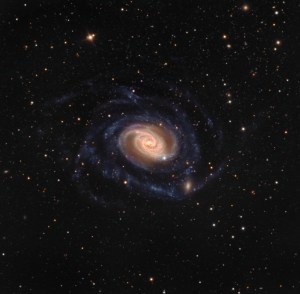
NGC 289: Swirl in the Southern Sky

Image Credit & Copyright: Mike SelbyExplanation: About 70 million light-years distant, gorgeous spiral galaxy NGC 289 is larger than our own Milky Way. Seen nearly face-on, its bright core and colorful central disk give way to remarkably faint, bluish spiral arms. The extensive arms sweep well over 100 thousand light-years from the galaxy’s center. At the lower right in this sharp, telescopic galaxy portrait the main spiral arm seems to encounter a small, fuzzy elliptical companion galaxy interacting with enormous NGC 289. Of course spiky stars are in the foreground of the scene. They lie within the Milky Way toward the southern constellation Sculptor.

16 October Southern Hemisphere Current Moon Phase and Planetary Positions

Moon Goddess’ Current Phase

Click here to find out the Moon phase for anyone’s birth date.

From Moongiant.com

Today the Moon will be in a Waxing Gibbous phase. This phase is when the moon is more than 50% illuminated but not yet a Full Moon. The phase lasts about 7 days with the moon becoming more illuminated each day until the Full Moon. During a Waxing Gibbous the moon rises in the east in mid-afternoon and is high in the eastern sky at sunset. The moon is then visible through most of the night sky setting a few hours before sunrise. The word Gibbous first appeared in the 14th century and has its roots in the Latin word “gibbosus” meaning humpbacked.

Visit the October 2021 Moon Phases Calendar to see all the daily moon phase for this month.

Today’s Waxing Gibbous Phase

The Waxing Gibbous on October 16 has an illumination of 83%. This is the percentage of the Moon illuminated by the Sun. The illumination is constantly changing and can vary up to 10% a day. On October 16 the Moon is 10.82 days old. This refers to how many days it has been since the last New Moon. It takes 29.53 days for the Moon to orbit the Earth and go through the lunar cycle of all 8 Moon phases.

The 8 Lunar Phases

There are 8 lunar phases the Moon goes through in its 29.53 days lunar cycle. The 4 major Moon phases are Full Moon, New Moon, First Quarter and Last Quarter. Between these major phases, there are 4 minor ones: the Waxing Crescent, Waxing Gibbous, Waning Gibbous and Waning Crescent. For more info on the Moon Cycle and on each phase check out Wikipedia Lunar Phase page.

Phase Details

Phase: Waxing Gibbous
Illumination: 83%
Moon Age: 10.82 days
Moon Angle: 0.52
Moon Distance: 381,829.22 km
Sun Angle: 0.53
Sun Distance: 149,091,395.10 km

Useful Moon Resources

October 15 Northern Hemisphere Current Moon Phase and Planetary Positions

Moon Goddess’ Current Phase

Click here to find out the Moon phase for anyone’s birth date.

The Moon’s current phase for today and tonight is a Waxing Gibbous phase. This phase is when the moon is more than 50% illuminated but not yet a Full Moon. The phase lasts about 7 days with the moon becoming more illuminated each day until the Full Moon. During a Waxing Gibbous the moon rises in the east in mid-afternoon and is high in the eastern sky at sunset. The moon is then visible through most of the night sky setting a few hours before sunrise. The word Gibbous first appeared in the 14th century and has its roots in the Latin word “gibbosus” meaning humpbacked.

Visit the October 2021 Moon Phases Calendar to see all the daily moon phase for this month.

Today’s Waxing Gibbous Phase

The Waxing Gibbous on October 15 has an illumination of 75%. This is the percentage of the Moon illuminated by the Sun. The illumination is constantly changing and can vary up to 10% a day. On October 15 the Moon is 9.82 days old. This refers to how many days it has been since the last New Moon. It takes 29.53 days for the Moon to orbit the Earth and go through the lunar cycle of all 8 Moon phases.

The 8 Lunar Phases

There are 8 lunar phases the Moon goes through in its 29.53 days lunar cycle. The 4 major Moon phases are Full Moon, New Moon, First Quarter and Last Quarter. Between these major phases, there are 4 minor ones: the Waxing Crescent, Waxing Gibbous, Waning Gibbous and Waning Crescent. For more info on the Moon Cycle and on each phase check out Wikipedia Lunar Phase page.

Phase Details For – October 15

Phase: Waxing Gibbous
Illumination: 75%
Moon Age: 9.82 days
Moon Angle: 0.53
Moon Distance: 377,160.17 km
Sun Angle: 0.53
Sun Distance: 149,133,736.11 km

Useful Moon Resources

15 October Daily Correspondence Digest for the Southern Hemisphere’s Moon Phase and Planetary Positions

Current Moon Phase


You can use this link to go forward or backward in time for Moon phase information. If you are curious you can even find out what phase the Moon was in when you or anyone else, you know was on the date the person was born.

From Moongiant.com

Today the Moon will be in a Waxing Gibbous phase. This phase is when the moon is more than 50% illuminated but not yet a Full Moon. The phase lasts about 7 days with the moon becoming more illuminated each day until the Full Moon. During a Waxing Gibbous the moon rises in the east in mid-afternoon and is high in the eastern sky at sunset. The moon is then visible through most of the night sky setting a few hours before sunrise. The word Gibbous first appeared in the 14th century and has its roots in the Latin word “gibbosus” meaning humpbacked.

Visit the October 2021 Moon Phases Calendar to see all the daily moon phase for this month.

Today’s Waxing Gibbous Phase

The Waxing Gibbous on October 15 has an illumination of 75%. This is the percentage of the Moon illuminated by the Sun. The illumination is constantly changing and can vary up to 10% a day. On October 15 the Moon is 9.82 days old. This refers to how many days it has been since the last New Moon. It takes 29.53 days for the Moon to orbit the Earth and go through the lunar cycle of all 8 Moon phases.

The 8 Lunar Phases

There are 8 lunar phases the Moon goes through in its 29.53 days lunar cycle. The 4 major Moon phases are Full Moon, New Moon, First Quarter and Last Quarter. Between these major phases, there are 4 minor ones: the Waxing Crescent, Waxing Gibbous, Waning Gibbous and Waning Crescent. For more info on the Moon Cycle and on each phase check out Wikipedia Lunar Phase page.

Phase Details

Phase: Waxing Gibbous
Illumination: 75%
Moon Age: 9.82 days
Moon Angle: 0.53
Moon Distance: 377,160.17 km
Sun Angle: 0.53
Sun Distance: 149,133,736.11 km

Useful Moon Resources

BELTANE: SOUTHERN HEMISPHERE

Southern Hemisphere Beltane by Jane Hardwicke Collings

The date for the Southern Hemispheric Beltane is October 31st and ‘May Day’ is November 1st. The climax of Spring!

Beltane is the peak of Spring, a celebration of fertility. In ancient times it was the Beltane Rites that recon- nected each year the King to the Goddess, the masculine to the feminine. It is a time for us to give thanks for our fertile lives, our creativity and our gender specific gifts and roles. Its a time to notice and honour the difference in the masculine and feminine. It is a time of increasing growth, building to almost full potential, of beauty and heightened passion.

Beltane Spiritual Practice

Your being, as part of the Earth, part of the cycle of the seasons, will be influenced by this energy whether you’re paying attention to it or not. If you pay some attention, you will feel it, and you can be in flow with it.

Think like the gardener, and align with the Earth energy of now, contemplate the growth that is peaking in your life, that is getting all the attention…

78 Linestrider Tarot Cards Meaning – Siolo Thompson

Menu of Contents

From TarotX.net – Linestrider Tarot Deck

Click on the hyperlinks below to learn more about the Linestrider Tarot Cards and their meanings.

Prayer and Sacrifice Franco C. | Ancient Civilizations, Latest Updates, Roman Empire, Roman Religion

To read the rest of this article from History Cooperative

Prayer and Sacrifice in Ancient Rome

In the Roman mind, there was a sort of contract between the gods and the mortals. As part of this agreement each side would provide as well as receive services.

Thee role of the mortal in this partnership with the gods was to worship the mighty gods. For this there was prayer and sacrifice. And for both of these activities there was firmly defined rituals. To perform these ritual correctly was of paramount importance. One mistake and one would have to begin all over again.

The very nature of Roman religion itself, with its numerous gods, many of which had multiple roles, was cause for problems. Particularly as in some cases not even the sex of a deity was clear. Hence the phrase ‘wether you be god or goddess’ was a widespread in the worship of certain deities. Many Roman gods also had entire colelction of additional names, according to what aspect of life they were a patron to.

So, for example Juno was Juno Lucina in her role of goddess of childbirth. But as goddess of the mint she was known as Juno Moneta (this curious role came about because for a long time the Roman state mint was housed in her temple on the Capitoline hill).

There appear to have been few things for which there was not a special prayer. So, for example, …

Astronomy Picture of the Day

Discover the cosmos! Each day a different image or photograph of our fascinating universe is featured, along with a brief explanation written by a professional astronomer.

NGC 7293: The Helix Nebula

Image Credit & Copyright: Ignacio Diaz BobilloExplanation: A mere seven hundred light years from Earth, toward the constellation Aquarius, a sun-like star is dying. Its last few thousand years have produced the Helix Nebula (NGC 7293), a well studied and nearby example of a Planetary Nebula, typical of this final phase of stellar evolution. A total of 90 hours of exposure time have gone in to creating this expansive view of the nebula. Combining narrow band image data from emission lines of hydrogen atoms in red and oxygen atoms in blue-green hues, it shows remarkable details of the Helix’s brighter inner region about 3 light-years across. The white dot at the Helix’s center is this Planetary Nebula’s hot, central star. A simple looking nebula at first glance, the Helix is now understood to have a surprisingly complex geometry.

October 14 Daily Correspondence Digest for the Northern Hemisphere’s Moon Phase and Planetary Positions

Current Moon Phase

You can use this link to go forward or backward in time for Moon phase information. If you are curious you can even find out what phase the Moon was in when you or anyone else, you know was on the date the person was born.

From Moongiant.com

Northeastern and Northwestern Hemispheres Planetary Positions


If you need to calculate the planetary positions for a specific use and time, click on this link

Currentplanetarypositions.com

To figure out GMT (Greenwich Mean Time) to your local time use this link

For Your Local Time and Date

Northeastern Hemisphere

The time for the Custom Planetary Positions is from the local time in Frankfurt, Germany, Europe

14 October 2021
02:00 pm GMT 4:00 PM CET
Zodiac: Tropical (Standard Western)

Sun:21 Libra 27
Moon:09 Aquarius 46
Mercury:11 Libra 38 Rx
Venus:07 Sagittarius 43
Mars:19 Libra 20
Jupiter:22 Aquarius 21 Rx
Saturn:06 Aquarius 53
Uranus:13 Taurus 38 Rx
Neptune:21 Pisces 00 Rx
Pluto:24 Capricorn 20
True Lunar Node:02 Gemini 34 Rx
Mean Lunar Node:03 Gemini 41 Rx
Lilith (Black Moon):09 Gemini 46
Chiron:10 Aries 10 Rx
Ceres:12 Gemini 02 Rx
Pallas:10 Pisces 59 Rx
Juno:20 Sagittarius 09
Vesta:12 Scorpio 23
Eris:24 Aries 16 Rx
Fire:4
Earth:2
Air:10
Water:3
Cardinal:6
Fixed:5
Mutable:8

Northwestern Hemisphere

The time for the Custom Planetary Positions is from the local time in Denver, Colorado, USA

October 14, 2021
10:00 pm GMT 4:00 PM MT
Zodiac: Tropical (Standard Western)

Sun:21 Libra 46
Moon:14 Aquarius 16
Mercury:11 Libra 24 Rx
Venus:08 Sagittarius 04
Mars:19 Libra 33
Jupiter:22 Aquarius 21 Rx
Saturn:06 Aquarius 53
Uranus:13 Taurus 38 Rx
Neptune:21 Pisces 00 Rx
Pluto:24 Capricorn 20

True Lunar Node:02 Gemini 33 Rx

Mean Lunar Node:03 Gemini 40 Rx
Lilith (Black Moon):09 Gemini 48
Chiron:10 Aries 09 Rx
Ceres:12 Gemini 02 Rx
Pallas:10 Pisces 56 Rx
Juno:20 Sagittarius 14
Vesta:12 Scorpio 34

Eris:24 Aries 16 Rx
Fire:4
Earth:2
Air:10
Water:3
Cardinal:6
Fixed:5
Mutable:8

Astronomy Picture of the Day

Discover the cosmos! Each day a different image or photograph of our fascinating universe is featured, along with a brief explanation written by a professional astronomer.

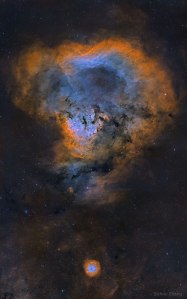
NGC 7822: Cosmic Question Mark

Image Credit & Copyright: Yizhou ZhangExplanation: It may look like a huge cosmic question mark, but the big question really is how does the bright gas and dark dust tell this nebula’s history of star formation. At the edge of a giant molecular cloud toward the northern constellation Cepheus, the glowing star forming region NGC 7822 lies about 3,000 light-years away. Within the nebula, bright edges and dark shapes stand out in this colorful and detailed skyscape. The 9-panel mosaic, taken over 28 nights with a small telescope in Texas, includes data from narrowband filters, mapping emission from atomic oxygen, hydrogen, and sulfur into blue, green, and red hues. The emission line and color combination has become well-known as the Hubble palette. The atomic emission is powered by energetic radiation from the central hot stars. Their powerful winds and radiation sculpt and erode the denser pillar shapes and clear out a characteristic cavity light-years across the center of the natal cloud. Stars could still be forming inside the pillars by gravitational collapse but as the pillars are eroded away, any forming stars will ultimately be cut off from their reservoir of star stuff. This field of view spans over 40 light-years across at the estimated distance of NGC 7822.

The Astrological Correspondences Of Herbs And Plants By Emma Kyteler

From eclecticwitchccraft.com

Herbs have many correspondences that can help you use them in spells, including astrological correspondences. For instance, an herb may correspond with one of the 4 elements (EarthAirFire, or Water), one of the planets, or one of the astrological signs.

Knowing the correspondences of plants can tell you how and when to use them in a spell. For instance, an herb that corresponds to Sagittarius can help you bind the spell to a Sagittarius person you are trying to influence. Or, an Aries herb may help you to add a bit of enthusiasm and strength to a spell because that is what that sign represents.

Having the knowledge of herbal correspondences also helps you to wing it when making a spell. If you know instinctively that an herb has a specific association, you don’t have to check a book before completing a spell.

What Is Herbal Astrology?

When applying astrology to herbalism, we are usually looking at each astrological sign’s unique energies and powers.

These unique characteristics can be used with the…

14 October Southerner Hemisphere Current Moon Phase and Planetary Positions


Moon’s Current Phase 

You can use this link to go forward or backward in time for Moon phase information. If you are curious you can even find out what phase the Moon was in when you or anyone else, you know was on the date the person was born. 

From Moongiant.com

Today the Moon will be in a Waxing Gibbous phase. This phase is when the moon is more than 50% illuminated but not yet a Full Moon. The phase lasts about 7 days with the moon becoming more illuminated each day until the Full Moon. During a Waxing Gibbous the moon rises in the east in mid-afternoon and is high in the eastern sky at sunset. The moon is then visible through most of the night sky setting a few hours before sunrise. The word Gibbous first appeared in the 14th century and has its roots in the Latin word “gibbosus” meaning humpbacked.

Visit the October 2021 Moon Phases Calendar to see all the daily moon phase for this month.

Today’s Waxing Gibbous Phase

The Waxing Gibbous on October 14 has an illumination of 65%. This is the percentage of the Moon illuminated by the Sun. The illumination is constantly changing and can vary up to 10% a day. On October 14 the Moon is 8.8 days old. This refers to how many days it has been since the last New Moon. It takes 29.53 days for the Moon to orbit the Earth and go through the lunar cycle of all 8 Moon phases.

The 8 Lunar Phases

There are 8 lunar phases the Moon goes through in its 29.53 days lunar cycle. The 4 major Moon phases are Full Moon, New Moon, First Quarter and Last Quarter. Between these major phases, there are 4 minor ones: the Waxing Crescent, Waxing Gibbous, Waning Gibbous and Waning Crescent. For more info on the Moon Cycle and on each phase check out Wikipedia Lunar Phase page.

Phase Details

Phase: Waxing Gibbous
Illumination: 65%
Moon Age: 8.80 days
Moon Angle: 0.53
Moon Distance: 372,822.01 km
Sun Angle: 0.53
Sun Distance: 149,176,203.45 km

Useful Moon Resources

October 13 Northern Hemisphere Moon Phase and Planetary Positions

Moon Phase

Click here to find out the Moon phase for anyone’s birth date.

From Moongiant.com

The Moon’s current phase for today and tonight is a First Quarter phase. This phase occurs roughly 7 days after the New Moon when the moon is one quarter of the way through its orbit around the earth. Exactly half the moon will be illuminated and half dark. On the day of the First Quarter phase the moon is high overhead at sunset and is visible until mid-night when it sets in the west. The First Quarter phase is a one-day event and in the following days enters a Waxing Gibbous phase becoming more illuminated each day until the Full Moon.

Visit the October 2021 Moon Phases Calendar to see all the daily moon phase for this month.

Today’s First Quarter Phase

The First Quarter on October 13 has an illumination of 54%. This is the percentage of the Moon illuminated by the Sun. The illumination is constantly changing and can vary up to 10% a day. On October 13 the Moon is 7.76 days old. This refers to how many days it has been since the last New Moon. It takes 29.53 days for the Moon to orbit the Earth and go through the lunar cycle of all 8 Moon phases.

The 8 Lunar Phases

There are 8 lunar phases the Moon goes through in its 29.53 days lunar cycle. The 4 major Moon phases are Full Moon, New Moon, First Quarter and Last Quarter. Between these major phases, there are 4 minor ones: the Waxing Crescent, Waxing Gibbous, Waning Gibbous and Waning Crescent. For more info on the Moon Cycle and on each phase check out Wikipedia Lunar Phase page.

Phase Details

Phase: First Quarter
Illumination: 54%
Moon Age: 7.76 days
Moon Angle: 0.54
Moon Distance: 369,063.85 km
Sun Angle: 0.53
Sun Distance: 149,218,784.35 km

Useful Moon Resources

October 12 Moon Goddess’ Current Phase, Southeastern and Southwestern Hemispheres Custom Planetary Positions

Moon Goddess’ Current Phase

You can use this link to go forward or backward in time for Moon phase information. If you are curious you can even find out what phase the Moon was in when you or anyone else, you know was on the date the person was born.

From Moongiant.com

The Moon’s current phase for today and tonight is a Waxing Crescent Phase. A Waxing Crescent is the first Phase after the New Moon and is a great time to see the features of the moon’s surface. During this phase the Moon can be seen in the wester sky after the sun dips below the horizon at sunset. The moon is close to the sun in the sky and mostly dark except for the right edge of the moon which becomes brighter as the days get closer to the next phase which is a First Quarter with a 50% illumination.

Visit the October 2021 Moon Phases Calendar to see all the daily moon phase for this month.

Today’s Waxing Crescent Phase

The Waxing Crescent on October 12 has an illumination of 43%. This is the percentage of the Moon illuminated by the Sun. The illumination is constantly changing and can vary up to 10% a day. On October 12 the Moon is 6.7 days old. This refers to how many days it has been since the last New Moon. It takes 29.53 days for the Moon to orbit the Earth and go through the lunar cycle of all 8 Moon phases.

Phase Details

Phase: Waxing Crescent
Illumination: 43%
Moon Age: 6.70 days
Moon Angle: 0.54
Moon Distance: 366,112.39 km
Sun Angle: 0.53
Sun Distance: 149,261,466.01 km

Useful Moon Resources

October 11 – Today in History

Important Events

  • 1138 Earthquake in Aleppo, Syria, kills an estimated 230,000
  • 1634 Burchardi flood – “the second Grote Mandrenke” kills about 15,000 in North Friesland, Denmark and Germany
  • 1737 Earthquake reported to have killed 300,000 and destroyed half of Calcutta in India. Now thought to have been an exaggerated account of a hurricane which claimed 3,000 of the city’s estimated 20,000 residents. [1]
  • 1797 Battle of Camperdown (Kamperduin): British navy defeats Dutch fleet
  • 1945 Chinese civil war begins between Kuomintang government led by Chiang Kai-shek and Mao Zedong‘s Communist Party
  • 1962 Second Vatican Council (21st ecumenical) convened by Pope John XXIII
  • 1986 Ronald Reagan and Mikhail Gorbachev open talks at a summit in Reykjavik, Iceland

History of October 11 from OnThisDay.com

Astronomy Picture of the Day

Discover the cosmos! Each day a different image or photograph of our fascinating universe is featured, along with a brief explanation written by a professional astronomer.

Today’s astronomy picture is a video.

Juno Flyby of Ganymede and Jupiter

Video Credit: Images: NASAJPL-CaltechSWRIMSSS;
Animation: Koji KuramuraGerald Eichstädt, Mike Stetson; Music: VangelisExplanation: What would it be like to fly over the largest moon in the Solar System? In June, the robotic Juno spacecraft flew past Jupiter‘s huge moon Ganymede and took images that have been digitally constructed into a detailed flyby. As the featured video begins, Juno swoops over the two-toned surface of the 2,000-km wide moon, revealing an icy alien landscape filled with grooves and craters. The grooves are likely caused by shifting surface plates, while the craters are caused by violent impacts. Continuing on in its orbit, Juno then performed its 34th close pass over Jupiter’s clouds. The digitally-constructed video shows numerous swirling clouds in the north, colorful planet-circling zones and bands across the middle — featuring several white-oval clouds from the String of Pearls, and finally more swirling clouds in the south. Next September, Juno is scheduled to make a close pass over another of Jupiter’s large moons: Europa.