Beltane of the Southern Hemisphere

Today, in the Pagan calendar, the north celebrate the coming of winter at Samhainn. And all the while the sun is peaking up from behind the lush vernal trees and dancing for us once more in the southern hemisphere, as we welcome Beltane on October 31st. Or as I like to refer to it Beltane of the underworld.

A pagan spiral formation in Faerie Glenn where everything is miniature and enchanted. Copyright Content Catnip 2010

Beltane is  the Gaelic seasonal festival historically held to mark the midpoint between the spring equinox & summer solstice (Là Bealltainn in Scottish Gaelic; Lá Bealtaine in Irish). Fire is the traditional means of marking this spring festival of optimism & return.

A famous Ossianic lament…

Click here to read more about Southern Hemisphere Beltane from ContentCatnip.com

Information About the Anglo-Saxon and Frisian Rune Sets

From The Rune Site – Anglo-Saxon and Frisian Runes

The Anglo-Saxon rune set was adapted early in the 6th century B.C.E. from a rune row known as the Frisian rune row. The Frisian runes were the result of a rapid change in the language in Frisia. With such a rapid change in the language more runes were eventually needed so the Elder Futhark was expanded by 4 symbols to bring the Frisian rune row to a total of twenty-eight rune staves. Later around the 7th century a twenty-ninth rune, Ear, was added to form the Anglo-Saxon rune set.

When the rune row was expanded a slight change was made to the order of the set. Ansuz, the fourth rune of the Elder Futhark, was replaced with a new rune, Os and Ansuz was renamed Aesc. While this may have been the only change to the shapes and names of some of the runes it was not the only change in rune order that we come across with this set (and its similar sets). In various manuscripts and on some carvings we see the runes in different orders. On a knife found in the Thames River in London we see the full rune row but in a different order. On the Thames River knife we still see that the fourth rune is Aesc, but the last eight runes are arranged differently leaving the rune Ear to be at the end of the rune order.

Most of the information for the order of the Anglo-Saxon and Frisian rune sets is known because of the Thames River knife, also known as the Thames scramasax, and the Vienna Codex. The Vienna Codex is an early 9th century Anglo-Saxon manuscript that does provide a complete version of the Anglo-Saxon rune row.

What is the Linestrider Tarot Deck?

From TarotX.net – For more information on the Linestrider Tarot Deck

I. Introduction and review Linestrider Tarot Deck

The Linestrider Tarot, illustrated by Siolo Thompson and released by Llewellyn Publications, is a 78-card deck of travelers between two worlds – whose lives span both worlds, ideas, mental states, or reality.

This deck of cards refers to that concept, combined with the traditional Rider-Waite Smith standard (RWS), creating delicate, minimal, and appealing cards. In folk, there is a margin that separates the visible world from the invisible world on many levels, and Linestriders are magical people who live those lives or gather knowledge from both sides of the line or the edge. Linestriders tour through the routes that separate ideas, discipline, mental state, world, and reality.

With the stable basis of the Rider Waite-Smith Tarot deck, the Linestrider Tarot both expands and reduces the look of the classic Pamela Coleman Smith deck. Human figures appear in only half of this deck while the rest are animals, fulfilling the roles commonly performed by humans in many standard RWS decks. With an unusual sensuality and sensitivity, artist Siolo Thompson described humans as mysterious and dreamy, and animals are wise and intelligent creatures.

This is a 78-card tradition-oriented Tarot deck, with 22 Major Arcana cards and 56 fully illustrated Minor Arcana cards. The Major cards remain the old title and the four Minor suits are Wands, Swords, Cups, and Pentacles. Court cards include Page, Knight, Queen, and King as usual.

The card size is 7 x 12 cm [2.8 x 4.7 inch] – the standard size of a regular Tarot deck. The deck weight is well-made and hand-fitted. The card is quite heavy-handed but flexible, has a smooth edge and a light shade. Linestrider Tarot deck has quite meticulous images, delicate and elegant colors. The work is a bizarre mix of minimalism in many respects such as watercolor, comic style, subtle pencil brush strokes; realism, and symbolism.

The image on the card has an open and blank background; close-up images seem to be simple with a layer of watercolor and pencil that create clever symbols that are consistent with the lower stimulus-center-space-threshold image.

Menu of Contents


Astronomy Picture of the Day

Discover the cosmos! Each day a different image or photograph of our fascinating universe is featured, along with a brief explanation written by a professional astronomer.

2021 October 23

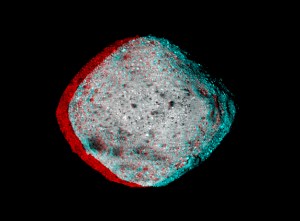
3D Bennu

Image Credit: NASA, GSFC, U. Arizona – Stereo Image Copyright: Patrick Vantuyne

Explanation: Put on your red/blue glasses and float next to asteroid 101955 Bennu. Shaped like a spinning toy top with boulders littering its rough surface, the tiny Solar System world is about one Empire State Building (less than 500 meters) across. Frames used to construct this 3D anaglyph were taken by PolyCam on the OSIRIS_REx spacecraft on December 3, 2018 from a distance of about 80 kilometers. With a sample from the asteroid’s rocky surface on board, OSIRIS_REx departed Bennu’s vicinity this May and is now enroute to planet Earth. The robotic spacecraft is scheduled to return the sample to Earth in September 2023.

October 23 Daily Correspondence Digest for the Northern Hemisphere’s Moon Phase and Planetary Positions


You can use this link to go forward or backward in time for Moon phase information. If you are curious you can even find out what phase the Moon was in when you or anyone else, you know was on the date the person was born.

From Moongiant.com

The Moon’s current phase for today and tonight is a Waning Gibbous Phase. This is the first phase after the Full Moon occurs. It lasts roughly 7 days with the Moon’s illumination growing smaller each day until the Moon becomes a Last Quarter Moon with an illumination of 50%. The average Moon rise for this phase is between 9pm and Midnight depending on the age of the phase. The moon rises later and later each night setting after sunrise in the morning. During this phase the Moon can also be seen in the early morning daylight hours on the western horizon.

Visit the October 2021 Moon Phases Calendar to see all the daily moon phase for this month.

Today’s Waning Gibbous Phase

The Waning Gibbous on October 23 has an illumination of 93%. This is the percentage of the Moon illuminated by the Sun. The illumination is constantly changing and can vary up to 10% a day. On October 23 the Moon is 17.37 days old. This refers to how many days it has been since the last New Moon. It takes 29.53 days for the Moon to orbit the Earth and go through the lunar cycle of all 8 Moon phases.

The 8 Lunar Phases

There are 8 lunar phases the Moon goes through in its 29.53 days lunar cycle. The 4 major Moon phases are Full Moon, New Moon, First Quarter and Last Quarter. Between these major phases, there are 4 minor ones: the Waxing Crescent, Waxing Gibbous, Waning Gibbous and Waning Crescent. For more info on the Moon Cycle and on each phase check out Wikipedia Lunar Phase page.

Phase Details

Phase: Waning Gibbous
Illumination: 93%
Moon Age: 17.37 days
Moon Angle: 0.49
Moon Distance: 405,220.97 km
Sun Angle: 0.54
Sun Distance: 148,799,614.84 km

Useful Moon Resources