
I thought hard about this post and came to the conclusion that people might be more interested in some spiritual aspects of November 11 ,2021 more than others. So here is the general search hyperlink using the keywords, a.k.a. tag words of “spiritual november 11 2021” I hope you find something in the search of interest to you.
Tag: Wheel of the Year
Astronomy Picture of the Day
Discover the cosmos! Each day a different image or photograph of our fascinating universe is featured, along with a brief explanation written by a professional astronomer.
2021 November 11
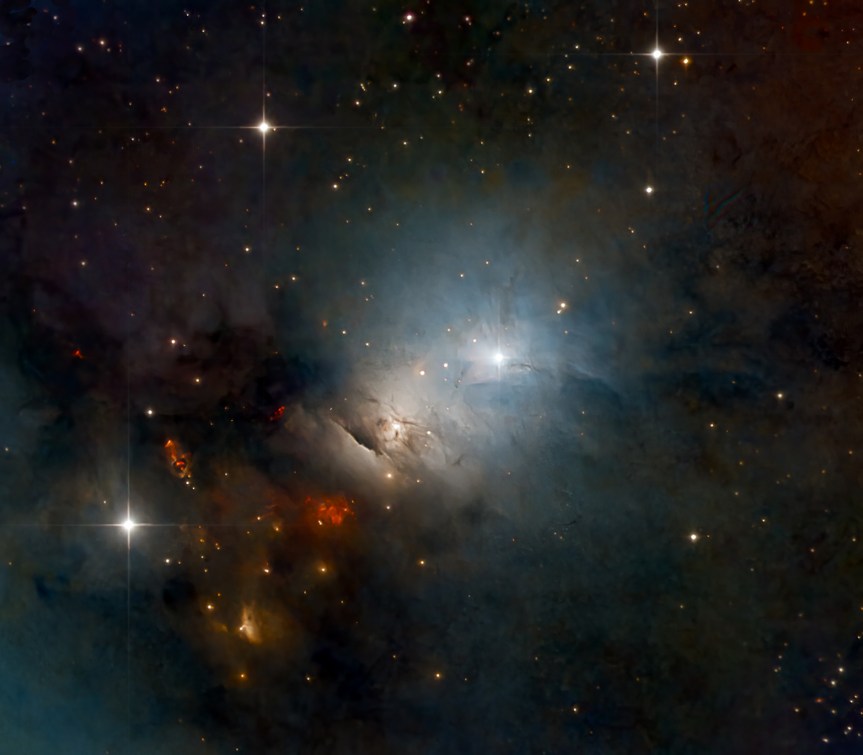
NGC 1333: Stellar Nursery in Perseus
Image Credit & Copyright: Michael Sherick
Explanation: NGC 1333 is seen in visible light as a reflection nebula, dominated by bluish hues characteristic of starlight reflected by interstellar dust. A mere 1,000 light-years distant toward the heroic constellation Perseus, it lies at the edge of a large, star-forming molecular cloud. This telescopic close-up spans about two full moons on the sky or just over 15 light-years at the estimated distance of NGC 1333. It shows details of the dusty region along with telltale hints of contrasty red emission from Herbig-Haro objects, jets and shocked glowing gas emanating from recently formed stars. In fact, NGC 1333 contains hundreds of stars less than a million years old, most still hidden from optical telescopes by the pervasive stardust. The chaotic environment may be similar to one in which our own Sun formed over 4.5 billion years ago.
Witchcraft/Magickal Correspondence Digest for Thursday


From A Pagan Mess
Planet: Jupiter
Element: Earth
Colors: Deep blue, purple green
Keywords: Expansion, Luck, Abundance, Protection, Stability, Joy, Pleasure, Employment, Leadership
Thursdays are perfect for spells for money and abundance. Anything that you are wanting to bring in more of will benefit from the expansive and abundant energy of Jupiter.
From mycrystalaura.com.au
Thor’s day
Planet: Jupiter.
Colours: Purple and Deep Blue.
Metal: Tin.
Crystals: Amethyst, Lepidolite, Sugilite, Sapphire, Emerald, Cats Eye.
From GypsyWolf.weebly.com
Thursday is the fifth day of the week. In the Norse languages this day is called Torsdag, honoring Thor, the god of strength, fertility, thunder, the protector and defender in war, and son of Odin. Thor is the counterpart of Zeus (Greek), and Jupiter or Jove (Roman). Thor, the most beloved of the great gods of northern mythology, is the only god who cannot cross from earth to heaven across the rainbow bridge, for he is so heavy and powerful that the gods fear it will break under his weight. It was said that whenever his hammer Mjollnir, was thrown, it would produce a thunderbolt and when struck against stone, it would create lightning.
Latin: Dies Jovis (“Jove’s Day”), after Jove or Jupiter, the almighty Roman God.
French: jeudi
Italian: giovedi
Spanish: el jueves
German: Donnerstag
Dutch: donderdag
Rules: Expansion, wealth, prosperity, political power, legal matters, spirituality, meditation.
Colors: Purple, Deep Blue
Planet: Jupiter
Metal: Tin, associated with the thunderbolt of Jupiter (Zeus in Greek myth)
Stones: Amethyst, Lepidolite, Sugilite
Herbs: Anise, Cinquefoil, Clove, Honeysuckle, Hyssop, Maple, Nutmeg, Oakmoss, Sage, Sarsaparilla, Sassafras, Star Anise
Zodiac: Sagittarius
From Numerologist.com – Thursday’s Angel
Archangel Zadkiel (also known as Archangel Sachiel) is the resonant Angel for Thursdays.
Known as the angel of mercy, benevolence and compassion, he’s an incredibly powerful force, encouraging us to seek, and offer forgiveness.
He is a bringer of deep truth, understanding and connection to Source. One of his chief functions is to guide humanity towards a higher path, freeing us from the shackles of pain, guilt and shame.
Archangel Zadkiel is often depicted holding a small dagger because, in the Jewish story, mercy was offered to Abraham after he tried to sacrifice his son Isaac to God. It was Archangel Zadkiel who called down from Heaven to stop him just in time.
Archangel Zadkiel is also closely associated with the Violet Flame, which is a potent spiritual practice of transmutation (you can read about it here).
Invoke his presence and he will lead you up towards higher octaves of Spiritual awareness and ultimately closer to God.
If you are looking to break through barriers you have to success and abundance, Archangel Zadkiel is also a powerful ally to invoke, as he can help you transmute old, unhealthy conditioning around self-worth and poverty, into states of prosperity and freedom.
As the guardian of memory, he can also help you remember your divine mission in life.
Color: purple,
Planet: Jupiter
Number: 5.
November 11 Daily Correspondence Digest for the Northern Hemisphere’s Moon Phase and Planetary Positions
You can use this link to go forward or backward in time for Moon phase information. If you are curious you can even find out what phase the Moon was in when you or anyone else, you know was on the date the person was born.
From Moongiant.com
The Moon today and tonight will be in a First Quarter phase. This phase occurs roughly 7 days after the New Moon when the moon is one quarter of the way through its orbit around the earth. Exactly half the moon will be illuminated and half dark. On the day of the First Quarter phase the moon is high overhead at sunset and is visible until mid-night when it sets in the west. The First Quarter phase is a one-day event and in the following days enters a Waxing Gibbous phase becoming more illuminated each day until the Full Moon.
Visit the November 2021 Moon Phases Calendar to see all the daily moon phase for this month.
Today’s First Quarter Phase
The First Quarter on November 11 has an illumination of 50%. This is the percentage of the Moon illuminated by the Sun. The illumination is constantly changing and can vary up to 10% a day. On November 11 the Moon is 7.35 days old. This refers to how many days it has been since the last New Moon. It takes 29.53 days for the Moon to orbit the Earth and go through the lunar cycle of all 8 Moon phases.
The 8 Lunar Phases
There are 8 lunar phases the Moon goes through in its 29.53 days lunar cycle. The 4 major Moon phases are Full Moon, New Moon, First Quarter and Last Quarter. Between these major phases, there are 4 minor ones: the Waxing Crescent, Waxing Gibbous, Waning Gibbous and Waning Crescent. For more info on the Moon Cycle and on each phase check out Wikipedia Lunar Phase page.
Phase Details
Phase: First Quarter
Illumination: 50%
Moon Age: 7.35 days
Moon Angle: 0.53
Moon Distance: 374,891.99 km
Sun Angle: 0.54
Sun Distance: 148,075,876.69 km
Illumination: 50%
Moon Age: 7.35 days
Moon Angle: 0.53
Moon Distance: 374,891.99 km
Sun Angle: 0.54
Sun Distance: 148,075,876.69 km
Useful Moon Resources
Check the weather before a night of Moon gazing at weather.com
For a list of all the current meteor showers visit American Meteor Society

If you need to calculate the planetary positions for a specific use and time, click on this link
Currentplanetarypositions.com
To figure out GMT (Greenwich Mean Time) to your local time use this link
For Your Local Time and Date
Northeastern Hemisphere
The time for the Custom Planetary Positions is from the local time in Frankfurt, Germany, Europe
11 November 2021
04:00 pm GMT 6:00 PM CET
Zodiac: Tropical (Standard Western)
Sun:19 Scorpio 29
Moon:21 Aquarius 10
Mercury:09 Scorpio 12
Venus:05 Capricorn 45
Mars:08 Scorpio 09
Jupiter:23 Aquarius 19
Saturn:07 Aquarius 42
Uranus:12 Taurus 31 Rx
Neptune:20 Pisces 31 Rx
Pluto:24 Capricorn 38
True Lunar Node:01 Gemini 48 Rx
Mean Lunar Node:02 Gemini 12 Rx
Lilith (Black Moon):12 Gemini 53
Chiron:09 Aries 04 Rx
Ceres:08 Gemini 34 Rx
Pallas:09 Pisces 05
Juno:28 Sagittarius 55
Vesta:27 Scorpio 21
Eris:23 Aries 59 Rx
Moon:21 Aquarius 10
Mercury:09 Scorpio 12
Venus:05 Capricorn 45
Mars:08 Scorpio 09
Jupiter:23 Aquarius 19
Saturn:07 Aquarius 42
Uranus:12 Taurus 31 Rx
Neptune:20 Pisces 31 Rx
Pluto:24 Capricorn 38
True Lunar Node:01 Gemini 48 Rx
Mean Lunar Node:02 Gemini 12 Rx
Lilith (Black Moon):12 Gemini 53
Chiron:09 Aries 04 Rx
Ceres:08 Gemini 34 Rx
Pallas:09 Pisces 05
Juno:28 Sagittarius 55
Vesta:27 Scorpio 21
Eris:23 Aries 59 Rx
Fire:3
Earth:3
Air:7
Water:6
Earth:3
Air:7
Water:6
Cardinal:4
Fixed:8
Mutable:7
Fixed:8
Mutable:7
Northwestern Hemisphere
The time for the Custom Planetary Positions is from the local time in Denver, Colorado, USA
November 11, 2021
11:00 pm GMT 6:00 PM MST
Zodiac: Tropical (Standard Western)
Sun:19 Scorpio 46
Moon:25 Aquarius 05
Mercury:09 Scorpio 40
Venus:06 Capricorn 01
Mars:08 Scorpio 21
Jupiter:23 Aquarius 20
Saturn:07 Aquarius 43
Uranus:12 Taurus 30 Rx
Neptune:20 Pisces 31 Rx
Pluto:24 Capricorn 38
True Lunar Node:01 Gemini 48 Rx
Mean Lunar Node:02 Gemini 11 Rx
Lilith (Black Moon):12 Gemini 55
Chiron:09 Aries 04 Rx
Ceres:08 Gemini 30 Rx
Pallas:09 Pisces 06
Juno:29 Sagittarius 01
Vesta:27 Scorpio 30
Eris:23 Aries 59 Rx
Moon:25 Aquarius 05
Mercury:09 Scorpio 40
Venus:06 Capricorn 01
Mars:08 Scorpio 21
Jupiter:23 Aquarius 20
Saturn:07 Aquarius 43
Uranus:12 Taurus 30 Rx
Neptune:20 Pisces 31 Rx
Pluto:24 Capricorn 38
True Lunar Node:01 Gemini 48 Rx
Mean Lunar Node:02 Gemini 11 Rx
Lilith (Black Moon):12 Gemini 55
Chiron:09 Aries 04 Rx
Ceres:08 Gemini 30 Rx
Pallas:09 Pisces 06
Juno:29 Sagittarius 01
Vesta:27 Scorpio 30
Eris:23 Aries 59 Rx
Fire:3
Earth:3
Air:7
Water:6
Air:7
Water:6
Cardinal:4
Fixed:8
Mutable:7
Fixed:8
Mutable:7
11 November Daily Correspondence Digest for the Southern Hemisphere’s Moon Phase and Planetary Positions

You can use this link to go forward or backward in time for Moon phase information. If you are curious you can even find out what phase the Moon was in when you or anyone else, you know was on the date the person was born.
From Moongiant.com
The Moon today and tonight will be in a First Quarter phase. This phase occurs roughly 7 days after the New Moon when the moon is one quarter of the way through its orbit around the earth. Exactly half the moon will be illuminated and half dark. On the day of the First Quarter phase the moon is high overhead at sunset and is visible until mid-night when it sets in the west. The First Quarter phase is a one-day event and in the following days enters a Waxing Gibbous phase becoming more illuminated each day until the Full Moon.
Visit the November 2021 Moon Phases Calendar to see all the daily moon phase for this month.
Today’s First Quarter Phase
The First Quarter on November 11 has an illumination of 50%. This is the percentage of the Moon illuminated by the Sun. The illumination is constantly changing and can vary up to 10% a day. On November 11 the Moon is 7.35 days old. This refers to how many days it has been since the last New Moon. It takes 29.53 days for the Moon to orbit the Earth and go through the lunar cycle of all 8 Moon phases.
The 8 Lunar Phases
There are 8 lunar phases the Moon goes through in its 29.53 days lunar cycle. The 4 major Moon phases are Full Moon, New Moon, First Quarter and Last Quarter. Between these major phases, there are 4 minor ones: the Waxing Crescent, Waxing Gibbous, Waning Gibbous and Waning Crescent. For more info on the Moon Cycle and on each phase check out Wikipedia Lunar Phase page.
Phase Details
Phase: First Quarter
Illumination: 50%
Moon Age: 7.35 days
Moon Angle: 0.53
Moon Distance: 374,891.99 km
Sun Angle: 0.54
Sun Distance: 148,075,876.69 km
Illumination: 50%
Moon Age: 7.35 days
Moon Angle: 0.53
Moon Distance: 374,891.99 km
Sun Angle: 0.54
Sun Distance: 148,075,876.69 km
Useful Moon Resources
Check the weather before a night of Moon gazing at weather.com
For a list of all the current meteor showers visit American Meteor Society
If you need to calculate the planetary positions for a specific use and time, click on this link
Currentplanetarypositions.com
To figure out GMT (Greenwich Mean Time) to your local time use this link
For Your Local Time and Date
Southeastern Hemisphere
The time for the Custom Planetary Positions is from the local time in Melbourne, Victoria, Australia
11 November 2021
07:00 am GMT 6:00 PM AEDT
Zodiac: Tropical (Standard Western)
Sun:19 Scorpio 06
Moon:16 Aquarius 05
Mercury:08 Scorpio 36
Venus:05 Capricorn 25
Mars:07 Scorpio 53
Jupiter:23 Aquarius 17
Saturn:07 Aquarius 41
Uranus:12 Taurus 31 Rx
Neptune:20 Pisces 31 Rx
Pluto:24 Capricorn 37
True Lunar Node:01 Gemini 48
Mean Lunar Node:02 Gemini 13 Rx
Lilith (Black Moon):12 Gemini 50
Chiron:09 Aries 05 Rx
Ceres:08 Gemini 38 Rx
Pallas:09 Pisces 05
Juno:28 Sagittarius 48
Vesta:27 Scorpio 09
Eris:24 Aries 00 Rx
Moon:16 Aquarius 05
Mercury:08 Scorpio 36
Venus:05 Capricorn 25
Mars:07 Scorpio 53
Jupiter:23 Aquarius 17
Saturn:07 Aquarius 41
Uranus:12 Taurus 31 Rx
Neptune:20 Pisces 31 Rx
Pluto:24 Capricorn 37
True Lunar Node:01 Gemini 48
Mean Lunar Node:02 Gemini 13 Rx
Lilith (Black Moon):12 Gemini 50
Chiron:09 Aries 05 Rx
Ceres:08 Gemini 38 Rx
Pallas:09 Pisces 05
Juno:28 Sagittarius 48
Vesta:27 Scorpio 09
Eris:24 Aries 00 Rx
Fire:3
Earth:3
Air:7
Water:6
Earth:3
Air:7
Water:6
Cardinal:4
Fixed:8
Mutable:7
Fixed:8
Mutable:7

Southwestern Hemisphere All Tomorrow FOR 1800 BRT GMT 2100 Post 1500 CT
The time for the Custom Planetary Positions is from the local time in Sao Paulo, Brazil, South America
11 November 2021
09:00 pm GMT 6:00 PM BRT
Zodiac: Tropical (Standard Western)
Sun:19 Scorpio 41
Moon:23 Aquarius 58
Mercury:09 Scorpio 32
Venus:05 Capricorn 56
Mars:08 Scorpio 17
Jupiter:23 Aquarius 20
Saturn:07 Aquarius 43
Uranus:12 Taurus 30 Rx
Neptune:20 Pisces 31 Rx
Pluto:24 Capricorn 38
True Lunar Node:01 Gemini 48 Rx
Mean Lunar Node:02 Gemini 11 Rx
Lilith (Black Moon):12 Gemini 54
Chiron:09 Aries 04 Rx
Ceres:08 Gemini 31 Rx
Pallas:09 Pisces 06
Juno:28 Sagittarius 59
Vesta:27 Scorpio 28
Eris:23 Aries 59 Rx
Moon:23 Aquarius 58
Mercury:09 Scorpio 32
Venus:05 Capricorn 56
Mars:08 Scorpio 17
Jupiter:23 Aquarius 20
Saturn:07 Aquarius 43
Uranus:12 Taurus 30 Rx
Neptune:20 Pisces 31 Rx
Pluto:24 Capricorn 38
True Lunar Node:01 Gemini 48 Rx
Mean Lunar Node:02 Gemini 11 Rx
Lilith (Black Moon):12 Gemini 54
Chiron:09 Aries 04 Rx
Ceres:08 Gemini 31 Rx
Pallas:09 Pisces 06
Juno:28 Sagittarius 59
Vesta:27 Scorpio 28
Eris:23 Aries 59 Rx
Fire:3
Earth:3
Air:7
Water:6
Earth:3
Air:7
Water:6
Cardinal:4
Fixed:8
Mutable:7
Fixed:8
Mutable:7
November 10 Daily Correspondence Digest for the Northern Hemisphere’s Moon Phase and Planetary Positions
You can use this link to go forward or backward in time for Moon phase information. If you are curious you can even find out what phase the Moon was in when you or anyone else, you know was on the date the person was born.
From Moongiant.com
The Moon will be in a Waxing Crescent Phase today and tonight. A Waxing Crescent is the first Phase after the New Moon and is a great time to see the features of the moon’s surface. During this phase the Moon can be seen in the wester sky after the sun dips below the horizon at sunset. The moon is close to the sun in the sky and mostly dark except for the right edge of the moon which becomes brighter as the days get closer to the next phase which is a First Quarter with a 50% illumination.
Visit the November 2021 Moon Phases Calendar to see all the daily moon phase for this month.
Today’s Waxing Crescent Phase
The Waxing Crescent on November 10 has an illumination of 39%. This is the percentage of the Moon illuminated by the Sun. The illumination is constantly changing and can vary up to 10% a day. On November 10 the Moon is 6.31 days old. This refers to how many days it has been since the last New Moon. It takes 29.53 days for the Moon to orbit the Earth and go through the lunar cycle of all 8 Moon phases.
Phase Details
Phase: Waxing Crescent
Illumination: 39%
Moon Age: 6.31 days
Moon Angle: 0.54
Moon Distance: 370,770.34 km
Sun Angle: 0.54
Sun Distance: 148,110,583.43 km
Illumination: 39%
Moon Age: 6.31 days
Moon Angle: 0.54
Moon Distance: 370,770.34 km
Sun Angle: 0.54
Sun Distance: 148,110,583.43 km

If you need to calculate the planetary positions for a specific use and time, click on this link
Currentplanetarypositions.com
To figure out GMT (Greenwich Mean Time) to your local time use this link
For Your Local Time and Date
Northeastern Hemisphere
The time for the Custom Planetary Positions is from the local time in Frankfurt, Germany, Europe
10 November 2021
04:00 pm GMT 6:00 PM CET
Zodiac: Tropical (Standard Western)
Sun:18 Scorpio 29
Moon:07 Aquarius 31
Mercury:07 Scorpio 35
Venus:04 Capricorn 51
Mars:07 Scorpio 28
Jupiter:23 Aquarius 14
Saturn:07 Aquarius 39
Uranus:12 Taurus 33 Rx
Neptune:20 Pisces 31 Rx
Pluto:24 Capricorn 37
True Lunar Node:01 Gemini 48
Mean Lunar Node:02 Gemini 15 Rx
Lilith (Black Moon):12 Gemini 46
Moon:07 Aquarius 31
Mercury:07 Scorpio 35
Venus:04 Capricorn 51
Mars:07 Scorpio 28
Jupiter:23 Aquarius 14
Saturn:07 Aquarius 39
Uranus:12 Taurus 33 Rx
Neptune:20 Pisces 31 Rx
Pluto:24 Capricorn 37
True Lunar Node:01 Gemini 48
Mean Lunar Node:02 Gemini 15 Rx
Lilith (Black Moon):12 Gemini 46
Chiron:09 Aries 06 Rx
Ceres:08 Gemini 46 Rx
Pallas:09 Pisces 04
Juno:28 Sagittarius 35
Vesta:26 Scorpio 49
Eris:24 Aries 00 Rx
Fire:3
Earth:3
Air:7
Water:6
Earth:3
Air:7
Water:6
Cardinal:4
Fixed:8
Mutable:7
Fixed:8
Mutable:7

Northwestern Hemisphere
The time for the Custom Planetary Positions is from the local time in Denver, Colorado, USA
November 10, 2021
11:00 pm GMT 4:00 PM MT
Zodiac: Tropical (Standard Western)
Sun:18 Scorpio 46
Moon:11 Aquarius 32
Mercury:08 Scorpio 03
Venus:05 Capricorn 07
Mars:07 Scorpio 40
Jupiter:23 Aquarius 16
Saturn:07 Aquarius 40
Uranus:12 Taurus 32 Rx
Neptune:20 Pisces 31 Rx
Pluto:24 Capricorn 37
True Lunar Node:01 Gemini 48
Mean Lunar Node:02 Gemini 14 Rx
Lilith (Black Moon):12 Gemini 48
Chiron:09 Aries 06 Rx
Ceres:08 Gemini 42 Rx
Pallas:09 Pisces 05
Juno:28 Sagittarius 41
Vesta:26 Scorpio 58
Eris:24 Aries 00 Rx
Moon:11 Aquarius 32
Mercury:08 Scorpio 03
Venus:05 Capricorn 07
Mars:07 Scorpio 40
Jupiter:23 Aquarius 16
Saturn:07 Aquarius 40
Uranus:12 Taurus 32 Rx
Neptune:20 Pisces 31 Rx
Pluto:24 Capricorn 37
True Lunar Node:01 Gemini 48
Mean Lunar Node:02 Gemini 14 Rx
Lilith (Black Moon):12 Gemini 48
Chiron:09 Aries 06 Rx
Ceres:08 Gemini 42 Rx
Pallas:09 Pisces 05
Juno:28 Sagittarius 41
Vesta:26 Scorpio 58
Eris:24 Aries 00 Rx
Fire:3
Earth:3
Air:7
Water:6
Earth:3
Air:7
Water:6
Cardinal:4
Fixed:8
Mutable:7
Fixed:8
Mutable:7
10 November Daily Correspondence Digest for the Southern Hemisphere’s Moon Phase and Planetary Positions
You can use this link to go forward or backward in time for Moon phase information. If you are curious you can even find out what phase the Moon was in when you or anyone else, you know was on the date the person was born.
From Moongiant.com
The Moon will be in a Waxing Crescent Phase today and tonight. A Waxing Crescent is the first Phase after the New Moon and is a great time to see the features of the moon’s surface. During this phase the Moon can be seen in the wester sky after the sun dips below the horizon at sunset. The moon is close to the sun in the sky and mostly dark except for the right edge of the moon which becomes brighter as the days get closer to the next phase which is a First Quarter with a 50% illumination.
Visit the November 2021 Moon Phases Calendar to see all the daily moon phase for this month.
Today’s Waxing Crescent Phase
The Waxing Crescent on November 10 has an illumination of 39%. This is the percentage of the Moon illuminated by the Sun. The illumination is constantly changing and can vary up to 10% a day. On November 10 the Moon is 6.31 days old. This refers to how many days it has been since the last New Moon. It takes 29.53 days for the Moon to orbit the Earth and go through the lunar cycle of all 8 Moon phases.
Phase Details
Phase: Waxing Crescent
Illumination: 39%
Moon Age: 6.31 days
Moon Angle: 0.54
Moon Distance: 370,770.34 km
Sun Angle: 0.54
Sun Distance: 148,110,583.43 km
Illumination: 39%
Moon Age: 6.31 days
Moon Angle: 0.54
Moon Distance: 370,770.34 km
Sun Angle: 0.54
Sun Distance: 148,110,583.43 km
If you need to calculate the planetary positions for a specific use and time, click on this link
Currentplanetarypositions.com
To figure out GMT (Greenwich Mean Time) to your local time use this link
For Your Local Time and Date
Southeastern Hemisphere
The time for the Custom Planetary Positions is from the local time in Melbourne, Victoria, Australia
10 November 2021
06:00 am GMT 6:00 PM AEDT
Zodiac: Tropical (Standard Western)
Sun:18 Scorpio 03
Moon:01 Aquarius 43
Mercury:06 Scorpio 55
Venus:04 Capricorn 28
Mars:07 Scorpio 11
Jupiter:23 Aquarius 12
Saturn:07 Aquarius 38
Uranus:12 Taurus 34 Rx
Neptune:20 Pisces 32 Rx
Pluto:24 Capricorn 36
True Lunar Node:01 Gemini 47
Mean Lunar Node:02 Gemini 16 Rx
Lilith (Black Moon):12 Gemini 43
Chiron:09 Aries 07 Rx
Ceres:08 Gemini 51 Rx
Pallas:09 Pisces 04
Juno:28 Sagittarius 27
Vesta:26 Scorpio 35
Eris:24 Aries 00 Rx
Moon:01 Aquarius 43
Mercury:06 Scorpio 55
Venus:04 Capricorn 28
Mars:07 Scorpio 11
Jupiter:23 Aquarius 12
Saturn:07 Aquarius 38
Uranus:12 Taurus 34 Rx
Neptune:20 Pisces 32 Rx
Pluto:24 Capricorn 36
True Lunar Node:01 Gemini 47
Mean Lunar Node:02 Gemini 16 Rx
Lilith (Black Moon):12 Gemini 43
Chiron:09 Aries 07 Rx
Ceres:08 Gemini 51 Rx
Pallas:09 Pisces 04
Juno:28 Sagittarius 27
Vesta:26 Scorpio 35
Eris:24 Aries 00 Rx
Fire:3
Earth:3
Air:7
Water:6
Earth:3
Air:7
Water:6
Cardinal:4
Fixed:8
Mutable:7
Fixed:8
Mutable:7
Southwestern Hemisphere
The time for the Custom Planetary Positions is from the local time in Sao Paulo, Brazil, South America
10 November 2021
08:00 pm GMT 6:00 PM BRT
Zodiac: Tropical (Standard Western)
Sun:18 Scorpio 39
Moon:09 Aquarius 49
Mercury:07 Scorpio 51
Venus:05 Capricorn 00
Mars:07 Scorpio 35
Jupiter:23 Aquarius 15
Saturn:07 Aquarius 40
Uranus:12 Taurus 33 Rx
Neptune:20 Pisces 31 Rx
Pluto:24 Capricorn 37
True Lunar Node:01 Gemini 48
Mean Lunar Node:02 Gemini 14 Rx
Lilith (Black Moon):12 Gemini 47
Chiron:09 Aries 06 Rx
Ceres:08 Gemini 44 Rx
Pallas:09 Pisces 05
Juno:28 Sagittarius 38
Vesta:26 Scorpio 54
Eris:24 Aries 00 Rx
Moon:09 Aquarius 49
Mercury:07 Scorpio 51
Venus:05 Capricorn 00
Mars:07 Scorpio 35
Jupiter:23 Aquarius 15
Saturn:07 Aquarius 40
Uranus:12 Taurus 33 Rx
Neptune:20 Pisces 31 Rx
Pluto:24 Capricorn 37
True Lunar Node:01 Gemini 48
Mean Lunar Node:02 Gemini 14 Rx
Lilith (Black Moon):12 Gemini 47
Chiron:09 Aries 06 Rx
Ceres:08 Gemini 44 Rx
Pallas:09 Pisces 05
Juno:28 Sagittarius 38
Vesta:26 Scorpio 54
Eris:24 Aries 00 Rx
Fire:3
Earth:3
Air:7
Water:6
Earth:3
Air:7
Water:6
Cardinal:4
Fixed:8
Mutable:7
Fixed:8
Mutable:7
November 9 Daily Correspondence Digest for the Northern Hemisphere’s Moon Phase and Planetary Positions
You can use this link to go forward or backward in time for Moon phase information. If you are curious you can even find out what phase the Moon was in when you or anyone else, you know was on the date the person was born.
From Moongiant.com
The Moon’s current phase for today and tonight is a Waxing Crescent Phase. A Waxing Crescent is the first Phase after the New Moon and is a great time to see the features of the moon’s surface. During this phase the Moon can be seen in the wester sky after the sun dips below the horizon at sunset. The moon is close to the sun in the sky and mostly dark except for the right edge of the moon which becomes brighter as the days get closer to the next phase which is a First Quarter with a 50% illumination.
Visit the November 2021 Moon Phases Calendar to see all the daily moon phase for this month.
Today’s Waxing Crescent Phase
The Waxing Crescent on November 10 has an illumination of 39%. This is the percentage of the Moon illuminated by the Sun. The illumination is constantly changing and can vary up to 10% a day. On November 10 the Moon is 6.31 days old. This refers to how many days it has been since the last New Moon. It takes 29.53 days for the Moon to orbit the Earth and go through the lunar cycle of all 8 Moon phases.
The 8 Lunar Phases
There are 8 lunar phases the Moon goes through in its 29.53 days lunar cycle. The 4 major Moon phases are Full Moon, New Moon, First Quarter and Last Quarter. Between these major phases, there are 4 minor ones: the Waxing Crescent, Waxing Gibbous, Waning Gibbous and Waning Crescent. For more info on the Moon Cycle and on each phase check out Wikipedia Lunar Phase page.
Phase Details
Illumination: 39%
Moon Age: 6.31 days
Moon Angle: 0.54
Moon Distance: 370,770.34 km
Sun Angle: 0.54
Sun Distance: 148,110,583.43 km
Useful Moon Resources
Check the weather before a night of Moon gazing at weather.com
For a list of all the current meteor showers visit American Meteor Society
If you need to calculate the planetary positions for a specific use and time, click on this link
Currentplanetarypositions.com
To figure out GMT (Greenwich Mean Time) to your local time use this link
For Your Local Time and Date
Northeastern Hemisphere
The time for the Custom Planetary Positions is from the local time in Frankfurt, Germany, Europe
10 November 2021
04:00 pm GMT 5:00 PM CET
Zodiac: Tropical (Standard Western)
Sun:18 Scorpio 29
Moon:07 Aquarius 31
Mercury:07 Scorpio 35
Venus:04 Capricorn 51
Mars:07 Scorpio 28
Jupiter:23 Aquarius 14
Saturn:07 Aquarius 39
Uranus:12 Taurus 33 Rx
Neptune:20 Pisces 31 Rx
Pluto:24 Capricorn 37
True Lunar Node:01 Gemini 48
Mean Lunar Node:02 Gemini 15 Rx
Lilith (Black Moon):12 Gemini 46
Chiron:09 Aries 06 Rx
Ceres:08 Gemini 46 Rx
Pallas:09 Pisces 04
Juno:28 Sagittarius 35
Vesta:26 Scorpio 49
Eris:24 Aries 00 Rx
Moon:07 Aquarius 31
Mercury:07 Scorpio 35
Venus:04 Capricorn 51
Mars:07 Scorpio 28
Jupiter:23 Aquarius 14
Saturn:07 Aquarius 39
Uranus:12 Taurus 33 Rx
Neptune:20 Pisces 31 Rx
Pluto:24 Capricorn 37
True Lunar Node:01 Gemini 48
Mean Lunar Node:02 Gemini 15 Rx
Lilith (Black Moon):12 Gemini 46
Chiron:09 Aries 06 Rx
Ceres:08 Gemini 46 Rx
Pallas:09 Pisces 04
Juno:28 Sagittarius 35
Vesta:26 Scorpio 49
Eris:24 Aries 00 Rx
Fire:3
Earth:3
Air:7
Water:6
Earth:3
Air:7
Water:6
Cardinal:4
Fixed:8
Mutable:7
Fixed:8
Mutable:7

Northwestern Hemisphere
The time for the Custom Planetary Positions is from the local time in Denver, Colorado, USA
November 10, 2021
12:00 am GMT 5:00 PM MT
Zodiac: Tropical (Standard Western)
Sun:17 Scorpio 48
Moon:28 Capricorn 13
Mercury:06 Scorpio 31
Venus:04 Capricorn 15
Mars:07 Scorpio 01
Jupiter:23 Aquarius 11
Saturn:07 Aquarius 37
Uranus:12 Taurus 35 Rx
Neptune:20 Pisces 32 Rx
Pluto:24 Capricorn 36
True Lunar Node:01 Gemini 47
Mean Lunar Node:02 Gemini 17 Rx
Lilith (Black Moon):12 Gemini 42
Chiron:09 Aries 07 Rx
Ceres:08 Gemini 53 Rx
Pallas:09 Pisces 04
Juno:28 Sagittarius 21
Vesta:26 Scorpio 27
Eris:24 Aries 00 Rx
Moon:28 Capricorn 13
Mercury:06 Scorpio 31
Venus:04 Capricorn 15
Mars:07 Scorpio 01
Jupiter:23 Aquarius 11
Saturn:07 Aquarius 37
Uranus:12 Taurus 35 Rx
Neptune:20 Pisces 32 Rx
Pluto:24 Capricorn 36
True Lunar Node:01 Gemini 47
Mean Lunar Node:02 Gemini 17 Rx
Lilith (Black Moon):12 Gemini 42
Chiron:09 Aries 07 Rx
Ceres:08 Gemini 53 Rx
Pallas:09 Pisces 04
Juno:28 Sagittarius 21
Vesta:26 Scorpio 27
Eris:24 Aries 00 Rx
Fire:3
Earth:4
Air:6
Water:6
Earth:4
Air:6
Water:6
Cardinal:5
Fixed:7
Mutable:7
Fixed:7
Mutable:7
9 November Daily Correspondence Digest for the Southern Hemisphere’s Moon Phase and Planetary Positions
You can use this link to go forward or backward in time for Moon phase information. If you are curious you can even find out what phase the Moon was in when you or anyone else, you know was on the date the person was born.
From Moongiant.com
The Moon’s current phase for today and tonight is a Waxing Crescent Phase. A Waxing Crescent is the first Phase after the New Moon and is a great time to see the features of the moon’s surface. During this phase the Moon can be seen in the wester sky after the sun dips below the horizon at sunset. The moon is close to the sun in the sky and mostly dark except for the right edge of the moon which becomes brighter as the days get closer to the next phase which is a First Quarter with a 50% illumination.
Visit the November 2021 Moon Phases Calendar to see all the daily moon phase for this month.
Today’s Waxing Crescent Phase
The Waxing Crescent on November 9 has an illumination of 28%. This is the percentage of the Moon illuminated by the Sun. The illumination is constantly changing and can vary up to 10% a day. On November 9 the Moon is 5.24 days old. This refers to how many days it has been since the last New Moon. It takes 29.53 days for the Moon to orbit the Earth and go through the lunar cycle of all 8 Moon phases.
The 8 Lunar Phases
There are 8 lunar phases the Moon goes through in its 29.53 days lunar cycle. The 4 major Moon phases are Full Moon, New Moon, First Quarter and Last Quarter. Between these major phases, there are 4 minor ones: the Waxing Crescent, Waxing Gibbous, Waning Gibbous and Waning Crescent. For more info on the Moon Cycle and on each phase check out Wikipedia Lunar Phase page.
Phase Details
Phase: Waxing Crescent
Illumination: 28%
Moon Age: 5.24 days
Moon Angle: 0.54
Moon Distance: 367,365.10 km
Sun Angle: 0.54
Sun Distance: 148,145,731.14 km
Illumination: 28%
Moon Age: 5.24 days
Moon Angle: 0.54
Moon Distance: 367,365.10 km
Sun Angle: 0.54
Sun Distance: 148,145,731.14 km
Useful Moon Resources
Check the weather before a night of Moon gazing at weather.com
For a list of all the current meteor showers visit American Meteor Society
If you need to calculate the planetary positions for a specific use and time, click on this link
Currentplanetarypositions.com
To figure out GMT (Greenwich Mean Time) to your local time use this link
For Your Local Time and Date
Southeastern Hemisphere
The time for the Custom Planetary Positions is from the local time in Melbourne, Victoria, Australia
9 November 2021
06:00 am GMT 5:00 PM AEDT
Zodiac: Tropical (Standard Western)
Sun:17 Scorpio 03
Moon:17 Capricorn 33
Mercury:05 Scorpio 18
Venus:03 Capricorn 33
Mars:06 Scorpio 30
Jupiter:23 Aquarius 08
Saturn:07 Aquarius 35
Uranus:12 Taurus 37 Rx
Neptune:20 Pisces 32 Rx
Pluto:24 Capricorn 35
True Lunar Node:01 Gemini 46
Mean Lunar Node:02 Gemini 19 Rx
Lilith (Black Moon):12 Gemini 37
Chiron:09 Aries 09 Rx
Ceres:09 Gemini 02 Rx
Pallas:09 Pisces 04
Juno:28 Sagittarius 06
Vesta:26 Scorpio 03
Eris:24 Aries 01 Rx
Moon:17 Capricorn 33
Mercury:05 Scorpio 18
Venus:03 Capricorn 33
Mars:06 Scorpio 30
Jupiter:23 Aquarius 08
Saturn:07 Aquarius 35
Uranus:12 Taurus 37 Rx
Neptune:20 Pisces 32 Rx
Pluto:24 Capricorn 35
True Lunar Node:01 Gemini 46
Mean Lunar Node:02 Gemini 19 Rx
Lilith (Black Moon):12 Gemini 37
Chiron:09 Aries 09 Rx
Ceres:09 Gemini 02 Rx
Pallas:09 Pisces 04
Juno:28 Sagittarius 06
Vesta:26 Scorpio 03
Eris:24 Aries 01 Rx
Fire:3
Earth:4
Air:6
Water:6
Earth:4
Air:6
Water:6
Cardinal:5
Fixed:7
Mutable:7
Fixed:7
Mutable:7
Southwestern Hemisphere
The time for the Custom Planetary Positions is from the local time in Sao Paulo, Brazil, South America
9November 2021
08:00 pm GMT 5:00 PM BRT
Zodiac: Tropical (Standard Western)
Sun:17 Scorpio 38
Moon:25 Capricorn 52
Mercury:06 Scorpio 14
Venus:04 Capricorn 05
Mars:06 Scorpio 54
Jupiter:23 Aquarius 10
Saturn:07 Aquarius 37
Uranus:12 Taurus 35 Rx
Neptune:20 Pisces 32 Rx
Pluto:24 Capricorn 36
True Lunar Node:01 Gemini 47
Mean Lunar Node:02 Gemini 18 Rx
Lilith (Black Moon):12 Gemini 41
Chiron:09 Aries 08 Rx
Ceres:08 Gemini 55 Rx
Pallas:09 Pisces 04
Juno:28 Sagittarius 18
Vesta:26 Scorpio 22
Eris:24 Aries 00 Rx
Moon:25 Capricorn 52
Mercury:06 Scorpio 14
Venus:04 Capricorn 05
Mars:06 Scorpio 54
Jupiter:23 Aquarius 10
Saturn:07 Aquarius 37
Uranus:12 Taurus 35 Rx
Neptune:20 Pisces 32 Rx
Pluto:24 Capricorn 36
True Lunar Node:01 Gemini 47
Mean Lunar Node:02 Gemini 18 Rx
Lilith (Black Moon):12 Gemini 41
Chiron:09 Aries 08 Rx
Ceres:08 Gemini 55 Rx
Pallas:09 Pisces 04
Juno:28 Sagittarius 18
Vesta:26 Scorpio 22
Eris:24 Aries 00 Rx
Fire:3
Earth:4
Air:6
Water:6
Earth:4
Air:6
Water:6
Cardinal:5
Fixed:7
Fixed:7
Mutable:7
November 8 Daily Correspondence Digest for the Northern Hemisphere’s Moon Phase and Planetary Positions
You can use this link to go forward or backward in time for Moon phase information. If you are curious you can even find out what phase the Moon was in when you or anyone else, you know was on the date the person was born.
From Moongiant.com
The Moon’s current phase for today and tonight is a Waxing Crescent Phase. A Waxing Crescent is the first Phase after the New Moon and is a great time to see the features of the moon’s surface. During this phase the Moon can be seen in the wester sky after the sun dips below the horizon at sunset. The moon is close to the sun in the sky and mostly dark except for the right edge of the moon which becomes brighter as the days get closer to the next phase which is a First Quarter with a 50% illumination.
Visit the November 2021 Moon Phases Calendar to see all the daily moon phase for this month.
Today’s Waxing Crescent Phase
The Waxing Crescent on November 8 has an illumination of 18%. This is the percentage of the Moon illuminated by the Sun. The illumination is constantly changing and can vary up to 10% a day. On November 8 the Moon is 4.14 days old. This refers to how many days it has been since the last New Moon. It takes 29.53 days for the Moon to orbit the Earth and go through the lunar cycle of all 8 Moon phases.
The 8 Lunar Phases
There are 8 lunar phases the Moon goes through in its 29.53 days lunar cycle. The 4 major Moon phases are Full Moon, New Moon, First Quarter and Last Quarter. Between these major phases, there are 4 minor ones: the Waxing Crescent, Waxing Gibbous, Waning Gibbous and Waning Crescent. For more info on the Moon Cycle and on each phase check out Wikipedia Lunar Phase page.
Phase Details
Phase: Waxing Crescent
Illumination: 18%
Moon Age: 4.14 days
Moon Angle: 0.55
Moon Distance: 364,897.83 km
Sun Angle: 0.54
Sun Distance: 148,181,308.81 km
Illumination: 18%
Moon Age: 4.14 days
Moon Angle: 0.55
Moon Distance: 364,897.83 km
Sun Angle: 0.54
Sun Distance: 148,181,308.81 km
Useful Moon Resources
Check the weather before a night of Moon gazing at weather.com
For a list of all the current meteor showers visit American Meteor Society
If you need to calculate the planetary positions for a specific use and time, click on this link
Currentplanetarypositions.com
To figure out GMT (Greenwich Mean Time) to your local time use this link
For Your Local Time and Date
Northeastern Hemisphere For
The time for the Custom Planetary Positions is from the local time in Frankfurt, Germany, Europe
8 November 2021
03:00 pm GMT 5:00 PM CET
Zodiac: Tropical (Standard Western)
Sun:16 Scorpio 25
Moon:08 Capricorn 31
Mercury:04 Scorpio 18
Venus:02 Capricorn 59
Mars:06 Scorpio 05
Jupiter:23 Aquarius 05
Saturn:07 Aquarius 33
Uranus:12 Taurus 38 Rx
Neptune:20 Pisces 33 Rx
Pluto:24 Capricorn 35
True Lunar Node:01 Gemini 46
Mean Lunar Node:02 Gemini 21 Rx
Lilith (Black Moon):12 Gemini 33
Chiron:09 Aries 10 Rx
Ceres:09 Gemini 09 Rx
Pallas:09 Pisces 03
Juno:27 Sagittarius 54
Vesta:25 Scorpio 43
Eris:24 Aries 01 Rx
Moon:08 Capricorn 31
Mercury:04 Scorpio 18
Venus:02 Capricorn 59
Mars:06 Scorpio 05
Jupiter:23 Aquarius 05
Saturn:07 Aquarius 33
Uranus:12 Taurus 38 Rx
Neptune:20 Pisces 33 Rx
Pluto:24 Capricorn 35
True Lunar Node:01 Gemini 46
Mean Lunar Node:02 Gemini 21 Rx
Lilith (Black Moon):12 Gemini 33
Chiron:09 Aries 10 Rx
Ceres:09 Gemini 09 Rx
Pallas:09 Pisces 03
Juno:27 Sagittarius 54
Vesta:25 Scorpio 43
Eris:24 Aries 01 Rx
Fire:3
Earth:4
Air:6
Water:6
Earth:4
Air:6
Water:6
Cardinal:5
Fixed:7
Mutable:7
Fixed:7
Mutable:7

 Northwestern Hemisphere For 1700 MT GMT 2300 Post 1800 CT
The time for the Custom Planetary Positions is from the local time in Denver, Colorado, USA
November 08, 2021
11:00 pm GMT 5:00 PM MT
Zodiac: Tropical (Standard Western)
Sun:16 Scorpio 46
Moon:13 Capricorn 21
Mercury:04 Scorpio 50
Venus:03 Capricorn 17
Mars:06 Scorpio 19
Jupiter:23 Aquarius 07
Saturn:07 Aquarius 34
Uranus:12 Taurus 37 Rx
Neptune:20 Pisces 33 Rx
Pluto:24 Capricorn 35
Moon:13 Capricorn 21
Mercury:04 Scorpio 50
Venus:03 Capricorn 17
Mars:06 Scorpio 19
Jupiter:23 Aquarius 07
Saturn:07 Aquarius 34
Uranus:12 Taurus 37 Rx
Neptune:20 Pisces 33 Rx
Pluto:24 Capricorn 35
True Lunar Node:01 Gemini 46
Mean Lunar Node:02 Gemini 20 Rx
Mean Lunar Node:02 Gemini 20 Rx
Lilith (Black Moon):12 Gemini 35
Chiron:09 Aries 09 Rx
Ceres:09 Gemini 05 Rx
Pallas:09 Pisces 03
Juno:28 Sagittarius 01
Vesta:25 Scorpio 54
Ceres:09 Gemini 05 Rx
Pallas:09 Pisces 03
Juno:28 Sagittarius 01
Vesta:25 Scorpio 54
Eris:24 Aries 01 Rx
Fire:3
Earth:4
Air:6
Water:6
Earth:4
Air:6
Water:6
Cardinal:5
Fixed:7
Mutable:7
Fixed:7
Mutable:7
November 8 Today In History
Important Historical Events
392 Roman Emperor Theodosius declares Christian religion the state religion
1519 1st meeting of Aztec Emperor Moctezuma II and Spanish Conquistador Hernán Cortés in Tenochtitlan, Mexico
1701 William Penn presents Charter of Privileges, guaranteed religious freedom for the colony in Pennsylvania
1734 Vincent la Chapelle, master cook to various nobility and royalty, forms Free Masons Lodge in Netherlands
1895 German physicist Wilhelm Röntgen produces and detects electromagnetic radiation in a wavelength range today known as X-rays or Röntgen rays
2002 Iraq disarmament crisis: UN Security Council under Resolution 1441 unanimously approves a resolution on Iraq, forcing Saddam Hussein to disarm or face “serious consequences”
2005 Ellen Johnson-Sirleaf is elected president of Liberia, the first woman to lead an African country
2016 Republican Donald Trump is elected President of the United States of America, defeating democrat Hillary Clinton, who received 2.9 million more votes

Today’s Historical Events
1322 Pope John XXII names John van Diest as Bishop of Utrecht
1494 Uprising against Piero de’ Medici in Florence
1519 1st meeting of Aztec Emperor Moctezuma II and Spanish Conquistador Hernán Cortés in Tenochtitlan, Mexico
1520 Stockholm Bloodbath begins: A successful invasion of Sweden by Danish forces results in the execution of around 100 people.
1575 French Roman Catholics & Huguenots signs treaty
1576 Eighty Years’ War: Pacification of Ghent – 17 Dutch provinces sign anti-Spanish covenant
Today’s Historical Events in Film and TV
1880 French actress Sarah Bernhardt makes her US debut at NY’s Booth Theater
1935 “Mutiny on the Bounty” directed by Frank Lloyd and starring Charles Laughton and Clark Gable premieres in New York (Best Production/Picture 1936)
1949 “All The King’s Men” based on Robert Penn Warren’s Pulitzer winning novel, directed by Robert Rossen and starring Broderick Crawford premieres in New York (Best Picture 1950)
1956 “The Ten Commandments”, directed by Cecil B. DeMille, starring Charlton Heston and Yul Brynner opens in the US
1959 KJTV (now KGET) TV channel 17 in Bakersfield, CA (NBC) 1st broadcast
1964 KUPK TV channel 13 in Garden City, KS (ABC) begins broadcasting
1965 “Days of Our Lives” premieres on TV
Today’s Historical Music Events
1926 George Gershwin‘s musical “Oh, Kay” premieres in NYC
1928 George and Ira Gershwin‘s musical “Treasure Girl” premieres in NYC
1932 “Make Mine Music” debuts
1945 “Girl from Nantucket” opens at Adelphi Theater NYC for 12 performances
1958 “Maria Golovin” closes at Martin Beck Theater NYC after 5 performances
1974 “Greatest Hits” 11th studio album by Elton John is released
1986 “Song & Dance” closes at Royale Theater NYC after 474 performances
1990 “6 Degrees of Separation” opens at Vivian Beaumont NYC for 496 performances
Today’s Historical Events in Sports
1920 Baseball meeting to depose Ban Johnson is set for Nov 12th
1947 Bradman scores his 99th 1st-class cricket century, 100 South Australia v Victoria
1950 Walt Dropo of Boston Red Sox selected AL Rookie of Year
1951 New York Yankees catcher Yogi Berra wins 1st of his 3 MVP awards
1961 Whitey Ford is voted Cy Young Award winner over Warren Spahn
1966 Frank Robinson, Baltimore Orioles outfielder, selected as AL MVP,first player to win MVP in both leagues
1966 President Lyndon B. Johnson signs anti-trust immunity to AFL-NFL merger
1970 Tom Dempsey of New Orleans Saints kicks NFL record 63 yard field goal
Astronomy Picture of the Day
Discover the cosmos! Each day a different image or photograph of our fascinating universe is featured, along with a brief explanation written by a professional astronomer.
2021 November 8
A Filament Leaps from the Sun
Video Credit & Copyright: Stéphane PoirierExplanation: Why, sometimes, does part of the Sun’s atmosphere leap into space? The reason lies in changing magnetic fields that thread through the Sun‘s surface. Regions of strong surface magnetism, known as active regions, are usually marked by dark sunspots. Active regions can channel charged gas along arching or sweeping magnetic fields — gas that sometimes falls back, sometimes escapes, and sometimes not only escapes but impacts our Earth. The featured one-hour time-lapse video — taken with a small telescope in France — captured an eruptive filament that appeared to leap off the Sun late last month. The filament is huge: for comparison, the size of the Earth is shown on the upper left. Just after the filament lifted off, the Sun emitted a powerful X-class flare while the surface rumbled with a tremendous solar tsunami. A result was a cloud of charged particles that rushed into our Solar System but mostly missed our Earth — this time. However, enough solar plasma did impact our Earth’s magnetosphere to create a few faint auroras.
Weekly Horoscope Sunday, November 7 to Saturday, November 13, 2021
Click here for Georgia Nicols’ Daily Horoscopes
All Signs
This week begins with ease, especially in practical terms because people will support and help each other. However, by Wed., everything changes and in an epic showdown, feisty Mercury joins scrappy Mars in Scorpio to challenge stern Saturn. This is an all-out defiance to authority (whatever authority represents in your life). Authority might be your boss or the head of the family. It might be the government. It might be the church. It might be tradition. Whatever the case, no matter how hard “authority” tries to control or oppress – it will be forced to cave. Clearly, the little guy wins! By the end of the week, all is calm and cool. Oh yeah, this will be the time to put the “b” back in subtle.
Aries (March 21-April 19)
This week begins in gentle terms; however, you are concerned with financial matters connected with shared property, jointly-held items, shared responsibilities and dealing with the wealth and resources of someone else. You might also feel a bit challenged having to deal with values that are different from your own? Certainly, some of these issues will come to a head midweek when someone older, perhaps a friend or a person in authority, in a group or an organization, challenges your stance on inheritances, shared property, taxes, debt or your arrangement with someone about shared resources. Things could get nasty. But Venus at the top of your chart will bless you and pave the way for successful relations with almost everyone.
Taurus (April 20-May 20)
This is a powerful time for you because you look so successful in the eyes of others, especially parents, bosses and VIPs. And to be sure, this is a time of harvest for you when the seeds that you have planted since around 2005 are now coming to fruition. This week starts off gently. Travel plans appeal! You might be involved with someone from another culture? However, be patient with partners and close friends as well as parents and authority figures midweek, when you find yourself at odds with someone. You might attract someone to you who is adamant about their POV. (This never helps.) Be patient. You might play the role of arbitrator or peacemaker. Or maybe someone needs to play this role for you? (Yikes!)
Gemini (May 21-June 20)
This is a busy time for you. You are setting your standards high because you want to be efficient, organized in everything you do, and on top of that, you also want to address health issues. Bottom line: You want to whip your life in shape. Midweek however, you will encounter difficulties with someone that might be work-related? Or they could relate to your pet or even your health in some fashion. Whatever happens will feel challenging! Nevertheless, your energy and drive will help you to find a solution and go forward with more confidence. Hey, this is just a brief, dark cloud on your horizon.
Cancer (June 21-July 22)
Relations with partners and close friends are very supportive now because fair Venus is opposite your sign. Even your relations with members of the general public are warm and friendly. However, parents might have a real challenge midweek dealing with their kids. Oh yeah. Arguments, hissy fits, meltdowns and rebellion are possible scenarios that you might face. Romantic partners might also be at odds with each other. (Kinda nasty.) Do not add fuel to the flame. Use patience and reasoning to establish a calmer, win-win solution with everyone. Because, this is possible! Venus will help you. (Dark chocolate will also help you.)
Leo (July 23-Aug. 22)
Lately, you have been super focused on home, family and dealing with increased chaos where you live. This could be due to visiting guests, residential moves, changes on the home front including renovations or decorating projects. It’s enough that this is going on, right? You don’t need more angst from disagreements and arguments. However, this is what might happen midweek. Take a moment and remind yourself that patience is the antidote to anger. Patience doesn’t necessarily remove the cause of the problem but it’s a wonderful temporary benefit. Meanwhile, you will enjoy working this week because relations with coworkers are excellent. (Also remember that family is gold.)
Virgo (Aug. 23-Sept. 22)
This week continues to be busy and fast-paced because of the demands of errands, the increased activity of people around you, more time spent with siblings and relatives plus you might be reading and studying more than usual as well. Yes, your plate is full. (Save room for dessert.) Venus promotes warm relations with children and romantic lovers. Venus will also attract fun, social occasions to you! However, midweek, you will be at odds with someone. It could be a nasty confrontation. Sometimes, when you’re seriously at odds with someone you have to just accept what is and agree to disagree. This never feels right but what is the alternative?
Libra (Sept. 23-Oct. 22)
Libra rules haute couture. It is also the sign that rules the law, which is why lawyers are such a well-dressed bunch. This week, you might be embroiled with others about financial matters, money issues or disputes about ownership. These disputes might include something related to kids or something related to social plans and vacations. On the upside, your efforts to entertain at home and redecorate are unhindered. All is well there. Distance yourself from heated discussions about money and possessions because you need your analytical energy to appeal to the logic and common sense of others. Time to get things done. I rest my handbag.
Scorpio (Oct. 23-Nov. 21)
You are right in the middle of the action this week because the Sun, Mercury and Mars are lined up in your sign; and by midweek, they are at odds with stern Saturn. (Yikes!) This could mean a major blow up with a parental figure. It might also mean you will encounter some kind of blow up related to home and family. Whatever it is – you don’t need it! Very likely, you will be challenged by authority figures, parents, the law, tradition or the restrictions of something due to an inevitable reality. Note: One definition of maturity is: Learn to accept the restrictions that you must labour under, and then function to the best of your ability within them.
Sagittarius (Nov. 22-Dec. 21)
Although this week begins in an easy-going way (and easy-going is your style), nevertheless, midweek, you might feel bothered by something. Perhaps this is something going on behind the scenes? Perhaps it’s something that’s troubling you at a subconscious level? The thing to know is you can simply ride this one out because by the end of the week, all is fine again. Meanwhile, this is a great week to attract money and goodies to you. It’s also an excellent week to shop for beautiful things for yourself and loved ones. (Yesterday, when discussing my grandson’s eclectic taste in music, he said, “It took me a long time to love what I love.”) Ah yes, developing the confidence in one’s tastes.
Capricorn (Dec. 22-Jan. 19)
This week is a bit of a roller coaster ride when it comes to relating to your friends, as well as members of groups and organizations. As the beginning of the week unfolds, all is well. In fact, people are supportive to each other. However, by midweek, you will encounter a real challenge with someone, perhaps related to the authority of a group? Or it could be related to how to spend a certain amount of money? Or it could be related to who has control over money and goods? It might be a real clash — so get ready for this. Quite likely, the powers who oppose you will lose their advantage. This means you simply have to persevere. Be dogged.
Aquarius (Jan. 20-Feb. 18)
This is definitely a dicey week for your sign. As mentioned above in All Signs, this week begins in a favourable way with people being helpful and supportive to each other. However, suddenly, midweek everything changes. You will find yourself in conflict with authority figures – parents, bosses, teachers, VIPs and the police. They will dig in their heels. You will dig in your heels. It will be a clash of wills. They might have rules and regulations on their side but you will ignore these and rebel, in order to fight for the improvements and change that you believe are necessary. In this case, you might succeed because the forces of authority are weak, and you are strong.
Pisces (Feb. 19-March 20)
Be smart and steer clear of groups and organizations that are excited about controversial matters this week – matters involving politics, religion or racial issues. Naturally, it’s good to take a stand on what you believe in. However, this week, especially midweek, people will get their belly in a rash about whatever upsets them, and the result will be turmoil and conflict. Quite likely, nothing will be achieved. If you are trying to push an agenda regarding these matters or something to do with publishing, the media, higher education and the law – whatever forces oppose you will probably dissipate or diminish by the end of the week. This leaves you as the victorious survivor, waving your banner for your cause. Nevertheless, timing is everything. Pick our fights. You gotta know when to hold and when to fold.
November 7 Daily Correspondence Digest for the Northern Hemisphere’s Moon Phase and Planetary Positions
You can use this link to go forward or backward in time for Moon phase information. If you are curious you can even find out what phase the Moon was in when you or anyone else, you know was on the date the person was born.
From Moongiant.com
The Moon’s current phase for today and tonight is a Waxing Crescent Phase. A Waxing Crescent is the first Phase after the New Moon and is a great time to see the features of the moon’s surface. During this phase the Moon can be seen in the wester sky after the sun dips below the horizon at sunset. The moon is close to the sun in the sky and mostly dark except for the right edge of the moon which becomes brighter as the days get closer to the next phase which is a First Quarter with a 50% illumination.
Visit the November 2021 Moon Phases Calendar to see all the daily moon phase for this month.
Today’s Waxing Crescent Phase
The Waxing Crescent on November 7 has an illumination of 10%. This is the percentage of the Moon illuminated by the Sun. The illumination is constantly changing and can vary up to 10% a day. On November 7 the Moon is 3.01 days old. This refers to how many days it has been since the last New Moon. It takes 29.53 days for the Moon to orbit the Earth and go through the lunar cycle of all 8 Moon phases.
The 8 Lunar Phases
There are 8 lunar phases the Moon goes through in its 29.53 days lunar cycle. The 4 major Moon phases are Full Moon, New Moon, First Quarter and Last Quarter. Between these major phases, there are 4 minor ones: the Waxing Crescent, Waxing Gibbous, Waning Gibbous and Waning Crescent. For more info on the Moon Cycle and on each phase check out Wikipedia Lunar Phase page.
Phase Details
Phase: Waxing Crescent
Illumination: 10%
Moon Age: 3.01 days
Moon Angle: 0.55
Moon Distance: 363,537.57 km
Sun Angle: 0.54
Sun Distance: 148,217,305.28 km
Illumination: 10%
Moon Age: 3.01 days
Moon Angle: 0.55
Moon Distance: 363,537.57 km
Sun Angle: 0.54
Sun Distance: 148,217,305.28 km
Useful Moon Resources
Check the weather before a night of Moon gazing at weather.com
For a list of all the current meteor showers visit American Meteor Society

If you need to calculate the planetary positions for a specific use and time, click on this link
Currentplanetarypositions.com
To figure out GMT (Greenwich Mean Time) to your local time use this link
For Your Local Time and Date
Northeastern Hemisphere
The time for the Custom Planetary Positions is from the local time in Frankfurt, Germany, Europe
7 November 2021
03:00 pm GMT 5:00 PM CET
Zodiac: Tropical (Standard Western)
Sun:15 Scorpio 25
Moon:23 Sagittarius 48
Mercury:02 Scorpio 41
Venus:02 Capricorn 03
Mars:05 Scorpio 24
Jupiter:23 Aquarius 01
Saturn:07 Aquarius 31
Uranus:12 Taurus 41 Rx
Neptune:20 Pisces 34 Rx
Pluto:24 Capricorn 34
True Lunar Node:01 Gemini 45
Mean Lunar Node:02 Gemini 25 Rx
Lilith (Black Moon):12 Gemini 26
Chiron:09 Aries 12 Rx
Ceres:09 Gemini 20 Rx
Pallas:09 Pisces 04 Rx
Juno:27 Sagittarius 34
Vesta:25 Scorpio 11
Eris:24 Aries 02 Rx
Moon:23 Sagittarius 48
Mercury:02 Scorpio 41
Venus:02 Capricorn 03
Mars:05 Scorpio 24
Jupiter:23 Aquarius 01
Saturn:07 Aquarius 31
Uranus:12 Taurus 41 Rx
Neptune:20 Pisces 34 Rx
Pluto:24 Capricorn 34
True Lunar Node:01 Gemini 45
Mean Lunar Node:02 Gemini 25 Rx
Lilith (Black Moon):12 Gemini 26
Chiron:09 Aries 12 Rx
Ceres:09 Gemini 20 Rx
Pallas:09 Pisces 04 Rx
Juno:27 Sagittarius 34
Vesta:25 Scorpio 11
Eris:24 Aries 02 Rx
Fire:4
Earth:3
Air:6
Water:6
Earth:3
Air:6
Water:6
Cardinal:4
Fixed:7
Mutable:8
Fixed:7
Mutable:8

Northwestern Hemisphere
The time for the Custom Planetary Positions is from the local time in Denver, Colorado, USA
November 7, 2021
11:00 pm GMT 5:00 PM MT
Zodiac: Tropical (Standard Western)
Sun:15 Scorpio 45
Moon:28 Sagittarius 44
Mercury:03 Scorpio 13
Venus:02 Capricorn 22
Mars:05 Scorpio 38
Jupiter:23 Aquarius 03
Saturn:07 Aquarius 31
Uranus:12 Taurus 40 Rx
Neptune:20 Pisces 33 Rx
Pluto:24 Capricorn 34
Moon:28 Sagittarius 44
Mercury:03 Scorpio 13
Venus:02 Capricorn 22
Mars:05 Scorpio 38
Jupiter:23 Aquarius 03
Saturn:07 Aquarius 31
Uranus:12 Taurus 40 Rx
Neptune:20 Pisces 33 Rx
Pluto:24 Capricorn 34
True Lunar Node:01 Gemini 45
Mean Lunar Node:02 Gemini 24 Rx
Lilith (Black Moon):12 Gemini 28
Chiron:09 Aries 12 Rx
Ceres:09 Gemini 17 Rx
Pallas:09 Pisces 03 Rx
Juno:27 Sagittarius 41
Vesta:25 Scorpio 21
Eris:24 Aries 01 Rx
Fire:4
Earth:3
Air:6
Water:6
Air:6
Water:6
Cardinal:4
Fixed:7
Mutable:8
Fixed:7
Mutable:8
7 November Daily Correspondence Digest for the Southern Hemisphere’s Moon Phase and Planetary Positions
You can use this link to go forward or backward in time for Moon phase information. If you are curious you can even find out what phase the Moon was in when you or anyone else, you know was on the date the person was born.
From Moongiant.com
The Moon’s current phase for today and tonight is a Waxing Crescent Phase.
A Waxing Crescent is the first Phase after the New Moon and is a great time to see the features of the moon’s surface. During this phase the Moon can be seen in the wester sky after the sun dips below the horizon at sunset. The moon is close to the sun in the sky and mostly dark except for the right edge of the moon which becomes brighter as the days get closer to the next phase which is a First Quarter with a 50% illumination.
Visit the November 2021 Moon Phases Calendar to see all the daily moon phase for this month.
Today’s Waxing Crescent Phase
The Waxing Crescent on November 7 has an illumination of 10%. This is the percentage of the Moon illuminated by the Sun. The illumination is constantly changing and can vary up to 10% a day. On November 7 the Moon is 3.01 days old. This refers to how many days it has been since the last New Moon. It takes 29.53 days for the Moon to orbit the Earth and go through the lunar cycle of all 8 Moon phases.
The 8 Lunar Phases
There are 8 lunar phases the Moon goes through in its 29.53 days lunar cycle. The 4 major Moon phases are Full Moon, New Moon, First Quarter and Last Quarter. Between these major phases, there are 4 minor ones: the Waxing Crescent, Waxing Gibbous, Waning Gibbous and Waning Crescent. For more info on the Moon Cycle and on each phase check out Wikipedia Lunar Phase page.
Phase Details
Phase: Waxing Crescent
Illumination: 10%
Moon Age: 3.01 days
Moon Angle: 0.55
Moon Distance: 363,537.57 km
Sun Angle: 0.54
Sun Distance: 148,217,305.28 km
Illumination: 10%
Moon Age: 3.01 days
Moon Angle: 0.55
Moon Distance: 363,537.57 km
Sun Angle: 0.54
Sun Distance: 148,217,305.28 km
Useful Moon Resources
Check the weather before a night of Moon gazing at weather.com
For a list of all the current meteor showers visit American Meteor Society
If you need to calculate the planetary positions for a specific use and time, click on this link
Currentplanetarypositions.com
To figure out GMT (Greenwich Mean Time) to your local time use this link
For Your Local Time and Date
Southeastern Hemisphere
The time for the Custom Planetary Positions is from the local time in Melbourne, Victoria, Australia
7 November 2021
06:00 am GMT 5:00 PM AEDT
Zodiac: Tropical (Standard Western)
Sun:15 Scorpio 03
Moon:18 Sagittarius 13
Mercury:02 Scorpio 05
Venus:01 Capricorn 42
Mars:05 Scorpio 09
Jupiter:23 Aquarius 00
Saturn:07 Aquarius 30
Uranus:12 Taurus 41 Rx
Neptune:20 Pisces 34 Rx
Pluto:24 Capricorn 33
True Lunar Node:01 Gemini 44
Mean Lunar Node:02 Gemini 26 Rx
Lilith (Black Moon):12 Gemini 24
Chiron:09 Aries 13 Rx
Ceres:09 Gemini 24 Rx
Pallas:09 Pisces 04 Rx
Juno:27 Sagittarius 27
Vesta:24 Scorpio 59
Eris:24 Aries 02 Rx
Moon:18 Sagittarius 13
Mercury:02 Scorpio 05
Venus:01 Capricorn 42
Mars:05 Scorpio 09
Jupiter:23 Aquarius 00
Saturn:07 Aquarius 30
Uranus:12 Taurus 41 Rx
Neptune:20 Pisces 34 Rx
Pluto:24 Capricorn 33
True Lunar Node:01 Gemini 44
Mean Lunar Node:02 Gemini 26 Rx
Lilith (Black Moon):12 Gemini 24
Chiron:09 Aries 13 Rx
Ceres:09 Gemini 24 Rx
Pallas:09 Pisces 04 Rx
Juno:27 Sagittarius 27
Vesta:24 Scorpio 59
Eris:24 Aries 02 Rx
Fire:4
Earth:3
Air:6
Water:6
Earth:3
Air:6
Water:6
Cardinal:4
Fixed:7
Mutable:8
Fixed:7
Mutable:8
Southwestern Hemisphere All Tomorrow
The time for the Custom Planetary Positions is from the local time in Sao Paulo, Brazil, South America
7 November 2021
08:00 pm GMT 5:00 PM BRT
Zodiac: Tropical (Standard Western)
Sun:15 Scorpio 38
Moon:26 Sagittarius 54
Mercury:03 Scorpio 01
Venus:02 Capricorn 15
Mars:05 Scorpio 33
Jupiter:23 Aquarius 02
Saturn:07 Aquarius 31
Uranus:12 Taurus 40 Rx
Neptune:20 Pisces 34 Rx
Pluto:24 Capricorn 34
True Lunar Node:01 Gemini 45
Mean Lunar Node:02 Gemini 24 Rx
Lilith (Black Moon):12 Gemini 27
Chiron:09 Aries 12 Rx
Ceres:09 Gemini 18 Rx
Pallas:09 Pisces 03 Rx
Juno:27 Sagittarius 38
Vesta:25 Scorpio 17
Eris:24 Aries 01 Rx
Moon:26 Sagittarius 54
Mercury:03 Scorpio 01
Venus:02 Capricorn 15
Mars:05 Scorpio 33
Jupiter:23 Aquarius 02
Saturn:07 Aquarius 31
Uranus:12 Taurus 40 Rx
Neptune:20 Pisces 34 Rx
Pluto:24 Capricorn 34
True Lunar Node:01 Gemini 45
Mean Lunar Node:02 Gemini 24 Rx
Lilith (Black Moon):12 Gemini 27
Chiron:09 Aries 12 Rx
Ceres:09 Gemini 18 Rx
Pallas:09 Pisces 03 Rx
Juno:27 Sagittarius 38
Vesta:25 Scorpio 17
Eris:24 Aries 01 Rx
Fire:4
Earth:3
Air:6
Water:6
Earth:3
Air:6
Water:6
Cardinal:4
Fixed:7
Mutable:8
Fixed:7
Mutable:8
November 6 Today’s History
Important Events from OnThisDay.com
1813 Chilpancingo congress declares Mexico independent of Spain
1860 Republican Abraham Lincoln of Illinois elected the 16th President of the United States of America
1913 Mahatma Gandhi arrested for leading Indian miners’ march in South Africa
1917 [OS Oct 24] Bolshevik revolution begins with bombardment of the Winter Palace in Petrograd during the Russian October Revolution
1978 Shah of Iran Mohammad Reza Pahlavi places the country under military rule; General Gholām Reza Azhāri forms government

Today’s Historical Events
1153 Treaty of Wallingford (Oxfordshire) signed between King Stephen and the Empress Maude (aka Matilda)
1528 Shipwrecked Spanish conquistador Álvar Núñez Cabeza de Vaca becomes first known European to set foot in Texas
1534 Zealand hit by heavy storm
1572 Supernova is observed in constellation known as Cassiopeia
1657 Brandenburg & Poland sign unity of Bromberg
1676 King Carlos II of Spain comes of age (at 15)
1789 Pope Pius VI appoints Father John Carroll as the first Catholic bishop in the United States
1792 Battle of Jemappes: French army beats Holy Roman Empire
Today’s Historical Events in Film and TV
1939 WRGB TV channel 6 in Schenectady-Alby-Troy, NY (CBS) 1st broadcast
1947 NBC’s “Meet the Press” debuts – US’s longest running TV show
1964 WEIQ TV channel 42 in Mobile, AL (PBS) begins broadcasting
1966 1st entire lineup televised in color (NBC)
1968 The film “Head” starring the Monkees opens in New York.
1973 James Bond film “Man With the Golden Gun” starring Roger Moore begins filming
1990 Arsenio Hall gets a star on Hollywood’s Walk of Fame
1993 Actor Howard Rollins arrested for drunk driving
Today’s Historical Events in Music
1919 1st Dutch radio program: Soirée Musicale with “Turf in you(r) ransel”
1952 Dmitri Shostakovich‘s cantata “About our Fatherland” premieres
1953 Masao Oki’s symphony “Atomic Bomb” premieres
1957 “Rumple” opens at Alvin Theater NYC for 45 performances
1971 “Great Harp” closes at Martin Beck Theater NYC after 7 performances
1975 “Hello, Dolly” opens at Minskoff Theater NYC for 51 performances
1975 First performance by punk band The Sex Pistols at St Martins College, London
1977 “Hair” closes at Biltmore Theater NYC after 43 performances
Today’s Historical Events in Sports
1869 1st US college football game, players used their hands or feet, Rutgers 6 Princeton 4
1883 NYAC organizes 1st American cross-country championship race
1929 Providence Steam Roller become first NFL team to host a game at night under floodlights; lose 16-0 against the Chicago Cardinals at the Cycledrome, Providence, RI
1934 NFL Philadelphia Eagles beat Cincinnati Reds 64-0
1950 Branch Rickey signs 5-yr contract as VP/GM of Pittsburgh Pirates
1955 Ryder Cup Golf, Thunderbird Ranch & CC: US wins 8-4; Chick Harbert captains Americans to 7th consecutive event victory
1956 Netherlands and Spain withdraw from Olympics in protest against Soviet actions in the Hungarian Revolution
1961 US government issues a stamp honoring 100th birthday of James Naismith (invented game of basketball – actually Canadian)
Astronomy Picture of the Day
Discover the cosmos! Each day a different image or photograph of our fascinating universe is featured, along with a brief explanation written by a professional astronomer.
2021 November 6
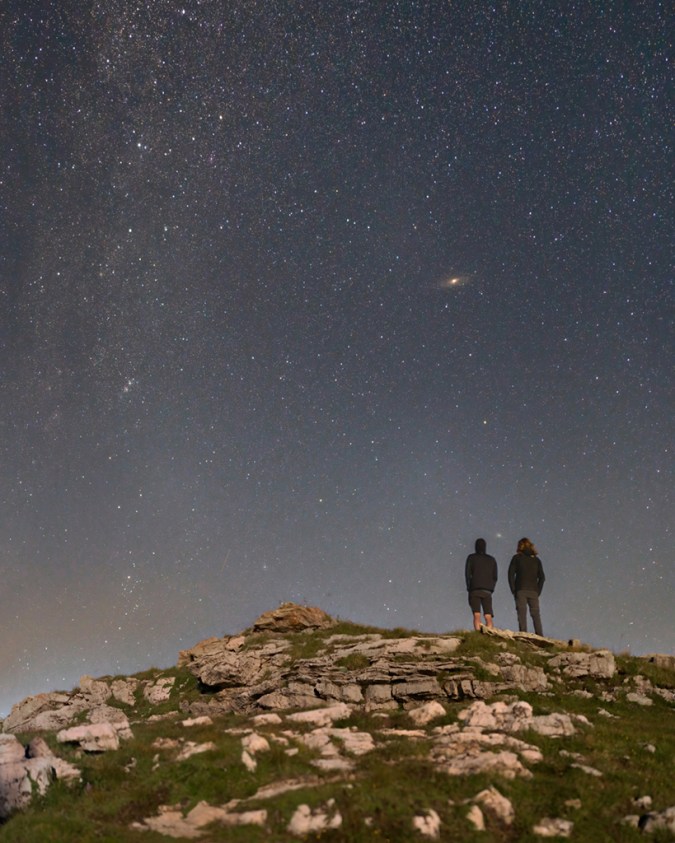
The Galaxy Between Two Friends
Image Credit & Copyright: Martin Lefranc
Explanation: On an August night two friends enjoyed this view after a day’s hike on the Plateau d’Emparis in the French Alps. At 2400 meters altitude the sky was clear. Light from a setting moon illuminates the foreground captured in the simple vertical panorama of images. Along the plane of our Milky Way galaxy stars of Cassiopeia and Perseus shine along the panorama’s left edge. But seen as a faint cloud with a brighter core, the Andromeda galaxy, stands directly above the two friends in the night. The nearest large spiral galaxy, Andromeda is about 2.5 million light-years beyond the stars of the Milky Way. Adding to the evening’s shared extragalactic perspective, the fainter fuzzy spot in the sky right between them is M33, also known as the Triangulum galaxy. Third largest in the local galaxy group, after Andromeda and Milky Way, the Triangulum galaxy is about 3 million light-years distant. On that night, the two friends stood about 3 light-nanoseconds apart.
November 2021 Full Moon Details

From MoonGiant.com
With the changing of the seasons, November’s full moon marks the beginning of the end. This year, it is the very last full moon before the winter solstice, which makes it the Mourning Moon according to Pagan tradition. In many different cultures, November’s full moon is intimately connected with death and loss, on both a literal and symbolic level. The Celts, for instance, called it the Reed Moon, comparing the mournful music made by wind instruments to the ghoulish sounds of spirits being drawn into the underworld. And not without good reason – the Full Mourning Moon marks a dangerous time of the year where people could easily slip into the underworld with a single misstep.
We may enjoy the luxury of winter coats and central heating now, but freezing to death during the long, dark winters used to be a very real threat to early inhabitants of Northern America. In order to survive, making warm winter clothing out of beaver fur was crucial for American colonists and Native American tribes. This is why November’s full moon is also known as the Beaver Moon. During this month, beavers are very active, working hard on dam construction, and so this was a good time to start harvesting their fur.
Missing the timing for this would mean death for these early Northern American communities, as the rivers would freeze over, making it impossible to set out traps. Many Native American tribes, including the Cree, Arapaho, and Abenaki tribes, called November’s full moon the “Moon When Rivers Start to Freeze”. This name drives home the importance of November’s full moon as a signal for these Native American tribes to begin trapping beavers before it was too late, as well as to complete their preparations for the darkest depths of winter.
For the Pagans, on the other hand, the final stage of their winter preparations involve the very important process of “mourning” – which is why they call the last moon before the winter solstice the Mourning Moon. After a full year of accumulating possessions, both physically and otherwise, the Mourning Moon is the perfect time to let go of old, unnecessary things, while giving yourself permission to mourn their passing. Practicing Pagans may perform a moonlit ritual where they write down the things they want to rid themselves of, and ask their Goddess for help in removing unwanted burdens.
Pagan traditions aside, anyone can benefit from taking the time to self-reflect and to let go. Take advantage of the Full Mourning Moon this November to look back on your year and take stock of your desires, your ambitions, your mental and behavioral habits, and the people you spend your energy on. Clean your living and work spaces, and sort out the physical objects that are not contributing to your well-being. Take the time to fully mourn and let go of anything – or anyone – that does not bring you joy, so that you can begin to move forward, unfettered, towards a lighter and happier new year.
Local Date and Time for November 2021 Full Moon in major cities around the world:
Los Angeles,
San Francisco,
Vancouver
November 19, 2021
12:58am PST
Denver,
Salt Lake City,
Calgary
November 19, 2021
1:58am MST
Chicago,
Houston,
San Antonio
November 19, 2021
2:58am CST
New York,
Toronto,
Atlanta
November 19, 2021
3:58am EST
London,
Manchester,
Dublin
November 19, 2021
8:58am GMT
Paris,
Rome,
Berlin
November 19, 2021
9:58am CET
Athens,
Istanbul,
Helsinki
November 19, 2021
10:58am EET
Dubai,
Abu Dhabi,
Muscat
November 19, 2021
12:58pm +04
Bangalore,
Mumbai,
New Delhi
November 19, 2021
2:28pm IST
Singapore,
Kuala Lumpur
November 19, 2021
4:58pm +08
Perth,
Hong Kong,
Beijing
November 19, 2021
4:58pm AWST
Sydney,
Brisbane,
Melbourne
November 19, 2021
7:58pm AEDT
November 6 Daily Correspondence Digest for the Northern Hemisphere’s Moon Phase and Planetary Positions
You can use this link to go forward or backward in time for Moon phase information. If you are curious you can even find out what phase the Moon was in when you or anyone else, you know was on the date the person was born.
From Moongiant.com
The Moon’s current phase for today and tonight is a Waxing Crescent Phase. A Waxing Crescent is the first Phase after the New Moon and is a great time to see the features of the moon’s surface. During this phase the Moon can be seen in the wester sky after the sun dips below the horizon at sunset. The moon is close to the sun in the sky and mostly dark except for the right edge of the moon which becomes brighter as the days get closer to the next phase which is a First Quarter with a 50% illumination.
Visit the November 2021 Moon Phases Calendar to see all the daily moon phase for this month.
Today’s Waxing Crescent Phase
The Waxing Crescent on November 6 has an illumination of 4%. This is the percentage of the Moon illuminated by the Sun. The illumination is constantly changing and can vary up to 10% a day. On November 6 the Moon is 1.86 days old. This refers to how many days it has been since the last New Moon. It takes 29.53 days for the Moon to orbit the Earth and go through the lunar cycle of all 8 Moon phases.
The 8 Lunar Phases
There are 8 lunar phases the Moon goes through in its 29.53 days lunar cycle. The 4 major Moon phases are Full Moon, New Moon, First Quarter and Last Quarter. Between these major phases, there are 4 minor ones: the Waxing Crescent, Waxing Gibbous, Waning Gibbous and Waning Crescent. For more info on the Moon Cycle and on each phase check out Wikipedia Lunar Phase page.
Phase Details
Phase: Waxing Crescent
Illumination: 4%
Moon Age: 1.86 days
Moon Angle: 0.55
Moon Distance: 363,384.70 km
Sun Angle: 0.54
Sun Distance: 148,253,709.29 km
Useful Moon Resources
Check the weather before a night of Moon gazing at weather.com
For a list of all the current meteor showers visit American Meteor Society

If you need to calculate the planetary positions for a specific use and time, click on this link
Currentplanetarypositions.com
To figure out GMT (Greenwich Mean Time) to your local time use this link
For Your Local Time and Date
Northeastern Hemisphere
The time for the Custom Planetary Positions is from the local time in Frankfurt, Germany, Europe
6 November 2021
04:00 pm GMT 6:00 PM CET
Zodiac: Tropical (Standard Western)
Sun:14 Scorpio 27
Moon:09 Sagittarius 29
Mercury:01 Scorpio 09
Venus:01 Capricorn 09
Mars:04 Scorpio 46
Jupiter:22 Aquarius 57
Saturn:07 Aquarius 28
Uranus:12 Taurus 43 Rx
Neptune:20 Pisces 34 Rx
Pluto:24 Capricorn 33
True Lunar Node:01 Gemini 44
Mean Lunar Node:02 Gemini 28 Rx
Lilith (Black Moon):12 Gemini 20
Chiron:09 Aries 14 Rx
Ceres:09 Gemini 31 Rx
Pallas:09 Pisces 04 Rx
Juno:27 Sagittarius 15
Vesta:24 Scorpio 40
Eris:24 Aries 02 Rx
Moon:09 Sagittarius 29
Mercury:01 Scorpio 09
Venus:01 Capricorn 09
Mars:04 Scorpio 46
Jupiter:22 Aquarius 57
Saturn:07 Aquarius 28
Uranus:12 Taurus 43 Rx
Neptune:20 Pisces 34 Rx
Pluto:24 Capricorn 33
True Lunar Node:01 Gemini 44
Mean Lunar Node:02 Gemini 28 Rx
Lilith (Black Moon):12 Gemini 20
Chiron:09 Aries 14 Rx
Ceres:09 Gemini 31 Rx
Pallas:09 Pisces 04 Rx
Juno:27 Sagittarius 15
Vesta:24 Scorpio 40
Eris:24 Aries 02 Rx
Fire:4
Earth:3
Air:6
Water:6
Earth:3
Air:6
Water:6
Cardinal:4
Fixed:7
Mutable:8
Fixed:7
Mutable:8

Northwestern Hemisphere
The time for the Custom Planetary Positions is from the local time in Denver, Colorado, USA
November 06, 2021
11:00 pm GMT 5:00 PM MT
Zodiac: Tropical (Standard Western)
Sun:14 Scorpio 45
Moon:13 Sagittarius 52
Mercury:01 Scorpio 37
Venus:01 Capricorn 26
Mars:04 Scorpio 57
Jupiter:22 Aquarius 59
Saturn:07 Aquarius 29
Uranus:12 Taurus 42 Rx
Neptune:20 Pisces 34 Rx
Pluto:24 Capricorn 33
True Lunar Node:01 Gemini 44
Mean Lunar Node:02 Gemini 27 Rx
Lilith (Black Moon):12 Gemini 22
Chiron:09 Aries 14 Rx
Ceres:09 Gemini 27 Rx
Pallas:09 Pisces 04 Rx
Juno:27 Sagittarius 21
Vesta:24 Scorpio 49
Eris:24 Aries 02 Rx
Moon:13 Sagittarius 52
Mercury:01 Scorpio 37
Venus:01 Capricorn 26
Mars:04 Scorpio 57
Jupiter:22 Aquarius 59
Saturn:07 Aquarius 29
Uranus:12 Taurus 42 Rx
Neptune:20 Pisces 34 Rx
Pluto:24 Capricorn 33
True Lunar Node:01 Gemini 44
Mean Lunar Node:02 Gemini 27 Rx
Lilith (Black Moon):12 Gemini 22
Chiron:09 Aries 14 Rx
Ceres:09 Gemini 27 Rx
Pallas:09 Pisces 04 Rx
Juno:27 Sagittarius 21
Vesta:24 Scorpio 49
Eris:24 Aries 02 Rx
Fire:4
Earth:3
Air:6
Water:6
Earth:3
Air:6
Water:6
Cardinal:4
Fixed:7
Mutable:8
Fixed:7
Mutable:8
For Your Listening and Viewing Pleasure
I am posting this live feed at 10:44 AM CDT. You can use the link later to view it if you miss saving it on youtube.com while it is live. I have been listening to it while doing today’s posts and it is a very painful fibromyalgia and spinal day for me it has allowed me to relax enough to bring you most of the regular daily posts. I hope you enjoy this.
Until tomorrow dear Sisters, Brothers and, Honored Guests blessed be


You must be logged in to post a comment.