The time for the Custom Planetary Positions is from the local time in Melbourne, Victoria, Australia
The date in ( ) is because of us posting this from the Northern Hemisphere. So this post goes live at 8:00 AM AEDT on the date before the month. The date inside the ( ) is the date we have to use to get the timing right for you. That is also why the GMT time that shows at 9:00 PM.
Today the Moon will be in a New Moon phase. During this phase the Moon is too close to the sun in the sky to be visible. The moon rises and sets with the sun and is not present in the night sky. Because of this the night sky is darker and an excellent time to view other celestial objects. Like the Full Moon, a New Moon happens at a very specific time when the sun and moon have the same ecliptic longitude and it can be measured down to the second it occurs.
The New Moon on May 11 has an illumination of 0%. This is the percentage of the Moon illuminated by the Sun. The illumination is constantly changing and can vary up to 10% a day. On May 11 the Moon is 29.26 days old. This refers to how many days it has been since the last New Moon. It takes 29.53 days for the Moon to orbit the Earth and go through the lunar cycle of all 8 Moon phases.
You can use this link to go forward or backward in time for Moon phase information. If you are curious you can even find out what phase the Moon was in when you or anyone else, you know was on the date the person was born.
The time for the Custom Planetary Positions is from the local time in Melbourne, Victoria, Australia
The date in ( ) is because of us posting this from the Northern Hemisphere. So this post goes live at 8:00 AM AEDT on the date before the month. The date inside the ( ) is the date we have to use to get the timing right for you. That is also why the GMT time that shows at 9:00 PM.
Tuesday is the day to work any magick that falls in the category of increasing strength, courage, bravery, and passion. All of these intense emotions are linked to this day’s energies, and spells designed around these themes will have extra punch when performed on this magickal day.
So, let’s add a little passion and conviction into your life! Break out the daring red pieces of your wardrobe, and put a little pizzazz into your day. Work with Lilith, and see what she has to teach you about personal power and sexuality. Meditate on Tiw/Tyr and Mars, and see what those ancient warrior gods will show you about new tactics, strategies, and claiming personal victories in your life. Practice conjuring up that astral weapon from the meditation and use it wisely for protection and for courage.
Create a philter for courage and protection or handcraft your own Witch’s jar to remove negativity from your home. See what other Witch crafts you can conjure up with Tuesday’s magick. Create some kitchen magick on this Tuesday by whipping up a spicy stew-add in a few Mars-associated ingredients such as carrots, peppers, and garlic. Empower the stew for success, and then treat yourself and your family to a good, hearty meal. Try working with a little aromatherapy and burn some spicy or coffee-scented candles to increase your energy level.
Check the sky at night, and see if you can find the reddish planet Mars up in the heavens. Not sure where to look? Check an astronomy magazine or search the Web for more information. Become a magickal warrior and move forward in your life with strength, courage, and compassion. Embrace the side of yourself that loves a good challenge and that is passionate and daring! Banish fear, and face your future with strength and conviction. Believe in yourself and in your dreams, work hard, and you will win every time.
Source
Book of Witchery: Spells, Charms & Correspondences for Every Day of the Week Ellen Dugan
There’s very little moonlight and some great fainter targets in the sky from May 7 to 14.By Alison Klesman | Published: Friday, May 7, 2021RELATED TOPICS: OBSERVING
M106M106 is a spiral galaxy in the northern constellation Canes Venatici the Hunting Dogs. It lies some 25 million light-years from Earth. Some astronomers think emissions from M106 indicate a vast quantity of material is falling into a supermassive black hole at the galaxy’s core.Bill Snyder
Friday, May 7 Canes Venatici the Hunting Dogs is a northern constellation drawn from just two bright stars: magnitude 3 Alpha (α) and magnitude 4 Beta (β) Canum Venaticorum. They sit below the curve of the Big Dipper’s handle, parallel to Alkaid and Mizar but about 15° southwest of that pair.
The constellation is home to several relatively bright galaxies, including magnitude 8.4 M106. Measuring 20.0′ by 8.4′, many consider it one of the best galaxies in Messier’s list, but it’s also one of the least observed. You’ll find this spiral in the constellation’s northwest corner, about 6.5° northwest of Beta Canum Venaticorum and 7.5° southeast of magnitude 2.4 Phecda (Gamma [γ] Ursae Majoris). You’ll want to pull out your best scope for M106, which is tilted to our line of sight much like the more famous Andromeda Galaxy (M31) and resembles that object as well. With larger apertures, you’ll be able to make out the galaxy’s dust lanes and spiral structure.
Canes Venatici is home to several other Messier objects: galaxies M94, M51, and M63, as well as the globular cluster M3.Sunrise: 5:53 A.M. Sunset: 8:01 P.M. Moonrise: 4:19 A.M. Moonset: 4:12 P.M. Moon Phase: Waning crescent (15%) *Times for sunrise, sunset, moonrise, and moonset are given in local time from 40° N 90° W. The Moon’s illumination is given at 12 P.M. local time from the same location.
C/2020 R4 (ATLAS)You’ll find numerous galaxies scattered along Comet ATLAS’ path this month.Astronomy: Roen Kelly
euSaturday, May 8 May is your last chance to see Comet C/2020 R4 (ATLAS) before it streaks too far from the Sun and loses its glow. It won’t return for another 1,000 years, so get your comet watching on before midmonth, when the Moon’s bright light drowns it out.about:blank
ATLAS is currently gliding through Coma Berenices, just south of Canes Venatici (where we turned our gaze last night). This evening, you’ll find the magnitude 10 comet about 2.5° north of Gamma Comae Berenices; nearby are several galaxies around the same magnitude: NGC 4559, NGC 4565, NGC 4494, NGC 4631, and NGC 4395.
The comet will continue toward Leo night by night, heading nearly straight for Zosma in the great cat’s haunches.Sunrise: 5:52 A.M. Sunset: 8:02 P.M. Moonrise: 4:42 A.M. Moonset: 5:12 P.M. Moon Phase: Waning crescent (9%)
Sunday, May 9 Let’s return to Coma Berenices tonight to enjoy NGC 4565, one of the sky’s best edge-on galaxies. Even a small telescope (4 inches) will show this magnitude 9.5 galaxy, also known as the Needle Galaxy for its exceedingly thin appearance. If we could step outside the Milky Way and view it edge on, it would likely look quite similar. Although it sits some 30 million light-years away, thanks to projection effects NGC 4565 appears to sit near the edge of the much closer Coma Star Cluster (Melotte 111).
Melotte 111 itself is an excellent binocular object that can be found just south of Gamma Comae Berenices, which Comet ATLAS passed last night. The cluster’s 40-odd members form a loose v shape visible to the naked eye in a dark sky. It spans about 275′ and sits a little less than 300 light-years away.Sunrise: 5:51 A.M. Sunset: 8:03 P.M. Moonrise: 5:04 A.M. Moonset: 6:10 P.M. Moon Phase: Waning crescent (4%)
Monday, May 10 Mercury passes 8° north of Aldebaran at 11 P.M. EDT. Although they will have set by then, you can catch the pair sinking in the west just after sunset. Closest to the horizon is bright Venus, blazing at magnitude –3.9 and roughly 10″ in diameter. About 9° northeast of Venus is Mercury, a much dimmer –0.3 and spanning 7″. The red giant star Aldebaran, which marks the eye of Taurus the Bull, is south of the tiny planet.
Northwest of Venus (and roughly the same height above the horizon) is the Pleiades. See if you can spot any of the cluster’s bright stars popping out as dusk falls and the cluster quickly sets. You’ll definitely need a clear view of the horizon.
Much higher in the sky, now sitting near the knees of Gemini the Twins, is ruddy Mars, shining at magnitude 1.6. It will take longer for the Red Planet to show up against the darkening sky, but it will also remain above the horizon longer, setting around local midnight.Sunrise: 5:20 A.M. Sunset: 8:04 P.M. Moonrise: 5:28 A.M. Moonset: 7:10 P.M. Moon Phase: Waning crescent (1%)
Tuesday, May 11 Dedicated predawn observers can catch a mutual event between two of Jupiter’s Galilean moons this morning. First, find the bright magnitude –2.3 planet in the southeast before dawn. Jupiter currently sits in Aquarius, while Saturn (magnitude 0.5) hangs nearby in Capricornus, to Jupiter’s upper right. Neptune, not visible without binoculars or a telescope at magnitude 7.8, lies about 23° east-northeast of Jupiter, near the eastern edge of Aquarius and below the Circlet of Pisces.
Next, zoom in with a telescope on the solar system’s largest planet to catch the action: Beginning at 5:06 A.M. EDT, Europa’s shadow will eclipse the larger Ganymede. The event will only last a few minutes, ending by 5:15 A.M. EDT. Even if you aren’t able to catch the eclipse itself, you can still enjoy the scene: Io (closest) and Callisto (farthest) are on Jupiter’s west, while Ganymede (closest) and Europa (farthest) sit to the planet’s east.
New Moon occurs at today 3 P.M. EDT. Nearly three hours later, the Moon reaches apogee — the farthest point from our planet in its orbit around Earth — at 5:53 P.M. EDT. At that time, it will be 252,595 miles (406,512 kilometers) away.Sunrise: 5:49 A.M. Sunset: 8:05 P.M. Moonrise: 5:53 A.M. Moonset: 8:09 P.M. Moon Phase: New
Wednesday, May 12 There’s action in the west again around sunset: The Moon passes 0.7° south of Venus at 6 P.M. EDT, but you’ll need to wait for sunset to easily and safely view the scene. Twenty minutes after the Sun disappears, see if you can find the delicate crescent Moon, now sitting just over 1° southeast of the planet. A Moon this thin (roughly 1.4 percent lit) can be a major challenge, so take your time and use binoculars or a telescope — once the Sun is safely out of the picture.
The planet Mercury sits about 9° above the pair, which will set just after 9 P.M. local time. Mercury remains visible about 50 minutes longer.Sunrise: 5:48 A.M. Sunset: 8:06 P.M. Moonrise: 6:21 A.M. Moonset: 9:10 P.M. Moon Phase: Waxing crescent (1%)
Heart attackAsteroid 29 Amphitrite appears to nearly block out Cor Leonis, also known as Regulus, on May 13.Alison Klesman (via TheSkyX)
Thursday, May 13 The Moon passes 2° south of Mercury at 2 P.M. EDT. Look west after sunset again this evening to find our satellite, now nearly 5 percent lit, a little over 3° southeast of the planet, still hanging in Taurus.
Then, once it’s dark, turn your gaze to Leo the Lion, still relatively high in the southwest. Leo’s brightest star, Regulus, is the one you’ll want to zoom in on with binoculars or, better yet, a small scope. Tonight, asteroid 29 Amphitrite is skimming just north of the magnitude 1.4 star. For reference, look northwest of Regulus to spot a magnitude 8 field star; Amphitrite is three times closer to Regulus than this star is. After passing, the asteroid will continue to move southeast through the constellation, as if making a beeline for Rho (ρ) Leonis.
Although this is a near miss, not all such events are — asteroidoccultations.com hosts a list of upcoming occultations and their visibility.Sunrise: 5:47 A.M. Sunset: 8:07 P.M. Moonrise: 6:54 A.M. Moonset: 10:09 P.M. Moon Phase: Waxing crescent (3%)
Friday, May 14 With such a slim Moon in the sky, tonight is a great night for hunting down the heart of a famous cluster of galaxies. The Virgo Cluster is located (predictably) in the constellation Virgo, which you’ll find in the south after sunset. Look for the constellation’s brightest star, magnitude 1 Spica, and draw a line to the northwest, connecting Spica and magnitude 3.4 Auva (Delta [δ] Virginis). Follow that like further northwest and you’ll reach the center of the Virgo Cluster, which is dominated by several large elliptical galaxies: M49, M60, M84, M86, and M87. (If that last galaxy sounds familiar, it’s likely because M87’s supermassive black hole was the first one caught on “film” when the Event Horizon Telescope Collaboration released an image of the shadow around the black hole in 2019.)
You can spot any of these bright ellipticals, which sit roughly 50 million light-years away, in a 3-inch (or larger) scope. They cover a relatively large field, so you’ll want to choose an eyepiece with a wide field of view. Alternatively, you can pump up the magnification and switch from target to target.Sunrise: 5:46 A.M. Sunset: 8:08 P.M. Moonrise: 7:33 A.M. Moonset: 11:06 P.M. Moon Phase: Waxing crescent (7%)
(YOU CAN COPY AND PASTE ANY CORRESPONDENCES POSTED TO A DOCUMENT TO PRINT AND/OR SAVE ON YOUR COMPUTER FOR PERSONAL USE ONLY)
Monday is named after the moon. The Latin term for Monday is Dies Lunae (“moon’s day”); in the Old English language, this day was Monandaeg; in Greek, it was Hermera Selenes. All of these different names and languages translate to the same thing: the “day of the moon.”
Working with the different phases of the moon is an important skill that takes a bit of time for Witches to learn. So why not cut to the chase and experiment with the day of the week that is dedicated to the moon in all of its magickal energies and aspects?
Magickally, Monday encourages the lunar energies of inspiration, illusion, prophetic dreams, emotions, psychic abilities, travel, women’s mysteries, and fertility.
Source
Book of Witchery: Spells, Charms & Correspondences for Every Day of the Week Ellen Dugan
The time for the Custom Planetary Positions is from the local time in Melbourne, Victoria, Australia
The date in ( ) is because of us posting this from the Northern Hemisphere. So this post goes live at 8:00 AM AEST on the date before the month. The date inside the ( ) is the date we have to use to get the timing right for you. That is also why the GMT time that shows at 10:00 PM.
10 May (09) 2021
10:00 pm GMT 8:00 AM AEST
Zodiac: Tropical (Standard Western)
The time for the Custom Planetary Positions is from the local time in Melbourne, Victoria, Australia
The date in ( ) is because of us posting this from the Northern Hemisphere. So this post goes live at 8:00 AM AEDT on the date before the month. The date inside the ( ) is the date we have to use to get the timing right for you. That is also why the GMT time that shows at 10:00 PM.
Today the Moon will be in a Waning Crescent phase. In this phase the Moon’s illumination is growing smaller each day until the New Moon. During this part of the Moon cycle, the Moon is getting closer to the Sun as viewed from Earth and the night side of the Moon is facing the Earth with only a small edge of the Moon being illuminated. This phase is best viewed an hour or 2 before the sunrise and can be quite beautiful if you’re willing to get up early. It can also be a great time to see the features of the Moon’s surface. Along the edge where the illuminated portion meets the dark side, the craters and mountains cast long shadows making them easier to observe with a telescope or binoculars.
The Waning Crescent on May 9 has an illumination of 5%. This is the percentage of the Moon illuminated by the Sun. The illumination is constantly changing and can vary up to 10% a day. On May 9 the Moon is 27.47 days old. This refers to how many days it has been since the last New Moon. It takes 29.53 days for the Moon to orbit the Earth and go through the lunar cycle of all 8 Moon phases.
From Moongiant.com You can use this link to go forward or backward in time for Moon phase information. If you are curious you can even find out what phase the Moon was in when you or anyone else, you know was on the date the person was born.
Today the Moon will be in a Waning Crescent phase. In this phase the Moon’s illumination is growing smaller each day until the New Moon. During this part of the Moon cycle, the Moon is getting closer to the Sun as viewed from Earth and the night side of the Moon is facing the Earth with only a small edge of the Moon being illuminated. This phase is best viewed an hour or 2 before the sunrise and can be quite beautiful if you’re willing to get up early. It can also be a great time to see the features of the Moon’s surface. Along the edge where the illuminated portion meets the dark side, the craters and mountains cast long shadows making them easier to observe with a telescope or binoculars.
The Waning Crescent on May 8 has an illumination of 10%. This is the percentage of the Moon illuminated by the Sun. The illumination is constantly changing and can vary up to 10% a day. On May 8 the Moon is 26.57 days old. This refers to how many days it has been since the last New Moon. It takes 29.53 days for the Moon to orbit the Earth and go through the lunar cycle of all 8 Moon phases.
You can use this link to go forward or backward in time for Moon phase information. If you are curious you can even find out what phase the Moon was in when you or anyone else, you know was on the date the person was born.
The time for the Custom Planetary Positions is from the local time in Melbourne, Victoria, Australia
The date in ( ) is because of us posting this from the Northern Hemisphere. So this post goes live at 8:00 AM AEST on the date before the month. The date inside the ( ) is the date we have to use to get the timing right for you. That is also why the GMT time that shows at 10:00 PM.
8 May (07) 2021
10:00 pm GMT 8:00 AM AEST
Zodiac: Tropical (Standard Western)
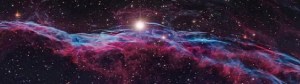
Witch’s Broom in the Western Veil of the Veil Nebula
(Sorry I tried to make this picture bigger and it did not work. :o{ )
The New General Catalogue, an astronomical compendium of deep space objects, names this nebula NGC 6960. Its unofficial name is a touch more poetic: Witch’s Broom. Located in the Veil Nebula, it’s part of the remnants of a star 20 times the size of our sun that went supernova, exploding roughly 8,000 years ago. The long, slender filaments of the Witch’s Broom are part of an expanding blast wave from the supernova that’s shocking, heating, and transforming interstellar gasses as it goes. The bright spot at the nebula’s upper edge is the giant star 52 Cygni in the constellation Cygnus.
The time for the Custom Planetary Positions is from the local time in Chicago, Illinois, United States of America If you need to calculate the planetary positions for a specific use and time, click on this link http://Currentplanetarypositions.com
To figure out GMT (Greenwich Mean Time) to your local time use this linkhttp://timeanddate.com
Today the Moon will be in a Waning Crescent phase. In this phase the Moon’s illumination is growing smaller each day until the New Moon. During this part of the Moon cycle, the Moon is getting closer to the Sun as viewed from Earth and the night side of the Moon is facing the Earth with only a small edge of the Moon being illuminated. This phase is best viewed an hour or 2 before the sunrise and can be quite beautiful if you’re willing to get up early. It can also be a great time to see the features of the Moon’s surface. Along the edge where the illuminated portion meets the dark side, the craters and mountains cast long shadows making them easier to observe with a telescope or binoculars.
The Waning Crescent on May 7 has an illumination of 16%. This is the percentage of the Moon illuminated by the Sun. The illumination is constantly changing and can vary up to 10% a day. On May 7 the Moon is 25.65 days old. This refers to how many days it has been since the last New Moon. It takes 29.53 days for the Moon to orbit the Earth and go through the lunar cycle of all 8 Moon phases.
http://moongaint.com You can use this link to go forward or backward in time for Moon phase information. If you are curious you can even find out what phase the Moon was in when you or anyone else, you know was on the date the person was born.
The time for the Custom Planetary Positions is from the local time in Melbourne, Victoria, Australia
The date in ( ) is because of us posting this from the Northern Hemisphere. So this post goes live at 8:00 AM AEDT on the date before the month. The date inside the ( ) is the date we have to use to get the timing right for you. That is also why the GMT time that shows at 9:00 PM.



 Witches Of The Craft®
You must be logged in to post a comment.