The Modern Coven: Importance of Documentation

The Modern Coven: Importance of Documentation

Author: RedHawk

After a ritual with my coven sometime ago, it occurred to me that we’d all had a really good time, gotten a lot out of it, but alas, had nothing of the physical realm to show for it. Then it hit me. I am a military-trained videographer with an HD camera I wasn’t using NEARLY as much as I thought I would. How fortuitous is that? Two problems were solving each other.

Beautiful. It’s like they used to say on the old TV show “the A Team”: I love it when a plan comes together. Now all I had to do was sell it to my High Priestess.

I tossed my sales pitch around in my head for hours…. what I’d say, how I’d say it. What could I do to convince her we needed to start producing an audiovisual representation of how we did things? After all, it could potentially have a significant impact on later generations of Dragonstone (our coven) and ourselves when we wound up doing our AAR (Sorry, a military term: After Action Review) .

I guess my biggest concern in photographing rituals was that these are sacred, religious rites and even in the process of documenting them, sanctity needed to be preserved. Then again, I’ve photographed lots of weddings, baptisms, and confirmations, and this has never been an issue in the past.

Much to my surprise, it took little more than the mere suggestion. My HPS had always considered our group a modern coven with a forward-thinking attitude. For her, to be anything less is to become obsolete.

Honoring decorum and tradition is paramount. Clinging to it to the point of spiritual stagnation, however, inhibits the growth of the people within. I’m paraphrasing, of course, but you get the idea.

So as of now, I am the considered the coven’s “documentarian.” Since we have a highly organized structure in the coven, we have what are referred to as “points of service.” It’s our way of serving the various needs and functions within the group.

For instance, some may help keep the herb closet stocked, others may help out with the website. I was now the person in charge of keeping an audiovisual record of the coven’s goings on.

There would, of course, be issues.

I should state up front, that we are not, by virtue of our tradition, a skyclad coven—so that would never be an issue. But what about people who were uncomfortable with being photographed?

Personally, I hate being photographed. That’s why I always volunteer to be the one taking pictures. If it were an open ritual, whoever was joining us would also have to consent to being photographed. These were just the beginning of a host of potential things to be ironed out.

But most importantly for me, I’m still a part of the coven…and I need to be involved and an active part of the ritual or event taking place. Fortunately, these issues aren’t as complicated as they appear to be on the surface. As a rule, you really don’t need consent from someone to photograph him or her for personal use. Or in the strictest sense here—for coven-related purposes only.

As long as it’s not going to be used to sell something (commercial purposes) or mass distribution (i.e. YouTube) , you’re usually good. However, anyone from the outside, joining the ritual, needs to understand (well in advance) that you are photographing the ritual for archival purposes. Giving them advance notice, allows them a chance to opt out if they don’t want to be photographed.

As for the members of your coven who don’t want to be photographed, this is where the HPS needs to step in and smooth things out. In short, that’s why they’re the High Priestess.

As for my coven, they’re a pretty shameless bunch. So most love getting face time, the rest put up with it. I’m neither here nor there about it. I view it as a necessary part of keeping a true record of the coven’s history and practice.

Now…what to photograph?

This is the real beauty of it and what makes it stunningly practical and ruthlessly efficient. Technically you can photograph ANYTHING!! And we do! I’ve yet to photograph a ritual per se. But that little omission is just a week away from being a reality (i.e. this upcoming Samhain) .

Another use we’ve found for documentation is classwork. We have members in different states (some thousands of miles away) who simply aren’t able to take part in coven rituals and classes on a regular basis. Therefore, documenting the class gives them a chance to take part (in an after-the-fact sense) from far away.

Also keep in mind, with technology as consumer-based as it has become, it’s quite simple to ‘burn copies’ of any recorded event for all of those involved. This would especially come in handy for rituals such as handfasting for which you KNOW multiple copies will need to be made.

Sometimes we just get together for grins and giggles. You know summer picnics and the like. Having a visual reminder of just how silly and giddy everyone got, makes me smile. Much better than just a few still pictures.

These are just a couple of ideas on how to incorporate video into coven workings. These uses are as infinite as the variety of rituals you can do.

In closing, this method of record keeping was never meant to be a replacement for a Book of Shadows or a Grimoire. Consider it merely a supplemental. But it’s a position worth considering in larger groups, particularly if the group is expected to continue long into the future. (Sure, it requires someone to purchase a video camera, but they’re so cheap and common these days and usually someone within the coven is likely to already have one.)

Imagine what the covens of old would’ve done if they’d had this technology at their disposal. Now…. imagine what WE could’ve have learned from them if they had.

Tuesday’s Prayer – Prayer for Pagan Children

Prayer for Pagan Children

O God, O Goddess, you have created all

people, all races, all traditions, and all

faiths. You have taught us to worship you

each in our own way. This can be very

confusing at times, and to a small child,

often traumatic.

Mankind has created much discontent,

and prejudice is everywhere.

My prayer is for all children, but espe-

cially the Pagan children. Give them and

their families the strength and endurance

needed to survive these times. help them

to grow and understand that ignorance

and greed is the cause of all suffering, so

that one day we can be united as one

 family again.

So Mote It Be.

Pagan Studies : Honoring the Green Man Ritual

Pagan Studies : Honoring the Green Man Ritual

 
The spirit of the forest green is celebrated today in Cornwall, England. He is known by many names—Lord of the Greenwood, Robin Hood, and today as the Green Man. Whatever his name, his spirit embodies the push of new vegetation, the rising sap and coming lushness. He is the life force returning; honor him today by taking time to walk in the woods or city park. Revel in the new growth, and bring along a picnic supper for two. A fresh salad of spring greens, garlicky olives, soft goat cheese, sliced cooked eggs with a loaf of crusty bread, and a bottle of fruity aromatic wine is perfect. Eat with your fingers!
 
By: Karri Allrich
)0(
GrannyMoon’s Coventry of Healing Arts and Pagan Studies 


Your Rune For May 3 is Uruz

Your Rune For Today
Uruz

Uruz is the Rune of harmony, order and inner strength. Often it marks endings and beginnings of periods in our lives. Uruz also symbolizes your ability to tackle new challenges by confronting them with the powers that lie within you. Opportunities probably abound for you right now.

Iron Spells

Iron Spells

Iron repels evil of all kind. Most malevolent spirits cannot bear to be in its presence. In addition to providing protection, iron enhances and stimulates the growth of one’s personal magick powers, so that you are stronger and better able to protection yourself, requiring less outside spiritual protection. Iron also invigorates general vitality and energy.

Your Rune For April 29 is Uruz

Your Rune For Today
Uruz

Uruz is the Rune of harmony, order and inner strength. Often it marks endings and beginnings of periods in our lives. Uruz also symbolizes your ability to tackle new challenges by confronting them with the powers that lie within you. Opportunities probably abound for you right now.

Staff

Staff 

Today’s staff is either chosen in accordance with your height, or by how it feels when used as a walking stick. Where some Witches perfer a shorter staff, others like the extended length. Of all the wooden tools, the staff is often seen as a symbol of honor and authority, and is normally decorated with magical symbols, talismans, bells, amulets, and trinkets given as gifts to the bearer tied with leather strips or sturdy cord and other unusual magickal bits that relate to its owner. In a group environment the staff of the high priest or high priestess may have symbols that relate to how many covens they have under their direction and how many members they have initiated. Like the wand and the rod, the staff is used to direct magickal current, often out-of-doors, but also used indoors if space permits. In more shamanic groups, the staff has replaced the sword. A staff carved with knobs and topped with a wooden replica of a human skull is specifically used at Samhain to honor the dead, or in other rituals where ancestors play a pivotal role: a duo derivation from Canadian Indians tribes and Haitian Voudou traditions, through ancient Celts did put the heads of their enemies on poles to capture their power and honor their valor. Obviously the Witches of today don’t carry reconstructionism that far.

The Cauldron

The Cauldron
 

The Cauldron has a mythological based on the Celtic traditions, and another on popular beliefs. It has been associated with witches from the begining, as the place where the infamous potions were boiled. The symbology takes it both as a tool of transformation (elements enter it in one state and leave it in another) and as an image of the mother’s womb.

Celtic mythology tells us about the Goddess Cerridwen, who cooked in her cauldron the potion for wisdom for a year and a day, curiosly the same time one needs to serve as an acolite before being formally initiated. There are many mentions to the witches’ cauldron, and among the most famour we can name the one featured in a scene in Shakespeare’s Macbeth, when they make a potion as Macbeth decides his future as a traitor. Another legend taken from the Mabinogion tells us of a cauldron that has the virtue of bringing dead warriors back to life.

The cauldron we’re talking about here doesn’t need to be enourmous like we see in the movies. It’s still somewhat easy to find cooking pots very much like we need, even though they’re not the average nowadays. During rituals, depending on the size, we can either put it on the altar, or on the floor, to our left.

The uses of the cauldron varies. As representing the Primal Womb, is obviously feminin, belonging to the element of water. But as it’s solidly built, and usually isolated from the floor by three legs, we can use it, for instance, for every ritual that requires a small fire, or the burning of an element (paper or candles), without worries about security risks. It’ll be usefull in every case we need to symbolise a transformation or rebirth. Also, when full of water it can symbolise the element, though we’ll generally use the chalice. Another of it’s ritual uses can be as a place to discard every material used along the ritual, for instance matches or ashes, to keep them off the altar.

As with all tools, but with this in particular due to it’s possible uses, we must remember to scrupulously clean it after it’s use.

If necesary, it can be replaced by a small metal bowl if we need to burn something, or with the chalice if we just need it to contain water.

The Athame

The Athame

The athame is the practitioner’s ritual knife, symbolising the masculine principle, asociated to the element of Air, and according to several authors also with Fire (for the fire used during the forging of the blade). Other tools closely asociated with it are the Sword and the Sickle (a small knife with a scythe-like blade, very popular in british traditions).

The Athame traditionally must have a black handle and a double-edged blade, even though we’re not really going to use the blade too often. The main function of the Athame (and the Sword) is to direct the user’s energy, whether when tracing the circle, or casting a spell. It’s also used, raised high as a greeting, when calling the four quarters when casting the circle. Some traditions also used a smaller, white handed knife for everything that implies cuting or carving.

The sickle is used in a similar manner, mainly to cut ritual herbs, thanks to it’s shape. We could say it’s a direct heir of the small gold sickle druids used to cut ritual herbs, mainly mistletoe. The only difference is that due to it’s curved shape, similar to the waxing moon, it symbolises the feminin principle, and can be used in some lunar rituals. For more practical uses, it can be replaced with the athame, the same as the white handled knife.

The Sword is not strictly a necesary element, even though it’s highly decorative. It has exactly the same ritual uses of the athame, directing the energy projected by the witch. The only problem it can pose is the uncomfortable size when working in smaller places, along with it’s weight. Unless we were lucky enough to get a short sword, they’re generally heavy items, difficult to handle, at least for a woman. And let us not get into the difficulties of taking it along to an open place to perform a ritual, which can be illega in several countries. Whatever the uses we’re planning, it can well be replaced by the Athame, and we’ll gain in comfortability and practicity.

Awakening the Tool

Awakening the Tool
 
 
Many magickal people believe that once the tool has been cleansed and consecrated (dedicated to Spirit) and blessed (asking Spirit to fill the object with positive energy), the tool should also be “awakened” before each use. The activation process is often governed by the group that the Witch belongs to, meaning one coven may have a special chant while another group may “alert” the tool by tappping it one to three times on the altar, or they may simple pass hands over the tools and say, “Waken ye unto life.” No matter how it is achieved, this process serves as a trigger to the mind that the time for magick has begun.


The Ultimate Book of Shadows for the New Generation, Solitary Witch
Silver RavenWolf

Safe Witch Kit

Safe Witch Kit


Want to be a Witch, yet don’t want dangerous items in your home? We’ve assembled this comprehensive kit to meet the beginning Witch’s needs, without compromising safety.

Includes:


1 Rubber Athame. Painted black handle, silver blade. Very flexible. You can swing this about in Circle with no fears about hurting anyone!

Exclusive! The incredible Collapse-a-Wand! Hand-wrought of authentic wood-grained expanded foam, with a special adhesive patch for attaching the Power Stone of your choice (see below).

2 Battery-operated Candles (1 black, 1 white). No more concerns about flowing gowns catching fire.

1 package Glade Stick-ems. Fresh, floral scent, without the concerns of burning incense. No messy ash to clean up!

1 shaker Mrs. Dash. Get all the flavor and zip of salt, without the sodium!

1 Quality Fold-a-Cauldron. Easy-to-assemble, genuine simulated cast iron corrugated material. Complete instructions.

1 Fabric Rainbow Disk. No sharp corners to be concerned about. The perfect centerpiece for your own Altar. No worries of offending anyone, as could happen with those misunderstood pentagrams.

3 Assorted colors soft vinyl “Power Stones.” Focus the energy of crystals. Perfect for attaching to your Collapse-a-Wand!(Choking hazard. Not recommended for children under 3 years of age)

1 Booklet, “How to Be One with the White Light, Because There Is No Dark Side, Luke” subtitled: “The Absolutely, Completely Comprehensive Guide to Everything Possible that a Witch Needs to Know to cast Any Spell at All”

BONUS! Order now, and we’ll send you our exclusive Fill In The Blanks Book of Light! All the spells you’ll ever need, and YOU fill in the names and dates! Quality softcover binding.

All packaged attractively in a lovely carry-case, which unfolds to become your altar cloth.

Rush out and get yours today!

— by René Friberg, aka RaeVynn Sands

Bill Gates’s Book On Wicca

Bill Gates’s Book On Wicca


1. The book would be called Windows to the Goddess.

2. Iconology was be a major chapter.

3. A revised edition would be released approximately every 6 months without which your magic would no longer work.

4. Your broom would crash at least once a week.

5. Cauldrons would be called recycle bins.

6. A book of shadows would be called the folder of magic.

7. A free high speed connection spell would come with every book.

8. Ever now and then, your circle would collapse and you would have to perform the reboot ritual to get it working.

9. If you used the more powerful MagicNT rituals, the above would happen to all circles within a 5 mile radius.

10. At least once a month, you would have to reinstall your spells into your folder of magic.

11. You would have to use a start ritual to exit your circle. (And cake and wine would only be available after a sign from the Goddess saying it was safe to do so.)

Your Daily Influences for April 22nd

Your Daily Influences
April 22, 2011 
 

Tarot Influence

Rune Influence


Charm Influence
Three of Pentacles Reversed
Gain is not realized and skills are not mastered.
Perthro
Mysteries will become known to you. You should be able to see your life’s path clearly at this time. Pethro is often thought of as “Gambler’s Rune.” You are in a lucky period right now. Chance is your ally. Take advantage of it.
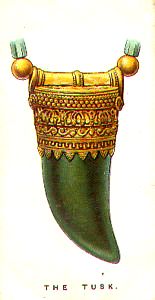
The Tusk
Evil influences this aspect. Strengthen or renew your faith to repel the evil which has invaded this aspect.
Your Daily Influences represent events and challenges the current day will present for you. They may represent opportunities you should be ready to seize. Or they may forewarn you of problems you may be able to avoid or lessen. Generally it is best to use them as tips to help you manage your day and nothing more.

Your Charm for April 22nd

Your Charm for Today
 
 
The Buckle of Isis
 
Today’s Meaning:
Someone who will, or has told a lie about you regarding this aspect will be discovered and the truth will come out. They will suffer for their injustice and you shall prevail.General Description:
The blood of Isis, the virtue of Isis, the magic power of Isis, the magic power of the Eye, are protecting this the Great one; they prevent any wrong being done to him. Thus reads a portion of the 156th chapter of the Egyptian Book of the Dead, which was engraved, often with other invocations, on the Buckle of Isis amulets. Great faith was placed in the magic power of this buckle, or tie. It was believed that the wearer would be protected and guarded from every kind of evil for ever and ever.

The Hedge Witch’s Home (Or A Guide to Practical Paganism)

The Hedge Witch’s Home (Or A Guide to Practical Paganism)

Author: Aethelbera

For most of us Pagans, the altar can be seen as a spiritual or peaceful refuge in our own special corner away from the mundane and away from the rest of the world. For others of us, we may prefer to meditate and still others would like nothing more than a peaceful walk in a forest. But our homes can be places of spiritual refuge as well, from the front door to the bedroom at the furthest end of the house. In fact, the home should be a refuge, a Pagan one. It goes without saying that most of us want to feel Pagan and live Pagan but for some of us this can be difficult.

Some of us live in must urban settings or very small dwellings with little room. Maybe you’re renting an apartment with strict rules such as no holes in the walls. But it’s anything but hopeless. We can “Pagan” up our houses in the simplest of ways. It is possible even if we live in tiny, cramped apartments or dorm rooms where lighting candles and incense isn’t practical and is prohibited by post-secondary institutions.

Kitchen Witches make much use of their kitchens. Their altars are their counters and their ritual tools are the big wooden spoons and saucepans by the stove. Green Witches have their gardens and hedge witches have the tinted jars of sundry herbs lined upon the shelves.

There are a few simple steps a Pagan can take to make their home really their home. Setting up a modest altar in a preferred room is one way, perhaps with a smudge stick or perhaps with images of ancestors lining the edges. This is really very simple, a nicely framed picture of Grandma and Grandpa on a side table will most surely do! My altar has a calendar set up neatly on the left side. You can decorate your altar according to your path’s holidays and decorate your house with seasonal sprigs or seasonal emblems.

One can also make use of many readily available herbs to feel close to nature such as creating sachets, herbal rinses, soaps, incenses, teas or any variety of delicious culinary dishes. I have only a few words of advice and those are: DO NOT OVERPICK. And be sure to pick ethically as many plants are endangered or becoming endangered just as animals do. And do not pick anything out in the wild without thoroughly making sure you know what it is and use it to the best of its abilities If you can’t be sure, leave it or consult someone who knows. That being said, the practical Pagan may want to get rosehips from the roses in his garden and they appear when the blooms die for any number of practical purposes from teas to desserts.

These and many other herbs can also be found at a local loose-leaf teashop, or if you’re lucky enough, your local herb shop or Pagan shop. There are many practical ways to utilize these small charms as well. A kitchen Witch might go to the supermarket and buy some thyme or ginger to cook with and saturate it with his or her witchy knack for cooking. If you live in the city, and want to feel more “naturey”, set up a windowsill spice garden and be sure to get a few potted plants.

When friends come over, the hedge Witch can brew a mean tea from those same rosehips, which are high in vitamin C and thus helpful with colds. If you’re looking for a sleeping potion and warm milk just isn’t doing the trick, try some chamomile. As a mild sedative, it does wonders to help you, or your active children get to sleep.

To make your home feel like being home and feel more Pagan, you could tie an herb sachet by the bathtub and the scent will be released with the steam. You could collect your favorite Pagan authors and place them on a bookshelf in the living room. You could keep a diary, dream journal or recipe book by your bed stand.

For the more spiritual, you could buy a nice broom and decorate it to your tastes and use cleaning the home as a ritual or if you’re Heathen, place a blót horn or ancestor image on the mantel. Mine is only big enough for a single shot so if you’re space is cramped you can still aim small. You do not have to feel like you are trapped in a cramped, mundane and utterly unPagan apartment.

You can imbue almost anything with a spiritual significance. Even if you are a teenager in a strict nonPagan home you can try your hand at cooking or placing a broom in your room to clean with and of course you can buy little figurines for your bedroom that have special significance to you.

Last but not least, you could try your creative hand and add a very personal element. If you can write, write a prayer for your bedroom wall. If you can paint, paint an image of your patron God. If you can carve, carve an image of your totem. If you can work with wood, well, you get the idea.

It is very easy to be the Practical Pagan without cheapening the experience or overdoing it dramatically. After all, no one really need a big witch hat and a cast iron cauldron sitting dead centre in the front foyer for all to see to have a Pagan home and neither do you need to set up a mini Stonehenge in the backyard (a small altar by a tree or birdfeeder may do just fine) .

If space is an issue, aim small. If disapproving eyes are an issue, aim for subtle and above all, aim for modest and something which will complement your personality!

Make your home really feel like yours and let it be inspired by your Pagan path.

Happy (Pagan) interior decorating!


Footnotes:
N/A

Life is Love: The Power of Happiness

Life is Love: The Power of Happiness

Author: Winterfox

I  am faced, every day, with an interesting prospect. Whether or not it’s right or wrong to even have the thought, I awake every morning to the idea that I am not going to die today. And every day, there is a little more certainty to my voice when I say it out loud.

It isn’t a medical condition that forces me to think positively, it’s just the ghosts of things passed. Ages ago, I would have called it “depression.” Now, though, I call it “achievement.” I am still facing my demons, I am still terrified of certain situations, and I am still battling to reach some level of normal human behavior. But through it all I’m still fighting, and I’m still winning. And, right at the heart of it all, there’s a little star with a circle around it.

Years ago when I was still a different person, a lot of things happened that forced me into a near catatonic state. I was completely mute, and so shy that looking at a person’s eyes made me shake. And it was around this time that I was introduced to Paganism. How wonderful it was to retreat into meditation, or watch incense smoke for hours; I wasn’t really ‘into’ it, but the practice of it made me peaceful. I started to enjoy the company of other people, holding circles in small groups and learning to trust what we called our “mini coven.” I was coming out of my shell, slowly.

It wasn’t until later that the full force of what Paganism meant to me practically hit me in the face. I was sitting on a public bus, coming home from school, when some impish need to giggle came over me. And I started to laugh, first into my hand, then into my fist, and then I didn’t bother to smuggle it anymore.

I was laughing, hard, tears streaming down my face. Because here I was, sitting on a bus, and for no particular reason I had just realized that I was absolutely, undeniably, contentedly happy. I had no more reason to worry. Everything I was afraid of was over; I was meeting people, I was doing well, I was still alive. I had conquered something.

So here I was, I thought, sitting on a bus, and I could feel my life force crackling merrily like fire in a chimney. All the energy, all that essence we’d been trying to put into our magick, it existed. And here it was, bubbling out of me, overflowing me, and filling me with something wonderful.

By the next year, I had formally decided to become Wiccan. Although I couldn’t really practice anything with my parents around, I decided I could at least honor the principals. I started to absorb the wisdom of the Lord and Lady, as well as be mindful to everyone and everything around me.

Now, I’m on my own for the first time, living in a tiny dorm room in the middle of an unfamiliar big city. I am, for the most part, your typical university student. I get good grades, do my laundry, and have the occasional childish snowball fight with a group of friends that I cherish more dearly than they can imagine.

My room reflects that, for the most part; there’s doodles taped to my wall, big name tags stuck to my door, fluttering pages of homework littering my desk, and walls of textbooks along every shelf. Yet, in the corner and clearly visible to anyone who comes in, there is a white cloth that proudly supports a silver and gold candle, a bowl of water, a dish of salt, and a small cauldron. Next to the textbooks on the shelves is a binder I use as my Book of Shadows.

My room is my sanctuary, filled with little bits of me; here there is an altar, sitting right next to a Starbucks mocha frappuccino. While other students go to church, I practice my faith right in this room, every night.

These students sometimes ask me why. Why am I a Wiccan? They aren’t offensive in any way, they just want to know. My answer is always the same: because I owe it to myself. I spent so many years as a frightened person, terrified of my own voice.

My involvement with Wicca helped me get my voice back; in the end, the biggest thing I learned from practicing Wicca was that the only thing that could save me from myself was myself. It gave me power; not magickal power, but pure life force, something raw and untamable that felt like a physical fire in me. My soul was set aflame, and as a phoenix is reborn from the ashes, so I came to be an entirely new person.

I am a joker now. I wear my inner child on my sleeve. I am cynical and sarcastic, but also full of joy. And that is the key: Wicca taught me boundless joy, that even the darker side of life must be celebrated, because without shadows then light has no context. I’ve finally realized that life is beautiful. I don’t need to hold elaborate rituals to see that.

Spring to summer, autumn to winter. The changing of seasons is a huge concept; so much mythology and meaning behind it. And all of it is contained in the life and death of a single leaf.

The Lord and Lady. The basic grounds on which Wicca is based. Their entire dance re-enacted every night by the simple rise and set of the sun and moon.

Untamable love, burning passions and innocence lost. It happens every day between two squirrels in the tree outside my window.

Everything is simple. The biggest of ideas can be reflected in the smallest drop of water. And that’s what amazes me, that’s why I’m so in love with Wicca. It can go both ways; perhaps the smallest drop of water teaches some amazing concept, or perhaps the droplet itself is too complex for me to ever understand.

In any case, here I am. This is me. And for the first time, I’m in love with this Earth. So when I have my daily ritual of waking up, splashing myself with water and reminding myself that I’m whole and wonderful and full of life, I’m determined. I want other people to see me, want them to know what it feels like for someone so sad to become someone so happy. It’s been a long journey from point A to point B. I’m still travelling. But if I put a hand to my chest and close my eyes, I can hear how far I’ve come, because I feel the proof that I am still fully alive.

My entire journey thus far repeats itself in song with every beat of my heart.

Pagans Need to Stop Caring About What Other People Think

Pagans Need to Stop Caring About What Other People Think

Author: Clever Brian
It is sound advice in every aspect of a healthy adult’s life: you’ll never be happy, satisfied, or even comfortable if you spend your whole life trying to please others. The only mind you can know, let alone change is your own. Life is short and the only way you can really make the best of it is under your own rules for your own reasons.

I think that a lot of people explore religious alternatives for that very reason. If you are of a character that needs to believe in the Divine in some form or another, but you don’t like to be told what to do or how to think, it’s only natural that you start looking for a set of beliefs that conform to your values and experiences. Paganism offers people a very loose framework where they are free to choose the images and practices that suit them, and have those choices respected in their religious community.

But for all the independence that is innate in choosing a Pagan spiritual path, there is something about the Pagan religious community that engenders a fear of what the religious mainstream thinks about it. Rituals have been bowdlerized, books made obscure, mysteries lost, and compromises made in order to appear “legitimate” in the eyes of the larger religious community.

The unease with the word “witch”, the endless vacillating over skyclad (nude) rituals, the disappearance of the fivefold kiss, the mass publication of “great rites” that are vapid symbolic plays without any context, horror at suggestions of using pain or self-flagellation in rites, the glossing over of the use of drugs in magic… they are all symptoms of the same impulse: The need to make Paganism and Wicca seem friendly and harmless to the mainstream culture.

It isn’t doing us any favours, nor should it. The message it really seems to send is that Pagans are happy to compromise on their beliefs, or that they aren’t truthful with outsiders about them.

Certainly there have been plenty of “Satanic Panic” conspiracy theorists that are happy to point out the inconsistencies from text-to-text and group-to-group to suggest that there are some secret inner teachings, and the public face Pagans present is a pack of lies that are there to suck in the unwary. Consider Steve Russo’s What’s the Deal with Wicca? as a prime example.

Another consequence comes from the bowdlerization of Paganism in the name of maintaining a friendly public face: the watering down of the Pagan religious experience. Many Pagans of my generation learned their practices from the books available at major bookstores. The watered-down rituals, noncommittal attitudes, and dancing around several major issues leads to a watered-down religious experience. For every practising Pagan I know who enjoys a rich religious and spiritual life, I know two who gave it up, because it seemed hollow and meaningless. In my conversations with the latter group I often discover that they were turned off by what they saw as a lack of relevance and meaning to it, or the endless political positioning that happens within the Paganism they learned from the bookshelves of Coles.

Let’s face the bare-bones facts: Wicca started as a sex-cult among a group of wild young actresses and society ladies in Britain. It was a modern mish-mash of Hinduism, Platonic philosophy, Celtic/Nordic folk traditions, magical spells borrowed from medieval manuscripts, and a very modern form of worship of old gods. Gardner then interpolated touches of the Sexual Rebellion ethic and “Babalon” workings from Crowley’s Thelema.

It was a wild, exclusive party that was thick with occultism and dripping with earthy sexuality. There are compelling arguments to suggest that either it grew because of a fluke burst of interest, or as a part of a scheme to provide a massive recruiting ground for the O.T.O., while pushing their sexual liberation agenda ahead.

It included naked worship, sex rituals, self-flagellation, and heavy use of alcohol, suggestions of partner-swapping, and openness to experimentation with drugs. There was no ethic against black magic, just the warning that what you do becomes who you are hidden in cryptic and theatrical language. Their were also tiers of initiation into mysteries borrowed heavily from Rosicrucian/Masonic/Golden Dawn – type sources, that were intentionally not offered to beginners, because some things simply have to be learned with experience, not told.

These are evident; they are our roots, and there is absolutely no use in sweeping them under the carpet.

These things probably don’t appeal to every Pagan, and they are perfectly welcome to take what they want and leave the rest. But should we care that Christians will have none of it? Should we worry if the mainstream media paints us as kooks, or a pack of lusty black-clad teenagers?

Truthfully, I can’t see why we would. Especially not given the damage we are doing to ourselves in the process.

The nature of the human thought is such hat we can never be persuaded of something unless we want to be. You have to choose to have an open mind going into a debate before you can possibly change it. If a person is absolutely set in their beliefs, and those beliefs include either A) that you are evil/insane/damned or B) that you are misguided and need correction, you will never get them to think well of you no matter what you do.

We can scream about not believing about Satan until we are blue in the face, but an Evangelical who is convinced that we are devil-worshippers simply will not be dissuaded from that belief without some immensely grand gesture. And unless that person is a loved one, why would you want to bother?

If a person is dead-set on accusing us of eating babies, do we really even want to give them the time of day or the attention they are so desperate for? And do we want to deal with the idiots who would believe such an absurd claim, either?

Moreover, this crusade for legitimacy has often put pagans at odds with others’ right to religious freedom. Pagan voices have strongly supported attacks on religious monuments in government buildings, openly attacked other people’s belief systems, and the right to practice them. I have personally witnessed Pagans put excessive amounts of energy into berating or limiting the freedom of groups like The First Church of Satan, who in many ways Pagans have more in common with than they ever will with mainstream religion.

It is a fact that we live in societies that remain overwhelmingly Christian. Christian iconography, language, and morals pervade our everyday speech our attitudes, our behaviour and our expectations. The voices of Christians will remain dominant for some time. Religious Chauvinism, the assumption that everyone else is Christian, or that people who aren’t Christian are ignorant and deluded is an inevitable byproduct of our society. Our own apologetics and attempts to make ourselves acceptable to Christians in many ways only prolong this chauvinism in our society.

I propose that we have to learn to simply ignore it, as many varieties feminists have learned to ignore male chauvinists; by assuming they are not worth your time so long as they aren’t interfering with you or others around you. Why bother with people who have such deep-entrenched ideas, what is there to gain out of it?

Of course, this does not mean we should not call “Bullsh*t!” when a person does interfere with a Pagan’s right to practice his or her religion. It is one thing to lightly bandy about the idea that America, Canada, and Britain are “Christian” countries. It is even true, interpreted in a few different ways. It is another to use that as the basis for passing laws that ban certain practices or give special economic advantages to Christian groups. It is one thing to ignore the ignorance; it is another to ignore ignorant action.

In these cases, though, it is better to stop worrying about what the legislator, basher, or bigot has in mind. Reading minds is hard, and inexact work, and changing minds nearly impossible. There is no gain to be made in educating these people. The only place that such actions can be countered is where you are in the same playing fields. Cite your constitutional rights, take people to court, use words to denounce the action (not argue with its author) , and in the case of brutality, answer it with appropriate measures of self-defence.

So long as we insist on holding to our principles as a society, the Constitutions and Human Rights movement will continue to put us in the right. And when those no longer can avail us, look around, because there will be a revolution in the streets you’ll be able to join.

In the end, the continued push to care about what others think will only make use self-censor waffle, and waver further. It will push away people who come looking for a meaningful religious experience, and it will cost us our identity as a religion and as a people… and it will do so without giving us any gains in the cultural arena.

It is far better to maintain a frank openness and honesty to anyone who is willing to take the time and research, or to find a Pagan and simply ask a few direct questions, than to try to persuade the whole world. And for the people who don’t like what they see when they explore Paganism, there are plenty of other faiths, they will find one they like eventually, that is not our affair.

This press for acceptance is also, on another level, incongruous to the position of total freedom that Paganism offers. We cannot really follow the injunction to ‘Do what thou wilt, ” if we are always looking for signs of disapproval in others. That would be bending our ‘doing’ to someone else’s ‘willing.’

A Witch In An RV

A Witch In An RV

Author: Olbec

I am a Witch and I live in an RV with my husband and our Pomeranian (my familiar) , Blayde. To clarify, I do not live in one of those big luxurious bus sized RVs but a rather a van converted by Roadtrek (think Chevy Express van + bathroom + bed + 2-burner stove + tiny refrigerator = my house) . As minimalists, my husband and I chose such a small RV in order to leave the smallest carbon footprint on our struggling earth as possible. One really learns how to conserve water when your freshwater tank holds only 30 gallons!

I didn’t start out my Pagan life as a Witch living in an RV. I acknowledged my being a Witch eight years ago while living on our ranch in Texas. I had followed the Pagan path for approximately three years prior to that time, but I held a solitary dedication ceremony on April 10, 2001, and have been spiritually growing and learning ever since.

After we sold our ranch, and gave away most of our earthly belongings, we chose to live in an RV in January of 2008. If you are on a Pagan path, and considering the RV lifestyle as a full-time living option, you should know that there are both unique challenges and advantages to being a Witch living in an RV full-time. Allow me share just a few of these…

One of my biggest challenges is trying to keep an altar in a space barely big enough for the essentials of living. Aside from the fact that there are no open surfaces, which are not currently used for meal preparation, the bouncing and jiggling as we drive down the road would be most detrimental to items placed loosely upon an altar. Because of not having space in our van for a permanent altar I find myself setting up temporary altars at our various stops during our travels.

A temporary altar can present unique challenges, too. If we are staying in an RV park the neighbors are often very curious about, and can even be intolerant of, “the hippie woman” with incense, candles and sacred items chanting and casting a circle around the picnic table at the RV site next to them. I’ve experienced onlookers stopping, staring, and “tutt-tutting” while I was trying to concentrate on ritual… this can be very disruptive to the concentration required in many spells.

If we are staying in the wilderness, as opposed to an RV park, such steps as the preparatory bath prior to ritual can become a challenge all its own, too. (Remember that 30-gallon water tank is also used for washing dishes, flushing the toilet, cooking, etc.) Allow me share the fact that, in all honesty, bathing in a mountain stream (as spiritual as it may sound) is a very cold and tense experience. Depending on what kind of magick you have in mind to do a freezing stream bath may not be the best preparation.

Another challenge in being a Witch living the RV lifestyle in a small RV such as ours is that along with our personal items (clothing, dishes, etc.) I must carry all my incense, herbs, books and divination tools with me. I have no other house or storage area to keep all my goodies. This requires learning spells that require minimal provisions and not having many “extra” supplies on hand.

My familiar, Blayde, has also had to face challenges in adapting to ritual in varying locales. Where once we lived in the confines of a house and fenced yard in which he could enter the circle, lie down near the altar, and watch with his expressive eyes all that happened, he now finds himself needing to be leashed during many of our rituals. Whether because of RV park rules or the risk of harm in the wilderness his harness and leash now invade his life much more often.

Of course, as with all things, there is balance between “the good and the bad” when considering this lifestyle. I believe the advantages of living in an RV balance out the disadvantages very well.

I have the freedom to travel anywhere we want to drive to. This means that I have worshipped the Lady and Lord on the rocky shores of Maine, on the beaches of Florida, amidst the highest peaks of Colorado, and in the serenity of the Arizona desert. I have mediated while leaning with my back against an oak tree in Texas and watched the moon rise over a bayou in Louisiana.

During my travels I have seen both the fragility and the strength of Gaia. All this has combined to help deepen my confidence and understanding of my Pagan path and my magickal practices.
I enjoy the option of attending Pagan festivals anywhere in North America I want to go without worrying about time off from a job or needing a house sitter to care for my material possessions.

I keep a list of Pagan shops from all across the country and can visit them whenever I drive through their area, thus enjoying a wider range of viewpoints and outlooks than if I was anchored to one locale.

Although I wouldn’t recommend my footloose lifestyle to all Witches I do appreciate being able to live my life like this. To those who are considering living in an RV full-time (and this number is ever increasing) I recommend you do it with your eyes and mind wide open.

I gave up my closed in “wall space”, where I once hung various tributes to the Lord and Lady, for open “nature space” where I now see Their handiwork spread out before me. I gave up my lovely wooden altar for makeshift altars such as picnic tables, boulders, tree stumps, or a cloth spread on the grass.

I gave up my pantry full of herbs, candles and magickal supplies for a box of basic supplies that fits under our bed.

I gave up my comfortable routine of an herb-infused candlelit bath prior to ritual for a “sponge bath” under a tree, behind a cactus, or in the cramped quarters of our van.

But best of all, I gave up the concern of house payments, property taxes, and yard maintenance and am now free to concentrate on my family, my spirituality, my health.

Put The Book Down!

Put The Book Down!

Author: Siantia
I quarrel about the meaning of the term ‘Wicca’ or ‘Pagan’. I argue over the rules and structures of the various ‘Wiccan paths’. I label myself with the correct label for my position in the craft and demand others do the same. I adhere to set structures and rituals and judge those that do not. I look to occult figures to gather my instructions on how to worship my Goddess and God. I rely on another human being to give me permission to have a spiritual identity. Does this sound like you? If you have ticked any of the ‘boxes’ above then I urge you to read this article. But I’m warning you – there are no labels here for you. No man/woman to tell you the rules of your religion and no words given to you to describe what you are.

How many books on Wicca/Witchcraft/Paganism and any others of a similar nature do you own?

How many of these books have rituals for you to follow, incantations for you to recite and sabbats for you to adhere to?

How many people do you know that say you MUST be in a coven, or you MUST do that or you HAVE TO think this way?

How often, when engaging in a Wiccan/Magickal discussion or argument have you opened your most prestigious Wiccan book to read the answer and then quoted it and sat back happily knowing you must have won the argument because you used the words of an occult icon?

Quarrels about rules and words feature so strongly in Wicca/Witchcraft, everyone has their own opinion and everyone seems to have their biography of Gerald Gardner or Alex Sanders at the ready to use if the argument gets tough. But I ask you – where is your Goddess and God when you are debating this and arguing about that and proclaiming you know more than this person about that subject?

How many times do you put your book down, step away from the laws of your coven, stop listening to the ‘more experienced’ Witch and look inside your heart to talk to your Mother and Father? What do you think they would tell you about all these rules, paths and words?

“Quarrelling about words only serves to ruin those who listen to them” is one of my favorite quotes, and one I read often when I find myself almost getting involved in an argument. There is no piece of information so grand that you need to quarrel and argue over it. There is no right so right that has not come directly from The Goddess and God. I urge people to put their books down and to talk to the source that can give them all the knowledge they’re looking for. It starts by looking inside yourself and not at your favorite author; once you have looked inside yourself you find the Goddess and the God were there all along.

When you next meet someone that refers to him/herself using certain labels, or when you next are involved in a conversation about the rules of a Wiccan ritual ask the goddess and the god to show you the truth of these man-made creations. Listen and feel what you receive. What do you think your Goddess and God would say to the people arguing over the exact meaning of the term Wiccan? What do you think they would say to the couple trying to win the argument about the importance of initiation? Do you think our loving Mother and Father would see the relevance or importance of any of this?

When you feel afraid that something you are doing is not correct, who are you afraid of? The person who wrote the book you are following? The high priestess of the coven you have just joined? Or the judgmental ‘experienced’ witches you socialize with? Out of all the people you are afraid will judge you if you are not adhering to the label you have been given (or have given yourself) do you think any of them have the authority or power to say anything? Do you believe a man or a woman has more knowledge about The Goddess and The God than the Goddess and The God themselves? And do you believe that anyone but yourself can find the right answer to your problems?

Put the book down, and while you’re at it socialize with less rigid people. We are our own masters, because all of us are children of our Mother and Father. No matter what words you read in books, no matter what ‘high’ priest/ess tells you – no being knows more than The Goddess and God. It is to them you should talk, not to ‘man’.

Religion can be a beautiful life choice that makes your incarnation more colorful and interesting; a way of life that inspires you and makes you feel fulfilled as a human experiencing the Earth, knowing deep inside that it is a creation of man and that simple love of your creators will always triumph. Is this you? Or have you become so consumed with your chosen label, so consumed with the words and their meanings that you have forgotten the simplicity of the universe? What is it they say we have here? Ah yes – free will.

Perhaps you feel your religion and structure, fine details and correct interpretation of words are still important to you? Perhaps you feel that the Goddess and God are with you on that, and they wouldn’t like you to throw away labels and boxes? Then, debate away. Open your forum and join with everyone else that wants words to be important. Words have power after all!

I will go and sit beside the Goddess and The God and we shall watch you in your hall of right and wrong. When you are ready…put the book down, and see what the Goddess and God has to discuss with you.

Merry Meet to all the masters of themselves.


Footnotes:
*This article is intended for thought provoking and not direct insult. The opinions expressed are my own and so of course are not being imposed or ordered onto anyone else. Live and let live after all.

Has Neo-Paganism Gone Back Into the Broom Closet?

Has Neo-Paganism Gone Back Into the Broom Closet?

Author: Cathryn Platine

Having been a practicing Pagan for most of a somewhat long life, I’ve noticed what appears to be a retreat lately from organized groups back to a solitary form of practice among modern Neo-Pagans. Thirty or so years ago we were blossoming as a religious movement, new groups forming on a daily basis and frequently cited as the fastest growing religious movement on the planet. What happened?

In many ways those very things that were our strengths at first seemed to have worked against us in the long run. We became a religious movement of mostly chiefs and few Indians. Our leaders didn’t fail us, the idea that we all needed to be leaders did.

This isn’t just a failing of Paganism. It seems to hold true with any marginalized group that has been forced into individualized closets. Thirty years ago while public awareness of Paganism was growing, we still had an era where many local police departments were still operating “Occult Squads” which were little more than modern extensions of the Burning Times.

The more timid did not openly wear symbols of their religion and did not openly belong to groups. Those who were bursting forth did so in independent open defiance of the status quo. All that was required to be a Pagan leader back then was a soapbox, a loud voice and a general willingness to be “out and proud”.

It was an exciting time to be Pagan but it also meant that there were a lot of turf wars over ideology and even legitimacy. These are remembered today as the Great Witch Wars and they did hurt us, but at the same time several of our best known Elders came out of this period.

Just as the Women’s Movement, which came of age around the same time, the GLB movement and today the Transgender Movement, Neo-Paganism thrusts together highly individualistic and independently minded people under a common cause which at first is very exciting but then gets lost in the individual differences. We can do better than this; we must do better than this if we are to survive. It is possible for us to band together in celebrations that actually celebrate our unique qualities. It is necessary we gather in common to fight for our collective civil rights without turf wars. We need to learn that those whose practices are somewhat different from our own are still our sisters and brothers.

A strange thing happened our way towards revival…traditions that were originally spread by oral teachings, plays, storytelling, mentoring and other non-written forms became enslaved in the written word. This actually changes even the way you think and process what you learn from the emotional side to the logical one. An excellent (ironically enough) book on the subject is The Alphabet Vs. The Goddess by Leonard Shlain, which I highly recommend as vital reading for all Neo-Pagans.

An argument can easily be made that the very revival of Goddess awareness resulted from a shift away from the written word to the visual in the form of movies and television that allowed a return to a more ancient mode of informational processing and yet the paradox of the Neo-Pagan religious movement was a rush towards an ever growing number of Pagan authors as it grew!

Over the years I’ve witnessed pagans group together in mutually exclusive groups based on different Occult bookstores in an area, the bookstore owners becoming the de facto local Pagan warlords. The Pagan authors have replaced local deities with completely predictable results. Those Pagan centres won at the cost of often great expense and work have trouble getting community support and frequently find themselves at odds with local governments over issues such as basic recognition of religious status.

We Cybelines find ourselves in that position right now, our property denied tax-exempt status locally despite both Federal and State recognition as a legitimate religious group doing charitable work. While we won the right to Pagan clergy in the Armed Forces back in the seventies, recently a major battle was required simply to get the Veterans Administration to acknowledge the Pentacle as a valid religious symbol. We are meekly allowing ourselves to be shoved back into the broom closet once again.

One of the frequently voiced justifications for less than full recognition of our legal status goes like this: Where are the Pagan hospitals, orphanages, and shelters? Those who voice this then point to Christianity, as somehow more worthy for having them but forgetting the Christians didn’t invent charitable works, they learned them from ancient Pagans. There exists a smallish but growing groups of Pagans who are restoring ancient forms of living together in religious communities complete with the charitable works. Pagan Pride events now routinely do food drives as part and parcel of organizing their events.

We can do this. We can support each other and still respect our individual beliefs and practices. We can live together in supportive communities. We can and must do charitable outreach as part and parcel of our very spiritual nature.

Without taking anything away from Pagans who personify Deities, I have also witnessed a growth of those whose spiritual awareness has moved towards recognition of the Divine in all around us. Most of those with this viewpoint embrace the ancient Mother Goddess traditions, especially what was known in classical times as the Mystery Religions. Many solo practitioners today also embrace this point of view.

If you understand that everyone you encounter is as much part of the Goddess as you are, you don’t need carrot and stick theology to understand that treating others decently is simply another form of worshiping the Divine. You don’t require leaders to spoon-feed you the requirements of “loving” deity to give you your birthright, a personal connection with the Divine that is within you. All you need is those who help you locate the Divine within you and connect with it.

After a lifetime of study and research and soul searching I found this was the “Old Religion” that in the early days of the Neo-Pagan revival everyone claimed descent from. I found it was almost universal in the ancient world going back as far as is possible to go in history.

I saw it first revived in modern times in the “Women’s Spirituality” movement but much of that became sidetracked, in my own opinion, in understandable feminist reaction to living in a world controlled by the patriarchy. I’ve been saddened to see some groups retreat into matriarchal thinking that seeks to replace patriarchy with a macho form of matriarchy. It is not so much the actual gender of the individual that is the problem with patriarchy, it’s the dismissal an entire way of living and thinking embodied in Goddess traditions that seek to live in harmony with nature understanding we are all intimately connected and the ideals of nurturing rather than dominating. Replacing one form of domination with another is a zero sum game.

It’s time that all of us who embrace a Pagan identity ask ourselves exactly what do we hold as core values and do we actually live those values? If your personal answers are similar to my own, how can you celebrate your connection to the Divine without making connections with others part of that?

Why aren’t you seeking out groups that share your core beliefs? If you cannot find such a group, why aren’t you forming them?

Don’t retreat to the broom closets, don’t seek answers from others outside yourself, join in celebrations and living with those who share your worldview. Rather than seeking leaders or worse, trying to become one, why not pursue a life of service to others in recognition that they are part of yourself?