


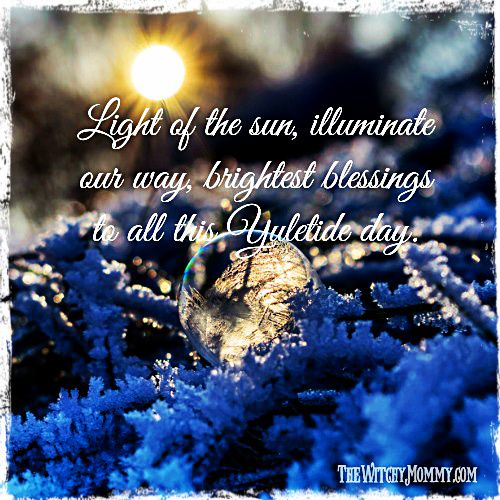


Take a deep breath as we enter this time of the winter solstice on December 21 in the northern hemisphere. Think of it as a sacred gateway: an ending and a new beginning. With all the noise of 2021, it is time for some much-needed quiet and inner nourishment. Mother Nature is asking us to reflect, recalibrate, and strengthen our ability to shine in the world.
The winter solstice is the shortest day of the year and the longest night. At this time, many cultures believe that the archetypal Great Mother gave birth to a sun child (the Egyptian deity Isis gave birth to sun god Horus; the Greek Leto gave birth to a shining Apollo.) This is a moment to hold the light for yourself and others. Here are eight rituals to help you do so.
On the night of the solstice, unplug your phone, TV, and tablets. Instead of turning on electric lights, eat dinner by candlelight and…
For the past six months, the days have grown shorter and the nights have grown longer in the Northern Hemisphere. But that’s about to reverse itself.
Winter solstice 2021, the shortest day of year and the official first day of winter, is on Tuesday, December 21. How it all works has fascinated people for thousands of years.
First we’ll look at the science and precise timing behind the solstice. Then we’ll explore some ancient traditions and celebrations around the world.


Today and tonight the Moon will be in a Waning Gibbous Phase. This is the first phase after the Full Moon occurs. It lasts roughly 7 days with the Moon’s illumination growing smaller each day until the Moon becomes a Last Quarter Moon with an illumination of 50%. The average Moon rise for this phase is between 9pm and Midnight depending on the age of the phase. The moon rises later and later each night setting after sunrise in the morning. During this phase the Moon can also be seen in the early morning daylight hours on the western horizon.
Visit the December 2021 Moon Phases Calendar to see all the daily moon phase for this month.
The Waning Gibbous on December 21 has an illumination of 95%. This is the percentage of the Moon illuminated by the Sun. The illumination is constantly changing and can vary up to 10% a day. On December 21 the Moon is 16.84 days old. This refers to how many days it has been since the last New Moon. It takes 29.53 days for the Moon to orbit the Earth and go through the lunar cycle of all 8 Moon phases.
There are 8 lunar phases the Moon goes through in its 29.53 days lunar cycle. The 4 major Moon phases are Full Moon, New Moon, First Quarter and Last Quarter. Between these major phases, there are 4 minor ones: the Waxing Crescent, Waxing Gibbous, Waning Gibbous and Waning Crescent. For more info on the Moon Cycle and on each phase check out Wikipedia Lunar Phase page.
Check the weather before a night of Moon gazing at weather.com
For a list of all the current meteor showers visit American Meteor Society

21 December 2021
06:00 am GMT 5:00 PM AEDT
Zodiac: Tropical (Standard Western)

21 December 2021
08:00 pm GMT 5:00 PM BRT
Zodiac: Tropical (Standard Western)
Nearly every agricultural society has marked the high point of summer in some way, shape or form. On this date–usually around June 21 or 22 (or December 21/22 in the southern hemisphere)–the sun reaches its zenith in the sky. It is the longest day of the year, and the point at which the sun seems to just hang there without moving – in fact, the word “solstice” is from the Latin word solstitium, which literally translates to “sun stands still.” The travels of the sun were marked and recorded. Stone circles such as Stonehenge were oriented to highlight the rising of the sun on the day of the summer solstice.
December Solstice marks the arrival of the first day of summer in the southern hemisphere. That’s why in the earth’s southern areas, the December Solstice is known as the Summer Solstice. In 2021, the official first day of summer in Australia (southern hemisphere) will occur on Wednesday, December 22, at sharp 02:59 Australian Eastern Daylight Time (AEDT).
Not to mention, this astronomical event will also mark the brightest as well as the longest day of the year in the southern hemisphere. On the other hand, for people living in the northern hemisphere, this solstice marks the arrival of the first day of winter. That’s why in the earth’s northern areas, December Solstice is known as the Winter or Hibernal Solstice. Again, for the people living in the northern half of the earth, this astronomical event will also mark the darkest as well as the shortest day of the year.
Simply speaking, one can say that the meaning of solstice changes depending…
You can use this link to go forward or backward in time for Moon phase information. If you are curious you can even find out what phase the Moon was in when you or anyone else, you know was on the date the person was born.
If you need to calculate the planetary positions for a specific use and time, click on this link
To figure out GMT (Greenwich Mean Time) to your local time use this link
The time for the Custom Planetary Positions is from the local time in Melbourne, Victoria, Australia

The time for the Custom Planetary Positions is from the local time in Sao Paulo, Brazil, South America

In this post I’m going to reveal my full moon ritual for manifestation that’s designed to release negative energy and cleanse your soul.
Over the years I have experimented with many different rituals and am excited to share what I’ve learned with you.
A few benefits of performing a full moon ceremony include:
Ready to learn more?
Let’s get started!
A full moon ritual is a spiritual ceremony performed on the night of a full moon to release negativity and practice gratitude. The ritual does not need to be completed at the exact moment of a full moon, but should be performed within 48 hours before or after for best results.
When the Moon is completely illuminated by the Sun this is called a full moon. This happens about once per
Today and tonight the Moon will be in a Full Moon phase. During a Full Moon the moon is 100% illuminated as seen from Earth and is on the opposite side of the Earth from the Sun. The Moon will be visible throughout the night sky rising at sunset in the east and setting with the sunrise the next morning. The point at which a Full Moon occurs can be measured down to a fraction of a second. The time it takes between full moons is known as a Synodic month and is 29.530587981 days long. Keep track of all the Full Moons throughout the year on the Full Moon Calendar >
Visit the December 2021 Moon Phases Calendar to see all the daily moon phase for this month.
The Full Moon on December 19 has an illumination of 100%. This is the percentage of the Moon illuminated by the Sun. The illumination is constantly changing and can vary up to 10% a day. On December 19 the Moon is 15.04 days old. This refers to how many days it has been since the last New Moon. It takes 29.53 days for the Moon to orbit the Earth and go through the lunar cycle of all 8 Moon phases.
There are 8 lunar phases the Moon goes through in its 29.53 days lunar cycle. The 4 major Moon phases are Full Moon, New Moon, First Quarter and Last Quarter. Between these major phases, there are 4 minor ones: the Waxing Crescent, Waxing Gibbous, Waning Gibbous and Waning Crescent. For more info on the Moon Cycle and on each phase check out Wikipedia Lunar Phase page.
Check the weather before a night of Moon gazing at weather.com
For a list of all the current meteor showers visit American Meteor Society

19 December 2021
06:00 am GMT 5:00 PM AEDT
Zodiac: Tropical (Standard Western)

19 December 2021
08:00 pm GMT 5:00 PM BRT
Zodiac: Tropical (Standard Western)
You can use this link to go forward or backward in time for Moon phase information. If you are curious you can even find out what phase the Moon was in when you or anyone else, you know was on the date the person was born.
The Moon’s current phase for today and tonight is a Waxing Gibbous phase. This phase is when the moon is more than 50% illuminated but not yet a Full Moon. The phase lasts about 7 days with the moon becoming more illuminated each day until the Full Moon. During a Waxing Gibbous the moon rises in the east in mid-afternoon and is high in the eastern sky at sunset. The moon is then visible through most of the night sky setting a few hours before sunrise. The word Gibbous first appeared in the 14th century and has its roots in the Latin word “gibbosus” meaning humpbacked.
Visit the December 2021 Moon Phases Calendar to see all the daily moon phase for this month.
The Waxing Gibbous on December 17 has an illumination of 97%. This is the percentage of the Moon illuminated by the Sun. The illumination is constantly changing and can vary up to 10% a day. On December 17 the Moon is 13.26 days old. This refers to how many days it has been since the last New Moon. It takes 29.53 days for the Moon to orbit the Earth and go through the lunar cycle of all 8 Moon phases.
There are 8 lunar phases the Moon goes through in its 29.53 days lunar cycle. The 4 major Moon phases are Full Moon, New Moon, First Quarter and Last Quarter. Between these major phases, there are 4 minor ones: the Waxing Crescent, Waxing Gibbous, Waning Gibbous and Waning Crescent. For more info on the Moon Cycle and on each phase check out Wikipedia Lunar Phase page.
Check the weather before a night of Moon gazing at weather.com
For a list of all the current meteor showers visit American Meteor Society
If you need to calculate the planetary positions for a specific use and time, click on this link
To figure out GMT (Greenwich Mean Time) to your local time use this link
The time for the Custom Planetary Positions is from the local time in Melbourne, Victoria, Australia
17 December 2021
06:00 am GMT 5:00 PM AEDT
Zodiac: Tropical (Standard Western)
The time for the Custom Planetary Positions is from the local time in Sao Paulo, Brazil, South America
17 December 2021
08:00 pm GMT 5:00 PM BRT
Zodiac: Tropical (Standard Western)
Ceres:00 Gemini 37 Rx
Pallas:13 Pisces 17
Juno:11 Capricorn 57
Vesta:16 Sagittarius 54
Eris:23 Aries 44 Rx
You can use this link to go forward or backward in time for Moon phase information. If you are curious you can even find out what phase the Moon was in when you or anyone else, you know was on the date the person was born.
The Moon’s current phase for today and tonight is a Waxing Gibbous phase. This phase is when the moon is more than 50% illuminated but not yet a Full Moon. The phase lasts about 7 days with the moon becoming more illuminated each day until the Full Moon. During a Waxing Gibbous the moon rises in the east in mid-afternoon and is high in the eastern sky at sunset. The moon is then visible through most of the night sky setting a few hours before sunrise. The word Gibbous first appeared in the 14th century and has its roots in the Latin word “gibbosus” meaning humpbacked.
Visit the December 2021 Moon Phases Calendar to see all the daily moon phase for this month.
The Waxing Gibbous on December 16 has an illumination of 94%. This is the percentage of the Moon illuminated by the Sun. The illumination is constantly changing and can vary up to 10% a day. On December 16 the Moon is 12.37 days old. This refers to how many days it has been since the last New Moon. It takes 29.53 days for the Moon to orbit the Earth and go through the lunar cycle of all 8 Moon phases.
There are 8 lunar phases the Moon goes through in its 29.53 days lunar cycle. The 4 major Moon phases are Full Moon, New Moon, First Quarter and Last Quarter. Between these major phases, there are 4 minor ones: the Waxing Crescent, Waxing Gibbous, Waning Gibbous and Waning Crescent. For more info on the Moon Cycle and on each phase check out Wikipedia Lunar Phase page.
Check the weather before a night of Moon gazing at weather.com
For a list of all the current meteor showers visit American Meteor Society

If you need to calculate the planetary positions for a specific use and time, click on this link
To figure out GMT (Greenwich Mean Time) to your local time use this link
The time for the Custom Planetary Positions is from the local time in Melbourne, Victoria, Australia
16 December 2021
06:00 am GMT 5:00 PM AEDT
Zodiac: Tropical (Standard Western)
The time for the Custom Planetary Positions is from the local time in Sao Paulo, Brazil, South America
16 December 2021
08:00 pm GMT 5:00 PM BRT
Zodiac: Tropical (Standard Western)
Ceres:00 Gemini 48 Rx
Pallas:13 Pisces 05
Juno:11 Capricorn 34
Vesta:16 Sagittarius 21
Eris:23 Aries 45 Rx
You can use this link to go forward or backward in time for Moon phase information. If you are curious you can even find out what phase the Moon was in when you or anyone else, you know was on the date the person was born.
The Moon’s current phase for today and tonight is a Waxing Gibbous phase. This phase is when the moon is more than 50% illuminated but not yet a Full Moon. The phase lasts about 7 days with the moon becoming more illuminated each day until the Full Moon. During a Waxing Gibbous the moon rises in the east in mid-afternoon and is high in the eastern sky at sunset. The moon is then visible through most of the night sky setting a few hours before sunrise. The word Gibbous first appeared in the 14th century and has its roots in the Latin word “gibbosus” meaning humpbacked.
Visit the December 2021 Moon Phases Calendar to see all the daily moon phase for this month.
The Waxing Gibbous on December 15 has an illumination of 88%. This is the percentage of the Moon illuminated by the Sun. The illumination is constantly changing and can vary up to 10% a day. On December 15 the Moon is 11.48 days old. This refers to how many days it has been since the last New Moon. It takes 29.53 days for the Moon to orbit the Earth and go through the lunar cycle of all 8 Moon phases.
There are 8 lunar phases the Moon goes through in its 29.53 days lunar cycle. The 4 major Moon phases are Full Moon, New Moon, First Quarter and Last Quarter. Between these major phases, there are 4 minor ones: the Waxing Crescent, Waxing Gibbous, Waning Gibbous and Waning Crescent. For more info on the Moon Cycle and on each phase check out Wikipedia Lunar Phase page.
Check the weather before a night of Moon gazing at weather.com
For a list of all the current meteor showers visit American Meteor Society

If you need to calculate the planetary positions for a specific use and time, click on this link
To figure out GMT (Greenwich Mean Time) to your local time use this link
The time for the Custom Planetary Positions is from the local time in Melbourne, Victoria, Australia
15 December 2021
06:00 am GMT 5:00 PM AEDT
Zodiac: Tropical (Standard Western)
Mean Lunar Node:00 Gemini 25 Rx
Lilith (Black Moon):16 Gemini 36
Chiron:08 Aries 27 Rx
Ceres:01 Gemini 06 Rx
Pallas:12 Pisces 47
Juno:10 Capricorn 58
Vesta:15 Sagittarius 30
Eris:23 Aries 45 Rx

The time for the Custom Planetary Positions is from the local time in Sao Paulo, Brazil, South America
15 December 2021
08:00 pm GMT 5:00 PM BRT
Zodiac: Tropical (Standard Western)
You can use this link to go forward or backward in time for Moon phase information. If you are curious you can even find out what phase the Moon was in when you or anyone else, you know was on the date the person was born.
The Moon’s current phase for today and tonight is a Waxing Gibbous phase. This phase is when the moon is more than 50% illuminated but not yet a Full Moon. The phase lasts about 7 days with the moon becoming more illuminated each day until the Full Moon. During a Waxing Gibbous the moon rises in the east in mid-afternoon and is high in the eastern sky at sunset. The moon is then visible through most of the night sky setting a few hours before sunrise. The word Gibbous first appeared in the 14th century and has its roots in the Latin word “gibbosus” meaning humpbacked.
Visit the December 2021 Moon Phases Calendar to see all the daily moon phase for this month.
The Waxing Gibbous on December 14 has an illumination of 81%. This is the percentage of the Moon illuminated by the Sun. The illumination is constantly changing and can vary up to 10% a day. On December 14 the Moon is 10.58 days old. This refers to how many days it has been since the last New Moon. It takes 29.53 days for the Moon to orbit the Earth and go through the lunar cycle of all 8 Moon phases.
There are 8 lunar phases the Moon goes through in its 29.53 days lunar cycle. The 4 major Moon phases are Full Moon, New Moon, First Quarter and Last Quarter. Between these major phases, there are 4 minor ones: the Waxing Crescent, Waxing Gibbous, Waning Gibbous and Waning Crescent. For more info on the Moon Cycle and on each phase check out Wikipedia Lunar Phase page.
Check the weather before a night of Moon gazing at weather.com
For a list of all the current meteor showers visit American Meteor Society

If you need to calculate the planetary positions for a specific use and time, click on this link
To figure out GMT (Greenwich Mean Time) to your local time use this link
The time for the Custom Planetary Positions is from the local time in Melbourne, Victoria, Australia
14 December 2021
06:00 am GMT 5:00 PM AEDT
Zodiac: Tropical (Standard Western)
The time for the Custom Planetary Positions is from the local time in Sao Paulo, Brazil, South America
14 December 2021
08:00 pm GMT 5:00 PM BRT
Zodiac: Tropical (Standard Western)


You must be logged in to post a comment.