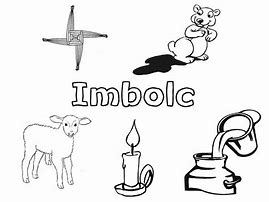

Daylight hours are gradually lengthening, and the Earth is beginning to stir. Although she is still in the middle of her winter’s rest, our planet subtly begins to plan. It’s appropriate that this period is represented by Aquarius, an air sign, since all change begins first in the mind. Every new thought or idea is full of raw potential as the Earth is now,nailing for the touch of fire to ignite her new growth period. Uranus is the ruler of Aquarius, and the planet best known for its jurisdiction over the future. This electric energy only looks forward, never back. It is during Imbolc, in fact, as the Sun is passing through Aquarius, that many ideas are born. As we prepare for the upcoming Equinox, then, it’s important to be sure that we’re looking ahead, as Uranus does, with all the electric enthusiasm and genius of Aquarius. Honor the potential of the coming spring by uncovering your gift of prophecy. Whether you use a crystal ball, a dream journal, or another type of predictive tool, prepare for the Equinox in your heart, by understanding how much is possible now.
©️ By Kim Rogers-Gallagher Llewellyn’s Witches’ Datebook 2000 Page 95
At Lammas, the Sun is at the very peak of Leo, the sign this planet loves above all others. Our star’s warmth is at its most powerful now in the Northern Hemisphere, as it appears directly overhead. At this time, life too, ia at its peak—as are the crops. The ancients celebrated this festival by giving thanks for their first harvest, most especially the grain harvest, even as they accepted the beginning of the God’s descent into the underworld. The myth of the asteroid-Goddess Ceres (Demeter), giver of the grain, also relates to this season. It was now when she would bid her daughter Farwell, since Persephone was obligated to return to the Underworld to rejoin Hades (Pluto). So bereaved was Ceres to see her daughter leave her, she refused to all the Earth to produce grain until her return. At this time,nothing, modern practitioners should be remind of both astrological principles: the fullness of life the Sun brings, and the necessity for rest, as signified by the coming fall.
©️ By Kim Rogers-Gallagher Llewellyn’s Witches’ Datebook 2000 Page 95



Take a deep breath as we enter this time of the winter solstice on December 21 in the northern hemisphere. Think of it as a sacred gateway: an ending and a new beginning. With all the noise of 2021, it is time for some much-needed quiet and inner nourishment. Mother Nature is asking us to reflect, recalibrate, and strengthen our ability to shine in the world.
The winter solstice is the shortest day of the year and the longest night. At this time, many cultures believe that the archetypal Great Mother gave birth to a sun child (the Egyptian deity Isis gave birth to sun god Horus; the Greek Leto gave birth to a shining Apollo.) This is a moment to hold the light for yourself and others. Here are eight rituals to help you do so.
On the night of the solstice, unplug your phone, TV, and tablets. Instead of turning on electric lights, eat dinner by candlelight and…
For the past six months, the days have grown shorter and the nights have grown longer in the Northern Hemisphere. But that’s about to reverse itself.
Winter solstice 2021, the shortest day of year and the official first day of winter, is on Tuesday, December 21. How it all works has fascinated people for thousands of years.
First we’ll look at the science and precise timing behind the solstice. Then we’ll explore some ancient traditions and celebrations around the world.


For those who are spiritual but not so religious, you may choose to celebrate the December holiday season differently. The winter solstice is a wonderful way to honor your ancestors, the earth and its creatures, and the birth of a new sun during this special time of year.
So what exactly is this ancient holiday, and how do you celebrate the winter solstice? Spoonful of Comfort answers these questions and offers some new-to-you winter solstice traditions that you and your loved ones can embrace.
Earth experiences the winter solstice when the shortest and darkest day of the year passes and a new, longer day begins. In 2021, for the Northern Hemisphere, the exact time for this change is December 21 at 10:59 a.m. Eastern Standard Time.

December 21, 2015 marks the Winter Solstice, which is the official beginning of winter, and the shortest day of the year in the Northern Hemisphere. But there’s a light at the end of this tunnel — literally! As the temperatures fall throughout the winter, the light grows, representing new hope during a time of darkness.
Ancient solstice festivals were the last big feasts before food became scarce during the harsh winter months. This magical day was celebrated from ancient Rome to China, and by the builders of Stonehenge to the Mayans. In fact, we all remember the Winter Solstice on December 21, 2012, which was the apparent end of the Mayan calendar, causing many to believe the end of the world is coming. Obviously, we’re still here!
Many modern holiday traditions, such as Christmas, Hanukkah, Kwanzaa and New Year’s, have their roots in the Winter Solstice celebrations of yesterday. Winter festivals continue today, complete with lights, feasts, dancing and singing, and spending quality time with those we love.
Astrologically, the Winter Solstice marks the moment the Sun — the ruler of the zodiac — moves from adventurous Fire sign Sagittarius to the steady Earth sign of Capricorn. This is the dark night of the year, a day when the Sun appears to stand still. It’s a time for light and laughter, but also deep reflection.
The Sun’s move into steady Capricorn urges us to take some time to look back on 2015 before we make those New Year’s resolutions. What did we do right? What do we wish we’d done differently? Don’t fight the seriousness it brings to the festive holiday season — use it to start 2016 on the right foot! Just make sure to keep some of the Goat’s ambitious energy alive when the Sun makes its next move.
There is beautiful harmony in this song.
Blessed be dear ones.
Recipe by Gerina Dunwich
20 drops musk oil
25 drops pine oil
1 cup oak moss
2 cups dried mistletoe
1 cup dried poinsettia flowers
1 cup dried bayberries
1/2 cup dried rosemary
1/2 cup dried holly leaves and berries
3 crushed pinecones
Mix the musk and pine oils with the oak moss, and then add the remaining ingredients. Stir the potpourri well and store in a tightly covered ceramic or glass container.
(The above recipe for “Yule Ritual Potpourri” is quoted directly from Gerina Dunwich’s book “The Wicca Spellbook: A Witch’s Collection of Wiccan Spells, Potions and Recipes”, page 162, A Citadel Press Book, Carol Publishing Group, 1994/1995)
Midsummer is a celebration of light and life, symbolized by the flame of a candle and the movement of water. A large glass bowl filled with an assortment of floating candles makes a wonderful point of focus for ritual. Choose bright yellow sunflowers, white lilies, and red tulip-shaped candles. Have each person participating in the ritual inscribe his or her desire, with a pin, on a candle. Have each person come forward, place his or her candle in the bowl and light it as he makes his wish. Following the ritual, the bowl is placed outdoors, and the candles are left to burn out.
One of the most popular symbols of Midsummer is the Sun Wheel, the turning of which suggests the turning, or progression, of the seasons. The Wheel is decorated with flowers, fresh herbs, and brightly colored ribbons.
The simplest method for making a Sun Wheel is to buy an already-prepared natural-branch wreath from an arts and crafts store. Affix small branches of rowan to form the spokes of the wheel (four spokes to represent the elements and cross-quarter days or eight to symbolize the eight Wiccan Sabbats). Use floral wire to attach fresh flowers and herbs to the wreath. Embellish with brightly colored ribbons. The wheel can be used as the focal point for your Midsummer rites or hung on the front door of your home for decoration.
A very short explanation of the Holly or Oak Kings Ruling as the Goddess Consort’
For More Information on the Oak King
Scroll Down For More Information on the Summer Solstice in the Southern Hemisphere
I hope these links help you learn more about the different topics.
The Oak has will be born at Sunrise on the Summer Solstice after…
Here the young Oak King fights the tired out Holly King to rule from the Litha until Yule until…

The Holly King is reborn. Now the Oak King is an old man but still fights the Holly king.

The Holly King wins and grows to maturity from the Yule until Litha when the cycle of the battle between the young and older Kings battles repeat themselves for the honor to rule as the Goddesses Consort. The Oak Kings is also in some traditions is known as The Green Man or The Horn God or the God of the Hunt.
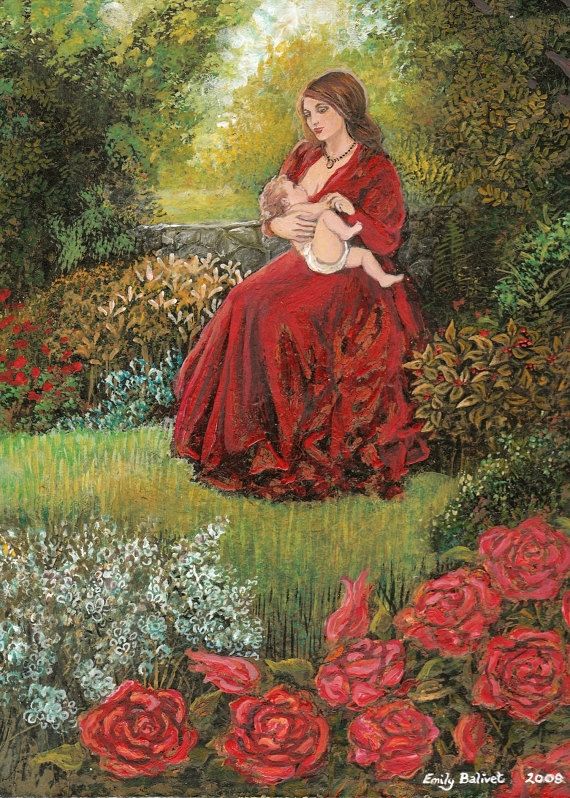
I have the Goddess with an infant or toddler. What I cannot find is a picture of the Goddess with an infant or toddler. I have this, I think, a cool idea for a post and need both of these kinds of pictures in order to do it.
Thank you so much for your help. It will be much appreciated.


You must be logged in to post a comment.