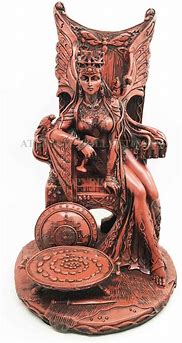
Goddesses – Ancient Germanic Goddesses – Berchta

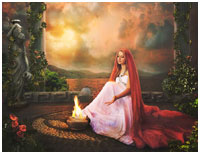
Ancient Germanic Goddesses – Berchta from otherworldlyoracle.com

The Germanic tribes of Europe had their own deities, just like the ancient Celts. Some of these deities are commemorated in the days of the week. Frigga and Freya, for example, are remembered in the word Friday. Tyr is remembered in Tuesday. Odin/Wodan – Wednesday. And so on. However, there are many who have been nearly forgotten. Here are eight nearly-forgotten ancient Germanic goddesses whose stories are just as interesting as any others. They each have something to teach us, if we only listen.

1. Berchta: The Germanic Goddess Who Became a Child-Eating Hag

Berchta was an Ancient Germanic goddess whose worship was widespread through the Alps. She came to be known well in Switzerland, Austria, and the Czech Kingdom. There is some speculation that Berchta isn’t Germanic and was actually first a Celtic Alpine deity. Her name, Berchta, means “The Bright One”. Moreover, if we look at the syllables of her name we see “berch” which links her to the Birch tree and the Berkano rune.

Jacob Grimm writes of her in Teutonic Mythology, saying she was once a guardian and protector of babies and children. She ferried the dead across the water to the spirit world. Berchta wore a white gown, which shone in the darkness, and carried a set of keys. She was also a spinner/weaver goddess, which links her to fate and the life/death/rebirth cycle.

How Berchta Became a Hag

When the Church rose to power, Berchta’s name was dragged through the proverbial mud. She was demonized and eventually called the “Christmas Hag”. Her beautiful motherly image morphed into an ugly old hag who ate bad children or slit their bellies open and filled them with straw and stone. This once-loved ancient Germanic goddess became part of the Wild Hunt and rode alongside the wicked dead. Her consorts were Berchtold and sometimes Wotan (Odin). Reduced to a witch, Berchta became an evil figure in folklore to be feared.

An Ancient Germanic Goddess Immortalized

The Perchten are a group of masked men and women who parade on winter holidays to scare away evil spirits. They are modeled after the hag version of Perchta (Berchta). Berchta’s name is immortalized in the Feast of the Epiphany, also known as Berchtentag, and also in the town of Berchtengaten in Bavaria. Legend says she travels with other female spirits and enters the homes of those who leave her offerings on this special night. If Berchta is pleased with the meal, she grants prosperity to the household.
She may be the same goddess as Holda (a.k.a. Mother Holle).

Goddess Grace

GODDESS GRACE


I am the Goddess of a thousand names and infinite capacity.
All Her gifts are mine.
All Her powers reside in me.

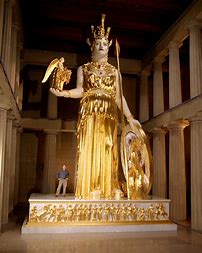
I am Athena of Greece.
Life my totem, the owl, I am wise
For I see and hear everything around and within me
Like the oak, I am strong for the olive of peace is sacred to me.

I am Bast, cat goddess of Egypt
I am graceful, flexible, playful and affectionate
I radiate the warmth and light of the glorious sun.

I am Cerridwen of Wales
My magic cauldron contains food for the soul
An inexhaustible source of wisdom and inspiration
The more I give, the more I receive.

I am Diana, Roman goddess of the ever-changing moon.
I am a protectress of women and children
A guardian of the wild
I focus my aim on my heart’s desire and draw it to me.

I am Ereshkigal, Assyro-Babylonian goddess of the underworld
Queen of the Great Below
I shed dead skin to grow
Deep powers of renewal are mine.

I am Freya, Well-beloved Nordic Lady
I survey the beauty of my world in joyous flight
I celebrate and honor the bonds between friends and lovers.

I am Gaia, Greek Earth Mother
Grounded and centered in the rhythms and patterns of chaos
I emerge to create my usiverse.

I am Hecate of Greece
Triple Goddess of the crossroads of choice
I balance by powers of thought and my emotion
I choose the path I walk
The torch of my reason is illumined by my brilliant intuition.

I am Isis, Egyptian Queen of the World
I offer healing and transformation to all in need
I hold the power to shape my world.

I am Jagad-Yoni, Hindu universal yoni, womb of the world
I am the gatekeeper of the next generation
I choose the life that emerges through me
I use my power wisely.

I am Kwan-Yin of Buddhist China, goddess of compassion
I hear and comfort the wounds of the world
I welcome children and teach the magic of change.

I am Liban, Irish mermaid goddess
I revel in the healing power of pleasure
Quench your thirst at my sacred well.

I am Maat of Egypt
Truth, justice and law are the natural order of my universe
Harmony arises as I attune to my divine will.

I am Nu-Kua, Chinese dragon-tailed creatress
I restore the cosmic equilibrium
I form community among women and men
Connecting in equality of love and respect.

I am Old Spider goddess of Micronesia
I created the moon, the sea, the sky, the sun
And the earth from a single clamshell
All the vast and varied universe is present
In the smallest forms of life.
As above, so below
As within, so without.

I am Pele, Hawaiian goddess of volcanoes
My fiery energy erupts from my core to create new worlds
I flow easily over obstacles in my path.

I am Qedeshet of Syria
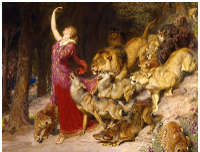
I balance lightly on the lion I ride
Laughter lifts me from the pull of gravity
The lotus blossom I hols and the serpents I carry
Symbolize the life and health I bring.

I am Rhiannon, horsewoman, Divine Queen of Wales
My steady pace is swift and smooth
I travel freely through the world, safe, serene and secure
My winged friends can wake the dead
And lull the living to sleep.

I am Sedna of the Eskimos
Know and honor me through my animals
Bears, whales and seals
All creatures of the land and sea are part of me.
We share the right to be.

I am Tiamat of Babylon, primordial sea-serpent
I am the great mother womb
Who brought forth the earth and heavens
I dive deep into the watery unconscious
To find the treasures buried there.

I am Uttu, Chaldean-Sumerian goddess of waving and vegatation
I offer shelter and nourishment to all who know me
We weed and clothe each other through our work.

I am Vasudhara, Hindu goddess of abundance
My six arms hold everything you need and offer it to you
Earth, Water, Fire, Air, Center, Spirit
Purpose, Love, Passion, Wisdom, Here, Now.

I am Wite woman of Honduras
I descend from heaven to build my temple on earth
And return as a glorious bird.
I honor and express my true spirit
My beauty is beyond compare.

I am Xochiquetzal, Aztec goddess of flowers, love,
spinning, weaving, singing and dancing.

I am an Original Woman
I delight in sharing my many gifts.

I am Yemaya, Nigerian Fish Mother, Brazilian Voodoo mermaid
Lakes, rivers and oceans are my home
The waters of life belong to me
We cleanse and sustain each other.

I am Zoc, Gnostic Acon of Life
Mother of All Living
I am the embodiment of growth and vitality
I am unique life energy.

I am the Goddess of a thousand names and infinite capacity
All Her gifts are mine
All Her powers reside in me.

We are the Goddess of a thousand names and infinite capacity
All Her gifts are mine
All Her powers reside in me.

You are the Goddess of a thousand names and infinite capacity
All Her gifts are thine
All Her powers reside in thee.


Goddesses – Greek Olympian Demeter, goddess of earth and harvest

Demeter, goddess of earth and harvest

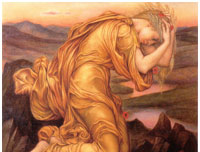
Demeter (Deo, Ceres) was a goddess of earth and harvest. Her greatest gifts to mankind was corn and the knowledge of agricultural techniques. She was also described by Nonnus, Orphic hymn to Ceres and Homeric hymn to Demeter as the Lady of the fruits (of the earth) and according to the latter also as the bringer of seasons. Mostly she was described as a daughter of the titan couple Cronus and Rhea but there are some conflicts among different authors where she was described as a daughter of Cronus and Cybelle. However, GaeaCybelleHestiaRheaHera and even Demeter are quite often referred as the mother earth goddess which is why it comes to misidentifying the correct goddess. Anyhow, it is known that she resided in most of the mystery cults which were promising a path to blessed afterlife. She had several children of which Persephone was the most famous and due to her abduction by Hades, and Demeter’s search for her daughter, mysteries of Demeter were born. Most famous were Eleusinian Mysteries, the festivals which were held once a year, and the great festivals, held every five years at Eleusis in Ancient Greece where it all began and is closely connected to the myth of her daughter’s abduction. This event was of great importance and had its basis from an old agrarian cult which goes back to the Mycenaean period. This ceremony is believed to be the interpretation of the myth in three stages; descent, search and ascent, where the main theme of celebration was the ascent where, in the myth itself, Persephone is reunited with her mother.

Appearance in the works of art

Most of the time, she is depicted as an adult woman, holding torch in one hand and cornucopia in the other. The cornucopia was a goat’s horn that would give its owner whatever he desired. It symbolises rich harvest or an abundance of food. Sometimes, she is depicted with a golden blade, believed to be from the time of Titanomachy.

Gifts to Mankind

As mentioned above, Demeter’s greatest gift to humanity was corn and agricultural techniques. It is said that she was the first who discovered corn and later shared her secret with Tripolmenus while at Eleusis. She is also credited to had taught men how to sow corn, how to plough dirt and how to avoid all the troubles associated with it. According to Hyginus and Orphic hymn to Ceres, she even taught them how to tame oxen in order to help them plough the large amounts of earth later on. But that was not all, Demeter also instruced laws and obidience to men so that they could become accostumed to deal with one another justly and because of all these great blessings to humanity, she was awarded with the most notable honours, generous sacrifices and magnificent feasts and festivals by all men, even barbarians, who had partaken of this kind of food.

Love affairs and her descendants

The goddess was mentioned to had some love affairs but only one was due to her willingness. Her only true love was a mortal man by the name of Iasion, a prince of Samothrace. It is said that they made love in a thrice-ploughed fallow in the rich land of Crete but when Zeus had heard about this affair, he struck Iasion with a thunderbolt because of jelaousy. It was too late though as Demeter got pregnant and gave birth to Plutus and according to Hyginus, who claims that she had borne two sons, also to Philomelus. Zeus of course got his hands on her later and famous Persephone was concieved but some of the authors are not mentioning Zeus as her father. In Clement’s Exhortations, however, Zeus himself was actually a son of Demeter and later had intercourse with her and begat Persephone. Furthermore, Clement also talks about mysteries of Demeter and that they commemorate the amorous embraces of Zeus with his mother Demeter but, considering that she was, by some people, thought to be the mother goddess, this should come as no surprise. Anyway, the goddess was also courted by Poseidon but she had refused his advances and transformed herself into a mare to escape him but the god of the sea was unrelentless and tricked her into mating with him by transforming himself into a beautiful stallion. She later gave birth to a divine horse Arion and, according to Pausanias, to a girl whose surname was “Mistress” but does not want to reveal her first name to the uninitiated (in mysteries) people. Carmanor, a lord of Crete, is also said to be one of her mates with whom she later gave birth to Eubuleus.

The abduction of Persephone

When Persephone, her beloved daughter, was abducted, Demeter was searching for her in vain. Unable to find her, she in sorrow and anger burned all the fruits of the earth or, in another version of the story, she neglected to look after the crops and lands soon became barren. And upon “Demeter’s curse”, which caused great drought on lands and consequently famine, it was Hecate who came to Demeter and told her about what she had heard.

Together they went to Helios who was able to see all deeds from both mortals and immortals. He told Demeter that Zeus and Hades were to blame. The goddess became so mad that she had given ultimatum for the lands to stay barren until she was to see her daughter again. Finally Zeus intervened, scared of potentially seeing all mortals gone. He sent Hermes to the underworld to speak to Hades and try to convince him to let Persephone return to her mother. After Hermes’ successful persuasion, Hades was willing to let her go but on the other hand tricked her with honey-sweet pomegranate seed as farewell gift. Once eaten the seed, she became bound to the underworld and would have to return eventually. Demeter was once again outraged but in the end they had come to an agreement that Persephone could stay two-thirds of the time per year with her mother while she had to return to the underworld for one-third of the time. Demeter lifted the curse from the lands but, as a sign of protest, she was casting her sorrow each year when her daughter had to leave for the underworld. This was known as the winter time. This particular myth is very coveted among ancient authors so therefore the story itself may slightly vary from author to author such as where the abduction took place, where Demeter looked for her and in details where some authors provide further clues of the events that followed or events that had happened before the abduction.

Taking refuge in Eleusis

When Demeter was searching for her daughter Persephone, she took refuge at the palace of Celeus, the king of Eleusis. She took the form of an old woman and asked the king for shelter. Celeus welcomed her in and give her an assignment to nurse his sons Demophon and Triptolemus. As a token of gratitude in her dark times, she planned to make Demophon immortal by placing him in the flames of the heart, to burn away his mortal self. It is also said that, while in her care, the boy grew faster than normal and his face became godlike. When the time had come and Demeter wanted to cover the boy in flames, the ritual was interrupted because the boy’s mother Metanira came in and started screaming. The flames were put out and immortality attempt was put to an end. According to Ovid and Hyginus, however, it was his brother Triptolemus whom the goddess wanted to make immortal. It is said that later, after the failed immortality attempt, Demeter taught Triptolemus all the divine arts and mysteries of agriculture. Triptolemus then in return taught anyone who wished to learn. Before Demeter returned to Olympus, she instructed Triptolemus and Celeus on how to celebrate the rites in her temple which then became known as Mysteries of Demeter. It is also said that the lesser mysteries were held every year, but the greater mysteries only every five years.

Mysteries of Demeter

As mentioned above, Triptolemus was the first who had been initiated into mysteries of Demeter where the goddess shared all her secrets about earth’s fertility with him. He later spread these secrets to the initiated people and the mysteries became known as Eleusinian mysteries. But these were not the only mysteries associated with the goddess. Sabazian and Lernean mysteries and a lot of un-named mysteries are also being related to the mysteries of the goddess and there was also the day of Demeter or the day of Ceres mentioned by Fulgentis and Virgil.

Similar event is described by Ovid who calls it Games of Ceres and reveals how these are connected to the myth of Persephone and how it was celebrated. It is said that torches are present on this day as a memorial of Demeter’s search for her daughter when she kindled two pine-trees to serve her as a light after sunset. It is also said that, because Demeter broke her fast at nightfall after unsuccessful quest of searching for her daughter, the initiates time their meals at night during ceremony and they wear white robes because this is the goddess’ proper color which is believed to be associated with harvest. Ovid also mentions that a fox is burned at the festival as a memorial to the incident of a “vixen fox” which was caught by a young lad and set on fire in retribution for carrying off many farm fowls. But the burning fox had escaped his hands and ran into a corn field that caught on fire and all the crops for the incoming winter perished in flames. Therefore, a certain law of Carseoli forbade to name a fox on that day and as a punishment, to the species for destroying crops, a fox is burned.

Her sacred placesThere are several places mentioned by the authors that were sacred to Demeter. In Homeric hymn to Demeter it is said that Paros and Antron are sacred to the goddess, while both Ovid and Claudian are mentioning Henna, Sicily. Diodorus Siculus on the other hand recokns that the whole island of Sicily is sacred to Demeter. There was also an island in Ionian sea mentioned by Apollonius Rhodius but the author was unsure whether or not it was called Drepane. The island by the ancient name Drepane is now known as island Corfu which is located near Albanian border in Ionian Sea. There was also a river mentioned in Pausanias’ Descriptions of Greece that was precious to her. It was called Rheiti. Claudain, on the other hand, even mentiones a palace of Demeter which was supposedly built by the Cyclopes but the location remains a mystery. On top of all the places, the river and the supposed palace, there is also a giant oak tree mentioned, by Callimachus and Ovid, to be very dear to the goddess. It was cut down by disrespectful Erysichthon who was then punished by Demeter. She had summoned Famine who then breathed her pestilential poison through his mouth and throat and breast, and spread the curse of utmost hunger in his veins.

Other mythsWhile in search of Persephone, Demeter used a spell on her daughter’s maids and changed them into sirens so that they could help in her quest. Originally they were nymphs and daughters of river Acheolus and muse Melpomene. The goddess was also involved in a myth of Pelops who was killed by Tantalus, cut up, cooked and served to the gods at the great feast. The gods soon realised what happened and brought Pelops to life again. They assembled his body once again but he was missing an arm. It was Demeter who had previously, before the discovery, eaten it. Therefore, the goddess wanted to make up for it and solved a puzzle by fitting and enspelling an ivory substitute on his torso. Pelops was alive and complete again and gods satisfied with their just act. In another myth, Demeter showed anger when Triopas, a king of Thessalians, once tore down her temple. She brought infinte hunger upon him so that he could not be satisfied by any amount of food and later when he was already dying she sent a snake to finish the job. He was bitten and died and then placed among stars by the will of the goddess as reminder to others not to mess with her.

Goddesses and Gods – Greek Olympians – Goddess Artemis and God Aristaeus
Greek Olympian – Artemis – Goddess of Hunting
ARTEMIS FACTS

Name(s): Artemis, Aeginaea, Aetole, Agrotera, Kourotrophos, Locheia, Cynthia, Amarynthia, Phoebe, Alphaea, Alpheaea, Alpheiusa
Rules over: the Hunt, Forests and Hills, the Moon, Archery
Gender: Female
Symbols: Bow, Arrows, Stags, Hunting dog and moon
Sacred animals: Deer
Parents: Zeus and Leto
Siblings: Ares, Athena, Apollo, Aphrodite, Dionysus, Hebe, Hermes, Heracles, Helen of Troy, Hephaestus, Perseus, Minos, the Muses, the Graces
Roman name: Diana

Greek mythology is filled with respected gods and goddesses that continue to inspire. Artemis is known as the goddess of the hunt and is one of the most respected of all the ancient Greek deities. It is thought that her name, and even the goddess herself, may even be pre-Greek. She was the daughter of ZEUS, king of the gods, and the TITANESS LETO and she has a twin brother, the god APOLLO.
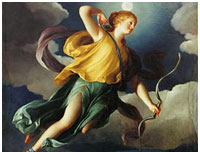
Not only was Artemis the goddess of the hunt, she was also known as the goddess of wild animals, wilderness, childbirth and virginity. Also, she was protector of young children and was know to bring and relieve disease in women. In literature and art she was depicted as a huntress carrying a bow and arrow. She was the goddess of many things, but most remember her as the most recognizable of the hunting deities.
Artemis was a virgin and drew the attention and interest of many gods and men. However, it was only her hunting companion, Orion, that won her heart. It is believed that Orion was accidentally killed either by Artemis herself or by GAIA, the primordial goddess of the earth.

In one version of the stories of ADONIS – who was a late addition to Greek mythology during the Hellenistic period – Artemis sent a wild boar to kill Adonis after he continued to boast that he was a far greater hunter than her.
The Origins of Artemis

Artemis’s origin story is a tumultuous one. She is the DAUGHTER OF ZEUS and Leto. Zeus is the well-known King of gods and the leader of MOUNT OLYMPUS. Despite the many stories of his greatness, Zeus’ weakness was infidelity to his wife, Hera.

Zeus impregnated a Titan called Leto. Hera became angry upon learning of Zeus’ unfaithfulness. In retaliation, she forbade Leto from giving birth on land. Eventually, she found solace on the floating island of Delos. There, she gave birth to Artemis and Apollo.

According to the Homeric Hymn to Artemis, the twins were born on Ortygia. Either way, most of the accounts say that Artemis came first. As a result, she was a fierce protector and nurturer of Apollo.

Not much is known about Artemis’ childhood. Some scholars say that she spent her time participating in archery, perhaps leading to her excellence in hunting.

Artemis Depictions

Artemis was the subject of many works of art throughout Ancient Greece and beyond. Usually, she was shown as a young and beautiful woman carrying a bow and arrow. Typically, she wore a knee-length tunic and was accompanied by various animals.

She was shown alongside various other SYMBOLS when talked about as the goddess of the moon or fertility. For example, she often wore a crescent moon crown or stood by women and nymphs.

Greek Olympian – Aristaeus God of Useful Arts, Countryside and Pastoral Places

ARISTAEUS FACTS

Name(s): Aristaeus
Rules over: Animal Husbandry, Bee-Keeping, Fruit Trees, Cheesemaking, Olive-Growing
Title: Minor Patron God of Animal Husbandry, God of Useful Arts
Gender: Male
Symbols:
Sacred animals: Bees, Sheep
Items: Vine, Olives
Parents: Apollo and Cyrene
Consort: Autonoe
Other significant others: Chiron and the Muses that taught Aristaeus
Children: Actaeon and Macris, Charmos, Kallikarpos
Roman name: Mellona

In Greek mythology, Aristaeus was the god useful arts, such as bee-keeping and cheese-making, olive-growing, herding, and hunting. He was a rustic god, a god of the countryside and pastoral places.

Aristaeus was a minor god in Athens but a prominent god in Boetia, a farming region in central Greece, where he was known as “the pastoral Apollo.” Aristaeus is often pictured on Boetian pottery as a young man with wings.

Aristaeus also appears prominently in the mythology of Macedonia, Arcadia, Sicily, Sardinia, Thessaly, and Ceos. Later, stories about his travel emerged in order to account for his prominence in all these different regions.

Over time, Aristaeus became a popular Greek name, given to many famous public figures in ancient Greek politics and society.


Aristaeus’s Birth and Training

Aristaeus was the son of APOLLO and Cyrene. Apollo seduced Cyrene by promising she would be the founding mother of a great city raised in her name if she would go to Libya with him. After Aristaeus was born, he was taken by HERMES and raised on nectar and ambrosia. The Earth GODDESS GAIA then made him immortal.

Various GODS AND GODDESSES taught Aristaeus the rustic arts. Apollo taught him the art of healing with herbs. The goddess DEMETER taught him how to hunt and how to skin the animals he caught and tan leather. The god DIONYSUS taught him to make beer and wine. The great Earth mother Demeter taught him the arts of herding and agriculture.

From the Myrtle-Nymphs Aristaeous learning to make olive oil, keep bees for honey, and to make butter and cheese.

When Aristaeus became a man he sailed to Boetia and was schooled in deeper mysteries by the Centaur CHIRON. He married Autonoe, a daughter of Cadmus, founder of THEBES. They had a son named Acteon, who was also trained in hunting and other mysteries by the cave-dwelling Chiron.


Aristaeus, Ceos, and the Dog-Star Sirius

According to one myth, the Delphic Oracle advised Aristaeus to visit Ceos, where he would be greatly honored by the local people. When he arrived he found them falling ill due to the early morning rising of Sirius, the Dog-Star. Aristaeus put together a healing ritual that involved a sacrifice to Sirius at its first appearance, thereby cooling the weather and healing the sick populace.

Aristaeus also found that Ceos was overrun by murderers. He found them and had them executed, making Ceos safe once again.

Goddesses – Cailleach or Hag Celtic Goddess of Winter

Cailleach or Hag Celtic Goddess of Winter from irelandsloreandtales.com

In Gaelic mythology ‘Cailleach is’ Irish for “hag”. A divine hag, a creator deity and weather deity, and an ancestor deity. In Irish lore, she goes under many names, including Digde, Milucra, Birog, Buach, etc. The word itself is found as a component in many Terms, such as cailleach-dhubh (“nun”); cailleach-oidhche (“owl”); cailleach feasa (“wise woman, fortune-teller”); and cailleach phiseogach (“sorceress, charm-worker”).

The Cailleach displays several traits that would be typical of winter, herding deer, she fights spring, and her staff freezes the ground. Alongside and in partnership with the goddess Brighde, the Cailleach is seen as a seasonal deity or spirit, ruling the winter months between Samhain (1 November or the first day of winter) and Bealtainn (1 May or the first day of summer), while Brìghde rules the summer months between Bealltainn and Samhainn. It is said that the Cailleach turns to stone on Bealltainn and takes human form again on Samhainn, just in time to rule over the winter months.

Depending on local climate, the transfer of power between the winter goddess and the summer goddess is celebrated any time between Là Fhèill Brìghde (1 February) at the earliest, Latha na Cailliche (25 March), or Bealltainn (1 May) at the latest, and the local festivals marking the arrival of the first signs of spring may be named after either the Cailleach or Brìghde.  Là Fhèill Brìghde is also said to be the day when the Cailleach gathers her firewood for the rest of the winter. Legend has it that if she intends to make the winter last a good while longer, she will make sure that the weather on 1 February is bright and sunny so she can gather plenty of firewood to keep herself warm in the coming months. As a result, people are generally relieved if Là Fhèill Brìghde is a day of foul weather, as it means the Cailleach is asleep, will soon run out of firewood, and therefore winter is almost over.

Traditionally, in Ireland, the first farmer to finish the grain harvest made a ‘Corn Dolly’, representing the Cailleach, from the last sheaf of the crop. The figure would then be tossed into the field of a neighbour who had not yet finished bringing in their grain. The last farmer to finish had the responsibility to take in and care for the corn dolly for the next year, with the implication that they would have to feed and house the hag all winter, so the competition was fierce to avoid having to take in the Old Woman.

There are some who believe the Old Irish poem, ‘The Lament of the Old Woman of Beara’ speaks of Cailleach. It was said that she had fifty foster-children in Beare. She was said to have had seven periods of youth one after another so that every man who had lived with her came to die of old age, and her grandsons and great-grandsons were tribes and races.

Gods – Overview The Olympian Gods and Goddesses

There will be a more detailed post for each god and goddess in the upcoming weeks.

The Olympian Gods and Goddesses, Main Greek Gods and Goddesses

The Olympian gods or Olympians are younger gods who got the name after their mythical place Mount Olympus. They had gained rank as the rulers of the world after dethroning the elder gods, known also as the Titans, in a ten-year war called Titanomachy. The Olympians, as they called themselves, were the main gods of Ancient Greece and were representing civilization of the world.

The first generation Olympians were descendants of a titan couple Cronus and Rhea. Together they gave birth to six children, three sons and three daughters. The sons were PoseidonHadesZeus and daughters HeraHestia and Demeter. Zeus, Poseidon, Hera and Demeter are always considered as Olympian gods while Hestia and Hades are only included at some point of their existence. Hades was supposed to live on Mount Olympus and had every honour and right to but was given the realm of death under his control, when the three brothers had to split the cosmos after the victory over titans. And Hestia lived there just for a short period. After being granted a place on Mount Olympus by Zeus she eventually, because of her modesty, gave away her place to keep peace among gods because there were only twelve places on Mount Olympus, and the desire for these was huge among gods. The second generation Olympians were AthenaAresHermesDionysusApolloArtemis and HephaestusAphrodite is also sometimes considered as the second generation goddess but is in general referred to be from the titans generation. Anyway, all of these gods are referred as Olympian gods and together they presided over every aspect of human life.

First generation of Olympian gods

Demeterdemeter

Goddess of harvest and fertility

Hadeshades

God of death and the dead

Herahera

Goddess of marriage and childbirth

Hestiahestia

Goddess of the hearth and domestic affairs

Poseidonposeidon

God of sea, floods and earthquakes

Zeuszeus

God of the sky and weather

Second generation of Olympian gods

Apolloapollo

God of light and sun

Aresares

God of war, violence and destruction

Artemisartemis

Goddess of hunting and wilderness

Athenaathena

Goddess of wisdom, strategy, warfare and skill

Dionysusdionysus

God of wine, festivals and pleasure

Hephaestushephaestus

God of craftsmanship. blacksmiths and stonemasonry

Hermeshermes

God of travel, trade, diplomacy, persuasion, writings and athletics

Aphroditeaphrodite

Goddess of love, beauty, pleasure
There are also Asclepius(son of Apollo and Coronis), Eros(son of Ares and Aphrodite or primeval deity), Hebe(daughter of Zeus and Hera), Heracles(son of Zeus and Alcmene) and Persephone(daughter of Zeus and Demeter) who are sometimes referred to be among Olympians.

Goddesses – Germanic or Celtic Goddess Nehalennia, Goddess Lost to Time

(SIDE NOTE from Lady Carla Beltane: We now think of all Celtic Gods and Goddesses as coming from the British Isles when in fact they originally came from all across Europe and some even say the Near East. So, if you think I have lost it by including deities from other cultures besides Welsh and Irish Celtic keep in mind I am just enlarging our understanding of ancient Celts who history has given many names to.)

Germanic or Celtic Goddess Nehalennia

Beginning sometime near the second century BC, the Goddess Nehalennia was honored where the Rhine river met the North Sea. Votive inscriptions and numerous altars were dedicated to Her, and temples built in Her honor. Sometime after the third century CE, Her temple was covered by the ocean, where it rested undisturbed for more than a thousand years.

In 1645, a storm on the coast of Zeeland eroded away the land and unearthed Her temple once again. Since then, the altars, inscriptions, and offerings to Her have been studied carefully, archaeologists attempting to rediscover Her secrets. Not only that, but She has managed to recapture the imagination of the local populace. A new temple to Her was built in the town of Colijnsplaat in 2005.

Nehalennia

What’s in a name? Often, there’s some information about the attributes of a deity to be found in Their name. From Nehalennia, we know that She is likely either a Germanic or Celtic Goddess. That’s where the agreement of scholars ends. Rudolph Simek in his Dictionary of Northern Mythology gives a possible etymology as relating to the Latin verb ‘necare’ which means ‘to kill’.

Kauffmann believes it relates to *neu, a word for ship. This relates to many of the inscriptions found dedicated to Her, which tend to be merchants thanking Her or petitioning Her for safe passage across the sea. There are also frequently boats depicted on Her altars. There is no clear translation or etymology for Nehalennia, however.

Iconography

On the votive inscriptions that have been unearthed, there is a great deal of symbolism associated with Nehalennia. The most popular seems to be fruits and verdant growing things. Baskets of apples frequently appear next to Her or in Her hands, and fruit trees and growing vines cover the sides of many of the votive altars. This fits with Her as a Goddess of merchants: peace and prosperity are ideal when your occupation is buying and selling goods.

Interestingly, there are a few other symbols frequently associated with Her. One of these is a dog, a greyhound-like animal. It is frequently depicted sitting at Her feet, looking up at the Goddess. Rudolph Simek connects this iconography with a goddess of the dead. Hilda Ellis Davidson in her Roles of the Northern Goddess argues that the dog is often depicted alongside mother Goddesses, particularly in the Roman period in Celtic areas. I personally believe this interpretation makes more sense with the rest of Her iconography, but there is an interesting connection there.

Nehalennia is sometimes depicted with Her foot on the bow of a ship. This makes sense with the inscriptions, She is clearly seen as having some authority over whether or not ships make it safely across the North Sea. The sea and specifically sea-trade is associated with prosperity in the same way Njord is associated with both prosperity and the sea.

Perhaps most interestingly, She is also sometimes depicted with loaves of bread. Not just any loaf of bread, however. Davidson identifies them as duivekater, a type of sweet bread that is made in the shape of a bone to approximate an animal sacrifice to a deity. It seems Nehalennia was a fan of this type of offering; raising again the question of Her connection with death.

Vanic Connections

As someone who honors primarily Vanic deities, I see many connections here. The association with ships and the sea is reminiscent of both Njord and Frey. Her additional links to prosperity bring Them both to mind as well. Nehalennia’s possible link to death through Her name and the hounds that accompany Her reminds me of both Freya and Nerthus. Freya, as chooser of the slain and Vanadis, and Nerthus, to whom slaves were offered by drowning, both have strong death connections.

Obviously, the only attested Vanir are Njord, Freya, and Frey. But there are interesting connections to other deities. If the distinction is important to you, it’s worth investigating Nehalennia.

Modern Day Worship

Beginning sometime near the second century BC, the Goddess Nehalennia was honored where the Rhine river met the North Sea. Votive inscriptions and numerous altars were dedicated to Her, and temples built in Her honor. Sometime after the third century CE, Her temple was covered by the ocean, where it rested undisturbed for more than a thousand years.

In 1645, a storm on the coast of Zeeland eroded away the land and unearthed Her temple once again. Since then, the altars, inscriptions, and offerings to Her have been studied carefully, archaeologists attempting to rediscover Her secrets. Not only that, but She has managed to recapture the imagination of the local populace. A new temple to Her was built in the town of Colijnsplaat in 2005.

There is also a temple to Her in Colijnsplaat in the Netherlands. The website is in Dutch, but there are many beautiful pictures of the reconstructed temple. If you’re ever in the area, it’d be a fantastic pilgrimage site for any who honor Nehalennia.

I have been honoring Her casually for a few years now. I’ve found that She appreciates gifts of fruits and other little sweet things. She was especially pleased the day I baked the duivekater and offered Her a slice. For me, She is strongly associated with the sea, especially the North Sea. I was lucky enough to visit there a long time ago, and when She speaks to me, it is always with the feel of that place. I find it interesting that it was an ocean storm that uncovered Her temple – perhaps She wanted the world to see Her once again.

About the Author MOLLY KHAN

Molly Khan is a Heathen and mother of five writing from the beautiful midwest prairie, primarily focused on regional cultus and the honor of gods of the natural world. A creator of many divination sets, she formerly acted as the elected Scribe for Prairie Shadow Grove, ADF. She has been Pagan for more than fifteen years, and a self-identifying Heathen for six. Check out her Etsy store SticksandStonesRunes to find runes and other ritual tools, and support inclusive Heathen writing! You can read more about the author here.

Goddesses – Greek 2nd Generation Titan Eos Goddess of Dawn

2nd Generation Greek Titan – Eos

Eos (Aurora, Dawn) was a goddess of dawn, bringer of the early light when came from the ocean’s stream at the far east to overcome the night. She was often described as being hope and rejuvenation to all living mortal beings as they woke up in the morning, filled with energy and ready to resume their work and journey and life in general. Eos is usually described as a daughter of Hyperion and Theia, but on some occasions she is also noted as a daughter of Nyx or a daughter of Pallas. She is said to have been bringing light to heavens and earth and was also used to describe all the charms of dawn, for the movement of the stars and orientation or navigation, and on the other hand she was personalised to a goddess whenever it suited the authors. In the Odyssey, it is said that her home island was Aeaea, the dancing grounds of Eos.

Love affairs and her descendants

Divine lovers

The Goddess of dawn is credited to be a mother of the winds and planets. She had consorted with her cousin Astraeus and gave birth to the winds ZephyrusBoreasNotus and sometimes, variously, also to Favonius. Eos also gave birth to planets, known as Astra. According to Hesiod, first of these planets was Erigenia and shortly after Eosphorus. She was also a mother of planet Venus, also called Lucifer or Hesperus. But that was not all, Eos is also mentioned to be a mother of Astraea, a virgin goddess of justice, who was strongly equated with Dike, one of the Horae, daughters of Themis. It seemed that the goddess had enough of descendants already so she once bedded Ares out of pleasure, no plan to get pregnant. This, however, was not easily overseen by Aphrodite, lover of Ares, who consequently put a spell on Eos to be perpetually in love.


Mortal lovers

Because of the spell of Aphrodite, Eos became fond of mortal men. She fell in love with Tithonus, a prince of Troy, and gave birth to Memnon, who became a king of Ethiopians and later one of the heroes of Trojan war when he came to aid the Trojans, and variously lord Emathion, a brother of Memnon. The goddess of Dawn also wanted for Tithonus to become like her, immortal, so therefore she went to Zeus with a plea. The king of the gods granted her wish and they lived happily for a while, until the age has come to him. Eos forgot to ask for his eternal youth as well and once his hair has become grey, she rather kept away from his bed even though she still cherished and nourished him with heavenly food and ambrosia, and gave him rich clothing. But when the full age has come to him, Tithonus shriveled and babbled for eternity which was not in the original plan by the goddess who also had a thing for a mortal man by the name of Cephalus. The myth can be found in Hyginus’ Fabulae where Eos, already a wife of Tithonus, fell in love with Cephalus while he was hunting in the mountains in early morning. Cephalus already had a wife who he loved and was unwilling to give in to the plea of Eos, to embrace her and make love to her.

He told her that he promised his wife never to cheat on her. Therefore, Eos tricked him by changing his form and giving him gifts for Procis, his wife. When he came to her, Procis was unable to recognise her husband Cephalus. But this stranger seemed kind to her, reminded her of her husband and after giving her gifts, she made love to him. Then Eos changed back his form and Procis knew she was tricked by the goddess. To Cephalus soon became clear what just happened and for the first time realised that the promise, he and his wife made to each other, was not so strong as he liked to believe. Procis ashamed, fled to the island of Crete where Artemis used to hunt. She told the goddess what happened and Artemis decided to help her. She gave her a javelin that could not miss its target and a dog that no prey could escape. She also changed her appearance and encouraged her to challenge her husband Cephalus in a hunt. When Cephalus, a hunting enthusiast, saw the incredible javelin and the dog in action, he asked her to sell both to him, not knowing he was talking to his wife. When they finally agreed to exchange, she took off the tunic and showed him who she really was. Cephalus then accepted his wife back and it was all fine for a while. However, this angered Eos who still wanted Cephalus for herself. Therefore, she, again, tricked Cephalus one day when he was hunting. She also made sure that Procis was in the woods at the time. The goddess then hid herself in a bush in the vicinity of Procis and made noise. Cephalus thought it was an animal and threw the javelin and killed his wife instead. Eos then carried him off and, according to Hesiod, bore him a son Phaethon. However, according to Apollodorus, she bore him Tithonus which would negate the story above from Hyginus’ Fables. Anyway, the goddess also had an affair with a demi-god Orion whom she carried off to Delos, after falling in love with him. There was also a mortal youth of great beauty, called Calamos. He lived in earlier times and in beauty surpassed all of her other lovers.

Trojan war

Eos was involved in a Trojan war, supporting the Trojans, mostly because of her son Memnon, who was called to aid by the Trojans, and her lover Tithonus, a father of Memnon and a prince of Troy. She is said to had been bringing morale to the Trojans with her early morning beams of light. She is also noted to had intervened in a battle when two experienced Greek hunters wanted to kill Memnon. Phereus and Thrasymedes decided to end the life of Memnon and, while on a battlefield, they hurled long spears at him with extreme power and precision. He would have been killed to death by the spears but, with the intervention of Eos who misguided the spears, they hit far from the flesh of Memnon. The hero was left to live the famous battle withAchilles which overshadowed most of the battles in Trojan war. It is said that the eyes of all gods were focused on this particular battle and all of them cheered for their favourite. Eos naturally hoped that her son would be able to defeat Achilles but the fates had other plans. Achilles managed to overcome and kill Memnon. And it is said that when Memnon fell by the sword of Achilles, Eos groaned and moaned, palled herself in clouds and the earth was darkened. The winds gathered on the Plains and floated around the bodies of fallen men. The gods later gathered the bodies on a pile and made a river that, while fertile all year, would once a year turn into blood as a memory to Memnon. Eos still moaned and didn’t want to show up the next morning but Zeus found this to be outrageous and summoned her with his thunderbolt. She then begged him for a proper funeral of her son and Zeus, thought of it as just proposal, granted her wish. When Memnon’s nation, the Ethiopians, buried him, the goddess transformed them into birds sweeping through air around the barrow of the mighty dead.

Goddesses – Egyptian Mut

Egyptian Goddess – Mut

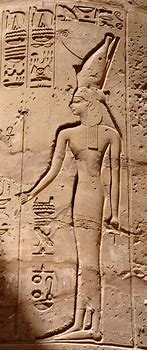
Mut is the Egyptian goddess of Creation. She is a mother goddess who came to prominence during the New Kingdom (c. 1550 – c. 1070 BC) as a result of her relationship with the god Amun. She is often represented as a vulture or a woman that at times may have wings.

Later, as she took on the attributes of other Egyptian goddesses, she was also depicted as a woman with a lion’s head. Sometimes she wore the royal crowns of Upper and Lower Egypt and sometimes the vulture headdress of the queens of the New Kingdom.

Mut Facts

Name(s): Mut (Mother)
Rules over: Creator Goddess / Primordial Water
Gender: Female
Symbols: Crown of Upper and Lower Egypt
Sacred animals: Vulture, Cobra, Lionness
Parents: Ra
Siblings: Hathor, Sekhmet, Bastet
Greek Similar: Gaia, Ancestral Mother of Life
Roman Similar: Terra

Origins

Mut is believed to have originated as a local goddess in the Nile River delta, after which she replaced and assimilated many other Egyptian goddesses over the course of millennia. She was originally linked to the primeval waters of the universe, from which all things were born. Her identity as mother of the cosmos gave her aspects of a creator goddess.

Mut became a national goddess when Amun, king of the gods and god of the wind, became patron of Thebes during the Eleventh Dynasty around the 21st century B.C. She took the place of Amun’s original wife Amaunet, the invisible goddess. With Amun being the god of the pharaohs, she became their mother and was closely associated with the queens.

After Amun’s authority waned and he merged with the son god Ra, Mut was assimilated into Hathor, the mother of Horus, who was also identified as Ra’s wife. She was later absorbed into the Heliopolitan Ennead.

Family

Myth has it that as the great mother from who everyone was brought forth, Mut had no parents. In some depictions of her she also has male parts. Although she was the mother goddess, she did not give birth to her own children. Instead, she first adopted Menthu, the war god, and then Khonsu, the moon god.

Symbols

Mut is most often affiliated with vultures. Other animals she may be affiliated with include cobras and lionesses.

Worship

Mut, Amun, and their son Khonsu were worshiped as the Triad of Waset. Waset was the ancient Egyptian name for Thebes, and became the capital of the pharaohs during the New Kingdom. A large temple complex, commonly referred to as the Temple of Karnak, was constructed in Waset (Thebes) to worship the triad.

The Karnak Temple Complex consists of various precincts, one of which is the Mut Precinct. The other two precincts are the Precinct of Amun-Ra and the Precinct of Montu.

Inside the Mut Precinct are six temples. These include Mut Temple Proper, the Contra Temple, and temples labeled as A, B, C and D. All six of these temples are surrounded by a wall made of mud and mud-brick.1

The Mut Temple Proper is surrounded by a lake in the shape of a horseshoe. During the festival of Mut, a boat with a statue of the goddess was sailed around the lake. Interior reliefs from the temple in Karnak show evidence of daily devotions by the queen and her priestesses. No other examples exist of exclusively female worship in ancient Egypt.

Evidence exists that it was the pharaohs Hatshepsut and Thothmose III who were responsible for the earliest versions of the Mut Precinct. Excavations at the precinct first led archeologists to believe that the temples were built by Amenhotep III because of the presence of several statues of the goddess Sekhmet bearing his name. However, it is now believed that they were brought here after his death at a time when Mut and Sekhmet were closely associated.

Over the centuries, more additions and improvements to the Mut temple precinct were done by pharaohs such as Rameses II, Rameses III, and Taharqa, who was also king of the Kush.

Facts About Mut

  • Mut’s name is written with the hieroglyph for vulture;
  • The many titles given to Mut over the years included Mother of the Gods, World-Mother, and Lady of Heaven;
  • Mut became the eye of Ra after Amun merged with Ra;
  • The custom of depicting Mut wearing the Double Crown of Egypt was begun by Hatshepsut. Stating that she was one of Mut’s descendants, Hatshepsut brought prominence to the goddess in the ancient Egyptian pantheon;
  • One of the many aspects of Mut was a composite deity by the name of Mut-Isis-Nekhbet, known as the Great Mother and Lady. In this form she was depicted as a winged goddess with three heads – that of a lion, a vulture, and a woman with different headdresses. She also had lion-like feet and an erect penis;
  • Her’s temple precinct at Karnak was called an Isheru and remained an important religious center for nearly 2,000 years. Fed by an underground spring, it is the largest preserved Isheru in Egypt today;
  • The Greek Ptolemaic dynasty maintained the temple of Mut, adding their own decorations;
  • After the conquest of Egypt by Rome at around 30 BC, the Roman emperor Tiberius rebuilt the site when it was flooded. While some of his successors maintained its upkeep, it eventually fell into disuse.

Goddesses – Selene, 2nd Generation Greek Titan

Selene – Greek Titan Goddess of the Moon

Selene, goddess of the moon, truly represented the moon itself to the Greeks. Although she counts as a goddess in her own right, Selene often gets associated with archer goddess, Artemis, who is also a moon goddess. These two goddesses have additional association with HECATE.

Selene is a Titan goddess. Titan gods and goddesses were actually the divine beings that preceded the OLYMPIAN GODS and goddesses. The first of these divine beings emerged from the primordial and originally called GAEA mother and URANUS father.

Titan Gods and Goddesses and Cross-Cultural Origins

Among the first generation of the Titans were PHOEBETHEMIS, and CRIUS. Some of the stories about these GODS AND GODDESSES may have been borrowed from cultures like Mesopotamia, ancient Egypt, and Persia. (This area was known as the ANCIENT NEAR EAST.)

Selene, however, was not directly related to Uranus and Gaia. Rather was the child of Titan goddess and god, Theia and HYPERIONEOS, goddess of the dawn, and HELIOS, god of the sun, were Selene’s siblings.

SELENE FACTS

Name(s): Selene
Rules over: The Moon
Title: Titan Goddess Of The Moon
Gender: Female
Symbols: Crescent (Lunar), Torch, Bull Horns
Sacred animals: Horses
Items: Chariot, Billowing Cloak
Parents: Hyperion and Theia
Consort: Endymion
Other significant others: Retinue: – Hesperus, Astra. Siblings: – Helios and Eos
Children: Fifty daughters (The Menai) and Narkissos to Endymion;

Pandia, Nemea and Ersa to Zeus;

Four Horae to Helios; Mousaios

Roman name: Luna

Selene’s Distinction Among Moon Goddesses

Additionally, although the ancients considered Hecate and Artemis counted as lunar goddesses, only Selene was the moon itself. She is said to have driven the moon chariot. This heavenly vehicle got its power from white horses. It drove across the sky, providing the night with its light.

The moon goddess love a mortal man named Endymion. It is said that Selene watched him while he slept beside his cattle. According to some legends, the pair had 50 daughters. One account even makes Endymion and Selene as the parents of NARCISSUS, the hunter of the ancient world who felt infatuated by his own beauty.

An Affair With Zeus

Although most often associated with Endymion, some accounts tell of Selene’s affair with ZEUS. This pair also had quite a few children, according to some retellings of the legend. In other stories, it is said that it was Zeus himself who gave Endymion immortality.

This divine magic trick made Endymion forever young. However, it came with a cost. Endymion was given the choice (by Zeus) of when he would die. The mortal opted for eternal sleep, thus granting him his youth, but it was a youth he could not enjoy. Selene visited Endymion each night in his place of rest near Mount Latmos.

Titans, Shamans, and Mystery Religions

Scholars who study the TITANS say that some of the rituals and stories associated with gods and goddesses like Selene existed to support ancient shamanistic practices.

As Selene’s Greek identity morphed into its Roman one, Selene became LUNA. Although some legends say that she as well as Hecate and Proserpina were triune goddesses, that wasn’t necessarily the case. Rather, the identities of these goddesses became one over the course of time.

Luna/ Selene was the moon goddess. As such, she was revered as on of the most important deities for agriculture. Luna/ Selene was given a temple on Palatine Hill. A mystery cult revering Luna/ Selene rose up. This would support the assumption that the stories of goddesses like Luna/ Selene were part of ancient shamanistic rituals in daily life

These rituals started first in families and clans, according to THE MET, and then were adopted by society itself until they were celebrated nationwide within the city-states of the ancient world.

The Purpose of Mystery Cults

Mystery cults in the ancient world have an air of secrecy to them. According to some scholars, these religious cults existed so that people could perform birth and death rituals.

It should additionally be noted that Selene sometimes merges with Diana/ARTEMIS as the same goddesses. In this form, she then also becomes the goddesses of the hunt. However, even as the goddess of the hunt, she is ever and always still a moon goddess.

Her Depiction

Selene (and her counterparts) are depicted in ancient art wearing a moon symbol (usually crescent.) While she is most often shown as riding horses, some portrayals have her driving an oxen team. When this happens, her crescent moon is formed from the bull’s horns.

Who was the Greek Goddess of the Moon?

The Greek goddess of the moon was Selene. She was often depicted as a beautiful woman with a crescent moon on her forehead, riding a chariot pulled by two horses or oxen.

In Greek mythology, Selene was the daughter of the Titans Hyperion and Theia, and the sister of Helios (the sun) and Eos (the dawn).

Selene was also associated with the goddess Artemis, who was sometimes referred to as the “Mistress of Animals” and was known to hunt by moonlight.

SOURCE: <a href=”https://greekgodsandgoddesses.net/goddesses/selene/”>Selene: https://greekgodsandgoddesses.net</a&gt; – Greek Gods & Goddesses, February 7, 2017

Goddess – Tykhe, also known as Tyche, Greek Goddess of Chance, Fate and Fortune

Greek Goddess – Tykhe, also known as Tyche

Tykhe, also known as Tyche, was the Greek goddess of chance, fate and fortune. She represented not only the positive aspects of these characteristics but also the negative ones. The ancient Greeks thought she was the reason for unexpected events in their lives, good and evil. For example, if someone had much success in life without having to try hard, people said that Tyche blessed him at birth. When someone worked hard but still had bad luck, they thought this goddess was responsible.


Who Were Tyche’s Parents?

According to Hesiod, a Greek poet, she was the daughter of OCEANUS and TETHYS while others thought that ZEUS was her father. People from various Greek regions worshiped Tyche, but she was especially popular in Athens. Athenians believed that this goddess favored their city. Some of her other famous sites of worship included temples at Argos and THEBES.


Tyche’s Appearance & Traits

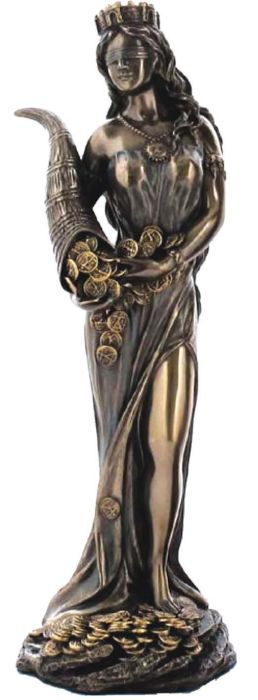
When the ancient Greeks honoured her beneficial traits, they usually referred to her as Eutychia or Eutiykhia, goddess of prosperity, success and good fortune. Tyche was usually pictured with wings, a regal staff and a crown. However, many images also showed her with other items. These objects related to various traits. For example, when she was pictured holding rudders or a wheel, it meant that she was directing world events.

If she had a horn of plenty, she was a giver of abundant prosperity and wealth. When Tyche was balancing on a ball, it symbolized unstable fortune that could come and go, just like a ball might roll in any direction. In later times, she appeared wearing a blindfold and was shown with other assorted items that suggested risk and uncertainty.

In Rome, this goddess was known as Fortuna. To the Romans, Fortuna was much more important than Tyche to the Greeks. Additionally, Fortuna was not pictured with wings or a ball, especially in later times. This suggests that the Romans only saw her as a goddess of good luck who blessed mankind with beneficial fortune.

SOURCE: <a href=”https://greekgodsandgoddesses.net/goddesses/tyche/”>Tyche: https://greekgodsandgoddesses.net</a&gt; – Greek Gods & Goddesses, September 13, 2018

Goddesses and Gods – The 21 Main Egyptian Gods and Goddesses

The Egyptian pantheon includes all the gods created by the falcon-headed Sun god Ra. Egyptian gods include many gods with animal heads (Horus, Set, Anubis, Thoth, Bastet, Sekhmet, Ra) and others with human heads (Osiris, Isis, Nephthys, Amun).

We will see together in this article:

  • The gods Ra, Apep, Aten, and Sekhmet involved in the creation of the Universe
  • The gods Set, Osiris, Isis, Nephthys, and Horus involved in the tragedy called “myth of Osiris”
  • The gods Anubis, Thoth, and Ammit involved in the judgment of the Egyptian dead
  • The other important gods: Khepri, Amun, Ptah, Taweret, and Sobek

Let’s begin without further ado by discovering the first of these gods and the creator of the Egyptian world: Ra, the falcon Sun god.

 Ra –

The creation of all the other gods by Ra

The primordial function of Ra in the Egyptian Universe

Apep

Aten

Osiris

Isis

Horus

Set

Nephthys

Sekhmet

Bastet

Hathor

Anubis

Ammit

Thoth

Khepri

Ptah

Amun

Taweret

Sobek

click here to read information presented about the 21 main Egyptian Gods and Goddesses

Goddesses and Gods – A List of Sun Deities

I will use this list to do a more in-depth post on these deities in the future.

Name Nationality/Religion God or Goddess? Notes
Amaterasu Japan Sun Goddess Major deity of the Shinto religion.
Arinna (Hebat) Hittite (Syrian) Sun Goddess The most important of three Hittite major solar deities
Apollo Roman Sun God
Freyr Norse Sun God A fertility god associated with the sun.
Helios Greek Sun God Before Apollo was the Greek sun god, Helios held that position. Helios road a chariot.
Huitzilopochtli (Uitzilopochtli) Aztec Sun God
Hvar Khshaita Iranian/Persian Sun God
Inti Inca Sun God The national patron of the Inca state.
Liza West African Sun God
Lugh Celtic Sun God
Mithras Iranian/Persian Sun God
Ra Egypt Mid-day Sun God An Egyptian god shown with a solar disk. Center of worship was Heliopolis. Later associated with Horus as Re-Horakhty. Also combined with Amun as Amun-Ra, a solar creator god.
Shemesh/Shepesh Ugarit Sun goddess
Sol (Sunna) Norse Sun Goddess She rides in a horse-drawn solar chariot.
Sol Invictus Roman Sun God The unconquered sun. The title was also used of Mithras.
Surya Hindu Sun God Rides the sky in a horse-drawn chariot.
Tonatiuh Aztec Sun God
Utu (Shamash) Mesopotamia Sun God

Goddesses and Gods – 7 Ancient Pagan Gods We Still Love Today

The old pagan gods—those legendary figures out of Norse, Greek, Roman, and many more belief systems—are fascinating subjects. These gods had all of the emotional fallibility of human beings, yet the all the power of the gods they were, and in their stories, they proved capable of shocking levels of pettiness, jealously, and downright cruelty. They were also, however, capable of great kindness, heroism, and justice, making for a set of truly interesting characters. They were us, but moreso.

It’s no wonder, then, that many of these gods that featured in stories thousands of years ago are still prominent in our contemporary fiction. We see them in our superheroes and action stars, who can be thought of as the great grandchildren of the original pagan gods.

But those gods that have survived the millennia with their names and stories intact are the ones we love the most—something about their personalities, their struggles, or their stories intrigues us. They’re the most compelling of them all, so let’s explore them by taking a look at 7 ancient pagan gods we still love today.

Click here to read about the following Gods and Goddesses

Loki

Zeus

Hercules

Odin

Thor

Shinigami

Hel

The Immortality of Entertainment

The fact that we’re still telling stories about these gods and goddesses thousands of years after their heyday is amazing, and these particular 7 beings have a special appeal that goes beyond the norm.

Maybe it’s because they’re powerful. Or perhaps it is because we wish we could affect the world like they do. But likeliest of all is that their larger-than-life personalities and stories simply allow us a glimpse of the extremes of life that few of us ever get to experience.

And that is why the gods will never die.

Goddesses and Gods – Celtic – Medb – Legendary Queen of Ireland and Belenos – The Shining God

Celtic Goddess Medb – Legendary Queen of Ireland

The story of Queen Medb is one of Ireland’s greatest legends. This goddess in the flesh was fierce, seductive, beautiful, and most importantly powerful. No man could be king of Ireland’s ancient sites of Tara or Cruachan without first becoming her husband.

Table of Contents

Celtic God – Belenos The Shining God

A Celtic Deity, also known as Belen, Belenus, Belinus, Bellinus, Bélénos, Belennos, Belenos, Bel, Bilé: The Shining God

Belenos is unusual in Celtic belief, as this deity (under the various version of his name) is known throughout the Celtic world. He is also remembered in place names and personal names throughout the Celtic lands. His symbols are the horse an wheel and his name means ‘The Shining God’. He is one of the Celtic high gods, and is probably a solar deity.

Possibly one of the most widespread of all the Celtic deities he is known from Italy (Cis-Alpine Gaul), Gaul, Britain and Ireland.

In Britain the personal name Bellinus occurs at Binchester (Vinovia), County Durham a name derived from the god-form Belenus, the native Brythonic form of which would be Belenus. Traces of this name having been found at Maryport. To the continental Brython the Cult of Belenus possessed a particular status in that it is mentioned in a number of Classical Literary sources. Ausonius was a poet from Bordeaux, writing in the later 4th century AD and alludes to sanctuaries to Belenus in Aquitania. Tertullian talks of the cult of Belenus in the Norican Alps (Apologeticus 24,7); and Herodian mentions Belenus’ worship at Aquileia in North Italy (History of the Empire after Marcus,8,3.6). In Ireland Beli is known as Bilé and is referred to as ‘The Father of Gods and Men’.

The Celtic fire festival on the first of May, known as Beltane, (the fires of Bel) is probably derived from the name of this deity. Beltane fires were lit to encourage the sun’s warmth. These fires also had restorative properties and cattle were herded between them before being loosed on the new spring pastures. From this it is likely that Beli was a fire deity, a patron of flame and the sun’s restorative powers (which explains his classical association with Apollo). Originally he may have been a pastoral deity and in Cymric myth is associated with cattle, sheep and cropt. Though this may be because Beltane was the time that herds were moved to the high pastures.

His symbols were the horse (as shown, for example, by the clay horse figurine offerings at Belenos’ Sainte-Sabine shrine in Burgundy), and also the Wheel (as illustrated on the famous Gundestrup Cauldron).

The Irish Bilé is a god of death and husband to Dana. In the tale of Lludd and Llefelys, the folk memory of Beli represents him as Belen o Lŷn, son of Manogan and father to Lludd and Llefelys. Both Beli and Lludd lend their names to sites in London; Billingsgate and Ludgate, respecitvely. Beli’s name is also found in the name of one of the most notable Brythonic chieftains before the Roman invasion, Cunobelinos (or, in Brythonic, Cunobel), the hound of Bel.

In Gaulish mythology Belenus’ consort was the goddess Belisama.

It is unlikely, as some have suggested, that the Cymric deity Beli Mawr is etymologically related to Belenos, as though the migration of Brython to old and middle Cymric this is far more likely to yield the name Belen or Belyn. Indeed, this is the name which we see in the Cymric form (Cynfelen) of the Catuvellauni leader during the Claudian invasion of Britain, Cunobelinos (the hound of Belinos). Inded, the tribe name Catuvellauni itself means ‘The Host of Belinos’ and their most well-known leader Cassivellaunos’ name means ‘The Devotee of Belenos’. There is also the figure of ‘Belen o Leyn’ who figures in triad 62 0f the Trioedd Ynys Prydain and is preserved today in the place-name Tyddyn Belyn near Tudweilog on the Llŷn Peninsula ELlSG. Rather, Beli Mawr is more likely derived from the name of the Gaulish deity Bolgios.

Belenos’ name is derived from the reconstructed proto-Celtic elements *belo- (bright/shining), the deicific particle -n- and the masculine ending -os. Thus Belenos is ‘The Shining God’.

Goddesses and Gods – Greek Titans – Rhea, Goddess of Fertility and Motherhood and Hyperion, God of Light and Sunlight

Greek Titans – Rhea, goddess of fertility and motherhood

Rhea (Rheia, Opis, Ops) was a Titan goddess of fertility and motherhood. She was very gentle and comfortable. Her name actually means “ease” as “at ease” and therefore this was probably the reason she was interpreted and worshiped as a goddess of comfort and ease. According to some authors, she is also described as the supreme mother goddess, just like her mother Gaea was and what later her daughter Hera became, but in Orphic hymn Rhea was even described as the supreme goddess, mother of all gods and men and it is said that even Uranus and Gaea derived from her. And as if there were not enough confusion yet, according to various authors, Rhea is also described as Cybelean goddess whose home was in Phyrgia which means that they are equating her with Cybelle, Anatolian earth goddess, but to return back to mainstream belief, backed by most authors, Rhea was a daughter of Uranus and Gaea and, because she was married to her brother Cronus, she was also a queen of the Cosmos. Together they represented “eternal flow” as they gave birth to a new generation of gods who then took control of the world, just like they and other titans had done it in the past. Therefore, she was also identified as a goddess of generations.

Birth of Olympians and plot against Cronus

Rhea was very much like her mother and loved her children unconditionally but unfortunately Cronus was like his father, jealous of his children’s powers and in fear of being overthrown. She became mad when Cronus forced her to give him their children to swallow upon birth. She started plotting against him and by the time he had swallowed HestiaHeraPoseidonHades, and Demeter, Rhea decided that enough is enough. She gave birth to her last childZeusin secrecy and gave Cronus a rock, wrapped in a blanket, to swallow instead. Cronus was pleased, not knowing that Zeus was still out there, and thought he was safe from the prophecy. In Hesiod’s Theogony, it is said that Rhea brought infant Zeus to Crete and gave it to Gaea to look after him. Gaea then guided him to the secret cave beneath Mount Aegeum or Mount Dicte. Zeus was raised there and, when grown up, came to Mount Othrys as a cupbearer and mixed a potion into Cronus’ drink which made him vomit all of his children. Later, in a ten-year war, Zeus and Olympians defeated Cronus and the Titans. They became the next rulers, just like Cronus and his brothers had done in the past, when overthrowing Uranus. In the end, Rhea was the main reason that history repeated itself.

According to Diodorus Siculus, it is said that Poseidon too had escaped the cannibalism of his father and that it was Rhea who had given him to the Telchines to look after him. However, according Pausanias, Rhea had hidden Poseidon among a flock of lambs when he was next to be swallowed.

The desire of motherhood

Like mentioned in Ovid’s Fasti, Rhea was mad and angry because she was often pregnant but never truly a mother of her children due to cannibalism of Cronus who ate most of them while Zeus and, variously, Poseidon on the other hand had to be hidden away from Cronus. She was mentioned to be often in company of lions which she nursed and took care of. The goddess is also said to have helped nurturing the young Dionysus when he was brought to her by Hermes, on Zeus’ orders who had to hide him from jealous and angry Hera. She was also, according to Homeric hymn to Apollo, involved in the birth of Apollo on the island of Delos. Upon the god’s birth, she, along her sisters Tethys and Theia, washed him with pure clean water and placed him in a white garment and took care of him until Leto recovered.

Other myths

Rhea was also involved in the return of Demeter to Mount Olympus. Demeter, in grief and sorrow, withdrew herself from the rest of the gods when Persephone was abducted. When the two were reunited, Demeter, still in anger of Persephone being bound to the underworld, declined to return. However, Rhea came to Demeter and convinced her that her place is among her brothers and sisters on Mount Olympus. In Nonnus’ Dionysiaca, Rhea is also said to had given an Amethyst to Dionysus that protected him from the tyranny of madness when drinking wine.

Greek Titan – Hyperion, god of light and sunlight

Hyperion was a Titan god of light or sunlight and was associated with watching and observation from above. He was also known as a Pillar of east. Together with his other three brothers, CriusCoeus and Iapetus, they presided as the Pillars of holding Heaven and Earth apart. He was one of six sons of Uranus and Gaea and is mentioned by Apollodorus as one of the five brothers, all but Oceanus, who participated in rebellion against Uranus and later attacked him. When they overcame him, the four brothers probably held him down while Cronus castrated him. While most of the authors are identifying Hyperion as a unique character, Homer is equating Helios and Hyperion as one and the same character and it can be seen in both of his epics, the Iliad and the Odyssey.

Establishing a rhythm of days and months

Due to his diligent observation, he was first to understand the movements of the sun and the moon, as well as the other stars and seasons. He was believed to have ordered the cycles of the sun, the moon and the dawn. During his time, he married her sister Theia with whom he had three children who presided over these cycles. Helios presided over sun, Selene over the moon and Eos presided over the dawn.

If you want to learn a bit more about Selene, check the page of Theia or Sky deities.

Titanomachy

Although there are notes of Hyperion participating in Titanomachy, there is no reference of his role in the war. It is only known that he sided with his brothers and fellow Titans against younger Olympians. And that he was in the end, after losing the war, imprisoned in Tartarus with his brothers and relatives. However, according to Aeschylus’ lost play , he was later released byZeus from Tartarus with the rest of the titans.


Goddesses and Gods – Who are the main Celtic Gods and Goddesses?

(The lists below name the more well known Irish Celtic gods and goddesses. There are lessor know ones as well.)

Who are the Celtic Gods and Celtic Goddesses?

Celtic pagan gods and goddesses were thought to have special influential powers over aspects of daily life and the natural world.

The ancient Celts were polytheistic and are thought to have worshiped over 400 Celtic gods and goddesses, although it is difficult to pinpoint an exact figure.

Some of these gods and goddesses of Celtic mythology were revered across the Celtic world, whereas others seemed to have been less well known and worshiped only in certain regions or specific locations.

Table of Contents

1 Who are the Celtic Gods and Celtic Goddesses?

2 Celtic Deities vs Roman Deities

3 Who are the main Celtic Gods and Goddesses?

4 Celtic Gods and Goddesses in Irish Mythology

5 Irish Gods

6 Irish Goddesses

7 Celtic Deity Types

The names of Celtic gods and the names of Celtic goddesses that occur often in Celtic mythology are listed below.

List of Celtic Gods

Lugh – Celtic God of Justice and Mischief

The Dagda – Celtic God of Agriculture, Fertility and Seasons and King of the Gods

Aengus – Celtic God of Love, Youth, Summer and poetry

Manannan – Celtic God of the Sea

Cú Chullain – Demigod and Warrior Hero

Belenus – Celtic God of Fire

Donn – Celtic God of Death

Neit – Celtic God of War

List of Celtic Goddesses

Danu – Celtic Mother Goddess

The Morrigan – Celtic Goddess of War

Áine – Celtic Goddess of Love, Wealth and Sovereignty

Brigid – Celtic Goddess of Healing, Poetry and Blacksmithing

Flidas – Celtic Goddess of Cattle and Fertility

Bébinn – Celtic Goddess of Birth

Airmed – Celtic Goddess of Herbalism

Celtic Gods and Goddesses in Irish Mythology


Goddesses and Gods – Greek Titans – Phoebe, Goddess of Prophetic Radiance and Crius, God of Heavenly Constellations

Greek Titans – Phoebe, goddess of prophetic radiance

Phoebe (Phoibe) was a Titan goddess of prophetic radiance, often associated with Selene (goddess of the moon). She, however, had never been referred as the goddess of the moon. The misinterpretation probably comes because her granddaughter Artemis was also called Phoebe, after her, just like her grandson Apollo was called Phoebus. And latin authors were all referring Phoebe as the moon goddess or moon itself, but they clearly had Artemis in mind doing so. That is why the Titaness is often misidentified as the moon goddess. To the Greeks it was pretty simple and obvious that Selene was the correct goddess. Romans on the other hand associated Artemis, Hera and Selene to the moon amongst others, but there was no mentioning of Titaness Phoebe. However, some researchers believe that Artemis (Diana, Phoebe) became known as the goddess of the moon because of her grandmother whom she got the name after. Anyhow, Phoebe was rather associated with being prophetic, like her sister Themis and her mother Gaea. She was also one of the twelve titans who were the descendants of Uranus and Gaea. She was, like all of her sisters, never involved in the war between Titans and Olympian gods, and was spared from being imprisoned in Tartarus. Instead, she took her place at the oracle of Delphi.

Prophet of the Delphic Oracle

She became the third prophet at the Oracle of Delphi, where she was believed to have heard her mother’s voices. Her predecessors were Gaea and Themis. Gaea honorably gave away her place to her daughter Themis who then gave it to her sister Phoebe. However, according to Aeschylus‘s myth, Phoebe had felt like having extreme burden to carry and gave away her place to her grandson Apollo as a present for his birthday, probably to motivate him. Apollo then presided over the prophetic power of light and heavens.

Asteria and Leto

Phoebe consorted with her brother Coeus, with whom she had two daughters. One of the daughters, called Leto, plays an important role in the later ages, in the time of Olympians. In those times, Phoebe had also developed a lust for mortal men, but her affairs never came to any fruition. According to Hyginus, who also mentions Asteria and Leto, she was also the mother of Perses and Pallas by Coeus.


Asteria – Titan goddess of oracles and prophecies. With her cousin Perses, she gave birth to goddess Hecate. She was also very beautiful like her sister and therefore pursued by Zeus. However, in order to escape from his embraces, she transformed herself into an island Asteria, later known as Delos.

Leto – Titan goddess of modesty and motherhood. She had very beautiful eyes, with which she charmed Zeus and he soon got her pregnant. Because of it, she was pursued relentlessly by jealous Zeus’s wife Hera who drove her from island to island, preventing her to rest and give birth. In the end Leto was finally provided with refuge by her sister Asteria who welcomed her to literally reside on her.

Greek Titans – Crius, god of heavenly constellations

Crius (Krios, the Ram, Aries) was a Titan god of heavenly constellations and was also known as a Pillar of the south pole. Crius, which means “Ram”, was often referred as a starting season of the Greek year, because his constellation was called Aries which nowadays means the start of spring. Together with his other three brothers CoeusHyperion and Iapetus, they presided as the Pillars of holding Heaven and Earth apart. He was one of six sons of Uranus and Gaea and is mentioned by Apollodorus as one of the five brothers, all but Oceanus, who participated in rebellion against Uranus and later attacked him. When they overcame him, the four brothers probably held him down, while Cronus castrated him. According to Pausanias, Crius was the father of Python, a dragon slain by Apollo, and was also closely related with the island of Euboea. The author even names two rivers after the titan.

Titanomachy

In a time of war, he was mentioned siding with the Titans against the younger Olympian gods. After the war, where the titans had lost, Crius was along his brothers and many relatives imprisoned in Tartarus beneath the underworld. Although there is no clear statement made, he was supposed to be condemned to eternal punishment. However, according to Aeschylus’ lost play , he was later released byZeus from Tartarus with the rest of the titans.

Father of the Astraeus, Pallas, and Perses

In his time, he consorted with his half-sister Eurybia, a daughter of Gaea and Pontus. Together they had three children:

Astraeus – Titan god of the stars and the art of astrology. He was also the god of the dusk and father of the Four Winds and the Stars of the Heaven by Eos(goddess of dawn). They also had children who are often associated with the time of twilight.

Pallas – Titan god of warcraft who was defeated during Titanomachy by younger goddess Athena. He was a father of RivalryVictoryStrength and Power.

Perses – Titan god of destruction. He was married with his cousin Asteria with whom he fathered Hecate.

Goddesses – Don (Welsh – Celtic)

Don – Welsh Celtic Goddess of the Heavens, Air, Sea, and the Moon

Dôn was a Welsh mother goddess, the counterpart of the Irish Danu. She is the mother of Arianrhod, Gwydion, Gilfaethwy, Gofannon, Eufydd, Elestron and Amaethon. Llys Dôn (“The Court of Dôn”) is the traditional Welsh name for the constellation Cassiopeia.

She is the power of family and trust, and the powers of fertility that nourish the soil as well as the water of the earth. Don and her children represent all that is light, and battle darkness and evil. The Donwy River is named after her. In some refrences are so ancient she is sometimes known as a goddess and a god. She is all aspects of the triple goddess, maiden, mother and crone, She was also a ruler of the otherworld where the entrances were always in the burial mounds of the sidhe.

–~Attributes and Correspondences~–

Area of Influence:
Heavens, Air, Seas, Moon

Pantheon:Welsh

Abode:Animals:Snakes, Fish, Mares, Seagull, Goats

Colours:Green, Silver, Blue, Black

Consort:Beli

Crystal:Onyx, Jet, Amber,H ag stones, Lead, Gold

Day:Direction:North, East, West

Element:Earth, Air, Water

Incense:Holly, Juniper, Yew, Myrrh, Cypress

Musical Instrument:Offerings:Planet:Cassiopeia

Plant/Tree:Comfrey, Elm, Ivy, Juniper, Apple trees

Rune:Symbols:Cauldron

Tarot Card:The Empress

Time:Yule, Imbolc

Goddesses – Mnemosyne, Greek Titan Goddess of Memory and Remembrance

Mnemosyne, Greek Titan Goddess from greek-gods.org

Mnemosyne (Mnemosine, Juno Moneta, Memory) was a Titan goddess of memory and remembrance. She was believed to be the inventress of speech and writings. In Hesiod’s Theogony, her daughters, the Muses, are described as the spirits who possessed kings and poets, whom the gods favoured and gave them special powers of authoritative speech and wisdom. Mnemosyne was one of the six daughters of primeval deities Uranus and Gaea in the first generation of Titans. Mnemosyne was also known to be a mother of Muses and represented the memorisation of stories and myths preserved in history before the discovery of writing.

The mother of Muses

Mnemosyne dwelled over the hills of Eleuther (in Pieria, near Mount Olympus) where Zeus came to lie with her for nine nights, away from other immortal gods. Together in those nine nights they gave birth to nine Muses:

Calliope – muse of epic poetry was believed to have possessed Homer and gave him inspiration for the Odyssey and the Iliad. She is often depicted as carrying a book or a writing tablet. She was also the mother of two sons by Apollo, called Linus and Orpheus. (Side Note Calliope has been helping me write since before I had my first website. Not a witchy one but for dog obedience training – really I was training humans to be kind to their companion when correcting them 😄)

Clio – muse of history. She is usually depicted of holding an open scroll or is seated beside a chest of books.

Erato – muse of love and erotic poetry. Most of the time she is depicted playing a kithara or a lyre, but in some cases she is shown with a wreath of myrtle and roses.

Euterpe – muse of music. She is often depicted sitting on a chair and playing her double flute.

Melpomene – muse of tragedy. However, she was originally a muse of singing and dancing which came from her name or more precisely from greek verb melpô (“to celebrate with dance and song.”). She is usually depicted wearing cothurnus boots(boots worn by tragic actors) and holding a tragic mask in her hand.

Polyhymnia – muse of sacred hymns. She is depicted as serious or meditative, often standing, wearing long cloak and supporting her arm with a part of the cloak.

Terpsichore – muse of dancing. Usually, she is depicted in a sitting position and playing a lyre with her special plectrum. She is also mentioned to be the mother of Sirens.

Thalia – muse of comedy. Most of the time, she is depicted holding a comic mask in her hand and wearing a cloak and a crown made of ivy.

Urania  muse of astronomy. She is depicted with a globe in her hand. Urania was believed to be able of fortelling the future by arrangement of the stars and is often associated with Universal Love and the Holy Spirit.