A Bewitching History: Why Witches Ride Broomsticks

From LiveScience.com

By Megan Gannon 

Among the throngs of this year’s trick-or-treaters, hundreds of Americans will be dressed as Miley Cyrus or a minion from “Despicable Me,” but more will go with a fail-safe getup. “Witch” once again reigns as the No. 1 costume for adults, according to the National Retail Federation’s 2013 Halloween survey.

Many of the pointy-hatted sorcerers who roam the streets this Oct. 31 will be carrying broomsticks or besoms. But few likely know the murky tale of how witches came to be associated with those familiar household objects.

The story — full of sex, drugs and Christian inquisitors — starts with poisonous plants like black henbane (Hyoscyamus niger), sometimes called stinking nightshade.

Flying ointments

Ingesting henbane, which is rich in powerful alkaloids, can cause hallucinations (if it doesn’t kill you first). According to legend, witches used herbs with psychoactive properties like henbane in their potions, or “flying ointments.” Some historical accounts suggest witches applied these ointments to their nether regions. And what better applicator than a wooden staff?

Lady Alice Kyteler, Ireland’s earliest known accused witch, was condemned to death for using sorcery to kill her husband in 1324. (Kyteler escaped, and her maid was burned at the stake in her stead.)

The English historian Raphael Holinshed later recounted the case and described some of the supposedly damning evidence authorities found against Kyteler:…

A Version of the History of Beltane

History of Beltane from beltanefire.com.au

The Beltane fire festival welcomes the abundance of the fertile earth and is celebrated with bonfires, Maypoles, burning of the Wickerman, dancing, and a feast, with its roots in European traditions, Beltane is observed by many of today’s Pagans and others as a time for performing rituals

The Celts divided the year into two main seasons. Winter, the beginning of the year fell on November 1 (Irish: Samain) and midyear and summer on May 1 (Irish: Beltaine), opposite for us here in the Southern Hemisphere.

These two junctures were thought to be critical periods when the bonds between the human and supernatural worlds were temporarily erased; on May Eve (southern hemisphere)…

The Origins of Halloween by Silver RavenWolf

Harvest Moon, velvet sky, pumpkins glowing, children laughing, costumes, candy, scary stories—just where did this autumn gaiety begin? Let’s look through those cobwebby corridors of time to unearth the exciting genealogy of the American Celebration we call Halloween!

Nothing is ever as simple as it seems—especially when dealing with history. Too often events and circumstances of our past were written or re-written by people who, for whatever reason, operated under an agenda, or simply wanted history to reflect how it should have been, rather than how it was. How, then, do we determine what is fact and what is fiction? In some cases, we can’t. In other situations, we dig.

The Celts

Many historians feel that the greatest strength in the Celtic people lies in their collective mythos. Wading through the romanticism to find unmodified information can prove a tricky endeavor. The earliest archaeological evidence we have of the Celts rest in France and Western Germany.  The Celtic people moved into Spain, Britain, and Switzerland between the fifth and first century BCE. They even ransacked Rome in 390 BCE.

The Celtic peoples celebrated four festivals called fire festivals–commonly know today as Samhain, Oimelc (Imbolc), Beltane, and Lughnasadh. Samhain (pronounced sow-in, sow rhymes with now) was the first and foremost a harvest festival relating to animal husbandry and preparations for the winter months. Fire is an element of cleaning, a vehicle of eradication, so it is not unlikely that fire would work itself into any type of religious celebration. Fire among the ancient peoples often represented an aspect of the divine.

What does the word Samhain mean? Well, we know what it doesn’t mean. There is no archeological or literary evidence of a Celtic god by the name of Samhain. This little slip of fact appears to have begum in the 1700s and continues in some misinformed publications today. The word Samhain actually means “summers end”.

So, where did this Lord of the Dead thing come in? Over time, Samhain took on a religious significance through ministrations of the Druids (the clergy of the Celt’s). Legends indicate that on Samhain all the hearth fires in Ireland were doused and then lit again from a central fire maintained by the Druids at Tlachtga. To the Celts, Samhain was a turning point from light into darkness, and it was thought that this break or fissure created easier access to their land of the dead, Tir nan Og.

The Druids

We need to know a little bit about the Druids to continue with our history of Halloween. The Druids were versed in all learning and were considered to have the gift of prophecy. They functioned as judge, ambassadors, healers, and religious leaders. The Druids first named the holiday Samhain.

 Feast of the Dead

As the Celtic religious system solidified so did the beliefs of the Celts concerning the dead—as has occurred in all religions, before and after the Celts. Since the turning points of the year were considered fissures in time and space, the Celts believe that the dead they loved so dearly could travel through time and space and return from Tir nan Og to visit them. The custom of leaving food at the table (the birth part of the treat part of trick-or-treat) was a gesture of welcome to the departed. From these visits came the belief that those who had gone beyond the land of the living could provide information on past or future events. This is how divination became associated with Samhain.

The Celts did not believe in devils or demons, but they did believe in the Fairy Folk, whom they thought inhabited the land of the dead (the land in-between). Fairies were thought to be resentful of humankind for taking over their land. Because time and space could be conquered on Samhain, fairies were said to roam countryside creating mischief and kidnapping a human or two now and then—just for fun, you understand.—except the humans never came back. Here then is the root of the scary stuff associated with Halloween. The mischief, of course, was caused by living humans, and accepted by the Celts as a psychological release before the onset of winter gloom—though I doubt they would explain it in those terms.

Is it odd, gross, or unusual that a group of people should set aside a day for the dead? Nope. Different cultures and religions have followed such a practice for centuries. Let’s get on our broom again and check out Rome and its contributions to Halloween.

 As the Celtic religious system solidified so did the beliefs of the Celts concerning the dead—as has occurred in all religions, before and after the Celts. Since the turning points of the year were considered fissures in time and space, the Celts believe that the dead they loved so dearly could travel through time and space and return from Tir nan Og to visit them. The custom of leaving food at the table (the birth part of the treat part of trick-or-treat) was a gesture of welcome to the departed. From these visits came the belief that those who had gone beyond the land of the living could provide information on past or future events. This is how divination became associated with Samhain.

The Celts did not believe in devils or demons, but they did believe in the Fairy Folk, whom they thought inhabited the land of the dead (the land in-between). Fairies were thought to be resentful of humankind for taking over their land. Because time and space could be conquered on Samhain, fairies were said to roam countryside creating mischief and kidnapping a human or two now and then—just for fun, you understand.—except the humans never came back. Here then is the root of the scary stuff associated with Halloween. The mischief, of course, was caused by living humans, and accepted by the Celts as a psychological release before the onset of winter gloom—though I doubt they would explain it in those terms.

Is it odd, gross, or unusual that a group of people should set aside a day for the dead? Nope. Different cultures and religions have followed such a practice for centuries. Let’s get on our broom again and check out Rome and its contributions to Halloween.

A Fly-BY of Ancient Rome

Rome had the habit of changing rulers as many times as you empty the lint trap in your dryer. Between 14 and 37 CE, Christianity had begun its rise in Rome. By 41 CE, Claudius had distinguished himself with the conquest of Britain. The Romans also had a harvest festival, so the Celts didn’t have much trouble blending the two holidays together after they came into contact with the Romans. It was around 314 CE when Constantine the Great declared the Roman Empire to be Christian, and the fate of Samhain and Druids was sealed.

 The Advent of Christianity

By the fourth and fifth centuries , Celtic Christianity had oozed into Ireland. St. Patrick has his hands full, and here is where the kettle starts to boil. At, first, the Pagans openly welcomed Christianity, but as Christianity filtered into the Celtic system, church officials had a few problems—mainly the Celtics didn’t want up their holidays or folk practices. The people were not willing to throw out traditions that were ingrained into their social structure. If you can’t get someone to completely change, what do you do? Compromise. And that’s exactly what happened. Samhain was changed to All Hollow’s Eve. To make the Pagan peoples adhere more closely to this new religion of Christianity, the clergy of the day taught the peasants that fairies were really demons and devils (remember, a concept totally unknown to Celtic belief or history) and their beloved dead were horrid ghosts and ghouls. The early Christian erroneously associated the Celtic land of the dead with the Christian concept of Hell.

To help the belief in Christianity along, Druids priestess were systematically murdered. Early Christians also taught the area peasants that their Lord of the Underworld was in fact Satan, which is ridiculous, as the two mythos don’t have anything in common. It appears that Christians misunderstood what the word Samhain meant: because the peasants use this celebration to honor the dead, Christians assumed that Samhain was the incorrect pronunciation of a Pagan deity in the Bible, recorded as Samuel, from the Semitic Sammael, meaning God of the under world.

The Witches

So far, we’ve talked about the land of the dead, how the early Christians managed to superimpose Satan onto Samhain, and how fairies got zapped into demons, but there has been no mention of Witches, commonly associated in our time with Halloween. Where did Witches come from?

During the Dark Ages, the Church sought to eradicate the Pagans and wise women from the countryside so that the church could amass both power and property. First, they had to devalue women because women kept the holy days, trained the children, and provided the cohesive socialization of the culture, thus women held the power to shape society. The church taught, among other things, that women had no souls. Once this teaching had occurred, it was only a small step to make them inhuman, and the Church was able to incite the superstitious populace.

The Celtic women were the strong hold of the family environment, and although the Celts accepted Christianity at first, they did not want to give up their family traditions or their lifestyle. The Church was not into free thinking—therefore anything that did not follow the church dictates was evil. Hence, the Witches (really the women) became evil. Since Samhain was a primary festival of the Celts and the Church had already determined that Samhain was evil, the association between Witches and Halloween was born.

All Saints’ Day / All Hallow’s EVE / Halloween

All Saints’ Day and All Hallow’s Eve (Halloween) were first introduced in the seventh century CE. All Saints’ Day was originally celebrated in the spring. The date was changed to November 1 to supplant Pagan beliefs because those pesky Pagans just refused to cough up their original Samhain. The day was to honor God and all his saints, known and unknown. All Saints’ Day later became Hallowmass, a mass to honor the dead. The Eve of All Hallow’s Day, October 31, became All Hallow’s Eve, which evolved into the word Hallowe’en. Although the church wished this time to be one of somber prayer and quite custom, the Celtics continued their customary bonfires and fortune telling.

All Souls’ Day is a bit different. This festival falls on November 2, a day to offer prayers and alms to assist the souls of those departed that manage to get stuck in purgatory, an in-between place that is neither heaven nor hell. Over the succeeding centuries, Halloween, like Christmas, picked up various customs and discarded others, depending on the complex socialization of the times and religious dictates.

Halloween Comes to America

Our first inkling of Halloween coming to America revolves not around a specific set of people (many indicate the Irish) but with William Penn’s motley collection of refugees from Europe. In 1663, Penn wrote a promotional tract about the Americans. As a result, fifty ships dropped the anchors in the Delaware River. They discharged persecuted souls from England, Ireland, Wales, and the Rhineland (now Germany). Collectively, the Germans and Irish shared Celtic heritage. Therefore many of the folk customs resonated together—including Halloween.

From 1684 through 1930, Halloween was more a time for tricking rather than for treating. Many of the tricks the German and Irish communities became universal, such as overturning outhouses, dismantling a wagon and putting it back together on top of a house or barn, and tying cows to church bells. The tricks often served as social function, such as mildly chastising a neighbor who exhibited antisocial behavior.

By 1910, several American manufactures were making or importing party products just for the American holiday Halloween. From noisemakers to costumes, a new holiday meant new business and an opportunity to make money.

The drawback to the new holiday came in the form of the “declared” Mischief Night, Goblin Night, or Devil’s night on October 30. Minor offenses, such as trying several garbage cans together and hanging them from a light pole, soaping windows with lard, and later, bars of hand soap, abounded. As the pranks grew to vandalism shopkeepers would bribe youngsters to ward off destruction of their property.

In an effort to stop the criminal behavior, the Boy Scouts, in conjunction with local town councils, cities, boroughs, instituted the custom of Trick-or-Treat night to help keep youngsters from naughty practices. By the 1930s the custom of trick-or-treating was well entrenched in our American culture. Halloween, like Christmas, became a holiday for children, and parents strove to make the holiday as much fun as possible for the enjoyment of their youngsters.

During he 1950s. ’60s, and ’70s our American Halloween stayed primarily the same, but in the ’70s and ’80s, with a recession coupled by a candy scare, groups and organizations once again sought to find appropriate avenues to make Halloween safe for America’s children. Halloween practices extended through the entire month of October. Haunted houses, parties, hay rides, plays, story hours, and numerous other events were held throughout the month.

In the mid-to-late 1990s certain sects of the Protestant Christian church declared war on Halloween. using the same erroneous propaganda cultivated hundreds of years ago. Other groups size Halloween for their own political agendas—hosting haunted houses showing aborted babies, drug addicts, and other modern day violent situations. This did not go over well, as the holiday had become an event primarily for children, not adult political issues. Radical Christian groups said that the holiday was Satanic—which, as we’ve seen from our research, is a bizarre and fantastic claim, based on misinformation, politicking, personal agendas and fear. With America’s policy of separation of church and state the battle for destroying Halloween in the United States is an uphill battle.

The original Samhain marked the the close of the agriculture season and functional third harvest festival. In America, Halloween has become the first holiday in our end-of-year rush for partied gaiety. Our Halloween functions as the opening of the three-month-long celebratory fest that includes Thanksgiving, Christmas, Yule, Kwanzaa, and Chanukkah, and ends with the popular American New Year.

As our children crave pumpkins with delightful chatter, adults find solace in a night when they can be whatever they want to be. We have little doubt about the joy this holiday bring to the American people. I am sure we will forever love the haunted house, the harvest Moon, the thrills and chills of a well-wrought tale—and, of course, the deliciously scary things that go EEEEK! in the night.

 Harvest Moon, velvet sky, pumpkins glowing, children laughing, costumes, candy, scary stories—just where did this autumn gaiety begin? Let’s look through those cobwebby corridors of time to unearth the exciting genealogy of the American Celebration we call Halloween!

Nothing is ever as simple as it seems—especially when dealing with history. Too often events and circumstances of our past were written or re-written by people who, for whatever reason, operated under an agenda, or simply wanted history to reflect how it should have been, rather than how it was. How, then, do we determine what is fact and what is fiction? In some cases, we can’t. In other situations, we dig.

Llewellyn’s Witches’ Datebook1999 Pages 24 to 29

History Cooperative – Countryside Festivals

Click here to read more about Countryside Festivals

As the Romans saw many natural thigns such as trees, rocks and other matters as possible hosts to spirits or bearers of some other religious significance, then the countryside bustled with spiritual hints by gods, ghosts and spirits. There was also not a thing which wasn’t somehow guarded by a deity.

Read More: Roman gods

There was gods who watched over fields, groves, orchards, vineyards, springs, woods and any other matter. Jupiter for example watched over oak trees which were sacred to him. As country life was inevitably connected to agriculture, which was at the whim of nature, religious life in the country therefore consisted primarily of appeasing he many gods around one, ensuring that they would guard the harvest and be merciful.

As the ancient calendar, before later changes by the Romans, began on waht is now 15 March, the first traditional festival of the country calendar was the liberalia on 17 March. It was held to honour Liber, the god of fertile crops and vineyards. (The liberalia was also the traditional date when a boy could become a man by being given his toga virilis.)

On 15 April came the fordicia in honour of the earth goddess Tellus. For this pregnant cows were slaughtered in sacrifice and in Rome animal fetuses were burnt on altars. The parilia festival which took place the week after the fordicia, saw sheep being herded and forced to jump across burning bales of straw, in order to be purified.

Another festival was that celebrating the goddess Ceres which took place on 19 April. Ceres was especially connected with agriculture, the harvest and, especially, grain. So her festival was no doubt of significance to farmers. There would be a ritual march around the boundaries of the land, the so called lustration, to purify it and to honour the goddess. In the earlier times of Rome the festival of Ceres would see faxes let loose with torches tied to their tails where later the grand arena of the Circus Maximus would stand.

After the festival of Ceres followed the vinalia rustica which was a wine feast to celebrate…

October 28 Today In History

Today’s Historical Events

1492 Christopher Columbus sights Cuba and claims it for Spain under the name “Juana”

1538 The first university in the New World, the Universidad Santo Tomás de Aquino, is established on Hispaniola

1746 Peruvian cities of Lima and Callao demolished by earthquake, 18,000 die

1904 St Louis police try a new investigation method – fingerprints

1919 Volstead Act passed by US Congress, establishing prohibition, despite President Woodrow Wilson‘s veto

1924 Miner M.de Bruin discovers the infant fossil skull, “Taung child” in a lime quarry in Taung, South Africa. Paleoanthropologist Raymond Dart identifies the fossil as a new hominin species, Australopithecus africanus.

Today’s Historical Events in Film and TV

1921 Amsterdam’s Tuschinski movie theater opens

Today’s Historical Events in Music

1828 Clara Wieck, age 9, makes her piano concert debut at the Gewandhaus concert hall in Clara Leipzig, Germany

Today’s Historical Events in Sports

1890 “World Championship” Baseball Series, Washington Park, NY: Louisville Colonels beat Brooklyn Bridegrooms, 6-2 in Game 7 to tie series 3-3-1; deciding game never played

1900 II Summer (Modern) Olympic Games, Paris, France: competition ends after 5 months; no opening or closing ceremonies conducted

1924 White Sox beat NY Giants 8-4 in Dublin, less than 20 fans attend

1934 Brooklyn Dodgers and Pittsburgh Pirates play first of only 4 penalty free games in NFL history; Dodgers wins 21-3 at Ebbets Field, Brooklyn

1951 Juan Manuel Fangio of Argentina wins Formula 1 World Drivers Championship by taking out the Spanish Grand Prix at Pedralbes in an Alpha Romeo; wins by 6 points from Alberto Ascari of Italy

1953 Red Barber, resigns as Dodger sportscaster to join Yankees

1954 Major league owners vote down sale of A’s to a Philadelphia syndicate

1959 American Football League awards Buffalo Bills franchise to Ralph C Wilson

1961 Ground broken for Municipal (Shea) Stadium for NY Mets

1962 Jo Weatherly in a Pontiac finishes 2nd to Rex White in season-ending Dixie 400 at Atlanta Motor Speedway to clinch his 1st of 2 consecutive NASCAR Sprint Cup Championships

1962 NY Giant Y. A. Tittle passes for 7 touchdowns vs Wash Redskins (49-34)

1970 NBA Cleveland Cavaliers 1st home game, lose to San Diego 110-99

1973 Elmore Smith of Lakers blocks 17 shots in a game (NBA record)

1974 1st time 2 Islanders hat trick in same game-MacMillian & Westfall

1975 Calvin Murphy (Houston) begins NBA free throw streak of 58 games

Celtic Zodiac – The Reed

The Reed

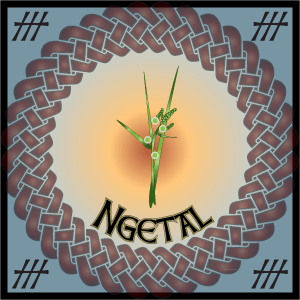
10/28 – 11/24: The Druids believed the Reed to be a tree because of its dense system of roots. Cut reeds were used as pens and symbolized wisdom and scholarship. Identified with the submerged or hidden Dryad, the Reed was representative of the mysteries of death. It was associated with being both a saviour and a custodian as well as a symbol of royalty. It was used in the making of instruments such as flutes and pipes. Pan, the Greek God of Herds, Fertility and Male Sexuality (whose name is the root word of “panic”), is often depicted playing a syrinx…a pipe comprised of seven reeds. Traditionally a nomadic people, the Celts camped in one area throughout the Winter months and would break camp in the Spring when the first yellow blooms appeared on the Reed. The Reed was once believed to bring order out of chaos and legend holds that a Reed was thrust into Christ’s hand when he was mockingly robed in purple.

The Reed grows in silence, thin and slender, by watersides and marshlands, standing in clumps at the edge of rivers. It is representative of arrows that fly up into the unknown air to land at the very source of that which is being sought, symbolic of the direct approach required when confronting a dilemma…whether that dilemma comes from within or without. The Reed expressed the desire to search out basic truths and was also symbolic of music. Within many woodwind instruments, the Reed will create a balance. Even in today’s world, the Reed is often used to thatch the roofs of houses, once being representative of the protection it offered to all of Nature’s creatures, whether domestic or wild. Weavers often used the Reed to separate the threads they once spun and its leaves were frequently used to fashion baskets and floor mats. Some cultures (such as the Marsh Arabs of the Rivers Tigris and Euphrates) built entire houses and even mosques from Reeds. Natives of the American SouthWest once made arrow shafts from the Reed’s woody culms and, in more modern times, small beds of Reeds are sometimes planted to purify domestic sewage.

Though often used with great imprecision, the term “Reed” as it applies to the Ogham is the Common Reed or Broom, a giant grass with stems which can grow to be 12 feet tall. It is found in abundance in the British Isles, usually in marshy areas where it often forms dense stands and blooms with yellow pod-shaped flowers. As with most other grasses, the vertical stems of the Reed (which can be very thick and strong) live only for a single year, dying in the Autumn to be replaced with new green shoots in the Spring. The dead stems have a tendency to rattle and whisper in late Autumn winds. The Common Reed has spread in weed-like fashion throughout most of the world but is more widespread in cooler climates. As its alternative name suggests, the branches of the Reed are …

Click here to read about the Reed from Celtic Radio

Reed Moon: Celtic Tree Calendar

To read more about the Celtic Reed Month by Sarah Wayt

The celebration of Samhain, now known as Halloween, occurs during the Reed Moon. To the Celts this month hailed the end of the year, a time to cull the livestock and to connect with ancestors. All around the world festivals that honour the dead are celebrated. During the Reed Moon, light a candle for loved ones who have died and you may receive a message from the spirit world.

Releasing old energy

The Reed Moon is a good time to use divination to gain insights into the year that has passed. Perform energy work that will release old energy, burn symbols of illness on your bonfire on November the 5th during your Guy Fawkes celebrations. Remember the Celtic year does not begin until the Winter Solstice so use this interval to dream, not to make plans for the future.

The haunting sound of reed

In the past, the reed was used to make swift-flying arrow shafts that slew both enemies and game. In this way the plant was linked to the season of death and sacrifice, in which trees shed their leaves and the energy of nature became more introspective. Many early musical instruments also used the reed to create a haunting sound that has been connected to rites for the dead and the summoning of spirits.

Wind instruments

Modern day wind instruments have developed the same principle used by original reed instruments. Whereby a current of air is vibrated to produce a melodic sound.

Other traditional uses for reed include thatching. Rooftops were thatched with reeds, and as the Celts withdrew into their homes for the winter they honoured the plant that gave them shelter, making the reed a symbol of royalty and protection.

Reed Moon energy…

Reed – introduction to Ogham

From Ireland Calling

It is widely believed in academic circles that reed is a modern, neo-pagan introduction to the Ogham, much like the tree calendar itself.

It was first promoted as an Ogham by Robert Graves in his book The White Goddess. However, the reed’s importance to Celtic life and folklore are indisputable.

Reed gained a reputation as a protective tree from its use as thatch for the rooftops homes.

For this reason it was also made into talismans and charms believed to protect the wearer from evil. Mats were often woven out of reeds which gave the house a sweet smell, associating the reed with cleansing the home.

Scholarship

The Druids also used reeds to make writing implements and paper, thus associating the reed with knowledge, scholarship and wisdom.

Physicians would use reeds as tools for administering treatments but arrows, the weapons of death, were also made out of reeds. Because of these two contrasting uses the reed gained an association with both death and healing.

Souls of the ‘otherworld’ join the living…

October 27 On This Day in History

Important Events

312 Roman Emperor Constantine the Great is said to have received his famous Vision of the Cross

1795 Pinckney’s Treaty [Treaty of San Lorenzo] signed by Spain and US, establishing the southern boundary of the US and giving Americans right to navigate the Mississippi River

1962 Black Saturday during the Cuban Missile Crisis: An American spy plane is shot down over Cuba and the navy drops warning depth charges on Soviet submarines

1982 China announces its population has reached 1 billion plus people

1986 British government deregulates financial markets in a “Big Bang”, enhancing London’s status as a financial capital while increasing income inequality

Today’s Historical Events

Today’s Historical Events in Film and TV

Today’s Historical Events in Music

Today’s Historical Events in Sports

October 26 On This Day in HIstory

Important Events

1850 Robert McClure sights the fabled Northwest Passage for the first time (from Banks Island towards Melville Island)

1861 Pony Express (Missouri to California) ends after 19 months

1863 International conference begins in Geneva aimed at improving medical conditions on battlefields – beginning of the Red Cross

1977 Last natural case of smallpox discovered in Merca district, Somalia. Considered the anniversary of the eradication of smallpox, the most spectacular success of vaccination

2019 Raid by US Special Forces kills ISIS founder Abu Bakr al-Baghdadi in Syria

Today’s Historical Events

Today’s Historical Film and TV’s Events

Today’s Historical Music’s Events

Today’s Historical Sport’s Events


Ancient Roman God Terminus

Terminus

From Pantheon.org – For Sources and References Roman God Terminus

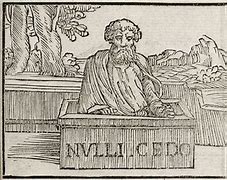
“Border.” A Roman divinity presiding over boundaries and frontiers. His worship is said to have been instituted by Numa who ordered that every one should mark the boundaries of his landed property by stones to be consecrated to Jupiter (Ζεὺς ὅριος), and at which every year sacrifices were to be offered at the festival of the Terminalia.1 These sacred boundaries existed not only in regard to private property, but also in regard to the state itself, the boundary of which was not to be transgressed by any foreign foe. But in later times the latter must have fallen into oblivion, while the termini of private property retained their sacred character even in the days of Dionysius, who states that sacrifices of cakes, meal, and fruit (for it was unlawful to stain the boundary stones with blood), still continued to be offered.

The god Terminus himself appears to have been no other than Jupiter himself, in the capacity of the protector of boundaries.2 The Terminus of the Roman state originally stood between the fifth and sixth milestone on the road towards Laurentum, near a place called Festi, and that ancient/boundary of the Ager Romanus (“the field of Rome“) continued to be revered with the same ceremonies as the boundaries of private estates.3 Another public Terminus stood in the temple of Jupiter in the Capitol, and above it there was an opening in the roof, because no Terminus was allowed to be under cover.4 This is another proof that Terminus was only an attribute of Jupiter, although tradition gave a different reason for this circumstance; for when that temple was to be founded, and it was necessary to exaugurate other sanctuaries standing on the same site, all the gods readily gave way to Jupiter and Juno, but the auguries would not allow the sanctuaries of Terminus and Juventas to be removed. This was taken as an omen that the Roman state would remain ever undiminished and young, and the chapels of the two divinities were inclosed within the walls of the new temple. Here we may ask, what had a Terminus to do on the Capitol, unless he was connected or identical with Jupiter?

Scorpio Horoscope for 2021

(I should have started this with Capricorn on January 1st, 2021 as most people follow the Gregorian calendar. But there are many of us who walk a pagan path the follow the Wheel of The Year and celebrate the new year October 31st through November 1st. Which Makes Scorpio the first accepted zodiac sign of the year. Personally I follow the 13 Zodiac Signs to go with the 13 months of the Celtic Tree Calendar. More about the 13 Zodiac Signs and Celtic Tree Months in other posts.)

The symbols and star constellation for Scorpio

DATES: According to sunsigns.org begin October 23rd and end on November 22nd

To read the full yearly Scorpio Horoscope for 2021

Scorpio 2021 Horoscope – A Look At The Year Ahead

The Scorpio 2021 horoscope advises discretion, which can sometimes be difficult for Scorpios to manage. Keep your romantic relationships on the down-low. Keep information about your work and finances to yourself as well. Being too social about these things may put them in jeopardy. So, try to live this year coyly; doing so will lead you to success.

Scorpio 2021 Love Predictions

The love prediction for Scorpio in 2021 suggests a major change in your romantic relationship. If you are already dating someone, then this might be the perfect year for you to become engaged. It is best to propose between

mid-April and the first week of May, when Venus is in Taurus.

If engagement is not on your mind, then it is other big questions that will rear their head in your relationship. Is it the right time to have a baby? If you are single, should you try to begin a romantic relationship? If you are in a relationship, is it time to break up? Consider these questions early on in the year. By autumn, Mars in Capricorn will let you know what to do.

Scorpio Career Prospects For 2021…

Scorpio Finance 2021 Forecasts…

Scorpio Family Predictions 2021…

Health Horoscope For the SCORPION…

Scorpio Social Life Changes…

2021 Forecasts for Scorpio Birthdays…

Scorpio 2021 Monthly Horoscopes


A Thought for Today

Dear Sisters, Brothers, and Honored Guests today I leave you with this thought…

One thing I would like to add to Frank Lloyd Wright’s quote is

Anywhere you go the forests, water ways, or a walk around your block take a bag with you for trash. As Pagans, which first meant peasant but as evolve to mean people who follow nature’s spiritual paths, it is our duty to pick up what others were to lazy to dispose of properly. I started out doing this on my own as my children grew old enough to take a walk outside with me and than doing the same with my grandchildren. Who passed it on to their playmates and still do it even with some of my grandchildren being over 20, a couple in college, and the others starting in grammar or pre-school. So I ask you not to think of Earth Day is only on April 22 but as it being every day of the week.

Blessed be dear ones.

October 25 Today in History

Important Events

1415 Battle of Agincourt: Henry V’s forces defeat larger French army and the longbow defeats the armoured knight

1854 The infamous “Charge of the Light Brigade” during the Battle of Balaclava in the Crimean War results in over 100 killed

1962 US Ambassador to the UN Adlai Stevenson demands USSR UN rep Zorin answer regarding Cuban missile bases saying “I am prepared to wait for my answer until hell freezes over”

1971 United Nations votes to expel the Chinese Nationalist ruled Taiwan and admit the Communist People’s Republic of China

2017 Chinese Premier Xi Jinping unveils his new ruling council in the Great Hall of the People, none of the five are young enough to succeed him

Today’s Historical Events

Today’s Historical Events in Film and TV

Today’s Historical Events in Music

Today’s Historical Events in Sports

Ancient Rome A superstitious Society

From HistoryCooperative.org – To read the rest of the article about Omens and Superstations

A superstitious Society

Compare to modern society, the Romans seem extremely superstitious. But then today’s major religions have all throughout their past discouraged, even combatted, superstitions. Also our sciences and our technological world allows little room for superstition.

The Romans lived in an era previous to this. Their world was full of unexplained phenomena, darkness and fear. To Romans these superstitions were a perfectly natural part in the relationship between gods and men.

The Roman habit of interpreting natural phenomena as signs from the beyond stemmed from the Etruscans. The Etruscans, who developed reading omens and auspices into a form of science, knew different means of divination. In their beliefs the signs they read were sent to them by a mythical boy called Tages, who in their mythology was to have been ploughed up from the earth.

They would seek to read the future by examining the entrails of sacrificial animals, the liver being of special importance for that purpose. They would observe lighting and interpret its meanings. And they would try and put meaning to any unusual phenomena which occured.

The belief that objects, or living beings could possess special spiritual properties was widespread in primitive societies. The Romans were no strangers to this idea. Stones, trees, springs, caves, lakes, swamps, mountains – even animals and furniture – were all deemed to be hosts to spirits (numina). Stones in particular were often seen to contain spirits, especially if they were boundary stones, dividing one man’s property from the other.

It is very telling that the Latin word for such a boundary is terminus and that there actually was a Roman god called Terminus. This odd deity took the form of a huge piece of rock which rested in the temple of Jupiter on the Capitoline Hill. Apparently several attempts to move the bolder when…

Bad Luck Go Away!’ Candle Spell to Remove a Curse

If you’ve been wondering how to make bad luck go away, you should know that the answer is very simple: Bring in the energy of good luck!

How this Spell Works

A great way to do this is by casting a double-intention good luck spell.

The first intention is to remove all bad luck from you, so we will use salt and the power of the green candle. You can also take a cleansing bath to wash away any negativity that is clinging to you.

The rest of the ritual will focus on visualizing and drawing positive energies that will manifest opportunities for growth and success in you life. Cinnamon has purifying properties that eliminate bad energies and attract good luck.

Follow the steps indicated below and banish bad luck from your life with a simple spell break ritual.

For the rest of this spell from Spell 8.com

5 Ways Chamomile Tea Benefits Your Health

(This article is not meant to replace anything you have been prescribed by your primary health care provider. Always check with them before starting to use any herbs for medicinal purposes. Chamomile id from the Daisy Family. So it is possible to be allergic to it if you are allergic to any species of Daisy)

From Healthline.com

Chamomile tea is a popular beverage that also offers a variety of health benefits.

Chamomile is an herb that comes from the daisy-like flowers of the Asteraceae plant family. It has been consumed for centuries as a natural remedy for several health conditions.

To make chamomile tea, the flowers are dried and then infused into hot water.

Many people enjoy chamomile tea as a caffeine-free alternative to black or green tea and for its earthy, somewhat sweet taste.

Furthermore, chamomile tea is loaded with antioxidants that may play a role in lowering your risk of several diseases, including heart disease and cancer.

Chamomile has properties that may aid sleep and digestion, as well.

This article will discuss 5 potential health benefits of drinking chamomile tea.

1. May Improve Sleep Quality…

Weekly Horoscope Sunday, October 24 to Saturday, October 30, 2021

Click here for Georgia Nicols’ Daily Horoscopes 

All Signs

The Sun is the energy source of the solar system, and likewise, it is also the energy source of the horoscope. When the Sun changes signs each month, it energizes a different part of our chart. This is why sometimes, we’re keen to do home improvements and redecorating projects, and at other times, we can barely sweep the kitchen floor. The Sun energizes everything — from jogging to taking a nap. Speaking of which, Yogi Berra said, “I usually take a two-hour nap from one to four.” And one time, when a bunch of naked people ran across the ballfield, he said, “I don’t know if they were men or women fans cuz they had bags over their heads.”

Aries (March 21-April 19)

You are high-energy, active and competitive. (You hate to lose.) Believe it or not, for the next four weeks, you will be even more high-energy and more passionate! (I kid you not.) This passion will apply to your sex drive as well as every aspect of your life. Issues will be more black and white. You will be “for” something or “against” it. You will have strong opinions that you insist on defending, especially anything related to shared property, shared ownership and shared responsibilities. You might dispute an inheritance or your fair share of something. The good news is you will also have a strong desire to be the best that you can be. This is great! You like to be the best that you can be.

Taurus (April 20-May 20)

For the next four weeks, the Sun will be opposite your sign. (This occurs only once a year.) It will pose the question: How well are you doing at the art of living? (Especially since your birthday.) What were your goals for this year and how are they unfolding? Because the Sun is opposite your sign, you will have more focus on your partner or a close friend. You will also have more objectivity, which will help you see your style of relating to those who are closest to you because the Sun will cast “a light” on these relationships. This will help you see how you can improve your style of relating to others. Hey, this is a gift! Knowing how to relate to others is one of the most important skills in life.

Gemini (May 21-June 20)

This week as the Sun changes signs, it will make you want to be efficient, effective and productive in the following four weeks. You will set high standards for yourself, which will include other aspects of your life as well. For example, you might explore exercise, dance classes or an improved diet because you want to be healthier. (Excellent choices.) All of this is because you sense that this is the time to pull your act together. Many of you will also become more involved with a pet. Meanwhile, relations with partners and close friends will be cozy and supportive, which is a lovely influence. Enjoy fun times with loved ones.

Cancer (June 21-July 22)

Different parts of our chart describe different aspects of our lives. Some parts focus on career, some focus on home and family. But there is one part of our chart that represents fun, pleasure, romance, creativity and having a good time! And this is exactly where the Sun will shine for you for the next four weeks! It will give you the freedom to express yourself and be who you are. Amusing diversions, parties, sports events and social outings will be your first priority. You will feel lighter and happier! Romance will be more fun-loving. You might be more involved with children. It’s the perfect time for a vacation. Enjoy your good fortune!

Leo (July 23-Aug. 22)

This week as the Sun changes signs, it will draw your focus to home, family and your private life. You’ll be happy to cocoon at home and enjoy the privacy and comfort of familiar surroundings. You might be more involved with family, especially a parent. You will enjoy solitude and time by yourself. This increased focus on home and family will also trigger memories of the past for you. Because of this, the next four weeks are the perfect time to confide in another person, perhaps a professional counsellor or someone who can help you to do some self-evaluation. It will be a pleasant time with rich benefits.

Virgo (Aug. 23-Sept. 22)

The pace of your days will accelerate in the next four weeks because the Sun is changing signs. Suddenly, you have things to do, places to go and people to see! You will be more involved with friends, neighbours, siblings and relatives. It will be an excellent time to take short trips and enjoy a busy schedule of appointments and errands. During this window of a faster, busier pace, you will read, write and study more than usual as well. In fact, the next four weeks are an excellent time to take up a new study or learn a new skill. You will also feel comfortable telling someone your views and ideas about something important.

Libra (Sept. 23-Oct. 22)

When the Sun changes signs this week, it will draw your attention to earnings, cash flow and financial matters for the next four weeks. You might look for a better paying job or ways to make money on the side. You will be more interested in your earnings and assets. You will have a stronger focus on your own possessions – maintaining them, cleaning them and storing them. Likewise, many of you will shop for beautiful things. When you buy beautiful things, it is not as frivolous as some might think because you are the one sign in the zodiac who is strongly affected by your immediate environment. Colours, smells, lighting and furnishings literally uplift you or vice versa.

Scorpio (Oct. 23-Nov. 21)

This week the Sun enters your sign where it will stay for the next four weeks. This happens only once a year and when it occurs, it’s a blessing for you! The Sun is your source of energy. Therefore, this is now your chance to recharge your batteries for the rest of the year! Furthermore, the Sun will attract favourable situations to you as well as important people. Obviously, this means the next four weeks are a time of opportunity for you, so make the most of it! Meanwhile, Venus will attract money to you and encourage you to buy beautiful things for yourself and loved ones. Ka-ching!

Sagittarius (Nov. 22-Dec. 21)

In the next four weeks, the Sun will be hiding in the wings as your personal year draws to an end, and before your new personal year is ready to begin. Therefore, this four-week interval is a bit like a time of limbo for you. It’s the perfect time to seek out some solitude so that you can reflect and think about where you have been and where you want to go. What do you want for yourself in your new year ahead? This is the perfect time to set some goals because goals give you focus, they define your direction, and they certainly make future decision-making easier. Think about this.

Capricorn (Dec. 22-Jan. 19)

Your popularity will increase in the next four weeks because you will be more interested in friends and more involved in groups, clubs and organizations. Because of this, it’s the best time of year for you to examine friendships and your relationships to groups to see what role they play in your life. There is no question that the people you hang out with influence your mind; and in turn, your mind is what makes the decisions that creates your future. (Think about this because what is true of your friends is also true of you, for the most part.) It’s important to establish who you really are and be yourself without fear or apology. This is the true freedom.

Aquarius (Jan. 20-Feb. 18)

You’re entering a favourable four-week window where the Sun is at the top of your chart. (This is the only time all year this happens.) It symbolizes that the Sun is shining down on you and casting you in a spotlight that is flattering to you. What this means is that without doing anything special on your part, you will impress everyone, especially bosses, parents, VIPs and teachers! Since this is almost like a blessing from a “magic wand” – make the most of it! The next four weeks are the best time for you to make your pitch and do what you can to advance your agenda. Because people are impressed with you, they will be receptive to your ideas.

Pisces (Feb. 19-March 20)

Your desire to travel and explore more of the world will be very strong in the next four weeks. You will want to break free of routine and do something exciting! You want to learn more about your world. In fact, this is an excellent time to take a course or study at school. It’s also a wonderful time to explore writing and opportunities in medicine, the law, publishing and the media. Be open to making even the most trivial encounter a positive learning experience. Be ready to learn about exotic subjects that are metaphysical, religious or spiritual, perhaps mind-expanding explorations. Some might be involved with the law directly or indirectly. It’s an exciting time ahead!

Beltane of the Southern Hemisphere

Today, in the Pagan calendar, the north celebrate the coming of winter at Samhainn. And all the while the sun is peaking up from behind the lush vernal trees and dancing for us once more in the southern hemisphere, as we welcome Beltane on October 31st. Or as I like to refer to it Beltane of the underworld.

A pagan spiral formation in Faerie Glenn where everything is miniature and enchanted. Copyright Content Catnip 2010

Beltane is  the Gaelic seasonal festival historically held to mark the midpoint between the spring equinox & summer solstice (Là Bealltainn in Scottish Gaelic; Lá Bealtaine in Irish). Fire is the traditional means of marking this spring festival of optimism & return.

A famous Ossianic lament…

Click here to read more about Southern Hemisphere Beltane from ContentCatnip.com

Information About the Anglo-Saxon and Frisian Rune Sets

From The Rune Site – Anglo-Saxon and Frisian Runes

The Anglo-Saxon rune set was adapted early in the 6th century B.C.E. from a rune row known as the Frisian rune row. The Frisian runes were the result of a rapid change in the language in Frisia. With such a rapid change in the language more runes were eventually needed so the Elder Futhark was expanded by 4 symbols to bring the Frisian rune row to a total of twenty-eight rune staves. Later around the 7th century a twenty-ninth rune, Ear, was added to form the Anglo-Saxon rune set.

When the rune row was expanded a slight change was made to the order of the set. Ansuz, the fourth rune of the Elder Futhark, was replaced with a new rune, Os and Ansuz was renamed Aesc. While this may have been the only change to the shapes and names of some of the runes it was not the only change in rune order that we come across with this set (and its similar sets). In various manuscripts and on some carvings we see the runes in different orders. On a knife found in the Thames River in London we see the full rune row but in a different order. On the Thames River knife we still see that the fourth rune is Aesc, but the last eight runes are arranged differently leaving the rune Ear to be at the end of the rune order.

Most of the information for the order of the Anglo-Saxon and Frisian rune sets is known because of the Thames River knife, also known as the Thames scramasax, and the Vienna Codex. The Vienna Codex is an early 9th century Anglo-Saxon manuscript that does provide a complete version of the Anglo-Saxon rune row.