Today’s Runes for Sept. 2nd is Hagalaz

Today’s Runes

Jade Runes are most commonly used for questions about love, friendship, and relationships. Hagalaz is the rune of hail. Hail is a destructive and elemental force, so one can expect this rune to represent the disruption of one’s life. In the harsh northern winter there is a halt to activity, and so delay or hindrance is frequently associated with this rune. The opposite of chaos is yet more chaos, as illustrated by the fact that this rune cannot be reversed.

Empty the Cup

Empty the Cup


A western scholar once visited a Zen master and asked to receive teachings. The master invited the scholar to tea, then proceeded to pour a cup for him. He did not stop when the cup was full but continued pouring until the tea overflowed. His point was that if a seeker’s mind is preoccupied, there is no room for wisdom. To gain in insight we must empty the cup of the mind, rather than pour precepts into it.

Tune The Radio

Tune The Radio


This meditation helps us to clear anxieties from our minds. Sit comfortably and focus on any feelings of unease. Tune in to one of these feelings as you would into a radio channel. Once aware of a distinct feeling, either do something about it or let is go. Continue tuning into any other into the silence, allowing it to fill your mind.

Today’s I Ching Hexagram for August 31 is 27: Nourishment

27: Nourishment

Hexagram 27

General Meaning: Nourishment refers to more than a healthy diet. It is the care-giving function. Eating properly implies care for oneself; providing healthy meals in the home is a sign of caring for the family. The writer of a great book or composer of an inspiring piece of music also provides nourishment, by caring deeply about the quality of his or her work and offering it to the world.

We can know others by observing what they choose to nourish in their lives. Do they properly feed and develop their bodies? Do they cultivate their spirits, their intellects, their moral values? Do they nourish and care for those around them? If so, to whom do they devote their energies? The most successful people are temperate in eating and drinking, thinking and dreaming. They strengthen the world by nurturing everyone’s higher nature.

Pay heed to your thoughts and impulses, ignoring those that undermine a healthy and persevering attitude. A wise person is temperate in the consumption of food and drink, because to be otherwise only leads to discomfort; the fact that temporary pleasure may precede the discomfort does not influence the person of mature character. In the same way, be discriminating in your words and actions, lest a desire for temporary advantage lead you to cause pain for yourself or others. Enrich your character and you will naturally nourish everyone around you.

Today’s Tarot Card for August 30th is The Magician

The Magician

This Tarot Deck: Cat People

General Meaning: Traditionally, the Magus is one who can demonstrate hands-on magic — as in healing, transformative rituals, alchemical transmutations, charging of talismans and the like. A modern Magus is any person who completes the circuit between heaven and Earth, one who seeks to bring forth the divine ‘gold’ within her or himself.

At the birth of Tarot, even a gifted healer who was not an ordained clergyman was considered to be in league with the Devil! For obvious reasons, the line between fooling the eye with sleight of hand, and charging the world with magical will was not clearly differentiated in the early Tarot cards.

Waite’s image of the Magus as the solitary ritualist communing with the spirits of the elements — with its formal arrangement of symbols and postures — is a token of the freedom we have in modern times to declare our spiritual politics without fear of reprisal. The older cards were never so explicit about what the Magus was doing. It’s best to keep your imagination open with this card. Visualize yourself manifesting something unique, guided by evolutionary forces that emerge spontaneously from within your soul.

Today’s Tarot Card for 8/29 is The Fool

The Fool

Today’s Tarot Card for Everyone:

The Fool

This Tarot Deck: Aquarian

General Meaning: Pamela Coleman-Smith’s artful rendition of an “innocent Fool” archetype (Rider-Waite deck) is often used to represent Tarot in general. Early classical versions of the Fool card, however, portray quite a different character — a person driven by base needs and urges, who has fallen into a state of poverty and deprivation.

In some instances, he is made out to be a carnival entertainer or a huckster. In others, he is portrayed as decrepit and vulnerable — as the cumulative result of his delusions and failures. Not until the 20th century do you see the popular Rider-Waite image of the Fool arise — that of an innocent Soul before its Fall into Matter, as yet untainted by contact with society and all its ills.

Modern decks usually borrow from the Rider-Waite imagery. Most Fool cards copy the bucolic mountainside scene, the butterfly, the potential misplaced step that will send the Fool tumbling into the unknown. Don’t forget, however, that the earlier versions of this card represented already-fallen humanity, over-identified with the material plane of existence, and beginning a pilgrimage towards self-knowledge, and eventually, wisdom. The Fool reminds us to recognize the path of personal development within ourselves — and the stage upon that path where we find ourselves — in order to energize our movement toward deeper self-realization.


This Tarot Deck: Aquarian

General Meaning: Pamela Coleman-Smith’s artful rendition of an “innocent Fool” archetype (Rider-Waite deck) is often used to represent Tarot in general. Early classical versions of the Fool card, however, portray quite a different character — a person driven by base needs and urges, who has fallen into a state of poverty and deprivation.

In some instances, he is made out to be a carnival entertainer or a huckster. In others, he is portrayed as decrepit and vulnerable — as the cumulative result of his delusions and failures. Not until the 20th century do you see the popular Rider-Waite image of the Fool arise — that of an innocent Soul before its Fall into Matter, as yet untainted by contact with society and all its ills.

Modern decks usually borrow from the Rider-Waite imagery. Most Fool cards copy the bucolic mountainside scene, the butterfly, the potential misplaced step that will send the Fool tumbling into the unknown. Don’t forget, however, that the earlier versions of this card represented already-fallen humanity, over-identified with the material plane of existence, and beginning a pilgrimage towards self-knowledge, and eventually, wisdom. The Fool reminds us to recognize the path of personal development within ourselves — and the stage upon that path where we find ourselves — in order to energize our movement toward deeper self-realization.

Altars

Altars

 
Set up and maintain at least one small ritual altar, an altar for a particular deity, or an elemental altar in addition to the Ancestor shrine you are maintaining. Play with various combinations, organizations, and contents in order to find what is most suitable to your way of working. Do you need a different kind of altar for religious celebrations that you do when you are working a spell? What are the differences? What are the similarities? Are there objects that you must have on any kind of altar that you work with? Create, play with, and maintain this altar for at least 3 months. If you are not satisfied with it in that time, keep trying to achieve what you think is the perfect altar for you.

Experimenting with Circles

Experimenting with Circles

When you feel comfortable in your ability to cast a circle, it is time to start finding new ways to do it. There is no limit to what you can do to create sacred space. It can be as simple as sitting and drumming the circle into existence or chanting something to create the energy to draw your circle. Movement is something used in lieu of everything else. It is possible to use a piece of recorded music to cast it, or to dance to the music to cast the circle. You can create a circle by telling stories or sharing your day with others.

Some of the techniques that can be used will be very difficult at first, and that is why you should learn to cast in one of the first two ways before you begin experimenting. If you do, you know what the end result should be and will know when you reach it. As you develop a new way to cast a circle, you will find certain things that work and certain ones that don’t. Don’t be afraid to change elements around or substitute things in or out to make it work. This is one of the first totally creative things that you will do as a witch.

Copyright © 2000, Jet Blackthorn

What are Gods?

 
Many a hotly debated discussions have taken place over the years about what Gods are and whether it is important to believe in them as actual beings or if it is only necessary to understand that they represent psychopomps in our psyche that describe a part of ourselves or the world around us. There may never be a definitive answer found to this question, since each and every witch approaches the idea of the divine from a different point. To make one grand decision for everyone would be the height of hubris. Be that as it may, the Gods do hold power over and around us through both of these paths.
 
They can unlock the power that we hold within ourselves so that we can use it readily and easily by letting that aspect of ourselves be free. Additionally, they can exist in nature and the world around us to add more power to our own. What matters is that we ally ourselves wisely with those deities or archetypes that work best for us. If you are uncomfortable with a particular deity, trying to work with that one will most likely thwart what you are trying to accomplish.
 
Sometimes it is necessary to work through that discomfort, however. For example, many pagans and witches have difficulty working with the Christian God. There is great power, though, in being able to do so. When you learn how to deal with this discomfort, you have learned to stop letting it control you.
 
In the Craft, the state of mind that you do something in can have a large impact on the results of what you are attempting to do. A spell can be given a completely opposite direction to take if you do not focus on exactly what it is that you want and let yourself become distracted by other random thoughts. This is why clarity of mind and purpose is so necessary to witchcraft.

In a nutshell, Gods are whatever you believe them to be. Before you scream in frustration, take a deep breath and read on. Looking across the world’s religions, there are a whole host of beliefs about what Gods are. Christianity believes that there is one God, and only one God, all others being false idols, and that God is removed from the world, existing on high and watching us all.

Buddhism does not believe in Gods. Instead, they believe that a person can achieve enlightenment and cease their earthly existence and move on to something better. Many tribal religions revere more than one God, choosing instead to put the divine into the natural world and unexplained things and naming them Gods.

In my studies, I have found that there are five main beliefs that religions, or most of them, fall into; Atheism, Monotheism, Duothesim, Polythiesm, and Pantheism. Starting with the easiest, atheism is the belief that there is no God or that man himself is God. Some branches of Satanism fall into this category, as well as many pagans of varied “religious” beliefs, including some types of Wicca, that see the human as the pinnacle of existence, and most people who believe that there is no God, including man.

Monotheism, then, is the belief that there is one God, or the worship of one God despite recognizing the existence of others. Christianity, Judaism, and Islam all fall into this category, as do people who follow one particular God such as Gaia or Set. Closely related to Monotheism is the belief of Duotheism. A person who practices duothesim is a follower of two deities, most often a male-female pairing. Most Wiccans fall into this category or blend this with polytheism or pantheism.

Polytheism, as one might expect, is the worship of many Gods, each individual and separate. Tribal religions from around the world fall into this category as well as many pagans that are followers of the Norse paths. Finally, pantheism is the belief that all Gods are one God who has many faces so that man might understand the divine. Pantheism can also be expressed duotheistically by the belief that all Gods are one God and all Goddesses are one Goddess, both of whom wear many faces.

We still do not know, however, what Gods are. Within all of these categories, there are further subdivisions, most with no clear cut name, that allow a closer look at what gods are. The first group to look at is the people that believe that gods are literal entities. With this belief, worship is much more likely to be of an offertory nature, invoking the gods and asking them to intercede and help on the petitioner’s behalf. Most of the world’s dominant religions follow this belief, though they are scattered throughout the five types of theistic belief.

The second group believes that Gods may be literal entities, but they really aren’t sure and so they are not really going to worry about it, besides, who wants to offend a God if they’re wrong? For these people, worship is a little less offertory, though there are still offerings made. They tend to be more geared towards nature and the earth than any of the others, with the belief that the divine is in everything around them.

The second group believes that Gods may be literal entities, but they really aren’t sure and so they are not really going to worry about it, besides, who wants to offend a God if they’re wrong? For these people, worship is a little less offertory, though there are still offerings made. They tend to be more geared towards nature and the earth than any of the others, with the belief that the divine is in everything around them.

There are many other types of beliefs that are not covered here, as to what the Gods are or are not, but this give you, as a student, a place to start and discover for yourself what they mean to you and how you will interact with them. You may find, as you study and learn more, that your ideas of what the Gods are changes from time to time. This happens to almost everyone at one time or another, and is nothing to become distraught about. It is all a part of the riddle of the Gods, and they expect it.

 

August 25 – Daily Feast

August 25 – Daily Feast


We have a flair for convincing ourselves that there is nothing we can do about certain things – when it is more likely we don’t want to do anything about them. As long as we still care enough, we go on looking for solutions and hoping for miracles. But every day that goes by distances us from so much that no longer stirs us. Gradually, those things we thought so important fade and slip out of our daily thoughts. It is called gv ge wi s di in Cherokee, and means neglect in anybody’s language. It is one thing to let something go when it means nothing, and another to think we still have control and find the urgent need to retrieve it. What is important? It is vital to know what we want and need – if we are ever to have it.

~ I was very sorry when I found out that your intentions were good and entirely different from what I supposed they were. ~

SITTING BULL

“A Cherokee Feast of Days” by Joyce Sequichie Hifler

*<<<=-=>>>*<<<=-=>>>*<<<=-=>>>*<<<=-=>>>*


Your Daily Number for August 25: 7

You may have a tendency to make things more complicated than they need to be today. Nagging self-doubt may also be a problem. Before it gets out of hand, take a break and spend some quiet time by yourself.

Fast Facts

About the Number 7

Theme: Quiet, Insightful, Analytical, Mystical, Intuitive
Astro Association: Cancer
Tarot Association: Chariot

Today’s Runes for Thursday, August 25 is Wunjo

Today’s Runes

Ice Runes are most commonly used for questions about struggle, conflict, and achievement. Wunjo is the rune of Joy. Since joy is least frequently a solitary emotion, this rune often represents mutual or communal bliss. Wunjo is also seen as a rune of the gods and a rune of perfection, carrying with it the elation that blazes from the creation of a perfect work – perhaps this is the true joy of the gods, that they can create perfection. That aside, this rune does not focus on the struggle for perfection or on our inevitable imperfections, but rather on a job well done and the satisfaction that comes from it.

Today’s Tarot Card for August 25 is The Sun

The Sun

This Tarot Deck: Gummy Bear Tarot

General Meaning: What has traditionally been known as the Sun card is about the self — who you are and how you cultivate your personality and character. The earth revolves around the sun to make up one year of a person’s life, a fact we celebrate on our birthday.

The Sun card could also be titled “Back to Eden.” The Sun’s radiance is where one’s original nature or unconditioned Being can be encountered in health and safety. The limitations of time and space are stripped away; the soul is refreshed and temporarily protected from the chaos outside the garden walls.

Under the light of the Sun, Life reclaims its primordial goodness, truth and beauty. If one person is shown on this card, it is usually signifying a human incarnation of the Divine. When two humans are shown, the image is portraying a resolution of the tension between opposites at all levels. It’s as if this card is saying “You can do no wrong — it’s all to the good!”

Saint of the Day for August 24 is St. Elizabeth Ann Seton

St. Elizabeth Ann Seton

Elizabeth Bayley Seton was the first native born American to be canonized by the Catholic Church.

Born two years before the American Revolution, Elizabeth grew up in the “cream” of New York society. She was a prolific reader, and read everything from the Bible to contemporary novels.

In spite of her high society background, Elizabeth’s early life was quiet, simple, and often lonely. As she grew a little older, the Bible was to become her continual instruction, support and comfort; she would continue to love the Scriptures for the rest of her life.

In 1794, Elizabeth married the wealthy young William Seton, with whom she was deeply in love. The first years of their marriage were happy and prosperous. Elizabeth wrote in her diary at first autumn, “My own home at twenty-the world-that and heaven too-quite impossible.”

This time of Elizabeth’s life was to be a brief moment of earthly happiness before the many deaths and partings she was to suffer. Within four years, Will’s father died, leaving the young couple in charge of Will’s seven half brothers and sisters, as well as the family’s importing business. Now events began to move fast – and with devastating effect. Both Will’s business and his health failed. He was finally forced to file a petition of bankruptcy. In a final attempt to save Will’s health, the Setons sailed for Italy, where Will had business friends. Will died of tuberculosis while in Italy. Elizabeth’s one consolation was that Will had recently awakened to the things of God.

The many enforced separations from dear ones by death and distance, served to draw Elizabeth’s heart to God and eternity. The accepting and embracing of God’s will – “The Will,” as she called it – would be a keynote in her spiritual life.

Elizabeth’s deep concern for the spiritual welfare of her family and friends eventually led her into the Catholic Church.

In Italy, Elizabeth captivated everyone by her own kindness, patience, good sense, wit and courtesy. During this time Elizabeth became interested in the Catholic Faith, and over a period of months, her Italian friends guided her in Catholic instructions.

Elizabeth’s desire for the Bread of Life was to be a strong force leading her to the Catholic Church.

Having lost her mother at an early age, Elizabeth felt great comfort in the idea that the Blessed Virgin was truly her mother. She asked the Blessed Virgin to guide her to the True Faith. Elizabeth finally joined the Catholic Church in 1805.

At the suggestion of the president of St. Mary’s College in Baltimore, Maryland, Elizabeth started a school in that city. She and two other young women, who helped her in her work, began plans for a Sisterhood. They established the first free Catholic school in America. When the young community adopted their rule, they made provisions for Elizabeth to continue raising her children.

On March 25, 1809, Elizabeth Seton pronounced her vows of poverty, chastity, and obedience, binding for one year. From that time she was called Mother Seton.

Although Mother Seton was now afflicted with tuberculosis, she continued to guide her children. The Rule of the Sisterhood was formally ratified in 1812. It was based upon the Rule St. Vincent de Paul had written for his Daughters of Charity in France. By 1818, in addition to their first school, the sisters had established two orphanages and another school. Today six groups of sisters trace their origins to Mother Seton’s initial foundation.

For the last three years of her life, Elizabeth felt that God was getting ready to call her, and this gave her joy. Mother Seton died in 1821 at the age of 46, only sixteen years after becoming a Catholic. She was canonized on September 14, 1975.

Today’s I Ching Hexagram for August 24 is 48: The Well

48: The Well

Hexagram 48

General Meaning: Throughout various cultures and political systems of the world, the well has served as a universal symbol for that which sustains life and provides a constant, inexhaustible source of life-giving nourishment for mankind.

Like the well, human nature is the same around the world. The passage of time does not change its essential dimensions, nor take anything away. Still, just as a well can be deepened to produce clearer, cleaner water, so can we enrich our lives by delving deeply within — into our natural selves, or souls.

Beware of shallow thinking. Like a little learning, it can be dangerous. The image of the well suggests that along with depth comes clarity. Be patient, and penetrate both your problems and your own nature to the core. If you do not lower your bucket to the depths, you’re very likely to come up empty. When greater depth is desired, a lessening of speed is often required.

Your Daily Number for August 24: 5

Today could herald a change in career or responsibilities. You’re dynamic and ready for change. Unexpected events, such as travel, may be necessary. This is a social day. Be sure to guard against a lack of self-discipline.

Fast Facts

About the Number 5

Theme: Resourceful, Adventure, Speculation, Travel
Astro Association: Taurus
Tarot Association: Hierophant

Today’s Runes for Wednesday, August 24 is Hagalaz

Today’s Runes

Ice Runes are most commonly used for questions about struggle, conflict, and achievement. Hagalaz is the rune of hail. Hail is a destructive and elemental force, so one can expect this rune to represent the disruption of one’s life. In the harsh northern winter there is a halt to activity, and so delay or hindrance is frequently associated with this rune. The opposite of chaos is yet more chaos, as illustrated by the fact that this rune cannot be reversed.

Today’s Tarot Card for August 24 is The Star

The Star


This Tarot Deck: Celestial

General Meaning: What has traditionally been known as the Star card is about reconnecting one’s Soul with the Divine — the transcending of personality, family, community and reputation. It has to do ultimately with the freedom to be one’s Self. The Soul is responding to celestial influences — forces that can provide the personality with a stronger sense of purpose. The Star card helps us to remember our exalted origins and our attraction to a Higher Union.

This card could also be called the “Celestial Mandate” — that which refers us back to our reason for being, our mission in this lifetime. The Star reminds us that, in a sense, we are agents of Divine Will in our day-to-day lives. If we let go of the idea that we are supposed to be in control, we can more easily notice and appreciate the synchronicities that are nudging us along. In this way, we become more conscious of the invisible Helping Hand, and we better understand our place within — and value to — the larger Cosmos

Saint of the Day for August 23 is St. Gabriel Francis of our Lady of Sorrows

St. Gabriel Francis of our Lady of Sorrows

Passionist monk who died young. Born Francis Possenti in Assisi, Italy, in 1838, he was seriously ill as a child. He joined the Passionists in Morovalle in 1856 and died in Isola of consumption six years later. Gabriel was canonized in 1920. His cult was confined to local calendars in 1969.

Your Daily Influences for August 23

Your Daily Influences
August 23, 2011

Tarot Influence
Rune Influence
Charm Influence
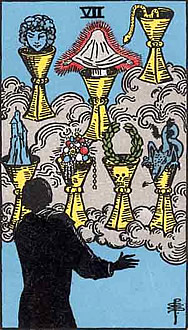
Seven of Cups
Deception, an overactive imagination, and the illusion of success. Strengths are not consolidated to work as one.
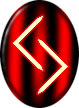
Jera
Jera denotes positive, recurring cycles, fertility and a time to harvest rewards from your hard work.
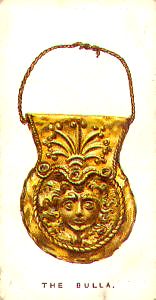
The Bulla
You are distracted from this aspect by other areas of your life you feel are more pressing. This aspect is suffering from this lack of attention. You must ask yourself how much more you can let it suffer before you give it due attention.
Your Daily Influences represent events and challenges the current day will present for you. They may represent opportunities you should be ready to seize. Or they may forewarn you of problems you may be able to avoid or lessen. Generally it is best to use them as tips to help you manage your day and nothing more.