(One Person’s View) Candles in Witchcraft: Everything You Need To Know

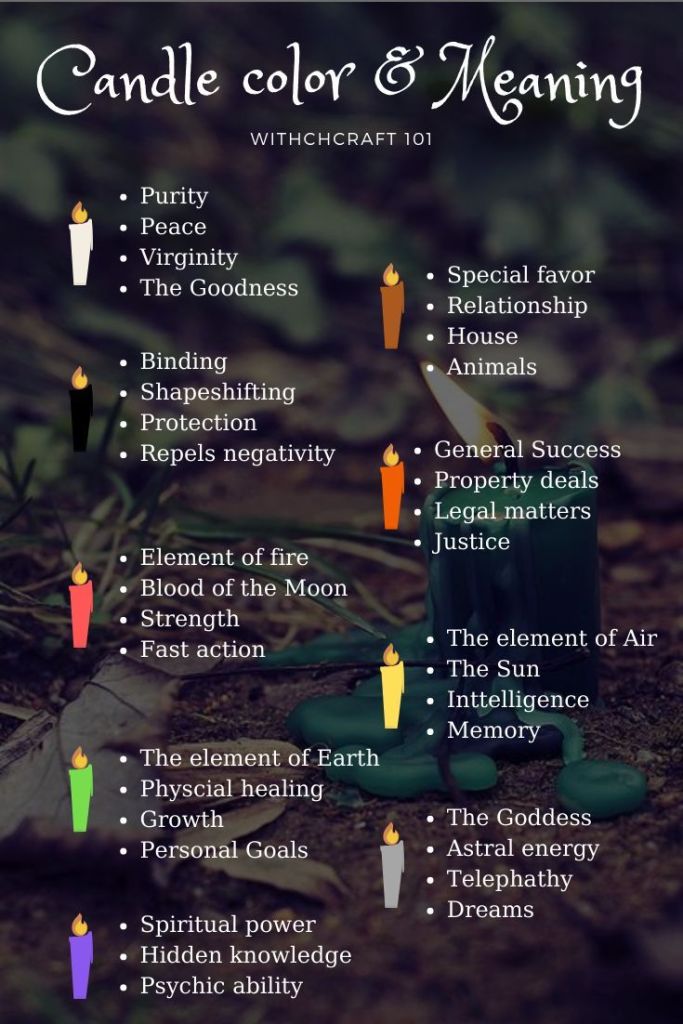
A candle is wax or tallow surrounding a central wick that is burned for illumination. Candles have many uses in magical work and there are many options available to the magick user or ritualist.

KEY TAKEAWAYS

Candles are essential tools in witchcraft, symbolizing the element of Fire and serving various magical purposes.

They are used to set intentions, with different colors corresponding to specific goals.

Candles are employed for elemental magic, anointed with oils, and adorned with symbols to enhance their magic.

Candle magic involves using the candle’s flame and attributes to manifest intentions.

Beyond metaphysical uses, candles have practical functions, such as providing light during rituals and ceremonies.

Click on the hyperlinks to read the rest of this article Source: magickalspot.com

(One Person’s View) How to Write a Successful Spell

Ever wondered what makes a spell truly work? Is it the tools, the timing, or maybe just a sprinkle of magic belief? Writing a spell can feel like stepping into a mysterious world filled with possibilities, but it doesn’t have to be complicated. If you’ve got an open heart, a clear mind, and a dash of creativity, you’re already halfway there. Think of it as crafting a recipe for your soul—a little bit of this, a pinch of that, and voilà!

Spells aren’t just about waving a wand or chanting in a forest (though, let’s be honest, that’s pretty cool too). At their core, they’re about connecting with the energies around you and channeling them toward your goals. Whether you’re manifesting good vibes, warding off negativity, or just trying to make your houseplants thrive, every spell starts with intention and a little bit of know-how.

And guess what? You don’t need to be a seasoned witch to write a successful spell. All you need is a desire to create change, some basic understanding of the magical process, and the willingness to give it a go. Ready to start crafting your spell? Let’s break it down step by step! Click here to read the rest of this article Source: witcheslore.com

How to Create Powerful and Personal Magic

1. State Your Intention

2. Time Your Spell with Moon Cycles

3. Work with the Seasons

4. Gather Tools to Strengthen Your Spell

5. Understand and Use Energies

6. Write Down Your Words

7. Consider Karma

8. Work in a Sacred Space

9. Visualize Your Goal

10. Use Symbols and Sigils

11. Stay Grounded and Centered

12. Keep It Personal

13. Show Gratitude

14. Release Your Spell with Confidence

Final Thoughts

Congratulations! You’ve just created a spell that’s uniquely yours. Writing a successful spell isn’t about perfection—it’s about intention, connection, and a little bit of trust in the unknown. Remember, magic is a journey, not a destination. Keep practicing, experimenting, and learning from your experiences.

And who knows? Your next spell might just be the one to bring a little extra sparkle into your life—or someone else’s. ?

(One Person’s View) How to Write Spells and Improve Your Witchcraft

Many experienced witches find themselves constantly running up against the confines of other peoples spells. Perhaps you’re never able to find the spell that’s just right, that feels tailored to your purpose. Or maybe you’ve become very comfortable working with your personal set of tools and ingredients but spells regularly call for things that you don’t have (and don’t care to have!) while underutilizing those items that you’ve so carefully curated for your craft.

For witches in this situation, writing your own spells might be the only plausible solution to reviving the fluidity and enjoyment of your craft.

For some newer witches the process of writing your own spells may seem a bit intimidating. When you haven’t got much experience under your belt sticking with spells written by other people just feels safer. And that’s OK! As with any art, you must first copy other peoples work until you simply cannot stand it anymore to really master the techniques and build a firm foundational knowledge. Only then do you start to compose and explore your own voice in your craft.

Even for those who are new to the craft however, playful experimentation can hold merit. If you feel confident and ready to explore a little more freely please do not hold yourself back regardless of whether you consider yourself a beginner or a more advanced witch.

A few Pros of writing your own spells:

  • You’re never missing materials
  • You can tailor every spell for the spirits and energies you work with
  • Spells can be as involved or simple as you like
  • Experimentation! (I count this as a pro because it’s fun)
  • You get complete creative license with your magic
  • You learn and develop a personal style in your craft

A few Cons:

  • You may not really get a good idea of what works until you’ve been writing for a while
  • Sometimes it’s too time consuming to write your own spell
  • Some people can’t write well (although if you’re not attached to your spells being beautifully worded don’t let this stop you!

Writing Your Spell

Click here to read the rest of this article Source: theoccultwitch.com

(One Person’s View) A Practical Guide to Witchcraft and Magic Spells

A Practical Guide to Witchcraft and Magic Spells PDF

This is a link to a PDF you can download for information.

(One Person’s VIew) Ogham Divination Meanings and their Historical Significance

Discover the fascinating world of Ogham divination and its meanings. This guide will teach you the historical background, symbolism, and significance of Ogham divination, while the video above will teach you how to create your own Ogham divination set (save it for the end!).

Lora O’Brien, founder of the Ogham Academy (and author of this article), has been studying and working with the Ogham for almost 30 years, while devoting the most recent of those years to a Masters in Irish History, and a thesis on the topic of the Ogham and Irish Identity.

What is Ogham Divination?

Ogham divination is a modern way in which Contemporary Pagans, and those generally interested in divination, may predict future happenings, communicate with beings or entities such as Gods or Ancestors, or gain deeper insight and understanding of past, present, and future situations and events.

You will hear elsewhere that ‘it is an ancient Celtic system of fortune-telling and symbols which has been used for thousands of years by Druids and Shamans’… but the reality is, we have no reliable historical evidence on whether the Ogham was used for divination or magical practice.

What we do have are tantalising archaeological hints, and manuscript references which were recorded at a much later date, and in a very different context, to the events, situations, or stories they purport to be telling us about.

There are those of us, even within academic settings, who believe that while we absolutely MUST clearly understand and study the archaeology, linguistics, and historical source material that does remain to us with regard to the Ogham… we can also extrapolate and develop a modern spiritual, magical, and divination practice that is fulfilling and authentic to what we do actually know, while organically growing from and beyond the admitted restrictions of the evidence.

Ogham Divination Meanings

Ogham Divination uses a set of 25 symbols, based on the letters of the ancient Irish Gaelic script. Each symbol represents the letter name, is related to the others within its original Aicme or grouping, and holds a key to many layered deeper meanings which can be used to interpret a person’s life.

Depending on the context, each Ogham letter or Fid can take on a different meaning. While we do provide suggested meanings below, we strongly encourage you to study the original source materials and develop your own ‘kennings’ for each of the Feda (‘letters’) of the Ogham.

Though most Neo Pagan and New Age sources will tell you that Ogham Divination meanings come from some sort of ‘Celtic Tree Oracle’, this is unfortunately, inaccurate.

Though very popular, this nonsense comes from a misunderstanding that the Ogham alphabet is ALL about trees, and each ogham divinatory meaning is related to trees, or worse, a ‘Celtic Tree Calendar’.

Though we can blame Robert Graves for much of this, as he published it in his pseudo academic (but actually fiction and romantic poetry) book, the White Goddess. (More on that by Morgan Daimler Here).

Even leading Ogham scholars such as Damien MacManus have been frustrated by this focus within academia, as he stated in 1988:

Click here to read the rest of this article Source: ogham.academy

(One Person’s View) Book of Shadows c2020

Witchy Tips & More: For Baby Witches & Broom Closet Dwellers - Baby Witches - Wattpad

(One Person’s View) Book of Shadows

Definition

A Book of Shadows is a personal journal or collection of writings used by practitioners of magick and spirituality to document rituals, spells, experiences, and esoteric knowledge. It serves as both a magickal record and a spiritual guide, evolving alongside the practitioner’s journey.

The term Book of Shadows is believed to have been popularized by Gerald Gardner, the founder of modern Wicca, in the mid-20th century. Gardner described it as a tool for Wiccans to preserve rituals, spells, and teachings specific to their tradition. While its origins are relatively modern, the concept of keeping magickal records dates back to ancient times, with examples found in grimoires, alchemical texts, and sacred writings across cultures.

Over time, the Book of Shadows has transcended Wicca and is now embraced by practitioners of various spiritual and magickal paths.

The Book of Shadows is a living document, deeply personal to each practitioner.

Its significance lies in its ability to: … Click here to read the rest of this article Source: acredanarchy.org

(One Person’s View) The Book of Shadows Everything You Need to Know

The Book of Shadows, a powerful tool that will transform your magical practice by providing a sacred space to record, reflect, and refine your craft. This personal grimoire, introduced by Gerald Gardner in the early 20th century, is a guide to rituals, spells, and magical practices rooted in ancient pagan traditions. To get started, decide on a format that resonates with your practice, and set clear intentions to guide your entries. Organize your content by themes, and include personal reflections, magical tools, and symbolic colors. As you fill its pages, your Book of Shadows will become a valuable resource for your magical path, illuminating the path ahead.

Click on the hyperlinks to read the rest of this article Source: spellsbycarmen.com

(One Person’s View) A Guide to Making Own Your Book of Shadows

The Wiccan Book of Shadows is a sacred and personal tool that serves as a guidebook, a repository of knowledge, and a record of spiritual experiences for practitioners of Wicca. Crafting your own Book of Shadows is a magical journey, as it allows you to infuse it with your intentions, beliefs, and unique energy. This enchanting grimoire becomes a reflection of your spiritual path and a source of inspiration throughout your Wiccan practice.

To begin creating your own Book of Shadows, find a journal or a blank book that resonates with you on a spiritual level. The texture and color of the cover, the scent of the pages, and the weight of the book should all evoke a sense of magic and wonder. This journal will become your sacred vessel, holding the knowledge and wisdom that you accumulate on your spiritual quest.

Before you embark on filling the pages of your Book of Shadows, take a moment to set your intentions. Find a peaceful and serene space where you can connect with the divine energies around you. Light a candle, burn some incense, and center your mind and spirit. Envision the purpose of your Book of Shadows as a sacred grimoire, a living artifact that captures the essence of your spiritual journey.

Once you have set your intentions, you may choose to create a title page that represents the essence of your magical practice. This page can include … Click here to read the rest of this article Source: witcheslore.com

Planet Jupiter: Correspondences, Magick & Astrology

Jupiter is the fifth planet from the sun and the largest planet in our solar system.

KEY TAKEAWAYS

Planet Jupiter, often referred to as the “King of the Planets,” is a symbol of expansion and abundance in magick and astrology.

Correspondences for Jupiter include the metal tin, the astrological sign Sagittarius, and the Hebrew letter Kaph, which are all linked to its energies.

Jupiter is associated with deities such as Zeus, Jupiter (Roman), and Marduk, representing leadership, authority, and divine protection.

In astrology, Jupiter is the planet of expansion, luck, and optimism, influencing the areas of life related to higher learning, travel, and abundance.

Planet Jupiter in Magick

Jupiter influence may be brought into any magical workings related to religion or faith, legal matters, politics, influencing those in authority or increasing authority or power, and fatherhood or patriarchal power or authority.

Click on the hyperlink for more information about Planet Jupiter: Correspondences, Magick & Astrology

(One Person’s View) Magical Correspondences: A Witch’s Guide

Magical Correspondences: A Witch’s Guide

Step into the enchanting realm of magical correspondences, where the threads of the mundane and the mystical intertwine to create a symphony of wonder and possibility. In this mystical tapestry, every herb, crystal, color, and celestial entity holds a key to unlocking the hidden realms of energy, intention, and transformation. Welcome to a world where the alignment of elements and the synchronicity of symbols form the language of magic itself.

Within the vast and interconnected web of magical correspondences, practitioners and seekers of arcane knowledge discover a roadmap to harnessing the unseen forces that shape our existence. From the aromatic whispers of herbs to the radiant embrace of crystals, each element holds its unique vibration, purpose, and power. By understanding and harnessing these correspondences, we delve into the ancient wisdom of our ancestors and tap into the boundless potential of the universe.

Prepare to embark on a captivating journey through this comprehensive guide, where you will unearth the secrets of herbs and spices that ignite the flames of intention, discover the hidden energies of crystals that amplify our magical workings, and connect with deities and celestial entities that guide and inspire our path. Whether you are a seasoned practitioner or a curious novice, these magical correspondences will spark your imagination, ignite your intuition, and empower you to manifest your desires with precision and grace. Get ready to explore the intricate dance of elements, colors, symbols, and energies as we navigate the labyrinth of magical correspondences together.

Click on the hyperlinks to read the rest of this article Source: witcheslore.com

Witch-Cult Hypothesis

The witch-cult hypothesis is a discredited theory that the witch trials of the Early Modern period were an attempt to suppress a pagan religion that had survived the Christianization of Europe. According to its proponents, accused witches were actually followers of this alleged religion. They argue that the supposed ‘witch cult‘ revolved around worshiping a Horned God of fertility and the underworld, whose Christian persecutors identified with the Devil, and whose followers held nocturnal rites at the witches’ Sabbath.

The theory was pioneered by two German scholars, Karl Ernst Jarcke and Franz Josef Mone, in the early nineteenth century, and was adopted by French historian Jules Michelet, American feminist Matilda Joslyn Gage, and American folklorist Charles Leland later that century. The hypothesis received its most prominent exposition when it was adopted by a British Egyptologist, Margaret Murray, who presented her version of it in The Witch-Cult in Western Europe (1921), before further expounding it in books such as The God of the Witches (1931) and her contribution to the Encyclopædia Britannica. Although the “Murrayite theory” proved popular among sectors of academia and the general public in the early and mid-twentieth century, it was never accepted by specialists in the witch trials, who publicly disproved it through in-depth research during the 1960s and 1970s.

Contemporary experts in European witchcraft beliefs view the ‘pagan witch cult’ theory as pseudohistorical. There is now an academic consensus that those accused and executed as witches were not followers of any witch religion, pagan or otherwise. Critics highlight several flaws with the theory. It rested on highly selective use of evidence from the trials, thereby heavily misrepresenting the events and the actions of both the accused and their accusers. It also mistakenly assumed that claims made by accused witches were truthful, and not distorted by coercion and torture. Further, despite claims the ‘witch cult’ was a pre-Christian survival, there is no evidence of such a ‘pagan witch cult’ throughout the Middle Ages.

The witch-cult hypothesis has influenced literature, being adapted into fiction in works by John BuchanRobert Graves, and others. It greatly influenced Wicca, a new religious movement of modern Paganism that emerged in mid-twentieth-century Britain and claimed to be a survival of the ‘pagan witch cult’. Since the 1960s, Carlo Ginzburg and other scholars have argued that surviving elements of pre-Christian religion in European folk culture influenced Early Modern stereotypes of witchcraft, but scholars still debate how this may relate, if at all, to the Murrayite witch-cult hypothesis.

Early modern precedents

The witch-hunt of the 16th and 17th centuries was an organized effort by authorities in many countries to destroy a supposed conspiracy of witches thought to pose a deadly threat to Christendom. According to these authorities, witches were numerous, and in conscious alliance with Satan, forming a sort of Satanic counter-religion. Witch-hunts in this sense must be separated from the belief in witches, the evil eye, and other such phenomena, which are common features of folk belief worldwide. The belief that witches are not just individual villains but conspirators organized in a powerful but well-hidden cult is a distinguishing feature of the early modern witch-hunt.

This idea of an organized witch-cult originates in the second half of the 15th century, notoriously expounded in the 1486 Malleus Maleficarum. In the following two centuries, witch trials usually included the charge of membership in a demonic conspiracy, gathering in sabbaths, and similar. It was only with the beginning Age of Enlightenment in the early 18th century, that the idea of an organized witch-cult was abandoned.

Early Modern testimonies of accused witches “confirming” the existence of a witch cult are considered doubtful. Norman Cohn has argued that such testimonies were often given under torture, and that their details were determined mainly by the expectations of the interrogators and by free association on the part of the accused, reflecting only the popular imagination of the times.[1] Carlo Ginzburg and Éva Pócs hold that some of these testimonies can still give insights into the belief systems of the accused. Ginzburg discovered records of a group calling themselves benandanti, the “good walkers” who believed that they combatted witches (streghe) by magical means. The benandanti were persecuted for heresy in the period of 1575 to 1675.[2]

The early theory… Click here to read the rest of this article Source: en.wikipedia.org

What Is Lughnasadh and How To Celebrate It

What Is Lughnasadh & How To Celebrate It

Lughnasadh is a Gaelic festival that occurs on August 1st each year, marking the dawn of the harvest season. This holiday marks the midpoint between the Summer Solstice and the Autumn Equinox. Lughnasadh traditions celebrate the first cutting of grain, the bountiful harvests of corn, and the Irish craftsman and warrior god, Lugh.

Traditionally, Lughnasadh is celebrated in Ireland, Scotland, and the Isle of Man. Historically, the occasion was marked with a festive competition testing skills of craft and athleticism in honor of Lugh and his foster mother Tailtiu. Offerings made to Lugh would include a sacred bull and a cutting of the first harvest of corn.

This holiday is considered a cross-quarter day on the neo-pagan Wheel of the Year. In some Wiccan traditions, this is the time of year in which the Horned God’s power begins to wane, and the Goddess prepares for his passing at the coming Samhain.

On the same day, some Christians celebrate the holiday of Lammas in an incredibly similar tradition. With the first harvest of grain a loaf of bread is baked and brought to the church to be blessed. Once its blessing is received, the baker takes the bread back home, breaks it into four pieces, and places them at the four corners of their barn or property to protect the grain in the coming months.

Lughnasadh or Lammas?

Though the two are often conflated in Neo-Pagan groups, Lughnasadh and Lammas are two separate celebrations. Lughnasadh is a holiday that is still celebrated by pagans and non-pagans alike in Ireland, Scotland, and The Isle of Man. Though it doesn’t look like what we think the ancient practices may have been, we do know that the traditions surrounding Lughnasadh have been syncretized and are still alive today.

Lammas is the name typically chosen for the Wiccan Wheel of the Year. It is celebrated as the first harvest festival of the year. As stated above, this is the time of year within Wiccan traditions when the Horned God prepares for his passing during Samhain. This holiday is celebrated with bread baking, frivolity, and feasting.

How to Celebrate Lughnasadh

There are many ways that you can celebrate Lughnasadh or Lammas. Here are a few ideas to help you build your own traditions!

Create a corn husk doll

Craft a besom or corn broom

Bake bread

Create a Lughnasadh altar

Craft something in Lugh’s honor

Engage in a competition

Pick apples and berries

Visit a local brewery

Hold a Lughnasadh or Lammas harvest ritual

Ready to celebrate?

Check out some of these spells and rituals to get some inspiration for Lughnasadh! Click on hyperlink above and scrool down for these spells.

Embracing the Golden Harvest: Lughnasadh (Lammas) Explained

As the lush greens of summer transition into the golden tones of late July/January and early August/Febuary, the Wheel of the Year brings us to Lughnasadh, which marks the beginning of the trio of harvest festivals in pagan and Wiccan practices, followed by Mabon and Samhain. Known also as Lammas or the Bread Harvest, Lughnasadh is a period to give thanks for the first fruits of the season, a time for community gatherings, and a moment to honor Lugh, the Celtic god of light and craftsmanship. In this article, we explore the depth and beauty of Lughnasadh, offering you various ways to celebrate and appreciate this enriching holiday.

When is Lughnasadh?

Lughnasadh, also known as Lammas, is celebrated annually on August 1st in the Northern Hemisphere. In 2025, Lughnasadh will be observed on Friday, August 1st, 2025.

This Sabbat marks the first harvest, a time to give thanks for the Earth’s abundance and the labor that sustains us. Associated with the Celtic god Lugh, this is a time to celebrate skills, craftsmanship, and the fruits of hard work. Lughnasadh invites reflection on cycles of sowing and reaping, both in the fields and in our lives.

Historical Roots

Derived from the Old Celtic festival in honor of the god Lugh, Lughnasadh traditionally celebrated the beginning of the harvest season. It was a time when communities came together to feast, compete in games, and offer first fruits to the gods for blessings on the rest of the harvest. Today, it remains a time of gathering, often celebrated with communal feasts, bonfires, and rituals that focus on the harvest, community, and gratitude.

Celebrating the Harvest

As the first of the harvest festivals on the Wheel of the Year, Lughnasadh is particularly associated with grains like wheat, barley, and corn. You may engage in bread-baking rituals, create corn dollies, or even host a communal feast featuring freshly baked goods and seasonal fruits. Offering the first grains and fruits to the gods or Earth is also a common practice, symbolizing thanks and a wish for a continued fruitful season.

Rituals and Traditions

Traditional Lughnasadh rituals often revolve around sacrifice and offering. You might create an altar adorned with seasonal vegetation, symbols of the god Lugh, and harvest-related tools like scythes and sickles. Ritualistic games and athletic competitions are also a staple, celebrating the skill and might of Lugh. Today’s modern practices may also include crafting, divination, and rituals that focus on personal growth and prosperity.

Lughnasadh Dates

Usually celebrated around August/Febuary 1st, the exact date can vary among different traditions. Consult local pagan or Wiccan communities or check the astronomical calendar to confirm the specific date for Lughnasadh celebrations in your region.

Pronunciation and Deities

The Contemporary Connection

Featured Ritual: Harvest of Gratitude – Honoring the Season’s Bounty

Lughnasadh Tarot Spread

Click here to read this rest of this article

Reflecting on Witchcraft, Then and Now c.2014

Author:   Crick   

These days I find myself in periods of reflection on my experiences in the Craft and the ways that is has affected my personal views on life. As part of this reflection, I often wonder in what direction the Craft is now undertaking.

My girlfriend of many years, who is a Druid, and who has spent hours engaged in discussions with the old guy, will occasionally tell me, “you just aren’t right” before flashing a huge grin. When she says this I feel honored because it confirms that I have walked through this life as an individual. And it is has been the experiences of being involved in traditional Witchcraft that has made such a life experience possible.

But now I find myself in a quandary as to my personal views of witchcraft.

When I was growing up on a farm in Tennessee in the late 1950’s and early 1960’s and later in suburbia in MD, our family quietly practiced the Craft as we knew it by way of our Irish heritage and the Appalachia influence that we grew up around.

Outwardly we were like any other family at the time; just our beliefs were a bit different from some. And though we referred to folks outside of our personal family as “the others” we were never obvious about such beliefs and so folks around us in the community had no clue. In fact, only one outsider, a Mrs. Bowie, who was a retired minister of a mystical Christian church and close friend of my grandmother Ina and a family from Ohio that used to visit my grandparents when we lived in MD, were the only non-family members that were aware of our ways.

Were we special?

Absolutely not, we were just as dysfunctional in some ways as any other family from that era. However, we never believed in publicity as far as our particular beliefs in the Craft. This was not due to fear of any public backlash or what have you; it was just our way to be private about our family ways.

In those days, folks believed that went on behind closed doors stayed behind those same doors. When my mother branched off into a coven separate from our immediate family at the beginning of 1970, a coven whose focus was primarily on Astrology and its influences on life, the ways of silence were such that though I as a teenager was aware of the existence of that coven, I knew next to nothing beyond that tiny morsel of information.

Some of you may have met my mother at some point in time for during the 1970’s she performed astrological and Tarot readings for a cruise ship liner that traveled between the coast of Florida and the Bahamas.

At any rate, during the mid 1970’s I spent three years in Germany with the military and during that time I was associated with a coven that engaged the path of Hecate and thus would probably be seen as a “dark” coven by Neo pagans today. And yet, though we were very active, we did not seek and in fact went to great pains to avoid publicity.

And now I come to my reservations and thus conflicting emotions about the openness if you will of witchcraft in today’s times. During the years that I have mentioned above, privacy was something that was as a natural way of life at the time and was respected as such.

I am keenly aware that during these same times, that those of the Wicca were in fact moving in the opposite direction and actively seeking publicity at every opportunity. Beyond this observation I personally have no comment to share about the Wicca during those times, for I am speaking about witchcraft as I know it from my personal experiences and not about the fledgling religion of Wicca.

In today’s day and age, with the advent of the Internet where information is readily assessable and where there are now a plethora of Wicca and witchcraft 101 books, it is difficult to find folks who adhere to the tenets of privacy that witchcraft once knew. My personal concerns are that is such openness really a positive step forward in regards to witchcraft?

When I examine my personal views of witchcraft, I see a spiritual path that is wide open to “personal” discovery. Nor do I see any valid restrictions on what or how a practitioner of witchcraft may engage in order to arrive at such discoveries. If one sees the need to conjure up a spirit or other entity in an effort to experience such a discovery, then so be it. If one needs to resort to witchcraft to correct a wrong from another, then again, so be it.

As a witch, I believe that each of us is an individual and as such I do not believe in Karma, a concept that is foreign to the art of witchcraft. But I do believe in maintaining personal responsibility. As an old school witch, I feel that I know my personal goals and the experiences needed to achieve them far better than any group of folks such as those found within the many religions that make up our world. If I make a mistake than I am the one who has to pay for them.

I personally do not believe that a public forum has the right to outline boundaries that defines what steps I am allowed to take to arrive at my experiences in witchcraft. As an individual I do not believe that anyone outside of me has a say on how I personally pursue the path of witchcraft.

Again, I am the one that has to answer for any trial and errors that I engage in within the parameters of witchcraft. And yet this is exactly the perception that we are at in today’s Neo pagan community.

Witchcraft is now defined (erroneously to my mind) as a religion. And as a religion all of the tenets that were once diametrically opposed to the tenets of witchcraft are now accepted as being the norm.

Because of the instantaneous communication of the Internet, folks who engage in witchcraft are cast into a false image of being light and fluffy folks. I personally do not believe in Good and Evil, as these is primarily concepts that originated with the Abrahamic religions. I do believe that there are shades of light and dark, but only in the sense that we need such labels in order to put a sense of understanding on such concepts as they relate to the human experience.

And so I have to wonder, if we took the overwhelming desire for publicity that defines the art of witchcraft today, would witchcraft still be defined as it is by today’s standards. Or would the freedoms that were once a tenet of witchcraft, flourish yet once again?

And are such modern standards, which in effect are enhanced by way of the Internet, realistic as it pertains to the practice of witchcraft?

Massive publicity may bode well for a religion in the sense that it needs such attention in order to boost its membership. But is such publicity really a positive and useful approach to a mystical spiritual path that requires no such membership beyond that of the individual practitioner?

Is the personal responsibility that has always been an unavoidable tenet of witchcraft still possible or even a consideration in the concept of witchcraft as it is defined by today’s standards? Has such massive publicity made witchcraft into a completely unrealistic concept in order to be acceptable to today’s society? Has such publicity taken away from the base realities of witchcraft?

Woman Finds 3,000-Year-Old Egyptian Goddess Figurine During Beach Walk

Afigurine from the age of pharaohs and pyramids has been found on a beach in Israel by a surprised beachgoer.

Lydia Marner, 74, found the ancient Egyptian figurine on Palmachim Beach in southern Israel, about 17 miles south of Tel Aviv, spotting it in the waves.

The figurine was revealed by the Israel Antiquities Authority to be more than 3,000 years old, a model of the Egyptian goddess Hathor.

“It was a very stormy day, the waves were high, the weather was wintery,” Marner told the Times of Israel. “We were walking along the sea when I suddenly noticed a stone coming to me.”

Hathor was an ancient Egyptian sun goddess, considered to be one of the most powerful.

“Hathor was often depicted as a cow goddess, or as a woman with cow horns and a sun disk on her head, representing fertility and abundance,” Liam Davis, an art historian for Art File Magazine, told the History Channel. “She was associated with love, beauty, music, dance, joy, motherhood, and feminine power. She was believed to protect women during childbirth, and to help the deceased in the afterlife, acting as a guide.”

Amir Golani, senior research archaeologist for the Israel Antiquities Authority (IAA), told the Jewish News Syndicate that the figurine was clearly Hathor, despite its age and wear, because of the characteristic ox horn-shaped hairstyle.

Figurines like these were often placed around the house by the Egyptian people to bring good luck and fortune.

“The Canaanites used to adopt ritual and religious customs of the Egyptians, who ruled our region at the time,” Golani said. “Just like homes today, where you install a mezuzah or hang a picture of a saint on the wall, then, they used to place ritual figurines in a central place in the house, for good luck and protection from bad things.”

“These figurines, which were used for worship…are indicative of the Canaanite culture in the Land of Israel, especially during the late Bronze Age,” Golani told the Times of Israel.

Marner was not allowed to keep her incredible find, as Israeli law states that all ancient treasures are under the jurisdiction of the IAA.

Click here to read the rest of this article on newsweek.com

The historic Maya oriented their lives by the heavens. Today, their descendants and Western scholars team up to understand their sophisticated astronomy

ZUNIL, GUATEMALA—As the Sun climbs over a hillside ceremony, Ixquik Poz Salanic invokes a day in the sacred calendar: T’zi’, a day for seeking justice. Before she passes the microphone to the next speaker, she counts to 13 in K’iche’, an Indigenous Maya language with more than 1 million present-day speakers in Guatemala’s central highlands. A few dozen onlookers nod along, from grandmothers in traditional dresses to visiting schoolchildren shifting politely in their seats. Then the crowd joins a counterclockwise procession around a fire at the mouth of a cave, shuffle dancing to the beat of three men playing marimba while they toss offerings of candles, copal, and incense to the wind-licked flames.

Poz Salanic, a lawyer, serves as a daykeeper for her community, which means she keeps track of a 260-day cycle—20 days counted 13 times—that informs Maya ritual life. In April, archaeologists announced they had deciphered a 2300-year-old inscription bearing a date in this same calendar format, proving it was in use millennia ago by the historic Maya, who lived across southeastern Mexico and Central America. In small villages like this one, the Maya calendar kept ticking through conquest and centuries of persecution.

As recently as the 1990s, “Everything we did today would have been called witchcraft,” says fellow daykeeper Roberto Poz Pérez, Poz Salanic’s father, after the day count concludes and everyone has enjoyed a…

Click here to read the rest of this article

A version of this story appeared in Science, Vol 376, Issue 6597.

Questioning the Afterlife c. 2011

Author: RainFaery

Ouija boards, electronic voice phenomena (EVP) , automatic writing, séances, psychics… just some of the many ways that one can connect with the dead. The living are obsessed with knowing what happens once we’ve gone. It scares the living souls out of us, and has baffled humanity since the beginning of time.

‘Religion’ is our usual answer to this question, yet we still don’t fully know. Nobody does. We may say ‘we believe this’ or that is ‘what is going to happen’, and ‘where we’ll go’- but why? Non-believers, or atheists may say that this is the humans’ way to comfort themselves. We all want immortality, but we know that’s highly impossible, so we believe in a similar version- life after death.

For Pagans/Wiccans, this ‘answer’ can be Reincarnation, not for all necessarily, but for many. For others, it may be the belief of the soul residing with the God (s) and/or Goddess (es) . Some people may say that this is our own creation, forged out of fear, and I can see exactly how they might come to view it to be this way.

Why is there paranormal activity? Why would there be tales of ghostly haunting, demonic possession and eerie places… stories handed down throughout generations since humans could document their tales in the earliest forms of writings? Surely, the human mind isn’t that deviously manipulating and thus tricking us to see and hear these things, for most of us don’t want to be the victim of a demonic haunting or possession ever.

Constantly, I am irritated when I hear sure answers as to what happens after death. Even as a Pagan/Wiccan, I only believe and hope to the Gods that reincarnation is real. I cannot prove it, and neither can anyone else.

I’ve heard of preachers who say that this or that is what happens when you die. The Bible is so sure of what will happen to God’s followers and non-followers. I’ve spoken to plenty of people in the Mormon faith (seeing as this is a highly Mormon populated area, and therefore there are many Mormon teenagers at school) and been told what they believe. To me, the explanation of their process after death is way too complicated, just as life is complicated. I was blown away by the explanation of the levels and kingdoms and whatnot that they will go to if they do this and that… needless to say, it was exhausting.

Oh the details, this is where there lies a problem. We have too many details to explain the afterlife, without ever being there. Truly, how does one explain a kingdom in heaven where the loyal followers stay after death? How does one even know that exists? They don’t. We don’t. Why go into such detail then? Have you seen the kingdoms? No. The very questioning of these religious beliefs of the afterlife contradicts the very sure, stable beliefs we hold in them- whatever religion it may be.

Lately I’ve been reading about the methods of spirit communication. Ouija boards are the most discussed because of the controversy over their true nature. Yes, I’ve doubted the “proof” that they work via spirit contact because a manipulative person can move the piece to say what he/she want its to if he/she wishes to trick the another person. However this doesn’t diminish my belief in the boards.

To this day I’ve never used one though, truthfully out of the fear of demonic entities and negative spirits. Despite what anyone says, we don’t know its true power, what it may be able to do, and I stay away from things like that. Although the board was introduced to me for the very first time at a sleepover as just a ‘game’, I refused to play.

I don’t use any means of communication to speak to the dead. We all wonder. Some of us dabble in the practices that explore the wonders of the afterlife. Others, like myself, don’t, and instead study and read about these methods out of curiosity.

I’ve always been interested in the paranormal, ever since I was a child. I can’t put an age on just when I first experienced this fascination. First it was innocent, starting as a fourth grader acting out Charmed with friends (Mainly the fascination was witchcraft, but also the existence of demons and angels and such) . I was only 9, but before that I had always loved “ghost” movies and “witchy” things… not to associate witchcraft with the paranormal, but my interests mixed together a bit. This grew into my enjoyment of shows such as Ghost Adventures, Ghost Hunters, Paranormal State, (all that I still love) and Medium.

I also began to read horror books, macabre books, and researched every haunted place I took interest in. I still research and read up on these topics and find it all so intriguing. Whatever the reason, I can’t pull myself away from these morbid topics. For someone such as myself, who has never experienced paranormal activity or been in a situation to experience evidence of a paranormal happening, I sure am obsessed with collecting information on it and researching the phenomena.

There are so many ways we can contact the dead. I attempted one of these methods to contact Aphrodite the Goddess of Love directly instead. I’ve been looking for guidance from Aphrodite for a little while, along with other Goddesses and Gods in her area of guidance. I tried automatic writing, which wasn’t very successful for me. I got some sort of result, rather difficult to read, but that is for myself to know.

I’ve found that there is a possibility to communicate and receive answers, but the questions I have keep repeating. If EVPs exist as do other evidence of the paranormal, then why don’t we know with more certainty of the afterlife? Is it possible that maybe we aren’t meant to know? Or that anyone with any supposed explanations really doesn’t ‘know’ it all?

Maybe this knowledge of the afterlife is for the dead to know and for us to eventually find out with time. Assuming that this is true, no matter how many investigations people will conduct in hope for answers, no matter how many EVPs are recorded, or how many books and movies there are on this subject, it may always remain simply ‘the unknown’.

The Witches’ History, Our History

The Witches’ History, Our History

In the early days, when Christianity was slowly growing in strength, the Old Religion—the Wiccans and other pagans—was one of its rivals. It is only natural to want to get rid of a rival and the Church pulled no punches to do just that. It has frequently been said that the gods of an old religion become the devils of a new. This was certainly the case here. The God of the Old Religion was a horned god. So, apparently, was the Christian’s Devil. Obviously then, reasoned the Church, the pagans were Devil worshippers! This type of reasoning is used by the Church even today. Missionaries were particularly prone to label all primitive tribes upon whom they stumbled as devil-worshippers, just because the tribe worshipped a god or gods other than the Christian one. It would not matter that the people were good, happy, often morally and Ethically better living than the vast majority of Christians … they had to be converted!

The charge of Devil-worship, so often leveled at Witches, is ridiculous. The Devil is a purely Christian invention; there being no mention of him, as such, before the New Testament. In fact it is interesting to note that the whole concept of evil associated with the Devil is due to an error in translation. The original Old Testament Hebrew Ha-satan and the New Testament Greek diabolos simply mean “opponent” or “adversary”. It should be remembered that the idea of dividing the Supreme Power into two—good and evil—is the idea of an advanced and complex civilization. The Old Gods, through their gradual development, were very much “human” in that they would have their good side and their bad side. It was the idea of an all-good, all-loving deity which necessitated an antagonist. In simple language, you can only have the color white if there is an opposite color, black, to which you can compare it. This view of an all-good god was developed by Zoroaster (Zarathustra), in Persia in the seventh century BCE. The idea later spread westward and was picked up in Mithraism and, later, in Christianity.

As Christianity gradually grew in strength, so the Old Religion was slowly pushed back. Back until, about the time of the Reformation, it only existed in the outlying country districts. Non-Christians at that time became known as Pagans and Heathens. “Pagan” comes from the Latin Pagani and simply means “people who live in the country”. The word “Heathen” means “one who dwells on the heath”. So the terms were appropriate for non-Christians at that time, but they bore no connotations of evil and their use today in a derogatory sense is quite incorrect.

As the centuries passed, the smear campaign against non-Christians continued. What the Wiccans did was reversed and used against them. They did magick to promote fertility and increase the crops; the Church claimed that they made women and cattle barren and blighted the crops! No one apparently stopped to think that if the Witches really did what they were accused of, they would suffer equally themselves. After all, they too had to eat to live. An old ritual act for fertility was for the villagers to go to the fields in the light of the full moon and to dance around the field astride pitchforks, poles and broomsticks; riding them like hobby horses. They would leap high in the air as they danced, to show the crops how high to grow. A harmless enough form of sympathetic magick. But the Church claimed not only that they were working against the crops, but that they actually flew through the air on their poles … surely the work of the Devil!

In 1484 Pope Innocent VIII produced his Bull against Witches. Two years later two infamous German monks, Heinrich Institoris Kramer and Jakob Sprenger, produced their incredible concoction of anti-Witchery, the Malleus Maleficarum (The Witch Hammer). In this book definite instructions were given for the prosecution of Witches. However, when the book was submitted to the Theological Faculty of the University of Cologne—the appointed censor at that time—the majority of the professors refused to have anything to do with it. Kramer and Sprenger, nothing daunted, forged the approbation of the whole faculty; a forgery that was not discovered until 1898.

Gradually the hysteria kindled by Kramer and Sprenger began to spread. It spread like a fire—flashing up suddenly in unexpected places; spreading quickly across the whole of Europe. For nearly three hundred years the fires of the persecutions raged. Humankind had gone mad. The inhabitants of entire villages where one or two Witches were suspected of living, were put to death with the cry: “Destroy them all… the Lord will know his own!” In 1586 the Archbishop of Treves decided that the local Witches had caused the recent severe winter. By dint of frequent torture a “confession” was obtained and one hundred twenty men and women were burned to death on his charge that they had interfered with the elements.

Since fertility was of great importance—fertility of crops and beasts—there were certain sexual rites enacted by the Wicca, as followers of the nature religion. These sexual rites seem to have been given unnecessary prominence by the Christian judges, who seemed to delight in prying into the most minute of details concerning them. The rites of the Craft were joyous in essence. It was an extremely happy religion and so was, in many ways, totally incomprehensible to the gloomy Inquisitors and Reformers who sought to suppress it.

A rough estimate of the total number of people burned, hung or tortured to death on the charge of Witchcraft, is nine million. Obviously not all of these were followers of the Old Religion. This had been a wonderful opportunity for some to get rid of anyone against whom they bore a grudge!’ An excellent example of the way in which the hysteria developed and spread is found in the case of the so-called Witches of Salem, Massachusetts. It is doubtful if any of the victims hung* there were really followers of the Old Religion. Just possibly Bridget Bishop and Sarah Good were, but the others were nearly all pillars of the local church up until the time the hysterical children “cried out” on them.

But what about Satanism? The Witches were called worshippers of the Devil. Was there any truth to this? No. Yet as with so many of the charges, there was reason for the belief. The early Church was extremely harsh on its people. It not only governed the peasants’ way of worship but also their ways of life and love. Even between married couples, sexual intercourse was frowned upon. It was felt that there should be no joy from the act, it being permitted solely for procreation. Intercourse was illegal on Wednesdays, Fridays and Sundays; for forty days before Christmas and a similar time before Easter; for three days prior to receiving communion, and from the time of conception to forty days after paturition. In other words, there was a grand total of approximately two months in the year only when it was possible to have sexual relations with your spouse … but without deriving pleasure from it, of course!

It was no wonder that this, together with other such harshness, led to a rebellion—albeit a clandestine one. The people—this time the Christians—finding that their lot was not bettered by praying to the so-called God of Love, decided to pray to his opposite instead. If God wouldn’t help them, perhaps the Devil would. So Satanism came into being. A parody of Christianity; a mockery of it. It was a revolt against the harshness of the Church. As it turned out the “Devil” did not help the poor peasant either. But at least he was showing his disdain for the authorities; he was going against the establishment. It did not take Mother Church long to find out about this rebellion. Satanism was anti-Christian. Witchcraft was also—in their eyes—anti-Christian. Ergo, Witchcraft and Satanism were one and the same.

In 1604 King James I passed his Witchcraft Act, but this was repealed in 1736. It was replaced by an Act that stated that there was no such thing as Witchcraft and to pretend to have occult powers was to face being charged with fraud. By the late seventeenth century the surviving members of the Craft had gone underground; into hiding. For the next three hundred years, to all appearances Witchcraft was dead. But a religion which had lasted twenty thousand years, in effect, did not die so easily. In small groups—surviving covens, of times only of family members—the Craft continued.

In the literary field Christianity had a heyday. Printing had been invented and developed during the persecutions, therefore anything published on the subject of Witchcraft was written from the Church’s point of view. Later books had only these early works to which to refer so, not unnaturally, they were heavily biased against the Old Religion. In fact it was not until 1921, when Dr. Margaret Alice Murray produced The Witch Cult In Western Europe, that anyone looked at Witchcraft with anything like an unbiased light. From studying the records of the trials of the Middle Ages, Murray (an eminent anthropologist and then Professor of Egyptology at London University) picked up the clues that seemed to her to indicate that there was a definite, organized, pre-Christian religion behind all the “hogwash” of the Christian allegations. Although her theories finally proved a little far-fetched in some areas, she did indeed strike some chords. Wicca was by no means as far-reaching and widespread as Murray suggested (nor was there proof of a direct, unbroken line of descent from the cavepeople), but there can be no doubt that it did exist as an indubitable religious cult, if sporadic as to time and place. She enlarged on her views in a second book, The God of the Witches, in 1931.

In England, in 1951, the last laws against Witchcraft were finally repealed. This cleared the way for the Witches themselves to speak up. In 1954 Dr. Gerald Brousseau Gardner, in his book Witchcraft Today, said, in effect, ‘What Margaret Murray has theorized is quite true. Witchcraft was a religion and in fact it still is. I know, because I am a Witch myself.” He went on to tell how the Craft was still very much alive, albeit underground. He was the first to give the Witches’ side of the story. At the time of his writing it seemed, to him, that the Craft was rapidly declining and perhaps only hanging on by a thread. He was greatly surprised when, as a result of the circulation of his books, he began to hear from many covens throughout Europe, all still happily practicing their beliefs. Yet these surviving covens had learned their lesson. They did not wish to take the chance of coming out into the open. Who was to say the persecutions could not start again?

For a while Gerald Gardner’s was the single voice speaking for the Craft. However, whatever one’s feelings about Gardner, whatever one’s belief in the Wicca’s origins, all present-day Witches and would-be Witches owe him a tremendous debt of gratitude for having had the courage to stand up and speak out for Witchcraft. It is because of him that we can enjoy the Craft, in its many forms, today.

In America the first Witch to “stand up and be recognized” was Raymond Buckland. At that time there were no covens visible in this country. Initiated in Scotland (Perth) by Gardner’s High Priestess, Buckland set out to emulate Gardner insofar as to try to straighten the long-held misconceptions and to show the Craft for what it truly is. Soon Sybil Leek arrived on the scene, followed by Gavin and Yvonne Frost and other individuals. It was an exciting time as more and more covens, and many different traditions, came intonthe open or at least made themselves known. Today the would-be Witch has a wide selection from which to choose: Gardnerian, Celtic (in many variations), Saxon, Alexandrian, Druidic, Algard, Norse, Irish, Scottish, Sicilian, Huna, etc. That there are so many, and such varied, branches (“denominations” or “traditions”) of Witchcraft is admirable. We are all different. It is not surprising that there is no one religion that suits all people. In the same way, then, there can be no one type of Witchcraft to suit all Witches. Some like lots of ritual, while some are for simplicity. Some are from Celtic backgrounds, others from Saxon, Scots, Irish, Italian, or any of a number of others. Some favor a matriarchy; others a patriarchy and still others seek a balance. Some prefer to worship in a group (coven), while others are for solitary worship. With the large number of different denominations, then, there is now more likelihood of everyone finding a path they can travel in comfort. Religion has come a long way from its humble beginnings in the caves of pre-history. Witchcraft, as one small facet of religion, has also come a long way. It has grown to become a world wide religion, legally recognized.

Today, across America, it is not at all unusual to find open Wiccan festivals and seminars taking place in such unlikely places as family campgrounds and motels such as the Holiday Inn. Witches appear on television and radio talk shows; they are written up in local and national newspapers and magazines. Witchcraft courses are given in colleges. Even in the Armed Forces is Wicca recognized as a valid religion— Department of the
Army Pamphlet No. 165-13 “Religious Requirements and Practices of Certain Selected Groups—A Handbook for Chaplains” includes instructions as to the religious rights of Witches right alongside those of Islamic groups, Sikh groups, Christian Heritage, Indian Heritage, Japanese and Jewish groups.

Yes, Witchcraft has a place in past history and will have a definite place in the future.

Excerpt from Buckland Complete Book of Witchcraft
Raymond Buckland, Author

(Some of the) Famous Pacts with Demons

Famous Pacts with Demons

Robert Johnson – American Blues Musician – His shadowy life and early death at age 27 gave rise to the legend that he traded his soul to the devil for fame and fortune

Johann Faust – Fifteenth century alchemist, astrologer, and magician whose life became the focal character in the popular tale of Dr. Faust who entered into a pact with Mephistopheles, exchanging his soul for 24 years of service.

Urbain Grandier – A French Catholic priest who was burned at the stake for witchcraft in 1634.  One of the documents used in his trial was a pact between the devil and Grandier, written in Latin and covered in strange markings.  It was known as the  Pactum foederis Urbani Grandieri.

Additional Reading

If you enjoyed reading the Soul Contract & would like to know more about the writer:

R.J. Schwartz is an American Poet and Author.

His complete works on The Creative Exiles Website can be found here

The Gypsy Thread is a huge collection of his original work

Ralph also writes on HubPages