What Exactly Is The Purpose of Your Spell?

A spell is designed to initiate change on some level by shifting the balance of energy within a situation. The shift does simply occur in response to your wish for a change: there are certain stages through which you must pass. Let’s take a look at them.

The Basic Steps:

While every spell is different, most steps can be classified somewhere in the following:

  1. Establish your need or desire. There’s no point in doing a spell for the sake of doing a spell. That’s simply a waste of time and energy.
  2. Compose your spell. Take the time to think about your desired outcome, and what energies you wish to harness to help you achieve this outcome.
  3. Shift consciousness. In order to maximize your spellwork, you should ideally be in a spellcasting frame of mind. Author Lilith McLelland calls this being in “magick mode.” Our everyday, scattered, and busy brains aren’t very efficient at gathering energies, including them into a sleek, powerful spell, and releasing them toward a goal. Shifting consciousness allows you to attain a different state of mind, filtering out the surface noise and distractions in order to concentrate and focus on what you’re doing.
  4. Raise energy and release it toward your goal. This is the moment where spellcrafting becomes spellcasting. Spells are powered by the energies held by the components or ingredient you choose to use and by your own personal energy as well.
  5. Manifestation. Ideally, the final step is the achievement of your goal.

Pagan and Magickal Terms and Definitions

Today’s Word is

Blot

From moonlitpriestess.com

In Heathenry, a formal ritual slaughter of livestock usually performed outdoors in honor of the Gods during very special occasions. The blood spilled may then be used in anointing and blessing of spaces and objects.

From Spells8.com

A communal event where animal sacrifice is used as an offering to a deity or god. Members of the ritual feast on the sacrifice in celebration. In today’s age, sacrificing a live animal is less common, there will be lots of good food and wine in its place.

Pagan and Magickal Terms and Definitions

Today’s Word is

Boline

From moonlitpriestess.com

A white-handled knife (sometimes curved, somewhat like a hand-held scythe) used for inscribing, harvesting herbs, etc. In some traditions, the boline is separate from the white-handled knife and used exclusively in the garden.

From Spells8.com

A small sacred knife used to cut items during a ritual. In contrast to the “Athame”, a “Boline” usually has a white handle.

Pagan and Magickal Terms and Definitions

Today’s Word is

Asperge

From moonlitpriestess.com

A bundle of fresh herbs or other object used to sprinkle consecrated water around the circle to purify the space; also, the person using the herb bundle.

From Spells8.com

To cleanse and purify a space. This is usually done by spraying water around a room or using an herbal bundle to cleanse the space.

Pagan and Magickal Terms and Definitions

Today’s Word is

Sabbat

From moonlitpriestess.com

Term for Wiccan holidays adopted by other Pagan and Witchcraft paths. In Wiccan tradition, Sabbats are solar festivals that usually honor the God and the changing of the seasons or Wheel of the Year. Eight sabbats are celebrated in a Wiccan year.

From Spells8.com

Each of the eight Wiccan holidays celebrated in a calendar year. The first sabbat is Yule and then comes Imbolc, Ostara, Beltane, Litha, Lammas, Mabon, and Samhain. These festivals are considered sacred days and it’s tradition to celebrate them in good company.

Pagan and Magickal Terms and Definitions

Today’s Word is

Cakes and Ale

From moonlitpriestess.com

Also called Cakes and Wine; a ritual meal generally shared with the Goddess and God within the Circle following ritual in Wiccan practice.

From Spells8.com

Ceremonial food that is served to the participants of a ritual or celebration. Foods may include whatever preferences the participants have.

Pagan and Magickal Terms and Definitions

Today’s Word is

Banishing

From moonlitpriestess.com

Removing, pushing away, or expelling something or someone magickally; generally for removing negativity or unwanted spirits.

From Spells8.com

To use magick to rid something or repel something from a person or area.

Pagan and Magickal Terms and Definitions

Today’s Word is

Balefire

From moonlitpriestess.com

An outdoor ritual fire (or a sacred bonfire); most commonly used for Beltane, Midsummer, and Yule rituals and festivities.

From Spells8.com

An open fire, usually used in a ritual or spell. Balefires are lit during pagan festivals such as the sabbats (witch’s holidays).

Pagan and Magickal Terms and Definitions

Today’s Word is

Drawing Down the Moon

From moonlitpriestess.com

Invoking the spirit of the Goddess into the High Priestess; generally performed during Full Moon esbats. Similar to possession, this ritual involves the willing surrender of one’s consciousness to allow a higher power to speak and move through them.

From Spells8.com

Invocation of a Goddess into one who possesses the ability and strength to handle the energy of the deity.

Drawing Down the Moon Ritual

Renewal and blessing are the main ingredients of this beautiful evocation. Follow this guided meditation in solitary, with a chant to activate lunar powers.

Pagan and Magickal Terms and Definitions

Today’s Words Are:

Astral Plane

and

Astral Projection

From moonlitpriestess.com

Realm believed to be beyond space and time; considered by some as an alternative dimension running alongside the physical realm we currently inhabit where beings (including ourselves) can travel and interact in spirit or astrally; sometimes visited to perform magick that can affect change on the physical plane.

and

Also called astral traveling; the art of “leaving one’s body” while in a trance state to visit other locations or realms astrally, or “in spirit.” Traveling into the astral plane, generally understood as a parallel world unseen in our world of form. Studies have shown an individual successfully astral projecting can be seen and heard by a non-projecting individual on this plane, giving credit to this ability.

From Spells8.com

The multi dimensional plane within the astral realm where one can travel using their astral body.

Astral Travel – What Is It and How To Do It Effectively

The ability to astral travel is a lot more common and easier to do than people may realize. We all leave our bodies during the night when we sleep. Just enough of our soul essence is left behind to keep the soul connected to the physical body to keep it alive and functioning.

Often we leave our bodies during meditation as well. I love exploring the other realms of existence using astral travel as my means of transportation. Anyone can learn about astral travel, what is it and how to do it effectively.

Many of us are not even aware that we have already traveled in the astral realm The definition of astral travel or astral projection is:

  • Astral projection (or astral travel) is an interpretation of an out-of-body experience (OBE) that assumes the existence of an “astral body” separate from the physical body and capable of travelling outside it.


You Might Have Astral Traveled If…

Click here to read the rest of this article

Pagan and Magickal Terms and Definitions

Today’s Words are

High Priestess

and

High Priest


From moonlitpriestess.com

Typically, the female leader of a coven; knowledgeable & proficient with many years of experience; possesses strong leadership skills and has gone through several initiations.

and

Typically, the male leader of a coven; knowledgeable & proficient with many years of experience; possesses strong leadership skills and has gone through several initiations.

Pagan and Magickal Terms and Definitions

Today’s Word is

Burning Times

From moonlitpriestess.com

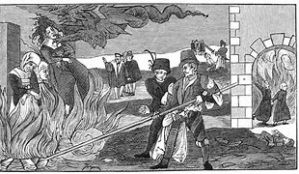
Alternate term used for the inquisitions specifically dealing with rooting out witchcraft that occurred in several cultures spanning many generations; a period of turmoil in which there was Catholic and Protestant conflict. Millions were accused of and an estimated 30,000-300,000 were executed for being witches. Those executed were hung (most common), stoned, drowned, or burned. Few of the victims worshiped Pagan deities; many considered themselves to be good Christians – though some did practice old folk traditions that are common in modern Witchcraft as the term is used today. This period was riddled with prejudice, discrimination, sexism, ignorance, and mass hysteria; it was an attack primarily against women and non-Catholics, not the equivalent of modern Witches.

From Spells8.com

A name given to the days of the Reformation, Inquisition, etc., when Witches were tried and executed by inquisitors, sometimes burned at the stake.

Pagan and Magickal Terms and Definitions

Today’s Word is

Besom

From moonlitpriestess.com

A magickally charged broom generally used to sweep away negative energies. Sometimes used for home protection by placing above a door or window. Also used in fertility rituals for its association as a phallic symbol. In Handfastings, the besom serves as a sort of designator between one phase of life and another; couples will step or leap from their lives as individuals into their new lives as married couples.

From Spells8.com

A broom made of twigs tied around a stick. Used in cleansing rituals and to invite beneficial energies to a space.

Witch’s Broom Consecration

The most common use of brooms is to sweep away negative energies, thereby cleansing and purifying the space.

Learn how to consecrate your broom before you hang it over the door on inside a room for protection against negative energies, and find a printable page in PDF to add to your Witch’s Grimoire.

Witch hunt

From witchipedia.com

A witch hunt is a scapegoating exercise involving a systematic search for individuals that represent an unpopular, unaccepted or inconvenient social or philosophical position for the purpose of persecuting them. Witch hunts are often carried out by people in power as a means to cement their power by weeding out threats or perceived disloyalty. A defining characteristic of a witch hunt is the use of propaganda to demonize the targeted population. Another is the tendency to declare guilt and rush to judgment with scanty or fabricated evidence, as the punishment takes priority over justice. I.e. Finding someone to punish is more important than finding the guilty party. The crime for which the punishment is deemed necessary may be exaggerated or fabricated and often takes place in secret, thus excusing the lack of evidence. Those lacking power and closer to the targeted population may participate in the witch hunt in the hope of achieving the goodwill of the powerful or simply as a means of self-preservation.

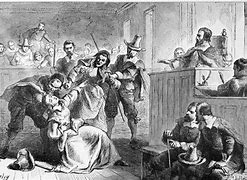
The term witch hunt is now a metaphorical term that derives from the literal witch hunts of the 1400-1700s in Europe and Colonial America; an era known as the burning times among modern Witches. During this period, several incidences occurred involving arrests and executions of sometimes quite large numbers of people for the charge of witchcraft on scant evidence. Most people jailed and executed during this period were certainly not witches and it is difficult to say if any actually were. Court records reveal “spectral” evidence and confessions under torture, leaving most convictions in question. But witches were a popular scapegoat when things went wrong, a belief encouraged by some religious organizations of the time in order to create a perceived enemy of God and the Church to blame “evil” doings on, thus cementing the power of the church and local clergy and anyone who decided to wear the mantle of religion in order to wield power.

Any misfortune could be blamed on a witch and then it was just a matter of deciding who got to be the witch. Some peasants might point out a “witch” in order to turn attention away from their own families in an act of self-preservation, but doing so might also be to their benefit, giving them some power and influence with local magistrates and sometimes even winning them some or all of the “witch’s” property. Thus, anyone who was inconvenient; perhaps not fully self-sufficient, or perhaps someone privy to a dark secret, or perhaps someone who liked to gossip or who was not as friendly or respectful as one would like, or whose dog kept getting into your chickens or who had a nicer bit of land than you presented a convenient target for their neighbors to report to the witch hunter. False accusations were rarely prosecuted.

While literal witch hunts do still take place today, they are generally limited to Africa and the Middle East. This is probably because most people in the West don’t believe in Witchcraft anymore and simply chuckle patronizingly at people who claim to be Witches. Metaphorical witch hunts, however, remain common in the West.

The term witch hunt entered the vernacular in the metaphorical sense in reference to McCarthy’s feverish search for Communist sympathizers and traitors in the US in the 1940s and 50s and Stalin’s feverish search for disloyalty in 1930s and 1940s in Russia.


Pagan and Magickal Terms and Definitions

Today’s Words are

Asperger

Asperge

From moonlitpriestess.com

Asperger

A bundle of fresh herbs or other object used to sprinkle consecrated water around the circle to purify the space; also, the person using the herb bundle.

From Spells8.com

Asperge

To cleanse and purify a space. This is usually done by spraying water around a room or using an herbal bundle to cleanse the space.

Pagan and Magickal Terms and Definitions

Today’s Word is

Animism 

From moonlitpriestess.com

The belief that all objects have a spirit.

Animist: a person who believes all objects have a spirit.

From Spells8.com

The belief that objects, places, and creatures all possess a distinct spiritual essence or soul.

ALCHEMY REDISCOVERED AND RESTORED By Archibald Cockren

From sacred-texts.com

Title Page
Contents
The Smaragdine Tables of Hermes Trismegistus
Foreword, By Sir Dudley Borron Myers


Part I: Historical

Chapter I. Beginnings of Alchemy
Chapter II. Early European Alchemists
Chapter III: The Story of Nicholas Flamel
Chapter IV: Basil Valentine
Chapter V: Paracelsus
Chapter IV: Alchemy in The Sixteenth and Seventeenth Centuries
Chapter VII: English Alchemists
Chapter VIII: the Comte De St. Germain

Part II: Theoretical

Chapter I: The Seed of Metals
Chapter II: The Spirit of Mercury
Chapter III: The Quintessence (I)
The Quintessence. (II)
Chapter IV: The Quintessence in Daily Life

Part III

Chapter I: The Medicine From Metals
Chapter II: Practical
Conclusion

‘AUREUS,’ Or The Golden Tractate

Section I
Section II
Section III
Section IV
Section V
Section VI
Section VII

The Book of the Revelation of Hermes

The Book of the Revelation of Hermes

Pagan and Magickal Terms and Definitions

Today’s Words are:

Akasha

Akashic Records

From moonlitpriestess.com

Spirit; the fifth element; omnipresent spiritual power permeating the universe; the energy out of which the elements are formed. Generally associated with the life force.

Location on the astral plane containing all souls’ knowledge past, present, and future. Some practitioners access to review past lives, heal ancestral curses/wounds, and other magickal purposes, generally of a fact-finding or healing nature.

Pagan and Magickal Terms and Definitions

Today’s Word is

Book of Shadows (BoS)

From moonlitpriestess.com

The spellbook, journal, diary, grimoire, and/or ritual guide used by an individual witch or coven. “Shadows” is used to mean past as in past experience and knowledge, like a permanent reminder of where you’ve been and can always return to. Generally includes spells, rituals, correspondences, etc. and may also include poems and other useful information.

From Spells8.com

Personal notebook kept by a practitioner of magick to record their work. This would include spellwork, rituals, personal wisdom, dreams, and observations. Start your own Book of Shadows with these printable dividers for a Book of Shadows binder.