Last supermoon of 2023 rises this week. Don’t miss the Harvest Moon shine with 3 bright planets

Source: www.space.com

Rising on Friday, Sept. 29, the Harvest Moon will be joined in the sky by our solar system’s two largest planets, Jupiter and Saturn, and its smallest, Mercury.

September’s full moon, known as the Harvest Moon, will rise on Friday, Sept. 29 — and it is a special one. Not only will it be the fourth successive supermoon of 2023, but it is also the final supermoon of the year, thus marking the end of a very supermoon summer.

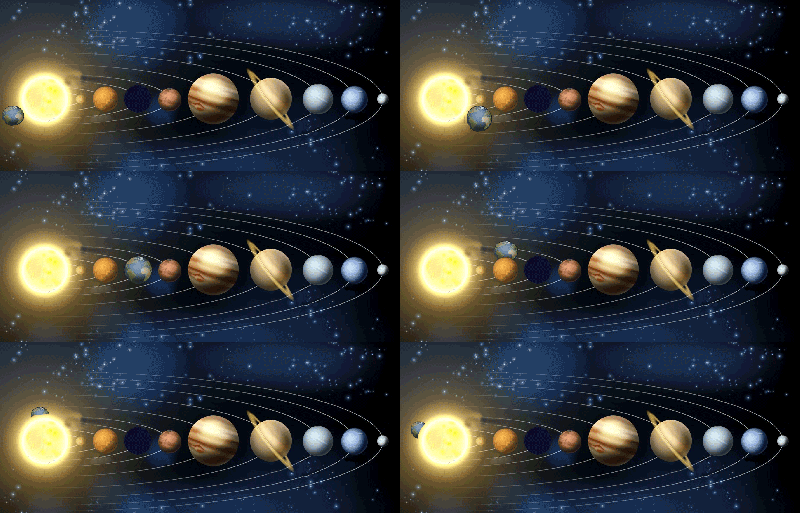
Fittingly for such a special supermoon, the Harvest Moon will also be joined by a parade of planets in the sky, including the solar system’s largest worlds, Jupiter and Saturn, as well as its smallest, Mercury.

From New York City, the fully illuminated moon will rise at around 18:33 EDT (2233 GMT) and set the following day at around 06:52 EDT (1052 GMT), according to In the Sky. Following the full moon, which will be located in the Pisces constellation, the lunar face will recede, a process astronomers call “waning.” After that, Earth‘s natural satellite will head toward its  next intriguing phase, turning into a completely dark new moon on Oct. 14, which will mark the start of a new 29.5-day lunar cycle.

The run of four consecutive supermoons began with the Full Buck Moon on July 3. This was followed by two supermoons in August, the Full Sturgeon Moon on Tuesday, Aug. 1, and the Full Blue Moon on Aug. 30..

Related: Night sky, September 2023: What you can see tonight [maps]

The term “supermoon” refers to full moons that happen around the time when the moon is closest to Earth in its orbit, an approach called perigee. This happens because the moon’s orbit around Earth is an ellipse rather than a perfect circle, meaning there are times when it falls further away from our planet and times when it comes closer.

The proximity of the moon during supermoons means the lunar disk can appear around 30% brighter and around 14% larger as seen from Earth compared to the appearance of the lunar face during “regular” full moons. These differences may be visible to moon-watchers with a lot of experience observing lunar events, but aren’t really that noticeable with the unaided eye to skywatchers who don’t often scrutinize the moon.

The moon will reach perigee in the evening of Wednesday, Sept. 27, at around 21:06 EDT (0106 GMT), two days before the Harvest Moon, according to NASA. By the time the moon’s fully illuminated face is turned toward Earth, it will be around 224,657 miles (361,552 kilometers) from our planet, according to eclipse expert and retired NASA astrophysicist Fred Espanak. This is opposed to the moon’s average distance from Earth, which falls around 238,000 miles (382,900 km).

However, this won’t be the closest or, therefore,  brightest supermoon of 2023. During the Aug. 30 Full Blue Moon, the moon was around 222,043 miles (357,343 km) from Earth, according to Espanak.

The first planet to visit the final supermoon of 2023 on Saturday will be Saturn, the second-largest planet in the solar system, which will rise at around 17:18 EDT (2118 GMT) and will sit in the Aquarius constellation, according to In the Sky. Saturn’s fellow gas giant and the solar system’s largest planet, Jupiter, will rise at 20:17 EDT (0017 GMT). Jupiter will sit to the left of the Harvest Moon in the Aries constellation.

Mercury will be the last planet to pay the Harvest Moon a visit and will be the toughest to spot. The closest planet to the sun, Mercury is currently at its furthest from our host star. Though it appears in the morning sky, it disappears in the evening. On Saturday, the solar system’s smallest planet will rise at around 05:30 (0930 GMT). Mercury will share the sky with the full moon for just over an hour before the final supermoon of the year sets.

Skywatchers who miss the Harvest Moon will have to wait a while for the next supermoon, which will also be a Harvest Moon, rising on Sept. 18, 2024. This will be the first of two supermoons next year, with the second occurring a month later on Oct. 17, 2024.

If you are hoping to catch a look at the Harvest Moon, our guides to the best telescopes and binoculars are a great place to start.

If you’re looking to snap photos of the night sky in general, check out our guide on how to photograph meteor showers, as well as our best cameras for astrophotography and best lenses for astrophotography.

Editor’s Note: If you snap an image of the Harvest Moon and would like to share it with Space.com’s readers, send your photo(s), comments, and your name and location to spacephotos@space.com.
Worm Moon: Full Moon for March 2023

The full Worm Moon reaches its peak in the morning hours of Tuesday, March 7. Look for it to rise after sunset on both Monday and Tuesday! What is a Worm Moon? Here are the real meaning and origins of March’s full Moon—and when you can see this Moon at its brightest!

When to See the Full Moon in March 2023

The final full moon of the winter season will appear on the nights of Monday, March 6, and Tuesday, March 7. Specifically, March’s full Worm Moon reaches peak illumination at 7:42 A.M. ET on Tuesday, March 7, 2023.

Of course, you don’t have to wait until the middle of the night to see the Moon! Look for the spectacularly bright Moon as it rises above the horizon on Monday evening. If your weather is poor on Monday night, try again on Tuesday! See when the Moon will be visible in your area.

If you have just a bit of rain on either of these nights, you may even get to spot a rare phenomenon called a moonbow. A moonbow is just like a solar rainbow, but is created by moonlight (rather than sunlight) when it is refracted through water droplets in the air. Moonbows only happen when the full Moon is fairly low in the sky, so look for one in the hours after sunset when the sky is dark. Learn more about moonbows here!

This March Moon will look especially large to us when it’s near the horizon because of the “Moon illusion,” when it looks bigger when near comparative objects than it does when it’s high in the sky without any references.

Why Is It Called the Worm Moon?

The full Moon names used by The Old Farmer’s Almanac come from a number of places, including Native American, Colonial American, and European sources. Traditionally, each full Moon name was applied to the entire lunar month in which it occurred, not only to the full Moon.

The Surprising Truth Behind the Worm Moon Name

March’s full Moon goes by the name Worm Moon. For many years, we thought this name referred to the earthworms that appear as the soil warms in spring. This invites robins and other birds to feed—a true sign of spring!

However, more research revealed another explanation. In the 1760s, click here to read the rest of this article

September 28, 2023 Current Moon Phase and Northern Hemisphere’s Planetary Positions

Current Moon Phase

You can use this link to go forward or backward in time for Moon phase information. If you are curious, you can even find out what phase the Moon was in when you or anyone else was born.

From MoonGiant.com

The Moon’s current phase for today and tonight is a Waxing Gibbous phase. Visible through most of the night sky setting a few hours before sunrise. This phase is when the moon is more than 50% illuminated but not yet a Full Moon. The phase lasts about 7 days with the moon becoming more illuminated each day until the Full MoonThis September Full Moon will be the forth and final supermoon of 2023.

During a Waxing Gibbous the moon rises in the east in mid-afternoon and is high in the eastern sky at sunset. The word Gibbous first appeared in the 14th century and has its roots in the Latin word “gibbosus” meaning humpbacked.

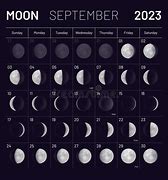
Visit the September 2023 Moon Phases Calendar to see all the daily moon phase for this month.

Today’s Waxing Gibbous Phase

The Waxing Gibbous on September 28 has an illumination of 99%. This is the percentage of the Moon illuminated by the Sun. The illumination is constantly changing and can vary up to 10% a day. On September 28 the Moon is 13.71 days old. This refers to how many days it has been since the last New Moon. It takes 29.53 days for the Moon to orbit the Earth and go through the lunar cycle of all 8 Moon phases.

Phase Details

Phase: Waxing Gibbous
Illumination: 99%
Moon Age: 13.71 days
Moon Angle: 0.55
Moon Distance: 364,852.42 km
Sun Angle: 0.53
Sun Distance: 149,883,105.77 km

Useful Moon Resources

The 8 Lunar Phases

There are 8 lunar phases the Moon goes through in its 29.53 days lunar cycle. The 4 major Moon phases are Full Moon, New Moon, First Quarter and Last Quarter. Between these major phases, there are 4 minor ones: the Waxing Crescent, Waxing Gibbous, Waning Gibbous and Waning Crescent. For more info on the Moon Cycle and on each phase check out Wikipedia Lunar Phase page.

Northern Hemisphere’s Planetary Positions

If you need to calculate the planetary positions in either hemisphere you can use this for a specific use and time in your local time zone, click on this link

Currentplanetarypositions.com

To figure out GMT (Greenwich Mean Time) to your local time use this link  

For Your Local Time and Date

Northwestern Hemisphere

This local time is in Los Angeles, California, USA

September 28, 2023
11:00 pm GMT 4:00 PM PDT
Zodiac: Tropical (Standard Western)

Sun:05 Libra 34
Moon:29 Pisces 12
Mercury:19 Virgo 50
Venus:22 Leo 07
Mars:21 Libra 09
Jupiter:14 Taurus 36 Rx
Saturn:01 Pisces 35 Rx
Uranus:22 Taurus 41 Rx
Neptune:26 Pisces 01 Rx
Pluto:27 Capricorn 56 Rx

True Lunar Node:24 Aries 55 Rx
Mean Lunar Node:25 Aries 51 Rx

Lilith (Black Moon):29 Leo 29

Chiron:18 Aries 14 Rx
Ceres:05 Scorpio 34
Pallas:06 Libra 59
Juno:21 Leo 50
Vesta:03 Cancer 34

Eris:24 Aries 54 Rx

Fire:7
Earth:4
Air:3
Water:5
Cardinal:9
Fixed:6
Mutable:4

Northern Hemisphere

This local time is in Chicago, Illinois, USA

September 28, 2023
09:00 pm GMT 4:00 PM CDT
Zodiac: Tropical (Standard Western)

Sun:05 Libra 29
Moon:27 Pisces 57
Mercury:19 Virgo 43
Venus:22 Leo 03
Mars:21 Libra 05
Jupiter:14 Taurus 36 Rx
Saturn:01 Pisces 35 Rx
Uranus:22 Taurus 41 Rx
Neptune:26 Pisces 01 Rx
Pluto:27 Capricorn 56 Rx

True Lunar Node:24 Aries 55 Rx
Mean Lunar Node:25 Aries 52 Rx

Lilith (Black Moon):29 Leo 29

Chiron:18 Aries 14 Rx
Ceres:05 Scorpio 32
Pallas:06 Libra 57
Juno:21 Leo 47
Vesta:03 Cancer 33

Eris:24 Aries 54 Rx

Fire:7
Earth:4
Air:3
Water:5
Cardinal:9
Fixed:6
Mutable:4

Northeastern Hemisphere

This local time is in Frankfurt, Germany, Europe

28 September 2023
02:00 pm GMT 4:00 PM CEST
Zodiac: Tropical (Standard Western)

Sun:05 Libra 11
Moon:23 Pisces 35
Mercury:19 Virgo 16
Venus:21 Leo 51
Mars:20 Libra 54
Jupiter:14 Taurus 38 Rx
Saturn:01 Pisces 36 Rx
Uranus:22 Taurus 42 Rx
Neptune:26 Pisces 01 Rx
Pluto:27 Capricorn 56 Rx

True Lunar Node:24 Aries 56 Rx
Mean Lunar Node:25 Aries 53 Rx

Lilith (Black Moon):29 Leo 27

Chiron:18 Aries 15 Rx
Ceres:05 Scorpio 25
Pallas:06 Libra 49
Juno:21 Leo 39
Vesta:03 Cancer 30

Eris:24 Aries 54 Rx

Fire:7
Earth:4
Air:3
Water:5
Cardinal:9
Fixed:6
Mutable:4