Celtic Tree Ivy Month: September 30 – October 27

From LearnReligions.com

As the year comes to a close and Samhain approaches, the Ivy moon rolls in at the end of the harvest season. Ivy often lives on after its host plant has died — a reminder to us that life goes on, in the endless cycle of life, death and rebirth. The Celts called this month Gort, pronounced go-ert. This is a time to banish the negative from your life. Do workings related to improving yourself, and placing a barricade between you and the things that are toxic to you. Ivy can be used in magic performed for healing, protection, cooperation, and to bind lovers together.

From Ireland-Calling.com

Ivy has many superstitions and beliefs attached to it.

Because it had the ability to form dense thickets in woodland, grow where other plants could not and block out the light from even the mighty oak, ivy was believed to be very powerful by the Druids, more powerful than its enemy, the vine and quite sinister.

The ivy and the vine have been seen as enemies since ancient times. This seems odd since the same Greek and Roman gods are associated with each.

Bacchus, god of wine

In Greek mythology ivy was sacred to Osiris and also associated with Dionysus. In Roman mythology Ivy was connected to Bacchus, the god of wine as it grew over his home land.

Bacchus is often portrayed wearing an ivy crown, perhaps because this was once thought to prevent intoxication. The poisonous berries of the ivy, when ground into a powder were also once believed to be a hangover cure.

The link between Bacchus and ivy was taken over to England where old English Taverns would display ivy above their doors indicating the high quality of their drinks.

The proverb ‘Good wine needs no bush’, meaning good wine speaks for itself, comes from this practice.

Gort, G –

Ivy, a symbol of strength and determination to the Druids, is the twelfth letter of the ogham alphabet, gort, and the eleventh month in the Celtic tree calendar, representing September 30th to October 27th.

Protection from evil

In old Ireland ivy was thought to provide protection from evil when growing on or near to a dwelling.

However, if it should die or fall down then misfortune would fall upon those therein.

Ivy was often carried by young women for good luck and fertility. Used at weddings intertwined with holly, the ivy would symbolise fidelity and at Yule-tide, would bring peace to the household.

Ivy was also linked to inspiration and worn by poets in the form of a crown.

Celtic Vine Month: September 2 – September 29

Vine – the tree of joy

From Ireland-Calling.com

Vines, or grape vines, didn’t reach the shores of Ireland until the Romans introduced wine around 2000 years ago.

The bramble, however, is native to the cool climate of Northern Europe, shares the winding characteristics and bares sweet fruit like the vine. This is why the ogham muin could represent either the vine or the bramble.

Since the introduction of wine to Ireland, the country has had a long love affair with both the plant and the drink, believed to loosen the tongue, release inhibitions and consumed by seers to stimulate prophecy.

Wine

During the 9th century, Viking traders who had already settled in the Loire Valley would bring wine to Ireland and it later became used as a tribute to the king; one ton of wine for each day in the year.

Wine was a big part of the feast culture of the old chieftains and, in later years it was Irish emigrants escaping English rule, known now as ‘Winegeese’ who were responsible for introducing vineyards to many countries throughout the world.

In mythology the vine is sacred to the Greek gods Dionysus and Osiris and the Roman God Bacchus. The vine is known as the tree of joy, exhilaration and wrath and is believed to be one of the sacred woods burned on the Beltane fires in Britain and Ireland representing joy and happiness.

Romans and Greeks celebrated the vine tree

The Romans and Greeks also had a festival involving the vine called Vinalia Rostica which celebrated and gave thanks the first harvest.

In the Celtic tree calendar the vine represents harvest time and the beginning of Autumn. The Autumn Equinox and festival of Mabon falls within the vine month, a festival of thanksgiving and learning.

In Christian belief, wine was the drink shared by Christ at the last supper and is still consumed in churches for this reason. It was the monasteries who cultivated the vine in Ireland and the British Isles for it could not grow in the wild as brambles could.

The bramble bush…

Christians had a very different story involving the Bramble. It was that when the devil was thrown out of heaven he landed on a bramble bush. This made him so angry that he cursed the plant and spat upon it.

Because of this, it was wrong to eat the fruit of the bramble after Michaelmas, September 29th, because the devil enters them.

This belief had a few variations. In Celtic Brittany it was said to be because of the fairies, and, in Wales, simply because they were poisonous by that time.

This is not actually the case, however certain insects do begin to lay their eggs on the ripened fruit during October which could well have been the cause of some stomach upsets.

Bramble wood was used in basket weaving and to make beehives, in a similar way to willow and bramble was often planted with hawthorn, sometimes known as the fairy tree, in hedgerows in order to bind a hedge.

Perhaps the close association to these very pagan trees and old ways is what made the Christians link the Bramble to a story about the devil.

Vine trees in Celtic mythology

Muin, M – The vine represents the eleventh letter in the ogham alphabet, muin, and the tenth month in the Celtic tree calendar.


Vine Moon: September 2 – September 29

From LearnReligions.com

The Vine month is a time of great harvest — from the grapes of the Mediterranean to the fruits of the northern regions, the Vine produces fruits we can use to make that most wondrous concoction called wine. The Celts called this month Muin. The Vine is a symbol of both happiness and wrath — passionate emotions, both of them. Do magical workings this month connected to the Autumn Equinox, or Mabon, and celebrate garden magic, joy and exhilaration, wrath and rage, and the darker aspect of the mother goddess. Use the leaves of the Vines to enhance your own ambition and goals. during this month. The month of Vine is also a good time to get balanced, as there are equal hours of darkness and light.

Celtic Calendar – Birch December 24 – January 20

(I am sorry I did not get this up on December 24 the day it started)

Birch – the tree of birth

The Birch was seen by the Druids as the tree of birth – a symbol of new beginnings. Beth, meaning birch, is the first letter in the Ogham alphabet and the first month in the Celtic Tree Calendar.

From ireland-calling.com – Birch

The birch tree has many uses both medicinal and practical.

Birch wood is durable but quick to rot, making it a good home for insects and birdlife.

It was often used to make May poles and start the fires at Beltane, the festival of new beginnings, due to a highly combustible tar in its bark.

This tar is furthermore believed to be good for the skin and can be used to treat eczema.

Birch is also associated with purification and protection. The leaves of the birch can be brewed into a tea that treats infection, stimulates the gall bladder and kidneys and is said to dissolve gravel and kidney stones.

Birch used to stimulate purification process

In Scandinavia birch is used in saunas to stimulate the purification process and in Russia birch branches are beaten against the skin at steam rooms for the same purpose. This practice was also used as a punishment in old England to purify a criminal of evil.

Celtic Tree Calendar Month of the Elder – a tree sacred to the Celts

I am sorry I got the current Celtic calendar month posted a week late. I was down with allergies and (this was a PERSONAL CHOICE) getting my covid vaccine booster.

From Ireland-Calling.com

In Ireland, the elder was considered a sacred tree and, like the hawthorn, it was forbidden to cut one down. The elder tree was prized for its many uses culinary, medicinal and mystical.

Both the flowers and berries of the elder can be used to make wine. Elderflower wine was said to be drunk at the Beltane celebrations and elderberries were made into a wine at Samhain which was consumed to promote divination and hallucinations.

Poisonous

The seeds, bark, leaves and flowers of the elder can be poisonous as is the unripe fruit so special care must have been taken when preparing such beverages.

Ruis, R, Elder is the fifteenth letter in the ogham alphabet, Ruis, and the thirteenth and final month of the Celtic tree calendar.

The superstition of never cutting down an elder bush was not unique to Ireland. In Denmark, peasants never chopped an elder because Hyldemor, The Elder Mother, lived in the trunk.

This belief was possibly brought to the East of England by the Vikings and, even today, in Lincolnshire people ask permission from ‘The Old Lady’ before taking cuttings from the tree.

Christians gave elder a bad reputation

Christians believed that the elder tree was the tree that Judas hanged himself from, therefore making it unlucky. Some also believed the cross was made of elder wood. In fact the Christians gave the elder a bad reputation in general.

It was during Christian times that the elder became most associated with witches and many stories of ‘elder-witches’ spread throughout Ireland and Britain. This developed into an association with the devil.

To burn elder wood in your fire would bring the devil into your house.

Celts believed it protected the from evil spirits

It seems more likely that rather than a tree to be feared the elder was a highly respected tree in the old Celtic land. It was said to protect from evil spirits as well as inviting them.

Cradles were built from elder wood to protect babies and elder bushes were often planted around cattle to keep them healthy. It was believed that planting an elder near your house would also protect it from lightning.

At the same time, a flute made of elder could be used to summon spirits and, in Scotland, if you stand under an elder tree at Samhain you will be able to see the fairies riding by.

Reed Moon: Celtic Tree Calendar

To read more about the Celtic Reed Month by Sarah Wayt

The celebration of Samhain, now known as Halloween, occurs during the Reed Moon. To the Celts this month hailed the end of the year, a time to cull the livestock and to connect with ancestors. All around the world festivals that honour the dead are celebrated. During the Reed Moon, light a candle for loved ones who have died and you may receive a message from the spirit world.

Releasing old energy

The Reed Moon is a good time to use divination to gain insights into the year that has passed. Perform energy work that will release old energy, burn symbols of illness on your bonfire on November the 5th during your Guy Fawkes celebrations. Remember the Celtic year does not begin until the Winter Solstice so use this interval to dream, not to make plans for the future.

The haunting sound of reed

In the past, the reed was used to make swift-flying arrow shafts that slew both enemies and game. In this way the plant was linked to the season of death and sacrifice, in which trees shed their leaves and the energy of nature became more introspective. Many early musical instruments also used the reed to create a haunting sound that has been connected to rites for the dead and the summoning of spirits.

Wind instruments

Modern day wind instruments have developed the same principle used by original reed instruments. Whereby a current of air is vibrated to produce a melodic sound.

Other traditional uses for reed include thatching. Rooftops were thatched with reeds, and as the Celts withdrew into their homes for the winter they honoured the plant that gave them shelter, making the reed a symbol of royalty and protection.

Reed Moon energy…

Reed – introduction to Ogham

From Ireland Calling

It is widely believed in academic circles that reed is a modern, neo-pagan introduction to the Ogham, much like the tree calendar itself.

It was first promoted as an Ogham by Robert Graves in his book The White Goddess. However, the reed’s importance to Celtic life and folklore are indisputable.

Reed gained a reputation as a protective tree from its use as thatch for the rooftops homes.

For this reason it was also made into talismans and charms believed to protect the wearer from evil. Mats were often woven out of reeds which gave the house a sweet smell, associating the reed with cleansing the home.

Scholarship

The Druids also used reeds to make writing implements and paper, thus associating the reed with knowledge, scholarship and wisdom.

Physicians would use reeds as tools for administering treatments but arrows, the weapons of death, were also made out of reeds. Because of these two contrasting uses the reed gained an association with both death and healing.

Souls of the ‘otherworld’ join the living…

Ivy – symbol of strength and determination

From Ireland Calling

Ivy has many superstitions and beliefs attached to it.

Because it had the ability to form dense thickets in woodland, grow where other plants could not and block out the light from even the mighty oak, ivy was believed to be very powerful by the Druids, more powerful than its enemy, the vine and quite sinister.

Ivy tree in Celtic Mytholgy

The ivy and the vine have been seen as enemies since ancient times. This seems odd since the same Greek and Roman gods are associated with each.

Bacchus, god of wine

In Greek mythology ivy was sacred to Osiris and also associated with Dionysus. In Roman mythology Ivy was connected to Bacchus, the god of wine as it grew over his home land.

Bacchus is often portrayed wearing an ivy crown, perhaps because this was once thought to prevent intoxication. The poisonous berries of the ivy, when ground into a powder were also once believed to be a hangover cure.

The link between Bacchus and ivy was taken over to England where old English Taverns would display ivy above their doors indicating the high quality of their drinks.

The proverb ‘Good wine needs no bush’, meaning good wine speaks for itself, comes from this practice.

Gort, G – Ivy, a symbol of strength and determination to the Druids, is the twelfth letter of the ogham alphabet, gort, and the eleventh month in the Celtic tree calendar, representing September 30th to October 27th.

Protection from evil

In old Ireland ivy was thought to provide protection from evil when growing on or near to a dwelling.

However, if it should die or fall down then misfortune would fall upon those therein.

Ivy was often carried by young women for good luck and fertility. Used at weddings intertwined with holly, the ivy would symbolise fidelity and at Yule-tide, would bring peace to the household.

Ivy was also linked to inspiration and worn by poets in the form of a crown.

The Celtic Oak Tree Month June 6th to July 7th

THE OAK

symbol of the life force

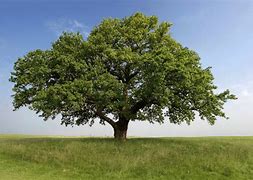
The oak (quercus) is one of the wonders of nature. Its splendid appearance perfectly reflects the essence of this tree. With its strong, deep roots, thickset trunk, and elegantly swaying branches and broad, spreading crown, the oak withstands the centuries. All kinds of Mosses live on it, cling planets twine upwards around it It bears this placidly and forms very hard wood through out its life

It grows best and reaches its fullest height in soil that is slightly damp and rich hummus, but it holds it own just as well on rocky ground. Its roots force their way inexorably through cracks to find water. In some places it may only grow into a shrub, but that doesn’t matter. The main thing is it lives and produces leaves.

Old oak trees–they can be 150 years old, sometimes twice that–may be hollow or rotten inside, quite dead on one side and growing well on the other. If cockchafers or caterpillars eat away the leaves in spring, new bright green leaves grow again in June and July. Not even a fallen oak will give up. Its wood survives for generations, living on as wine or brandy barrels, as a table or a railway sleeper, the pier of a bridge or a ship afloat.

Wherever the oak grows there is always plenty of light for everything that grows around it and is sheltered by it. Perhaps the oak trees remember their own youth, when they enjoyed and needed the protection and shade of other trees. They are often, for example, planted near lime trees until they are big enough. Then their ‘foster mothers’ are cut down. The oak does not forget that. It ‘knows’ that everything big and strong starts life as something small and weak. That is why it doesn’t matter when a gentle wind caresses its leaves. Nor does it howl when a storm tears at its branches. The oak always proclaims its wholehearted contentment with life. Who wouldn’t want that as their native tree?

If you were born on 21 March you may, no you must, liken yourself to an oak. For you are endowed with the same indestructible vitality and strength of purpose. You like a fresh wind in every relationship and your vitality bursts into flames at any opposition. Your body may not live to be a thousand years old, but your soul lives on in your children and in your work. And if even the slightest drop of Celtic blood flows through your veins, then you will fear neither death or devil. So what matters to you is not how long you live, but rather how intensively and meaningfully you fill time.

The Universe is God’s plaything. You very happily agree to join the game. You put failures behind you and will seize the first favorable opportunity to prove yourself in new enterprises.

Of course, you can’t help behaving like the farm lad who made a pact with the devil. ‘You can have my soul when this oak no longer has any leaves’, he said. The devil agreed, but he waited in vain. FOr many oaks keep their old leaves over the winter, until the new buds burst into leaf in the spring. Don’t you do the same thing? You prefer to cling to the old, well-tried methods until you have a clear understanding of the new, above all in ‘winter’ time. Or are you the sort of person that invests when the coffers are empty, and saves when they are over-flowing? Be careful these trick questions intended to provoke you. You like that, don’t you?

You may be quite different from the sketch I have given here. Each human being is unique individual. And not just people. Every oak tree is different, whether it is an English oak, a holm oak, a red oak, or a swamp oak; each one seizes a unique opportunity to become what it is.

The Celts associated the strength to be oneself, which is latent in every person, with the oak. The truly strong man is he who has travelled a lone way on the road to himself. Utterly dedicated, of his own free will he serves mankind, a cause, an art, responsible only to himself and the full of joy of the living. He sees himself as the living instrument of God’s power and does not lose himself in human reason, which thinks itself so dreadfully important.

Probably two or three thousand years ago there were relatively few people in whome the fire of the oak burned. But this is not the reason why the oak gives its name to only one day, like the beech, the olive tree, and the birch. On the contrary, this limitation of time should make it stand out from the ranks of other trees. It has been chosen to remind us, at the time of the vernal equinox on 21 March, that we should kindle a fire in ourselves that will allow us to find ourselves.

Native of the oak: Johann Sebastian Bach.

Gem Stone: The ruby, which express a love of life.

Number: 3

Motto: Moderation in all things.

The Celtic Tree Calendar Your Tree Signs and You  by MIchael Vescoli Copyright 1996 and for English 1999 Pages 30 – 35