The Winter Solstice


The Winter Solstice

The darkest day makes way for the return of light

December 21, 2015 marks the Winter Solstice, which is the official beginning of winter, and the shortest day of the year in the Northern Hemisphere. But there’s a light at the end of this tunnel — literally! As the temperatures fall throughout the winter, the light grows, representing new hope during a time of darkness.

Ancient solstice festivals were the last big feasts before food became scarce during the harsh winter months. This magical day was celebrated from ancient Rome to China, and by the builders of Stonehenge to the Mayans. In fact, we all remember the Winter Solstice on December 21, 2012, which was the apparent end of the Mayan calendar, causing many to believe the end of the world is coming. Obviously, we’re still here!

Many modern holiday traditions, such as Christmas, Hanukkah, Kwanzaa and New Year’s, have their roots in the Winter Solstice celebrations of yesterday. Winter festivals continue today, complete with lights, feasts, dancing and singing, and spending quality time with those we love.

Astrologically, the Winter Solstice marks the moment the Sun — the ruler of the zodiac — moves from adventurous Fire sign Sagittarius to the steady Earth sign of Capricorn. This is the dark night of the year, a day when the Sun appears to stand still. It’s a time for light and laughter, but also deep reflection.

The Sun’s move into steady Capricorn urges us to take some time to look back on 2015 before we make those New Year’s resolutions. What did we do right? What do we wish we’d done differently? Don’t fight the seriousness it brings to the festive holiday season — use it to start 2016 on the right foot! Just make sure to keep some of the Goat’s ambitious energy alive when the Sun makes its next move.

Source:
Tarot.com is a Daily Insight Group Site

For Your Listening Pleasure – Summer Solstice/Litha

~Litha~Summer Solstice Song~Lisa Thiel~

There is beautiful harmony in this song.

Blessed be dear ones.

Let’s Have Some Fun – Northern Hemisphere Yule/Winter Solstice

Winter Solstice Ritual Potpourri

Recipe by Gerina Dunwich

20 drops musk oil

25 drops pine oil

1 cup oak moss

2 cups dried mistletoe

1 cup dried poinsettia flowers

1 cup dried bayberries

1/2 cup dried rosemary

1/2 cup dried holly leaves and berries

3 crushed pinecones

Mix the musk and pine oils with the oak moss, and then add the remaining ingredients. Stir the potpourri well and store in a tightly covered ceramic or glass container.

(The above recipe for “Yule Ritual Potpourri” is quoted directly from Gerina Dunwich’s book “The Wicca Spellbook: A Witch’s Collection of Wiccan Spells, Potions and Recipes”, page 162, A Citadel Press Book, Carol Publishing Group, 1994/1995)


Let’s Have Some Fun – Southern Hemisphere Litha/Summer Solstice

Magickal Activity for December 21, The Summer Solstice

Floating Candles

Midsummer is a celebration of light and life, symbolized by the flame of a candle and the movement of water. A large glass bowl filled with an assortment of floating candles makes a wonderful point of focus for ritual. Choose bright yellow sunflowers, white lilies, and red tulip-shaped candles. Have each person participating in the ritual inscribe his or her desire, with a pin, on a candle. Have each person come forward, place his or her candle in the bowl and light it as he makes his wish. Following the ritual, the bowl is placed outdoors, and the candles are left to burn out.

The Sun Wheel

One of the most popular symbols of Midsummer is the Sun Wheel, the turning of which suggests the turning, or progression, of the seasons. The Wheel is decorated with flowers, fresh herbs, and brightly colored ribbons.

The simplest method for making a Sun Wheel is to buy an already-prepared natural-branch wreath from an arts and crafts store. Affix small branches of rowan to form the spokes of the wheel (four spokes to represent the elements and cross-quarter days or eight to symbolize the eight Wiccan Sabbats). Use floral wire to attach fresh flowers and herbs to the wreath. Embellish with brightly colored ribbons. The wheel can be used as the focal point for your Midsummer rites or hung on the front door of your home for decoration.

For Your Listening PLeasure

SONG OF SUMMER SOLSTICE | Kulning & Nyckelharpa

This song is short but sweet.

December 2021 Pagan Calendar Information

From TheGyspyThread.org

1st           Neptune Retrograde ends

4th           New Moon (12:44 AM, MST)

5th           Krampusnacht

13th/14th  Geminids Meteor Shower

17th         Roman Holiday of Saturnalia

18th         Full Cold Moon (9:37 PM, MST)

19th        Venus Retrograde begins

21st         Yule

21st         Winter Solstice

21st         Zodiac Period of Sagittarius ends

22nd        Zodiac Period of Capricorn begins

23rd        Celtic Tree Month of Elder ends

24th         Celtic Tree Month of Birch begins

29th         Full Cold Moon (8:30 PM, MST)


References to 2021 Calendar Events

The Sacred Tree Calendar of the Celtic People

Walpurgisnacht – The Night of the Witches

Lupercalia – The Deliciously Lustful Origin of Valentine’s Day

Rites & Rituals – Pagan Ceremonies, Rituals, and Full Moon Celebrations

The Asatru Community

Category Samhain/Deep Autumn

WE ARE THE ANCESTORS: MAY WE BE INTERESTING FOOD

May 9, 2020 · by Glenys D. Livingstone · in Samhain/Deep Autumn · Leave a comment Our present lives are formed by all who came before us. We are in-formed by them, whether conscious or not. In PaGaian Samhain ceremony as it has been done traditionally, participants are invited to remember the ancestors in this way: Let us remember our ancestors, those who have gone before, whose lives have been harvested, […]

THREADS OF GOLD IN THE COMPOST

April 20, 2020 · by Glenys D. Livingstone · in Samhain/Deep Autumn · 2 Comments There are threads of gold in the compost, if one has the vision for it. And we may take the golden thread, exclaim the strongest natural fibre known – our creative selves, our imaginations – for the building of a new world made sacred, of our conceiving: yet beyond our knowings, across the vast Darkness between […] For more interesting article about Southern Hemisphere Samhain click here  

Yule Winter Solstice/Litha Summer Solstice

Toady is the longest night of the year. A time of celebration. Deities that are used Father Winter, Kris Kringle, St, Nick to name a few. Herbs ginger, sage, cinnamon. Crystals are emerald, ruby

At the Winter Solstice we reach the depth of darkness with the longest night of the year. So come join us in our celebration. Its time for all of us to come together.

Blessings,

Raven Spirit Walker

Image by Bruno /Germany from Pixabay

Some Thoughts for Litha

Solstice Poem

images

General Search for Summer Solstice Spells and Traditions

Happy and Blessed be as You Celebrate Litha/Summer Solstice Sisters and Brothers in the Southern Hemisphere

A very short explanation of the Holly or Oak Kings Ruling as the Goddess Consort’

For More Information on the Oak King

For More Information on Litha

Scroll Down For More Information on the Summer Solstice in the Southern Hemisphere

I hope these links help you learn more about the different topics.

The Oak has will be born at Sunrise on the Summer Solstice after…

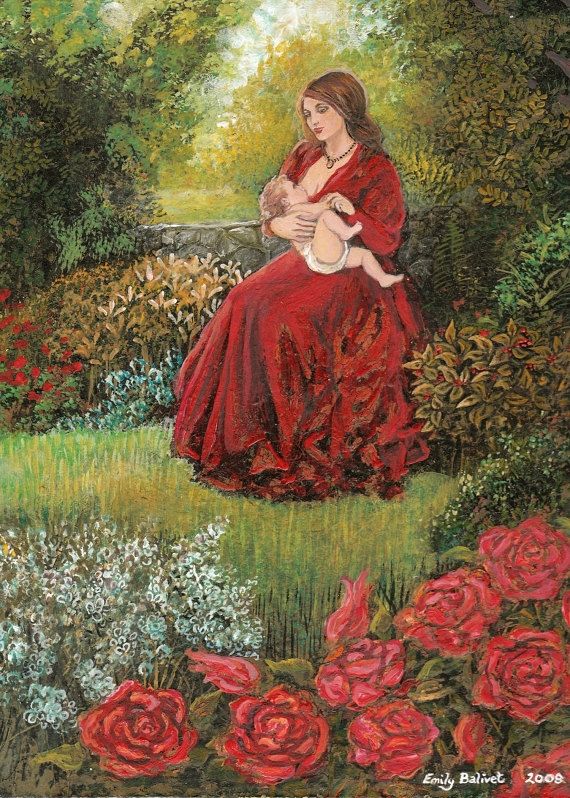
Litha Baby Red roses

Here the young Oak King fights the tired out Holly King to rule from the Litha until Yule until…

oak-king-battling-holly-king

The Holly King is reborn. Now the Oak King is an old man but still fights the Holly king.

pagan-child-of-promise-yule-greeting-card-117-p

The Holly King wins and grows to maturity from the Yule until Litha when the cycle of the battle between the young and older Kings battles repeat themselves for the honor to rule as the Goddesses Consort. The Oak Kings is also in some traditions is known as The Green Man or The Horn God or the God of the Hunt.

I Need Help Finding a Specific Pictures

I have the Goddess with an infant or toddler. What I cannot find is a picture of the Goddess with an infant or toddler. I have this, I think, a cool idea for a post and need both of these kinds of pictures in order to do it.

Thank you so much for your help. It will be much appreciated.

S. H. Count Down to Litha – Printable Coloring Pages

SS

SS 2

LITHA

SS 3

S. H. Count Down to Litha

This is a video showing how to make a Summer Solstice/Litha candle to keep or give as a gift.

Craft With Me – Altered Candle – Summer Solstice Crafts

N. H. Count Down to Yule

This video has some ideas for things to make to decorate your home or altar with.

Yule Altar Crafts & Decorate My Altar for Yule with Me!

Celtic Tree Month – Coll – Hazel Moon August 5 – September 1


About the Celtic Tree Month – Coll (Hazel Moon): August 5 – September 1

“The lunar tree calendar of the Celts has long been a source of controversy among Celtic scholars. Some even claim it was never a part of the old Celtic world, but was an invention of author/researcher Robert Graves. The Druids are generally given credit by other researchers for creating this system. There seems to be no scholarly evidence to prove otherwise, yet many Celtic Pagans feel that the system pre-dates the time of Druidic influence over Celtic religious matters. It is probably reasonable to believe that the truth lies somewhere in between these three extremes. It is most likely that the tree system was in place, with minor regional variations before the time of the Druids who experimented with it, discovered the magical properties of each tree, and codified all the information into the system we have today.”

—-Joelles Sacred Grove

The Hazel Moon was known to the Celts as Coll, which translates to “the life force inside you.” This is the time of year when Hazelnuts are appearing on the trees, and are an early part of the harvest. Hazelnuts are also associated with wisdom and protection. Hazel is often associated in Celtic lore with sacred wells and magical springs containing the salmon of knowledge. This is a good month to do workings related to wisdom and knowledge, dowsing and divination, and dream journeys. If you’re a creative type, such as an artist, writer, or musician, this is a good month to get your muse back, and find inspiration for your talents. Even if you normally don’t do so, write a poem or song this month.

Source

Patti Wigington, Author
Published on ThoughtCo

Celebrating Legends, Folklore & Spirituality 365 Days A Year – Midvintersblot/Saint Hilary’s Day

Blessed Be

January 14th


Midvintersblot/Saint Hilary’s Day

Midvintersblot or Midwinter’s offering, often called Tiugunde Day in Old English, was sacred to Tiu, the ancient Teutonic chief God and ruler of the year. The festival falls 20 days after Yule and is when the runic half-month of Peorth commences.

This day was christianized as Saint Hilary’s day (for Hilary of Poitiers), the patron of backward children, who was invoked against snake bites. This time is traditionally the coldest point of the year and marks the time when marriages were once again permitted after the Christmas season.

Celebrating Other Spirituality, Folklore & Legends 365 Days a Year – Christmas Eve, Christmas, Yule

verliebte Vogelwelt

December 24 and 25

Christmas Eve, Christmas, Yule

It is generally accepted that the birth of Christ on December 24th is the invention of some overzealous authors who were trying to create some sort of symmetry between Paganism and Christianity. According to the late fourth-century Scriptor Syrus, it was the custom of the Pagans to celebrate the birthday of the sun on December 25, at which time they kindled lights in token of festivity. The Christians also participated in these solemnities and revelries. Accordingly, when the administrants of the church observed that the Christians had a preference for the festival, they took counsel and resolved that the true Nativity should be solemnized on that day.

The Pagan feast that was replaced by Christmas was of far older origins and may have been built upon the cult of Mithras, who, for the Persians, was the creator of the universe and manifestation of the Creative Logos, or Word. His birth on December 25 was witnessed by shepherds. After many deeds, he held a last supper with his disciples and then returned to heaven. Some believe that, had Christianity not taken hold when it did, Mithraism very well might have become the world religion.

For more that three centuries Christ Mass was a moveable feast, celebrated on the Epiphany (January 6), the day that, according to biblical account, Jesus manifested himself to the Magi. The Western date of December 25 was fixed to coincide with the Roman midwinter festival of the Kalends, which was preceded by seven days of tribute to their God of agriculture, Saturn.

Many of the Yuletide customs we observe today were common to various thanksgiving days and new year’s rites. For example, the hanging of greenery comes from an old ivy-worshiping worshiping cult dating back to the Dionysian revels in ancient Greece; mistletoe was valued-almost worshiped-by the Druids; ids; and gift exchange most likely generated with the Saturnalia. The Christmas tree was introduced by the Prince Albert of Saxony in 1844 and was an adaption of the Paradeisbaum(decorated tree of life) from the medieval drama of the Tannenbaum.

Yule/Winter Solstice Ritual

You will need:

Your tools

Some ice

Lavender incense

A compass

Setup:

Set-up your altar, place the ice in the cauldron and the incense anywhere.

Perform a meditation.

Cast your circle.

Hold your hands up in the air saying:

“GREAT WINTER I WELCOME YOU,GODDESS OF NGHT.”

Place your hands in the cauldron and move them around in the ice while saying:

“I WELCOME YOUR MIGHT,YOUR COLD.”

Light the incense. Take aa sip from the chalice. Take the athame and point it toward the west while saying:

“GREAT WINTER I CALL YOU,COME FORTH,I WELCOME YOU.”

Close your eyes and visualize the winter in all her fury. At this point you may end this ritual,or continue with a spell.

“SO MOTE IT BE”

Close your circle.


Magically Decking Your Halls and Walls

By Patti Wigington To view images go to: http://paganwiccan.about.com/od/yulecrafts/tp/YuleCraftProjects.htm?utm_source=exp_nl&utm_medium=email&utm_term=list_paganwiccan&utm_campaign=list_paganwiccan&utm_content=20150609

There are so many great ways you can decorate your home for the Yule season. Adapt store-bought Christmas decorations, or make your own Pagan-themed home decor for the season. Here’s how you can put together a Yule log of your own, some fun and simple ornaments, a Pagan twist on the “manger” scene, some seasonally-scented potpourri andincense, and more!

Decorate a Yule log for your family’s celebration.Image by Steve Gorton/Dorling Kindersley/Getty Images

Decorate a Yule Log

The Yule log is an ancient tradition, but you can make one for your own family’s holiday celebration. Put one together with items you find outside, and include it as part of your Yule ritual.

Use salt dough and cookie cutters to make your own Yule ornaments. Image by ansaj/E+/Getty Images

Salt Dough Ornaments

These easy ornaments can be assembled in hardly any time at all. Once they’ve baked, paint them and hang them around your home for Yule! More »

Inscribe ornaments with symbols, or decorate with icing before you hang them on your tree. Image by Dorling Kindersley/Dorling Kindersley Collection/Getty Images

Cinnamon Spell Ornaments

Use a blend of cinnamon, applesauce, and spices to make these spell ornaments – decorate with magical symbols, and hang them on your holiday tree this year

Use dried juniper berries, along with cedar and pine, to make a Yule incense blend. Image by Ed Reschke/Photolibrary/Getty Images

Winter Nights Incense

Scents have a way of making time stand still for us sometimes, and the aromas of the winter holidays are no exception. For many people, re-creating the smells and emotions of our childhood, or even of some distant ancestral memory, is part of the magic of the Yule season. More »

Make a magical gingerbread poppet for yourself or a friend!. Image by PhotoAlto/Michele Constantini/Getty Images

Magical Gingerbread Poppets

Gingerbread men are everywhere during the Yule season – and they’re the perfect shape to use for a magical poppet. Why not get crafty and make some magic for the season? More »

Use your favorite spices to make scented pinecone ornaments. Image by Mike Bentley/E+/Getty Images

Pine Cone Ornaments

The pine cone has long been a symbol of the winter solstice. Make these nature- friendly ornaments to sparkle and shine during your Yule celebration. More »

Make an herbal sachet to hang on your Yule tree.Image by Patti Wigington

Yule Herbal Sachet

This sachet is simple to make, and combines some of the most delightful scents of the season. Make them small and hang on a tree, make them a bit larger and give them as gifts! More »

Use three chenille stems to shape this pent — one makes the circle, and the other two get folded around to form the star.Image © Patti Wigington

Easy Pentacle Ornaments

This is a super-easy craft project you can get your kids working on, and have them create a whole bunch of pretty pentacles to hang around your house during the Yule season. More »

Use pine boughs and other natural items to make an outdoor Yule scene. Image by Cultura RM/Jonatan Fernstrom/Getty Images

Make a Pagan “Nativity” Scene

So your neighbors all have cute little mangers in their yards, complete with plastic baby Jesus, light-up sheep, and a couple of Wise Men who have probably seen better days. Are you feeling a bit left out? Don’t worry — you can still set up a Nativity scene (or something close to it) that represents your Pagan or Wiccan beliefs, and honors the birth of the sun, rather than the son of another religion’s god. More »

Make a batch of potpourri to simmer on your stovetop. Image by sozaijiten/Datacraft/Getty Images

Yule Simmering Potpourri

Make a batch of Yule potpourri, get it simmering on your stovetop, and enjoy the scents of the season! More »

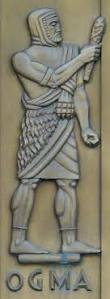
Gods – OgmaCeltic God c.2015


Ogma

Celtic God


In Irish-Celtic myth, Ogma is the god of eloquence and learning. He is the son of the goddess Danu and the god Dagda, and one of the foremost members of the Tuatha Dé Danann. He is the reputed inventor of the ancient Ogham alphabet which is used in the earliest Irish writings.

In the final battle at Mag Tuireadh he managed to take away the sword of the king of the Fomorians, but had to pay with his life for this feat. His Celtic equivalent is Ogmios.

Ogma or Oghma is a character from Irish mythology. A member of the Tuatha Dé Danann, he is often considered a deity and may be related to the Gaulish god Ogmios.

He fights in the first battle of Mag Tuired, when the Tuatha Dé take Ireland from the Fir Bolg. Under the reign of Bres, when the Tuatha Dé are reduced to servitude, Ogma is forced to carry firewood, but nonetheless is the only one of the Tuatha Dé who proves his athletic and martial prowess in contests before the king. When Bres is overthrown and Nuadu restored, Ogma is his champion. His position is threatened by the arrival of Lugh at the court, so Ogma challenges him by lifting and hurling a great flagstone, which normally required eighty oxen to move it, out of Tara, but Lugh answers the challenge by hurling it back. When Nuadu hands command of the Battle of Mag Tuired to Lugh, Ogma becomes Lugh’s champion, and promises to repel the Fomorian king, Indech, and his bodyguard, and to defeat a third of the enemy. During the battle he finds Orna, the sword of the Fomorian king Tethra, which recounts the deeds done with it when unsheathed. During the battle Ogma and Indech fall in single combat, although there is some confusion in the texts as in Cath Maige Tuired Ogma, Lugh and the Dagda pursue the Fomorians after the battle to recover the harp of Uaitne, the Dagda’s harper.

He often appears as a triad with Lugh and the Dagda, who are sometimes collectively known as the trí dée dána or three gods of skill, although that designation is elsewhere applied to other groups of characters. His father is Elatha and his mother is usually given as Ethliu, sometimes as Étaín. His sons include Delbaeth and Tuireann. He is said to have invented the Ogham alphabet, which is named after him.

Scholars of Celtic mythology have proposed that Ogma represents the vestiges of an ancient Celtic god. By virtue of his battle prowess and invention of Ogham, he is compared with Ogmios, a Gaulish deity associated with eloquence and equated with Herakles. J. A. MacCulloch compares Ogma’s epithet grianainech (sun-face) with Lucian’s description of the “smiling face” of Ogmios, and suggests Ogma’s position as champion of the Tuatha Dé Danann may derive “from the primitive custom of rousing the warriors’ emotions by eloquent speeches before a battle”, although this is hardly supported by the texts. Scholars such Rudolf Thurneysen and Anton van Hamel dispute any link between Ogma and Ogmios.

*
A Proto-Indo-European root *og-mo– ‘furrow, track, incised line’ may be the origin of the stem of the name. In addition, Proto-Celtic had a causative verbal suffix *-ej– ~ *-īj-. A hypothetical Proto-Celtic *Ogm-īj-o-sogm-. This agent noun would therefore mean ‘furrow-maker, incisor’ and may have had a metaphorical sense of ‘impresser.’ therefore looks very much like an agent noun derived from a verb formed by the addition of this causative suffix to the stem *

The Irish god of writing, eloquence and poetry. Ogma was credited of being inventor of the Celtic writing systems that the Druids used for their magic. These scripts were known as Ogham.

Ogma was the son of Dagda and the goddess Danu. Some other writers say that Ogma and Dagda were brothers; in this version they were the sons of Eithne. Ogma had also being called the son of Elatha, the king of the Fomorians.

Ogma was one the seven champions in the First Battle of Moytura (Mag Tuired), but when Bres became the king of Tuatha dé Danann, Ogma was degraded into working on humiliating manual job of gathering firewood.
When Lugh went to Nuada, asking for a place to serve the king, Ogma seemed to be Nuada’s foremost fighter. During the second battle of Moytura, Ogma had killed one of the Fomorian leaders, named Indech, the son of Domnu.

Ogma had married Etain, the daughter of Dian Cécht. Ogma had a son named Caipre. Some say that he was the father of MacCuill, MacCecht and MacGrené (MacGrene), the three Danann kings who ruled Ireland, during the Milesian invasion, though other say that Neit was their father.
To the Celtic Gauls he was called Ogmios. According to both Gallic and Irish myths Ogma was a warrior god, depicted as a wrinkled old man, wearing lion’s skin cloak, carrying a bow and club. The Romans considered Ogmios as the Celtic equivalent of Hercules (Greek Heracles). They also depicting Ogimos as holding people chained to his tongue by their ears, to indicate he was the god of eloquence and poetry.

Author: Agaliha