Astronomy Picture of the Day

Discover the cosmos! Each day a different image or photograph of our fascinating universe is featured, along with a brief explanation written by a professional astronomer.

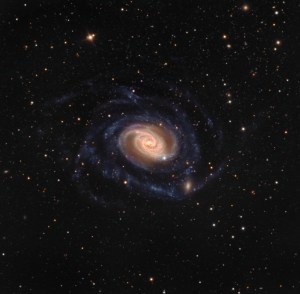
NGC 289: Swirl in the Southern Sky

Image Credit & Copyright: Mike SelbyExplanation: About 70 million light-years distant, gorgeous spiral galaxy NGC 289 is larger than our own Milky Way. Seen nearly face-on, its bright core and colorful central disk give way to remarkably faint, bluish spiral arms. The extensive arms sweep well over 100 thousand light-years from the galaxy’s center. At the lower right in this sharp, telescopic galaxy portrait the main spiral arm seems to encounter a small, fuzzy elliptical companion galaxy interacting with enormous NGC 289. Of course spiky stars are in the foreground of the scene. They lie within the Milky Way toward the southern constellation Sculptor.

16 October Southern Hemisphere Current Moon Phase and Planetary Positions

Moon Goddess’ Current Phase

Click here to find out the Moon phase for anyone’s birth date.

From Moongiant.com

Today the Moon will be in a Waxing Gibbous phase. This phase is when the moon is more than 50% illuminated but not yet a Full Moon. The phase lasts about 7 days with the moon becoming more illuminated each day until the Full Moon. During a Waxing Gibbous the moon rises in the east in mid-afternoon and is high in the eastern sky at sunset. The moon is then visible through most of the night sky setting a few hours before sunrise. The word Gibbous first appeared in the 14th century and has its roots in the Latin word “gibbosus” meaning humpbacked.

Visit the October 2021 Moon Phases Calendar to see all the daily moon phase for this month.

Today’s Waxing Gibbous Phase

The Waxing Gibbous on October 16 has an illumination of 83%. This is the percentage of the Moon illuminated by the Sun. The illumination is constantly changing and can vary up to 10% a day. On October 16 the Moon is 10.82 days old. This refers to how many days it has been since the last New Moon. It takes 29.53 days for the Moon to orbit the Earth and go through the lunar cycle of all 8 Moon phases.

The 8 Lunar Phases

There are 8 lunar phases the Moon goes through in its 29.53 days lunar cycle. The 4 major Moon phases are Full Moon, New Moon, First Quarter and Last Quarter. Between these major phases, there are 4 minor ones: the Waxing Crescent, Waxing Gibbous, Waning Gibbous and Waning Crescent. For more info on the Moon Cycle and on each phase check out Wikipedia Lunar Phase page.

Phase Details

Phase: Waxing Gibbous
Illumination: 83%
Moon Age: 10.82 days
Moon Angle: 0.52
Moon Distance: 381,829.22 km
Sun Angle: 0.53
Sun Distance: 149,091,395.10 km

Useful Moon Resources

October 15 Northern Hemisphere Current Moon Phase and Planetary Positions

Moon Goddess’ Current Phase

Click here to find out the Moon phase for anyone’s birth date.

The Moon’s current phase for today and tonight is a Waxing Gibbous phase. This phase is when the moon is more than 50% illuminated but not yet a Full Moon. The phase lasts about 7 days with the moon becoming more illuminated each day until the Full Moon. During a Waxing Gibbous the moon rises in the east in mid-afternoon and is high in the eastern sky at sunset. The moon is then visible through most of the night sky setting a few hours before sunrise. The word Gibbous first appeared in the 14th century and has its roots in the Latin word “gibbosus” meaning humpbacked.

Visit the October 2021 Moon Phases Calendar to see all the daily moon phase for this month.

Today’s Waxing Gibbous Phase

The Waxing Gibbous on October 15 has an illumination of 75%. This is the percentage of the Moon illuminated by the Sun. The illumination is constantly changing and can vary up to 10% a day. On October 15 the Moon is 9.82 days old. This refers to how many days it has been since the last New Moon. It takes 29.53 days for the Moon to orbit the Earth and go through the lunar cycle of all 8 Moon phases.

The 8 Lunar Phases

There are 8 lunar phases the Moon goes through in its 29.53 days lunar cycle. The 4 major Moon phases are Full Moon, New Moon, First Quarter and Last Quarter. Between these major phases, there are 4 minor ones: the Waxing Crescent, Waxing Gibbous, Waning Gibbous and Waning Crescent. For more info on the Moon Cycle and on each phase check out Wikipedia Lunar Phase page.

Phase Details For – October 15

Phase: Waxing Gibbous
Illumination: 75%
Moon Age: 9.82 days
Moon Angle: 0.53
Moon Distance: 377,160.17 km
Sun Angle: 0.53
Sun Distance: 149,133,736.11 km

Useful Moon Resources

15 October Daily Correspondence Digest for the Southern Hemisphere’s Moon Phase and Planetary Positions

Current Moon Phase


You can use this link to go forward or backward in time for Moon phase information. If you are curious you can even find out what phase the Moon was in when you or anyone else, you know was on the date the person was born.

From Moongiant.com

Today the Moon will be in a Waxing Gibbous phase. This phase is when the moon is more than 50% illuminated but not yet a Full Moon. The phase lasts about 7 days with the moon becoming more illuminated each day until the Full Moon. During a Waxing Gibbous the moon rises in the east in mid-afternoon and is high in the eastern sky at sunset. The moon is then visible through most of the night sky setting a few hours before sunrise. The word Gibbous first appeared in the 14th century and has its roots in the Latin word “gibbosus” meaning humpbacked.

Visit the October 2021 Moon Phases Calendar to see all the daily moon phase for this month.

Today’s Waxing Gibbous Phase

The Waxing Gibbous on October 15 has an illumination of 75%. This is the percentage of the Moon illuminated by the Sun. The illumination is constantly changing and can vary up to 10% a day. On October 15 the Moon is 9.82 days old. This refers to how many days it has been since the last New Moon. It takes 29.53 days for the Moon to orbit the Earth and go through the lunar cycle of all 8 Moon phases.

The 8 Lunar Phases

There are 8 lunar phases the Moon goes through in its 29.53 days lunar cycle. The 4 major Moon phases are Full Moon, New Moon, First Quarter and Last Quarter. Between these major phases, there are 4 minor ones: the Waxing Crescent, Waxing Gibbous, Waning Gibbous and Waning Crescent. For more info on the Moon Cycle and on each phase check out Wikipedia Lunar Phase page.

Phase Details

Phase: Waxing Gibbous
Illumination: 75%
Moon Age: 9.82 days
Moon Angle: 0.53
Moon Distance: 377,160.17 km
Sun Angle: 0.53
Sun Distance: 149,133,736.11 km

Useful Moon Resources

BELTANE: SOUTHERN HEMISPHERE

Southern Hemisphere Beltane by Jane Hardwicke Collings

The date for the Southern Hemispheric Beltane is October 31st and ‘May Day’ is November 1st. The climax of Spring!

Beltane is the peak of Spring, a celebration of fertility. In ancient times it was the Beltane Rites that recon- nected each year the King to the Goddess, the masculine to the feminine. It is a time for us to give thanks for our fertile lives, our creativity and our gender specific gifts and roles. Its a time to notice and honour the difference in the masculine and feminine. It is a time of increasing growth, building to almost full potential, of beauty and heightened passion.

Beltane Spiritual Practice

Your being, as part of the Earth, part of the cycle of the seasons, will be influenced by this energy whether you’re paying attention to it or not. If you pay some attention, you will feel it, and you can be in flow with it.

Think like the gardener, and align with the Earth energy of now, contemplate the growth that is peaking in your life, that is getting all the attention…

78 Linestrider Tarot Cards Meaning – Siolo Thompson

Menu of Contents

From TarotX.net – Linestrider Tarot Deck

Click on the hyperlinks below to learn more about the Linestrider Tarot Cards and their meanings.

Prayer and Sacrifice Franco C. | Ancient Civilizations, Latest Updates, Roman Empire, Roman Religion

To read the rest of this article from History Cooperative

Prayer and Sacrifice in Ancient Rome

In the Roman mind, there was a sort of contract between the gods and the mortals. As part of this agreement each side would provide as well as receive services.

Thee role of the mortal in this partnership with the gods was to worship the mighty gods. For this there was prayer and sacrifice. And for both of these activities there was firmly defined rituals. To perform these ritual correctly was of paramount importance. One mistake and one would have to begin all over again.

The very nature of Roman religion itself, with its numerous gods, many of which had multiple roles, was cause for problems. Particularly as in some cases not even the sex of a deity was clear. Hence the phrase ‘wether you be god or goddess’ was a widespread in the worship of certain deities. Many Roman gods also had entire colelction of additional names, according to what aspect of life they were a patron to.

So, for example Juno was Juno Lucina in her role of goddess of childbirth. But as goddess of the mint she was known as Juno Moneta (this curious role came about because for a long time the Roman state mint was housed in her temple on the Capitoline hill).

There appear to have been few things for which there was not a special prayer. So, for example, …

Astronomy Picture of the Day

Discover the cosmos! Each day a different image or photograph of our fascinating universe is featured, along with a brief explanation written by a professional astronomer.

NGC 7293: The Helix Nebula

Image Credit & Copyright: Ignacio Diaz BobilloExplanation: A mere seven hundred light years from Earth, toward the constellation Aquarius, a sun-like star is dying. Its last few thousand years have produced the Helix Nebula (NGC 7293), a well studied and nearby example of a Planetary Nebula, typical of this final phase of stellar evolution. A total of 90 hours of exposure time have gone in to creating this expansive view of the nebula. Combining narrow band image data from emission lines of hydrogen atoms in red and oxygen atoms in blue-green hues, it shows remarkable details of the Helix’s brighter inner region about 3 light-years across. The white dot at the Helix’s center is this Planetary Nebula’s hot, central star. A simple looking nebula at first glance, the Helix is now understood to have a surprisingly complex geometry.

October 14 Daily Correspondence Digest for the Northern Hemisphere’s Moon Phase and Planetary Positions

Current Moon Phase

You can use this link to go forward or backward in time for Moon phase information. If you are curious you can even find out what phase the Moon was in when you or anyone else, you know was on the date the person was born.

From Moongiant.com

Northeastern and Northwestern Hemispheres Planetary Positions


If you need to calculate the planetary positions for a specific use and time, click on this link

Currentplanetarypositions.com

To figure out GMT (Greenwich Mean Time) to your local time use this link

For Your Local Time and Date

Northeastern Hemisphere

The time for the Custom Planetary Positions is from the local time in Frankfurt, Germany, Europe

14 October 2021
02:00 pm GMT 4:00 PM CET
Zodiac: Tropical (Standard Western)

Sun:21 Libra 27
Moon:09 Aquarius 46
Mercury:11 Libra 38 Rx
Venus:07 Sagittarius 43
Mars:19 Libra 20
Jupiter:22 Aquarius 21 Rx
Saturn:06 Aquarius 53
Uranus:13 Taurus 38 Rx
Neptune:21 Pisces 00 Rx
Pluto:24 Capricorn 20
True Lunar Node:02 Gemini 34 Rx
Mean Lunar Node:03 Gemini 41 Rx
Lilith (Black Moon):09 Gemini 46
Chiron:10 Aries 10 Rx
Ceres:12 Gemini 02 Rx
Pallas:10 Pisces 59 Rx
Juno:20 Sagittarius 09
Vesta:12 Scorpio 23
Eris:24 Aries 16 Rx
Fire:4
Earth:2
Air:10
Water:3
Cardinal:6
Fixed:5
Mutable:8

Northwestern Hemisphere

The time for the Custom Planetary Positions is from the local time in Denver, Colorado, USA

October 14, 2021
10:00 pm GMT 4:00 PM MT
Zodiac: Tropical (Standard Western)

Sun:21 Libra 46
Moon:14 Aquarius 16
Mercury:11 Libra 24 Rx
Venus:08 Sagittarius 04
Mars:19 Libra 33
Jupiter:22 Aquarius 21 Rx
Saturn:06 Aquarius 53
Uranus:13 Taurus 38 Rx
Neptune:21 Pisces 00 Rx
Pluto:24 Capricorn 20

True Lunar Node:02 Gemini 33 Rx

Mean Lunar Node:03 Gemini 40 Rx
Lilith (Black Moon):09 Gemini 48
Chiron:10 Aries 09 Rx
Ceres:12 Gemini 02 Rx
Pallas:10 Pisces 56 Rx
Juno:20 Sagittarius 14
Vesta:12 Scorpio 34

Eris:24 Aries 16 Rx
Fire:4
Earth:2
Air:10
Water:3
Cardinal:6
Fixed:5
Mutable:8

Yule/Winter Solstice Ritual

You will need:

Your tools

Some ice

Lavender incense

A compass

Setup:

Set-up your altar, place the ice in the cauldron and the incense anywhere.

Perform a meditation.

Cast your circle.

Hold your hands up in the air saying:

“GREAT WINTER I WELCOME YOU,GODDESS OF NGHT.”

Place your hands in the cauldron and move them around in the ice while saying:

“I WELCOME YOUR MIGHT,YOUR COLD.”

Light the incense. Take aa sip from the chalice. Take the athame and point it toward the west while saying:

“GREAT WINTER I CALL YOU,COME FORTH,I WELCOME YOU.”

Close your eyes and visualize the winter in all her fury. At this point you may end this ritual,or continue with a spell.

“SO MOTE IT BE”

Close your circle.