Astronomy Picture of the Day

Discover the cosmos! Each day a different image or photograph of our fascinating universe is featured, along with a brief explanation written by a professional astronomer.

2021 October 29

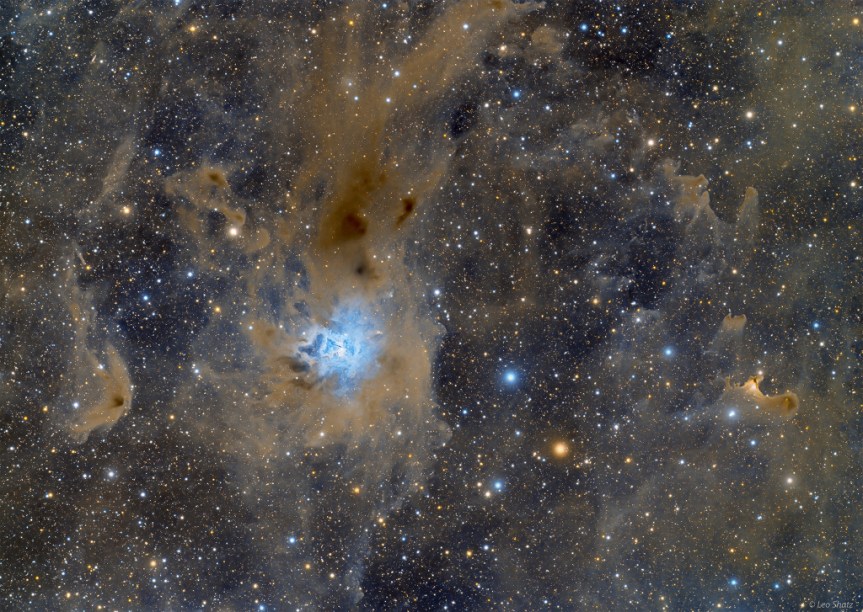
Haunting the Cepheus Flare

Image Credit & Copyright: Leo Shatz

Explanation: Spooky shapes seem to haunt this dusty expanse, drifting through the night in the royal constellation Cepheus. Of course, the shapes are cosmic dust clouds visible in dimly reflected starlight. Far from your own neighborhood, they lurk above the plane of the Milky Way at the edge of the Cepheus Flare molecular cloud complex some 1,200 light-years away. Over 2 light-years across and brighter than most of the other ghostly apparitions, vdB 141 or Sh2-136 is also known as the Ghost Nebula, seen at the right of the starry field of view. Inside the nebula are the telltale signs of dense cores collapsing in the early stages of star formation. With the eerie hue of dust reflecting bluish light from hot young stars of NGC 7023, the Iris Nebula stands out against the dark just left of center. In the broad telescopic frame, these fertile interstellar dust fields stretch almost seven full moons across the sky.

October 29 Daily Correspondence Digest for the Northern Hemisphere’s Moon Phase and Planetary Positions

You can use this link to go forward or backward in time for Moon phase information. If you are curious you can even find out what phase the Moon was in when you or anyone else, you know was on the date the person was born.

From Moongiant.com

The Moon’s current phase for today and tonight is a Waning Crescent phase. In this phase the Moon’s illumination is growing smaller each day until the New Moon. During this part of the Moon cycle, the Moon is getting closer to the Sun as viewed from Earth and the night side of the Moon is facing the Earth with only a small edge of the Moon being illuminated. This phase is best viewed an hour or 2 before the sunrise and can be quite beautiful if you’re willing to get up early. It can also be a great time to see the features of the Moon’s surface. Along the edge where the illuminated portion meets the dark side, the craters and mountains cast long shadows making them easier to observe with a telescope or binoculars.

Visit the October 2021 Moon Phases Calendar to see all the daily moon phase for this month.

Today’s Waning Crescent Phase

The Waning Crescent on October 29 has an illumination of 43%. This is the percentage of the Moon illuminated by the Sun. The illumination is constantly changing and can vary up to 10% a day. On October 29 the Moon is 22.78 days old. This refers to how many days it has been since the last New Moon. It takes 29.53 days for the Moon to orbit the Earth and go through the lunar cycle of all 8 Moon phases.

The 8 Lunar Phases

There are 8 lunar phases the Moon goes through in its 29.53 days lunar cycle. The 4 major Moon phases are Full Moon, New Moon, First Quarter and Last Quarter. Between these major phases, there are 4 minor ones: the Waxing Crescent, Waxing Gibbous, Waning Gibbous and Waning Crescent. For more info on the Moon Cycle and on each phase check out Wikipedia Lunar Phase page.

Phase Details

Phase: Waning Crescent
Illumination: 43%
Moon Age: 22.78 days
Moon Angle: 0.51
Moon Distance: 393,075.58 km
Sun Angle: 0.54
Sun Distance: 148,558,227.43 km

Useful Moon Resources

If you need to calculate the planetary positions for a specific use and time, click on this link

Currentplanetarypositions.com

To figure out GMT (Greenwich Mean Time) to your local time use this link

For Your Local Time and Date

Northeastern Hemisphere

The time for the Custom Planetary Positions is from the local time in Frankfurt, Germany, Europe

29 October 2021
03:00 pm GMT 5:00 PM CET
Zodiac: Tropical (Standard Western)

Sun:06 Scorpio 24
Moon:15 Leo 28
Mercury:19 Libra 01
Venus:23 Sagittarius 20
Mars:29 Libra 21
Jupiter:22 Aquarius 33
Saturn:07 Aquarius 10
Uranus:13 Taurus 03 Rx
Neptune:20 Pisces 42 Rx
Pluto:24 Capricorn 27
True Lunar Node:02 Gemini 00 Rx
Mean Lunar Node:02 Gemini 53 Rx
Lilith (Black Moon):11 Gemini 26
Chiron:09 Aries 32 Rx
Ceres:10 Gemini 46 Rx
Pallas:09 Pisces 21 Rx
Juno:24 Sagittarius 39
Vesta:20 Scorpio 22
Eris:24 Aries 07 Rx
Fire:5
Earth:2
Air:8
Water:4
Cardinal:5
Fixed:6
Mutable:8

Northwestern Hemisphere

The time for the Custom Planetary Positions is from the local time in Denver, Colorado, USA

October 29, 2021
11:00 pm GMT 5:00 PM MT
Zodiac: Tropical (Standard Western)

Sun:06 Scorpio 44
Moon:19 Leo 42
Mercury:19 Libra 28
Venus:23 Sagittarius 40
Mars:29 Libra 34
Jupiter:22 Aquarius 34
Saturn:07 Aquarius 11
Uranus:13 Taurus 02 Rx
Neptune:20 Pisces 42 Rx
Pluto:24 Capricorn 27
True Lunar Node:02 Gemini 00 Rx
Mean Lunar Node:02 Gemini 52 Rx
Lilith (Black Moon):11 Gemini 28
Chiron:09 Aries 31 Rx
Ceres:10 Gemini 43 Rx
Pallas:09 Pisces 20 Rx
Juno:24 Sagittarius 46
Vesta:20 Scorpio 32
Eris:24 Aries 07 Rx
Fire:5
Earth:2
Air:8
Water:4
Cardinal:5
Fixed:6
Mutable:8

A Bewitching History: Why Witches Ride Broomsticks

From LiveScience.com

By Megan Gannon 

Among the throngs of this year’s trick-or-treaters, hundreds of Americans will be dressed as Miley Cyrus or a minion from “Despicable Me,” but more will go with a fail-safe getup. “Witch” once again reigns as the No. 1 costume for adults, according to the National Retail Federation’s 2013 Halloween survey.

Many of the pointy-hatted sorcerers who roam the streets this Oct. 31 will be carrying broomsticks or besoms. But few likely know the murky tale of how witches came to be associated with those familiar household objects.

The story — full of sex, drugs and Christian inquisitors — starts with poisonous plants like black henbane (Hyoscyamus niger), sometimes called stinking nightshade.

Flying ointments

Ingesting henbane, which is rich in powerful alkaloids, can cause hallucinations (if it doesn’t kill you first). According to legend, witches used herbs with psychoactive properties like henbane in their potions, or “flying ointments.” Some historical accounts suggest witches applied these ointments to their nether regions. And what better applicator than a wooden staff?

Lady Alice Kyteler, Ireland’s earliest known accused witch, was condemned to death for using sorcery to kill her husband in 1324. (Kyteler escaped, and her maid was burned at the stake in her stead.)

The English historian Raphael Holinshed later recounted the case and described some of the supposedly damning evidence authorities found against Kyteler:…

A Version of the History of Beltane

History of Beltane from beltanefire.com.au

The Beltane fire festival welcomes the abundance of the fertile earth and is celebrated with bonfires, Maypoles, burning of the Wickerman, dancing, and a feast, with its roots in European traditions, Beltane is observed by many of today’s Pagans and others as a time for performing rituals

The Celts divided the year into two main seasons. Winter, the beginning of the year fell on November 1 (Irish: Samain) and midyear and summer on May 1 (Irish: Beltaine), opposite for us here in the Southern Hemisphere.

These two junctures were thought to be critical periods when the bonds between the human and supernatural worlds were temporarily erased; on May Eve (southern hemisphere)…

History Cooperative – Countryside Festivals

Click here to read more about Countryside Festivals

As the Romans saw many natural thigns such as trees, rocks and other matters as possible hosts to spirits or bearers of some other religious significance, then the countryside bustled with spiritual hints by gods, ghosts and spirits. There was also not a thing which wasn’t somehow guarded by a deity.

Read More: Roman gods

There was gods who watched over fields, groves, orchards, vineyards, springs, woods and any other matter. Jupiter for example watched over oak trees which were sacred to him. As country life was inevitably connected to agriculture, which was at the whim of nature, religious life in the country therefore consisted primarily of appeasing he many gods around one, ensuring that they would guard the harvest and be merciful.

As the ancient calendar, before later changes by the Romans, began on waht is now 15 March, the first traditional festival of the country calendar was the liberalia on 17 March. It was held to honour Liber, the god of fertile crops and vineyards. (The liberalia was also the traditional date when a boy could become a man by being given his toga virilis.)

On 15 April came the fordicia in honour of the earth goddess Tellus. For this pregnant cows were slaughtered in sacrifice and in Rome animal fetuses were burnt on altars. The parilia festival which took place the week after the fordicia, saw sheep being herded and forced to jump across burning bales of straw, in order to be purified.

Another festival was that celebrating the goddess Ceres which took place on 19 April. Ceres was especially connected with agriculture, the harvest and, especially, grain. So her festival was no doubt of significance to farmers. There would be a ritual march around the boundaries of the land, the so called lustration, to purify it and to honour the goddess. In the earlier times of Rome the festival of Ceres would see faxes let loose with torches tied to their tails where later the grand arena of the Circus Maximus would stand.

After the festival of Ceres followed the vinalia rustica which was a wine feast to celebrate…

October 28 Today In History

Today’s Historical Events

1492 Christopher Columbus sights Cuba and claims it for Spain under the name “Juana”

1538 The first university in the New World, the Universidad Santo Tomás de Aquino, is established on Hispaniola

1746 Peruvian cities of Lima and Callao demolished by earthquake, 18,000 die

1904 St Louis police try a new investigation method – fingerprints

1919 Volstead Act passed by US Congress, establishing prohibition, despite President Woodrow Wilson‘s veto

1924 Miner M.de Bruin discovers the infant fossil skull, “Taung child” in a lime quarry in Taung, South Africa. Paleoanthropologist Raymond Dart identifies the fossil as a new hominin species, Australopithecus africanus.

Today’s Historical Events in Film and TV

1921 Amsterdam’s Tuschinski movie theater opens

Today’s Historical Events in Music

1828 Clara Wieck, age 9, makes her piano concert debut at the Gewandhaus concert hall in Clara Leipzig, Germany

Today’s Historical Events in Sports

1890 “World Championship” Baseball Series, Washington Park, NY: Louisville Colonels beat Brooklyn Bridegrooms, 6-2 in Game 7 to tie series 3-3-1; deciding game never played

1900 II Summer (Modern) Olympic Games, Paris, France: competition ends after 5 months; no opening or closing ceremonies conducted

1924 White Sox beat NY Giants 8-4 in Dublin, less than 20 fans attend

1934 Brooklyn Dodgers and Pittsburgh Pirates play first of only 4 penalty free games in NFL history; Dodgers wins 21-3 at Ebbets Field, Brooklyn

1951 Juan Manuel Fangio of Argentina wins Formula 1 World Drivers Championship by taking out the Spanish Grand Prix at Pedralbes in an Alpha Romeo; wins by 6 points from Alberto Ascari of Italy

1953 Red Barber, resigns as Dodger sportscaster to join Yankees

1954 Major league owners vote down sale of A’s to a Philadelphia syndicate

1959 American Football League awards Buffalo Bills franchise to Ralph C Wilson

1961 Ground broken for Municipal (Shea) Stadium for NY Mets

1962 Jo Weatherly in a Pontiac finishes 2nd to Rex White in season-ending Dixie 400 at Atlanta Motor Speedway to clinch his 1st of 2 consecutive NASCAR Sprint Cup Championships

1962 NY Giant Y. A. Tittle passes for 7 touchdowns vs Wash Redskins (49-34)

1970 NBA Cleveland Cavaliers 1st home game, lose to San Diego 110-99

1973 Elmore Smith of Lakers blocks 17 shots in a game (NBA record)

1974 1st time 2 Islanders hat trick in same game-MacMillian & Westfall

1975 Calvin Murphy (Houston) begins NBA free throw streak of 58 games

October 28 Daily Correspondence Digest for the Northern Hemisphere Moon Phase and Planetary Positions

You can use this link to go forward or backward in time for Moon phase information. If you are curious you can even find out what phase the Moon was in when you or anyone else, you know was on the date the person was born. 

From Moongiant.com 

The Moon’s current phase for today and tonight is a Third Quarter phase. Sometimes called a Last Quarter Moon, this phase occurs roughly 3 weeks after the New Moon when the Moon is three quarter of the way through it’s orbit around the earth. If you live in the northern hemisphere the Moons left side will be illuminated and the right side will be dark. For those of you in the southern hemisphere it will be the opposite with the right side illuminated. On the day of the Third Quarter phase the Moon will rise around midnight on the eastern horizon and set in the west around noon the next day. In the days following the Third Quarter Phase the Moon’s illumination will decrees each day until the New Moon.

Visit the October 2021 Moon Phases Calendar to see all the daily moon phase for this month.

Today’s Last Quarter Phase

The Last Quarter on October 28 has an illumination of 53%. This is the percentage of the Moon illuminated by the Sun. The illumination is constantly changing and can vary up to 10% a day. On October 28 the Moon is 21.85 days old. This refers to how many days it has been since the last New Moon. It takes 29.53 days for the Moon to orbit the Earth and go through the lunar cycle of all 8 Moon phases.

The 8 Lunar Phases

There are 8 lunar phases the Moon goes through in its 29.53 days lunar cycle. The 4 major Moon phases are Full Moon, New Moon, First Quarter and Last Quarter. Between these major phases, there are 4 minor ones: the Waxing Crescent, Waxing Gibbous, Waning Gibbous and Waning Crescent. For more info on the Moon Cycle and on each phase check out Wikipedia Lunar Phase page.

Phase Details

Phase: Last Quarter
Illumination: 53%
Moon Age: 21.85 days
Moon Angle: 0.50
Moon Distance: 397,159.80 km
Sun Angle: 0.54
Sun Distance: 148,597,775.81 km

Useful Moon Resources

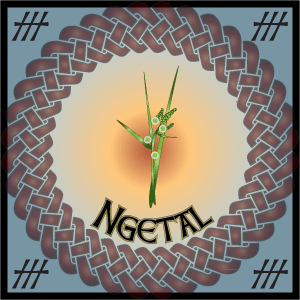
Celtic Zodiac – The Reed

The Reed

10/28 – 11/24: The Druids believed the Reed to be a tree because of its dense system of roots. Cut reeds were used as pens and symbolized wisdom and scholarship. Identified with the submerged or hidden Dryad, the Reed was representative of the mysteries of death. It was associated with being both a saviour and a custodian as well as a symbol of royalty. It was used in the making of instruments such as flutes and pipes. Pan, the Greek God of Herds, Fertility and Male Sexuality (whose name is the root word of “panic”), is often depicted playing a syrinx…a pipe comprised of seven reeds. Traditionally a nomadic people, the Celts camped in one area throughout the Winter months and would break camp in the Spring when the first yellow blooms appeared on the Reed. The Reed was once believed to bring order out of chaos and legend holds that a Reed was thrust into Christ’s hand when he was mockingly robed in purple.

The Reed grows in silence, thin and slender, by watersides and marshlands, standing in clumps at the edge of rivers. It is representative of arrows that fly up into the unknown air to land at the very source of that which is being sought, symbolic of the direct approach required when confronting a dilemma…whether that dilemma comes from within or without. The Reed expressed the desire to search out basic truths and was also symbolic of music. Within many woodwind instruments, the Reed will create a balance. Even in today’s world, the Reed is often used to thatch the roofs of houses, once being representative of the protection it offered to all of Nature’s creatures, whether domestic or wild. Weavers often used the Reed to separate the threads they once spun and its leaves were frequently used to fashion baskets and floor mats. Some cultures (such as the Marsh Arabs of the Rivers Tigris and Euphrates) built entire houses and even mosques from Reeds. Natives of the American SouthWest once made arrow shafts from the Reed’s woody culms and, in more modern times, small beds of Reeds are sometimes planted to purify domestic sewage.

Though often used with great imprecision, the term “Reed” as it applies to the Ogham is the Common Reed or Broom, a giant grass with stems which can grow to be 12 feet tall. It is found in abundance in the British Isles, usually in marshy areas where it often forms dense stands and blooms with yellow pod-shaped flowers. As with most other grasses, the vertical stems of the Reed (which can be very thick and strong) live only for a single year, dying in the Autumn to be replaced with new green shoots in the Spring. The dead stems have a tendency to rattle and whisper in late Autumn winds. The Common Reed has spread in weed-like fashion throughout most of the world but is more widespread in cooler climates. As its alternative name suggests, the branches of the Reed are …

Click here to read about the Reed from Celtic Radio

Some Thoughts About Celebrating Samhain

Samhain is a day of reflection of the past year while celebrating the new. It is a day that whatever has not been harvested from gardens, fields, bushes, and trees get left for the wildlife and Fea Folk. It is also a day to communicate with those who have crossed the veil into the Summerlands. Many pagans and witches say it is the day and/or night to honor only those that have crossed in the last year but I do not go along with this way of thinking. While those who have passed since November 1, 2020 up to today do need more comforting and remembering them then those that have crossed over in other years past. The farther back in time you go to those who have crossed before the last year the more chance there is that they will be forgotten totally.

Hypothetically, if crossed the veil say 30 years ago or longer and each generation after you talk about you less and less as each year passes soon you will be forgotten completely. That one reason I have my Book of Shadows and Family Grimoire as one book that I hope keeps growing after I am gone. I have also placed pictures of ancestors at different ages as well as pictures of myself alone and with family members both ancestors and descents. In the section for ancestors I have included a picture of their headstone and where it can be found if I know.

So this Samhain when you are setting the extra place at the table, lighting a candle for each ancestors name, or however you choose to honor your ancestors (remember an ancestor does not have to be blood related they can be anyone in your life that help to mold you into the person you are today.) Set one more place, light one more candle, or whatever your tradition to remember your ancestors is for those who names have been forgotten since the first Homosapien of any branch of the human gene pool lived.

I implore you all to remember that we all can trace our lineage back to this mish mash of a gene pool and that the energy that runs through us connects us to every other living things and not just on Mother Earth. So the next time you have a negative thought about someone for any reason at all remember you are also having that negative thought about yourself.

I picked this song to be included in this post because for me it helps me to remember those, female or male or other, who otherwise might be forgotten

Grandmother

I wish all my family, which means everyone reading this post and by blood, a happy and blessed Samhain.


Lady Beltane 2018

Reed Moon: Celtic Tree Calendar

To read more about the Celtic Reed Month by Sarah Wayt

The celebration of Samhain, now known as Halloween, occurs during the Reed Moon. To the Celts this month hailed the end of the year, a time to cull the livestock and to connect with ancestors. All around the world festivals that honour the dead are celebrated. During the Reed Moon, light a candle for loved ones who have died and you may receive a message from the spirit world.

Releasing old energy

The Reed Moon is a good time to use divination to gain insights into the year that has passed. Perform energy work that will release old energy, burn symbols of illness on your bonfire on November the 5th during your Guy Fawkes celebrations. Remember the Celtic year does not begin until the Winter Solstice so use this interval to dream, not to make plans for the future.

The haunting sound of reed

In the past, the reed was used to make swift-flying arrow shafts that slew both enemies and game. In this way the plant was linked to the season of death and sacrifice, in which trees shed their leaves and the energy of nature became more introspective. Many early musical instruments also used the reed to create a haunting sound that has been connected to rites for the dead and the summoning of spirits.

Wind instruments

Modern day wind instruments have developed the same principle used by original reed instruments. Whereby a current of air is vibrated to produce a melodic sound.

Other traditional uses for reed include thatching. Rooftops were thatched with reeds, and as the Celts withdrew into their homes for the winter they honoured the plant that gave them shelter, making the reed a symbol of royalty and protection.

Reed Moon energy…

Reed – introduction to Ogham

From Ireland Calling

It is widely believed in academic circles that reed is a modern, neo-pagan introduction to the Ogham, much like the tree calendar itself.

It was first promoted as an Ogham by Robert Graves in his book The White Goddess. However, the reed’s importance to Celtic life and folklore are indisputable.

Reed gained a reputation as a protective tree from its use as thatch for the rooftops homes.

For this reason it was also made into talismans and charms believed to protect the wearer from evil. Mats were often woven out of reeds which gave the house a sweet smell, associating the reed with cleansing the home.

Scholarship

The Druids also used reeds to make writing implements and paper, thus associating the reed with knowledge, scholarship and wisdom.

Physicians would use reeds as tools for administering treatments but arrows, the weapons of death, were also made out of reeds. Because of these two contrasting uses the reed gained an association with both death and healing.

Souls of the ‘otherworld’ join the living…

28 October Daily Correspondence Digest for the Southern Hemisphere’s Moon Phase and Planetary Positions

You can use this link to go forward or backward in time for Moon phase information. If you are curious you can even find out what phase the Moon was in when you or anyone else, you know was on the date the person was born.

From Moongiant.com

The Moon’s current phase for today and tonight is a Third Quarter phase. Sometimes called a Last Quarter Moon, this phase occurs roughly 3 weeks after the New Moon when the Moon is three quarter of the way through it’s orbit around the earth. If you live in the northern hemisphere the Moons left side will be illuminated and the right side will be dark. For those of you in the southern hemisphere it will be the opposite with the right side illuminated. On the day of the Third Quarter phase the Moon will rise around midnight on the eastern horizon and set in the west around noon the next day. In the days following the Third Quarter Phase the Moon’s illumination will decrees each day until the New Moon.

Visit the October 2021 Moon Phases Calendar to see all the daily moon phase for this month.

Last Quarter Phase

The Last Quarter on October 28 has an illumination of 53%. This is the percentage of the Moon illuminated by the Sun. The illumination is constantly changing and can vary up to 10% a day. On October 28 the Moon is 21.85 days old. This refers to how many days it has been since the last New Moon. It takes 29.53 days for the Moon to orbit the Earth and go through the lunar cycle of all 8 Moon phases.

The 8 Lunar Phases

There are 8 lunar phases the Moon goes through in its 29.53 days lunar cycle. The 4 major Moon phases are Full Moon, New Moon, First Quarter and Last Quarter. Between these major phases, there are 4 minor ones: the Waxing Crescent, Waxing Gibbous, Waning Gibbous and Waning Crescent. For more info on the Moon Cycle and on each phase check out Wikipedia Lunar Phase page.

Phase Details

Phase: Last Quarter
Illumination: 53%
Moon Age: 21.85 days
Moon Angle: 0.50
Moon Distance: 397,159.80 km
Sun Angle: 0.54
Sun Distance: 148,597,775.81 km

Useful Moon Resources

October 27 On This Day in History

Important Events

312 Roman Emperor Constantine the Great is said to have received his famous Vision of the Cross

1795 Pinckney’s Treaty [Treaty of San Lorenzo] signed by Spain and US, establishing the southern boundary of the US and giving Americans right to navigate the Mississippi River

1962 Black Saturday during the Cuban Missile Crisis: An American spy plane is shot down over Cuba and the navy drops warning depth charges on Soviet submarines

1982 China announces its population has reached 1 billion plus people

1986 British government deregulates financial markets in a “Big Bang”, enhancing London’s status as a financial capital while increasing income inequality

Today’s Historical Events

Today’s Historical Events in Film and TV

Today’s Historical Events in Music

Today’s Historical Events in Sports

Astronomy Picture of the Day

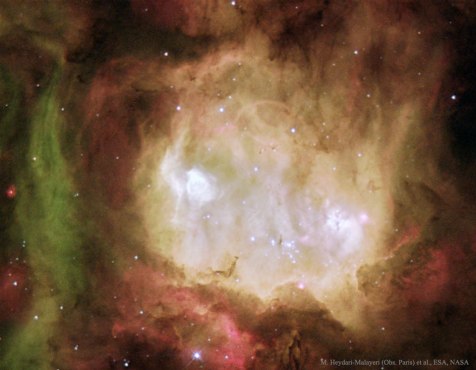
Halloween and the Ghost Head Nebula

Image Credit: Mohammad Heydari-Malayeri (Observatoire de Paris) et al., ESANASA

Explanation: Halloween’s origin is ancient and astronomical. Since the fifth century BC, Halloween has been celebrated as a cross-quarter day, a day halfway between an equinox (equal day / equal night) and a solstice (minimum day / maximum night in the northern hemisphere). With a modern calendar however, even though Halloween occurs next week, the real cross-quarter day will occur the week after. Another cross-quarter day is Groundhog Day. Halloween’s modern celebration retains historic roots in dressing to scare away the spirits of the dead. Perhaps a fitting tribute to this ancient holiday is this view of the Ghost Head Nebula taken with the Hubble Space Telescope. Similar to the icon of a fictional ghost, NGC 2080 is actually a star forming region in the Large Magellanic Cloud, a satellite galaxy of our own Milky Way Galaxy. The Ghost Head Nebula (NGC 2080) spans about 50 light-years and is shown in representative colors.

October 27 Daily Correspondence Digest for the Northern Hemisphere’s Moon Phase and Planetary Positions

You can use this link to go forward or backward in time for Moon phase information. If you are curious you can even find out what phase the Moon was in when you or anyone else, you know was on the date the person was born.

From Moongiant.com

Tomorrow the Moon will be in a Waning Gibbous Phase. This is the first phase after the Full Moon occurs. It lasts roughly 7 days with the Moon’s illumination growing smaller each day until the Moon becomes a Last Quarter Moon with an illumination of 50%. The average Moon rise for this phase is between 9pm and Midnight depending on the age of the phase. The moon rises later and later each night setting after sunrise in the morning. During this phase the Moon can also be seen in the early morning daylight hours on the western horizon.

Visit the October 2021 Moon Phases Calendar to see all the daily moon phase for this month.

Today’s Waning Gibbous Phase

The Waning Gibbous on October 27 has an illumination of 63%. This is the percentage of the Moon illuminated by the Sun. The illumination is constantly changing and can vary up to 10% a day. On October 27 the Moon is 20.94 days old. This refers to how many days it has been since the last New Moon. It takes 29.53 days for the Moon to orbit the Earth and go through the lunar cycle of all 8 Moon phases.

The 8 Lunar Phases

There are 8 lunar phases the Moon goes through in its 29.53 days lunar cycle. The 4 major Moon phases are Full Moon, New Moon, First Quarter and Last Quarter. Between these major phases, there are 4 minor ones: the Waxing Crescent, Waxing Gibbous, Waning Gibbous and Waning Crescent. For more info on the Moon Cycle and on each phase check out Wikipedia Lunar Phase page.

Phase Details

Phase: Waning Gibbous
Illumination: 63%
Moon Age: 20.94 days
Moon Angle: 0.50
Moon Distance: 400,549.81 km
Sun Angle: 0.54
Sun Distance: 148,637,613.73 km

Useful Moon Resources

27 October Daily Correspondence Digest for the Southern Hemisphere’s Moon Phase and Planetary Positions

You can use this link to go forward or backward in time for Moon phase information. If you are curious you can even find out what phase the Moon was in when you or anyone else, you know was on the date the person was born.

From Moongiant.com

Tomorrow the Moon will be in a Waning Gibbous Phase. This is the first phase after the Full Moon occurs. It lasts roughly 7 days with the Moon’s illumination growing smaller each day until the Moon becomes a Last Quarter Moon with an illumination of 50%. The average Moon rise for this phase is between 9pm and Midnight depending on the age of the phase. The moon rises later and later each night setting after sunrise in the morning. During this phase the Moon can also be seen in the early morning daylight hours on the western horizon.

Visit the October 2021 Moon Phases Calendar to see all the daily moon phase for this month.

Today’s Waning Gibbous Phase

The Waning Gibbous on October 27 has an illumination of 63%. This is the percentage of the Moon illuminated by the Sun. The illumination is constantly changing and can vary up to 10% a day. On October 27 the Moon is 20.94 days old. This refers to how many days it has been since the last New Moon. It takes 29.53 days for the Moon to orbit the Earth and go through the lunar cycle of all 8 Moon phases.

The 8 Lunar Phases

There are 8 lunar phases the Moon goes through in its 29.53 days lunar cycle. The 4 major Moon phases are Full Moon, New Moon, First Quarter and Last Quarter. Between these major phases, there are 4 minor ones: the Waxing Crescent, Waxing Gibbous, Waning Gibbous and Waning Crescent. For more info on the Moon Cycle and on each phase check out Wikipedia Lunar Phase page.

Phase Details

Phase: Waning Gibbous
Illumination: 63%
Moon Age: 20.94 days
Moon Angle: 0.50
Moon Distance: 400,549.81 km
Sun Angle: 0.54
Sun Distance: 148,637,613.73 km

Useful Moon Resources

If you need to calculate the planetary positions for a specific use and time, click on this link

Currentplanetarypositions.com

To figure out GMT (Greenwich Mean Time) to your local time use this link

For Your Local Time and Date

Southeastern Hemisphere

The time for the Custom Planetary Positions is from the local time in Melbourne, Victoria, Australia 

27 October 2021
06:00 am GMT 5:00 PM AEDT
Zodiac: Tropical (Standard Western)

Sun:04 Scorpio 02
Moon:16 Cancer 20
Mercury:15 Libra 57
Venus:20 Sagittarius 57
Mars:27 Libra 45
Jupiter:22 Aquarius 28
Saturn:07 Aquarius 06
Uranus:13 Taurus 09 Rx
Neptune:20 Pisces 44 Rx
Pluto:24 Capricorn 25
True Lunar Node:01 Gemini 59
Mean Lunar Node:03 Gemini 01 Rx
Lilith (Black Moon):11 Gemini 10
Chiron:09 Aries 38 Rx
Ceres:11 Gemini 04 Rx
Pallas:09 Pisces 31 Rx
Juno:23 Sagittarius 55
Vesta:19 Scorpio 06
Eris:24 Aries 08 Rx
Fire:4
Earth:2
Air:8
Water:5
Cardinal:6
Fixed:5
Mutable:8

 Southwestern Hemisphere

The time for the Custom Planetary Positions is from the local time in Sao Paulo, Brazil, South America

27 October 2021
08:00 pm GMT 5:00 PM BRT
Zodiac: Tropical (Standard Western)

Sun:04 Scorpio 37
Moon:23 Cancer 21
Mercury:16 Libra 40
Venus:21 Sagittarius 32
Mars:28 Libra 09
Jupiter:22 Aquarius 29
Saturn:07 Aquarius 07
Uranus:13 Taurus 07 Rx
Neptune:20 Pisces 44 Rx
Pluto:24 Capricorn 25
True Lunar Node:02 Gemini 00
Mean Lunar Node:02 Gemini 59 Rx
Lilith (Black Moon):11 Gemini 14
Chiron:09 Aries 36 Rx
Ceres:11 Gemini 00 Rx
Pallas:09 Pisces 29 Rx
Juno:24 Sagittarius 06
Vesta:19 Scorpio 24
Eris:24 Aries 08 Rx
Fire:4
Earth:2
Air:8
Water:5
Cardinal:6
Fixed:5
Mutable:8

Astronomy Picture of the Day

Discover the cosmos! Each day a different image or photograph of our fascinating universe is featured, along with a brief explanation written by a professional astronomer.

Today’s Astronomy Picture is a Video. Click here to watch it.

Jupiter Rotates

Video Credit & Copyright: JL DauvergneMusic: Oro Aqua (Benoit Reeves)

Explanation: Observe the graceful twirl of our Solar System’s largest planet. Many interesting features of Jupiter’s enigmatic atmosphere, including dark belts and light zones, can be followed in detail. A careful inspection will reveal that different cloud layers rotate at slightly different speeds. The famous Great Red Spot is not visible at first — but soon rotates into view. Other smaller storm systems occasionally appear. As large as Jupiter is, it rotates in only 10 hours. Our small Earth, by comparison, takes 24 hours to complete a spin cycle. The featured high-resolution time-lapse video was captured over five nights earlier this month by a mid-sized telescope on an apartment balcony in ParisFrance. Since hydrogen and helium gas are colorless, and those elements compose most of Jupiter’s expansive atmosphere, what trace elements create the observed colors of Jupiter’s clouds remains a topic of research.


Discovery + Outreach: Graduate student research position open for APOD


October 26 On This Day in HIstory

Important Events

1850 Robert McClure sights the fabled Northwest Passage for the first time (from Banks Island towards Melville Island)

1861 Pony Express (Missouri to California) ends after 19 months

1863 International conference begins in Geneva aimed at improving medical conditions on battlefields – beginning of the Red Cross

1977 Last natural case of smallpox discovered in Merca district, Somalia. Considered the anniversary of the eradication of smallpox, the most spectacular success of vaccination

2019 Raid by US Special Forces kills ISIS founder Abu Bakr al-Baghdadi in Syria

Today’s Historical Events

Today’s Historical Film and TV’s Events

Today’s Historical Music’s Events

Today’s Historical Sport’s Events


Ancient Roman God Terminus

Terminus

From Pantheon.org – For Sources and References Roman God Terminus

“Border.” A Roman divinity presiding over boundaries and frontiers. His worship is said to have been instituted by Numa who ordered that every one should mark the boundaries of his landed property by stones to be consecrated to Jupiter (Ζεὺς ὅριος), and at which every year sacrifices were to be offered at the festival of the Terminalia.1 These sacred boundaries existed not only in regard to private property, but also in regard to the state itself, the boundary of which was not to be transgressed by any foreign foe. But in later times the latter must have fallen into oblivion, while the termini of private property retained their sacred character even in the days of Dionysius, who states that sacrifices of cakes, meal, and fruit (for it was unlawful to stain the boundary stones with blood), still continued to be offered.

The god Terminus himself appears to have been no other than Jupiter himself, in the capacity of the protector of boundaries.2 The Terminus of the Roman state originally stood between the fifth and sixth milestone on the road towards Laurentum, near a place called Festi, and that ancient/boundary of the Ager Romanus (“the field of Rome“) continued to be revered with the same ceremonies as the boundaries of private estates.3 Another public Terminus stood in the temple of Jupiter in the Capitol, and above it there was an opening in the roof, because no Terminus was allowed to be under cover.4 This is another proof that Terminus was only an attribute of Jupiter, although tradition gave a different reason for this circumstance; for when that temple was to be founded, and it was necessary to exaugurate other sanctuaries standing on the same site, all the gods readily gave way to Jupiter and Juno, but the auguries would not allow the sanctuaries of Terminus and Juventas to be removed. This was taken as an omen that the Roman state would remain ever undiminished and young, and the chapels of the two divinities were inclosed within the walls of the new temple. Here we may ask, what had a Terminus to do on the Capitol, unless he was connected or identical with Jupiter?

October 26 Daily Correspondence Digest for the Northern Hemisphere’s Moon Phase and Planetary Positions

You can use this link to go forward or backward in time for Moon phase information. If you are curious you can even find out what phase the Moon was in when you or anyone else, you know was on the date the person was born.

From Moongiant.com

The Moon’s current phase for today and tonight is a Waning Gibbous Phase. This is the first phase after the Full Moon occurs. It lasts roughly 7 days with the Moon’s illumination growing smaller each day until the Moon becomes a Last Quarter Moon with an illumination of 50%. The average Moon rise for this phase is between 9pm and Midnight depending on the age of the phase. The moon rises later and later each night setting after sunrise in the morning. During this phase the Moon can also be seen in the early morning daylight hours on the western horizon.

Visit the October 2021 Moon Phases Calendar to see all the daily moon phase for this month.

Today’s Waning Gibbous Phase

The Waning Gibbous on October 26 has an illumination of 72%. This is the percentage of the Moon illuminated by the Sun. The illumination is constantly changing and can vary up to 10% a day. On October 26 the Moon is 20.04 days old. This refers to how many days it has been since the last New Moon. It takes 29.53 days for the Moon to orbit the Earth and go through the lunar cycle of all 8 Moon phases.

The 8 Lunar Phases

There are 8 lunar phases the Moon goes through in its 29.53 days lunar cycle. The 4 major Moon phases are Full Moon, New Moon, First Quarter and Last Quarter. Between these major phases, there are 4 minor ones: the Waxing Crescent, Waxing Gibbous, Waning Gibbous and Waning Crescent. For more info on the Moon Cycle and on each phase check out Wikipedia Lunar Phase page.

Phase Details

Phase: Waning Gibbous
Illumination: 72%
Moon Age: 20.04 days
Moon Angle: 0.49
Moon Distance: 403,115.63 km
Sun Angle: 0.54
Sun Distance: 148,677,728.94 km

Useful Moon Resources