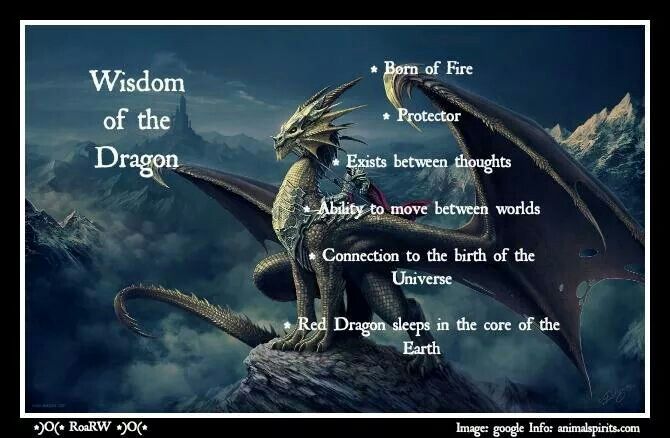
Draconic Wicca/Witchcraft
______________________
Draconic Wicca is the utilization of the powers of the dragons. There are as many dragons as there are people. They are as varied as humans are also. We work with these dragons to achieve the results that we seek. In doing so, we have to deal with the unique personalities of each type of dragon. The dragons have no real hierarchy other than age, except for the case of ‘The Dragon’.
The Dragon is the combined powers of the God and the Goddess. The Dragon is invoked or evoked during Sabbats and in times when great magick is needed (not when you can not find your keys). Invoking means to call into you the power of the dragon that you name i.e. a fire dragon. You ask that this dragon assume himself/herself into your spiritual body. To evoke means to call a dragon to you, to join you in your magickal workings.
The reason it is called Draconin “Wicca” is because of the similarities to the wiccan religion of today. This religion was originally brought to Earth by the blessed races when Atlantis was formed. The name of the religion itself cannot be pronounced in present English certainly not spelled. This religion was taken away from the Atlantians and Atlantis destroyed.The druids were the descendants of the Old Religion and passed on by mouth.
The spirits God: The god is the male half of the ‘divine being’. He has many faces and has known many names. To wiccans, he is known as the horned god, the sun god, and many more. God is not just Father, he is Mate, Consort, Lover, Friend, Brother, Hunter, Husband, Law-giver, and Partner.
Goddess: The goddess is the female half of the ‘divine being’. She also has had many faces and many names. Wiccans, druids, and the coven all respect the Maiden, Mother, and Crone aspect of the goddess show in the entire universe.
Red Dragon: The Red Dragon is effectively the goddess of the dragons and very, very few known her actual name. She represents all of the blessed races and has a counterpart for each. Dragons/Races of the
Elements: Each race has its own head keeper of the elements and/or directions. The elements are: Air, Earth, Fire, Water, Light, Darkness and Spirit These spirits are called in to help with specific elements and what the elements and directions can help with different things. Healing would be Earth for example.
Many names are used to invoke different aspects of the above spirits. The goddess might be invoked as Bast (Egyptian name) for example for healing and another time Athena (Greek) for wisdom. There is a good saying. “There are many faces of the one god.” However this doesn’t apply for the Red Dragon of other guardians of the elements. This mostly applies for the God and Goddess aspects. The sabbats are more like the old druidic sabbats, which any good reference is hard to find, than the ones that are found in Wiccan religions.
_________________________________
Draconian lore and practice are rarely found in any of the published books on magick. (There are a few very notable exceptions, like D. J. Conway’s ‘Dancing with Dragons’)
Draconian magick is, by definition, magick that is fueled by the symbolism and energies of Dragons.
While not actually defined as a Tradition of Wicca, Draconian Magick shares many of its defining elements. It has a code of honor just like a more Traditional Wicca Path, that is perhaps a little more strict than the Wiccan Rede however. Draconian Magick has always been passed down from teacher to student, perhaps that is one reason there is so little information available.
Dragon Magick is not for everyone. Those that choose to practice it must be self-disciplined individuals who are serious about changing things in their lives and the world around them. They must be willing to have beings be brutally honest with them and be willing to turn that same honesty upon yourself. Working with dragons is a hard path, but ultimately rewarding. The journey of rediscovering the true essence of Dragon Magick can be an uncomfortable experience for some people, being forced to examine aspects of their inner-selves that they would rather not acknowledge. But self knowledge and self integration are the true keys to magickal wisdom and power… Opening yourself to acceptance of your true self is a task that few of us have the courage to face, and yet it is an important step to undertake if true power is to be achieved in any magickal Tradition.
For most practitioners of magick, Dragons represent Wisdom and Balance. But for those who are practitioners of Draconian Magick, Dragons are seen as Deities and held in the highest regards. No other Deities are held higher. While Dragons are revered in most Traditions of Paganism or Wicca, they are not thought of in the form of Deities.
When holding a Ritual which includes Dragons, or is a Dragon Ritual, it is important to understand that in Draconian beliefs, the Dragon is held in the All-High, or exalted position. Placing another Deity in a position higher than that of the Dragon is an insult to the Dragon…
Draconian Magick is unequivocally a school of the Left-Hand Path.
That is to say it is a school which teaches the immortalisation and deification of the individual psyche, as opposed to the Right-Hand Path which seeks to submerge that psyche within a sense of universal oneness…I believe that many Wiccans and Pagans today tend to shy away from anything Dark, there are allot of Wiccans out there who claim to practice only ‘white’ magick, And, while most Wiccans/Pagans do not use the statement “I walk a Right-Hand Path” They do. But, to me at least, this creates an imbalance. There cannot be Light without Dark. There is a certain degree of Darkness within us all. You cannot be in Balance if you deny one side of your nature. Many Wiccans/Pagans automatically assume a Dark Witch performs magick that is wrong, negative, or even evil. This is simply not true.
The left-hand path is about the elevation and centrality of the self as well as the rejection of religious authority and societal taboos. The left-hand path focuses on the strength and will of the practitioner, downplaying the need for intercession by any high power (although they may believe a higher power exists).
<VS>
The right-hand path concentrates on the symbols of goodness, of the Light of the Divine, the connection of self with the Divine, and the purification of self in order to reconnect with the Divine. Many right-hand followers believe that there is a Divine power that holds sway over the universe and through prayer and worship that Divinity will help to better their lives. The vast majority of religions are considered part of the right-hand path, from Christianity to Wicca.
So, When I hear people say “I’m a White Witch” or the ever popular “I’m a Green Witch” I just smile and keep moving…
I have said it before, and I’ll say it again… IF I had to pick a color, I’d have to say I’m a Grey Witch.
I believe in Balance. In all things there should be a Balance. In my Spiritual Path I strive for Balance. There is a Darkness in us all. I do not deny the Darkness, I embrace it. Does this make me evil? I don’t believe so, because I Balance it with Light… There is a Light within us all as well…
I know I’m probably going to get a few people who point to the Wiccan Rede… and espouse they’re religion doesn’t harm anyone… Well, let me just state that neither does mine. I follow the Rede, always have. The main thing is, I don’t rely on ANY religion to dictate my Morals, my sense of Right or Wrong, I Rely on Myself. In this sense, I follow (Some) of the Christians 10 commandments as well… NOT because I worry about some eternal damnation, but simply because it fits within my own moral concept. I do not need any religion to ‘guide’ my moral compass, or direct my Spiritual path.
I do not Pray to the Goddess to alter or enhance my life. I do not repent my sins before any Goddess or God. I know that I have done things in my life that were wrong. I recognize this fact and strive always to change these behaviors.
I don’t think any Natural inclination (such as SEX) is wrong.
I eat Meat. Because I Like it. and really humans are Omnivores…
I do not believe in the usual concepts of good or evil…
AND… I do not judge myself based on someone else’s judgement of me. I am who I am.
Self-responsibility is also seen as of utmost importance when working with Dragons. You must be able to view your actions objectively…and accept the consequences of those actions, whether the outcome is positive or negative.
Dragons are warriors for light (lightworkers). They are a collective of souls who service the light. They can infuse their souls into bodies that are not dragon (human for example). In this way they can work for light and efficiently bring about changes. This is one thing that makes them invaluable in Healing Ceremonies. Some call any magickal practice with Dragons is to “Dance with Dragons”, but they can be more then just a dance partner. As teachers of ancient knowledge their grasp of it is deep and profound. Their ability to help in divination is astonishing and quite accurate. As protectors during rituals and everyday life there are no equals. And if a Dragon chooses to take you under their wings you will have the opportunity of learning knowledge and evolving your magickal ability to a degree which few have known.
During meditative channeling, Dragons usually appear to people as themselves. There are those times when they appear as winged humans, or something else, but for the most part you see them as they appear as they would be in their own realm.
Dragons are a part of the Fae Realm. When the Fae drew back from humankind and sealed themselves from our sight, the Dragons became the Gatekeepers to that realm. Guarding forever the passage from our realm to theirs. Which is one reason it is so hard to gain access to the Faerie Realm. Most people who are aware of the Fae Realm already know that the Fae are able to enter our realm at will, humans, however must first gain access past these mighty Guardians. A Dragon can look into the soul of a human and gauge the enlightenment that the human has gained. This is one reason that the practitioner of Dragon Magick must strive for enlightenment…
The Goddess & God:
The Dragon is the combined powers of the God and the Goddess. The Dragon is invoked or evoked during Sabbats and in times when great magick is needed.
Red Goddess Dragon:
The Goddess is the female half of the ‘Divine Being’. She also has had many faces and many names. Wiccans, Druids, and the coven all respect the Maiden, Mother, and Crone aspect of the Goddess shown in the entire universe.
The Dragon Goddess always appears as a Red Dragon. The Red Goddess Dragon is effectively the Goddess of the Dragons and very, very few know her actual name. She represents all of the blessed races and has a counterpart for each.
The God Dragon:
The God is the male half of the ‘Divine Being’. He has many faces and has known many names. To Wiccans, he is known as the Horned God, the Sun God, and many more.
The Draconian God is not just Father, he is Mate, Consort, Lover, Friend, Brother, Hunter, Husband, Law-giver, and Partner.
Dragon Guardians and Guides:
Dragons are famous for their fierce protective nature. Though most myths portray Dragons as protectors of great treasures, they have been known to be protectors of people too.
The Dragon serves as a Powerful Guardian and Guide. Once you discover your Guardian Dragon/Dragon Guide you should encourage communication, and acknowledge your Dragon’s presence as often as possible, the same as you would with an Animal Spirit Guide or even a Guardian Angel. You will need to let you Guardian Dragon/Dragon Guide know that you are now open and willing to listen to any guidance, advice or teaching they wish to impart to you.
One way to do this is to meditate and concentrate upon your Guardian/Guide. Light candles and incense for them, and leave offerings for them upon your altar. Designing a special altar just for your Guardian/Guide is a good idea, a place where you can concentrate your energies towards the Guardian.
Many magick practitioners will surround themselves with imagery of their Guardian/Guide, immersing themselves externally in the energies of the Guardian/Guide. This will help you to draw the Guardian/Guide to you, and will assist you in achieving your connection.
As with any Guardian/Guide, finding your Guardian Dragon/Dragon Guide is not the problem. Most likely they are already around you, and in fact may have attempted contact with you in the past. This happens with many different types of Guardians and Guides, we fail to recognize the messages that they are sending us. If this is the case, contact should be easy to obtain once you have let the Dragon know you are ready & willing to connect with them.
One thing you must remember though, is when you do feel a Dragon in your house it does not mean that it’s “your”Dragon. Sometimes it can take years for a Dragon to decide to be someone’s Guardian/Guide, so just because there is one in your house or one that’s been following you for years, unless he/she tells you otherwise, don’t jump to conclusions and think that you have a Guardian Dragon or a Dragon Guide, it could be there for reason’s of it’s own… Sometimes though, a person can live their entire lives with a Guardian Dragon/Dragon Guide and never know it…
(Just a note: I have been combining Guardian Dragon & Dragon Guide, but I don’t want to give the impression that they are the same thing. These are two completely different Dragons, who perform completely different tasks, the way that you find them & connect with them, however, is the same.)
To find your Guardian Dragon or Dragon Guide, you must first find you Element…
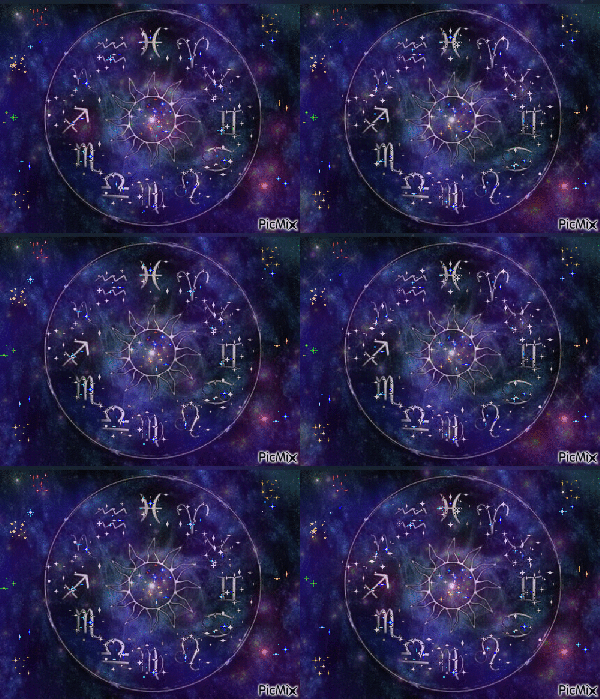
As a general rule, you can go by your astrological sign;
Capricorn – Earth
Aquarius – Air
Pisces – Water
Aries – Fire
Taurus – Earth
Gemini – Air
Cancer – Water
Leo – Fire
Virgo – Earth
Libra – Air
Scorpio – Water
Sagittarius – Fire
The second means of determining which Elementals you have the best connection with is through your first name. Your birth-name is, like your astrological chart, an energy center, reflecting the play of certain energies within your life. The vowels of your first name are the keys to determining with which elemental you are most harmonious.
The primary vowel in your first name indicates which group of Elementals you can align with most easily. The primary vowel is the one most strongly pronounced.
Element Vowel Elemental Being
Fire I Salamanders
Earth U Gnomes
Air E Sylphs
Water O Undines
Ether/Chaos A The Ether/Choas Element will accentuate and intensify the relationship and activity of every
Elemental force to which it is applied ~ for good or bad.
If the astrological element and the name element are the same, it can indicate that you have come to double your work with that group of Elemental Beings and the Energies that they work with. If they are opposite, they do Not cancel each other out, it means that it is up to you to find a Balance between them when you are working with them.
Once you know which Element you are aligned with, simply match it with that type of Dragon. For instance; I am a Capricorn; So, according to my astrological chart, I resonate most strongly with the Earth Elemental… and my first name is Mary; So, that’s an A; Which makes it Ether/Choas… Which means that I align with the Earth Elemental and all contact will be accentuated and intensified.
Okay, so now, knowing my Element, I would look down at the Elemental Dragons and know that my Guardian Dragon/Dragon Guide would be the Earth Dragon…
Some people will resonate with more than one Element, and therefor more than one Elemental Dragon as well… Also, if the chart says one thing, and your soul is telling you another, always go with your soul… It knows best, Always.
{Just a note: This formula for determining which Element you align with came from Ted Andrews’s book ‘Enchantment of the Faerie Realm’ … Also, I have changed it somewhat to include the Element Choas, as he explains Ether, they are the same thing.}
Elemental Dragons:
Air Dragons
These great dragons are ruled by the Sairys (pronounced Sair-iss), their Elemental color is pure yellow, light blue, silver, white and gray…
Where they inhabit is often warm and moist. Air dragons often have a very peaceful nature and they like to share what they know, in fact they feel that all knowledge is worth having. As their name suggests, they control the winds and can manipulate air with amazing dexterity. They can even remove all air from an area creating a vacuum that is next to impossible to fill. These dragons are often long and slender, some have gauzy wings and their scales often have a feather-like quality and may have actual feathers around their heads, necks, and paws. They govern the Eastern quarter of the Circle and you can apply Eastern associations to these dragons.
Positive associations of these dragons are new beginnings, the Spring, breath, optimism, joy, intelligence, mental quickness and renewal.
Negative associations of air dragons are frivolity, gossip, fickleness, inattention, stagnation, bragging, and forgetfulness.
The magick that these dragons control is often used to control weather, as one would expect. They are also useful in spells that blow away the old and are excellent in protection rituals as well as magick that works for mental flexibility and openness to new ideas. Teachers and students both will find a wealth of information with these dragons as they can teach us how to better impart our wisdom as well as sharpening our minds so that we can learn better.
Other forms of dragons that fall under this category are Lightening Dragons, Storm Dragons, Wind Dragons, and Weather Dragons.
Fire Dragons
The Ruler of these dragons is Fafnir (pronounced faf-near), their Elemental color is pure red, amber, red-orange and all shades of flames.
They tend to live in warm and dry areas. These dragons have a fiery disposition but can be very gentle and understanding, it is also true that they can be unpredictable and difficult to work with until they get to know you. Once you gain a fire dragon’s loyalty they are unwavering and powerful friends. Their bodies are often thick and heavy with a long snake-like necks and tails. They often have wicked looking horns on their head and their mere presence can make a room warmer. Fire dragons are fierce protectors and are often heralded by their loud roar. They govern the Southern Quarter of the circle and Southern correspondences can be applied to fire dragons.
Positive association for fire dragons are summer, the sun, blood, any kind of helpful fire, enthusiasm, activity, change, passion, courage, daring, will power, and leadership.
Negative associations for these dragons are hate, jealousy, fear, anger, war, ego, conflicts, and irritability.
The magick of fire dragons is often used for personal purification on any level, for energy or courage, and for the stamina needed to pursue your dreams and finish important projects. You can also use their potent magick to help remove barriers, but once they are set on a course they are very difficult to halt and will go through or over anything or anyone to achieve their goal. If you don’t have a good working relationship with these dragons and you employ them they can turn your spell into something destructive that will ‘burn’ through all obstacles and leave ruin in their place.
Other forms of Fire Dragons are Steam Dragons, Heat Dragons, Lava Dragons, and Desert Dragons.
Water Dragons
Water dragons are ruled by Naelyon (pronounced nail-yawn), their Elemental color is pure blue, dark blue, blue green, and turquoise.
They live in cold and moist areas. Water dragons have a very soothing influence and are drawn by strong emotions but will not contact anyone who lets their emotions constantly run away with them. A room may feel a few degrees cooler when water dragons visit or you may notice an increase in the humidity. These dragons are long and serpentine and rarely have legs or wings. Their scales will have a silvery or shimmery hue to them and they tend to have a feathery fringe around their mouths. Many times they appear looking like Oriental dragons and their eyes may have a glowing quality to them. Water dragons govern the Western quarter of the Circle and Western associations may be applied to these dragons.
Positive associations are calm water, compassion, peacefulness, forgiveness, love, intuition, calmness, peace of mind, and fluidity.
Negative associations for these dragons are floods, storms, laziness, indifference, instability, lack of emotional control, insecurity, and overwhelming grief.
The magic of these dragons is generally used for dealing with emotions, either calming them or stirring them up. You can also use their energy to help with movement or to help keep things fluid and open. You can call on these great dragons to help open up your psychic centers and lend their aid to your divination skills. Water dragons are also useful for calmness in all situations and on all levels, when you have to deal with anything that will tax your emotions you should ask water dragons to lend their aid.
Other types of Water Dragons are Ice Dragons, Mist Dragons, and Rain Dragons.
Earth Dragons
These dragons are ruled by Grael (pronounced grail), their elemental color is pure green, every shade of Brown and Black.
Their homes are in cold and dry places. Earth dragons are very quiet beings, they will observe from a distance until they are ready to approach you. Once you have befriended an earth dragon they are very straight forward and will be blunt and honest with you but are very loving and nurturing. They tend to have a ridge of sharp scales down their necks and back, their body scales are often very reminiscent of armor. Of all the dragons, these are the ones that like treasure and in order to build a strong relationship you should keep a jar or dish full of coins. The earth dragon’s bodies tend to be very heavy and most of them have four legs, when they have wings their wingspan is enormous. Earth dragons govern the Northern Quarter of the Circle and Northern associations may be applied to them.
Positive associations for earth dragons are respect, endurance, strength, responsibility, stability, prosperity, thoroughness, and having a purpose in life.
Negative associations are rigidity, unwillingness to change, stubbornness, and lack of consciousness, vacillation, and weakness.
Earth dragon magick is good form building long lasting foundations, for helping to complete long-range goals, and for invoking stability into your life. You can also call on them for physical and mental endurance as well as the strength to accept responsibility. If you are planning to do a spell for enduring prosperity and success, earth dragons are excellent for this but they expect you to work towards your goals and not demand that they deliver it to you.
Other kinds of Earth Dragons are Stone Dragons, Nature Dragons, Mountain Dragons, and Forest Dragons.
Chaos Dragons
These dragons don’t have a ruler, their color is pure black, and their homes are in Elemental Chaos. These dragons are always dark colors that blend into blackness, often it will look like they have stars caught in their scales. Their bodies are heavy and huge; in fact they tend to be the largest of all dragons. They have wide, wedge-shaped heads and their long tails often are barbed or spiked. Chaos dragons have huge wings that often blend into the night sky and may be hard to make out; they are masters of camouflage in spite of their large bulk and are rarely seen if they don’t wish it.
These dragons are not evil or malicious, they work with us and their magick is often incomprehensible to us and they go beyond our limited view of happenings. Because of this their acts may seem cruel, but they are working for our greater good. These dragons are pure representations of chaos and we are to call on them when we realize that not every problem or situation can be resolved with order and reasoning. When working with these dragons they will go straight to the source of your problem or question and force you to confront it. This can be rather uncomfortable for us as we will need to deal with hidden aspects of ourselves that we may not be ready to face, so be sure that you are prepared to accept the consequences of invoking a chaos dragon. Chaos Dragons do not act as Guardians nor Guides.
Chaos dragon magic is mainly concerned with the re-creation of lives, relationships, and careers. You can employ them to help break through barriers, with changing luck, and in bringing about vast changes.
You can work with them to explore past lives and their magick is particularly powerful aids in divination.
Their magick is also used to confine anything that will hinder you in forward growth and movement, if you invoke this aspect of them be prepared to have everything that is holding you back leave you life whether you want it gone or not. This is the type of dragon that we work with when we talk about ‘riding the dragon’; eventually during this ritual we will have to confront our worst enemy ~ ourselves…
Chaos Dragons can also be heralds warning of catastrophe, to ignore what they have to say may bring about destruction in our lives.
Dragon Color Meanings:
Purple Dragon;
The Purple Dragon, sometimes referred to as “the ancient one”, is the embodiment of the highest level of the dragon collective (the wisdom).
The purple dragon is many dragons. Once a Dragon reaches a high enough evolution, they become part of the collective. All these consciousnesses are compiled into one composite that holds all the wisdom and knowledge of the Dragons.
The Purple Dragon is the ‘Law Giver’ Setting the rules for all others to follow. This is the Dragon who often appears to test you. Failing these tests can have bad results. These test are to judge a persons honesty, integrity and loyalty…All of the things that the Dragons look for when answering a summons from us. You do not call upon the purple. His visits are random.
Silver Dragons;
Reflection, they inhabit the meridians of the universe. These dragons come around when we look into ourselves. Perspectives are a good word for silver dragons, and they see every perspective from every reflection.
Orange Dragons;
The will is the color orange. These dragons bring in strength, confidence, and bravery. Fire dragons by nature, they move with quickness. They don’t inflate ego’s, they merely instill confidence.
Green Dragon;
The green dragon is the planet dragon, or earth dragon. Material in a big sense, however green is the color of life in the big picture. Lessons of “the material”, are a big part of the way they teach. I would categorize the earth dragon among these qualities as well.
Brown Dragons;
Brown dragons are about physicality, and all its properties. They are masters of physics, on all realities, from shaping matter (shape shifting), to gravity, and physical form. Sphere is a keyword to understanding the brown dragon.
Blue Dragons;
They are about the consciousness, communication, and mental awareness. They are also intricately linked with what illusion is, how to see through it, and how to create it. There are many illusions on this plane, and the blue dragon can guide one through them. Their insight into the etheric plane is tremendous, they see how it moves and works, because it is one of the primary realms for these dragons to do their mental work.
Red Dragons;
(Besides representing the Mother/Female Goddess)
Red dragon characteristics are desire, passion, fire, rage. These dragons literally eat darkness, and transmute it to light. Intensity is only matched by the amount of fire these dragons wield. To them energy is food…
White Dragons;
White dragons maintain the purity of the collective, the grace connection. They often are guardians. These dragons can also be channeled for healing.
Gold Dragons;
The golden ray, the creative spark are aspects of gold dragons. They are the keepers of phi. They speak the language of the heart. Art and music are brought here by gold dragons. Gold dragons can be channeled for healing. See sacred geometry, and the golden means.
Dragon Deities:
Dragon God Gneicht;
Gneicht is the ruler of the Night… of doorways (both opening and closing them)
As a guide his visit speaks of opportunities, both taken and missed, depending on the type of message he brings you…
Morthan (moor’-z’dan)
Dragon Goddess of bountiful harvests of all kinds; Mother aspect of Dragonkind. Nurturing, Protective and Generous…
Call on Morthan when in need of emotional support or financial assistance.
Veaug (vog)
Dragon God of obscurity and that which is hidden; does not like assisting in hiding actions or objects. This dragon is adept at finding things from the Ancients that have been lost in obscurity (old tomes, amulets, magickal items) His assistance can further the summoners knowledge greatly, but he is easily angered, be sure that the item you seek is worth his time before calling upon him…
Luqueas (luk-wee-ass, long U, long E)
Dragon trickster God; take great care when inviting His presence. He is a joker, a wild card. His action are not always in the best interest of the summoner. He is like a politician, he can talk circles around most people & beings, but his words are not always truthful. He can be a strong ally… If you are careful.
Tysteal (tiss’-dell)
Dragon shephard Goddess; guardian of the meek; a dragon person’s first line of defense.
Call upon Tysteal when in need of Protection.
Mordak (moo-ór-dak)
Dragon God of war, vengeance and retributions of all kinds; make dead certain that you are within your magickal rights before calling Him down, as he is not amused by a fallacious summons.
Davliteau (dav-lí-too)
Dragon God of conjured entities; very helpful in ridding one’s self of “sent” conjurations and the like; benevolent to the core; very helpful and willing attendant being, though He has little power in other areas. He acts as a protector from other Beings or Dragons who are sent to harass or harm you. He can be called upon when you are having trouble controlling one of the lesser Beings.
Ouida (o-weed’-a, long O, soft a)
Dragon Goddess of guidance.
Call upon Ouida when you are uncertain of your Path, if you are unsure of which life-choice to make. She can help with decisions about finances, marriage, carrier choices, etc.
She is one who stands in the Doorway of Time, Looking both ways at once.
Solange (so-londg’)
Dragon deity of healing. Though Dragons rarely become involved in human affairs, Solange cares about those who care for others. He will lend a healing touch to any beneficial healing spell, but there is a price for His assistance. He requires the planting of fruit trees (three at the least and 9 at the most) for his services. He will also attend to your herb garden and bless it with His dragon power.
Ryusan (rí-u-san, long I, long U)
Translates literally to “my dragon.” Ryusan, of the three-headed Japanese variety, is best at consoling and nurturing a hurt spirit, whether it be in a host body or not. Ryusan is an expert at guiding spirits on to their next journey. Ryusan can contact those who have passed on. He is a Guardian of the Veil and stand between our realm and the realm beyond. This is the Dragon you would call upon with assistance in Divination…
Reference
If you are interested in Dragon Magick or the Path, check out this wonderful informative site, Wicca Dreamers: Dragon Wicca
















 Witches Of The Craft®
You must be logged in to post a comment.