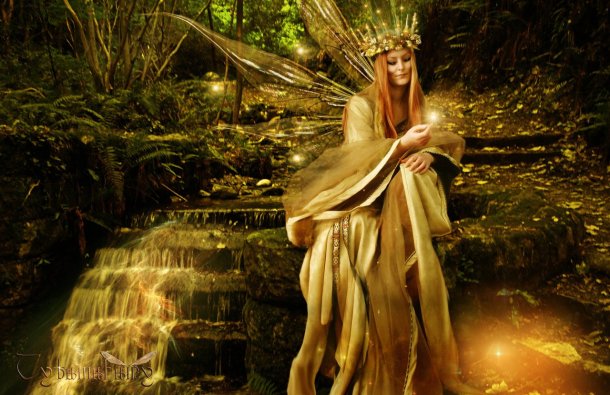
Hereditary Witchcraft c. 2015

Hereditary Witchcraft

A reader says, “I met a woman who tells me she’s a hereditary born witch who has been Wiccan from birth. What in the world does that actually mean?”

Well, it could mean a variety of things, but for me personally, it generally sends up a red flag when someone uses the phrase “born witch” or “Wiccan from birth.” I realize I’ll get some hatey emails over this, but let me explain why I say that.

You’re not born Christian or Muslim or Hindu.

There’s no “Wiccan DNA” that makes any one person more genetically witchy than someone who begins practicing in their fifties. You simply cannot be a Wiccan since birth because Wicca is an orthopraxic religious system that generally involves you doing and believing certain things that make you Wiccan. You can be raised by Wiccans – and many children are – but that doesn’t make you Wiccan from the moment you pop out of the womb, it simply means you were born to Wiccan parents.

That said, certainly, there seem to some people who may be more adept at Witchy Things at some point in their life, but there’s no chromosomal or biological difference in these folks as compared to the general population. You’ll obviously meet people that are psychically gifted, and whose parent or grandparent or child also displays these same traits. But if you operate on the assumption that everyone has some latent psychic ability anyway, it may be that these individuals were encouraged to use their talents while growing up, rather than repressing them like the majority of other people.

You may also encounter people in the Pagan community who claim “born witch” status because of some ancestral link to an individual in the past who was accused of witchcraft. We get regular emails here from people who want to know if Salem ancestry makes them special. It doesn’t (for a variety of reasons).

Also, there are certainly hereditary traditions of witchcraft, but by “hereditary” we don’t mean that the practices are biologically inherited. These are typically small, familial traditions in which beliefs and practices are handed down from one generation to the next, and outsiders are rarely included. PolyAna identifies as a hereditary witch, and her family hails from Appalachia.

She says, “In our family, what we do is more of a folk magic tradition. My son and I and my granddaughter – who is adopted – practice the same folk magic as my mother and grandmother did. We’ve done it as far back as anyone can remember. We follow the Celtic gods, and my Granny was nominally Catholic but brought a belief in the old gods with her from Ireland. She found a way to make it work, and we’ve carried on those traditions.”

PolyAna’s family practices aren’t typical, but there are certainly other hereditary traditions like hers out there – and it’s hard to even estimate how many there are, because the information is generally kept within the family and not shared with the general public. Again, this is a family tradition based on practices and beliefs, rather than any documentable genetic link. For families with an Italian background, Stregheria is sometimes practiced in the United States and other countries.

For many modern Pagans – including those in hereditary family traditions – witchcraft is either a skill set that is developed and honed over years of practice, or it’s a belief system that is seen as a religion that one spends a lifetime working towards. For some people, it’s a combination of the two.

So, after all that – could this person be part of a hereditary familial tradition? Absolutely, she certainly could. But if what she’s claiming is some sort of biological superiority that makes her witchier than everyone else, I’d consider it suspect at best.

Source: Patti Wigington,Paganism/Wicca Expert Article found on & owned by About.com

Solitary Witchcraft c. 2015

Solitary Witchcraft

There are many reasons for performing witchcraft alone: your personal circumstances or the location of your home may mean that you cannot travel to a group, or you may live in an area where there are few others who share your interests. Many witches like myself choose to practise alone, drawing in my family and close friends to celebrate with me on the festival days. Most solitary witches initiate themselves, though some traditions, such as the Saxon Seat Wicca founded by Raymond Buckland in the USA, do admit solitary witches.

Indeed, solitary practitioners are said by some to have been witches in seven previous lifetimes and to possess within them all they need to know about the Craft. Truth or myth, no one should underestimate the number of private practitioners who do work alone, some coming together occasionally in small, informal groups.

Solitary witches can use ceremonial magick very successfully, but many do follow the less formal folk magick, linked to the land and the seasons, that was practised by our ancestors in their homes. For this reason, some call themselves hedge-witches, from the times when a hedge, often of hawthorn, bounded the witch’s home, and it is sometimes said that they are walking on the hedge between two worlds. Such a witch may be in the tradition of the village wise women who knew about herbs and about the cycles of nature and used the implements of their kitchens rather than ceremonial tools.

She may also be gifted in divination, in spell-casting and in astral projection. Usually a woman, but occasionally a man, the solitary witch practises eclectic magick drawn from a variety of traditions.

Those expert in brews and potions are also called kitchen witches. Indeed, many of our grandmothers and great-grandmothers who possessed a remarkable intuition, read the tea leaves and made herbal concoctions, were jokingly called witches by their own families – and were just that!

You have your choice of groves, stone circles, the ocean shore, your garden or balcony, where you can connect with the powers of nature and work unobtrusively. Whether you are working alone, or in a group, or coven, you will share the same aims and will need much the same equipment.

Source: A Practical Guide to Witchcraft and Magic Spells By Cassandra Eason

Hedge Witchcraft c. 2016

Most Common Witchcraft Traditions c. 2016

Let’s Talk Witch – Making Wicca/Witchcraft a Part of Your Life c.2015

Making Wicca/Witchcraft a Part of Your Life

Keep in mind that you spent a year and a day studying and preparing to get to the point of becoming a Wiccan. Do not let that effort go to waste by not incorporating Wicca into your daily life. In Wicca, complicated Wiccan rituals are usually required only during Sabbats. In everyday life, being a Wiccan requires little but consistent effort. A good Wiccan tries to find a magical application to every routine thing they do. Wicca is a path of simultaneous empowerment and humility.

You are empowered as a Wiccan because you believe that many things in your life are under your control. You have the power to change them if you like. You can use your magic, spells and rituals to bring happiness into your life. You can also regularly perform protection spells to keep yourself from harm or healing spells on sick days.

However, remember that though you may have a lot of textbook and working Wiccan knowledge, you do not know everything. Do not stop learning about Wicca and growing spiritually. Keep an open mind to receive as much knowledge from the universe as you can. Wiccans can become set in their own comfort zone if they do not learn to accept new knowledge.

In your ordinary routine, stay mindful of the Rede and the threefold law. Remember, everything you do or say should have no intent of causing yourself or another being harm. Moreover, all your actions have consequences and as a Wiccan, you are fully responsible for them. Each act, good or bad, will find its way back to you three times over.

If you are planning to get married after you become a Wiccan, why not plan your wedding ceremony accordingly as a Wiccan rite of passage? Perform a Wiccan wedding or ‘handfasting’ with your coven family. Also, if you have a baby, have a wiccaning ceremony to put him under the protection of the God and Goddess. Observing rites of passage allows you to feel like part of a community greater than yourself.

As a Wiccan, respecting Nature becomes a part of your own innate nature. Recycling and low energy consumption, if they are not already, should become part of your routine as a Wiccan. Hobbies such as gardening and bird watching also are a good way of learning about the Natural world and connecting with it. Going on hiking trips or spending some time outdoors will help you immerse yourself in Nature. Remember, everything in the universe is a manifestation of the Divine.

The cyclical lunar patterns hold great significance in Wicca. Try to determine what effect lunar phases have on your life and work accordingly. Moreover, remember that each day and night is a gift from the God and Goddess. Try to consciously thank them and the elements every day.

The more you try to incorporate Wicca into your life, the more it will help you accomplish your goals. However, the catch is that you cannot be selfish. Remember, Wicca and Witchcraft are religions geared towards positivity in all respects. It may seem overwhelming at first, but the more regularly you practice it, the simpler it will get.

Source: Wicca Made Easy: Simple Spells for Love, Money, Luck, Success, Weight Loss & More!
Sarah M. Lancaster

A Look At The Various Path of the Craft – Faery Witchcraft c. 2018


What is a Faery Witch?

Galadriel in Lord of the Rings is a typical Faery Witch. The swan is a common totem for us as well. Here Galadriel is like the Lady of the Lake in the Arthurian Mythos.


Characteristics of the Fledgling Faery Witch

*A Faery witch is one who has a special affinity to the Faeries, especially those who are the spectres of the ancestors and the Old Gods.

*Unlike Witches initiated into Wiccan traditions such as the Gardnerian and Alexandrian paths, the Faery Witch is one whose talent comes from deep communion with nature alone. There is no necessity to connect to a line of initiates to become a channel for power. The connection is through the Fay who work through the land and the imagination.

*I believe the Faery Witch is one who has traveled between the Faery and Mortal realms for many lifetimes. Therefore, she or he has a natural ability to ‘see’ spirits in the wilds, is drawn trees, rocks, hills, the turning of the seasons, the moon, and the waters. One such as this will have an innate desire to return ‘home’ in dreams and waking reveries, and maybe even to try to bridge the worlds so that the Faeries can access the Mortal Plane.

Do you want to train your Second Sight?

*Wiccans use many branches of Magic to forge their consciousness and work their enchantments. They often begin with woodland pantheons and expand into other occult traditions and ceremonial magic . As I am not initiated into the Wiccan traditions, I cannot say more. The Faery Witch more often defaults back into communing with the Fay.

*The Faery Witch may be content to walk across the land with intent and heightened consciousness to feel the workings of magic. The relationship between the Witch and the Fay is the magic.

* Animals trust Faery Witches and will communicate with us telepathically.

*Faery Witches are usually drawn to the Arthurian and Holy Grail Mythos. This is because one of main branches of Faery, the Tuathaa de Danaan are Grail Keepers. Many of the stories and myths that came to comprise Arthurian Romance were drawn from the visions of Faery Seers, or Bardic Poets.

*Faery Witches often have poetic talents. Visionary language comes naturally to them.

* Faery Witches do not like iron! Therefore swords are not part of our Magical Regalia.

* Young Faery Witches love Faeries. They also understand what Faeries are at deeper levels than those who may like Faeries but are not Faery Witches.

*Faery Witches are not afraid of disturbing psychic images and undercurrents. We are drawn to the mystery.


Faery Glamour

I like to think that Faery Witches have a special glamor of beauty and youth, a quality of stillness and mystery.

*This comes from reading Grimm’s Fairy tales about beautiful Enchantresses and Princesses, the ethereal Faery Queens of Arthurian Romance, legends and folk lore. We must never let ourselves go, or the glamor will be lost. Once the glamor is lost, our power can go with it. For what is glamor but the creation and maintenance of our Magical Self?

* Even as she ages, the Faery Witch exudes the quality of beauty, sexuality, and charm.

* Sometimes alliance with the Faery can take over one’s life. This may cause isolation and loneliness as most others are put off for some reason.It is difficult to inhabit many worlds at the same time.

*We must always guard against psychic attack, for we seem fragile even when we are very strong. This quality disrupts the assumptions of those who would overpower us, inciting their drive to engage in battle.

*The ability of the Faery Witch to see  and communicate with the Unseen endows him or her with the ability to heal others. Alliances with the Fay increase the effectiveness of Faery Healing.


Can Faery Witchcraft be Learned?

Joanne Sanow

Can studying Faery Witchcraft cause any harm?

*No. The mind will absorb the lessons in its own measure. Even if one does not develope psychic powers, exposure to the Faery Realm inspires the heart and is a well of creativity that anyone can drawn upon. You can be as you were meant to be and still wear the Glamor of a Faery Witch.

*Psychic Protection is part of the training. Harmless Psychic Self Defense is valuable to everyone.

How old do you have to be to become a Faery Witch?

Old enough to read and carry out exercises. Young people are much closer to Faery than jaded, stressed out adults. Early tuition in Faery Magic can help one cope with life as one ages with a constant sense of curiosity and wonder. There are endless subjects to explore. For this reason, the Faeryland is called the Summer Land, or Land of Eternal Youth.

Source:

Winterspells

Faery Wicca


Faery Wicca is also known as Fairy Wicca and it is basically a broad term that consists of all the Wiccan traditions that stresses importance on the Fey (such as sprites, faeries, elves, gnomes, etc), the relation of the Fey with the natural world and also their teachings. Originally written about by the author, Kisma Stepanich. Believers of this tradition are of the opinion that this type of Wicca has originated from the Tuatha De Danaan traditions. </ahref=”view_category.asp?cat=30″>

The Tuatha De Danaan is considered to be the mythological predecessor of the Celts to many although, there are some who are not of the same opinion.

Faery Wicca is a belief that has taken some elements from the Irish mythology, from different non-Celtic sources and also from the interpretation of the history of the Celts by Kisma Stepanich. This belief has also been influenced by the author’s imagination of the Celts as well as the Celtic legend and pseudo history. There are some people who often confuse this with Feri Wicca, a tradition started by Victor Anderson.

Faery Wicca has been inspired by the customs and practices of the modern Celts as well as the ancient Celts. This tradition has more similarities with other modern Wiccan traditions and non-Wiccan traditions. It does not share that many similarities with ‘Fairy Faith’ that it is commonly referred to as in the conventional Gaelic cultures. The followers of the Faery Wicca worship a number of deities and the chief Goddess is none other than the androgynous Star Goddess. The other deities that are worshiped are the various aspects of the primary Goddess and these deities are:

  • The Crone.
  • The Winter King.
  • The Blue God.
  • The Great Mother.
  • The Harvest Lord.
  • The Corn Maiden.

This belief is said to have seven guardians and they are generally called upon at the time of casting the circle. The guardians of the North and West are believed to be female where as the guardians of the South and East are believed to be male. Nobody knows their real names but each of them have a public name which are as follows:

  • Guardian of the Gates.
  • Star Finder.
  • Fire in the Earth.
  • Shining Flame.
  • Heaven Shiner.
  • Black Mother.
  • Water Maker.

There is no doubt that there are few similarities between the Faery Wicca and other Wiccan traditions like appreciation of creativeness, love for beauty and respect for nature. While it maintains some similarities, there a number of customs that differ from the traditional Wiccan Spellcastings.

One of the many differences between this tradition and others is that with Faery Wicca it encourages risking to a greater extent as compared to the other Wiccan customs. It is often said that they follow a different set of rules, then other followers of traditional Wicca. The practitioners of this form of Wicca view themselves as Fey and this means that they are neither black nor white.

You may not know this but possession is practiced in this form of Wicca. The followers believe that Gods are real and the morality system that the Gods have are quite dissimilar from the one that human beings have. Faery tradition can be considered as the mystery tradition that has direct contact with the heavenly and it is also a tradition of ecstasy, power and danger.

Last but not the least, I would like to say that while this tradition is exciting and beautiful, not everyone can be what it takes to be a practitioner of this Wicca and it most certainly is not for the faint-hearted.

Reference

Tatianna Pereslavl-Svyatoslavich
Collaborator, 7Witches Coven

Faery Wicca

From Wikipedia, the free encyclopedia

Faery Wicca, or Fairy Wicca, is any tradition of modern Wicca that places an emphasis on the Fey (goblins, elves, faeries, sprites, etc.), their lore, and their relation to the natural world.

“Faery Wicca” may also refer to a specific tradition of Wicca, recently founded by author Kisma Stepanich. Adherents of Stepanich’s Faery Wicca claim that it recovers the traditions of the Tuatha De Danaan, the mythological precursors to the Celtic people; however, this is disputed by those familiar with ancient Celtic polytheism and mythology. Stepanich’s Faery Wicca draws liberally on some degree of Irish mythology, from the author’s interpretation of Celtic history, legend, pseudohistory, imagination, and a variety of non-Celtic sources.

Faery Wicca is not related to the late Victor Anderson’s Feri Tradition of witchcraft, which is sometimes also spelled Faery or Fairy, nor is it directly related to the gay men’s group, the Radical Faeries. Though Faery Wicca may draw inspiration from some of the customs practiced among the ancient and modern Celts, it shares more with other modern Wiccan traditions than with the “Fairy Faith” as it is known in traditional Gaelic culture

Kitchen Witchcraft c. 2016

Eclectic/Faery Witchcraft c. 2016

The Nature of White Witchcraft c.2016

Most Common Witchcraft Traditions c.2016

Green Witchcraft c.2018

Hereditary/Solitary Witchcraft c. 2016

The Origins and Practice of Witchcraft c.2018

The Origins and Practice of Witchcraft

A History Of Witchcraft
Witchcraft probably originated about 25,000 years ago in the Palaeolithic era. At that time, humankind and nature were seen as inextricably linked. People acknowledged every rock, tree and stream as deities in the life force, and the Earth as mother, offering both womb and tomb.
Prehistoric Witchcraft
Early man used sympathetic, or attracting, magick – in the form of dances, chants and cave paintings of animals – to attract the herds of animals that provided for the needs of the group, and to bring fertility to humans and animals alike. Hunters would re-enact the successful outcome of a hunt and would carry these energies into the everyday world. Offerings were made to the Mistress of the Herds and later to the Horned God, who was depicted wearing horns or antlers to display his sovereignty over the herds. Animal bones would be buried so that they, like humankind, would enjoy rebirth from the Earth Mother’s womb.
Where hunter-gatherers today continue the unbroken tradition that stretches back thousands of years – for example, among the Lapps in the far North of Scandinavia and the Inuits – these rites continue, led by a shaman, or magick man, who negotiates with the Mistress of the Herds or Fish in a trance for the release of the animals.
One of the earliest recorded examples of shamanism is the Dancing Sorcerer. Painted in black on the cave walls of Les Trois Freres in the French Pyrenees, this shamanic figure, which portrays a man in animal skins, dates from about 14000 BC and stands high above the animals that are depicted on the lower walls. Only his feet are human and he possesses the large, round eyes of an owl, the antlers and ears of a stag, the front paws of a lion or bear, the genitals of a wild cat and the tail of a horse or wolf.
By the Neolithic period, which began around 7500 BC and lasted until about 5500 BC, the hunter-gatherer culture had given way to the development of agriculture, and the god evolved into the son-consort of the Earth Mother. He was the god of vegetation, corn, winter and death, who offered himself as a sacrifice each year with the cutting down of the corn, and was reborn at the mid-winter solstice, as the Sun God.
The Neolithic period also saw the development of shrines to the Triple Goddess who became associated with the three phases of the Moon: waxing, full and waning. The Moon provided one of the earliest ways by which people calculated time. Since its cycles coincided with the female menstrual cycle, which ceased for nine moons if a women was pregnant, the Moon became linked with the mysteries first of birth, then of death as it waned, and finally with new life on the crescent. Because the Moon was reborn each month or, as it was thought, gave birth to her daughter each month, it was assumed that human existence followed the same pattern and that the full moon mirrored the mother with her womb full with child.
The full moon was also associated in later ages with romance and passion, originally because this coincided with peak female fertility. Moon magick for the increase of love and fertility is still practised under the auspices of the waxing moon. It was not until about 3,000 years ago that the male role in conception was fully understood in the West, and only then were the Sky Father deities able to usurp the mysteries of the Divine Mother.
A trinity of huge, carved stone goddesses, representing the three main cycles of the Moon, and dating from between 13000 and 11000 BC, was found in France in a cave at the Abri du Roc aux Sorciers at Angles-sur-l’Anglin. This motif continued right through to the Triple Goddess of the Celts, reflecting the lunar cycles as maiden, mother and crone, an image that also appeared throughout the classical world.
Source: PRACTICAL GUIDE TO WITCHCRAFT AND MAGICK SPELLS
Cassandra Eason

Unrealistic Definitions of Witchcraft

As a Witch or Pagan or however you refer to yourself while walking your magickal and spiritual path we have faced an uphill battle for acceptance for centuries and still do. So, I decided to do a general search for the definition of Witchcraft and was astounded by what I found. Here are a few examples along with the hyperlink from my general search-

Source: Data from Oxford Languages:

witch·craft
[ˈwiCHˌkraft]
noun
witchcraft (noun)
the practice of magic, especially for evil purposes; the use of spells:
“children and goods were believed to be vulnerable to the witchcraft of jealous neighbors”
Similar:

<img class="cipa vam rms_img" role="presentation" src="data:;base64,

” width=”16″ height=”16″ data-bm=”51″ />

  • (in a modern context) religious practice involving magic and affinity with nature, usually within a pagan tradition.
  • bewitching or fascinating attraction or charm.

Source: merriam-webster.com

1athe use of sorcery or magic
bcommunication with the devil or with a familiar
2an irresistible influence or fascination
3arituals and practices that incorporate belief in magic and that are associated especially with neo-pagan traditions and religions (such as Wicca)
Practitioners of Wicca … use the tools … such as the broom (a purifying symbol), the wand, candles, crystals and the knife …. They refer to their practices as witchcraft …Lesley Wright

b: or less commonly Witchcraft a tradition or religion that involves the practice of witchcraft

Feminist witchcraft sees women’s oppression and environmental abuse, which they argue are intimately linked, as firmly rooted in patriarchal religions. —Wendy Griffin

Wicca, which emerged in the 1940s in England, is the original form of modern Pagan Witchcraft.
-Meg Yardley

Please go look for yourself on how our spiritual and magickal paths are defined.

General Search for the Definition of Witchcraft

A Pledge To Pagan Spirituality c. 2015

A Pledge To Pagan Spirituality

I am a Pagan and I dedicate Myself to channeling the Spiritual Energy of my Inner Self to help and to heal myself and others.

I know that I am a part of the Whole of Nature. May I grow in understanding of the Unity of all Nature. May I always walk in Balance.

May I always be mindful of the diversity of Nature as well as its Unity and may I always be tolerant of those whose race, appearance, sex, sexual preference, culture, and other ways differ from my own.

May I use the Force (psychic power) wisely and never use it for aggression nor for malevolent purposes. May I never direct it to curtail the free will of another.

May I always be mindful that I create my own reality and that I have the power within me to create positivity in my life.

May I always act in honorable ways: being honest with myself and others, keeping my word whenever I have given it, fulfilling all responsibilities and commitments I have taken on to the best of my ability.

May I always remember that whatever is sent out always returns magnified to the sender. May the Forces of Karma move swiftly to remind me of these spiritual commitments when I have begin to falter from them, and may I use this Karmic feedback to help myself grow and be more attuned to my Inner Pagan Spirit.

May I always remain strong and committed to my Spiritual ideals in the face of adversity and negativity. May the Force of my Inner Spirit ground out all malevolence directed my way and transform it into positivity. May my Inner Light shine so strongly that malevolent forces can not even approach my sphere of existence.

May I always grow in Inner Wisdom & Understanding. May I see every problem that I face as an opportunity to develop myself spiritually in solving it.

May I always act out of Love to all other beings on this Planet – to other humans, to plants, to animals, to minerals, to elementals, to spirits, and to other entities.

May I always be mindful that the Goddess and God in all their forms dwell within me and that this divinity is reflected through my own Inner Self, my Pagan Spirit.

May I always channel Love and Light from my being. May my Inner Spirit, rather than my ego self, guide all my thoughts, feelings, and actions.

So Mote It Be


The Craft (Witchcraft – NOT to be confused with Satanism.

A true Witch has nothing to do with this, even though there are some Satanists who (unrightfully) call themselves “Witch”.) contains a large number of groups with bonds to each other, for the most part, which are looser than those you will find between Christian churches. Each has it’s own traditions, it’s own beliefs, it’s own pantheon, etc. So just WHAT is it that, overall, a Witch believes in? The American Council of Witches was formed to determine what it was that all Witches have in common, belief-wise. In the early 1970’s, a paper was released with their findings, and gives a good overall picture of it. The following is the text of that paper.

Basic Principles Of The Craft

  1. The first principle is that of love, and it is expressed in the ethic, “Do As You Will, So Long As You Harm None”
    1. love is not emotional in it’s essence, but is an attribute of the individual as expressed in relation to other beings;
    2. harming others can be by thought, word, or deed;
    3. it is to be understood the “none” includes oneself;
    4. the harm which is to be regarded as unethical is gratuitous harm; war, in general, is gratuitous harm, although it is ethical to defend oneself and one’s liberty when threatened by real and present danger, such as defense against invasion.
  2. The Witch must recognize and harmonize with the forces of the universe, in accord with the Law of Polarity: everything is dual; everything has two poles; everything has it’s opposite; for every action there is a reaction; all can be categorized as either active or reactive in relation to other things.
    1. Godhead is one unique and transcendent wholeness, beyond any limitations or expressions; thus, it is beyond our human capacity to understand and identify with this principle of Cosmic Oneness, except as It is revealed to us in terms of It’s attributes and operation.
    2. The most basic and meaningful attribute of the One that we, as humans, can relate to and understand, is that of polarity, of action and reaction; therefore Witches recognize the Oneness of the Divinity, but worship and relate to the Divine as the archetypal polarity of God and Goddess, the All-Father and the Great Mother of the universe. The Beings are as near as we can approach to the One within our human limitations of understanding and expression, though it is possible to experience the divine Oneness through the practices of the Mysteries.
    3. Harmony does not consist of the pretty and the nice, but the balanced, dynamic, poised cooperation and co-relation.
  3. The Witch must recognize, and operate within the framework of the Law of Cause and Effect; every action has it’s reaction, and every effect has it’s cause. All things occur according to this law; nothing in the universe can occur outside this law, though we may not always appreciate the relation between a given effect and it’s cause. Subsidiary to this is the Law of Three, which states that whatever goes forth must return threefold, whether of good or ill; for our actions affect more than people generally realize, and the resulting reactions are also part of the harvest.
  4. As Above, So Below. That which exists in the Macrocosm exists, on a smaller scale and to a lesser degree, in the Microcosm. The powers of the universe exist also in the human, though in general instance they lie dormant. The powers and abilities can be awakened and used if the proper techniques are practiced, and this is why initiates of the Mysteries are sworn to guard the secrets from the unworthy: Much harm can be done by those who have power without responsibility, both to others and to themselves according to the Laws of Cause and Effect and of Threefold Return.
    1. Since our philosophy teaches that the universe is the physical manifestation of the Divine, there can be nothing in the universe which does not partake of the nature of the Divine; hence, the powers and attributes of the Divine exist also in the manifest, though to much smaller degree.
    2. These powers can be awakened through the various techniques of the Mysteries, and, although they are only capable of small effects in and of themselves, it is possible to use them in order to draw upon the forces of the universe. Thus humanity can be the wielders of the power of the Gods, a channel for Godhead to act within It’s own manifestation. This, then, is further reason for the oath of secrecy.
    3. Since the universe is the body of the One, possessing the same attributes as the One, it’s Laws must be the principles through and by which the One operates. By reasoning from the known to the unknown, one can learn of the Divine, and thus of oneself. Thus the Craft is a natural religion, seeing in Nature the expression and revelation of Divinity.
  5. We know that everything in the universe is in movement or vibration and is a function of that vibration. Everything vibrates; all things rise and fall in a tidal system that reflects the motion inherent in the universe and also in the atom. Matter and energy are but two poles of one continuous phenomenon. Therefore the Witch celebrates, harmonizes with, and makes use of the tides of the universe and of life as expressed through the cycle of the seasons and the motion of the solar system. These ritual observances are the eight great Festivals of the Year, referred to as the Wheel of the Year. Further, the Witch works with the forces and tides of the Moon, for this body is the mediator of much energy to our planet Earth and thus to ourselves.
  6. Nothing is dead matter in the universe. All things exist, therefore all things live, though perhaps in a different manner from that which we are used to calling life. In view of this, the Witch knows that there is no true death, only change from one condition to another. The universe is the body of Godhead, and therefore possesses one transcendent consciousness; all things partake of the consciousness, in varying levels of trance/awareness.
    1. Because of this principle, all things are sacred to the Witch, for all partake of the one Life.
    2. Therefore the Witch is a natural ecologist, for Nature is part of us as we are a part of Nature.
  7. Astrology can be useful in marking and interpreting the flow and ebb of the tides of our solar system, and thus of making use of those tides; astrology should not be debased into mere fortune-telling.
  8. Throughout the development of the human race, civilizations have seen and worshipped many and various attributes of the Divine. These universal forces have been clothed in forms which were expressive to the worshipper of the attribute of the Godhead which they expressed. Use of these symbolic representations of the natural and divine forces of the universe, or god forms, is a potent method for contacting and utilizing the forces they represent. Thus the Gods are both natural and truly divine, and man-made in that the forms with which they are clothed are products of humanity’s striving to know the Godhead.
    1. In keeping with the Law of Polarity, these god-forms are brought into harmony by the one great Law which states: All Gods are one God. All Goddesses are one Goddess. There is one Initiator. This law is an expression of our understanding that all of the forces of the universe, by whatever ethnic god-form is chosen to clothe and relate to whichever force, can be resolved into the fundamental polarity of the Godhead, the Great Mother and the All-Father.
    2. It is the use of differing god forms, of differing ethnic sources or periods, which is the basis of many of the differences between the various Traditions of the Craft. Each Tradition uses the forms, and thus the names, which to that Tradition best express and awaken an understanding of the force represented, according to the areas of emphasis of the Tradition.
    3. Because we know that differing names or representations are but expressions of the same divine principles and forces, we require our members to swear that they will never mock the names by which another honors the Divine, even though those names be different from and seemingly less expressive than the names and god forms used by our Tradition (for to the members of another Tradition, using it’s names, ours may easily seem equally less expressive).
  9. A Witch refuses to allow her/himself to be corrupted by the great guilt neuroses which have been foisted on humanity in the name of the Divine, thus freeing the self of the slavery of the mind. The Witch expresses responsibility for her/his actions, and accepts the consequences of them; guilt is rejected as inhibiting to one’s self-actualization, and replaced by the efforts of the Witch to obey the teachings of harmlessness, responsibility for the consequences of one’s actions, and the goal of actualizing the full powers of the individual.
    1. We refuse to believe that a human being is born innately sinful, and recognize the concepts of sin and guilt are tremendously inhibiting to the human potential; the consequences of the Law of Cause and Effect, called karma by some, are not punishment, but the recurrences of situations and their effects because the individual as not gained the Wisdom needed to handle or avoid such situations.
    2. There is no heaven except that which we ourselves make of our life on Earth, and likewise there is no hell except the effects of our unwise actions. Death is not followed by punishment or reward, but by life and the continuing evolution of the human potential.
    3. One cannot damn the divine in oneself; one can, however, cut oneself off from it through the rejection of wisdom and a refusal to strive for self-realization. This cutting off does not lead to personal suffering in “hell”, for there is no Self to suffer if the tie to one’s own divinity has been severed; what remains is merely an empty shell, a “personality” or thought-form devoid of it’s ensouling Spark of the Divine Fire.
  10. We know of the existence of the life-force which ensouls all living things, that is, all that exists. We know that a spark of this Divine Fire is within each and every thing that exists, and that it does not die; only the form of it’s existence changes. We know that this spark of the life-force returns to manifestation again and again in order to fully realize and actualize it’s potential, evolving finally to the peak and essence of existence which is pure being. In this process of reincarnation each form returns in the same type of form, though it’s ever-increasing actualization may lead to higher levels of existence of that form. Man returns as man, cat as feline, mineral as mineral, each class of form evolving as the individual forms of that class evolve.
  11. This process of evolution through successive incarnations in manifest form works through the utilization of wisdom gained, the essence of the life-experience. This essence of experience, or Wisdom, is an attribute of the spark of life itself, one and inseparable (see 9a).
  12. We must care for the body, for it is the vehicle of the spark of life, the form by which we attain. Thus we must heal the body of it’s ills and keep it a tuned and perfected tool; so must we heal others (both physically and psychologically) as far as it is within our power to do so. However, we cannot interfere with the life of another, even to heal, except at their request or with their express permission; unless such non-interference would be inhibiting to our own, ethical existence and development – and even then the responsibilities and consequences must be understood and accepted. This, then, is one of the important reasons for the communal life the Witches under the guidance of the Priesthood: That the group may be guided by wisdom and experience, with the aid and support of one’s peers; and that one’s actions may be guided by the influence of the ethical life of the group as a whole.
  13. Harmony with, and utilization of, the great natural forces of the universe is called magick. By magick we speak, not of the supernatural, but of the superbly natural, but whose laws and applications are not as yet recognized by the scientific establishment. The Witch must strive to recognize these forces, learn their laws, attune her/himself to them, and make use of them. The Witch must also be aware that power corrupts when used only for the gains of the self, and therefore must strive to serve humanity: Either through the service in the Priesthood, or by example and effects of his/her life on others. The choice must be made in accord with the true nature of the Witch.

The Sacred Tradition Of Witchcraft c.2016


The Sacred Tradition Of Witchcraft

The Tradition of Witchcraft sees the aspects of the Divine All as separate and united as Goddess, God, and Both. The One who is All matches “all being from the One.” The forms of The Lord and the Lady are interlocked and interchangeable. Father Sky and Mother Earth/Sky Goddess and Earth God, Sun and Moon. Triple Goddess and Wed to the Triple Goddess. Threefold God and Wed to the Threefold God; Lord and Lady of the Greenwood; Lord of Abundance and Lady of Plenty; Queen of the Stars and King of the Universe; Creator and Creatrix Spirit and Matter; Life and Passage; and Cosmic, Dancers of Energy and Matter.

The Creative Forces of Nature are revered, with the Goddess and the God symbolizing the Universal Materials and Energies from which comes all existence. The God and the Goddess are equal and omnipresent, for They are found throughout the Universe, the Earth and all that dwell therein. Because it is the Spiral Dance of Rebirth that brings us back to the Source of our existence in the Goddess and the God, reincarnation and communication with spirits are accepted parts of the religion.
Knowledge is the gift of the Goddess and the God, learning through many lives on Earth and keeping close to Them. Magick is a natural means of working with natural energies to accomplish a goal, and this magick becomes part of natural life for the practicing Witch. Consciousness may be altered through visualization, meditation, ritual, music and dance to better commune with the Divine and effect the magick. Through Dedication, the pathway to communication is constantly open so altered states cease to be necessary for contact with the Divine in Nature, only inner stillness and balance.
Freedom of the individual and personal responsibility are key aspect of Witchcraft. The liturgy, may be created as needed or desired for the magick will naturally flow with the acceptance of oneness with the All and with self-responsibility in our living.
Immanence, interconnection and community are three core principles of Witchcraft. Because the God and the Goddess are manifested in all life, all existence is connected to be one living cosmos. The focus is on the growth of the whole through care for the Earth, the environment, and each other. The mythology of the Lord and the Lady revolves around two themes in the Wheel of the Year – that of Fertility and passage of the Seasons, and that of the Divine life Cycle of the God, often related in allegory to the changing of the seasons. Thus, the sacrificed go motif can be found in the Corn (Wheat) Cycle, wherein the God willingly gives His life-force into the crops at the tie of marriage that humanity may be sustained thus relating the Divine to life and Rites of Passage.
The Triple Goddess is the Maiden, Mother, and Crone (Matron), whose consort is the Horned God, the Creator, Destroyer (Hunter), and Lord of the Beasts. All Nature has both positive and negative aspects, and to be reborn one must first die. The Goddess is seen as both positive and negative aspects, and to be reborn, one must first die. The Goddess is seen as both life in Her form as Mother and as death in Her form as Crone, yet both are the same. Death is a natural passage to new life and is not feared or labeled as evil. With Nature there are both pleasant aspects and harsh aspects, but this is all part of the reality of the energy that flows in the Earth, the Universe, and the being of the Earth The transition of the spirit through incarnations is not feared, but understood and accepted as natural, for life is eternal, and all spirits are immortal.
Attuning to the God and the Goddess changes one forever-sparks new hope for the individual and for the planet. Personal destiny is in the hands of the practitioner. The Dark Aspects of the God and the Goddess-Lord of Shadows and Crone-as well as the Bright Aspects-Horned God and Maiden/Mother-are accepted. The Divine is both Creation and destruction; Abundant Nature and Destructive Nature. Since all life is joined in the Dual Deity, the Two Who are One, and to each other, life cannot be destroyed, only changed or moved into and out of the cauldron of life. The religion then is the worship or reverence of the Life Force represented in the Dual Deity as a Conscious Unity. This reverence may be expressed through ceremonies or rituals dedicated to cycles of fertility, of planting and harvest, and of solar and lunar phases.
The Esbats are Rituals of the Full Moon, New (Dark) Moon-Times to receive learning from the Goddess. The Sabbats are composed of four solar festivals, called the Greater Sabbats or the Cross-Quarters. These are the main focus of ritual in Witchcraft, along with Twelfth Night (Naming Day). The names by which the Lord and the Lady are addressed are not important, for They are One By whatever Names They are Known, and They dwell within . They give life to be lived fully and with enjoyment and we are reborn to learn until we are reunited with Them Because people are of the Earth, She should be revered. The Witch knows of the connection of all things, the immortality of life, and draws upon the Power of the Divine directly, or through the Elementals of Earth, Air, Fire, and Water or such spirits, devas, and Other People as may be helpful. The Elementals are the Kith and Kin of the Witch, for body and strength are of Earth, breath and thought are of Air, energy and drive are of Fire, and emotions and vital fluids are of Water. In Middle English speech as Weetch’ie–meaning Wise, and the use of that wisdom was called the Craft of the Wise–WicceCraft, from when comes the word Witchcraft. The Practice of the Craft as spirituality and holds th e word Witch as honorable and spiritual.

THE PHILOSOPHY OF WITCHCRAFT c. 2018

THE PHILOSOPHY OF WITCHCRAFT

The Craft is a religion of love and joy. It is not full of the gloom of Christianity, with its ideas of “original sin”, with salvation and happiness possible only in the afterlife. The music of Witchcraft is joyful and lively, again contrasting with the dirge-like hymns of Christianity.
Why is this? Why are Wiccans more content; more warm and happy? Much of it has to do with their empathy with nature. Early people lived hand-in-hand with nature through necessity. They were a part of nature, not separate from it. An animal was a brother or a sister, as was a tree. Wo/Man tended the fields and in return received food for the table. Sure, s/he killed animals for food. But then many animals kill other animals in order to eat. In other words,
Woman and Man were a part of the natural order ofthings, not separate from it. Not “above” it.

Modern Wo/Man has lost much, if not all, of that closeness. Civilization has cut them off. But not so the Witch! Even today, in this mechanized, super-sophisticated world that this branch of nature (Woman and Man) has created, the Wicca retain their ties with Mother Nature. In books such as Brett Bolton’s The Secret Power of Plants we are told of the “incredible”, “extraordinary” healthy reaction of plants to kindness; of how they feel and react to both good and evil; how they express love, fear, hate (something that might be borne in mind  by vegetarians when they become over-critical of meat-eaters, perhaps?). This is no new discovery. Witches have always known it. They have always spoken kindly to plants. It is not unusual to see a Witch, walking through the woods, stop and hug a tree. It is not peculiar to see a Witch throw off her shoes and walk barefoot across a ploughed field. This is all part of keeping in touch with nature; of not losing our heritage.

If ever you feel completely drained, if ever you are angry or tense, go out and sit against a tree. Choose a good, solid tree (oak or pine are good) and sit down on the ground with your back straight, pressed up against the trunk. Close your eyes and relax. You will feel a gradual change come over you. Your tension, your anger, your tiredness will disappear. It will seem to drain out of you. Then, in its place, you will feel a growing warmth; a feeling of love and comfort. It
comes from the tree. Accept it and be glad. Sit there until you feel completely whole again. Then, before leaving, stand with your arms about the tree and thank it.

Take time to stop and appreciate all that is about you. Smell the earth, the trees, the leaves. Absorb their energies and send them yours. One of the contributing factors to our isolation from the rest of nature is the insulation of our shoes. Whenever you can, go barefoot. Make contact with the earth. Feel it; absorb it. Show your respect and love for nature and live with
nature.

In the same way, live with other people. There are many whom you meet, in the course of your life, who could benefit from their encounter with you. Always be ready to help another in any way you can. Don’t ignore anyone, or look the other way when you know they need help. If you can give assistance, give it gladly. At the same time do not seek to take charge of another’s life. We all have to live our own lives. But if you are able to give help, to advise, to point the way, then do so. It will then be up to the other to decide how to proceed from there.

The main tenet of Witchcraft, the Wiccan Rede, is:

“An’ it harm none, do what thou wilt.”

Do what you will… but don’t do anything that will harm another. It’s as simple as that.

In April, 1974, the Council of American Witches adopted a set of Principles of Wiccan Belief. I, personally, subscribe to those principles and list them here. Read them carefully.

1. We practice rites to attune ourselves with the natural rhythm of life forces marked by the phases of the Moon and the seasonal Quarters and Cross Quarters.

2. We recognize that our intelligence gives us a unique responsibility toward our environment. We seek to live in harmony with Nature, in ecological balance offering fulfillment to life and consciousness within an evolutionary concept.

3. We acknowledge a depth of power far greater than that apparent to the average person. Because it is far greater than ordinary it is sometimes called “supernatural”, but we see it as lying within that which is naturally potential to all.

4. We conceive of the Creative Power in the universe as manifesting through polarity—as masculine and feminine—and that this same Creative Power lies in all people, and functions through the interaction of the masculine and feminine. We value neither above the other, knowing each to be supportive to the other. We value sex as pleasure, as the symbol and embodiment of life, and as one of the sources of energies used in magickal practice and religious worship.

5. We recognize both outer worlds and inner, or psychological, worlds sometimes known as the Spiritual World, the Collective Unconscious, Inner Planes, etc.—and we see in the inter-action of these two dimensions the basis for paranormal phenomena and magickal exercises. We neglect neither dimension for the other, seeing both as necessary for our fulfillment.

6. We do not recognize any authoritarian hierarchy, but do honor those who teach, respect those who share their greater knowledge and wisdom, and acknowledge those who have courageously given of themselves in leadership.

7. We see religion, magick and wisdom in living as being united in the way one views the world and lives within it—a world view and philosophy of life which we identify as Witchcraft—the Wiccan Way.

8. Calling oneself “Witch” does not make a Witch—but neither does heredity itself, nor the collecting of titles, degrees and initiations. A Witch seeks to control the forces within her/himself that make life possible in order to live wisely and well without harm to others and in harmony with Nature.

9. We believe in the affirmation and fulfillment of life in a continuation of evolution and development of consciousness giving meaning to the Universe we know and our personal role within it.

10. Our only animosity towards Christianity, or towards any other religion or philosophy of life, is to the extent that its institutions have claimed to be “the only way” and have sought to deny freedom to others and to suppress other ways of religious practice and belief.

11. As American Witches, we are not threatened by debates on the history of the Craft, the origins of various terms, the legitimacy of various aspects of different traditions. We are concerned with our present and our future.

12. We do not accept the concept of absolute evil, nor do we worship any entity known as “Satan” or “the Devil”, as defined by the Christian tradition. We do not seek power through the suffering of others, nor accept that personal benefit can be derived only by denial to another.

13. We believe that we should seek within Nature that which is contributory to our health and well-being.


Source: Buckland’s Complete Book of Witchcraft

Solitary Witchcraft c.2018

Solitary Witchcraft

There are many reasons for performing witchcraft alone: your personal circumstances or the location of your home may mean that you cannot travel to a group, or you may live in an area where there are few others who share your interests. Many witches like myself choose to practise alone, drawing in my family and close friends to celebrate with me on the festival days. Most solitary witches initiate themselves, though some traditions, such as the Saxon Seat Wicca founded by Raymond Buckland in
the USA, do admit solitary witches.

Indeed, solitary practitioners are said by some to have been witches in seven previous lifetimes and to possess within them all they need to know about the Craft. Truth or myth, no one should underestimate the number of private practitioners who do work alone, some coming together occasionally in small, informal groups.

Solitary witches can use ceremonial magick very successfully, but many do follow the less formal folk magick, linked to the land and the seasons, that was practised by our ancestors in their homes.For this reason, some call themselves hedge-witches, from the times when a hedge, often of hawthorn, bounded the witch’s home, and it is sometimes said that they are walking on the hedge between two worlds. Such a witch may be in the tradition of the village wise women who knew about herbs and about the cycles of nature and used the implements of their kitchens rather than ceremonial tools.

She may also be gifted in divination, in spell-casting and in astral projection. Usually a woman, but occasionally a man, the solitary witch practises eclectic magick drawn from a variety of traditions. Those expert in brews and potions are also called kitchen witches.

Indeed, many of our grandmothers and great-grandmothers who possessed a remarkable intuition, read the tea leaves and made herbal concoctions, were jokingly called witches by their own families – and were just that!

You have your choice of groves, stone circles, the ocean shore, your garden or balcony, where you can connect with the powers of nature and
work unobtrusively. Whether you are working alone, or in a group, or coven, you will share the same aims and will need much the same equipment.

Tools And Treasures

You will need to collect some basic tools for your spells and rituals. If you are working in a group,these can be kept either by different members or in a safe place and brought out at meetings. They need not be at all expensive. Magick was traditionally carried out with the equipment of the home: the broom for sweeping the magical circle was the besom used for sweeping dirt (and negativity) out of the door and was stored with its bristles upwards to protect the home.

The cauldron was the iron cooking pot on the black kitchen range that served to heat the home as well as for cooking. Items often can be gathered from around your home: for example, a silver bell, a crystal bowl or a large wine glass. Attractive scarves or throws make ideal altar cloths. Car boot sales are an excellent source of magical equipment. Keep your magical tools separate from your everyday household equipment in a large box or chest, so that you can keep them charged with positive energies for magical and healing work.

Some items, such as the pentacle, you can make from clay, and herbs can be grown inpots or in gardens and chopped in a mortar and pestle. Fresh herbs have more immediate energies than dried, though the latter are better in sachets and poppets.

Always bear in mind that the magick is in you, not in your tools, and a wand cut from a fallen hazel or willow branch in the right hands can be more magical that the most elaborate crystal-tipped one purchased from a New Age store.

Source: Practical Guide to Witchcraft and Magic Spells
Cassandra Eason

Witchcraft is a Way of Life

The Power of White Witchcraft c. 2018

The Power of White Witchcraft

‘Merlin, give me the strength to carry on.’
I found this prayer not in some medieval book or carved on the wall of an ancient castle but written in ballpoint pen on a page torn from a diary and left – along with scores of similar pleas – on an ancient pile of stones in the Forest of Broceliande in Brittany.
Archaeologists say that this is the grave of a Neolithic hunter, but local tradition says that in this forest dwelled Vivien, the Lady of the Lake of Arthurian legend, and that here, having seduced Merlin in order to learn his secrets, she ensnared him with his own spells. The stone pile is known as Merlin’s tomb, and each year hundreds visit the site to thank the wizard or to ask for his aid. When I visited the tomb, prayers – written on scraps of paper or card – were squeezed into gaps in the stones or pinned to the tree that shelters the tomb.
Whatever the origins of the tomb, it has been transformed into a source of power. For this badly signposted spot, a short walk up a muddy track from a cramped, rough car park, had a tranquil, spiritual air that you might expect at a great cathedral or far more impressive stone circles. Such spots unleash the magick inside us. But even if you never visit Brittany or Stonehenge at sunrise on Midsummer’s Day, you can still make use of your own magick.
White magick and witchcraft as sources of wisdom, healing and positivity. Like Native American spirituality, to which true witchcraft is akin (some say both were carried by the people of Atlantis), the practice of white magick is based on the belief that that all life is sacred and interconnected in an unbroken circle. For example, every fully grown birch tree – defined in magick as a tree of new beginnings and regeneration – breathes out enough oxygen for a family of four and absorbs the carbon dioxide that we exhale, transforming it again to life-giving oxygen. And this sacred spark of a common source of divinity is contained not only by trees, but also the stones, the animals, the people and everything else on the Earth and in the waters and the sky.
Our higher selves, our souls, are influenced by the cycles of the Sun, the Moon, the stars and the natural world on a deep spiritual level. We can draw down their energies into ourselves to amplify and replenish our own, like tapping into a cosmic energy supply rather than having to recharge our powers from our own, separate dynamos. Through them and through us courses the universal life force, known as ch’i to the Chinese, and prana in Hindu philosophy. It is a source upon which we can draw not only nor primarily for specific needs, but also for energy, harmony and connection with others, the world and the cosmos. It is an energy that can permeate every aspect of our being.
A Very Special Spirituality
Witchcraft and Wicca (one of the major forms of witchcraft) both derive their names from the Anglo-Saxon words for wisdom; ‘witch’ is from the old English word wita, meaning ‘wise’ and the Wicca were the wise ones. Witchcraft is said to be the oldest religion in the world. It is the indigenous shamanistic religion of Europe that has, in spite of ferocious persecution from the fifteenth to the seventeenth centuries, survived in the folk tradition of many lands and through families who kept alive the old beliefs and worship of the Earth and the Moon Mother.
Not so many centuries ago, our ancestors burned yule logs at Christmas as a symbolic gesture to bring light and warmth back to the world on the mid-winter solstice at the darkest time. They danced around the maypole on May morning, the beginning of the old Celtic summer, to stir into life the Earth energies in a sacred spiral pattern. These rituals go back into the mists of time and appear in similar forms in many different cultures and ages. Today, however, too many modern societies have lost the sacred connection and scorn such gestures as superstition, treating the skies, the Earth and the seas merely as a larder, fuel store and garbage can. Once, things were very different, as Black Elk, the Sioux shaman, explained:
‘In the old days when we were a strong and happy people, all our power came from the sacred hoop of the nation and, so long as the hoop was unbroken, the people flourished. The flowering tree was the living centre of the hoop and the circle of the four quarters nourished it. The East gave peace and light, the South gave warmth; in the West, thunder beings gave rain and the North with its cold and mighty wind gave strength and endurance.’
And so the Earth was respected as the sacred mother, giver of life and crops, to whose womb the dead returned. It is no accident that the Sioux Medicine Wheel and the Celtic Wheel of the Year are so similar in formation and purpose, linking all life to the cycles of nature. So if we are to use magick in a positive way, we must remember that it brings responsibility along with benefits.
Magick And Knowledge
White witchcraft is essentially the process of drawing on ancient wisdom and powers via the collective mind that we as individuals can spontaneously but unconsciously access in our dreams and visions. In magick, we can use rituals and altered states of consciousness to access this cosmic memory bank at will and in doing so, some believe, draw on the accumulated powers of many generations, especially in healing magick.
This cosmic consciousness – or Great Mind or akashic record, as theosophists call it – is perhaps what made it possible for pyramids to be built at almost the same time in lands as far apart as Egypt and South America, and for shamanism to follow similar patterns in unconnected continents. By accessing this source of power, we may create a ritual or use certain crystals without consciously knowing their significance, only to find out that our invented spell closely resembles one from another time or culture; we know how to heal without being taught.
Gaining such knowledge has been described as ‘inner-plane’ teaching and if you can trust your own deep intuitions, you need very little formal teaching about magick. If you scry at the full moon or during one of the ancient festivals, by looking into water and letting images form, this deep wisdom will offer solutions to seemingly impossible dilemmas.
The practice of witchcraft demands great responsibility, for you are handling very potent material when you deal with magick. The benefit is that by focusing and directing your own inner powers and natural energies you can give form to your thoughts and needs and desires and bring them into actuality. The more positive and altruistic these focuses are, the more abundance, joy and harmony will be reflected in your own world.
Magick And Giving

It is said that if you smile in London in the morning, the smile will have reached Tokyo by evening. This principle, which lies behind all white magick, has been named morphic resonance, and has been investigated for several years by the Cambridge biologist Dr Rupert Sheldrake, author of a number of excellent books based on his extensive research into psychic phenomena. Dr Sheldrake suggests that as animals of a given species learn a new pattern of behaviour, other similar animals will subsequently tend to learn the same thing more readily all over the world; the more that learn it, the easier it should become for others.

So if we carry out positive magick and spread goodwill, then we really can increase the benign energies of the Earth and cosmos. Even banishing or binding magick can have a creative focus, diverting or transforming redundant or negative energy, for example by burying a symbol of the negativity or casting herbs to the four winds.
Magick And Responsibility
True magick is not like a cake in which everybody must vie for a slice or be left with none: it is more akin to a never-emptying pot. Like the legendary Cauldron of Undry in Celtic myth, the more goodness that is put in, the more the mixture increases in richness and quantity. The Cauldron of Undry, one of the four main Celtic treasures, provided an endless supply of nourishment, had great healing powers and could restore the dead to life, in either their former existence or a new life form.
Located on the Isle of Arran, it could be accessed by magical means or through spiritual quests, and many scholars believe it was the inspiration for the Holy Grail. But when using magick, you should take only as much as you need and perhaps a little more; you should not demand riches, perfect love, eternal beauty, youth, a fabulous job and a lottery win or two.
So, magick does not provide a help-yourself time in the sweetshop. The results could be like eating three times more chocolate than you really want and then feeling very sick. You cannot give the gods nor goddesses your shopping list and then sit back and wait for Christmas: the divinity is within you to be kindled, and so you need to demand of yourself far higher standards than someone who believes in the forgiveness of sins.
If you do wrong, you cannot just say sorry to the godhead and carry on without putting right the mistakes or at least learning from them. Confession may be good for the soul, but magick demands more than that: you’ve got to live with the consequences of your deeds, words and thoughts because the power of a blessing or curse may be even greater on the sender than on the intended recipient. You must also ensure that you cannot harm anyone in the process of getting what you want. If you do spells for revenge, then the effects will rebound on you threefold.
Effort And Will-Power
Magick is not like the magic a conjuror uses to bring a rabbit out of a hat: that kind of magic is just a trick, which relies merely on the art of illusion. White magick is much more than that. It is intensely exciting because it means that we can extend the boundaries of possibility, recalling the psychic powers of childhood when we could span dimensions as easily as jumping across a puddle. We can increase our personal magnetism to attract love and luck and regenerate the innate healing abilities
both of the human body and the planet.
What magick does not do is provide quick fixes with a twinkling of Stardust. It does not produce a faerie godmother, who turns up with a shimmering frock and a platinum credit card to pay the taxi fare home if the handsome prince is short of money and the faerie coach has crumpled into a pumpkin.
After the candles and incense have burned through and we sit, exhausted but exhilarated after sending our wishes to the cosmos through dancing or chanting, we then have to use every effort, every talent at our disposal, to make those wishes come true on the earthly plane. The psychic kick-start provided by the magick must be used to translate the magical thoughts into actuality. So we must work overtime with new enthusiasm and inspiration to get that project finished, send off to the publisher that typescript that has been gathering dust, do whatever it takes to help ourselves to get the results we desire.
My late mother would always say if I asked for extra funds, ‘Money doesn’t grow on trees’; and this holds true even in the magical world. Money, success and opportunities have to be generated and earned. We need to add our own will-power to the power we have drawn on.
What is more, under the cosmic profit-and-loss scheme, if we ask for a psychic overdraft, we must give back, if not immediately, then at a later date. So when your finances are better or your immediate troubles are passed, you should make a small donation or give time to a worthwhile cause connected with the area of the spell. This balances up the account whose cosmic energies you tapped into.
Many shamans or witches demand some sort of payment for services, and this is not from avarice, but because all too often if something is not paid  for, it is not valued. So be sure that you pay the shaman – especially the cosmic one. This is grass roots magick, but it works.
Magick For Your Needs
‘Enough for my needs and a little more’ is another of the maxims of this incredibly moral craft, as I mentioned earlier. You would be amazed the number of times I am asked: ‘Okay, if you are a witch, how come you can’t predict the lottery numbers?’ The answer is that it all comes down to need: and do I need a million pounds? True, like any mother of five children I lurch from one financial crisis to the next and when things get really dire, perhaps I could magically bring forward an anticipated payment or attract an unexpected windfall from abroad. But I don’t really need a million pounds. And what about the negative effects? If I became incredibly rich, I would almost certainly lose the incentive to write. Credit card bills are a powerful focus for creativity. And, of course, my kids would never get out of their satin-sheeted beds.
Lotteries are generated by human hands primarily for the purpose of making money for their creators. They really are random affairs and so it often happens that it is the wealthy people who win even more money – although that does not necessarily bring happiness.
Casting your needs into the cosmos and trusting they will be met does work, but not if you areexpecting magick to compensate for an unnecessary shopping binge. Nor, after a period of overeating and no exercise, can you expect a miracle diet to work so that you shed a stone in two days while still eating chocolate. Spells tend to work best when there is a genuine need, generated by real emotion and linked to determination on a practical level.
The Rules Of Magick
Magick is not beyond or above life, but a natural though special part of your world. It is about not leaving fate, your fate, to any guru or deity, but shaping it with your own innate power, the power that emanates from some higher being, goddess or god, energy source, what you will – the divine spark within us all. There are no absolutes in magick, there is only what works for you and enhances your innate wisdom and spirituality. You should use this book as you would any other DIY guide and adapt its suggestions to suit what is right for you. Choose whatever you feel are the most appropriate herbs, crystals or even entire rituals for your specific purpose.
There are provisos, however. You must always remember that the form, the words and even ultimately the associations of particular oils, incenses and planetary hours are not what really matters. The truly important thing is that you should keep to the basic rules of witchcraft that are quite as strict and twice as hard as any conventional religion. These are rooted in wisdom, compassion, honesty, honour and common sense and are summed up in one short phrase:
‘An ye harm none, do what ye will’.
Put in modern-day language, this means, quite simply: ‘Do whatever you like as long as you don’t hurt anyone.’ Simple, did I say? It is in practice incredibly hard to harm none, especially if you are seeking promotion, fighting against an injustice or struggling to survive. But it may help you if you remember the other equally vital law of witchcraft, the Threefold Law. This states that everything you do to others, both good and bad, will be sent back to act on you with three times its intensity and strength. So, if you act always and only with positive intent to help and heal, you will automatically receive all manner of good things and you should become truly wise and happy.
According to the rules of magick, as I said earlier, you cannot be angry, mean or cruel and then expect to say sorry to a deity and have the slate wiped clean. Magick is about taking responsibility for your own actions all the time and that is incredibly onerous. But, on the positive side, the results are equally potent, and if you can learn to tap into the source of light and life and joy, you will amaze yourself and others by what is possible. Thus will your psychic powers also spontaneously unfold and guide you in your everyday world, increasing your spiritual power and wisdom.
The magick is within you, so let it flow and make the world a better place.
-A Practical Guide to Witchcraft and Magic Spells
Cassandra Eason