
Introduction
Those who practise Druidry do so through a deep spiritual connection perceived and experienced within the land and its culture. Many, when they first find Druidry, describe the feeling as ‘coming home’; they have rediscovered a connection with the land, its people, history, heritage and culture. This is more than mere interest; imbued with wonder, gratitude, respect and a sense of the perpetual flow of time, it inspires a devotional commitment, an acknowledgement of the sacred and a recognition of deity (male, female and non-gendered gods) within these currents of nature. This is the foundation of Druid practice.
The issue as to whether modern Druidry has any clear link back to pre-Roman Britain is debated. Historically Druidry was essentially an oral tradition and no texts are available written by our pre-Roman ancestors. However, the religious and spiritual traditions survived in folklore, through poetry and mythologies, within the development of British/western philosophy and the bardic colleges. A good deal was incorporated into Christianity when it came to these lands, particularly surviving in rural churches where Paganism continued side by side with the new religion. In the eighteenth century a resurgence of Druidry led to academic scrutiny of Classical and Mediaeval texts and a good deal of today’s common Druidic practice is based on interpretation of that material. This scrutiny continues today and Druids use this as a link to their ancestral past. As a religion today, Druidry is ever evolving. So common practice is gained through Druids coming together and sharing their experiences, rituals and celebrations.
Diversity
Many come to Druidry because of its diversity. Freedom of expression and personal connection to deity is, for them, of paramount importance. Connection to the divine is gained through experience, neither through belief nor through reciting prayers that are essentially another’s understanding or vision. As a polytheistic religion, individuals devote themselves to and revere deities who express different aspects of nature and ancestry. For example, Cerridwen is a goddess of the dark, the waning moon, the cauldron of potential; Brighid is a goddess of fire, light and assertive action. The rituals and practice of Druids honouring one or other of these as their principal deity would differ accordingly.
Druids take their inspiration from Nature. Within the British Isles we have a huge diversity of landscape and this is reflected in the practice of individuals and local groups or Groves. If a Druid is inspired by their local north sea coast, his gods and religious focus would be different from a Druid inspired by the rolling hills and woodlands of the Cotswolds, or the open moors of Devon. Similarly a Druid grove celebrating the festival of midwinter in an urban garden in Kent will look and feel very different from a grove celebrating in the Highlands of Scotland, were most of its members are dependent on rural or agricultural livelihoods: winter means something very different to both groves. All these individuals and groves are equally honouring (and seeking relationship with) Nature.
Druids are inspired too by their ancestors. To a Druid, ancestry is not a vague concept, but a gathering of individuals, each with their strengths and weaknesses, their own stories of success and failure. Druidry’s diversity is further expressed through the fact that each person has a different line of ancestors, and a different relationship with those people: this may manifest through a religious practice that focuses on a certain temple or landscape, myth or poet, skill or occupation. Again, such practice may appear significantly distinct, say, if we were to observe a farmer, a blacksmith, a writer or healer. As Druids, all are honouring their ancestors, nonetheless, by using the skills inherited and so expressing the spiritual devotion, gratitude and reverence required of the Druid.
The reverence for nature that is integral to Druidry also provides a morality or ethical base that is common to all Druids. Like any moral code, whether religious or secular, it is interpreted with slight differences. However, honour, respect, truth and justice are of primary importance and constitute the basis of all Druid practice. This doesn’t dilute Druidry, but brings to it a richness that is welcomed and celebrated. Thus, paradoxically, diversity is both a strength and a cohesive element of Druid practice.
There are further elements of Druid practice and ritual that are common to all within the tradition and these we shall explore.
Major Festivals
Most adherents of modern Druidry celebrate eight major festivals and these can be further subdivided into the Solar Festivals and Celtic Fire Festivals, which may also be known as agricultural, pastoral, seasonal or cross quarter festivals. Some Groves and individuals only work with the Solar and some only with the Fire Festivals. Placed around the course of the year, they occur every 5-7 weeks, and generally Druids will at this time make ritual, giving offerings.
The purpose of the festivals is to ensure two things:
- The Druid is always spiritually awake to the cycles of nature, the seasons, the tides of growth and decay, together with the gifts the gods offer at these times.
- The Druid attunes his own soul to the cycle of nature around him, working with the seasons internally, spiritually, instead of pushing against them and risking stress, depression, exhaustion, complacency and so on.
Being in harmony with nature’s cycles ensures spiritual health, appreciation, inspired creativity and vibrant community, through reverential relationship with the gods, ancestors and spirits of place.
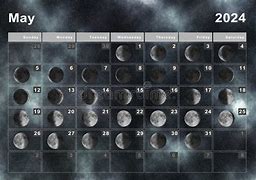
Druids will also make ritual at various phases of the moon, though which phase is most important to any individual Druid will depend on their own nature. Some Druids will regularly meet with their grove at the dark or new moon, others preferring the full moon, and some acknowledge the quarter moons. This practice encourages and facilitates the Druid’s attunement with the lunar cycle, increasing awareness as to its impact on his own nature and the natural world around him, increasing health, well being and relationships.


 Witches Of The Craft®
You must be logged in to post a comment.