Discover the cosmos! Each day a different image or photograph of our fascinating universe is featured, along with a brief explanation written by a professional astronomer.
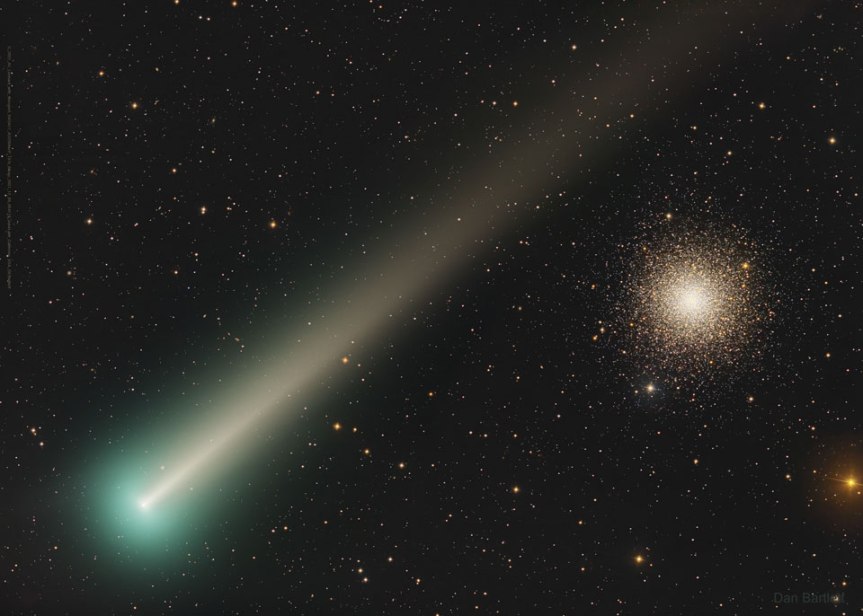
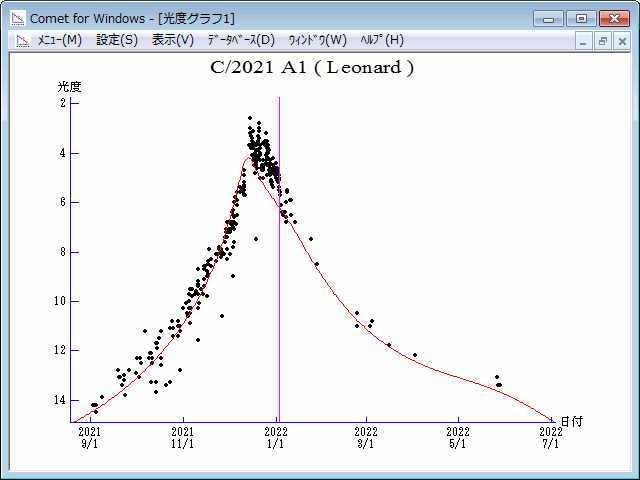
Explanation: Comet Leonard is now visible to the unaided eye — but just barely. Passing nearest to the Earth today, the comet is best seen this week soon after sunset, toward the west, low on the horizon. Currently best visible in the north, by late December the comet will best be seen from south of Earth’s equator. The featured image of Comet C/2021 A1 (Leonard) was taken a week ago from California, USA. The deep exposure shows in great detail the comet’s green gas coma and developing dust tail. The comet — across our inner Solar System and only light-minutes away — was captured passing nearly in front of globular star cluster M3. In contrast, M3 is about 35,000 light-years away. In a week, Comet Leonard will pass unusually close to Venus, but will continue on and be at its closest to the Sun in early January.
I will try to get some more posts up later today but my youngest son is going through a very rough path. I am traveling today to spend some time with him and I am sorry but as I tell others family comes first. If you could say a “prayer” or light a candle for him to find the light that shines through him and come out of the darkness he is in I would really appreciate it.
You can use this link to go forward or backward in time for Moon phase information. If you are curious you can even find out what phase the Moon was in when you or anyone else, you know was on the date the person was born.
Today and tonight the Moon will be in a First Quarter phase. This phase occurs roughly 7 days after the New Moon when the moon is one quarter of the way through its orbit around the earth. Exactly half the moon will be illuminated and half dark. On the day of the First Quarter phase the moon is high overhead at sunset and is visible until mid-night when it sets in the west. The First Quarter phase is a one-day event and in the following days enters a Waxing Gibbous phase becoming more illuminated each day until the Full Moon.
The First Quarter on December 11 has an illumination of 54%. This is the percentage of the Moon illuminated by the Sun. The illumination is constantly changing and can vary up to 10% a day. On December 11 the Moon is 7.79 days old. This refers to how many days it has been since the last New Moon. It takes 29.53 days for the Moon to orbit the Earth and go through the lunar cycle of all 8 Moon phases.
The 8 Lunar Phases
There are 8 lunar phases the Moon goes through in its 29.53 days lunar cycle. The 4 major Moon phases are Full Moon, New Moon, First Quarter and Last Quarter. Between these major phases, there are 4 minor ones: the Waxing Crescent, Waxing Gibbous, Waning Gibbous and Waning Crescent. For more info on the Moon Cycle and on each phase check out Wikipedia Lunar Phase page.
Phase Details
Phase: First Quarter
Illumination: 54%
Moon Age: 7.79 days
Moon Angle: 0.52
Moon Distance: 386,427.58 km
Sun Angle: 0.54
Sun Distance: 147,288,462.94 km
Useful Moon Resources
Check the weather before a night of Moon gazing at weather.com
You can use this link to go forward or backward in time for Moon phase information. If you are curious you can even find out what phase the Moon was in when you or anyone else, you know was on the date the person was born.
The Moon’s current phase for today and tonight is a Waxing Crescent Phase. A Waxing Crescent is the first Phase after the New Moon and is a great time to see the features of the moon’s surface. During this phase the Moon can be seen in the wester sky after the sun dips below the horizon at sunset. The moon is close to the sun in the sky and mostly dark except for the right edge of the moon which becomes brighter as the days get closer to the next phase which is a First Quarter with a 50% illumination.
The Waxing Crescent on December 10 has an illumination of 44%. This is the percentage of the Moon illuminated by the Sun. The illumination is constantly changing and can vary up to 10% a day. On December 10 the Moon is 6.81 days old. This refers to how many days it has been since the last New Moon. It takes 29.53 days for the Moon to orbit the Earth and go through the lunar cycle of all 8 Moon phases.
The 8 Lunar Phases
There are 8 lunar phases the Moon goes through in its 29.53 days lunar cycle. The 4 major Moon phases are Full Moon, New Moon, First Quarter and Last Quarter. Between these major phases, there are 4 minor ones: the Waxing Crescent, Waxing Gibbous, Waning Gibbous and Waning Crescent. For more info on the Moon Cycle and on each phase check out Wikipedia Lunar Phase page.
Phase Details
Phase: Waxing Crescent
Illumination: 44%
Moon Age: 6.81 days
Moon Angle: 0.52
Moon Distance: 381,570.88 km
Sun Angle: 0.54
Sun Distance: 147,305,560.68 km
Useful Moon Resources
Check the weather before a night of Moon gazing at weather.com
1684Isaac Newton‘s derivation of Kepler’s laws from his theory of gravity, contained in the paper De motu corporum in gyrum, is read to the Royal Society by Edmond Halley
1041 Michael IV, Paphlagonicus, Byzantium Emperor dies of results of dropsy. His wife Empress Zoe elevates her adoptive son to the throne of the Eastern Roman Empire as Michael V.
1294 Pope Coelestinus V becomes Pope (until Dec 13th)
1508 League of the kingdom signed (covenant against Venice)
1926 1st radio broadcast in the Sprinfield area (WCBS)
1952 WSLS TV channel 10 in Roanoke, VA (NBC) begins broadcasting
1953 KOMO TV channel 4 in Seattle, WA (ABC) begins broadcasting
1953 WSTV (now WTOV) TV channel 9 in Steubenville-Wheeling, OH (CBS) begins
1962 David Lean’s film “Lawrence of Arabia”, based on life of T. E. Lawrence and starring Peter O’Toole, premieres at Odeon Leicester Square (Academy Awards Best Picture 1963)
1810 English bare-knuckle boxer Tom Cribb beats African-American Tom Molineaux in 33rd of 40 round bout at Copthall Common, England; first interracial boxing match
1831 “Spirit of the Times” begins publishing in New York City, the premier sports journal of the 19th century
1918 John Heyder becomes president of baseball’s National League for the 2nd time
1919 NL votes to ban the spitball’s use by all new pitchers
1810 English bare-knuckle boxer Tom Cribb beats African-American Tom Molineaux in 33rd of 40 round bout at Copthall Common, England; first interracial boxing match
1831 “Spirit of the Times” begins publishing in New York City, the premier sports journal of the 19th century
1918 John Heyder becomes president of baseball’s National League for the 2nd time
1919 NL votes to ban the spitball’s use by all new pitchers
1810 English bare-knuckle boxer Tom Cribb beats African-American Tom Molineaux in 33rd of 40 round bout at Copthall Common, England; first interracial boxing match
1831 “Spirit of the Times” begins publishing in New York City, the premier sports journal of the 19th century
1918 John Heyder becomes president of baseball’s National League for the 2nd time
1919 NL votes to ban the spitball’s use by all new pitchers
Discover the cosmos! Each day a different image or photograph of our fascinating universe is featured, along with a brief explanation written by a professional astronomer.
Explanation: During polar day, in Arctic and Antarctic summer, the Sun stays above the horizon for periods of 24 hours or more. Recorded on December 4, this fisheye timelapse image tracks the Sun in multiple frames as it completes a circle in the summer sky above Union Glacier, Antarctica. Of course on that date, Union Glacier’s sky did grow dark even though the Sun was above the horizon. Captured during the brief period of totality, an eclipsed Sun is at bottom center of the composite view. Near the edge of the total eclipse path across planet Earth, the Moon’s shadow darkens the sky above.
You can use this link to go forward or backward in time for Moon phase information. If you are curious you can even find out what phase the Moon was in when you or anyone else, you know was on the date the person was born.
The Moon’s current phase for today and tonight is a Waxing Crescent Phase. A Waxing Crescent is the first Phase after the New Moon and is a great time to see the features of the moon’s surface. During this phase the Moon can be seen in the wester sky after the sun dips below the horizon at sunset. The moon is close to the sun in the sky and mostly dark except for the right edge of the moon which becomes brighter as the days get closer to the next phase which is a First Quarter with a 50% illumination.
The Waxing Crescent on December 10 has an illumination of 44%. This is the percentage of the Moon illuminated by the Sun. The illumination is constantly changing and can vary up to 10% a day. On December 10 the Moon is 6.81 days old. This refers to how many days it has been since the last New Moon. It takes 29.53 days for the Moon to orbit the Earth and go through the lunar cycle of all 8 Moon phases.
The 8 Lunar Phases
There are 8 lunar phases the Moon goes through in its 29.53 days lunar cycle. The 4 major Moon phases are Full Moon, New Moon, First Quarter and Last Quarter. Between these major phases, there are 4 minor ones: the Waxing Crescent, Waxing Gibbous, Waning Gibbous and Waning Crescent. For more info on the Moon Cycle and on each phase check out Wikipedia Lunar Phase page.
Phase Details
Phase: Waxing Crescent
Illumination: 44%
Moon Age: 6.81 days
Moon Angle: 0.52
Moon Distance: 381,570.88 km
Sun Angle: 0.54
Sun Distance: 147,305,560.68 km
Useful Moon Resources
Check the weather before a night of Moon gazing at weather.com
You can use this link to go forward or backward in time for Moon phase information. If you are curious you can even find out what phase the Moon was in when you or anyone else, you know was on the date the person was born.
The Moon’s current phase for today and tonight is a Waxing Crescent Phase. A Waxing Crescent is the first Phase after the New Moon and is a great time to see the features of the moon’s surface. During this phase the Moon can be seen in the wester sky after the sun dips below the horizon at sunset. The moon is close to the sun in the sky and mostly dark except for the right edge of the moon which becomes brighter as the days get closer to the next phase which is a First Quarter with a 50% illumination.
The Waxing Crescent on December 9 has an illumination of 33%. This is the percentage of the Moon illuminated by the Sun. The illumination is constantly changing and can vary up to 10% a day. On December 9 the Moon is 5.8 days old. This refers to how many days it has been since the last New Moon. It takes 29.53 days for the Moon to orbit the Earth and go through the lunar cycle of all 8 Moon phases.
The 8 Lunar Phases
There are 8 lunar phases the Moon goes through in its 29.53 days lunar cycle. The 4 major Moon phases are Full Moon, New Moon, First Quarter and Last Quarter. Between these major phases, there are 4 minor ones: the Waxing Crescent, Waxing Gibbous, Waning Gibbous and Waning Crescent. For more info on the Moon Cycle and on each phase check out Wikipedia Lunar Phase page.
Phase Details
Phase: Waxing Crescent
Illumination: 33%
Moon Age: 5.80 days
Moon Angle: 0.53
Moon Distance: 376,795.45 km
Sun Angle: 0.54
Sun Distance: 147,323,356.20 km
Useful Moon Resources
Check the weather before a night of Moon gazing at weather.com
Discover the cosmos! Each day a different image or photograph of our fascinating universe is featured, along with a brief explanation written by a professional astronomer.
2021 December 9
A Total Eclipse of the Sun
Image Credit & Copyright: Theo Boris, Christian A. Lockwood, David Zimmerman (JM Pasachoff Antarctic Expedition) Compositing: Zev Hoover and Ronald Dantowitz (MARS Scientific)
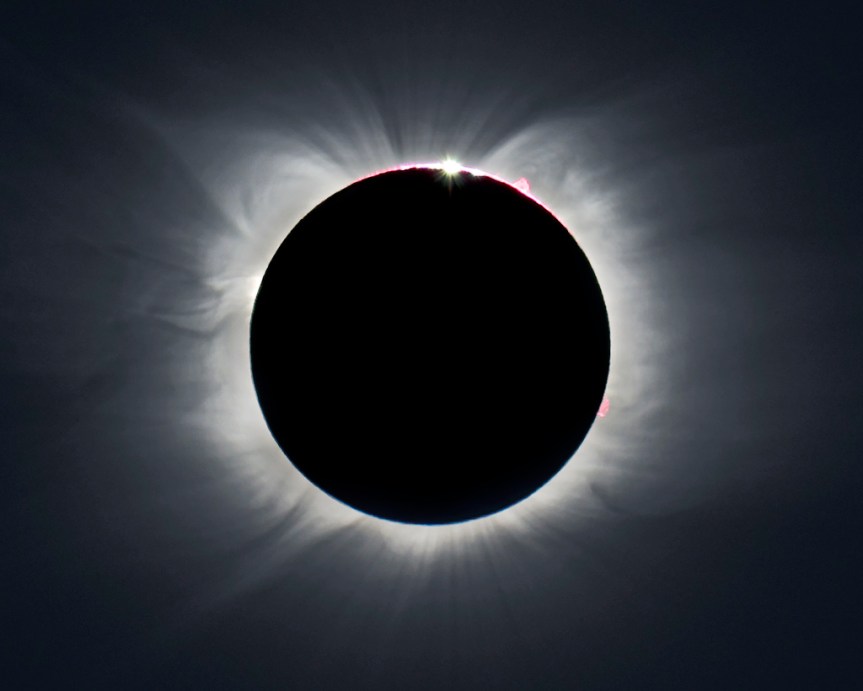
Explanation: Few were able to stand in the Moon’s shadow and watch the December 4 total eclipse of the Sun. Determined by celestial mechanics and not geographical boundaries, the narrow path of totality tracked across planet Earth’s relatively inaccessible southernmost continent. Still, some enthusiastic and well-insulated eclipse chasers were rewarded with the dazzling spectacle in Antarctica’s cold but clear skies. Taken just before the brief totality began, this image from a ground-based telescope inside the edge of the shadow path at Union Glacier catches a glimmer of sunlight near the top of the silhouetted lunar disk. Look closely for the pinkish solar prominences arcing above the Sun’s limb. During totality, the magnificent solar corona, the Sun’s outer atmosphere, made its much anticipated appearance, seen in the composite view streaming far from the Sun’s edge.
You can use this link to go forward or backward in time for Moon phase information. If you are curious you can even find out what phase the Moon was in when you or anyone else, you know was on the date the person was born.
The Moon’s current phase for today and tonight is a Waxing Crescent Phase. A Waxing Crescent is the first Phase after the New Moon and is a great time to see the features of the moon’s surface. During this phase the Moon can be seen in the wester sky after the sun dips below the horizon at sunset. The moon is close to the sun in the sky and mostly dark except for the right edge of the moon which becomes brighter as the days get closer to the next phase which is a First Quarter with a 50% illumination.
Visit the December 2021 Moon Phases Calendar to see all the daily moon phase for this month.
Today’s Waxing Crescent Phase
The Waxing Crescent on December 9 has an illumination of 33%. This is the percentage of the Moon illuminated by the Sun. The illumination is constantly changing and can vary up to 10% a day. On December 9 the Moon is 5.8 days old. This refers to how many days it has been since the last New Moon. It takes 29.53 days for the Moon to orbit the Earth and go through the lunar cycle of all 8 Moon phases.
The 8 Lunar Phases
There are 8 lunar phases the Moon goes through in its 29.53 days lunar cycle. The 4 major Moon phases are Full Moon, New Moon, First Quarter and Last Quarter. Between these major phases, there are 4 minor ones: the Waxing Crescent, Waxing Gibbous, Waning Gibbous and Waning Crescent. For more info on the Moon Cycle and on each phase check out Wikipedia Lunar Phase page.
Phase Details
Phase: Waxing Crescent
Illumination: 33%
Moon Age: 5.80 days
Moon Angle: 0.53
Moon Distance: 376,795.45 km
Sun Angle: 0.54
Sun Distance: 147,323,356.20 km
Useful Moon Resources
Check the weather before a night of Moon gazing at weather.com
You can use this link to go forward or backward in time for Moon phase information. If you are curious you can even find out what phase the Moon was in when you or anyone else, you know was on the date the person was born.
The Moon’s current phase for today and tonight is a Waxing Crescent Phase. A Waxing Crescent is the first Phase after the New Moon and is a great time to see the features of the moon’s surface. During this phase the Moon can be seen in the wester sky after the sun dips below the horizon at sunset. The moon is close to the sun in the sky and mostly dark except for the right edge of the moon which becomes brighter as the days get closer to the next phase which is a First Quarter with a 50% illumination.
The Waxing Crescent on December 8 has an illumination of 23%. This is the percentage of the Moon illuminated by the Sun. The illumination is constantly changing and can vary up to 10% a day. On December 8 the Moon is 4.74 days old. This refers to how many days it has been since the last New Moon. It takes 29.53 days for the Moon to orbit the Earth and go through the lunar cycle of all 8 Moon phases.
The 8 Lunar Phases
There are 8 lunar phases the Moon goes through in its 29.53 days lunar cycle. The 4 major Moon phases are Full Moon, New Moon, First Quarter and Last Quarter. Between these major phases, there are 4 minor ones: the Waxing Crescent, Waxing Gibbous, Waning Gibbous and Waning Crescent. For more info on the Moon Cycle and on each phase check out Wikipedia Lunar Phase page.
Phase Details
Phase: Waxing Crescent
Illumination: 23%
Moon Age: 4.74 days
Moon Angle: 0.53
Moon Distance: 372,381.88 km
Sun Angle: 0.54
Sun Distance: 147,341,843.71 km
Useful Moon Resources
Check the weather before a night of Moon gazing at weather.com
December 21, 2015 marks the Winter Solstice, which is the official beginning of winter, and the shortest day of the year in the Northern Hemisphere. But there’s a light at the end of this tunnel — literally! As the temperatures fall throughout the winter, the light grows, representing new hope during a time of darkness.
Ancient solstice festivals were the last big feasts before food became scarce during the harsh winter months. This magical day was celebrated from ancient Rome to China, and by the builders of Stonehenge to the Mayans. In fact, we all remember the Winter Solstice on December 21, 2012, which was the apparent end of the Mayan calendar, causing many to believe the end of the world is coming. Obviously, we’re still here!
Many modern holiday traditions, such as Christmas, Hanukkah, Kwanzaa and New Year’s, have their roots in the Winter Solstice celebrations of yesterday. Winter festivals continue today, complete with lights, feasts, dancing and singing, and spending quality time with those we love.
Astrologically, the Winter Solstice marks the moment the Sun — the ruler of the zodiac — moves from adventurous Fire sign Sagittarius to the steady Earth sign of Capricorn. This is the dark night of the year, a day when the Sun appears to stand still. It’s a time for light and laughter, but also deep reflection.
The Sun’s move into steady Capricorn urges us to take some time to look back on 2015 before we make those New Year’s resolutions. What did we do right? What do we wish we’d done differently? Don’t fight the seriousness it brings to the festive holiday season — use it to start 2016 on the right foot! Just make sure to keep some of the Goat’s ambitious energy alive when the Sun makes its next move.
Discover the cosmos! Each day a different image or photograph of our fascinating universe is featured, along with a brief explanation written by a professional astronomer.
Mix the musk and pine oils with the oak moss, and then add the remaining ingredients. Stir the potpourri well and store in a tightly covered ceramic or glass container.
(The above recipe for “Yule Ritual Potpourri” is quoted directly from Gerina Dunwich’s book “The Wicca Spellbook: A Witch’s Collection of Wiccan Spells, Potions and Recipes”, page 162, A Citadel Press Book, Carol Publishing Group, 1994/1995)
Magickal Activity for December 21, The Summer Solstice
Floating Candles
Midsummer is a celebration of light and life, symbolized by the flame of a candle and the movement of water. A large glass bowl filled with an assortment of floating candles makes a wonderful point of focus for ritual. Choose bright yellow sunflowers, white lilies, and red tulip-shaped candles. Have each person participating in the ritual inscribe his or her desire, with a pin, on a candle. Have each person come forward, place his or her candle in the bowl and light it as he makes his wish. Following the ritual, the bowl is placed outdoors, and the candles are left to burn out.
The Sun Wheel
One of the most popular symbols of Midsummer is the Sun Wheel, the turning of which suggests the turning, or progression, of the seasons. The Wheel is decorated with flowers, fresh herbs, and brightly colored ribbons.
The simplest method for making a Sun Wheel is to buy an already-prepared natural-branch wreath from an arts and crafts store. Affix small branches of rowan to form the spokes of the wheel (four spokes to represent the elements and cross-quarter days or eight to symbolize the eight Wiccan Sabbats). Use floral wire to attach fresh flowers and herbs to the wreath. Embellish with brightly colored ribbons. The wheel can be used as the focal point for your Midsummer rites or hung on the front door of your home for decoration.
Discover the cosmos! Each day a different image or photograph of our fascinating universe is featured, along with a brief explanation written by a professional astronomer.
2021 December 7
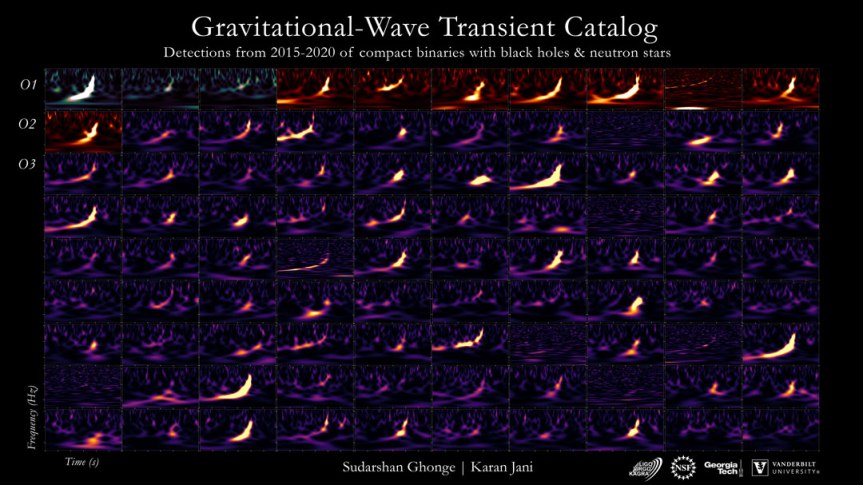
Ninety Gravitational Wave Spectrograms and Counting







 Witches Of The Craft®


#/media/File:Animation_of_C%EF%BC%8F2021_A1's_orbit_around_Sun_-_2021_close_approach.gif)


You must be logged in to post a comment.