A Version of the History of Beltane

History of Beltane from beltanefire.com.au

The Beltane fire festival welcomes the abundance of the fertile earth and is celebrated with bonfires, Maypoles, burning of the Wickerman, dancing, and a feast, with its roots in European traditions, Beltane is observed by many of today’s Pagans and others as a time for performing rituals

The Celts divided the year into two main seasons. Winter, the beginning of the year fell on November 1 (Irish: Samain) and midyear and summer on May 1 (Irish: Beltaine), opposite for us here in the Southern Hemisphere.

These two junctures were thought to be critical periods when the bonds between the human and supernatural worlds were temporarily erased; on May Eve (southern hemisphere)…

The Origins of Halloween by Silver RavenWolf

Harvest Moon, velvet sky, pumpkins glowing, children laughing, costumes, candy, scary stories—just where did this autumn gaiety begin? Let’s look through those cobwebby corridors of time to unearth the exciting genealogy of the American Celebration we call Halloween!

Nothing is ever as simple as it seems—especially when dealing with history. Too often events and circumstances of our past were written or re-written by people who, for whatever reason, operated under an agenda, or simply wanted history to reflect how it should have been, rather than how it was. How, then, do we determine what is fact and what is fiction? In some cases, we can’t. In other situations, we dig.

The Celts

Many historians feel that the greatest strength in the Celtic people lies in their collective mythos. Wading through the romanticism to find unmodified information can prove a tricky endeavor. The earliest archaeological evidence we have of the Celts rest in France and Western Germany.  The Celtic people moved into Spain, Britain, and Switzerland between the fifth and first century BCE. They even ransacked Rome in 390 BCE.

The Celtic peoples celebrated four festivals called fire festivals–commonly know today as Samhain, Oimelc (Imbolc), Beltane, and Lughnasadh. Samhain (pronounced sow-in, sow rhymes with now) was the first and foremost a harvest festival relating to animal husbandry and preparations for the winter months. Fire is an element of cleaning, a vehicle of eradication, so it is not unlikely that fire would work itself into any type of religious celebration. Fire among the ancient peoples often represented an aspect of the divine.

What does the word Samhain mean? Well, we know what it doesn’t mean. There is no archeological or literary evidence of a Celtic god by the name of Samhain. This little slip of fact appears to have begum in the 1700s and continues in some misinformed publications today. The word Samhain actually means “summers end”.

So, where did this Lord of the Dead thing come in? Over time, Samhain took on a religious significance through ministrations of the Druids (the clergy of the Celt’s). Legends indicate that on Samhain all the hearth fires in Ireland were doused and then lit again from a central fire maintained by the Druids at Tlachtga. To the Celts, Samhain was a turning point from light into darkness, and it was thought that this break or fissure created easier access to their land of the dead, Tir nan Og.

The Druids

We need to know a little bit about the Druids to continue with our history of Halloween. The Druids were versed in all learning and were considered to have the gift of prophecy. They functioned as judge, ambassadors, healers, and religious leaders. The Druids first named the holiday Samhain.

 Feast of the Dead

As the Celtic religious system solidified so did the beliefs of the Celts concerning the dead—as has occurred in all religions, before and after the Celts. Since the turning points of the year were considered fissures in time and space, the Celts believe that the dead they loved so dearly could travel through time and space and return from Tir nan Og to visit them. The custom of leaving food at the table (the birth part of the treat part of trick-or-treat) was a gesture of welcome to the departed. From these visits came the belief that those who had gone beyond the land of the living could provide information on past or future events. This is how divination became associated with Samhain.

The Celts did not believe in devils or demons, but they did believe in the Fairy Folk, whom they thought inhabited the land of the dead (the land in-between). Fairies were thought to be resentful of humankind for taking over their land. Because time and space could be conquered on Samhain, fairies were said to roam countryside creating mischief and kidnapping a human or two now and then—just for fun, you understand.—except the humans never came back. Here then is the root of the scary stuff associated with Halloween. The mischief, of course, was caused by living humans, and accepted by the Celts as a psychological release before the onset of winter gloom—though I doubt they would explain it in those terms.

Is it odd, gross, or unusual that a group of people should set aside a day for the dead? Nope. Different cultures and religions have followed such a practice for centuries. Let’s get on our broom again and check out Rome and its contributions to Halloween.

 As the Celtic religious system solidified so did the beliefs of the Celts concerning the dead—as has occurred in all religions, before and after the Celts. Since the turning points of the year were considered fissures in time and space, the Celts believe that the dead they loved so dearly could travel through time and space and return from Tir nan Og to visit them. The custom of leaving food at the table (the birth part of the treat part of trick-or-treat) was a gesture of welcome to the departed. From these visits came the belief that those who had gone beyond the land of the living could provide information on past or future events. This is how divination became associated with Samhain.

The Celts did not believe in devils or demons, but they did believe in the Fairy Folk, whom they thought inhabited the land of the dead (the land in-between). Fairies were thought to be resentful of humankind for taking over their land. Because time and space could be conquered on Samhain, fairies were said to roam countryside creating mischief and kidnapping a human or two now and then—just for fun, you understand.—except the humans never came back. Here then is the root of the scary stuff associated with Halloween. The mischief, of course, was caused by living humans, and accepted by the Celts as a psychological release before the onset of winter gloom—though I doubt they would explain it in those terms.

Is it odd, gross, or unusual that a group of people should set aside a day for the dead? Nope. Different cultures and religions have followed such a practice for centuries. Let’s get on our broom again and check out Rome and its contributions to Halloween.

A Fly-BY of Ancient Rome

Rome had the habit of changing rulers as many times as you empty the lint trap in your dryer. Between 14 and 37 CE, Christianity had begun its rise in Rome. By 41 CE, Claudius had distinguished himself with the conquest of Britain. The Romans also had a harvest festival, so the Celts didn’t have much trouble blending the two holidays together after they came into contact with the Romans. It was around 314 CE when Constantine the Great declared the Roman Empire to be Christian, and the fate of Samhain and Druids was sealed.

 The Advent of Christianity

By the fourth and fifth centuries , Celtic Christianity had oozed into Ireland. St. Patrick has his hands full, and here is where the kettle starts to boil. At, first, the Pagans openly welcomed Christianity, but as Christianity filtered into the Celtic system, church officials had a few problems—mainly the Celtics didn’t want up their holidays or folk practices. The people were not willing to throw out traditions that were ingrained into their social structure. If you can’t get someone to completely change, what do you do? Compromise. And that’s exactly what happened. Samhain was changed to All Hollow’s Eve. To make the Pagan peoples adhere more closely to this new religion of Christianity, the clergy of the day taught the peasants that fairies were really demons and devils (remember, a concept totally unknown to Celtic belief or history) and their beloved dead were horrid ghosts and ghouls. The early Christian erroneously associated the Celtic land of the dead with the Christian concept of Hell.

To help the belief in Christianity along, Druids priestess were systematically murdered. Early Christians also taught the area peasants that their Lord of the Underworld was in fact Satan, which is ridiculous, as the two mythos don’t have anything in common. It appears that Christians misunderstood what the word Samhain meant: because the peasants use this celebration to honor the dead, Christians assumed that Samhain was the incorrect pronunciation of a Pagan deity in the Bible, recorded as Samuel, from the Semitic Sammael, meaning God of the under world.

The Witches

So far, we’ve talked about the land of the dead, how the early Christians managed to superimpose Satan onto Samhain, and how fairies got zapped into demons, but there has been no mention of Witches, commonly associated in our time with Halloween. Where did Witches come from?

During the Dark Ages, the Church sought to eradicate the Pagans and wise women from the countryside so that the church could amass both power and property. First, they had to devalue women because women kept the holy days, trained the children, and provided the cohesive socialization of the culture, thus women held the power to shape society. The church taught, among other things, that women had no souls. Once this teaching had occurred, it was only a small step to make them inhuman, and the Church was able to incite the superstitious populace.

The Celtic women were the strong hold of the family environment, and although the Celts accepted Christianity at first, they did not want to give up their family traditions or their lifestyle. The Church was not into free thinking—therefore anything that did not follow the church dictates was evil. Hence, the Witches (really the women) became evil. Since Samhain was a primary festival of the Celts and the Church had already determined that Samhain was evil, the association between Witches and Halloween was born.

All Saints’ Day / All Hallow’s EVE / Halloween

All Saints’ Day and All Hallow’s Eve (Halloween) were first introduced in the seventh century CE. All Saints’ Day was originally celebrated in the spring. The date was changed to November 1 to supplant Pagan beliefs because those pesky Pagans just refused to cough up their original Samhain. The day was to honor God and all his saints, known and unknown. All Saints’ Day later became Hallowmass, a mass to honor the dead. The Eve of All Hallow’s Day, October 31, became All Hallow’s Eve, which evolved into the word Hallowe’en. Although the church wished this time to be one of somber prayer and quite custom, the Celtics continued their customary bonfires and fortune telling.

All Souls’ Day is a bit different. This festival falls on November 2, a day to offer prayers and alms to assist the souls of those departed that manage to get stuck in purgatory, an in-between place that is neither heaven nor hell. Over the succeeding centuries, Halloween, like Christmas, picked up various customs and discarded others, depending on the complex socialization of the times and religious dictates.

Halloween Comes to America

Our first inkling of Halloween coming to America revolves not around a specific set of people (many indicate the Irish) but with William Penn’s motley collection of refugees from Europe. In 1663, Penn wrote a promotional tract about the Americans. As a result, fifty ships dropped the anchors in the Delaware River. They discharged persecuted souls from England, Ireland, Wales, and the Rhineland (now Germany). Collectively, the Germans and Irish shared Celtic heritage. Therefore many of the folk customs resonated together—including Halloween.

From 1684 through 1930, Halloween was more a time for tricking rather than for treating. Many of the tricks the German and Irish communities became universal, such as overturning outhouses, dismantling a wagon and putting it back together on top of a house or barn, and tying cows to church bells. The tricks often served as social function, such as mildly chastising a neighbor who exhibited antisocial behavior.

By 1910, several American manufactures were making or importing party products just for the American holiday Halloween. From noisemakers to costumes, a new holiday meant new business and an opportunity to make money.

The drawback to the new holiday came in the form of the “declared” Mischief Night, Goblin Night, or Devil’s night on October 30. Minor offenses, such as trying several garbage cans together and hanging them from a light pole, soaping windows with lard, and later, bars of hand soap, abounded. As the pranks grew to vandalism shopkeepers would bribe youngsters to ward off destruction of their property.

In an effort to stop the criminal behavior, the Boy Scouts, in conjunction with local town councils, cities, boroughs, instituted the custom of Trick-or-Treat night to help keep youngsters from naughty practices. By the 1930s the custom of trick-or-treating was well entrenched in our American culture. Halloween, like Christmas, became a holiday for children, and parents strove to make the holiday as much fun as possible for the enjoyment of their youngsters.

During he 1950s. ’60s, and ’70s our American Halloween stayed primarily the same, but in the ’70s and ’80s, with a recession coupled by a candy scare, groups and organizations once again sought to find appropriate avenues to make Halloween safe for America’s children. Halloween practices extended through the entire month of October. Haunted houses, parties, hay rides, plays, story hours, and numerous other events were held throughout the month.

In the mid-to-late 1990s certain sects of the Protestant Christian church declared war on Halloween. using the same erroneous propaganda cultivated hundreds of years ago. Other groups size Halloween for their own political agendas—hosting haunted houses showing aborted babies, drug addicts, and other modern day violent situations. This did not go over well, as the holiday had become an event primarily for children, not adult political issues. Radical Christian groups said that the holiday was Satanic—which, as we’ve seen from our research, is a bizarre and fantastic claim, based on misinformation, politicking, personal agendas and fear. With America’s policy of separation of church and state the battle for destroying Halloween in the United States is an uphill battle.

The original Samhain marked the the close of the agriculture season and functional third harvest festival. In America, Halloween has become the first holiday in our end-of-year rush for partied gaiety. Our Halloween functions as the opening of the three-month-long celebratory fest that includes Thanksgiving, Christmas, Yule, Kwanzaa, and Chanukkah, and ends with the popular American New Year.

As our children crave pumpkins with delightful chatter, adults find solace in a night when they can be whatever they want to be. We have little doubt about the joy this holiday bring to the American people. I am sure we will forever love the haunted house, the harvest Moon, the thrills and chills of a well-wrought tale—and, of course, the deliciously scary things that go EEEEK! in the night.

 Harvest Moon, velvet sky, pumpkins glowing, children laughing, costumes, candy, scary stories—just where did this autumn gaiety begin? Let’s look through those cobwebby corridors of time to unearth the exciting genealogy of the American Celebration we call Halloween!

Nothing is ever as simple as it seems—especially when dealing with history. Too often events and circumstances of our past were written or re-written by people who, for whatever reason, operated under an agenda, or simply wanted history to reflect how it should have been, rather than how it was. How, then, do we determine what is fact and what is fiction? In some cases, we can’t. In other situations, we dig.

Llewellyn’s Witches’ Datebook1999 Pages 24 to 29

History Cooperative – Countryside Festivals

Click here to read more about Countryside Festivals

As the Romans saw many natural thigns such as trees, rocks and other matters as possible hosts to spirits or bearers of some other religious significance, then the countryside bustled with spiritual hints by gods, ghosts and spirits. There was also not a thing which wasn’t somehow guarded by a deity.

Read More: Roman gods

There was gods who watched over fields, groves, orchards, vineyards, springs, woods and any other matter. Jupiter for example watched over oak trees which were sacred to him. As country life was inevitably connected to agriculture, which was at the whim of nature, religious life in the country therefore consisted primarily of appeasing he many gods around one, ensuring that they would guard the harvest and be merciful.

As the ancient calendar, before later changes by the Romans, began on waht is now 15 March, the first traditional festival of the country calendar was the liberalia on 17 March. It was held to honour Liber, the god of fertile crops and vineyards. (The liberalia was also the traditional date when a boy could become a man by being given his toga virilis.)

On 15 April came the fordicia in honour of the earth goddess Tellus. For this pregnant cows were slaughtered in sacrifice and in Rome animal fetuses were burnt on altars. The parilia festival which took place the week after the fordicia, saw sheep being herded and forced to jump across burning bales of straw, in order to be purified.

Another festival was that celebrating the goddess Ceres which took place on 19 April. Ceres was especially connected with agriculture, the harvest and, especially, grain. So her festival was no doubt of significance to farmers. There would be a ritual march around the boundaries of the land, the so called lustration, to purify it and to honour the goddess. In the earlier times of Rome the festival of Ceres would see faxes let loose with torches tied to their tails where later the grand arena of the Circus Maximus would stand.

After the festival of Ceres followed the vinalia rustica which was a wine feast to celebrate…

October 28 Today In History

Today’s Historical Events

1492 Christopher Columbus sights Cuba and claims it for Spain under the name “Juana”

1538 The first university in the New World, the Universidad Santo Tomás de Aquino, is established on Hispaniola

1746 Peruvian cities of Lima and Callao demolished by earthquake, 18,000 die

1904 St Louis police try a new investigation method – fingerprints

1919 Volstead Act passed by US Congress, establishing prohibition, despite President Woodrow Wilson‘s veto

1924 Miner M.de Bruin discovers the infant fossil skull, “Taung child” in a lime quarry in Taung, South Africa. Paleoanthropologist Raymond Dart identifies the fossil as a new hominin species, Australopithecus africanus.

Today’s Historical Events in Film and TV

1921 Amsterdam’s Tuschinski movie theater opens

Today’s Historical Events in Music

1828 Clara Wieck, age 9, makes her piano concert debut at the Gewandhaus concert hall in Clara Leipzig, Germany

Today’s Historical Events in Sports

1890 “World Championship” Baseball Series, Washington Park, NY: Louisville Colonels beat Brooklyn Bridegrooms, 6-2 in Game 7 to tie series 3-3-1; deciding game never played

1900 II Summer (Modern) Olympic Games, Paris, France: competition ends after 5 months; no opening or closing ceremonies conducted

1924 White Sox beat NY Giants 8-4 in Dublin, less than 20 fans attend

1934 Brooklyn Dodgers and Pittsburgh Pirates play first of only 4 penalty free games in NFL history; Dodgers wins 21-3 at Ebbets Field, Brooklyn

1951 Juan Manuel Fangio of Argentina wins Formula 1 World Drivers Championship by taking out the Spanish Grand Prix at Pedralbes in an Alpha Romeo; wins by 6 points from Alberto Ascari of Italy

1953 Red Barber, resigns as Dodger sportscaster to join Yankees

1954 Major league owners vote down sale of A’s to a Philadelphia syndicate

1959 American Football League awards Buffalo Bills franchise to Ralph C Wilson

1961 Ground broken for Municipal (Shea) Stadium for NY Mets

1962 Jo Weatherly in a Pontiac finishes 2nd to Rex White in season-ending Dixie 400 at Atlanta Motor Speedway to clinch his 1st of 2 consecutive NASCAR Sprint Cup Championships

1962 NY Giant Y. A. Tittle passes for 7 touchdowns vs Wash Redskins (49-34)

1970 NBA Cleveland Cavaliers 1st home game, lose to San Diego 110-99

1973 Elmore Smith of Lakers blocks 17 shots in a game (NBA record)

1974 1st time 2 Islanders hat trick in same game-MacMillian & Westfall

1975 Calvin Murphy (Houston) begins NBA free throw streak of 58 games

October 28 Daily Correspondence Digest for the Northern Hemisphere Moon Phase and Planetary Positions

You can use this link to go forward or backward in time for Moon phase information. If you are curious you can even find out what phase the Moon was in when you or anyone else, you know was on the date the person was born. 

From Moongiant.com 

The Moon’s current phase for today and tonight is a Third Quarter phase. Sometimes called a Last Quarter Moon, this phase occurs roughly 3 weeks after the New Moon when the Moon is three quarter of the way through it’s orbit around the earth. If you live in the northern hemisphere the Moons left side will be illuminated and the right side will be dark. For those of you in the southern hemisphere it will be the opposite with the right side illuminated. On the day of the Third Quarter phase the Moon will rise around midnight on the eastern horizon and set in the west around noon the next day. In the days following the Third Quarter Phase the Moon’s illumination will decrees each day until the New Moon.

Visit the October 2021 Moon Phases Calendar to see all the daily moon phase for this month.

Today’s Last Quarter Phase

The Last Quarter on October 28 has an illumination of 53%. This is the percentage of the Moon illuminated by the Sun. The illumination is constantly changing and can vary up to 10% a day. On October 28 the Moon is 21.85 days old. This refers to how many days it has been since the last New Moon. It takes 29.53 days for the Moon to orbit the Earth and go through the lunar cycle of all 8 Moon phases.

The 8 Lunar Phases

There are 8 lunar phases the Moon goes through in its 29.53 days lunar cycle. The 4 major Moon phases are Full Moon, New Moon, First Quarter and Last Quarter. Between these major phases, there are 4 minor ones: the Waxing Crescent, Waxing Gibbous, Waning Gibbous and Waning Crescent. For more info on the Moon Cycle and on each phase check out Wikipedia Lunar Phase page.

Phase Details

Phase: Last Quarter
Illumination: 53%
Moon Age: 21.85 days
Moon Angle: 0.50
Moon Distance: 397,159.80 km
Sun Angle: 0.54
Sun Distance: 148,597,775.81 km

Useful Moon Resources

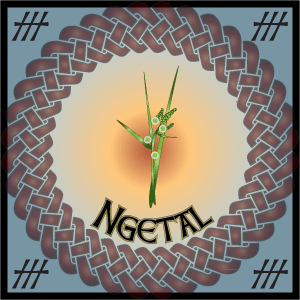
Celtic Zodiac – The Reed

The Reed

10/28 – 11/24: The Druids believed the Reed to be a tree because of its dense system of roots. Cut reeds were used as pens and symbolized wisdom and scholarship. Identified with the submerged or hidden Dryad, the Reed was representative of the mysteries of death. It was associated with being both a saviour and a custodian as well as a symbol of royalty. It was used in the making of instruments such as flutes and pipes. Pan, the Greek God of Herds, Fertility and Male Sexuality (whose name is the root word of “panic”), is often depicted playing a syrinx…a pipe comprised of seven reeds. Traditionally a nomadic people, the Celts camped in one area throughout the Winter months and would break camp in the Spring when the first yellow blooms appeared on the Reed. The Reed was once believed to bring order out of chaos and legend holds that a Reed was thrust into Christ’s hand when he was mockingly robed in purple.

The Reed grows in silence, thin and slender, by watersides and marshlands, standing in clumps at the edge of rivers. It is representative of arrows that fly up into the unknown air to land at the very source of that which is being sought, symbolic of the direct approach required when confronting a dilemma…whether that dilemma comes from within or without. The Reed expressed the desire to search out basic truths and was also symbolic of music. Within many woodwind instruments, the Reed will create a balance. Even in today’s world, the Reed is often used to thatch the roofs of houses, once being representative of the protection it offered to all of Nature’s creatures, whether domestic or wild. Weavers often used the Reed to separate the threads they once spun and its leaves were frequently used to fashion baskets and floor mats. Some cultures (such as the Marsh Arabs of the Rivers Tigris and Euphrates) built entire houses and even mosques from Reeds. Natives of the American SouthWest once made arrow shafts from the Reed’s woody culms and, in more modern times, small beds of Reeds are sometimes planted to purify domestic sewage.

Though often used with great imprecision, the term “Reed” as it applies to the Ogham is the Common Reed or Broom, a giant grass with stems which can grow to be 12 feet tall. It is found in abundance in the British Isles, usually in marshy areas where it often forms dense stands and blooms with yellow pod-shaped flowers. As with most other grasses, the vertical stems of the Reed (which can be very thick and strong) live only for a single year, dying in the Autumn to be replaced with new green shoots in the Spring. The dead stems have a tendency to rattle and whisper in late Autumn winds. The Common Reed has spread in weed-like fashion throughout most of the world but is more widespread in cooler climates. As its alternative name suggests, the branches of the Reed are …

Click here to read about the Reed from Celtic Radio

Some Thoughts About Celebrating Samhain

Samhain is a day of reflection of the past year while celebrating the new. It is a day that whatever has not been harvested from gardens, fields, bushes, and trees get left for the wildlife and Fea Folk. It is also a day to communicate with those who have crossed the veil into the Summerlands. Many pagans and witches say it is the day and/or night to honor only those that have crossed in the last year but I do not go along with this way of thinking. While those who have passed since November 1, 2020 up to today do need more comforting and remembering them then those that have crossed over in other years past. The farther back in time you go to those who have crossed before the last year the more chance there is that they will be forgotten totally.

Hypothetically, if crossed the veil say 30 years ago or longer and each generation after you talk about you less and less as each year passes soon you will be forgotten completely. That one reason I have my Book of Shadows and Family Grimoire as one book that I hope keeps growing after I am gone. I have also placed pictures of ancestors at different ages as well as pictures of myself alone and with family members both ancestors and descents. In the section for ancestors I have included a picture of their headstone and where it can be found if I know.

So this Samhain when you are setting the extra place at the table, lighting a candle for each ancestors name, or however you choose to honor your ancestors (remember an ancestor does not have to be blood related they can be anyone in your life that help to mold you into the person you are today.) Set one more place, light one more candle, or whatever your tradition to remember your ancestors is for those who names have been forgotten since the first Homosapien of any branch of the human gene pool lived.

I implore you all to remember that we all can trace our lineage back to this mish mash of a gene pool and that the energy that runs through us connects us to every other living things and not just on Mother Earth. So the next time you have a negative thought about someone for any reason at all remember you are also having that negative thought about yourself.

I picked this song to be included in this post because for me it helps me to remember those, female or male or other, who otherwise might be forgotten

Grandmother

I wish all my family, which means everyone reading this post and by blood, a happy and blessed Samhain.


Lady Beltane 2018

Reed Moon: Celtic Tree Calendar

To read more about the Celtic Reed Month by Sarah Wayt

The celebration of Samhain, now known as Halloween, occurs during the Reed Moon. To the Celts this month hailed the end of the year, a time to cull the livestock and to connect with ancestors. All around the world festivals that honour the dead are celebrated. During the Reed Moon, light a candle for loved ones who have died and you may receive a message from the spirit world.

Releasing old energy

The Reed Moon is a good time to use divination to gain insights into the year that has passed. Perform energy work that will release old energy, burn symbols of illness on your bonfire on November the 5th during your Guy Fawkes celebrations. Remember the Celtic year does not begin until the Winter Solstice so use this interval to dream, not to make plans for the future.

The haunting sound of reed

In the past, the reed was used to make swift-flying arrow shafts that slew both enemies and game. In this way the plant was linked to the season of death and sacrifice, in which trees shed their leaves and the energy of nature became more introspective. Many early musical instruments also used the reed to create a haunting sound that has been connected to rites for the dead and the summoning of spirits.

Wind instruments

Modern day wind instruments have developed the same principle used by original reed instruments. Whereby a current of air is vibrated to produce a melodic sound.

Other traditional uses for reed include thatching. Rooftops were thatched with reeds, and as the Celts withdrew into their homes for the winter they honoured the plant that gave them shelter, making the reed a symbol of royalty and protection.

Reed Moon energy…

Reed – introduction to Ogham

From Ireland Calling

It is widely believed in academic circles that reed is a modern, neo-pagan introduction to the Ogham, much like the tree calendar itself.

It was first promoted as an Ogham by Robert Graves in his book The White Goddess. However, the reed’s importance to Celtic life and folklore are indisputable.

Reed gained a reputation as a protective tree from its use as thatch for the rooftops homes.

For this reason it was also made into talismans and charms believed to protect the wearer from evil. Mats were often woven out of reeds which gave the house a sweet smell, associating the reed with cleansing the home.

Scholarship

The Druids also used reeds to make writing implements and paper, thus associating the reed with knowledge, scholarship and wisdom.

Physicians would use reeds as tools for administering treatments but arrows, the weapons of death, were also made out of reeds. Because of these two contrasting uses the reed gained an association with both death and healing.

Souls of the ‘otherworld’ join the living…

28 October Daily Correspondence Digest for the Southern Hemisphere’s Moon Phase and Planetary Positions

You can use this link to go forward or backward in time for Moon phase information. If you are curious you can even find out what phase the Moon was in when you or anyone else, you know was on the date the person was born.

From Moongiant.com

The Moon’s current phase for today and tonight is a Third Quarter phase. Sometimes called a Last Quarter Moon, this phase occurs roughly 3 weeks after the New Moon when the Moon is three quarter of the way through it’s orbit around the earth. If you live in the northern hemisphere the Moons left side will be illuminated and the right side will be dark. For those of you in the southern hemisphere it will be the opposite with the right side illuminated. On the day of the Third Quarter phase the Moon will rise around midnight on the eastern horizon and set in the west around noon the next day. In the days following the Third Quarter Phase the Moon’s illumination will decrees each day until the New Moon.

Visit the October 2021 Moon Phases Calendar to see all the daily moon phase for this month.

Last Quarter Phase

The Last Quarter on October 28 has an illumination of 53%. This is the percentage of the Moon illuminated by the Sun. The illumination is constantly changing and can vary up to 10% a day. On October 28 the Moon is 21.85 days old. This refers to how many days it has been since the last New Moon. It takes 29.53 days for the Moon to orbit the Earth and go through the lunar cycle of all 8 Moon phases.

The 8 Lunar Phases

There are 8 lunar phases the Moon goes through in its 29.53 days lunar cycle. The 4 major Moon phases are Full Moon, New Moon, First Quarter and Last Quarter. Between these major phases, there are 4 minor ones: the Waxing Crescent, Waxing Gibbous, Waning Gibbous and Waning Crescent. For more info on the Moon Cycle and on each phase check out Wikipedia Lunar Phase page.

Phase Details

Phase: Last Quarter
Illumination: 53%
Moon Age: 21.85 days
Moon Angle: 0.50
Moon Distance: 397,159.80 km
Sun Angle: 0.54
Sun Distance: 148,597,775.81 km

Useful Moon Resources