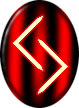
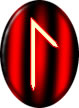
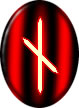
Today’s Runes for August 6th is Inguz

Today’s Runes

Spirit Runes are most commonly used for questions about mysticism, spirituality, and religion. Inguz is the rune of completion and fertility. The presence of this rune suggests that tasks which have been initiated will come to fruition. This rune is associated with Ing and Frey, it is this connection that explains its connotations of both fertility and sexuality. The variant of this rune shown here is reminiscent of the twin strands of life, and of the challenge and rewards of bringing together things complimentary.

Your Daily Number for August 6th: 5

You may find yourself discussing or embarking on a trip today. Not a great day for details; it’s better to take advantage of today’s self-promoting energy to get off the beaten path and be social.

Fast Facts

About the Number 5

Theme: Resourceful, Adventure, Speculation, Travel
Astro Association: Taurus
Tarot Association: Hierophant

WIND SCRYING

WIND SCRYING


Ancient Greeks practised wind scrying in the sacred grove of Dodona, which was dedicated to Zues. Psellus refered to this technique writing “there is a mode of predicting by means of the air and the leaves of the trees.
The method seemed to involve the hanging of striking wands from branches of sacred oak tress in a way that they struck resounding brass basins when the wind blew. Interpretations were made of these sounds and that of the wind. The wind gives itself naturally to scrying because it talks the same as you or me. Find a quite place in the bush where there is no noise of cars, music, etc. A place among the trees is the best. Find a tree and sit under it.
Casually focus your attention on the wind, blocking out all other thoughts. In time the wind will talk to you.
In order for you to scy the wind, you must, for a time, become the wind.
Egyptian dream scrying may be traced back thousands of years. The method used by the Egyptians was recorded in the Greek magical papyri which were written between 200 B.C. to 500 A.D.
In preparing to use the Egyptian dream scrying method you must not speak to anyone on the evening you plan to scy. You should remain in silence after the setting of the sun.
Do not consume alcohol on that day or engage in sex. You must refrain from consuming food for up to four hours before the scrying.
After having a warm bath you anoint your temples with olive oil. You will need an oil lamp which must not be coloured red or bear any inscription.
Write on a short narrow strip of white linen with ink mixed with myrrh the name of the dream God and the purpose for the dream scrying. Twist the linen strip into a wick and insert into the oil of the lamp.
Place the lamp on a table beside your bed. Using the ink draw the image of the dream God upon your left palm.
You must decide which God or Goddess you wish to use. Thoth was well used with the Egyptians.
Light your lamp. Kneel before the lamp.
Concentrating on the image on your left hand recite the following invocation : Thoth I invoke, blessed power of dreams divine, Angel of future fates, swift wings are thine, Great source of oracles to human kind, When stealing soft, and whispering to the mind, Through sleep’s sweet silence and the gloom of night, Thy power awake the sight, To silent souls the will of heaven relates, And silently reveals their future fates.
You need to concentrate on your question you wish to know the answer to. Around your left hand wrap a piece of black linen about four inches wide and about thirty inches long.
The black cloth is called “black” of Isis. Blow out the flame of the lamp.
Now go to bed, clear your mind and go to sleep. Have a tape recorder beside your bed so that when you awaken you may recrd your dreams while still fresh in your mind.
You will find that the dream will come to you in a voice that is clear and powerfull rather than in dream images. Sometimes the message is sent in cryptic form so take your time in working out the answer.


WATER SCRYING

WATER SCRYING


You will need a large, deep bowl made from glass, brass or silver. It must have a smooth and even rim.
You must set your base on some sort of tripod for best results. A tripod made of laural boughs is the best.
 
You will need to do your own testing to find out which bowl works best for you and how much water you should use. Do not use water from a tap. Get clean, fresh water from a stream.
The ancient Greeks believed that nature spirits dwelled in fresh water. The water may be stored in a vessel and used again.
 
However it is a good idea to replace your water once a month. Never collect the water of a day time. Water should only be collected at night preferably on a full moon.
 
To make your wand use a branch from a bay tree, hazel tree or the laural. The end of the wand should be covered in dry tree sap or resin.
Dip the end of the wand into the water until it becomes wet. Wet the rims of the bowl.
The best time to scy is at night when it is quite. By gently drawing the rim of the wand around the bowl it will cause it to resonate.
 
The action of the resonating basin will cause circular ripples to form in the basin. The water seems to breathe with the sounds.
It is the harmonics that seem to whisper forth predictions of the future. These are interpreted with the help of a gaurdian angel.
 
You may also recieve visual impressions which Nostradamus likened to that of a “burning mirror”.


OIL SCRYING

OIL SCRYING

 
The history of oil scrying can be traced back to the ancient Babylonians. Some of their magic books have survived down through the centuries with details of the methods they used.
 
One of their techniques was called the “Princess of the Thumb”. A scryer annointed the forehead and thumbnail of a subject. The shiny nail acted as a magic mirror in which the scryer saw spirits. Another version was called the “Princess of the Hand”. Oil was mixed with black soot to make a black paste that was then smeared upon the hand. The scryer then used the hand as a mirror to scry future events.
 
A third type of oil scrying was called the “Princess of the Cup”. Sesame seed oil was used to coate the inside of a cup that was rested on its side.
The cup was used as a concave magic mirror to capture and magnify the light of a candle that was fixed on its inner rim.
 
From the Babylonians oil scrying found its way to the Egyptians and Hebrews. The most detailed examples of oil scrying are written in the Greek Magical Papyri written in Egypt between 200 B.C. and A.D. 500.
 
Four kinds of water which is to be mixed with the oil is used for four types of divination.
If you call upon the services of the heavenly Gods then use rainwater. If you invoke the terrestrial Gods then use sea water. If you invoke the Gods Osiris or Serapis use riverwater. And if you call upon the souls of the dead then use spring water.

LAMP SCRYING

LAMP SCRYING


Both the Egyptions and Babylonians scryed by means of an oil lamp. The lamp itself was in fact a stone shaped as a low open dish with a strip of white linen coiled in the oil that had an end hanging over the end of the dish.
 
The Egyptians used clear Oasis oil which was a kind of palm oil. The clearer the oil the better.
The Egyptians used a lamp that was red in colour which is the colour of the God Set. Set is in fact the God of evil.
 
It may be advisable for you to use a white lamp. Place your lamp on a table and sit on the west side facing east across the lamp.
 
You should address your invocation to the Greco Roman God who rules the day you scy on.
Sunday : Sun.
Monday : Moon.
Tuesday : Mars.
Wednesday : Mercury.
Thursday : Jupiter.
Friday : Venus.
Saturday : Saturn.
Using the name of the God of the day you should chant a suitable invocation doing so directly into the flame. This invocation should be chanted in a soft voice and done so several times.
 
Gently focus on the flames of the lamp. You will begin to see moving shadows off to the side.
Do not look directly at the shadows or they will vanish. Ask the shadows what it is you seek.
You may hear voices or you may see images.

Scrying

Scrying

Scrying is the ancient act of divination for the purpose of clairvoyance. It is usually achieved by concentrating on or staring at an object having a shiny surface until a vision appears. Magicians and witches have practiced scrying throughout the ages. The typical stereotype of a person scrying is a Gypsy fortune teller looking into her crystal ball.

Scrying comes from the English word “descry” which means “to make out dimly” or “to reveal.” There have been and are many purposes for the activity; to see into the future, to find lost objects or persons, and track criminals, among others. In the Middle Ages a wise woman or a wise man, perhaps also called a witch, with a natural gift of second sight was called upon for scrying purposes.

Although the object used for scrying usually has a shiny surface, innumerable objects have been used for the practice over the centuries. The Egyptians used ink, blood and other dark liquids. The Romans used shiny objects and stones. Water has been used for gazing into. Mirrors are often used.

There is an example of the interior of a cauldron being painted black, then filled with water at night, a silver coin was dropped into the water so to reflect moonlight. Such means have been employed to see visions and read mystical signs.

Many witches scry in a magic circle to prevent outside influences from distorting their visions. Also, this is why most scrying is done at night in order to receive better psychic vibrations. As a general rule most diviners work at night in order to avoid the excessive psychic vibrations that are generated in the day due to the confusion of everyday living. The methods of scrying differ but after a period of concentration on the speculum visions, mental images, or impressions appear. Frequently the visions are symbolic and the scryer must be trained and skillful in interpreting their meanings.

BASIC PREPARATION FOR SCRYING

BASIC PREPARATION FOR SCRYING

It is always best to scry at night, because this method of divination is closely related to the Moon and all other Lunar correspondences. If you are indoors, you should extinguish all of the lights except for one candle. The candle should be out of your line of sight when you are looking at your scrying tool. Above and behind you is a good placement. Some people prefer that the candle flame flickers, others like the flame to remain still. Experiment and see what you like.
The room should be as quiet as you can make it. If you live in an apartment or with someone else, some quiet instrumental music can be used to drown out any unwanted sounds. Don’t use music with lyrics, because at the least, the lyrics might influence your visions. At the most, they might prevent you from concentrating enough to see anything.
Make sure that you will not be disturbed, and figure out a comfortable way to sit either holding your scrying tool or with it resting before you on the floor or a table.
If you are scrying on a particular subject, you might get better results if you schedule your scrying time for when the Moon is aspected favorably to the corresponding planet. Visions are always stronger around the time of the full Moon.

THE ART OF SCRYING

THE ART OF SCRYING

Some people have a natural aptitude for scrying. They only have to walk past a shallow puddle in the road, glance at a piece of black glass, admire the glossy fur of a black cat or look at a wet patch on a black rubbish sack and numerous images flood into their minds. Others have to spend days, weeks, months, even years, mastering this apparently simple technique, staring into elaborate black mirrors and seeing nothing but their own dark reflection – frustrating indeed – and of course, that very frustration makes things more difficult. As with all magic, it needs to be taken seriously, but with a playful and curious state of mind. Trying too hard is counterproductive.

One of the things which makes scrying so hard for some people to do is that, like meditation, it requires an altered state of consciousness to be achieved, but with the eyes open. In meditation, pathworking, and in parts of a ritual, most people prefer to work with their eyes closed because this makes an altered state so much easier to reach and to maintain.

Those who can scry in anything are fortunate to have this magical skill so long as they are able to switch it off at will and do not become completely distracted every time they see a shiny black surface. For the rest of us there are many things we can experiment with to make scrying easier – and different things will work for different people.

Dark water is a good way to start, not least because it is easily available and costs nothing. A pool can be lovely to scry in, though I would recommend sitting or kneeling down to do so, since it is very easy to forget what your body is doing once your mind becomes absorbed, and it is somewhat undignified to fall into the (possibly stagnant) water at a moment of great revelation. A black bowl filled with water is another method and has the advantage of being safe and suitable for indoor use. Tap water is fine, but spring water will probably work better. Perhaps the best kind of water to use is Moon water: spring, rain or sea water which has been placed in the Moonlight every night for a whole lunar cycle. The water can be blessed in whatever way you feel is appropriate, possibly dedicated to one of the Moon goddesses who rule such activities as these.

An alternative to using a black bowl is simply to use any dish but to darken the water with black ink. The old witch in her cottage would doubtless have done her scrying in a bubbling cauldron of stew or in the water boiling in an iron pot ready to make up some herbal brews. Red wine (especially elderberry) or dark beer both make good scrying material, though definitely not after drinking any of it! Coca Cola would probably be effective too, though I have never tried it. The possibilities are endless…

Personally I find black mirrors easiest to use because they don’t slop about like water (at least not under normal circumstances!). They are expensive to buy but very easy to make. Spray the back of the glass from a cheap clip frame with a couple of coats of black enamel paint. Make sure the glass is spotlessly clean before you do so as any little marks may spoil your concentration when you come to use it. Once the paint is completely dry, return the glass to the frame. Bless the mirror if you wish to and treat it with the respect due to any magical object. It can be kept hanging on the wall or put away after use, wrapped in a natural material like silk or cotton. If you prefer something a little more fancy, charity shops are excellent hunting grounds for interesting frames. Even better, you could make your own out of wood (carved, if you are skilled in that craft), papier mâché, textiles, or anything else that appeals to you. Indeed the more effort you put into making it, the more personal it will become – imbued with your own energy, in tune with you, and therefore easier for you to use. The size of the mirror is not important, although if you are just learning the technique, a larger surface area will probably prove easier to use. I would also avoid too elaborate a frame on a small mirror as it may prove unhelpful.

Once you have mastered this art, you can do it anywhere and in any light, but at first it is best to be in a dimly lit area, possibly using candles. The bowl or mirror needs to be placed at a height and angle which are comfortable, so that you can sit relaxed and breathe calmly and easily. Candles or other lighting will need to be in a position where their reflection will not bother you. Do not be disheartened if nothing happens for a while. It is a knack and perseverance pays off in the end.

A further use of this art is to communicate with another person, such as a magical partner, especially if they live a long way away and you cannot meet very often. Each person should have their own mirror, dedicated solely to this purpose. Ideally the mirrors should be identical and made by the people involved on an occasion when they are together, to ensure the closeness of the link. When separated both people look into the mirror at an agreed time and a good psychic channel of communication can be set up. With practice, it becomes possible to call the other person to the mirror if you really need to talk to them at a time when you have not agreed to “meet”.

Scrying is a magical art with many possibilities. Exactly what it is and how it works is for each individual practitioner to decide for themselves, but it will certainly enhance and focus both the psychic and creative abilities of the magician who is drawn into dark pools to find the bright treasure of secret knowledge.

THE ART OF SCRYING

THE ART OF SCRYING

Some people have a natural aptitude for scrying. They only have to walk past a shallow puddle in the road, glance at a piece of black glass, admire the glossy fur of a black cat or look at a wet patch on a black rubbish sack and numerous images flood into their minds. Others have to spend days, weeks, months, even years, mastering this apparently simple technique, staring into elaborate black mirrors and seeing nothing but their own dark reflection – frustrating indeed – and of course, that very frustration makes things more difficult. As with all magic, it needs to be taken seriously, but with a playful and curious state of mind. Trying too hard is counterproductive.

One of the things which makes scrying so hard for some people to do is that, like meditation, it requires an altered state of consciousness to be achieved, but with the eyes open. In meditation, pathworking, and in parts of a ritual, most people prefer to work with their eyes closed because this makes an altered state so much easier to reach and to maintain.

Those who can scry in anything are fortunate to have this magical skill so long as they are able to switch it off at will and do not become completely distracted every time they see a shiny black surface. For the rest of us there are many things we can experiment with to make scrying easier – and different things will work for different people.

Dark water is a good way to start, not least because it is easily available and costs nothing. A pool can be lovely to scry in, though I would recommend sitting or kneeling down to do so, since it is very easy to forget what your body is doing once your mind becomes absorbed, and it is somewhat undignified to fall into the (possibly stagnant) water at a moment of great revelation. A black bowl filled with water is another method and has the advantage of being safe and suitable for indoor use. Tap water is fine, but spring water will probably work better. Perhaps the best kind of water to use is Moon water: spring, rain or sea water which has been placed in the Moonlight every night for a whole lunar cycle. The water can be blessed in whatever way you feel is appropriate, possibly dedicated to one of the Moon goddesses who rule such activities as these.

An alternative to using a black bowl is simply to use any dish but to darken the water with black ink. The old witch in her cottage would doubtless have done her scrying in a bubbling cauldron of stew or in the water boiling in an iron pot ready to make up some herbal brews. Red wine (especially elderberry) or dark beer both make good scrying material, though definitely not after drinking any of it! Coca Cola would probably be effective too, though I have never tried it. The possibilities are endless…

Personally I find black mirrors easiest to use because they don’t slop about like water (at least not under normal circumstances!). They are expensive to buy but very easy to make. Spray the back of the glass from a cheap clip frame with a couple of coats of black enamel paint. Make sure the glass is spotlessly clean before you do so as any little marks may spoil your concentration when you come to use it. Once the paint is completely dry, return the glass to the frame. Bless the mirror if you wish to and treat it with the respect due to any magical object. It can be kept hanging on the wall or put away after use, wrapped in a natural material like silk or cotton. If you prefer something a little more fancy, charity shops are excellent hunting grounds for interesting frames. Even better, you could make your own out of wood (carved, if you are skilled in that craft), papier mâché, textiles, or anything else that appeals to you. Indeed the more effort you put into making it, the more personal it will become – imbued with your own energy, in tune with you, and therefore easier for you to use. The size of the mirror is not important, although if you are just learning the technique, a larger surface area will probably prove easier to use. I would also avoid too elaborate a frame on a small mirror as it may prove unhelpful.

Once you have mastered this art, you can do it anywhere and in any light, but at first it is best to be in a dimly lit area, possibly using candles. The bowl or mirror needs to be placed at a height and angle which are comfortable, so that you can sit relaxed and breathe calmly and easily. Candles or other lighting will need to be in a position where their reflection will not bother you. Do not be disheartened if nothing happens for a while. It is a knack and perseverance pays off in the end.

A further use of this art is to communicate with another person, such as a magical partner, especially if they live a long way away and you cannot meet very often. Each person should have their own mirror, dedicated solely to this purpose. Ideally the mirrors should be identical and made by the people involved on an occasion when they are together, to ensure the closeness of the link. When separated both people look into the mirror at an agreed time and a good psychic channel of communication can be set up. With practice, it becomes possible to call the other person to the mirror if you really need to talk to them at a time when you have not agreed to “meet”.

Scrying is a magical art with many possibilities. Exactly what it is and how it works is for each individual practitioner to decide for themselves, but it will certainly enhance and focus both the psychic and creative abilities of the magician who is drawn into dark pools to find the bright treasure of secret knowledge.

Black Bowel Scrying

Black Bowel Scrying


Black Bowls
Simple tools like the black bowl or cauldron are very effective for
scrying. Simply pour water in a black bowl or cauldron and scry the
surface of the water.
Moon Phase: 3rd quarter
Items needed:
Dried herbs — rose petals, sea salt, jasmine, and
hyssop.
A large clear bottle or jar.
In a separate bowl, mix together the herbs.
Add one part herb mixture to four parts water.
Stir in 3 teaspoons of sea salt.
Pour mixture into the jar, cover, and place in a sunny spot.
Leave undisturbed until the last night of the 4th quarter of the waning
moon so both moon and sun energy will blend with herbs and water.
Watch it throughout its distillation. If the water level drops, you can
add another one-half to three-quarters cup of water.
Strain herbs and store water in a lidded container until use.
The water will look like tea.


Shell Scrying

Shell Scrying

This is a modern method of scrying and is becoming more popular. Most people are familiar with the sound of when a shell is placed over the ear.

It sort of sounds like the ocean. But in fact it is the sounds of blood flowing through the vessels in your ear.

If however you listen to this sound you will eventually by able to pick up fragments of conversation. At first you may be able to only make out a few words, but in time you will come to understand whole segments of conversations.

The subject of this talk will be usually meaningless, but if you can mentally break into this communication you may find the voices may choose to respond.

TIPS AND TECHNIQUES FOR SCRYING

TIPS AND TECHNIQUES FOR SCRYING

  • A short meditation session before you begin to scry often helps to get you into the mood and release some of your tension. You must be feeling as relaxed and receptive as possible. Make sure that you are sitting as comfortably as possible. It is quite frustrating to be on the verge of perceiving something when a leg or arm falling asleep breaks your concentration.
  • When you look into your scrying tool, try to look past the surface and into the center of it.Try to keep your eyes fixed on one spot, but don’t prevent yourself from blinking. Since you are in a dark room, the need to blink might lessen as your body relaxed, but don’t try to force yourself not to. That will only cause discomfort and distraction.
  • Limit your sessions to a set period of time. Don’t be discouraged if you can not remain focused during the entire session or if you feel the need to stop before the session is over. If you are not used to meditating, try to start out with a 15 minute session. You will be surprised to experience how long 15 minutes will see as you try to keep your mind from wandering. Ultimately, scrying sessions should last up to an hour in length. Don’t set a timer or try to keep track of time. This will create a distraction and you don’t want to be in the middle of a particularly vivid image when the timer goes off!
  • Keep in mind that though the words “vision” and “scry” almost always call to mind information that is perceived with the eyes, that this is not necessarily the case. While scrying, information can come to you via all five of the senses and also as intuitive flashes. When reviewing the information that you have perceived, take all you senses into account.
  • Start a scrying journal if you intend to scry on a regular basis. Date each entry, and make sure that it is close by during each scrying session. Note down all your perceptions after your session, sleep on them, and then work on interpreting them the next day. Though it is true that some visions come through so clearly that they need little interpretation, most of the time you need to meditate on your visions for a while to absorb their true meanings.
  • If you are familiar with another method of divination (Ruins, Tarot, Pendulum, etc.) you can use their help with interpreting the information you get from scrying. Simple one card/one ruin spreads are the best to give you an overview of your vision’s meaning. Or if you are familiar with a dream interpretation spread, you can use that to help you figure it out.
  • Often at the beginning of a scrying session, you will start to see clouds of colors in your scrying tool. Some scryers never get past this stage. If you find this to be the case, you can interpret the colors using traditional color symbolism.

Introduction To Scrying – Pathworking

Introduction To Scrying


Pathworking

The term “pathworking” is used for several different practices, ranging from simple meditations through programmed visualizations to visions and astral travel. What they all have in common is the use of symbols traditionally associated with the “paths” of the Tree of Life, e.g., the Tarot trumps. These symbols have been in use for long enough that stable regions reflecting their power have been established in the inner planes. By using the symbols in these practices the person connects to those regions and can learn something of the realities behind the symbols.

Preliminary Steps

1. Pick a visual symbol for the path you want to explore. Tarot cards are good starting points. The cartoon-like images of the Rider or Wang decks are preferable to detailed images like Crowley’s deck; the bright, flat colors of these cards encourage your imagination to fill in the blanks. We’ll use the Rider deck’s “Fool” card as an example.

2. Review what you know about the correspondences of the card. Read what your available sources have to say about the card. Then go on to some unconnected activity for a while and let your unconscious absorb the information; let it make its own connections and conclusions without any effort by your conscious self.

Using the example card, what comes immediately to my mind: The Fool is generally attributed to the element of Air and the path of Aleph. In the Golden Dawn version of the Tree, the path of Aleph connects Kether with Chokmah. In Achad’s version of the Tree, it connects Malkuth with Yesod. The Fool is a primal form of Air, more cosmic and less “earthy” than the Tarot suit of Swords. In the cabala, it represents both the “mind” or “intellect” aspect of being, and the Yetziratic, “formative”, or “Son” aspect of the IHVH sequence. In the Enochian elemental sequence it represents the creative Ideal manifested by the divine, which is the basis for further development and full manifestation through the other elements. In the structure of the planet Earth, it is the atmosphere which lies between the spirit-aspect of the planet’s magnetosphere and the water-aspect of the oceans. And so on.

3. Study the card and note the details, and also note any connections that come to mind. Consider the figure in the card; what does his/her posture, gestures, expression, etc. say about his attitude and emotional state? Where does his attention seem focused? Try to get some idea of the type of personality being expressed.

Ex: The cliff on which the Fools stands seems to be colored using three of the Malkuth colors: black, olive, and russet. The Fool’s boots are citrine, completing the foursome. The mountains in the background are in a Yesodic violet, with snowy tops reflecting the light of the Sun, which is colored in Kether’s white. The sky, dominant in the picture, is an Airy yellow, slightly darker than the citrine of his boots.

The Fool’s outer garment is green with ivy patterns, reminding me of the Green Man of Celtic mythology and Malkuth again. The lining is red, reminiscent of both Fire and the sexual energy of Mars. There are wheels embroidered on the garment, which brings to mind another card, The Wheel of Fortune, attributed to Jupiter, who is Lord of the Air. There are also Fleur-de-Lys on the garment, which are either Lilies (Malkuth, according to Crowley) or Irises (Yesodic by color and shape).

His inner garment is white, again suggesting Kether. A feather is mounted at the front of his hat, and its shape suggests the Uraeus serpent of Egyptian costume, or the feather of Maat. He carries a rose in his left hand and a staff with a bag at the end (rather phallic) in his right.

The Fool’s head is bent back, his eyes focused on something in the distance that only he can see. His posture is somewhat pretentiously “sensitive”, the sort that you would see the French Sun-King use in one of his dances. Overall he reminds me of a Galliard poet of the 13th century, a noble’s over-educated younger son, wandering and pretending to be a minstrel while eschewing mundane tasks. He is about to walk over a cliff. The dog at his heels seems either playful or trying to call his attention to his immediate danger.

You don’t have to go into such detail as in the example; if you are just starting out in magick, you probably won’t have the resources to do it. The important thing is to note the details, and try and interpret the figure’s expression and posture, and the acts in which he seems to be engaged.

These first three steps are preparatory, and should be done before beginning the main part of the practices. Once you have done them, let the information float in your unconscious for a few hours or a day while you do other things. The idea is to gently focus the unconscious on the subject matter, and to let it absorb the information and ideas without your conscious interference. This makes it more willing to participate in the practices, and enhances its ability to make connections with the magickal region behind the card.

Main Practice

4. Sit down and do the relaxation exercises, as described in the earlier section.

5. Place the card in front of you so that you can look at it without straining your eyes or changing your relaxed position. Look at the card without deliberately focusing on any one point; let your eyes move from point to point within the picture in their normal scanning motion.

6. Now enter your magickal space and get your awareness firmly established there. Go to the place where your magick mirror is located and stand where you can view it head-on. Imagine the image from the Tarot card in the mirror, so that it completely fills the frame. Then look at the landscape in the picture; think of what it would look like if it were real and not just a cartoon image. Try to see the image as a three-dimensional world behind the glass of the mirror. Think about the parts of the landscape that are hidden beyond the window frame and fill them in. Keep the colors more or less the same, but fill in the details; build up a picture as if that world were a real place that you can see. Feel free to incorporate details of real places you have seen in your life. (But DON’T use real people as models for the figures.)

Ex: The mountains in the Fool card remind me of the Swiss Alps, violet-tinted rock with permanent snow-cover at their summits. I fill in the picture with the appropriate details of ravines, rockslides, etc. The cliff on which the fool stands looks to me as if it is some sort of moss-covered granite, and the sharpness of the drop suggests that it was carved out by a glacier. The same glacier would have carved a deep, rounded valley below, and I imagine it being there, with fields of grass and copses of pine and fir trees, perhaps with the rooftops of a village small in the distance.

The Fool is walking towards the window, so there must be a trail down into the valley hidden behind the outcrop. I imagine a trail following a curve upwards around the end of the valley to end at the outcrop. I imagine this outcrop is on the side of a mountain the summit of which is somewhere to the right of the visible area.

7. Next, imagine that you have jumped through the window frame and are standing in the world you have been looking at, but at some moment in time just before the living figures of the card appeared on the scene. Don’t try to move through the mirror, just make an instant transition to the place you just imagined. If you have to, build the landscape up again from scratch, but with you inside it.

Turn around and look at the surroundings from your new viewpoint; get a 360-degree view, and fill in the parts of the landscape that were behind your original view through the window. (The window, incidentally, should not be visible.) Imagine what your other senses would tell you if you were in a similar physical location, and add those in to your impressions of this place.

Ex: Looking back towards the window’s position I note that the mountains get lower in that direction, and gradually fall off into rolling farmlands in the far distance. A large lake (like Lake Lucern or Geneva) can be seen just at the edge of visibility. I can see the mountain on whose side I stand, and can see directly the path I had previously imagined behind the outcrop. This path comes up to my current position, then curves around the mountain and up to a pass in the middle distance. Looking down into the valley below, I see that there are light clouds between me and the village, giving the impression that I am in a world above the normal world. I can feel and hear the wind blowing around me, and there are faint scents of pine, grass, and flinty rock in the air, as well as an ozone freshness. Faint sounds of human activity come from the village.

8. Spend some time getting the scene and your viewpoint firmly in your imagination. Don’t worry if details change or shift, and don’t expend any effort trying to change them back. Just get the major outlines and positions firm and let the small detail change as it will. Think of how places look in your regular daydreams; often there is very little detail, and what detail there is is more often understood to be there rather than actually seen. As you continue the practice over weeks or months, your unconscious will gradually learn to fill them in and keep them steady without conscious effort.

9. The next step is in some ways the most difficult, and in some ways the easiest. We have all had daydreams in which we invented face-saving dialogs for some embarrassing past occurrence in our life, and others in which we imagined the events and interactions we would like to see happen in some future meeting, or in some situation we would like to be in but cannot attain in the mundane world. What you do in this step is basically the same. The only difference is that you shouldn’t have any particular desire to control what the other characters say, but instead want to see what they say of themselves.

What you want to do is imagine a scenario by which the Tarot card’s person arrives at the location where you are standing, and begins to converse with you. Using our example, you could think that you hear someone singing in the distance behind you. You turn and look down the trail, and see the fool climbing it, followed by his dog. He sings a cheery tune as he walks. As he comes close enough to hear you, you call out and wave to him; he looks up and waves back. He comes closer and steps onto the escarpment where you stand. He smiles and walks to the edge of the cliff, looking outwards. He stretches his arms and takes a deep breath of the fresh mountain air, and for a moment he is posed in exactly the way he is shown on the Tarot card. Then he turns to you and asks, “Where away, traveller?”

The idea behind this is to give your unconscious mind a credible reason for believing you to be in a situation where you can talk to the card’s character. The part of your unconscious that touches the imagination doesn’t believe in hypothetical situations; to it, things are either real or they aren’t, but anything that is reasonably consistent will be accepted as real. This part of your unconscious mind plays the character’s part while your conscious mind plays yourself. This same part reaches out into other parts of your minds and into the magickal realms and pulls in information to use in building it’s characterization.

9. Now that the character is present, you can ask him questions about himself, the various symbols of his clothing and appurtenances, and about the environment in which you find yourselves. Always act as if the character were a real person, independent of yourself. Treat him with the respect of equals; never act superior to him, and never, ever threaten. If he doesn’t want to answer a particular question, don’t press. Answer any questions he poses honestly, to the best of your ability. But at the same time don’t allow yourself to be threatened or cowed; demand that your interactions be on a basis of equality and nothing else.

Another thing to remember is that in this phase of the exercise there are no wrong results, only results you don’t understand. If something seems out of place with the nature of the card, don’t reject it. Simply admit that you don’t understand and file it away for later consideration. Generally you should follow along with whatever happens; there is no way you can be hurt, so there is no reason not to do so.

10. When you start to tire, or the character indicates he has had enough, it is time to end the exercise. Say goodbye to the character, turn and walk away until he is out of sight. Then “jump” back through your magick mirror and turn around; see the point you just jumped from through the mirror, even if this is not the same point that was there at the start. Then imagine closing the mirror so that it only shows its usual deep blackness.

After leaving your magickal space again, spend a few moments focusing your attention on various objects in your physical environment. Get up and walk around, stretch yourself, get a drink or go to the bathroom, or some other mundane task. Then sit down again and write down what happened during the exercise, in as much detail as you can. Note what was said, any ideas that happened to pop into your mind, any changes in the scenery or movements into other scenes.

It sometimes happens that unexpected things occur during this exercise. For instance, the character might come up behind you and say hello while you are still working on the landscape. Usually it’s best to go along with these happenings rather than insist on following the various stages in order.

Once the character appears, then the rule is to allow whatever wants to happen, as in the “mystery tour” exercise. You should not worry much about keeping the environs steady. The character might change the landscape to make a point, or introduce creatures or objects. Other things might appear and disappear spontaneously. You sometimes find yourself and the character transported to an entirely different scene. All these things are acceptable, and should be taken in a spirit of non-judgmental interest. Remember that the logic of visions is the logic of dreams, where such events are not at all unusual.

After you have worked with this method for a week or two using various Tarot images, try again to invoke a force using a ceremony and getting a response through your mirror. The practice of creating landscapes in the mirror should have overcome any difficulty in that regard. If you still have trouble, try combining the invocation with an appropriate Tarot image.

Introduction To Scrying – The Magick Mirror

Introduction To ScryingIntroduction To Scrying


The Magick Mirror

The next method is very close to a “classical” scrying method, save that the appurtenances are astral rather than physical. The method is capable of endless variations, of which only a few will be described.

Pick a convenient location within your magickal space. If you intend to scry in conjunction with invocations of magickal forces, a temple or magickal workroom would be the best place; otherwise, any place where you feel most comfortable and secure.

In that place, imagine a frame, as for a large mirror. This should be at least your own height, and of a width such that all of it can be in your field of vision at the same time. Now imagine that this frame contains a sheet of glass. But rather than being a silvered mirror the glass appears to contain a deep, transparent blackness; as if behind the glass were a void of indefinite extent.

You can get an idea of the correct appearance — and construct a physical magick mirror at the same time — by taking a piece of half-silvered or quarter-silvered glass (from a scientific supply house) and laying it on a piece of good-quality black velvet. Look into this under very low illumination and it will seem to have an indefinite depth; that is, it will seem to have depth, but you will be unable to tell exactly how deep it is.

You should at the same time imagine, and _feel_ a total confidence, that the answer to anything you look for will appear to you in this mirror. Don’t get bogged down in _how_ the mirror does this, simply generate an emotional confidence that it works.

The basic use of this mirror is fairly simple. You hold the thought of what you want to know about in your mind, and then you imagine that the mirror is “tuning in” to that thought, using the thought to make a connection to some place where the answer can be found. Once you feel that the mirror is tuned, release the thought and wait in mental silence for images to arise out of the darkness of the mirror. And as with the “mystery tour” technique, the images will be accompanied by meanings that you will be able to “hear” or sense in your mind.

There are several variations on the basic method for different purposes. Once you get accustomed to the basic method, you can make use of those described or invent your own. As you come to be familiar with the method, your own intuition will become a better guide to its use than any “official” technique; do not be afraid to experiment.

For psychometry, hold an object in your (physical) hand, and imagine that there is a link between it and the mirror. Then look to the mirror to reflect the “impressions” contained in the object. If it is an object that is connected by use to some person, you must specify that it is impressions of the person that you want, not impressions of the object itself; otherwise you may get some odd results. For example, I once tried to psychometrize a flint knife-blade, and got a geological history of the stratum from which the flint had come. It’s connections to its rocky origins were stronger than its connections to the persons who had made and used it, and these came across most intensely.

You can also “psychometrize” a person — give them a “life reading” or answer specific questions — by holding their hands and looking to your magickal mirror to reflect impressions you get from their spirit. This is more difficult, takes more practice, and works best when you have no personal relationship with the person in question. It should _never_ be done with people with whom you have an emotional entanglement of any sort.

To get basic ideas and meanings related to visual symbols, imagine the symbol drawn on the face of the mirror in glowing lines. Then imagine that you are pushing the symbol into the mirror, so that it recedes in the distance and eventually vanishes from sight. Sending the symbol into the mirror “tunes it in”; wait in mental silence for images to arise, and these will bear in some way on the symbol.

Magickal invocations can be used to enhance the power of the mirror. As an example, you might want to explore the nature of the element of Fire. You could begin by performing the Lesser Pentagram ritual to banish extraneous influences, directing that the banishing include the mirror. Then you could use the Greater Pentagram ritual to invoke the element of Fire. When you have a strong sense of the element’s force being present, direct that force into the mirror, simultaneously imagining that the force is not only tuning the mirror to the element, but is also charging it up and clearing the channels so that the mirror works with its best effect. Or alternately, you could request that the archangel or angel of the element appear to you in the mirror and answer your questions.

With any of these methods, the images you get will at first be vague and static. But with practice the images will sharpen, expand and become active, presenting whole landscapes and long storylines that dramatically present the answers you are seeking. The mirror will seem to become a window opening on the part of the astral plane that relates to your search.

Once you achieve this, the mirror can be used as a “gate”, an opening through which you can travel directly to the plane being viewed, to experience events there first-hand. From the standpoint of initiatory magick, this is the preferred mode of operation, since it immerses your consciousness in the power you are exploring. Immersion increases the potential for real and lasting changes in awareness and enhances your power to achieve insights and realizations from the power.

To convert the mirror to a gate, imagine that the image in the mirror becomes three-dimensional, as if you were actually looking through a window at a real place instead of just seeing a picture of it. Then imagine that the glass of the mirror dissolves and vanishes while the image in the mirror remains in place. Or if it is easier for your mind, imagine that the glass is in fact a hinged window in a frame, and open the window.

You will usually find that unless your being is totally in tune with the force you have invoked, you will have some difficulty passing through the frame and into the world on the other side. The Golden Dawn’s “Sign of the Enterer” will help to overcome the resistance. Stand just short of arm’s length from the gate; raise your arms directly above your head, and then bring them down and forward with the fingers straight, while at the same time taking a step forward. Alternately, pull your hands back so that they are close to your body at shoulder level, and then extend your arms sharply forward while taking the step. Imagine that these gestures are punching a hole in whatever is resisting your entry, and that the momentum of your forward movement is carrying you through the gate and into the world beyond. If you still feel resistance once you are through the gate, repeat the gestures again.

Once you are though the gate, look around and make note of everything you see. Start with the major features of the landscape, then focus in on the details. If you have invoked the power correctly, you should see objects and events that reflect parts of the power’s nature.

It is good practice to test the world you enter, and any beings you encounter, to ensure that they are in fact related to the power you invoked, and are of a good nature. The means of testing will be discussed in detail in the next installment of this series.

If you find that you have difficulty turning the mirror into a gate, or that the mirror won’t give you images of complete landscapes and storylines, a variation on the magickal practice of “pathworking” will help. The practice as described below is halfway between scrying a simple symbol and doing a freeform exploration of an invoked force, and will thus assist in the transition between them.

Introduction To Scrying – The Magickal Mystery Tour

Introduction To Scrying


The Magickal Mystery Tour

The first scrying technique is very simple, and can be very entertaining. The results you get with this method can range from silly to sublime, from inconsequential to important, depending on the conditions of the moment. This method lets you acquire a feel for the ways in which your unconscious mind symbolizes things, and gives it some practice in doing so in a non-critical situation.

Enter your magickal space and re-affirm your safety there, using the method previously described. Then go to some familiar outdoor location in your space, and look around to establish your bearings and the relative positions of the other familiar regions.

Having done this, imagine that these familiar territories are surrounded by vast areas about which you know nothing as yet, in which anything at all might be happening at any given moment. Decide that you are going to take a walk and look around some part of those areas. Then look around you again, pick a direction, and start walking. As you move out of your familiar areas, don’t try to imagine that you will find any particular features in the landscape, and don’t try to look for any particular thing. Let the your imagination fill in the features of the areas you pass through without interference.

Move around in the wilderness until you find some interesting item. It might be an interesting natural feature, an object, a building, a person or animal. Examine the object or explore the building, remembering that everything unusual has some sort of meaning in a magickal space. If nothing clear comes to you, move along in the direction you were going. Sometimes it happens that several locations in sequence tell a story that isn’t clear until you have been to all of them; other times, the first locations you come to simply aren’t very important.

Talk to a person or animal as if they existed independently of yourself; treat them with the respect and politeness you would give to any stranger you encounter in an isolated place; try to maintain a friendly and unthreatening attitude no matter what the being does, and remember that since all this is taking place in your private world, you are perfectly safe. Don’t try to script their actions, just let them speak and act spontaneously. Asking a person you meet to tell you about himself and what he is doing will nearly always get a positive response.

If the person does not acknowledge your presence, or does not respond to your queries, then watch what they are doing for a time, until you don’t see any point in continuing to do so. Then move on to another location. If they do respond, when you have run out of questions then ask them if there is anything else interesting to see in the neighborhood, and follow any directions they might give you.

Usually such explorations will tell you something about yourself, your life-situation, or your current magickal environment. It will all be in symbolic form, of course; the obvious meaning of the events won’t always be their deepest significance. But once you understand the symbolism, the results usually turn out to be something useful or interesting, though not always important.

This method is particularly good for those times when you know something important is going on in the magickal side of your life, but you can’t tell what it is. It is also very good for any situation where you aren’t certain what questions you should be asking. To use the method in such a way, hold the idea that you need information or answers in your mind while you are picking the direction for your tour, and try to sense the direction in which the answers lie; there will always be such a direction. Then go in that direction and continue finding interesting things until you feel like you have received all of the answer; this will usually manifest as a sense of relief or a reduction in some vaguely-sensed pressure. Then consider the things you have seen in relation to your current situation; the meanings they contain will usually provide essential clues you need.

Introduction To Scrying – Establish the boundaries

Introduction To Scrying


Establish the boundaries

Until your magickal space is well-established, you should begin every session by affirming its invulnerability. Imagine that your space is invisible to any being but yourself, and is impenetrable by any force or person without your express, conscious permission. Think up an image of your space’s boundaries that reflects these ideas. I imagine my magickal spaces as “pocket universes” that, seen from the outside, are so tiny as to be lost in the immensity of our own universe; seen from inside, they are as big as I want or need them to be. Other people I know of imagine theirs as surrounded by an adamantine shell, or by a science-fiction force field that “bends” all forces so that they bypass it.

Once you have the boundary of your space established, imagine yourself inside it. As you enter into it, feel all the pressures and demands of your daily life being locked out behind you, unable to follow you in. Imagine that they became completely disconnected from you at the moment you entered your space. They are not trying to force their way in; they can not even sense your space or yourself inside it and are drifting away without anything to attach themselves to. Feel yourself to be totally safe, totally free of any connection to the mundane world.

This matter of feeling safe is very important. As in the relaxation exercises, the feelings you generate are the way you tell the unconscious parts of yourself, the “sub-minds”, what to believe and how to act. As far as they are concerned, what you feel is what is real; tell them something often enough, and they will begin to cooperate in making it so, to an extent you could not manage with your conscious resources. If you feel safe and free from pressure in your magickal space, then in a short time you will actually _be_ safe and free there.

Introduction To Scrying – Establish a body in the magickal space

Introduction To Scrying


Establish a body in the magickal space

The final step in the basic process of creating a magickal space is to create a body for yourself within that space. Up to this point in the exercises, you have been pretty much a naked viewpoint, seeing the world but not interacting with it to any great extent. Now you need to build up an image of your body within the space, and learn to use it. To do this, you need to develop a conscious awareness of the sensory surface of your body and of its kinesthetics, and duplicate these in an “astral” body. Judging from accounts by students at the Fellowship of the Inner Light, this part of the work gives people the most difficulty, and people will have widely varying degrees of success in it.

Before entering your magickal space, stand up and relax, preferably without any clothes or jewelry. Close your eyes and put your attention onto your skin. Even without anything touching you, you should be able to feel a sense of activity or sensitivity in your skin, a “readiness to feel”. Note the way your body’s shape is outlined by the skin sensations.

Next, plan out some series of movements that will move every part of your body in turn, through most of its range of movement. Tai Chi or Yoga exercises are good for this if you know them. Still keeping your eyes closed, go through the movements and note how each part of your body feels in different positions, and note what your kinesthetic sense tells you about the positioning of your limbs as you move.

Finally, do the same sequence again with your eyes open. This time pay attention to the way what you see of your body changes as you go through the movements. Pay particular attention to your hands and arms. Try to consciously associate the image of your body with the sensations you get as you move.

Each of these three steps focuses on one of the major aspects of your body image: your sense of the body’s boundaries, its internal sensations, and its appearance to your eyes as you interact with your surroundings. Under normal conditions, these sensations are half-unconscious, and are always secondary to whatever activity you are engaged in. You need to be aware of them consciously in order to build yourself a second body inside your magickal space. If you wish, you can do these exercises separately from your practice in your space, until you are ready to make your magickal body.

Once you are ready, sit down and go through the relaxation exercises, and enter your magickal space. Once there try to feel as if you have a body in the magickal space that feels exactly like your physical body, but is completely separate from the physical. Go through the three steps in your imagination, and try to duplicate all the sensations you had while doing them physically. By doing this you will, over time, gradually build up a perception of your “astral body” as a distinct entity, within and a part of your magickal space.

After finishing this exercise in each session in your magickal space, spend some time just moving around your world, touching and manipulating things as if they were physical objects. Things you touch should give sensations appropriate to their nature; bricks and stone should feel hard and rough; metals should feel cool, with textures appropriate to their shape; wood should feel warm and grainy, etc.

If you have rituals that you do on a daily basis (and haven’t already started doing them in your magickal space) create a dedicated place in your magickal space for ritual work and begin doing them there as part of this practice. The regular, repetitive movements of ritual work will serve to reinforce your body image, and doing the rituals will begin to turn your space from a mere refuge into something useful for your magickal work. In particular, I would recommend practicing the Golden Dawn’s pentagram and hexagram rituals; these will be important later, as a means of testing the visions you obtain when you start scrying.

Introduction To Scrying – Preliminary Considerations

Introduction To Scrying


Preliminary Considerations

To start with, the reader should understand that scrying is as much a learned skill as is reading or ice skating. Persistent practice is necessary to teach the nervous system how to do it, even where the person has some innate talent. And as with other learned skills, there is a “learning curve”. At first there will be a long period when you don’t seem to be making any significant progress. Then things will suddenly fall together and your practice will improve markedly in a short period before leveling off again at something close to your highest level of skill.

It is best to expect a learning period of at least several months; don’t expect quick results. It is likely that you will have occasional sessions where things work much better than usual. Don’t be too encouraged by these, as it is likely you will fall back to a lower level in the next session. When an improvement lasts for a week or more, you are justified in judging it a genuine advance.

Before getting to scrying techniques as such, I want to discuss the various kinds of distractions that can cause trouble for beginners, and suggest some solutions. Distractions can be generally classified in three types:

  • Physical distractions. E.g., itches, muscle aches and twitches, etc.
  • External distractions. House and street noises, other residents of your home, etc.
  • Mental distractions. The internal “chatter” that we are all prone to.

Four of the traditional practices of yoga are intended to reduce and eliminate such distractions. Asana and (to a small extent) pranayama deal with physical distractions; pratyahara with external distractions, and dharana with mental distractions. These high-discipline practices are more than most people will need for our current purposes; perfection isn’t necessary, just something “good enough”. But those who find they do need more than the simple techniques described here may wish to look into them.

Traditional asana practice seeks to eliminate physical distractions by training the body to remain in a single posture for long periods of time. The muscles are trained to maintain a state of tension such that the body remains locked into the chosen posture. The lack of movement reduces the intensity of the body’s sensory signals to the brain. That is to say, repetitive, unchanging signals are completely processed at the pre-conscious level and are never brought to the attention of the conscious mind. Unfortunately, the traditional practice usually produces extreme pain for a long period before the muscles are trained to a given posture.

The same effect can be produced without the painful intermediate stage by achieving a state of profound physical relaxation. The nervous system doesn’t care why it is getting repetitive signals from the body, but only that it is so. Lack of movement engendered by relaxation is just as good at producing such signals as is lack of movement produced by muscle locking.

The practitioner should begin by choosing a comfortable posture that can be maintained without muscular tension. A sitting posture is recommended over a supine position, since relaxing while lying down easily leads to sleep. I preferred to sit cross-legged on a bed, with my back supported by a pillow against the wall. A high-backed easy-chair is as good. All that matters is that you can be perfectly relaxed in the position without falling over.

A certain type of breathing can help promote relaxation. Take a deep gulp of air through your mouth, breathing from the belly; don’t strain to take in the maximum. Hold it as long as comfortable, and then release it, allowing the weight of your ribs and the natural tension of your diaphragm to push the air out of your lungs without forcing it. Relax for a moment at the end of the breath. Repeat for one minute, or until you start to feel dizzy. You will find that as you release the breath, all your muscles have a tendency to loosen. (This type of breathing is, perhaps not coincidentally, identical to the way one tokes a joint of marijuana.)

Once you are comfortable and have done the breathing, begin to work at relaxing each muscle in your body individually. Start with the scalp and face, and work your way down the body, working outwards from the spine at each level. Complete relaxation of any muscle will be accompanied by a pleasant “melting” sensation; try to make your whole body feel as if it has melted into a puddle of warm pudding.

By the time you have reached your feet, you will probably find that your face and scalp muscles have tensed up again, just from your concentration on the task. Start again at the top and work your way down, repeating as often as needed to get to a state of complete relaxation. When the physical relaxation is complete, try to extend it to the inside of your head as well, letting your awareness float in a warm internal glow.

While this exercise is simple and easily mastered, it is very important. Most of the other forms of distraction practitioners encounter are accompanied by tension reactions in some part of the body. An extreme example is the “startle” reaction, in which some small noise triggers a state of high alert in your body; your heart suddenly jumps and increases its rate of beating, and every muscle in the body suddenly tenses. The parts of the mind responsible for these reactions and distractions are often not directly accessible to consciousness; but since body and mind influence each other, you can begin to subvert and eliminate the reactions by eliminating their physical manifestations.

The other aspect of controlling distractions is to understand the nature of the human mind. Each of us is not a single being, but a multitude. Our minds are composed of many “sub-minds”, each with its own special functions. Some of these (the visual sub-minds, for instance) are so intimately connected with our consciousness that we never notice their functioning unless something goes seriously wrong. Others act with greater independence.

But while they are not accessible in the same way that, e.g., the language forming parts of the mind are, there is communication back and forth between them, and between them and the conscious mind. The conscious self, the part of the mind which calls itself “I”, is supposed to function as a mediator, arbiter, synthesizer and director between these other aspects of our being. Its function is to take the results of their work, compare and evaluate them, make use of them to act in the world, and direct their future work on the basis of the results obtained. When there are conflicts between different sub-minds, the conscious self is supposed to “keep the peace” by balancing their respective needs and viewpoints.

Unfortunately, human evolution is not yet at the point where the consciousness automatically functions in the best way possible. The capability for it to do so is there, but it requires training and experience to develop its proper relationship to the other sub-minds. Lacking that training, we too often end up acting as censors and tyrants rather than mediators, suppressing troublesome messages from these parts rather than dealing with them. And as often as they are suppressed, they leak up through some other channel, producing distractions and what Crowley called “breaks” in one’s practice.

The key to permanently relieving both physical and mental distractions is to deal with them in the right way, _immediately_ as you become aware that they are occurring. You have to re-condition yourself into the desired response while the distracting sensations or thoughts are still present in your mind, and the physical tensions are still in your body. The sub-minds aren’t particularly time-conscious; they understand what is happening “now” much better than events in the past or future.

Once you have achieved a state of physical relaxation, try just sitting in the relaxed state, with your mind not focused on any particular thing and with no intention of doing anything else for a while. It is a sure bet that after a few minutes, some part of your mind will take the opportunity to bring its own concerns to the surface, and you will start talking to yourself mentally about whatever it is concerned with.

As soon as you realize you are following some line of thought, stop and assess your body’s state. Do the relaxation exercises until you are back in a completely relaxed condition. Then imagine that you are extending that relaxation to the part of your mind that brought up the thoughts you were thinking; imagine that part enveloped and permeated by a warm, melting glow, while simultaneously you talk to it, telling it: “Relax, be still, there is nothing you need to do right now.” Successful relaxation of a sub-mind through this procedure will produce a sensation of a sudden, mildly pleasurable energy-release in some part of your brain, sometimes accompanied by a sensation of “clearness”.

It is likely that by the time you get one sub-mind quieted — or even while you are still working on it — another part will pop up with a different thought-train. Keep working on the first instance and ignore the new one. Don’t be concerned if you don’t get to everything that comes along during this practice; the things you miss are certain to show up again at a later time. Do one thing at a time and don’t jump around. If you forget what you are doing somewhere in the middle of things, just start over with the relaxation exercises, and unfocusing your attention.

This same technique can be applied to external disturbances. The only difference is that when telling the disturbed sub-mind to relax, you tell it that the noise or other distraction is unimportant and not worth attention.

The Fellowship of the Inner Light teaches a slight variation on this method, which some people may prefer. They use a particular biblical (?) phrase when speaking to the sub-minds; it is almost a mantra in their version of this practice. The phrase is: “Be still, and know that I Am god.” The intent of this usage is to consciously and deliberately assert the conscious self’s rightful place as director and decision-maker, while at the same time acknowledging the existence of the sub-minds as quasi-separate entities.

And rather than just sitting with one’s attention unfocused, they prefer that the practitioner use a mantra: “Eheieh”, meaning “I am”, the highest name of God in the Hebrew cabala. The mantra should be spoken internally, in a relaxed and casual manner; i.e., whenever the practitioner happens to think of it, rather than in steady repetition. I personally find that the use of a mantra tends to produce tensions rather than alleviate them, but this may not be the case for others.

Continued use of this simple practice will, over time, result in a profound reduction in the amount of verbal “noise” your mind produces, and make it substantially easier to concentrate on the visual images of the “magickal space” techniques to be described in the next section. You don’t have to be proficient at this before going on to create a magickal space; the two efforts can be done in parallel, with each reinforcing the other.

Introduction To Scrying – Putting your magickal space to work

Introduction To Scrying


Putting your magickal space to work

By the time you have worked the exercises in the previous sections for a few months, you will have established a solid foundation for all your future magickal work. Practically every magickal and meditation technique you will ever encounter is a variation or extension of the skills you have learned in building your magickal space.

Every person will have a different level of “peak performance” with these techniques. Only a rare few are able to enter wholly into the magickal space, and become entirely unconscious of their physical body; for these people, the end result of this work is indistinguishable from the classical descriptions of astral projection. Most people will find that a certain portion of their awareness remains “outside”, and that the intensity of the sensations they have never attains the brightness and clarity of normal perception. I fall at the low end of this latter category myself; in my visions, colors are more implied than they are perceived directly, and most of the time I need to focus intently to perceive fine details.

Being able to put all of your awareness into the magickal space is not necessarily an advantage. What matters more is that you make the best use of the level of skill you do have. It is the meaning you can extract from your experiences, the insights you gain into yourself and the world, and the uses to which you can put them, that count the most. Bright and glorious visions are nothing, if they have no useful content or if your awareness and understanding are not (gradually but permanently) expanded thereby.

Having established the basics, in the following sections we are going to look at various exercises, all of which are forms of “scrying”. Before going into the details, we need to consider — in a general way — the nature of the things a person experiences while scrying.

Dreams, it is often said, are the realm of symbols; the same is true of scrying. But while the symbols of dreams are usually expressions of processes happening below the conscious level of awareness, the symbols seen in scrying are often (in an ideal world, always) the expression of processes and events occurring _above_ the level at which consciousness resides. They are the lowest and most readily apprehended aspect of processes that the consciousness can not yet completely encompass. In a sense, the symbols you see are no more than anchor points; a convenient means by which your awareness is given a connection to something coming from outside its current scope.

The form of the symbol does not necessarily bear any direct relation to the nature of that to which you are being connected. Some symbols — such as the Greek gods or the cabalist’s Tree of Life — have forms that directly reflect some aspect of the inner reality. Others have connections that are largely a matter of convention; they relate to particular aspects of the inner reality only because we habitually use them in such a way. The cabalistic color attributes are in this category. And others yet are seized upon to serve the needs of the moment, and have no particular meaning outside the context of the vision in which they occur.

But in all these cases, when a symbol is seen in a vision it has a direct connection to some magickal power, archetype, thought-form or entity. In order to get the greatest benefit out of your scrying, you must continually attempt to sense _beyond_ the symbol, to extend your awareness along the path it provides and apprehend that which it embodies.

Accomplishing this is a delicate task. The relaxation exercises described previously again become important, this time the portion of them dealing with quieting the mind. This is important in two ways: first, because the mind’s internal chatter will tend to overshadow and conceal that which is being communicated through the symbol, and second, because active parts of the mind will attempt to twist the meaning of the symbol to fit with their own preconceptions.

This is especially the case where the practitioner has personal desires that relate to the information being conveyed, or where the person’s self-image feels threatened. If your conception of yourself is dependent on a particular world-view and the information does not accord with that view, it will be almost impossible for you to see it clearly.

To reduce the possibility of this happening, you should also work consciously to develop a mental state of unattachment towards the content of your visions, a deliberate disregard for any personal significance they contain, and a deliberate refusal to evaluate the contents for truth or falsity. Critical evaluation of the results of a scrying session is definitely necessary, but the time for that evaluation is _after_ the session is completed. While the work is proceeding, you should seek to be in a perfect state of suspended judgment; neither believing nor disbelieving anything that you see or sense, simply seeking to receive the symbols and their attached meanings precisely as they present themselves.

When using scrying techniques in magickal work, you are always trying to penetrate unknown “territory”. Any work that can result in a spiritual advance will be, by definition, at least partly outside the scope of your current perspective and understanding. Like anything truly new, it takes the mind a while to adjust and be able to see it clearly. Further, the meanings behind any symbol can have many different levels; it may take a long time for these to “soak in” to your awareness, and the final significance may be very different from the first, superficial appearances. In my own work, it has sometimes taken up to a year and a half, with repeated exposures, before I fully comprehended what I was being shown. Thus, no evaluation you make should ever be so definite that you cannot change it; all meanings should be tentative until they have been repeatedly reinforced by additional experiences.

I cannot give any assurance as to the manner in which the meanings attached to a symbol will appear to a particular person. I do not have enough information from other people to characterize any particular way as “typical”. In my own case, they come in two or three ways, depending on the amount of power I have managed to invoke and how high above my normal level of consciousness I have managed to raise my awareness.

Usually, they appear as groups of thoughts or associations that appear simultaneously in my mind with the words spoken by some entity, providing a detailed context for the words; it is as if the thoughts out of which the entity produced the words were being transmitted along with the words. If I am looking at a visual symbol rather than hearing words, then they appear as sudden detailed “realizations” of what the symbol is intended to represent, which appear instantly in my awareness.

Less frequently, the hidden meaning of symbols appears as an entire storyline, a long series of events that appear in the mind as if some part of myself had been taken away, taken on a long tour through magickal spaces, and was then returned to the exact moment in time from which it had left. The complete tour is instantly “remembered” as it happened, even though for my conscious awareness, no time at all has passed.

In the rarest case, the meaning appears to my awareness as a tightly-bound packet of mystical energy, which sits in my mind and gradually “unravels” itself into words, images, and meanings over a period ranging from minutes to weeks. These “packets” seem to be some magickal equivalent of books. Their content usually does not seem to be directed at the particular person receiving them, but rather at some general audience; and the content is often radically different from the perspectives and ideas the seer would normally be interested in.

You should not take these as being the only ways in which the meanings behind symbols can present themselves to you; you may find that some other means is more typical for you. But if you do happen to receive information in any of these ways, you can feel confident that you have had some success in this matter.