

Day: April 12, 2018
The Wisdom of Buddha
The Wisdom of Buddha

I do not believe in a fate that falls on men however they act; but I do believe in a fate that falls on them unless they act.
Advice from a Fox

Prayer to the Spirit of the Fox
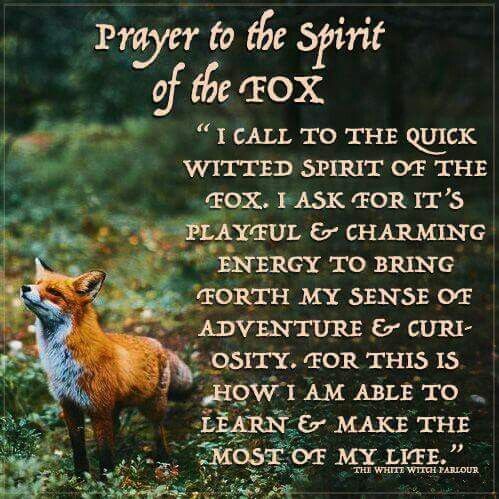
Your Daily Animal Spirit is The Fox

Your Daily Rune for April 12 is Hagalaz

Psychic Tip of the Day
Psychic Tip of the Day
TARGET LOVE
You and a partner find common ground on which to build a foundation. This is as important a step as a relationship can have. Were you waiting long to reach this point?
Tarot.com is Part of the Daily Insight Group ©2018
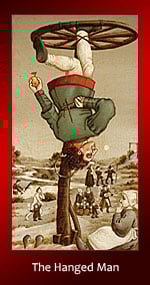
Your Daily Erotic Tarot Card for April 12 is The Hanged Man
Daily Erotic Tarot Card
The Hanged Man
April 12, 2018
The Hanged Man
Acceptance is the keyword of the Hanged Man, and with this card showing up it means you’re out of moves, so to speak, which is kind of nice because now the games can stop and you can get down to the real nitty-gritty. Your sexual partners aren’t perfect and neither are you, but you can still have a lot of fun together. The Hanged Man may not be in the best position, but he certainly makes the best of it – and this card urges you to do the same when it comes to your sex life.
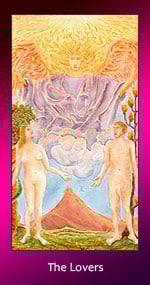
Your Daily Love Tarot Card for April 12 is The Lovers
Daily Love Tarot Card
The Lovers
April 12, 2018
The Lovers
Today, The Lovers are fickle, promiscuous, or both. Because of that, they live for entanglements. Unless you are cautious, they can pull you in with them. Don’t leave someone if your relationship has encountered a rough patch. Go only if you have tried everything and the relationship still isn’t working for either of you. If you haven’t tried, now is the time to give things another chance for either openness or for closure.
Learning the Tarot: The Tower Card
Learning the Tarot
The Tower
Because of circumstances beyond your control, you have no choice.
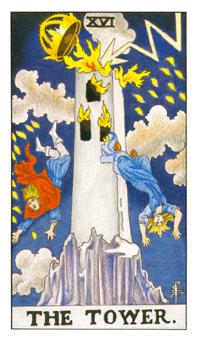
General Meaning
In practically all renditions of the Tower card, disaster is striking or has just struck. The demons of madness and despair are released from ancient hiding places, and nature conspires with human failings to destabilize a society. The upheaval is collective and impersonal. Let us remember these images were created for the educated nobles and clergy — reminding them that they have the most to lose if the hierarchy is toppled.
Lightning is a fitting karmic payback for the guilt of those whose fortunes come from the exploitation or abuse of others. A modern subtitle might be “revolution,” indicating that through drastic social change, oppressed people can find renewed hope of better times. The Tower experience comes like a flash of lightning to topple the hierarchy of the old order, after which everyone can have a fresh start on a more equal footing.
In the Advice Position
You are the one to serve as a catalyst for change.
The card in the Advice position suggests a course of action which will harmonize what you want with what is currently possible.
With the Tower card, think of yourself as an agent of transformation. This self-sacrificing role is likely to create stressful situations. Your vision shows you that a radical change has already been unleashed by forces much larger than mere mortals, and therefore you are no longer resisting.
Now you may be at the forefront, acknowledging and accepting the bracing presence of the future bursting in on the present. Try to mediate the harsher parts of the changes as they unfold, so the most vulnerable are the most cushioned. Acknowledge yourself, as well as the others in your life, who are offering their resources to usher in a better future.
Tarot.com is Part of the Daily Insight Group ©2018
Your Tarot Card for April 12 is The Sun
Tarot Card of the Day
The Sun

The Sun card is about the self — who you are and how you cultivate your personality and character. The Sun’s radiance is where one’s original nature can be encountered in health and safety. The limitations of time and space are stripped away; the soul is refreshed and temporarily protected from the chaos outside the garden walls. Under the light of the Sun, life reclaims its primordial goodness, truth, and beauty. If one person is shown on this card, it is usually signifying a human incarnation of the divine. When two humans are shown, the image is portraying a resolution of the tension between opposites at all levels. It’s as if this card is saying “You can do no wrong — it’s all to the good!”
Tarot.com is Part of the Daily Insight Group ©2018
Birthday Numerology
Birthday Numerology
Learn about your Birth Day number

Based on the Numerology of Hans Decoz
Your Birth Day number is one of the most important numbers in your whole Numerology chart. It zeroes in on specific skills you were naturally born with, and pinpoints any challenges you may meet in life head-on.
Your Birth Day number comes from your birth date — it’s literally just the date of the month on which you were born, a number between 1 and 31. But the real story here is in its meaning. Just look up the date of your birthday below to hone in on the skills you may have never even realized you possess!
1st
You are a determined leader in the truest sense, and can gain the support and trust of others easily, even when your highly independent self would rather work alone.
2nd
You are very sensitive and diplomatic, and your warm demeanor is a strength when dealing with or mediating others. Your intuition is strong, tapping you into the inner thoughts of those around you.
3rd
Whether you’ve worked at it or not, you have a highly-developed creative talent and are a natural-born artist. Your affectionate demeanor and wit make you a social star.
4th
You’re every employer’s dream: a hard working, detail-oriented individual with high principles. And still, you maintain a sense of compassion for others and a love of close family.
5th
You’re lusty … wanderlusty, that is. Your eccentric self loves a change of scene and craves travel and adventure. You are highly adaptable and communicative, and relate well to others.
6th
You’re a generous family person, a a kind soul with a strong skill in keeping the peace. You are able to resolve unrest between loved ones by easily finding the best middle ground.
7th
Your mind is your greatest asset. You enjoy contemplating on any topic, from the scientific to the spiritual, and have a great sense of focus. You take nothing at face value, and can rely on your strong intuition to find truths that are hidden to others.
8th
You’re an “ideas person” when it comes to dreaming up new ventures, and you back this with a creative approach to business and money matters. You are efficient, realistic and confident in your skills, always up for a challenge.
9th
Your open mind, relentless optimism and compassion for your fellow man make you true humanitarian. You are charming and well-liked by others, and find it easy to relate to others, regardless of their differences.
10th
You are highly ambitious and (no surprise!) yearn for independence so that you can follow your dreams however you see fit. Your drive for success is strong, and you can rely on your analytical mind and solid managerial skills.
11th
You’re an optimist, but not naive: your rose-colored view of the world is matched with a strong sense of confidence and determination. You are a dreamer, and your intuition is highly refined, helping you to reach an understanding of others.
12th
You are a true artist, bringing creativity to everything from your home and style to the way you express yourself. Your enthusiastic nature, imagination and wit make you the light of your social circle.
13th
You’re “the rock” in your family and community, and dependable above all else. You are organized and detail-oriented, using these skills in everything from nose-to-the-grindstone work to artistic endeavors.
14th
Hello, globetrotter! Your restless nature flocks toward the unexpected twists and turns of travel and variety. While you possess an analytical mind, on the outside you are a very social, communicative and lucky person.
15th
Your creative spirit pushes you toward artistic expression. While you possess strong instincts in business and financial matters, your sensitivity and range of talents make you accessible to those around you.
16th<
Never quite at home in the “real world,” you love to concentrate your focus on big ideas. Your interests lie in the spiritual and philosophical realms of life, and your intuition is excellent.
17th
Your lofty ambitions and towering goals are balanced out by your grounding skills in finances and business. Your judgment is practical and efficient and your confidence level is high, motivating you to meet the expectations of others, and yourself.
18th
Not only are you a natural leader, but your leadership also inspires others. You have a keen understanding of other people, and could be an efficient manager or politician. You are broadminded and able to express yourself well.
19th
You are highly ambitious, and thrive on independence. Your pioneering, risk-taking nature is balanced with creativity and sensitivity to help you succeed in a wide variety of endeavors.
20th
You’re like a mood ring, reflecting the emotions, desires and fears of the people who surround you. Your intuition and sensitivity are strong, and you must fight to keep a healthy distance from others.
21st
Your creative visions and unique ideas are propelled by your determination to succeed. Your imagination is the driving force behind nearly everything you do, and your passionate nature is reflected in your love of other people.
22nd
You have a strong professional drive and flock toward innovative business rather than supporting the status quo. Your greatest strength is in your unusually dualistic perception: you are able to envision what you want and actually make your desires materialize.
23rd
You love change, excitement and risk, and thankfully, you are quite adaptable and easy to get along with. Your skills in affection and communication are strong, and your creative, versatile mind loves the experience of something new.
24th
You are family-oriented, with a gift for restoring and maintaining balance, peace and harmony in relationships. You are an emotional soul who is willing to sacrifice for the good of others. Your strongest skills lie in healing and mediation.
25th
Your rational, analytical mind is balanced with a strong intuition, giving you the gift of broad knowledge and understanding to help you make the best decisions.
26th
Your strong sense of business and financial affairs is supported by a creative, daring mindset, making you a confident and capable professional leader — just don’t lose sight of the details within the bigger picture.
27th
You make an efficient manager, capable of organizing the facts and inspiring others. Your knack for creativity and expression, paired with a strong understanding of others, helps you excel in such diverse fields as politics, art and law.
28th
You have a gentle air of authority about you, but feel most comfortable leading others when there’s a sense of cooperation and teamwork. While your mind is rational, your thinking is unconventional and idealistic.
29th
You have a rich imagination and a visual approach to every area of your life. Your intuition is your greatest asset, and your connection to higher spiritual forces is strong.
30th
You are an artist to your very core. You are a sociable person, and others perceive you as a charming and inspiring individual. While you seek harmony in all that you do, you must always remind yourself to balance your imagination with a sense of discipline.
31st
Your love of family and tradition make you a solid foundation amongst loved ones. You draw appreciation and support from co-workers because of your affinity toward order, discipline and details. You are urged to make the most of the many opportunities you will encounter.
Tarot.com is Part of the Daily Insight Group ©2018
Born in April
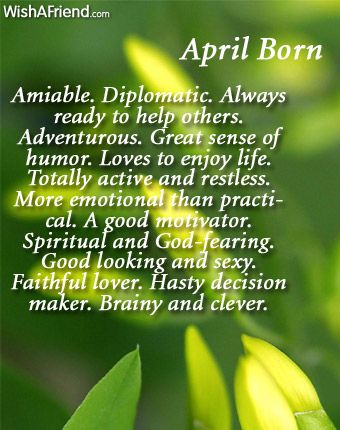
Born on a Thursday


If You Were Born Today, April 12
You are a very bright and interesting person. Your thoroughly unique spin on life is generally appreciated by others. You possess a certain amount of poise that earns respect, but you can also be very humorous and playful when the mood grabs you – and in fact, you can be quite moody and sometimes difficult to truly get close to. You are capable of making great sacrifices, and you recover quickly from reversals of fortune. Famous people born today: Tom Clancy, David Letterman, David Cassidy, Herbie Hancock, Tiny Tim.
Your Birthday Year Forecast:
Personal magnetism is tremendous this year. You are playfully competitive and might win a major competition, if applicable. This is a good period for creative projects and joining with others in pursuing a common goal.
Your creative impulses are potent. This can be a particularly good time for such pursuits as dancing, swimming, photography, arts, and entertainment. If you are an artist, this could be an especially inspired, imaginative, and productive year. Finding outlets for tension can be a strong focus and very rewarding. You are likely to idealize and expand a relationship through sensitive interactions and a more giving approach. Benefits come from paying attention to your dreams and intuitions, as well as through creative approaches to your life and relationships. Even so, you may be reevaluating certain relationships in terms of whether or not they are contributing to your personal growth this year if a friendship seems to be stifling you or clashing with important goals.
Certain elements of your social life and financial life are stabilized, secured, and more reliable this year. You may solidify a romantic relationship or become involved with a mature partner. Circumstances may be such that you need to handle money more carefully this year, or this may simply come naturally to you now. Support from older people or authority figures may come by way of solid advice or more tangible help. Renewed ties to old friends are possible, or a new sense of responsibility in existing friendships, are also highly likely.
The year ahead can be an ambitious time and a supportive period for reaching your goals. You might solve a long-standing problem, or capitalize upon a resource that was previously hidden.
You might experience some difficulties and delays in communications in the period ahead. It’s a strong year for recognizing flaws and errors. As long as you don’t forget the “big picture”, you could find you are motivated to channel your mental energy into tasks that require structured and organized thought, tackling projects that you may have found too mundane or downright boring in other years. It’s a strong year for polishing your skills and formal learning.
Pluto transits in square aspect to your Sun from February 2019 forward and you are refining and reshaping your personality and your life path. Some obsessive behavior is possible — perhaps you are trying to cling to a behavior that suited you in the past, but that has now outgrown its purpose or is in need of an overhaul. Your emotions tend to be turbulent. You are likely to experience events that highlight the necessity to share and trust. Events and circumstances are such that you learn about your own personal strength. You may have to deal with willfulness and issues of power and competition — in others and in yourself — and you’re learning a lot about your fears, desires, and goals in the process.
Jupiter forms a trine to your Sun from March 2019 forward, and you have a stronger than usual desire to improve, grow, and learn. This is a fortunate aspect that helps boost optimism and confidence, and you are able to attract fortunate circumstances into your life as a result. Problems are easier to resolve. Matters related to universities, higher education, religion, publishing, legal affairs, and/or foreign interests can be especially strong. It’s an excellent time to further your education. You are likely to enjoy a larger perspective on matters that keeps you from getting lost in details or overly frustrated by everyday stresses during the course of the month.
The coming year is one for both satisfying work and play. While there can be some ups and downs, the period ahead is a time for getting your life into order in key ways, but at the same time, your creativity and personal appeal blossom. This can be a wonderful year for meeting new people or more thoroughly enjoying your current friendships. Cooperation with others comes easily.
2018 is a Number Nine year for you. Ruled by Mars. This is a year of completion and transition. It is a time when we need to let go of things that no longer serve their purpose, and hold on to things that have a future. It is a time of cleaning out dead wood, not necessarily for new beginnings. It can be a time when a burden has been taken off your shoulders, and it can be a year of giving of yourself. Advice – let go of things that are holding you back, give of yourself and express your sympathetic, compassionate side.
2019 will be a Number One year for you. Ruled by the Sun. This is a year of action. The seeds you plant now, you will reap later. Others might find you less sociable, as you are busier than ever and you focus on your activities and your needs. Still, you are outgoing and your initiative is stronger than ever. Advice – Stand alone, take action, start fresh, express independence.
Courtesy of:
Morning Affirmation

Famous Witches Throughout History – Circe

Circe
In Greek mythology, flame-haired Circe is a minor goddess (or sometimes a nymph, witch, enchantress or sorceress) living on the island of Aeaea. She was reputed to transform her enemies, or those who offended her, into animals through the use of magical potions and was renowned for her knowledge of drugs and herbs.
Circe’s father was Helios, the god of the sun, and her mother was Perse, an Oceanid and daughter of the Titans Oceanus and Tethys. She was also the sister of two kings of Colchis, Aeëtes and Perses, and of Pasiphaë, the mother of the Minotaur.
In Homer’s “Odyssey”, Odysseus’ crew stumbled onto Circe’s island and her “water mansion” in a clearing in a dense wood, around which prowled harmless lions and wolves, the drugged victims of her magic. She invited the sailors to a feast, but the food was laced with one of her magical potions, and she turned them all into pigs with a wand after they had gorged themselves on it (modern interpretations suggest this may have been a hallucinogenic intoxication or drugged delusion rather than shapeshifting).
Odysseus set out to rescue his men, using the holy herb “moly” given to him by Hermes to protect himself from Circe’s potion, and following Hermes’ advice as to how to avoid Circe’s magic and seductions. Having freed his fellows, Odysseus and Circe became lovers, and he and his men remained on the island for a year feasting and drinking wine, after which Circe assisted him in his quest to reach his home.
Later poets extended the story, one version being that Telegonus, Circe’s son by Odysseus was sent by Circe to find Odysseus, who had long since returned to his home on Ithaca, but on arrival Telegonus accidentally killed his father. He brought the body back to Aeaea, taking Odysseus’ widow Penelope and their son Telemachus with him, and Circe made them immortal and married Telemachus, while Telegonus made Penelope his wife.
According to legend, Jason and the Argonauts also visited Circe’s island while they were escaping the Colchian fleet, (possibly at the request of Circe’s niece Medea, who was with them, or possibly instructed by the magical ship “Argo” itself) in order to be purified and cleansed by Circe for the assassination of Medea’s brother Apsyrtus.
In some stories, Circe was also attributed the ability to darken the heavens by hiding the moon or the sun behind clouds, and destroy her enemies with poisonous juices, calling to her aid Nyx (Night), Chaos or Hecate, the goddess of the crossroads. In her presence, and because of her enchantments, the woods would move, the ground rumble and the trees around her turn white. At night, uncontrolled visions filled her house, the walls and chambers of her palace could seem to be bathed in blood, and fire could seem to devour her magic herbs.
She is also credited with converting, in a fit of jealousy, the beautiful young woman Scylla into a monster with the face and breast of a woman, but having in her flanks six heads and twelve feet of dogs, who ever after presented a danger for ships passing the strait of Messina between Sicily and Italy. She is also supposed to have turned the handsome young magician Picus into a woodpecker after he refused her advances.
___________________________
The Spellbinding Story of Circe, Goddess of Magic
Circe was a goddess of magic and she continues to be one of the most enchanting deities of ancient Greek mythology. This daughter of Helios and patron of ancient Greek witches still fascinates people even today.
She appeared in many of the most famous ancient Greek texts, such as The Odyssey by Homer, The Theogony by Hesiod, Description of Greece by Pausanias, Geography by Strabo, and The Library of History by Diodorus Siculus. She was also mentioned by famous Roman writers like Virgil, Cicero, Ovid, Hyginus, Valerius Flaccus, Statius, and Propertius. Why did Circe become so popular for these and other writers? She was just one of many characters in Greek mythology, but people saw something in her which fascinated them more than the others.
The Magic of Circe
Witchcraft has always been important. Since the beginning of humanity, people have searched for solutions through magical practices. Therefore, Circe (or Kirke) became one of the most magnetic women in Ancient Greece.
In most texts, she is described as a daughter of Perse the Oceanid and the Titan of the Sun – Helios. She had several siblings, including Pasiphae (who married King Minos and bore the famous Minotaur.) Aeetes, known as the keeper of the Golden Fleece, was said to be her brother. However, some ancient texts suggest that she was actually the powerful goddess Hecate’s daughter instead.
Her personality and attributes encompass all of the key ideas related to witchcraft. It is written that she was a specialist in herbs and knew how to use them for magic and healing. She created many recipes for ancient potions to use in magic rituals. Circe is often depicted with a wand or a staff. One of the most famous of her accomplishments was transforming her enemies into animals.
The most popular account of Circe comes from the Odyssey 10. 135 – 12. 156:
“[Odysseus sailed forth from the land of the Laistrygones (Laestrygones) and came next to the island of Kirke (Circe):] Then we came to the island of Aiaia (Aeaea); here Kirke (Circe) dwelt, a goddess with braided hair, with human speech and with strange powers; the magician Aeetes was her brother, and both were radiant Helios the sun-god’s children; their mother was Perse, Okeanos’ (Oceanus’) daughter. We brought the ship noiselessly to shore, and with some divinity for guide we put in at the sheltering harbour. We disembarked, and for two days and two nights we lay there, eating out our hearts with sorrow and weariness.
But when Eos the Dawn of the braided hair brought the third day at last, I took my spear and my sharp sword and hastened up to a vantage-point, hoping to see some human handiwork or to catch the sound of some human speech. I climbed a commanding crag, and from where I stood had a glimpse of smoke rising from the ground. There were gleams of fire through the smoke, and at sight of this I wondered inwardly whether to go and look. But as I pondered, it seemed a wiser thing to return first to my vessel on the beach, give my men a meal and then send them out to spy. I was on my way back and near the ship when some divinity pities me in my loneliness and sent a great antlered stag right across my path [perhaps a man that Kirke had transformed into an animal].”
Her role is quite large in the Odyssey, where it shows many things about morality and understanding the power of magic and the fear of deities in ancient Greece. Homer’s description of her also led to Circe being considered as one of the most attractive female figures in ancient mythology.
A Heroine of Science and Literature
Stories from ancient literature fascinated many scientists so much that they started to search for scientific explanations in them. For example, the plants which are believed to be the ones Circe used to put a spell on Odysseus’ companions were called Circaea. That name was given during the late 16th century.
Circe’s fame didn’t die with the end of ancient beliefs. During medieval times, she became an important symbol in moral stories created by Giovanni Boccaccio. In ”Famous women” ( De mulieribus claris ), he wrote that she lived in Italy and commented on her actions. She also appeared in the monumental 600-page text written by Georg Rollenhagen in 1595, titled ”The frogs and mice” ( Froschmeulseler). In that book, Rollenhagen described the story of Odysseus or Ulysses and Circe.
In 1624, Spanish writer Lope de Vega also presented her in his text titled La Circe – con otras rimas y prosas , where he wrote another version of the Greek myth. She was a popular motif during the 19th century in books related to mystical and mythical topics as well.
Circe Today
Circe is now one of the most popular figures from ancient witchcraft and mythology. Her character appears in TV series, movies, games, and fantasy books. She still casts her magic and terrifies men, who have no idea what to do – should they escape or admire her beauty? Circe is a symbol of female power for women and vanity for men. Regardless of how she is interpreted, she is still one of the most magnetic women from ancient Greek myth.
Reference
By Natalia Klimczak, Ancient Origins
Zygmunt Kubiak, Mitologia Greków i Rzymian, 1997.
Pierre Grimal, The Dictionary of Classical Mythology, 1996.
Homer, Odyssey, available at:
http://classics.mit.edu/Homer/odyssey.html
Kirke, available at:
http://www.theoi.com/Titan/Kirke.html
The Study of Pagan Gods & Goddesses: Nephthys, Egyptian Goddess

Nephthys
Nephthys was one of the original five gods of ancient Egypt born of the union of Geb (earth) and Nut (sky) after the creation of the world. She was the fourth born after Osiris, Isis, and Set and was the older sister of Horus (usually referred to as Horus the Elder). As one of the earliest goddesses of Egypt, she was a member of the Ennead of Heliopolis, a tribunal of nine deities of immense power. Her cult centers were Heliopolis, Senu, Hebet, Per-met, Re-nefert, and Het-sekem. Contrary to some scholars’ assertions that she was never widely worshipped in Egypt, temples to Nephthys were quite common and she was considered an extremely important goddess from the Predynastic Period (c.6000-c. 3150 BCE) through the Ptolemaic Dynasty (323-30 BCE), the last dynasty to rule Egypt before it became a province of Rome.
NAME & SYMBOLS
‘Nephthys’ is the Latin version of her Egyptian name `Nebthwt’ (also given as Nebet-het and Nebt-het) which translates as “Lady of the Temple Enclosure” or “Mistress of the House” and she is routinely pictured with the heiroglyph for ‘house’ on her crown. The ‘house’ is neither an earthly home nor temple but linked to the heavens as she was related to air and ether. The ‘enclosure’ may refer to the courtyard outside a temple as she was represented by the pylons outside of temples in her role as a protective goddess; just as the pylons and wall protected the inner temple, Nephthys protected the souls of the people. She was associated with death and decay from an early period and was regularly invoked during funeral services. Professional mourners at Egyptian funerals were known as “Hawks of Nephthys” and she is one of the four goddesses (along with Isis, Selket, and Neith) whose images were found in the tomb of Tutankhamun as guardians of his canopic vessels. Historian Margaret Bunson notes:
Nephthys was associated with the mortuary cult in every era and was part of the ancient worship of Min [a god of fertility and reproduction]. The desert regions were dedicated to her and she was thought to be skilled in magic (188).
Her magical skills were similar to those of Isis and some scholars see her as Isis’ mirror image, Nephthys’ darkness balancing Isis’ light, and they are frequently pictured together as twin sisters. In the city of Heliopolis Nephthys and Isis were represented by two virgin priestesses at festivals who would recite the famous Lamentations of Isis and Nepthys at the Osiris’ festival. The Lamentations is a long narrative poem recreating the moment Isis and Nephthys worked together to revive the god Osiris and bring him back to life. Although originally spoken only at religious services, the Lamentations came to be included in the Egyptian Book of the Dead and was recited at funeral services.
Nephthys became the wife of Set and is best known for the part she played in the Osiris myth where, disguised as Isis, she seduced Osiris and provided Set with justification for the murder of his brother. She is later depicted in the myth as both betraying and then helping Isis in her efforts to restore her husband to life. She is a goddess of the dead who, like her granddaughter Qebhet, provides assistance to the souls of the deceased. She was so helpful to those in the afterlife that one of her titles was “Friend of the Dead” and she was also thought to bring news of the deceased back to their relatives on earth and comfort them in their time of mourning.
Her symbols are the hawk and the temple and the sycamore tree, one of the more popular trees depicted in inscriptions from the Egyptian Book of the Dead. She is the mother of the death god Anubis and was associated with the setting sun, twilight, and darkness. Prayers were offered to Nephthys at twilight for protection and also to aid her as she struggled with her husband Set to defend the Boat of Ra (the sun god) from the serprent Apophis as it made its journey through the realms of night.
MYTHOLOGICAL ORIGINS
According to the most popular version of the Egyptian creation myth, there was once only swirling chaotic waters and darkness in the universe until, one day, a mound (known as the ben-ben) rose from the seas with the god Atum (also known as Ra) standing upon it. Atum gazed out on the eternal nothingness and recognized he was lonely, and so mated with his own shadow to give birth to Shu (god of the air) and Tefnut (goddess of moisture). These two deities then left their father alone on the primordial mound and went off to create the world.
Atum, alone on the hill in the midst of chaos, longed for his children and worried over their safety, and so he removed his eye and sent it out in search of them. Shu and Tefnut returned with the eye, having failed to create the world, and Atum was so happy to see them, he began to cry. As his tears fell on the fertile earth of the ben-ben, men and women sprang up.
These new fragile beings had nowhere to live, however, and so Shu and Tefnut mated and gave birth to Geb (the earth) and Nut (the sky). These two quickly fell in love and became inseparable; a situation Atum found intolerable as they were brother and sister. He pushed Nut high above Geb and fastened her there so the two lovers would be able to see each other but never touch again. Nut, however, was already pregnant by Geb and soon gave birth to five children: Osiris, Isis, Set, Nephthys, and Horus. Atum gave to these five gods the task of maintaining the world and set his first born, Osiris, to rule over all the living things of the earth.
THE OSIRIS MYTH
At this point in the story the famous Osiris Myth begins when Set becomes jealous of Osiris’ power and success. Osiris married his beautiful sister Isis and the royal couple taught the humans of the world culture and art, instructed them in religion, and gave them the gifts of agriculture. To the Egyptians, their country was essentially the world and this world, under the reign of Osiris and Isis, was a paradise. Men and women were equal in all things and there was an abundance of food.
Osiris
Horus the Elder, in this story, is never mentioned but the roles of Set and Nephthys, who are, seem fairly insignificant at first until Nephthys emerges to play a pivotal role. She changed her form to take on the shape and scent of Isis and seduced Osiris, who thought he was sleeping with his wife. In some versions of the story she drugs his wine or gives him too much while, in others, he simply comes to her bed thinking she is Isis. Osiris leaves afterwards but drops a flower he wore in his hair on the floor and this is later found by Set who recognizes it as his brother’s.
Set was already resentful of his older brother but now, believing Osiris had seduced his wife, he planned to murder him. He created an ornate chest to Osiris’ exact measurements and then threw a party where he offered the box as a gift to whichever of his guests could best fit in it. Osiris, of course, fit perfectly and, when he lay down in the casket, Set slammed the cover on, fastened it, and threw it into the Nile. He then assumed the throne with Nephthys as his consort. She gave birth a short time later to a son, the god Anubis, whom she abandoned and who was raised by Isis.
Isis, meanwhile, went in search of her husband and found the casket with his body inside lodged in a tree in Byblos. The king and queen of the city had seen the tree down by the shore and were attracted by its beauty (which was the essence of Osiris permeating the tree) and its sweet scent (the aroma of Osiris) and had it cut down and brought to their court to serve as a central pillar. Isis, disguised as an older woman, was invited to the court after she befriended the queen’s handmaidens down by the shore and soon became nursemaid to the young princes. In an effort to make the youngest son immortal, she held him in a mystical fire each night to burn away his mortal part and, one night, the queen caught her and was horrified. Isis threw off her disguise, revealing herself, and the king and queen begged her for mercy, offering her anything to spare them. She asked for the pillar in the court; and they gave it to her.
All this time, the world was suffering under the rule of Set. The land was barren and the desert winds blew. Equality in the land was forgotten as people fought for each other for survival. Isis returned to the wasteland with Osiris and hid his body in the marshes of the Nile Delta and then asked Nephthys to stand guard to protect him from Set. While Isis went off to find herbs to revive her husband, Set was out searching for the body and found Nephthys. He managed to get from her where Isis had hidden Osiris and hacked the body to pieces, throwing them across the land and into the river. When Isis returned, Nephthys tearfully told her the story and offered to help in any way she could.
Isis and Nephthys found all the parts of Osiris and put him back together except for his penis, which had been eaten by a fish. Osiris revived but, because he was not whole, could not return to the land as king; he would instead descend to the underworld where he would rule over the dead as their just and merciful judge. Before he left, however, Isis transformed herself into a kite (a falcon) and flew around his body, drawing his seed into her own and becoming pregnant with a son, Horus. When Horus was born, she hid him in the marshes of the Delta as she had his father’s body and Nephthys, this time, kept her secret.
THE CONTENDINGS OF HORUS & SET
When Horus grew to manhood he challenged Set for the kingdom. The best known version of this contest is known as The Contendings of Horus and Set from a manuscript of the Twentieth Dynasty (1190-1077 BCE). The story tells of the legal battle before the Ennead of Heliopolis, a tribunal of nine gods, to decide who was the rightful king of Egypt. These gods were Atum, Shu and Tefnut, Geb and Nut, Isis and Nephthys, Set, and Osiris. Horus and Set both present their cases and then must prove themselves in a series of contests and battles which are all won by Horus.
Horus
The majority of the nine gods ruled that Horus was the rightful king but Atum, the sun god, was not convinced and the decision had to be unanimous, barring Set’s opinion. Atum believed that Horus was too young and had led too sheltered a life to effectively rule while Set had the necessary experience if not the most gentle manner. Even though Horus won every contest against his uncle, Atum would not be moved. This trial went on for over 80 years while the people of Egypt suffered under Set’s chaotic reign until Isis intervened, showed the other gods – and Set – how wickedly he had behaved, and won the ruling in favor of her son. In another, perhaps older, version of the story it is the goddess Neith who settles the dispute in favor of Horus and grants the desert lands to Set along with two foreign goddesses (Anat and Astarte) as consolation. Horus assumed the throne of his father and ruled with Isis and Nephthys as his counselors. Set was driven from the land to the arid frontier deserts and Nephthys remained as a protector of the female head of the household, Isis in this case, but later any mature married woman.
THE LAMENTATIONS OF ISIS & NEPHTHYS
This myth was important to the ancient Egyptians on many levels. It illustrated core values of harmony, order, divine intervention in human affairs, the importance of gratitude, trust, and how, in the character of Set, even the gods could succumb to temptation but, no matter what, harmony and order would be restored. The death and ressurection of Osiris provided a divine template for the passage of all human beings who were thought to be travelers on an eternal journey through life and on into the afterlife. The Cult of Osiris became extremely popular and part of his religious service included the recitation of the liturgy known as The Lamentations of Isis and Nephthys.
The most complete version of this verse comes from the Berlin Papyrus 3008 dating to the Ptolemaic Dynasty. This papyrus was part of a copy of The Book of the Dead owned by a woman named Tentruty (also given as Teret) and is written in hieratic script (the cursive, everyday, script of the Egyptians) in five columns. The poem is written as an exchange between Isis and Nephthys as they call Osiris’ soul back to his body. The two goddesses entreat the soul to return, to live again among them, and invoke Horus, Osiris’ son, as his protector in life who will provide him with “bread, beer, oxen, and fowl” and whose sons will guard his body and protect his soul. In the end, Osiris returns to life as the poem ends with the line, “Lo! He Comes!”
Following the verse, the scribe has left very careful instructions on how the Lamentations is to be presented at the festivals:
Now, when this is recited the place is to be completely secluded, not seen and not heard by anyone except the chief lector-priest and the setem-priest. One shall bring two women with beautiful bodies. They shall be made to sit on the ground at the main portal of the Hall of Appearings. On their arms shall be written the names of Isis and Nephthys. Jars of faience filled with water shall be placed in their right hands, offering loaves made in Memphis in their left hands, and their faces shall be bowed. To be done in the third hour of the day, also in the eighth hour of the day. You shall not be slack in reciting this book in the hour of the festival. It is finished.
The two virgins would recite the Lamentations to invite Osiris to participate in the festival and, once he arrived, the celebration could begin. Osiris was considered the first king of Egypt who had given the people their culture and who, through his death and resurrection, showed them the way to eternal life. In death, everyone was linked to Osiris who was the first to have died and been reborn. His festivals, therefore, were of great importance and Nephthys regularly featured as one of the most important elements of the celebration: one of the two who called the god to join the living.
She describes herself as the “beloved sister” of Osiris in the Lamentations and says, “I am with you, your bodyguard, for all eternity.” When the Lamentations became included in The Book of the Dead (c. 1550-1070 BCE), the poem was recited at funerals and Nephthys would then have been speaking to the soul of the deceased. It was in this capacity that she came to be regarded as the “Friend of the Dead” who walked with the soul and helped them in the afterlife as their “bodyguard for all eternity” and made her such an important deity to the people.
NEPHTHYS & THE BARGE OF RA
Long before the Osiris myth became popular, Nepthys was already a very significant goddess, however. In texts of the period of the Old Kingdom (c. 2613 – c. 2181 BCE) she is referenced with Set as the two gods who protect the barge of the sun god Ra (Atum) as it passes through the night sky. The evil serpent Apophis tried every night to murder the sun god but Nephthys and Set fought the creature off so the sun could rise the next morning. Set was later transformed from a protector god to the villain of the Osiris myth but Nephthys’ role remained the same: a protector and sustainer of life. Even though the focus on who was protected changed, the basic elements of her character remained the same. The scholar Geraldine Pinch has observed that, “Nephthys never enjoyed the high status of her sister, Isis” (171) and, while it may be true that worship of Nephthys never was on par with that of Isis, her status was consistently quite impressive throughout Egypt’s history.
In the Predynastic Period of Egypt, Nephthys was one of the most important deities owing to her part in this myth. If Apophis succeeded in murdering Ra, the sun would not rise and so it was vital that the barge be protected. In the Coffin Texts Set and the snake-god Mehen protect the barge; Mehen by coiling himself around Ra and Set by fending off Apophis. Mehen was later replaced by Nephthys but Apophis was considered so powerful, and the threat to Ra so dire, that other deities often appear on the barge to drive the enemy of the sun away such as Isis, Bastet, Selket, Neith, and Sekhmet who were collectively known, with Nephthys, as the Eyes of Ra in this capacity.
The myth of the nightly threat to Ra is most clearly told in a manuscript dating from the Ramessid Period (1292-1069 BCE) but archaeological evidence suggests the story is much older. By the time of the Ramessid Period the myth had evolved into a ritual known as Overthrowing Apophis in which a priest would recite a list of Apophis’ secret names (thereby gaining power over him) and the people would sing hymns celebrating his destruction. Even though the gods destroyed the great serpent every night, he returned to try to murder Ra again the next. The hymns were sung to encourage the gods in their eternal struggle. Participants in the ritual would then make serpents out of wax, spit on them, and destroy them in fire. The ritual was performed regularly after a number of cloudy days when it seemed as though Apophis was succeeding in preventing the dawn and especially during a solar eclipse.
POPULARITY & WORSHIP OF NEPHTHYS
Prior to the addition of the other goddesses, however, it was Nephthys and Set who kept the sun on course and she was duly honored for this. Temples to Nephthys were located in every region of Egypt long before she became associated with the dead and only grew more numerous afterwards. As with any Egyptian deity, her temple was attended by priests and priestesses who cared for her statue and observed her holy days and festivals. The public was barred from entering the inner sanctuary of the temple where her statue resided but were welcomed in the outer courtyards where the clergy tended to their needs and collected their donations and sacrifices.
By the time of Ramesses II (1279 – 1213 BCE) Nephthys was so popular she was given her own temple at the popular religious center of Sepermeru in the holy precinct where Set’s temple was located. Nephthys was so popular at this time that she is mentioned in texts without allusion to Isis or Set. Her temple in the town of Punodjem was apparently so popular that the head priest and vizier Pra’emhab complained of his workload and her temple at Herakleopolis, near Sepermeru, became the site of the Heb-Sed festival celebrating the rejuvenation of the king. The basalt statue of Nephthys currently housed at the Louvre in Paris comes from this temple.
Although Nephthys is frequently depicted as a mirror to her twin sister Isis, she had a life and status all her own which was just as worthy of veneration. Once she became associated with the afterlife and the care of the dead the linen which was used to mummify the deceased was known as “tresses of Nephthys” and it was thought that she, along with Selket, helped to breathe life back into the soul and help them on their eternal journey. Nephthys came to represent the promise of a helper at one’s side in the afterlife who would look after and protect the soul and who assured the living that death was nothing to be feared. The realm of the afterlife was only a new land one traveled to and old friends, like Nephthys, would be waiting to offer their protection and guidance in death as they had throughout life.
_________________
Nephthys
Nephthys was an ancient goddess, who was referenced in texts dating back to the Old Kingdom. She was a member of the Ennead of Heliopolis as the daughter of Geb and Nut and the sister of Osiris, Isis and Horus and the sister and wife of Set. When the Ennead and Ogdoad merged, Nephthys was given a place on Ra’s boat so that she could accompany him on his journey through the underworld.
Nephthys is the Greek pronunciation of her name. To the Ancient Egyptians she was Nebthwt (Nebhhwt or Nebthet) meaning “the Mistress of the House”. The word “hwt” (“house”) may refer to the sky (as in Hwt-hor, the “House of Horus” – the name of Hathor), but it also refers to either the royal family or Egypt as a whole. The latter makes a great deal of sense as she was described as the head of the household of the gods and was thought to extend her protection to the head female of every household. She was sometimes associated with Ptah-Tanen in representing Lower Egypt, while Khnum and Isis represented Upper Egypt.
It seems that she was originally conceived of as the female counterpart of Set. He represented the desert, while she represented the air. Set was infertile (like the desert that he represented) and was frequently described as either bisexual or gay and so Nephthys was often considered to be barren. As a goddess of the air, she could take the form of a bird, and because she was barren she was associated with the vulture – a bird which the Egyptians believed did not bear children. The Egyptians thought that all vultures were female (because there is very little difference in the appearance of a male vulture), and that they were spontaneously created from the air. While the care shown by a mother vulture for her child was highly respected, the Egyptians also recognised that vultures fed on carrion and associated them with death and decay. As a result, Nephthys became a goddess of death and mourning.
Nephthys
Professional mourners were known as the “Hawks of Nephthys”, in recognition of her role as a goddess of mourning. It was also believed that she protected Hapi in his role as of the Four sons of Horus (who guarded the organs stored in the four canopic jars). Hapi protected the lungs, and as a goddes of the air Nephthys was his guardian. She was also one of the four goddesses who guarded the shrine buried with the Pharaoh. She appears with Isis, Selkit (Serqet) and Neith on the gilded shrine of Tutankhamun, but was often depicted with Isis, Bast and Hathor in this role. Yet, she was also said to be the source of both rain and the Nile river (associating her with Anuket) and was thought to protect women in childbirth (with the assistance of her sister, Isis). Thus she was closely associated with both death and life.
Although she was technically infertile, later myths claimed that she was the mother of Anubis by either Osiris or Set (depending on the myth). This came about because Anubis’ position as the god of the dead was usurped by Osiris when the theologies of the Ennead and the Ogdoad merged. According to one myth Nephthys disguised herself as Isis to get the attention of her neglectful husband Set, but instead seduced Osiris (who apparently did not realise that it was Nephthys). An alternative myth made it clear that Nephthys intended to seduce Osiris from the beginning and drugged his wine to make her task easier, while a less common myth held that she did trick her husband into a brief daliance in order to concieve Anubis. It is suggested that this tale also explained the flowering of a plant in a normally barren area because Set apparently discovered the adultery when he found a flower left by his brother Osiris.
Isis and Nephthys were very close despite Nephthys’ alleged infidelity with Osiris (the husband of Isis) and her marriage to Set (the murderer of Osiris). Nephthys protected the body of Osiris and supported Isis as she tried to resurrect him. The goddesses are so similar in appearance that only their headdresses can distinguish them and they always appear together in funerary scenes. Together Isis and Nephthys could be said to represent day and night, life and death, growth and decay. In Heliopolis, Isis and Nephthys were represented by two virginal priestesses who shaved off all of their body hair and were ritually pure.
Nephthys was usually depicted as a woman with the hieroglyphs of her name (a basket on top of the glyph representing the plan of an estate) on her head. She could also be depicted as a mourning woman, and her hair was compared to the strips of cloth used in mummification. She also occasionally appears as a hawk, a kite or a winged goddess in her role as a protector of the dead. Her major centers of worships were Heliopolis (Iunu, in the 13th Nome of Lower Egypt), Senu, Hebet, (Behbit), Per-mert, Re-nefert, Het-sekhem, Het-Khas, Ta-kehset, and Diospolites.
Reference
Joshua J. Mark, Ancient History
7 Cardinal Rules for Life

The Witches “Witchy” Journal for Thursday, April 12th

The Witches “Witchy” Journal for Thursday, April 12th

Witches were a bit like cats. They didn’t much like one another’s company but they did like to know where all the other witches were, just in case they needed them. And what you might need them for was to tell you, as a friend, that you were beginning to cackle.
TERRY PRATCHETT, A Hat Full of Sky

Today is Thursday, April 12th
Thursday is the day of the planet Jupiter, dedicated to Thunor(Thor), God of thunder and agricultural work. His parallels in various European traditions are Zeus, Taranis, Perun, Perkunas and St. Olaf. The faith of the Northern Tradition holds Thursday sacred, just as Islam reveres Friday, Judaism the Sabbath(calculated from sunset on Friday to sunset on Saturday), and Christianity, Sunday. This is why almost all adages about Thursday are positve, such as “Thursday’s child has far to go,” “Sneeze on Thursday, something better,” or “Cut nails on Thursday for wealth.” Thursday rules controlled optimism, energetic growth, physical well-being and material success.
Deity: Thor
Zodiac Sign: Capricorn/Pisces/Sagittarius
Planet: Mercury
Tree: Oak
Herb: Henbane
Stone: Turquoise/Bloodstone/Topaz
Animal: Fish/Goat/Aurochs
Element: Fire
Color: Brown/White/Orange
Number: 3
Rune: Thorn
The Celtic Tree Month of Fearn(Alder)(March 18 – April 14)
Runic Half Month of Ehwaz(horse) (March 30 – April 13)
Goddess of the Month of Columbina (March 20 – April 17)
Source
The Pagan Book of Days
Nigel Pennick

The Pagan Book of Days for Thursday, April 12
Cerealia was the eight-day Roman festival of Ceres, goddess of the Earth and its fruits, who was prayed to for peace good government and plenty.
Source
The Pagan Book of Days
Nigel Pennick

The Goddess Book of Days for Thursday, April 12
Day of Chu-Si-Niu Niu Si in Taiwan, she is a Birth Goddess, cognate to Kwan Yin (Iatiku, Tonantzin, Spider Woman, Oddudua, Changing Woman, Yemaya, Isis, Mary, Stella Maris, Sheela, Eileathyia, and Carmen).
Reference
The Goddess Book of Days
Diane Stein

Goddesses Asssociated with Thursday
Juno, Hera, Kwan Yin, Mary, Cybele, Tara, Mawu, Mbaba Mwana Waresa, Ishtar
Source
The Goddess Book of Days
Diane Stein

Thursday’s Magickal Correspondence
Wealth
Male Fertility
Ambition
Expansion
Luck
Happiness
Honor
Family
Harvests
Planet: Jupiter
Colors: Dark Blue, Green
Crystals: Turquoise, Amethyst, Lapis
Thursday
Thursday: Is associated with Jupiter and the colors of – Blue and Metallic Colors
Thursday is the best time to deal with such matters as: Broadcasting, Business, Charity, College Education, Correspondence Courses, Doctors, Expansion, Forecasting, Foreign Interests, Gambling, Growth, Guardians, Horses, Logic, Long Distance Travel, Luck, Material Wealth, Merchants, Philosophy, Political Power, Psychologists, Publicity, Publishing, Reading, Religion, Researching, Self-improvement, Social Matters, Sports, Studying, and The Law
Reference
Practical Magick for the Penny Pinching Witch
Carol Moyer
Magickal Days of the Week – Thursday
Thursday is a day of royal blues and greens, associated with the planet Jupiter and metals like tin. When it comes to deities, look at leader type gods like Thor, Zeus, and Jupiter. Gemstone correspondences for Thursday include turquoise, amethyst and lapis lazuli, and plant associations can be found in honeysuckle, cinquefoil, and even oak trees.
This is a day for honor, fealty and family loyalty, as well as harvesting, success, and prosperity.
Take advantage of Thursday’s different aspects and do spellwork that brings abundance to you, declares your allegiance, and embraces prosperity.
Author
Patti Wigington, Paganism/Wicca Expert
Article published on & owned by ThoughtCo.com
The Witches Guide to Thursdays
Today is the day for prosperity work of all kinds. It can also be used for healing work, whether that is a physical healing of an illness or an emotional healing. Also remember that you have to follow up your healing work and prosperity magick and physical action.
I can’t tell you the number of times I have met new witches who complain to me that their prosperity spell or “I need a better job” spell did not work as they expected. They’ll ramble on and on about how much time and money they spent working their magick….but, alas, they had no glorious manifestation of wealth or fabulous job that suddenly dropped out of the sky and landed in their laps.
Then, when I gently ask them, “Did you enchant your resume or application when you filled it out? Did you do a little confidence-boosting spellwork when you went to apply for the job or went to the interview?” typically they give me a blank, confused stare.
Nine times out of ten, their response is, “You mean I have to go out and actually look for the job too?” Um, yes, my dear, you certainly do. Magick follows the path of least resistance, which means it’s going to manifest along the simplest, quickest route. Get out there and hit the pavement. See what you can find. Times are tough and competition for good jobs is fierce, so you need whatever edge you can get. For folks like us, we’re going to get the edge by using our magick and our spellcraft.
Thursdays have such a rich source of magick for us to draw upon that, honestly, the sky is the limit. This is the day associated with the gods of the sky and heavens, after all. Get to know these deities and add their wisdom and magick into your days
Source
Book of Witchery: Spells, Charms & Correspondences for Every Day of the Week
Ellen Dugan

Thursday’s Witchery
Today is the day for prosperity work of all kinds. It can also be used for healing work, whether that is a physical healing of an illness or an emotional healing. Also remember that you have to follow up your healing work and prosperity magick and physical action.
I can’t tell you the number of times I have met new witches who complain to me that their prosperity spell or “I need a better job” spell did not work as they expected. They’ll ramble on and on about how much time and money they spent working their magick….but, alas, they had no glorious manifestation of wealth or fabulous job that suddenly dropped out of the sky and landed in their laps.
Then, when I gently ask them, “Did you enchant your resume or application when you filled it out? Did you do a little confidence-boosting spellwork when you went to apply for the job or went to the interview?” typically they give me a blank, confused stare.
Nine times out of ten, their response is, “You mean I have to go out and actually look for the job too?” Um, yes, my dear, you certainly do. Magick follows the path of least resistance, which means it’s going to manifest along the simplest, quickest route. Get out there and hit the pavement. See what you can find. Times are tough and competition for good jobs is fierce, so you need whatever edge you can get. For folks like us, we’re going to get the edge by using our magick and our spellcraft.
Thursdays have such a rich source of magick for us to draw upon that, honestly, the sky is the limit. This is the day associated with the gods of the sky and heavens, after all. Get to know these deities and add their wisdom and magick into your days
Source
Book of Witchery: Spells, Charms & Correspondences for Every Day of the Week
Ellen Dugan

Magickal Must Dos for Thursdays
Try wearing some honeysuckle-scented perfume to encourage prosperity. Bewitch someone by wearing deep royal blue or brighten up a dreary day by wearing lucky, prosperity-drawing green. Brew up a pot of mint tea to help increase your cash flow. Try adding a pinch of nutmeg or cinnamon to an unscented candle to encourage some fast cash. Bake up a loaf of wheat bread for the family, and celebrate abundance and be thankful for all that you have.
Conjure up a witchy craft and create a philter or two for your magickal needs. Work with the deities and the magickal plants corresponding with Thursday.
How did the energies of the plants of Jupiter enhance your magick? What did you learn by working with Juno, Jove, or Zeus? The truth is that by adding these new techniques and information into your spellcasting repertoire, you will indeed advance your skills, thereby moving up in the ranks to become a more adept magickal practitioner
Just by believing in yourself and working toward creating abundance, health, and prosperity, you have already begun to transform your outlook on life. Put your game face on; think positively. Work with Thor for perseverance and courage, and apply those qualities to your own prosperity spells and healing witchery. Break out the tarot cards; How could you incorporate that symbolism into other spells of your own design?
Use your imagination, check Thursday’s correspondence list, and see what other bewitching things you can conjure up for prosperity magick all by yourself. Call on the gods and goddess of Thursday and bring some positive change, abundance, health, and prosperity into your life!
Source
Book of Witchery: Spells, Charms & Correspondences for Every Day of the Week
Ellen Dugan
The Witches Almanac for Thursday, April 12th
Children’s Day (Bolivian and Haitian)
Waning Moon
Moon phase: Fourth Quarter
Moon Sign: Pisces
Incense: Carnation
Color: Green
Correspondences for Thursday, April 12
Thursday (Thor’s day)
Planet: Jupiter
Colors: Purple, Deep Blue
Crystals: Amethyst, Lepidolite, Sugilite, Tin
Aroma: Melissa, Clove, Oakmoss, Jupiter Oil, Cinnamon, Musk, Nutmeg, and Sage
Herb: Cinquefoil
Ruled by the planet Jupiter and dedicated to Thor, god of thunder and agricultural work. His parallels in various European Traditions include Zeus, Taranis, Perun, and Perkunas.
Magical aspects: controlled optimism, energetic growth, physical well-being, material success, expansion, money/wealth, prosperity, leadership, and generosity.
Thursday is the day of Jupiter, the largest of the planets and said to be the most powerful. Spellcasters would be wise to use this day for attempting wealth, success and prosperity spells.
Thursday is also associated (in Greek mythology) to Thor – Thor’s day – and some even say that Jupiter and Thor are one in the same. Both are strong and powerful, yet wise and just. Try a small prayer to Jupiter before commencing any ritual on Thursday as a sign of respect.
This is the proper day of the week to perform spells and rituals involving luck, happiness, health, legal matters, male fertility, treasure, wealth, honour, riches, clothing, money, desires, business, group pursuits, joy, laughter, and expansion
The Witches Magick for April 14th – A Love Charm and Love Poppet Reversal
In April or May, when Rosemary is in season, choose pliable, willowy stems and
bind them together into the shape of a heart. Form a mental image of the one you
wish for.
Then secure the rosemary heart with a yellow ribbon and if you have any threads
from your partner’s clothes or strands of hair, wave these in to create a
stronger vibrational link. If your desired one is born under Aries, weave in a
few strands of wool too. Place the rosemary heart in a white envelope and put it
under your pillow. Before you sleep, repeat the words:
DIVINE LOVE
BLESS MY SLEEP
MY TRUE LOVER
I SHALL KEEP
The rosemary will dry with time and its life force will fade. When you feel your
spell has brought the one you want closer, burn the heart in a fire, thinking
while you do it of the flames of passion.
_____________________
Love Poppet Reversal Spell
Too often I have seen authors teach how to make Love poppets, but they forget to
teach how to reverse them. Here is a little spell that works very well:
TO REVERSE A LOVE POPPET SPELL:
1. Light a white candle.
2. Remove the top stitching from the puppet.
3. Speak the following spell:
“I now revoke the spell I previously spoke.
Let _______(name)___ love me no more,
but hate me not — happily we part
our ways, keeping pleasant memories
for all days.
____(name)__ I set thee free and thus in this
I too am free, Apart now do we flee.
It is my wish, so mote it be.”
4. Remove the contents of the doll, burning all.
5. Repeat spell.
6. Burn doll while repeating:
“An’ it harm none, so mote it be.”
7. Repeat spell.
8. It is done.
Celebrating Legends, Folklore & Spirituality 365 Days A Year for April 12
The Cerealia/Chu-Si-Nu Festival
The Cerealia is an ancient Roman holiday to honor the Goddess of grain, Ceres. The festival began on April 12 and concluded on April 19. As with most of the Spring festivals, the Cerealia was celebrated to secure fertility for the crops. Most of the activities were held inside the Circus Maximus, including the yoking of a bull and a rather bizarre fox chase. Burning brands were tied to the foxes tails and then they were set loose among the people.
in Taiwan, the Goddess Chu-Si-Nu who presides over childbirth is honored at this time. ONe of the customs is for pregnant women to go the temple of Chi-Si-Nu and ask for her blessing on their unborn children.
Things Every Witch Should Know – The Healing Properties of Trees and Herbs
Celtic Tree & Flower Medicine
BIRCH – this tree is indicative of cleanliness & determination in overcoming adversity. Use when wanting to make a fresh start & ridding yourself of bad influences
ALDER – is a water-loving tree, the God linked with this tree is Bran the blessed, is for spiritual protection & prophecy.
WILLOW – medicine stands for female & lunar rhythms of life. She is water-seeking like the alder. Offers protection against damp diseases &modern herbal Practioners extract salicin from the bark to be used to ease illnesses like rheumatic fever. The gift of fertility is also represented here.
ASH – The World Tree, it has deep penetrating roots which change the chemistry of the soil, making undergrowth difficult for other vegetation. Helps link the earthly and spiritual. Good medicine for meditation.
HAWTHORN – Small tree with dense, many-branched body. Best used for cleansing & chastity, bringing protection from the inner magical realms.
OAK – The Oak’s place in Celtic lunar calendar is seventh among thirteen months. The Oak has protected England through the use of his timbers for the building of ships. Oaks are used as boundary marker. Oak medicine is best used for securing your pursuits, protecting while attaining your goals. It is essential protection for those less able, who require security in order to strengthen their characters.
HOLLY – a white-wooded tree with almost invisible grain, looks much like ivory. Holly is associated with the death and rebirth symbolism in both Pagan & Christian lore. In Arthurian legend, Gawain (Representing the Oak King of summer) fought the Green Knight, who was armed with a Holly club to represent winter. Holly medicine may be used with difficulties in sleep and to ease the passage of death.
HAZEL – Hazel embodies many talents: poetry, divination, and the powers of meditation. In Celtic tradition, the Salmon of knowledge is said to eat the nuts dropped into its sacred pool from this tree growing beside it. Each nut eaten by the salmon becomes a spot on its skin. In Europe and North America Hazel is used to gain knowledge, wisdom & poetic inspiration.
APPLE – A dense, fine grained, rosy colored wood with a sweet smell. Apple is associated with choice. This is good medicine to use when your are having difficulty in making decisions, whether they are work or relationship oriented.
VINE – This is used in the development of prophetic powers, best when used while trying to reach deeper state of consciousness and when doing healing work.
IVY – Represents the spiral of the self and the search for self. The maze of the labyrinth is also linked to Ivy, since it symbolized the wondering soul, circling inward and outward, seeking nourishment from within & without, leading you to ENLIGHTENMENT . A wonderful aid if helping others on a spiritual journey.
REED – Helps create spiritual weapons – gives you direction. Best when used before beginning healing work or soul retrievals.
BLACKTHORN – is a wintery tree. Fruits, known as sloes, only ripen after the first frost. The Gaelic word “staif” has links with English word “strife”. Wood of Blackthorn is traditionally used with the Irish shillelagh. It represents the strong action of fate or outside influences in your life. Blackthorn should not be used by the novice.
ELDER – is linked to eternal turnings of life and death, birth and rebirth. It represents the end/beginning and beginning/end. Significant of creativity and renewal.. new beginnings.
SILVER FIR – is used to bring knowledge of your present and past lives into now. The color sliver links you to your SILVER THREAD symbolizing your awareness of the progress of your spiritual journey. Best used when searching for gift of INSIGHT.
HEATHER – used for Solitary healing work (going within) Heather along with mistletoe create powerful healing medicine in both spiritual and physical aspects.
WHITE POPLAR – concerns with earthly and material aspects of Life. Also with finding the spiritual determination to face hardship we have to endure. This tree has the ability to resist and to shield, also an ability with languages and speech with close relationship with the winds.
YEW- mostly found in ancient cemeteries. In Breton Legen, the tree is said to grow a root into the open mouth of each corpse buried in the graveyard. This root is the symbol of rebirth. Good medicine when used in working with past life issues and regression.
GROVE – tree of All Knowledge. The grove represents a sacred place wehre all is linked and becomes clear. Helps you look beneath the surface of things.. whether situations or people. Medicine works with your hidden knowledge, helping you to manifest it at the appropriate time.
SPINDLE – completion of tasks. Ability to complete something to its end, no matter how difficult. Good for progressing in certain areas of your life which are of difficulty to you
HONEYSUCKLE – helps you to distinguish what is real from what is false, and what is of real value on your journey. The honeysuckle will help you tread safely – remaining true to your quest.
BEECH – Beech wood is close grained and easy t work with – smooth and even surface. Beech medicine can tell you about yesterday and how it is relevant today. Handling old objects or visiting a place connected to your past will bring understanding of people, incidents, reviving the memories within that are needed.
 Witches Of The Craft®
You must be logged in to post a comment.