The Wisdom of Buddha




Life is a bit hard to piece together lately if you’ve drawn out a 3 in opposition like you have now. Jigsaw puzzles can be fun and relaxing. They help pass the time. It is messy when your life is in a thousand pieces. You have pieces missing, so the picture is incomplete. Change your diet. Drink more water, detox, exercise. Do some breathing techniques, journal. Confide in a good friend about your challenges. You are overdue for a purge of the toxins in your life. You will find what you need in unexpected ways.

“Fay-Who” – Literally: “Cattle” – Esoteric: Mobile Property, New Beginnings, Wealth
Key Concepts: Wealth, money, food, sustenance, Hamingja, luck, personal power, circulation of power, financial strength, prosperity
Psi: Beginner’s Mind, presence, freedom, first impressions, young love
Energy: mobility, luck, charisma, dynamic power, liquid and mobile transferable energies, abundance, circulation, ‘mana’, sexual attraction
Mundane: money, recent purchases, reputation, freshness, fashionability
Divinations: New beginnings, social success, foresight, energy, travel, money, control; or greed, failure, atrophy, poverty, endings.
Governs:

The Crystal glows with the power of mystical truths transformed into material realities. The Crystal denotes a self with a powerful connection to the spiritual world that allows them to literally soak up cosmic wisdom and apply it favorably to their everyday life. It suggest a tremendous growth of one’s spiritual self that will greatly impact the querant’s secular life.
As a daily card, The Crystal indicates a time when you are likely to be well served by allowing your spiritual self to guide your day to day behavior.

When you stand up for other’s rights you can stir deeply-seated past life memories in yourself. The origin of these feelings might come from having a past life experience of your own family’s struggle. At this time the civil rights leader inside you has come to the forefront. This spirit is more afraid of not standing up for what he or she believes in then fearful of what retribution one could face. This incarnation comes with an inner strength that is founded in compassion.
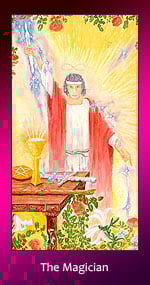
Do some magic of your own today, like penetrating facades and gaining insights into dubious stories that lack credibility. Hold onto your heartstrings until you know you haven’t met a fickle flirt or a trickster. The Magician makes us see what we want to see regardless of the reality of a situation. He draws us in because we love secrets and mysteries, but who wants to live with them day after day and year after year?
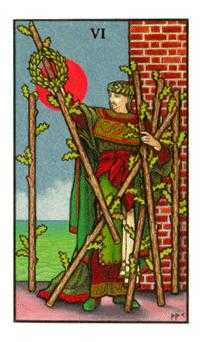
The Six of this suit points to the respect and acknowledgment due to you for your efforts to solve the problems of your community. The image is usually of a victory parade, after the celebrated leader helped troops win a pivotal battle.
It took the whole tribe to win the victory, of course, but it was the leader’s heroism and clarity under pressure that inspired them to overcome. The team is thrilled that the leader led them to victory. This card points to a time to let everyone relax and celebrate — if you are the leader, let them applaud you. They are seeing their better selves reflected in you — a victory indeed!


Determined and often stubborn, you have ambition and can work hard for what you want. You are multi-talented and somewhat restless. While you value stability, you crave stimulation and create new challenges for yourself to reach, which keeps your life in a state of flux. You are a good conversationalist, quite amorous, and especially attractive and magnetic. Famous people born today: Karl Marx, Tammy Wynette, Tyrone Power, Chris Brown, James Beard.
Your Birthday Year Forecast
With the Sun and Moon in harmony in your Solar Return chart, the year ahead should be satisfying and balanced overall. You are in comfortable demand and personally popular, and you are able to achieve a decent balance between work and play; personal and professional life. For the most part, you are on top of your game this year, and positive connections with others can be made fairly easily. With the ability to handle your emotions successfully, there is less stress on both your mind and body. Your self-confidence and positive attitude will reward you!
A Neptune transit influences you this year, softening and smoothing rough edges. You are gentler, more intuitive, spiritual, and creative with this transit, and others are drawn to these qualities. Your natural ability to help others heal and calm down is enhanced. A higher purpose to your life is what you seek, and you rely more heavily upon your intuition in order to achieve it. You could find that your intuition is subtly enhanced and that you’re often in the right place at the right time, probably because your hunches are more likely to be correct. You’re tuning into your imaginative and artistic side. It’s a good period for self-improvement programs or efforts. The need to “get away from it all” — for some peace and quiet now and again — will be strong. A more sensitive, even mysterious, persona is projected, and this can attract pleasantly unusual circumstances (and people) into your life. You will want to spend more time away from chaotic situations.
From February 2019 forward, you have a strong, protective, and stabilizing influence with you as Saturn forms a harmonious aspect to your Sun. This transit helps you stay on track and meet your responsibilities. Your popularity tends to be strong, and your leadership skills are valued. Work you have done in the past begins to pay off this year–not necessarily in dramatic ways, but in small, measurable ways. You may be recognized or rewarded in some manner for the efforts you put forth. Because you project a more responsible and credible “you”, people in authority are more inclined to appreciate you and recognize your work. During these months, you can put your life in order in some significant manner. Improved concentration, a more realistic outlook, and a practical awareness of the limits of time all help you to make steady progress, particularly in your career. Your concern for your future at this time is stronger than usual, and you may find that projects you start, or investments you make, will benefit you for years to come.
Your ambition is stimulated, and you are determined to meet or exceed your goals. You can bring great discipline and meaning to your life this year. You might totally revise an important project or area of your life, or you could be bent on getting rid of something in your life so that you can move forward. The tendency to be too willful this year should probably be avoided. You should also watch for overdoing to the point of exhaustion. This can be a compulsive time when power struggles are more likely. On the other hand, it can be a time when you enjoy a strong sense of purposefulness, focus, and determination.
You are very likely to attract loving relationships and/or new warm social contacts into your life. However, do your best to watch out for tendencies towards self-deception with both love and money. Things might look too good to be true, simply because you want to see the best! Relationship ups and downs are possible, as this could be a year when romantic mirages are more likely.
For the most part, the year ahead is good for public relations, advertising, marketing, studies, short trips, and contacts with the general public. Your judgment is sound. Exchanging ideas, intellectual pursuits, and learning are all exciting and favorable at this time. Researching cooking, health, and nutrition can be fruitful now. Meeting people who share common interests or through your studies can be rewarding.
The year ahead is a mostly steady, protected, and stable year in your life. You are bound to get important matters organized, and, for the most part, adopting a “slowly but surely” approach is your very best bet. Your love or social life is more eventful, largely due to some restlessness. You are determined and focused in the year ahead, and you can move mountains in important areas of your life. It’s a powerful year for making lifestyle changes.
2018 is a Number Three year for you. Ruled by Jupiter. This is a year of sociability. It is a friendly time when you find it natural and easy to enjoy life and other people. The focus is on personal freedom, reaching out to others, making new friends, and exploration. You are more enthusiastic and ready for adventure than you are in other years. It’s likely to be a rather lighthearted year when opportunities for “play” time are greater than usual. It’s also a favorable year for expressing your creativity. Advice – reach out and connect but avoid scattering your energies.
2019 will be a Number Four year for you. Ruled by Uranus. This is a year of work and development. It’s “nose to the grindstone” time. It’s a time to pay special attention to practical matters, and it’s not a time to be lazy or especially gregarious. Sometimes, it can be a year that feels hard, monotonous and routine, and/or lonely. Positive new relationships are often not formed in a Four personal year. However, it can be a wonderful year for building, development, and laying a solid foundation for future successes. Advice – get yourself organized, work to build your resources, keep busy.
Source

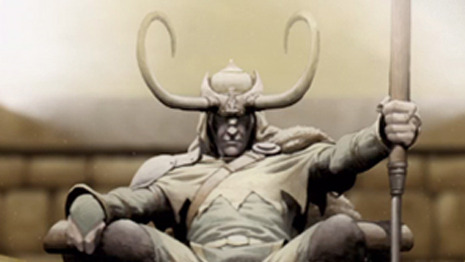
In Norse mythology, Loki is known as a trickster. He is described in the Prose Edda as a “contriver of fraud.” It’s important to remember that “trickster” does not mean someone who plays fun jokes and pranks–Loki’s trickery is all about mischief and mayhem.
Origins and History
Although he doesn’t appear often in the Eddas, Loki is generally described as a member of the family of Odin.
There is little archaeological reference to Loki (pronounced LOW-key), but in the small village of Kirkby Stephen, England, there is a tenth-century stone with a carving on it.
It is believed that the bound, horned figure carved upon the stone is in fact Loki, who was likely brought to England by Saxon settlers in the area. Also, near Snaptun, Denmark, there is a stone from around the same time as the Kirkby Stephen stone; the carving on this one is identified as Loki as well, due to scarring on the lips. In a story in which he tries to get the better of the dwarf Brokkr, Loki is disfigured and earns the nickname Scar-lip.
Appearance
Although some Norse deities are often associated with symbols–such as Odin and his ravens, or Thor and his mighty hammer–Loki does not appear to have a particular item assigned to him by the Norse eddas or sagas. While there has been some speculation that he may be associated with particular runes, there is no scholarly or academic evidence to support this. Furthermore, this is an illogical argument in the context of Norse culture; keep in mind that stories and legends were passed down orally, from one generation to the next, and not written down.
Runes were used for divination, but not for written storytelling.
As to his physical appearance, Loki was a shapeshifter and could appear any way he liked. In the Gylfaginning, which is one of the Prose eddas, he is described as being “pleasing and handsome,” but there are no details as to what those words describe.
Early carvings portray him with horns on his head, but those may be a representation of one of the shapes he adopts, rather than his regular form.
Mythology
A shapeshifter who could appear as any animal, or as a person of either sex, Loki was constantly meddling in the affairs of others, mostly for his own amusement. Disguised as a woman, Loki fools Frigga into telling him about the weakness of her son Baldr. Just for fun, Loki tricks Baldr’s blind twin, Hod, into killing him with a spear made of mistletoe. At one point, Loki spent eight years disguised as a milkmaid, and got stuck milking cows because his disguise was so convincing.
Loki is typically described as the husband of the goddess Sigyn, but he seems to have procreated with just about anyone and anything that struck his fancy. Because he could take male or female form, at one point Loki turned himself into a mare and mated with a mighty stallion, so he actually was the mother of Odin’s magical eight-legged horse Sleipnir.
Loki is known for bringing about chaos and discord, but by challenging the gods, he also brings about change. Without Loki’s influence, the gods may become complacent, so Loki does actually serve a worthwhile purpose, much as Coyote does in the Native American tales, or Anansi the spider in West African lore.
Despite his divine or demi-god status, there’s little evidence to show that Loki had a following of worshipers of his own; in other words, his job was mostly to make trouble for other gods, men, and the rest of the world.
For an excellent dissertation looking at Loki in his many forms, read Shawn Christopher Krause-Loner’s paper Scar-lip, Sky-walker, and Mischief-Monger: The Norse God Loki as Trickster. Krause-Loner says,
“[H]is ability to change shape, both sex and species, makes him an ambiguous, in-between figure. He is the only Norse deity who is depicted as having the gift of flight, either by utilizing an artifact or simply through his own ability. Loki’s kenning, Sky-Walker, speaks to his mediating position, neither bound to the ground nor of the heavens.”
Honoring Loki Today
If you’ve spent any time reading Norse mythology, you know that Loki is a bit of an outcast, slightly manic, will do sneaky things for his own amusement, and doesn’t seem to have much respect for boundaries. If you invite Loki into your life, there’s a possibility you won’t be getting rid of him until he’s good and ready to leave.
****************
Loki (pronounced “LOAK-ee;” Old Norse Loki, the meaning of which will be discussed below) is the wily trickster god of Norse mythology.
While treated as a nominal member of the gods, Loki occupies a highly ambivalent and ultimately unique position among the gods, giants, and the other kinds of spiritual beings that populate the pre-Christian Norse religion.
His familial relations attest to this. His father is the giant Farbauti (Old Norse Fárbauti, “Cruel Striker”[1]). His mother is Laufey (the meaning of which is unknown) or Nal (Nál, “Needle”[2]). Laufey/Nal could be a goddess, a giantess, or something else entirely – the surviving sources are silent on this point. Loki is the father, by the giantess Angrboda (Angrboða, “Anguish-Boding”), of Hel, the goddess of the underworld; Jormungand, the great serpent who slays Thor during Ragnarok; and Fenrir, the wolf who bites off one of the hands of Tyr and who kills Odin during Ragnarok – hardly a reputable brood, to say the least. As we’ll see below, Loki demonstrates a complete lack of concern for the well-being of his fellow gods, a trait which could be discerned, in vague outline, merely by considering these offspring of his.
With his proper wife Sigyn (“Friend of Victory”[3]), he also has a son named Nari or Narfi, whose name might mean “Corpse.”[4]
Loki often runs afoul not only of societal expectations, but also of what we might call “the laws of nature.” In addition to the progeny listed above, Loki is also the mother – yes, the mother – of Sleipnir, Odin’s shamanic horse, whom Loki gave birth to after shapeshifting into a mare and courting the stallion Svadilfari, as is recounted in the tale of The Fortification of Asgard.
In the tales, Loki is portrayed as a scheming coward who cares only for shallow pleasures and self-preservation. He’s by turns playful, malicious, and helpful, but he’s always irreverent and nihilistic.
For example, in the tale of The Kidnapping of Idun, Loki, by his recklessness, ends up in the hands of a furious giant, Thiazi, who threatens to kill Loki unless he brings him the goddess Idun. Loki complies in order to save his life, and then finds himself in the awkward position of having the gods threaten him with death unless he rescues Idun. He agrees to this request for the same base motive, shifting his shape into that of a falcon and carrying the goddess back to Asgard in his talons. Thiazi pursues him desperately in the form of an eagle, but, having almost caught up with Loki as he nears his destination, the gods light a fire around the perimeter of their fortress. The flames catch Thiazi and burn him to death, while Idun and Loki reach the halls of the gods safely. Loki ultimately comes to the aid of the gods, but only to rectify a calamity for which he himself is responsible. This theme is repeated in numerous tales, such as in The Creation of Thor’s Hammer and the aforementioned The Fortification of Asgard.
After Thiazi’s death, the giant’s daughter, Skadi, arrives in Asgard demanding restitution for the slaying of her father. One of her demands is that the gods make her laugh, something which only Loki is able to do. To accomplish this, he ties one end of a rope to the beard of a goat and the other end to his testicles. Both he and the goat squawk and squeal as one pulls one way and the other pulls the other way. Eventually he falls over in Skadi’s lap, and the giantess can’t help but laugh at such an absurd spectacle. Here, Loki once again comes to the aid of the gods, but simply by being silly and outlandish, not by accomplishing any feat that a Viking Age Scandinavian would have found to be particularly honorable.
Loki alternately helps both the gods and the giants, depending on which course of action is most pleasurable and advantageous to him at the time. During Ragnarok, when the gods and giants engage in their ultimate struggle and the cosmos is destroyed, Loki joins the battle on the side of the giants. According to one Old Norse poem, he even captains the ship Naglfar, “Nail Ship,” which brings many of the giants to their battle with the gods.[5] When the battle for the world is fought, he and the god Heimdall mortally wound each other.
Loki is perhaps best known for his malevolent role in The Death of Baldur. After the death of the beloved god Baldur is prophesied, Baldur’s mother, Frigg, secures a promise from every living thing to not harm her son. Well, almost everything – no such oath is obtained from the mistletoe, which the gods think too small and safe a thing to harm Baldur. Upon discovering this omission, Loki carves a mistletoe spear, places it in the hands of the blind god Hod, and instructs him to throw it at Baldur. Hod, not knowing the origin of the weapon, complies, and Baldur is impaled and dies. The god Hermod rides Sleipnir to the underworld and implores Hel to release Baldur, pointing out how beloved he is by all living things. Hel retorts that if this is so, then it shouldn’t be difficult to compel every being in the world to weep for Baldur, and, should this happen, the dead god would be released from the grave. Every living thing does indeed cry for Baldur’s return, with one sole exception: a frost-hearted giantess named Tokk (Þökk, “Thanks”), who is almost certainly Loki in disguise. So Baldur must remain with Hel.
For his many crimes against them, the gods eventually forge a chain from the entrails of Loki’s son Narfi and tie him down to three rocks inside a cave. A venomous serpent sits above him, dripping poison onto him. Loki’s apparently very faithful and loving wife, Sigyn, sits at his side with a bowl to catch the venom. But when the bowl becomes full, of course, she has to leave her husband’s side to pour it out. When this happens, the drops of venom that fall onto him cause him to writhe in agony, and these convulsions create earthquakes. And in this state he lies until breaking free at Ragnarok.
A fascinating variant of the tale of Loki’s being bound comes to us from the medieval Danish historian Saxo Grammaticus. In his History of the Danes, Thor, on one of his many journeys to Jotunheim, the homeland of the giants, finds a giant named Útgarðaloki (“Loki of the Utgard“). Útgarðaloki is bound in exactly the same manner as that in which Loki is bound in the tale mentioned above, which comes from Icelandic sources.[6][7] It seems that even the pagan Scandinavians themselves held conflicting views on whether Loki was a god, a giant, or something else entirely.
For the centuries that Norse mythology has been a subject of scholarly study, scholars have been unable to explain the meaning of Loki’s name in any convincing way. Most have simply thrown their hands up and declared the meaning of his name to be unknown and probably unknowable. Recently, however, the philologist Eldar Heide may have solved this puzzle. In his research into Nordic folklore from periods more recent than the Viking Age, Heide noticed that Loki often appears in contexts that liken him to a knot on a thread. In fact, in later Icelandic usage, the common noun loki even means “knot” or “tangle.” Spiders are sometimes referred to as loki in a metaphorical sense, as their webs are compared to the fish nets (which are made from a series of knots and loops) that Loki crafts in certain surviving Viking Age myths. From all of this, the most straightforward meaning of Loki’s name would seem to be “Knot” or “Tangle.”[8][9]
This proposed meaning of Loki’s name powerfully resonates with his role in Norse mythology in two ways. First, it points to his role as a maker of nets, both literal fish nets and metaphorical “nets” in the form of his cunning schemes that trap the gods in perilous situations. Second, it could indicate his being the “knot” in the otherwise straight thread of the gods and their world, the fatal flaw that ultimately brings about their demise.
Even though Loki is in some sense a god, no traces of any kind of worship of Loki have survived in the historical record.[10] Is this any wonder, given that his character is virtually the antithesis of traditional Norse values of honor, loyalty, and the like – and that he is ultimately a traitor to the divinities the Norse held in such reverence?
References:
Patti Wigington, Published on ThoughtCo.com
Second Part of this article can be found on Daniel McCoy’s website, Norse Mythology for Smart People
[1] Turville-Petre, E.O.G. 1964. Myth and Religion of the North: The Religion of Ancient Scandinavia. p. 127.
[2] Heide, Eldar. 2009. More Inroads to Pre-Christian Notions, After All? The Potential of Late Evidence. In Á austrvega: Saga and East Scandinavia: Preprint Papers of the 14th International Saga Conference. Edited by Agneta Ney et al. p. 363.
[3] Simek, Rudolf. 1993. Dictionary of Northern Mythology. Translated by Angela Hall. p. 284.
[4] Ibid. p. 228.
[5] The Poetic Edda. Völuspá, stanza 51.
[6] Saxo Grammaticus. 1905. The History of the Danes. Book VIII.
[7] Turville-Petre, E.O.G. 1964. Myth and Religion of the North: The Religion of Ancient Scandinavia. p. 138.
[8] Heide, Eldar. 2009. More Inroads to Pre-Christian Notions, After All? The Potential of Late Evidence. In Á austrvega: Saga and East Scandinavia: Preprint Papers of the 14th International Saga Conference. Edited by Agneta Ney et al. p. 363.
[9] Heide, Eldar. 2012. p. 90-91. Loki, the Vätte, and the Ash Lad: A Study Combining Old Scandinavian and Medieval Material. In Viking and Medieval Scandinavia 7.
[10] Simek, Rudolf. 1993. Dictionary of Northern Mythology. Translated by Angela Hall. p. 195.


“A witch who is bored might do ANYTHING.
People said things like ‘we had to make our own amusements in those days’ as if this signified some kind of moral worth, and perhaps it did, but the last thing you wanted a witch to do was get bored and start making her own amusements, because witches sometimes had famously erratic ideas about what was amusing.”
Saturday is dedicated to the shadowy Anglo-Saxon God Saetere or Seater, equivalent to the God Saturn. It is a day also associated with the Norns, the Norse equivalent of Three Fates, and the trickster God Loki. It is connected generally with apprehension, austerity, caution, and excessive self-limitation.
Deity: Saetere
Zodiac Sign: Aquarius
Planet: Saturn
Tree: Alder
Herb: Daffodil
Stone: Amethyst
Animal: Eagle
Element: Earth
Color: Dark Blue
Number: 4
Rune: Dag(D)
The Celtic Tree Month Saille (Willow) (April 14 – May 12)
Runic Half Month of Lagu(flowing water) (April 19 – May 13)
Goddess of the Month of Maia (April 18 – May 15th)
Source
The Pagan Book of Days
Nigel Pennick
This day’s element, earth, corresponds to the pentacles suit in the Tarot. Pentacles’ alternative names of coins and deniers help to clarify this suit’s primary meaning, which relates to money and material possessions, and thus to financial security. And when translated into one of the four conventional playing card suits, pentacles become diamonds, again, resonant of riches, but also symbolizing earthly health. Whatever you call these suits, they send the same messages when used for divination, instructing you to look to monetary matters.
Source
The Wicca Book of Days
Selena Eilidth Ash
Rain ceremonies in Guatemala, dedicated to the Goddesses of Rain and Fertility. (Ochumare, Rainbow Serpent, Iris, Changing Woman, Chalchiuhtlique, Mbozi, and Bunzi.) Halfway point of spring. The fifth day of the Moon/ month belongs to Maat, Egyptian Goddess of Truth.
Source
The Goddess Book of Days
Diane Stein
Ops, Rhea, Tellus Mater, Gaia, Eartha, Ge, Tonantzin, Ashera, Anath, the Shekinah, the Matronit, Mary, Gula, Herodias, Oddudua, Demeter
Source
The Goddess Book of Days
Diane Stein
Here we come to the only day of the English week which brings a Roman god to our heavenly party. The word Saturday is derived from Saturn, the god of harvest and agriculture. Buying all the food in supermarkets, we can hardly imagine how important this guy was for our distant ancestors.
In Latin, the word for Saturday is Sambata Dies, meaning the Day of Sabbath (sábado in Spanish, sabato in Italian, samedi in French). Sabbath is a Hebrew word for the Day of Rest. It was the last day of the all-in-one-week creation run. A day when the God finally had some relax, lying in the Garden of Eden and curiously waiting for what happens next.
Saturday – is associated with Saturn
Candle colors – Black, Grey, and White
Spellwork for the Day: Binding, Obstacles, Justice, Reversal, Uncrossing, Crossing, Cut and Clear work
—Old Style Conjure Wisdoms, Workings and Remedies, Starr Casas
Psychic Work
Astral Travel
Banishing
Spirit Work
Seances
Cleansing
Prosperity
Protection
Transformation
Creativity
Fortune
Hope
Planet: Saturn
Colors: Black, Dark Purple
Crystals: Apache Tear, Obsidian, Hematite
In the Roman calendar, Saturday was called Dies Saturni in honour of the god Saturn, whom we have already mentioned. He was the father of Jupiter, who finally overthrew him. He then made his way to the earth, and reigned over a kingdom in Italy called Latium. A great festival was held in his honour in December, as we have seen.
The Old-English name Saater-daeg, from which the word Saturday comes, seems to be a translation of the Latin name, and so suggests no god of the Angles and Saxons to us, as do the days Tuesday, Wednesday, Thursday, and Friday. We find, however, that the day was sacred to Loki, the God of Fire, and there are some who think that
“Saeter-daeg” means “the day of Saetere”, another name for Loki. The stories told of Loki show him to have been a mixture of good and evil. While willing to help the gods in their difficulties, he also played dangerous tricks on them, and more than once led them into harm. As time went on, he seems to have become the spirit of evil only, and the gods at last banished him from Asgard, and condemned him to a terrible punishment. He was chained to the side of a cave, and a snake was fastened over his head in such a way that the poison from its fangs dropped on his face. His wife, however, remained faithful to him; she made her way to the cave where Loki was imprisoned, and stayed by his side, holding up a cup to catch the poison which fell from the snake, and only leaving him in order to empty the cup when it was full. The poison which fell on Loki’s face while she was absent caused him to twist and writhe with pain till he shook the earth, and thus produced earthquakes.
This punishment of Loki reminds us of the story of Prometheus, but it will be remembered that the latter suffered because he had been a friend to man, and not like Loki a source of evil. As Prometheus was rescued at last by Hercules, so Loki was destined to escape on the great day of Ragnarok, and to appear in his true colours on the side of the giants, soon afterwards meeting his death at the hands of Heimdall. The Northmen, unlike the Greeks and Romans, regarded their gods as mortal, and believed that their rule would one day come to an end. They pictured a final struggle between the gods, the forces of good, and the forces of evil represented by Loki, the frost-giants, and all the terrible monsters which they had created. Odin, in his great wisdom, knew what the future would eventually bring, and spared no effort to prolong his rule and prepare for the fateful day. For this reason he welcomed the great heroes to Valhalla, and kept the tree of life, Yggdrasil, nourished with the water of the sacred spring; for this reason the giants tried to steal Thor’s hammer, the weapon they most dreaded. Many things pointed to the approach of Ragnarok. First the earth suffered from six successive winters more severe and prolonged than had ever been known before. Snow fell without ceasing, freezing winds blew from the north, and the whole earth was covered with ice. In their struggle to live under these terrible conditions, men lost their faith in the gods, and gave themselves up to evil and wrong-doing. Sin and crime were found everywhere, and as the evil-doers passed into the Underworld, they became food for the wolves which were continually pursuing the sun and moon, and endeavouring to swallow them. As their food became more plentiful, the wolves increased in strength and speed, until at last the day came when Sol and Mani found the wolves rapidly gaining on them. In spite of all their efforts, the wolves continued to overtake them, and at length seized them in their enormous jaws, and plunged the earth into darkness. The foundations of the earth shook, the stars fell from the sky, and the mountains came crashing down. As if this were a signal, Loki and the fierce wolf Fenrir put forth new strength and burst their chains, for their day of revenge had come. The dragon which lay at the foot of Yggdrasil gnawed through the root of the sacred tree. The Midgard serpent, Iormungandr, lashed and writhed till the sea rose in mighty waves, and at last breaking its bonds, the terrible monster crawled to the land. Heimdall, the keeper of the bridge, realizing that the twilight of the gods was at hand, blew a blast on his horn that was heard in every corner of the world. The gods hastily donned their armour, and marshalled the army of heroes. Now indeed Odin regretted the loss of his eye, Tin that he had sacrificed his right hand, and Frey that he had lent his sword to his servant, who was away in the lands of the North.
Meanwhile the followers of the goddess Hel were led by Loki to the plain of Vigrid, the scene of the great battle. Here they were joined by Hel herself, Garm, the fierce dog who guarded the entrance to the Underworld, and Fenrir, the monster wolf. From the misty land of the North came the army of the frost-giants, while out of the South, with a burst of light, there dashed on to the plain Surtr, the giant of the Flaming Sword.
Terrible indeed were the forces arrayed against the gods, but they, like the Northmen themselves, knew no fear on the day of battle, and assembled their armies on the plain of Vigrid, prepared to resist the powers of evil to the last.
With shouts and cries, amid fire and smoke, the armies meet. Odin and the wolf Fenrir come together with a crash, which echoes through the whole world, but not even the mighty Odin can withstand this terrible enemy. Fenrir, now fiercer and stronger than ever before, opens his vast jaws till they stretch from heaven to earth, and overwhelms the leader of gods and men. But Odin’s death is quickly avenged. His son Vidar, wearing the iron shoe, which had been kept for this day, now falls upon Fenrir, and, as had been foretold, places his iron-shod foot on the monster’s lower jaw, and then seizing the upper jaw, with a mighty wrench tears Fenrir asunder.
Meanwhile Tiu grapples with Garm, and after a fierce struggle slays him, only to fall dead beside him. Frey attacks the fire-giant Surtr, but soon falls before his flaming onslaught. Heimdall and Loki once again meet in deadly conflict, and this time Heimdall overcomes the God of Evil, but, like Tiu, falls mortally wounded by his enemy. Thor, with his hammer Miolnir, advances against the huge Midgard serpent. The struggle is long and terrible; with a mighty blow of his hammer Thor at last kills the monster, and then, as he staggers back, is overwhelmed by the flood of poison which it outpours. The heroes of Valhalla are all overthrown by the giants and followers of Hel, and there is no longer anyone of Odin’s vast host to withstand the powers of evil.
Surtr then flings his fire over the world, Asgard is consumed in roaring flames, and the earth, scorched and blackened, sinks into a boiling sea. Ragnorak has come, and the old gods have passed away.
But in the minds of the Northmen evil could have no lasting victory. The very flames which had destroyed the home of the gods and had overwhelmed the earth had purged the world of evil. A new earth rose from the sea, lit by a new sun, the daughter of Sol, and life, drawn forth by its warm rays, once more spread over the earth. Trees clothed themselves anew with leaves, and the fields became fair with flowers. From the depth of the forest, where Mimir’s spring had bubbled forth, came Lifthrasir (Desire of Life) and his wife Lif (Life), who in course of time became the rulers of a new race. To the field of Ida, where the gods had been wont to hold their games, came the survivors of the gods: two sons of Odin, Vidar, the slayer of Fenrir, and his brother Vali, who had killed Hodur to avenge the death of Balder; two sons of Thor, Magni (Strength) and Modi (Courage), who had rescued Miolnir from the battle-field and now wielded it in place of their father; and finally, Balder and Hodur, who had been set free from Hel, and who now lived together as brothers, forgetful of the past.
It seems strange to us that the Northmen should have pictured the destruction of their gods, and it is possible that the writers of the wonderful poems from which we obtain these stories knew something of Christianity, and had begun to turn from their heathen beliefs. We find, however, that many heathen peoples had similar beliefs. The idea of eternity was impossible to them; they felt that there must be an end to everything. Accordingly they imagined their gods, after a long period of peace and good rule, being overthrown by the powers of evil and destruction, and being replaced by a new heaven and earth, which in turn would also be destroyed and renewed. Among no other people do we find so complete a description of this world catastrophe as in our ancestors’ story of Ragnarok, the Twilight of the Gods.
The Day of Ragnarok
The generations pass, the ages grow,
And bring us nearer to the final day
When from the south shall march the fiery band,
And cross the bridge of heaven, with Lok for guide,
And Fenrir at his heel with broken chain;
While from the east the giant Rymer steers
His ship, and the great serpent makes to land;
And all are marshall’d in one flaming square
Against the Gods, upon the plains of Heaven.
* * * * * * *
Far to the south, beyond the blue, there spreads
Another Heaven, the boundless–no one yet
Hath reach’d it; there hereafter shall arise
The second Asgard, with another name.
Thither, when o’er this present earth and Heavens
The tempest of the latter days hath swept,
And they from sight have disappear’d, and sunk,
Shall a small remnant of the Gods repair;
There re-assembling we shall see emerge
From the bright Ocean at our feet an earth
More fresh, more verdant than the last, with fruits
Self-springing, and a seed of man preserved,
Who then shall live in peace, as now in war.
But we in Heaven shall find again with joy
The ruin’d palaces of Odin, seats
Familiar, halls where we have supp’d of old;
Re-enter them with wonder, never fill
Our eyes with gazing, and rebuild with tears.
And we shall tread once more the well-knovm plain
Of Ida, and among the grass shall find
The golden dice wherewith we played of yore;
And that will bring to mind the former life
And pastime of the Gods, the wise discourse
Of Odin, the delights of other days.
MATTHEW ARNOLD–Balder Dead.
The planetary correspondence for Saturday is Saturn. Matters dealing with the public, farming, family ties, legal matters (such as wills and estates), taking care of debts, dealing with lawyers, financing, joint money matters, real estate, older people, banishing or binding negativity, and getting rid of bad habits all fall under the charge of Saturn. It’s easy to see why “Saturday’s child works hard for his living.”
Saturday’s angels are Cassiel, Machatan, Uriel, and Orifiel. Cassiel is the angel of solitudes and tears. He is one of the rulers of the planet Saturn and occasionally appears as the angel of patience. Cassiel links himself to dragon energy. Regarding Machatan, the only information we get is that he works well with Cassiel and is also a power of Saturn. Orifiel is an angel of the wilderness, a ruler of the second hour of the day, and also associated with Saturn.
On Saturday, the hour of sunrise and every eight hours after that are also ruled by Saturn, and that makes these times of the day doubly blessed. These four hours are the strongest four hours for conducting ritual. Check the local newspaper, astrological calendar, or almanac to determine your local sunrise.
Source:
Saturday is a day filled with opportunities to clean up and clear out. So if you are wondering why Hecate is assigned to this day, take another look at what she symbolizes and the magick that is associated with her. That should answer the question.
Hecate was the oldest form of the Greek Triple Goddess, as she presided over heaven, the underworld, and earth. Crossroads where three roads met were especially sacred to Hecate, earning her the title of Hekate of the Three Ways. It’s interesting to note that even after the worship of other goddesses waned, ancient people still worshiped Hecate as the Queen of the Underworld and the Guardian of the Three-Way Crossroad. It was also believed that if you left her an offering of food there, she would grant you her favors. As Hecate Trivia, her triple images were often displayed at these crossroads, where she was petitioned on the full moon for positive magick and on the dark of the moon for cursing and dark magick.
While this last bit of information sounds a little ominous, keep in mind that Hecate/Hekate was known by many titles and is a shapeshifter. Her appearance could and did change often. As a dark moon goddess, her faces are many. To some she may appear as a old crone, hunched over a smoking cauldron and draped in a midnight cape. To others she may appear as a dark beautiful, mysterious, and mature woman wearing a shimmering crown. To some she may be perceived as a maiden priestess. She was called the “most lovely one,” the Great Goddess of Nature, and the Queen of the World of Spirits. This dark goddess knows her way around the earth and the underworld. All the powers of nature, life, and death are at her command.
Book of Witchery
Spells, Charms & Correspondences for Every Day of the Week
Ellen Dugan
Waning Moon
Moon phase: Third Quarter
Moon Sign: Capricorn
Incense: Pine
Color: Black
Magickal Intentions: Spirit Communications, Meditation, Psychic Attack or Defense, Locating Lost Things and Missing Persons, Building, Life, Doctrine, Protection, Knowledge, Authority, Limitations, Boundaries, Time and Death
Incense: Black Poppy Seed and Myrrh
Planet: Saturn
Sign: Capricorn and Aquarius
Angel: Cassel
Colors: Black, Grey and Indigo
Herbs/Plants: Myrrh, Moss, Hemlock, Wolfsbane, Coltsfoot, Nightshade and Fir
Stones: Jet, Smokey Quartz, Amethyst, Black Onyx, Snowflake Obsidian, Lava, Pumice
Oil: (Saturn) Cypress, Mimosa, Myrrh, Patchouli
Saturn lends its energies to the last day of the week. Because Saturn is the planet of karma, this day is an excellent time for spellwork involving reincarnation, karmic lessons, the Mysteries, wisdom, and long-term projects.
It is also a good time to being efforts that deal with the elderly, death, or the eradication of pests and disease.
Saturday Is Ruled By Saturn
This day of the week got it’s name from the god of karma and time, Saturn. This day is obviously associated with the planet Saturn and is our last day of the week. Traditionally Saturdays are great days for protection, banishing a negative situation, and generally a good time to clean up any magical messes that you have been ignoring. Some suggestions for Saturday enchantments would include:
Wearing the colors of the day, black and deep purple. Here’s your perfect excuse to be dramatic and witchy. Empower these dramatic pieces of your wardrobe for protection and strength.
Burning black candles to absorb negativity and burning purple ones to increase your magical wisdom and boost your spirituality
Adding a touch of garden witchery to your Saturday spells by working with the pansy (in black or purple of course), the morning glory flowering vine, or the cypress tree.
Carrying an obsidian, hematite, or jet tumbled stone in your pocket to reinforce your personal protection and to ward off bad vibes and sour feelings. You can also add these crystals to a candle spell on a Saturday night to really increase the punch of your spellcasting.
Cleaning your house and cleansing it while you are at it. Tap into those obstacle-removing vibes and the positive, concluding energies.
Closing up the final day of the bewitching week with a bang by calling on Hecate for protection and guidance.
The Energy of SaturnSATURN: THE PLANET OF KARMA
Saturn doesn’t make things easy. That’s the role of the taskmaster of the zodiac. Saturn commands us to get to work and to work hard. Discipline and responsibility are important to this planet, yet if we’re eager to conquer the world, that’s okay, too.
Much like Father Time, Saturn implores us to look at the clock (its glyph, after all, is the sickle of Chronos, the God of Time). Is there time for everything we want to do, or are there limits? Those limitations are important to Saturn, and we must learn to manage them. Restrictions are the province of this planet, as is any form of discipline or delay.
In keeping with the passage of time, Saturn governs old age along with the lessons it teaches us. Learning life’s lessons is key to this planet, in keeping with its role as teacher. The majesty of older age also brings with it a certain sense of tradition, conventionality (our learned patterns of behavior) and wisdom, and Saturn is mindful of these characteristics. This planet applauds our perseverance and the fact that we’ve withstood the test of time (yes, time comes up once again). This senior status further brings with it a measure of authority, and Saturn lords over that as well.
Structure, order and the way in which we conduct our affairs are all ruled by this ringed planet. Contraction and the reining in of assets are also important here. Lastly, Saturn, again in its role as teacher, concerns itself with karma and the lessons which past experiences might bring.
It takes Saturn 28-30 years to complete its orbit of the zodiac. It is masculine energy and rules both Capricorn and Aquarius, and the Tenth and Eleventh Houses.
Source
Protection, removing negativity, justice and balance have been the theme today. As we have just seen you can indeed a perform a binding and not cross the ethical line. Bindings are a more ethical route than cursing someone. But are there other options? Why, of course. I know of some Witches who, when they see a criminal’s face on television or read about them in the paper, mentally pain a white X over a criminal’s face while they say the phrase “I neutralize that person” with intention. This neutralizes the power and harm that the stranger causes.
If there is someone that you personally know who is causing you or your family harm, it is possible to use a photograph of the destructive person. Simply wrap white ribbon around their photo to symbolize you binding them up as you say, “I neutralize any physical or emotional harm that you are causing.”
But if you feel magickal bindings are the way to go, then perhaps your best course of action is to remove all emotion from yourself and the spell when you perform the binding. Just as I stated before, justice—like magick—is a neutral force. For lack of a better term, be businesslike. Wild swings of emotion only make for an uncontrollable magickal energy. Therefore, your best bet is to be neutral. If there was ever a time to be calm and in control, this is it. If you are not sure that you can pull off being neutral, then I suggest that you leave magick alone. It is essential to be in control. How much karma drama are you willing to pull into your life?
Source
Book of Witchery Spells, Charms & Correspondences for Every Day of the Week
Ellen Dugan
Saturday is the sixth day of the work week. It’s officially the weekend. Some see it as one of the luckiest days for gambling. It’s one of those days where you can do what you need around your home and relax, as well. You can take care of a little business then, reap the rewards. It’s a really good day to do collect, courage, reap, gamble and exercise spells.
Items you will need:
3 cotton balls
1 green sheet of paper or cloth
1 brown candle
1 lighter or match
Light a brown candle on a fire-proof surface. Nearby, lay out a sheet of green paper or cloth in front of you. At the far end of the paper or cloth, place three cotton balls. These cotton balls represent sheep.
Say this chant:
“I’m bringing in the sheep
And reaping my rewards.
One step back,
But another two forwards.
They’ve been out in the pastures
All day.
I’ve worked them hard.
Now, it’s time to pay.”
Bring the cotton balls toward you and blow out the candle. Whatever you’ve been working on should bring you good rewards.
Source
A Witch’s Week of Spells and Activities
Helga C. Loueen
May 5 and 6
For several days, Mexicans and Mexican-Americans commemorate the defeat of the French by General Ignacio Zaragoza at the Battle of Pueblo in 1862. His defense of the city dealt a major blow to Napoleon III’s attempt to establish a permanent French colony in Central America, which eventually led to the expulsion of the French from Mexico.
In California, Cinco de Mayo is still celebrated and serves to perpetuate Mexican nationalism in a foreign land. All of the pageant’s activities, speeches, songs, and events are played out in Spanish, usually beneath the American flag that is flown alongside the Mexican flag.


“Never put your faith in a Prince. When you require a miracle, trust in a Witch.”
The Sun
Sun Direction: ↑ 75.99° ENE
Sun Altitude: 8.68°
Sun Distance: 93.751 million mi
Next Solstice: Jun 21, 2018 5:07 am (Summer)
Sunrise Today: 5:55 am↑ 69° East
Sunset Today: 7:47 pm↑ 291° Northwest
Length of Daylight: 13 hours, 51 minutes
The Moon
Moon Direction: ↑ 205.14° SSW
Moon Altitude: 27.59°
Moon Distance: 251213 mi
Next New Moon: May 15, 20186:47 am
Next Full Moon: May 29, 20189:19 am
Next Moonset: Today10:13 am
Current Moon Phase: Waning Gibbous
Illumination: 73.7%
Source
The Moon is in Capricorn.
The Moon is waning and in its Waning Gibbous phase.
The Full Moon occurred on the 29th in the sign of Scorpio. The Last Quarter Moon will occur on May 7th.
Moon in CapricornThe Moon is traveling through Capricorn today. Make a list of goals. Work overtime. Climb higher. Don’t sulk.
We become aware of the need for structure and planning ahead with a Capricorn Moon. We are instinctively aware of the limitations of time and motivated by a desire for success. Achievement and manifestation are more important to us now. We are resourceful and don’t want to waste time, energy, or resources. This can be a somewhat sober influence, but it can also be a productive time when we look reality in the eye.
The Moon in Capricorn generally favors the following activities: Long-term activities that yield slow but steady results, practical undertakings, career issues, making a business plan, practical investments.
Mercury forms a quincunx to Jupiter today, and we may face a challenging decision. Our ideas don’t always feel precisely right under this influence – we can waver quite a bit now, unable to reach a wholly satisfying decision or conclusion. We may overestimate our abilities or underestimate the situation. It may be best to avoid jumping into something without planning, as necessary details are too easy to overlook.
The Moon is in Capricorn all day, harmonizing with the Sun, Jupiter, and Neptune, aligning with Pluto, and forming a square with Mercury. We’re both practical and intuitive today. We’re in good shape for concentration and focus, although in the hours surrounding the Moon’s square to Mercury, we may be easily distracted. It can be challenging expressing what we intend today. The Moon is particularly resourceful in the sign of Capricorn, however.
The sky this week for May 5 to May 6By Richard Talcott
Saturday, May 5
The waning gibbous Moon appears roughly halfway between Mars and Saturn this morning. All three objects rise by 1:30 a.m. local daylight time and climb nearly 30° high in the south by 5 a.m. Mars shines at magnitude –0.5 and is already a little brighter than it was earlier in the week. Saturn glows about half as bright, at magnitude 0.3. The trio stands against the backdrop of northern Sagittarius the Archer. If you view Saturn through a telescope this week, you’ll see its 18″-diameter disk surrounded by a stunning ring system that spans 40″ and tilts 26° to our line of sight.
The Moon also reaches apogee today, at 8:35 p.m. EDT. It then lies 251,318 miles (404,457 kilometers) from Earth’s center, the farthest it gets from our planet during its month-long orbit.
Sunday, May 6
The annual Eta Aquariid meteor shower peaks before dawn. Unfortunately, the waning gibbous Moon shares the sky, and its bright light will wash out fainter meteors and render the brighter ones less impressive. Don’t give up hope, however. For the best views, find an otherwise dark site and position yourself where a tree or building blocks the Moon’s direct light. The Eta Aquariid shower derives from bits of debris ejected by Comet 1P/Halley during its many trips around the Sun.
Although the Moon interferes with the Eta Aquariids, take a few minutes to enjoy a binocular view of our satellite next to Mars. The Moon slides 3° due north of the Red Planet at 3 a.m. EDT.
Source
Of the five planets easily visible to the unaided eye, only Mercury is missing from view this month. The other four are in good view, with one of them, Jupiter, putting in its best showing of the year. Venus climbs higher as the Evening Star, while Mars and Saturn remain in the early morning sky. Among the stars, Regulus and Spica climb to their full spring glory.
May 5: More Moon and Mars
The planet Mars is in great view early tomorrow. It looks like a bright orange star just to the lower right of the Moon as the first blush of twilight begins to paint the sky. Mars will grow much brighter over the next couple of months.
May 6: Ursa Major
Ursa Major, the great bear, is high in the north on May evenings. The bear’s body and tail form the Big Dipper. The bear aims nose-first at the northern horizon.
May 7: Jupiter at Opposition
Jupiter, the largest planet in the solar system, shines at its best for the year this week. It rises at sunset and sets around sunrise. It is brightest for the year, too, outshining everything else in the night sky except the Moon and Venus.
May 8: Evening Lights
As twilight fades this evening, two lights will pop into view long before the others. In the west, look for Venus, the “evening star.” At about the same height in the southeast, look for slightly fainter Jupiter, at its brightest for the year.
May 9: Coma Berenices
Coma Berenices is in the eastern sky at nightfall. Its stars are faint. But under a dark sky, they offer one of the prettiest sights in the heavens: streamers of stars that represent the hair of Berenice, a queen of ancient Egypt.
May 10: Coma Star Cluster
The star cluster Melotte 111, in Coma Berenices, is a good target for binoculars or a small telescope. The constellation is high in the east at nightfall, and good binoculars reveal a small swarm of stars.
Source
Opportunities to take a couple of great leaps forward appear on the horizon very early as the moon in Capricorn trines the sun in Taurus (12:53am) while Venus in Gemini forms an inspirational, 72-degree rapport with Chiron in Pisces (1:10am).
However, unexpected snafus regarding communications or travel plans can catch you napping as Messenger of the Gods Mercury makes a potentially tense, 150-degree liaison with King of the Gods Jupiter (4:06am).
While plunging into research projects with intensity makes sense during the monthly lunar union with distant Pluto in Capricorn (2:01pm), any kind of arm-twisting maneuvers or manipulative behavior with dear ones is taboo. Meanwhile, the monthly moon convergence with Mars (11:21pm) offers a boost for athletics and exercise routines but carries a warning to steer clear of egocentric power plays that alienate or disturb loved ones.
[Note to readers: All times are now calculated for Pacific Daylight Time. Be sure to adjust all times according to your own local time so the alignments noted above will be exact for your location.]
Copyright 2018 Mark Lerner & Great Bear Enterprises, Ltd.
Astrology.com
Waning Gibbous
Illumination: 74%
The Moon today is in a Waning Gibbous Phase. This is the first phase after the Full Moon occurs. It lasts roughly 7 days with the Moon’s illumination growing smaller each day until the Moon becomes a Last Quarter Moon with a illumination of 50%. The average Moon rise for this phase is between 9am and Midnight depending on the age of the phase. The moon rises later and later each night setting after sunrise in the morning. During this phase the Moon can also be seen in the early morning daylight hours on the western horizon.
PHASE DETAILS FOR – SATURDAY, MAY 5, 2018
Phase: Waning Gibbous
Illumination: 74%
Moon Age: 19.84 days
Moon Angle: 0.49
Moon Distance: 405,455.57 km
Sun Angle: 0.53
Sun Distance: 150,906,648.24 km
Source
Each phase of the Moon resonates with magical significance and astrological meaning.
These meanings spill out into world-wide folklore, sinister superstitions, and even gardening advice. Werewolves, in particular, are creatures of the Moon – transforming themselves by the light of the full Moon into deadly hunters which can only be killed by a silver bullet. Hairy, scary creatures aside….the Moon’s phases are used in witchcraft and magic to determine when to cast a certain kind of spell. New Moons are for beginnings, for example, while the waning Moon is believed to be a good time for banishing things, or clearing negative influences. In predictive astrology these phases reveal different themes in your life, and offer a guide to planning activities, projects, and even study. If you want to try tuning in to these phases you’ll need to observe the Moon every evening, cloud permitting, and check exact details of its phase in an almanac or moon calender.
Here are the phases and what they mean:
The New or Crescent Moon – Beginnings
It’s time to begin projects, new regimes, fresh starts. Some gardeners maintain that this is the best time to plant seeds – you can easily imagine that this is a symbol for many things.
The First Quarter Moon – Action
The Moon reaches her first quarter seven days after the New Moon. Take your projects out there and do something practical about those decisions or wishes you made when the Moon was new.
The Gibbous Moon – Movement
The Moon is now waxing larger as it moves from New towards Full. The next seven days have a forward momentum. If you began something new, like a diet, at the New Moon, you should be seeing some results by now. Not the final results you imagined, but moving towards them.
The Full Moon – Harvest
The lunar energies peak now, fourteen days into the cycle. It is harvest time, possibly for projects begun at a New Moon months beforehand. Results in just two weeks are hard to find in most endeavours……although we can always dream. Emotions may peak one way or another too.
The Disseminating Moon – Thinking
The Moon begins to wane, and energies and thoughts turn inwards. This is a good time to think about your projects or the direction you are following. Use what you have learned and bide your time.
The Third Quarter Moon – Shuffling the deck
If you need to fine-tune things, now’s the time. It’s about seven days since the Full Moon. Work with what you have, and make it better. It’s not a good time to go after anything new, but a great time to polish up your skills and make things work out. Anything you don’t need, or which isn’t working can be recycled or thrown out now. Needless to say, this is a good time to clear out cupboards, weed your garden, or get a sassy new haircut.
The Balsamic Moon – Release
The waning Moon has reached its last phase. It is a time of release. If you want to let go of a relationship, job, or anxiety this is the perfect time to focus on this desire. You may feel peaceful, or empty. The final days just before the New Moon are also called the dark of the Moon, because it sheds so little light. Symbolically, this suggests the inner world is more important than the outer world at this point in the cycle.
Source

 Witches Of The Craft®
You must be logged in to post a comment.