Let’s Have Some Fun – Printable Coloring Page – Time to Break Out the Saturday Morning Cartoons Again

It has been a long time that I have posted something to bring out our inner child and I feel it is long overdue. So, break out some crayons, markers, and colored pencil let your inner child out to have some fun…no need to stay in the lines😄! Watch the cartoons just like a lot of us in the 60’s and 70’s did on Saturday mornings. I sincerely hope you have as much fun coloring and watching as I did while deciding just how I wanted to play today.

_ _ _ _ _ brings you blessings of joy, fun, laughter, and finding time to play!

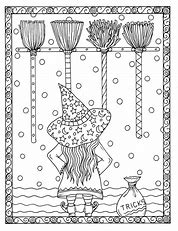
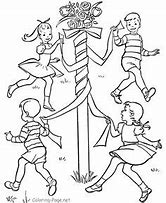
Who can name this cartoon witch from our childhood?

Just put the first letter of her names in the comments so as not to give it away to others…well at least for today. ENJOY!!!

For those too young to remember Casper the Friendly Ghost and _ _ _ _ _ here’s some of the cartoons they stared in from 1945 to 1963

Casper The Friendly Ghost Cartoon Collection – Remastered HD via YouTube.com

Astronomy Picture of the Day

Discover the cosmos! Each day a different image or photograph of our fascinating universe is featured, along with a brief explanation written by a professional astronomer.

2022 October 22

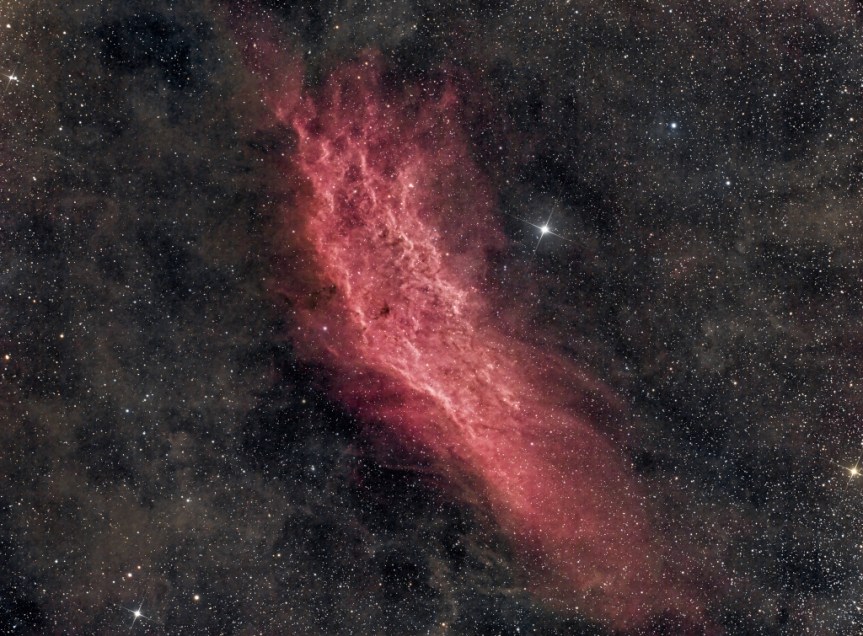
NGC 1499: The California Nebula

Image Credit & CopyrightStephen Kennedy

Explanation: Drifting through the Orion Arm of the spiral Milky Way Galaxy, this cosmic cloud by chance echoes the outline of California on the west coast of the United States. Our own Sun also lies within the Milky Way’s Orion Arm, only about 1,500 light-years from the California Nebula. Also known as NGC 1499, the classic emission nebula is around 100 light-years long. The California Nebula shines with the telltale reddish glow characteristic of hydrogen atoms recombining with long lost electrons. The electrons have been stripped away, ionized by energetic starlight. Most likely providing the energetic starlight that ionizes much of the nebular gas is the bright, hot star Xi Persei just to the right of the nebula. A popular target for astrophotographers, this deep image reveals the glowing nebula, obscuring dust, and stars across a 3 degree wide field of view. The California nebula lies toward the constellation Perseus, not far from the Pleiades.

October 21 Astronomy Picture of the Day

Discover the cosmos! Each day a different image or photograph of our fascinating universe is featured, along with a brief explanation written by a professional astronomer.

2022 October 21

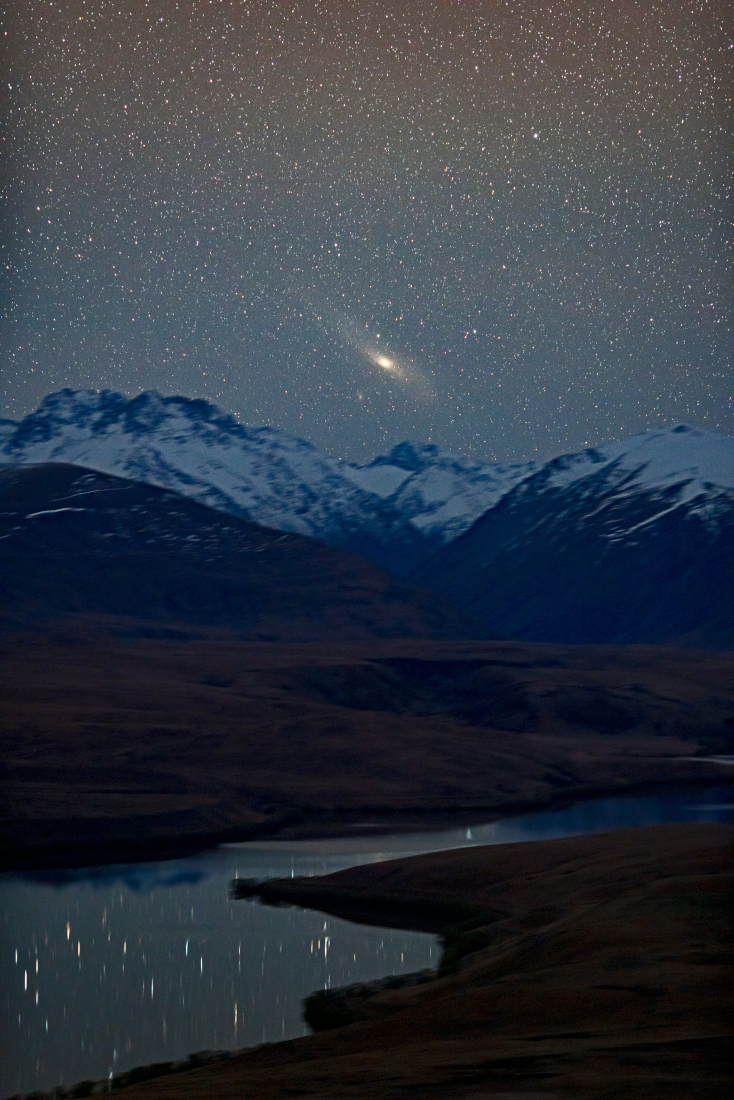
Andromeda in Southern Skies

Image Credit & CopyrightIan Griffin (Otago Museum)

Explanation: Looking north from southern New Zealand, the Andromeda Galaxy never gets more than about five degrees above the horizon. As spring comes to the southern hemisphere, in late September Andromeda is highest in the sky around midnight though. In a single 30 second exposure this telephoto image tracked the stars to capture the closest large spiral galaxy from Mount John Observatory as it climbed just over the rugged peaks of the south island’s Southern Alps. In the foreground, stars are reflected in the still waters of Lake Alexandrina. Also known as M31, the Andromeda Galaxy is one of the brightest objects in the Messier catalog, usually visible to the unaided eye as a small, faint, fuzzy patch. But this clear, dark sky and long exposure reveal the galaxy’s greater extent in planet Earth’s night, spanning nearly 6 full moons.

A Thought for Today

Blessed be dear sisters, brothers, and honored guests may your life be filled with all things positive!

October 20 Astronomy Picture of the Day

Discover the cosmos! Each day a different image or photograph of our fascinating universe is featured, along with a brief explanation written by a professional astronomer.

2022 October 20

Pillars of Creation

Image Credit: Science – NASAESACSASTScINIRCam
Processing – Joseph DePasquale (STScI), Anton M. Koekemoer (STScI), Alyssa Pagan (STScI)

Explanation: A now famous picture from the Hubble Space Telescope featured these star forming columns of cold gas and dust light-years long inside M16, the Eagle Nebula, dubbed the Pillars of Creation. This James Webb Space Telescope NIRCam image expands Hubble’s exploration of that region in greater detail and depth inside the iconic stellar nursery. Particularly stunning in Webb’s near infrared view is the telltale reddish emission from knots of material undergoing gravitational collapse to form stars within the natal clouds. The Eagle Nebula is some 6,500 light-years distant. The larger bright emission nebula is itself an easy target for binoculars or small telescopes. M16 lies along the plane of our Milky Way galaxy in a nebula rich part of the sky, toward the split constellation Serpens Cauda (the tail of the snake).

A Laughter for Today

I would love to have this on a t-shirt!

A Thought for Today

If today’s posts seem to have chaotic energy in them I apologize. I have my first court hearing for my divorce from  man who’s last name I still carry but have not seen in 21 years. I never had a reason to divorce him before but now that I am reunited with my twin flame, Lord Beltane a.k.a. Big Dawg and we are to be married as soon as we can after my divorce is final (his became final in August from his wife of 28 years) I want to get it over with so we can live the rest of the lifetime united not just by law but by a Handfasting also. Even though my soon to be ex-husband did not accept the paper telling him of today’s Zoom court date I am concerned that something will not go right. An irrational concern probably but I still am feeling that way. At least I get to do this court date from the comfort of my home so my anxiety level is not through the roof but it is still pretty high. Court starts at 10:30 AM CDT if you have read this by than I can use all the positive thoughts you care to send my way. I would have put off posting until after my court appearance but we have a lot of things to do today and I do not know if I would have the time to get both hemispheres posts for tomorrow done.

Please remember this is the annual fundraising time to renew the witchesofthecraft.com domain name. If the renewal fee is not paid by November 17, 2022 we will lose the WOTC domain name and anyone can take it over after 20+ years. Lady of the Abyss started this website when us pagans/witches had to hide in plain sight even more than we do now. WOTC was a pioneering witchcraft website back in the day but Lady Abyss started it after the Goddess told her to spread the word of what real witches/pagans and witchcraft are compared to how we have been stereotyped for centuries. I was blessed to receive this website as a gift from Lady abyss just a little over a month before she crossed into the Spirit Plane. She felt I could and I hope I am carrying on her work. See the post “Annual WOTC Fund Raiser” for more information on how you can help Lady Beltane secure the WOTC domain for another year. No proceeds from this fundraiser will be used for any other purpose but retain our domain name.

Blessed be dear sisters, brothers, and honored guests may your life be filled with all things positive!

Astronomy Picture of the Day

Discover the cosmos! Each day a different image or photograph of our fascinating universe is featured, along with a brief explanation written by a professional astronomer.

2022 October 19

A Galaxy Beyond Stars, Gas, Dust

Image Credit & Copyright: Howard Trottier; Text: Emily Rice

Explanation: Do we dare believe our eyes? When we look at images of space, we often wonder whether they are “real”, and just as often the best answer varies. In this case, the scene appears much as our eyes would see it, because it was obtained using RGB (Red, Green, Blue) filters like the cone cells in our eyes, except collecting light for 19 hours, not a fraction of a second. The featured image was captured over six nights, using a 24-inch diameter telescope in the Sierra Nevada Mountains, in CaliforniaUSA. The bright spiral galaxy at the center (NGC 7497) looks like it is being grasped by an eerie tendril of a space ghost, and therein lies the trick. The galaxy is actually 59 million light years away, while the nebulosity is MBM 54, less than one thousand light years away, making it one of the nearest cool clouds of gas and dust — galactic cirrus — within our own Milky Way Galaxy. Both are in the constellation of Pegasus, which can be seen high overhead from northern latitudes in the autumn.

A Laugh for Today

May your day be filled with love and some laughter!

Blessings of love, comfort, and laughter from us to you

A Thought for Today

No matter where it comes from may only positive things enter your life dear Sisters, Brothers, and Honored Guests.

Astronomy Picture of the Day

Discover the cosmos! Each day a different image or photograph of our fascinating universe is featured, along with a brief explanation written by a professional astronomer.

2022 October 18

Milky Way Auroral Flower

Image Credit & Copyright: Göran Strand

Explanation: Could the stem of our Milky Way bloom into an auroral flower? No, not really, even though it may appear that way in today’s featured all-sky image. On the left, the central plane of our home galaxy extends from the horizon past the middle of the sky. On the right, an auroral oval also extends from the sky’s center — but is dominated by bright green-glowing oxygen. The two are not physically connected, because the aurora is relatively nearby, with the higher red parts occurring in Earth’s atmosphere only about 1000 kilometers high. In contrast, an average distance to the stars and nebulas we see in the Milky Way more like 1000 light-years away – 10 trillion times further. The featured image composite was taken in early October across a small lake in Abisko, northern Sweden. As our Sun’s magnetic field evolves into the active part of its 11-year cycle, auroras near both of Earth’s poles are sure to become more frequent.

Hi

I am waiting for my new modem to arrive via FedEx. Than I have to hooked it up. So I will be back with you all tomorrow.

Witches of The Craft domain name comes up for renewal November 18th. So it is that time of year again for the annual WOTC fund rasier. More on this tomorrow.

I Need a Self Care Day

After a very stressful day yesterday that did not end until 2:00 this morning and only getting 4 hours of sleep my whole body hurts and my mind is mush. With a bad fibromyalgia flare and migraine I am in no shape to post today. With some self pampering and rest today I will be back tomorrow.

I wish you all a fantastic Friday. Blessings for health and all positive things to come your way yoday.

Regular Posts Will Return Tomorrow

I have been using a HotsSpot connection through my cellphone this week because my internet was turned off Monday and I will not have internet service again until October 17th. I spent over an hour on the phone with my internet provider to get hooked back up. Which has given me a migraine and anxiety attack and I am out of my medication for both of them. I still have to call the number for low income internet service help and than call my provider back with an account number or something. I am taking the rest of the day off from posting because I am already ready to blow a casket. If you would send me some calming energy I would really appreciate it.

Astronomy Picture of the Day

Discover the cosmos! Each day a different image or photograph of our fascinating universe is featured, along with a brief explanation written by a professional astronomer.

2022 October 13

Dust Shells around WR 140 from Webb

Image Credit: NASAESACSAJWSTMIRIERS Program 1349; Processing: Judy Schmidt

Explanation: What are those strange rings? Rich in dust, the rings are likely 3D shells — but how they were created remains a topic of researchWhere they were created is well known: in a binary star system that lies about 6,000 light years away toward the constellation of the Swan (Cygnus) — a system dominated by the Wolf-Rayet star WR 140Wolf-Rayet stars are massive, bright, and known for their tumultuous winds. They are also known for creating and dispersing heavy elements such as carbon which is a building block of interstellar dust. The other star in the binary is also bright and massive — but not as active. The two great stars joust in an oblong orbit as they approach each other about every eight years. When at closest approach, the X-ray emission from the system increases, as, apparently, does the dust expelled into space — creating another shell. The featured infrared image by the new Webb Space Telescope resolves greater details and more dust shells than ever before.

Astronomy Picture of the Day

Discover the cosmos! Each day a different image or photograph of our fascinating universe is featured, along with a brief explanation written by a professional astronomer.

2022 October 12

Ou4: The Giant Squid Nebula

Image Credit & CopyrightTommy Lease

Explanation: A mysterious squid-like cosmic cloud, this nebula is very faint, but also very large in planet Earth’s sky. In the image, composed with 30 hours of narrowband image data, it spans nearly three full moons toward the royal constellation Cepheus. Discovered in 2011 by French astro-imager Nicolas Outters, the Squid Nebula’s bipolar shape is distinguished here by the telltale blue-green emission from doubly ionized oxygen atoms. Though apparently surrounded by the reddish hydrogen emission region Sh2-129, the true distance and nature of the Squid Nebula have been difficult to determine. Still, a more recent investigation suggests Ou4 really does lie within Sh2-129 some 2,300 light-years away. Consistent with that scenario, the cosmic squid would represent a spectacular outflow of material driven by a triple system of hot, massive stars, cataloged as HR8119, seen near the center of the nebula. If so, this truly giant squid nebula would physically be over 50 light-years across.

Archaeologists Find Underwater Salt Kitchens of the Ancient Maya

Now below sea level, the workplaces and settlements were vital sites of salt production.

Recent excavations of submerged Maya salt kitchens off the coast of Belize indicate that their ancient workers lived on the sites and possibly worked in kin-based teams.

The archaeological site is called Ta’ab Nuk Na, and it was in operation from 600 CE to 800 CE. It’s the largest of 110 submerged Maya sites in Paynes Creek, a nature reserve on Belize’s southern coast. Archaeological analysis of the operations at Ta’ab Nuk Na are published today in the journal Antiquity.

“The discovery of a residence at the site indicates the salt workers were living there instead of commuting daily from somewhere else on the coast or moving to the coast seasonally from inland areas,” said Heather McKillop, an archaeologist at Louisiana State University and the study’s lead author, in an email to Gizmodo.

The Maya mainly produced salt in two ways: evaporating saltwater and boiling brine in briquetage, or coarse ceramic vessels, over fire. The second method was…

Click here to read the rest of this article

Life in The Craft Magazine on Hold

I know many people are waiting for the next issue of Life in The Craft magazine but due to a lot of things I have to take it off my plate for now. As I said in yesterday’s post about the brain fog, I am having for a variety of reason and the fibromyalgia flare I am still in, I am barely able to keep up with posting, emails, things for my students, and coven.

I hope to be able to start publishing it again with Imbolc/Lammas 2023. I am sorry if this upsets anyone, but I have to do what I have to do to keep myself from being overwhelmed and out of a deeper depression. Just thinking about working on one for the upcoming Sabbat put me into an anxiety attack not a good place for me to be. I do enjoy publishing the magazine and will return to it.

I am NOT accepting anymore requests for the free issues as I have reached my target of 100 subscribers. I may open it to new subscribers again in January 2023 I will just have to see where I am mentally, emotionally, and physically at that time. Anyone who is on the email list for it now will stay there. The Imbolc/Lammas and Ostara/Mabon 2023 issues will be free after that there will be a subscription price of $3.00 USD per issue or one $21.00 per year USD. I spend between 25 to 30 hours researching and putting together every issue and feel the content plus my time is worth what I will be charging.

Astronomy Picture of the Day

Discover the cosmos! Each day a different image or photograph of our fascinating universe is featured, along with a brief explanation written by a professional astronomer.

2022 October 11

Stars, Dust, Pillars, and Jets in the Pelican Nebula

Image Credit & Copyright: Adriano Almeida

Explanation: What dark structures arise within the Pelican Nebula? On the whole, the nebula appears like a bird (a pelican) and is seen toward the constellation of a different bird: Cygnus, a Swan. But inside, the Pelican Nebula is a place lit up by new stars and befouled by dark dust. Smoke-sized dust grains start as simple carbon compounds formed in the cool atmospheres of young stars but are dispersed by stellar winds and explosions. Two impressive Herbig-Haro jets are seen emitted by the star HH 555 on the right, and these jets are helping to destroy the light year-long dust pillar that contains it. Other pillars and jets are also visible. The featured image was scientifically-colored to emphasize light emitted by small amounts of heavy elements in a nebula made predominantly of the light elements hydrogen and helium. The Pelican Nebula (IC 5067 and IC 5070) is about 2,000 light-years away and can be found with a small telescope to the northeast of the bright star Deneb.


Explore Your Universe: Random APOD Generator