

Month: March 2018
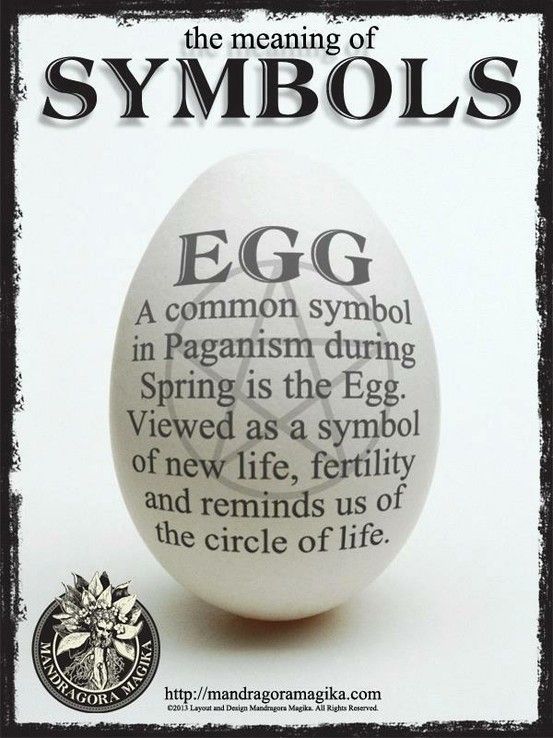
The Symbols of Ostara – The Egg
The Witches Journal for Wednesday, March 21st

The Witches Journal for Wednesday, March 21st
Ostara Return to Us
The wheel has turned to our Goddess
Our lovely Maiden Goddess
Goddess Ostara
Who will return to us
Return to us
On Spring’s morning dawn
Return to us
When new life begins
Return to us
As the earth is reborn
Return to us
Wearing Her floral crown
and Her celestial gown
Return to us
The sun in the sky
with Her whispering sigh
The blossoming trees
that hold the birds of She
The beautiful butterflies
that fly thru Her sky
The blooming flowers
that spring from Her showers
Her soft green grass
that our bare feet will pass
As Ostara returns to us
Returns to us
On Spring’s morning dawn
Returns to us
When new life begins
Returns to us
As the earth is reborn
Returns to us
Wearing Her floral crown
and Her celestial gown
Ostara who will return to us
Return to us as this wheel turns on
Turns on past Spring’s morning dawn
Savannah Skye
Originally published on Pagan Library
Today is Wednesday, March 21st
Wednesday is the day of the Teutonic deity known as Wodin or Odin, an aspect of the Allfather, god of knowledge, wisdom, enlightenment and combat, the parallel of Hermes, the planet Mercury.
Deity: Woden
Zodiac Sign: Gemini & Virgo
Planet: Mercury
Tree: Ash
Herb: Cinquefoil
Stone: Emerald & Sardonyx
Animal: Raven & Cat
Element: Air
Color: Red & Blue
Number: 6
Rune: Odal(O)
Celtic Tree Month of Fearn (Alder) (March 18 – April 14)
Runic Half-Month of Beore (March 14 – March 29)
Goddess of the Month of Columbina ( March 20 – April 17))
Source
The Pagan Book of Days
Nigel Pennick
The Pagan Book of Days for March 21st
Tea and Tephi
In Irish tradition, the holy city of Tara was founded on this day by the Milesian princesses Tea and Tephi.
Source
The Pagan Book of Days
Nigel Pennick
The Goddess Book of Days for March 21st
No-Ruz, Iranian New Year dedicated to Aphrodite and Adonis. They are Cybele/Attis, Venus/Adonis, Inanna/ Tammuz, Ishtar/Damuzi, Ashtoreth/Baal, Isis/ Osiris, Ata Bey/Yoko- Hoo, Aida Wedo/ Damballah. The twenty- first day of the Moon/ month belongs to Athena.
Source
The Goddess Book of Days
Diane Stein
The Witches Magick Associated With Wednesday, The Day of Mercury
Perfumes: Sweetpea, Lavender, Mastic, Frankincense, Cloves
Incense: Cinnamon, Cinquefoil
Color: Yellow or Grey
Influences: Conjurations, Predictions, Knowledge, Writing, Eloquence
Reference:
A Book of Pagan Rituals
Herman Slater
The Magickal Days of the Week – Wednesday
Wednesday is named for Woden himself, although the Romans called it dies Mercurii. This is a day associated with the color purple, the planet Mercury, and the metal quicksilver – which is also called mercury. See a pattern here?
When it comes to deities… yes, Mercury! However, there are a few other gods associated with Wednesday, including Odin and Hermes, Athena, and Lugh. Gemstones like adventurine and agate come in handy as well, as do plants such as aspen trees, lilies, lavender and even ferns.
Business and job-related issues, communication, loss and debt, traveling, and journeys are all tied in to Wednesday. This is a good day to do a working to open up lines of communication – especially if your own actions are preventing you from being an effective speaker or listener. Go someplace new or return to an old favorite stomping ground, step up your game, and settle up your accounts.
Source
Patti Wigington, Paganism/Wicca Expert
Article published on ThoughtCo
Wednesday: On the way to the afterlife
The fourth day of the week is named after Odin (Wodan or Woden). In Anglo-Saxon world, Woden is not necessarily the mirror of the Norse Odin. Up to the seventh century, he was worshipped as the main deity. He was the psychopomp which is a word for someone who helps deliver human souls to the afterlife.
In Romance languages, the name of the day comes from Latin Dies Mercurii (miércoles in Spanish, mercoledi in Italian, mercredi in French), associated with Mercury, the Roman god of trade, profit and commerce.
In German, the word for Wednesday is simply Mittwoch, meaning the middle of the week.
Wednesday–The Day of Woden
Woden, or Odin as the Norsemen called him, was the chief of the gods of our ancestors, and corresponds to the Jupiter of the Romans. Also, for reasons which we shall read later, he was similar to Mercury, and his name was given to the Roman Dies Mercurii, day of Mercury, which still survives in the French mercredi.
As in the case of Jupiter and the Titans, Odin led the Northern gods in a gigantic struggle with the giants of ice and frost, and finally overthrew them. With the help of the gods, he then fashioned the world from the body of the chief of the giants. From the flesh he made the earth, known as Midgard (middle garden), and from his blood the sea, while from his bones he made the mountains, from his teeth the cliffs, and from his hair the trees. The giant’s skull was then fixed over the earth to form the vault of the sky, and was held in place at the four corners by four dwarfs, Nordri, Sudri, Austri, and Westri, from whom we have obtained the names North, South, East, and West. Next the gods made the sun and moon, which were placed in golden chariots driven by Sol and Mani, the daughter and son of a giant who had named his children after the newly-created sun and moon. The Northmen thought that they could see on the moon the outline of two children carrying a pail, and the story goes that Mani, while travelling across the sky, one night caught up two children, Hiuki and Bil, who were compelled by their cruel father to carry water all night. Hiuki and Bil are still known to us in the familiar story of Jack and Jill. The sun and moon were said to be pursued continually by two fierce wolves, whose shapes could be seen in the clouds, and who, if they caught them up, would swallow them and plunge the world in darkness. Sometimes they nearly succeeded, and thus caused the eclipses.
Having completed the earth and peopled it with men and women, the gods, led by Odin, built magnificent palaces for themselves in Asgard, their home. The most famous of these was Valhalla, to which the bravest and mightiest of the mortals who fell in battle were summoned at their death. The walls of Valhalla were made of spears, and golden shields formed the roof. In the hall stood long tables, at which the dead heroes feasted.
The Northmen honoured a great fighter above all men, and they even thought it a disgrace for him to die in any other way than sword in hand. The great ambition of every fighting man was to be called to Valhalla after his death, there to spend his time in fighting and feasting. The fortunate ones were chosen from among the slain on the battle-fields by the Valkyries, Odin’s battle-maidens, whose horses carried them through the air and over the sea. They rode among the storm-clouds, and the flash of their spears was seen in the lightning.
Odin was often pictured as sitting on a throne from which he could see the whole world, and wearing a suit of armour, covered with a blue mantle, which represented the sky. In his hand he held a famous spear, Gungnir, which never missed its mark. On his shoulders sat two ravens, Thought and Memory, which he sent out into the world every day to obtain news of all that happened. Like Tiu, the God of War, Odin suffered from a disfigurement, having lost one of his eyes. This loss is explained in the following story.
After the creation of the world, Odin wished to obtain great wisdom which would place him far above the other gods. This he could only procure from Mimir’s spring, in whose clear waters the future was mirrored. Odin, therefore, visited Mimir and begged a draught of the wonderful water, but Mimir would only grant the request in return for one of Odin’s eyes. The god was willing to make even this sacrifice for the great knowledge the water would give him, and accordingly he plucked out one of his eyes and gave it to Mimir, who sank it deep in the spring where it could always be seen shining. Odin then drank deep of the water, and thus gained the wisdom for which he was always famous.
All the life of the world, including even the lives of the gods, was said to depend on an enormous ash tree, Yggdrasil, the Tree of Life. This tree was created by Odin, and had three roots, one in the Underworld, another in Midgard, near Mimir’s spring, and the third in Asgard. It grew to such a height that it overtopped the whole world, and in its topmost branches sat an eagle with a falcon between its eyes. The falcon could see all three kingdoms, and reported all that happened in them to the gods. In the Underworld was a dragon, which continually gnawed the roots of Yggdrasil in order to destroy it and so bring about the downfall of the gods. To prevent this disaster, the tree was daily watered from a fountain in Asgard, whose magic waters kept it continually green.
Joining Asgard and the earth was a bridge made of fire, earth, and water, whose colours were those of the rainbow. This bridge was guarded against the giants by a god named Heimdall, whose sight and hearing were so keen that he could see a hundred leagues by night as well as by day, and could hear the grass growing on the earth and the wool on the sheep’s back! He was armed with a flashing sword, and carried a horn with which he was to give warning when the giants should come against Asgard.
Odin was the inventor of Runes, the first alphabet of the Northmen. The letters consisted almost entirely of straight lines placed in different groups and positions, and were thought at first to have a magical meaning. Each god had a special rune or sign, and the use of the sign was supposed to bring help from the god. Thus all fighters carved the rune of Tiu on their swords in order that they might have his aid in battle. Runes were afterwards used in the ordinary way for writing, and very old runes have been found carved on stones in Scandinavia and in England. As the inventor of runes, Odin is like Mercury, who was supposed to have given the Romans their alphabet.
In addition to being the wisest of the gods, the inventor of runes, and the God of Eloquence, Odin was also the God of Poetry. The gift of poetry was guarded very jealously by the gods, and was only granted to mortals in special cases. Odin obtained the gift for himself and the other gods only with great difficulty. Hidden away in a hollow mountain, and carefully watched over by a giantess, were three vessels containing a magic fluid, which gave to anyone who drank of it the gift of poetry and song. Odin, knowing of this magic drink, determined to obtain it. Accordingly he set out for the land of the giants, dressed as a mortal, and wearing a broad-brimmed hat to hide the fact that he had only one eye. He hired himself as a servant to Baugi, the brother of the giant Suttung, to whom the vessels belonged, and asked as payment for his labour one draught of the magic fluid. As soon as his work was finished, Odin demanded payment, but Baugi was afraid to ask his brother for the drink, and suggested they should win it for themselves by trickery. They came to the mountain where the vessels were hidden, and bored a hole right through to the cave inside. Odin then changed himself into a snake and wriggled through the hole, just in time to escape the giant, who tried to kill him as he entered the hole. Having found his way into the cave, Odin again took on the form of a god, and begged the giantess who watched over the vessels to allow him just a sip of the magic drink. The giantess at last consented, but Odin, instead of taking a sip, quickly emptied all the vessels, and then, making his way out of the cave transformed himself into an eagle and flew swiftly towards Asgard. He soon discovered, however, that the giant Suttung was pursuing him, also in the form of an eagle. As he neared Asgard the gods caught sight of him, and, seeing that the giant was gaining on Odin, they gathered together a great quantity of fuel and piled it on the palace walls. Immediately Odin had passed over the wall the gods set fire to the fuel, and the flames rose so high that the wings of the pursuing giant were scorched, and he fell into the fire and was burnt.
Odin seldom used this precious gift of poetry himself, but imparted it to his son Bragi, who became the minstrel of the gods and sang many songs in honour of the gods and the great heroes in Valhalla. All the singers among men, the bards, or scalds, as they were sometimes called, were thought to have received the gift from Odin, and were greatly honoured for that reason.
The Witches Guide to Wednesday
Ruler: Wodin, Mercury
Colors: Orange, light blue, and gray
Power Hours: Sunrise and the 8th, 16th, and 24th hours following
Keywords: Success, creativity, communication
The word Wednesday is reminiscent of the Norse wind god Wodin, which is referenced in the popular rhyme verse “Wednesday’s child is full of woe.” This does not mean that those born on this day are full of sorrow or trouble. To be full of Woden (Wodin) means to be full of wind, to be spirited. Woden was such a powerful pagan god that the German church fathers changed the name of his day to Mittwoch, meaning midweek, in an attempt to exorcise his influence.
In the Spanish word for Wednesday, miercoles, we clearly see its connection to Mercury. Under the guidance of Mercury; Wednesday is a day of swift activity, communication, correspondence, and phone calls. This is a good day for journalists, writers, poets, bargaining, hiring employees, and visiting friends.
On Wednesdays, the hour of sunrise and every eight hours after that are also ruled by Mercury, making these times of the day doubly blessed. These are the strongest four hours for ritual work. Check your local newspaper, astrological calendar, or almanac to determine when sunrise occurs.
Source
Gypsy Magic
Wednesday’s Witchery
Be bold and daring today! Expand your knowledge of the Craft by working with the planetary energies of Mercury on this multifaceted day of the week. Consider the Greco-Roman gods Mercury and Hermes and all of the many lessons they have for you. Embrace change and movement, and work on your communication techniques. Conjure up a little good luck for yourself with that Mercury dime spell. Call on Athena to inspire you to try magickal arts and crafts and to be more creative in your own spellwork and witchery.
Meditate on Odin and see what you can discover about him. I wonder what sort of fabulous and fascinating magickal wisdom you will uncover? Odin is a shaman, after all; he may appear in many guises and faces. I guarantee that he will make you laugh at yourself before he is through with you, but you will learn. It’s up to you what you do with that knowledge. Will you let it shapeshift into wisdom?
Wednesday is the wild and wily day of the week, so try to go with the flow; don’t fight the quirky energies of the day. Most importantly, follow your heart, and always keep a good sense of humor, because of Wednesdays you will really need it.
Source
Book of Witchery: Spells, Charms & Correspondences for Every Day of the Week
Ellen Dugan
Magickal Applications for Wednesday
To the Romans, this day was called Dies Mercurii, or “Mercury’s day” Mercury was a popular character in the Roman pantheon. A messenger of the gods, he presided over commerce, trade, and anything that required skill or dexterity. The Celts also worshiped Mercury and eventually equated him with the Norse god Odin (some spelling variations on this name include Wotan, Wodin, and Wodan). In Norse mythologies, Odin, like Mercury, is associated with poetry and music. Interestingly enough, both Odin and Mercury were regarded as psychopomps, or the leaders of souls, in their individual mythologies.
Odin, one of the main gods in Norse mythology, was constantly seeking wisdom. He traveled the world in disguise as a one-eyed man with a long gray beard, wearing an old, beat-up hat and carrying a staff or a spear (which brings to my mind images of Gandalf from The Lord of the Rings). In the Old English language, this day of Mercury evolved into Wodnes daeg, “Woden’s day,” or Wednesday.
Wednesday carries all of the planetary and magickal energies and associations of the witty and nimble god Mercury himself. Some of these mercurial traits included good communication skills, cleverness, intelligence, creativity, business sense, writing, artistic talent, trickiness, and thievery. And don’t forget all of those wise and enigmatic qualities associated with the Norse god Odin/Wodin, not to mention the goddess Athena’s contributions of music, the arts, handmade crafts, and writing. Wednesdays afford excellent opportunities for seeking wisdom, changing your circumstances, and improving your skills, be they in trade and commerce, music and art, or in communication and writing.
Source
Book of Witchery: Spells, Charms & Correspondences for Every Day of the Week
Ellen Dugan
The Witches Almanac for Wednesday, March 21
Harmony Day (Australian)
Waxing Moon
Moon phase: First Quarter
Moon Sign: Taurus
Incense: Honeysuckle
Color: Brown
Moon in Taurus
The Moon is traveling through comfy Taurus today. Eat something you love. Have a second serving.
We are motivated by the desire for serenity, security, peace, and comfort. The Moon is at her most sensual and constant in Taurus. Our basic impulses are to relax, resist change, and “stop to smell the roses”. Life slows down a little, and we get comfortable. We may also be inclined to stubbornness and materialism under this influence.
The Moon in Taurus generally favors the following activities: Substantial and material actions that yield solid results. Financial activities, and those involving personal possessions, applying for a loan, beginning a potentially long-term relationship, music, home decor.
WEDNESDAY CORRESPONDENCES
Mercury/Neptune/Air/North/West/Southwest/Female/Male/Gemini/Virgo
Magickal Intentions: Communication, Divination, Writing, Knowledge, Business Transactions, Debt, Fear, Loss, Travel, Money Matters
Color: black, light blue, brown, gray, green, magenta, orange, peach, purple, red, silver, turquoise, violet, white, yellow; orange is the primary color
Number: 3, 5
Metal: mercury
Charm: distaff, rod, runes, staff, iridescent garments
Stone: moss agate, amethyst, bloodstone, emerald, hematite, lapis lazuli, lodestone, pearl, ruby, sapphire, sodalite, all blue stones
Animal: bear, dog, fox, magpie, swan, weasel
Plant: almond, bayberry, chamomile, cherry, cinnamon, cinquefoil, clove, coltsfoot, ginger, hazel, hazelnut, jasmine, lavender, millet, oak, peppermint, periwinkle, rosemary, sage, St. John’s wort, sweet pea, tamarind, lemon verbena, violet
Incense: cassia, cedar, cinnamon, clove, frankincense, jasmine, lavender, mastic, mint, rosemary, sage, sandalwood, storax, dried and powdered citrus peel, and all incense made from aromatic bark, wood, and seeds
Goddess: Carmenta, Hecate (Queen of Crossroads), Hel, Ishtar, Ma’at, the Morrigan, Nike
God: Anubis, Bragi, Elath-Iahu. Enki, Garuda, Hermes, Maximon (Black Magician), Mercury, Nebo (Wise God of Wednesday), Odin, Shango, Ullr, Vishnu, Wayland, Woden
Evocation: Agrat Bat Mahalat, Michael, Miel, Raphael, Seraphiel, Tiriel
Source
Moonlight Musings
The Energy of the Moon
Planet: Moon
Day: Monday
Color: Silver, white, light blue, purple
Metal: Silver
Associations: Childbearing and family life, purity and virginity, healing, wisdom, intuition
Ostara Magic
Spring is a time of rebirth and renewal as the earth comes back to life. Why not celebrate the themes of the season with a little bit of spring magic?
1. Spring Garden Magic
In the early spring, many of us who follow earth-based spiritual paths begin planning our gardens for the coming season. The very act of planting, of beginning new life from seed, is a ritual and a magical act in itself. To cultivate something in the black soil, see it sprout and then bloom, is to watch a magical working unfold before our very eyes. The plant cycle is intrinsically tied to so many earth-based belief systems that it should come as no surprise that the magic of the garden is one well worth looking into.
2. Serpent Magic and Folklore
Snakes have a long and colorful history in folklore and mythology, as well as in magical practice. Let’s look at some of the amazing customs surrounding snakes in magic and legend!
3. Egg Magic & Mythology
In many cultures and society, the egg is considered the perfect magical symbol. It is, after all, representative of new life – in fact, it is the life cycle personified. While many of us take note of eggs around springtime – the Ostara season is chock full of them – it’s important to consider that eggs feature prominently in folklore and legend all year long.
4. Rabbit Magic & Mad March Hares
Spring equinox, or Ostara, is a time for fertility and sowing seeds, and so nature’s fertility goes a little crazy. The rabbit — for good reason — is often associated with fertility magic and sexual energy.
5. Magical Spring Flowers
As spring arrives, our gardens begin to bud and eventually bloom. For hundreds of years, the plants that we grow have been used in magic. Flowers in particular are often connected with a variety of magical uses. Now that spring is here, keep an eye out for some of these flowers around you, and consider the different magical applications they might have.
6. Children’s Ostara Chant
If you have children, you may want to include them in your Ostara celebrations this spring. Teach them this simple rhyming chant, and clap along as you welcome the season of rebirth!
7. Garden Blessing for Ostara Planting Rituals
Getting ready to till the soil and prepare it for spring planting? Say this garden blessing before you begin.
8. Ostara Prayer for the Resurrection of the Earth
While many other religions celebrate the rebirth of Jesus, for those of us in earth-based faiths, the focus is often on the land and the soil. Celebrate Ostara with a simple prayer for the new life that begins as the earth itself is resurrected.
9. Prayer to Honor the Goddesses of Spring
Many Pagan traditions have goddesses that are associated with the new beginnings of the Ostara season. Whether you celebrate Flora or Eostre, use this simple prayer to honor the goddesses of spring.
Source
Patti Wigington, Paganism/Wicca Expert
Article published on & owned by ThoughtCo
Magickal Goody for the Day – Make Yourself A Brand New Spring Wand
Any of the Equinoxes as wonderful times to make new ritual items that you might be needing. For Spring, how about making yourself a brand new Wand!
Items You Need:
A small tree branch
Three silver coins;
Three sugar cookies
Three each of walnuts, hazel nuts and almonds
A sharp knife
A paper bag
Use the guide below to choose the wood for the wand you want to make.
Birch – New beginnings
Hawthorn – Protection
Hazel – Wisdom
Poplar- Succcess
Maple – Longevity
Beech – Divination
Rowan – Magick
Oak – Power Magick
Apple – Love
Pine – Birth
Cedar – Strength
Elm – Dignity
Place the coins, cookies, and nuts in the paper bag. Choose the tree from which you want to make your wand. Go to the tree, and ask for permission to cut one ot its small, new branches. Neatly cut the branch from the tree. Thank the tree for its branch. Gently place the coins, cookies, and nuts at the base of the tree as an offering of thanksgiving.
Trim the branch so that is measures from the inside of your elbow to the tip of your middle finger. This measurement makes the wand uniquely yours. Scrape the bark off of the branch and allow the wood to dry. Once the wood is thoroughly dry you will want to carve or paint your own personal symbols on it.
Celebrating Legends, Folklore & Spirituality 365 Days a Year for March 20 – 22, Ostara/Spring or Vernal Equinox
March 20 – 22
Ostara/Spring or Vernal Equinox
The Equinox is the time when the Sun crosses the plane of the equator, making day and night of equal length. This is the actual beginning of Spring and occurs somewhere between the 20th and 22nds of March. In fact, most of our modern-day Easter customs come from the Pagan Ostara, named after the Saxon Goddess Eostre. This is a time of balance, equality, and harmony between the masculine and feminine forces in Nature, the time of year when practitioners of the Wiccan and Witchcraft religions, both physically as well as symbolically, plant the seeds of their desires–seeds that in time will grow into plants representing individual, long-term goals, that began at Yule, the Winter Solstice and rebirth of the Sun.
Magickal Activity for March 21, Ostara/Spring or Vernal Equinox – Prosperity Seed Spell
Prosperity Seed Spell
Items You Will Need:
Marigold seeds
A clay pot filled with Earth
One green candle
A small topaz stone
Green paint
Brush
A small square of paper
Paint the rune symbol for wealth (Fehu) on the clay pot and on the paper. Put the topaz stone along with the paper in the bottom of the pot, and fill it with the Earth. Place the pot and seeds, along with the candle, on a small table or altar covered with a green cloth.
Light the candle. Pick up the seeds and hold them as you meditate on what it is you need. For more than one participant, put the seeds on a small plate so that each person can take a seed and plant it, making his or her own wish. When you feel the time is right, plant the seeds as you chant:
“Seeds and earth,
To dreams gives birth.”
Leave the candle to burn for four hours. Extinguish the candle and place it along with the pot in a window. Each time you water the seeds, light the candle and repeat the chant. This is a great activity for the whole family, particularly if family members have a collective goal in mind.
Equinox Chant
The day is balanced.
The night is balanced.
All is balanced this day.
Let balance be our way.
The God energy is balanced.
The Goddess energy is balanced.
All is balanced this day.
Balance in all we do, think, and say.
The Sun is balanced.
The Moon is balanced.
All is balanced this day.
Balance is the divine way.
The light is balanced.
The dark is balanced.
All is balanced this day.
From balance, may we never stray.
~~~~~~~~~~~~~~~~~~~~~~~~
Ginger Strivelli, Author
Source
Ostara Lore
Researched and Compiled by StormWing
Ostara to Beltane
The advent of Spring marks the turning of the year, when hours of daylight begins to outnumber the hours of darkness again. New growth emerges around us and we experience renewed energy and hope, while fertility becomes the focus of the animal and human world and is also seen in the reawakening of the Earth and the flora it sustains. Because the Sun returns to our lives at the Spring Equinox, it is associated with the color yellow.

Celebrating Ostara

The Ways of Old Teach Us Ostara is Celebrated on March 21st
Welcome This Wednesday Morning, April 21st to all our brothers and sisters of Our Craft!

Hold an Ostara Ritual for Solitaries

Goddess Ostara Invocation

The Witches Correspondence for Ostara/Spring Equinox

The Witches Correspondence for Ostara/Spring Equinox
On or around March 21st Northern Hemisphere, September 21st Southern Hemisphere
*Note this year it is March 20th*
The second of the 3 spring festivals, Ostara is known also as the Spring Equinox, and Eostar. It is a time of new beginnings as new life bursts forth upon the earth. It is also a time of balance when light and dark are equal. In times past, people celebrated the arrival of spring and the Goddess Eostar or Eostre whose symbols were the hare and the egg.
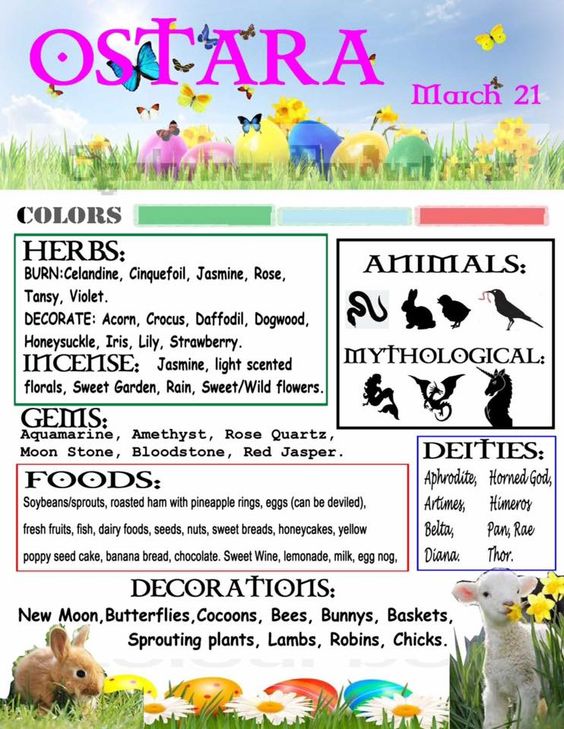
Symbols:
The beginning of spring, new life and rebirth, the God and Goddess in Their youth, balance, fertility, flowers, eggs, rabbit/hare.
Decorations:
Four leaf clovers, cauldron of spring water, any and all spring flowers/blossoms/bulbs/sprouts, potted plants, eggs, butterflies, baskets, bunnies, chicks, colored ribbons
Activities/ Rituals/ spell intents:
Sunrise observances, collecting wildflowers, spring cleaning and purification, nature walks, seed blessing, garden blessing, planting, welcoming spring, coloring eggs, fertility rites, rituals of balance, herb work – magical, medicinal, cosmetic, culinary and artistic, spells for balance, communication, prosperity/fertility, action, new beginnings, potential, goals for future, banishment of bad ties, positive growth
Herbs/flowers/trees:
clover, lemongrass, mint, honeysuckle, iris, violets, peonies, lilies (Easter Lily), lilacs, acorn, celandine, cinquefoil, crocus, daffodil, dogwood, gorse, jasmine, jonquils, narcissus, olive, pine trees, rose, tansy, woodruff, primrose, forsythia
Incense/oils:
African violet, lotus, jasmine, rose, magnolia, sage, strawberry, lavender, narcissus, ginger.
Colors/Candles:
Gold, light green, robin’s egg blue, lemon yellow, pale pink, all pastels.
Stones:
amethyst, jasper, aquamarine, bloodstone, red jasper
Foods:
Seeds, leafy green vegetables, fresh fruits, hard-boiled eggs and any egg dishes, milk punch, dairy foods, apples, nuts, flower dishes, sprouts, jelly beans, chocolates, lamb, spiced or flower cupcakes, hot cross buns, honey cakes, unleavened bread, poultry, ham, roast beef, yellow cake with poppy seeds, banana nut bread, fruit juice or fruit liqueur, poppy seed or sesame seed rolls, sweet or honeyed wine
Animals :
Rabbits, hares /Easter bunny, chicks, robins, lambs, swallows, snakes, unicorns
Deities:
all love, virgin, and fertility Goddesses, all love, song & dance, and fertility Gods.
Resources:
Some information adapted from Simple Wicca by Michele Morgan, and Ann Moura’s Witchcraft, an Alternative Path.
Moon in Taurus

Moon in Taurus
The Moon is traveling through comfy Taurus today. Eat something you love. Have a second serving.
We are motivated by the desire for serenity, security, peace, and comfort. The Moon is at her most sensual and constant in Taurus. Our basic impulses are to relax, resist change, and “stop to smell the roses”. Life slows down a little, and we get comfortable. We may also be inclined to stubbornness and materialism under this influence.
The Moon in Taurus generally favors the following activities: Substantial and material actions that yield solid results. Financial activities, and those involving personal possessions, applying for a loan, beginning a potentially long-term relationship, music, home decor.
Ostara – March 20 – 21

The Witches Almanac for Tuesday, March 20th

The Witches Almanac for Tuesday, March 20th
Ostara • Spring Equinox
Waxing Moon
Moon phase: First Quarter
Moon Sign: Taurus
Sun enters Aries 12: 15 pm
Incense: Cinnamon
Color: Maroon
Deities of the Spring Equinox

Deities of the Spring Equinox
Spring is a time of great celebration in many cultures. It’s the time of year when the planting begins, people begin to once more enjoy the fresh air, and we can reconnect with the earth again after the long, cold winter. A number of different gods and goddesses from different pantheons are connected with the themes of Spring and Ostara. Here’s a look at some of the many deities associated with spring, rebirth, and new life each year.
Asase Yaa (Ashanti)
This earth goddess prepares to bring forth new life in the spring, and the Ashanti people of Ghana honor her at the festival of Durbar, alongside her husband Nyame, the sky god who brings rain to the fields. As a fertility goddess, she is often associated with the planting of early crops during the rainy season. In some parts of Africa, she is honored during an annual (or often bi-annual) festival called the Awuru Odo. This is a large gathering of extended family and kinship groups, and a great deal of food and feasting seems to be involved.
In some Ghanaian folktales, Asase Yaa appears as the mother of Anansi, the trickster god, whose legends followed many West Africans to the New World during the centuries of the slave trade.
Interestingly, there do not appear to be any formalized temples to Asase Yaa – instead, she is honored in the fields where the crops grown, and in the homes where she is celebrated as a goddess of fertility and the womb. Farmers may opt to ask her permission before they begin working the soil. Even though she is associated with the hard labor of tilling the fields and planting seeds, her followers take a day off on Thursday, which is her sacred day.
Cybele (Roman)
This mother goddess of Rome was at the center of a rather bloody Phrygian cult, in which eunuch priests performed mysterious rites in her honor. Her lover was Attis (he was also her grandson, but that’s another story), and her jealousy caused him to castrate and kill himself. His blood was the source of the first violets, and divine intervention allowed Attis to be resurrected by Cybele, with some help from Zeus. In some areas, there is still an annual three-day celebration of Attis’ rebirth and Cybele’s power.
Like Attis, it is said that Cybele’s followers would work themselves into orgiastic frenzies and then ritually castrate themselves. After this, these priests donned women’s clothing, and assumed female identities. They became known as the Gallai. In some regions, female priestesses led Cybele’s dedicants in rituals involving ecstatic music, drumming and dancing. Under the leadership of Augustus Caesar, Cybele became extremely popular. Augustus erected a giant temple in her honor on the Palatine Hill, and the statue of Cybele that is in the temple bears the face of Augustus’ wife, Livia.
Today, many people still honor Cybele, although not in quite the same context as she once was. Groups like the Maetreum of Cybele honor her as a mother goddess and protector of women.
Eostre (Western Germanic)
Little is known about the worship of this Teutonic spring goddess, but she is mentioned by the Venerable Bede, who said that Eostre’s following had died out by the time he compiled his writings in the eighth century. Jacob Grimm referred to her by the High German equivalent, Ostara, in his 1835 manuscript, Deutsche Mythologie.
According to the stories, she is a goddess associated with flowers and springtime, and her name gives us the word “Easter,” as well as the name of Ostara itself. However, if you start to dig around for information on Eostre, you’ll find that much of it is the same. In fact, nearly all of it is Wiccan and Pagan authors who describe Eostre in a similar fashion. Very little is available on an academic level.
Interestingly, Eostre doesn’t appear anywhere in Germanic mythology, and despite assertions that she might be a Norse deity, she doesn’t show up in the poetic or prose Eddas either. However, she could certainly have belonged to some tribal group in the Germanic areas, and her stories may have just been passed along through oral tradition.
So, did Eostre exist or not? No one knows. Some scholars dispute it, others point to etymological evidence to say that she did in fact have a festival honoring her. Read more here: Eostre – Spring Goddess or NeoPagan Fancy?
Freya (Norse)
This fertility goddess abandons the earth during the cold months, but returns in the spring to restore nature’s beauty. She wears a magnificent necklace called Brisingamen, which represents the fire of the sun. Freyja was similar to Frigg, the chief goddess of the Aesir, which was the Norse race of sky deities. Both were connected with childrearing, and could take on the aspect of a bird. Freyja owned a magical cloak of hawk’s feathers, which allowed her to transform at will. This cloak is given to Frigg in some of the Eddas.
As the wife of Odin, the All Father, Freyja was often called upon for assistance in marriage or childbirth, as well as to aid women struggling with infertility.
Osiris (Egyptian)
Osiris is known as the king of Egyptian gods. This lover of Isis dies and is reborn in a resurrection story. The resurrection theme is popular among spring deities, and is also found in the stories of Adonis, Mithras and Attis as well.
Born the son of Geb (the earth) and Nut (the sky), Osiris was the twin brother of Isis and became the first pharoah. He taught mankind the secrets of farming and agriculture, and according to Egyptian myth and legend, brought civilization itself to the world. Ultimately, the reign of Osiris was brought about by his death at the hands of his brother Set (or Seth).
The death of Osiris is a major event in Egyptian legend.
Saraswati (Hindu)
This Hindu goddess of the arts, wisdom and learning has her own festival each spring in India, called Saraswati Puja. She is honored with prayers and music, and is usually depicted holding lotus blossoms and the sacred Vedas.
Author
Patti Wigington
Published on ThoughtCo.com
On Ostara Night….

Spring Equinox Celebrations Around the World

Spring Equinox Celebrations Around the World
The dawning of spring has been observed for centuries in countries around the world. Traditions vary widely from one country to the next. Here are some ways that residents of different parts of the world observe the season.
Egypt
The Festival of Isis was held in ancient Egypt as a celebration of spring and rebirth. Isis features prominently in the story of the resurrection of her lover, Osiris. Although Isis’ major festival was held in the fall, folklorist Sir James Frazer says in The Golden Bough that “We are told that the Egyptians held a festival of Isis at the time when the Nile began to rise… the goddess was then mourning for the lost Osiris, and the tears which dropped from her eyes swelled the impetuous tide of the river.”
Iran
In Iran, the festival of No Ruz begins shortly before the vernal equinox. The phrase “No Ruz” actually means “new day,” and this is a time of hope and rebirth. Typically, a lot of cleaning is done, old broken items are repaired, homes are repainted, and fresh flowers are gathered and displayed indoors. The Iranian new year begins on the day of the equinox, and typically people celebrate by getting outside for a picnic or other activity with their loved ones. No Ruz is deeply rooted in the beliefs of Zoroastrianism, which was the predominant religion in ancient Persia before Islam came along.
Ireland
In Ireland, St. Patrick’s Day is celebrated each year on March 17. St. Patrick is known as a symbol of Ireland, particularly around every March. One of the reasons he’s so famous is because he drove the snakes out of Ireland, and was even credited with a miracle for this. What many people don’t realize is that the serpent was actually a metaphor for the early Pagan faiths of Ireland.
St. Patrick brought Christianity to the Emerald Isle and did such a good job of it that he practically eliminated Paganism from the country.
Italy
For the ancient Romans, the Feast of Cybele was a big deal every spring. Cybele was a mother goddess who was at the center of a Phrygian fertility cult, and eunuch priests performed mysterious rites in her honor.
Her lover was Attis (who also happened to be her grandson), and her jealousy caused him to castrate and kill himself. His blood was the source of the first violets, and divine intervention allowed Attis to be resurrected by Cybele, with some help from Zeus. In some areas, there is still an annual celebration of Attis’ rebirth and Cybele’s power, called the Hilaria, observed from March 15 to March 28.
Judaism
One of Judaism’s biggest festivals is Passover, which takes place in the middle of the Hebrew month of Nisan. It was a pilgrimage festival and commemorates the exodus of the Jews from Egypt after centuries of slavery. A special meal is held, called the Seder, and it is concluded with the story of the Jews leaving Egypt, and readings from a special book of prayers. Part of the eight-day Passover traditions includes a thorough spring cleaning, going through the house from top to bottom.
Russia
In Russia, the celebration of Maslenitsa is observed as a time of the return of light and warmth. This folk festival is celebrated about seven weeks before Easter. During the Lent season, meat and fish and dairy products are prohibited. Maslentisa is the last chance anyone will get to enjoy those items for a while, so it’s typically a big festival held before the somber, introspective time of Lent.
A straw effigy of the Lady of Maslenitsa is burned in a bonfire. Leftover pancakes and blintzes are tossed in as well, and when the fire has burned away, the ashes are spread in the fields to fertilize the year’s crops.
Scotland (Lanark)
In the area of Lanark, Scotland, the spring season is welcomed with Whuppity Scoorie, held on March 1. Children assemble in front of a local church at sunrise, and when the sun comes up, they race around the church waving paper balls around their heads. At the end of the third and final lap, the children gather up coins thrown by local assemblymen. According to the Capital Scot, there’s a story that this event began ages ago when troublemakers were “scoored” in the Clyde River as punishment for bad behavior. It appears to be unique to Lanark and does not seem to be observed anywhere else in Scotland.
Author
Patti Wigington
Published on ThoughtCo.com
Ostara Chant

Ostara Magic

Ostara Magic
Spring is a time of rebirth and renewal as the earth comes back to life. Why not celebrate the themes of the season with a little bit of spring magic?
1. Spring Garden Magic
In the early spring, many of us who follow earth-based spiritual paths begin planning our gardens for the coming season. The very act of planting, of beginning new life from seed, is a ritual and a magical act in itself. To cultivate something in the black soil, see it sprout and then bloom, is to watch a magical working unfold before our very eyes. The plant cycle is intrinsically tied to so many earth-based belief systems that it should come as no surprise that the magic of the garden is one well worth looking into.
2. Serpent Magic and Folklore
Snakes have a long and colorful history in folklore and mythology, as well as in magical practice. Let’s look at some of the amazing customs surrounding snakes in magic and legend!
3. Egg Magic & Mythology
In many cultures and society, the egg is considered the perfect magical symbol. It is, after all, representative of new life – in fact, it is the life cycle personified. While many of us take note of eggs around springtime – the Ostara season is chock full of them – it’s important to consider that eggs feature prominently in folklore and legend all year long.
4. Rabbit Magic & Mad March Hares
Spring equinox, or Ostara, is a time for fertility and sowing seeds, and so nature’s fertility goes a little crazy. The rabbit — for good reason — is often associated with fertility magic and sexual energy.
5. Magical Spring Flowers
As spring arrives, our gardens begin to bud and eventually bloom. For hundreds of years, the plants that we grow have been used in magic. Flowers in particular are often connected with a variety of magical uses. Now that spring is here, keep an eye out for some of these flowers around you, and consider the different magical applications they might have.
6. Children’s Ostara Chant
If you have children, you may want to include them in your Ostara celebrations this spring. Teach them this simple rhyming chant, and clap along as you welcome the season of rebirth!
7. Garden Blessing for Ostara Planting Rituals
Getting ready to till the soil and prepare it for spring planting? Say this garden blessing before you begin.
8. Ostara Prayer for the Resurrection of the Earth
While many other religions celebrate the rebirth of Jesus, for those of us in earth-based faiths, the focus is often on the land and the soil. Celebrate Ostara with a simple prayer for the new life that begins as the earth itself is resurrected.
9. Prayer to Honor the Goddesses of Spring
Many Pagan traditions have goddesses that are associated with the new beginnings of the Ostara season. Whether you celebrate Flora or Eostre, use this simple prayer to honor the goddesses of spring.
Source
Patti Wigington, Paganism/Wicca Expert
Article published on & owned by ThoughtCo.com
Magickal Tip for Ostara

Ostara, The Symbolic Change

Ostara, The Symbolic Change
Ostara is symbolic of the change in the Goddess from Winter’s crone to Spring’s maiden The holiday calls to the youthful spirit within us all, no matter what our age, and celebrates the land’s slow rebirth after the deathlike sleep of winter.
Witches observe the holiday with rituals and feasts, and decorate their altars with the traditional tional fertility symbols of rabbits, chicks, and eggs (no, not actual rabbits and chicks, although you are welcome to try it if you’re feeling brave and don’t mind cleaning up poop).
And if those symbols sound a bit familiar to those of you raised in one of the Christian religions, gions, it is because many of the traditions of Easter were adopted from Ostara. Even the name Easter was taken from a Pagan goddess: Eostre, a Saxon goddess of spring. Think about it: the symbols of Easter all represent fertility (those same eggs, chicks, and rabbits)-much more suitable able for a Pagan holiday than a Christian one. Oh, the things they didn’t tell you in Sunday school …
So adorn your altar with a few beautiful early spring flowers, draw some Pagan symbols on eggs before you dye them, and prepare a feast of traditional spring foods like asparagus and lamb. If you want, you can even plant a few seeds. Then, alone or with other Witches, plant the seeds for the changes you wish to occur in your life during the coming year.
Source
Deborah Blake, Everyday Witch A to Z: An Amusing, Inspiring & Informative Guide to the Wonderful World of Witchcraft
 Witches Of The Craft®
You must be logged in to post a comment.