
The Witches Journal For Friday, March 16th

Friday, March 16
Friday is the day of Venus. It takes it name from Frigg, the Goddess of love and transformation. She rules the spiritual side of a person that manifests in the physical. Because of this, Friday is often thought of as dangerously unpredictable. This is expressed in an old East Anglian adage:
Friday’s day will have its trick
The fairest or foulest day of the week.
Deity: Frigg
Zodiac Sign: Taurus/Libra
Planet: Venus
Tree: Apple
Herb: Vervain
Stone: Sapphire/Chrsolite
Animal: Bull/Serpent
Element: Earth
Color: Yellow/Violet
Number: 7
Rune: Peorth(P)
Celtic Tree Month of Nuin (Ash) (February 18 – March 17)
Runic Half-Month of Beorc (March 14 – March 29)
Goddess of the Month of Moura (February 20 – March 19)
Source
The Pagan Book of Days
Nigel Pennick
The Pagan Book of Days for Friday, March 16
Dionysus/Bacchus/Egyptian Day
Beginning of the two-day festival of the Greek God Dionysus, equivalent to the Roman Bacchus, youthful deity of wine. The festival promotes a fruitful grape harvest.
Source
The Pagan Book of Days
Nigel Pennick
The Goddess Book of Days for Friday, March 16th
Holi in India, Nepal and Mauritius, spring fire festival, dedicated to Fire Goddesses, Brigid, Vesta, Hestia, Pele, Lucia, Fuji, Lucina, Perchta, Befana, Freya, Oya, Hathor, Amaterasu, and Izanami. The sixteenth day of the Moon is Levanah’s, Luna’s or Selene’s, and Chalchiuhtlique.
Source
The Goddess Book of Days
Diane Stein
Spellcrafting for Friday
Love
Peace
Family
Marriage
Beauty
Growth
Art
Social status
Passion
Music
Sexuality
Source
A Spell Crafter’s Compendium
Terri Paajanen
Magickal Days of the Week – Friday
Friday falls at the end of the work week for many of us, and that means we get a chance to relax for a little bit! Mark your Fridays with colors like pink and aqua, and metals such as copper. This is a day ruled by the planet Venus, so it should be no surprise that Venus and Aphrodite – goddesses of love and beauty – are associated with Fridays. This is a day named for the Norse goddess Freyja, so be sure to take a moment to honor her as well.
Gemstones associated with Friday include coral, emerald and rose quartz, and plants like strawberries, apple blossoms and feverfew are also related. This is a good day to do spellwork associated with family life and fertility, sexuality, harmony, friendship, growth. Take advantage of Friday’s correspondences and plant a seed, make something grow, and enjoy your blessings
*Note: There are a lot of disputes as to the origins of the word Friday, because there is still a great deal of discussion as to whether it was named for Freyja or Frigga, and whether they were the same deity or two separate ones. Some scholars believe that while they may have eventually become two distinctly different goddesses, they could have had their origins in a single, common Proto-Germanic deity.
Author
Patti Wigington, Paganism/Wicca Expert
Article published on & owned by ThoughtCo.com
Friday–The Day of Freya
In the stories of the gods and goddesses of the Angles and Saxons we find two goddesses, Frigga, the wife of Odin and queen of the gods, and Freya, the Goddess of Love. Some people think that Friday was named after Frigga, and others that it was Freya’s day. Since very similar stories are told of each of them, it is quite probable that they were really the same person. The Roman name for the day was Dies Veneris, the day of Venus, who, it will be remembered, was the Goddess of Love, and so corresponded to Freya. The modern French name is taken from the Latin and is vendredi.
Frigga was the Goddess of the Clouds, and, when she was not with her husband Odin, spent her time in spinning clouds. Her spinning-wheel was studded with jewels, and at night could be seen in the sky as the constellation to which the Romans gave the name of Orion’s Belt, as we have seen in the story of Orion.
Frigga was also the Goddess of Spring, and as such was known as Eastre, whom we have already mentioned as giving us the word Easter.
Freya, the Goddess of Love and Beauty, like the Venus of the Romans, received a great welcome when she came to the home of the gods, and was given a special kingdom called Folk Meadow, where was a vast hall known as the Hall of Many Seats. Here she received half of those slain in battle, the other half being entertained by Odin, as we have seen.
Freya is depicted as having blue eyes and golden hair, and often as wearing a robe of feathers, which enabled her to fly through the air like a bird.
The goddess is said to have married Odur, who was probably Odin under another name. Odur once had occasion to leave Freya and travel over the world, and the goddess was broken-hearted at his departure. Her tears fell among the rocks and were changed to gold, while some which fell into the sea were transformed into amber. All nature mourned with her: the trees shed their leaves, the grass withered, and the flowers drooped their heads. At last Freya in her distress set out to find her husband, and, passing through many lands, where her golden tears were afterwards found, came to the sunny south, and there overtook the wandering Odur. As the lovers returned, the fields and the flowers rejoiced with them. The frost and snow fled before them, and the earth became green again as they passed.
“And Freya next came nigh, with golden tears;
The loveliest Goddess she in Heaven, by all
Most honour’d after Frea, Odin’s wife.
Her long ago the wandering Odur took
To mate, but left her to roam distant lands;
Since then she seeks him, and weeps tears of gold.”
MATTHEW ARNOLD–Balder Dead.
This story, of course, reminds us of Ceres and Persephone, and is only another fanciful explanation of summer and winter.
Freya was the proud possessor of a dazzling necklace of gold, which had been made by the dwarfs, and which she wore night and day. On one occasion only did she lend the necklace, when Thor, disguised as Freya, went to the land of the giants to recover his hammer, which had been stolen by the Giant Thrym. Loki, by borrowing Freya’s robe of feathers and flying over the country of the giants, had discovered the thief, but had also found that Thrym would only return the hammer on condition that Freya would become his wife. When Freya heard of the giant’s presumption, she became greatly enraged, and vowed that she would never leave her beloved Odur and go to live in that dreary and desolate land of cold. Heimdall, the guardian of the bridge Bifrost, then suggested that Thor should go to Thrym disguised as Freya, in company with Loki disguised as Freya’s attendant. The gods at last allowed themselves to be persuaded, and Thor, having borrowed Freya’s clothes and necklace and wearing a thick veil, set out with Loki, who was dressed as a handmaiden. On reaching the giant’s palace, they were welcomed by Thrym, who was delighted at the success of his plan, and who led them to the banqueting hall, where a great feast was held. At the end of the feast, Thrym ordered the famous hammer to be brought in, and he himself laid it in his bride’s lap as a marriage gift. Thor’s hand immediately closed over the hammer, and in a few moments Thrym and all the guests invited to the wedding feast lay dead.
Freya was greatly relieved to have her necklace returned in safety, but the evil Loki, attracted by its wonderful beauty, determined to steal it. One night the god, by changing himself into a fly, succeeded in entering Freya’s palace. He then resumed his own shape, and, creeping stealthily to Freya’s bed, gently removed the necklace from the goddess’s neck. The watchful Heimdall, however, had heard Loki’s footsteps, and, looking in the direction of the Folk Meadow, became a witness of the theft. He at once set off in pursuit of Loki, and, overtaking him, drew his sword and was about to kill the thief, when Loki changed himself into a flame. Heimdall immediately changed himself into a cloud, and sent down a shower of rain to put out the fire. Loki then took the form of a bear, and opened his mouth to catch the water. Heimdall also took the form of a bear and attacked Loki, who, finding that he was being overpowered, changed himself yet again, into a seal. Heimdall followed suit, and fought again with Loki, and at length compelled him to give up the necklace, which was returned to Freya.
On another occasion Freya was sought by one of the giants, and it was only by the cunning of Loki and by an act of bad faith on the part of the gods that she was saved. The gods, ever anxious lest the giants should invade Asgard, decided to build a stronghold which would prove impregnable. They received an offer from a stranger, who was willing to undertake the work in return for the sun, the moon, and the goddess Freya. By Loki’s advice they accepted the offer on condition that he should complete the work in one winter, aided only by his horse. To the surprise of the gods the stranger agreed to these conditions, and with the help of his horse, which could haul the heaviest stone, set to work. The gods, who at first felt sure that their conditions had made the task impossible, were alarmed to find as time went on that the stranger was working so quickly that it seemed certain that he would be able to keep his promise. The gods on their side had no intention whatever of keeping their promise, since they could not possibly part with the sun and the moon and the Goddess of Love, and they angrily pointed out to Loki that since it was he who had got them into this difficulty, he must find some way out of it. Loki replied that the gods need have no fear, for with his usual cunning he had thought of a plan whereby the stranger might be made to forfeit his reward. On the last day, when only one stone remained to be dragged into position, Loki changed himself into a horse, and, trotting out from the forest, neighed loudly to attract the attention of the stranger’s horse. Tired of his continual labour and longing for freedom and rest, the horse broke free from its load and galloped after Loki. The stranger, after pursuing it vainly through the forest, at last made his way to Asgard, and, full of anger at the trick which had been played upon him, took on his real shape, for he was a frost-giant, and was about to attack the gods when Thor hurled his hammer at him and killed him.
Frey, the god mentioned in the story of Loki and Sif’s golden hair, was Freya’s brother. He was the God of the Fields, and sacrifices were made to him for the crops. In the early spring his wooden image was driven in a chariot through the countryside, in order that he might bless the fields and bring a fruitful harvest: Frey, as we have seen, became the possessor of a ship which could travel over land and sea, and though large enough to contain all the gods, yet could be folded up like a cloth, and he also possessed a boar with golden bristles. The god often rode on this boar, which was swifter than a horse, and was no doubt a symbol of the sun, which ripened the crops. We find the same idea of sunshine in Frey’s flashing sword, which fought of its own accord as soon as it was drawn from its sheath.
The month of the Angles and Saxons which begins just before our Christmas was sacred to both Frey and Thor, and it was customary at that time, as we have already mentioned, to bind a huge wooden wheel with straw, and, setting fire to it, to roll it down a hill. The wheel was a symbol of the sun, which at that time began to chase away the winter. At this time, too, was held a great feast to all the gods, and the chief meat eaten was a boar’s head, in honour of Frey. The missionaries who first brought Christianity to the Northmen, finding this feast was of great importance and was celebrated by all the people, did not try to do away with it. Instead, they changed it from a heathen to a Christian festival by putting Christ in the place of the Norse gods, and calling it the Feast or Mass of Christ. A similar change was made, it will be remembered, in the case of the Easter festival, held in honour of Eastre or Frigga, the wife of Odin.
The Witches Guide to Friday
Ruler: Freya, Venus
Colors: Emerald green or pink
Power Hours: Sunrise and the 8th, 16th, and 24th hours following.
Key Words: Love, money, health
It is easy to spot the ruler of this day by its name. In the word Friday, we see the roots of the name of the Norse goddess Freya, a goddess of love and fertility, and the most beautiful and propitious of the goddesses thus the verse “Friday’s child is loving and giving.”
In Spanish this day of the week is called Viernes and is derived from the goddess Venus. Matters of love, human interaction, the fluidity of communication, sewing and the creation of artistic garments, household improvement, shopping, and party planning all fall under the aspects of Friday and its ruling planet, Venus.
Friday’s angels are Ariel/Uriel, Rachiel, and Sachiel. Rachiel also concerns himself with human sexuality and is a presiding spirit of the planet Venus.
On Fridays, the hour of sunrise and every eight hours after that are also ruled by Venus, and that makes these times of the day doubly blessed. These four hours are the strongest four hours for conducting ritual.
Check the local newspaper, astrological calendar, or almanac to determine your local sunrise.
Source
Gypsy Magic
Friday’s Witchery
Love magick is a perennial popular topic. However, there is more to this topic than meets the eye. There are many enchanting layers here for us to explore on this day of the week. What about creating a loving home, or producing a loving and nurturing family? What about keeping your intimate relationships vital and on track? How about promoting happy, healthy, and enduring friendships? See, there is more to be considered than just the “You shall be mine…” type of fictional love spell.
Don’t forget that many of the deities associated with Fridays are also parents. So, yes, while this is the day to work on romance, sex, and love spells, there is additional magick to be considered here, which makes Fridays a more well-rounded and bigger opportunity for witchery than many folks ever truly realize. The truest, strongest magick always comes from the heart.
Source
Book of Witchery – Spells, Charms & Correspondences For Every Day of the Week
Ellen Dugan
The Witches Honey Do List for Fridays
Fridays are days of loving enchantments and passionate emotions.
See how many ways you could add a little loving enchantment into your life and the lives of your loved ones. If you wish to explore the topic of love and romance witchery even further, then check out my book How to Enchant a Man: Spells to Bewitch, Bedazzle &Beguile. If cat magick has tickled your fancy, then for further study read my book The Enchanted Cat: Feline Fascinations, Spells &Magick.
In the meantime, try sharing red berries with your partner some enchanted evening. Work that meditation, and see what other mysteries Freya has to teach you. Wear a Venus planetary color and call on the Goddess for a little inner sparkle. Burn some floral incense, light up some rosy candles, and set a romantic mood. Try wearing a little copper jewelry, and see how it affects you and your Friday magick. Get those potpourri and philter recipes going, and see what you can conjure up.
Advancing your magickal skills takes drive, ambition, and passion. Work with Eros to discover just how much enthusiasm, inspiration, and drive he can bring into your days, for the imagination is a place where dreams flourish and ideas come to fruition.
Call on these fertile and romantic powers, and create your own unique spells and charms. Just think of all the magickal information that you can now add to your repertoire of witchery. Lastly, remember this: when you combine imagination and a loving heart with magick, you’ll succeed every time.
Source
Book of Witchery – Spells, Charms & Correspondences For Every Day of the Week
Ellen Dugan
The Witches Almanac for Friday, March 16th
St. Urho’s Day (Finnish-American)
Waning Moon
Moon phase: Fourth Quarter
Moon Sign: Pisces
Incense: Thyme
Color: Pink
FRIDAY CORRESPONDENCES
Venus/Water/East/West/South/Dawn/Female/Libra/Taurus
Magickal Intentions: Love, Romance, Marriage, Sexual Matters, Physical Beauty, Friendship and Partnerships, Strangers, Heart
Color: aqua, blue, light blue, brown, green, pale green, magenta, peach, pink, rose, white, all pastels
Number: 5, 6
Metal: copper
Charm: green or white garments, scepter
Stone: alexandrite, amethyst, coral, diamond, emerald, jade, jet, black moonstone, peridot, smoky quartz, tiger’s-eye, pink tourmaline
Animal: camel, dove, elephant, goat, horse, pigeon, sparrow
Plant: apple, birch, cherry, clematis, clove, coriander, heather, hemlock, hibiscus, ivy, lotus, moss, myrtle, oats, pepperwort, peppermint, pinecone, quince, raspberry, rose, pink rose, red rose, rose hips, saffron, sage, savin, stephanotis, strawberry, thyme, vanilla, verbena, violet, water lily, yarrow, and all flowers
Incense: ambergris, camphor, mace, musk, myrrh, rose, saffron, sage, sandalwood, sweetgrass, vanilla, violet, all floral scents
Goddess: Aphrodite, Asherah, Baalith, Brigid, Erzulie, Freya (Passionate Queen), Frigg, Gefion, Harbor (Beautiful One), Hestia, Inanna, Ishtar (Lady of Passion and Desire), Lakshmi, Lilith, Mokosh, Nehalennia, Nerthus, Ostara, Pombagira, Sarasvati, Shakti, Shekinah, Sirtur, Al Uzza, Venus (Queen of Pleasure), Vesta
God: Allah, Bacchus, Bes, Cupid, the Dagda, Dionysus, El, Eros (God of Love), Freyr, Frit Ailek, Shukra
Evocation: Agrat Bat Mahalat, Anael, Hagiel, Mokosba, Rasbid, Sachiel, Uriel, Velas
Source
Moonlight Musings
Friday Is Ruled By Venus
Friday belongs to Venus, both the planet and its namesake Roman goddess of love. This day is sacred to many other gods and goddesses of love such as Eros, Venus, Aphrodite, and the Norse goddess that gave the day its name, Freya. This day of the week is for magical topics such as love, birth, fertility, and romance. Colors for today include pink and aqua. Some suggestions for Friday enchantments would include:
Carrying a rose quartz with you today to send out some gentle and loving vibes to those crabby co-workers
Working a loving Tarot spell to charm a friend’s pregnancy with good health and safety
Working a little flower magic to enchant a single pink rose for friendship and inner beauty, and setting it on your desk. Or try empowering a red rose for passion and placing it in your bedroom
Burning rose-scented candles to encourage the same effect. Call on Eros to “bring a passion for life” to your days.
Sharing a romantic snack with your partner. Feed each other ripe, red strawberries. Those strawberries are love-inducing food, and are sacred to many love goddesses, including today’s patroness, Freya.
A Little Goody Just for Fridays – Love Apple Cocktail
This cocktail is meant to arouse desire. Stir together in a saucepan 2 cups of tomato juice, 1 bay leaf, 1 teaspoon of basil, and a dash each of dill and Worcestershire sauce. Simmer the mixture for three minutes, then chill it in the refrigerator. Strain the beverage before serving. Dill is powerful enough to bring on proposals of marriage, so if you’re not interested in marriage, you substitute with celery salt!
Source
How To Make Potions & Spells That Really Work: The Beginners Guide To Real Witchcraft
Crafty Witch
SPELL TO ENTICE LOVE
You will need:
salt shaker
pepper shaker
pink ribbon
This spell can be used to attract love or to draw a love closer. It should be begun on the night of a new moon.
Take a salt shaker and pepper shaker, and designate one the female and the other the male. Then take a piece of pink ribbon, and tie the female object to one end and the male object to the other, leaving about a foot of ribbon between them. Every morning, untie the ribbon. move the objects a little closer together, and retire the knots.
Eventually the salt and pepper shakers will touch. Leave them bound together for seven days before untying them.
By this time. love should have entered your life or your current partner should have drawn closer.
THE “PERFECT LOVE FOR ME” SPELL
On a Friday, in the waxing phase of the Moon, (from new to just before and including full Moon) take two long red candles, a piece of parchment, pen and ink, a pie plate (for safety’s sake) and find a quiet place free from interruptions. Write on one side of the parchment “The Perfect Love For Me”, and on the other side, draw a semi-circle.
On one of the candles scratch in “The perfect love for me” and on the other, scratch in your name. Place the parchment in the pie plate with the semi-circle side up.
Place the one candle (in a holder if need be) that has your name on it on the inside of the semi-circle, the other one (once again, holder okay) on the outside of the circle. Light the candles, concentrating on your desire for a perfect love. Let it burn for about an hour, snuff them both using a snuffer or your fingers (do not blow them out) and on each night thereafter, walk the outer candle closer to the center of the semi-circle, burning the candles for about an hour each night. Once the outer candle is close to the inner one, take the same pen you used originally and close the circle around the two in a clockwise direction. Allow the candles to burn out. When done, burn the parchment and save the ashes and any left over wax in a small bag (preferably red) under your pillow until your love arrives.
As with all magic, you must really desire this, and put that desire into your spell. Your love should arrive soon. If you only wish someone to date, you can also put that instead of perfect love on the candle and parchment.
Ostara The Spring Equinox
Spring Equinox or Ostara, around March 21, is when light and darkness are in balance but the light is growing stronger. Ostara was not originally a part of the Celtic year, and all of its associations were given to Beltaine until recent times. Because it was named for the Teutonic Goddess of Spring and New Life, Eostre, it is assumed that it was brought to prominence in the Celtic world by the Saxons.
Symbols: Egg, Rabbit, Equilateral Cross, Butterfly
Colors: Pastels
Herbs: celandine, cinquefoil, jasmine, rue, tansy, and violets may be burned; acorn, crocus, daffodil, dogwood, honeysuckle, iris, lily, and strawberry may be decorations.
Modern Celtic Pagan practice has adopted Ostara whole-heartedly, and different Celtic traditions have different ways of observing this Sabbat. Primarily it is a night of balance in which night and day are equal, with the forces of light gaining power over the darkness. One tradition honors the God in his guise as a warrior on this date, while another views it as a time of the courtship between the God and Goddess, a relationship to be consummated at Beltaine.
Another Ostara custom of uncertain origin which has gained popularity in Celtic circles is that of awakening Mother Earth. The youngest person present is often asked to take a stick or wand and walk to the far northern point of the circle, the coldest compass point in the northern hemisphere, the place where the sun never travels, and tap on the ground three times. The youngest then entreats Mother Earth to “wake up”. In keeping with the Celtic beliefs about the sacredness of three times three, this gesture is repeated twice more. After this is done you may wish to evoke or invoke the Earth Mother and make her the center of your Ostara festivities, celebrating her presence as the embodiment of Spring.
Here are a few suggestions for activities that may be part of the Sabbat celebration or something to do during the day:
Make Hot Cross Buns to honor the union of the Earth and Sun for spring. Slash the ‘X’ with your boline and bless the bread.
Have a traditional breakfast of buns, ham, and eggs. Save the eggshells and after breakfast, throw the crushed eggshells into the garden and say:
For fairy for flowers, for herbs in the bowers,
The shells pass fertility with springtime showers.
Wear green clothing.
Bless seeds planted in the garden.
Color hard-boiled eggs and add the symbols for the Fertility God, the Goddess, the Sun God, unity, fire, water, agriculture, prosperity and growth, strength and wisdom, spring, love and affection, and protection.
Consecrate the eggs by saying:
In the name of the Goddess of spring (name),
And the ever-returning God of the sun, (name),
By the powers of the four elements – earth, air, fire, and water,
I do consecrate these eggs of Ostara.
Point your athame at the eggs, make the sign of the pentagram, and see the energy flow through the blade into the eggs, and say:
New life watching as new life shall enter the soil.
Let those who see this life find it and consume it,
for all life feeds on life.
The eggs may be hidden and the Ostara Egg Hunt commences.
On Ostara Eve, light a purple or violet candle and burn patchouli incense. Carry them both through the house, saying:
Farewell to wintry spirits and friends;
On morrow we greet the spirits of spring;
Our blessings to thee as your way you wend;
And merry we’ll meet next winter again.
Blow out the candle and say:
Merry meet, merry part, and merry meet again!
Celebrating Legends, Folklore & Spirituality 365 Days A Year for March 16
16 March
Festival of Holi
Holi, a Spring holiday, is celebrated on this day by the Hindus. It’s a favorite day among children, probably because they get to throw red-colored water on anyone who passes them by. Each village has a central bonfire dedicated to the Krishna, an incarnation of the God Vishnu. The ashes that result from the sacred fire are then rubbed on the people’s foreheads to bring them good fortune in the coming year.



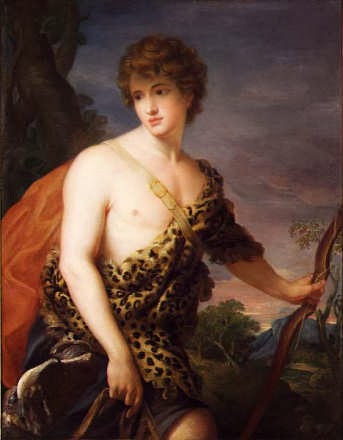
 Adonis

 Witches Of The Craft®
You must be logged in to post a comment.