HOLIDAY FUN FACTS

Winter Festivals From the Past and Present

Celebrations during the mid-winter season were common, even before Christmas
was celebrated on December 25.

Christmas was once a moveable feast celebrated many different times during the
year. The choice of December 25 was made by the Pope Julius I in the fourth
century AD because this coincided with the pagan rituals of Winter Solstice, or
Return of the Sun. The intent was to replace the pagan celebration with the
Christian one.

In 1752, 11 days were dropped from the year when the switch was from the Julian
calendar to the Gregorian calendar. The December 25 date was effectively moved
11 days backwards. Some Christian church sects, called old calendarists, still
celebrate Christmas on January 7 (previously Dec. 25 of the Julian calendar.)

Many of the traditions associated with Christmas (giving gifts, lighting a Yule
log, singing carols, decorating an evergreen) hark back to older religions.

Some traditions described here are reminiscent of modern day customs, and
others, like the Festival of the Radishes in Mexico, are bizarre and
fascinating. You are invited to explore the rituals of past and present on these
pages.

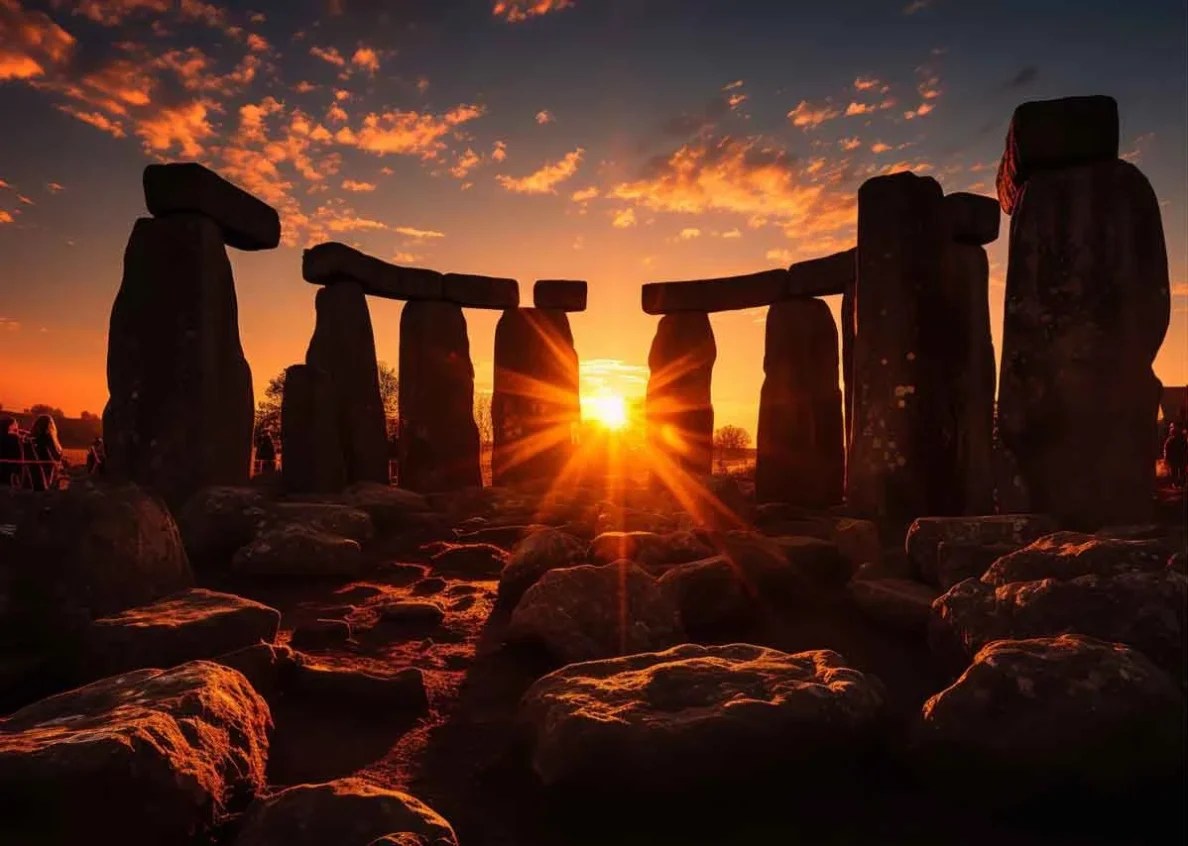
Winter Solstice

Winter Solstice celebrations are held on the eve of the shortest day of the
year. During the first millennium in what is today Scotland, the Druids
celebrated Winter Solstice honoring their Sun God and rejoicing his return as
the days got longer, signaling the coming of spring. Also called Yule, this
tradition still lives today in the Wiccan traditions and in many cultures around
the world.

A huge log -- the Yule Log -- is brought into an outdoor clearing and becomes
part of a great bonfire. Everyone dances and sings around the fire. All the
noise and great excitement is said to awaken the sun from its long winter sleep,
hurrying spring on its way as the cycle begins once again and the days grow
longer than the nights.

Dosmoche -- Tibetan Celebration of the Dying Year

Lasting five days, this festival centers around a magical pole covered with
stars, crosses, and pentagrams made of string. Dancers dress up in hideous masks
to frighten away the evil spirits for the coming year. Feasting and prayers fill
the days and the finale is when the pole is torn down by the townsfolk.

Feast of the Ass -- Middle Ages Christian

At one time this was a solemn celebration reenacting the flight of the holy
family into Egypt and ending with Mass in the church. The festival became very
popular as it transformed into a humorous parody in which the ass was led into
the church and treated as an honored guest while the priest and the congregation
all brayed like asses. The Church suppressed it in the fifteenth century,
although it remained popular and did not die out until years later.

La Befana -- Italy's Santa Claus

La Befana, a kindly witch, rides a broomstick down the chimney to deliver toys
into the stockings of Italian children. The legends say that Befana was sweeping
her floors when the three Wise Men stopped and asked her to come to see the Baby
Jesus. "No," she said, "I am too busy." Later, she changed her mind but it was
too late. So, to this day, she goes out on Christmas Eve searching for the Holy
Child, leaving gifts for the "holy child" in each household.

Butter Sculpture Festival -- Buddhist New Year

To celebrate the New Year in Tibet, Buddhist monks create elaborate yak-butter
sculptures depicting a different story or fable each year. The sculptures reach
30 feet high and are lit with special butter lamps. Awards are given for the
best butter sculptures.

Chaomos -- Pakistan Winter Solstice

The ancient traditions of Pakistan pre-date the Christian era. During winter
solstice, an ancient demigod returns to collect prayers and deliver them to
Dezao, the supreme being. During this celebrations women and girls are purified
by taking ritual baths. The men pour water over their heads while they hold up
bread. Then the men and boys are purified with water and must not sit on chairs
until evening when goat's blood is sprinkled on their faces. Following this
purification, a great festival begins, with singing, dancing, bonfires, and
feasting on goat tripe and other delicacies.

Ganna -- Ethiopian Christmas

Legend has it that the shepherds rejoiced when they learned of the birth of
Christ and they waved their hooked staffs about and played Ganna. This is the
origin of the game called Ganna that is traditionally played on Christmas Day
(January 7 -- the older date of Christmas) by all the men and boys in Ethiopia.

Wassailing the Apple Trees

This humorous tradition was documented in 1851 in a London Newspaper. In
Devonshire, England, on Twelfth Night (January 7), the farmers get their weapons
and go to their apple orchard. Selecting the oldest tree, they form a circle and
chant:

Here's to thee, old apple tree
Whence thou mayst bud and whence thou mayst blow
And whence thou mayst bear apples enow:
Hats full, caps full,
Bushels, bushels, sacks full,
And my pockets full too!
Huzza! Huzza!

The men drink cider, make merry, and fire their weapons (charged only with
powder) at the tree. They return to the home and are denied entrance no matter
what the weather by the women indoors. When one of the men guesses the name of
the roast that is being prepared for them, all are let in. The one who guessed
the roast is named "King for the Evening" and presides over the party until the
wee hours.

Snap Dragon -- A Christmas Game

Here's a fun one to try at your next Christmas Party. It was popular in England
during the 1800's. Set brandy on fire in a bowl. Throw raisins into the flames.
The party guests then take turns snatching the flaming raisins and popping them
into their mouths. The flames go out as soon as the mouth shuts, so speed and
dexterity are essential.

SNAP DRAGON

Here he comes with flaming bowl,
Don't he mean to take his toll,
Snip! Snap! Dragon!

Take care you don't take too much,
Be not greedy in your clutch,
Snip! Snap! Dragon!

With his blue and lapping tongue
Many of you will be stung,
Snip! Snap! Dragon!

For he snaps at all that comes
Snatching at his feast of plums,
Snip! Snap! Dragon!

Night of the Radishes

This unusual event takes place in Oaxaca, Mexico on December 23 each year. It
dates to the mid-nineteenth century and commemorates the introduction of the
radish by the Spanish colonists. Radishes in this region grow to the size of
yams but are not the rounded shape we usually see. They are twisted and
distorted by growing in the rocky soil. These unusual shapes are exploited as
local artisans carve them into elaborate scenes from the Bible, from history,
and from the Aztec legends. Cash prizes are awarded and the evening culminates
with a spectacular fireworks display.

Hari-Kuyo -- Japanese Festival of the Broken Needles

This is a Buddhist celebration held on December 8 each year throughout Japan. It
is a tradition that has been carried on since at least 400 AD. Once only
observed by tailors and dressmakers, today anyone who sews participates.

A special shrine is made for the needles containing offerings of food and
scissors and thimbles. A pan of tofu (soybean curd) is the center of the shrine
and all the broken and bent needles are inserted into it. As the needles go into
the tofu, the sewer recites a special prayer in thanks for its fine service over
the year. The needles find their final resting place at sea, as devotees
everywhere wrap their tofu in paper and launch them out to sea.
Month: January 2011
FESTIVALS
FESTIVALS
Within the Pagan community there are many holidays and Sabbats celebrated for
various means, and not all celebrate each holiday/Sabbat in the same exact way
or for the same reasons. The following is a general list of the Holidays most
common between all the Sects within Neo-Paganism.
YULE (Winter Solstice, December 20-23 (varies according to the particular date
on the standard calendar according to when the Solstice will occur
astronomically)). Longest night of the year, the turning point when the days
shall afterwards grow longer as winter begins its passage into the coming
spring. It is, in the Goddess worship, the time when she gives forth again to
the birth of the Divine Sun child who shall be both child and eventually lover
and father of the next child in the cycle. Winter Solstice for pagans is a time
of feasting and the exchanging of gifts and is the original Holiday that the
Christian religions modified into their own Christmas, even up to the birth of
the child (Most theologians who have spent time studying the birth of Jesus
admit he was born in either March or April, not the celebrated Christmas date we
all know from the standard calendar – it was moved to this date to help induce
Pagans to give up their old ways yet allow them their holidays during the spread
of Christianity thru Europe and the British Isles). Traditional adornments are a
Yule Log, usually of oak, and a combination of mistletoe and holly (also all
later plagiarized into Christian ways).
CANDLEMAS (Brigid’s Day, February 2nd) Not common to all pagans, this is very
popular with Wiccans and various Celtic sects. Brigid is the Celtic goddess of
fire and inspiration (Poetry, smithcraft and healing) as well as yet another
representation of the Fertility of Femininity and Love. Brigid had such a
strong following among the Celtics that the Christian church decided it was
easier to assimilate her into their own system, and so there came about the
making of Saint Brigit and all the stories they created about her so that her
followers would leave their old beliefs enough so they would not side with the
Druids, who were known at that time as ‘the snakes’ because of their tendency to
have tamed snakes that were used to help produce various healing mixtures via
their venom, and who were violently opposing the Catholic church. In History, of
course, the druids lost against the overwhelming odds presented by the church,
led by a man who would then be himself sainted by the church, their Saint
Patrick (who was no clergyman but a warrior). Thus Christian rule of various
sorts came into Ireland. Handcrafts are often sacrificed to Brigid or dedicated
to her as they are started on this day. Its celebration is done with many
candles and as usual much feasting. The Christians also took, moved slightly and
used this date by creating St. Valentine and using the day for one of chaste
love reflections.
Eostar Ritual (Spring Equinox, March 20-23 dependent on actual astronomical
event) This is the start in the pagan year of spring, at least among Wiccans and
Celtics. The first flowers are praised and the Gods and Goddesses thanked for
the true return to happier times for all. Eostar is one of the more colorful
holidays, not one of the somber colors found in Yule and Candlemas. Feasting and
socializing are the important factors in this holiday as well as the celebration
of the return of color to the natural world. In the Christian calendar, again to
draw early worshipers, they marked this as the final days and rebirth of Jesus
(when according to history he died in June!)
Beltane (May Eve, April 30th-May 1st) Most important to pagans, save for
Samhain, I don’t know of any Pagan group that doesn’t celebrate this holiday in
some way. Beltane is the great Fertility rite of life, starting at dusk on the
30th and continuing until the dawn of the 1st. The union of the God and Goddess
to conceive the sun-child to be takes place upon this holiday, no matter which
tradition of paganism is involved. Beltane is the one holiday most discouraged
by the Christians, who didn’t even use it as a point for a holiday of their own
because the power and nature of the day involved. Still, even in Christianized
Ireland the May day dance of the Maypole remained, as did the giving of flowers
to those you loved or cared for as friends. The Maypole is a symbol of the union
of the God and Goddess to create life, the pole itself a phallic symbol while
the dancers and their streamers or vines of flowers represent the fertile womb
of the goddess as it takes in the Phallus of the god and takes in his seed.
Besides the Maypole often a bonfire is present, and members of the group are
encouraged to jump the flames for luck and their own fertility. Food, drink and
love are the order of the evening. In most sects the celebration of Beltane will
become one large orgy as the participants are encouraged to enact their own
unions of love. Beltane is the time of many marriages/ andfastings in the pagan
community (in some it is the point where one chooses to begin and end
relationships of a physical nature). Clothing is very optional in most get
togethers on this holiday, and mostly it is sensual and colorful. Even those
sects that are prudish about things tend to accept the rules of the holiday, as
it is the holiday of free love. It is said that a child conceived on this day
will grow up to wield great power and knowledge and to be healthier than upon
any other.
Litha (Summer Solstice, June 20-23, dependent on actual astronomical event) Held
on the longest day of the year, the Solstice is the celebration of lights
triumph over darkness and that of the bountiful beauty that light brings into
life. Flowers are common in the circle, roses and bright cheerful wildflowers
are upon the altar and usually worn by all. It is the changing point of the
year, and the celebration of the spiral dance of the year is common among
Wiccans. It a celebration with much joy, and much feasting. Many wiccans will
attire themselves in bright colors and equally bright adornments of flowers.
Litha’ usual food fare may include honeycakes or cornbread. Litha is not
celebrated by all sects nor in the same way.
Lughnasad (August 1st) The great corn ritual of Wiccan belief (in Celtic realms
this is the celebration of the wheat god, corn is an Americanization and it is
possible there is an American Indian traditional holiday near this date that was
borrowed by the American Neopagans). This is the big celebration of the harvest
(Sort of a Pagan Thanksgiving, but the time clock is different as is that of the
Celtics). Much feasting and dancing occur, thou it is a bit more somber than
many of the other holidays. Some Pagans celebrate this day as merely the day to
bake their bread and cakes for the coming winter and do no actual rituals save
that of blessing the foods prepared.
Mabon (Fall Equinox, Sept. 20-23, dependent on actual astronomical event) A
lesser holiday, this is not widely celebrated and is most come with pure wiccan
groups, especially those who are based in the works of Starhawk and other Dianic
sects. This is the weavers festival, and a braiding of cords are done in the
process of casting a spell to add to ones life from what it is, each person
weaving unto themselves what they wish and the coven as a whole weaving all the
cords together to unite the power and efforts symbolically.
SAMHAIN (Halloween Oct 31st) The year ends traditionally in Wiccan beliefs with
this holiday. Samhain is said to be the period of time when the gates between
the worlds are least guarded and the veils their thinnest. It is a time for
dimensional openings and workings, and also the celebration of the death of the
year king. It is a somber holiday, one of dark clothes and thoughts for the
dead, it is said to be the time when those of necromantic talents can speak with
the dead and it is certainly a time to remember ones dead. It is a time of
endings of relationships and bad situations and it is the time when one can see
the glimmer of hope in the future. There are as many concepts attached to this
holiday as any other.
THE DAYS OF POWER
THE DAYS OF POWER
In the past, when people lived with Nature, the turning of the seasons and the
monthly cycle of the Moon had a profound impact on religious ceremonies.
Because the Moon was seen as a symbol of the Goddess, ceremonies as adoration
and magick took place in its light. The coming of Winter, the first stirrings
of Spring, the warm Summer and the advent of Fall were also marked with rituals.
The Witches, heirs of the pre-Christian folk religions of Europe, still
celebrate the Full Moon and observe the changing of the seasons. The Pagan
religious calendar contains 13 Full Moon celebrations and eight Sabbats or days
of power.
Four of these days (or, more properly, nights) are determined by the Solstices
and Equinoxes, the astronomical beginnings of the seasons. The other four
ritual occasions are based on old folk festivals. The rituals give structure and
order to the Pagan year, and also remind us of the endless cycle that will
continue long after we’re gone.
Four of the Sabbats – perhaps those that have been observed for the longest time
– were probably associated with the agriculture and the bearing cycles of
animals. These are Imbolc (February 2), Beltane (April 30), Lughnasadh (August
1) and Samhain (October 31). These names are Celtic and are quite common
among Witches, though many others exist.
When careful observation of the skies led to common knowledge of the
astronomical year, the Solstices and Equinoxes (circa March 21, June 21,
September 21 and December 21; the actual dates vary from year to year) were
brought into this religious structure.
Who first began worshipping and raising energy at these times? That question
cannot be answered. However, these sacred days and nights are the origins of the
21 Craft ritual occasions.
Many of these survive today in both secular and religious forms. May Day
celebrations, Hallowe’en, Ground-hog Day and even Thanksgiving, to name some
popular North American holidays, are all connected with ancient Pagan worship.
Heavily Christianized versions of the Sabbats have also been preserved within
the Catholic Church.
The Sabbats are Solar rituals, marking the points of the Sun’s yearly cycle, and
are but half of the Pagan ritual year. The Esbats are the Pagan Full Moon
celebrations. At this time we gather to worship She Who Is. Not that Witches
omit the God at Esbats – both are usually revered on all ritual occasions.
There are 13 Full Moons yearly, or one every 28 1/4 days. The Moon is a symbol
of the Goddess as well as a source of energy. Thus, after the religious aspects
of the Esbats, Witches often practice magick, tapping into the larger amounts of
energy which are thought to exist at these times.
Some of the old Craft festivals, stripped of their once sacred qualities by the
dominance of Christianity, have degenerated. Samhain seems to have been taken
over by candy manufacturers in North America, while Yule has been transformed
from one of the most holy Pagan days to a time of gross commercialism. Even the
later echoes of a Christian savior’s birth are hardly audible above the
electronic hum of cash registers.
But the old magick remains on these days and nights, and the Craft celebrate
them. Rituals vary greatly, but all relate to the Goddess and God and to our
home, the Earth. Most rites are held at night for practical purposes as well as
to lend a sense of mystery. The Sabbats, being Solar-oriented, are more
naturally celebrated at noon or at dawn, but this is rare today
CANDLEMAS (IMBOLC) RITUAL: 2 February
CANDLEMAS (IMBOLC) RITUAL: 2 February
-by the White Bard
Materials: a candle for each covener present.
a MAIDEN, dressed in white.
a Crown of Light, made from three, six, or nine
candles.
a BARD/GREEN MAN.
a DARK LORD, dressed in dark clothing, and holding a
dark cloak.
% The place of ritual should be set up, away from the
gathered participants.
% It is more than a good idea to manage bathrooms and such like
% before the circle is closed. This Mystery is not something any
% of the participants should miss out on!
HPS: Go we now to the sacred place
And stand within the sacred space
Turn your minds to sacred things
And dance with me unto the ring!
% HP and HPS lead the coven to the place of ritual by a
% spiral dance, ending in a circle around the altar. The
% cauldron should be at the south. The Bard/Green Man
% dances at the end of the line. A good song to sing here
% is “Lord Of The Dance.”
HPS: Come we forth, with the Spiral Dance
Within the Lady’s radiance
To celebrate the Sun’s rebirth
To renew life, to warm the Earth
Earth and Water, Fire and Air
I invoke the Goddess there!
This night we are Between the Worlds
To celebrate the year unfurled!
HP: Earth and Water, Fire and Sky
I invoke the God on high
This night we are Between the Worlds
To celebrate the year unfurled!
% The corners shall be called thusly, that all may hear, but
% shall not be called until the HPS reaches that corner on her
% circumnabulation.
EAST: O Guardians of the Eastern Tower,
Airy ones of healing power
I do summon, stir and call you
See these rites and guard this circle!
Come to us and heed our call!
By the Power that made us all;
By the Power that blesses Thee:
Come to us; and Blessed Be!
SOUTH: Oh fiery ones of Southern Power
Thus I invite you to this tower
I do summon, stir and call you
See these rites and guard this circle!
Come to us and heed our call!
By the Power that made us all;
By the Power that blesses Thee:
Come to us; and Blessed Be!
WEST: Western ones of water’s flow
Help to guard us here below
I do summon, stir and call you
See these rites and guard this circle!
Come to us and heed our call!
By the Power that made us all;
By the Power that blesses Thee:
Come to us; and Blessed Be!
NORTH: Earthen ones of Northern fame
Bless and guard our Power’s fane
I do summon, stir and call you
See these rites and guard this circle!
Come to us and heed our call!
By the Power that made us all;
By the Power that blesses Thee:
Come to us; and Blessed Be!
% The HPS shall move to each corner, and say, following each
% corner’s crying as she moves to the next:
HPS: So I cast and consecrate
This Circle of the small and great:
By Fin and Feather, Leaf and Tree,
By Rock and Earth, by Land and Sea,
By Fire and Water, Earth and Air,
By the Lord, and Lady Fair!
By Love and Joy and Work and Play,
All things harmful cast away!
By lightening’s flash, and rain’s soft fall,
By the Power that made us all;
By the Power that blesses Thee:
(Cast the Circle: Blessed be!)
% On her return to the first corner she shall change the last
% line above, and say:
The Circle’s cast; and Blessed Be!
% The callers of the corners shall return their tools to the
altar, and then shall join the circle at their corners.
————————————————–
% Here begins the Candlemas (Imbolc) Mystery:
% The Maiden shall step forth, and say:
MAIDEN: This is the time of Brigid, the Patron of Poets and Fire,
and of Healing.
HPS: This is the time of new beginnings, when the Mother has become
Maiden.
HP: The days have turned, and grow longer, and the Sun-child is growing
to His strength.
BARD/GREEN MAN: I have been a wave upon the sea,
And a spark in the firelight.
I have been a fish in the ocean.
I have been a Thought within a Word,
And a Word within a Deed.
I was cast away, and found again.
I have been made of flowers
And of cold steel and brass.
Fire and ice are alike unto me.
I have been the narrow blade of a sword
That kills without cutting.
And the Void is my homeland.
I have been in Caer Sidi
In the Spiral Castle of Glass.
And the letters on the Standing Stones
Are no secret from me.
I have been in Annwyn
And Tir na n’Og,
I have danced the Spiral Dance,
And drunk from the Hierlas at daybreak.
I have ridden beneath two ravens
And served in the kitchen,
And all places are alike unto me.
I have been a child
And now I come into my strength!
I invoke the Land, the dear Land,
the Earth our Mother!
MAIDEN: The cycles of the Moon have taken their course, and I am
in my Maidenhood. The stars are kindled, and I dance in
their light.
DARK LORD: Thy home is with me thru the long months of Winter, and the
Earth shall lie fallow and bare.
% The HPS shall then light the candles of the Crown of Light,
% and shall approach the Maiden, who is now standing in the East, and
% place it upon her head.
% She shall now, in company with the Bard/Green Man, circumnabulate the
% circle, and the coveners shall light their candles from her crown.
% The Bard/Green Man shall return to his normal place within the circle
% and the Maiden shall place the Crown of Light on the altar.
% The Maiden shall then approach the Dark Lord, and kneel before him,
% and he shall say:
DARK LORD: As it always is, always was, and always shall be. Come to my
Kingdom.
% Here he shall place the dark cloak around her, and they shall retire
% to the West.
% Here ends the Candlemas Mystery.
——————————————————————–
% A normal cone-of-power may be raised, for growth and healing:
HPS: In a ring we all shall stand
Pass the Power, hand to hand.
HP: As the Sun is given birth
Build the Power; root to Earth
HPS: Pass the Power, hand to hand
Bless the Lady, bless the Land
HP: Bless the Lord, and bless the Skies
Bless the Power that never dies!
% The above four verses should be repeated three times, (or
% as many times as needed) and then the HPS should say:
HPS: By Fin and Feather, Leaf and Tree:
Let the Power flow out and free!
% All should release, at this point.
% Such coven business as must be transacted may be done here.
% This is a good time to bless candles for use during the coming year.
% This is also a good time for initiations.
——————————————————
% The Circle is opened.
HPS: Thus I release the East and West
Thanks to them from Host to Guest
Thus I release the South and North
With “Blessed Be’ I send them forth!
The Circle’s open, dance we so
Out and homeward we shall go.
Earth and Water, Air and Fire
Celebrated our desire.
The Sun’s returned to banish dark
The Earth awakes to sunlight’s spark.
By Fin and Feather, Leaf and Tree,
Our circle’s done; and Blessed Be!
COVEN: Blessed Be!
% All spiral dance out from the Circle.
C A N D L E M A S: The Light Returns
C A N D L E M A S: The Light Returns
=====================================
by Mike Nichols
It seems quite impossible that the holiday of Candlemas should be considered
the beginning of Spring. Here in the Heartland, February 2nd may see a blanket
of snow mantling the Mother. Or, if the snows have gone, you may be sure the
days are filled with drizzle, slush, and steel-grey skies — the dreariest
weather of the year. In short, the perfect time for a Pagan Festival of Lights.
And as for Spring, although this may seem a tenuous beginning, all the little
buds, flowers and leaves will have arrived on schedule before Spring runs its
course to Beltane.
‘Candlemas’ is the Christianized name for the holiday, of course. The older
Pagan names were Imbolc and Oimelc. ‘Imbolc’ means, literally, ‘in the belly’
(of the Mother). For in the womb of Mother Earth, hidden from our mundane sight
but sensed by a keener vision, there are stirrings. The seed that was planted
in her womb at the solstice is quickening and the new year grows. ‘Oimelc’
means ‘milk of ewes’, for it is also lambing season.
The holiday is also called ‘Brigit’s Day’, in honor of the great Irish
Goddess Brigit. At her shrine, the ancient Irish capitol of Kildare, a group of
19 priestesses (no men allowed) kept a perpetual flame burning in her honor.
She was considered a goddess of fire, patroness of smithcraft, poetry and
healing (especially the healing touch of midwifery). This tripartite symbolism
was occasionally expressed by saying that Brigit had two sisters, also named
Brigit. (Incidentally, another form of the name Brigit is Bride, and it is
thus She bestows her special patronage on any woman about to be married or
handfasted, the woman being called ‘bride’ in her honor.)
The Roman Catholic Church could not very easily call the Great Goddess of
Ireland a demon, so they canonized her instead. Henceforth, she would be ‘Saint’
Brigit, patron SAINT of smithcraft, poetry, and healing. They ‘explained’ this
by telling the Irish peasants that Brigit was ‘really’ an early Christian
missionary sent to the Emerald Isle, and that the miracles she performed there
‘misled’ the common people into believing that she was a goddess. For some
reason, the Irish swallowed this. (There is no limit to what the Irish
imagination can convince itself of. For example, they also came to believe that
Brigit was the ‘foster-mother’ of Jesus, giving no thought to the implausibility
of Jesus having spent his boyhood in Ireland!)
Brigit’s holiday was chiefly marked by the kindling of sacred fires, since
she symbolized the fire of birth and healing, the fire of the forge, and the
fire of poetic inspiration. Bonfires were lighted on the beacon tors, and
chandlers celebrated their special holiday. The Roman Church was quick to
confiscate this symbolism as well, using ‘Candlemas’ as the day to bless all the
church candles that would be used for the coming liturgical year. (Catholics
will be reminded that the following day, St. Blaise’s Day, is remembered for
using the newly-blessed candles to bless the throats of parishioners, keeping
them from colds, flu, sore throats, etc.)
The Catholic Church, never one to refrain from piling holiday upon holiday,
also called it the Feast of the Purification of the Blessed Virgin Mary. (It is
surprising how many of the old Pagan holidays were converted to Maryan Feasts.)
The symbol of the Purification may seem a little obscure to modern readers, but
it has to do with the old custom of ‘churching women’. It was believed that
women were impure for six weeks after giving birth. And since Mary gave birth
at the winter solstice, she wouldn’t be purified until February 2nd. In Pagan
symbolism, this might be re-translated as when the Great Mother once again
becomes the Young Maiden Goddess.
Today, this holiday is chiefly connected to weather lore. Even our American
folk-calendar keeps the tradition of ‘Groundhog’s Day’, a day to predict the
coming weather, telling us that if the Groundhog sees his shadow, there will be
‘six more weeks’ of bad weather (i.e., until the next old holiday, Lady Day).
This custom is ancient. An old British rhyme tells us that ‘If Candlemas Day be
bright and clear, there’ll be two winters in the year.’ Actually, all of the
cross-quarter days can be used as ‘inverse’ weather predictors, whereas the
quarter-days are used as ‘direct’ weather predictors.
Like the other High Holidays or Great Sabbats of the Witches’ year,
Candlemas is sometimes celebrated on it’s alternate date, astrologically
determined by the sun’s reaching 15-degrees Aquarius, or Candlemas Old Style (in
1988, February 3rd, at 9:03 am CST). Another holiday that gets mixed up in this
is Valentine’s Day. Ozark folklorist Vance Randolf makes this quite clear by
noting that the old-timers used to celebrate Groundhog’s Day on February 14th.
This same displacement is evident in Eastern Orthodox Christianity as well.
Their habit of celebrating the birth of Jesus on January 6th, with a similar
post-dated shift in the six-week period that follows it, puts the Feast of the
Purification of Mary on February 14th. It is amazing to think that the same
confusion and lateral displacement of one of the old folk holidays can be seen
from the Russian steppes to the Ozark hills, but such seems to be the case!
Incidentally, there is speculation among linguistic scholars that the vary
name of ‘Valentine’ has Pagan origins. It seems that it was customary for
French peasants of the Middle Ages to pronounce a ‘g’ as a ‘v’. Consequently,
the original term may have been the French ‘galantine’, which yields the English
word ‘gallant’. The word originally refers to a dashing young man known for his
‘affaires d’amour’, a true galaunt. The usual associations of V(G)alantine’s
Day make much more sense in this light than their vague connection to a
legendary ‘St. Valentine’ can produce. Indeed, the Church has always found it
rather difficult to explain this nebulous saint’s connection to the secular
pleasures of flirtation and courtly love.
For modern Witches, Candlemas O.S. may then be seen as the Pagan version of
Valentine’s Day, with a de-emphasis of ‘hearts and flowers’ and an appropriate
re-emphasis of Pagan carnal frivolity. This also re-aligns the holiday with the
ancient Roman Lupercalia, a fertility festival held at this time, in which the
priests of Pan ran through the streets of Rome whacking young women with
goatskin thongs to make them fertile. The women seemed to enjoy the attention
and often stripped in order to afford better targets.
One of the nicest folk-customs still practiced in many countries, and
especially by Witches in the British Isles and parts of the U.S., is to place a
lighted candle in each and every window of the house, beginning at sundown on
Candlemas Eve (February 1st), allowing them to continue burning until sunrise.
Make sure that such candles are well seated against tipping and guarded from
nearby curtains, etc. What a cheery sight it is on this cold, bleak and dreary
night to see house after house with candle-lit windows! And, of course, if you
are your Coven’s chandler, or if you just happen to like making candles,
Candlemas Day is THE day for doing it. Some Covens hold candle-making parties
and try to make and bless all the candles they’ll be using for the whole year on
this day.
Other customs of the holiday include weaving ‘Brigit’s crosses’ from straw
or wheat to hang around the house for protection, performing rites of spiritual
cleansing and purification, making ‘Brigit’s beds’ to ensure fertility of mind
and spirit (and body, if desired), and making Crowns of Light (i.e. of candles)
for the High Priestess to wear for the Candlemas Circle, similar to those worn
on St. Lucy’s Day in Scandinavian countries. All in all, this Pagan Festival of
Lights, sacred to the young Maiden Goddess, is one of the most beautiful and
poetic of the year.
Raising Magickal Power
Raising Magickal Power
by Harley Hashman
Webster’s dictionary defines power as “…the ability to do or act…” or as “…strength or energy…”. Some might say that magick and power are synonymous; after all, magick without any power is nothing at all. I think Crowley’s definition of magick is perhaps the best of all (despite what you might think of the man himself) – magick is the ability to compel change to occur in conformity with the will. Therefore power is the level of this conformity which your magick achieves.
What are some of the means of raising and increasing magickal power? I have thought long and hard on this question. There are several principles which will aid the magician in the raising of energy. There is conservation, timing, visualization, emotion, will, the use of deities, and physical conditioning.
The first principle is simply conservation. If you expend energy that might be saved and employed in magickal workings, you won’t have much potency left. I myself have a terrible temper at times and might burn off a great deal of energy cursing at that chair that leapt across my path and made me stub my toe – or that ferret that just splattered chocolate pudding all over my book of shadows, after yanking all of the bristles from my witch’s broom and scattering them all over my living room rug. Some of us might waste energy in needless worrying.
Other emotions which may be destructive to magickal workings are jealousy, rancor, envy, self-pity, and depression. Emotions arise from thought, not perception – we process our perceptions of the world and then generate these feelings. Our internal dialogue reinforces our emotional responses to the world. If we practice clearing our heads of habitual thought patterns, we can minimize this source of waste. Should we find ourselves about to waste power in useless emotional habits, about to agitate ourselves needlessly, we can enter into a state of mental silence or try to divert the course of our mental dialogue.
Some habits may lead to the consumption of our energy, including smoking, alcoholism, arguing, oversleeping, judging others or excessive criticism, complaining or whining, and self-importance. I have met many witches, sorcerers, and magicians who practice such habits (self-importance being epidemic); that badly compromises not only their ability to focus power but how other practitioners view them. An important principle of all magickal practice is self-knowledge. It is much more difficult to raise significant amounts of power without this understanding, as we can then be trapped in mental patterns that deplete our resources without the tools to break free.
Timing of magickal workings is also important. The use of lunar cycles is commonplace. Typically constructive magick, which includes such workings as spells for love, wealth, health, and protection, are done during the waxing of the moon and destructive magick, which would include binding spells, are done during the waning phases.
Why? The moon is just a vast rock in space. It has to do in part with the effect the moon cycle has on biological rhythms; the menstrual cycle is just one such rhythm that naturally coincides with the 28-day lunar orbit. Called in some Wiccan circles the Blood of the Moon, the female cycle is a source of perceptual change for that sex. For many of the species on this planet, key biological rhythms are linked to the lunar cycles. It is widely believed that during a full moon, all the “crazies” come out and this is borne out by statistics generated by police records.
Another more important key to the value of lunar timing is simply that many witches include Lunar Goddesses such as Diana and Selena in their pantheons; therefore the moon is quite important to their practices.
Visualization is another component I believe to be vital to the focusing of magickal power. It is simply the ability to form mental images of people or objects. Visualization works with emotion to raise power in the first place through one’s emotional response to an image. If one were trying to bind an enemy, for example, it is important to construct a mental image of the despicable character to be bound. This acts as a lens to focus the energies on the desired target. If the image is weak or shaky the power of the spell may be also.
I have said that some emotions can restrict the flow and raising of power. Yet without emotion, the power itself cannot be stirred up. Magick works when emotion is combined with visualization and will to produce a noticeable effect. If one does not feel strongly about a working then it may be that little or no energy can be raised. I feel the key is to isolate the feeling that is best for the working at hand and not allow other emotions to divert or interrupt the spell. Magick usually requires the use of will, a single-minded determination or attitude, combined with the fury of an emotional maelstrom. A limp, half-assed attempt is a waste of time. As Yoda said, “…Do or do not. There is no ‘try’.” And he is just a muppet with Frank Oz’s hand up his arse!
The use of deities is critical to many magickal workings. In shamanism it is the use of spirit guides or allies that grants the sorcerer a gift of power. In ceremonial magic it is the evocation of preternatural entities like those listed in the Goetia. In Wicca it is the invocation or evocation of the Fey or elementals or various gods or goddesses. In each case a being whose power is much superior to any mortals donates some of that ability, if only temporarily, to a given working or quest for knowledge. Here again it is the visualization of the entities in question combined with emotion, will and timing, that makes the transference of energies possible.
Lastly, physical condition is important to magickal workings. If one is so ill that you cannot get out of bed or your legs have recently been broken by a rampant wildebeest then your energies will be largely diverted towards healing and it would be ill-advised for you to try any magickal workings. Many practitioners, myself included, are out of shape physically and this may rob us of our maximum potential. If you are panting and out of breath after small exertions then how can you be expected to have any energy in your magick?
To raise power for magick one should practice magick – a muscle gets stronger with use. Regular magickal exercise whether alone or in a group will increase your abilities tremendously. If you are an arm-chair witch you may have the knowledge of magick but not the power to make it go.
Brighid’s Fires Burn High
Brighid’s Fires Burn High
by Miriam Harline
Imbolc is a white time, a time of ice and fire. In many places, snow still sheets the ground. The fire is traditional: Europe observes this day, February 2, the Christian Candlemas, with candlelight processions, parades that go back to ancient torchlight ceremonies for purifying and reviving the fields at early sowing, according to Funk and Wagnall’s Standard Dictionary of Folklore, Mythology and Legend. At Candlemas, the people of ancient Europe made candles for the coming year, having saved the fat from meat eaten through the winter. Mexico, too, observes February 2, the Aztec New Year, with renewed fires and a festival that echoes agricultural rituals of early spring.
At Imbolc, the earth begins to wake from winter sleep. As Starhawk writes in The Spiral Dance, at Imbolc “what was born at the Solstice begins to manifest, and we who were midwives to the infant year now see the Child Sun grow strong as the days grow visibly longer.” At night the Wild Moon shines, illuminating the earth’s initial quickening. Seeds sown in autumn begin to stir; nature is potential waiting to be fulfilled. The Goddess too is changing: from crone to maiden, from winter to spring.
To Banish Winter
In The Wheel of the Year: Living the Magical Life, Pauline Campanelli writes, “Now is the time for the banishing of Winter. On the first night of February, the eve of Imbolc, gather together all of the greens that adorned the house throughout the Yuletide season, including a branch or two of the fir tree that was hung with holiday ornaments. Then, as a part of the Imbolc Sabbat rite, add these greens to the Sabbat Fire (a little at a time, and carefully, because by now they are hazardously dry), dancing and chanting all the while with words like:
“Now we banish Winter!
“Now we welcome Spring!”
Of Brighid and Her Realms
Today’s witches take many of their Imbolc associations from pagan Ireland. There, Imbolc belonged to the goddess Brighid or Bride (either is pronounced Breed), mother of poetry, smithcraft and healing.
In their Encyclopedia of Celtic Wisdom, Caitlin and John Matthews quote the tenth century Cormac’s Glossary: Brighid is “a poetess… the female sage, woman of wisdom, or Brighid the Goddess whom poets venerated because very great and famous for her protecting care.” Cormac’s Glossary gives Brighid the poetess two sisters, Brighid the smith and Brighid the “female physician”; Brighid thus occurs threefold, called by the Celts the Three Blessed Ladies.
The three Brighids multiply, to three times three: Caitlin and John Matthews call Brighid “a being who has nine separate spiritual appearances and blessings, which are ubiquitously invoked through Celtic lore.” Hers are the “nine gifts of the cauldron” mentioned in Amergin’s “Song of the Three Cauldrons”: poetry, reflection, meditation, lore, research, great knowledge, intelligence, understanding and wisdom. The Christianized St. Bridget had nine priestesses, the “Ingheau Anndagha,” or Daughters of the Flame, who lived inside her shrine and tended her fire, whom no man could look upon, according to Kisma K. Stepanich in Faery Wicca, Book One. Brighid is also a midwife and protector, a war-goddess and a teacher of the arts of battle.
Celtic lore makes Brighid the daughter of the Dagda, the Good God, and marries her to Bres of the Fomors, by whom she bears a son Ruadan. But, as Janet and Stewart Farrar write in The Witches’ Goddess, “The fact that Dana, though goddess/ancestress of the Tuatha, is sometimes referred to (like Brighid) as the Dagda’s daughter; the hints… that the Dagda was originally the son of this primordial goddess, then her husband, then her father; the dynastic marriage between Brighid and Bres – all these reflect a long process of integration of the pantheons of neighboring tribes, or of conquerors and conquered, and also of patriarchalization.” Like many goddesses, Brighid probably once birthed the god later called her father. Brighid’s name can be derived from the Gaelic “breo-aigit” or “fiery arrow,” but the Matthewses prefer a derivation from Sanskrit, “Brahti,” or “high one.”
The entire Celtic world worshipped Brighid. She was Brigantia in Britain, the patron goddess of the tribe of the Brigantines in northern England and of the Brigindo in eastern France, Stepanich says. The Celts continued to worship her in Christian times as St. Ffaid in Wales, St. Bride in Scotland and St. Bridget or Bride in Ireland. St. Bridget was said to be the midwife and foster mother of Christ, the helper and friend of Mary.
Making Bride’s Bed
Long before she befriended the Mother of God, Brighid was the Mother herself, her agricultural roots going back to the Neolithic. Campanelli describes an Imbolc ritual for creating Bride’s bed, drawn from ancient rituals in which harvesters at the Autumn Equinox would bring the last sheaf of wheat or other grain into the house, believing the Goddess of the Grain lived within. The harvesters often made this last sheaf into a woman’s shape, the Corn Bride or Maiden, dressing her in white.
If you have autumn harvest left, say a sheaf of Indian corn, as part of your Imbolc ritual you can create a Bride’s bed. Dress her in white and decorate her as you like, then place her in a basket or on a square of white cloth. Across her, lay a priapic wand – an acorn-tipped wand of oak – twined with ribbon, so that wand and bride form an X. Then place lit candles to either side, and chant to her something like, “Blessed be the Corn Bride! Blessed be the Great Mother!” At the height of the chant, extinguish the candles. Then, at sunrise the next morning, place the bride without her dress on your front door. There she forms an amulet of prosperity, fertility and protection, which can remain till after Samhain. Campanelli suggests you return her to earth before Yule, perhaps scattering her in the fields for birds.
Brighid the Midwife
Brighid is midwife as well as harvest mother. As late as 100 years ago in the west Scottish Highlands, the Matthewses write, the midwife traditionally blessed a newborn with fire and water in Brighid’s name. She passed the child across the fire three times, carried the baby around the fire three times deosil, then performed “the midwife’s baptism” with water, saying:
A small wave for your form
A small wave for your voice
A small wave for your speech
A small wave for your means
A small wave for your generosity
A small wave for your appetite
A small wave for your wealth
A small wave for your life
A small wave for your health
Nine waves of grace upon you,
Waves of the Giver of Health.
Brighid also protects and heals adults. She is a goddess of healing wells and streams; in her honor, Bridewell is one of the two most common well-names in Ireland, the other being St. Anne’s Well, remembering Anu, or Dana, the mother of the gods – a goddess sometimes conflated with Brighid. With Aengus Og, Brighid performs the role of soul-guardian, wrapping worshippers in her mantle of protection.
Making a “caim”
To protect themselves in Brighid’s name, the traditional Irish would recite a “caim,” the Matthewses write; “caim” means “loop” or “bend,” thus a protective circle. A caim would always name Brighid and the beings, household or body-parts to be protected.
Traditionally, you place a caim by stretching out your right forefinger and keeping that finger pointed toward the subject while walking about the subject deosil, reciting the caim. You can also say a caim for yourself. A caim can be made in all seasons and circumstances; it traditionally encircles people, houses, animals or the household fire. The Matthewses write:
“As her family prepared to sleep, the Gaelic mother would breathe these words (the caim) over the fire as she banked it in for the night…. As she said this, she would spread the embers into a circle, and divide it into three equal heaps with a central heap. To make the holy name of the foster mother (Brighid), she placed three turfs of peat between the three heaps, each one touching the center, and covered it all with ash. Such smooring customs and invocations are still performed in the West of Ireland. And so the protection of Brighid is wrapped about the house and its occupants.”
Augury in Brighid’s Name
Brighid is also a seer; the Matthewses describe her as “the central figure of the Celtic vision world.” She presided over a special type of augury, called a “frith,” performed on the first Monday in a year’s quarter to predict what that quarter would bring. The ancient Celts divided the year by Imbolc, Beltaine, Lughnasad, and Samhain, so the first Monday after Imbolc is appropriate for frithing.
To perform a frith, a traditional frithir would first fast. Then, at sunrise, barefoot and bareheaded, the frithir would say prayers to the Virgin Mary and St. Bridget and walk deosil around the household fire three times. Then with closed or blindfolded eyes, the frithir went to the house door’s threshold, placed a hand on either jamb and said additional prayers asking that the specific question about the coming quarter be answered. Then the frithir opened his or her eyes and looked steadfastly ahead, noting everything seen.
Frithing signs can be “rathadach” (lucky) or “rosadach” (unlucky). A man or beast getting up means improving health, lying down ill health or death. A cock coming toward the frithir brings luck, a duck safety for sailors, a raven death. About the significance of horses, a rhyme survives: “A white horse for land, a gray horse for sea, a bay horse for burial, a brown horse for sorrow.” The role of frithir passed down from generation to generation; according to the Matthewses, the name survives in the surname Freer, “held to be the title of the astrologers of the kings of Scotland.”
To perform a pagan version of frithing, fast the Sunday night before the first Monday after Imbolc and that night formulate your chief question about the coming three months. Monday morning at sunrise, say a prayer to Brighid and barefoot and bareheaded walk deosil around whatever seems the central fire of your house – maybe your kitchen stove, or if you’re not a cook your fireplace or heater. Then go to your doorway, put your hands to either side, and closing your eyes pray your question be answered. Then open your eyes, and note the first action you see. That action probably won’t be found in the traditional frithir’s lexicon, so the interpretation is up to you.
In another frithing technique, you curl the palms to form a “seeing-tube”; frithirs used such a tube to discover lost people or animals and to divine the health of someone absent. Frithirs also sometimes used divinatory stones; the Matthewses describe a “little stone of the quests” made of red quartz.
Imbolc Spells and Workings
Whether or not you try frithing, Imbolc is good for psychic work: still the dark time of the year, but looking toward spring. It’s also a good time to make your space hospitable for such work, banishing old energy to clear the way for new. Traditionally, witches purify themselves and their space at Imbolc. Any kind of cleansing or banishing will do, but consider ones that include fire and water, sacred to Brighid. Once purified, you’re ready to go further; at Imbolc, covens initiate new witches.
The spark of summer dances in the future now; Imbolc is a good time to seek inspiration, especially for healers and smiths of words or metal. To do so, try the following spell.
Bring to your ritual space a cauldron or chalice filled with earth or sand; a white, silver, green, purple or rainbow-colored candle; a candleholder; oil to anoint the candle; paper; and a pen you like or with appropriately colored ink. Ground and center, cast a circle and ask for Brighid’s presence. Then anoint your candle in Brighid’s name, and lighting it write on the paper the aspects of your work in which you want inspiration. When you’re done, raise energy and put it into the paper, then light the paper with the candle flame. Drop the burning paper into the cauldron, making sure the entire paper is blackened. Then thank Brighid and bid her farewell, and take down your circle.
The next day, relight the candle and by its light rub some significant tools of your work with the ashes. Then either sprinkle the remaining ashes onto your garden or houseplants or drop them in a park in a place that feels inspiring or pleasant.
Imbolc is a white time, burning with inspiration and protection, cool with healing and purification. Prophesy flares, painting luster on the dark. Light your candle, call on Brighid, and know that under the snow the seeds of spring stir.
The Goddess Companion
I am whatever is. Whatever is, I am.
I am whatever is visible. Whatever is visible, I am.
I am whatever is invisible, Whatever is invisible, I am.
I am whatever is alive, Whatever is alive, I am.
I am whatever moves and breathes. Whatever moves and brethes, I am.
I am the very spirit of life. The very spirit of life, I am.
Everything that exists in time is part of me. I am everything that exists.
When time ends, I will end. I will vanish, disappear, dissolve.
And with me, everything else will vanish, disappear, dissolve.
I alone can create, and I alone destroy, this universe.
Everything that exists is mine. Everything that exists is me.
~Invocation to Lakshmi, India
There is nothing in the universe that does not partake in the essence of the Goddess. In Hindu religion, the goddess creates everything we see, hear, feel, smell, taste. She is the energy from which all the matter in the universe is made.
The vision of the Goddess is echoed by contemporary science, which has rediscovered what some philosophies have long known: that matter and energy are intimately connected. The dance of subatomic particles, flashing in and out of existence as they swim in their quantum soup, is not far distant from the dancing Goddess who creates all the visible and invisible world through her movement. Whether we call her Lakshmi or the implicate order, there is an ultimate reality to this universe. Whatever we call it, we must marvel at its greatness and its mystery.
By Patricia Monaghan
Crone’s Corner – Celtic Tree Magic
Crone’s Corner – Celtic Tree Magic
SAILLE WILLOW
Willows are magical trees with slender pale silver-green leaves. The weeping willow originated in China, where it graced cemeteries as a symbol of immortality, and the tree had spread to the Near East by Biblical times. As Old Testament reference to the exiled Jews hanging their harps upon the willows as they wept beside the rivers of Babylon led to the weeping willow’s classification by Linnaeus as Silax babylonica. In ancient Greece, the goddess Hera was born under a willow on the island of Samos, where a magnificent temple was built to honor her. In the underworld kingdom of Pluto and Persephone, Orpheus touched a willow branch and received the gift of supernatural eloquence. Willow groves are sacred to Hecate, dark goddess of witchcraft.
During the Middle Ages, the willow became a traditional motif adorning tombs. Early 19th-century gravestones throughout New England were decorated with the willow emblem. An old spell uses willow to dismiss love and transform passion into friendship.
At Full Moon snip a foot-long tendril from a weeping willow tree and braid it with equal lengths of bright red and cool green yarn. Tie three knots in the braid and hang the charm in an airy room until the Moon is in its last quarter. On three successive nights untie the knots one by one in privacy and silence while concentrating on your desire. Before the New Moon rises, burn the red strand to ashes and throw to the winds. Coil the willow and green wool together and place in an envelope for safekeeping.
The willow of the Druids was not the weeping willow, but the tree or shrub we know as the pussy willow. The Irish called the pussy willow one of the “seven noble trees of the land.”
The willow of the Druids was not the weeping willow, but the tree or shrub we know as the pussy willow. The Irish called the pussy willow one of the “seven noble trees of the land.”
The pussy willow is used in love charms as a guard against evil and its wands are often employed in divination. Reflecting the ancient status of the pussy willow, it is the wood to “knock on” and avert bad luck.
Medieval herbalists placed all willows under the rulership of the moon.
Medieval herbalists placed all willows under the rulership of the moon.
GrannyMoon’s Morning Feast, Excerpted From Elizabeth Pepper, The Witches’ Almanac, Ltd.
Spell Of The Day – New Ventures Spell
Spell Of The Day – New Ventures Spell
If you need support for a new venture, fill a small jar or tin with popcorn, and carry it with you for at least twenty-four hours. First thing in the morning and last thing at night, or whenever you think of it, shake the tin and say:
Corn of Kore, oh Goddess grand!
Let my business grow and expand.
I will till and plant the seed.
Goddess Kore, let me succeed!
Let my business grow and expand.
I will till and plant the seed.
Goddess Kore, let me succeed!
After one day, pop the corn and visualize your fortunes expanding. Internalize the power of this spell by eating the popcorn. In the spring, plant a small patch of corn in honor of Kore.
By Nancy Bennett
Goddess Of The Day: GUNNLOED
Goddess Of The Day: GUNNLOED
Wassail Day (England)
Themes: Creativity; Wisdom; Health; Protection; Fertility
Symbols: Mead; Poetry; Cauldron or Cup; Apples
About Gunnloed: This Teutonic Goddess guards the mead (a honey wine often made with apples) of sagacity and the muse- a refreshment most welcome at the outset of a new year. In art, Gunnloed is depicted as a giantess; according to stories about her, she stood vigilantly by the magic cauldron of Odherie until Odin wooed her and stole much of the elixir away.
To Do Today: For inspiration and insight, pick out a cup that’s special to you and fill it with apple tea and a teaspoon of honey (a mock mead). Stir it clockwise, saying,
Gunnloed, come to me, put ingenuity in this tea! Drink the tea to internalize the magic. If possible, sip it quietly while enjoying a good book of heartening poetry.
Alternatively, sip some mead, quaff some apple juice, or eat an apple today for health, and give a little of the leftover liquid to nearby trees. In Anglo-Saxon tradition, this festival marked a time to enjoy wassail, a spiced apple cider or mead with herbs. Farmers shared this beverage with the apple groves to keep them fertile. Wassail literally means “be well” or “be whole.” Drink of the wassail cup to ensure yourself of Gunnloed’s gifts of well-being, creativity, and happiness all year
By Patricia Telesco
Daily Goddess Devotion
Daily Goddess Devotion
When you feel a dark sadness pushing into your life. Stop its power before it over takes your light spirit. Seek and find another struggling spirit and lend them your strength to find their light. In this you will quickly discover the light has returned to your life.
Lady Abigail
Copyright © 12122010
Today’s Meditation
Today’s Meditation

There’s so much that we can give in life that has nothing to do with money or material goods. It’s very kind and considerate to give money and material goods to people who need it, of course, but material and financial needs are not as important as our need for love. We all need to be loved, and many of the ills of our societies result from the actions of people who haven’t received enough love in their lives. The feeling of being unloved causes much heartbreak and depression, and can cause people to do things that they probably wouldn’t do if they felt loved.
How can we give love? I ask myself this question a lot. Can I give love without making others feel uncomfortable? Can I give love in appropriate ways? Can I give love to complete strangers?
I think I can do so, and I try to as much as I can. I try to spread love with kind words and a smile. I try to spread love by listening when people talk, without trying to put in my own two cents’ worth. I try to spread love by performing truly anonymous acts of kindness. I try to spread love by saying a silent, private prayer when I see people in need. I try to spread love through service, through encouragement, through compliments, and through anything else that can be seen as a positive contribution to another person’s life–no matter how small or insignificant it may seem to be.
Spreading love is much like teaching–we usually don’t see the results of our efforts. If the love is true, though, we don’t need to see the results. And when we practice spreading our love in these ways, people get to know us as loving people–and then they become much more receptive to the love that we’re trying to give.
Today’s quotation
Today’s quotation:
Let us not be satisfied with just giving money. Money is not
enough; money can be got, but they need your hearts to love
them. So, spread your love everywhere you go; first of all
in your own home. Give love to your children, to your wife
or husband, to a next-door neighbor.
Mother Teresa
Power Animal of the Day: Leopard
The Leopard
Preparation Positioning Agility
Strong and silent, moving with grace and stealth, the leopard knows how to position himself to his own best advantage before acting. He will give you the ability to seem to disappear when you care to, so that attention is directed elsewhere, allowing you to prepare unobserved for the timely display of your powers.
The leopard is also highly adaptable, able to live successfully in almost any terrain, from the deserts to the mountains and forests of the world. He will bring you this strength, so that you will find yourself quickly at ease even in new circumstances. Just take a deep breath of leopard energy and you will feel instantly at home, no matter where you are.
The leopard will also fill you with physical health and vitality, bringing you his agile grace, whether it is required to climb the tree or swim the river. Wherever you need to be, you will do well, for you are the leopard and you know no boundaries.
‘May we live in peace without weeping. May our joy outline the lives we touch without ceasing. And may our love fill the world, angel wings tenderly beating.’
The Universal Heart Center
Runecast for Monday January 17
Today our rune is Jera  pronounced “yare-awe” (J or Y: a year or a good harvest) The results of earlier efforts are realized. A time of peace and happiness, fruitful season. It can break through stagnancy. Hopes and expectations of peace and prosperity. The promise of success earned. Life cycle, cyclical pattern of the universe. Everything changes, in its own time. pronounced “yare-awe” (J or Y: a year or a good harvest) The results of earlier efforts are realized. A time of peace and happiness, fruitful season. It can break through stagnancy. Hopes and expectations of peace and prosperity. The promise of success earned. Life cycle, cyclical pattern of the universe. Everything changes, in its own time.
Harvest-time gives its benefits to those who have worked hard. As you sow, so shall you reap. This rune promises a beneficial outcome if your present projects need a long time to mature before you see any results. So you mustn’t push forward quickly, and instead, work steadily to overcome any difficulties that may arise. You may reap benefits from previous activities, but if your past actions involved hostility to others, in this harvesting period, past wrong-doings could come home to roost. This rune is often connected with legal action and in the same way as a farmer needs the help and knowledge of others to improve his harvest, you are advised to consult legal experts or other professionals and maximize any benefits due to you. Jera Merkstave (Jera cannot be reversed, but may lie in opposition): Sudden setback, reversals. A major change, repetition, bad timing, poverty, conflict. (Note: the reversed or merkstave definitions are included only for reference as they apply to a multi-rune cast and not to a single rune that’s drawn blind from the pouch)As with all, take only what feels right to you and disregard the rest. **a portion of today’s rune meaning/description was kindly provided by Ingrid Halvorsen at sunnyway.com and used here with her gracious permission** In the Light… Tom SoulDiscoveryThruReiki
“Music is a release from the tyranny of conscious thought” — Kevin Burke Insanity is inherited, you get it from your kids… |
Feng Shui Tip of the Day for 1/17

Monday, January 17, 2011
If you’re not sure what career path to take, neatly line up your shoes. Make sure they are all facing the same way.
Today’s I Ching Hexagram for 1/17
Today’s I Ching Hexagram for Everyone:
1: Creative Power
Monday, January 17th, 2011

General Meaning: The atmosphere is ripe with imagination, inspiration and energy, symbolized by the flying dragon. The dragon is an ancient symbol of an electrically charged, dynamic, arousing force that bodes well for creative initiatives. If your goals are in alignment with the greater good, your actions will meet with success, but this can only happen if you apply yang energy in a positive way. This hexagram, which consists of all yang lines, indicates a good time to take a leadership role, because Creative Power is with you now. But be forewarned: success turns to failure if you let strength turn to arrogance.
Believe in your vision and persevere; everything around you will flourish. Call upon Creative Power and let it work through you. Stay focused on your goals. Do not let yourself be distracted, or you may lose the power available to you now. And remember that when taking action, successful results require good timing.
Today’s Tarot Card for 1/17 is The Sun
Today’s Tarot Card for Everyone:
The Sun

This Tarot Deck: Gummy Bear Tarot
General Meaning: What has traditionally been known as the Sun card is about the self — who you are and how you cultivate your personality and character. The earth revolves around the sun to make up one year of a person’s life, a fact we celebrate on our birthday.
The Sun card could also be titled “Back to Eden.” The Sun’s radiance is where one’s original nature or unconditioned Being can be encountered in health and safety. The limitations of time and space are stripped away; the soul is refreshed and temporarily protected from the chaos outside the garden walls.
Under the light of the Sun, Life reclaims its primordial goodness, truth and beauty. If one person is shown on this card, it is usually signifying a human incarnation of the Divine. When two humans are shown, the image is portraying a resolution of the tension between opposites at all levels. It’s as if this card is saying “You can do no wrong — it’s all to the good!
Daily Horoscopes for 1/17
General Daily Horoscope
The universe gives us mixed messages today, making it tough to choose a single path. Though we start with a jumping Gemini Moon, she slips into watery Cancer at 2:28 pm EST to soothe our restless souls, reminding us of the joys of an emotionally-nurturing relationship. However, a radical Sun-Uranus sextile informs us that settling down is boring and urges us toward risky behavior in search of excitement. Ultimately, variety is the spice of life.

Aries Horoscope (Mar 21 – Apr 19)
You may be surprised if you discover that you’ve been running around so fast lately that you forgot to do something that was very important. Hopefully, you’ll have this realization early enough in the day to remedy the situation. However, instead of overextending yourself today, you can make a conscious decision to set priorities before you run into trouble.

Taurus Horoscope (Apr 20 – May 20)
You might believe that your cautious approach to making plans will be enough to prevent any problems from surfacing, but it’s nearly impossible to think of everything in advance. Don’t worry if something pops up unexpectedly today. Instead of reacting fearfully, consider what this new information can teach you and respond as openly as possible. Integrating a different perspective now places you in an even stronger position than where you were before.

Gemini Horoscope (May 21 – Jun 20)
Your moods are changing so quickly this morning that it’s difficult for you to explain what you’re feeling. By the time you begin talking about your emotions, they have already begun to shift. You may become anxious and try to say too much too fast because you want to catch the wave, but this strategy will only add to your frustration. Paradoxically, saying less will help you gain clarity so you can speak with more authority later on in the day.

Cancer Horoscope (June 21 – Jul 22)
It’s not easy for you to be patient today because you’re expecting something good to happen. The Moon’s midday return to your sign empowers you, but you’re still not likely to tell anyone what you need. You see no reason now to waste energy with words when a more direct approach of initiating action can lead you to your goal. Even if it’s not your regular style, don’t miss the current opportunity to pursue happiness.

Leo Horoscope (Jul 23 – Aug 22)
Although you have been socially active during the past couple of days, you may feel the need to retreat today as the Moon enters your 12th House of Privacy. But even if you want to be alone, you still can benefit from collaborating with others. Completely shutting yourself off from everyone isn’t your best move now; instead, finding common ground while also establishing clear boundaries is a smart alternative.

Virgo Horoscope (Aug 23 – Sep 22)
You can be extremely picky when choosing who to hang out with, but it’s easy to let down your guard once someone has received your stamp of approval. Your openness can be disarming now, for you are able to shift gears quickly. Your friends and colleagues might be very surprised if they judge you only by your appearance, for your aloofness disappears quickly once you make the choice to warm up. Nevertheless, don’t wait too long to show your interest or it could end up being too late.

Libra Horoscope (Sep 23 – Oct 22)
You might resent the responsibility that co-workers place on you today. You really don’t want to be the one in charge, nor do you want anyone else to depend on you. But it’s not so easy to avoid your obligations now, especially if you’ve led others to believe that you would be there for them if they needed you. Stop fighting against the pressure to perform your job and rise to the occasion, instead.

Scorpio Horoscope (Oct 23 – Nov 21)
You may be feeling jittery, yet increasing your physical activity doesn’t seem to do anything to settle your nerves. Unfortunately, you won’t be able to work off your excess energy. Instead, you may be better off by pursuing self-expression through creative endeavors now. Rather than trying to prove yourself by being productive, focus on something that brings you pleasure. You can always pick up your work tomorrow where you left off today.

Sagittarius Horoscope (Nov 22 – Dec 21)
You’re tired of trying to keep up with others who are so wrapped up with their performances that they miss the point. You just aren’t that interested now in people who don’t share your goals. Instead of going out of your way to discuss things that don’t matter to you, save your energy for a truly meaningful interaction. Remember, you’ll be happier today with one significant connection over a multitude of trivial ones.

Capricorn Horoscope (Dec 22 – Jan 19)
You can feel the shift in your energy today as lighthearted interactions with co-workers begin to tire you out. You are growing bored with shallow conversations and begin to seek more depth from others. You’re ready to break out of the safety of your current relationships and explore new ways of communicating. Thankfully, you don’t need to have a detailed plan. Just expressing your intentions is enough to start the ball rolling.

Aquarius Horoscope (Jan 20 – Feb 18)
The calculating Capricorn Sun is rattled by your key planet Uranus the Awakener. Although you may not be looking for new information now, you could be confronted with an idea that contradicts your prior assumptions. Don’t be so quick to reject today’s news, even if it temporarily turns your life upside down. Once you realize the truth, you’ll be glad that you had the courage to change your point of view.

Pisces Horoscope (Feb 19 – Mar 20)
Normally, it’s wise to consider the source of incoming information, but today, being overly discerning isn’t necessarily useful. It’s not about whether something is truthful or not; it’s more about your reaction to whatever comes your way. Nearly anything that stimulates your creativity is good; you can always sort out the facts later on. For now, take a risk and dare to express yourself in a new and exciting way.
 Witches Of The Craft®
You must be logged in to post a comment.