Astronomy Picture of the Day for December 27th

Astronomy Picture of the Day

Discover the cosmos!Each day a different image or photograph of our fascinating universe is featured, along with a brief explanation written by a professional astronomer.

2011 December 27
See Explanation.  Clicking on the picture will download the highest resolution version available.

M27: The Dumbbell Nebula
Image Credit & Copyright: Bill Snyder (Bill Snyder Photography) 

Explanation: The first hint of what will become of our Sun was discovered inadvertently in 1764. At that time, Charles Messier was compiling a list of diffuse objects not to be confused with comets. The 27th object on Messier’s list, now known as M27 or the Dumbbell Nebula, is a planetary nebula, the type of nebula our Sun will produce when nuclear fusion stops in its core. M27 is one of the brightest planetary nebulae on the sky, and can be seen toward the constellation of the Fox (Vulpecula) with binoculars. It takes light about 1000 years to reach us from M27, shown above in colors emitted by hydrogen and oxygen. Understanding the physics and significance of M27 was well beyond 18th century science. Even today, many things remain mysterious about bipolar planetary nebula like M27, including the physical mechanism that expels a low-mass star’s gaseous outer-envelope, leaving an X-ray hot white dwarf.
Astronomy Picture of the Day for December 23rd

Astronomy Picture of the Day

Discover the cosmos!Each day a different image or photograph of our fascinating universe is featured, along with a brief explanation written by a professional astronomer.

2011 December 23
See Explanation.  Clicking on the picture will download the highest resolution version available.

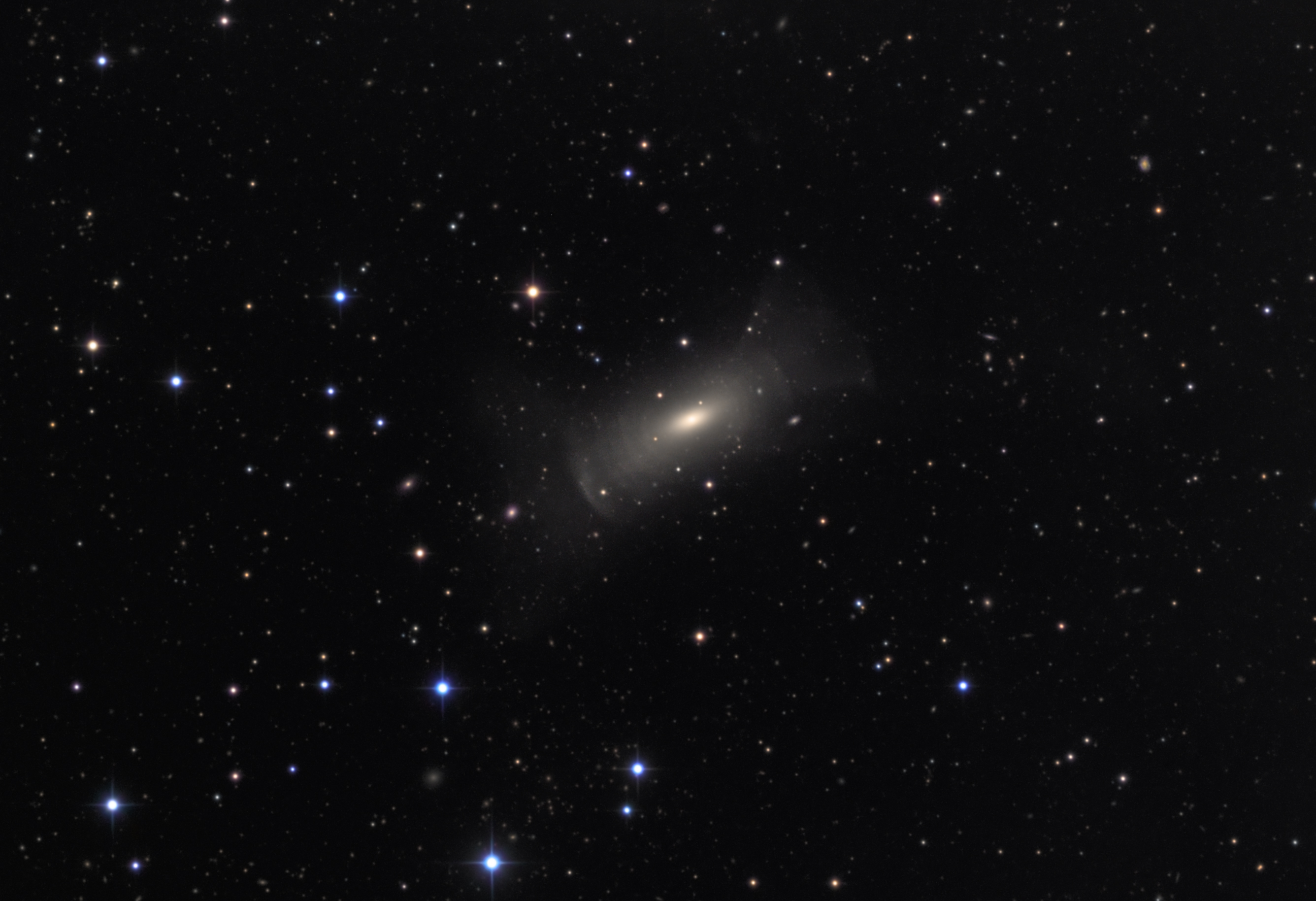
Shell Galaxy NGC 7600
Image Credit & Copyright: Ken Crawford (Rancho Del Sol Observatory)
Collaboration: Andrew Cooper (MPA), Carlos Frenk, John Helly, Shaun Cole (Institute for Computational Cosmology),David Martinez-Delgado (MPIA), Star Stream Pilot Survey Group 

Explanation: Similar in size to the Milky Way, elliptical galaxy NGC 7600 is about 160 million light-years distant. In this deep image, spanning about 1/2 degree on the sky toward the constellation Aquarius, NGC 7600 sports a remarkable outer halo of nested shells and broad circumgalactic structures. The tantalizing features can be explained by the accretion of dark matter and stars on a cosmic timescale. In fact, a movie generated by simulating galaxy formation using a cosmological model with cold dark matter for the halos of merging galaxies reproduces the appearance of NGC 7600 in amazing detail. The remarkable simulation movie is available here on Vimeo and here in other formats. It presents compelling evidence that detailed features of galaxy mergers observed with small, wide field telescopes on planet Earth, are natural consequences of galaxy formation and fundamental properties of dark matter.

Astronomy Picture of the Day for December 15th

Astronomy Picture of the Day

Discover the cosmos!Each day a different image or photograph of our fascinating universe is featured, along with a brief explanation written by a professional astronomer.

2011 December 15
See Explanation.  Clicking on the picture will download the highest resolution version available.

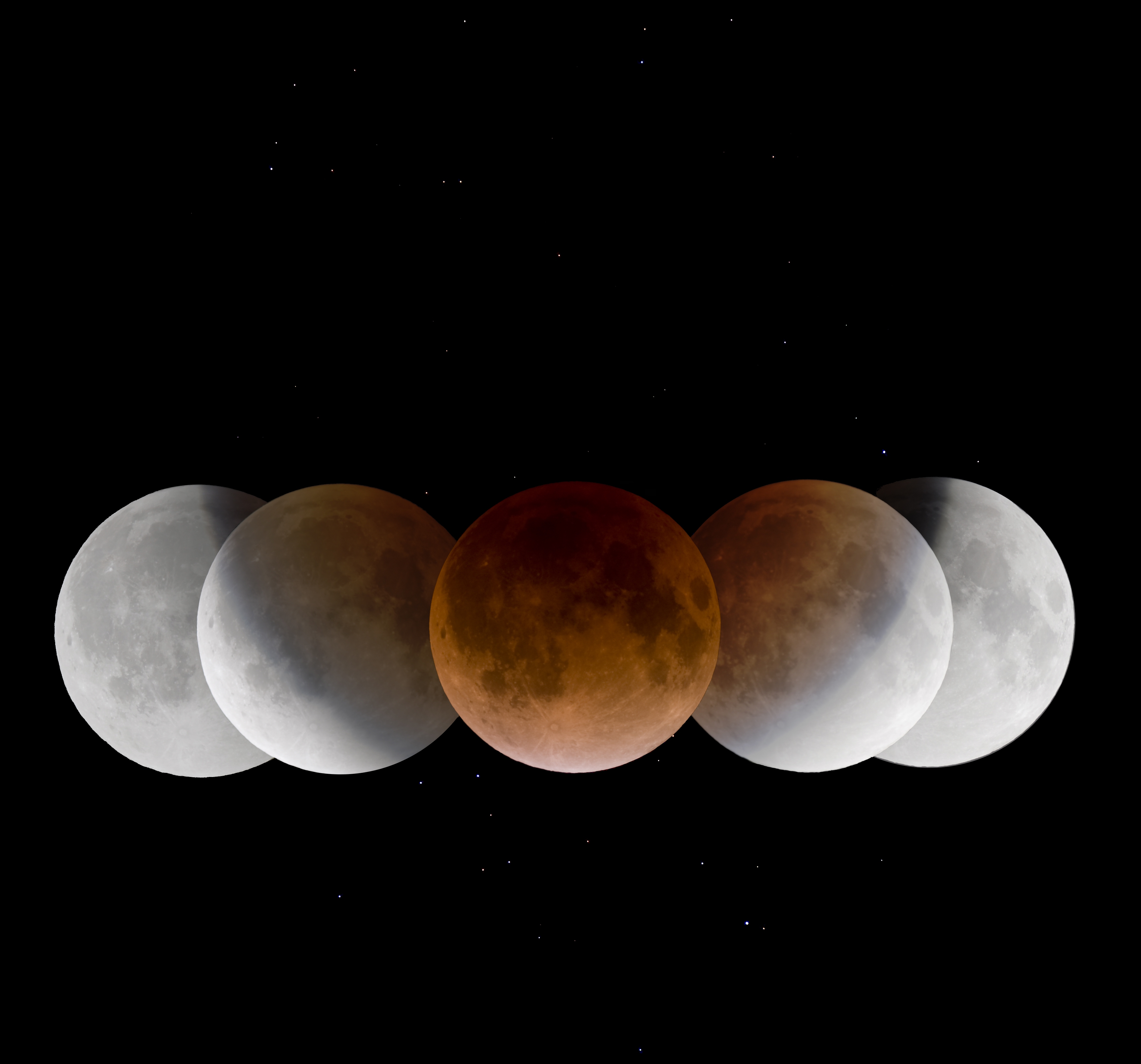
The Umbra of Earth
Image Credit & Copyright: Wang, Letian  

Explanation: The dark, inner shadow of planet Earth is called the umbra. Shaped like a cone extending into space, it has a circular cross section most easily seen during a lunar eclipse. For example, last Saturday the Full Moon slid across the southern half of Earth’s umbral shadow, entertaining moonwatchers around much of the planet. In the total phase of the eclipse, the Moon was completely within the umbra for 51 minutes. Recorded from Beijing, China, this composite eclipse image uses successive pictures from totality (center) and partial phases to trace out a large part of the umbra’s curved edge. Background stars are visible in the darker eclipse phases. The result shows the relative size of the shadow’s cross section at the distance of the Moon, as well as the Moon’s path through Earth’s umbra.

Astronomy Picture of the Day

Astronomy Picture of the Day

Discover the cosmos!Each day a different image or photograph of our fascinating universe is featured, along with a brief explanation written by a professional astronomer.

2011 December 8
See Explanation.  Clicking on the picture will download the highest resolution version available.

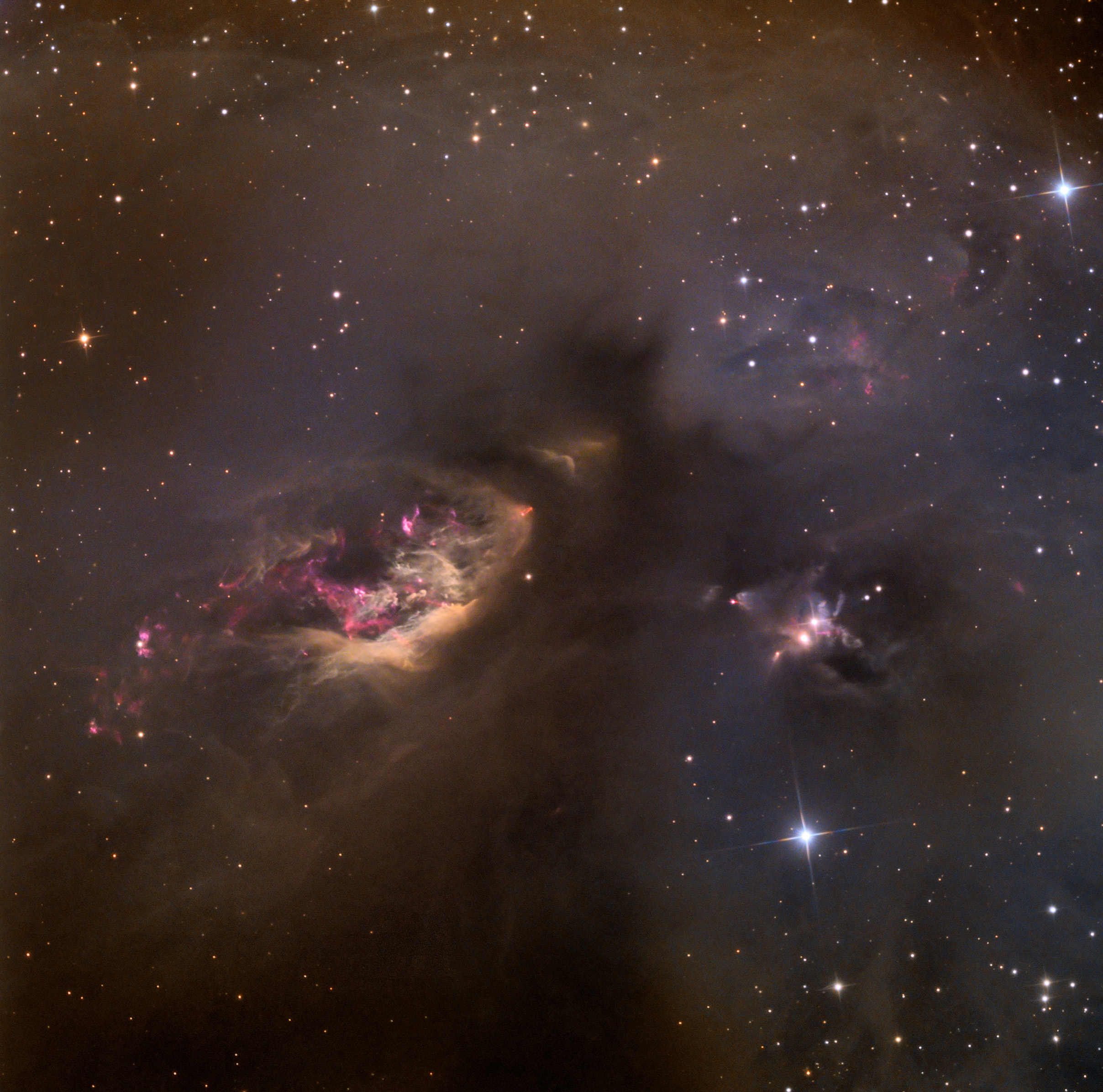
Sh2-239: Celestial Impasto
Image Credit & Copyright: Adam Block, Mt. Lemmon SkyCenter, University of Arizona 


 Explanation: The cosmic brush of star formation composed this alluring mix of dust and dark nebulae. Cataloged as Sh2-239 and LDN 1551, the region lies near the southern end of the Taurus molecular cloud complex some 450 light-years distant. Stretching for nearly 3 light-years, the canvas abounds with signs of embedded young stellar objects driving dynamic outflows into the surrounding medium. Included near the center of the frame, a compact, tell-tale red jet of shocked hydrogen gas is near the position of infrared source IRS5, known to be a system of protostars surrounded by dust disks. Just below it are the broader, brighter wings of HH 102, one of the region’s many Herbig-Haro objects, nebulosities associated with newly born stars. Estimates indicate that the star forming LDN 1551 region contains a total amount of material equivalent to about 50 times the mass of the Sun.

Astronomy Picture of the Day for November 25th

Astronomy Picture of the Day

Discover the cosmos!Each day a different image or photograph of our fascinating universe is featured, along with a brief explanation written by a professional astronomer.

2011 November 25
See Explanation.  Clicking on the picture will download the highest resolution version available.

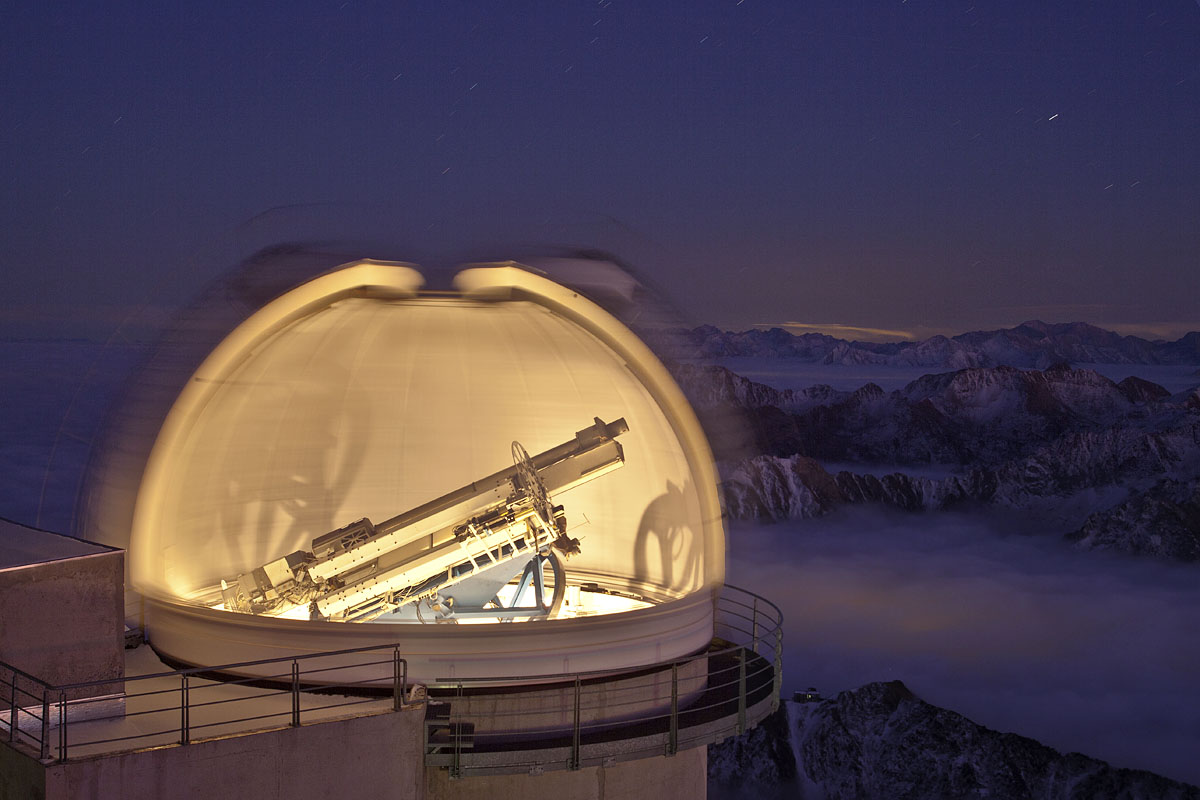
A Glimpse of CLIMSO
Image Credit & Copyright: Alain Sallez (picdumidi.org)  


Explanation: A tantalizing glimpse inside this dome was captured after sunset at the mountain top Pic Du Midi Observatory in the French Pyrenees. But while most are just beginning their work at sunset, this observatory’s day was done. The instrument looming within is CLIMSO (for Christian Latouche IMageur Solaire), dedicated to exploring dynamic phenomena across the surface and atmosphere of the Sun. To image the solar atmosphere or corona, CLIMSO uses coronagraphs. Developed by French astronomer Bernard Lyot in the 1930s, coronagraphs block light from the center of the telescope beam to create an artificial solar eclipse and allow a continuous view of the solar corona. In this surreal twilight scene above a sea of clouds, the dome’s interior was revealed by the single, long exposure as the open slit rotated across the field of view.

Astronomy Picture of the Day

Astronomy Picture of the Day

Discover the cosmos!Each day a different image or photograph of our fascinating universe is featured, along with a brief explanation written by a professional astronomer.

2011 November 23
See Explanation.  Clicking on the picture will download the highest resolution version available.

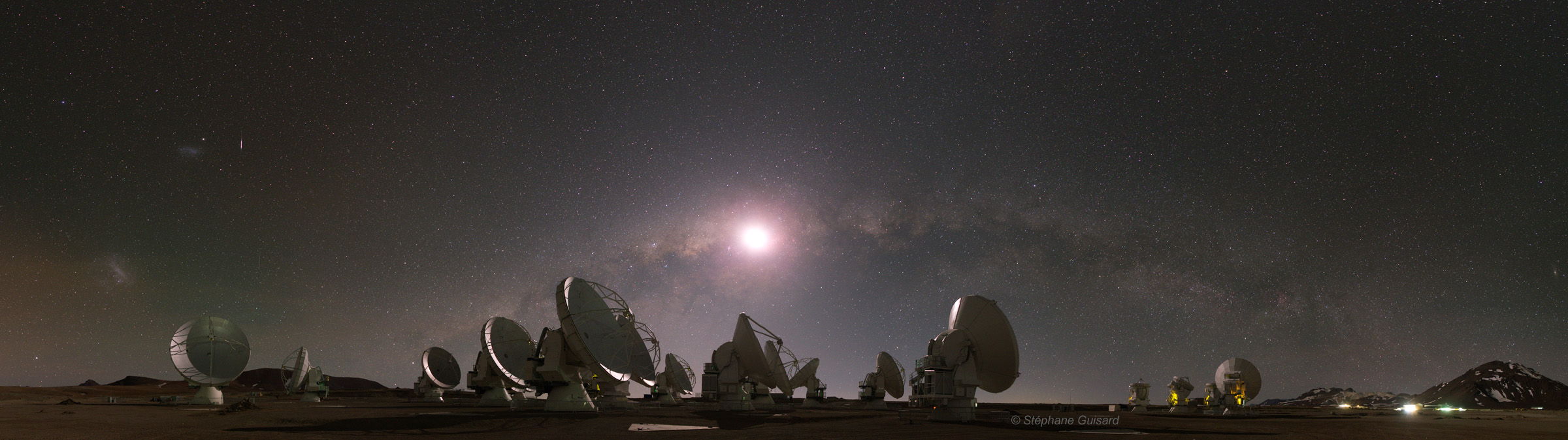
The View from Chajnantor
Image Credit & Copyright: Stéphane Guisard (Los Cielos de America), TWAN 


Explanation: From an altitude of over 5,000 meters, the night sky view from Chajnantor Plateau in the Chilean Andes is breathtaking in more ways than one. The dark site’s rarefied atmosphere, at about 50 percent sea level pressure, is also extremely dry. That makes it ideal for the Atacama Large Millimeter/submillimeter Array (ALMA) designed to explore the universe at wavelengths over 1,000 times longer than visible light. Near the center of the the panoramic scene, ALMA’s 7 and 12 meter wide dish antennas are illuminated by a young Moon nestled in the arc of the Milky Way. ALMA’s antenna configurations are intended to achieve a resolution comparable to space telescopes by operating as an interferometer. At left, a meteor’s streak and the Milky Way’s satellite galaxies, the Large (bottom) and Small Magellanic Clouds grace the night.

Astronomy Picture of the Day for November 20th

Astronomy Picture of the Day

Discover the cosmos!Each day a different image or photograph of our fascinating universe is featured, along with a brief explanation written by a professional astronomer.

2011 November 20
See Explanation.  Clicking on the picture will download the highest resolution version available.

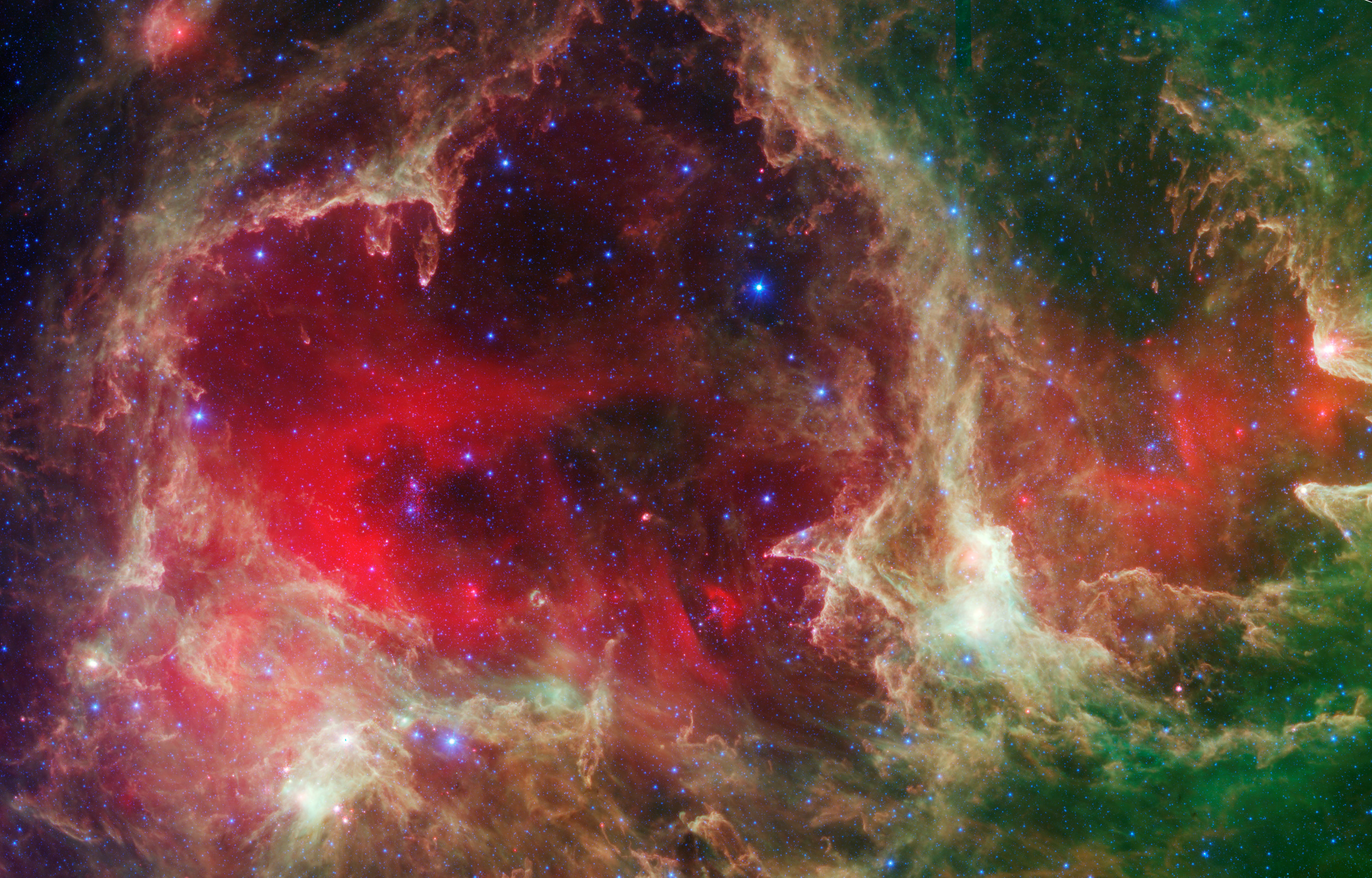
W5: Pillars of Star Formation
Image Credit & Copyright: Lori Allen, Xavier Koenig (Harvard-Smithsonian CfA) et al., JPL-Caltech, NASA  


Explanation: How do stars form? A study of star forming region W5 by the sun-orbiting Spitzer Space Telescope provides clear clues by recording that massive stars near the center of empty cavities are older than stars near the edges. A likely reason for this is that the older stars in the center are actually triggering the formation of the younger edge stars. The triggered star formation occurs when hot outflowing gas compresses cooler gas into knots dense enough to gravitationally contract into stars. Spectacular pillars, left slowly evaporating from the hot outflowing gas, provide further visual clues. In the above scientifically-colored infrared image, red indicates heated dust, while white and green indicate particularly dense gas clouds. W5 is also known as IC 1848, and together with IC 1805 form a complex region of star formation popularly dubbed the Heart and Soul Nebulas. The above image highlights a part of W5 spanning about 2,000 light years that is rich in star forming pillars. W5 lies about 6,500 light years away toward the constellation of Cassiopeia.

Astronomy Picture of the Day for November 18th – A Colorful Side of the Moon

Astronomy Picture of the Day

Discover the cosmos!Each day a different image or photograph of our fascinating universe is featured, along with a brief explanation written by a professional astronomer.

2011 November 18
See Explanation.  Clicking on the picture will download the highest resolution version available.

A Colorful Side of the Moon
NASA / GSFC / DLR / Arizona State Univ. / Lunar Reconnaissance Orbiter 

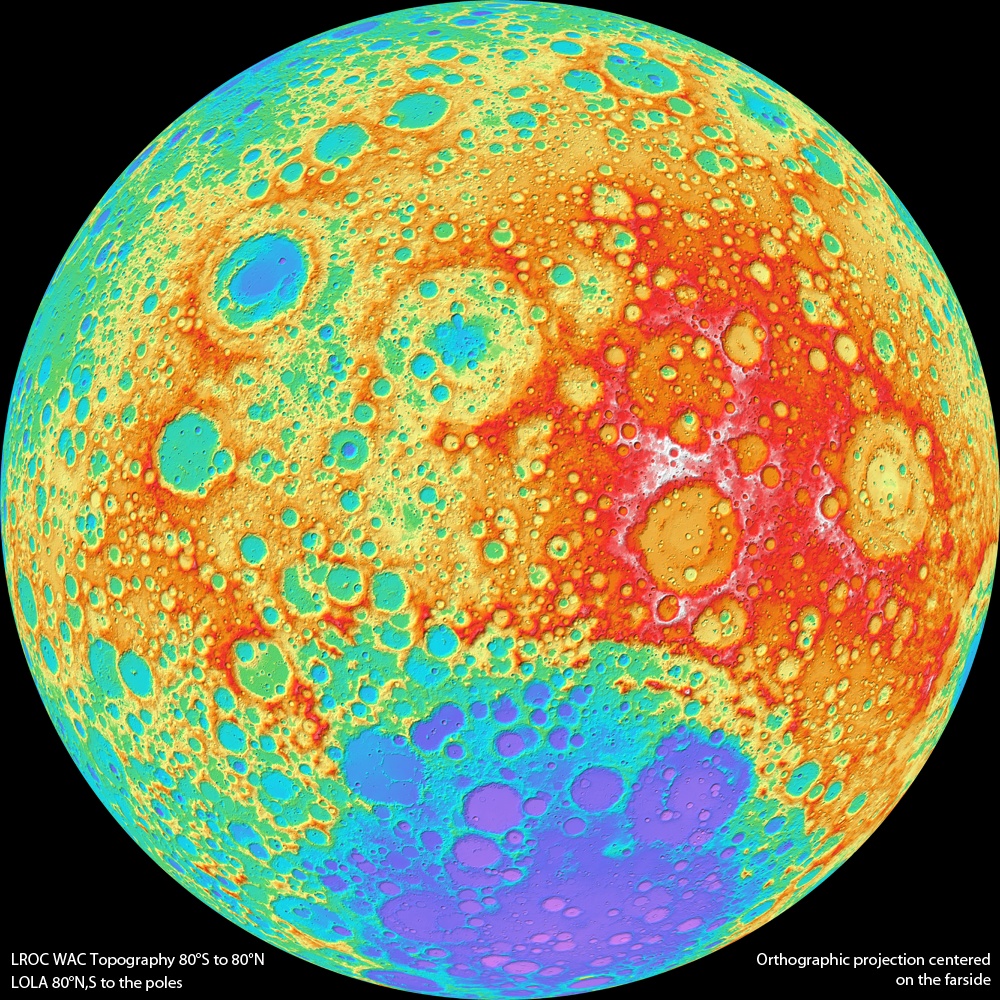
Explanation: This colorful topographical map of the Moon is centered on the lunar farside, the side not seen from planet Earth. That view is available to the Lunar Reconnaissance Orbiter though, as the spacecraft’s wide angle camera images almost the entire lunar surface every month. Stereo overlap of the imaging has allowed the computation of topographical maps with coverage between 80 degrees north and south latitude. The results have about a 300 meter resolution on the lunar surface and 10 to 20 meter elevation accuracy. Data closer to the north and south poles is filled in using the orbiter’s laser altimeter. In this map, white, red, green, and purple represent progressively lower elevations. In fact, the large circular splotch tending to purple hues at the bottom is the farside’s South Pole-Aitken Basin. About 2500 kilometers in diameter and over 12 kilometers deep, it is one of the largest impact basins in the Solar System.

Astronomy Picture of the Day for November 17th

Astronomy Picture of the Day

Discover the cosmos!Each day a different image or photograph of our fascinating universe is featured, along with a brief explanation written by a professional astronomer.

2011 November 17
See Explanation.  Clicking on the picture will download the highest resolution version available.

Pleiades to Hyades
Image Credit & Copyright: Rogelio Bernal Andreo


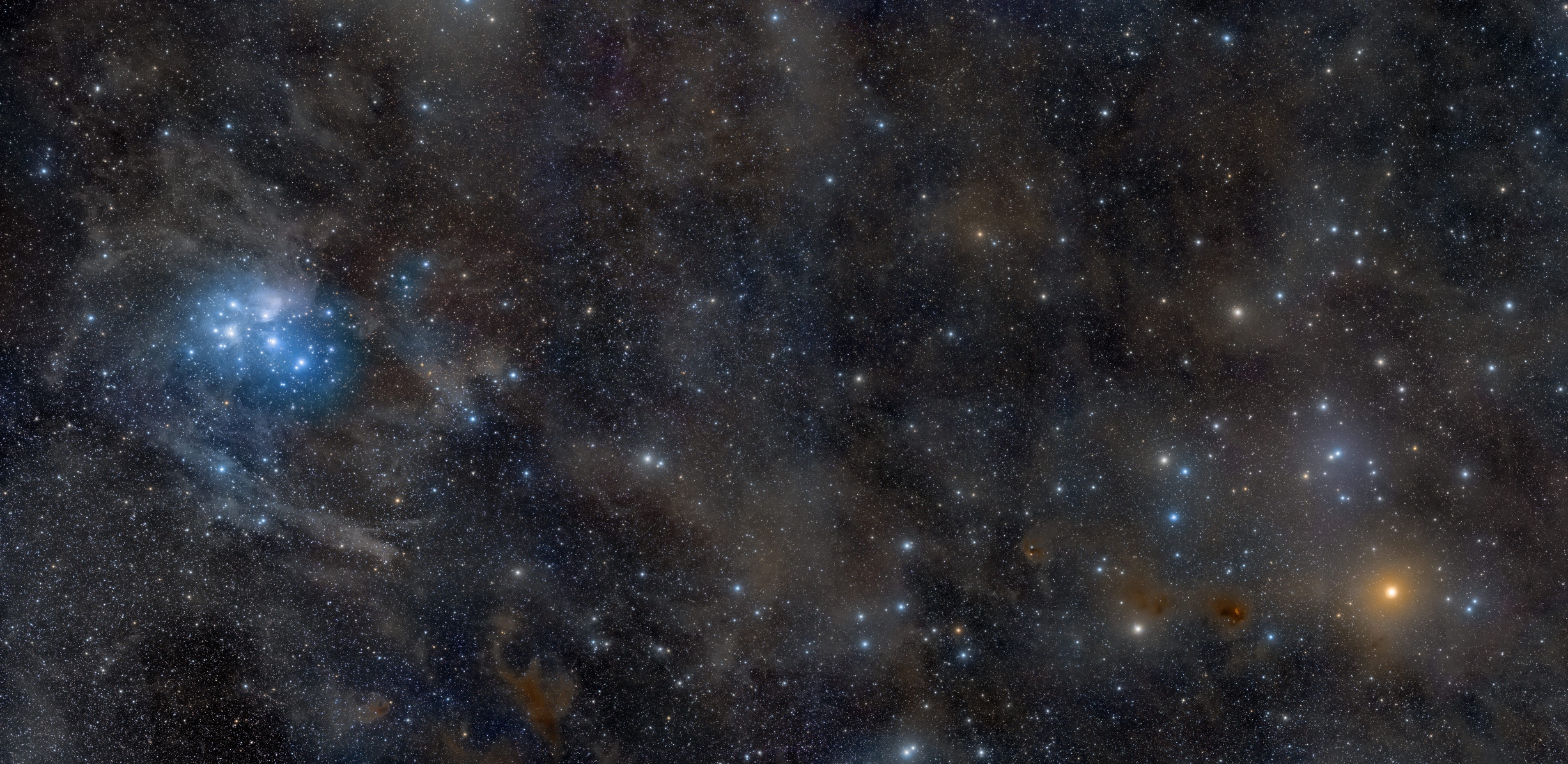
Explanation: This cosmic vista stretches almost 20 degrees across the gentle constellation Taurus. It begins at the Pleiades and ends at the Hyades, two of the best known star clusters in planet Earth’s sky. At left, the lovely Pleiades star cluster is about 400 light-years away. In a familiar celestial scene, the cluster stars shine through dusty clouds that scatter blue starlight. At right, the V-shaped Hyades cluster looks more spread out compared to the compact Pleiades and lies much closer, 150 light-years distant. Of course, the Hyades cluster stars seem anchored by bright Aldebaran, a red giant star with a yellowish appearance. But Aldebaran actually lies only 65 light-years away, by chance along the line of sight to the Hyades cluster. Faint dust clouds found near the edge of the Taurus Molecular Cloud are also evident throughout the remarkable 12 panel mosaic. The wide field of view includes the youthful star T Tauri and Hind’s variable nebula about four degrees left of Aldebaran on the sky.

Astronomy Picture of the Day for November 14th

Astronomy Picture of the Day

Discover the cosmos!Each day a different image or photograph of our fascinating universe is featured, along with a brief explanation written by a professional astronomer.

2011 November 14
See Explanation.  Clicking on the picture will download the highest resolution version available.

Waterfall, Moonbow, and Aurora from Iceland
Image Credit & Copyright: Stephane Vetter (Nuits sacrees


Explanation: The longer you look at this image, the more you see. Perhaps your eye is first drawn to the picturesque waterfall called Skogarfoss visible on the image right. Just as prevalent, however, in this Icelandic visual extravaganza, is the colorful arc of light on the left. This chromatic bow is not a rainbow, since the water drops did not originate in rainfall nor are they reflecting light from the Sun. Rather, the drops have drifted off from the waterfall and are now illuminated by the nearly full Moon. High above are the faint green streaks of aurora. The scene, captured one night last month, also shows a beautiful starscape far in the background, including the Big Dipper, part of the constellation of the Great Bear (Ursa Major).

Astronomy Picture of the Day for November 8th

Astronomy Picture of the Day

Discover the cosmos!Each day a different image or photograph of our fascinating universe is featured, along with a brief explanation written by a professional astronomer.

2011 November 8

Jumping Sundogs Over Thunderclouds
Image Credit: abrigatti, YouTube 


Explanation: What’s happening above those clouds? In the past few years, videos have appeared on the web detailing an unusual but little known phenomenon: rapid light changes over clouds. Upon inspection and contemplation, a leading hypothesis for its cause has now emerged. In sum, this hypothesis holds that a lightning discharge in a thundercloud can temporarily change the electric field above the cloud where charged ice crystals were reflecting sunlight. The new electric field quickly re-orients the geometric crystals to a new orientation that reflects sunlight differently. In other words, a lightning discharge can cause a sundog to jump. Soon, the old electric field may be restored, causing the ice crystals to return to their original orientation. To help this curious phenomenon become better studied, sky enthusiasts with similar jumping or dancing sundog videos are encouraged to share them.

Astronomy Picture of the Day for November 7th

Astronomy Picture of the Day

Discover the cosmos!Each day a different image or photograph of our fascinating universe is featured, along with a brief explanation written by a professional astronomer.

2011 November 7
See Explanation.  Clicking on the picture will download the highest resolution version available.

Star Forming Region S106
Image Credit: GRANTECAN and IAC 


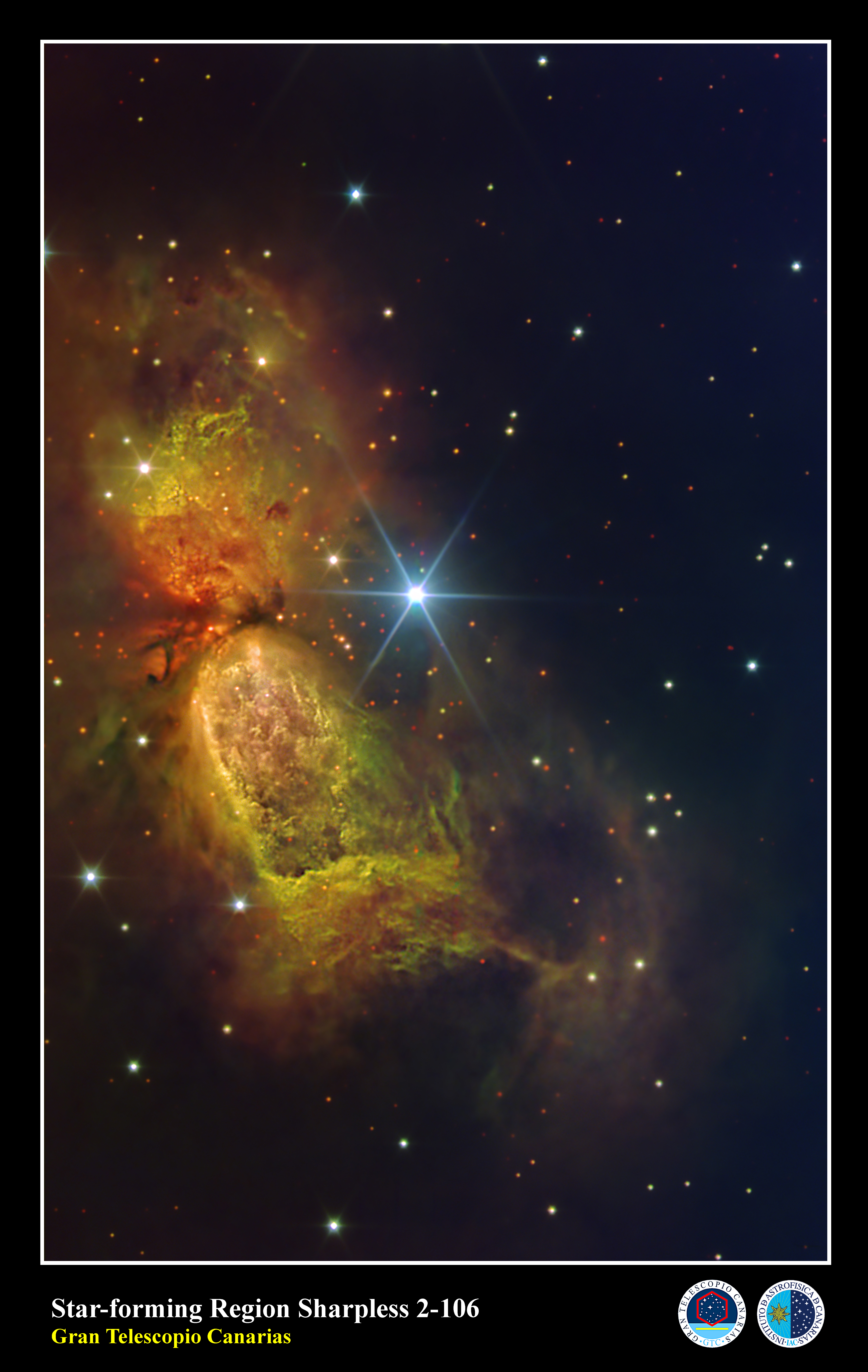
Explanation: Massive star IRS 4 is beginning to spread its wings. Born only about 100,000 years ago, material streaming out from this newborn star has formed the nebula dubbed Sharpless 2-106 Nebula (S106), pictured above. A large disk of dust and gas orbiting Infrared Source 4 (IRS 4), visible in dark red near the image center, gives the nebula an hourglass or butterfly shape. S106 gas near IRS 4 acts as an emission nebula as it emits light after being ionized, while dust far from IRS 4 reflects light from the central star and so acts as a reflection nebula. Detailed inspection of images like the above image has revealed hundreds of low-mass brown dwarf stars lurking in the nebula’s gas. S106 spans about 2 light-years and lies about 2000 light-years away toward the constellation of the Swan (Cygnus).

Astronomy Picture of the Day for November 3rd

Astronomy Picture of the Day

Discover the cosmos!Each day a different image or photograph of our fascinating universe is featured, along with a brief explanation written by a professional astronomer.

See Explanation.  Clicking on the picture will download the highest resolution version available.

Tails of Comet Garradd
Image Credit & Copyright: Gregg Ruppel 


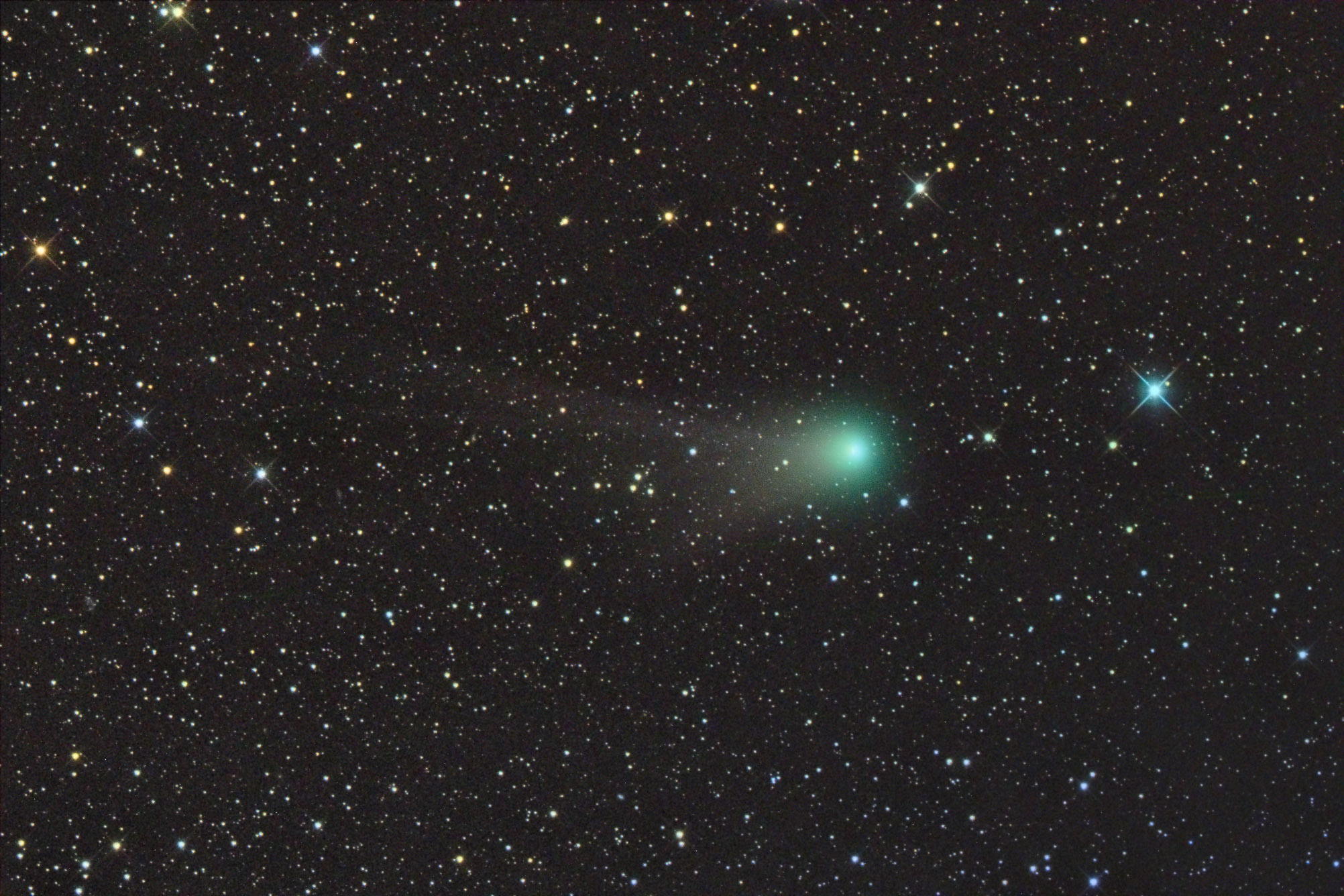
Explanation: A good target for binoculars and small telescopes, Comet Garradd (C/2009 P1) now shines in planet Earth’s evening skies, a steady performer but just below naked-eye visibility. Telescopic images like this composite from October 15 can find the comet with a lovely green coma, sporting multiple tails, and lingering against a background of faint stars. The field of view spans over 1 degree or about 2 full moons within the southern boundaries of the constellation Hercules. Now around 16 light minutes (2 astronomical units) away, P1 Garradd is an intrinsically large comet, but will never make a very close approach to Earth or the Sun while sweeping through the inner solar system. As a result, the comet will likely stay a sight for telescopic eyes only, moving slowly through the sky and remaining in Hercules during the coming months.

Astronomy Picture of the Day

Astronomy Picture of the Day

Discover the cosmos!Each day a different image or photograph of our fascinating universe is featured, along with a brief explanation written by a professional astronomer.

2011 November 1
See Explanation.  Clicking on the picture will downloadthe highest resolution version available.

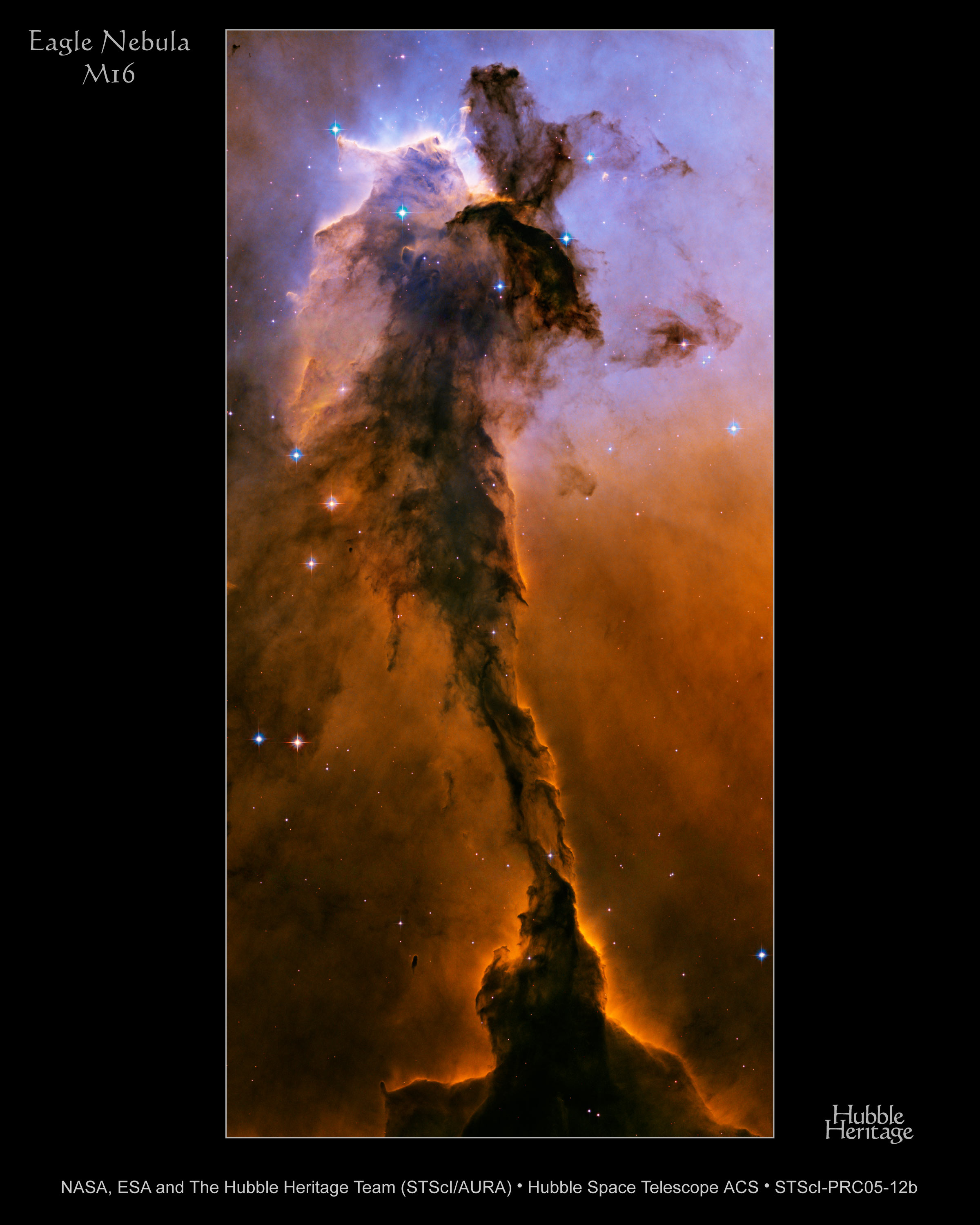
The Fairy of Eagle Nebula
Image Credit: The Hubble Heritage Team, (STScI/AURA), ESA, NASA 

Explanation: The dust sculptures of the Eagle Nebula are evaporating. As powerful starlight whittles away these cool cosmic mountains, the statuesque pillars that remain might be imagined as mythical beasts. Pictured above is one of several striking dust pillars of the Eagle Nebula that might be described as a gigantic alien fairy. This fairy, however, is ten light years tall and spews radiation much hotter than common fire. The greater Eagle Nebula, M16, is actually a giant evaporating shell of gas and dust inside of which is a growing cavity filled with a spectacular stellar nursery currently forming an open cluster of stars. The above image in scientifically re-assigned colors was released in 2005 as part of the fifteenth anniversary celebration of the launch of the Hubble Space Telescope.

Astronomy Picture of the Day for October 27th

Astronomy Picture of the Day

Discover the cosmos!Each day a different image or photograph of our fascinating universe is featured, along with a brief explanation written by a professional astronomer.

2011 October 27
See Explanation.  Clicking on the picture will download the highest resolution version available.

Young Suns of NGC 7129
Image Credit & Copyright: Johannes Schedler (Panther Observatory)Explanation: Young suns still lie within dusty NGC 7129, some 3,000 light-years away toward the royal constellation Cepheus. While these stars are at a relatively tender age, only a few million years old, it is likely that our own Sun formed in a similar stellar nursery some five billion years ago. Most noticeable in the sharp image are the lovely bluish dust clouds that reflect the youthful starlight. But the compact, deep red crescent shapes are also markers of energetic, young stellar objects. Known as Herbig-Haro objects, their shape and color is characteristic of glowing hydrogen gas shocked by jets streaming away from newborn stars. Paler, extended filaments of redish emission mingling with the bluish clouds are caused by dust grains effectively converting the invisible ultraviolet starlight to visible red light through photoluminesence. Ultimately the natal gas and dust in the region will be dispersed, the stars drifting apart as the loose cluster orbits the center of the Galaxy. At the estimated distance of NGC 7129, this telescopic view spans about 40 light-years.

Astronomy Picture of the Day for October 24th

Astronomy Picture of the Day

Discover the cosmos!Each day a different image or photograph of our fascinating universe is featured, along with a brief explanation written by a professional astronomer.

2011 October 24
See Explanation.  Clicking on the picture will download the highest resolution version available.

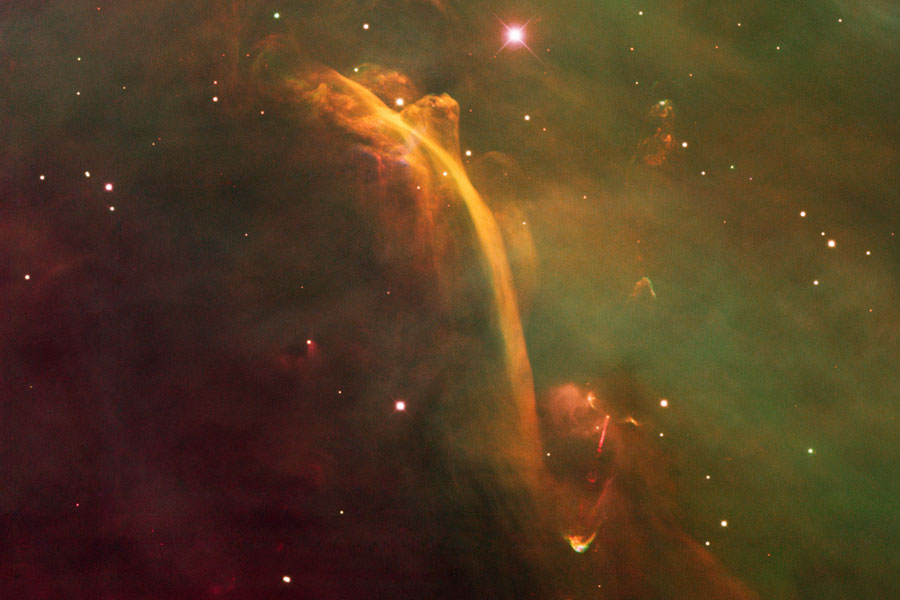
HH-222: The Waterfall Nebula
Image Credit: Z. Levay (STScI/AURA/NASA), T.A. Rector (U. Alaska Anchorage) & H. Schweiker (NOAO/AURA/NSF), KPNO, NOAO  


Explanation: What created the Waterfall Nebula? No one knows. The structure seen in the region of NGC 1999 in the Great Orion Molecular Cloud complex is one of the more mysterious structures yet found on the sky. Designated HH-222, the elongated gaseous stream stretches about ten light years and emits an unusual array of colors. One hypothesis is that the gas filament results from the wind from a young star impacting a nearby molecular cloud. That would not explain, however, why the Waterfall and fainter streams all appear to converge on a bright but unusual non thermal radio source located toward the upper left of the curving structure. Another hypothesis is that the unusual radio source originates from a binary system containing a hot white dwarf, neutron star, or black hole, and that the Waterfall is just a jet from this energetic system. Such systems, though, are typically strong X-rays emitters, and no X-rays have been detected. For now, this case remains unsolved. Perhaps well-chosen future observations and clever deductive reasoning will unlock the true origin of this enigmatic wisp in the future.

Astronomy Pic of the Day for Oct. 20th

Astronomy Picture of the Day

Discover the cosmos!Each day a different image or photograph of our fascinating universe is featured, along with a brief explanation written by a professional astronomer.


The Big Dipper
Image Credit & Copyright: Rogelio Bernal Andreo 


Explanation: The best known asterism in northern skies, The Big Dipper is easy to recognize, though some might see The Plough. Either way, the star names and the familiar outlines will appear in this thoughtfully composed 24 frame mosaic when you slide your cursor over the image. Dubhe, alpha star of the dipper’s parent constellation Ursa Major is at the upper right. Together with beta star Merak below, the two form a line pointing the way to Polaris and the North Celestial Pole off the top edge of the field. Notable too in skygazing lore Mizar, second star from the left in the dipper’s handle, forms a vision-testing visual double star with apparently close Alcor. Also identified in the famous star field are Messier catalog objects. Download the higher resolution image to hunt for exquisite views of some of Messier’s distant spiral galaxies and a more local owl.

Astronomy Picture of the Day for October 16th

Astronomy Picture of the Day

Discover the cosmos!Each day a different image or photograph of our fascinating universe is featured, along with a brief explanation written by a professional astronomer.

2011 October 16
See Explanation.  Clicking on the picture will download the highest resolution version available.

A Picturesque Venus Transit
Image Credit & Copyright: David Cortner 

Explanation: The rare transit of Venus across the face of the Sun in 2004 was one of the better-photographed events in sky history. Both scientific and artistic images flooded in from the areas that could see the transit: Europe and much of Asia, Africa, and North America. Scientifically, solar photographers confirmed that the black drop effect is really better related to the viewing clarity of the camera or telescope than the atmosphere of Venus. Artistically, images might be divided into several categories. One type captures the transit in front of a highly detailed Sun. Another category captures a double coincidence such as both Venus and an airplane simultaneously silhouetted, or Venus and the International Space Station in low Earth orbit. A third image type involves a fortuitous arrangement of interesting looking clouds, as shown by example in the above image taken from North Carolina, USA. The next transit of Venus across the Sun will be in 2012 June.

Astronomy Picture of the Day for October 14th

Astronomy Picture of the Day

Discover the cosmos!Each day a different image or photograph of our fascinating universe is featured, along with a brief explanation written by a professional astronomer.

2011 October 14

MAGIC Star Trails
Image Credit & Copyright: Babak Tafreshi (TWAN


Explanation: Colorful star trails arc across the night in this surreal timelapse skyscape from the Roque de los Muchachos Observatory on the Canary island of La Palma. A reflection of the Earth’s daily rotation on its axis, the star trails are also reflected in one of a pair of 17 meter diameter, multi-mirrored MAGIC telescopes. The MAGIC (Major Atmospheric Gamma Imaging Cherenkov) telescope itself is intended to detect gamma rays – photons with over 100 billion times the energy of visible light. As the high energy gamma rays impact the upper atmosphere they produce air showers of high-energy particles. A fast camera monitoring the multi-mirrored surface records in detail brief flashes of optical light, called Cherenkov light, created by the air shower particles Astronomers can then ultimately relate the optical flashes to cosmic sources of extreme gamma-rays.

Astronomy Picture of the Day for October 11th

Astronomy Picture of the Day

Discover the cosmos!Each day a different image or photograph of our fascinating universe is featured, along with a brief explanation written by a professional astronomer.

2011 October 11

NGC 7635: The Bubble Nebula
Image Credit & Copyright: Larry Van Vleet 


Explanation: It’s the bubble versus the cloud. NGC 7635, the Bubble Nebula, is being pushed out by the stellar wind of massive central star BD+602522. Next door, though, lives a giant molecular cloud, visible to the right. At this place in space, an irresistible force meets an immovable object in an interesting way. The cloud is able to contain the expansion of the bubble gas, but gets blasted by the hot radiation from the bubble’s central star. The radiation heats up dense regions of the molecular cloud causing it to glow. The Bubble Nebula, pictured above in scientifically mapped colors to bring up contrast, is about 10 light-years across and part of a much larger complex of stars and shells. The Bubble Nebula can be seen with a small telescope towards the constellation of the Queen of Aethiopia (Cassiopeia).