

Category: Daily Posts
Astronomy Picture of the Day – The Iris Nebula in a Field of Dust
Astronomy Picture of the Day
Discover the cosmos! Each day a different image or photograph of our fascinating universe is featured, along with a brief explanation written by a professional astronomer.
2018 August 1
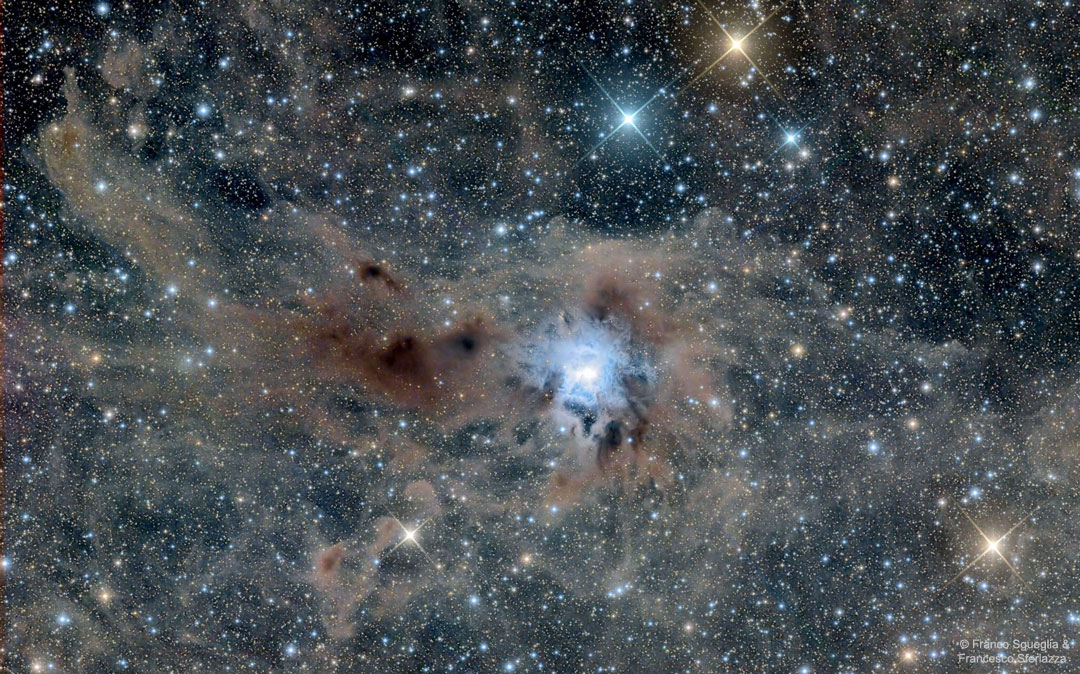
The Iris Nebula in a Field of Dust
Image Credit & Copyright: Franco Sgueglia & Francesco Sferlazza
Explanation: What blue flower grows in this field of dark interstellar dust? The Iris Nebula. The striking blue color of the Iris Nebula is created by light from the bright star SAO 19158 reflecting off of a dense patch of normally dark dust. Not only is the star itself mostly blue, but blue light from the star is preferentially reflected by the dust — the same affect that makes Earth’s sky blue. The brown tint of the pervasive dust comes partly from photoluminescence — dust converting ultraviolet radiation to red light. Cataloged as NGC 7023, the Iris Nebula is studied frequently because of the unusual prevalence there of Polycyclic Aromatic Hydrocarbons (PAHs), complex molecules that are also released on Earth during the incomplete combustion of wood fires. The bright blue portion of the Iris Nebula spans about six light years. The Iris Nebula, pictured here, lies about 1300 light years distant and can be found with a small telescope toward the constellation of Cepheus.
Your Earth Sky News for August 1: Orion the Hunter returns before dawn
Orion the Hunter returns before dawn

Around early August, if you’re up early and have an unobstructed view to the east, be sure to look in that direction in the hour before dawn. You might find a familiar figure – a constellation that always returns to the sky around this time of year. It’s the beautiful constellation Orion the Hunter – recently behind the sun as seen from our earthly vantage point – now ascending once more in the east before sunrise.
The Hunter appears each northern winter as a mighty constellation arcing across the south during the evening hours. Many people see it then, and notice it, because the pattern of Orion’s stars is so distinctive.
But, at the crack of dawn in late summer, you can spot Orion in the east. Thus Orion has been called the ghost of the shimmering summer dawn.
The Hunter rises on his side, with his three Belt stars – Mintaka, Alnitak and Alnilam – pointing straight up.

Also, notice the star Aldebaran in the constellation Taurus the Bull. Aldebaran is the brightest star in Taurus the Bull. It’s said to be the Bull’s fiery red eye. See the V-shaped pattern of stars around Aldebaran? This pattern represents the Bull’s face. In skylore, Orion is said to be holding up a great shield … fending off the charging Bull. Can you imagine this by looking at the chart at top? It’s easy to imagine when you look at the real sky before dawn at this time of year.
Bottom line: The return of Orion and Taurus to your predawn sky happens around late July or early August every year. In the Northern Hemisphere, Orion is sometimes called the ghost of the summer dawn.
Originally published on EarthSky
The Wisdom of Buddha
The Wisdom of Buddha

Just as a candle cannot burn without fire, men cannot live without a spiritual life.
Advice From A Raven

Characteristics of the Raven as Spirit Guide

Your Animal Spirit Guide for August 1 is The Raven

Your Daily Witches Rune for August 1 is The Crossed Spears

Your Daily Witches Rune
The Crossed Spears
Meaning: The presence of the spear signifies arguments, negative events, and all manner of strife of an upsetting nature. However similar to the ‘Tower’ tarot card if next to a positive rune it could mean the end of an argument or quarrel. If with the rings it means the healing or renewal of a relationship. If there are military connections it could mean promotion. If illness is within the equation it means a speedy and successful recovery.
Your Daily Rune for August 1 is Mannaz
Your Daily Rune for August 1, 2018

Mannaz
“Man-az” – Literally: “Mankind”
Esoteric: Humankind, awareness
Rune of the Divine structure of intelligence in the human soul or psyche. Rune of the horizons of human existence and collective potential.
Psi: mind & memory (Hugin & Munin), the difference between human and all other life, development of the intellect, rational mind, perfected intelligence
Energy: psychic order of the gods reflected in humankind, projection of Self into time
Mundane: thinking, planning, analysis, the human condition, people at large (contemporary: the masses)
Divinations: Divine structure, sustainability, intelligence, awareness, social order, divine influence in life; or depression, mortality, blindness, self-delusion, collective suicide, bigotry, elitism, intellectual arrogance.
Governs:
Self-Actualization
Realization of the divine structure in humankind
Increase in intelligence, memory and mental powers (passing tests)
Unlocking the third-eye hvel, the “mind’s eye”
Activating the dynamics of your own inner Christus, or Higher Self
Awareness of our roles as co-creator with the gods and nature
Mental and spiritual potential
Your Ancient Symbol Card for August 1 is Death
Your Ancient Symbol Card for Today

Death
Death is definitely not a card to shy away from. It does not foretell your impending doom. However it does suggest a period of change and the turbulence that often comes with it are on the horizon. We may not always welcome change, but invariably we must change to grow. Sometimes we have to shed some of the comfortability of who we are today to embrace the adventure of who we will be tomorrow. Death is the prophecy of such times.
As a daily card, Death tells you that changes need to be made in order for you to move smoothly along your life’s journey. When seen as a daily card, it is likely the changes indicated are on the order of “minor adjustments” in your day to day routine.
Your Erotic Tarot Card for August 1 is The Judgment
Your Erotic Tarot Card for the Day
The Judgment
_________________________________________________
August 1, 2018

The Judgment card represents a sexual awakening, and now that you aren’t afraid to move in a new direction, a whole new world awaits you. What sex positions do you want to try, and which fantasies have you been dying to act out? Being honest with yourself and potential partner(s) about the details of what you desire will help you get what you want faster, and the end result will be much more satisfying. And above all, enjoy your sexual liberation!
Your Daily Love Tarot Card For Aug. 1 is The Sun
Daily Love Tarot
The Sun
__________________________________________
August 1, 2018

The Sun is an invitation to a supportive relationship in which you can be yourself around your significant other. You feel relaxed and loved, with a sense of peace of heart. You’ve struck gold and entered into a new realm. Keep looking if this is not how you feel because it is how things should be. You can’t expect improvement in a long-term union if you do not take effective steps to create it.
Shuffling the Cards, Your Monthly Influences for August
Your Monthly Influences for August
Tarot Influence
 Ten of Swords Reversed
Evil will be defeated. Courage is needed to face challenges. Develop your spiritual self.
Astrological Influence
 Gemini
While Gemini always has its duality to keep under control, it does manage to bring both humor and intelligence into any situation.
Element Influence
 Water Reversed
Water reversed denotes secrets to which you are not privy. Approach all ventures with caution.
Your Crowley Thoth Tarot Card for August 1 is The Moon
Your Crowley Thoth Tarot Card for Today

The Moon
The Moon represents those forces which remain largely hidden to us. The light of the moon provides some illumination down a path into the unknown, but not enough to brighten the landscape like The Sun, or cut through the dark shadows from which the unexpected may leap. However, The Moon is not without gifts we can use. She spurs our imagination and creativity. She can be a portal to knowledge and experience beyond the realm of our everyday lives. But Her offerings are not available to the feint of heart. To receive what The Moon offers one must have the courage to follow uncharted paths and the intelligence to find truths hidden in a bewildering setting rife with illusion. For those who can make this journey the reward may be finding the key to making their dreams come true.
Your Personal Daily Tarot Card for Wednesday, Aug. 1st is The Hermit
Your Personal Daily Tarot Card

The Hermit
The Hermit denotes a need to have some space between you and the everyday hustle and bustle of our busy world. The Hermit needs to retreat. Indeed, happiness for The Hermit requires seclusion, freedom from material wants, and time for intense introspection. The answers The Hermit needs cannot be found in our physical world. The truths he seeks are internal, spiritual, and the distraction of a well developed social life can only impede his quest for his personal truths. Still, although not anything remotely resembling extroversion, The Hermit does sometimes need to share time with others; so he can both learn and teach, guide and be guided. The Hermit’s time spent amongst people depletes his energy rapidly. To avoid mental and physical overload he has to retreat from social settings quickly.
August 2018 Tarot Reading: Struggling to Feel in Control
August 2018 Tarot Reading: Struggling to Feel in Control
Read your monthly Tarot reading for August 2018
Last month’s Hanged Man card pushed you to break old patterns and consider new perspectives, which is really important, positive personal work. That said, it wouldn’t be surprising if now you feel a little destabilized and emotionally raw. This month’s theme card, the reversed Emperor, indicates the pendulum is swinging too far to the other extreme as you try to regain a sense of authority in your life. The rigidity and impulse for control that comes with reversed Emperor energy, however temporary, can stunt growth and cause suffering in those close to you if you’re not careful. It’s important to be aware of how you treat others this month. This card’s hot-headed tendencies indicate you might be prone to reacting quickly and harshly to problems that arise, potentially creating unnecessary conflict.
Theme card for August: The Emperor reversed
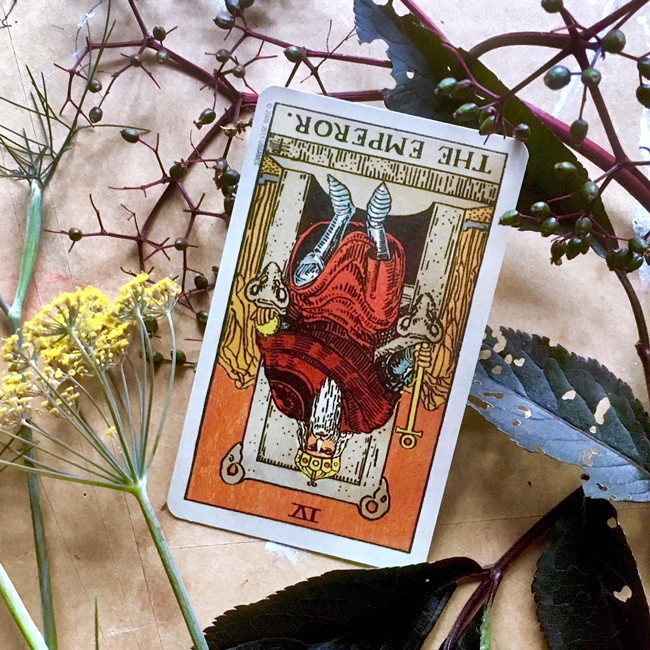
If you are in a leadership position, decision making can be tough under the best of circumstances. You have to constantly manage your needs and expectations with the needs and expectations of others. Right now it may seem like controlling other people’s behavior is the best way to get them to do what you want. Challenge that thought this month. What or whom are you trying to control and what softer approach to the situation might yield a better result?
Tarot.com is Part of the Daily Insight Group ©2018
If You Were Born Today, August 1

If You Were Born Today, August 1
You are a natural leader and others quite readily look up to you. You love variety and can be quite indecisive at times, but you are tough and determined when you need to be. While most consider you calm and centered, you do have a tendency to worry, particularly about money and security. Even so, you are generous and you enjoy some of the finer things in life. You can be quite successful in marketing and research, amongst other things. You quite easily see through falseness, and you much prefer to surround yourself with people who are authentic and honest. Sometimes sarcastic, you can be slightly intimidating, but mostly understood and appreciated for your sense of humor. Famous people born today: Yves Saint-Laurent, Dom DeLuise, Jerry Garcia, Sam Mendes, Demián Bichir, Scarlett Bruns, Jason Momoa, Max Carver.
Your Birthday Year Forecast:
With the Sun and Moon in harmony in your Solar Return chart, the year ahead should be satisfying and balanced overall. You are in comfortable demand and personally popular, and you are able to achieve a decent balance between work and play; personal and professional life. For the most part, you are on top of your game this year, and positive connections with others can be made fairly easily. With the ability to handle your emotions successfully, there is less stress on both your mind and body. Your self-confidence and positive attitude will reward you!
Influences in your solar chart act to heighten your feelings, awakens your impulses, and stir your passions. It may be a time of passionate liaisons or you’re more in tune with your natural impulses this year. You are more resourceful and independent, and less demanding of people around you, which tends to earn you respect.
You’re willing to put in the effort for a mental interest or project this year, and you can feel pleasantly dedicated to your work or ideas. You are more able to focus on what you’re doing and communicating, and more inclined to notice and consider details.
You may be renewing and deepening a love commitment or social connection. A strong and stimulating–even motivating–attraction, relationship, or project is likely now. Secret loves or attractions may develop and existing relationships tend to rise to a higher level of insight and understanding.
Energy fluctuates this year. If you aren’t too rash or impulsive, you might be able to free yourself from restrictive circumstances. You could also have more courage than usual to do things that break the routine, and confrontations engaged in this year could clear the air and help you to move forward.
There can be some struggle regarding hanging on to a project or situation that no longer serves your growth. However, you are also drawn to establishing connections and/or relationships with people that help forward your personal growth. Teamwork and camaraderie, as well as meaningful connections, are themes. You feel your life is growing in purpose this year.
Idealistic and humanitarian goals or impulses surface this year. Making connections with others from different backgrounds may figure strongly. Widening your mind through unusual or different experiences can be part of the picture. You more easily make personal sacrifices for what you believe to be the greater good this year.
This is a powerful year for innovation as well as cooperation. Your creativity is stimulated this year, as well as your excitability and your need for freedom. It is easier than ever to express your individuality in a manner that is true to you. In certain areas of your life, you’re inclined to rock the boat this year so that you can break free from a limiting situation. Be mindful when/if making sweeping changes. There can be increased focus or intensity in a key relationship this year.
2018 is a Number Two year for you. Ruled by the Moon. This is a year of potential companionship. It is a quiet, gentle, and mostly harmonious year that is generally not as active than other years. Instead, you are more responsive to the needs of others. If you are patient and open yourself up in a gentle manner, you will attract what–and who–you want into your life now. This is an excellent year in which to build and develop for the future. Advice – be patient, be receptive, enjoy the peace, collect, develop, build, and attract.
2019 will be a Number Three year for you. Ruled by Jupiter. This is a year of sociability. It is a friendly time when you find it natural and easy to enjoy life and other people. The focus is on personal freedom, reaching out to others, making new friends, and exploration. You are more enthusiastic and ready for adventure than you are in other years. It’s likely to be a rather lighthearted year when opportunities for “play” time are greater than usual. It’s also a favorable year for expressing your creativity. Advice – reach out and connect but avoid scattering your energies.
Source
August 2018 Astro-Energy Report – Radical Remembrance
August 2018 Astro-Energy Report – Radical Remembrance

To view more of Sarah’s insight, please visit her website, Awakenings, Astrology with Sarah Varcas
August begins in the middle of an eclipse season which continues until the 15th. Last month was an intense journey for many, with solar and lunar eclipses challenging even the most balanced among us! As we embark on a new month we have one more solar eclipse to come on the 11th before things begin to ease. Mars has been conjunct the South Node since the end of May, anchoring our attention in the past, rationalising the adoption of old habits over new approaches and generally holding us back when we most needed to move forward. This has made recent weeks especially difficult as eclipse energies have demanded new responses while our instincts have told us security lies in the familiar. This tie to the past weakens as August begins. For some it may feel like waking from a mysteriously seductive sleep in which reactions and behaviours have felt automatic and involuntary. From 5th August we should be far more present and better able to make informed decisions with clear intent rather than acting under the influence of unconscious impressions and emotions.
Despite this collective return to a more present state of mind, deep inner change continues throughout August. With between five and seven retrograde planets all month – with the dwarf planet Eris making eight – our inner life will be deeply impacted by external experience. Seemingly inconsequential events may affect us more significantly than anticipated, triggering unexpected reactions in need of attention. By way of support a semi-sextile between Chiron and Uranus, which continues until 22nd of August, provides both the means and motivation to liberate ourselves from the grip of difficult emotion. What would once overwhelm may feel inexplicably less intimidating. Inner turmoil that would usually dominate days may pass by in an hour. In a mysterious and yet timely blessing, intense emotion will contain the key to its own demise and we’ll have the eyes to find it, even if they’re filled with bitter tears as we do.
An ongoing square between Chiron and Saturn (first mentioned in my July report here) continues its spiralling dance through time and space. We may discover not only that we can step out of current timelines, disrupting what felt to be unavoidable events, but that we can also command the consequences of past actions to reshape our destiny. A trine between Neptune in Pisces and Jupiter in Scorpio throughout August, provides a gentle yet penetrating backdrop, supporting compassionately insightful responses to life in these unpredictable days.
It may help to think in terms of involution rather than evolution this month. We must mature and progress inwardly before impacting the outside world in constructive ways. Actions and intentions are often saturated with emotion and unconscious motivation. Honing our awareness of such influences will enable incisive action in due course. But for now, growth is internal: an expansive process of unflinching self-acceptance and fierce love which allows for the integration of inner ‘demons’ into the self. This inner shift then becomes the source of peace, progress and hope in the outer world. Without it, humankind will continue to project the dark underbelly of the psyche onto others creating enemies, wars and countless inhumanities inflicted upon life in all its forms.
A square between Mars and Uranus which began at the end of July augurs continued intensity in the first two weeks of August. Intent on disrupting the status quo, these two celestial mights will mess with anything and everything that provides a sense of security and predictability! We may see unusual weather or geophysical events, the sudden rise of new ideas which challenge the current order of understanding or a global push towards the destruction of outdated systems in favour of modern innovation. This square feels like progress and threat at the same time. The challenge is to react to disruption in constructive ways, rather than give in to fear.
A further square from Jupiter in Scorpio to the Sun in Leo between 3rd and 10th Augustchallenges those who assume a right to dictate to others, revealing hidden motivations and the weak-links in arguments and rationalisations. The extent to which we’re invested in controlling others will dictate the extent to which this square scuppers our activities. If we seek an audience for personal gain and lust after recognition for recognition’s sake, Jupiter in Scorpio will pull the rug from beneath our feet. If, however, we have the well-being of the whole at heart, even as we seek acknowledgement for our own contribution, Jupiter will shore up the ground beneath our feet, empowering us to draw upon inner resources for positive gain.
Venus, the planet of love, enters her own sign of Libra on 6th August, remaining there until 9th September. Here she knows deeply the redeeming power of intimacy, encouraging faith in humanity and a willingness to see the world through another’s eyes. She is gentle and can’t be doing with arguments and power games, preferring a peaceful life which allows for kindness, appreciation and affection. Sometimes we let things get too heavy because we can’t let go and move on, even when getting our own way becomes a hollow victory at the expense of our humanity. Venus in Libra encourages us to expand the heart and embrace difference rather than harden around it.
Whilst she may sound naïve about the forces unleashed in this world, her innocence is not ignorance but familiarity with love in all its guises. She knows that a commitment to love no matter what is the greatest alchemy, and far from denying the darkness within it embraces it, knowing nothing is rejected in the heart of the divine. We humans can be slow to change and quick to judge, slow to forgive and quick to condemn. This Venus assures us it’s all okay, this strange dance of life, these comings and goings, meetings and partings. She’s happy to wait in the wings, gently encouraging us into ever deeper love until we relinquish, forever, the needy and manipulative dynamics that often pass for it.
On 7th August Uranus begins five months retrograde (first in Taurus, then in Aries) challenging the restrictions we place around ourselves. Uranus is never one for ‘safe’. Not in the way we often mean anyway! ‘Safe’ to Uranus is the readiness to embrace absolutely anything at any moment – living the full catastrophe and unreserved ecstasy of our lives with unbounded passion and unwavering dedication to its fulfilment no matter what. If our definition of safe is a predictable, tameable life, Uranus has us in its crosshairs and the coming months will provide the opportunity to free ourselves from some of the foreboding that shapes our lives.
It’s easier to spot outer restrictions than inner ones. We’re usually so close to the beliefs underpinning our self-image we have zero objectivity. It can be impossible to see ourselves as anything other than who we think we are. This blind-spot is the source of our greatest limitation. We can defy the restrictive expectations of the outside world all we want, but if we can’t perceive where we suppress ourselves we become our own oppressor. Uranus retrograde says it’s time to stand back, take an objective view and question the most fundamental assumptions underpinning our identity. Why is it so important to see ourselves a certain way, be acknowledged for particular qualities or define ourselves as we do? What do we gain and what do we lose? What’s really going on? And most importantly, what would happen if we dared let even our most treasured identity be blown to smithereens by Uranus’s liberating power?
If we follow this lead in the coming months fear of change can dissipate, the terror of non-acceptance subside and the oppression of ‘what will they think?’ diminish, deferring to a richer engagement with life’s ups and downs. Uranus’s square to Mars in Aquarius emphasises the importance of detachment from the reactive emotional charge triggered by threats to our self-image. If an aspect of our identity both limits and defines us in equal measure, letting it go may threaten the very fabric of our life. Facing the void that follows its demise can trigger intense fear, and there’s no shame in this. Deep-rooted change unsettles us to the core, challenging all we’ve relied upon to face the world each day. It takes profound courage to do this inner work. Whilst Uranus assists us with its own special brand of awakening, we do our part by opening to the possibility that we’re not who we’ve perceived ourselves to be. Softening around our self-beliefs, entertaining the nuance of ‘maybe I’m not who or what I thought’, creates space for new perspectives. If the contraction of past trauma and unhealed pain clips our wings in the present, the coming months will allow us to tend these wounds. It may hurt at first, but the freedom of healing will more than eclipse the numbing entropy of a life spent avoiding the pain.
As Uranus settles into its retrograde journey we have a solar eclipse in the 19th degree of Leo on 11th August. The final of three eclipses since mid-July, this one both consolidates and facilitates embodiment of the changes demanded by the other two. Aspecting Pluto, it affirms that what looks like destruction is the beginning of new life and references the primordial chaos from which all beingness is born. As we awaken we encounter this chaos as the rising of our shadow self: those thoughts, feelings and impulses we’re mobilised to avoid. Just as an abscess must discharge in order to heal, so must we allow the full force of our instincts to arise into consciousness. This process of inner rectification challenges us to ever greater levels of self-acceptance. We are not made ‘spiritual’ by identifying only with positive emotion and loving intent. Denial of the shadow is not an act of wisdom but of inner subterfuge, designed to protect the fragile ego which cannot yet accept the truth of who we are.
With so much polarisation occurring on the world stage – violence, narcissism and protectionism at the highest level – it’s easy to lay claim to the moral high ground and yes, it is important to call out abuses of power for exactly what they are. But it’s equally important to look within at our own feelings of superiority, hatred and intolerance. They’re the ones we have power over, the ones we can actually change. This solar eclipse strengthens us to acknowledge and embrace them, curtailing the chaos wrought when they’re denied and ignored. In turn this diminishes, bit by bit, the power of the collective shadow to foster divisive ideologies of hatred and exploitation around the world.
A trine from Eris to the Sun between 13th and 20th August invites us to undertake a radical act of remembrance: recognition that we don’t leave behind the impulses of less ‘civilised’ days. Instead we must integrate them into our psyche and society, transmuting their energy into a force for progressive change. Mars also retrogrades into Capricorn on 13th, where it remains until 11th September. Here it keeps our feet on the ground even if inner whirlwinds threaten our stability. This Mars seeks practical outcomes without which good intentions are nothing but hot air. It will help us manifest a stabilising presence and tackle pragmatically any challenges we face. Call upon its energy when emotions are running high and the mind cannot be tamed. It will anchor you to tackle, with a healthy dose of ‘common sense’, whatever threatens to throw you off course. During this time we may encounter echoes from mid-May, allowing us to tie-up loose ends, rectify oversights and even remake key decisions to better reflect progress made since then. If so, Mars helps us manage the practicalities of doing so and plan adequately for the consequences of a change of tack.
Many will be relieved to know that the eclipse season comes to an end on 15th August, as does the square between Mars and Uranus which has stirred up trouble in the past three and a half weeks. This easing of what has been a considerable amount of pressure for quite some time may feel disorienting at first, as if we’re missing something or have overlooked an important task that remains undone. It may take a few days for us to settle into this more low-key ambience, but as we do we’ll begin to feel the impact of a trine between Saturn and Uranus which will make its supportive presence felt until the end of September. This trine may come as an answer to many prayers, allowing us to translate recent inner shifts into external change. The frustration of having to accommodate old conditions whilst undergoing radical inner transformation will give way to burgeoning clarity about how to reorient our life to reflect new awareness and priorities. Saturn in Capricorn reminds us that every action has a consequence and every choice sends ripples through our life, whilst Uranus in Taurus emboldens us to embrace new possibilities which seemed too outlandish to contemplate before. This combination working in harmony allows for the implementation of radical change in a considered and responsible way. It may take longer than we hoped, be more complex than we’d imagined or entail greater effort than we’d anticipated, but this recent eclipse season has prepared us for the tasks ahead and Saturn and Uranus now walk either side of us to guide our way.
A waning quarter moon in Scorpio on 18th August helps us let go of struggles we can never win and honestly appraise our influence over certain situations, posing the question how to reclaim energy invested in lost causes. We cannot change everything and learning to live with unsatisfactory conditions is as important as tackling the ones we can. As the Moon continues to wane in the coming week we can allow to wane with her emotional investment in those things not for us right now. There may be a better time and place where we can pick them up again, but for now it’s time to let go, let god and let up on our efforts to make them bow to our command.
Mercury stations direct in the 12th degree of Leo on 19th August whilst aspecting Venus in Libra, forging an alliance between our subjective worldview and acceptance of ‘the other’. Issues encountered since Mercury first entered its retrograde ‘shadow’ on 7th July may have raised some interesting questions about how we express ourselves in relationships. Are we mobilised to get our point across at all costs or do we make space for other views to be aired? Do we assume our perspective to be correct without considering its subjectivity? Do we allow others too much space to impose their opinion whilst failing to voice our own? As Mercury stations direct it may help to reflect on interactions in recent weeks and what they’ve taught us. It continues exiting its retrograde shadow until 1stSeptember, so there’s still time to revisit problematic communications or misunderstandings which have yet to be resolved.
On 23rd August the Sun begins its month-long journey through Virgo whilst at the apex of a Yod formed by Chiron and Mars. Emphasising the importance of tiny adjustments to self-expression, the challenge is to be forceful enough to make our mark but yielding enough to recognise when personal nuances are missing the mark. During this month the ego is a tool to be honed, sharpened and calibrated with great care. It exists to serve the greater good, not to be served. Self-seeking tendencies will meet with frustration until intention is purified and the ego realigned with life’s flow. Once this recalibration has taken place we can tweak the minutiae of daily life with impacts that ripple far beyond our immediate sphere.
A Grand Trine in Earth formed by the Sun, Uranus and Saturn between 23rd and 28th August offers a calming influence. During this time we may feel reluctant to step outside our comfort zone, preferring to stick with the familiar and enjoy some semblance of emotional and spiritual rest. If, however, there are tasks to be done, this Grand Trine provides endurance, stability and focus to apply ourselves and use any resources at our disposal effectively. If a much-treasured goal occupies your attention at this time, formulate realistic plans which gradually move you out of your comfort zone whilst building stable foundations for each step of the journey. Avoid unnecessary risk but be prepared to nail your flag to the mast and commit to pursuing your goals when you know it’s time to do so. A concomitant square between Pluto and Venus which begins on the 23rd and ends on 30th August provides the courage to redefine our desires in the wake of an intense few weeks. We may, by now, be facing a very different direction to the one that held our gaze at the beginning of July. If so, Pluto reminds us that by exploring our deepest desires we meet our highest potential eventually. The winding path to their discernment may bear obstacles, false starts and unwelcome surprises, but it leads us into ever deeper union with the divine.
An auspicious full moon in Pisces on 26th August sits at the apex of a Kite, overcoming rigid perspectives and entrenched views that divide. It affirms that behaviour is not the final arbiter of worth, and we can honour our shared humanity whilst challenging the cruelty that perpetuates suffering across the globe. Illuminating the restorative power of compassion and the courage of an open heart, this moon roots us deeply in the knowledge that all life is sacred, calling us to live with greater awareness as a result. With Uranus currently retrograde in Taurus we’re reminded just how fragile our place in nature can be. Climate catastrophes, food instabilities, the consequent conflict and strife: all are becoming ever-present features of the modern age. This full moon reminds us that a planet under siege to egoic desire won’t stop fighting back until those desires have been curtailed. We are each and every one of us beholden to play our part. For only by accepting we are part of nature, not its keeper, can we hope to thrive in an otherwise uncertain future.
On 27th August Mars stations direct in Capricorn. Since turning retrograde two months ago it has clarified issues of motivation and intent, revealing some of the less obvious influences which shape who we are. Its change in direction enables external expression of what we’ve learned during its retrograde phase. Progress which has slowed during this time will gather pace in the coming weeks, underpinned by enhanced clarity born of knowing ourselves better than before. Mars reminds us now that inner work must reflect outwardly eventually, and lip-service to changed ideals or new priorities means nothing if life continues on in the same old way.
As August comes to a close we can look back on an eclipse season that shook many foundations, challenged preconceptions and asked courageous honesty of us all. For those who accepted this challenge, the end of August will come as something of a balm to soothe the difficult emotions this entailed. For those who shied away this time around, there’s another eclipse season in six months so all is not lost! We undertake this journey in our own time, at our own pace. And we all arrive eventually, not a moment too soon or too late.
Sarah Varcas
Monthly Astro-Forecasts August 2018
Monthly Astro-Forecasts August 2018

To view more of Sarah-Jane’s insight, please visit her website, Sarah-Jane Grace
As the pace of change continues to ebb and flow, and twist and turn, there is a sense that we are finding it harder to know where one chapter of change ends and when the next one begins. It’s as though we are in a big blur of shift, and it’s indefinable and without shape or definition. Of course, as human beings, we have an inherent need to define, but we can’t always get what we want. We already know that life, by its very nature, is unknowable, but it doesn’t stop up from seeking out new barriers of wisdom and learning. There are times to thrive, push and flourish, and yet there are also times to pause, reflect and hibernate. Sometimes we may feel like we need to do it all at once!
Life is confusing, but it has always been this way. If we feel like we have a handle on things, then something usually comes along to remind us that we simply ride the waves, we don’t create them. Yet, is that really true? Don’t we, individually and collectively, create ripples in the great big pond of life? Aren’t all of our actions and inactions a part of the bigger picture? Yet, even though what we do, and don’t do, shapes the essence of life, when it comes down to the ebb and flow of the currents, this is far harder to pinpoint as it feels more universal and less personal.
Of course, much of this boils down to perspective as it’s how we see change that, in many ways, defines how we experience it. Change is an inevitable part of life but many of us resist it and try to outsmart, or outwit, it with varying degrees of success. Endings and beginnings, life is never still. A new beginning projects us forwards, but the ending reminds us of that we are fluid and continually moving. It’s a bit like reading a book, as we turn the page, the last lines of the page dance around our consciousness as we engage with the new page, both blending together, and without each other, not really making much sense.
If we pause for a moment, close our eyes and take a big deep breath, we can sense the interconnected and magical nature of the universe in which we reside. In that moment, life slows down and we can hear every sound, every thought and every moment that has ever come to pass. Infinity is within our hearts and souls, but we so easily forget the miracle of this as everyday life keeps us occupied, slowly erasing the magic from our hearts and souls.
It’s time now to find new ways to let this magic flow more freely in our lives as it’s our willingness to be fully awake and wholehearted that will ultimately open up new ways of living and being for us all. We take solace from knowing we are not alone as so many of us are now stepping from the shadows, to face and release fear, and to live with authenticity and a sense of freedom within our hearts and souls.
Although we may walk alone, intuitively we know that we are not alone as we are surrounded by smiling souls whenever we close our eyes. It’s important to remember to smile and to live with compassion as these act like beacons to others, bringing them warmth and hope. So, just as we receive this, we offer it to others as well, creating ripple after ripple of love.
These are undoubtedly challenging times, but they are also empowering, magical and vibrant as well…
For now, I wish you all kinds of wonderful.
With love,
Sarah-Jane
Aries
♈
As life continues on its twists and turns, there is a growing sense that you are beginning to allow yourself to take more time to enjoy the ride rather than simply seeing it as a means to get from where you are to where you want to be. At times, you would be forgiven for feeling as though your life has been on fast forwards as you have had little time to take a breath, let alone pause and reflect. You have been so busy that even knowing where you want to be in your life may not be very clear anymore as you are so focused on keeping on keeping on. You have an almost constant stream of things to do, people to see and places to go, and whilst this keeps you stimulated and engaged, there is a sense that some of it has become more automatic as part of ‘what you do’ without much thought as to why you do it.
August looks set to be a month that brings you ample opportunity to pause and reflect on why you do what you do, enabling you to think more consciously about your very long to do list. It’s time to think about what truly makes you happy, what lights up your soul and what doesn’t. Whilst you may not be able to eradicate those aspects of your life that deplete you, by becoming more aware of them, you can begin to find new ways of dealing with them that are less depleting and more life affirming. This is a golden opportunity to reset the balance of your life as you connect to your true priorities and also to your vibrant, passionate essence. It’s time to acknowledge that you press the ‘fast forward’ button, so you can release it too…
Taurus
♉
As the winds of change continue to gather momentum in your life, there is a growing sense of new awareness rising up from deep within your heart and soul. It’s as though you are beginning to see both yourself, and your life, from a new perspective and you’re realising just how much of yourself you give to others. Whilst you are the glue that tries to hold everyone, and everything, together, even glue needs some ‘me time’ – time just to be, to rest, to reflect and to not ‘do’. Yes, you are stubborn, and you often push ahead even when the tides are against you as you are never one to give up or give in, but sometimes you need to do what’s best for you, and sometimes this means letting go for a while and seeing where the tides take you. Don’t lose sight of what makes you, you, instead celebrate your uniqueness and passion, and allow yourself to find a new balance in your life.
This isn’t about changing the fundamentals of your character, it’s about being a bit less stubborn when it comes to acknowledging your own needs. You are deeply compassionate when it comes to others but find it hard to shine this light onto yourself. Such an act isn’t selfish, it’s necessary as it gives you some breathing space, as well as an opportunity to review where you are, where you’ve been and where you’re heading. It’s easy to get lost in the array of stuff that keeps you distracted on a daily basis and this can grow in size over time and space, so it’s time to start simplifying things, to unravel some of the knots that you’ve become tied up in recently and to take a great, big breath of life…
Gemini
♊
Your life has become quite fragmented and disjointed over recent weeks and months as you have been trying to be the person you feel you ought to be but, at the same time, not really being sure who that is. It’s tiring trying to be someone without shape, definition or form, and it’s exhausting trying to push and shove to build up momentum when you’re not really sure where you’re heading or why. In short, it seems you have got yourself into something of a pickle as your head and your heart are not on the same page, top this with a fairly deep sense of restlessness and a sprinkling of curiosity, and it’s not surprising you are feeling a little out of sorts. It would be easy to think you’re remaining static through this period of indecision and uncertainty, but this couldn’t be further from the truth as you have shifted exponentially recently, and you are simply not the same person staring back at you in the mirror anymore.
There is a part of you grieving for the old you, the you that felt familiar and easy, yet, intuitively you know you are ready to spread your wings and fly as this is your butterfly time – your time to break out of the cocoon of keeping on keeping on in order to find a brand new way of living and being. The key to feeling whole again comes from honouring your heart and your head, loving your quirks and being truly compassionate with yourself. Letting go of the acerbic, harsh inner critic will also help as this can cut you to shreds if you let it run wild. Being you is both wonderful and a joy, and it’s time to feel this wholeheartedly now with every cell of your being…
Cancer
♋
There is no one else quite like you. You are a unique being, with a unique perspective and distinctive way of looking at the world. You have always been a little different to your peers, and whilst you have spent long periods over the years trying to fit in and blend, over time, you have realised the value in being you. It’s only human to want to be a part of the flock, but you have never been one for wearing wool or going baa. In many ways, you thrive on the differences, as this gives you a sense of value and meaning, and it inspires you to let your true essence flow more freely in life. It’s not that you deliberately try to be different, but you feel no need to hide or deny it. Yet (and yes, there has to be a yet!), life isn’t all pizazz and extraordinary, there is a great deal of mundane, pedestrian distraction that fills up your life as well. Of course, you know this, but it can be hard to find contentment in the humdrum when your consciousness reaches far wider.
There is a risk that you can sometimes drift away from the here and now as you get lost in the mundane and lose sight of the magic and sparkle. It’s unquestionably hard trying to thrive as a vibrant soul when you’re faced with the washing up, the ironing and cleaning the toilet. Yes, life can be mundane at times, but your inner sparkle never fades, it just gets covered up with stuff and clutter. August looks set to be a month where your pizazz and sparkle re-surface, inspiring you to let your true nature flow more freely, and with love, as you contemplate your path ahead…
Leo
♌
August looks set to be a month of revelatory shift for you as you begin to open up to a new level of consciousness that’s been knocking on your door for quite some time now. It’s not that you’ve been ignoring it, well, you have, but you just haven’t seen a way to incorporate it into your already busy life. You are well aware of the need to do things the right way as long as this correlates with doing things your way. Whilst you would never dream of assuming that you are always right, intuitively you know that your way is usually the best way so why would anyone ever question that! You are a passionate and driven soul, and your vibrant, creative intuition brings you innovative ideas and distinctive dreams.
You have a vision of how the world could be, just as you have a vision as to how your life could be. These are held with great esteem deep within the recesses of your heart and soul, and you carry them gently as you walk through life, believing they will come to pass, and you have the courage and confidence to do your best. There is no sense of big-headedness here, it’s just the way you are: your belief is unbending, and this gives you a huge advantage in life as you don’t give up easily. Sometimes this trips you up, but, on the whole, your passion and drive has enabled you to live the dream far more than most. It’s time now to channel your formidable energy towards opening up your heart and soul with more passion and love than ever before as you seem ready to embark on a new chapter in your life, one that’s filled with exciting possibilities, new terrain and much joy…
Virgo
♍
You are one of life’s deep thinkers and you often find yourself contemplating the meaning of life as you go about your daily tasks. Pondering the interconnectedness of humanity over your cornflakes and wondering what exactly life is as you do your food shopping are part of your everyday world. In short, there is very little that is ordinary about you; you stretch your consciousness far and wide in an attempt to make sense of why things are the way they are. You have grown and evolved to reach a point of understanding that these questions don’t have clear-cut answers, in fact, most don’t even have answers, but you enjoy rolling them around your mind all the same in order to expand your awareness. Of course, this can also sometimes leave you feeling frustrated as you want to know more, but you have found a willingness to be at peace with some of the more unknowable aspects of life.
It can be hard at times to bring your expansive consciousness back to earth as you are far happier drifting through the universal expanse as a bundle of vibrant energy. After such explorations, how can you settle with keeping on keeping on? Of course, you do keep on keeping on, as this is what makes the wheels turn in the bigger picture of your life, but you have realised the importance of following your dreams and making the most of every single moment. Although you can get lost in the mighty expanse of your thoughts, you have seen the preciousness of life and the need to live life now. It’s the present moment that truly matters, not some distant place on the far away horizon. This doesn’t mean stop having dreams, it means living them in the here and now. So, be the rainbow and shine…
Libra
♎
You have always been something of a beacon of light, that part of your soul that radiates brightly into the world to inspire, encourage and empower others. You are compassionate and empathic, and you carry great warmth and joy at the core of your being. Your clarity and vision bring shape and definition where there used to be none, and your inner power and courage illuminates the path for others. You are a very selfless soul, often reaching out to others, holding their hand, picking them up when they fall, or simply wishing them well. Your smile reaches across time and space, because it means something. You don’t do something unless you mean it. Yet, this is a side of your nature that you often don’t acknowledge. In many ways this is because it’s such an innate part of you that you don’t realise you’re doing it. This is such a shame, as the more aware you are of it, the more potential you have to channel this amazing gift towards yourself as well.
It’s time now to acknowledge your role as a beacon of light, to be the lighthouse that you know yourself to be. This isn’t only about continuing to help and inspire others, it’s also about illuminating the nooks and crannies of your own heart and soul in order to re-connect to your true path in life. Whilst much of this became lost in the mists of time, and the path may have become tangled with overgrown plants, the way is still clear to see, you just need to look for it. It’s time now for you to connect more deeply with your soul and to dance with the waves of light as they radiate brightly from within. You are ready now to illuminate your world from the inside, out…
Scorpio
♏
Finding peace and learning to love the wild terrain that resides within your heart and soul, has been a long and winding journey for you. You have often tried to tame your inner passion, as you felt you needed to in order to fit into life. As you realised it’s your passion that sources your creativity, drive and wisdom, you have started to let go of the need to stifle and restrain your wild inner world. Yes, it doesn’t always sit sedately for afternoon tea, sometimes it can be unruly and downright awkward, but would you really have it any other way? It can be unquestionably hard being you as, on one hand you try so hard to conform, but on the other hand, your inner wildness just won’t sit still, constantly waving at you, shouting ‘oi, over here!’.
Do you love your wild terrain, or do you try to contain and restrain it? Have you considered being more tender and loving towards your inner wildness as this is, after all, a part of you? Indeed, in many ways, it is you. Trying to be what you intrinsically are not takes a great deal of time and effort, energy which could be much better spent being channelled into riding the waves with your wild energy and finding new ways to thrive. Unchartered terrain isn’t always easy to navigate but you have a built-in GPS, as well as a spiritual survivalist kit that is way beyond the comprehension of most. In other words, how more ready do you feel you need to be?! August looks set to be a month to step into the magic of the unknown and to trust your wild energy to guide you. It is a part of you, so trust it, love it and become one with it…
Sagittarius
♐
The fires that burn deep within your heart and soul are full of creative passion and a carefree energy that fills you with anticipation and excitement. You are a free spirit and although life has often had other plans, your free-spirited nature loves to dance and shimmy as though no one is watching. Yet, intuitively you do know that others are watching so you can never be truly sure if you are unhindered or not. It’s a bit like a falling tree in the forest, does it make a sound or not? In many ways, it’s the questioning as to whether or not you are truly free that has become the tether of restriction in your life as the more you focus on it, the tighter it becomes. Maybe you do shape your life in a way that is tempered because you do not walk alone, but does it really matter? Yes, you want to be free, but this is a state of mind rather than a state of being, so the more you embrace the concept of freedom within your heart and soul, the freer you will feel.
This isn’t some new age mumbo jumbo, it’s a fact. Just close your eyes and think about it for a moment and you will know it to be true. So, do you do your best dance despite the restrictions life places on you, or do you wait until that perfect moment when the planets align and you are completely free? Whilst the latter may, at some point, happen, it kind of misses the point about life, as living life wholeheartedly is taking the rough with the smooth, the restriction with the freedom. Life is about living fully in each and every moment rather than sitting and waiting for a perfect moment to come. So, take a breath and dance…
Capricorn
♑
Life is still full of questions. Questions with answers, questions waiting for answers and questions that simply don’t have answers. The latter irks you as you don’t like to feel beaten by the inherently unknowable nature of life, but you are wise enough to know when you need to accept and allow. Yet, do you really know? What if you give up too quickly? What if the answer is just around the next corner? Well, both are possible, but you could spend from now until eternity asking such questions about such questions. How much of your life do you want to spend chasing answers? Maybe the answers are already with you in the here and now and it’s the act of not looking that allows you to see? Are you happy to sit and wait for ‘the big reveal’ when everything suddenly falls into place and makes sense? Whilst you intuitively already know not to do this, there is still a part of you on the hunt for ‘the’ answer. Maybe your energy would be better spent thinking about what you truly want from your life?
No one ever said that life was easy, but there are times when you intuitively know that it has the potential to flow more smoothly. Of course, there will always be pot-holes and dead-ends, but that’s a part of being alive. Admittedly it’s your tendency to question that brings you so much wisdom and knowing, but it also brings you even more questions. Sometimes, you need to let go and instead learn to let be. Letting be, isn’t giving up, it’s a willingness to stop chasing and doing, and to start being. It’s time now to embrace your lighter side and step more consciously into the moment allowing life to breathe into you whilst you breathe into life…
Aquarius
♒
August looks set to be a pivotal month for you as the winds of change continue to gather momentum, whipping up quite a frenzy when it comes to your hopes and dreams. You seem ready to make some big decisions about your path ahead as you re-assess your life and begin to re-focus on your true priorities and goals. You have been hovering at a precipice for quite some time now, poised and ready to leap ahead but not really sure if you’re willing to look over the edge to see what’s below. As a result, you find yourself stuck in-between a moment where you are neither here nor there! It’s only temporary, of course, but it’s a little unnerving to not quite know where you are in space and time. What’s stopping you from looking over the edge of the precipice? You seem ready for change and you are a courageous soul, so the unknown usually offers you excitement and adventure.
It’s important for you to go deeply within to explore any resistance you may be feeling as this is a potent period of your life for change and in order to grab it with both hands, it’s important to be clear about what’s holding you back. In many ways you have broken free from lots of the chains that have previously bound you to old beliefs and fears, but there is another layer surfacing now ready to be let go of. This is something to celebrate as it’s a sign just how far you have come in your own evolution, but there is bound to be an inkling of trepidation as letting go can often stir up feelings of loss and endings. However, the combination of your formidable mind, your innovative creativity and your mighty vision means you have much to be excited about…
Pisces
♓
As a fluid soul, you often see yourself as a being of the seas, drifting with the currents and riding the crests of the waves. Your watery nature is a sign of your emotional richness and profound sense of empathy. You are a deeply connected soul and embracing your true essence is as important for you now as it has ever been. You spend a great deal of your time with others, helping them, listening to them and supporting them. You give so much, in fact you tend to ‘over-give’ if there was such a phrase, and maybe it’s time to create it as your tendency to over-give has reached a kind of critical mass as it simply cannot be sustained unless you give more to yourself as well. At the same time, allowing others to support you is important and whilst you are stubborn and determined, the art of allowing is a skill you really do need to master.
Although you see yourself akin to a ship sailing around the oceans, in many ways you have adopted the role of a buoy, chained to the ocean floor, feeling stuck and restrained. Yet, you banged the chain into place, so why not release it and set yourself free? Okay, so whilst life is never as easy as black or white, it doesn’t have to be mind-bendingly complicated either. You are a vibrant, passionate and amazing soul, and it’s important you acknowledge this now as you are the only one who can create the shifts required to get from where you are to where you want to be. Of course, part of this involves actually knowing where you want to be! August is a month to re-shape and re-define your path, so get a wiggle on and set sail once again…
Moon in Aries
Moon in Aries
We’re motivated by a strong desire to start fresh. A gut instinct to start something new is with us now, as well as the gumption to do so. Our pioneering impulses are strong, and we feel energetic, spontaneous, and enthusiastic. We may also be tactless and impulsive now. Excess energy is best channeled into physical activity.
The Moon in Aries generally favors the following activities: Quick actions that yield immediate results. Undertakings that involve the self and the personality. (Staying power may be lacking). Self-assertion, taking on challenges, beginning short-term projects.


You must be logged in to post a comment.