Wednesday’s Witchcraft/Magickal Correspondences

Witchcraft/Magical

WEDNESDAY

Mercury/Neptune/Air/North/West/Southwest/Female/Male/Gemini/Virgo

Magickal Intentions: Communication, Divination, Writing, Knowledge, Business Transactions, Debt, Fear, Loss, Travel, Money Matters

Color: black, light blue, brown, gray, green, magenta, orange, peach, purple, red, silver, turquoise, violet, white, yellow; orange is the primary color

Number: 3, 5

Metal: mercury

Charm: distaff, rod, runes, staff, iridescent garments

Stone: moss agate, amethyst, bloodstone, emerald, hematite, lapis lazuli, lodestone, pearl, ruby, sapphire, sodalite, all blue stones

Animal: bear, dog, fox, magpie, swan, weasel

Plant: almond, bayberry, chamomile, cherry, cinnamon, cinquefoil, clove, coltsfoot, ginger, hazel, hazelnut, jasmine, lavender, millet, oak, peppermint, periwinkle, rosemary, sage, St. John’s wort, sweet pea, tamarind, lemon verbena, violet

Incense: cassia, cedar, cinnamon, clove, frankincense, jasmine, lavender, mastic, mint, rosemary, sage, sandalwood, storax, dried and powdered citrus peel, and all incense made from aromatic bark, wood, and seeds

Goddess: Carmenta, Hecate (Queen of Crossroads), Hel, Ishtar, Ma’at, the Morrigan, Nike

God: Anubis, Bragi, Elath-Iahu. Enki, Garuda, Hermes, Maximon (Black Magician), Mercury, Nebo (Wise God of Wednesday), Odin, Shango, Ullr, Vishnu, Wayland, Woden

Evocation: Agrat Bat Mahalat, Michael, Miel, Raphael, Seraphiel, Tiriel

September 22nd Moon Goddess’ Current Phase and Current Planetary Positions

Moon Goddess’ Current Phase

Click here to find out the Moon phase for anyone’s birth date.

From Moongiant.com

Today the Moon will be in a Waning Gibbous Phase. This is the first phase after the Full Moon occurs. It lasts roughly 7 days with the Moon’s illumination growing smaller each day until the Moon becomes a Last Quarter Moon with an illumination of 50%. The average Moon rise for this phase is between 9pm and Midnight depending on the age of the phase. The moon rises later and later each night setting after sunrise in the morning. During this phase the Moon can also be seen in the early morning daylight hours on the western horizon.

Visit the September 2021 Moon Phases Calendar to see all the daily moon phase for this month.

Today’s Waning Gibbous Phase

The Waning Gibbous on September 22 has an illumination of 98%. This is the percentage of the Moon illuminated by the Sun. The illumination is constantly changing and can vary up to 10% a day. On September 22 the Moon is 16.21 days old. This refers to how many days it has been since the last New Moon. It takes 29.53 days for the Moon to orbit the Earth and go through the lunar cycle of all 8 Moon phases.

Custom Planetary Positions

If you need to calculate the planetary positions for a specific use and time, click on this link

Currentplanetarypositions.com

To figure out GMT (Greenwich Mean Time) to your local time use this link

For Your Local Time and Date

Northern Hemisphere

The time for the Custom Planetary Positions is from the local time in Chicago, Illinois, United States of America

September 22, 2021
08:00 pm GMT 3:00 PM CDT
Zodiac: Tropical (Standard Western)

Sun:00 Libra 02
Moon:21 Aries 28
Mercury:24 Libra 29
Venus:13 Scorpio 41
Mars:05 Libra 04
Jupiter:23 Aquarius 23 Rx
Saturn:07 Aquarius 09 Rx
Uranus:14 Taurus 20 Rx
Neptune:21 Pisces 33 Rx
Pluto:24 Capricorn 22 Rx
True Lunar Node:03 Gemini 37 Rx
Mean Lunar Node:04 Gemini 50 Rx
Lilith (Black Moon):07 Gemini 22
Chiron:11 Aries 08 Rx
Ceres:11 Gemini 19
Pallas:15 Pisces 31 Rx
Juno:14 Sagittarius 35
Vesta:01 Scorpio 05
Eris:24 Aries 28 Rx
Fire:4
Earth:2
Air:9
Water:4
Cardinal:7
Fixed:5
Mutable:7

Southern Hemisphere

The time for the Custom Planetary Positions is from the local time in Melbourne, Victoria, Australia 

23 September 2021
05:00 am GMT 3:00 PM AEST
Zodiac: Tropical (Standard Western)

Sun:00 Libra 24
Moon:26 Aries 06
Mercury:24 Libra 39
Venus:14 Scorpio 06
Mars:05 Libra 19
Jupiter:23 Aquarius 21 Rx
Saturn:07 Aquarius 09 Rx
Uranus:14 Taurus 20 Rx
Neptune:21 Pisces 33 Rx
Pluto:24 Capricorn 21 Rx
True Lunar Node:03 Gemini 35 Rx
Mean Lunar Node:04 Gemini 49 Rx
Lilith (Black Moon):07 Gemini 24
Chiron:11 Aries 07 Rx
Ceres:11 Gemini 22
Pallas:15 Pisces 25 Rx
Juno:14 Sagittarius 40
Vesta:01 Scorpio 17
Eris:24 Aries 28 Rx
Fire:4
Earth:2
Air:9
Water:4
Cardinal:7
Fixed:5
Mutable:7

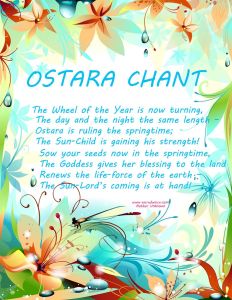
Happy and Blessed Ostara Dear Sisters, Brothers, and Guests

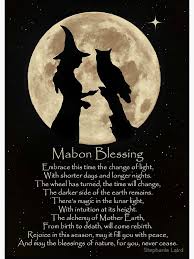
Happy and Blessed Mabon Dear Sisters, Brothers, and Guests

Ostara – Sabbat Lore and Traditions

For more about Ostara

Date: September 20  – 23

Other Names: Spring Equinox, Lady Day, Alban Eiler (Druidic)

Pronunciations: uh-star-uh, oh-star-uh

As Spring reaches its midpoint, night and day stand in perfect balance, with light on the increase. The young Sun God now celebrates a hierogamy (sacred marriage) with the young Maiden Goddess, who conceives. In nine months, she will again become the Great Mother. It is a time of great fertility, new growth, and newborn animals.

The next full moon (a time of increased births) is called the Ostara and is sacred to Eostre the Saxon Lunar Goddess of fertility (from whence we get the word estrogen, whose two symbols were the egg and the rabbit.

The Christian religion adopted these emblems for Easter which is celebrated on the first Sunday after the first full moon following the vernal equinox. The theme of the conception of the Goddess was adapted as the Feast of the Annunciation, occurring on the alternative fixed calendar date of March 25 Old Lady Day, the earlier date of the equinox. Lady Day may also refer to other goddesses (such as Venus and Aphrodite), many of whom have festivals celebrated at this time.

Herbs: Daffodil, Jonquils, Woodruff, Violet, Gorse, Olive, Peony, Iris, Narcissus and all spring flowers

Traditional Foods: Leafy green vegetables, Dairy foods, Nuts such as Pumpkin, Sunflower and Pine. Flower Dishes and Sprouts

Incense: Jasmine, Rose, Strawberry, Floral of any type

Stones: Jasper

Recipes

Ancient Celebrations for Today – OSTARA

For more about Ostara and the Wheel of The Year

Ostara marks the Spring Equinox, which happens between March 19 -23. Ostara is a pagan celebration of the German goddess Eostre and the origins of the Christian celebration of Easter. As the beginning of spring Ostara is a good time to literally and figuratively plant seeds for the future.

In modern day living Ostara is also good time to start taking action on the ideas and goals you started thinking about around Yule and Imbolc. What you plant during Ostara will be ready to be harvested during the coming summer months and the sabbats of Beltane, Litha and Lughnasadh.

Ostara is also a good time to freshen up your home and life. Take time to do some spring cleaning. Cleaning isn’t just limited to your home. Take some time to declutter and clean up areas where you spend a lot of time, like your car, your computer (delete those old emails!) or your work office.

Symbols Of Ostara

Colors:  Green, pink, blue

Foods:  Eggs, honey, sprouted greens, baked goods, asparagus

Stones:  Aquamarine, amethyst, rose quartz

Symbols:  Rabbits, eggs, spring flowers , lambs, clover, baskets

Flowers & Plants: clover, daffodils, crocus, tulips

Deities:   Isis, Estotre, Adonis

Ways To Celebrate Ostara…

Ancient Celebrations for Today – MABON

For more about Mabon and the Wheel of The Year

Known as the pagan Thanksgiving, Mabon marks the Autumn Equinox, when day and night are equal, making it a time of balance, equality and harmony.  In ancient times Mabon was a celebration of the second harvest (Lughnasadh was the first) when farmers gathered hearty foods like gourds, pumpkins, grapes and apples.

Modern Mabon celebrations are a time to give thanks for the abundance of Mother Earth – both literally and spiritually.  It’s also a good time to reflect on the Wheel of the Year, recognizing your successes and letting go of the things that did not serve you during the past twelve months.

History Of Mabon

Modern Pagans began celebrating Mabon as the last of the eight Sabbats in the 1970s, but its roots as a harvest festival go back to ancient times.

Named after the ancient Welsh hero named Mabon ap Modron, which means Son of Mother, Mabon is the second of three harvest festivals that take place in the Wheel of the Year (Lughnasadh is the first and Samhain is the third).  Similar to Apollo, the figure of Mabon was depicted as a handsome youth with a lyre. As a baby Mabon was said to have been held hostage as a baby in the underworld, similar to the story of Persephone and Demeter.

Indeed, the Greek goddess Demeter is much more closely associated with the Autumn harvest, as…

Mabon Sabbat Lore and Traditions

For more about Mabon

Date: September 20th – 23rd, depending on the year

Other Names: Atumn Equinox, 2nd Harvest

Pronunciations: MAY-bun, MAY-bon, MAH-boon, MAH-bawn

The Autumn Equinox divides the day and night equally, and we all take a moment to pay our respects to the impending dark. We also give thanks to the waning sunlight, as we store our harvest of this year’s crops. The Druids call this celebration, Mea’n Fo’mhair, and honor the The Green Man, the God of the Forest, by offering libations to trees. Offerings of ciders, wines, herbs and fertilizer are appropriate at this time. Wiccans celebrate the aging Goddess as she passes from Mother to Crone, and her consort the God as he prepares for death and re-birth.

Various other names for this Lesser Wiccan Sabbat are The Second Harvest Festival, Wine Harvest, Feast of Avalon, Equinozio di Autunno (Strega), Alben Elfed (Caledonii), or Cornucopia. The Teutonic name, Winter Finding, spans a period of time from the Sabbat to Oct. 15th, Winter’s Night, which is the Norse New Year.

At this festival it is appropriate to wear all of your finery and dine and celebrate in a lavish setting. It is the drawing to and of family as we prepare for the winding down of the year at Samhain. It is a time to finish old business as we ready for a period of rest, relaxation, and reflection.

Mabon is considered a time of the Mysteries. It is a time to honor Aging Deities and the Spirit World. Considered a time of balance, it is when we stop and relax and enjoy the fruits of our personal harvests, whether they be from toiling in our gardens, working at our jobs, raising our families, or just coping with the hussle-bussle of everyday life. May your Mabon be memorable, and your hearts and spirits be filled to overflowing!

Deities: Goddesses – Modron, Morgan, Epona, Persephone, Pamona and the Muses. Gods – Mabon, Thoth, Thor, Hermes, and The Green Man

Symbolism: Second Harvest, the Mysteries, Equality and Balance

Symbols: wine, gourds, pine cones, acorns, grains, corn, apples, pomegranates, vines such as ivy, dried seeds, and horns of plenty

Colors: Red, orange, russet, maroon, brown, and gold

Herbs: Acorn, benzoin, ferns, grains, honeysuckle, marigold, milkweed, myrrh, passionflower, rose, sage, solomon’s seal, tobacco, thistle, and vegetables

Traditional Foods: Breads, nuts, apples, pomegranates, and vegetables such as potatoes, carrots, and onions

Incense: Autumn Blend-benzoin, myrrh, and sage

Stones: Sapphire, lapis lazuli, and yellow agates

Ritual