
Adonis
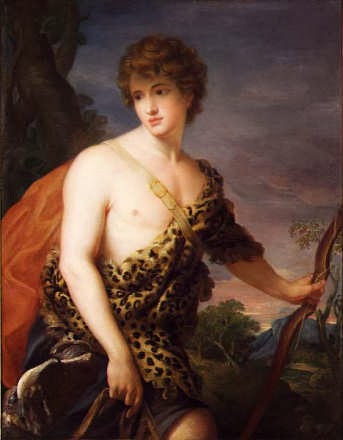
Adonis
Adonis is a seasonal life/death/rebirth God associated with Tammuz, Atunis, Baldr, Osiris, Attis and Jesus. The name means “Lord”
His feast day is the Adonia and was celebrated in what is now August. Young women mourn him on this day and plant seeds of quick blooming, short lived flowers in his honor.
Conception and Birth
King Theias (or Cinyras) of Syria (or Smyrna) had a daughter named Myrrha (or Smyrna if you prefer). She was quite lovely and he bragged that she was lovelier even than Aphrodite. Aphrodite decided that a man who was so enamored by a girl’s beauty, certainly deserved her love, and caused poor Myrrha to fall madly in love with her own father.
Of course, she was horrified at the thought that she should be feeling this way about her father and did her very best to ignore her feelings. But this only made things worse. She swooned at his smile and shuddered at his touch. She woke sweating in the night from dreams of him and then sobbed at the shame of it. She became depressed, spoke little and ate less. Her nurse, who had served her since birth could tell that something was wrong and pressed the girl until she finally revealed her horrible secret.
At first her nurse urged her to continue to suppress her feelings and tried to treat her with sleeping droughts and appetite stimulants and by diverting her attention with entertaining games, outings and stories. She even attempted to arouse her interest in other men, but to no avail. Myrrha was pining, and she was wasting away. Her nurse was certain she would die if something wasn’t done soon.
On a certain evening, when Myrrha’s mother had gone to celebrate the festival of Demeter, the nurse noticed the King was quite drunk. She led him to bed, and then led Myrrha to his side. Myrrha lay by her father in the darkness and they knew a night of passion like none known since. He was enamored, and begged to know who she was, but she would not tell him and promised to return only when it was quite dark. He agreed, and she returned night after night under cover of darkness.
One night, after they had made love she fell asleep. He lit a lamp and held it up and was horrified to see his own daughter laying naked beside him! He bellowed his rage and went for his sword, determined to kill her, but she fled outside and Aphrodite, took pity on her and turned her into a tree before he could reach her. Myrrha’s pain was so great, having lost her father’s love and her lover and having given in to shameful temptation that even as a tree, the girl wept sweet smelling resin that came to be known as Myrrh.
Sometime later, a boar came by and rubbed its tusks on the tree, causing it to split and the young Adonis emerged. Fearful that his father/grandfather would certainly kill him if he discovered him, Aphrodite scooped him up and took him to the underworld and asked its Queen, Persephone, to look after him.
Adonis grew in beauty and strength and both Goddesses fell in love with him. When Aphrodite wanted him back, Persephone refused and she kept him as her own lover in the Underworld.
Calliope, the muse of epic poetry, settled the argument, giving each Goddess his custody for one third of the year, and granting him a third of the year to himself. He chose, however, to stay with Aphrodite during that third.
Death
Aphrodite warned Adonis to stay by her side, but the boy loved to hunt and inevitably, he went out into the forest alone one day. Discovering his absence, Aphrodite rushed to his side, but too late. He lay dying having been gored in the groin by a boar. She arrived in time to catch his last breath. She sprinkled him with nectar, and red anemones sprang up where his blood stained the ground. For the first time, Aphrodite wished she wasn’t mortal, and cried out her lament to the skies that she could join Adonis in the underworld, but she knew it could not be.
Reference
 Adonis
Greek mythology
Adonis, in Greek mythology, a youth of remarkable beauty, the favourite of the goddess Aphrodite (identified with Venus by the Romans). Traditionally, he was the product of the incestuous love Smyrna (Myrrha) entertained for her own father, the Syrian king Theias. Charmed by his beauty, Aphrodite put the newborn infant Adonis in a box and handed him over to the care of Persephone, the queen of the underworld, who afterward refused to give him up. An appeal was made to Zeus, the king of the gods, who decided that Adonis should spend a third of the year with Persephone and a third with Aphrodite, the remaining third being at his own disposal. A better-known story, hinted at in Euripides’ Hippolytus, is that Artemis avenged her favourite, Hippolytus, by causing the death of Adonis, who, being a hunter, ventured into her domain and was killed by a wild boar. Aphrodite pleaded for his life with Zeus, who allowed Adonis to spend half of each year with her and half in the underworld.
The central idea of the myth is that of the death and resurrection of Adonis, which represent the decay of nature every winter and its revival in spring. He is thus viewed by modern scholars as having originated as an ancient spirit of vegetation. Annual festivals called Adonia were held at Byblos and elsewhere to commemorate Adonis for the purpose of promoting the growth of vegetation and the falling of rain. The name Adonis is believed to be of Phoenician origin (from ʾadōn, “lord”), Adonis himself being identified with the Babylonian god Tammuz. Shakespeare’s poem Venus and Adonis (1593) is based on Ovid’s Metamorphoses, Book X.
Written By:
The Editors of Encyclopaedia Britannica
Adonis
A tale as old as time
The myth of Adonis, a tale as old as time, is a legendary love story that combines tragedy and death on the one hand, and the joy of coming back to life on the other. The story of the impossibly handsome Adonis and his lover the goddess Aphrodite originally dates back to the ancient civilizations of the Near East. It was popular among the Canaanites, and very well-known to the people of Mesopotamia and Egypt as well, though referred to by different names in each civilization. It is the legend of the god of beauty who faced death when he was young, but came back to life for the sake of his beloved Aphrodite. The myth has been a source of great inspiration for many poets, artists and historians alike, leading to its widespread use as a major theme in literary and intellectual productions.
From The Canaanite Adon To The Greek Adonis
The god Adon was considered one of the most important Canaanite gods: he was the god of beauty, fertility and permanent renewal. The name itself, “Adon”, means “The Lord” in Canaanite. In Greek mythology and the Hellenic world generally, he was called Adonis, and became known by that name among those nations. Other adaptations of Adon in various civilizations include the Canaanite god Baal who was worshiped in Ugarit, and Tammuz or Dumuzi (meaning July) as he was known to the Babylonians. In Egypt, he was Osiris, the god of resurrection.
In addition to the god Adonis, the myth involves his everlasting mistress Astarte, the goddess of love and beauty. She was known as Aphrodite to the Greeks, and Venus to the Romans. Their stories were so intertwined that Adonis’ myth would be incomplete without mentioning Astarte and the legendary love story that brought them together.
When Aphrodite saw Adonis she was so amazed by his beauty that she decided to hide him from the rest of the goddesses.
The role that Cyprus played in transferring the myth of Adonis and Astarte from the Canaanite regions to the Greeks – and from the latter to the Romans – is a very significant one. However, perhaps due to the lack of Mesopotamian and Canaanite sources written about this legend (and often the ambiguity of such sources), the late Greek writings are the main references for this tale of eternal love. Hence, the myth is most popularly known as that of Adonis and Aphrodite, rather than Adon and Astarte.
Adonis in Greek Mythology
Based on the different Greek sources (such as Bion of Smyrna) and the other Roman references (like Ovid’s Metamorphoses) a general consensus on the story of Adonis and Aphrodite is as follows:
A great king called Cinyras (in some sources known as Theias, the king of Assyria) had a daughter named Myrrha, who was very beautiful. The king used to boast about his daughter being more beautiful than Aphrodite, the goddess of love and beauty. When Aphrodite heard of this, she became angry and decided to retaliate. She used her son Eros, the god of desire and attraction, to make Myrrha fall in love with her father, and even deceived him into committing incest. When Cinyras discovered the trick, he swore to kill Myrrha, who in turn escaped from her father after realizing she was pregnant. Myrrha was ashamed and regretful of her heinous act, and pleaded to the gods to protect her. They answered her prayers by turning her into a Myrrh tree.
Nine months later, the Myrrh tree split off, and Adonis was born; he had inherited the beauty of his mother. When Aphrodite saw the boy, she was so amazed by his beauty that she decided to hide him from the rest of the goddesses, and entrusted him to Persephone, goddess of the underworld. Persephone began looking after the boy, and when he grew older and became more and more attractive, she fell in love with him.
A conflict then rose between Aphrodite and Persephone, who refused to give Adonis back to Aphrodite. Zeus, the king of the gods, intervened and ruled that Adonis to spend four months of the year with Persephone in Hades, the Underworld, then four months with Aphrodite, and the remaining four months however he wished. Because Adonis was so taken with the charm of Aphrodite, he devoted his free four months to her as well.
Adonis was well-known for his hunting skills, and in one of the hunting journeys in the Afqa Forest (near Byblos), Adonis was attacked by a wild boar and began bleeding in the hands of Aphrodite, who poured her magical nectar on his wounds. Although Adonis died, the blood blended with the nectar and flowed onto the soil where a flower sprouted from the ground, its scent the same as Aphrodite’s nectar, and its color that of Adonis’ blood – the Anemone flower. The blood reached the river and colored the water red, and the river became known as the “Adonis River” (currently known as Nahr Ibrahim or River Abraham), which is located in the Lebanese village of Afqa.
Worship of Adonis
Byblos was one of the main places in the ancient world that used to observe the rituals of Adonis, and actually brought back the practice of these ceremonies and rites well into the early centuries of Christianity. The writings of Lucian of Samosata in the second century CE played a major role in shedding light on the rituals that were widely practiced by the people of Byblos. His book On The Syrian Goddess (De Dea Syria) recounts his visit to the village Afqa, where he explains what he encountered.
According to Lucian, the people of Byblos believed the wild boar incident that befell Adonis happened in their country. To commemorate this event, they would smite themselves each year, mourn, and celebrate religious rituals and orgies while a great mourning prevailed over the entire country. When their beating and bewailing stopped, they would celebrate the funeral of Adonis, as if he had died, and then the next day announce that he had returned to life and was sent to heaven.
Another one of the Byblos region’s marvels is the river that runs from Mount Lebanon and flows into the sea. The River Adonis is said to lose its color every year and take on a bloody red hue, pouring into the sea and dyeing a large part of the beach red – a sign to the people of Byblos to start their time of mourning. It is believed that at this time of year, Adonis was wounded in Lebanon, and his blood went to the riverbed. One of the reasons given by Lucian – as told to him by one of Byblos’ wise men – explaining why the river turns red at this time of the year is the strong wind blowing soil into the river. The soil of Lebanon (and of this region particularly) is known for its red color, which, when mixed with the river water, turns it purple.
The Immortal Myth
The popularity of the story of Adonis and his mistress Aphrodite led to a revival of its rituals in many other Phoenician cities as well. It also spread across to the ancient Greek and Roman worlds, but with minor differences in adaptation, depending on the characteristics and features of each civilization. The essence of the legend, however, remains intact across all adaptations: a god of beauty and youth and his relationship with the goddess of love, along with the young god’s death and return to life being a metaphor of nature’s annual rebirth.
The myth of Adonis is closely related to the concept of vegetation and agricultural civilizations, such as Mesopotamia or the Canaanite areas (as the story originated in the Near East). The winter was a season of gloom and sadness for the inhabitants of these areas, whereas the spring and summer brought them the joy of new life. This myth is commonly believed to be an expression of its people’s thinking, reflections, and psychological perceptions.
Remnants of Adonis worship are still present in this day and age among some nations of the Levant, Mesopotamia, and even Persia/Iran, where it is manifested as part of spring folklore celebrations, like the Feast of Nauroz.
References:
APA Style
Azar, E. N. (2016, February 21). Adonis. Ancient History Encyclopedia. Retrieved from https://www.ancient.eu/Adonis/
Chicago Style
Azar, Elias N. “Adonis.” Ancient History Encyclopedia. Last modified February 21, 2016. https://www.ancient.eu/Adonis/.
MLA Style
Azar, Elias N. “Adonis.” Ancient History Encyclopedia. Ancient History Encyclopedia, 21 Feb 2016. Web. 16 Mar 2018.
License
Written by Elias N. Azar, published on 21 February 2016 under the following license: Creative Commons: Attribution-NonCommercial-ShareAlike. This license lets others remix, tweak, and build upon this content non-commercially, as long as they credit the author and license their new creations under the identical terms.
 Witches Of The Craft®
You must be logged in to post a comment.