November 3 Astronomy Picture of the Day

Discover the cosmos! Each day a different image or photograph of our fascinating universe is featured, along with a brief explanation written by a professional astronomer.

2022 November 3
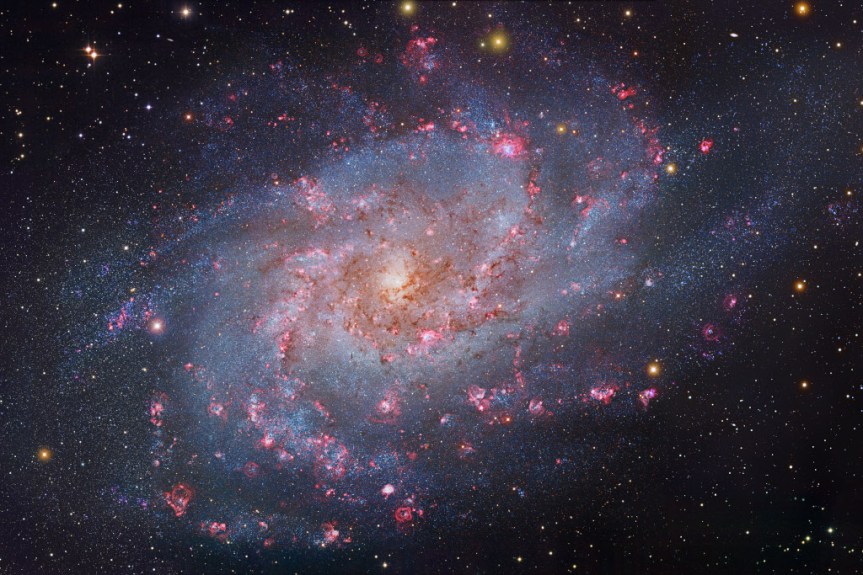
The Triangulum Galaxy, otherwise known as Messier 33, lies almost 3 million light-years from Earth, and is a near neighbor of the Andromeda Galaxy. The galaxy is imaged here by the Nicholas U. Mayall 4-meter Telescope, located at Kitt Peak National Observatory (KPNO), a Program of NSF’s NOIRLab.  The Triangulum Galaxy is the third-largest member of the Local Group, a cluster of galaxies that includes our Milky Way and its closest neighbors. The Andromeda Galaxy is the largest member. The Triangulum Galaxy and Andromeda Galaxy have history together, but astronomers are still investigating the details. Their close proximity has caused some researchers to suggest that Triangulum is a satellite of the Andromeda Galaxy, not unlike the way the Moon is a satellite of the Earth — just on a much, much bigger scale. Alternatively, some researchers propose that these two galaxies may be independent and have simply brushed past each other, as evidenced by streams of stars and neutral hydrogen gas linking the two galaxies. However they have interacted, it’s probable that they will dramatically collide in 2.5 billion years, resulting in their consolidation and eventual evolution into a lenticular galaxy.

M33: The Triangulum Galaxy

Image Credit & CopyrightProcessing – Robert Gendler
Data – Hubble Legacy ArchiveKPNONOIRLabNSFAuraAmateur Sources

Explanation: The small, northern constellation Triangulum harbors this magnificent face-on spiral galaxy, M33. Its popular names include the Pinwheel Galaxy or just the Triangulum Galaxy. M33 is over 50,000 light-years in diameter, third largest in the Local Group of galaxies after the Andromeda Galaxy (M31), and our own Milky Way. About 3 million light-years from the Milky Way, M33 is itself thought to be a satellite of the Andromeda Galaxy and astronomers in these two galaxies would likely have spectacular views of each other’s grand spiral star systems. As for the view from the Milky Way, this sharp image combines data from telescopes on and around planet Earth to show off M33’s blue star clusters and pinkish star forming regions along the galaxy’s loosely wound spiral arms. In fact, the cavernous NGC 604 is the brightest star forming region, seen here at about the 1 o’clock position from the galaxy center. Like M31, M33’s population of well-measured variable stars have helped make this nearby spiral a cosmic yardstick for establishing the distance scale of the Universe.

List of the Astronomy Picture of the Day for October 2022

 Atronomy Picture of the Day from apod.nasa.gov Scroll down and click on the hyperlink for the day you want to see the picture for the date you want to see or here for all of 2022 pictures to date.

2022 October 31: LDN 43: The Cosmic Bat Nebula
2022 October 30: Night on a Spooky Planet
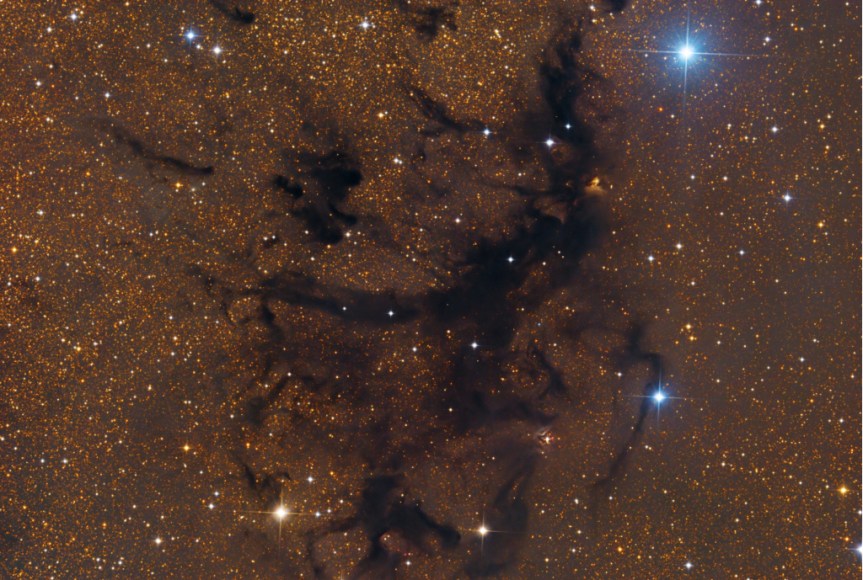
2022 October 29: LDN 673: Dark Clouds in Aquila
2022 October 28: Seven Years of Halley Dust
2022 October 27: Sunset, Moonset, Taj Mahal
2022 October 26: Cocoon Nebula Wide Field
2022 October 25: Jupiter Rotates as Moons Orbit
2022 October 24: Clouds Around Galaxy Andromeda
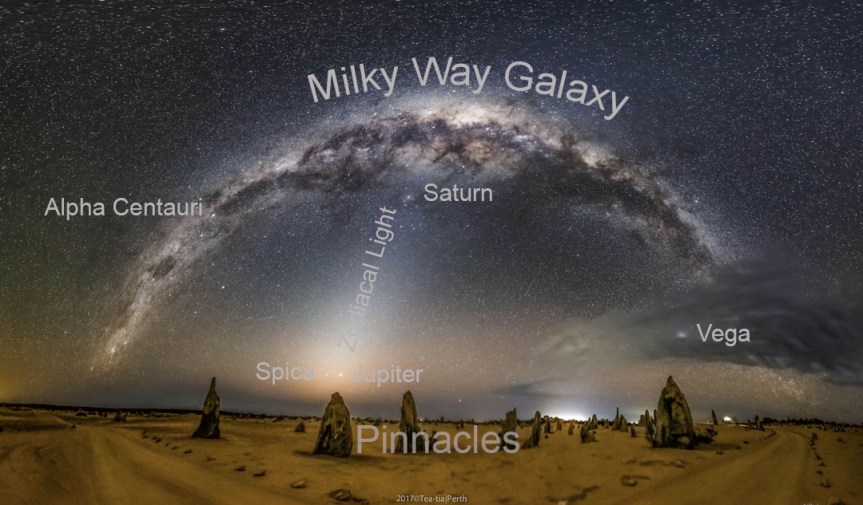
2022 October 23: Milky Way and Zodiacal Light over Australian Pinnacles
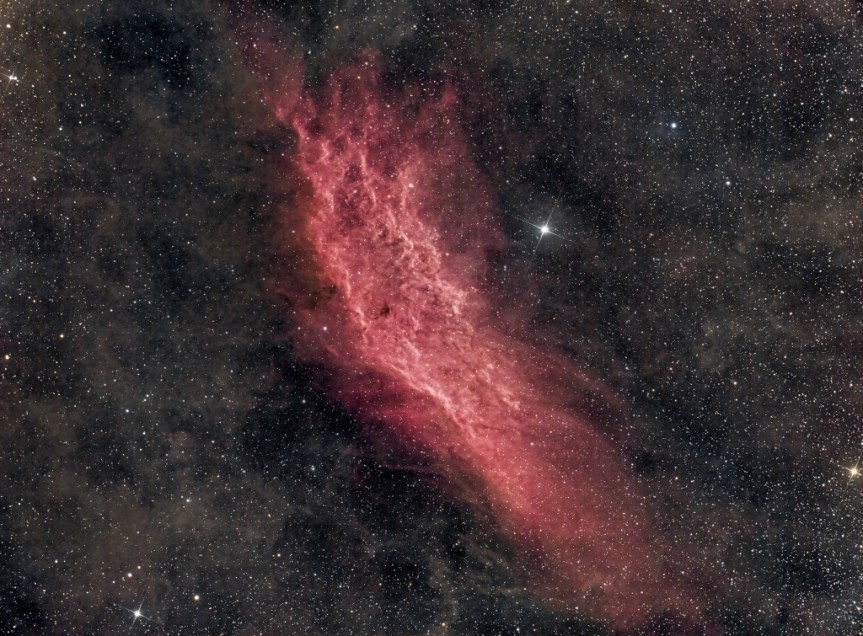
2022 October 22: NGC 1499: The California Nebula
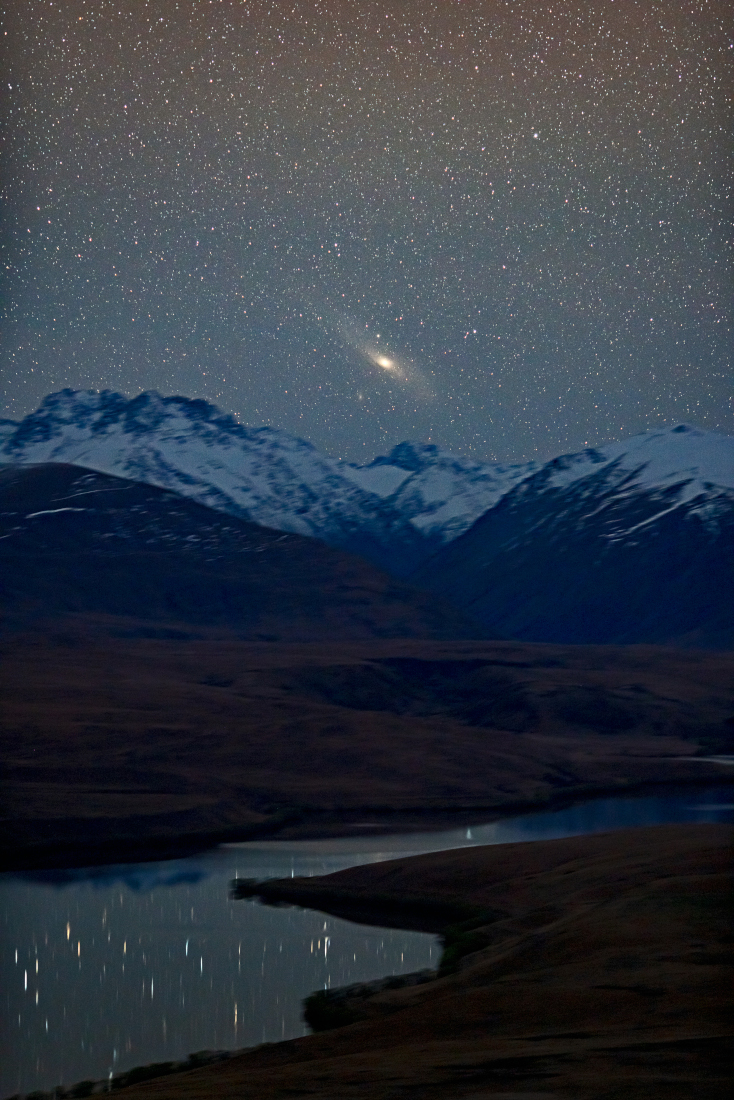
2022 October 21: Andromeda in Southern Skies
2022 October 20: Pillars of Creation
2022 October 19: A Galaxy Beyond Stars, Gas, Dust
2022 October 18: Milky Way Auroral Flower
2022 October 17: X-Ray Rings Around a Gamma Ray Burst
2022 October 16: Barred Spiral Galaxy NGC 1300
2022 October 15: GRB 221009A
2022 October 14: The Falcon and the Hunter’s Moon
2022 October 13: Dust Shells around WR 140 from Webb
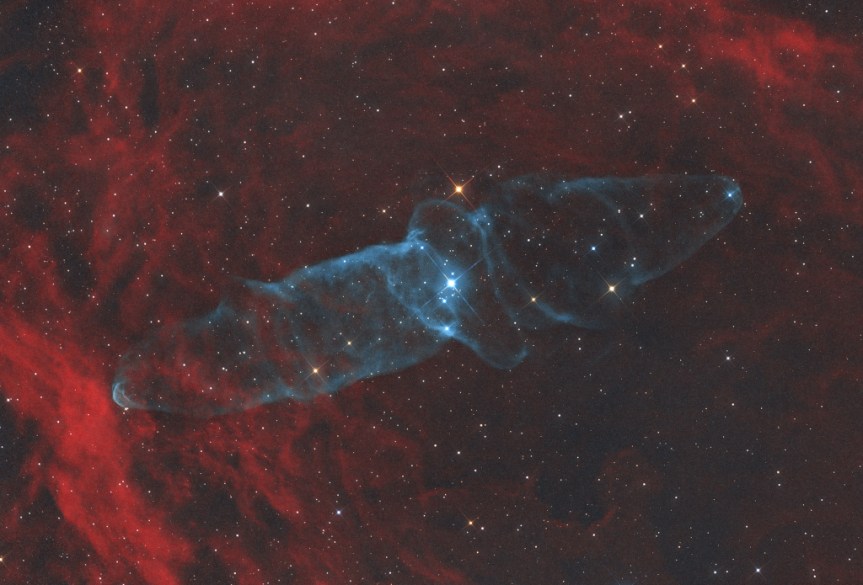
2022 October 12: Ou4: The Giant Squid Nebula
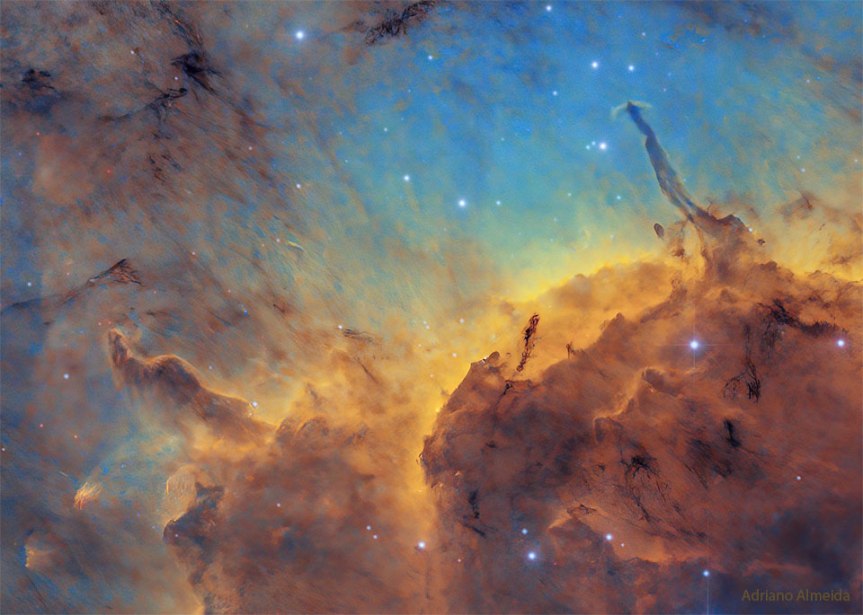
2022 October 11: Stars, Dust, Pillars, and Jets in the Pelican Nebula
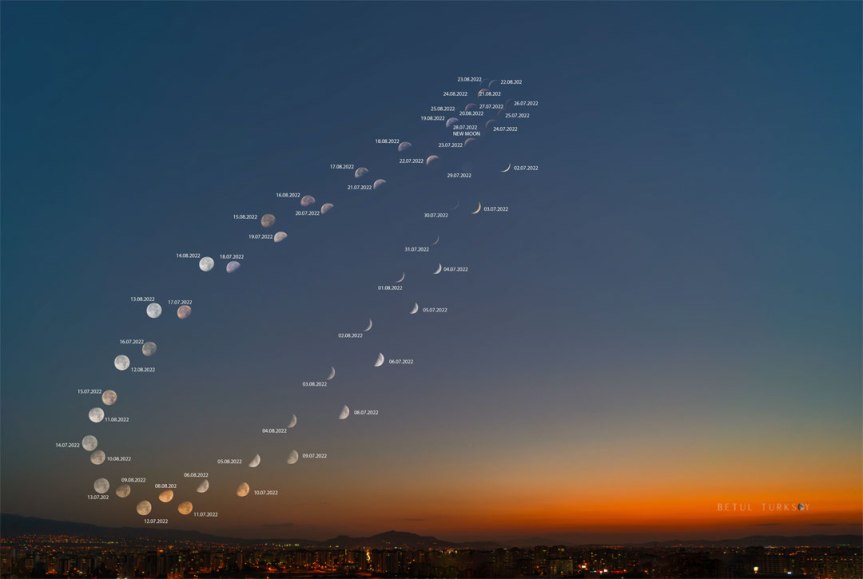
2022 October 10: A Double Lunar Analemma over Turkey
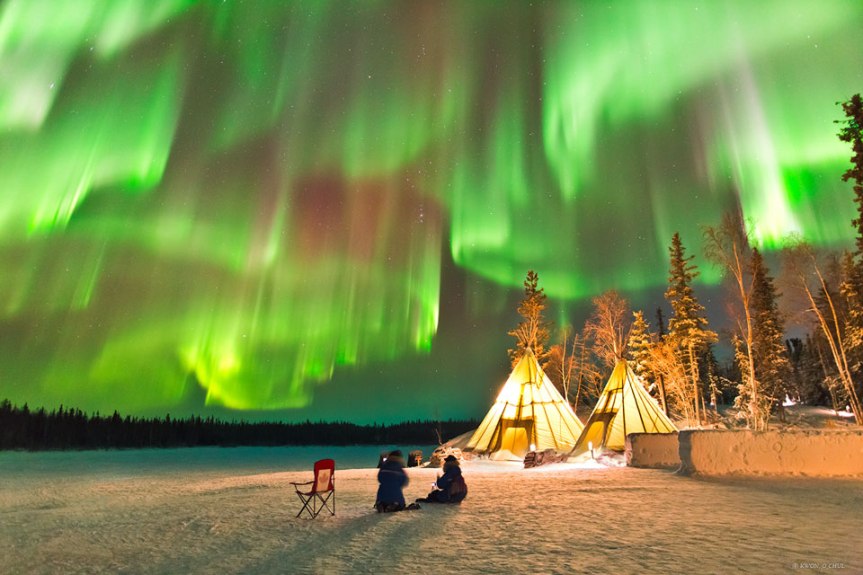
2022 October 09: Auroras over Northern Canada
2022 October 08: Two Comets in Southern Skies
2022 October 07: In Ganymede’s Shadow
2022 October 06: NGC 4631: The Whale Galaxy
2022 October 05: Expanding Plume from DARTs Impact
2022 October 04: Star Forming Eagle Nebula without Stars
2022 October 03: Jupiter’s Europa from Spacecraft Juno
2022 October 02: Supernova Cannon Expels Pulsar J0002
2022 October 01: Lunation Matrix


November 1 Astronomy Picture of the Day

Discover the cosmos! Each day a different image or photograph of our fascinating universe is featured, along with a brief explanation written by a professional astronomer.

2022 November 1

This image, taken by astronomers using the US Department of Energy-fabricated Dark Energy Camera on the Víctor M. Blanco 4-meter Telescope at Cerro Tololo Inter-American Observatory, a Program of NSF’s NOIRLab, captures the star-forming nebula NGC 6357, which is located 8000 light-years away in the direction of the constellation Scorpius. This image reveals bright, young stars surrounded by billowing clouds of dust and gas inside NGC 6357, which is also known as the Lobster Nebula.

NGC 6357: The Lobster Nebula

Image Credit: CTIO/NOIRLab/DOE/NSF/AURA; Processing: T. A. Rector (U. Alaska Anchorage/NSF’s NOIRLab), J. Miller (Gemini Obs./NSF’s NOIRLab), M. Zamani & D. de Martin (NSF’s NOIRLab)

Explanation: Why is the Lobster Nebula forming some of the most massive stars known? No one is yet sure. Cataloged as NGC 6357, the Lobster Nebula houses the open star cluster Pismis 24 near its center — a home to unusually bright and massive stars. The overall red glow near the inner star forming region results from the emission of ionized hydrogen gas. The surrounding nebula, featured here, holds a complex tapestry of gas, dark dust, stars still forming, and newly born stars. The intricate patterns are caused by complex interactions between interstellar windsradiation pressuresmagnetic fields, and gravity. The image was taken with DOE‘s Dark Energy Camera on the 4-meter Blanco Telescope at the Cerro Tololo Inter-American Observatory in Chile. NGC 6357 spans about 400 light years and lies about 8,000 light years away toward the constellation of the Scorpion.

October 29 Astronomy Picture of the Day

Discover the cosmos! Each day a different image or photograph of our fascinating universe is featured, along with a brief explanation written by a professional astronomer.

2022 October 29

LDN 673: Dark Clouds in Aquila

Image Credit & CopyrightFrank Sackenheim, Josef Poepsel, Stefan Binnewies (Capella Observatory Team)

Explanation: Part of a dark expanse that splits the crowded plane of our Milky Way galaxy, the Aquila Rift arcs through planet Earth’s skies near bright star Altair. In eerie silhouette against the Milky Way’s faint starlight, its dusty molecular clouds likely contain raw material to form hundreds of thousands of stars and astronomers search the dark clouds for telltale signs of star birth. This telescopic close-up looks toward the region at a fragmented Aquila dark cloud complex identified as LDN 673, stretching across a field of view slightly wider than the full moon. In the scene, visible indications of energetic outflows associated with young stars include the small red tinted nebulosity RNO 109 above and right of center, and Herbig-Haro object HH32 below. These dark clouds might look scary, but they’re estimated to be some 600 light-years away. At that distance, this field of view spans about 7 light-years.

Astronomy Picture of the Day

Discover the cosmos! Each day a different image or photograph of our fascinating universe is featured, along with a brief explanation written by a professional astronomer.

2022 October 25

Jupiter Rotates as Moons Orbit

Video Credit & Copyright: Makrem Larnaout

Explanation: Jupiter and its moons move like our Sun and its planets. Similarly, Jupiter spins while its moons circle around. Jupiter’s rotation can be observed by tracking circulating dark belts and light zones. The Great Red Spot, the largest storm known, rotates to become visible after about 15 seconds in the 48-second time lapse video. The video is a compilation of shorts taken over several nights last month and combined into a digital recreation of how 24-continuous hours would appear. Jupiter’s brightest moons always orbit in the plane of the planet’s rotation, even as Earth’s spin makes the whole system appear to tilt. The moons EuropaGanymede, and Io are all visible, with Europa’s shadow appearing as the icy Galilean moon crosses Jupiter’s disk. Jupiter remains near opposition this month, meaning that it is unusually bright, near to its closest to the Earth, and visible nearly all night long.


Almost Hyperspace: Random APOD Generator

October 24, 2022 Astronomy Picture of the Day

Discover the cosmos! Each day a different image or photograph of our fascinating universe is featured, along with a brief explanation written by a professional astronomer.

2022 October 24

Clouds Around Galaxy Andromeda

Image Credit & Copyright: Andrew Fryhover

Explanation: What are those red clouds surrounding the Andromeda galaxy? This galaxy, M31, is often imaged by planet Earth-based astronomers. As the nearest large spiral galaxy, it is a familiar sight with dark dust lanes, bright yellowish core, and spiral arms traced by clouds of bright blue stars. A mosaic of well-exposed broad and narrow-band image data, this deep portrait of our neighboring island universe offers strikingly unfamiliar features though, faint reddish clouds of glowing ionized hydrogen gas in the same wide field of view. Most of the ionized hydrogen clouds surely lie in the foreground of the scene, well within our Milky Way Galaxy. They are likely associated with the pervasive, dusty interstellar cirrus clouds scattered hundreds of light-years above our own galactic plane. Some of the clouds, however, occur right in the Andromeda galaxy itself, and some in M110, the small galaxy just below.

Astronomy Picture of the Day

Discover the cosmos! Each day a different image or photograph of our fascinating universe is featured, along with a brief explanation written by a professional astronomer.

2022 October 23

Milky Way and Zodiacal Light over Australian Pinnacles

Image Credit & Copyright: Jingyi Zhang

Explanation: What strange world is this? Earth. In the foreground of the featured image are the Pinnacles, unusual rock spires in Nambung National Park in Western Australia. Made of ancient sea shells (limestone), how these human-sized picturesque spires formed remains a topic of research. The picturesque panorama was taken in 2017 September. A ray of zodiacal light, sunlight reflected by dust grains orbiting between the planets in the Solar System, rises from the horizon near the image center. Arching across the top is the central band of our Milky Way Galaxy. The planets Jupiter and Saturn, as well as several famous stars are also visible in the background night sky.

Astronomy Picture of the Day

Discover the cosmos! Each day a different image or photograph of our fascinating universe is featured, along with a brief explanation written by a professional astronomer.

2022 October 22

NGC 1499: The California Nebula

Image Credit & CopyrightStephen Kennedy

Explanation: Drifting through the Orion Arm of the spiral Milky Way Galaxy, this cosmic cloud by chance echoes the outline of California on the west coast of the United States. Our own Sun also lies within the Milky Way’s Orion Arm, only about 1,500 light-years from the California Nebula. Also known as NGC 1499, the classic emission nebula is around 100 light-years long. The California Nebula shines with the telltale reddish glow characteristic of hydrogen atoms recombining with long lost electrons. The electrons have been stripped away, ionized by energetic starlight. Most likely providing the energetic starlight that ionizes much of the nebular gas is the bright, hot star Xi Persei just to the right of the nebula. A popular target for astrophotographers, this deep image reveals the glowing nebula, obscuring dust, and stars across a 3 degree wide field of view. The California nebula lies toward the constellation Perseus, not far from the Pleiades.

October 21 Astronomy Picture of the Day

Discover the cosmos! Each day a different image or photograph of our fascinating universe is featured, along with a brief explanation written by a professional astronomer.

2022 October 21

Andromeda in Southern Skies

Image Credit & CopyrightIan Griffin (Otago Museum)

Explanation: Looking north from southern New Zealand, the Andromeda Galaxy never gets more than about five degrees above the horizon. As spring comes to the southern hemisphere, in late September Andromeda is highest in the sky around midnight though. In a single 30 second exposure this telephoto image tracked the stars to capture the closest large spiral galaxy from Mount John Observatory as it climbed just over the rugged peaks of the south island’s Southern Alps. In the foreground, stars are reflected in the still waters of Lake Alexandrina. Also known as M31, the Andromeda Galaxy is one of the brightest objects in the Messier catalog, usually visible to the unaided eye as a small, faint, fuzzy patch. But this clear, dark sky and long exposure reveal the galaxy’s greater extent in planet Earth’s night, spanning nearly 6 full moons.

October 20 Astronomy Picture of the Day

Discover the cosmos! Each day a different image or photograph of our fascinating universe is featured, along with a brief explanation written by a professional astronomer.

2022 October 20

Pillars of Creation

Image Credit: Science – NASAESACSASTScINIRCam
Processing – Joseph DePasquale (STScI), Anton M. Koekemoer (STScI), Alyssa Pagan (STScI)

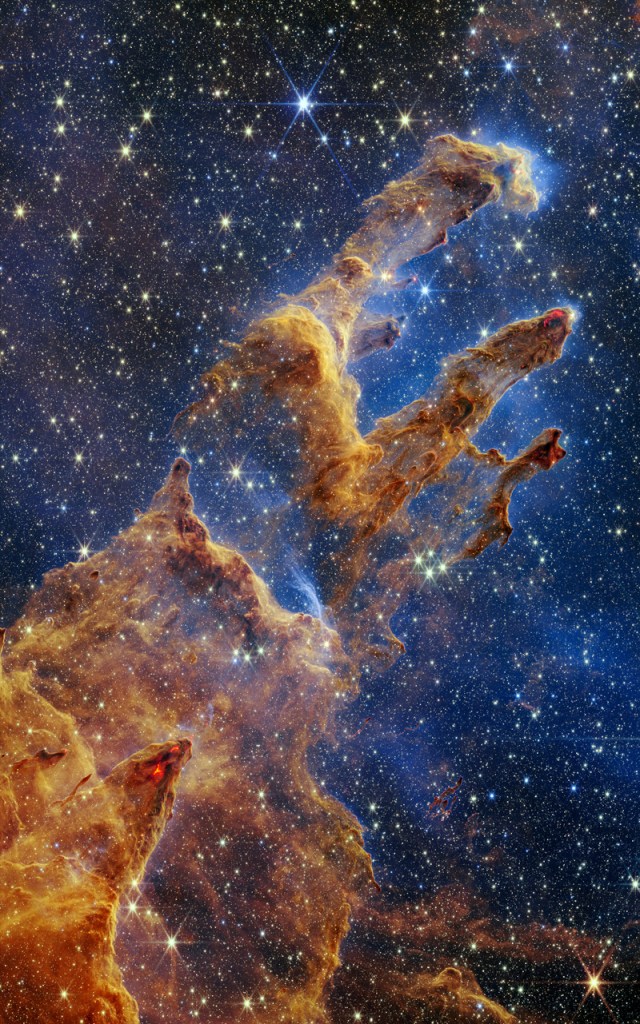
Explanation: A now famous picture from the Hubble Space Telescope featured these star forming columns of cold gas and dust light-years long inside M16, the Eagle Nebula, dubbed the Pillars of Creation. This James Webb Space Telescope NIRCam image expands Hubble’s exploration of that region in greater detail and depth inside the iconic stellar nursery. Particularly stunning in Webb’s near infrared view is the telltale reddish emission from knots of material undergoing gravitational collapse to form stars within the natal clouds. The Eagle Nebula is some 6,500 light-years distant. The larger bright emission nebula is itself an easy target for binoculars or small telescopes. M16 lies along the plane of our Milky Way galaxy in a nebula rich part of the sky, toward the split constellation Serpens Cauda (the tail of the snake).

Astronomy Picture of the Day

Discover the cosmos! Each day a different image or photograph of our fascinating universe is featured, along with a brief explanation written by a professional astronomer.

2022 October 19

A Galaxy Beyond Stars, Gas, Dust

Image Credit & Copyright: Howard Trottier; Text: Emily Rice

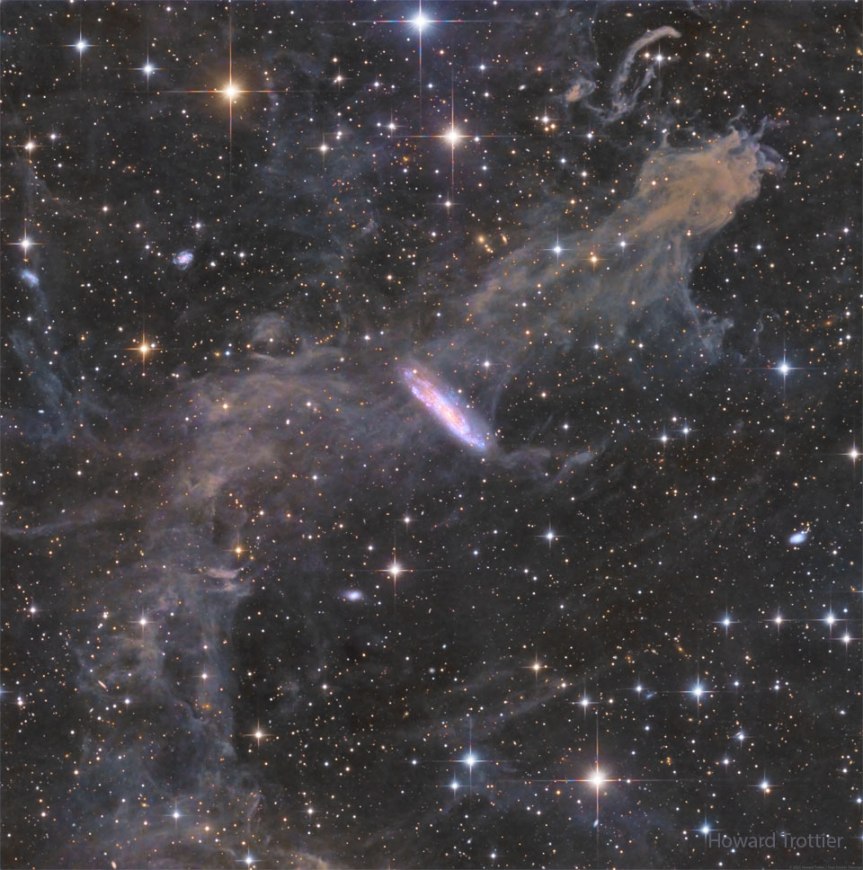
Explanation: Do we dare believe our eyes? When we look at images of space, we often wonder whether they are “real”, and just as often the best answer varies. In this case, the scene appears much as our eyes would see it, because it was obtained using RGB (Red, Green, Blue) filters like the cone cells in our eyes, except collecting light for 19 hours, not a fraction of a second. The featured image was captured over six nights, using a 24-inch diameter telescope in the Sierra Nevada Mountains, in CaliforniaUSA. The bright spiral galaxy at the center (NGC 7497) looks like it is being grasped by an eerie tendril of a space ghost, and therein lies the trick. The galaxy is actually 59 million light years away, while the nebulosity is MBM 54, less than one thousand light years away, making it one of the nearest cool clouds of gas and dust — galactic cirrus — within our own Milky Way Galaxy. Both are in the constellation of Pegasus, which can be seen high overhead from northern latitudes in the autumn.

Astronomy Picture of the Day

Discover the cosmos! Each day a different image or photograph of our fascinating universe is featured, along with a brief explanation written by a professional astronomer.

2022 October 18

Milky Way Auroral Flower

Image Credit & Copyright: Göran Strand

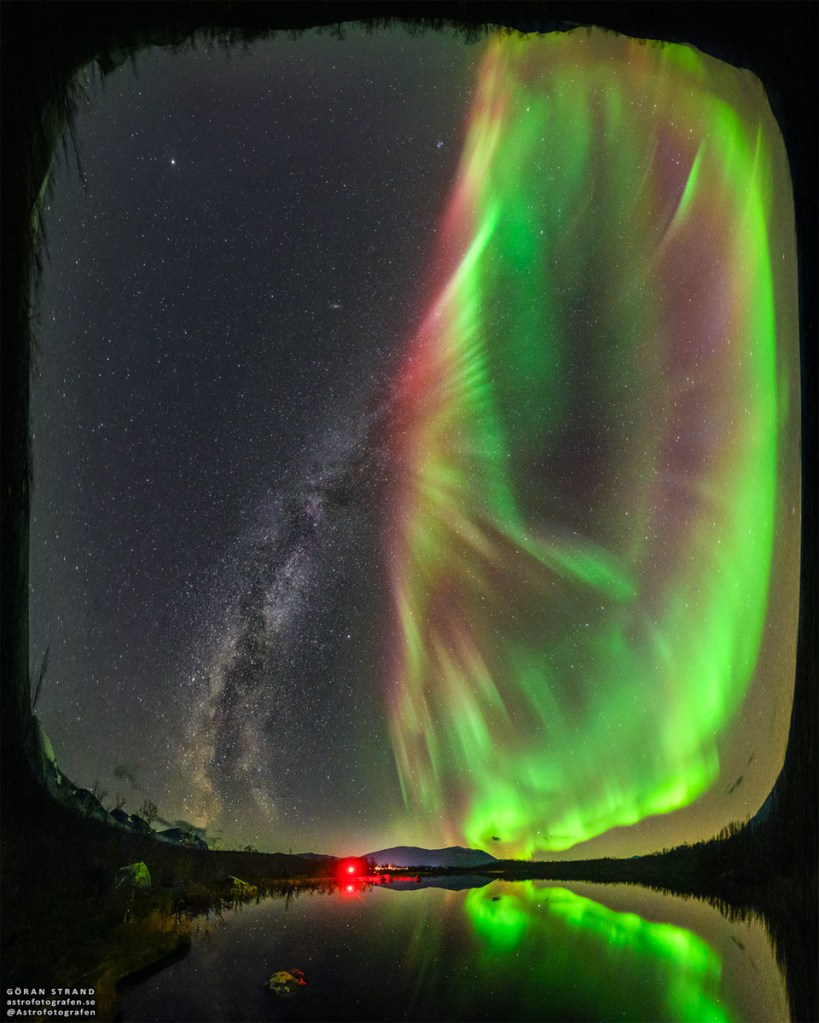
Explanation: Could the stem of our Milky Way bloom into an auroral flower? No, not really, even though it may appear that way in today’s featured all-sky image. On the left, the central plane of our home galaxy extends from the horizon past the middle of the sky. On the right, an auroral oval also extends from the sky’s center — but is dominated by bright green-glowing oxygen. The two are not physically connected, because the aurora is relatively nearby, with the higher red parts occurring in Earth’s atmosphere only about 1000 kilometers high. In contrast, an average distance to the stars and nebulas we see in the Milky Way more like 1000 light-years away – 10 trillion times further. The featured image composite was taken in early October across a small lake in Abisko, northern Sweden. As our Sun’s magnetic field evolves into the active part of its 11-year cycle, auroras near both of Earth’s poles are sure to become more frequent.

Astronomy Picture of the Day

Discover the cosmos! Each day a different image or photograph of our fascinating universe is featured, along with a brief explanation written by a professional astronomer.

2022 October 13

Dust Shells around WR 140 from Webb

Image Credit: NASAESACSAJWSTMIRIERS Program 1349; Processing: Judy Schmidt

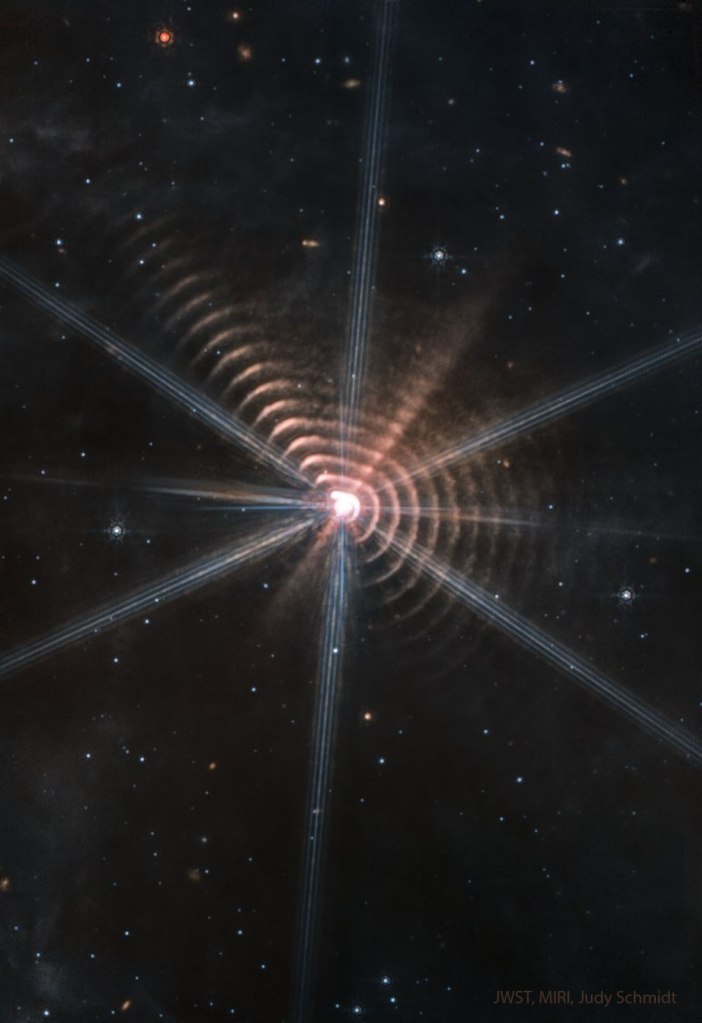
Explanation: What are those strange rings? Rich in dust, the rings are likely 3D shells — but how they were created remains a topic of researchWhere they were created is well known: in a binary star system that lies about 6,000 light years away toward the constellation of the Swan (Cygnus) — a system dominated by the Wolf-Rayet star WR 140Wolf-Rayet stars are massive, bright, and known for their tumultuous winds. They are also known for creating and dispersing heavy elements such as carbon which is a building block of interstellar dust. The other star in the binary is also bright and massive — but not as active. The two great stars joust in an oblong orbit as they approach each other about every eight years. When at closest approach, the X-ray emission from the system increases, as, apparently, does the dust expelled into space — creating another shell. The featured infrared image by the new Webb Space Telescope resolves greater details and more dust shells than ever before.

Astronomy Picture of the Day

Discover the cosmos! Each day a different image or photograph of our fascinating universe is featured, along with a brief explanation written by a professional astronomer.

2022 October 12

Ou4: The Giant Squid Nebula

Image Credit & CopyrightTommy Lease

Explanation: A mysterious squid-like cosmic cloud, this nebula is very faint, but also very large in planet Earth’s sky. In the image, composed with 30 hours of narrowband image data, it spans nearly three full moons toward the royal constellation Cepheus. Discovered in 2011 by French astro-imager Nicolas Outters, the Squid Nebula’s bipolar shape is distinguished here by the telltale blue-green emission from doubly ionized oxygen atoms. Though apparently surrounded by the reddish hydrogen emission region Sh2-129, the true distance and nature of the Squid Nebula have been difficult to determine. Still, a more recent investigation suggests Ou4 really does lie within Sh2-129 some 2,300 light-years away. Consistent with that scenario, the cosmic squid would represent a spectacular outflow of material driven by a triple system of hot, massive stars, cataloged as HR8119, seen near the center of the nebula. If so, this truly giant squid nebula would physically be over 50 light-years across.

Astronomy Picture of the Day

Discover the cosmos! Each day a different image or photograph of our fascinating universe is featured, along with a brief explanation written by a professional astronomer.

2022 October 11

Stars, Dust, Pillars, and Jets in the Pelican Nebula

Image Credit & Copyright: Adriano Almeida

Explanation: What dark structures arise within the Pelican Nebula? On the whole, the nebula appears like a bird (a pelican) and is seen toward the constellation of a different bird: Cygnus, a Swan. But inside, the Pelican Nebula is a place lit up by new stars and befouled by dark dust. Smoke-sized dust grains start as simple carbon compounds formed in the cool atmospheres of young stars but are dispersed by stellar winds and explosions. Two impressive Herbig-Haro jets are seen emitted by the star HH 555 on the right, and these jets are helping to destroy the light year-long dust pillar that contains it. Other pillars and jets are also visible. The featured image was scientifically-colored to emphasize light emitted by small amounts of heavy elements in a nebula made predominantly of the light elements hydrogen and helium. The Pelican Nebula (IC 5067 and IC 5070) is about 2,000 light-years away and can be found with a small telescope to the northeast of the bright star Deneb.


Explore Your Universe: Random APOD Generator

Astronomy Picture of the Day

Discover the cosmos! Each day a different image or photograph of our fascinating universe is featured, along with a brief explanation written by a professional astronomer.

2022 October 10

A Double Lunar Analemma over Turkey

Image Credit & Copyright: Betul Turksoy

Explanation: An analemma is that figure-8 curve you get when you mark the position of the Sun at the same time each day for one year. But the trick to imaging an analemma of the Moon is to wait bit longer. On average the Moon returns to the same position in the sky about 50 minutes and 29 seconds later each day. So photograph the Moon 50 minutes 29 seconds later on successive days. Over one lunation or lunar month it will trace out an analemma-like curve as the Moon’s actual position wanders due to its tilted and elliptical orbit. Since the featured image was taken over two months, it actually shows a double lunar analemma. Crescent lunar phases too thin and faint to capture around the New moon are missing. The two months the persistent astrophotographer chose were during a good stretch of weather during July and August, and the location was KayseriTurkey

Astronomy Picture of the Day

Discover the cosmos! Each day a different image or photograph of our fascinating universe is featured, along with a brief explanation written by a professional astronomer.

2022 October 9

Auroras over Northern Canada

Image Credit & Copyright: Kwon, O Chul (TWAN)

Explanation: Gusting solar winds and blasts of charged particles from the Sun resulted in several rewarding nights of auroras back in 2014 December, near the peak of the last 11-year solar cycle. The featured image captured dramatic auroras stretching across a sky near the town of Yellowknife in northern Canada. The auroras were so bright that they not only inspired awe, but were easily visible on an image exposure of only 1.3 seconds. A video taken concurrently shows the dancing sky lights evolving in real time as tourists, many there just to see auroras, respond with cheers. The conical dwellings on the image right are tipis, while far in the background, near the image center, is the constellation of Orion. Auroras may increase again over the next few years as our Sun again approaches solar maximum.

September 30 to October 8 Astronomy Picture of the Day List

Click on the date of the astronomy picture of the day you want to see:

2022 October 08: Two Comets in Southern Skies
2022 October 07: In Ganymede’s Shadow
2022 October 06: NGC 4631: The Whale Galaxy
2022 October 05: Expanding Plume from DARTs Impact
2022 October 04: Star Forming Eagle Nebula without Stars
2022 October 03: Jupiters Europa from Spacecraft Juno
2022 October 02: Supernova Cannon Expels Pulsar J0002
2022 October 01: Lunation Matrix
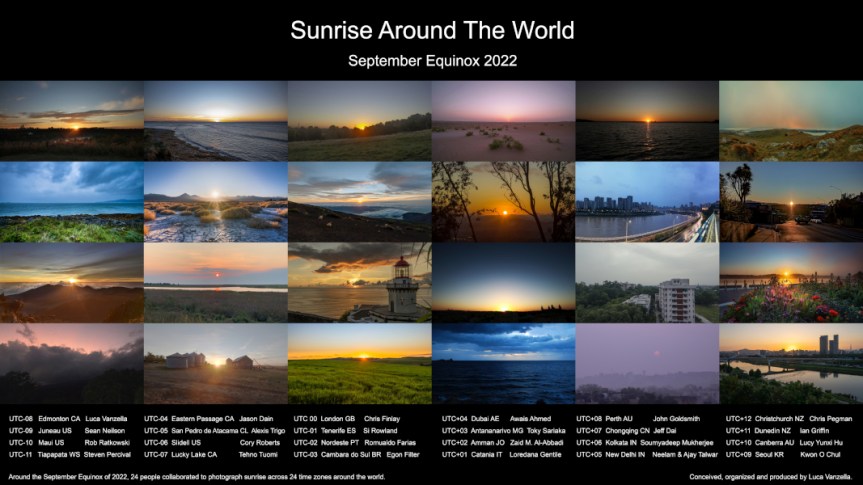
2022 September 30: Equinox Sunrise Around the World

Astronomy Picture of the Day

Discover the cosmos! Each day a different image or photograph of our fascinating universe is featured, along with a brief explanation written by a professional astronomer.

2022 September 30

Equinox Sunrise Around the World

Collage Image Copyright: Luca Vanzella

Explanation: A planet-wide collaboration resulted in this remarkable array of sunrise photographs taken around the September 2022 equinox. The images were contributed by 24 photographers, one in each of 24 nautical time zones around the world. Unlike more complicated civil time zone boundaries, the 24 nautical time zones are simply 15 degree longitude bands corresponding to 1 hour steps that span the globe. Start at the upper right for the first to experience a sunrise in the nautical time zone corresponding to Coordinated Universal Time (UTC) + 12 hours. In that time zone, the photographer was located in Christchurch, New Zealand. Travel to the west by looking down the column and then moving to the column toward the left for later sunrises as the time zone offset in hours from UTC decreases. Or, you can watch a video of September 2022 equinox sunrises around planet Earth.

Missing Birthday Horoscopes, Astronomy Picture of the Day and Emails

Well, I am finally back to posting. The regular posts for today will not be done because of catching up the birthday horoscopes and astronomy pictures. Sitting at my desk for 2 hours trying to get things done after not being at it for so long is making back start to hurt so I have to be more like the turtle than the hare with getting back into my routine of sitting at my desk for about 5 to 6 hours a day to bring you the things you enjoy reading. Tomorrow, I hope to be feeling up to posting for September 30th, October 1st. Which are the tomorrow posts for the Northern Hemisphere. Then Saturday I will be posting for October 2nd and 3rd which are the tomorrow posts for both hemispheres.

Thank you, Libra’s, for your patience in being able to read your birthday horoscopes. You can find your birthday horoscope by clicking on the date you want calendar on WOTC’s Homepage.

I am put up one post with the links to all the Astronomy Picture of the Day from September 13th to today instead of a post for each day.

I will be catching up on emails hopefully Saturday.

Thank you all for all the support, comments, and patience while I went through a heavy grieving period with major depression and anxiety problems. I will not say the depression and anxiety are back under my control, but I will say I am better than yesterday. But I know getting back into a regular routine is very important for my mental and emotional health so here I am. As you can tell I am coming ack kind of slowly.

Until we meet again dear sisters, brothers, and honored guests may your life be filled with all things positive!