

Category: Daily Posts
“Bring Back the Light”
Posted by Eleanor
The WOTC’s Special Yule Digest Continues Now With The Witches Guide to Yule

The Witches Digest for December 21, Winter Solstice
The Witches Guide to Yule

Today is Thursday, December 21, Winter Solstice
Thursday is the day of the planet Jupiter, dedicated to Thunor(Thor), God of thunder and agricultural work. His parallels in various European traditions are Zeus, Taranis, Perun, Perkunas and St. Olaf. The faith of the Northern Tradition holds Thursday sacred, just as Islam reveres Friday, Judaism the Sabbath(calculated from sunset on Friday to sunset on Saturday), and Christianity, Sunday. This is why almost all adages about Thursday are positve, such as “Thursday’s child has far to go,” “Sneeze on Thursday, something better,” or “Cut nails on Thursday for wealth.” Thursday rules controlled optimism, energetic growth, physical well-being and material success.
Deity: Thor
Zodiac Sign: Capricorn/Pisces/Sagittarius
Planet: Mercury
Tree: Oak
Herb: Henbane
Stone: Turquoise/Bloodstone/Topaz
Animal: Fish/Goat/Aurochs
Element: Fire
Color: Brown/White/Orange
Number: 3
Rune: Thorn
The Celtic Tree Month of Ruis (Elder) November 25 – December 22
Runic Half Month of Jara (December 13 – 27)
Goddess of the Month of Astraea (November 28th – December 25th)
Reference
The Pagan Book of Days
Nigel Pennick
The Pagan Book of Days for December 21st
Winter Solstice, Yule, Midwinter, Alban Artheuan, Fourth Station of the Year/St. Thomas
The Druidic Alban Arthuan and Christian St. Thomas’s Day, when the poor are traditionally given money or presents. In former times the neeedy could ask for money, a practice known as “thomasing” or mumping.” The fourth station of the year signifies enlightenment, when the light is reborn within the womb of darkness.
Reference
The Pagan Book of Days
Nigel Pennick
The Wiccan Book of Days for December 21, Winter Solstice
Yule Sabbat
The winter solstice or shortest day, occurs around now, and is the signal for Witches and Wiccans to observe the Yule Sabbat. They are celebrating the rebirth of the sun, for from now on, the days will grow longer and the nights, shorter. As epitomized in Christianity by the baby Jesus, the sun is envisaged as a divine infant, the golden son of the Goddess, who will grown into a virile, all powerful, solar deity. Yule ritusl therefore express the intense hope that under the reinstated rule of the nascent Oak King, this dark winter period will soon give way to days of light, fertility and abundance.
Bear Witness
On the night of the solstice, wrap up warmly and go out to await the dwn. Hail the birth of the child of promise as the pale solar disk rises above the horizon. light a candle to symbolize the rekindling of the sun’s energy, before retreating indoors to feast on a golden apple or orange.
Today We Honor The Legend of the Holly King and the Oak King
n many Celtic-based traditions of neopaganism, there is the enduring legend of the battle between the Oak King and the Holly King. These two mighty rulers fight for supremacy as the Wheel of the Year turns each season. At the Winter Solstice, or Yule, the Oak King conquers the Holly King, and then reigns until Midsummer, or Litha. Once the Summer Solstice arrives, the Holly King returns to do battle with the old king, and defeats him.
In the legends of some belief systems, the dates of these events are shifted; the battle takes place at the Equinoxes, so that the Oak King is at his strongest during Midsummer, or Litha, and the Holly King is dominant during Yule. From a folkloric and agricultural standpoint, this interpretation seems to make more sense.
In some Wiccan traditions, the Oak King and the Holly King are seen as dual aspects of the Horned God. Each of these twin aspects rules for half the year, battles for the favor of the Goddess, and then retires to nurse his wounds for the next six months, until it is time for him to reign once more.
Franco over at WitchVox says that the Oak and Holly Kings represent the light and the darkness throughout the year. At the winter solstice we mark “the rebirth of the Sun or the Oak King. On this day the light is reborn and we celebrate the renewal of the light of the year. Oops!
Are we not forgetting someone? Why do we deck the halls with boughs of Holly? This day is the Holly King’s day – the Dark Lord reigns. He is the god of transformation and one who brings us to birth new ways. Why do you think we make “New Year’s Resolutions”? We want to shed our old ways and give way to the new!”
Often, these two entities are portrayed in familiar ways – the Holly King frequently appears as a woodsy version of Santa Claus. He dresses in red, wears a sprig of holly in his tangled hair, and is sometimes depicted driving a team of eight stags. The Oak King is portrayed as a fertility god, and occasionally appears as the Green Man or other lord of the forest.
HOLLY VS. IVY
The symbolism of the holly and the ivy is something that has appeared for centuries; in particular, their roles as representations of opposite seasons has been recognized for a long time. In Green Groweth the Holly, King Henry VIII of England wrote:
Green groweth the holly, so doth the ivy.
Though winter blasts blow never so high, green groweth the holly.
As the holly groweth green and never changeth hue,
So I am, ever hath been, unto my lady true.
As the holly groweth green with ivy all alone
When flowers cannot be seen and greenwood leaves be gone
Of course, The Holly and the Ivy is one of the best known Christmas carols, which states, “The holly and the ivy, when they are both full grown, of all the trees that are in the wood, the holly bears the crown.”
THE BATTLE OF TWO KINGS IN MYTH AND FOLKLORE
Both Robert Graves and Sir James George Frazer wrote about this battle.
Graves said in his work The White Goddess that the conflict between the Oak and Holly Kings echoes that of a number of other archetypical pairings. For instance, the fights between Sir Gawain and the Green Knight, and between Lugh and Balor in Celtic legend, are similar in type, in which one figure must die for the other to triumph.
Frazer wrote, in The Golden Bough, of the killing of the King of the Wood, or the tree spirit. He says, “His life must therefore have been held very precious by his worshippers, and was probably hedged in by a system of elaborate precautions or taboos like those by which, in so many places, the life of the man-god has been guarded against the malignant influence of demons and sorcerers. But we have seen that the very value attached to the life of the man-god necessitates his violent death as the only means of preserving it from the inevitable decay of age.
The same reasoning would apply to the King of the Wood; he, too, had to be killed in order that the divine spirit, incarnate in him, might be transferred in its integrity to his successor. The rule that he held office till a stronger should slay him might be supposed to secure both the preservation of his divine life in full vigour and its transference to a suitable successor as soon as that vigour began to be impaired. For so long as he could maintain his position by the strong hand, it might be inferred that his natural force was not abated; whereas his defeat and death at the hands of another proved that his strength was beginning to fail and that it was time his divine life should be lodged in a less dilapidated tabernacle.”
Ultimately, while these two beings do battle all year long, they are two essential parts of a whole. Despite being enemies, without one, the other would no longer exist.
Reference
Patti Wigington, Author
Published on ThoughtCo.com
The Witches Yule
Yule: the Winter Solstice, Yuletide (Teutonic), Alban Arthan (Caledonii)
December 20 – 23 Northern Hemisphere / June 20 – 23 Southern Hemisphere
This sabbath represents the rebirth of light. Here, on the longest night of the year, the Goddess gives birth to the Sun God and hope for new light is reborn.
Yule is a time of awakening to new goals and leaving old regrets behind. Yule coincides closely with the Christian Christmas celebration. Christmas was once a movable feast celebrated many different times during the year. The choice of December 25 was made by the Pope Julius I in the fourth century AD because this coincided with the pagan rituals of Winter Solstice, or Return of the Sun. The intent was to replace the pagan celebration with the Christian one.
The Christian tradition of a Christmas tree has its origins in the Pagan Yule celebration. Pagan families would bring a live tree into the home so the wood spirits would have a place to keep warm during the cold winter months. Bells were hung in the limbs so you could tell when a spirit was present.
Food and treats were hung on the branches for the spirits to eat and a five-pointed star, the pentagram, symbol of the five elements, was placed atop the tree.
The colors of the season, red and green, also are of Pagan origin, as is the custom of exchanging gifts. A solar festival, The reindeer stag is also a reminder of the Horned God. You will find that many traditional Christmas decorations have some type of Pagan ancestry or significance that can be added to your Yule holiday. Yule is celebrated by fire and the use of a Yule log. Many enjoy the practice of lighting the Yule Log. If you choose to burn one, select a proper log of oak or pine (never Elder). Carve or chalk upon it a figure of the Sun (a rayed disc) or the Horned God (a horned circle). Set it alight in the fireplace at dusk, on Yule. This is a graphic representation of the rebirth of the God within the sacred fire of the Mother Goddess. As the log burns, visualize the Sun shining within it and think of the coming warmer days. Traditionally, a portion of the Yule Log is saved to be used in lighting next year’s log. This piece is kept throughout the year to protect the home.
The Winter Solstice has been celebrated for millennia by cultures and religions all over the world. Many modern pagan religions are descended in spirit from the ancient pre-Christian religions of Europe and the British Isles, and honor the divine as manifest in nature, the turning of the seasons, and the powerfully cyclical nature of life.
Most pagan religions are polytheistic, honoring both male and female deities, which are seen by some as two aspects of one non-gendered god, by others as two separate by complementing beings, and by others as entire pantheons of gods and goddesses.
It is common for the male god(s) to be represented in the sun, the stars, in summer grain, and in the wild animals and places of the earth. The stag is a powerful representation of the male god, who is often called “the horned god.”
The Goddess is most often represented in the earth as a planet, the moon, the oceans, and in the domestic animals and the cultivated areas of the earth.
In many pagan traditions the Winter Solstice symbolizes the rebirth of the sun god from his mother, the earth goddess.
The Winter Solstice is only one of eight seasonal holidays celebrated by modern pagans.
The winter solstice – Yule
Yule, which is also called the winter solstice, falls on December 21. Yule is the day that became Christmas. The main component is the evergreen tree, and beside it, everything connected to the sun – oranges, shiny crystals, gold, candles, and so on. The dominant colors are gold, white, red, green – but also black. The festival is exploited mainly for ceremonial festivities, or for treating health problems.
This is the time of year in which winter dominates the earth, so it is a time of leisure that is dedicated to the telling of legends and myths. It is the longest night, and wicca traditions include burning a log that was ignited before sunset and ensuring that it burns all night. “It is born with the setting sun, takes of its light, and guards its life until it appears once more, and then it (the log) dies and its ashes are collected on the good earth,” as is written in an ancient Celtic text. Yule trees are decorated anew every year (decorating an evergreen tree is a traditional pagan custom). The Yule meal includes many components that are considered “Christmas dishes,” such as sweets and cookies, roasts and stews. After Yule, the members of the wicca groups customarily exchange gifts, and it goes on until “Twelfth Night,” which is a Christian holiday known as “Little Christmas,” which began in the Middle Ages and is celebrated 12 days after Christmas.
In myths, the goddess gives birth to the god of the sun during the longest night of the year, and witches and wizards celebrate the birth (or rebirth) of the god of the sun.
Day-by-Day Wicca: A complete guide to Wicca from Beliefs and Rituals to Magic and Witchcraft (Astrolog Complete Guides)
Tabatha Jennings
History of Yule
A Festival of Light:
Many cultures have winter festivals that are in fact celebrations of light. In addition to Christmas, there’s Hanukkah with its brightly lit menorahs, Kwanzaa candles, and any number of other holidays. The Pagan holiday called Yule takes place on the day of the winter solstice, around December 21. On that day (or close to it), an amazing thing happens in the sky. The earth’s axis tilts away from the sun in the Northern Hemisphere, and the sun reaches at its greatest distance from the equatorial plane. As a festival of the Sun, the most important part of any Yule celebration is light — candles, bonfires, and more.
Origins of Yule:
In the Northern hemisphere, the winter solstice has been celebrated for millenia. The Norse peoples viewed it as a time for much feasting, merrymaking, and, if the Icelandic sagas are to be believed, a time of sacrifice as well. Traditional customs such as the Yule log, the decorated tree, and wassailing can all be traced back to Norse origins.
Celtic Celebrations of Winter:
The Celts of the British Isles celebrated midwinter as well. Although little is known about the specifics of what they did, many traditions persist. According to the writings of Pliny the Elder, this is the time of year in which Druid priests sacrificed a white bull and gathered mistletoe in celebration.
Roman Saturnalia:
Few cultures knew how to party like the Romans. Saturnalia was a festival of general merrymaking and debauchery held around the time of the winter solstice. This week-long party was held in honor of the god Saturn, and involved sacrifices, gift-giving, special privileges for slaves, and a lot of feasting. Although this holiday was partly about giving presents, more importantly, it was to honor an agricultural god.
Welcoming the Sun Through the Ages:
Four thousand years ago, the Ancient Egyptians took the time to celebrate the daily rebirth of Horus – the god of the Sun. As their culture flourished and spread throughout Mesopotamia, other civilizations decided to get in on the sun-welcoming action. They found that things went really well… until the weather got cooler, and crops began to die. Each year, this cycle of birth, death and rebirth took place, and they began to realize that every year after a period of cold and darkness, the Sun did indeed return.
Winter festivals were also common in Greece and Rome, as well as in the British Isles. When a new religion called Christianity popped up, the new hierarchy had trouble converting the Pagans, and as such, folks didn’t want to give up their old holidays. Christian churches were built on old Pagan worship sites, and Pagan symbols were incorporated into the symbolism of Christianity. Within a few centuries, the Christians had everyone worshipping a new holiday celebrated on December 25.
In some traditions of Wicca and Paganism, the Yule celebration comes from the Celtic legend of the battle between the young Oak King and the Holly King. The Oak King, representing the light of the new year, tries each year to usurp the old Holly King, who is the symbol of darkness. Re-enactment of the battle is popular in some Wiccan rituals.
Reference
Patti Wigington, Author
Published on ThoughtCo.com
Yule Activities
Sing pagan solstice carols. Appropriate ones are: Deck the Halls, the Holy and the Ivy, Joy to the World, Tannenbaum, Wassailing Song, Green Growth the Holly. And there are others that can be slightly altered to fit Yule.
Decorate the Solstice or Yule tree. Decorate pine cones with glue and glitter as symbols of the faeries and place them in the Yule tree. Hang little bells on the Yule tree to call the spirits and faeries and purify your space. Decorate with items symbolizing what you want in the new year. Hang gold, yellow and red balls to symbolize the God and the Sun.
Light an enclosed candle, and let it burn through the night.
Stay up until sunrise to welcome the strengthening Sun.
Make a wreath decorated with pine cones.
String popcorn and cranberries and hang them on an outdoor tree for birds.
Glue the caps onto acorns and attach a red string to hang on the Yule tree.
For prosperity, burn ash wood.
Symbolically act out the struggle between the Holly King (an older man) and the Oak King (a younger man).
Yule blessings: wreath on the door, mistletoe indoors, food and clothing donations, sunflower seeds outside for birds, ring the bell to greet the Solstice Morn, and perform magick for a peaceful planet.
Gather up Yule greens after 12th night and save. At Imbolc, burn the greens to banish winter and usher in spring.
Consecrate the Yule tree — asperge with salted water, pass smoke of incense through the branches, and walk around the tree with a lighted candle saying:
By fire and water, air and earth,
I consecrate this tree of rebirth.
Make wassail: 2 cups cranberry juice, 1/4 cup grenadine, 1 cup orange juice, 1/4 cup rum (optional). (taken from Green Witchcraft by Moura)
Make classic eggnog.
The Witches Almanac for December 21st
Yule – Winter Solstice
Waxing Moon
Moon Phase: First Quarter
Moon Sign: Aquarius
Sun enters Capricorn 11:28 am
Incense: Myrrh
Color: Crimson
Yule Correspondences
Lesser Sabbat – Winter Solstice, circa Dec 21
Other Names:
Jul (“wheel”, Old Norse), Saturnalia(Rome ~December 17 & 18), Yuletide(Teutonic), Midwinter, Fionn’s Day, Alban huan, Christmas (Christian~December 25), Xmas, Festival of Sol, Solar/Secular/Pagan New Year
Animals/Mythical beings:
yule goat (nordic), reindeer stag, squirrels, yule cat, Sacred White Buffalo, Kallikantzaroi-ugly chaos monsters(greek), trolls, phoenix, yule elf, jule gnome, squirrels, wren/robin
Gemstones:
cat’s eye, ruby, diamond, garnet, bloodstone
Incense/Oils:
bayberry, cedar, ginger, cinnamon, pine, rosemary, frankincense, myrrh, nutmeg, wintergreen, saffron
Colors:
gold, silver, red, green, white
Tools,Symbols, & Decorations:
bayberry candles, evergreens, holly, mistletoe, poinsettia,mistletoe, lights, gifts, Yule log, Yule tree. spinning wheels, wreaths, bells, mother & child images
Goddesses:
Great Mother, Befana (strega), Holda (teutonic), Isis(egyptian), Triple Goddess, Mary(christian), Tonazin(mexican), Lucina(roman), St. Lucy (swedish),Bona Dea (roman), Mother Earth, Eve(Hebrew), Ops(roman Holy Mother), the Snow Queen, Hertha (German), Frey (Norse)
Gods:
Sun Child, Saturn(rome), Cronos (Greek), Horus/Ra(egyptian), Jesus(christian-gnostic), Mithras(persian), Balder(Norse), Santa Claus/Odin(teutonic), Holly King, Sol Invicta, Janus(God of Beginnings), Marduk (Babylonian)Old Man Winter
Essence:
honor, rebirth, transformation, light out of darkness, creative inspiration, the mysteries, new life, regeneration, inner renewal, reflection/introspection
Dynamics/Meaning:
death of the Holly (winter) King; reign of the Oak (summer) King), begin the ordeal of the Green Man, death & rebirth of the Sun God; night of greatest lunar imbalance; sun’s rebirth; shortest day of year
Purpose:
honor the Triple Goddess, welcome the Sun Child
Rituals/Magicks:
personal renewal, world peace, honoring family & friends, Festival of light, meditation
Customs:
lights, gift-exchanging, singing, feasting, resolutions, new fires kindled, strengthening family & friend bonds, generosity, yule log, hanging mistletoe, apple wassailing, burning candles, Yule tree decorating; kissing under mistletoe; needfire at dawn vigil; bell ringing/sleigh-bells; father yule
Foods:
nuts, apple, pear, caraway cakes soaked with cider, pork, orange, hibiscus or ginger tea, roasted turkey, nuts, fruitcake, dried fruit, cookies, eggnog, mulled wine
Herbs:
blessed thistle, evergreen, moss, oak, sage, bay, bayberry, cedar, pine, frankincense, ginger, holly, ivy, juniper, mistletoe, myrrh, pinecones, rosemary, chamomile, cinnamon, valarion, yarrow
Element:
earth
Threshold:
dawn
The Winter Solstice – Yule Lore
The date varies from December 20 to December 23 depending on the year in the Gregorian calendar. Yule is also known as the winter solstice in the northern hemisphere and the summer solstice in the southern hemisphere due to the seasonal differences.Yule, (pronounced EWE-elle) is when the dark half of the year relinquishes to the light half. Starting the next morning at sunrise, the sun climbs just a little higher and stays a little longer in the sky each day. Known as Solstice Night, or the longest night of the year, the sun’s “rebirth” was celebrated with much joy. On this night, our ancestors celebrated the rebirth of the Oak King, the Sun King, the Giver of Life that warmed the frozen Earth. From this day forward, the days would become longer.
Bonfires were lit in the fields, and crops and trees were “wassailed” with toasts of spiced cider. Children were escorted from house to house with gifts of clove spiked apples and oranges which were laid in baskets of evergreen boughs and wheat stalks dusted with flour. The apples and oranges represented the sun. The boughs were symbolic of immortality (evergreens were sacred to the Celts because they did not “die” thereby representing the eternal aspect of the Divine). The wheat stalks portrayed the harvest, and the flour was accomplishment of triumph, light, and life. Holly and ivy not only decorated the outside, but also the inside of homes, in hopes Nature Sprites would come and join the celebration. A sprig of Holly was kept near the door all year long as a constant invitation for good fortune to visit tthe residents. Mistletoe was also hung as decoration. It represented the seed of the Divine, and at Midwinter, the Druids would travel deep into the forest to harvest it.
The ceremonial Yule log was the highlight of the Solstice festival. In accordance to tradition, the log must either have been harvested from the householder’s land, or given as a gift… it must never have been bought. Once dragged into the house and placed in the fireplace it was decorated in seasonal greenery, doused with cider or ale, and dusted with flour before set ablaze by a piece of last years log, (held onto for just this purpose). The log would burn throughout the night, then smolder for 12 days after before being ceremonially put out. Ash is the traditional wood of the Yule log. It is the sacred world tree of the Teutons, known as Yggdrasil. An herb of the Sun, Ash brings light into the hearth at the Solstice.
A different type of Yule log, and perhaps one more suitable for modern practitioners would be the type that is used as a base to hold three candles. Find a smaller branch of oak or pine, and flatten one side so it sets upright. Drill three holes in the top side to hold red, green, and white (season), green, gold, and black (the Sun God), or white, red, and black (the Great Goddess). Continue to decorate with greenery, red and gold bows, rosebuds, cloves, and dust with flour.
Many customs created around Yule are identified with Christmas today. If you decorate your home with a Yule tree, holly or candles, you are following some of these old traditions. The Yule log, (usually made from a piece of wood saved from the previous year) is burned in the fire to symbolize the Newborn Sun/Son.
–Adapted by Akasha Ap Emrys For all her friends and those of like mind–
Akasha, Herne and The Celtic Connection wicca.com.
The Wild Hunt at Yuletide
During the Wild Hunt ancestral spirits are thought to come back to earth. The deity who ruled over this is Odin, who is actually the leader of the Wild Hunt. The Wild Hunt was traditionally a procession of spirits and heroes. In European traditions, during the twelve days of Yuletide (those last days of the calendar year), these spirits traveled in a procession to visit families and loved ones.
This may explain why, in Scandinavian lore, it is believed that the spirits of children were along for the wild ride on the night of the winter solstice for the purpose of coming back to earth to visit their parents. These children who had passed over were thought to be under the care of Frigga, so I suppose she turned them loose to travel with Odin so they could visit their loved ones.
I personally was surprised to discover that the Wild Hunt has more ties to Yule than any of the other sabbats we celebrate today. The Wild Hunt was traditionally a procession of spirits and heroes. After Christianity took over, in an effort to demonize the hunt, it began to be called the Parade of the Damned. It’s sad to me that they attempted to turn what was originally a joyous, mysterious, and powerful thing into something frightening. The Wild Hunt is also called Asgard’s Chase, Spirit’s Ride, and Holla’s Troop.
According to legend, if you were caught by the Wild Hunt, you had to keep going with them until they were finished. This was a type of spirit possession, and one where you were truly “along for the ride.” The only way to protect yourself from being swooped up and carried along on those wild winter nights was to consume the herb parsley. The folkloric treatment for the madness that follows having seen the hunt was also to eat fresh parsley.
On wild and windy nights the hunt is out. The procession of spirits led by Odin on his eight-legged horse is indicated by winter storms, howling winds, thunder, and lightning. Another of his cohorts along for the ride was the goddess Freya, a patroness of seers, a shapeshifter, and an all-purpose deity. Other deities along on the wild ride include Hulda (other variations are Holle and Holda). This is a northern German Mother goddess. Holland may have gotten its name from her: Holle’s land. Hulda/ Holle/ Holda was known as the Queen of Witches, and it was thought that Odin’s congregation of spirits traveled together with Hulda’s host of Witches.
In German fairy tales, Hulda is known as Mother Holly, or Mother Holle. She travels about in a long, snow-white hooded cloak. Hulda is a Snow Queen and is associated with Epiphany and fertility. It is thought that when she fluffed up her feather bed, the feathers fell to earth as snow. Hulda is thought to be surrounded by unborn babies. She is their guardian and releases them to be born into the world of men. It is not surprising to learn that she is a deity of fertility and birth.
From the Southern Alps we have Berchta. Offerings of dumplings and pickled herring were left to Berchta and put out on rooftops so she could “grab and go” as she flew by on the Wild Hunt. These wild, white ladies visited the home at Yuletide and were believed to be goddesses that could bridge the gap between the living and the dead.
Reference
Seasons of Witchery: Celebrating the Sabbats with the Garden Witch
Ellen Dugan
Winter Solstice Spell
Perform on the night of Winter Solstice
Gather your supplies:
Small Amount of Hollyberry Oil
Small Amount of Mistletoe Herb
Clean, small piece of white paper (parchment if you have it)
Red Candle
Ritual:
Write a single word in red ink that represents what quality in yourself you would like to enhance with the dawning of the Yule Sun.
Sprinkle the Mistletoe Herb into the center of the paper.
Add three drops of the Hollyberry Oil on top of the Mistletoe.
Twist the paper closed with the Mistletoe and Hollyberry Oil inside.
Light the red candle.
From the flame of the candle, light the paper package on fire.
As it burns envision your wish fulfilled.
The spell is done.
The Yule Log
by Lila
The tradition of the Yule logs dates back millennia. The origin of the word Yule seems to originate from the Anglo Saxon word for sun and light. People used to burn a yule log on the Winter Solstice in December. The Winter Solstice is the day of the year with the shortest amount of daylight. Yule is celebrated by fire, which provides a dual role of warmth and keeping evil spirits away. Many people thought that evil spirits were more likely to wander the earth on the longest night of the year. All night bonfires and hearth fires kept evil at bay and provided gathering places for folks to share feasts and stories.
Winter Solstice marks the sun’s victory over darkness; the days would now grow longer. The cinders from the burnt log were thought to protect homes from lightning and the evil powers of the devil. The ashes were also sprinkled on the surrounding fields to ensure good luck for the coming year’s harvest. The largest remaining part of the log was kept safe to kindle next year’s fire.
The Yule log has waned in popularity with the advent of electric heaters and wood stoves. With no access to a hearth, fireplace or fire pit, modern folks are losing a sacred tradition. Today, we may still partake of the Yule Log tradition by creating a smaller version as a table ornament, embellished with greenery and candles, or the popular Yule log cake. As we eat a slice, we can imagine taking in the protective properties of the log.
Many enjoy the practice of lighting the Yule Log. If you choose to burn one, select a log and carve or chalk upon it a figure of the Sun (a rayed disc) or the Horned God (a horned circle). Set it alight in the fireplace at dusk, on Yule. This is a graphic representation of the rebirth of the God within the sacred fire of the Mother Goddess. As the log burns, visualize the Sun shining within it and think of the coming warmer days. Traditionally, a portion of the Yule Log is saved to be used in lighting next year’s log. This piece is kept throughout the year to protect the home.
Whether you are burning a log or creating a centrepiece, different woods may be used to produce different effects:
Aspen: invokes understanding of the grand design
Birch: signifies new beginnings
Holly: inspires visions and reveals past lives
Oak: brings healing, strength, and wisdom, symbol of the Oak king, the New year
Pine: signifies prosperity and growth
Willow: invokes the Goddess to achieve desires
Decorate your log with the any of the following items:
bright green needles of fir represents the birth of the new year
dark green needles of yew represent death of the waning year
vines of ivy or birch branches represent the Goddess
sprigs of holly with red berries represent the Holly king of the dying year
As you light the Yule log chant the following:
As the yule log is kindled
so is the new year begun
as it has been down through the ages
an unending cycle of birth, death, and rebirth
every ending is a new beginning
May the Yule log burn
May all good enter here
May there be wheat for bread
and vats full of wine
(or may we never hunger may we never thirst)
When the log has almost completely burned, collect a small piece of the Yule log (dip in a bucket of water to ensure it is completely out) wrap carefully and keep somewhere in the home for safety and protection.
collect some of the cold ashes and store in a glass bottle. The ash can be used for spells of protection and amulets. The remainder of the Yule ash can be scattered over fields or gardens to ensure fertility in the spring.
Author
Pauline Campanelli; Wheel of the Year
Lila is an initiate in The Sacred Three Goddess school. She lives on a mountain in beautiful British Columbia with her husband, four cats, two ferrets and other varied critters of nature. She spends her time communing with the Faerie folk and long walks by the river.
Yule Log Magick
The yule log is a remnant of the bonfires that the European pagans would set ablaze at the time of winter solstice. These bonfires symbolized the return of the Sun.
An oak log, plus a fireplace or bonfire area is needed for this form of celebration. The oak log should be very dry so that it will blaze well. On the night of Yule, carve a symbol of your hopes for the coming year into the log. Burn the log to release it’s power. It can be decorated with burnable red ribbons of natural fiber and dried holly leaves. In the fireplace or bonfire area, dried kindling should be set to facilitate the burning of the log.The Yule log can be made of any wood (Oak is traditional). Each releases its own kind of magick.
Ash –brings protection, prosperity, and health
Aspen– invokes understanding of the grand design
Birch– signifies new beginnings
Holly– inspires visions and reveals past lives
Oak– brings healing, strength, and wisdom
Pine– signifies prosperity and growth
Willow– invokes the Goddess to achieve desires
The burning of the Yule Log can easily become a family tradition. Begin by having parent(s) or some other family member describe the tradition of the Yule Log. The tale of the Oak King and Holly King from Celtic mythology can be shared as a story, or can be summarized with a statement that the Oak represents the waxing solar year, Winter Solstice to Summer Solstice, and the Holly represents the waning solar year, Summer Solstice to Winter Solstice.
Lights are extinguished as much as possible. The family is quiet together in the darkness. Family members quietly contemplate the change in the solar year. Each in her/his own way contemplates the past calendar year, the challenges as well as the good times.
Then the Yule Log fire is lit. As it begins to burn, each family member throws in one or more dried holly sprigs and says farewell to the old calendar year. Farewells can take the form of thanksgiving and appreciation and/or a banishment of old habits or personal pains.
Once the Yule Log itself starts blazing, then the facilitator invites family members to contemplate the year ahead and the power of possibilities. Each member then throws in an oak twig or acorn into the fire to represent the year ahead, and calls out a resolution and/or a hope.
Families using a Yule Log with candles each family member can write a bad habit and/or a wish for the upcoming year on a slip of paper and burn it in the candle flame.
When this process is done, the family sings a song together. The traditional carol, “Deck the Halls,” is good because it mentions the Solstice, the change in the solar year, and the Yule Log.
Let the Yule Log burn down to a few chunks of charred wood and ashes (or candles burn down). Following an ancient tradition, save remnants of the fire and use them to start the Yule Log fire the following year.
Get Ready for Yule by making Your Own Yule Log
As the Wheel of the Year turns once more, the days get shorter, the skies become gray, and it seems as though the sun is dying. In this time of darkness, we pause on the Solstice (usually around December 21st, although not always on the same date) and realize that something wonderful is happening.
On Yule, the sun stops its decline into the south. For a few days, it seems as though it’s rising in exactly the same place… and then the amazing, the wonderful, the miraculous happens.
The sun begins its journey back to the north, and once again we are reminded that we have something worth celebrating. In families of all different spiritual paths, the return of the light is celebrated, with Menorahs, Kwanzaa candles, bonfires, and brightly lit Christmas trees. On Yule, many Pagan and Wiccan families celebrate the return of the sun by adding light into their homes. One of our family’s favorite traditions – and one that children can do easily – is to make a Yule log for a family-sized celebration.
A holiday celebration that began in Norway, on the night of the winter solstice it was common to hoist a giant log onto the hearth to celebrate the return of the sun each year. The Norsemen believed that the sun was a giant wheel of fire which rolled away from the earth, and then began rolling back again on the winter solstice.
As Christianity spread through Europe, the tradition became part of Christmas Eve festivities. The father or master of the house would sprinkle the log with libations of mead, oil or salt.
Once the log was burned in the hearth, the ashes were scattered about the house to protect the family within from hostile spirits.
Because each type of wood is associated with various magickal and spiritual properties, logs from different types of trees might be burned to get a variety of effects. Aspen is the wood of choice for spiritual understanding, while the mighty oak is symbolic of strength and wisdom. A family hoping for a year of prosperity might burn a log of pine, while a couple hoping to be blessed with fertility would drag a bough of birch to their hearth.
In our house, we usually make our Yule log out of pine, but you can make yours of any type of wood you choose. You can select one based on its magickal properties, or you can just use whatever’s handy. To make a basic Yule log, you will need the following:
A log about 14 – 18” long
Pinecones
Dried berries, such as cranberries
Cuttings of mistletoe, holly, pine needles, and ivy
Feathers and cinnamon sticks
Some festive ribbon – use paper or cloth ribbon, not the synthetic or wire-lined type
A hot glue gun
All of these – except for the ribbon and the hot glue gun — are things you and your children can gather outside. You might wish to start collecting them earlier in the year, and saving them. Encourage your children to only pick up items they find on the ground, and not to take any cuttings from live plants.
Begin by wrapping the log loosely with the ribbon. Leave enough space that you can insert your branches, cuttings and feathers under the ribbon. In our house, we place five feathers on our Yule log – one for each member of the family. Once you’ve gotten your branches and cuttings in place, begin gluing on the pinecones, cinnamon sticks and berries. Add as much or as little as you like. Remember to keep the hot glue gun away from small children.
Once you’ve decorated your Yule log, the question arises of what to do with it. For starters, use it as a centerpiece for your holiday table. A Yule log looks lovely on a table surrounded by candles and holiday greenery.
Another way to use your Yule log is to burn it as our ancestors did so many centuries ago. In our family, before we burn our log we each write down a wish on a piece of paper, and then insert it into the ribbons. It’s our wish for the upcoming year, and we keep it to ourselves in hopes that it will come true.
If you have a fireplace, you can certainly burn your Yule log in it, but we prefer to do ours outside. We have a fire pit in the back yard, and on the night of the winter solstice, we gather out there with blankets, mittens, and mugs full of warm drinks as we burn our log. While we watch the flames consume it, we discuss how thankful we are for the good things that have come our way this year, and how we hope for abundance, good health, and happiness in the next.
Source:
By Patti Wigington, Paganism/Wicca Expert
Published on ThoughtCo.com
Herbal Charm for Yuletide
Try this simple Yuletide charm as you hang up and arrange your Yuletide greenery in your abode this year. Deck your halls and mantles as you like, then as you finish, repeat this charm with intention. This charm incorporates the four featured Yuletide plants of this chapter: pine, holly, ivy, and mistletoe.
When a Witch decks the halls with boughs of holly
Expect that the Yuletide feast will be jolly.
Green ivy for good luck and fertility
Add pine boughs and branches for prosperity.
The Druid’s golden bough we called mistletoe
Encourages kisses and make cheeks to glow.
Now add a touch of magick and a pinch of glee
Welcome renewal in Yuletide’s season of peace.
Close up the charm with these lines:
By the bright magick of a midwinter sun
As I will, so mote it be, and let it harm none.
Source
Seasons of Witchery: Celebrating the Sabbats with the Garden Witch
Ellen Dugan
A Celtic Prayer for Yule
The Celtic people knew the importance of the solstice. Although the Yule season marks the middle of winter, colder times were still to come. It was important to put aside staple foods for the coming months, because it would be many months before anything fresh grew again. Consider, as you think on this devotional, what your family has put aside — both material goods and things on the spiritual plane.
Keep in mind that this is not an ancient Celtic prayer, but a modern one inspired by Celtic myth and folklore.
The food is put away for the winter,
the crops are set aside to feed us,
the cattle are come down from their fields,
and the sheep are in from the pasture.
The land is cold, the sea is stormy, the sky is gray.
The nights are dark, but we have our family,
kin and clan around the hearth,
staying warm in the midst of darkness,
our spirit and love a flame
a beacon burning brightly
in the night.
By Patti Wigington
Article published on & owned by ThoughtCo.com
The Witches Digest Special Edition Continues with Today’s Horoscopes
Remember for all your magickal needs, think Magickal Necessities

Nordic Yule Blessing

“What Night is This?”
Posted by Eleanor
Welcome To The WOTC’s Special Yule Digest for 2017

Yuletide Cheer
The chill breath of winter touches us,
As blankets of snow cover the ground.
With the glow of moonlight upon them,
Its like diamond sparkles all around.
Inside the room is cozy and warm,
The scent of evergreen wafts from the fire.
Surrounded with love and family,
I’ve got all that I could desire.
Sleigh bells jingle from the front porch,
As my coveners decorate outside.
They’ve no need of blankets,
They have the warmth of love inside.
In my home we all gather round,
And with Pagan carols our voices ring.
Then we settle down to enjoy the tale,
Of the Oaken Lord and the Holly King.
For our holiday is quite different,
Than the cowan Christmas night.
We cast our Circle, join together,
And welcome the return of Light.
Then we sit and share the feast,
As we pass bread and wine around.
As blessings from mingled voices…
“Never hunger,” “Never thirst” abound.
All too soon the rite is ended,
And we greet the newborn day.
As we clasp hands together,
This wish we send your way….
It’s no matter your tradition,
Be you family, friend, or guest.
We wish you joy and peace,
And may your Yule be Blessed!!
—Isha ArrowHawk, Author
Published on Pagan Library
Your Daily Sun & Moon Information for December 21st
The Sun
Sun Direction: ↑ 142.67° SE
Sun Altitude: 19.46°
Sun Distance: 91.447 million mi
Next Solstice: Dec 21, 2017 10:27 am (Winter)
Sunrise Today: 7:04 am↑ 119° Southeast
Sunset Today: 4:41 pm↑ 241° Southwest
Length of Daylight: 9 hours, 36 minutes
The Moon
Current Time: Dec 21, 2017 at 9:20:14 am
Moon Direction: ↑ 112.16° ESE
Moon Altitude: -0.73°
Moon Distance: 251200 mi
Next Full Moon: Jan 1, 20188:24 pm
Next New Moon: Jan 16, 20188:17 pm
Next Moonrise: Today9:23 am
Moon Phase: Waxing Crescent
Illumnation: 9.8%
Lunar Calendar
Moon Phase Tonight: Waxing Crescent
First Quarter: Dec 26, 2017 at 3:20 am
(Next Phase)
New Moon: Dec 18, 2017 at 12:30 am
(Previous Phase)
Reference
The Winter Solstice
Shortest Day of the Year in the Northern Hemisphere
The December solstice is on either December 20, 21, 22 or 23.
It is the winter solstice in the Northern Hemisphere, where it is the darkest day of the year.
In the Southern Hemisphere, it is the summer solstice and the longest day of the year.
The Sun’s Position
The Sun is directly overhead of the Tropic of Capricorn in the Southern Hemisphere during the December Solstice.
The December Solstice occurs when the Sun reaches its most southerly declination of -23.4 degrees. In other words, when the North Pole is tilted furthest away from the Sun.
Midnight Sun or Polar Night
Being the longest day of the year, also means that people in the areas south of the Antarctic Circle towards the South Pole will see the Midnight Sun, i.e. have 24 hours of daylight, during this time of the year.
For people in the Northern Hemisphere, the December solstice marks the exact opposite, the day of the year with fewest hours of daylight. North of the Arctic Circle towards the North Pole there is no direct sunlight at all during this time of the year.
Solstices in Culture
The December solstice has played an important role in cultures worldwide from ancient times until our day. Even Christmas celebrations are closely linked to the observance of the December solstice.
There are also customs linked to the June solstice along with traditions linked to the Spring (vernal) equniox and the Fall (autumnal) equinox.
December solstice in the Calendar
December 21 or 22 solstices happen more often than December 20 and 23 solstices. The last December 23 solstice was in 1903 and will not happen again until 2303. A December 20 solstice has occurred very rarely, with the next one in the year 2080.(*)
Why Do the Dates Vary?
As with the June solstice, the December solstice’s varying dates are mainly due to the calendar system. The Gregorian calendar, which is used in most western countries, has 365 days in a common year and 366 days in a leap year.
However, the tropical year, which is the length of time the sun takes to return to the same position in the seasons cycle (as seen from Earth), is different to the calendar year. The tropical year is approximately 365.242199 days but varies from year to year because of the influence of other planets. The exact orbital and daily rotational motion of the Earth, such as the “wobble” in the Earth’s axis (precession), also contributes to the changing solstice dates.
The solstices can also be observed by noting the point of time when the sun rises or sets as far south as it does during the course of the year (winter in the Northern Hemisphere) or maximally north (summer in the Northern Hemisphere).
December solstice and seasons
It is important to note that Earth does not move at a constant speed in its elliptical orbit. Therefore the seasons are not of equal length: the times taken for the sun to move from the vernal equinox to the summer solstice, to the autumnal equinox, to the winter solstice, and back to the vernal equinox are roughly 92.8, 93.6, 89.8 and 89.0 days respectively. The consolation in the Northern Hemisphere is that spring and summer last longer than autumn and winter (when the December solstice occurs).
The relative position of the Earth’s axis to the sun changes during the cycle of seasons. This phenomenon is the reason why the sun’s height above the horizon changes throughout the year. It is also responsible for the seasons through controlling the intensity and duration of sunlight received at various locations around the planet.
Reference
10 Things About the December Solstice
Here are 10 things about the December Solstice you might not know:
1. Winter and Summer Solstice
In the Northern Hemisphere, the December Solstice is the winter solstice and the shortest day of the year.
Sunrise & Sunset in Your City
In the Southern Hemisphere, it is summer solstice and the longest day of the year, because equinoxes and solstices are opposite on opposite sides of the planet.
2. A Specific Point in Time
Most people count the whole day as the December Solstice. However, the Solstice is actually at a specific moment – when the Sun is exactly overhead the Tropic of Capricorn.
In 2017, the December Solstice is on December 21, at 16:28 UTC. Due to the Time Zone difference, some locations will have their solstice on a different date.
3. Second Solstice of the Year
Solstices happen twice a year – once around June 21 and then again around December 21. On the June Solstice, the Sun is directly overhead the Tropic of Cancer (latitude 23° 30′ North) in the Northern Hemisphere, while on the December Solstice, the Sun shines directly over the Tropic of Capricorn (latitude 23° 30′ South) in the Southern Hemisphere.
4. The Date Varies
The December Solstice can happen on December 20, 21, 22 or 23, though December 20 or 23 solstices are rare. The last December 23 solstice was in 1903 and will not happen again until 2303.
5. The Sun ‘Stands Still’
The term solstice comes from the Latin word solstitium, meaning ‘the Sun stands still’. This is because on this day, the Sun reaches its southern-most position as seen from the Earth. The Sun seems to stand still at the Tropic of Capricorn and then reverses its direction. It’s also common to call it the day the Sun turns around.
6. It’s the First Day of Astronomical Winter
In the Northern Hemisphere, astronomers and scientists use the December Solstice as the start of the winter season, which ends on the March Equinox. For meteorologists, on the other hand, winter began three weeks ago on December 1.
7. The Earth Isn’t Farthest From the Sun
During winter in the Northern Hemisphere, the Earth is actually closest to the Sun. Different seasons are not defined by how far the Earth is from the Sun. Seasons occur because Earth orbits the Sun on a slant, with an axial tilt of around 23.4 degrees. Therefore different amounts of sunlight reaches the Northern and Southern Hemispheres, causing variation in temperatures and weather patterns thoughout the year.
In fact, the Earth is on its Perihelion – the point on the Earth’s orbit closest to the Sun – a few weeks after the December Solstice.
8. Earliest Sunset Not on the Solstice
Most places in the Northern Hemisphere see their earliest sunset a few days before the Solstice and their latest sunrise a few days after the Solstice. This happens because of the difference between how we measure time using watches and the time measured by a sundial.
9. Daylight Hours Increase Faster in the North
If you are in the Northern Hemisphere, the increase rate of daylight hours depends on your location’s latitude – in more northern latitudes you will see a rapid increase in daylight hours compared to if you’re in the more southern latitudes.
10.Celebrated Around the World
Many cultures around the world hold feasts and celebrate holidays around the December Solstice.
Reference
Your Astrology for December 21st
The Moon is in Aquarius.
The Moon is waxing and in its New phase.
The New Moon occurred on the 18th in the sign of Sagittarius, and the First Quarter Moon will occur on the 26th.
Mercury is retrograde in the sign of Sagittarius (Mercury is retrograde from December 3-22).
Saturn spends its first full day in Capricorn today (Saturn is in Capricorn from December 19, 2017, to March 1, 2020, and then from July 1, 2020, to December 17, 2020).
Moon in Aquarius
The Moon is traveling through Aquarius today. Go against the grain. Fight for a cause. Stand up for the underdog.
Attraction to all that is new and unusual, and an instinctive need for improvement, characterize the Moon in Aquarius. Reactions are more intellectual than emotional, and interactions are more impersonal than personal, under this influence. This is a time that promotes social gatherings, dealing with group ideals and goals for the future, brainstorming, new ideas, and progressive changes. We are open to new methods of doing things and we have our eye on the future. It can be hard to stick to schedules now, as personal freedom is most important to us.
The Moon in Aquarius generally favors the following activities: Unusual or radical undertakings, social pursuits, group projects, trying something new, joining a group.
Overview of the Stars & Planets for December 21st
The Sun enters Capricorn today and rather quickly aligns with Saturn, freshly in the sign. Under the Sun in Capricorn influence, with us until January 19th, we are motivated by feelings of responsibility, ambition, and respect for law and order. Capricorn wants tangible results, knows what is feasible and what is not, and is most comfortable working within an established framework and known boundaries or limits. Working towards a long-term goal is most satisfying with this influence.
The Sun’s alignment with Saturn in Capricorn asks us to get serious. We’re reminded of the constraints of time and motivated by the desire to manifest tangible results. It’s “nose to the grindstone” time. We may feel burdened, overworked, or restricted. However, we might also welcome some discipline into our lives. This is a time for working on a revised plan for creating order in your life, or on an old project that requires a new commitment. Emotional energy is not enough to fuel us for the time being; thus we could feel sapped on a physical level. However, making new commitments to old goals, shouldering responsibilities, and making careful use of our resources could feed our need for structure and order in our lives.
As much as we’d like to see things clearly today, Mercury is moving towards a station, and there can be some confusion surrounding this shift. The Moon spends the full day in Aquarius.
The Witches Current Moon Phase for December 21st
Waxing Crescent
Illumination: 9%
The Moon today is in a Waxing Crescent Phase. A Waxing Crescent is the first Phase after the New Moon and is a great time to see the features of the moon’s surface. During this phase the Moon can be seen in the wester sky after the sun dips below the horizon at sunset. The moon is close to the sun in the sky and mostly dark except for the right edge of the moon which becomes brighter as the days get closer to the next phase which is a First Quarter with a 50% illumination.
PHASE DETAILS FOR – THURSDAY, DECEMBER 21, 2017
Phase: Waxing Crescent
Illumination: 9%
Moon Age: 2.86 days
Moon Angle: 0.49
Moon Distance: 402,491.44 km
Sun Angle: 0.54
Sun Distance: 147,157,265.90 km
Reference
Your Cosmic Weather Forecast for December 21, The Winter Solstice
Winter Solstice – Sun enters Capricorn
Human beings have celebrated the Winter Solstice for thousands of years. The Sun dies, the Sun is reborn – it’s just such a powerful moment for life here on Earth.
This year, the astrological Capricorn flavour is strong. The Sun, Saturn, and Pluto are in Capricorn, joined by Venus on Christmas Day to make a serious line-up in this, the most serious of signs. It’s a dynamic Solstice season, favouring realistic, rational plans and ambitions. Yet Capricorn is also musical, has a quirky, often dry, sense of humour, and admires stylish glamour. The determined goat climbs, the fish-tailed part of Capricorn dips into the waters of wisdom and universal knowledge.
If you’re a December Capricorn, March Aries, June Cancerian, or September Libran this is a notable turning point time for you – now, and on into 2018.
Reference
Jane Lyle, Astrologer
The Astrology Room
I know Lady A said she regretted not being here with us to celebrate Yule. We regret her not being her also, it just doesn’t seem like Yule or we should be celebrating especially with her still in the hospital. We miss her and hope she returns to us very soon.
Up Next….
The Witches Guide to Yule
We still have the Go Fund Campaign going on. I checked the brass bed I was planning on saving. That was just a dream, the bed is beyond repair. She is getting out of the hospital soon. We still need a bed. I don’t believe we want her sleeping on the floor. She might never get up. If you haven’t grabbed our Go Fund Me link, please do so. Give if you can, if you can’t, take the link and spread it. That will be a great help. Thank you.
“Walking In A Wiccan Wonderland”
Joy to the World

Posted by Eleanor
Merry Meet Pagan Folk, It Is Yule! The Glorious Time of the Year When The Sun Is Reborn! Rejoice For He Returns To Us!
Posted by Eleanor
Before We Begin…..
We are temporarily using Lady A’s account because WordPress wants to charge each of us an additional fee to put videos on the site. Lady A has already paid this fee and now they want to charge each of us an additional fee. We did check with Lady A to make sure it was alright to use her account and she gave us the go ahead. She did give us a message for each of you…..
“I am thinking about each of you on this glorious & most beautiful day of the year, Yule. I regret that I cannot be there to share in this wondrous day but circumstance beyond my control prevent that. I still haven’t come to terms with what has happened. It all seems like a bad nightmare. I would also like to take this opportunity to thank each of you for your generosity toward me. Thank you for the cards that you have sent, they have brightened my days and you will never know how much they mean to me. I can never begin to thank you enough. Hopefully I will be out of the hospital in a few days. Till then, remember I am thinking of you and love you.”
Have a very blessed Yule, my sweets,
Love,
Lady A
The Witches Digest for December 20 (Part 2)

The Witches Digest for December 20
(Part 2)

Holy Tidings for the Yule
Holy Yuletide has begun
The Mother night arrives
Time to celebrate the hunt
The bounty of the gods
Stoke the fires spread their warmth
Gods and Kinsman come to the mead hall
Raise a horn to the year that’s past
Celebrate the promise of rebirth
Serve the feast and savory mead
Serve ancestral spirits too
Hail the Odin All Father
Join us at this tide
Hail Thor friend of men
Join us for some mead
Hail Frigga The nurturing Mother
Who bears the promise of new birth
Hail the ancestors gone before
Join us from Valhalla this tide
Hail Kinsman honored guests
Join the feast and raise your horns
Boast we now of challenges met
The success we had this Year
Toast the year that now will come
And the challenges to face
Gods bestow blessings on our folk
Gods keep them safe from harm
To those whose time in Midgard ends
See them safe into Valhalla
Valkyries guide the slain to Valhalla
Let the honored dead feast in that hallowed hall
Aesir Vanir Ancestors and Kin
The feasting time now ends
Spread the furs around this hall
Sleep safe here this night
To all a blessed Yuletide
May the year new blessings bring
Hold the gods and Kinsman dear
In frith we will endure
—-Steve Sherill
Published on Odin’s Gifts
Today is Wednesday, December 20th
Tuesday is dedicated to the powers of the planet Mars, personified in Ares, Tiwaz, Tiw, Tuisco and Tyr. Tuesday rules controlled power, energy and endurance.
Deity: Tiwaz
Zodiac Sign: Aries
Planet: Mars
Tree: Holly
Herb: Plantain
Stone: Agate
Animal: Crab
Element: Fire
Color: White
Number: 2
Rune: Tyr (T)
The Celtic Tree Month of Ruis (Elder) November 25 – December 22
Runic Half Month of Jara (December 13 – 27)
Goddess of the Month of Astraea (November 28th – December 25th)
Reference
The Pagan Book of Days
Nigel Pennick
On December 20, We Honor the Greek Goddess Alcyone
Alcyone is the Kingfisher goddess. She nests every winter for two weeks, and while she does, the wild seas become calm and peaceful. Here is her story:
Once upon a time there was a princess of the winds, named Alcyone. And she was married to the prince of light, Ceyx. They were a passionate couple and their famed love was known throughout the lands. One day, after war broke out in the land, Ceyx felt the need to seek the Oracle’s help in restoring peace. So he set sail on a long voyage to the island of the Oracle. Alcyone waited everyday on the shores for his return. What she did not know was there was a terrible storm and the boat and crew were lost at sea. The Oracle saw this with her third eye and sent Alcyone a vision to let her know of the shipwreck.
Alcyone refused to believe Ceyx was dead and was determined to swim the sea to find him. Just as she was about to dive into the water, she turned into a beautiful bird, the mythical kingfisher Halcyon. She flew over the sea, calming the winds and waves in search of Ceyx. She found him adrift on some wreckage and when she landed, he too became a kingfisher. And together they flew over the sea for the rest of eternity.
The kingfisher became known as the symbol of the winter solstice. She brings the Halcyon Days, fourteen days of calm seas which allow for easy sailing. The bird was only seen during the summer and winter solstices and became associated with goddess of life and death. She appeared at the setting of the Pleiades and is known as the bird called by kings for a peaceful death.
Tuesday is the first day of the week which is named after a god of the Angles and Saxons–Tiu, the God of War. The Angles and Saxons, like the Greeks and Romans, worshiped many gods, and though these gods were in a great number of ways similar to those of the Greeks and Romans, we also find very great differences. These differences are due to the fact that the Angles and Saxons lived in a very different kind of country, led a very different kind of life, and consequently had different ideas. Their chief enemies were frost and cold, and they imagined the freezing winds to be caused by frost-giants who lived in a land of ice and waged continual warfare with the gods who befriended man and protected him as far as they could against the frost-giants and all the suffering which they caused. The chief of these gods was Woden or Odin, the All-father, of whom we read in the following chapter, and next to him in importance came Thor, the God of Thunder, the bitterest enemy of the giants. The god after whom Tuesday is named was known as Tiu among the Angles and Saxons, and as Tyr among the Norsemen. He was the God of War, and corresponds to Mars among the Romans, whose name for this day was Dies Martis, the day of Mars. The French have kept the Roman name in the form mardi.
Tiu was a great fighter and knew no fear, and was naturally always called upon in time of battle. He was usually represented as having no right hand, owing to a misfortune which befell him in the following way. From his lofty throne Odin, the chief of the gods, one day saw in the land of the giants three terrible monsters, which grew so rapidly that he was filled with fear lest they should invade the home of the gods. Accordingly he determined to get rid of them before they became any stronger. One Hel, an enormous giantess, he flung into the Underworld, where, as the Goddess of Death, she ruled over the kingdom of the dead. Another, Iormungandr, a serpent, he cast into the sea, where it grew so huge that it encircled the whole earth. The third was Fenrir, a wolf, whom Odin brought to Asgard, the home of the gods, hoping that he might eventually tame him. Fenrir, however, grew stronger and fiercer each day, until the gods, of whom Tiu alone was brave enough to go near him, decided at last to bind him in such a way that he could do no harm. A very strong chain was obtained, and the gods suggested to Fenrir, who often boasted of his great strength, that he should allow himself to be bound with it in order to prove whether he was really as strong as he claimed to be. Fenrir agreed, and then by merely stretching himself easily brohe his bonds. Again the gods put him to the test with a still stronger chain, but as before he succeeded in breaking it. Seeing that no ordinary chain would be strong enough to bind Fenrir, the gods sent one of their servants to the home of the dwarfs, a race of little people who lived underground, and who were very clever workers in metal. They also possessed great powers of magic, as we shall see in a later story. At the bidding of the gods, the dwarfs made a silken rope out of the voice of fishes, a woman’s beard, the roots of a mountain, and the footsteps of a cat, which was so strong that no power could break it! A third time the gods challenged Fenrir to show his strength by allowing himself to be bound with this new cord, but Fenrir became suspicious, and at last consented only on condition that one of the gods should put his hand in his mouth, and hold it there as a pledge that the gods were not deceiving him. This condition greatly alarmed the gods, who began to fear that their trick was not going to succeed, but the bold war-god Tiu stepped forward and, without any hesitation, placed his right hand in the wolf’s mouth. The gods at once bound Fenrir with the magic cord made by the dwarfs, and, in spite of all his struggles, the wolf was unable to free himself. Great was the delight of the gods at their success, a delight shared by all but Tiu, who had little cause to be pleased with the result of the trick, for Fenrir, finding he was trapped, immediately bit off the hand of the god. Thus Tiu was deprived of his sword hand, but so clever was he that he wielded his sword equally well with his left hand, and still remained invincible in battle.
On one occasion Tiu and Thor, the God of Thunder, set out for the land of the giants to obtain an enormous kettle, which the gods required for a feast. They came at last to the home of a giant, Hymir, who possessed a kettle a mile deep and a mile wide, and were hospitably received by the giant’s wife. When she learned the errand on which they had come, she warned them that her husband was very fierce and hot-tempered, and advised them to hide themselves when Hymir returned, lest he should kill them with a glance. No sooner had the gods taken refuge behind some kettles, which were kept on a beam at the end of the hall, than Hymir came in. When he heard that visitors had called, he flashed his eyes round the hall so fiercely that, as his glance lighted on the gods’ hiding-place, the beam split in two, the kettles came crashing to the ground, and Tiu and Thor were discovered. Hymir, however, was persuaded by his wife to receive the gods kindly; he prepared a meal of three oxen in their honour, but was astonished and dismayed to see Thor eat two of them himself. The next day the gods gave the giant many proofs of their great strength and skill, and Hymir consented to give them the kettle they were seeking. Tiu at once tried to lift it but failed; then Thor, after a mighty struggle, raised it from the ground, and, as he gave the final pull, his feet broke through the floor of the giant’s house. As soon as the gods had departed, Thor carrying the kettle on his head, Hymir called his brothers together, and pursued after them. Thor, however, attacked them with his famous hammer, and killed them one by one. Tiu and Thor then continued their journey, and brought the huge kettle safely to their own land.
There are few stories told of Tiu, yet he held a high place among the gods, as the name Tuesday shows. He is most famous for his share in the binding of Fenrir, whereby was put off the dreaded Ragnarok, the day of the final battle between the gods and the giants.
The First Yule
Author: Serenity Starbright Dilsworth (Owl)
Once upon a time … before your mother was born … and before her mother was born …and even before your mother’s mother was born …. when the world was new and the Earth and the Sun gave birth to the first beings …the very first people … the very first animals … and the very first plants.
It was the season of Spring, which celebrates new life, and the Sun shone warm and smiled down upon the world from his lofty perch in the sky while Earth took pride in all her newborns and nurtured them tenderly and with love. It was a time of great joy!
The Moon waxed and waned and traveled the night skies and Earth’s Children grew healthy and strong through the warm Summer season. They laughed and worked, played and danced and The Earth and Sun watched over them lovingly.
Then came the Autumn season …and the Earth began to sleep longer with every passing day. She grew so tired and was not able to feed her children any longer. She did not have enough strength to bring forth new life. High overhead … the Sun grew distant … and took longer and longer to return each morning. The nights grew longer and cold winds replaced the gentle breezes of the Summer.
Then …one very cold day …the Earth went to sleep. She laid her head down upon a pile of fallen leaves and nestled under a pure white blanket of snow. And she slept … and she slept … and she slept and nothing the Children could do would disturb her Winter slumber. The children called and called to her, but she did not wake up.
The children looked to the skies for advice and comfort from the Sun … but he was so distant that he could no longer be seen at all …and the children were frightened and sad … it was the Longest Night they had ever known.
The people wept and wondered what would happen to them now for it was bitterly cold and the bounty from Spring and Summer was depleting. They were afraid that they would starve and freeze with Father Sun so far away and Mother Earth sleeping.
They went to the Moon … sister to the Sun … with all their concerns and worries … entreating her to have the Sun return and Moon listened quietly.
The Moon gazed upon the children and advised them gently:” Do not fear little ones … go climb the tallest of trees and the highest of mountains … turn your voices to the sky and yule a mighty song to reach the Sun.”
The children had never heard of a yule or a song. (In the Ancient Tongue, to yule means to yell or yodel … to call out loudly in song.) And they asked Moon to explain what it is because they very much wanted to reach the Sun in hopes he could wake the Earth.
The Moon smiled gently. “Look deep within yourselves and find your magick …find that thing that makes you the special person you are … find the thing that brings you joy …take your dreams and your desires … your hopes and your love … and weave all of that together into sound.”
So the children climbed the tallest trees and the highest mountains and closed their eyes to find the magick within them …they brought forth their hopes, their dreams, their joys and their love and when they opened their mouths … their voices rang across the skies in a symphony or harmony and the Sun heard them …he turned and began his journey back … the better to hear this glorious sound.
The closer he came … the more his warmth spread across the Earth … and the Earth smiled in her sleep and dreamt of Spring… The Wheel turned and hope and joy spread amongst the children.
And that …dear children …is the story of the first Yule.
This is an old story that has been told and retold many times. It is one I used to tell at Winter Solstice in the coven I belonged to when I lived in New England. I put it into writing so that the story may be preserved and enjoyed by others and it is my hope that folks will tell the tale to their children who in turn will eventually tell it to their children.
Yule is a time of joy, of hope, of dreams and wishes. On the Longest Night, it is good to gather with those that we love and cherish and stand upon the Earth as she slumbers and call out to the Sun in mighty song to herald his return and the fulfillment of dreams and wishes.
Rowan Pendragon explains: The winter solstice occurs when the Earth is tilted on its axis farthest away from the sun. This means that when the northern half of the Earth is pointed away from the sun at winter solstice then the southern part of the Earth is going to be tilted closest to the sun. This is why when we are celebrating winter solstice in the northern hemispheres our Pagan friends “down under” are celebrating summer solstice. We often celebrate Yule and the solstice on either December 20th or 21st but the fact is the date varies each year since the holiday is based on an astronomical event; when the event occurs is when the holiday takes place.
When the winter solstice comes we experiences the longest night of the year and the shortest day of light. On the night of Yule we first honor the death of the God and the decline of the sun, something that has been slowly happening from the day after the summer solstice. After we make this honoring we then begin to work acts of sympathetic magick to encourage the sun’s return and to aid the Goddess in her long night of labor as she prepares to birth the Son, the Child of Light, the Young God.
__________________________________________
Footnotes:
Day 1 of Yule – Preparing for Yule 2011 by Rowan Pendragon
Day 7 of Yule – The Return of The Light by Rowan Pendragon
The Witches Celebration of Yule
A Celebration of Light and Warmth (Holiday Series)
Yule is celebrated at the Midwinter Solstice, the shortest day of the year. The word Yule comes from the Germanic “Jul” and means “Wheel.” At Yule we celebrate winter, and the rebirth of the Sun. At Samhain the Goddess followed the God into the Underworld and the Earth began its long winter slumber. As the Wheel turns to Yule, the Goddess is with child and gives birth to the tiny Oak King, God of the waxing Sun. The Old God or Holly King is defeated and returns to the Underworld to rest until Summer Solstice when he will again be reborn as Lord of the waning Sun.
At Yule we mourn the passing of the Old God who is the Lord of Winter. This ancient God has many names beside the Holly King, including Cernunnos, Odin, Harlequin, and of course Santa Claus. This God is portrayed as an old man, majestic and often jolly. Sometimes He is shown as a King in ermine trimmed robes, other times He is shown as a Jester and called the King of Fools. The Old God is the Lord of Death and of the Spirit World and magic. He is the God of the forest, of animals, and of the hunt. Often He is shown with antlers or horns.
Yule is also a celebration of the birth of the Sun King and nature’s renewal. We practice sympathetic magick by lighting fires or candles to encourage the sun to grow stronger. This is a time of new beginnings both physically and spiritually, the wheel of the year has made a complete circle. The darkest night of winter is a good time for self-examination and discovering the “seeds” of spiritual growth or hindrance which are lying dormant within us. The Winter Solstice is the turning point in the natural cycle of the year, this darkest night in all the year is followed by a day that will dawn just a little earlier!
Altar and ritual space decorations include evergreen wreaths and boughs, pine cones, red and green candles, pine scented incense and essential oils of myrrh and frankincense. Peppermint leaf and mistletoe are the herbs of Yule. The color scheme of white and gold and Solar images are also very appropriate.
Yule Traditions and Symbols
Frau Holle
Bells – ancient pagans would ring bells to drive away demons that surfaced during the cold dark winter.
Candles – burned to help melt winter’s chill and to encourage the sun to shine.
Peppermint leaf and tea – the coolness of peppermint symbolizes winter and the heat of peppermint symbolizes the Sun.
Elves – Alfaheimr the land of Elves was inhabited by spirits who created the Sun. Including Elves in Yule ritual encourages them to rejuvenate the Sun and make it shine again.
Evergreens – because evergreen trees remained green throughout the winter they were thought to have power over death and could defeat winter demons roaming the earth and urge the coming of the Sun.
Holly – the vibrant green leaves and bright red berries that appear during the winter symbolizes rebirth.
Lights – homes and holiday trees were decorated with candles to frighten away unwanted spirits and to encourage the Sun to shine.
Mistletoe – To the Druids the white berries symbolized semen of the Gods and was used to bring fertility and abundance. Hung over the doorway it protects from thunder, lightning and malicious evil.
The Norse Goddess Frigg loved Her son Baldur so much that She couldn’t bear the thought of any harm coming to Him. She made a pact with the four Elements that nothing in Their realms would do Him harm. Loki fashioned an arrow from mistletoe and the arrow killed Baldur. Frigg’s tears restored her Son to life, and She was so happy that She declared mistletoe a plant of luck, love and promise. To kiss under the mistletoe is to receive Frigg’s blessing.
Ornaments – Germanic people originally decorated their trees with fruit, candy, cookies and flowers to symbolize the abundance to come when the Sun begins to warm the Earth once again.
Plum Pudding – was prepared as a form of divination, rather than a dish to be eaten. As the pudding was prepared each family member stirred the pot and made a wish. Then a ring, a coin, a button and a thimble were added to the pot. The ring stood for marriage, the coin for wealth, the button and the thimble were symbols of the eternal bachelor or spinster. If one of these items turned up in your serving of pudding it foretold your personal status during the coming year.
Reindeer – May represent the stags that drew the chariot of the Norse Goddess Freya. Stags also represent the Celtic horned God Cernunnos.
Santa Claus – May have originated from legends of Odin the Lord of Winds who was capable of flying through the stormiest nights or with the Norse Sun-God Kris Kringle.
Sleigh – Freya spent the twelve days after Solstice being transported in a sleigh, giving gifts to the nice and misery offerings to the naughty.
Snowflake – the snowflake was formed from the tears that Demeter cried after Persephone’s descent into the Underworld. Snowflakes have 6 sides and six is the numerological number associated with love.
Tree – Saint Boniface, during the 8th century was trying to convert a group of Druids to Christianity. He could not convince them that the oak tree was neither sacred nor invincible, so he cut one down and when it fell it crushed everything in its path but a single evergreen sapling. Boniface declared it a miracle, and then proclaimed that the fir tree belonged to the Christ-child. After that they were brought into homes as holiday decorations.
Twelve Days of Christmas – Began with the ancient Egyptian Sun celebration and is thought that the twelve day celebration may have be designed to honor the zodiacal wheel.
Wassail – is the original name of an apple orchard fertility ritual and means hail or salute. Apple trees were saluted then sprinkled with a mixture of eggs, apples and wine, ale or cider. Consecrating the trees in this way ensured a good harvest for the coming year.
Wreath – the circular shape of a wreath symbolizes life everlasting, the never ending cycle of birth, death and rebirth.
Yule Log – to the Celts the Yule Log was symbolic of the Oak King and was adorned with evergreens symbolic of the Holly King.
Let’s Talk Witch – Christmas and Yule Customs
The “Let’s Talk Witch” is a little longer than most. I don’t know about most of you but when the mainstream Religious holidays roll around, I have to stop and shake my head. For our Religion to have been so hated, what in the hell would the rest of the religions did without us? I can see all the similarities between our Religion and their religions. But we didn’t come up with those practices or beliefs they stole from us, they did. We are nothing but Evil, we have never had a good idea even come in our head.
I know the older I get it makes me angry. I just want to climb to the highest mountain and scream, “TELL THE TRUTH WOULD YOU, YOU DAMN THIEVES!” Wouldn’t do any good but it would make me feel much better. I have leaders of other faiths write me and want to know, “why are so many people turning to Witchcraft?” Perhaps they are finally learning the truth and coming to the realization of what they have been really following for so many years.
The following article is one of my favorites. It drives this point home and then some, I hope you enjoy it.
Christmas and Yule Customs
by Rick Hayward
Now that Christmas is fast approaching and the year has once more come full circle, most of us will soon be busy adorning the house with brightly coloured decorations, a Christmas tree and all the other paraphernalia that goes to create a festive atmosphere.
Holly and mistletoe will almost certainly be included in our decorations as evergreens have been used in the winter festivities from very ancient times and definitely long before Christianity appeared on the scene.
What Christians celebrate as the birthday of Christ is really something that was superimposed on to a much earlier pagan festival–that which celebrated the Winter Solstice or the time when the Sun reaches its lowest point south and is reborn at the beginning of a new cycle of seasons.
In Northern Europe and Scandinavia it was noted by the early Christian scholar, Bede, that the heathens began the year on December 25th which they called Mother’s Night in honour of the great Earth Mother. Their celebrations were held in order to ensure fertility and abundance during the coming year, and these included much feasting, burning of lamps, lighting of great fires (the Yule fires) and exchanges of gifts.
The Romans, too, held their great celebrations–Saturnalia– from December 17th to 25th and it was the latter date which they honoured as the birthday of the Unconquered Sun. The Saturnalia was characterised by much merry-making, sometimes going to riotous extremes, with masters and slaves temporarily exchanging roles. The use of evergreens to decorate the streets and houses was also very much in evidence at this great winter festival.
That we now celebrate the birth of Christ at the same time is largely due to the early Church Fathers who found it was much easier to win converts to the faith by making Christ’s birthday coincide with an already long established pagan festival. In fact, it wasn’t until the 4th century that Pope Julius I finally established the 25th as the official birthday of Christ; earlier Christians differed widely as to this date– some choosing September 29th, while others held that January 6th or March 29th were the correct dates.
As we have seen, the pagan element in Christmas lives on in the festival at the Winter Solstice. But these elements are also very much alive in our use of evergreens as decorations at this time of year.
Like most evergreens, the holly and mistletoe have long been held to symbolize eternal life, regeneration and rebirth.
Holly, with its bright red berries and dark spiky foliage, has been revered from ancient times as a symbol of life everlasting. It was associated with strength and masculinity and was considered useful in the treatment of various ailments which were seen to lower the vital spirits.
In old England, a decoction of holly leaves was considered a cure for worms; but most of all this prickly evergreen was looked upon as a luck bringer–particularly in rural areas where a bunch of holly hung in the cow shed or stable was thought to favour the animals if placed there on Christmas Eve. Many people used to take a piece of holly from the church decorations at Christmas as a charm against bad luck in the coming year. Holly was also considered a very protective tree which, if planted outside the house, was believed to avert lightning, fire and the evil spells of witches.
An old holly spell describes how to know one’s future spouse. At midnight on a Friday, nine holly leaves must be plucked and tied with nine knots in a three-cornered cloth. This is then placed under the pillow and, provided silence is observed from the time of plucking until dawn the next day, your future spouse will come to you in your dreams.
In certain areas of Wales, it was thought extremely unlucky to bring holly into the house before December 24th and if you did so there would be family quarrels and domestic upheavals. You would also be inviting disaster if you burned green holly or squashed the red berries.
Turning now to mistletoe, it seems that this is by far the most mystical of the plants associated with Christmas and has, from very ancient times, been treated as magical or sacred. It is often included in modern Christmas decorations simply for the fun of kissing beneath it and, though this seems to be a peculiarly English custom, it probably harks back to the mistletoe’s association with fertility.
The real reason why mistletoe is now associated with Christmas is very much a carry-over from ancient practices, when it was considered as somehow belonging to the gods. The Roman historian, Pliny, gives an early account of how the Druids would hold a very solemn ceremony at the Winter Solstice when the mistletoe had to be gathered, for the Druids looked upon this unusual plant, which has no roots in the earth, as being of divine origin or produced by lightning. Mistletoe which grew on the oak was considered especially potent in magical virtues, for it was the oak that the Druids held as sacred to the gods.
At the Winter Solstice, the Druids would lead a procession into the forest and, on finding the sacred plant growing on an oak, the chief priest, dressed all in white, would climb the tree and cut the mistletoe with a knife or sickle made of gold. The mistletoe was not allowed to touch the ground and was therefore caught in a white linen cloth
.
On securing the sacred mistletoe, the Druids would then carry it to their temple where it would be laid beneath the altar stone for three days. Early on the fourth day, which would correspond to our Christmas Day, it was taken out, chopped into pieces and handed out among the worshippers. The berries were used by the priests to heal various diseases.
Mistletoe was considered something of a universal panacea, as can be gleaned from the ancient Celtic word for it–uile, which literally translated means ‘all-healer’. A widespread belief was that mistletoe could cure anything from headaches to epilepsy; and indeed modern research has shown that the drug guipsine which is used in the treatment of nervous illnesses and high blood pressure is contained in mistletoe.
\
Until quite recently the rural folk of Sweden and Switzerland believed that the mistletoe could only be picked at certain times and in a special way if its full potency as healer and protector was to be secured. The Sun must be in Sagittarius (close to the Winter Solstice) and the Moon must be on the wane and, following ancient practices, the mistletoe must not be just picked but shot or knocked down and caught before reaching the ground.
Not only was mistletoe looked upon as a healer of all ills, but if hung around the house was believed to protect the home against fire and other hazards. As the mistletoe was supposed to have been produced by lightning, it had the power to protect the home against thunder bolts by a kind of sympathetic magic.
\
Of great importance, however, was the power of mistletoe to protect against witchcraft and sorcery. This is evident in an old superstition which holds that a sprig of mistletoe placed beneath the pillow will avert nightmares (once considered to be the product of evil demons).
In the north of England, it used to be the practice of farmers to give mistletoe to the first cow that calved after New Year’s Day. This was believed to ensure health to the stock and a good milk yield throughout the year. Underlying this old belief is the fear of witches or mischievous fairy folk who could play havoc with dairy produce, so here mistletoe was used as a counter magic against such evil influences. In Sweden, too, a bunch of this magical plant hung from the living room ceiling or in the stable or cow-shed was thought to render trolls powerless to work mischief.
With such a tremendous array of myth, magic and folklore associated with it, reaching far back into the pagan past, it is understandable that even today this favourite Christmas plant is forbidden in many churches. Yet even the holly and the ivy, much celebrated in a popular carol of that title, were once revered as sacred and magical by our pre-Christian ancestors.
In view of what has been said, one could speculate that even if Christianity had never emerged it is more than likely that we would still be getting ready for the late-December festivities, putting up decorations, including holly and mistletoe, in order to celebrate the rebirth of the Sun, the great giver and sustainer of all earthly life.
Yule Oil
2 drops Cinnamon oil
2 drops Clove oil
1 drop Mandarin oil
1 drop Pine oil
2 drops Frankincense
2 drops Myrrh oil.
Yule Incense 1
3 parts Frankincense
2 parts Sandalwood
2 part Chamomile
1 part Ginger
1/2 part Sage
A few drops of Cinnamon oil
Yule Incense 2
3 parts frankincense
A few drops orange oil
A few drops juniper oil
1 part crushed juniper berries
½ part mistletoe
Method Blend together and burn on charcoal
Winter Prosperity Spell
Gather your supplies:
A piece of ribbon from Yule in your favorite color at least 12 inches long.
A green candle
A bit of Myrrh oil
Ritual:
Rub a few drops of Myrrh oil into the candle and light it.
Tie nine knots in the ribbon while reciting this rhyme:
“By the count of one, this spell’s begun,
By the count of two, prosperity’s due,
By the count of three, I’ll have no more need,
By the count of four, abundance galor,
By the count of five, this spell’s alive,
By the count of six, prosperity’s fixed,
By the count of seven, blessings given,
By the count of eight, I seal my fate,
By the count of nine, praise the Goddess divine!”
Pass the tied ribbon through the smoke from the candle three times. Put the ribbon in a safe place for the next year looking and meditating on it if you need extra strength throughout the year. As the next year commences, burn the old ribbon and empower a new one!
Celebrating Legends, Folklore & Legends for December 19, 20 and 21st
Winter Solstice, Midwinter
The Solstice, taken from the Latin for “the Sun stands still,” is considered to be the true New Year—astronomically as well as spirituality. At this time, we see the simultaneous death and rebirth of the Sun-God, represented in the shortest day and longest night of the year. From this time forward, the Sun grows in strength and power as the hours of daylight increase.
Midwinter, or Winter Solstice, marked the end of the first half of the Celtic year. As with Samhain, which was the Roman festival of Pomona and the Christian All Souls grafted on to it, the Celtic Winter Solstice was subsequently confused with the Roman Saturnalia, and later the Christian Christmas. Mythologically, most of the Midwinter celebrations focused on the symbology of a new or younger God, overthrowing the older or Father God, which would then bring forth a new and more potent life to the people and the land.
Although the Solstice takes place on December 21, Midwinter(renamed Yule by the Anglo Saxons) covers several weeks on either side of the Solstice. In medieval times, Yule began around St. Nicholas’s Day and ran until Candlemas. Eventually, Yule was redefined to mean either the Nativity (December 25) or the 12 days of celebration beginning on this date. The word Christmas then replaced Yule in most English-speaking countries. However, the Danish preserved Yule as a way of maintaining their old style of festivities that incorporated several weeks of celebration.
In Wicca and modern Paganism, the Winter Solstice is the time of new beginnings, a time to reflect on the past and project for the future. Magickally, the Winter Solstice affords us a perfect time to formulate a plan of action, a goal we can work towards during the coming year.
Grandma Got Run Over By A Broomstick
Author Unknown
Grandma got ran over by a broomstick
Walking home from our house Yule Eve.
Now you can say there’s no such thing as witch’s.
But as for me and grandpa, we believe.
She’d consumed too many spirits.
And we begged her not to go.
But she’d forgot her Belladonna,
So she sacheted out the door, we didn’t know.
When they found her the next morning
At the scene of the attack.
She had bristles on her forehead,
And incriminating brush marks on her back.
Grandma got ran over by a broomstick.
Walking home from our house Yule Eve..
You can say there’s no such thing as witch’s,
But as for me and grandpa, we believe.
Now we’re all so proud of grandpa.
He’s been taking it so well.
See him in there watching wrestling,
Drinking wine and dancing skyclad with cousin Nell.
It’s not Yule without grandma.
She’s the one with the big hat.
And we just can’t help but wonder,
Should we divvy up her Gifts, or simply send them back.
Grandma got ran over by a broomstick,
Walking home from our house Yule Eve..
You can say there’s no such thing as witch’s.
But as for me and grandpa, we believe.
Now the punch is on the table,
And the pumpkin, it’s so big.
And the black and silver candles
That would just have matched the hair in grandma’s wig.
I’ve warned all my friends and neighbors,
Better watch out for yourselves.
They should never give a license,
To a gal who flies a broomstick deosil.
Grandma got ran over by a broomstick,
Walking home from our house Yule Eve..
You can say there’s no such thing as witch’s,
But as for me and grandpa, we believe
Have a very blessed and joyous Yule Eve.
The WOTC Staff
Yule Prayer
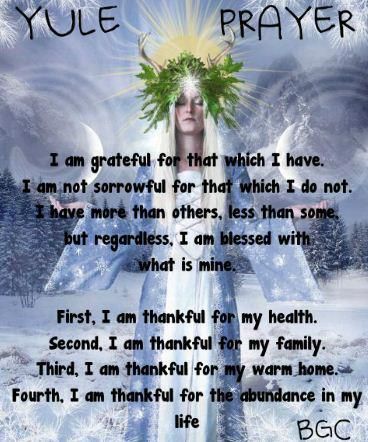
Welcome All Ye Witches To The Witches Digest for Wednesday, December 20

The Witches Digest for Wednesday, December 20

The Sun & Moon Data for Wednesday, December 20
The Sun
Sun Direction: ↑ 132.22° SE
Sun Altitude: 12.18°
Sun Distance: 91.453 million mi
Next Solstice: Dec 21, 2017 10:27 am (Winter)
Sunrise Today: 7:03 am↑ 119° Southeast
Sunset Today: 4:40 pm↑ 241° Southwest
Length of Daylight: 9 hours, 36 minutes
The Moon
Moon Direction: ↑ 114.83° ESE
Moon Altitude: -0.05°
Moon Distance: 252141 mi
Next Full Moon: Jan 1, 20188:24 pm
Next New Moon: Jan 16, 20188:17 pm
Next Moonset: Today6:59 pm
Current Moon Phase: Waxing Crescent
Moon Illumination: 4.9%
Reference
timeanddate.com
The Astrology for Tuesday, Demember 20
The Moon is in Capricorn until 9:29 PM, after which the Moon is in Aquarius.
The Moon is waxing and in its New phase.
The New Moon occurred on the 18th in the sign of Sagittarius, and the First Quarter Moon will occur on the 26th.
Mercury is retrograde in the sign of Sagittarius (Mercury is retrograde from December 3-22).
Saturn spends its first full day in Capricorn today (Saturn is in Capricorn from December 19, 2017, to March 1, 2020, and then from July 1, 2020, to December 17, 2020).
Moon in Capricorn
The Moon is traveling through Capricorn today. Make a list of goals. Work overtime. Climb higher. Don’t sulk.
We become aware of the need for structure and planning ahead with a Capricorn Moon. We are instinctively aware of the limitations of time and motivated by a desire for success. Achievement and manifestation are more important to us now. We are resourceful and don’t want to waste time, energy, or resources. This can be a somewhat sober influence, but it can also be a productive time when we look reality in the eye.
The Moon in Capricorn generally favors the following activities: Long-term activities that yield slow but steady results, practical undertakings, career issues, making a business plan, practical investments.
Overview of the Planets and the Stars for December 20
While a square between Venus and Chiron can point to blocks to intimacy and insecurities, a trine between Venus and Uranus also forms today and brings us out of our shells, encouraging our bolder, more innovative natures, socially speaking. We are most interested in all that is new, unusual, and out-of-the-ordinary with regards to romantic involvements, entertainment or pleasures, and financial undertakings. We may be experimenting, improvising, and trying on new ways of relating to others and expressing ourselves. We may be discovering alternative ways to make (or spend) money. We’re freer with our feelings, although a little detached, and we find beauty in the unfamiliar or uncommon.
The Moon is in responsible, intelligent Capricorn until 9:30 PM EST, and with the emotional Moon in this practical sign, we look for ways to make us feel more secure and in control. The Moon transits Aquarius from 9:30 PM forward, and we tend to move away from those things that are overly traditional or classic.
The Moon is void from 10:37 AM EST, with the Moon’s last aspect before changing signs (a square to Uranus), until the Moon enters Aquarius at 9:30 PM EST.
The sky this week for December 20 to 24
The New Moon, the winter solstice, and a meteor shower should make your astronomical calendar this week.
By Richard Talcott
Wednesday, December 20
Mars stands out in the southeastern sky before dawn this week. The magnitude 1.6 Red Planet rises some four hours before the Sun and appears 25° high as twilight starts to paint the sky. It currently resides among the background stars of eastern Virgo, though it will cross into neighboring Libra later this week. Unfortunately, the view of Mars through a telescope proves disappointing — it spans only 5″ and shows no detail.
Thursday, December 21
Earth’s winter solstice occurs at 11:28 a.m. EST. At that moment, the Sun reaches its farthest point south in the sky. The solstice marks the official beginning of winter in the Northern Hemisphere, and today has fewer hours of sunlight (and thus more hours of darkness) than any other. From mid-northern latitudes, however, the earliest sunset occurred about two weeks ago and the latest sunrise won’t happen until early January.
Saturn passes behind the Sun from our perspective, a configuration astronomers call solar conjunction, at 4 p.m. EST. Needless to say, our star’s glare makes it impossible to see the planet. Saturn will return to view before dawn in January.
Friday, December 22
The Ursid meteor shower peaks before dawn today. The shower’s radiant — the point from which the meteors appear to originate — lies in the constellation Ursa Minor, near the top of the Little Dipper’s bowl. The radiant is visible in the north all night, but climbs higher as dawn approaches. With the Moon out of the sky, viewers under a clear, dark sky should be able to see an average of 10 Ursid meteors per hour
Saturday, December 23
Although Mercury passed between the Sun and Earth just 11 days ago, the innermost planet already has climbed into view during morning twilight. Mercury rises about 90 minutes before the Sun and appears 10° above the southeastern horizon 30 minutes before sunrise. The planet shines at magnitude 0.2, bright enough to see with the naked eye (although binoculars will help you pick it out of the twilight glow). When viewed through a telescope this morning, Mercury appears 8″ across and one-third lit.
Sunday, December 24
Head outside before dawn and you’ll find Jupiter blazing in the southeast to the lower left of Mars. The giant planet climbs 20° high by the time twilight commences. Jupiter shines at magnitude –1.8, which makes it the brightest point of light in the night sky, and resides among the much dimmer stars of the constellation Libra. A telescope reveals the planet’s 33″-diameter disk.
Reference
The Witches Current Moon Phase for Wednesday, December 20
Waxing Crescent
Illumination: 4%
he Moon today is in a Waxing Crescent Phase. A Waxing Crescent is the first Phase after the New Moon and is a great time to see the features of the moon’s surface. During this phase the Moon can be seen in the wester sky after the sun dips below the horizon at sunset. The moon is close to the sun in the sky and mostly dark except for the right edge of the moon which becomes brighter as the days get closer to the next phase which is a First Quarter with a 50% illumination.
PHASE DETAILS FOR – WEDNESDAY, DECEMBER 20, 2017
Phase: Waxing Crescent
Illumination: 4%
Moon Age: 1.97 days
Moon Angle: 0.49
Moon Distance: 404,378.32 km
Sun Angle: 0.54
Sun Distance: 147,167,141.97 km
Reference
Moon Dairy
Sagittarius fluctuates between optimism and pessimism. The ebb and flow of inspiration and gloom could be quite dramatic at this new Moon. Its erratic energy is heightened by the flowing link with revolutionary Uranus in fiery Aries, and the ‘wisdom’ asteroid, Pallas – also in Aries. Wise women, female intellectuals, politicians, academics, sportswomen and female scientists could all feature prominently in the news at this time, and during the month ahead.
Sagittarius is a traveller – exploring far away lands, and pursuing higher education and knowledge in the spirit of adventure. Original thinking and discovery are favoured now, with clever Pallas – goddess of wisdom – aligned with inventive, eccentric Uranus. What are they cooking up in their dazzling laboratory? This planet pattern describes all manner of ‘light-bulb’ moments. If we clear the path, and gaze at the far horizons there’s no telling what surprising things we might see. Planets and points at around 26 degrees in your own natal horoscope will be switched on by this energetic new Moon. What do you dream of beginning? What’s your heart’s desire for 2018?
We’re approaching the Winter Solstice, when the mood begins to shift as Capricorn Sea Goats ride the waves. The atmosphere gradually becomes more serious, and there’ll be plenty of hints about the shape of things to come. The best trick will be to carry some warm Sagittarian joie de vivre and curiosity with us, and take the exciting possibilities of this new Moon forward into 2018.
‘Certain travellers give the impression that they keep moving because only then do they feel fully alive.’
– Ella Maillart – writer, photographer, sportswoman and traveller (1903-1997)
Reference
Jane Lyle, Astrologer
The Astrology Room
Cosmic Weather horoscope
Thursday 21st December:
Winter Solstice – Sun enters Capricorn
Human beings have celebrated the Winter Solstice for thousands of years. The Sun dies, the Sun is reborn – it’s just such a powerful moment for life here on Earth.
This year, the astrological Capricorn flavour is strong. The Sun, Saturn, and Pluto are in Capricorn, joined by Venus on Christmas Day to make a serious line-up in this, the most serious of signs. It’s a dynamic Solstice season, favouring realistic, rational plans and ambitions.
Yet Capricorn is also musical, has a quirky, often dry, sense of humour, and admires stylish glamour. The determined goat climbs, the fish-tailed part of Capricorn dips into the waters of wisdom and universal knowledge.
If you’re a December Capricorn, March Aries, June Cancerian, or September Libran this is a notable turning point time for you – now, and on into 2018.
Author
Jane Lyle, Astrologer
The Astrology Room
Don’t forget we have set up a Go Fund Me Account for Lady A. So far we have raised $120. You will find the link below, give if you can or pass it on to everyone you know.
Getting Into That YuleTide Spirit, “Jingle Bells, Cast Your Spells” by Karina Skye
From Yule to Imbolc

Yule to Imbolc
Witches celebrate the winter solstice with the lesser sabbat of Yule (or Midwinter). This may be the year’s shortest day, but it heralds ever-lengthening hours of daylight as the sun grows in strength. For thee Horned God has been reborn as the Sun Child, or Child of Promise, so that while we may still be light-deprived and shivering in the depths of winter, there is now real hope of being bathed in sunshine and warmth once again.
The 13 Days of Solstice
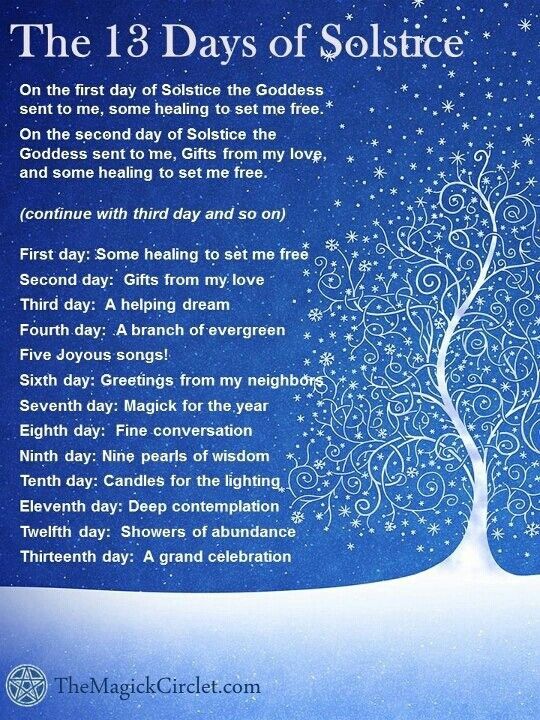
Rise & Rejoice All Ye Gentle Pagan Folk, For The Sun Returns To Us The Eve
Yesterday We Did Not Do an Up-date
 (Lady A’s escape proof bed)
Jacob thought it would be nice to add a little humor to this difficult situation. And I am listening to a kid, what the hell is wrong with me? As you know, we promised you an up-date on Lady A yesterday, which didn’t happen. We were all exhausted by the end of the day. They came and got Lady A about 9 something to take her to surgery. We were going to walk with her part of the way to surgery but we were told no we weren’t. They told us we could wait in the room or the waiting area. I decided to wait in the room. After you wait for so long the walls start to close in on you. I waited in that room for about 3 1/2 hours, sitting, walking, sitting, walking. I finally decided to go find Lord M. He had went to the surgery waiting room. The doctor had already came out and talked to him. The surgery went fine and she was in recovery. He did say he repaired another spot while he had her on the table. He said she would be sore for a few days but not in the pain she was in.
Lord Myst said we should go back to the room. The room, really. It wasn’t a room it was a cage. By the time we got back to the room, they were bringing Lady A back to it. She was asleep. After they got her situated, they told us to try and keep her awake for a bit.The first thing she said was when can I go home? Her speech was slurred and I couldn’t understand her. I really did but I pretended not too because I knew what her reaction was going to be when she found out. Lord M told her probably by this weekend. That woke her up. He told her the doctor wanted to keep her in the hospital a little longer to make sure her back was going to do the way it was suppose to. I don’t understand the medical community. They do surgery on you to fix a problem, then they have to wait and see if it does what it is suppose too. They are doctors and they are suppose to fix the problem the first time, right?
The surgery went fine. I hope we didn’t worry anybody since we didn’t do an up-date yesterday. We were just give out. We all walked the halls, up and down stairs, anything to make the time go a little faster. I thought Lady A was suppose to only be in surgery for about 45 minutes. The doctor said he took longer because he saw a few minor things that he might as well fix. I guess that is the signs of a good doctor.
Lord M called and Lady A got on the phone. She said her back was tender but there wasn’t the ripping pain that was there. She is feeling better. She told me to get up in the morning and go to the office and go to work. She is upset because she is going to miss Yule. We are planning on having a little Yule celebration in a Catholic hospital. Ought to go over well. She did tell me that this site had been down too long and if I was going to stay out here instead of the hospital, I could go to work. I have been getting a taste of what she does this morning and I don’t know how she does it. She took nothing and turned it into an organization and a business. She is one hell of a witch and one hell of a business woman. I have met many witches over my life times and I must say, she is the only one I have stuck with and admire. You might get tired of hearing me speak of her but you have never met her. I know you can feel her presence through the computer. Their have been many who say they can feel her power coming through the computer when she is on here. In person, she expresses herself as confident, in control, hard but loving and caring. I have never seen her afraid in my life. I wonder what she thought when she woke up to see the bottom of her cabin in flames. I can see her calmly walking over to the window, busting it out and pick up Kade and jumping. I would like to think that was the way it was but I would imagine she was scared just like anyone else. She did have the good sense about her to go through the window and get out. I don’t know if I would have been able to think that clearly. I am glad she was.
I have to go. It is time for the 8 pound ball of furry terror’s medicine. We will honor Lady A’s wishes and resume operations tomorrow. Think you can put up with me, cackle, cackle, cackle!
Eleanor
Don’t forget to spread the Go Fund Me Campaign that Lynette Baker started for Lady A. Please spread it around the internet.
https://www.gofundme.com/the-kit-steels-campaign
Don’t forget the store is open
PayPal address:
thewotcstrustfund@yahoo.com
Mailing address:
THE WOTC
Attention: Kit
P. O. Box 331
Kevil, KY 42053
I believe that is it. Thank you.
Up-date Sunday, December 17th, 2017
It is your favorite wicked witch Eleanor with an up-date on Lady A, otherwise now known as the Grizzly Bear. As you know, we were told that Lady A would be getting out of the hospital this weekend. We were mis-informed by the neurologist. The neurologist assured us that she was perfectly fine to go home. The orthopedic specialist said no, she wasn’t. You can imagine how that news went over with Lady A and the rest of us, not good at all. The neurologist should have consulted with the main doctor in charge before he ever gave us false hopes. The orthopedic doctor told us he had done two scans on Lady A’s old fusion. I believe most of you know she has a three-level fusion in her back. Screws, rods, cages, and probably a few things I have forgotten over time. The scans showed she has a fracture in that fusion. She had been complaining about unusual back pain. The neurologist would just up her pain medicine to stop her from hurting. The other doctor said no matter how much pain medicine she is given, it will not stop the pain. The fracture has to be fixed. He is planning on doing that surgery tomorrow. He said she is now strong enough to hold up to a second surgery. He won’t have to open her back up that much. He said she should have a scar about 3 to 4 inches long after he is done. He is going to glue the fracture. Yes, I said glue. I had never heard of it before but I know Lady A said she had. Her sister had it done on her back when she had a small fracture in hers. I am not a nurse nor do I know all the medical procedures but I guess if Lady A knows it has been done before it is alright then. I know we were both disappointed when we heard the news she wasn’t getting out of the hospital this weekend. I tried to lighten her spirits by telling her I was going to start calling her Elmer, after the glue. You can imagine how that went over.
We don’t have any idea when she will be out of the hospital now. I have stopped listening to the neurologist. As far as I am concerned he is out of the picture. If I want to know anything anymore I will ask the orthopedic doctor. I know the reason Lady A has to stay in the hospital is not a good thing. But it does give us more time to furnish the house before she comes home. We still have several pieces of furniture to get, mainly a bed for Lady A. I want to go down to the cabin and see if there is anything left that is salvageable. Lord M told me no. That is all I have been hearing from him recently, no! I am not use to being told no. I know Lady A had a brass bed in the guest room downstairs. I don’t know if brass would burn or what shape the bed might even be in. I am going to find out. If it is able to be saved, I am going to try to save it. It was a family heirloom. Lots of heirlooms went up in that fire.
I haven’t been up close to the cabin. I have only seen it from a distance and it breaks my heart. I stood and cried. Jacob, Mystie’s son, was with me. He put his arm around me and cried. I told him that cabin held a lot of memories for me. Even though it wasn’t my home, Lady A always made everyone there feel like it was. I told Jacob I could remember his mother, Lady A, myself and a few other staying up late, talking, doing rituals and just having a big sleep over. I could see Mystie walking the hall, sleeping in the guest room or in the kitchen. I could see Lady A chasing the bobcat around the cabin trying to catch her and put her up when we came over. I could see us sitting around the fire place telling tales and spinning yarns. It is strange you never stop to think how a place is much more than a home till it is gone. All the fond and loving memories I had of Lady A’s home went up in the flames that horrible night.
I do have a heart after all. I don’t like to admit it but it does occasionally emerge. I also wanted to thank you for your donations. I was wrong about the people here. You do care and you do love Lady A as she loves you. I know she misses you and asks daily how the site is doing. I never actually knew what a tight knit group had formed here. Lady A is very fortunate to have each of you. You know as well as I do, we are very fortunate to have her. To think we almost lost her because of sick son of a bitch. But we have a long way to go and we still need donations. If you would like to give, I will put the email addy to our PayPal account below. I will also include the address to our Post Office Box.
I do want you to do one thing for me tomorrow. Light a candle and say a prayer tomorrow for Lady A as she undergoes this surgery to fix the fracture in her back. The doctor told us the surgery is due to start or scheduled for 10:00 in the morning. If you could say your prayers and light your candles at that time, I would appreciate it. I will admit I am scared and I don’t know why. I don’t want her to have this surgery but I don’t want her to suffer either. I am scared because I have no control over this situation instead I have to put my trust in a mundane doctor. Please remember our dear Lady, sister and friend tomorrow morning at 10:00. After she is out of surgery, we will up-date you sometime tomorrow.
Eleanor
PayPal address: thewotcstrustfund@yahoo.com
Jacob just informed me there is a donation button on the right hand side of the site. He also told me to remind you that the store is open and doing business. I am sure you know the store by now but to get him off my back, here is the link to it:
Regular mail:
The WOTC
Attn: Kit
P. O. Box 331
Kevil, KY 42053
Thank you.
Saturday, December 16th, Good Morning!
Hail and Well Met, brothers & sisters. A few up-dates just for old time’s sake. First, Lady A is not getting out of the hospital this weekend. It was her dear buddy the neurologist who insisted that she would. But we have other doctors to consider in this matter, mainly the orthopedic specialist who has put Lady A back together once too often as he stated. She will not be getting out this weekend. He wants to give her upper thigh bone more time to heal because it was broken into and through her skin before he sends her home. He tried to explain to us how he put it back together but it went over our heads. We just agreed with him, what else can you do? Then the neurologist came in and told Lady A, “oh, you’ll be going home this weekend. I know you are happy about that.” She almost came out of the bed after him. We told him the other doctor disagreed and she would be in there till he decided it was time for her to go home. The neurologist flew into a fit and he said he would just see about that. I believe the neurologist has taken one too many of his own drugs. I talked to Eleanor this morning and the orthopedic doctor has been in and he said she was still staying. I guess we know now who is top doctor in that hospital.
Took Lady A’s familiar to the vet yesterday. Someone forgot to tell me that the dog hates men. When you would think of a small Pomeranian, you think they are so cute and adorable. That is what I thought of Kade(the Pom). I always saw him climb up into the car, get in his seat and look so cute. I thought he automatically did that. Was I wrong? I told him we were going bye-bye, Lady A uses it all the time. When I used it, he went and hid under the bed. I had to crawl under the bed and get him. I also got teeth prints on my hand from the adorable pup. I thought I probably scared him. I put him in the car and tried to pet him on the way to the vet’s office. That was a mistake, he took a bite out of me every time he could. Got to the vet’s office and I went in and talked to one of the ladies behind the counter. I told her I had Kade with me but he just didn’t want to cooperate with me. She is the one who told me he hated men. She went and got him out of the car without a moment’s problem. When he saw me, he would growl, snarl and acted like a rabid ball of fur. I stayed out front while they examined him. He did have some congestion in his lungs. The vet put him on a steroid and an antibiotic for a week. The medicine should clear up his cough. They did a good exam and he was fine. They were nice enough to give him a small sedative so I could get him home and out of the car. Now Eleanor and I are switching spots. She is coming to give Kade his medicine and I am going to stay at the hospital with Lady A. Eleanor told me Lady A was like a grizzly bear after she found out she wasn’t getting out of the hospital this weekend. I might be trading a small, angry ball of fur for a big grizzly bear. I tried to tell Lady A with everything they had to do to her leg and then some redo’s, she wasn’t getting out this weekend but she didn’t believe me.
Her stay in the hospital does give us more time to put furniture in the house Eleanor just had to rent. Eleanor wanted to decorate the place like a palace. I told her that they were not going to live there forever. The plan so far is to demolish what is left of the cabin and rebuild on that site. I don’t know if that would be too much for Lady A to bear or not. I know she loved the spot and I believe if we do rebuild there, it might be what the doctor ordered. But with her doctors, you never know.
I have to go to the hospital now. El (is what we call Eleanor) is ringing on the phone to see if I am on my way. If I don’t up-date you tomorrow, she will. Don’t forget the store is open and doing business. Jacob is filling orders as quickly as you purchase merchandise. He is the only one getting any peace and quiet out of this whole ordeal. He is working his heart out. Every time I tell him to take a break, he tells me, “Mom is going to need this or Mom is going to need that, I can’t.” It is amazing in just a few months time, he is calling Lady A, Mom. He grew up with her and always thought of her as a second mother. The boy has good intentions and I should leave him alone. I should also get going to the hospital.
Lord M
Magickal Necessities


You must be logged in to post a comment.