Goddess Knowledge – Flora

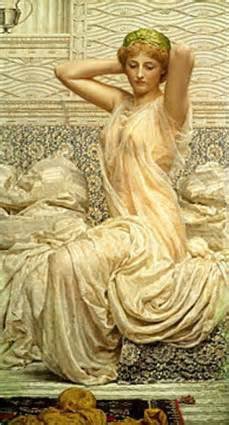
Flora, “Flourishing one,” was the Roman goddess of flowers, gardens, and spring. She is the embodiment of all nature; her name has come to represent all plant life. She is especially a goddess of flowers, including the flower of youth. Her festival of unrestrained pleasure, the Floralia, was celebrated at the end of April and beginning of May; this festival was probably the orgin of the maypole dance and the gathering of bouquets of flowers, symbolizing the bring of spring and new life into the world. She gives charm to youth, aroma to wine, sweetness to honey, and fragrance to blossoms.

Flora teaches us to honor growing things, both inside and outside us, She is a reminder to pay attention to pleasure, to the beauty of spring, and to new life, where it is found.

For more information about Flora click on this link for a general search: Information about Goddess Flora

To see images of the Goddess Flora click on this link: Images of Goddess Flora

About the Goddess of the Month – Freya

Freya

The Goddess of Love

Freya is the Goddess of love in Norse mythology, but she is also associated with sex, lust, beauty, sorcery, fertility, gold, war and death. The name Freya (in Old Norse “Freyja)” means “lady”, and can also be spelled (Freya, Freija, Frejya, Freyia, Fröja, Frøya, Frøjya, Freia, Freja, Frua, and Freiya). She does not originate from the Aesir but she is from the Vanir, she and two other Gods were sent to the Aesir by the Vanir as a token of truce, in return, the Aesir also sent two Gods to the Vanir. Freya became an honorable member of the Aesir after the war between the Aesir and Vanir ended.

Freya’s Family

Freya is the daughter of Njord and his sister Nerthus, and she has a twin brother named Freyr. Freya is married to the God Odr, but he somehow disappeared but it might be Odin, she has two children with Odr, their names are Hnoss and Gersimi. Some of the weekdays in Norse mythology originate from some of the Gods and Goddesses, and Freya might be associated with the day Friday, but there are conflicting sources so it could also be the Goddess Frigg.

Freya the beautiful

Freya is incredibly beautiful and she has many admirers, not just among the Gods and Goddesses but also among the dwarves and giants. She loves jewelry and other fine materials and she has quite often used her beauty to get the jewelry she desires. a big passion for poems and loves to sit and listen to songs for many hours. Freya has an unusual gift when she cries her tears turns into amber or gold.

Freya’s house

Freya is living in Asgard (the home of the Gods), the name of her house is Sessrumnir and it is located by the field Fólkvangr which means “field of the host”, “people field” or “army field” It is a place where half of the people who die in a battle go for the afterlife, while Odin will receive the other half. Freya is always given the first choice among the brave warriors after she had picked the ones she wanted, the rest were sent to Odin.

Three animals and some feathers

Freya loves to travel and she would sometimes take a ride in her chariot pulled by two black or gray cats. But she was also able to fly, by using her cloak of falcon feathers, which she willingly loaned out to the other Gods and Goddesses in Asgard, when they needed to fly to one of the worlds in a hurry. Freya also has a boar named Hildisvini “battle swine” which she rides when she is not using her cat-drawn chariot. It is also said to be Freya’s human lover, Ottar in disguise, and that is the reason why Loki consistently accuses her of being immoral by riding her lover in public.


–Norse Mythology

Goddess Knowledge – Psyche

PSYCHE

The story of Psyche tells of a mortal woman taken to a mysterious castle to be married to a fierce dragon. Her husband comes to her in the middle of the night, and she falls in love with him. Told she must never look upon his face, she disobeys this injunction and finds that her husband is really Eros, the god of love; when he awakes, he flies away, leaving her forever.

Psyche roams far and wide trying to find Eros. She goes to his mother, Aphrodite, who gives her four tasks to complete, each seeming impossible. The final task requires her to descend into Hades and retrieve a box of beauty.

Through the process of meeting the challenges of her tasks and integrating her experiences Psyche grows from an innocent young girl into a mature goddess. Psyche is a rich reminder of our imperative to grow;  she reminds us that the process of life takes us into dark places as well as light, just as the butterfly emerges from the dark chrysalis into the light.

For more information here is the link I did for a general search for her: Further Information

Toe see images of Psyche  from a general search on bing,com please click this link: Images Pysche

Goddess Knowledge Cards – Medusa

When Medusa was slain, the winged horse Pegasus sprang from her blood. The Greeks pottery Medusa as a horrifying gorgon, an ugly woman with snakes for hair; anyone who looked at her face was turned to stone. Yet her name has the same root as medicine and measure, and derives from a Greek word meaning “to protect, to rule over.” Medusa is a moon goddess, the triple-headed Great Goddess in her death aspect. She is associated with blood, so to meet her is to meet the mysteries of moon-blood or menstrual blood, sacred and terrible, in many mythologies the source of life. Medusa is serpent energy, enlivening, terrifying, impersonal. Somehow Medusa, a symbol of growth and generation that dies so that from death may come life, became a symbol of fear, for to look directly upon the divine is to face a terrifying reality.

Pegasus is instinct, wisdom, imagination, life force, and intuitive understanding.

For more information about the Goddess Medusa here is the link for a general search: Information about Medusa

To see images of Medusa please use this general search link: Images of Medusa

About the Roman God Janus

Janus

The Roman God

In ancient Roman religion and mythology, Janus is the god of beginnings and transitions, thence also of gates, doors, doorways, endings and time. He is usually a two-faced god since he looks to the future and the past. The Romans dedicated the month of January to Janus. His most apparent remnant in modern culture is his namesake, the month of January.

Though he was usually depicted with two faces looking in opposite directions (Janus Geminus (twin Janus) or Bifrons), in some places he was Janus Quadrifrons (the four-faced). The Romans associated Janus with the Etruscan deity Ani.

Janus was frequently used to symbolize change and transitions such as the progression of past to future, of one condition to another, of one vision to another, and of one universe to another. Hence, Janus was worshipped at the beginnings of the harvest and planting times, as well as marriages, births and other beginnings. He was representative of the middle ground between barbarity and civilization, rural country and urban cities, and youth and adulthood.


Theology and Functions

While the fundamental nature of Janus is debated, in most modern scholars’ view the set of the god’s functions may be seen as being organized around a simple principle: that of presiding over all beginnings and transitions, whether abstract or concrete, sacred or profane. Interpretations concerning the god’s fundamental nature either limit it to this general function or emphasize a concrete or particular aspect of it (identifying him with light the sun, the moon, time, movement, the year, doorways, bridges etc.) or see in the god a sort of cosmological principle, i. e. interpret him as a uranic deity.

Almost all these modern interpretations were originally formulated by the ancients.

The function of ‘god of beginnings’ has been clearly expressed in numerous ancient sources, among them most notably perhaps Cicero, Ovid and Varro. As a god of motion he looks after passages, causes actions to start and presides over all beginnings, and since movement and change are bivalent, he has a double nature, symbolized in his two headed image.

He has under his tutelage the stepping in and out of the door of homes, the ianua, which took its name from him, and not viceversa. Similarly his tutelage extends to the covered passages named iani and foremost to the gates of the city, including the cultic gate called the Argiletum, named Ianus Geminus or Porta Ianualis from which he protects Rome against the Sabines. He is also present at the Sororium Tigillum, where he guards the terminus of the ways into Rome from Latium. He has an altar, later a temple near the Porta Carmentalis, where the road leading to Veii ended, as well as being present on the Janiculum, a gateway from Rome out to Etruria.

The connexion of the notions of beginning (principium), movement, transition (eundo), and thence time has been clearly expressed by Cicero. In general, Janus is at the origin of time as the guardian of the gates of Heaven: Jupiter himself moves forth and back because of Janus’s working.

In one of his temples, probably that of Forum Holitorium, the hands of his statue were positioned to signify the number 355 (the number of days in a year), later 365, symbolically expressing his mastership over time. He presides over the concrete and abstract beginnings of the world, such as religion and the gods themselves, he too holds the access to Heaven and other gods: this is the reason why men must invoke him first, regardless of the god they want to pray or placate. He is the initiator of human life, of new historical ages, and financial enterprises: according to myth he was the first to mint coins and the as, first coin of the libral series, bears his effigy on one face.

Janus frequently symbolized change and transitions such as the progress of future to past, from one condition to another, from one vision to another, and young people’s growth to adulthood. He was represented time, because he could see into the past with one face and into the future with the other. Hence, Janus was worshipped at the beginnings of the harvest and planting times, as well as at marriages, deaths and other beginnings. He represented the middle ground between barbarism and civilization, rural and urban, youth and adulthood. Having jurisdiction over beginnings Janus had an intrinsic association with omens and auspices.

Leonhard Schmitz suggests that he was likely the most important god in the Roman archaic pantheon. He was often invoked together with Iuppiter (Jupiter).

According to Macrobius citing Nigidius Figulus and Cicero, Janus and Jana (Diana) are a pair of divinities, worshipped as Apollo or the sun and moon, whence Janus received sacrifices before all the others, because through him is apparent the way of access to the desired deity.

A similar solar interpretation has been offered by A. Audin who interprets the god as the issue of a long process of development, starting with the Sumeric cultures, from the two solar pillars located on the eastern side of temples, each of them marking the direction of the rising sun at the dates of the two solstices: the southeastern corresponding to the Winter and the northeastern to the Summer solstice.

These two pillars would be at the origin of the theology of the divine twins, one of whom is mortal (related to the NE pillar, as confining with the region where the sun does not shine) and the other is immortal (related to the SE pillar and the region where the sun always shines). Later these iconographic models evolved in the Middle East and Egypt into a single column representing two torsos and finally a single body with two heads looking at opposite directions.


Temples


Numa built the Ianus geminus (also Janus Bifrons, Janus Quirinus or Portae Belli), a passage ritually opened at times of war, and shut again when Roman arms rested. It formed a walled enclosure with gates at each end, situated between the old Roman Forum and that of Julius Caesar, which had been consecrated by Numa Pompilius himself. About the exact location and aspect of the temple there has been much debate among scholars.

In wartime the gates of the Janus were opened, and in its interior sacrifices and vaticinia were held, to forecast the outcome of military deeds. The doors were closed only during peacetime, an extremely rare event. The function of the Ianus Geminus was supposed to be a sort of good omen: in time of peace it was said to close the wars within or to keep peace inside; in times of war it was said to be open to allow the return of the people on duty.

A temple of Janus is said to have been consecrated by the consul Gaius Duilius in 260 BCE after the Battle of Mylae in the Forum Holitorium. It contained a statue of the god with the right hand showing the number 300 and the left the number 65, i. e. the length in days of the solar year, and twelve altars, one for each month.

The four-sided structure known as the Arch of Janus in the Forum Transitorium dates from the 1st century CE: according to common opinion it was built by the Emperor Domitian. However American scholars L. Ross Taylor and L. Adams Holland on the grounds of a passage of Statius maintain that it was an earlier structure (tradition has it the Ianus Quadrifrons was brought to Rome from Falerii) and that Domitian only surrounded it with his new forum. In fact the building of the Forum Transitorium was completed and inaugurated by Nerva in 96 CE.


Rites

The rites concerning Janus were numerous. Owing to the versatile and far reaching character of the basic function of the god, marking beginnings and transitions, his presence was ubiquitous and fragmented. Apart from the rites solemnizing the beginning of the new year and of every month, there were the special times of year which marked the beginning and the closing of the military season, in March and October respectively.

These included the rite of the arma movere on March 1 and that of the arma condere at the end of the month performed by the Salii, and the Tigillum Sororium on October 1. Janus Quirinus was closely associated with the anniversaries of the dedications of the temples of Mars on June 1 (a date that corresponded with the festival of Carna, a deity associated with Janus: see below) and of that of Quirinus on June 29 (which was the last day of the month in the pre-Julian calendar). These important rites are discussed in detail below.

Any rite or religious act whatever first required the invocation of Janus, with a corresponding invocation to Vesta at the end (Janus primus and Vesta extrema). Instances are to be found in the Carmen Saliare, the formula of the devotio, the lutration of the fields and the sacrifice of the porca praecidanea, the Acta of the Arval Brethren.

Although Janus had no flamen, he was closely associated with the rex sacrorum who performed his sacrifices and took part in most of his rites: the rex was the first in the ordo sacerdotum hierarchy of priests.The flamen of Portunus performed the ritual greasing of the spear of the god Quirinus on August 17, day of the Portunalia, on the same date that the temple of Janus in the Forum Holitorium had been consecrated (by consul Caius Duilius in 260 BC). Portunus seems to be a god closely related to Janus, if with a specifically restricted area of competence, in that he presides over doorways and harbours and shares with Janus his two symbols, the key and the stick.


Beginning of the Year

The Winter solstice was thought to occur on December 25. January 1 was new year day: the day was consecrated to Janus since it was the first of the new year and of the month (kalends) of Janus: the feria had an augural character as Romans believed the beginning of anything was an omen for the whole. Thus on that day it was customary to exchange cheerful words of good wishes.

For the same reason everybody devoted a short time to his usual business, exchanged dates, figs and honey as a token of well wishing and made gifts of coins called strenae. Cakes made of spelt (far) and salt were offered to the god and burnt on the altar. Ovid states that in most ancient times there were no animal sacrifices and gods were propitiated with offerings of spelt and pure salt. This libum was named ianual and it was probably correspondent to the summanal offered the day before the Summer solstice to god Summanus, which however was sweet being made with flour, honey and milk.

Shortly afterwards, on January 9, on the feria of the Agonium of January the rex sacrorum offered the sacrifice of a ram to Janus.


Space

Janus was also involved in spatial transitions, presiding over home doors, city gates and boundaries. Numerous toponyms of places located at the boundary between the territory of two communities, especially Etrurians and Latins or Umbrians, are named after the god. The most notable instance is the Ianiculum which marked the access to Etruria from Rome. Since borders often coincided with rivers and the border of Rome (and other Italics) with Etruria was the Tiber, it has been argued that its crossing had a religious connotation; it would have involved a set of rigorous apotropaic practices and a devotional attitude. Janus would have originally regulated particularly the crossing of this sacred river through the pons sublicius.

Janus was the protector of doors, gates and roadways in general, as is shown by his two symbols, the key and the staff. The key too was a sign that the traveller had come to a harbor or ford in peace in order to exchange his goods. The rite of the bride’s oiling the posts of the door of her new home with wolf fat at her arrival, though not mentioning Janus explicitly, is a rite of passage related to the ianua.


Myths

In discussing myths about Janus one should be careful in distinguishing those who are ancient and originally Latin and others which were later attributed to him by Greek mythographers. In the Fasti Ovid relates only the myths that associate Janus to Saturn, whom he welcomed as a guest and with whom eventually shared his kingdom in reward of his teaching the art of agriculture, and to the nymph Crane Grane or Carna, whom Janus raped and made the goddess of hinges as Cardea, while in the Metamorphoses he records his fathering with Venilia the nymph Canens, loved by Picus.

The myth of Crane has been studied by M. Renard and G. Dumezil. The first scholar sees in it a sort of parallel with the theology underlying the rite of the Tigillum Sororium. Crane is a nymph of the sacred wood of Helernus, located at the issue of the Tiber, whose festival of February 1 corresponded with that of Juno Sospita: Crane might be seen as a minor imago of the goddess.

Her habit of deceiving her male pursuers by hiding in crags in the soil reveals her association not only with vegetation but also with rocks, caverns, and underpassages. Her nature looks to be also associated with vegetation and nurture: G. Dumezil has proved that Helernus was a god of vegetation, vegetative lushiousness and orchards, particularly associated with vetch. As Ovid writes in his Fasti, June 1 was the festival day of Carna, besides being the kalendary festival of the month of Juno and the festival of Juno Moneta. Ovid seems to purposefully conflate and identify Carna with Cardea in the aetiologic myth related above.

Consequently the association of both Janus and god Helernus with Carna-Crane is highlighted in this myth: it was customary on that day eating vetch and lard, which were supposed to strengthen the body. Cardea had also magic powers for protecting doorways (by touching thresholds and posts with wet hawthorn twigs) and newborn children by the aggression of the striges (in the myth the young Proca). M. Renard sees the association of Janus with Crane as reminiscent of widespread rites of lustration and fertility performed through the ritual walking under low crags or holes in the soil or natural hollows in trees, which in turn are reflected in the lustrative rite of the Tigillum Sororium.

Macrobius relates Janus was supposed to have shared a kingdom with Camese in Latium, on a place then named Camesene. He states that Hyginus recorded the tale on the authority of a Protarchus of Tralles. In Macrobius Camese is a male: after Camese’s death Janus reigned alone. However Greek authors make of Camese Janus’s sister and spouse: Atheneus citing a certain Drakon of Corcyra writes that Janus fathered with his sister Camese a son named Aithex and a daughter named Olistene. Servius Danielis states Tiber (i. e. Tiberinus) was their son.

Arnobius writes that Fontus was the son of Janus and Juturna. The name itself proves that this is a secondary form of Fons modelled on Janus, denouncing the late character of this myth: it was probably conceived because of the proximity of the festivals of Juturna (January 11) and the Agonium of Janus (January 9) as well as for the presence of an altar of Fons near the Janiculum and the closeness of the notions of spring and of beginning.

Plutarch writes that according to some Janus was a Greek from Perrhebia.

When Romulus and his men kidnapped the Sabine women, Janus caused a volcanic hot spring to erupt, resulting in the would-be attackers being buried alive in the deathly hot, brutal water and ash mixture of the rushing hot volcanic springs that killed, burned, or disfigured many of Tatius’s men. This spring is called Lautolae by Varro.

Later on, however, the Sabines and Romans agreed on creating a new community together. In honor of this, the doors of a walled roofless structure called ‘The Janus’ (not a temple) were kept open during war after a symbolic contingent of soldiers had marched through it. The doors were closed in ceremony when peace was concluded.


Origin, Legends and History

In accord with his fundamental character of being the Beginner Janus was considered by Romans the first king of Latium, sometimes along with Camese. He would have received hospitably god Saturn, who, expelled from Heaven by Jupiter, arrived on a ship to the Janiculum. Janus would have also effected the miracle of turning the waters of the spring at the foot of the Viminal from cold to scorching hot in order to fend off the assault of the Sabines of king Titus Tatius, come to avenge the kidnapping of their daughters by the Romans.

His temple named Janus Geminus had to stand open in times of war. It was said to have been built by king Numa Pompilius, who kept it always shut during his reign as there were no wars. After him it was closed very few times, one after the end of the first Punic War, three times under Augustus and once by Nero. It is recorded that emperor Gordianus III opened the Janus Geminus.

It is a noteworthy curiosity that the opening of the Janus was perhaps the last act connected to the ancient religion in Rome: Procopius writes that in 536 CE, during the Gothic War, while general Belisarius was under siege in Rome, at night somebody opened the Janus Geminus stealthily, which had long stayed closed since 390, year on which Theodosius I’s edict banned the ancient cults. Janus was faithful to his liminal role also in the marking of this last act.

The uniqueness of Janus in Latium has suggested to L. Adams Holland and J. GagŽ the hypothesis of a cult brought from far away by sailors and strictly linked to the amphibious life of the primitive communities living on the banks of the Tiber. In the myth of Janus the ship of Saturn as well as the myth of Carmenta and Evander are remininscent of an ancient Preroman sailing life. The elements that connect Janus to sailing are summarized here below as presented in the work of Gage.

1. The boat of Janus and the beliefs of the primitive sailing techniques.

    • a) The proximity of Janus and Portunus and the functions of the flamen Portunalis.

The temple of Janus was dedicated by C. Duilius on August 17, day of the Portunalia. The key was the symbol of both gods and was also meant to signify that the boarding boat was a peaceful merchant boat.

The flamen Portunalis oiled the arms of Quirinus with an ointment kept in a peculiar container named persillum, term perhaps derived from Etruscan persie. A similar object seems to be represented in a fresco picture of the Calendar of Ostia on which young boys prepare to apply a resin contained in a basin to a boat standing on a cart, i.e. yet to be launched.

b) The Tigillum Sororium would be related to a cult of wood of the Horatii, as shown by the episodes of the pons sublicius defended by Horatius Cocles and of the posts of the main entrance of the temple of Jupiter Capitolinus, on which Marcus Horatius Pulvillus lay his hand during the dedication rite. GagŽ thinks the magic power of the Tigillum Sororium should be due to the living and burgeoning nature of wood.

2. Falacer and flamen Falacer as related to a sacred tree useful in shipbuilding. This flamen would be related to Janus as the flamen Portunalis is because of the association of pater Falacer and shipping.

    • a) The name of divus pater Falacer[208] would be that of a Sabine god similar to Quirinus, i.e. a spear god from the town of Falacrinae.[209] The term is related to falarica, a javelin soaked in pitch, ending with a point of inflammable material. Falas in Etruscan means pole or tower. The name could be related to that of the faba graeca the Greek lotus, imported from Syria (Celtis australis). This tree would have been used among certain communities as the wild olive was to make rolls in order to haul ships upon. The name of the flamen would reflect an ancient name of this tree later corrupted into faba.

b) Religious quality of trees as the wild olive (analogous to that of corniolum and wild fig) to sailing communities: it does not rot in sea water, thence it was used in shipbuilding and the making of rolls for the hauling of ships overland.

3. Janus and the depiction of Boreas as Bifrons: climatological elements.

    • a) The calendar of Numa and the role of Janus. Contradictions of the ancient Roman calendar on the beginning of the new year: originally March was the first month and February the last one. January, the month of Janus, became the first afterwards and through several manipulations. The liminal character of Janus is though present in the association to the Saturnalia of December, reflecting the strict relationship between the two gods and the rather blurred distinction of their stories and symbols. The initial role of Janus in the political-religious operations of January: nuncupatio votorum spanning the year, imperial symbol of the boat in the rite of opening of the sailing season of the vota felicia. Janus and his myths allow for an ancient interpretation of the vota felicia different from the Isiadic one.

b) The idea of the Seasons in the ancient traditions of the Ionian Islands. The crossing of the Hyperborean myths. Cephalonia as a place at the cross of famous winds. Application of the theory of winds for the navigation in the Ionian Sea. The type Boreas Bifrons as probable model of the Roman Janus.

The observation has been made first by the Roscher Lexicon: “Ianus is he too, doubtlessly, a god of wind” and repeated in the RE Pauly-Wissowa s.v. Boreas by Rapp. P. Grimal has taken up this interpretation connecting it to a vase with red figures representing Boreas pursuing the nymph Oreithyia: Boreas is depicted as a two headed winged demon, the two faces with beards, one black and the other fair, perhaps symbolizing the double movement of the winds Boreas and Antiboreas. This proves the Greek of the V century BC did know the image of Janus. Gage feels compelled to mention here another parallel with Janus to be found in the figure of Argos with one hundred eyes and in his association with his murderer Hermes.

Among the winds studied by Greek sailors one can number Auster and Aquilon. Favonius on the other hand is not known to the Greek but is of particular relevance to the Roman as it started to blow exactly on the sixth day before the Idi of February: it was regarded as the bringer of the Springtime renewal of life. Few days later recurred the festival of Faunus, on the idi.

c) Solar, solsticial and cosmological elements. While there is no direct proof of an original solar meaning of Janus, this being the issue of learned speculations of the Roman erudits initiated into the mysteries and of emperors as Domitian, the derivation from a Syrian cosmogonic deity proposed by P. Grimal looks more acceptable. Gage though sees an ancient, preclassical Greek mythic substratum to which belong Deucalion and Pyrrha and the Hyperborean origins of the Delphic cult of Apollo as well as the Argonauts. The beliefs in the magic power of trees is reflected in the use of the olive wood, as for the rolls of the ship Argo: the myth of the Argonauts has links with Corcyra, remembered by Ampelius.

4. The sites of the cults of Janus at Rome and his associations in ancient Latium.

    • a) Argiletum. Varro gives either the myth of the killing of Argos as an etymology of the word Argi-letum (death of Argos), which is not reliable, or the place standing upon a soil of clay, argilla. However the names in -etum are usually referred to trees. The place so named stood at the foot of the Viminal, the hill of the reeds. It could also be referred to the white willow tree, used to make objects of trelliswork. The word could also be linked to the Argei the 27 or 30 dolls thrown into the Tiber in the rite of May 15. On them the more accepted opinion (at the time, 1979) is that they represented Greeks, Argei being their ancient designation by the Romans. The rite could be a substitution rite for human sacrifices or be original as such. The most supported opinion among the Ancient was that of a rite of substitution of human sacrifices to Saturn ascribed to Hercules. At any rate the rite must be associated to a local Preroman life linked to the Tiber, to a river religion in which the reeds harvested in the river itself or its banks had a peculiar value. Janus though is not present in this rite.

b) The Janiculum may have been inhabited by people who were not Latin but had close alliances with Rome.The right bank of the Tiber would constitute a typical, commodious landing place for boats and the cult of Janus would have been double as far as amphibious.

c) Janus’s cultic alliances and relations in Latium show a Prelatin character. Janus has no association in cult (calendar or prayer formulae) with any other entity. Even though he has the epithet of Pater he is no head of a divine family; however some testimonies lend him a companion, sometimes female and a son and/or a daughter. They belong to the family of the nymphs or genies of springs. Janus intervenes in the miracle of the hot spring during the battle between Romulus and Tatius: Juturna and the nymphs of the springs are clearly related to Janus as well as Venus, that in the Ovid’s Metamorphoses cooperates in the miracle and that may have been confused with Venilia, or perhaps the two were originally one. Janus has a direct link only to Venilia with whom he fathered Canens.

The magic role of the wild olive tree (oleaster) is prominent in the description of the duel between Aeneas and Turnus reflecting its religious significance and powers: it was sacred to sailors, also to those who had shipwrecked as a protecting guide to the shore. It was probably venerated by a Prelatin culture in association with Faunus. In the story of Venulus coming back from Apulia too we see the religious connotation of the wild olive: the king discovers one into which a local shepherd had been had been turned for failing to respect some nymphs he had come across in a nearby cavern, apparently Venilia, as she was the deity associated with the magic virtues of such tree. GagŽ finds it remarkable that the characters related to Janus are in the Aeneis on the side of the Rutuli. In the Aeneis Janus would be represented by Tiberinus. Olistene, the daughter of Janus with Camese, may reflect in her name that of the olive or oleaster, or of Oreithyia.Camese may be reflected in Carmenta: Evander’s mother is from Arcadia, comes to Latium as an exile migrant and has her two festivals in January: Camese’s name does not look Latin.

5. Sociological remarks

    • a) The vagueness of Janus’s association with the cults of primitive Latium and his indifference towards social composition of the Roman State suggest the inference that he was a god of an earlier amphibious merchant society in which the role of the guardian was indispensable.

b) Janus bifrons and the Penates. Even though the cult of Janus cannot be confused with that of the Penates, related with Dardanian migrants from Troy, the binary nature of the Penates and of Janus postulates a correspondent ethnic or social organisation. Here the model is thought to be provided by the cult of the Magni Dei or Cabeiri preserved at Samothrace and worshipped particularly among sailing merchants. The aetiological myth is noteworthy too: at the beginning one finds Dardanos and his brother Iasios appearing as auxiliary figures in a Phrygian cult to a Great Mother. In Italy there is a trace of a conflict between worshippers of the Argive Hera (Diomedes and the Diomedians of the south) and of the Penates. The cult of Janus looks to be related to social groups remained at the fringe of the Phrygian ones. They might or might not have been related to the cult of the Dioscuri.

c) The ianitrices in Roman law. The term is attested by Modestinus in the Digesta 38, 10, 4, 6 and glossed by Isidorus Origines 9, 7, 17. It denotes the spouses of the brothers of one’s husband: it is attested only in the imperial period and in the juridical language. It has a symmetric correspondent in levir brother of one’s husband. It is possible to suppose that the word ianitrix may at its origin have issued from the cult of Janus, which could have given special functions to women married to the two indivisible companions while later it got fixed to a special sense of relations. This topic bears on the matrimonial practices of early Roman society which show traces of a regimen different from the classic one, i. e. monogamic with exogamy.


Janus and Juno

The relationship between Janus and Juno is defined by the closeness of the notions of beginning and transition and the functions of conception and delivery, result of youth and vital force. The reader is referred to the above sections Cultual epithets and Tigillum Sororium of this article and the corresponding section of article Juno.


Janus and Quirinus

Quirinus is a god that incarnates the quirites, i.e. the Romans in their civil capacity of producers and fathers. He is surnamed Mars tranquillus peaceful Mars, Mars qui praeest paci Mars who presides on peace. His function of custos guardian is highlighted by the location of his temple inside the pomerium but not far from the gate of Porta Collina or Quirinalis, near the shrines of Sancus and Salus. As a protector of peace he is nevertheless armed, in the same way as the quirites are, as they are potentially milites soldiers: his staue represents him is holding a spear. For this reason Janus, god of gates, is concerned with his function of protector of the civil community. For the same reason the flamen Portunalis oiled the arms of Quirinus, implying that they were to be kept in good order and ready even though they were not to be used immediately. Dumezil and Schilling remark that as a god of the third function Quirinus is peaceful and represents the ideal of the pax romana i. e. a peace resting on victory.


Janus and Portunus

Portunus may be defined as a sort of duplication inside the scope of the powers and attributes of Janus. His original definition shows he was the god of gates and doors and of harbours. In fact it is debated whether his original function was only that of god of gates and the function of god of harbours was a later addition: Paul the Deacon writes: “… he is depicted holding a key in his hand and was thought to be the god of gates”. Varro would have stated that he was the god of harbours and patron of gates. His festival day named Portunalia fell on August 17, and he was venerated on that day in a temple ad pontem Aemilium and ad pontem Sublicium that had been dedicated on that date.[229] Portunus, unlike Janus, had his own flamen, named Portunalis. It is noteworthy that the temple of Janus in the Forum Holitorium had been consecrated on the day of the Portunalia and that the flamen Portunalis was in charge of oiling the arms of the statue of Quirinus.


Janus and Vesta

The relationship between Janus and Vesta touches on the question of the nature and function of the gods of beginning and ending in Indo-European religion. While Janus has the first place Vesta has the last, both in theology and in ritual (Ianus primus, Vesta extrema). The last place implies a direct connexion with the situation of the worshipper, in space and in time. Vesta is thence the goddess of the hearth of homes as well as of the city. Her inextinguishable fire is a means for men (as individuals and as a community) to keep in touch with the realm of gods. Thus there is a reciprocal link between the god of beginnings and unending motion, who bestows life to the beings of this world (Cerus Manus) as well as presiding over its end, and the goddess of the hearth of man, which symbolises through fire the presence of life. Vesta is a virgin goddess but at the same time she is considered the mother of Rome: she is thought to be indispensable to the existence and survival of the community.


Association with non-Roman gods

The god with two faces appeared repeatedly in Babylonian art. Reproductions of the image of such a god, named Usmu, on cylinders in Sumero-Accadic art. On plate XXI, c, Usmu is seen while introducing worshippers to a seated god. Janus-like heads of gods related to Hermes have been found in Greece, perhaps suggesting a compound god.


–Crystalinks

Samhain Goddesses – Hel – Norse

Hel


In the Poetic EddaProse Edda, and Heimskringla, Hel is referred to as a daughter of Loki. In the Prose Edda book Gylfaginning, Hel is described as having been appointed by the god Odin as ruler of the realm of Niflheim. In the same source, her appearance is described as half blue and half flesh-colored and further as having a gloomy, downcast appearance. The Prose Edda details that Hel rules over vast mansions with many servants in her underworld realm and plays a key role in the attempted resurrection of the god Baldr.

Scholarly theories have been proposed about Hel’s potential connections to figures appearing in the 11th-century Old English Gospel of Nicodemus and Old Norse Bartholomeus saga postola, that she may have been considered a goddess with potential Indo-European parallels in Bhavani, Kali, and Mahakali or that Hel may have become a being only as a late personification of the location of the same name.

Domain

The gods had abducted Hel and her brothers from Angrboda’s hall. They cast her in the underworld, into which she distributes those who are sent to her; the wicked and those who died of sickness or old age. Her hall in Helheim is called Eljudnir, Home of the Dead. Her manservant is Ganglati and her maidservant is Ganglot (which both can be translated as “tardy”). She has a knife called “Famine”, a plate called “Hunger”, a bed called “Disease”, and bed curtains called “Misfortune”.

Etymology

The Old Norse feminine proper noun Hel is identical to the name of the location over which she rules, Old Norse Hel. The word has cognates in all branches of the Germanic languages, including Old English hell (and thus Modern English hell), Old Frisian helle, Old Saxon hellia, Old High German hella, and Gothic halja. All forms ultimately derive from the reconstructed Proto-Germanic feminine noun *xaljō or *haljō (‘concealed place, the underworld’). In turn, the Proto-Germanic form derives from the o-grade form of the Proto-Indo-European root *kel-, *kol-: ‘to cover, conceal, save’.

The term is etymologically related to Modern English hall and therefore also Valhalla, an afterlife ‘hall of the slain’ in Norse Mythology. Hall and its numerous Germanic cognates derive from Proto-Germanic *hallō ‘covered place, hall’, from Proto-Indo-European *kol-.

Related early Germanic terms and concepts include Proto-Germanic *xalja-rūnō(n), a feminine compound noun, and *xalja-wītjan, a neutral compound noun. This form is reconstructed from the Latinized Gothic plural noun *haliurunnae (attested by Jordanes; according to philologist Vladimir Orel, meaning ‘witches’), Old English helle-rúne (‘sorceress, necromancer’, according to Orel), and Old High German helli-rūna ‘magic’. The compound is composed of two elements: *xaljō (*haljō) and *rūnō, the Proto-Germanic precursor to Modern English rune. The second element in the Gothic haliurunnae may however instead be an agent noun from the verb rinnan (“to run, go”), which would make its literal meaning “one who travels to the netherworld”.)

Proto-Germanic *xalja-wītjan (or *halja-wītjan) is reconstructed from Old Norse hel-víti ‘hell’, Old English helle-wíte ‘hell-torment, hell’, Old Saxon helli-wīti ‘hell’, and the Middle High German feminine noun helle-wīze. The compound is a compound of *xaljō (discussed above) and *wītjan (reconstructed from forms such as Old English witt ‘right mind, wits’, Old Saxon gewit ‘understanding’, and Gothic un-witi ‘foolishness, understanding’).

Attestations

Poetic Edda

The Poetic Edda, compiled in the 13th century from earlier traditional sources, features various poems that mention Hel. In the Poetic Edda poem Völuspá, Hel’s realm is referred to as the “Halls of Hel.” In stanza 31 of Grímnismál, Hel is listed as living beneath one of three roots growing from the world tree Yggdrasil. In Fáfnismál, the hero Sigurd stands before the mortally wounded body of the dragon Fáfnir, and states that Fáfnir lies in pieces, where “Hel can take” him. In Atlamál, the phrases “Hel has half of us” and “sent off to Hel” are used in reference to death, though it could be a reference to the location and not the being, if not both. In stanza 4 of Baldrs draumar, Odin rides towards the “high hall of Hel.”

Hel may also be alluded to in Hamðismál. Death is periphrased as “joy of the troll-woman” (or “ogress”) and ostensibly it is Hel being referred to as the troll-woman or the ogre (flagð), although it may otherwise be some unspecified dís. The Poetic Edda also mentions that travelers to Hel must pass by her guardian hound Garmr.

Prose Edda

Hel is referred to in the Prose Edda, written in the 13th century by Snorri Sturluson. In chapter 34 of the book Gylfaginning, Hel is listed by High as one of the three children of Loki and Angrboða; the wolf Fenrir, the serpent Jörmungandr, and Hel. High continues that, once the gods found that these three children are being brought up in the land of Jötunheimr, and when the gods “traced prophecies that from these siblings great mischief and disaster would arise for them” then the gods expected a lot of trouble from the three children, partially due to the nature of the mother of the children, yet worse so due to the nature of their father.

High says that Odin sent the gods to gather the children and bring them to him. Upon their arrival, Odin threw Jörmungandr into “that deep sea that lies round all lands,” Odin threw Hel into Niflheim, and bestowed upon her authority over nine worlds, in that she must “administer board and lodging to those sent to her, and that is those who die of sickness or old age.” High details that in this realm Hel has “great Mansions” with extremely high walls and immense gates, a hall called Éljúðnir, a dish called “Hunger,” a knife called “Famine,” the servant Ganglati (Old Norse “lazy walker”), the serving-maid Ganglöt (also “lazy walker”), the entrance threshold “Stumbling-block,” the bed “Sick-bed,” and the curtains “Gleaming-bale.” High describes Hel as “half black and half flesh-coloured,” adding that this makes her easily recognizable, and furthermore that Hel is “rather downcast and fierce-looking.”

In chapter 49, High describes the events surrounding the death of the god Baldr. The goddess Frigg asks who among the Æsir will earn “all her love and favour” by riding to Hel, the location, to try to find Baldr, and offer Hel herself a ransom. The god Hermóðr volunteers and sets off upon the eight-legged horse Sleipnir to Hel. Hermóðr arrives in Hel’s hall, finds his brother Baldr there, and stays the night. The next morning, Hermóðr begs Hel to allow Baldr to ride home with him, and tells her about the great weeping the Æsir have done upon Baldr’s death. Hel says the love people have for Baldr that Hermóðr has claimed must be tested, stating:

“If all things in the world, alive or dead, weep for him, then he will be allowed to return to the Æsir. If anyone speaks against him or refuses to cry, then he will remain with Hel.”

Later in the chapter, after the female jötunn Þökk refuses to weep for the dead Baldr, she responds in verse, ending with “let Hel hold what she has.” In chapter 51, High describes the events of Ragnarök, and details that when Loki arrives at the field Vígríðr “all of Hel’s people” will arrive with him.

In chapter 5 of the Prose Edda book Skáldskaparmál, Hel is mentioned in a kenning for Baldr (“Hel’s companion”). In chapter 16, “Hel’s […] relative or father” is given as a kenning for Loki. In chapter 50, Hel is referenced (“to join the company of the quite monstrous wolf’s sister”) in the skaldic poem Ragnarsdrápa.

Heimskringla

In the Heimskringla book Ynglinga saga, written in the 13th century by Snorri Sturluson, Hel is referred to, though never by name. In chapter 17, the king Dyggvi dies of sickness. A poem from the 9th-century Ynglingatal that forms the basis of Ynglinga saga is then quoted that describes Hel’s taking of Dyggvi:

I doubt not
but Dyggvi’s corpse
Hel does hold
to whore with him;
for Ulf’s sib
a scion of kings
by right should
caress in death:
to love lured
Loki’s sister
Yngvi’s heir
o’er all Sweden.

In chapter 45, a section from Ynglingatal is given which refers to Hel as “howes’-warder” (meaning “guardian of the graves”) and as taking King Halfdan Hvitbeinn from life. In chapter 46, King Eystein Halfdansson dies by being knocked overboard by a sail yard. A section from Ynglingatal follows, describing that Eystein “fared to” Hel (referred to as “Býleistr’s-brother’s-daughter”). In chapter 47, the deceased Eystein’s son King Halfdan dies of an illness, and the excerpt provided in the chapter describes his fate thereafter, a portion of which references Hel:

Loki’s child
from life summoned
to her thing
the third liege-lord,
when Halfdan
of Holtar farm
left the life
allotted to him.

In a stanza from Ynglingatal recorded in chapter 72 of the Heimskringla book Saga of Harald Sigurdsson, “given to Hel” is again used as a phrase to referring to death.

Egils saga

The Icelanders’ saga Egils saga contains the poem Sonatorrek. The saga attributes the poem to 10th century skald Egill Skallagrímsson, and writes that it was composed by Egill after the death of his son Gunnar. The final stanza of the poem contains a mention of Hel, though not by name:

Now my course is tough:
Death, close sister
of Odin’s enemy
stands on the ness:
with resolution
and without remorse
I will gladly
await my own.

Gesta Danorum

In the account of Baldr’s death in Saxo Grammaticus’ early 13th century work Gesta Danorum, the dying Baldr has a dream visitation from Proserpina (here translated as “the goddess of death”):

The following night the goddess of death appeared to him in a dream standing at his side, and declared that in three days time she would clasp him in her arms. It was no idle vision, for after three days the acute pain of his injury brought his end.

Scholars have assumed that Saxo used Proserpina as a goddess equivalent to the Norse Hel.


Source

Mythology Wikia


Samhain Goddesses – The Morrigan – Celtic

The Morrígan

The Morrígan or Mórrígan, also known as Morrígu, is a figure from Irish mythology. The name is Mór-Ríoghain in Modern Irish. It has been translated as “great queen”, “phantom queen” or “queen of phantoms”.

The Morrígan is mainly associated with war and fate, especially with foretelling doom, death or victory in battle. In this role she often appears as a crow, the badb. She incites warriors to battle and can help bring about victory over their enemies. The Morrígan encourages warriors to do brave deeds, strikes fear into their enemies, and is portrayed washing the bloodstained clothes of those fated to die. She also has some connection with sovereignty, the land and livestock. In modern times she is often called a “war goddess” and has also been seen as a manifestation of the earth- and sovereignty-goddess, chiefly representing the goddess’s role as guardian of the territory and its people.

The Morrígan is often described as a trio of individuals, all sisters, called ‘the three Morrígna’.  Membership of the triad varies; sometimes it is given as Badb, Macha and Nemain while elsewhere it is given as Badb, Macha and Anand (the latter is given as another name for the Morrígan). It is believed that these were all names for the same goddess. The three Morrígna are also named as sisters of the three land goddesses Ériu, Banba and Fódla. The Morrígan is said to be the wife of The Dagda, while Badb and Nemain are said to be the wives of Neit.

She is associated with the banshee of later folklore.

Etymology

There is some disagreement over the meaning of the Morrígan’s name. Mor may derive from an Indo-European root connoting terror or monstrousness, cognate with the Old English maere (which survives in the modern English word “nightmare”) and the Scandinavian mara and the Old East Slavic “mara” (“nightmare”); while rígan translates as ‘queen’. This can be reconstructed in the Proto-Celtic language as *Moro-rīganī-s.   Accordingly, Morrígan is often translated as “Phantom Queen”. This is the derivation generally favoured in current scholarship.

In the Middle Irish period the name is often spelled Mórrígan with a lengthening diacritic over the o, seemingly intended to mean “Great Queen” (Old Irish mór, ‘great’; this would derive from a hypothetical Proto-Celtic *Māra Rīganī-s). Whitley Stokes believed this latter spelling was due to a false etymology popular at the time. There have also been attempts by modern writers to link the Morrígan with the Welsh literary figure Morgan le Fay from the Matter of Britain, in whose name mor may derive from Welsh word for “sea”, but the names are derived from different cultures and branches of the Celtic linguistic tree.

Sources

Glosses and glossaries

The earliest sources for the Morrígan are glosses in Latin manuscripts, and glossaries (collections of glosses). In a 9th century manuscript containing the Vulgate version of the Book of Isaiah, the word Lamia is used to translate the Hebrew Lilith. A gloss explains this as “a monster in female form, that is, a morrígan“. Cormac’s Glossary (also 9th century), and a gloss in the later manuscript H.3.18, both explain the plural word gudemain (“spectres”) with the plural form morrígna. The 8th century O’Mulconry’s Glossary says that Macha is one of the three morrígna.

Ulster Cycle

The Morrígan’s earliest narrative appearances, in which she is depicted as an individual, are in stories of the Ulster Cycle, where she has an ambiguous relationship with the hero Cú Chulainn. In Táin Bó Regamna (The Cattle Raid of Regamain), Cúchulainn encounters the Morrígan, but does not recognise her, as she drives a heifer from his territory. In response to this perceived challenge, and his ignorance of her role as a sovereignty figure, he insults her. But before he can attack her she becomes a black bird on a nearby branch. Cúchulainn now knows who she is, and tells her that had he known before, they would not have parted in enmity. She notes that whatever he had done would have brought him ill luck. To his response that she cannot harm him, she delivers a series of warnings, foretelling a coming battle in which he will be killed. She tells him, “it is at the guarding of thy death that I am; and I shall be.”

In the Táin Bó Cúailnge queen Medb of Connacht launches an invasion of Ulster to steal the bull Donn Cuailnge; the Morrígan, like Alecto of the Greek Furies, appears to the bull in the form of a crow and warns him to flee. Cúchulainn defends Ulster by fighting a series of single combats at fords against Medb’s champions. In between combats the Morrígan appears to him as a young woman and offers him her love, and her aid in the battle, but he rejects her offer. In response she intervenes in his next combat, first in the form of an eel who trips him, then as a wolf who stampedes cattle across the ford, and finally as a white, red-eared heifer leading the stampede, just as she had warned in their previous encounter. However Cúchulainn wounds her in each form and defeats his opponent despite her interference. Later she appears to him as an old woman bearing the same three wounds that her animal forms sustained, milking a cow. She gives Cúchulainn three drinks of milk. He blesses her with each drink, and her wounds are healed. He regrets blessing her for the three drinks of milk which is apparent in the exchange between the Morrígan and Cúchulainn, “She gave him milk from the third teat, and her leg was healed. ‘You told me once,’ she said,’that you would never heal me.’ ‘Had I known it was you,’ said Cúchulainn, ‘I never would have.'” As the armies gather for the final battle, she prophesies the bloodshed to come.

In one version of Cúchulainn’s death-tale, as Cúchulainn rides to meet his enemies, he encounters the Morrígan as a hag washing his bloody armour in a ford, an omen of his death. Later in the story, mortally wounded, Cúchulainn ties himself to a standing stone with his own entrails so he can die upright, and it is only when a crow lands on his shoulder that his enemies believe he is dead.

Mythological Cycle

The Morrígan also appears in texts of the Mythological Cycle. In the 12th century pseudohistorical compilation Lebor Gabála Érenn she is listed among the Tuatha Dé Danannas one of the daughters of Ernmas, granddaughter of Nuada.

The first three daughters of Ernmas are given as Ériu, Banba, and Fódla. Their names are synonyms for Ireland, and they were married to Mac Cuill, Mac Cécht, and Mac Gréine, the last three Tuatha Dé Danann kings of Ireland. Associated with the land and kingship, they probably represent a triple goddess of sovereignty. Next come Ernmas’s other three daughters: Badb, Macha, and the Morrígan. A quatrain describes the three as wealthy, “springs of craftiness” and “sources of bitter fighting”. The Morrígu’s name is also said to be Anand, and she had three sons, Glon, Gaim, and Coscar. According to Geoffrey Keating‘s 17th century History of Ireland, Ériu, Banba, and Fódla worshipped Badb, Macha, and the Morrígan respectively.

The Morrígan also appears in Cath Maige Tuired “Battle of Mag Tuired”. On Samhain, she keeps a tryst with the Dagda before the battle against the Fomorians. When he meets her she is washing herself, standing with one foot on either side of the river Unius. In some sources she is believed to have created the river. After they have sex, the Morrígan promises to summon the magicians of Ireland to cast spells on behalf of the Tuatha Dé, and to destroy Indech, the Fomorian king, taking from him “the blood of his heart and the kidneys of his valour”. Later, we are told, she would bring two handfuls of his blood and deposit them in the same river (however, we are also told later in the text that Indech was killed by Ogma).

As battle is about to be joined, the Tuatha Dé leader, Lug, asks each what power they bring to the battle. The Morrígan’s reply is difficult to interpret, but involves pursuing, destroying and subduing. When she comes to the battlefield she chants a poem, and immediately the battle breaks and the Fomorians are driven into the sea. After the battle she chants another poem celebrating the victory and prophesying the end of the world.

In another story she lures away the bull of a woman named Odras. Odras then follows the Morrígan to the Otherworld, via the cave of Cruachan. When Odras falls asleep, the Morrígan turns her into a pool of water that fed into the Shannon River.

Nature and role

The Morrígan is often considered a triple goddess, but this triple nature is ambiguous and inconsistent. These triple appearances are partially due to the Celtic significance of threeness.[1] Sometimes she appears as one of three sisters, the daughters of Ernmas: Morrígan, Badb and Macha. Sometimes the trinity consists of Badb, Macha and Anand, collectively known as the Morrígna. Occasionally Nemain or Fea appear in the various combinations. However, the Morrígan can also appear alone, and her name is sometimes used interchangeably with Badb.

The Morrígan is mainly associated with war and fate, and is often interpreted as a “war goddess”. W. M. Hennessy’s “The Ancient Irish Goddess of War”, written in 1870, was influential in establishing this interpretation. Her role often involves premonitions of a particular warrior’s violent death, suggesting a link with the banshee of later folklore. This connection is further noted by Patricia Lysaght: “In certain areas of Ireland this supernatural being is, in addition to the name banshee, also called the badhb“. Her role was to not only be a symbol of imminent death, but to also influence the outcome of war. Most often she did this by appearing as a crow flying overhead and would either inspire fear or courage in the hearts of the warriors. In some cases, she is written to have appeared in visions to those who are destined to die in battle by washing their bloody armor. In this specific role, she is also given the role of foretelling imminent death with a particular emphasis on the individual. There are also a few rare accounts where she would join in the battle itself as a warrior and show her favouritism in a more direct manner.

The Morrígan is also associated with the land and animals, particularly livestock. Máire Herbert argues that “war per se is not a primary aspect of the role of the goddess”. Herbert suggests that “her activities have a tutelary character. She oversees the land, its stock and its society. Her shape-shifting is an expression of her affinity with the whole living universe”. Patricia Lysaght notes that Cath Maige Tuired depicts the Morrígan as “a protectress of her people’s interests” and it associates her with both war and fertility. According to Prionsias Mac Cana, the goddess in Ireland is “primarily concerned with the prosperity of the land: its fertility, its animal life, and (when it is conceived as a political unit) its security against external forces”.[10] Likewise, Maria Tymoczko writes “The welfare and fertility of a people depend on their security against external aggression” and notes that “Warlike action can thus have a protective aspect”.[5] It is therefore suggested that the Morrígan is a manifestation of the earth- and sovereignty-goddess, chiefly representing the goddess’s role as guardian of the territory and its people. She can be interpreted as providing political or military aid, or protection to the king—acting as a goddess of sovereignty, not necessarily of war.

It has also been suggested that she was closely linked to the fianna and that these groups may have been in some way dedicated to her. These were “bands of youthful warrior-hunters, living on the borders of civilized society and indulging in lawless activities for a time before inheriting property and taking their places as members of settled, landed communities”. If true, her worship may have resembled that of Perchta groups in Germanic areas.

There is a burnt mound site in County Tipperary known as Fulacht na Mór Ríoghna (‘cooking pit of the Mórrígan’). The fulachtaí sites are found in wild areas, and usually associated with outsiders such as the fianna, as well as with the hunting of deer. There may be a link with the three mythical hags who cook the meal of dogflesh that brings the hero Cúchulainn to his doom. The Dá Chich na Morrigna (‘two breasts of the Mórrígan’), a pair of hills in County Meath, suggest to some a role as a tutelary goddess, comparable to Anu, who has her own hills, Dá Chích Anann (‘the breasts of Anu’) in County Kerry. Other goddesses known to have similar hills are Áine and Grian of County Limerick who, in addition to a tutelary function, also have solar attributes.

Arthurian legend

There have been attempts by some modern authors of fiction to link Morgan le Fay with the Morrígan. Morgan first appears in Geoffrey of Monmouth‘s Vita Merlini “The Life of Merlin” in the 12th century. In these Arthurian legends, such as Sir Gawain and the Green Knight, Morgan is portrayed as an evil hag whose actions set into motion a bloody trail of events that lead the hero into numerous instances of danger. Morgan is also depicted as a seductress, much like the older legends of the goddess and has numerous sexual encounters with Merlin. The character is frequently depicted of wielding power over others to achieve her own purposes, allowing those actions to play out over time, to either the benefit or detriment of other characters.

However, while the creators of the literary character of Morgan may have been somewhat inspired by the much older tales of the goddess, the relationship ends there. Scholars such as Rosalind Clark hold that the names are unrelated, the Welsh “Morgan” (Wales being the source of the Matter of Britain) being derived from root words associated with the sea, while the Irish “Morrígan” has its roots either in a word for “terror” or a word for “greatness”.


Source

Wikipedia

Pagan Studies of the Gods & Goddesses: Freya, Norse Goddess of love, beauty, magic (seidhr), fertility, war and death.

Freya

Norse Goddess of love, beauty, magic (seidhr), fertility, war and death.

Freya (Old Norse Freyja, “Lady”) is one of the preeminent goddesses in Norse mythology. She’s a member of the Vanir tribe of deities, but became an honorary member of the Aesir gods after the Aesir-Vanir War. Her father is Njord. Her mother is unknown, but could be Nerthus. Freyr is her brother. Her husband, named Odr in late Old Norse literature, is certainly none other than Odin, and, accordingly, Freya is ultimately identical with Odin’s wife Frigg (see below for a discussion of this).


Freya is famous for her fondness of love, fertility, beauty, and fine material possessions – and, because of these predilections, she’s considered to be something of the “party girl” of the Aesir. In one of the Eddic poems, for example, Loki accuses Freya (probably accurately) of having slept with all of the gods and elves, including her brother.[1] She’s certainly a passionate seeker after pleasures and thrills, but she’s a lot more than only that. Freya is the archetype of the völva, a professional or semiprofessional practitioner of seidr, the most organized form of Norse magic. It was she who first brought this art to the gods,[2] and, by extension, to humans as well. Given her expertise in controlling and manipulating the desires, health, and prosperity of others, she’s a being whose knowledge and power are almost without equal.


Freya presides over the afterlife realm Folkvang. According to one Old Norse poem, she chooses half of the warriors slain in battle to dwell there. (See Death and the Afterlife.)


Freya the Völva

Seidr is a form of pre-Christian Norse magic and shamanism that involved discerning the course of fate and working within its structure to bring about change, often by symbolically weaving new events into being.[3] This power could potentially be put to any use imaginable, and examples that cover virtually the entire range of the human condition can be found in Old Norse literature.


In the Viking Age, the völva was an itinerant seeress and sorceress who traveled from town to town performing commissioned acts of seidr in exchange for lodging, food, and often other forms of compensation as well. Like other northern Eurasian shamans, her social status was highly ambiguous – she was by turns exalted, feared, longed for, propitiated, celebrated, and scorned.[4]


Freya’s occupying this role amongst the gods is stated directly in the Ynglinga Saga, and indirect hints are dropped elsewhere in the Eddas and sagas. For example, in one tale, we’re informed that Freya possesses falcon plumes that allow their bearer to shift his or her shape into that of a falcon.[6]


During the so-called Völkerwanderung or “Migration Period” – roughly 400-800 CE, and thus the period that immediately preceded the Viking Age – the figure who would later become the völva held a much more institutionally necessary and universally acclaimed role among the Germanic tribes. One of the core societal institutions of the period was the warband, a tightly organized military society presided over by a chieftain and his wife. The wife of the warband’s leader, according to the Roman historian Tacitus, held the title of veleda, and her role in the warband was to foretell the outcome of a suggested plan of action by means of divination and to influence that outcome by means of more active magic, as well as to serve a special cup of liquor that was a powerful symbol of both temporal and spiritual power in the warband’s periodic ritual feasts.[7][8]


One literary portrait of such a woman comes to us from the medieval Old English epic poem Beowulf, which recounts the deeds of King Hroðgar and his warband in the land that we today know as Denmark. The name of Hroðgar’s queen, Wealhþeow, is almost certainly the Old English equivalent of the Proto-Germanic title that Tacitus latinised as “veleda.”[9] Wealhþeow’s “domestic” actions in the poem – which are, properly understood, enactments of the liquor ritual described above – are indispensable for the upkeep of the unity of the warband and its power structures. The poem, despite its Christian veneer, “hint[s] at the queen’s oracular powers… The Hrothgar/Wealhtheow association as presented in the poem is an echo of an earlier more robust and vigorous politico-theological conception.”[10]


This “politico-theological conception” was based on the mythological model provided by the divine pair Frija and Woðanaz, deities who later evolved into, respectively, Freya/Frigg and Odin. Woðanaz is the warband’s chieftain, and Frija is its veleda. In addition to the structural congruencies outlined above, Wealhþeow and Freya even own a piece of jewelry with the same name: Old English Brosinga mene and Old Norse Brísingamen (both meaning something like “fiery/glowing necklace”). That both figures refer to the same ancient archetype, whether on the human or the divine plane, is certain.


Freya and Frigg

While the late Old Norse literary sources that form the basis of our current knowledge of pre-Christian Germanic religion present Freya and Frigg as being at least nominally distinct goddesses, the similarities between them run deep. Their differences, however, are superficial and can be satisfactorily explained by consulting the history and evolution of the common Germanic goddess whom the Norse were in the process of splitting into Freya and Frigg sometime shortly before the conversion of Scandinavia and Iceland to Christianity (around the year 1000 CE).


As we’ve noted above, the Migration Period goddess who later became Freya was the wife of the god who later became Odin. While somewhat veiled, this is ultimately still the case in Old Norse literature. Freya’s husband is named Óðr, a name which is virtually identical to that of Óðinn (the Old Norse form of “Odin”). Óðr means “ecstasy, inspiration, furor.” Óðinn is simply the word óðr with the masculine definite article (-inn) added onto the end. The two names come from the same word and have the same meaning. Óðr is an obscure and seldom-mentioned character in Old Norse literature. The one passage that tells us anything about his personality or deeds – anything beyond merely listing his name in connection with Freya – comes from the Prose Edda, which states that Óðr is often away on long journeys, and that Freya can often be found weeping tears of red gold over his absence.[11] Many of the surviving tales involving Odin have him traveling far and wide throughout the Nine Worlds, to the point that he’s probably more often away from Asgard than within it. Many of Odin’s numerous bynames allude to his wanderings or are names he assumed to disguise his identity while abroad. Thus, it’s hard to see Freya’s husband as anything but an only nominally distinct extension of Odin.


Freyja and Frigg are similarly accused of infidelity to their (apparently common) husband. Alongside the several mentions of Freya’s loose sexual practices can be placed the words of the medieval Danish historian Saxo Grammaticus, who relates that Frigg slept with a slave on at least one occasion.[12] In Lokasenna and the Ynglinga Saga, Odin was once exiled from Asgard, leaving his brothers Vili and Ve in command. In addition to presiding over the realm, they also regularly slept with Frigg until Odin’s return.[13][14] Many scholars have tried to differentiate between Freya and Frigg by asserting that the former is more promiscuous and less steadfast than the latter,[15] but these tales suggest otherwise.


Frigg is depicted as a völva herself. Once again in Lokasenna, after Loki slanders Frigg for her infidelity, Freya warns him that Frigg knows the fate of all beings, an intimation of her ability to perform seidr.[16] Frigg’s weaving activities are likely an allusion to this role as well. And, as it turns out, Freya is not the only goddess to own a set of bird-of-prey feathers for shapeshifting – Frigg is also in possession of one.[17]


The word for “Friday” in Germanic languages (including English) is named after Frija,[18] the Proto-Germanic goddess who is the foremother of Freya and Frigg. None of the other Germanic peoples seem to have spoken of Frija as if she were two goddesses; this approach is unique to the Norse sources. It should come as no surprise, therefore, that in the Norse sources we find a confusion as to which goddess this day should have as its namesake. Both Freyjudagr (from Freyja) and Frjádagr (from Frigg) are used.


The names of the two goddesses are also particularly interesting in this regard. Freyja, “Lady,” is a title rather than a true name. It’s a cognate of the modern German word Frau, which is used in much the same way as the English title “Mrs.” In the Viking Age, Scandinavian and Icelandic aristocratic women were sometimes called freyjur, the plural of freyja.[19] “Frigg,” meanwhile, comes from an ancient root that means “beloved.”[20] Frigg’s name therefore links her to love and desire, precisely the areas of life over which Freya presides. Here again we can discern the ultimate reducibility of both goddesses to one another: one’s name is identical to the other’s attributes, and the other name is a generic title rather than a unique name.


Clearly, then, the two are ultimately the same goddess. Why, then, are they presented as nominally distinct in the late Old Norse sources? Unfortunately, no one really knows.


Looking for more great information on Norse mythology and religion? While this site provides the ultimate online introduction to the topic, my book The Viking Spirit provides the ultimate introduction to Norse mythology and religion period. I’ve also written a popular list of The 10 Best Norse Mythology Books, which you’ll probably find helpful in your pursuit.


Originally Published on Norse Mythology for Smart People

References:

[1] The Poetic Edda. Lokasenna, stanzas 30, 32.

[2] Snorri Sturluson. Ynglinga Saga 4. In Heimskringla: eða Sögur Noregs Konunga.

[3] Heide, Eldar. 2006. Spinning Seiðr. In Old Norse Religion in Long-Term Perspectives: Origins, Changes and Interactions. Edited by Anders Andrén, Kristina Jennbert, and Catharina Raudvere. p. 166.

[4] Price, Neil S. 2002. The Viking Way: Religion and War in Late Iron Age Scandinavia. p. 279-328.

[5] Snorri Sturluson. Ynglinga Saga 4. In Heimskringla: eða Sögur Noregs Konunga.

[6] Ellis-Davidson, Hilda Roderick. 1964. Gods and Myths of Northern Europe. p. 117.

[7] Tacitus, Cornelius. Germania 8.

[8] Enright, Michael J. 1996. Lady with a Mead Cup: Ritual, Prophecy and Lordship in the European Warband from La Tène to the Viking Age.

[9] Ibid. p. 192.

[10] Ibid. p. 66.

[11] Snorri Sturluson. The Prose Edda. Gylfaginning 35.

[12] Saxo Grammaticus. The History of the Danes.

[13] The Poetic Edda. Lokasenna, verse 26.

[14] Snorri Sturluson. Ynglinga Saga 3. In Heimskringla: eða Sögur Noregs Konunga.

[15] See, for example: Grimm, Jacob. 1882. Teutonic Mythology, Volume 1. Translated by James Steven Stallybrass. p. 302.

[16] The Poetic Edda. Lokasenna, verse 29.

[17] Snorri Sturluson. The Prose Edda. Skáldskaparmál 18-19.

[18] Ellis-Davidson, Hilda Roderick. 1964. Gods and Myths of Northern Europe. p. 111.

[19] Grimm, Jacob. 1882. Teutonic Mythology, Volume 1. Translated by James Steven Stallybrass. p. 300.

[20] Orel, Vladimir. 2003. A Handbook of Germanic Etymology. p. 114.

Freyja

Definition
by Emma Groeneveld

Freyja (Old Norse for ‘Lady’, ‘Woman’, or ‘Mistress’) is the best-known and most important goddess in Norse mythology. Beautiful and many-functioned, she features heavily as a fertility goddess stemming from her place in the Vanir family of the gods (the other and main one is the Æsir family) along with her twin brother Freyr and father Njord, and stars in many myths recorded in Old Norse literature as lover or object of lust. She lives in Fólkvangr (‘Field of the People’), rides a carriage drawn by cats, and is connected not just with love and lust but also with wealth, magic, as well as hand-picking half of all fallen warriors on battlefields to go into Odin’s hall of Valhalla – the other half being selected by Odin himself. She likely played an important role in old Scandinavian religion.


FAMILY
Freyja is part of the Vanir family of the gods who handle all things fertility-related, including harvests (her brother Freyr); wind, sea, and wealth (her father Njord); and her own expertise regarding love, lust, and wealth, too. Her mother appears to have been giant-daughter and wife of Njord, Skadi, and while originally Freyja may have been paired in a brother-sister married couple with Freyr, Icelandic mythographer Snorri Sturluson (1179-1241 CE) – our most comprehensive source when it comes to Norse mythology – has her down as wife of Ódr, who she has two daughters with; Hnoss and Gersimi (Gylfaginning, 35). These names both mean something along the lines of ‘preciousness’ or ‘treasure’ and were possibly used in later poetry as manifestations of Freyja herself.


Ódr is said to have gone traipsing around on long journeys, inexplicably leaving Freyja behind, who would then search for him while weeping golden tears; this tale dates back to at least as early as the 10th century CE. He and Odin are commonly thought to have originally been one and the same person, with Ódr functioning as a shortened form of Odin.

ATTRIBUTES
One of Freyja’s attributes has already been mentioned: her cat-drawn carriage with which she zooms around the Norse mythological cosmos. Another is a garment – a coat, cloak or dress-like thing – made out of falcon feathers. Possibly, the boar Hildisvíni should also be counted among Freyja’s attributes; the Hyndluljóð poem has her riding said boar, and a boar connection, in general, is made more plausible by the fact that her brother Freyr is also associated with a boar, in his case named Gullinborsti. Sýr, another name of Freyja’s, is sometimes translated as ‘sow’, too, but it also might mean ‘to protect’, ‘to shield,’ in which case it would negate this third boar link. Germanic mythological powerhouse H. R. Ellis Davidson adds another animal: “Horses were certainly associated with the fertility pair Freyr and Freyja, and said to be kept in their holy places” (104). Her last – but not least – attribute is the necklace Brísingamen.


FREYJA’S MANY ROLES
The baseline of Freyja’s various functions comes from her role as fertility goddess as per her Vanir descent. Specifically, her other name Horn (Hǫrn, or Härn) probably comes from Old Norse horr, which means flax or linen. This was an important product which began being cultivated early on in Scandinavia and was thought to ward off evil and give fertility to humankind. Flax manufacture was a female affair, and as bridal dresses were made of linen, Freyja became a sort of defender of love and weddings, too. Another one of her names, Gefn, is Old Norse for ‘giver’, bringing to mind a role as a goddess of plenty.


The handed-down mythology emphasises Freyja’s role in all things related to sexuality (apart from childbirth, with which she seems unconcerned). For one, she often features as an irresistible object of lust, mainly in the eyes of the giants. The giant Thrym, for example, is only cool with returning the hammer he has stolen from Thor if he gets Freyja for his own. Besides her being the ‘price’ of many things – which the other gods try to avoid paying, as such – other myths reinforce Freyja’s supposed free and considerable sexuality. Although Loki in the Lokasenna poem badmouths everyone around him and accuses all the goddesses of various sexual acts, Freyja is reprimanded by Loki as follows:


Be silent, Freyja! | for fully I know thee,

Sinless thou art not thyself;

Of the gods and elves | who are gathered here,

Each one as thy lover has lain. (30)


She also consents to sleep with four dwarves in turn in order for them to hand over the Brísingamen to her and is accused in the Hyndluljóð poem of being the hero Óttar’s lover. Presumably, then, early Scandinavians looked to Freyja in matters of love and lust.


To make things even better, Freyja is also a goddess of wealth, as attested to by the many poetic references that link her to treasure. Her tears are said to be made of gold, even being synonymous with the material:


Gold is called Freyja’s Tears (…). So sang Skúli Thorsteinsson:

Many a fearless swordsman

Received the Tears of Freyja.

(Skáldskaparmál, 37)


The fact that Freyja’s daughters’ names Hnoss and Gersimi mean ‘preciousness’ or ‘treasure’ could arguably be seen as the “product of poetic convention in which Freyja was recognized as the source of treasure: perhaps as the weeper of golden tears, perhaps as a goddess ruling over wealth” (Billington & Green, 61).


Her connection with magic is also well-known, and Snorri Sturluson relays how it was Freyja who first taught the shamanistic magic called seiðr to the Æsir. Finally, the way Freyja chooses slain warriors to be on her as opposed to Odin’s team carries her into more ferocious spheres, functioning as a goddess of death and perhaps even battle itself. Which god selects you seems to boil down to social or personal status, or perhaps comes from the fact that both the Vanir and the Æsir needed someone to fulfil this role on the battlefield. This link between Freyja and Odin, as well as Odin’s own strong proficiency with magic, helps illustrate how Odin and Ódr, Freyja’s husband, could plausibly have originally been the same person.


MYTHS INVOLVING FREYJA
As evidenced above, there are plenty of myths recorded in the Old Norse sources that are keen to dive into the subject of Freyja. The Hyndluljóð poem emphasises she was more than just a pretty face; in it, Freyja visits wise-woman Hyndla asking her to unravel the hero Óttar’s ancestry, soaking up this knowledge. However, in the Þrymskviða (the ‘Lay of Thrym’, a poem possibly composed in the 12th or 13th century CE and found in the Poetic Edda), her desirability is once again a core theme. The story tells of Thor’s hammer being stolen by the giant Thrym, who will not return the hammer unless he gets his hands on Freyja. Freyja refuses to tag along, however, giving up the Brísingamen to help Thor disguise himself as her. After almost giving things away because Thor gorged himself to such an extent at the wedding banquet so as to raise suspicion – his burning eyes not helping either – Loki luckily smooth-talks his way out of it and ensures they get the hammer back. For good measure, Thor kills Thrym and a bunch of other giants on his way out.


As for other giant-related myths, the giant Hrungnir boasts he would bodily move Valhalla into Jotunheimen (the realm of the giants), sink Asgard (the realm of the gods), and kill all the gods except for Freyja and Sif, who he will take home with him (Skáldskaparmál, 17). In the tale of the Giant Master Builder, a giant offers to build walls around Asgard as long as he gets Freyja, the sun and the moon. Regarding her necklace Brísingamen, which is assigned to Freyja by Late Old Norse sources (13th and 14th centuries CE), the most famous myth concerns its theft (most commonly by Loki) but is preserved in such a fragmentary and tricky way that it is now rather hard to come up with one comprehensive story. The most detailed version is also the youngest and thus not the pinnacle of reliability: the Sǫrla Þáttr, which survives in the 14th century CE Flateyjarbók, describes how Freyja sleeps with four dwarves to get the Brísingamen, and how Odin then forces Loki to steal the necklace from her. Loki enters her bedroom as a fly, stings her so she moves her hand off of the necklace, and grabs it. By contrast, Snorri Sturluson has Loki and Heimdall fighting each other over the necklace (Skáldskaparmál, 8).


CULT OF FREYJA
As a fertility goddess, Freyja would have taken up a central role in old Scandinavian religion, playing a part in the circle of life. J. P. Schjødt explains her special position:


Freyja is one of the few individual goddesses who has had a major role in the more official religious cult (whereas many female deities seen as collectives played a part in both myth and ritual). She incorporates many traits that can be found in fertility goddesses all over the world, among whom is a clear connection also to death. (Brink & Price, 221)


The Old Norse sources do not specifically detail the existence of a cult of Freyja per se, but the large number of place-names in Sweden and Norway related to her name, such as Frøihov (from Freyjuhof, ‘Freyja’s temple’) and Frǫvi (from Freyjuvé, ‘Freyja’s shrine’), show clear worship, perhaps even pointing to a public cult as opposed to the domestic cult one would expect of a goddess of love. It is clear that the people of Iceland on the cusp of conversion to Christianity around the year 1000 CE still had Freyja clearly on their mind. The Íslendingabók states that Hjalti Skeggjason, a supporter of Christianity, was outlawed for blasphemy after calling Freyja a bitch (in this case a female dog, but taken to mean he wanted to call her a whore) at the Althing parliament. She was obviously still important enough for people to not successfully get away with these sorts of things.

ABOUT THE AUTHOR
Emma Groeneveld
Emma has studied History & Ancient History. During her Master’s she focused on Herodotus as well as the juicy politics of ancient courts, but more recently she has been immersing herself in everything prehistoric. She both writes and edits for AHE.


Originally published on Ancient History Encyclopedia

On Thursday, August 30,We Celebrate the Goddess Ishtar

glittery pentacle ^.^

On Thursday, August 30,We Celebrate the Goddess Ishtar


The origin of this babylonian-assyrian main goddess was a semitian vegetation- and moon goddess with lower influence, but when these tribes arrived at the land of the sumerian kingdom, her cult reached the sumerian capital Uruk. The sumerian people identified Ishtar easily with their own goddess Inanna. After some time Ishtar became in the second millenium the highest and widest worshipped goddess of the Babylonians. The myths of Inanna became the myths of Ishtar:

Ishtars reign was not depending on a male consort, she reigned absolute on her own and united in her all the aspects of femininity. Her position in the Babylonian pantheon was the highest, but her family relations are a bit confusing: Ishtar was daughter of the moon goddess Ningal and her consort Nanna (akk. Sin), who were the Citygods of Uruk. In other traditions she appears to be the daughter of the sky god Anu, later she also became his wife.

She was also the sister of the sun god Utu/Marduk and the underworld goddess Ereschkigal (“Mistress of the great under”). She appeared in person wearing a zodiac belt together with hunting dogs like Diana or riding on a lion, her holy animal.

She was the Queen of heaven (Scharrat Schame) and the mother, who had born the world and still remained a virgin.

Her consort or husband was Tammuz ( sum.: Dumuzi), river god of Euphrates and Tigris, who was meanwhile also her son and her brother. When the world began, Tammuz (faithful son) came together with Ishtar in the world. She bore him, she made love with him and she remained a virgin. When Tammuz died in the summer and all vegetation died with him, Ishtar was looking for him all over the world. She finally found him in the underworld and brought him back to life (see Celtic believe). Tammuz was reborn and the vegetation could flourish again. Then the ritual-festival of the “Holy Marriage” was celebrated at the time of the autumn equinox, when in the Near-East the first rain fell again.

For the assyrian people she was mainly a war goddess (Lioness of the battle), but also the love and the sexual life belonged to her realm of influence. Moreover she was the Goddess of justice and healing.

This Akkadian/Babylonian Great Goddess represents a later and more complex development of the Sumerian Inanna, and her son/lover Tammuz plays the role of the vegetation-god. She is not only an embodiment of sexuality and fertility, a “Lady of Battle” and a goddess of healing, but it is also she who bestowed the ancient kings with the right to rule over her/their people. Her fame reached into the Hittite and Hurrian lands of Anatolia, to Sumeria, Egypt and to the Assyrians. Here especially – in Assyria and Egypt – she was revered as a goddess of Battle and is depicted with bow, quiver and sword; her prowess is symbolised by her lioness-steed.

In other sacred texts Ishtar is described as having “sweet lips” and a “beautiful figure” and it is clear that she takes much pleasure in love. Significantly, when she descends to the Netherworld all sexual activity ceases everywhere on earth. In this aspect her familiar and symbolic animal is the dove. Ishtar was also thought to rule the menstrual/ovarian cycle.

In the Old Testament her worship is regarded as an abomination, and it is Ishtar’s worshipers and her ishtarishtu (sacred prostitutes) who were to be found even at the doors of the Hebrew god’s great temple, much to the consternation of his priests and prophets.

As well as being renowned for her powers of creation, divine rulership, prophesy and desire, Ishtar was also regarded as a healer and we know that her effigy once was transported all the way to Egypt in order to heal the then sick Amenhotep III.
Resource
Shrine for the forgotten Goddesses


Goddesses for every occasion

glittery pentacle ^.^

Goddesses for every occasion

——————————————————————————–

Sunday Sunne, Frau Sonne, Aditi, Amaterasu, Arinna, Izanami, Ochumare

Monday Luna, Selene, Diana, Re, Gealach, Ida, Artemis, Yemaya, Erzulie

Tuesday Pingalla, Anna, Aine, Danu, Yngona, Bellona, Aida Wedo, Sun Woman

Wednesday Isis, Demeter, Ceres, Spider Woman, Bona Dea, Oya, Devi-Kali, Hella, Rhiannon, Coatlique

Thursday Juno, Hera, Kwan Yin, Mary, Cybele, Tara, Mawu, Waresa, Ishtar

Friday Freya, Astarte, Aphrodite, Erzulie, Eve, Venus, Isis, Diana, Chalchiuhtlique

Saturday Ops, Rhea, Tellus mater, Gaia, Eartha, Ge, Ashera, the Shekinah, Mary, Demeter, Herodias

——————————————————————————–

Goddesses of the Zodiac


Aries = Athena, The Morrigan, Minerva
Taurus = Hathor, Isis, Io, Venus, Selene
Gemini = Kali, Parvati, Tefnut, Leda
Cancer = Ix Chel, Ida, Selene, Luna
Leo = Arinna, Cybele, Neshto, Juno
Virgo = Kwan Yin, Bel, Inanna, Diana, Ishtar
Libra = Ishtar, Aphrodite, Dike, Themis
Scorpio = Pele, Tiamat, Ishara, Selket
Sagittarius = Artemis, Diana, Pingala
Capricorn = Awehai, Ida, Amalthea, Vesta
Aquarius = Mawu, Cybele, Sophia, Iris, Juno
Pisces = Nammu, Anuit, Aphrodite, Dione

——————————————————————————–

Goddesses of the Month


January = Juno, Hera, Hestia, Brigid
February = Brigid, White Buffalo Woman, Juno Februa
March = Ra-Nuit, Artemis, Minerva
April = Aphrodite, Ishtar, Artemis, Astarte, Eostre
Venus, Terra , Erzulie
May = Maia, Flora, Tanith, Bel, Mary, Hera
June = Ishtar, Athena, Demeter, Juno, Persephone,
Luna, Hera, Mawu
July = Ishtar, Apet, Athena, Demeter, Persephone,
Spider Woman.
August = Ishtar, Ceres, Lakshmi, Hesperus
September= Hathor, Ishtar, Yemaya, Menkhet, Pomona
October = Hathor, Demeter, Ceres, the Horae
November = Sekhmet, Demeter, Diana, Kali, Astrae
December = Vesta, Hestia, Befana, Sekhmet, Oya

Hestia 26 December – 22 January
Bridhe 23 January – 19 February
Moura 20 February – 19 March
Columbina 20 March – 17 April
Maia 18 April – 15 May
Hera 16 May – 12 June
Rosea 13 June – 10 July
Kerea 11 July – 8 August
Hesperis 9 August – 5 September
Mala 6 September – 2 October
Hathor 3 October – 30 October
Cailleach/
Samhain 31 October – 27 November
Astraea 28 November – 25 December

——————————————————————————–

Goddesses for the days of the Moon/month


1 (new moon) Hathor, Isis, Anahit, Selene, Juno, Lucina, Luna, Re,
Blodeuwedd.

2 Selene, Luna, the Mothers, Gos, Arstat, Saoka

3 Athena, the Witch of Gaeta, Rata

4 Hathor, Isis, Selene, Luna

5 Maat, the Erinyes, Eric, Terra, the Eumenides

6 Artemis, Erzulie, the Mothers

7 the Sabbatu, Leto, Luna, Arstat

8 Selene, Luna, Ata Bey

9 Rhea, Selene, Spider Woman

10 Anahit, Anaitis, White Buffalo Calf Woman

11 Kista, Athena, Minerva, Sophia, Changing Woman

12 Demeter, Oddudua, Dikaiosune

13 The Muses, Diana, Oya, the Corn Mothers

14 Ishtar, Selene, Gos, Aida Wedo, the Lady, the Great Mother

15 Ishtar, Luna, Mene, Anna Perenna, Mary, Hina, Arianrhod, Aradia, Diana, Cybele, Mah

16 Levanah, Selene, Luna, Kwan Yin, Chalchiuhtlique

17 Ashi Vanguhi, Arstat, Kista, Demeter, Luna, Aida Wedo

18 Ochumare, Mawu, Copper Woman

19 The Manes, Ashi Vanguhi, Minerva

20 Selene, Tonantzin, Coatlique, Mary

21 Drvaspa, Hera, Athene, Medusa

22 Re, Gealach, Rhiannon, Selene, Mayauel

23 Venus, Aphrodite, Oshun, Erzulie, Freya, Xochiquetzl

24 Daena, Kista, Ochumare, Maat, Sophia, Chang-O

25 Ashi Vanguhi, Ard, Kista, Athena

26 Arstat, Cerridwen, Copper Woman, Mother Holle

27 Diana, Hecate, Maman Brigette, Oya

28 Zamyad, Tellus Mater, Hemera, Eos

29 Hecate, Tonantzin, Nyx, Rhiannon, Eurydice

30 Hecate, Mene, Hecate Prosmna, the moon Goddess, the Dark Maiden, the Crone.


Ishtar

Witch Craft

Ishtar


Unto the queen of the gods,
into whose hands are committed the behest of the great gods,
unto the lady of Nineveh,the queen of the gods,
the exhalted one, unto the daughter of the moon-god,
the twin sister of the sun god, unto her who ruleth all kingdoms,
unto the goddess of the world who determineth decrees,
unto the Lady of heaven and earth who receiveth supplication,
unto the merciful goddess who hearkeneth unto entreaty,
who receiveth prayer, who loveth righteousness,

I make my prayer unto Ishtar
to whom all confusion is a cause of grief.
The sorrows which I see I lament before thee.
Incline thine ear unto my words of lamentation
and let thine heart be opened unto my sorrowful speech.

Turn thy face unto me,
O Lady, so that by reason thereof
the heart of thy servant may be made strong!

I, Ashur-nasir-pal, the sorrowful one, am thy humble servant;
I, who am beloved of thee, make offerings unto thee and adore thy divinity.
I was born in the mountains which no man knoweth;
I was without understanding and I prayed not of thy majesty.
Moreover the people of Assyria did not recognise and did not accept thy divinity.

But thou, O Ishtar, thou mighty Queen of the gods,
by the lifting up of thine eyes did teach me,
for thou didst desire my rule.
Thou didst take me from the mountains,
and didst make me the Door of my peoples,
and thou, O Ishtar, didst make great my name!
As concerning that for which thou are wrath with me,
grant me forgiveness.
Let thine anger be appeased,
and let thine heart be mercifully inclined towards me.

Assyria. W.H.Boulton, p. 154


Venus, The Goddess of Fridays & Love

Venus


Venus is the Roman goddess of love, beauty, prosperity, fertility, and victory. She was so important to Romans that they claimed her as their ancestress. According to mythology, her son Aeneas fled from Troy to Italy. He became the ancestor of Remus and Romulus, who founded Rome.

So, in a way, it’s accurate to say that Venus was the mother of Rome. However, Venus had strong ties to GREEK MYTHOLOGY, too. The Romans thought she was the same goddess as APHRODITE, the GREEK GODDESS of love. They adopted many of Aphrodite’s symbols, such as roses and myrtle, to represent Venus. Myrtle was so important to this goddess that, during her festival, worshipers and even statues of her wore myrtle wreaths.

Venus’s festival took place on April 1. It was called the Veneralia. Aside from draping Venus in flowers, followers also carefully washed her statue, and promised to fulfill the moral obligations of good Roman wives and husbands. Many men and women also asked her advice on matters of the heart.

Other symbols of Venus included the scallop shell, doves, dolphins, pomegranates, pearls, mirrors, and girdles. Many of these were also adopted from Aphrodite. So was her origin story; she was said to be born of seafoam.

One of the most famous works of Western art depicts this event: Botticelli’s The Birth of Venus. It portrays her as standing on a large shell, her hair covering her, surrounded by other mythical figures. This artwork from hundreds of years after the Romans worshiped Venus shows how important her mythology continued to be even after the fall of Rome.

Plenty of other artworks also depict Venus, her birth, and her other myths. In fact, painting Venus was so popular that, after the classical era, any unclothed female figure came to be called a ‘Venus’.

Venus had many titles, representing her importance. These included:

  • Venus Cloacina – the Purifier
  • Venus Felix – the Lucky, suggesting she could be prayed to for good luck
  • Venus Genetrix – Mother, representing her role as mother of rome
  • Venus Murcia – Myrtle, representing the importance of this plant to her
  • Venus Verticordia – the Changer of Hearts, representing her role in love
  • Venus Victrix – Victorious, showing that she was a godess of victory

Later on in the Roman empire, Venus became even more important to Rome. She got new festivals on August 12 and October 9, and a shrine on a famous hill in Rome. Why? Well, Julius Caesar claimed her as his ancestor. Many other famous Roman politicians began to vie for her favor, and eventually, as Caeser became the head of a dynasty, she became associated with his legacy.

Venus was married to Vulcan, the god of fire and the forge. Vulcan was notoriously ugly – one of the ugliest of the gods. But he loved her so much that he created a golden carriage to pull her around. The carriage was drawn by doves to match Venus’s own beauty.

Venus was also the mother of CUPID, the god of love. Next time you see a picture of Cupid – maybe on Valentine’s day – you can think of his mother, Venus.

Despite her identification with Aphrodite, Venus was a native Roman goddess who was not adopted from anywhere. Her name is exactly the same as a Roman word for a particular kind of love. That name can be traced all the way back to the language before Latin, to a word meaning “to desire or love”. It’s clear that Venus was with the Romans for a long time.

Because she was the goddess of love, Venus was very important to new brides. They made offerings to her before they got married. Some people also say that they gave their childhood toys to her when they left home to get married.

Venus had many temples in Rome, since she was so important. The earliest known one was founded in 295 BC. Later, in 217 BC, Rome decided to give Venus a newer and even better temple after they lost an important battle. They thought that Venus was on the side of their enemies, and wanted to sway her. From this story, it’s easy to see how important Venus was to victory for the Romans.

You might be wondering why we have a planet named Venus. The planet is, indeed, name after the goddess. It was visible in the ancient night sky at certain times of the year, and looked like a very bright star. Because it was so bright and beautiful, it was named Venus. Ironically, the planet Venus is covered with acid clouds, so the name is not very suitable for a goddess of love and fertility. Nevertheless, the name shows us how much of an impact the Romans had on science.

Although Venus is no longer worshiped by large numbers of people, we still remember her in art and science thanks to her widespread influence.


Source

Venus: https://greekgodsandgoddesses.net – Greek Gods & Goddesses, February 22, 2017

Deities of the Fields

Lammas/Lugnasadh Comments
Deities of the Fields

When Lammastide rolls around, the fields are full and fertile. Crops are abundant, and the late summer harvest is ripe for the picking. This is the time when the first grains are threshed, apples are plump in the trees, and gardens are overflowing with summer bounty. In nearly every ancient culture, this was a time of celebration of the agricultural significance of the season. Because of this, it was also a time when many gods and goddesses were honored. These are some of the many deities who are connected with this earliest harvest holiday.

Adonis (Assyrian)
Adonis is a complicated god who touched many cultures. Although he’s often portrayed as Greek, his origins are in early Assyrian religion. Adonis was a god of the dying summer vegetation. In many stories, he dies and is later reborn, much like Attis and Tammuz.

Attis (Phrygean)
This lover of Cybele went mad and castrated himself, but still managed to get turned into a pine tree at the moment of his death. In some stories, Attis was in love with a Naiad, and jealous Cybele killed a tree (and subsequently the Naiad who dwelled within it), causing Attis to castrate himself in despair. Regardless, his stories often deal with the theme of rebirth and regeneration.

Ceres (Roman)
Ever wonder why crunched-up grain is called cereal? It’s named for Ceres, the Roman goddess of the harvest and grain. Not only that, she was the one who taught lowly mankind how to preserve and prepare corn and grain once it was ready for threshing. In many areas, she was a mother-type goddess who was responsible for agricultural fertility.

Dagon (Semitic)
Worshipped by an early Semitic tribe called the Amorites, Dagon was a god of fertility and agriculture. He’s also mentioned as a father-deity type in early Sumerian texts and sometimes appears as a fish god. Dagon is credited with giving the Amorites the knowledge to build the plough.

Demeter (Greek)
The Greek equivalent of Ceres, Demeter is often linked to the changing of the seasons. She is often connected to the image of the Dark Mother in late fall and early winter. When her daughter Persephone was abducted by Hades, Demeter’s grief caused the earth to die for six months, until Persephone’s return.

Lugh (Celtic)
Lugh was known as a god of both skill and the distribution of talent. He is sometimes associated with midsummer because of his role as a harvest god, and during the summer solstice the crops are flourishing, waiting to be plucked from the ground at Lughnasadh.

Mercury (Roman)
Fleet of foot, Mercury was a messenger of the gods. In particular, he was a god of commerce and is associated with the grain trade. In late summer and early fall, he ran from place to place to let everyone know it was time to bring in the harvest. In Gaul, he was considered a god not only of agricultural abundance but also of commercial success.

Osiris (Egyptian)
An androgynous grain deity named Neper became popular in Egypt during times of starvation. He later was seen as an aspect of Osiris, and part of the cycle of life, death and rebirth. Osiris himself is, like Isis, associated with the harvest season. According to Donald MacKenzie in Egyptian Myths and Legend:

Osiris taught men to break up the land which had been under flood) to sow the seed, and, in due season, to reap the harvest. He instructed them also how to grind corn and knead flour and meal so that they might have food in plenty. By the wise ruler was the vine trained upon poles, and he cultivated fruit trees and caused the fruit to be gathered. A father was he unto his people, and he taught them to worship the gods, to erect temples, and to live holy lives. The hand of man was no longer lifted against his brother. There was prosperity in the land of Egypt in the days of Osiris the Good.

Parvati (Hindu)
Parvati was a consort of the god Shiva, and although she does not appear in Vedic literature, she is celebrated today as a goddess of the harvest and protector of women in the annual Gauri Festival.

Pomona (Roman)
This apple goddess is the keeper of orchards and fruit trees. Unlike many other agricultural deities, Pomona is not associated with the harvest itself, but with the flourishing of fruit trees. She is usually portrayed bearing a cornucopia or a tray of blossoming fruit. Despite her being a rather obscure deity, Pomona’s likeness appears many times in classical art, including paintings by Rubens and Rembrandt, and a number of sculptures.

Tammuz (Sumerian)
This Sumerian god of vegetation and crops is often associated with the cycle of life, death, and rebirth. Donald A. Mackenzie writes in Myths of Babylonia and Assyria: With Historical Narrative & Comparative Notes that:

Tammuz of the Sumerian hymns… is the Adonis-like god who lived on earth for a part of the year as the shepherd and agriculturist so dearly beloved by the goddess Ishtar. Then he died so that he might depart to the realm of Eresh-ki-gal (Persephone), queen of Hades.


Author

Patti Wigington, Author
Published on ThoughtCo


The Goddess Book of Days for Friday, July 6th

"Rise of the Phoenix"

The Goddess Book of Days for Friday, July 6th

The Bendidia in Thrace, dedicated to Bendi, Goddess of the Moon: Artemis, Diana, Hecate, Persephone, Erzulie, Hathor, Ata Bey, and Hina. In Greece, cakes for Artemis at the crossroads, the sixth day of the Moon/month, also a day of Erzulie.


Goddesses Associated With Friday

Friday For Freya: Astarte, Aphrodite, Erzulie, Aida Wooo, Eve, Venus, Diana, Isis, the Witch of Gaeta, Chalchiuhtlique


Source
The Goddess Book of Days
Diane Stein


Candle Meditation to Help Lady of the Abyss Get her Health Back

candles by just-a-bit-strange

Gather around Brother and Sisters for us to combine our positive energy to help Lady Abyss regain her health.

At 6:00 PM CT on Friday, June 8, 2018, I would like everyone to light a green or white candle, the size of it does not matter.

After your candle is lit stare at the base of its flame while concentrating on sending positive energy and healing to Lady Abyss. Do this meditation for a minimum of 10 minutes. Then put the candle out. Relight it every day at the same time and meditate with it as above until the candle has completely burned down. Take the leftover wax and bury it in Mother Earth asking her to also send her positive energy and grounding to Lady Abyss.

Also, remember the great daily fundraisers WOTC are doing for Lady Abyss medicine that costs $768.00 per bottle. They are offering some beautiful and useful items ar a large discount. The total SHipping Costs for all items you buy in a single day is one low price of just $6.95! So check out the daily Fundraiser posts either on here or WOTC


If you want to include a health God and/or Goddess to lend their power and energy to what you are sending Lady Abyss. here is one list I found on the internet:


 List of health deities

health deity is a god or goddess in mythology or religion associated with healthhealing and wellbeing. They may also be related to childbirth or Mother Goddesses. They are a common feature of polytheistic religions.

List of health deitiesAfrican

  • AgwuIgbo god of health and divination
  • Jengu, water spirits that bring good fortune and cure disease
  • !Xu, sky god of the Bushmen of southern Africa who is invoked in illness

The rest of this list can be found by clicking on this link: Health Detities

Any questions please email me at covenlifescoven@gmail.com

The World of Goddesses

THE WORLD OF GODDESSES


APHRODITE – Greek; Goddess of passion, sexual love. Aphrodite will assist you in pulling loving energy toward yourself.


ARADIA – Italian; Queen of the Witches, daughter of Diana. Aradia is an extremely powerful entity and a protectress of Witches in general.

ARIANRHOD: Welsh; Goddess of the stars and reincarnation. Call on Arianrhod to help with past life memories and difficulties as well as for contacting the Star People.

ARTEMIS: Greek; Goddess of the Moon.

ASTARTE: Greek; Fertility Goddess. Whether you wish to bear children or have a magnificent garden, Astarte will assist in your desire.

ATHENA: Greek; Warrior Goddess and Protectress. Someone giving you a rough time at work? Call on Athena to help you.


BAST: Egyptian; Goddess of Protection and Cats. Bast is great for vehicle travel as well as walking down a dark alley. Call on her essence in the form of a giant panther to see you through to your destination.

BRIGID: Celtic; Warrior Goddess and Protectress. Brigid is also a “Triple Goddess”. She is strong and wise. Call on her to help protect your children in a tough situation.


CERES: Roman; Goddess of the Harvest.

CERRIDWEN: Welsh; Moon and Harvest Goddess. Also associated with the Dark Mother aspect of the Crone.

DEMETER: Greek; Earth Mother archetype. Excellent Goddess where birthing or small children are involved.

DIANA: Roman; Moon Goddess and Goddess of the Hunt. Diana is many faceted. She is a seductress (as she enchanted her brother Lucifer to beget Aradia in the form of a cat) as well as a mother figure for Witches.

DRYADS: Greek; feminine spirits of the trees.

FLORA: Roman; Goddess of Spring and Birth. For beautiful flowers, babies and all bounties of Mother Earth.

FORTUNA: Roman; Goddess of Fate.

FREYA: Scandinavian; Moon Goddess and wife/lover of Odin. Also cammander of the
Valkryies.

HATHOR: Egyptian; Protectress of women in business. A Hathor’s Mirror is very important for the Witch. Hathor was cunning as well as beautiful.

HECATE: Greek; Moon Goddess as in Crone or Dark Mother.

HERA: Greek; Goddess of Marriage. If handfasting or some type of commitment is the issure, Hera is the Goddess to seek. Just remember that she has a vindictive side.

HESTIA: Greek; Goddess of Home and Hearth. Building a house, remodeling, or apartment hunting. Safety in the home and family unit.

INANNA: Sumarian; Goddess representation of the Mother.

ISIS: Egyptian; represents the complete Goddess or the Triple Goddess connotation in one being.

KALI: Hindu; Creative/Destructive Goddess. Protectress of abused women. Kali Ma should be called if a woman is in fear of physical danger. Her power is truly awesome.

LILITH: Hebrew; Adam’s first wife and said to be turned into a demoness, however, if you have ever read any of Zacharia Sitchin’s work, you may change your mind. In my opinion, Lilith was a Star woman bred with Adam. This would make her a Goddess of Higher Intelligence or a representation of the Star People.

MAAT: Egyptian; Goddess of Justice and Diving Order. Maat is the true balance of any situation. She plays no favorites and will dispense justice to all parties involved. Be sure your own slate is clean in the situation before you call her.

MORGAN: Celtic; Goddess of Water and Magick. Morgan was said to be married to Merlin. It was from him she learned her magick. She was also doubled with The Lady Of The Lake.

MUSES: Greek; Goddesses of Inspiration who vary in number depending upon the pantheon used.

NEPHTYS: Egyptian; Goddess of Surprises, Sisters and Midwives.

NORAS: Celtic; the three sisters of the Wyrd. Responsible for weaving fate – past, present and future.

NUIT: Egyptian; Sky Mother. Often seen depicted in circular fashion cradling the stars.

PERSEPHONE: Greek; Goddess of the Underworld as well as Harvest. Daughter of Demeter.

SELENE: Greek; Goddess of the Moon and Solutions. Appeal to Selene to bring a logical answer to any problem.


VALKYRIES: Scandinavian; women warriors who carried the souls of the men slain in a battle to heaven.

VENUS: Roman; Goddess of Love and Romance.

VESTA: Roman; Goddess of Fire.


Norse Goddesses

NORSE GODDESSES


Amma
A great mother in the Norse creation story, Amma (“grandmother”) gave birth to the race of Churls, who conducted business and learned trades.


Atla
Atla is a water goddess and daughter of Ran.


Edda
Edda means great grandmother, and the term eddas (“tales of great grandmother”) is the word used to describe the great stories in Scandinavian mythology. The dwarfish Edda was the first to create offspring with her husband Ai. She gave birth to the Thralls, the ones “enthralled” to service as food producers.


Eir
A companion of Frigg, Eir is the goddess of healing. She taught her art and the secret powers of herbs only to women, the only physicians in ancient Scandinavia.


Frigg
As one of the foremost goddesses in Norse mythology, Frigg is the patroness of marriage and motherhood. She assists women in labor and is associated with the naming of children. Frigg has the reputation of knowing everyone’s destiny, but never reveals it. Being the wife of the god Odin, she was known as the Queen of the Heavens. She is the central deity in Asgard where her hall, Fensalir (“water halls”) is located.


Freyja
Freyja is the goddess of beauty, love and fertility, and the main deity of the Vanir. She loves music, spring and flowers, and spends much time with the fey. She is seen wearing a cloak of bird feathers, which allows the wearer to change into a falcon and a beautiful necklace of the Brisings given to her by dwarves, which the Norse still refer to as the Milky Way. Freyja is also a mediator between peace and violence, and the bride of fallen heroes. Riding her chariot pulled by cats through battlefields, she picks up half of the dead corpses, leaves the other half for Odin, and takes their souls to her hall, Sessrumnir,
in Asgard.


Fulla
Fulla is Frigg’s handmaiden and messenger. Prayers are addressed to her forintercession with Frigg, and guidance in service.


Gefion
All women that die unmarried go to Gefion the goddess of virgins. She is also the bringer of good luck and prosperity. It is traditionally claimed that she is the creator of the Island of Zealand.


Gerd
A Scandinavian goddess of light, Gerd lives in a house ringed by fire and shoots flames from her hands. She is the most beautiful of creatures and the daughter of a female giant and a mortal man. The fertility god Frey became infatuated with Gerd and unsuccessfully courted her until he won her over with a spell in runes.


Hel
Hel is the goddess of death and resides in her hall, Elvidnir (misery) in the underworld of Niflheim. She is described as being half white and half black. She is responsible for plagues, sickness and catastrophes.


Hnossa
The youthful goddess of infatuation, Hnossa is the daughter of Freya. Her name means “jewel.”


Idun
Idun is the goddess of eternal youth and the keeper of the golden apples the Norse gods eat to remain young.


Imd
Imd is a Scandinavian water goddess and the daughter of Ran.


Lufn
The goddess of forbidden love, Lofn encourages illicit unions.


Modgud
The servant of Hel, Modgud is the maiden that stands guard on a gold-paved bridge on a path leading to the underworld.


Mothir
A mother in the Norse creation myth, Mothir gave birth to the Jarls or leaders, the ones who hunted, fought, and attended school.


Norns
The goddesses of the destinies of both gods and men are the three sisters called Urd (fate), Verdandi (necessity) and Skuld (being).


Nott
The goddess of night, Nott, is the mother of the earth, Jord, and of the day as well. She rides forth each evening on her horse Frostymane, from whose foaming mouth the dew falls.


Ran
Ran is goddess of the sea and storms, and wife to the sea god Aegir. She collects the drowned in her net and takes them to her hall located at the bottom of the ocean.


Saga
Saga, the all-knowing goddess, is an aspect of Frigg in some mythology. She lives at Sinking Beach, a waterfall of cool waves where she offers her guests drinks in golden cups. Her name, which means “omniscience,” is applied to the epic heroic tales.


Sif
Sif is the golden haired wife of Thor and the goddess of crops and fertility.

\

Sjofn
Sjofn is the goddess to inspire human passions.

\

Sjojungru
Sjojungru is a Scandinavian sea goddess.


Snotra
Snotra is the Scandinavian goddess of wisdom.


Valkyries
Valkyries are beautiful maidens that help Odin choose which brave warriors will be slain on the battlefield so they may then serve Odin. They are also Odins messengers, and when they ride forth on their winged horses, their armor shines and flickers causing the Aurora Borealis (Northern Lights).

The Greek & Roman Gods/Goddesses

THE GREEK & ROMAN GODS/GODDESSES

A quick overview by Thomas Palmer

APOLLO – Also called Phoebus, the bright one. Identified with the sun. Said to be the most powerful of the Gods. Son of Zeus and Leto. Born on Delos, taken North and raised by the hyperboreans, he went to Delphi and killed the dragon Python, guardian of the oracle of Themis, but a ravager of the countryside.

Tall, handsome, outstanding in word and deed, he was the god of ever-renewed youth, archetype of virile beauty and masculine virtue. He was also known as a seducer & extremely arrogant. Talented in music, inventor of the lyre, he was the inspiration of poets and soothsayers. His oracles were expressed in verse.

He could cure illness and banish evil. He was a doctor who knew the purification rites and was invoked against plague. His image was set at dangerous places for protection (Lighting the ways) Nothing escaped his vision (light of day).


ARIES (MARS) – Son of Hera, born without male assistance. He was a supreme fighter, loved battle and cared little about issues, switching sides without scruple. He delighted in massacres.

He was god of war, not victory, and was thoughtless about winning, only fighting. Was on occasion disarmed by Athena, Goddess of restraint and forethought, to keep him from interfering in battles that did not concern him.

He was prolific in love, but also a rapist. He was run by his passions.


CRONOS (SATURN) – Son of Uranus (Heaven) and Gaea (Earth). Gaea, worn out by numerous pregnancies, requested to be free of this burden, so Cronos (Saturn) took up a sickle and cut off his father’s testicles.

His wife was Rhea, and he fathered Hestia, Demeter, Hera, Hades, Poseidon and Zeus. Was eventually deposed by Zeus.

His festivals, the Saturnalia, were a time of liberation and freedom for all and got pretty wild. They were celebrated from Dec. 17th until the new year. Saturn is the archetype for “father time”.


DIONYSUS – Son of Zeus and Semele. His escort was satyrs and marginally sane gods. He did not respect laws or customs, loved disguises, wild screaming, licentious dances and wild places. He was a drunken god with no home, living in the wild and eating raw meat. He encouraged excesses of all kinds.

Hera hated Dionysus because of Zeus’s infidelity and hounded him. She caused him to be killed by the Titans, but he was resurrected through the efforts of Athena, Zeus, Apollo, and Rhea. She drove him mad, but through Cybele he gained mastery of it. He drove many people mad for various reasons.


EROS (CUPID) – A primordial god, contemporary of Chaos, who existed before Cronos (Saturn) and Zeus. He came out of an egg that formed the earth and sky when it broke in two. He precipitated the embraces of Gaea (the Earth) and Uranus (the heavens), which resulted in the birth of Oceanus, Tethys, Coeus, and Cronos (Saturn). The Earth and heavens were so tightly embraced that none of the children could rise towards the light until Cronos (Saturn) castrated his father.

Cupid was associated with Aphrodite, who moderated his power. Where he was desire, instinct and violent sex, she was grace, tenderness and sweet pleasure.

Cupid made people lose their reason and paralyzed their wills, even inspiring Zeus to capricious sexual desires. As Eros he is said to be the child of Porus (Expedience) and Penia (Poverty). Like Penia, he was said to always be in search of something, and like Porus, he always found a means of attaining his aims.


FAUNUS – A Roman God, Son of Circe and Jupiter. Protector of the Roman peoples, he lived on Palatine Hill in Rome. His oracle was given in nightmares. Lupercalia was his festival, during which his priests ran through the streets with leather straps and struck any women they met with them to bestow health and fertility. The women were said to strip themselves to be better targets. He reproduced himself in the satyrs.


HADES (PLUTO) – Son of Cronos (Saturn), brother of Zeus and Poseidon. When the world was divided between the three brothers, the underworld and hell fell to Hades, while Zeus took the heavens and Poseidon the seas. He had a helmet that made him invisible. He ruled the dead, and forbade his subjects to leave his domain. He desired Persephone, but Zeus forbade the marriage. He then kidnapped her.


HEPHAESTUS (VULCAN) – Son of Zeus and Hera. He was lame, either because his mother, startled by his ugliness, dropped him, or because Zeus, angry that he took his mother’s side in a dispute, threw him from Olympos. He dwelled among mortals and became the god of black smithing and artistic metal work. He made a golden throne that imprisoned any who sat in it, and gave it to Hera to avenge himself for his fall from Olympos.


HERMES (MERCURY) – Son of Zeus and the nymph Maia. He stole some of Apollo’s cattle shortly after his birth and concealed them, sacrificing two to the Olympian Gods. This theft won him recognition as a God himself. When Apollo discovered the theft and Hermes was tried, his defense was so skillful and spirited that Zeus laughed and ruled that there should be a friendly settlement between the brothers.

Hermes was God of the spoken word and oratory and was the intermediary between
the Gods and men. Also the God of commerce and contracts, where language must be
precise to convey the correct meaning.


JANUS- ROMAN – The Two faced God. He was God of beginnings and presided over new
undertakings, gateways and initiations. He was revered as the first king of Rome and made order reign. His temple was left open in wartime so the God could act, but was closed in peace.


THE LARES – Roman – Twin children of Mercury by the rape of Lara. They protected
the land. Were symbolized by two boys and a dog.


PAN – Half man, half goat, with horns on his brow and lust in his eyes. Son of Hermes and a daughter of the Dryops, he was the God of pastoral regions and wilderness. Special friend of shepherds, he guided and protected them from afar. Protector of all wild things and places. His pipes had an aphrodisiac effect on those who heard them and induced mating.

Pan was a lecher and a drunk who constantly pursued nymphs who would flee in terror. Caves rang with their cries when he caught them. He was famous for his rages, where he attacked anyone who got in his way. His irrational behavior led people to flee him in “panic.” He was dangerous when he took possession of a being. The possessed, or panoleptic, took on his bearing and would wander in the wild, laugh madly, or throw themselves on others for sex without respect to gender, or have epileptic fits.


POSEIDON (NEPTUNE) – Son of Cronos (Saturn) and Rhea, he is represented wielding a trident and being pulled by monsters in a chariot. After Zeus’s victory over Cronos (Saturn), the young gods, who preferred life on earth, divided the various domains of earth. Poseidon chose the seas. He represented the hidden forces of germination and death. Together with his wife Amphitrite, he had powerful ties with Gaea, the Earth, mother of the Titans. As subterranean Gods, they shook the world from inside.

Poseidon caused earthquakes when he made love to his wife. The mystery isle of Atlanta belonged to Poseidon. Poseidon could provoke storms, set fire to rocks on shore and create springs of water. He had many children, most wicked and violent, like the Cyclops of the Oddessy.


PRIAPUS – A small god with a penis of immense size. Son of Zeus and Aphrodite, he was deformed by Hera in revenge. Aphrodite abandoned him in fear that she would be ridiculed for her ugly child. He began as a symbol of fertility, but of no significance. Although he was oversized, he was impotent. He seemed to fail at everything he tried. He was compared to an ass and ridiculed. He lent his name to the disease priapism, an incurable illness where the penis remains painfully erect but incapable of ejaculation. Ended up as an obscure gnome.


QUIRINUS – A Roman warrior god originally, he became a god who watched over the well being of the community, opposite to his former nature. Called an apparition of Romulus the founder of Rome.


ZEUS (JUPITER) – Son of Cronos (Saturn) and Rhea. He defeated Cronos (Saturn) in a ten year battle and then divided the realms with his brothers by lot, getting the heavens for his own. He was ruler and judge, the arbiter of disputes among Gods and men. His decisions were just and well balanced, showing no favoritism. He had several wives and many lovers, earning the title “all father” or “father god”. His infidelity caused much strife on Olympos and in the world through he raging of his wife, Hera.


GODDESSES

APHRODITE (VENUS) – Daughter of Zeus and Dione according to Homer. ‘The Woman Born Of The Waves’ according to Hesiod, born of the foam impregnated by the sexual organs of Uranus, which Cronos (Saturn) had severed and thrown into the sea. Plato identifies these as two separate Aphrodites. One Urania, the daughter of Uranus was goddess of pure love. The other, called Pandemos, (Root of pandemonium?) was the Goddess of ‘common’ love. She married Hephaestus, but was unfaithful with Aries.

Aries was caught and humiliated. Aphrodite fled in shame to Cyprus, and there took Thrace as lover, resulting in the birth of Eros (Love), Anteros (Love in return), Deimos and Phobos (Terror and Fear). She also was a lover of Adonis, a human shepherd named Anchises who fathered Aneas, of Hermes and of Dionysus who fathered Priapus. She was known for jealousy. She made Eos (Dawn) fall in love with Orion in spite for her seduction of Aries. She punished all who did not succumb to her. A beauty competition between Hera, Athena, and Aphrodite was proposed by Eris (Discord) with the prize being a golden apple. It was judged by the human Paris. All the Goddesses offered him bribes to win.Aphrodite offered Helen, most beautiful of all Humans. She won and thus caused the Trojan War. Eros was the primordial god of instinct. When Aphrodite appeared he adapted himself and joined forces with her. At this time the sexes became distinct. Aphrodite’s kingdom was the place of desire. Young girls were said to pass from the place of Artemis (chastity and games) to the place of Aphrodite, where they become women. Considered by some to be an affliction or madness that women must bear. She represents female lust and passion, and demonstrates its potential for destructive effect. Young girls gave their virginity to the Goddess by living in her temples and offering themselves to passing strangers.


ARTEMIS (DIANA) – Daughter of Zeus and Leto. The huntress, she is seen as the forever young goddess. She is proud of her shapeliness and keeps her virginity to protect it. She was a warrior, joining Apollo to kill Python and other exploits. Anyone who offended her or tried to win her virginity paid dearly. They were killed, transformed, or mutilated. She defended modesty and punished illicit love and excesses. She avenged rape. She also took out her anger on those virgins who gave in to love. She did not mind marriage, but when a virgin married she was to give up all the things of childhood, toys and dolls, locks of hair, etc., leaving them on her altar.


ATHENA (MINERVA) – Daughter of Zeus and Metis. Metis was swallowed by Zeus, and when it was time for Diana’s birth, he had Hephaestus crack open his skull and she came forth in full armor shouting a war cry. Also a virgin Goddess, she lived among men without fear due to her warrior’s skills. She was the protectress of Odysseus and other men. She was a warrior who used strategy, ambush, cunning, and magic rather than brute force. Her shield bore the head of a gorgon and she paralyzed her adversaries and made her companions invincible. She was against excess, both in war and every day life. She taught men to control their savagery and to tame nature. Was the initiator of all skills. Taught Pandora to weave, trained horses and invented the chariot. She was the
patroness of blacksmiths and carpenters. She built the first ship and the boat of the Argonauts.


CYBELE – Was born as Agditis, a hermaphrodite monster, from a stone fertilized by Zeus. The Gods decided to mutilate him (?) and made the Goddess Cybele from him. Her love for Attis, a human shepherd, drove him insane and he castrated himself for her. Her priests were eunuchs dressed as women. It is from the temple of Cybele that the reference in the Wiccan Charge of the Goddess to “At mine Altars, the youths of Lacedæmon in Sparta made due sacrifice.”, comes.


DEMETER (CERES) – Daughter of Cronos (Saturn) and Rhea, the Goddess of corn and grain. Demeter bore Persephone. She renounced her duties as goddess and began a fast and went into exile from Olympos when her daughter was abducted into the under-world until her daughter should be returned to her. She caused the spread of the know-ledge of the cultivation of corn.

During her exile the earth became barren until Zeus demanded that Hades return Persephone. She had eaten from a pomegranate, however, and was forever bound to the underworld. As a compromise, she was allowed to rise up into the world with the first growth of spring and return to the underworld at seed sowing in fall. And so the Earth is barren in the winter, while Demeter mourns, and becomes fruitful again when Persephone is released. Demeter made herself known to the children of Eleusis, who raised her a temple and instituted the Eleusinian mysteries. In Sept.-Oct., the candid-ates for initiation purified themselves in the sea, then processed down the sacred path from Athens to Eleusis. The rites remain secret, but involve a search for a mill for grind-ing corn, and a spiritual experience. During the rites, men women and slaves were all treated as equal.


ERINYES, THE – Alecto, Tisiphone, and Megaara. They were born from drops of blood that fell from Uranus’s severed Penis, and did not recognize the authority of the gods of Olympos. They hounded and tortured their victims, driving them mad. Also called the Eumenides, The Good Ones, to divert their wrath. Assimilated by the Romans as the uries. They were implacable and demanded punishment for every murder. To them murder was a stain. The murderer had to be banished and driven mad before purifica-tion could occur. They were blind and carried out their punishments indefinitely.


HARPIES – Greek genii/spirits- Daughters of Thaumes and Electra: Nicotho or swift-footed, Ocypete or swift of flight, and Celaeno, the dark one. Were either women with wings or birds with the heads of women. Called the ‘hounds of Zeus’ and seized children and souls. Skillful at torture, they could pester a victim into madness.


HERA (JUNO) – Daughter of Cronos (Saturn) and Rhea brought up by Oceanus and Tethys. Married Zeus. It was claimed that each year Hera regained her virginity by bathing in the spring of Canathus. According to some traditions Hephaestus, Aries, and Hebe (Youth) were conceived by her alone without male assistance. As Zeus’ legitim-ate wife, her fury at his infidelities was boundless, and she took vengeance on his lovers and any progeny of the affair without distinction. Zeus was often reduced to hiding or disguising his children to protect them.


HESTIA/VESTA – Daughter of Cronos (Saturn) and Rhea. Goddess of the hearth, she had the privilege of retaining her virginity forever. Her symbol was the fire, which was never allowed to go out. The young bride and newborn child were presented to her and she was invoked before each meal. Her temple in Rome was served by the young vestal virgins.


MOERAE (PARCAE) – The Three Fates. Atropos, Clotho, Lachesis, daughters of Zeus and Themis. The first spins a thread symbolizing birth. The second unravels it, symbolizing life’s processes, and the third cuts it, symbolizing death. They too were blind and ruled destiny. They were also symbols of a limit which could not be overstepped. Were connected to their sisters, the furies, who punished crime.


MUSES – Nine daughters of Zeus and Mnemosyne (Memory). Calliope ruled epic poetry, Clio ruled history, Polyhymnia mime, Euterpe the flute, Terpsichore dance, Erarto lyric art, Melpomene tragedy, Thalia comedy and Urania astronomy. They delighted the Gods and inspired poets. The Muses created what they sang about. By praising the gods, they completed their glory, by boasting of valiant warriors, they wrote their names in history. They were celebrated by the Pythagoreans as the keepers of the knowledge of harmony.NEMESIS – Daughter and Night. Ruled over the distribution of wealth, looked after balance, took revenge on arrogance and punished excess, including excessive happiness, riches and power. Moderation in all things was her creed.


NYMPHS – Daughter of Zeus and usually part of a greater god(esses) entourage. Not immortal, though long lived. Mostly lived in caves. Were dark powers whose beauty alone could lead to madness. Were seducers of many of the gods. Were considered secondary deities.


THETIS – Daughter of the old man of the sea. Very beautiful. Mother of Achilles. Saved Zeus from a plot to overthrow him and was an ally of Hera. Saved the Argonauts as they passed between the clashing rocks.

Egyptian Gods and Goddesses

EGYPTIAN GODS and GODDESSES

——————————————————————————–

Amen

(Amon, Amun, Ammon, Amoun)

Amen’s name means “The Hidden One.” Amen was the patron deity of the city of
Thebes from earliest times, and was viewed (along with his consort Amenet) as a
primordial creation-deity by the priests of Hermopolis. His sacred animals were
the goose and the ram.

Up to the Middle Kingdom Amen was merely a local god in Thebes; but when the
Thebans had established their sovereignty in Egypt, Amen became a prominent
deity, and by Dynasty XVIII was termed the King of the Gods. His famous temple,
Karnak, is the largest religious structure ever built by man. According to
Budge, Amen by Dynasty XIX-XX was thought of as “an invisible creative power
which was the source of all life in heaven, and on the earth, and in the great
deep, and in the Underworld, and which made itself manifest under the form of
Ra.” Addition-lly, Amen appears to have been the protector of any pious devotee
in need.

Amen was self-created, according to later traditions; according to the older
Theban traditions, Amen was created by Thoth as one of the eight primordial
deities of creation (Amen, Amenet, Heq, Heqet, Nun, Naunet, Kau, Kauket).

During the New Kingdom, Amen’s consort was Mut, “Mother,” who seems to have
been the Egyptian equivalent of the “Great Mother” archetype. The two thus
formed a pair reminiscent of the God and Goddess of other traditions such as
Wicca. Their child was the moon god Khons.

See also Amen-Ra, Khons, Mut, Thoth.
——————————————————————————–
Amen-Ra

(Amon-Re)

A composite deity, devised by the priests of Amen as an attempt to link New
King- dom (Dyn. XVIII-XXI) worship of Amen with the older solar cult of the god
Ra. In a union of this sort, the deities are said to indwell one another – so
we have the power represented by Amen manifesting through the person of Ra (or
vice versa). This sort of relationship is common among Egyptian gods,
particularly among cosmic or national deities. It is an example of how the
Egyptian gods are viewed, as Morenz puts it, of having “personality but not
individuality.”

See also Amen, Ra.
——————————————————————————–
Amset

(Imsety, Mestha; Golden Dawn, Ameshet)

One of the Four Sons of Horus, Amset was represented as a mummified man. He
was the protector of the liver of the deceased, and was protected by the goddess
Isis.

See also Four Sons of Horus, Isis.
——————————————————————————–
Anubis

(Anpu; Golden Dawn, Ano-Oobist)

Anubis (Greek, from Egyptian Anpu) was the son of Nephthys: by some traditions,
the father was Set; by others, Osiris. (And by still other traditions his
mother was Isis.) Anubis was depicted as a jackal, or as a jackal-headed man;
in primitive times he was probably simply the jackal god.

Owing perhaps to the jackal’s tendency to prowl around tombs, he became assoc-
iated with the dead, and by the Old Kingdom, Anubis was worshipped as the
inventor of embalming, who had embalmed the dead Osiris, thus helping preserve
him in order to live again. His task became to glorify and preserve all the
dead.

Anubis was also worshipped under the form Upuaut (“Opener of the Ways”),
sometimes with a rabbit’s head, who conducted the souls of the dead to their
judgement, and who monitored the Scales of Truth to protect the dead from the
second death in the underworld.

See also Nephthys, Osiris, Set.
——————————————————————————–
Anuket

In Upper Egypt, around Elephantine, Anuket was worshipped as the companion
(generally the daughter) of Khnum and Sati. Her sacred animal was the gazelle.
She was believed to be the dispenser of cool water, and wore a feathered crown
on her human head.

See also Khnum, Sati.
——————————————————————————–
Apis

An early deity, probably the best known Egyptian deity represented only as an
animal, and never as a human with an animal’s head. Apis was most closely
linked with Ptah, and his cult center was Memphis. He was primarily a deity of
fertility. He was represented as a bull crowned with the solar disk and uraeus-
serpent. A sacred Apis bull was kept in Memphis, and there is a great mass
burial of Apis bulls, the Serapeum, located there.

See also Ptah.
——————————————————————————–
Aten

(Aton)

The sun itself, recognized first in the Middle Kingdom, and later becoming an
aspect of the sun god. In the reign of Amenhotep IV during Dynasty XVIII, Aten
was depicted as a disk with rays, each ray terminating in a human hand and
bestowing symbols of “life” upon those below. Aten was declared the only true
deity during this period, but the worship of Amen and the other deities was
restored by Amenhotep IV’s successor Tutankhamen. Morenz believes the name
“Aten” was pronounced something like “Yati” during the height of its cult.

——————————————————————————–
Atum

A primordial creator god, worshipped as the head of the Heliopolitan family of
gods. Father of Shu and Tefnut, and in later times believed to be one with the
sun god Ra.

See also Ra.
——————————————————————————–
Bast

(Bastet)

A cat-goddess, worshiped in the Delta city of Bubastis. A protectress of cats
and those who cared for cats. As a result, an important deity in the home
(since cats were prized pets) and also important in the iconography (since the
serpents which attack the sun god were usually represented in papyri as being
killed by cats).

She was viewed as the beneficent side of the lioness-goddess Sekhmet. See also
Sekhmet.
——————————————————————————–
Bes

A deity of either African or Semitic origin; came to Egypt by Dynasty XII.
Depicted as a bearded, savage-looking yet comical dwarf, shown full-face in
images (highly unusual by Egyptian artistic conventions). Revered as a deity of
household pleasures such as music, good food, and relaxation. Also a protector
and entertainer of children.

——————————————————————————–
Duamutef

(Tuamutef; Golden Dawn, Thmoomathph)

One of the Four Sons of Horus, Duamutef was represented as a mummified man with
the head of a jackal. He was the protector of the stomach of the deceased, and
was protected by the goddess Neith.

See also Four Sons of Horus, Neith.
——————————————————————————–
Edjo

A serpent goddess of the Delta, a symbol and protrectress of Lower Egypt, the
counterpart of Nekhbet in Upper Egypt, worn as part of the king’s crown.

See also Nekhbet.
——————————————————————————–
Four Sons of Horus

The four sons of Horus were the protectors of the parts of the body of Osiris,
and from this, became the protectors of the body of the deceased. They were:
Amset, Hapi, Duamutef, and Qebhsenuef. They were protected in turn by the
goddesses Isis, Nephthys, Neith, and Selket. See also Amset, Duamutef, Hapi,
Qebehsenuf.
——————————————————————————–
Geb

(Seb)

The god of the earth, son of Shu and Tefnut, brother and husband of Nut, and
father of Osiris, Set, Isis, and Nephthys. Sacred animal and symbol was the
goose. He is generally represented as a man with green or black skin – the
color of living things, and the color of the fertile Nile mud, respectively. It
was said that Geb would hold imprisoned the souls of the wicked, that they might
not ascend to heaven. Note Geb is masculine, contrasting with many other
traditions of Earth being female.

See also Nut.
——————————————————————————–
Hadit

See Horus of Behedet.
——————————————————————————–
Hapi

(Golden Dawn, Ahephi)

One of the Four Sons of Horus, Hapi was represented as a mummified man with the
head of a baboon. He was the protector of the lungs of the deceased, and was
protected by the goddess Nephthys.

The name Hapi, spelled with different hieroglyphs, in most but not all cases, is
also the name of the god who was the personification of the River Nile, depicted
as a corpulent man (fat signifying abundance) with a crown of lilies (Upper
Nile) or papyrus plants (Lower Nile).

See also Four Sons of Horus, Nephthys.
——————————————————————————–
Hathor

(Het-heru, Het-Hert)

A very old goddess of Egypt, worshiped as a cow-deity from earliest times. The
name “Hathor” is the Greek corruption of the variants Het-Hert (“the House
Above”) and Het-Heru (“the House of Horus”). Both terms refer to her as a sky
goddess. She was frequently equated with Isis. She was worshipped at Edfu as
the consort of Horus. At Thebes, she was considered the goddess of the dead.
She was also the patron of love, dance, alcohol, and foreign lands.

See also Isis.
——————————————————————————–
Harpocrates

(Hor-pa-kraat; Golden Dawn, Hoor-par-kraat)

“Horus the Child”, the son of Isis and Osiris as a little suckling child,
distinguished from Horus the Elder, who was the patron deity of Upper Egypt.
Represented as a young boy with a child’s sidelock of hair, sucking his finger.
The Golden Dawn attributed Silence to him, presumably because the sucking of
the finger is suggestive of the common “shhh” gesture. See also Horus.
——————————————————————————–
Heqet

A primordial goddess with the head of a frog, worshipped as one of the Eight
Gods at Hermopolis, and seen as the consort of Khnum at Antinoe.

See also Khnum.
——————————————————————————–
Heru-ra-ha

A composite deity in Crowley’s quasi-Egyptian mythology; composed of Ra-Hoor-
Khuit and Hoor-par-kraat. The name, translated into Egyptian, means something
approximating “Horus and Ra be Praised!” Of course, this could simply be
another corruption due to the inferior Victorian understanding of the Egyptian
language, and it is possible Crowley had something entirely different in mind
for the translation of the name.

See also Ra-Horakhty, Harpocrates.
——————————————————————————–
Horus

(Hor)

One of the most important deities of Egypt. As the Child, Horus is the son of
Osiris and Isis, who, upon reaching adulthood, avenges his father’s death, by
defeating and castrating his evil uncle Set. He then became the divine
prototype of the Pharaoh.

As Heru-Ur, “Horus the Elder”, he was the patron deity of Upper (Southern) Egypt
from the earliest times; initially, viewed as the twin brother of Set (the
patron of Lower Egypt), but he became the conqueror of Set c. 3100 B.C.E. when
Upper Egypt conquered Lower Egypt and formed the unified kingdom of Egypt.

See also Isis, Osiris, Set.
——————————————————————————–
Horus of Behedet

(Hadit)

A form of Horus worshipped in the city of Behdet, shown in the well-known form
of a solar disk with a great pair of wings, usually seen hovering above
important scenes in Egyptian religious art. Made popular by Aleister Crowley
under the poorly transliterated name “Hadit”, the god appears to have been a way
of depicting the omnipresence of Horus. As Crowley says in Magick in Theory and
Practice, “the infinitely small and atomic yet omnipresent point is called
HADIT.”

See also Horus.
——————————————————————————–
Imhotep

(Imouthis)

Imhotep was the architect, physician, scribe, and grand vizier of the IIIrd
Dynasty pharaoh Zoser. It was Imhotep who conceived and built the Step Pyramid
at Sakkara. In the Late Period, Imhotep was worshipped as the son of Ptah and a
god of medicine, as well as the patron (with Thoth) of scribes. The Greeks
considered him to be Asklepios.

See also Ptah, Thoth.
——————————————————————————–
Isis

(Auset)

Perhaps the most important goddess of all Egyptian mythology, Isis assumed,
during the course of Egyptian history, the attributes and functions of virtually
every other important goddess in the land. Her most important functions,
however, were those of motherhood, marital devotion, healing the sick, and the
working of magical spells and charms. She was believed to be the most powerful
magician in the universe, owing to the fact that she had learned the Secret Name
of Ra from the god himself. She was the sister and wife of Osiris, sister of
Set, and twin sister of Nephthys. She was the mother of Horus the Child
(Harpocrates), and was the protective goddess of Horus’s son Amset, protector of
the liver of the deceased.

Isis was responsible for protecting Horus from Set during his infancy; for
helping Osiris to return to life; and for assisting her husband to rule in the
land of the Dead.

Her cult seems to have originally centered, like her husband’s, at Abydos near
the Delta in the North (Lower Egypt); she was adopted into the family of Ra
early in Egyptian history by the priests of Heliopolis, but from the New Kingdom
onwards (c. 1500 BC) her worship no longer had any particular identifiable
center, and she became more or less universally worshiped, as her husband was.

See also Horus, Osiris.
——————————————————————————–
Khepri

(Keper)

The creator-god, according to early Heliopolitan cosmology; assimilated with
Atum and Ra. The Egyptian root “kheper” signifies several things, according to
context, most notably the verb “to create” or “to transform”, and also the word
for “scarab beetle”. The scarab, or dung beetle, was considered symbolic of the
sun since it rolled a ball of dung in which it laid its eggs around with it –
this was considered symbolic of the sun god propelling the sphere of the sun
through the sky.

See also Ra.
——————————————————————————–
Khnum

Appearing as a ram-headed human, Khnum was worshipped most at Antinoe and
Elephantine. He was another creator-god, represented as fashioning human beings
on his pottery wheel. His consort was variously Heqet, Neith, or Sati.

See also Sati.
——————————————————————————–
Khons

(Chons)

The third member (with his parents Amen and Mut) of the great triad of Thebes.
Khons was the god of the moon. The best-known story about him tells of him
playing the ancient game senet (“passage”) against Thoth, and wagering a portion
of his light. Thoth won, and because of losing some of his light, Khons cannot
show his whole glory for the entire month, but must wax and wane. The main
temple in the enclosure at Karnak is dedicated to him.

See also Amen, Mut, Thoth.
——————————————————————————–
Maat

Considered the wife of Thoth and the daughter of Ra by various traditions,
Maat’s name implies “truth” and “justice” and even “cosmic order”, but there is
no clear English equivalent. She is an anthropomorphic personification of the
concept Maat and as such has little mythology. Maat was represented as a tall
woman with an ostrich feather (the glyph for her name) in her hair. She was
present at the judgement of the dead; her feather was balanced against the heart
of the deceased to determine whether he had led a pure and honest life.

See also Thoth.
——————————————————————————–

Min

(Menu, Amsu)

A form of Amen depicted holding a flail (thought to represent a thunderbolt in
Egyptian art) and with an erect penis; his full name was often given as Menu-ka-
mut-f (“Min, Bull of his Mother”). Min was worshiped as the god of virility;
lettuces were offered as sacrifice to him and then eaten in hopes of procuring
manhood; and he was worshiped as the husband of the goddess Qetesh, goddess of
love and femininity.

See also Amen, Qetesh.
——————————————————————————–
Month

(Mentu, Men Thu)

The principal god of Thebes before the rise of the Amen cult; appeared as a
falcon-headed man and often united with Horus. Primarily a war god.

——————————————————————————–
Mut

(Golden Dawn, Auramooth)

The wife of Amen in Theban tradition; the word mut in Egyptian means “mother”,
and she was the mother of Khonsu, the moon god.

See also Amen, Khons.
——————————————————————————–

Nefertum

The youthful son of Ptah and Sekhmet, connected with the rising sun; depicted as
a youth crowned with or seated upon a lotus blossom.

See also Ptah.
——————————————————————————–

Neith

(Net, Neit; Golden Dawn, Thoum-aesh-neith)

A very ancient goddess of war, worshiped in the Delta; revered as a goddess of
wisdom, identified with Athena by the Greeks; in later traditions, the sister of
Isis, Nephthys, and Selket, and protectress of Duamutef, the god of the stomach
of the deceased. Mother of the crocodile god Sobek.

See also Sobek.
——————————————————————————–
Nekhbet

Upper Egyptian patron goddess, represented as a vulture in iconography, and
often part of the crown of the pharaoh, along with her Lower Egyptian
counterpart Edjo.

See also Edjo.
——————————————————————————–
Nephthys

(Nebt-het)

The youngest child of Geb and Nut. The sister and wife of Set, and sister of
Isis and Osiris; also the mother (variantly by Set or by Osiris) of Anubis. She
abandoned Set when he killed Osiris, and assisted Isis in the care of Horus and
the resurrection of Osiris. She was, along with her sister, considered the
special protectress of the dead, and she was the guardian of Hapi, the protector
of the lungs of the deceased. See also Isis, Osiris, Set.
——————————————————————————–
Nut

(Nuit)

The goddess of the sky, daughter of Shu and Tefnut, sister and wife of Geb,
mother of Osiris, Set, Isis, and Nephthys. Described by Crowley in his Magick
in Theory and Practice thus: “Infinite space is called the goddess NUIT.”

Nut was generally depicted as a woman with blue skin, and her body covered with
stars, standing on all fours, leaning over her husband, representing the sky
arched over the earth.

Her relationship to Hadit is an invention of Crowley’s with no basis in
Egyptology, save only that Hadit was often depicted underneath Nut – one finds
Nut forming the upper frame of a scene, and the winged disk Hadit floating
beneath, silently as always. This is an artistic convention, and there was no
marriage between the two in Egyptian myth.

See also Geb, Shu.
——————————————————————————–
Osiris

(Ausar)

The god of the dead, and the god of the resurrection into eternal life; ruler,
protector, and judge of the deceased, and his prototype (the deceased was in
historical times usually referred to as “the Osiris”). His cult originated in
Abydos, where his actual tomb was said to be located.

Osiris was the first child of Nut and Geb, thus the brother of Set, Nephthys,
and Isis, who was also his wife. By Isis he fathered Horus, and according to
some stories, Nephthys assumed the form of Isis, seduced him thus, and from
their union was born Anubis.

Osiris ruled the world of men in the beginning, after Ra had abandoned the world
to rule the skies, but he was murdered by his brother Set. Through the magic of
Isis, he was made to live again. Being the first living thing to die, he
subsequently became lord of the dead. His death was avenged by his son Horus,
who defeated Set and cast him out into the desert to the West of Egypt (the
Sahara).

Prayers and spells were addressed to Osiris throughout Egyptian history, in
hopes of securing his blessing and entering the afterlife which he ruled; but
his popularity steadily increased through the Middle Kingdom. By Dynasty XVIII
he was probably the most widely worshipped god in Egypt. His popularity endured
until the latest phases of Egyptian history; relief’s still exist of Roman
emperors, conquerors of Egypt, dressed in the traditional garb of the Pharaohs,
making offerings to him in the temples.

See also Anubis, Horus, Isis, Nephthys, Set.
——————————————————————————–
Pharaoh

(deified kings)

From earliest times in Egypt the pharaohs were worshipped as gods: the son of
Ra, the son of Horus, the son of Amen, etc. depending upon what period of
Egyptian history and what part of the country is being considered. It should be
noted that prayers, sacrifices, etc. to the pharaohs were extremely rare, if
they occurred at all – there seems to be little or no evidence to support an
actual cult of the pharaoh. The pharaoh was looked upon as being chosen by and
favored by the gods, his fathers.

——————————————————————————–
Ptah

Worshipped in Memphis from the earliest dynastic times (c.3100 BC), Ptah was
seen as the creator of the universe in the Memphite cosmology. He fashioned the
bodies in which dwelt the souls of men in the afterlife. Other versions of the
myths state that he worked under Thoth’s orders, creating the heavens and the
earth according to Thoth’s specifications.

Ptah is depicted as a bearded man wearing a skullcap, shrouded much like a
mummy, with his hands emerging from the wrappings in front and holding the Uas
(phoenix-headed) scepter, an Ankh, and a Djed (sign of stability). He was often
worshipped in conjunction with the gods Seker and Osiris, and worshipped under
the name Ptah-seker-ausar.

He was said to be the husband of Sekhmet and the father of Nefertum (and later
Imhotep).

——————————————————————————–
Qebehsenuf

(Kabexnuf, Qebsneuef)

One of the Four Sons of Horus, Qebhsenuef was represented as a mummified man
with the head of a falcon. He was the protector of the intestines of the
deceased, and was protected by the goddess Selket.

See also Four Sons of Horus, Selket.
——————————————————————————–
Qetesh

Originally believed to be a Syrian deity, Qetesh was a goddess of love and
beauty. Qetesh was depicted as a beautiful nude woman, standing or riding upon
a lion, holding flowers, a mirror, or serpents. She is generally shown full-
face (unusual in Egyptian artistic convention). She was also considered the
consort of the god Min, the god of virility.

See also Min.
——————————————————————————–
Ra

Ra was the god of the sun during dynastic Egypt; the name is thought to have
meant “creative power”, and as a proper name “Creator”, similar to English
Christian usage of the term “Creator” to signify the “almighty God.” Very early
in Egyptian history Ra was identified with Horus, who as a hawk or falcon-god
represented the loftiness of the skies. Ra is represented either as a hawk-
headed man or as a hawk. In order to travel through the waters of Heaven and
the Underworld, Ra was depicted as traveling in a boat.

During dynastic Egypt Ra’s cult center was Annu (Hebrew “On”, Greek
“Heliopolis”, modern-day “Cairo”). In Dynasty V, the first king, Userkaf, was
also Ra’s high priest, and he added the term Sa-Ra (“Son of Ra”) to the titulary
of the pharaohs.

Ra was father of Shu and Tefnut, grandfather of Nut and Geb, great-grandfather
of Osiris, Set, Isis, and Nephthys, and great-great-grandfather to Horus. In
later periods (about Dynasty 18 on) Osiris and Isis superseded him in
popularity, but he remained Ra netjer-aa neb-pet (“Ra, the great God, Lord of
Heaven”) whether worshiped in his own right or, in later times, as one aspect of
the Lord of the Universe, Amen-Ra.

See also Amen-Ra, Horus.
——————————————————————————–


Ra-Horakhty

(Ra-Hoor-Khuit)

“Ra, who is Horus of the Horizons.” An appellation of Ra, identifying him with
Horus, showing the two as manifestations of the singular Solar Force. The
spelling “Ra-Hoor-Khuit” was popularized by Aleister Crowley, first in the Book
of the Law (Liber AL vel Legis).

See also Horus, Ra.
——————————————————————————–
Sati

The goddess of Elephantine, and the consort of Khnum. Together with their
companion Anuket, dispenser of cool water. Represented with human head, the
crown of Upper Egypt, and the horns of gazelles.

See also Anuket, Khnum.
——————————————————————————–
Seker

A god of light, protector of the spirits of the dead passing through the
Underworld en route to the afterlife. Seker was worshiped in Memphis as a form
of Ptah or as part of the compound deities Ptah-seker or Ptah-seker-ausar. Seker
was usually depicted as having the head of a hawk, and shrouded as a mummy,
similar to Ptah.

See also Ptah.
——————————————————————————–
Sekhmet

A lioness-goddess, worshiped in Memphis as the wife of Ptah; created by Ra from
the fire of his eyes as a creature of vengeance to punish mankind for his sins;
later, became a peaceful protectress of the righteous, closely linked with the
benevolent Bast.

See also Bast, Ptah.
——————————————————————————–


Selket

(Serqet, Serket)

A scorpion-goddess, shown as a beautiful woman with a scorpion poised on her
head; her creature struck death to the wicked, but she was also petitioned to
save the lives of innocent people stung by scorpions; she was also viewed as a
helper of women in childbirth. She is depicted as binding up demons that would
otherwise threaten Ra, and she sent seven of her scorpions to protect Isis from
Set.

She was the protectress of Qebehsenuf, the son of Horus who guarded the
intestines of the deceased. She was made famous by her statue from
Tutankhamen’s tomb, which was part of the collection which toured America in the
1970’s.

See also Isis.
——————————————————————————–
Serapis

A Ptolemaic period god, devised by the Greeks from Osiris and Apis. Supposedly
the consort of Isis, god of the afterlife and fertility. Also physician and
helper of distressed worshippers. Never obtained much following from the native
Egyptian population. His cult center was Alexandria.

See also Apis, Osiris.
——————————————————————————–
Set

(Seth)

In earliest times, Set was the patron deity of Lower (Northern) Egypt, and
represented the fierce storms of the desert whom the Lower Egyptians sought to
appease. However, when Upper Egypt conquered Lower Egypt and ushered in the
First Dynasty, Set became known as the evil enemy of Horus (Upper Egypt’s
dynastic god).

Set was the brother of Osiris, Isis, and Nephthys, and husband of the latter;
according to some versions of the myths he is also father of Anubis.

Set is best known for murdering his brother and attempting to kill his nephew
Horus; Horus, however, managed to survive and grew up to avenge his father’s
death by establishing his rule over all Egypt, castrating Set, and casting him
out into the lonely desert for all time.

In the 19th Dynasty there began a resurgence of respect for Set, and he was seen
as a great god once more, the god who benevolently restrained the forces of the
desert and protected Egypt from foreigners.

See also Anubis, Horus, Isis, Nephthys, Osiris.
——————————————————————————–
Shu

The god of the atmosphere and of dry winds, son of Ra, brother and husband of
Tefnut, father of Geb and Nut. Represented in hieroglyphs by an ostrich feather
(similar to Maat’s), which he is usually shown wearing on his head. He is
generally shown standing on the recumbent Geb, holding aloft his daughter Nut,
separating the two.

The name “Shu” is probably related to the root shu meaning “dry, empty.” Shu
also seems to be a personification of the sun’s light. Shu and Tefnut were also
said to be but two halves of one soul, perhaps the earliest recorded example of
“soulmates.”

See also Tefnut.
——————————————————————————–
Sobek

The crocodile-god, worshipped at the city of Arsinoe, called Crocodilopolis by
the Greeks. Sobek was worshipped to appease him and his animals. According to
some evidence, Sobek was considered a fourfold deity who represented the four
elemental gods (Ra of fire, Shu of air, Geb of earth, and Osiris of water). In
the Book of the Dead, Sobek assists in the birth of Horus; he fetches Isis and
Nephthys to protect the deceased; and he aids in the destruction of Set.

——————————————————————————–
Sothis

Feminine Egyptian name for the star Sirius, which very early meshed with Isis
(being the consort of Sahu-Osiris, which was Orion). Also associated with
Hathor.

See also Hathor, Isis.
——————————————————————————–
Tefnut

The goddess of moisture and clouds, daughter of Ra, sister and wife of Shu,
mother of Geb and Nut. Depicted as a woman with the head of a lioness, which
was her sacred animal. The name “Tefnut” probably derives from the root teftef,
signifying “to spit, to moisten” and the root nu meaning “waters, sky.”

See also Shu.
——————————————————————————–
Thoth

(Tahuti)

The god of wisdom, Thoth was said to be self-created at the beginning of time,
along with his consort Maat (truth), or perhaps created by Ra. At Hermopolis it
was said that from Thoth were produced eight children, of which the most
important was Amen, “the hidden one”, who was worshiped in Thebes as the Lord of
the Universe. The name “Thoth” is the Greek corruption of the original Egyptian
Tahuti. Thoth was depicted as a man with the head of an ibis bird, and carried a
pen and scrolls upon which he recorded all things. He was shown as attendant in
almost all major scenes involving the gods, but especially at the judgement of
the deceased. He served as the messenger of the gods, and was thus equated by
the Greeks with Hermes.

Thoth served in Osirian myths as the vizier (chief advisor and minister) of
Osiris. He, like Khons, is a god of the moon, and is also the god of time,
magic, and writing. He was considered the inventor of the hieroglyphs.

See also Amen, Maat.
——————————————————————————–
Thoueris

(Ta-urt)

A hippopotamus goddess, responsible for fertility and protecting women in
childbirth. Partner of Bes.

See also Bes.