

Category: Articles
From All Of Our Families to All of Yours, Wishing You A Thanksgiving Full of Love, Laughter & Most of All Turkey! Happy Thanksgiving!

Dedicated to my Mother
Fourth Thursday Of November
Ever since I can remember,
on the fourth Thursday of November,
on the fourth Thursday of November,
long before the crack of dawn,
early on that frosty morn,
flurries and leaves in wispy winds,
as our mother’s long day begins.
Placing pumpkins beside the front door,
setting the table for twenty or more.
Into her cozy kitchen she goes,
creating tradition as only she knows.
A muffled clanging in our heads
as we still slumber in our beds.
Then, as if by some magical spell,
spicy, sweet scents begin to dispel.
Aromas in the atmosphere rise,
waking our senses and opening our eyes.
Cinnamon, saffron, nutmeg, and sage.
Stuffing the turkey, she’s setting the stage.
On the stovetop simmering away,
delicious side dishes are at play.
Deep dish apple and pumpkin pie
rest on the windowsill nearby.
Family and friends begin to arrive.
Some a bit tired from the drive.
Children running in and out.
Happy laughter all about.
The smell of turkey sweeping the air.
Thanksgiving time is finally here!
Out of the oven all golden brown,
her turkey is our table’s crown!
Dad, with his big wide grin,
slices the turkey nice and thin.
Smiling with her dimples so sweet,
she knows Thanksgiving is complete.
Now we give thanks to the Gods above
for this bountiful blessing made with love.
Many Novembers have come and gone.
We try to carry her memories on,
but the one thing we can never replace
is mom’s sweet smiling dimpled face.
Patricia L. Cisco, Author
Published on FamilyFriends Poems
‘Twas The Night Before Thanksgiving

‘Twas The Night Before Thanksgiving
Twas the day before Thanksgiving and all through the town
Shoppers were hustling carrying groceries in bags of brown
Leaves of red and yellow falling to the ground
A touch of frost in the air
And low and behold what did I see
My two lovely daughters fair
Mercy me, mercy my
What is this tears I do fear
Bags were packed and hearts were broken
Not even a good bye token
No worries my girls it will be alright
We will prepare our dinner and toast to love lost
Let’s get a little tipsy if just for tonight
But not too much for in the morning we need not pay the cost
Cans were opened and packages emptied complete
Along with the bottle of Belvedere
Salt and pepper if you please
Careful not too much or you’ll sneeze!
Suddenly there was a sound
I jumped to feet and almost hit the ground
And to my surprise it was just the alarm clock ringing
It’s four am and the bird must go in!
And all through the house all could be heard was Trace Atkins singing,
Your one hot mama
So wash, cut, peel, and prepare
One more sip do I dare?
With a tear stained shoulder and a loving heart
I checked on the two broken hearted gals
As so sweetly they slept
No worries girls, I whisper as I closed the door
Mama will always be your pal no matter what and that will never depart
Back to the bird stuffing and all
I thanked the Gods as I laid down my head or did it fall?
For healthy safe daughters but can you just do one more thing, a simple wish
For Yule let the rest stay together and find new loves for the two
For this Inn is getting way too full!
Written by Patricia Gale
Published on PoemHunter.com
Good Wednesday Morning My Precious Brothers & Sisters!

Good morning to all our brothers & sisters of the Craft! I hope you are having a very safe & blessed day. I know most of y’all are getting ready to travel or cooking that turkey, which ever you might be doing be safe. Yes, be safe in the kitchen especially. Heck I can catch a pan on fire by just boiling water. Just kidding I ain’t that bad of a cook.
Since we are now doing our best to operate 7 days a week, we need to take the day off. The reason being is to stock our shelves full of merchandise for this weekend’s sales, hopefully. We have tons of new merchandise and we have the store set so you will save 25% on all of your items in your shopping cart. The price will not show any difference while it is in your cart. When you get to check out, enter the code “Black Friday,” and instantly all your merchandise will be marked down 25%. So if you buy two items, both items will automatically be marked down 25%. If you buy three, all three will be marked down 25%. Each item in your cart will be marked 25% guaranteed. You can save some money on a sale like this. Also this will probably be the only time, we do this. I know we have done something similar to this before but I believe our customers got discouraged. They expected the discount to apply the minute the merchandise hit the cart. No, have patience, go to the check out, enter the code and watch each of your items automatically be reduced by 25%.
We hate to take the day off especially since things are going so well here but we have to support the WOTC one way or another. I know we have had some generous donations but we don’t want to have to depend on you to support us continuously. So please understand why we are taking the day off, to save you money.
We will be back tomorrow on Thanksgiving to resume our regular posts.
Well if I don’t get it in gear, we won’t never get that merchandise on the shelves for you tomorrow. The next post will explain the sale we are having fully. I hope everyone has a very beautiful Wednesday. If you are traveling, be safe and we will see you tomorrow. Till then….
Love ya,
Lady of the Abyss
In case you want today’s horoscopes and a few other tidbits, I will be doing some brief postings on The Commentary Gazette. The reason I am posting over there is because it is faster and quicker. I don’t have to post as much there as I do here. I feel like y’all are special and deserve the best I can give you. Later on this afternoon, I will be wrestling with a huge ring of bologna to see if I can shape it into a turkey for the boys. Wish me good luck!
Coven Life will be Taking a Short Break

We will be back to posting articles and other things on Saturday because of Thanksgiving in the US. We will be answering all emails between Saturday and Sunday. Lady Beltane has family starting to arrive today for the holiday weekend some of whom she has not seen in over three years.
There might not be anything up or emails anaswered next Tuesday because Lady Beltane is having knee surgery very late afternoon on Monday.
I will try to get posts scheduled for these days but please do not expect it.
Try to find time to make a list to remind yourself of all the things in your life over the past year you have to be thankful and grateful for. If you want please share them below in a comment.
From all the staff at CL we wish you and your families a loving, fun, and blessed Thanksgiving
A Little Thought from Me to You……

Astronomy Picture of the Day – The Hill, The Moon, and Saturn
Astronomy Picture of the Day
Discover the cosmos! Each day a different image or photograph of our fascinating universe is featured, along with a brief explanation written by a professional astronomer.
2018 November 20
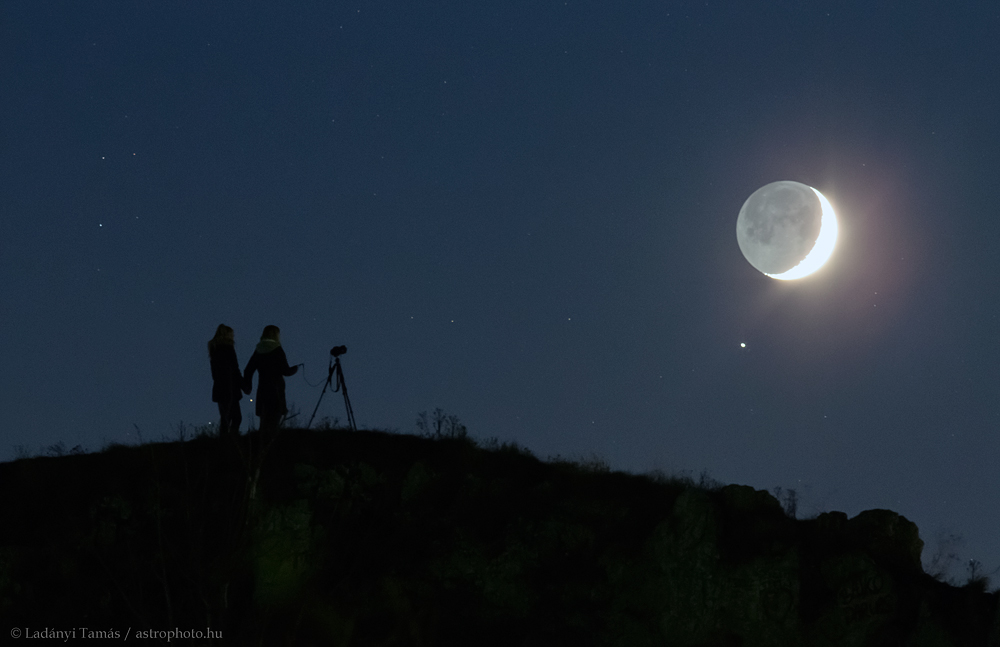
The Hill, The Moon, and Saturn
Image Credit & Copyright: Tamas Ladanyi (TWAN)
Explanation: Last Sunday when the Moon was young its sunlit crescent hung low near the western horizon at sunset. With strong earthshine it was joined by Saturn shining in the early evening sky for a beautiful conjunction visible to skygazers around our fair planet. On that clear evening on a hill near Veszprem, Hungary mother, daughter, bright planet, and young Moon are framed in this quiet night skyscape taken with a telephoto lens. Of course the Moon ages too quickly for some, and by tonight the sunlit part has reached its first quarter phase. This weekend skygazers spending quality time under Moon and stars might expect to see the annual rain of comet dust otherwise known as the Leonid meteor shower.
Your Daily Planet Tracker for Nov. 20: Mars in Pisces
Sensitive, Creative, and Easygoing
Now Until December 31, 2018

Assertive Mars can seem out of place in watery Pisces, a sign of diffusion. It may be more difficult to focus our initiative during this transit, especially if we aren’t feeling inspired. That’s Pisces’ influence, because this is a sign that needs to have a cause or greater purpose to be motivated to take action.
The complexity of this transit lies in the fact that while Mars is in Pisces, he’ll need to adjust his Martian ways to accommodate a style that Pisces is comfortable wearing. This is not an easy task when you realize that Pisces is all about faith, compassion, healing those who suffer, and unconditional love. So, how does Mars put up his dukes to fight when he’s wearing a pair of angel wings? In a word: gingerly.
When Mars is in Pisces
While Mars moves through soft and ethereal Pisces, it doesn’t necessarily mean our drive will disappear into thin air. After all, Mars is still Mars. Although we may have more of an urge to dream and use our imagination during this transit, Mars in Pisces can move mountains in a subtle way when we realize we’ve been given a cosmic green light to direct our energy toward inspired (Pisces) action (Mars).
Mars in Pisces works wonderfully to combine dynamism and compassion. Mars is able to push gently, express itself creatively, and fight for a higher purpose when it’s in this Water sign. There’s no better time to move forward with a creative pursuit or become the leader of the pack when it comes to a charitable cause. We can save the whales, feed the homeless, fight for the rights of the abused, and so much more during this incredible transit.
However, we need to watch where our passions take us while Mars moves through Pisces. This pairing can manifest as blindly lashing out or indiscriminate anger. There are many noble causes we can funnel our energy into, which is why we need to make sure we have a clear target in sight so we don’t simply flail about.
Universal Pisces often touches the artist within us. This is because Pisces knows that creative forms of expression can be so much richer than ordinary communication. So when Mars transits through this sign, we’re reminded that we all need channels to take us beyond the boundaries of our mundane perspectives.
If you were born with Mars in Pisces
Having your Mars in Pisces is like living on two sides of the same coin. This is the ultimate combination of sensitivity and potency. Think of a gentle giant. Think of the peaceful warrior. That’s what it’s like having your Mars in Pisces.
“Just go with the flow” are probably words you live by as someone with their Mars in Pisces. You’re not one to try and control every outcome, or obsesses about things that are out of your control. Instead, you like to sit back and let the events of your life unfold naturally. Just like a fish, you ride the waves as they come.
Having Mars in this area of your chart gives you an affinity for the arts or similar outlets that allow you to express your creative side — and it’s important that you do. If don’t have somewhere to release the inspired thoughts and passion bubbling up inside of you, it can lead to passive-aggressive behavior. So break out those paintbrushes, get out your guitar, or snap a few photos. You’ll be better off for it.
Your Mars in Pisces makes you the ultimate romantic! You love the rush of butterflies in your stomach after a great first date, or getting lost in fantasies of “happily ever after.” Relationships are about much more than just physical passion to you — you also need an emotional and spiritual connection that helps you fully merge with another person. Your acute sensitivity means that you’re able to easily pick up on what your partner wants and needs, in and out of the bedroom.
You’re a lover, not a fighter! Those born with their Mars in Pisces don’t often display outbursts of anger, preferring a more non-confrontational approach to life. You’re a pacifist who looks at the world through a compassionate lens, trying to understand why people behave the way the way they do rather than getting upset. This is one of the reasons you’re often rooting for the underdog.
Tarot.com is Part of the Daily Insight Group ©2018
The Wisdom of Buddha
The Wisdom of Buddha

All wrong-doing arises because of mind. If mind is transformed can wrong-doing remain?
Crack the Cookie

Advice from a Fox

Fox Totem Wisdom

Your Animal Spirit Guide for Nov. 20 is The Fox

Your Karmic Number for November 20 is 4

The number 4 means that you are building a strong foundation for your new ventures. Good job! Keep going – build the frame, put up the walls, roof, and seed the yard. It may not be an actual building you are working on, but the structure for your goals is becoming a reality. Taking the time, step by step, means that you have a foundation, protection, and beauty. Use strong people and resources so that you don’t have to rebuild from scratch. In time, you will have a sturdy place to call your own.
Your Ogham Reading for November 20th
Your Ogham Reading for November 20th
Onn-Gorse
 While it also may have thorns, Gorse is known for a vibrant yellow flower that can last almost year round. For this reason this plant has become a symbol of vitality. It may be hardy and have some thorns but it protects wildlife and shines bright for everyone to see. When you draw this letter keep in mind optimism, positivity, and vigor. With Onn you will prevail as long as you keep your flower in bloom!
Fortune – This Ogham tells you that you will prevail! Stay happy and optimistic and everything you seek will turn out great!
Ura-Heather
 The beauty of heather flowers is one reason it is associated with the Irish Goddess of love, fertility, and new growth. Be happy when you draw this letter because it denotes love, companionship, and passion. Whether it will be a new love or an old love rekindled, Ura is a powerful symbol and one that may bring great luck in your love life.
Fortune – This Ogham deals in matters of Love. Whether it is new love or rekindling of old love, enjoy the peace and love that comes with Ura!
Edhadh-Aspen
 Aspens grow in large colonies, with the root system potentially up to 10,000’s of years old. This tree can survive fires and other harmful conditions. Often this letter can be associated with death and the fear that comes from it. However it is better to see it for what the aspen really is. When one dies another aspen grows from the same root system. Death is not always a negative aspect of life; sometimes it is a necessary transition. The letter Edhadh will force us to look inward for what we need to “let die,” so we can renew ourselves.
Fortune – A large part of your life will be gone, yet do not worry because another great part will stop. Edhadh never closes one door without opening another!
Source
Today’s Witches Rune for November 20 is Woman

Today’s Witches Rune
Woman
Meaning: The first meaning of this rune is quite obvious: it represents women. Any woman that is important in the question, whether you know her or not, will be represented by this rune. Mother, sister, aunt, grandma, a female boss, friend, lover or even enemy… all can be symbolized by the appearance of this rune.
In a more general sense, this rune is related to traditional female abilities and characteristics, such as giving birth, nurturing, comforting and healing. When this rune appears, you can count on the sympathy of others towards you or your situation. In its most negative aspects, the Woman rune can show over-protectiveness, a patronizing attitude or co-dependency. It often strives to maintain the status quo, refusing to change even if the situation is bad.
The Woman rune is connected to nurturing – nurturing a relationship, a person or a project. Like the Moon rune, it can be related to finding a safe place to rest and heal, but while the Moon implies a solitary retreat, the Woman often shows that you need to go back to the people you trust, the people you feel safe with.
Healing is another strong aspect of this symbol, as well as teaching. You can be both the patient/student or the healer/teacher when this rune appears. This rune is also connected to creativity, but in a way that is different from the Romance rune. While the latter is about the conception of a project – the initial stages of creation – the Woman is about the birth of this project. When your creation is brought out into the world, fully manifested.
In relationship readings, this rune isn’t bad, but rather weak. While it can indicate subtle ties between people, these are usually so, so subtle that the partners can easily drift away from each other. It can show that one of the partners sees the other as someone who needs to be protected and healed, rather than an equal. Usually, the romance is a bit stagnated when this rune appears, or very close to becoming a friendship.
Your Daily Rune for November 20 is Mannaz
Your Daily Rune for November 20

Mannaz
“Man-az” – Literally: “Mankind”
Esoteric: Humankind, awareness
Rune of the Divine structure of intelligence in the human soul or psyche. Rune of the horizons of human existence and collective potential.
Psi: mind & memory (Hugin & Munin), the difference between human and all other life, development of the intellect, rational mind, perfected intelligence
Energy: psychic order of the gods reflected in humankind, projection of Self into time
Mundane: thinking, planning, analysis, the human condition, people at large (contemporary: the masses)
Divinations: Divine structure, sustainability, intelligence, awareness, social order, divine influence in life; or depression, mortality, blindness, self-delusion, collective suicide, bigotry, elitism, intellectual arrogance.
Governs:
Self-Actualization
Realization of the divine structure in humankind
Increase in intelligence, memory and mental powers (passing tests)
Unlocking the third-eye hvel, the “mind’s eye”
Activating the dynamics of your own inner Christus, or Higher Self
Awareness of our roles as co-creator with the gods and nature
Mental and spiritual potential
Your Daily Influences for November 20
Your Daily Influences for November 20
Tarot Influence
 Ten of Swords Reversed
Evil will be defeated. Courage is needed to face challenges. Develop your spiritual self.
Astrological Influence
 Gemini
While Gemini always has its duality to keep under control, it does manage to bring both humor and intelligence into any situation.
Element Influence
 Water Reversed
Water reversed denotes secrets to which you are not privy. Approach all ventures with caution.
Your Daily Tarot Power Card for November 20 is The Chariot
The Chariot
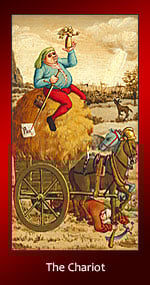
You can succeed in your efforts if you maintain that willpower, and most of all, self-confidence! Sometimes this card can represent a physical journey that can take you to new lands for work or to chase a lover. Sometimes, however, this journey is more metaphorical, and can indicate that you’ll have to keep up the good work for quite some time. Recognition of your triumph can then come with financial rewards or some much-needed attention and praise for your achievement.
Your Daily Tarot Love Card for November 20 is The Pope
The Pope
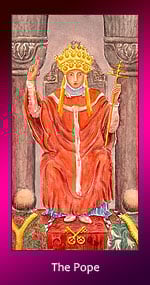
The word “experience” reminds us that some things, even involvement in faulty love, improve us through the practice. This card invites you to new, truthful relationships because you have been there and done that with deceptive people who dare to lie, even to the Pope. You are one step closer to the love you desire and deserve. Two people’s duet or symphony reaches a higher octave if in a relationship.


You must be logged in to post a comment.