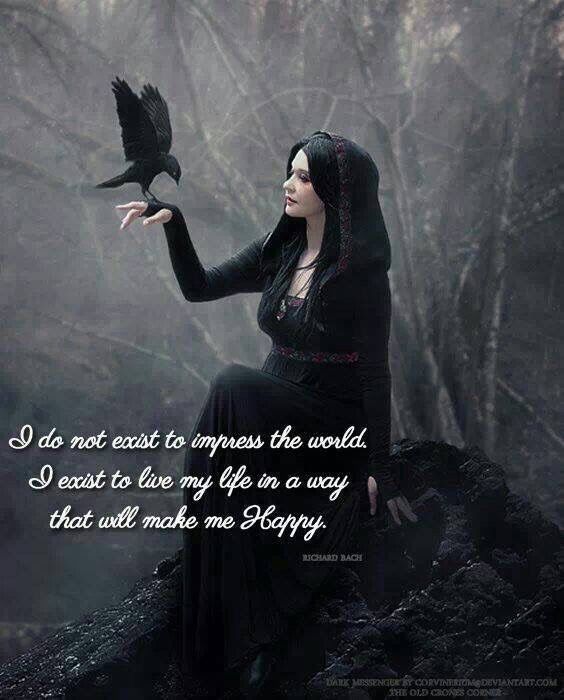
Merry Meet Dear Sisters, Brothers, and Friends, Welcome to WOTC! A Thought for Today
If I missed a post for today, I will post it on Sunday. My Sister witch Lady Rhiannon will be in town coming from Texas. Big Dawg and I have about 3 1/2 hours of paperwork to serve than we will be meeting Lady R and her husband for dinner, laughs, and walking down memory lane while making a new happy memory. So, I did the posts late Friday night, and I am tired from doing posts, working with Big Dawg, grocery shopping and cutting the lawn…huge yawn

If you want to see some information on any tradition of witchcraft, please put it in the comment section or email Lady Carla Beltane at ladybeltane@witchesofthecraft.com. I will try to find some information to post about it.

May your and your family’s lives be filled with all things positive!

Blessed be.

Various Types of Witchcraft: The Pow-Wow Tradition c. 2018

The  Pow-Wow Tradition

The Pow-Wow Tradition is a classic example of this melding of “The Old Ways” of the Europeans and local Native Indian beliefs. Though some claim that the Pow Wow Witchcraft is German in its origin, it is more an adoption of local traditions of theAlgonquin peoples by the early German and Dutch immigrants of pagan heritage who settled in the Pennsylvania region of the United States.

Observing the Algonquin’s powwows, the pagan immigrants discovered that like themselves, the Natives used charms and incantations for healing. Impressed with their methods of driving out evil spirits, they adopted the term “powwowing” to refer to their own magickal healings. As their practice of magick was also centered on herbs and healing, they learned from the local people about the native roots and herbs for use in charms and healing.

As stated earlier, the term Pow-Wow comes from the Algonquin word ‘pauwau’”, meaning ‘vision seeker’ and the Pow-Wow Witches encompass shamanic like rituals of healing through visions and the application of traditional medicines, which are often accompanied by prayers, incantations, songs, and dances. The Pow-Wow Tradition places great significance on the vision seeker as the nexus of tribal activities and rituals.

_______________________

Pow-wow

Written and compiled by George Knowles

During the 17th and 18th centuries there was much migration from continental Europe, when whole families seeking to flee the hardships, famine and poverty of their own lands, set their sights on the adventure and prosperity offered in the new lands of hope and glory called America.  Many of the German settlers who colonized the interior of Pennsylvania also brought with them their Old World beliefs in Witchcraft and Magick.  Due to the lands resemblance to their former homes in Europe, many of them settled in the rich rural areas of York, Dauphin, Lancaster, Schuylkill, Carbon and Reading, which over time became commonly known as the counties of the Pennsylvania Dutch (Dutch, a corruption of “Deutsch” meaning German).

The early Pennsylvania Dutch peoples were a proud family orientated folk-people, deeply religious, and fiercely defensive of their traditional ways of life.  They kept to themselves and were suspicious of outsiders, and even retained their German language.  This over time and through necessity became mixed with English to form their particular Pennsylvania Dutch dialect.  They also continued to practice their own form of traditional Witchcraft and magick.  As much of their witchcraft and magick was centered on herbs and healing, they enlisted the aid of local Indians to learn about and find native roots and herbs for use in medicinal recipes.

Observing the Indians powwows, their meetings for ceremonial dance and conference purposes, they discovered that like themselves, the Indians used charms and incantations for healing.  Impressed with the Indians methods of driving out evil spirits, they adopted the term “powwowing” to refer to their own magickal healings.  Powwowing has survived through the advance of time and is still practiced today, and while some of the charms and incantations used date back to ancient times, many contain Biblical and Kabalistic elements that can be adapted for modern-day use.

Of the old pioneers to emigrate from Germany and settle in Pennsylvania, John George Hohman is of particular interest concerning powwowing.  Hohman and his wife Catherine immigrated to Pennsylvania in 1802 and settled near Reading.  He was a devout Roman Catholic and a great believer in faith healing, however he proved to be a mediocre practitioner and also failed at farming.  Facing financial ruin he began to collect various charms and herbal remedies, as well as collating those passed down through centuries of oral tradition, and published them in a handbook called “The Long Lost Friend”.  This allowed Hohman to achieve some modest financial success, for it quickly became one of two “Bibles” on powwowing (the other being an anonymous book called the “Seventh Book of Moses”), both of which could be found in virtually every Pennsylvania Dutch household.

In “The Long Lost Friend”, Hohman mixed magick and healing formulas gleaned from a variety of sources, including Germany, England and Egypt, some dating back to antiquity.  It was not a book of “hexes” Hohman emphasizes, (a “hex” was a spell, curse or bewitchment cast by a Witch, commonly with evil intent, though it could be use for either good or bad purposes) and should be used for healing not for destroying.  In it he also included the wisdom of the Gypsies and the Kabbalah, as well as testimonials of his own successes.  In his introduction he states:

“There are many in America who believe in neither hell nor heaven, but in Germany there are not so many of these persons found.  I, Hohman, ask:  Who can immediately banish the wheal, or mortification?  I reply, and I, Hohman, say:  All this is done by the Lord.  Therefore, a hell and a heaven must exist, and I think very little of any who dares deny it”.

Hohman also promised his readers that:

“Whoever carries this book with him, is safe from all his enemies, visible or invisible, and whoever has this book cannot die without the holy corpse of Jesus Christ, nor drowned (sic) in any water, nor burn up in any fire, nor can any unjust sentence be passed upon him.  So help me”.

In the book he offers the following charm to prevent witches from bewitching cattle, or to stop evil spirits from tormenting people in their sleep at night.  It should be written down and placed either in the stable or on the bedstead:

“Trotter Head, I forbid thee my house and premises, I forbid thee my horse and cow-stable, I forbid thee my bedstead, that thou mayest not breathe upon me, breathe into some other house, until thou hast ascended every hill, until thou hast counted every fence post, and until thou hast crossed every water.  And thus dear day may come again into my house, in the name of God the Father, the Son, and the Holy Ghost.  Amen”.   

The second “bible” of powwowing is the “Seventh Book of Moses”.  This is a mixture of material take from the Talmud, Kabbalah and the Old Testament.  It explains how to break a hex by wearing an amulet containing specially selected herbs wrapped in parchment paper inscribed with biblical verses or charms.  In another method it tells how the hexed person should avoid direct sunlight, to stay in-doors when the moon is full, to cover the ears at the sound of a bell, and to never listen to the crowing of a cock.  Most family households in the Pennsylvania Dutch “hex belt” (as these areas became known) had copies of both powwowing “bibles”, and anyone could use them.  However the charms were believed more effective when prescribed or recited by a “bona fide” practitioner.

The most skilled of powwowing practitioners are born into it, inheriting such occult abilities as healing, clairvoyance and precognition.  According to tradition, the “seventh son of a seventh son” inherits special powers, and is thought to be the most powerful, but both men and women can be practitioners.  Powwowers start their training at an early age, and are taught only by family members of the opposite sex.  They use a variety of techniques to help their clients, such as the laying on of hands, incantations and signs (such as the sign of the cross).  Some specialize in charms and amulets, while others may use special herbs, potions and powders.  One well-reputed powwower from the turn of the century was called Charles W. Rice.  He lived in York, where he specialized in curing blindness with a potion he called “Sea Monster Tears”.  This he dispensed at $2.50 a drop.

The most common of the powwower’s charms are the “Himmels-briefs” (heavens letters).  These are basically a guarantee of protection written by the powwower on a piece of parchment paper in biblical verse.  It is then hung up in the home or barn, or carried on the person it was written for.  They can be written to protect the home, animals and people from all sorts of harm and disaster, be they natural or un-natural.  Disbelievers were told:  “Whosoever doubts the truth of a Himmels-briefs, may attach a copy of the brief to the neck of a dog and fire upon it, he will then be convinced of its truthfulness”.  Himmels-briefs typically cost from $25.00 to hundreds of dollars depending on the power and reputation of the powwower and the specifics of the charm.  They were particularly popular with the soldiers of World War I, who carried them into battle for protection against injury and death.

Most powwowers work quietly and attract their clients by word of mouth and reputation.  Some work at it as a sideline to their main business, seeing clients only in the evenings or at weekends, others work at it full-time.  To many it is considered unethical to charge fees for their services, and instead accept “voluntary contributions” though they may suggest appropriate amounts for specific services.  Most will also help those clients who cannot pay, trusting that grateful clients will return when funds are available.

Today the secrets of Powwowing remain very much a Pennsylvania Dutch family tradition.  However, Silver Ravenwolf a modern day neo-pagan, author and founder of the Black Forest Circle and Seminary, is also a trained practitioner of Pow-Wow, and has published her own version of Powwowing in a book called:  Hex Craft:  Dutch Country Pow-wow Magick (Llewellyn Publications; 1st edition – May 1995).

_________________


Spirit Walk Ministry

The Encyclopedia of Witches & Witchcraft  – By Rosemary Ellen Guiley

An ABC of Witchcraft Past and Present  – By Doreen Valiente

A copy of the The Long Lost Friend” can be downloaded free from here:

  http://www.think-aboutit.com/pdf/powow.pdf

First published on the 04th  March 2007 © George Knowles  –  Updated on the 18th May 2006

Spell for Wednesday – Leaf Spell for Release

Leaf Spell for Release from thewitchandwand.com

Take a walk in nature and reflect on what no longer serves you. Collect a leaf and use it to cast this spell to let go pain and the past so you can summon peace and restore your sense of inner harmony.

I love casting this spell in fall, especially around the fall harvest festival known as Mabon. The fall is a wonderfully transformative time. As the leaves begin to change color and drop to the ground, we are reminded that sometimes we need to let go in order to change.

ITEMS NEEDED

leaf

ziploc bag

chopstick or something similar

STEPS

1. Go for a walk outside and reflect on what you would like to let go of

2. Collect a newly fallen leaf

3. Place the leaf in a ziploc bag and use the chopstick to “write” the thing you want to let go of on the leaf. Press on the leaf through the ziploc bag firmly enough to see the marks on the leaf, but be careful not to tear the leaf.

Take the leaf outside. Focus on releasing what no longer serves you and recite the incantation below. Let go of the leaf and release it back to nature.

“The past I leave with this leaf,

let go of pain and summon peace”

The Various Paths of Witchcraft: Egyptian Witchcraft c. 2018


Egyptian Comments & Graphics

Egyptian Witchcraft

Like the witch craft of any other region, the Egyptian witch craft is based upon the country’s tradition, myth, legend, rituals, drama, poetry, song, dance, worship, magic and living in harmony with the earth.

The practitioners of Egyptian witch craft honor the ancient Egyptian gods and goddesses including the Triple goddess of the waxing, full and waning moon and the horned god of the sun, death and animal life.

Since moon has an important place in Egyptian witch craft, therefore both men and women in city apartments, suburban backyards and country glades meet on full moons and on festival occasions to raise their energy levels and harmonize themselves with the natural forces.

Congregations in Egyptian witch craft are called temples and covens where the seekers are initiated into learning the witch craft. The repeated patterns of changing seasons have great importance in the Egyptian witch craft. Ritual and festivals evolved to celebrate these seasonal cycles more especially during the sowing and harvesting seasons.

Egyptian witch craft, therefore, has an image of the ‘Wheel of the Year’ with its eight spokes which symbolize the four agricultural and pastoral festivals and the four solar festivals commemorating seasonal solstices and equinoxes. Like the ancient Pagans and witches, Egyptian witches consider the day as beginning at sundown and ending at sundown the following day.

Egyptian witches hone their divination skills in the increasing starlight and moon light and as winter begins, they work with the positive aspects of the dark tides. Therefore October 31-November eve is the most auspicious period for the Egyptian witches as this, according to them, is the time when the veil that separates our world from the next is the thinnest. This period allows the dead to return to the world of living when their kith and kin welcome and feast them.Egyptian Zodiac Wheel

Egyptian witches perform magic at gatherings called Moon Celebrations or Esbats which coincide with the phases of the moon. Witches practice healing magic, protection, retaliation and channeling of energy to develop themselves spiritually. They create circles to work magic. The primary tool that they use to work magic is a ritual knife called a Sacred Blade or Athame. The sacred blade gets charged with energy of the owner and is used to define space such as drawing a sacred circle where the owner’s will and energy work. A bowl of water is used to symbolize the element of water and its properties: cleansing, regeneration, and emotion.

Other important tools denote the elements earth, air, fire, and water. A pentacle (a pentagram traced upon a disk, like a small dish) is often used to symbolize earth and its properties, stability, material wealth and practical affairs. Alternatively, a small dish of salt or soil can be used to symbolize the earth element.

Scarab and Witchcraft
Witchcraft is based upon personal faith and beliefs, worship of pagan gods and nature. This belief system coincides with the deification of Scarab and its identification with Ra or Atum by Egyptians.

___________________________________

Egyptian Witchcraft


Just like the witchcraft of other countries, the Egyptian witchcraft has been influenced by the legend, myth, tradition, worship, dance, song, magic, poetry and rituals of its own country. The followers of this witchcraft pay respect to the Egyptian deities that includes gods as well as goddesses. The goddess that is well-known is the Triple goddess and the god that is popular in this culture is the horned god.

As the moon is considered to be an important part of the Egyptian witchcraft, the practitioners of Wicca in this country get together on full moons as well as festive events for the purpose of balancing themselves with the forces of the nature and also for the purpose of improving their energy levels.

The places that people go to worship the deities are in the covens as well as temples and these are the places where the followers of Wicca learn more about witchcraft. The Egyptian witchcraft stresses on the importance of the changes in the seasons and there are many festivals that are connected to the seasonal changes.

Most of the festivals and rituals in the Egyptian witchcraft take place during the harvesting as well as sowing seasons. This kind of witchcraft is said to have a wheel of the year and this wheel has four pastoral and agricultural festivals and the remaining four festivals are celebrated in honor of equinoxes and solstices. Just like the traditional witches and pagans, the Egyptian witches also believe that the day starts at sundown and it ends at sunset of the very next day.

The witches in Egypt improve their divinatory skills in moon light and starlight. They also do this when the winter season begins. It is to be noted that the practitioners of witchcraft work with the dark tides (positive aspects). This is probably the reason why the last day of October and the eve of November is considered to be a favorable period. The witches are also of the opinion that it is during this time that the veil between out world and the other world is the thinnest. It is also during this time that the people who are still living invite their deceased loved ones for feast and the spirits come to the world of the living.

The gatherings where the practitioners of the Egyptian witchcraft carry out magic are known as Esbats or Moon Celebrations. These celebrations takes place during the different phases of the moon and this is the reason why they are known as moon celebrations. During the Esbats, the practitioners perform protection and healing magic and they also channel the energy for the purpose of developing themselves spiritually.

To perform magic, the witches draw circles. Athame or the Sacred Blade is a ritual knife that the witches make use of for the purpose of working on magic and this is also their most important tool. This blade is charged with the energy of the witch to whom the Athame belongs to and then this tool is used for the purpose of creating a circle where the witch will work on her energy and will. The witches also make use of a bowl of water because this represents the element of water and also the properties of water like regeneration, cleansing and emotion. Many a times, the witches make use of a pentagram to represent the earth and the properties of this symbol are material wealth, practical affairs and stability.

_____________________________________


Ancient Egyptian Magic

Magicians
In Egyptian myth, magic (heka) was one of the forces used by the creator to make the world. Through heka, symbolic actions could have practical effects. All deities and people were thought to possess this force in some degree, but there were rules about why and how it could be used.

Priests were the main practitioners of magic in pharaonic Egypt, where they were seen as guardians of a secret knowledge given by the gods to humanity to ‘ward off the blows of fate’. The most respected users of magic were the lector priests, who could read the ancient books of magic kept in temple and palace libraries. In popular stories such men were credited with the power to bring wax animals to life, or roll back the waters of a lake.

By the first millennium BC, their role seems to have been taken over by magicians (hekau). Healing magic was a speciality of the priests who served Sekhmet, the fearsome goddess of plague.

Lower in status were the scorpion-charmers, who used magic to rid an area of poisonous reptiles and insects. Midwives and nurses also included magic among their skills, and wise women might be consulted about which ghost or deity was causing a person trouble.

Amulets were another source of magic power, obtainable from ‘protection-makers’, who could be male or female. None of these uses of magic was disapproved of – either by the state or the priesthood. Only foreigners were regularly accused of using evil magic. It is not until the Roman period that there is much evidence of individual magicians practising harmful magic for financial reward.

Techniques
Dawn was the most propitious time to perform magic, and the magician had to be in a state of ritual purity. This might involve abstaining from sex before the rite, and avoiding contact with people who were deemed to be polluted, such as embalmers or menstruating women. Ideally, the magician would bathe and then dress in new or clean clothes before beginning a spell.

Metal wands representing the snake goddess Great of Magic were carried by some practitioners of magic. Semi-circular ivory wands – decorated with fearsome deities – were used in the second millennium BC. The wands were symbols of the authority of the magician to summon powerful beings, and to make them obey him or her.

Only a small percentage of Egyptians were fully literate, so written magic was the most prestigious kind of all. Private collections of spells were treasured possessions, handed down within families. Protective or healing spells written on papyrus were sometimes folded up and worn on the body.

A spell usually consisted of two parts: the words to be spoken and a description of the actions to be taken. To be effective all the words, especially the secret names of deities, had to be pronounced correctly. The words might be spoken to activate the power of an amulet, a figurine, or a potion. These potions might contain bizarre ingredients such as the blood of a black dog, or the milk of a woman who had born a male child. Music and dance, and gestures such as pointing and stamping, could also form part of a spell.

Protection
Angry deities, jealous ghosts, and foreign demons and sorcerers were thought to cause misfortunes such as illness, accidents, poverty and infertility. Magic provided a defence system against these ills for individuals throughout their lives.

Stamping, shouting, and making a loud noise with rattles, drums and tambourines were all thought to drive hostile forces away from vulnerable women, such as those who were pregnant or about to give birth, and from children – also a group at risk, liable to die from childhood diseases.

Some of the ivory wands may have been used to draw a protective circle around the area where a woman was to give birth, or to nurse her child. The wands were engraved with the dangerous beings invoked by the magician to fight on behalf of the mother and child. They are shown stabbing, strangling or biting evil forces, which are represented by snakes and foreigners.

Supernatural ‘fighters, such as the lion-dwarf Bes and the hippopotamus goddess Taweret, were represented on furniture and household items. Their job was to protect the home, especially at night when the forces of chaos were felt to be at their most powerful.

Bes and Taweret also feature in amuletic jewellery. Egyptians of all classes wore protective amulets, which could take the form of powerful deities or animals, or use royal names and symbols. Other amulets were designed to magically endow the wearer with desirable qualities, such as long life, prosperity and good health.

Healing
Magic was not so much an alternative to medical treatment as a complementary therapy. Surviving medical-magical papyri contain spells for the use of doctors, Sekhmet priests and scorpion-charmers. The spells were often targeted at the supernatural beings that were believed to be the ultimate cause of diseases. Knowing the names of these beings gave the magician power to act against them.

Since demons were thought to be attracted by foul things, attempts were sometimes made to lure them out of the patient’s body with dung; at other times a sweet substance such as honey was used, to repel them. Another technique was for the doctor to draw images of deities on the patient’s skin. The patient then licked these off, to absorb their healing power.

Many spells included speeches, which the doctor or the patient recited in order to identify themselves with characters in Egyptian myth. The doctor may have proclaimed that he was Thoth, the god of magical knowledge who healed the wounded eye of the god Horus. Acting out the myth would ensure that the patient would be cured, like Horus.

Collections of healing and protective spells were sometimes inscribed on statues and stone slabs (stelae) for public use. A statue of King Ramesses III (c.1184-1153 BC), set up in the desert, provided spells to banish snakes and cure snakebites.

Statue of Horus Horus © A type of magical stela known as a cippus always shows the infant god Horus overcoming dangerous animals and reptiles. Some have inscriptions describing how Horus was poisoned by his enemies, and how Isis, his mother, pleaded for her son’s life, until the sun god Ra sent Thoth to cure him. The story ends with the promise that anyone who is suffering will be healed, as Horus was healed. The power in these words and images could be accessed by pouring water over the cippus. The magic water was then drunk by the patient, or used to wash their wound.

Curses
Though magic was mainly used to protect or heal, the Egyptian state also practised destructive magic. The names of foreign enemies and Egyptian traitors were inscribed on clay pots, tablets, or figurines of bound prisoners. These objects were then burned, broken, or buried in cemeteries in the belief that this would weaken or destroy the enemy.

In major temples, priests and priestesses performed a ceremony to curse enemies of the divine order, such as the chaos serpent Apophis – who was eternally at war with the creator sun god. Images of Apophis were drawn on papyrus or modelled in wax, and these images were spat on, trampled, stabbed and burned. Anything that remained was dissolved in buckets of urine. The fiercest gods and goddesses of the Egyptian pantheon were summoned to fight with, and destroy, every part of Apophis, including his soul (ba) and his heka. Human enemies of the kings of Egypt could also be cursed during this ceremony.

This kind of magic was turned against King Ramesses III by a group of priests, courtiers and harem ladies. These conspirators got hold of a book of destructive magic from the royal library, and used it to make potions, written spells and wax figurines with which to harm the king and his bodyguards. Magical figurines were thought to be more effective if they incorporated something from the intended victim, such as hair, nail-clippings or bodily fluids. The treacherous harem ladies would have been able to obtain such substances but the plot seems to have failed. The conspirators were tried for sorcery and condemned to death.

The dead
All Egyptians expected to need heka to preserve their bodies and souls in the afterlife, and curses threatening to send dangerous animals to hunt down tomb-robbers were sometimes inscribed on tomb walls. The mummified body itself was protected by amulets, hidden beneath its wrappings. Collections of funerary spells – such as the Coffin Texts and the Book of the Dead – were included in elite burials, to provide esoteric magical knowledge.

The dead person’s soul, usually shown as a bird with a human head and arms, made a dangerous journey through the underworld. The soul had to overcome the demons it would encounter by using magic words and gestures. There were even spells to help the deceased when their past life was being assessed by the Forty-Two Judges of the Underworld. Once a dead person was declared innocent they became an akh, a ‘transfigured’ spirit. This gave them akhw power, a superior kind of magic, which could be used on behalf of their living relatives.


Reference
Witchcraft 
J. Roslyn Antle, High Priestess, The 7Witches Coven
Dr Geraldine Pinch, BBC History 

Books
Amulets of Ancient Egypt by Carol Andrews (British Museum Press, 1994)
‘Witchcraft, Magic and Divination in Ancient Egypt’ by JF Borghouts in Civilizations of the Ancient Near East edited by JM Sasson (Charles Scribner’s Sons, 1995)
Magic in Ancient Egypt by Geraldine Pinch (British Museum Press/University of Texas Press, 1994)


A Little Humor for Your Day

I hope the rest of your day and evening is relaxing, filled with fun and love.

Merry part until we merry meet again!

Merry Meet Dear Sisters, Brothers, and Friends, Welcome to WOTC! A Thought for Today
If you want to see some information on any tradition of witchcraft, please put it in the comment section or email Lady Carla Beltane at ladybeltane@witchesofthecraft.com. I will try to find some information to post about it.

May your and your family’s lives be filled with all things positive!

Blessed be.

Spell For Thursday – Summon Jupiter

(YOU CAN COPY AND PASTE ANY COROSPONDENCES AND SPELLS POSTED TO A DOCUMENT TO PRINT AND/OR SAVE ON YOUR COMPUTER)