Celebrating Litha: Hold a Midsummer Night’s Fire Ritual

Hold a Midsummer Night’s Fire Ritual


The Summer Solstice, known to some as Litha, Midsummer, or Alban Heruin, is the longest day of the year. It’s the time when the sun is most powerful, and new life has begun to grow within the earth. After today, the nights will once more begin to grow longer, and the sun will move further away in the sky.

If your tradition requires you to cast a circle, consecrate a space, or call the quarters, now is the time to do so.

This ritual is a great one to perform outside, so if you have the opportunity to do this without scaring the neighbors, take advantage of it.

Begin this ritual by preparing the wood for a fire, without lighting it yet. While the ideal situation would have you setting a huge bonfire alight, realistically not everyone can do that. If you’re limited, use a table top brazier or fire-safe pot, and light your fire there instead.

Say either to yourself or out loud:

Today, to celebrate Midsummer, I honor the Earth itself. I am surrounded by tall trees. There is a clear sky above me and cool dirt beneath me, and I am connected to all three. I light this fire as the Ancients did so long ago.

At this point, start your fire. Say:

The Wheel of the Year has turned once more
The light has grown for six long months
Until today.

Today is Litha, called Alban Heruin by my ancestors.
A time for celebration.
Tomorrow the light will begin to fade
As the Wheel of the Year
Turns on and ever on.

Turn to the East, and say:

From the east comes the wind,
Cool and clear.
It brings new seeds to the garden
Bees to the pollen
And birds to the trees.

Turn to Face South, and say:

The sun rises high in the summer sky
And lights our way even into the night
Today the sun casts three rays
The light of fire upon the land, the sea, and the heavens

Turn to face West, saying:

From the west, the mist rolls in
Bringing rain and fog
The life-giving water without which
We would cease to be.

Finally, turn to the North, and say:

Beneath my feet is the Earth,
Soil dark and fertile
The womb in which life begins
And will later die, then return anew.

Build up the fire even more, so that you have a good strong blaze going.

If you wish to make an offering to the gods, now is the time to do it. For this sample, we’re including the use of a triple goddess in the invocation, but this is where you should substitute the names of the deities of your personal tradition.

Say:

Alban Heruin is a time of rededication
To the gods.
The triple goddess watches over me.
She is known by many names.
She is the Morrighan, Brighid, and Cerridwen.
She is the washer at the ford,
She is the guardian of the hearth,
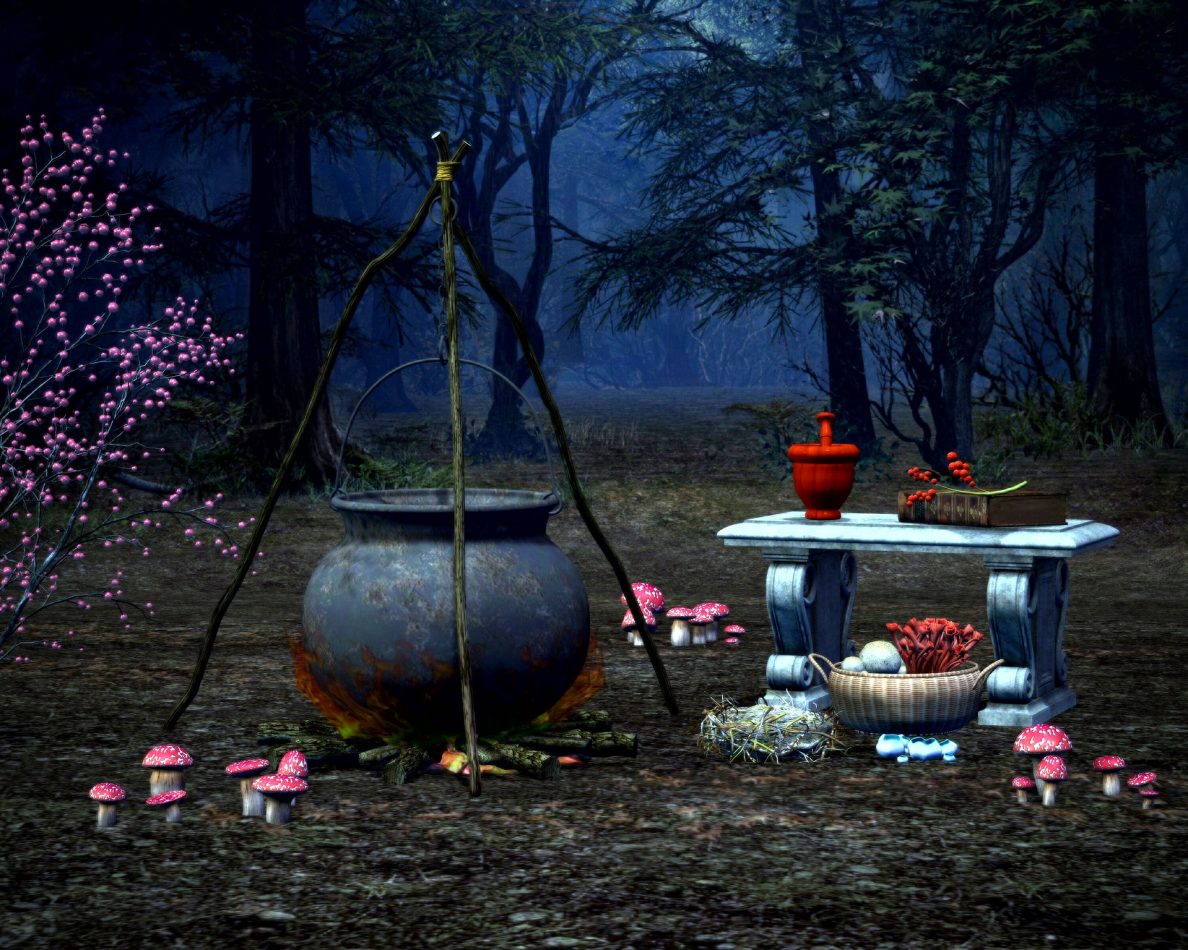
She is the one who stirs the cauldron of inspiration.

I give honor to You, O mighty ones,
By all your names, known and unknown.
Bless me with Your wisdom
And give life and abundance to me
As the sun gives life and abundance to the Earth.

I make this offering to you
To show my allegiance
To show my honor
To show my dedication
To You.

Cast your offering into fire. Conclude the ritual by saying:

Today, at Litha, I celebrate the life
And love of the gods
And of the Earth and Sun.

Take a few moments to reflect upon what you have offered, and what the gifts of the gods mean to you. When you are ready, if you have cast a circle, dismantle it or dismiss the quarters at this time. Allow your fire to go out on its own.


Source:

Litha Legends and Lore

Litha Legends and Lore

Myths and Mysteries of the Midsummer Solstice


Litha, or Midsummer, is a celebration that has been observed for centuries, in one form or another. It is no surprise, then, that there are plenty of myths and legends associated with this time of year!

  • In England, rural villagers built a big bonfire on Midsummer’s Eve. This was called “setting the watch,” and it was known that the fire would keep evil spirits out of the town. Some farmers would light a fire on their land, and people would wander about, holding torches and lanterns, from one bonfire to another. If you jumped over a bonfire — presumably without lighting your pants on fire — you were guaranteed to have good luck for the coming year.
  • After your Litha fire has burned out and the ashes gone cold, use them to make a protective amulet. You can do this by carrying them in a small pouch, or kneading them into some soft clay and forming a talisman. In some traditions of Wicca, it is believed that the Midsummer ashes will protect you from misfortune. You can also sow the ashes from your bonfire into your garden, and your crops will be bountiful for the rest of the summer growing season.
  • It is believed in parts of England that if you stay up all night on Midsummer’s Eve, sitting in the middle of a stone circle, you will see the Fae. But be careful – carry a bit of rue in your pocket to keep them from harassing you, or turn your jacket inside out to confuse them. If you have to escape the Fae, follow a ley line, and it will lead you to safety.
  • Residents of some areas of Ireland say that if you have something you wish to happen, you “give it to the pebble.” Carry a stone in your hand as you circle the Litha bonfire, and whisper your request to the stone — “heal my mother” or “help me be more courageous”, for example. After your third turn around the fire, toss the stone into the flames.
  • Astrologically, the sun is entering Cancer, which is a water sign. Midsummer is not only a time of fire magic, but of water as well. Now is a good time to work magic involving sacred streams and holy wells. If you visit one, be sure to go just before sunrise on Litha, and approach the water from the east, with the rising sun. Circle the well or spring three times, walking deosil, and then make an offering of silver coins or pins.
  • Sunwheels were used to celebrate Midsummer in some early Pagan cultures. A wheel — or sometimes a really big ball of straw — was lit on fire and rolled down a hill into a river. The burned remnants were taken to the local temple and put on display. In Wales, it was believed that if the fire went out before the wheel hit the water, a good crop was guaranteed for the season.
  • In Egypt, the Midsummer season was associated with the flooding of the Nile River delta. In South America, paper boats are filled with flowers, and then set on fire. They are then sailed down the river, carrying prayers to the gods. In some traditions of modern Paganism, you can get rid of problems by writing them on a piece of paper and dropping them into a moving body of water on Litha.
  • William Shakespeare associated Midsummer with witchcraft in at least three of his plays. A Midsummer Night’s Dream, Macbeth, and The Tempest all contain references to magic on the night of the summer solstice.


Source:

Litha History – Celebrating the Summer Solstice

Litha History – Celebrating the Summer Solstice


An Ancient Solar Celebration:

Nearly every agricultural society has marked the high point of summer in some way, shape or form. On this date – usually around June 21 or 22 (or December 21/22 in the southern hemisphere) – the sun reaches its zenith in the sky. It is the longest day of the year, and the point at which the sun seems to just hang there without moving – in fact, the word “solstice” is from the Latin word solstitium, which literally translates to “sun stands still.” The travels of the sun were marked and recorded.

Stone circles such as Stonehenge were oriented to highlight the rising of the sun on the day of the summer solstice.

Traveling the Heavens:

Although few primary sources are available detailing the practices of the ancient Celts, some information can be found in the chronicles kept by early Christian monks. Some of these writings, combined with surviving folklore, indicate that Midsummer was celebrated with hilltop bonfires and that it was a time to honor the space between earth and the heavens.

Fire and Water:

In addition to the polarity between land and sky, Litha is a time to find a balance between fire and water. According to Ceisiwr Serith, in his book The Pagan Family, European traditions celebrated this time of year by setting large wheels on fire and then rolling them down a hill into a body of water. He suggests that this may be because this is when the sun is at its strongest yet also the day at which it begins to weaken. Another possibility is that the water mitigates the heat of the sun, and subordinating the sun wheel to water may prevent drought.

Saxon Traditions:

When they arrived in the British Isles, the Saxon invaders brought with them the tradition of calling the month of June Aerra Litha. They marked Midsummer with huge bonfires that celebrated the power of the sun over darkness. For people in Scandinavian countries and in the farther reaches of the Northern hemisphere, Midsummer was very important. The nearly endless hours of light in June are a happy contrast to the constant darkness found six months later in the middle of winter.

Roman Festivals :

The Romans, who had a festival for anything and everything, celebrated this time as sacred to Juno, the wife of Jupiter and goddess of women and childbirth. She is also called Juno Luna and blesses women with the privilege of menstruation. The month of June was named for her, and because Juno was the patroness of marriage, her month remains an ever-popular time for weddings. This time of year was also sacred to Vesta, goddess of the hearth. The matrons of Rome entered her temple on Midsummer and made offerings of salted meal for eight days, in hopes that she would confer her blessings upon their homes.

Midsummer for Modern Pagans:

Litha has often been a source of contention among modern Pagan and Wiccan groups, because there’s always been a question about whether or not Midsummer was truly celebrated by the ancients. While there’s scholarly evidence to indicate that it was indeed observed, there were suggestions made by Gerald Gardner, the founder of modern Wicca, that the solar festivals (the solstices and equinoxes) were actually added later and imported from the Middle East. Regardless of the origins, many modern Wiccans and other Pagans do choose to celebrate Litha every year in June.

In some traditions, Litha is a time at which there is a battle between light and dark. The Oak King is seen as the ruler of the year between winter solstice and summer solstice, and the Holly King from summer to winter. At each solstice they battle for power, and while the Oak King may be in charge of things at the beginning of June, by the end of Midsummer he is defeated by the Holly King.

This is a time of year of brightness and warmth. Crops are growing in their fields with the heat of the sun, but may require water to keep them alive. The power of the sun at Midsummer is at its most potent, and the earth is fertile with the bounty of growing life.

For contemporary Pagans, this is a day of inner power and brightness. Find yourself a quiet spot and meditate on the darkness and the light both in the world and in your personal life. Celebrate the turning of the Wheel of the Year with fire and water, night and day, and other symbols of the opposition of light and dark.

Litha is a great time to celebrate outdoors if you have children. Take them swimming or just turn on the sprinkler to run through, and then have a bonfire or barbeque at the end of the day. Let them stay up late to say goodnight to the sun, and celebrate nightfall with sparklers, storytelling, and music. This is also an ideal Sabbat to do some love magic or celebrate a handfasting, since June is the month of marriages and family


Source:

Summer Solstice, The Longest Day

Summer Solstice

The Longest Day


What’s Bearing Fruit?

The Sun’s beams are at their brightest, for the longest day (here in the Northern latitudes).  Summer Solstice is on June 21st, and it’s one of the four grand turning points of the solar year.

What’s begun at the Spring Equinox, with Sun into Aries, is coming to life from the vitality and intention brought to it.  Tomatoes are ripening on the vine.

Long Summer Day

Summer is here, with the Sun into Cancer and the longest day of the year in the Northern Hemisphere.

When the Sun is at its most northerly point, hovering over the astrological Tropic of Cancer, that’s known as the summer solstice. The Earth is tilted on its axis, so like a sunflower, the Northern Hemisphere has its face toward the life-giving Sun.

The Sun is at its most powerful, and appears to stand still in the sky, and that’s what solstice means in Latin. After the summer solstice, the Sun’s rays will begin to light up more of the Southern Hemisphere, and days will start to shorten in the North.

The bright glowing orb we call The Sun is celebrated in many traditions at the summer solstice. There are fire dances, bonfires, and in the olden days, the ancients rolled fire wheels down the hills. There’s also a long tradition of ritual bathing, dipping in the cleansing waters. Fire and water are celebrated at the summer solstice, along with the Earth as Mother Goddess, at her most abundant.

It’s a celebration of the Earth, the feminine and the living natural world. It’s one of the four cardinal turning points of the solar calendar, along with the Winter Solstice and the Spring and Fall Equinoxes.

For those living in harmony with nature’s cycles, it’s the season to harvest herbs and honey. Many couples still marry in June, at the peak of nature’s abundance. Some traditions would feed the newlyweds honey-laced foods for the entire first month, which is where “honeymoon” comes from. The full Moon in June is the Honey Moon.

The summer solstice coincides with the Sun’s ingress into Cancer, and the official start of the season. Cancer is the water cardinal sign of the mother, nurturing, and family. It’s a high spirited time, when solar light is radiant and the feminine energies are in abundance, too. There are parades, picnics, festivals and celebrations of all kinds in the Northern Hemisphere at this time, often outdoors.

Becoming aware of these solar turning points tunes you into the natural rhythm of the seasons. The summer solstice is the peak of sunlight, and the Sun as radiant manna of all that grows, has been celebrated with feasts, dancing and just being together. After the solstice, the days begin to shorten slowly toward the Fall Equinox, when days and nights are equal again.


Source:
Author: Astrology Expert

Article found on & owned by About.com

First Day of Summer 2015: The Summer Solstice

First Day of Summer 2015: The Summer Solstice

When is the first day of summer 2015?

The summer solstice heralds the beginning of summer in the Northern Hemisphere. The timing of the summer solstice depends on when the Sun reaches its northernmost point of the equator.

In 2015, the summer begins with the solstice on June 21 at 12:38 P.M. EDT. This year, Father’s Day is also celebrated on the 21st!

The word solstice is from the Latin solstitium, from sol (sun) and stitium (to stop), reflecting the fact that the Sun appears to stop at this time (and again at the winter solstice).

In temperate regions, we notice that the Sun is higher in the sky throughout the day, and its rays strike Earth at a more direct angle, causing the efficient warming we call summer.

This summer solstice is the day with the most hours of sunlight during the whole year. See our handy Sunrise and sunset calculator for how many hours of sunlight you get in your location.

At the winter solstice, just the opposite occurs: The Sun is at its southernmost point and is low in the sky. Its rays hit the Northern Hemisphere at an oblique angle, creating the feeble winter sunlight.


Courtesy of The Old Farmer’s Almanac

A Prayer to the Sun

Sun+Wallpapers

A Prayer to the Sun

The sun is high above us
shining down upon the land and sea,
making things grow and bloom.
Great and powerful sun,
we honor you this day
and thank you for your gifts.
Ra, Helios, Sol Invictus, Aten, Svarog,
you are known by many names.
You are the light over the crops,
the heat that warms the earth,
the hope that springs eternal,
the bringer of life.
We welcome you, and we honor you this day,
celebrating your light,
as we begin our journey once more

Astronomy Picture of the Day – A Colorful Lunar Corona

Astronomy Picture of the Day

Discover the cosmos! Each day a different image or photograph of our fascinating universe is featured, along with a brief explanation written by a professional astronomer.

2015 June 15

A Colorful Lunar Corona
Image Credit & Copyright: Sergio Montúfar


Explanation: What are those colorful rings around the Moon? A corona. Rings like this will sometimes appear when the Moon is seen through thin clouds. The effect is created by the quantum mechanical diffraction of light around individual, similarly-sized water droplets in an intervening but mostly-transparent cloud. Since light of different colors has different wavelengths, each color diffracts differently. Lunar Coronae are one of the few quantum mechanical color effects that can be easily seen with the unaided eye. The featured lunar corona was captured around a Strawberry Moon on June 2 from La Plata, Argentina. Similar coronae that form around the Sun are typically harder to see because of the Sun’s great brightness.

Daily Planet Tracker: Venus in Leo, Now Until Jul 18, 2015


Planet Tracker

Venus in Leo

Jun 5, 2015 to Jul 18, 2015

When Venus is in Leo, love shouts its name from the rooftops. There’s little subtlety about this combination, since the planet of relationship and beauty is passing through the sign of dramatic expression. Expect your romantic life to be a bit more colorful these days, regardless of your birth chart.

Leo, a fire sign, is about risk. So, Venus’ placement here is a reminder to take some chances with creativity and openings of the heart. Sure, it’s possible that you’ll go overboard and let your imagination turn a mild flirtation into the love affair of the century. But, that’s part of the fun of Venus in Leo.

We’re not here now to play it safe, to carefully monitor and control our feelings, but rather to recapture the hopefulness of childhood. This is a time when wounds may be set aside (at least partially), allowing us to let love flow without restriction or fear. Excesses are possible, even likely, but a truly open heart only leads to greater opportunities to share, connect and create.

Venus in Leo reminds us that we need to be adored now, not just simply liked or appreciated. Pride expands, which can, of course, lead to hurt feelings if one does not receive adequate recognition. Be generous in giving praise, while allowing others to show their appreciation of you, as well. The challenge here is to combine the willfulness of Leo with the responsiveness of Venus. Successful relationships are based on listening, something worth remembering at this time.

The dramatic expression of Venus in Leo can be readily seen through a collection of people who exemplify this combination. The wildly inventive Spanish architect Antoni Gaudi (“gaudy”) personifies the joyous creativity of Venus in Leo. Show biz icons Lauren Bacall, Bob Fosse, Barbara Walters and Tom Cruise are also part of this group.

Gestalt guru Fritz Perls was born with Venus in Leo, as were designers Joshua Logan and Pierre Cardin, author Jacqueline Susann, artist Andy Warhol, financier Michael Milken and magician David Copperfield.

Venus in Leo includes superstar performers Whitney Houston, Madonna, Michael Jackson and Paula Abdul. With Venus in Leo, Amy Fisher, Xaviera Hollander, John Holmes, Jessica Hahn and Pamela Anderson have achieved fame through sex. Yet, the higher side of Venus in Leo love is found in the charts of the Dalai Lama, Mother Teresa and Mary Baker Eddy.


@Tarot.com is a Daily Insight Group Site

Your Daily Influences for June 15

Your Daily Influences
June 15, 2015


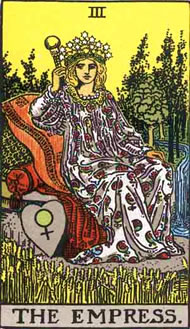
The Empress
This card represents wealth, marriage, fertility and creativity.


Mannaz
Mannaz reversed may indicate you are in a period of depression. Be careful when making serious decisions at this time. Trust only those whom time has proven trustworthy.


The Dorje
You are at a physical peak–particularly from a sexual perspective. Enjoy the next few weeks, for they can be remarkable if you let them.


Your Daily Influences represent events and challenges the current day will present for you. They may represent opportunities you should be ready to seize. Or they may forewarn you of problems you may be able to avoid or lessen. Generally it is best to use them as tips to help you manage your day and nothing more.


Your Charm for June 15th is Necklace of Charms

Your Charm for Today

Necklace of Charms

Today’s Meaning:
What you need in this aspect is a bit of understanding. You can find happiness in abundance if you understand and accept the differences of those with whom you share your life within this aspect.

General Description:
This is an Egyptian group of amulets. The centre ornament is the Lotus, from which hangs the emblem of Millions of years — Thou shalt never perish, never, never come to an end. The Lotus bestowed upon the wearer Light and Understanding, the gifts of the god Ra, their sun god, king of gods and of men. The Fish, the symbol of the Egyptian goddess who controlled the rising of the Nile brought Abundance and Riches. The other pendant is in the form of a lock of hair, the meaning of which is obscure.

Your Animal Spirit for June 15th is the Bat

Your Animal Spirit for Today
June 15, 2015 

Bat

Bat’s internal radar is exceptionally attuned—is yours? Because Bat medicine is the medicine of transformation, he is asking you to re-examine your life to determine (using all of your senses) what is worth keeping and what needs to be discarded. For every death there is a rebirth and Bat is here to help you decide what goes and what stays.

Shuffling The Card, Your Past, Present & Future Reading for June 15th

Shuffling The Card, Your Past, Present & Future Reading for Today


Past Influence whose impact on your life is waning.

The Dove

Throughout history the Dove has symbolized peace and innocence in nearly all cultures. Dove’s soft cooing and gentle nature bring a calmness to any situation. The Dove appears where peace has been attained or there is a need to bring events to a peaceful ending. It denotes a time to let lose of grievances and settle conflicts in a way that benefits all parties equally.


Present Influence whose impact on your life is very strong.

The Unicorn

The Unicorn indicates uniqueness and reminds us of the ability for magic we possess. Although gentle, the unicorn nonetheless is able to defend itself, not only through horn-to-horn face-off but also through swift flight or even by disappearing into a mystical mist. The unicorn also represents purity, strength, and for a mentor or a nurturing family member. When the Unicorn appears, extraordinary events are possible in the near future.


Future influence whose impact on your life is growing and will be very strong in the future.

Simplicity

A much revered swami said “Simplicity is the nature of great souls.” There is a natural sense of art and genius in Simplicity. Keeping things simple produces solutions that are not only efficient but work well and are easy to maintain and build upon. Whether it takes a physical form or is an idea simple constructs please our aesthetic self. Simplicity is soothing, because you don’t have to fight your way through layers of complexity to see and understand the end result


Your Ancient Symbol Card for June 15th is The Hand

Your Ancient Symbol Card for Today

The Hand


Although the exact meaning may vary, The Hand is a symbol of some form of personal power in many cultures and religions. The presence of The Hand is an indication that your personal powers are at or near their zenith. The Hand suggest a time when you should leave your mark on the world.

As a daily card, The Hand suggest that now is a time for you to leave your mark on the world. Your unique strengths are heightened to a point where you can not only expect to make substantial progress towards your goals, but enjoy recognition for your efforts as well.

Your Witches Rune for June 15th is The Wave

Daily Witches Rune

The Wave

Meaning:  This rune symbolizes your friends and family and their influence upon you. Its meaning is usually derived from the other stones closest to it. This rune is also associated with travel. A journey abroad is indicated especially if the Sun rune is nearby, but a journey for someone close to you if the Moon stone is closest. If it is near to the Rings it foretells a holiday or long distance relationship.

Your Crowley Thoth Tarot Card for June 15th is The Universe

Your Crowley Thoth Tarot Card for Today

The Universe


Like The Sun, The Universe brings good blessings. The Universe appears where all is in balance. It allows you to act effectively not only as an individual but as a member of a group too. The Universe promises contentment, fulfillment and completeness to those under its influence. It doesn’t guarantee there will not be moments of strife or discord in your life, but it does indicate that your trials and tribulations will be overcome; that ultimately you will know inner-peace and contentment. The Universe suggests you have found or will find your place in the scheme of things—that place where all is as it should be.

Your Daily I Ching Hexagram for June 15th is 28: Great Test

Today’s I Ching Hexagram

June 15th, 2015

_________________________________

28: Great Test


Summary:
You may be in a compromised position. Relations and projects may be on the verge of collapsing. It is time to look toward different opportunities.

Line One of Your Hexagram is a 6:
Gain the support and trust of others by demonstrating your good intentions. Humility is your ally.

Line Two of Your Hexagram is a 9:
Be courageous in the face of adversity. You will overcome any obstacles.

Line Three of Your Hexagram is a 9:
The times may be chaotic and dangerous. If so, be careful.

Line Four of Your Hexagram is a 9:
Your problems are not as big as they seem. However, to avoid trouble in the future, handle them carefully.

Line Five of Your Hexagram is a 9:
Taking advantage of the unworthy is not noble.

Line Six of Your Hexagram is a 6:
Rely on your intuition, diligence and courage to help you through difficult times.

Your Daily Rune for Monday, June 15th is Wunjo

bw-wunjo

bw-wunjoYour Rune For Today
Wunjo

Wunjo denotes joy and shared bliss. It may also represent a job well done and the satisfaction one feels from completing such a task. Wunjo brings good fortune and harmony.

Additional information about Today’s Rune, Wunjo

wunjo: glory

Phonetic equivalent: w

DIVINATORY MEANINGS: success, recognition of achievements, reward, joy, bliss, achievement of goals, contentment


MAGICAL USES: for success in any endeavor, to motivate, to complete a task.


ASSOCIATED MYTHS & DEITIES: Baldr, Asgard


ANALYSIS: Wunjo is the last rune of the first aett, and thus represents both the end of one cycle and preparation for the next. It is a very positive, stable rune, and is another place where people tend to get stalled along their journey. Christian poets related it to heaven, but in fact it more closely resembles the Pagan Valhalla, since this particular paradise is not a permanent one.


Like the wealth of fehu, the glory of wunjo is only an illusion. We have achieved success on one level only, and there are many more lessons to be learned. It is, however, a welcome respite that allows us to rest, re-charge our batteries and prepare ourselves for the rest of the journey. It also gives us some perspective, allowing us to look back and reflect on the road thus far. Wunjo gives us a glimpse of what is possible, but if we try too soon to reach out and grab it, like the Grail it will disappear between our fingers.


by Jennifer Smith