BUTTERFLY

To many pagans, its mythical meaning is linked to the soul (of the deceased) in search of reincarnation.

To many pagans, its mythical meaning is linked to the soul (of the deceased) in search of reincarnation.

A symbol of good fortune in the East, it represented demons and spirits in medieval Europe.

Through history, the arrow has symbolized war, power, swiftness, the rays of the sun, knowledge… as well as deities such as the Greek god Apollo and goddess Artemis (both hunters), the Hindu weather god, Rudra; and various gods of sexual attraction: Eros (Greek), Cupid (Roman), Kama (Hindu)… On ancient Roman coins, it represented the Zoroastrian god, Mithra. The native American Cheyenne warriors revered the “sacred medicine arrows” as symbols of male power. Arrows held by skeletons would point to disease or death. Today, they usually just point in the preferred direction.

An Egyptian cross symbolizing a mythical eternal life, rebirth, and the life-giving power of the sun.

Symbol of good and evil spirits in religions around the world.

A magic charm, worn to bring good luck and protection against illness, accidents and evil forces.
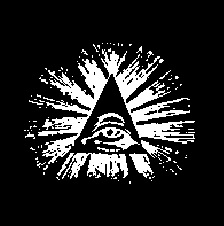
Masonic symbol for the all-seeing eye of god

A universal symbol representing spiritual sight, inner vision, higher knowledge, and insight into occult mysteries.
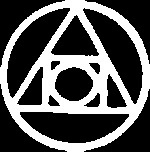
Alchemy combined a wide variety of geometric shapes to represent the various natural and esoteric “elements” needed for its science, spells, medicine and magic.

By Psychic Hayden
Protect Yourself From People Who Drain You
I’m sure this topic has been covered many times before. Despite this, it’s always good to have a refresher course. This is especially true considering in our world now more than ever there is so much energy draining and “vampirism” going on.
For those who don’t know, energy vampirism is when a person uses any fear based emotion to emotionally impact us and thereby gain access to our personal energy whereas they are then capable of claiming it as their own. Some of these fear based emotions include intimidation, guilt, embarrassment, pity, anger, and depression.
It becomes important for people that find themselves constantly around energy vampires and their negativity to consistently remind themselves that they are in control of their own energy and where it goes.
That, of course, isn’t always easy and in some cases is much easier said than done. Thankfully, there are many very basic and easy techniques that a person can learn, experiment with, and practice to protect their own energy and themselves from the negativity of others.
Psychic Defense Technique One – White Light
Perhaps the most well known technique in the new age and metaphysical realms is that which involves white light or just light energy. The concept of surrounding ourselves with the white light of eternal love and protection is not really new to many. Still, many have trouble figuring out exactly how to do this. May I suggest the following visualizations:
a) Picture yourself in the center of a light bulb, then imagine it is turned on.
b) While standing under a shower of water (real or imagined), see/feel the water turn into the light.
c) Visualize an angel hovering over you and the light radiating from all around it and around you.
White light is important as being in it raises our own vibrations thus making it less likely that we’ll even encounter those who are choosing to follow the path of a lower vibration (hence negativity). Additionally, it helps to neutralize the negative vibrations that do manage to make their way to our aura.
Psychic Defense Technique Two – Blue Bubble or Blue Shield
Not as well known as the white light technique, the Bubble and Shield technique uses the idea that we can surround ourselves mentally with either a bubble or a shield that will reflect and absorb negativity so that we don’t have to feel the full effects of it. The color blue, associated with the throat chakra, represents will power and when combined with the visualization of the bubble or shield strengthens it.
We can layer the bubble or shield with the white light, so both can be in effect at one time. In truth, in dire situations, all of these methods can be layered to provide additional levels of protection to the psyche and auric energy field.
If you are one of those people that hates being around large crowds because you are so sensitive to energy, this is an important technique which can in essence give your social freedom back to you. Go out to a mall or shopping area where a lot of people are and enter and take note of what it feels like. Exit or excuse yourself to the restroom. Put the blue bubble or shield around yourself before going back. See if you notice a difference.
Going with the idea, one could put a bubble around the person that is being negative too, thereby creating a form of operant conditioning around the individual. When they choose to throw negative energy or use negative emotions to their advantage, this energy can’t escape the bubble and thus they feel the full effects of it. I.E., a person learns that they have to be nice when around you or they get zapped by their own negative energy.
Psychic Defense Technique Three – Physical Body Positions
Crossing your arms and legs can also be very protective. These body positions act to close off the human energy circuits and also protect various chakra (energy) points – depending on where the arms are crossed. The next time you are around someone that seems to be pulling at your energy or spewing a bunch of negativity, sit down calmly, cross your arms and legs, and listen. Their energy won’t be affecting you and eventually they’ll get tired or drained (as they aren’t getting any of your energy and they are using up their own supply) and then just leave you alone for the rest of the day.
Psychic Defense Technique Four – Mirrors
Visualizing mirrors surrounding the self has been used almost as long as the white light and blue energy. The idea here is that your visualization should have the mirrors facing outwards so that energy is reflected away from you. Like the bubble, you can put them around someone else to act as a form of operant conditioning, but this time the mirror’s reflective surface should face inward toward the person you are putting them around.
Psychic Defense Technique Five – Salt
We are speaking of a pure salt here, such as Kosher Salt or Sea Salt. These pure salts absorb negative energy and will ground or take it away from you if you have picked up any. There are many ways to use this technique.
a) Put some salt into a small glass and leave the glass on your work desk or in the room where people are most often found. This will absorb negative vibes. Make sure to flush it and change it out every month or after every fight/argument.
b) Add a sprinkle to some bath water and soak in it. This will pull negativity off and away from you as you soak. Add a touch of baking soda also to revitalize or help regain the lost energy.
c) Dilute some salt into a spray bottle of spring or mineral water. Spray a mist in the air of any room which has been overloaded with negativity or in which recent fights/arguments have occurred. This has the effect of making the environment feel light, pure, and airy again. Many combine this with the burning of sage (often called smudging) to cleanse and clear areas.
Psychic Defense Technique Six – Protection Symbols
Protection symbols come in many forms. It’s the belief in the symbol that will be the most important. However, the symbol itself can act to strengthen the subconscious mind and as a result be an added measure of defense and protection.
Holy symbols tend to be the most popular symbols of protection (cross/crucifix for Catholics/Christians, pentagram for Pagans, cow, Buddha, the list literally could go on) however any symbol can be used as a symbol of protection as long as it is meaningful to you. Thus, don’t make fun of someone who talks about their lucky whatever. It may truly be an important symbol for them and because of their belief and what that symbol invokes; it very well may truly be “lucky” and helpful for them.
Psychic Defense Technique Seven – Prayer and Affirmations
Prayer and affirmations have long been used to build positive energy, amplify other protections, and add layers of defense to the human energy system. In the case of prayer, any prayer which is said immediately following the use of one of these methods will act to strengthen it. In the case of affirmations, affirmations such as “I allow only love around me,” “People adore me,” and “My vibration is stronger and faster each day” can improve your energy and defense techniques. When writing an affirmation, always remember to put it in the present, write it from the first person perspective, and do not include negatives (not, don’t, won’t, can’t, etc) in it.
Likewise, invoking or asking angels for help also falls here. A common conception of the angelic realm is that angels can’t intervene or help humans unless a human has asked and given them permission to do so. The exception being if a person’s life is in danger, then many times that rule can be broken. The point is, always be willing to ask for extra help if you need it. Your angels, guides, and the powers to be will always respond and help out.
Resource
One of the most important skills we will learn on our path is psychic protection. Shielding is a very important component of that. I really encourage you to take the time to learn this skill as best as you can. This, honestly; has been the most important thing I have learned to control my gift. It’s what makes it so that I can go through a funeral if I need to, or watch a movie with friends without spouting waterfalls. It also allows me to keep my cool if I am in the presence of someone who is less then pleasant. What? Everyone in the world isn’t happy? Giggles. You know how essential something like this can be.
Right now, if you’re not familiar with shielding you probably have a visual in your head of a knight in armor carrying a shield in front of him. That’s not a bad visual. The purpose of that shield for the knight is to stop anyone from hurting him. While it doesn’t always work perfectly, it will help protect him from incoming attacks. If you think about it, I’m quite sure, just knowing that shield was there helped to bolster his confidence and calmness when going into battle or stressful situations. A psychic shield works much the same.
A psychic shield is a collection of energy that we place around ourselves and program to do what we wish it to do. There is so much you can do with psychic shields. It can take a lot of time for you to find the shield that is right for you. You may wish to have many types of shields that you work with. I could literally write a book just on shielding techniques…perhaps one day I will. For now though, I want to get you use to a basic shield, and talk about a couple variations on it that I believe will help you.
When working with energy, you will find that I mention white light fairly often. The white light is the light that comes from the divine. It is the energy that is warm, loving, and peaceful. The light that we are graced with on the other side. However you can have it’s benefits while you are here. All right, it’s time to get comfy again!
How many of you are familiar with your aura? Your aura is the energy that is made by you and surrounds you as you go through your day to day life. Depending on your mood, is what color it will be. For now, you just need to know that it’s there. It’s extension from your body varies depending on several things. For right now though I want you to envision it being about six inches to a foot away from your body. Have it?
Now, I want you to work on forming that ball of energy in your hands like we did before. However now, we want to make that ball of light surround us completely and protect us. Work on surrounding yourself with a ball of white light. Think of it like the bubbles you blew with soap when you were a child. It’s a layer of protection around you to stop energy from getting to you. So as you form this ball of light around you, I want you to envision it protecting you from any negative energy. This bubble will only allow positive emotions to come to you. Anything that will hurt, or harm you in any way is not allowed through it. When you are done, finish it by saying, “Only loving, positive energy may come to me.” This programs your shield and lets your intentions be known to the universe.
Each morning when you wake up, you want to shield yourself before going out for your day. You may need to take a few minutes throughout the day to redo it if you feel it’s not working anymore. Try to make it a part of your daily routine. Allow yourself an extra five to ten minutes each morning to protect yourself. It will make a difference as you go through your day.
Now how do you tell if your shield is working? I mentioned before that some of us can “see” better then others. I am one that can feel things better. If you are an empath, it is quite likely that you will be able to feel the energy of your shield before you can see it. Sometimes feeling your shield can be difficult too. So what are some other ways to tell if it’s working or not? Take a look at how you are going throughout your day. Do you feel confident and protected? How are you feeling emotionally? Do you feel in control of your emotions? These are all ways to tell if your shield is working properly. If it’s not, see if you can grab a restroom break for a few minutes. While in there, breathe deeply and reapply your shield. This should help you.
We also need to cleanse our shield. This is done by manipulating energy primarily through visualization as well. I usually do mine at night. As I’m falling asleep I will mentally scan my shield and try to feel it. I use my energy to cleanse any negative energy from it and tend to any places that may need it.
There are so many things you can do to modify your shield. From textures, to layers, to shapes, to colors. The basic bubble shield is a great way to get started. I urge you to work on mastering it. When you are comfortable with it you can start experimenting with the aspects of your shield to customize it to you. The other area of shields I want to go into with you a little bit is basic colors of your shields. You can do a lot by changing the color of your shield to what is appropriate.
It is also perfectly acceptable to have more then one type of shield. I have a complex bubble shield that I use almost all the time and I customize it to what I need in the situation I’m in. I can change it at a moments notice now. Though it took me quite some time and practice to get there. Along with my bubble shield I also use a cloak. I visualize my cloak as being a dark navy blue on the outside, and a beautiful snow white on the inside. The inside is really silky and quite comfortable around me. It helps me to feel protected. When I wish to become more invisible I will pull the hood up on my cloak and retreat into it. It works really well in stores. Almost too well as do find I get stepped on quite a bit when I use it which always makes me laugh. Because I have such a hard time seeing it, I love having tangible proof for myself like that to help let me know it’s working as it should.
I wanted to give you a basic background on colors of shields for you to use with your bubble shield. You may want to experiment with these. It can be helpful to keep notes on what colors you use and what you have noticed when you use them.
White Light – White light is the main color I use. It is the color of the divine. For those of you who work with angels it will help keep you surrounded with their love and protection.
Rose Light – Rose is a warm loving color. It works hard to keep all energy received very loving. It is especially helpful in protecting you against negative people.
Yellow – Like sunshine, yellow is a very uplifting color. You can use this in situations where you think you may need extra help staying in a positive mood.
Green Light – Green is a healing color. Use this when you, or someone around you is feeling ill.
Blue Light – Blue is a very calming color. You can use this color shield when you want to stay extra calm in any situation.
Purple – Purple is a psychic color. You want to use a purple shield when you are doing any type of intuitive work.
Resource
Jasmeine Moonsong, Author
Published on the website, Jasmeine Moonsong
I really encourage you to take the time to learn this skill as best as you can. This honestly has been the most important thing I have learned to control my gift. It’s what makes it so that I can go through a funeral if I need to, or watch a movie with friends without spouting waterfalls. It also allows me to keep my cool if I am in the presence of someone who is less then pleasant. What? Everyone in the world isn’t happy? Giggles. You know how essential something like this can be.
Right now, if you’re not familiar with shielding you probably have a visual in your head of a knight in armor carrying a shield in front of him. That’s not a bad visual. The purpose of that shield for the knight is to stop anyone from hurting him. While it doesn’t always work perfectly, it will help protect him from incoming attacks. If you think about it, I’m quite sure, just knowing that shield was there helped to bolster his confidence and calmness when going into battle or stressful situations. A psychic shield works much the same.
A psychic shield is a collection of energy that we place around ourselves and program to do what we wish it to do. There is so much you can do with psychic shields. It can take a lot of time for you to find the shield that is right for you. You may wish to have many types of shields that you work with. I could literally write a book just on shielding techniques…perhaps one day I will. For now though, I want to get you use to a basic shield, and talk about a couple variations on it that I believe will help you.
When working with energy, you will find that I mention white light fairly often. The white light is the light that comes from the divine. It is the energy that is warm, loving, and peaceful. The light that we are graced with on the other side. However you can have it’s benefits while you are here. All right, it’s time to get comfy again!
How many of you are familiar with your aura? Your aura is the energy that is made by you and surrounds you as you go through your day to day life. Depending on your mood, is what color it will be. For now, you just need to know that it’s there. It’s extension from your body varies depending on several things. For right now though I want you to envision it being about six inches to a foot away from your body. Have it?
Now, I want you to work on forming that ball of energy in your hands like we did before. However now, we want to make that ball of light surround us completely and protect us. Work on surrounding yourself with a ball of white light. Think of it like the bubbles you blew with soap when you were a child. It’s a layer of protection around you to stop energy from getting to you. So as you form this ball of light around you, I want you to envision it protecting you from any negative energy. This bubble will only allow positive emotions to come to you. Anything that will hurt, or harm you in any way is not allowed through it. When you are done, finish it by saying, “Only loving, positive energy may come to me.” This programs your shield and lets your intentions be known to the universe.
Each morning when you wake up, you want to shield yourself before going out for your day. You may need to take a few minutes throughout the day to redo it if you feel it’s not working anymore. Try to make it a part of your daily routine. Allow yourself an extra five to ten minutes each morning to protect yourself. It will make a difference as you go through your day.
Now how do you tell if your shield is working? I mentioned before that some of us can “see” better then others. I am one that can feel things better. If you are an empath, it is quite likely that you will be able to feel the energy of your shield before you can see it. Sometimes feeling your shield can be difficult too. So what are some other ways to tell if it’s working or not? Take a look at how you are going throughout your day. Do you feel confident and protected? How are you feeling emotionally? Do you feel in control of your emotions? These are all ways to tell if your shield is working properly. If it’s not, see if you can grab a restroom break for a few minutes. While in there, breathe deeply and reapply your shield. This should help you.
We also need to cleanse our shield. This is done by manipulating energy primarily through visualization as well. I usually do mine at night. As I’m falling asleep I will mentally scan my shield and try to feel it. I use my energy to cleanse any negative energy from it and tend to any places that may need it.
Jasmeine Moonsong, Author
Published on the website, Jasmeine Moonsong

While it seems that a majority of Witches were raised in non-religious families, or else had parents who had left their own families’ religion behind, many do come to the Craft from religious backgrounds. Most were brought up in a denomination of Christianity, but other faiths are represented as well.
A religious upbringing can be tricky for an aspiring Witch, particularly for those who grew disillusioned with a faith they once followed, and especially for those whose family lives were strongly infused with their religion.
If this is your situation, you might experience resistance to much of what you read and hear about Witchcraft, no matter how much it resonates with some parts of you. This resistance might be subtle or quite active, and can come from a variety ideas that you may have consciously let go of, but are deeply ingrained nonetheless.
For example, you might struggle with adopting a new concept of deity, such as the Wiccan God and Goddess, or any of their “lesser” aspects from the various pantheons that practitioners of Wicca and other forms of the Craft follow. You may have had it instilled in you from an early age that the deity (usually known simply as “God”) of your religion is the only one, and that any other deity is completely fabricated by human beings, or else somehow inappropriate to give your attention to.
Many sects of Christianity in particular havelong held that anything with the slightest whiff of paganism is inherently “evil,” but this idea is found within the other monotheistic religions as well. So even though you know in your heart that there’s nothing wrong with following a different deity, and doing so in an entirely different way, it can still feel rather strange.
You may also have been raised with a concept of deity (usually “God”) as one who is both benevolent and punishing, watching and judging your every action and providing you with plenty of opportunities to feel guilty if you’re not living up to what you’ve been taught is the ideal standard of behavior. In this kind of belief system, a rigid concept of the afterlife is often used as motivation for keeping oneself in line, and the rules involved can run from simple to complex, and from sensible to seemingly random and bizarre.
People who leave religions with strict dogma tend to be wary of the word “god,” whether it’s capitalized or not, and are generally resistant to anything resembling “rules.” So when you come across a Witch or a book that appears to take a dogmatic approach to the Craft (such as a fixed arrangement of the altar that must be followed consistently, or some other element of practice that can only be viewed from a specific perspective), it can be off-putting.
The concept of goddesses is also challenging for some who have been raised in the patriarchal religious systems of Judaism, Christianity, and Islam, although this is also a major draw, if not the major draw, for many Witches who work with deities.
The presence of a divine feminine and the balanced equality between the two genders in many forms of the Craft is a refreshing and welcoming experience for many who come from a patriarchal background. And some forms of Wicca actually leave male deities out of it altogether. Nonetheless, if your former notion of divinity was exclusively male, then goddesses can be a little hard to get used to.
Not all forms of Witchcraft recognize deities, however, and it should also be acknowledged that a vast number of Witches would reject the idea that their path is a religion. Wicca is officially recognized as a religion in many places, but even some Wiccans decline to identify it that way.
It should also be noted that there are Witches who continue to practice their religion of origin along with Witchcraft and see no conflict between the two—even if most members of that religion of origin would disagree!
If you’re feeling called to the Craft, but uncertain or hesitant about how the concept of deity fits with your worldview as a “religious refugee,” know that your experience of this path is yours alone.
No one can make you believe in anything, and no amount of worshiping or honoring or invoking a deity is going to make it real for you if you’re just going through the motions because it seems like you’re “supposed to.” Unless you belong to a Wiccan coven that worships particular aspects of the Goddess and God, you really have a wide range of possibilities to explore in this department.
If following a well-established path is what feels right, then you may be more predisposed to follow deities that are widely believed in by members of specific traditions. Or you can take the “eclectic” route and build your own practice, which may or may not include deities.
No matter how your path evolves, you can let go of the idea that any one religion or belief system is the “correct” one. In fact, it can be very useful to allow for the possibility that the infinite Universe has room for all deities and all beliefs, with no one particular set of ideas being any more correct than another.
You can also relax, take your time, and trust that you will find your way when you’re ready. Although some people do end up having a specific mystical or spiritual experience that immediately opens them up to a new understanding of the non-physical world in a particular and lasting way, most of us come to an understanding of our deities of choice (or lack thereof) more gradually.
So don’t let mixed feelings about “religion” stop you from following your inner guidance. Know that if you listen to yourself first, you’ll always end up where you’re meant to be.
Source
Wicca Living a Magical Life: A Guide to Initiation, Self-Dedication and Navigating Your Journey in the Craft
Lisa Chamberlain

Lee Anne was a client who had been working on developing her psychic abilities. She was naturally clairaudient but also had been practicing her clairsentience. An empath by nature, she liked being able to feel information in her body. But she also noticed that, as her psychic abilities grew, she was becoming more easily overwhelmed by energies around her, and she was scared that perhaps she would become a target for entities.
It’s true that as you grow in your psychic capability—whichever “clairs” you cultivate—you may find yourself becoming impacted by energies not your own. Clients get very excited as their psychic abilities begin to unfold and often forget that they have to learn to set new boundaries and develop techniques for psychic self-protection. This is not because there are bad things out there trying to “get” us, but because there is a lot of energy, negative thought forms, and just plain junk floating around that we become more sensitive to as we develop psychically.
Psychic protection is simply an intentional practice of creating energetic boundaries and clearing our energy fields regularly so that we aren’t always processing energies that aren’t ours.
Who Should Practice Psychic Protection?
Anyone can benefit, but the following groups will find a practice of psychic protection especially helpful:
• Healers, psychics, Tarot readers, energy workers
• Empaths
• People who work in physically or emotionally challenging environments; i.e. hospitals, war zones, morgues/mortuaries, rehab centers, bars, etc.
• Teenagers or sensitive children
Psychic protection is simple and easy—children can learn to do it—and it makes a huge difference if you work or spend time in places where there are a lot of people and/or challenging, intense emotions flying around. We absolutely are affected by other peoples’ energy. If you are exposed on a daily basis to the anger of other people, for example, you will begin to feel more anger yourself.
School, especially middle and high school, are places of tremendous emotional stress and flux. If you have a sensitive child or even a child on the autistic spectrum, the ambient energies can just be too much. Psychic protection creates boundaries that help keep outside energies from getting into your child’s field. Because children are so open and receptive, it is easy for them to take in the emotions of others. If they have a practice they can use to stay calm and safe, it empowers them and makes things easier at home!
Methods of Psychic Protection
There are probably as many methods of psychic protection as there are healing and energy modalities. I like to use the following simple ritual and then augment with oils or gems if I’m in a particularly negative or charged environment.
I taught Lee Anne this technique, and she noticed an improvement right away.
At the beginning of your day, take a few moments to calm and center yourself. This can be during or after meditation, in the shower, or simply as you are enjoying a quiet cup of coffee. Focus on your breathing, and take a few deep, slow breaths. Then, place your attention on your third eye, and imagine enclosing yourself and your energy body in an egg of golden light. Speak these words: I enclose myself in a protective sphere of golden light. May this light protect me from any emotions or energies that are not my own, and keep me as safe as my karma will allow. I ask my guardian angel to be with and protect me and my guides present to guide me. Love may enter and leave this sphere, and insight and energy of high vibration work for my highest good. Let it be.
You can modify these words to suit your own beliefs. The point is to consciously intend to create a boundary between yourself and the rest of the world, but not a hermetically sealed bubble. You may want to repeat this a few times a day, either when you feel that you should or if you are in an extreme environment or situation.
At the end of the day, I spend a few moments before drifting off doing the following ritual. I again imagine my aura, and I call in my guides and angels to give me a nice aura brushing. I say: Guides and angels, please clear my aura of any residual negative energies or emotions. Sweep my energy through with golden light, cleansing, purifying, and strengthening my own emotional and energetic boundaries. Thank you, thank you, thank you. It takes just a few moments, and I can sometimes literally feel the guides combing through my aura, making it light and “new.”
If you do need extra levels of protection, you can make an essential oil blend that includes frankincense, ylang-ylang, and sandalwood (always dilute in a carrier oil!). Lee Anne likes to just wear frankincense diluted in coconut oil at her chakra points. Helpful stones are black tourmaline, obsidian, or smoky quartz.
It’s important to remember that entities or beings can’t attach to you without your permission, and we attract negative thought forms through like vibrations. If you feel that it’s “too late” for psychic protection, you can contact a psychic or healer to help you clear your field and restore it to a healthful place.
Published on Keen.com
In essence, it’s when you’re being adversely affected and harmed by psychic or subtle energy. This energy could be in spirit or thought form, a hex or curse, someone’s ill-intentions that are targeted against you.
It can also happen when you’re being exposed to intense or violent emotional energy that has a lower or harmful nature (like road rage, or someone’s unintentional outburst), or when someone is psychically bullying you.
Psychic attack is not always intentional. Sometimes the person who is guilty of psychically attacking you isn’t aware that their thoughts, feelings, or desires are actually affecting you. Unfortunately, as awareness of this phenomenon grows, I’m seeing more and more people perpetuating this behavior intentionally, which is sad and at times downright creepy.
SYMPTOMS OF A PSYCHIC ATTACK:
Nightmares, night terrors
Irrational moods/feelings/fears/worries
The feeling of a “dark cloud” following you around
A heaviness on your heart or soul
Not feeling like yourself
Intense fatigue or depression that had a quick onset for no apparent reason
An eerie or creepy feeling that you’re being watched or not alone
Experiencing frequent hardships/mishaps/accidents/setbacks
HERE’S WHAT TO AVOID IF YOU SUSPECT YOU’RE BEING HIT WITH A PSYCHIC ATTACK:
Avoid going into fear
Blaming other people
Thinking that you’re cursed, a victim, or powerless, or a bad person
Judging the other person or spirit is as bad, or fearing that they’re omnipotent, omnipresent or someone/thing that you have to hide from, counter-attack, or destroy.
Why? Because then you’re lending it your own energy, focus, and power, which only serves to make it work against you.
TIPS ON HOW TO EFFECTIVELY HANDLE IT SO IT STOPS BY FINDING IT’S “IN”:
Look at your shadow. Years ago when I was learning spirit extraction and release, as well as clearing energy, reversing curses, etc. (yes I still do clearings, no I no longer deal in curses), a shaman I worked with shared that entities and attachments find their way into our energy fields through our shadows (meaning our shadow selves). Our shadow selves are the darker aspects of our whole selves. Our fears, shames, limiting beliefs, judgments, hatred, harmful desires, lusts, deviancies, etc. are all a part of our shadows.
Now your shadow is an integral part of being human, there’s no getting away from it, but what gives psychic attack it’s “in” is when it triggers an insecurity. Plenty of psychic attack or malevolent energy can bounce right off you, but if it hits you in a weak spot, so to speak, that’s when it scores a hit.
Identify your insecurity or weak spot – otherwise referred to as its “in” or back door. This is where your personal power comes into play: Rather than engaging with it, take a look at it, ferret out the insecurity and its underlying fear, and then take steps to resolve it. Depending on what the insecurity/fear is, it could take time to heal, resolve, or release it, but the good news is that once the insecurity has come into your awareness, you’ve found the attacker’s “in”. This puts you in the position of deciding what to do about it, rather than letting it run freely under your radar.
Refuse permission. When you realize that you’re being psychically attacked, and you’ve become aware of it’s “in”, then you have two choices: either react fearfully, or respond with authority. Take a deep breath, ground yourself, and then take the latter choice.
Consciously (either out loud or internally, but keep it private) acknowledge the attack. Acknowledge the insecurity that it’s triggered with compassion, and express gratitude to the attacker for bringing the insecurity to your attention, because now you can heal/resolve/release it. Affirm that the attacker has now served their higher purpose, they no longer have permission to enter, the back door is firmly closed and locked, and the energy can now be dissolved and resolved into Divine light. You’ve got this.
Work with crystal allies. Work with sodalite (self-awareness, self-knowledge, attunement) and mangano calcite (acceptance, nurturing love, gentle healing) while identifying and working through your insecurity.
You can also wear what I refer to a “psychic shield” in my book: black tourmaline (shields the aura), fluorite (cloaks the aura), labradorite (shields the heart chakra), blue kyanite (repels harmful thoughts/intentions), and either black obsidian (repels intentional harmful energy, like curses, ill-wishing, etc.) or jet (for empaths who feel particularly vulnerable, it absorbs energy in your stead).
On a final note, please, please, PLEASE, don’t judge or blame your insecurity or your shadow for making you vulnerable to harm! They’re vital parts of your human essence, and as their function is to catalyze your growth, they’re a beautiful and worthwhile part of who you are and of your life experience. Everything in creation has a higher purpose, even psychic attack, if we choose to see it that way.
A psychic attacker might be trying to do you harm, but if you exercise your authority over the matter, they’re actually doing you a favor. You don’t have to send them a box of chocolates, but the good news is that you don’t have to suffer their intentions, either.
Reference
Author: Krista Mitchell
Website: Krista Mitchell
Ms. Mitchell also offers a four hour course on “Psychic Shield: Energy Protection for Healers & Empaths” if you are interested the addy is https://www.krista-mitchell.com/psychic-shield

1. The Laws were created to give our lives form and order, that all might be balanced throughout all of the planes. In truth there are two sets of laws, which govern us — one setting forth the ways of the Wiccan, and the other the ways of the Universe. Both are important; each should be observed with respect and treated with honor. The Laws were shaped and molded to govern us, to teach us, to advise us, and to counsel us during our time of mortal life on earth.
2. Honor the Gods, for They are the channels and the manifestations of the Source. Honor yourself, for this divine Force also lies within you. Love the Gods as They love you; for as you love yourself and your brothers and sisters, so the Gods shall honor you. As the love of a man and a woman flowers and grows when nurtured with respect and cultivated with understanding and honor, so should you love the Gods.
3. The Goddess is the Great Mother, the God is the Great Father, and we are their children; and we worship them, because they are the Rulers of the Universe and all that is therein. Therefore, O Children of the Gods, try them not, nor attempt to test them, lest they show you that the Ways of the Craft are not to be belittled or mocked.
4. Let the Power of the Craft flow from you only in love — or not at all. For it has always been known that the energy webs which we weave and maintain shall eventually return to encircle their creator. Thus our works become either the net which entangles and binds us, or the web of light by which we are linked to the Gods.
5. Let the Rites of the Wicca be a way for the children of the Gods to be as One — for the Power flows only when the circle is unified. Always should you revere the Earth, and heal and tend Her, for She is our life, our Mother Ship, on which we navigate the dark currents of space.
6. When you reap the harvests of your lands, then you shall not reap one corner of the field, nor glean the herb gardens, nor the fallen fruits of the orchards. These you shall offer to the Earth Mother, in direct return, or through offerings made to your circle, or to sustain its Priests and Priestesses.
7. Always be proud to be of the Wicca, but never allow your pride to become vanity — for those who are self-important become as stumbling blocks, and like stumbling blocks, they are cast aside for their vanity.
8. Observe and listen, reserving your judgment, for until all the silver is weighed, who can know the worth thereof?
9. As like breeds like, even more does good beget love and joy. Your life will be full of love and joy if you are honorable and happy.
10. Your teachers are the servants of the Gods. Their duty is to plant the seeds of knowledge within the minds of their students, and they shall use their power for the good of the Wicca. Yet it is each student’s duty to tend the seeds, which are planted, and to make the final harvest. Those who misuse the power and trust of the teacher’s position shall have to answer to the Lords of Karma, and adjust the balance accordingly.
11. The Temples of the Gods, which are Their abode on Earth, shall belong to all Their children, and each circle shall be as a special family. Do naught against any of the Wicca, lest you do that thing against the Gods, and against yourself.
12. You must not be a teller of tales amongst the children of the Goddess, and you must hold no malice or evil thoughts towards others of the Wicca.
13. You must not lie, nor give false testimony before your Elders, or those who are of the Wicca — for liars are fools, and a menace unto themselves, and to the Wicca. Be truthful in all your works and deeds, especially within the circle, for what you say within the presence of the Gods becomes manifest.
14. You must not put stumbling blocks in the way of those who do not follow the way of the Wicca. You must make no unrighteous judgments of their ways, and you should aid them with an attitude of love when it is asked for. Yet ever should you keep the Counsel of the Elders, and reveal naught to others where our circles may be. Nor may you reveal our ways without the consent of the Priestess.
15. When you make a vow to the Lord or the Lady, or you swear an oath to another of the Wicca, then you must do all that has come forth from your mouth, for a covenant with the Gods, or with the Wicca, is your honor. Woe and trouble shall befall those who care not for the fetters they attach to their souls by not keeping their word.
16. The Great Mother and Great Father would not have Their children suffer the indignities of oppressors for Their sake, for what is within the hearts of Their children is dear and true to Them. The Ancient and Mighty Ones shall cause the balance to be made for those who desecrate the worship of the Lord and Lady, Their Temples, or Their creations.
17. Never shall you use Magick or the Craft to cause harm, for this is misuse of the Power, and is not to be condoned. To cause pain and death of another through the Craft shall require pain and death of the self in sacrifice.
18. Never betray any of the brethren, nor the lore of our people, for you are all servants of the Gods, and must live by the virtues of love, honor, and wisdom. Let truth, loyalty and honor be your creed and your guides, but let them ever be tempered by love and wisdom.
19. The order of the Gods shall you keep, and within Their Circles shall you walk. You must not say, “I believe” when in truth you doubt, nor shall you claim to obey the Lord and Lady’s word when you never enter into their presence. You must not profess with your lips that which is not within your heart.
20. Use not the names of the Gods in negative or evil ways, for They love and cherish Their children above all others. All others They love, even those who know Them not. Those who hate and curse in Their name shall have the Mighty Ones take the measure of their worth.
21. In any disputes between the children of the Goddess, no one may invoke any laws but those of the Craft, or any tribunal but that of the Priestess, Priest, and Elders.
22. No one of the Wicca may do anything, which shall endanger the Craft, nor bring any of the Wicca into conflict with the law of the land, or with any of our persecutors.
23. Your magickal tools are channels to that which is most precious and pure within you. Cheapen them not by haggling over their price when you acquire them.
24. Never accept money for the use of the Power. It is sorcerers and charlatans who accept money for their fraudulent spells and prayers. If you accept no money, you shall be free from the temptation to use the Craft for evil or unworthy causes.
25. You shall never take unduly from any human, animal, or elemental that which is not yours to take: for if you steal from another, in the end you shall have to sacrifice something dearer to you in order to maintain the balance.
26. Show honor to all people, that they may look up to you, and respect you; and their eyes shall become a mirror for your soul.
27. Those who are of the Wicca shall not own slaves. One person may not own the spirit of another; for only the Great Mother and the Great Father have our souls in Their keeping. Nor shall you take as a pledge any person’s life, for to do so is to place yourself betwixt two grindstones.
28. If strangers sojourn with you, you shall do them no wrong; they shall be treated as one of the Wicca, born amongst you, and you shall deal with them as you would with yourself.
29. Just weights and just balances shall you use, and just value shall you give, and thereby receive threefold.
30. Your altars must be kept clean, pure, and holy; and all that is brought into Circle shall be cleansed and blessed, for the joy of the Gods, and of the Wicca.
31. A clean mind requires a clean body. Keep clean your body, your clothes, and your house, doing this in honor of the Mother, Who gives these things to you.
32. Let none die without honor, without love, or without respect, unless their actions have decreed otherwise.
33. Couple not together if it will cause pain, jealousy, or deprivation to another by doing so. Union for malicious or evil reasons such as these upsets the balance, and the Lords of the Universe shall make adjustments accordingly.
34. Let those who would love one another, and would be as one and bear child, be handfasted. For the sharing of love in this manner is beauteous, and love’s union shares in the energy of the Gods, and brings good heritage to the child. It is important for children to know and to identify with those who brought them here.
35. The Law of the Goddess is that they of the Wicca never take and wed someone whom they do not love, whether it is to harm another, or for some form of material gain.
36. Remember that your children are Goddess-spawned, and are free spirits. You do not own nor control them. They are your brethren, come to visit for a while, that they may share in the vision of your love and wisdom. Let each parent realize that we must teach and guide with love, yet the child shall also teach the parents, and aid them in their growth and development.
37. The etheric web and energy vortices of the Earth are in constant flux and motion to adjust to the needs of the planet. The sacred trust of the Wicca is to create and to maintain centers of light and knowledge, using the Divine spark within us to focus and channel the forces of the Universal fire. These webs are the channels established between the worlds of the stars and the realms of the Earth, bringing in and regulating the Spirit flames, which energize and activate all life forms. Thus we tend and guard the threads of creation, and we weave the patterns of life and manifestation in an ever-evolving tapestry.
38. Never use your heritage or position for self-glorification or gain. Respect both your magick and our ways. We must always recognize that while others may look to us to lead them, they too are our guides.
39. Keep your body strong, your mind keen, and your purpose pure, for within your being you shall channel the Power, and it needs to be strong and pure. And these are the keys to the path of Oneness, and to communication with the Gods. Yet first you must learn to speak to Them in such a manner as They can comprehend. For the children of the Wicca must aid the Gods, and work with Them, otherwise the Gods cannot aid and work with us. Ever remember that the Priest and Priestess are the living representatives of the God and Goddess Forces, and likewise that all humans carry these forces within them, though they may lie dormant and unawakened.
40. As the Great Mother and Father come unto one another and create with pure vibration of Love-Wisdom, so should you strive to make your Circle pure in vibration, a fitting place wherein you may invite the Gods. Thus, your Circle should always be duly purified and cast; and likewise, those who would use the gateways and travel the Circle between the Earth and other Realms must also be duly prepared and purified.
41. The Goddess hath said, “I shall not carry thee, yet neither shall I hinder thee, nor keep thee from having the same opportunities as all of My children. Thou art free, yet thou shalt not be coddled like babes in the storm. If thou hast true devotion within thee, then all obstacles may be overcome.”
42. The laggard is but half a person — and though half is better than none, the whole is twice as good as the half. Those who work not, or who lack the will and desire to learn the ways of the Gods, unto them it is said, “The Ancient and Mighty Ones shall not keep you within Their house, if ye learn not.”
43. You shall make a sanctuary unto the Gods, that They may dwell amongst you. And you shall fashion it to the best of your ability, according to all that your Elders shall show you, and pure energy shall you place therein.
44. You shall make an altar unto the Lady, and you shall make due reverence unto Her, for every place where She enters is exalted. She will come to you and bless you. And you shall fashion your altar out of wood or stone, and burn incense and candles thereon, at the proper times, in observance of Her ways.
45. You shall set aside at least one day during each Moon unto the Goddess. On that day you shall do Her work; and on that day She will renew Her children and bless them.
46. Learn to build your own Temple, and to craft your own sacred Circle, and all tools that are used therein — for to be a person of the Craft is to be a person of consequence.
47. Let each of you inscribe your own record of our ways and teachings. For the course of all Wiccans should be charted, that the patterns of their lifewebs may be made known and utilized. Let all Wiccans keep their Book of Light with the teachings and lore of their Tradition, yet let every Book of Light contain the rites and ways of each individual, which are the harvest of each child of the Wicca, to use the wisdom of their heritage as the seeds of their own personal wisdom. Thus shall our lore and knowledge continue to grow and unfold, like a beautiful flower.
48. It is right to study and to understand the sigils, statues and stories of the Gods, for they shall guide your thoughts to Them, and They shall hear you. Yet you must ever remember that you worship not the sign nor the statue, but the Gods, which inspired them.
49. If your Circle owns any land, let all guard it, and help to keep it clean. Let all justly guard all monies of the Circle, as well as the rights and property of all members of the Circle.
50. If any Wiccan truly labors, just payment becomes a personal right. This is not considered the taking of money for the Art, but good and honest work. Yet if any Wiccan works willingly for the good of the Craft, or a brother or sister without pay, then it becomes the cause of great honor.
51. If any Wiccan should willingly forswear some pleasure or material indulgence in order to do service in the Circle, this person shall be blessed and remembered. For the spirit shall be uplifted in any who gives for the greatest good of all.
52. Know also that if you gift the Lady’s Priests and Priestesses, or Her Circles, this is an offering made unto the Mother Herself, for a true Priest or Priestess strives always to do Her work, and to be of service to Her children, so to honor and respect them is to honor and respect the Queen of All.
53. And the offerings which are considered the most pleasing to the Gods are these: the fruits of the orchards the scents of the trees and herbs the metals of the Earth the waters of the Earth the flowers of the meadows and the milk of all mothers. Yet offerings of labor or money are honest too, and these will also be accepted — more so if you work with love in your heart, for always there is work to be done for the Gods, and service to be given to the children of the Wicca.
54. If your offerings are made to restore the balance, they must be of a nature that is not offensive to the Gods. They must be of value, yet given with a free heart. Thus shall the harmony be restored. If your offerings are given with a heart filled with love and devotion, or are of service to the Gods, or to the Craft, then shall you receive blessings manifold.
55. And when you make an offering unto the Gods, you should offer it through the most proper medium, at the proper times, and in such a manner as to make it acceptable. Any and all remains of the rituals shall be consumed in the fire, or buried within the Earth, as a way of returning to the Source all that we use in the observance of our ways, thus ensuring the continuity of the cycle.
56. All may use the Craft to help and aid them, or for the advantage of their Circle, or the Craft — yet only if you are sure that you harm none. Let each Wiccan and Circle always debate these matters at length. Only if all be satisfied that none be harmed in any way, may the Art then be used. If it is not possible to achieve your ends one way, then perhaps the goal may be achieved by acting in a different way, so as to harm none.
57. Throughout the world it has been many a year since Wiccans have been burned. Yet misuse of the Power might raise the persecutions once again. So never break the Laws, however much you might be tempted, and never consent to their being broken. And if you know they are being broken, then you must work strongly against it.
58. In days of old it was decided by the Mighty Ones who came before us that the Art might be used to restrain others from harming the Craft or its children, yet only after great consultation with all members of the Circle, and only then to deflect or to constrain them.
59. And such were the ways of the Lady that She brought us forth in joy, and such were the ways of the Lord that His reign gave all life pleasure. Offer love in your worship and all shall be joyous in beauty.
60. In the dimly remembered dawn of ages past, the Wicca were truly free. Then, in Atlantis came the Age of Misuse of Power, followed by the Ages of Persecution and Suffering. So the people of the Wicca hid themselves and cloaked their knowledge, and wove veils of secrecy and silence. And this is how the Ways of the Wicca have been preserved through the time of darkness. Yet much of the knowledge of our people was lost in that darkness.
61. Yet the cycle ever revolves – and the Age of the Earth Mother once again draws nigh. We must be strong – one with our birthright, and one with our Gods, if we are to bring forth the balance. Those who would harm us, or attempt to enslave us, we must overcome – yet only through light and love, and never through violence or the evil of chaos. And through our efforts the time of our people will come into being once more. In the times which lie ahead, there is much work to be done, so that once more the cycles of life are drawn to the path of light, and the balance achieved through the power of love.
62. In order to bring the ways of the Light and Love and Light to the peoples of the Earth, our secrets are slowly becoming secrets no more, and it is good that this is so – for the age of shadow and secrecy is passing. Yet the sharing of our ways needs always to be guided by wisdom and by love. Let our rites and our mysteries always be sacred. Let no one defile our worship or our heritage, for the defilement of our ways is loss of honor, both for self and for the Craft.
63. Let each High Priestess govern her Circle with justice and love, and with the help and advice of the Elders and the High Priest, always heeding the messages of the Gods when they come.
64. Ever remember that although the Priest is the force with which the Circle is built, the Priestess is the ruler therein – for it is through her that the Goddess created the world, and all things therein.
65. Let each Circle of Light decide how it shall be known — whether by earthly name or magickal one. For each child of the Wicca knows best the safety or dangers of the chosen homeland.
66. Let each Circle of Light maintain and dedicate unto the Goddess and the God all things that are required for Their rituals, for what is blessed in the name of the Gods rightly belongs to Them, and the Priest or Priestess shall be the caretakers thereof.
67. Any of the Circle, who are of sufficient rank, and wish to form a new Circle, shall tell the High Priestess and the Elders of their intentions. Members of the old Circle may join the new Circle when it is formed, but if they do so they must leave the other Circle, unless otherwise instructed. For it is an old law that while each Wiccan may join the Circle of choice, no Wiccan’s energy should be divided between two or more Temples.
68. The Elders of the old and new Circles shall meet in peace and with respect, to decide the level of interaction and connection between the Circles. Yet it is known that the splitting of a Circle often means strife. So only if it is truly in a spirit of peace and harmony should the Circles meet for the celebration of the Great Festivals.
69. None shall enter the Circle with a sickness or an ailment, which may be passed on to the Lady’s other children – for to do so causes harm to yourself, as well as to others of the Circle. Rather should the Elders go unto the sick one, that through the love of the Gods they shall be made well and whole once more.
70. It has been judged that if any of the Craft need a house or land, and none will sell, it shall be lawful to incline someone’s mind so as to be willing to sell, providing it harms none and the full price is paid without haggling.
71. The High Priest or High Priestess shall heed all complaints of all Pagans and Wiccans, and strive to settle any differences between them, with reason and with justice.
72. In the matter of quarrels or disputes between the members of the Circle, the High Priestess shall convene the Council, and inquire into the matter. The Council shall hear each person privately, and then both together. And they shall decide justly, not favoring one side nor the other.
73. If an agreeable resolution cannot be reached, then the dissenting Wiccan must void the Circle, for a Circle of Light cannot be properly formed where there is disagreement and discord. And when a Circle is not properly formed, the energy within is either dissipated, or turns ugly, festering like a hidden sore. So let dissenters leave, but only with love in their hearts and yours, for even though your paths may diverge, you are still all children of the Wicca, and there must be no violence between us. Bear no grudges, hold no thoughts of vengeance, for this will rot away the foundation of your power.
74. It has ever been recognized that there are some people who can never agree to work under any others. At the same time there are also people who cannot rule justly. To those who must ever be chief there is but one answer: “Void this Circle, and seek another one, or if ye be of sufficient rank, then form a Circle of your own.” To those who cannot rule justly, the answer shall be: “Those who cannot bear your rule will leave you”. For none may circle with whom they are at variance, because to do so angers the Gods, and hinders the Craft.
75. Those that do wrong without knowledge shall be held innocent; those that do wrong through carelessness shall be judged lacking in wisdom, and dealt with according to the nature of the transgression. Those who do wrong with deliberation and forethought shall be thrice punished, and the Lords of Karma shall lay low their pride.
76. Each person must make a balance between words and actions, and the judgment of the Elders should incline toward making good come from the injustice or wrongdoing. Many are the ways to restore the balance, so let the judgments of the Elders and the Priestess be in keeping with this.
77. Do not turn aside those who seek the ways of the Wicca for want of an offering or lack of a robe. You are the servant of the Gods, and the servants of Their people, and those that seek for the Gods you must aid in their quest.
78. When you meet with those who would inquire as to the ways of the Goddess, or who wish to become of the Wicca, you shall search their hearts, and even into their spirits shall you look, as you are able. For the Wicca do not look to acquire mere numbers. Let none be turned away whose heart is true, and whose desire is earnest.
79. The hidden children are like the strings of a harp; each one may give a clear note, and when gathered together
in sympathy and accord, they give rise to a beautiful symphony. Yet when struck without reason or thought, these notes may cause discord or disharmony. Therefore the Gods decree to Their Teachers and Priests that all must be taught to master their instruments, that there may be no discord or imbalance.
80. Choose the Priests and Teachers of the Wicca with diligence and with care. The qualities that you should search for within them are Wisdom, Faith, Belief, Knowledge, Ability, Patience, Leadership, Humility, and a loving nature – for they must lead and teach the children of the Goddess, and will thereby have the power to do great good, or to cause great imbalance.
81. Let the greatest of the Priests and Priestesses guide the rituals within each of the Temples of the Old Gods, and let all worshippers strive to be content with the advice and guidance given by them. Yet each rite and ritual must be given so that it is clear and understandable, for within the Temple of the Wicca there walk only free men and free women who must be able to recognize and to understand our ways and their implications. Therefore those Priests and Priestesses who will not or cannot explain the inner workings, or give just cause and reason for their decisions, may be questioned, and the wisdom of the advice weighed.
82. Let the Priestess and Priest lead as long as they are able, and let their leadership be wise and strong, and to the benefit of the Wicca. Yet if their health is ill favored, or if the next generation needs to try its hand, then let them have the vision and the wisdom to step away from their position, and pass the duties of the Circle to another. Let them not become overly attached to the office, nor too fond of the power.
83. If a Priestess or a Priest should tire of the Temple’s duties and charges, then she or he may step down, but only after having trained and acknowledged a successor. But a Priest or Priestess who deserts the Circle loses the right to lead again within this life, so great is the trust that has been broken. If such a person returns to the Circle within one turn of the Wheel, and shall be judged to have true atonement, and gained new insight and growth, then she or he may be forgiven, and allowed to return to the Circle. Yet that person shall worship only, and hold no office or title. Leadership is a sacred commitment and an honor, and it will not be committed twice to those who have shown that they cannot be trusted with such responsibility.
84. Any Priestess, Priest, or Elder who consents to a breach of the Laws regarding the use of the Craft to cause harm to others must immediately be relieved of office, for it is the lives of the children of the Goddess which they endanger, as well as the honor of the Craft.
85. The High Priestess may take a Sabbatical from her Circle, if her personal life and duties require it, for up to a year and a day. During that time, the Maiden shall act as High Priestess. If the High Priestess does not return at the end of a year and a day, then the Initiates of the Circle shall name a new Priestess. Unless there is good reason to the contrary, the person who has done the work of the Priestess should reap the reward. If someone else is named, then the Maiden should continue in that office.
86. Each Priestess and Priest shall choose their own consorts, yet let them select from those who are wise in the learning of our people, and thus others shall abide by the wisdom of their choice. Yet if the Circle feels the decision is ill-advised, or that they cannot abide and work in honor and trust with that consort, then they may request a gathering of all concerned to meet and to talk, and to resolve the balance with love and honor. For only those who are pure and strong, keen and wise, patient and loving, can effectively and properly carry out the duties of a Keeper of the Circle.
87. Those of the Priesthood shall not neglect their mates, or their children, or their house, nor anything, which is in their possession; nor shall the sick and the needy be neglected for the sake of the Circle. Therefore let them adjust the one thing against the other, that neither should suffer, and that which is given by the Gods is treated with love and respect.
88. Long ago, at the time of Creation, it was deemed that the female should hold the power of life giving. So mightily was the male force drawn to the love and beauty of the Creation of life, that he surrendered unto her keeping the force of his powers in the furtherance of life. Yet the Priestess must always remember that the flames which light the fires within her come from the Priest. Therefore she must use the force wisely, and only with love, and she must honor and respect him, who is the activator of the Life Force.
Source

Once upon a time, there was no time and that was when there also was no gods and no man walked the surface of the land. But there was the sea, and where the sea met the land, a mare was born, white and made of sea-foam. And her name was Eiocha. On the land, near where the land met the sea, a tree grew, a strong and sturdy oak. On the oak, grew a plant whose seeds were formed of the foam tears of the sea. To sustain her, Eiocha ate the seeds, these white berries, and they were transformed within her. Eiocha grew heavy with child and gave birth to the god, Cernunnos. So great was her pain in childbirth that she ripped bark from the one tree and hurled it into the sea. The bark was transformed by the sea and became the giants of the deep.
Cernunnos was lonely and he saw the giants of the deep who were numerous, so he coupled with Eiocha and of their union came the gods, Maponos, Tauranis, and Teutates, and the goddess, Epona. Eiocha soon tired of the land, being a creature of sea-foam, and she returned the sea, where she was transformed into Tethra, goddess of the deep water, sometimes called Tethys.
The gods and goddess were lonely for they had none to command nor none to worship them. The gods and goddess took wood from the one oak tree and fashioned the first man and the first woman. Cernunnos also made other animals from the one oak tree, the deer and the hound, the boar and the raven, the hare and the snake. He was god of the animals, and he commanded the oak tree to spread and grow, to be come a forest home for his children.
Epona also made animals, but she made only the horse, mare and stallion alike, in remembrance of Eiocha who was no more.
Teutates took limbs from the one tree, and fashioned a bow, arrows, and a club.
Tauranis took limbs from the one tree, and fashioned thunderbolts made of fire and noise. He would leap to the top of the tallest trees and hurl his weapon at the ground. The ground would shake, the grass would burn, and the animals would run in fear. Maponos also took limbs from the one tree, but he fashioned not a weapon but a harp. He stretched strings of the winds from its limbs and spent his days in Cernunnos’ forest. The winds would join in the melodies, and the birds as well. And all Cernunnos’ animals would come from near and far to hear Maponos play.
The giants of the deep saw the gods and goddess happy on the land, and the giants were jealous, for they had none to command nor none to worship them. So the giants plotted against the gods; they would overwhelm them with the sea and take the land under the water. But Tethra in the deep sea heard the murmuring of the giants in the waves and she remembered her days as Eiocha and so she warned her sons and daughter. The gods were prepared the day the giants came against them.
The gods took refuge in the one oak tree. Tauranis hurled his thunderbolt and split the land, and the sea overflowed its boundaries. Maponos broke the sky and hurled it at the giants. Teutates’ deadly aim with the bow and arrows from the one oak tree cut down many of the giants. The giants of the deep were not without weapons; they had the strength of the waves.
The gods overwhelmed the giants, but could not destroy them. The giants of the deep were driven back into the sea, and Tethra bound them in the deep waters. But a few escaped Tethra and fled far from her reach. They called themselves the Fomor, and built a life on the outer edges of the world. But the Fomor dreamed of conquest, and vowed to once again take the land from the gods. Of their later battles, our histories tell us much.
The sea returned to its bed and Maponos repaired the sky. And the gods looked for Epona as she had been absent from the victory. Epona had rescued one man and one woman from the watery and fiery destruction, and the three of them waited deep in Cernunnos’ forest. From this man and this woman Epona saved would come our mighty people. The gods and the goddess left the deep of Cernunnos’ forest and re- turned to their home near the one tree of oak which still stood strong and sturdy, and the sacred berries where still white as sea-foam.
Where the fiery pieces of the heavens Maponos had torn from the sky had mingled with the waters of the sea, there were born new gods. The god Belenus and his sister Danu sprang from where the heavenly fire had been but little quenched. The god Lir sprang from where the waters of the sea had almost quenched the fire of heaven. From Lir, as the histories tell, there would come the mighty Manannan, the beautiful Branwen, the wise Bran. But from Danu many children would come, the Dagda, Nuadha of the Silver Hand, the wise Dienceght, the smith Goihbhio, the fearsome Morrigan, the gentle Brighid. The Children of Danu and the Children of Lir are the two mighty races our songs tell of, ever opposite


Morgan Le Fay (alternatively known as Morgaine le Fey, Morgane, Morgain, Morgana, Fata Morgana and other variants) is a powerful sorceress and antagonist of King Arthur and Queen Guinevere in Arthurian legend. Although always depicted as a practitioner of magic, over time her character became more and more evil until she began to be portrayed as a witch who was taught the black arts by Merlin.
The early works featuring Morgan do not elaborate her character beyond her role as a fay (fairy) or magician, although she became much more prominent in the later Old French cyclical prose works such as “Lancelot-Grail” and the Post-Vulgate Cycle. In these works, she is said to be Arthur’s half-sister, daughter of Arthur’s mother, Lady Igraine, and her first husband, Gorlois, Duke of Cornwall. She has at least two older sisters, Elaine and Morgause, the latter being the mother of Sir Gawain, the Green Knight, and the traitor, Mordred. As a fairy later transformed into a woman and King Arthur’s half sister, she became an enchantress to continue her powers.
Inspiration for her character may have come from earlier Welsh mythology and literature, and she has often been compared with the goddess Modron, a figure derived from the continental Dea Matrona, who is featured with some frequency in medieval Welsh literature. She is also sometimes connected with the Irish goddess Morrígan who was associated with prophecy, war and death on the battlefield.
Morgan first appears by name in Geoffrey of Monmouth’s “Vita Merlini”, an account written in about 1150 of the wizard Merlin’s later adventures, elaborating on some episodes from Geoffrey’s more famous earlier work, “Historia Regum Britanniae”. In the “Vita Merlini”, Geoffrey describes Avalon, the Isle of Apples, where Arthur is taken to be healed after being seriously wounded at the Battle of Camlann, and specifically names “Morgen” as the chief of nine magical sisters who dwell there (a role as Arthur’s otherworldly healer Morgan retains in much later literature, such as that of Chrétien de Troyes).
Medieval Christianity, however, had a difficult time assimilating a benevolent enchantress. She gradually became more and more sinister, until eventually she was portrayed as a witch who was taught the black arts by Merlin, and who was a bedevilment to Arthur and his knights, with a special hatred towards Queen Guinevere.
Morgan’s role is greatly expanded in the 13th Century French “Lancelot-Grail” (also known as the Vulgate Cycle) and the subsequent works inspired by it. In these stories, she is sent to a convent when Uther Pendragon (Arthur’s father) kills her father and marries her mother, Igraine. She begins her study of magic there, but is married by Uther to his ally Urien. She is unhappy with her husband and takes a string of lovers until she is caught by a young Guinevere, who expels her from court in disgust. Morgan continues her magical studies under Merlin, all the while plotting against Guinevere.
In his book, “Le Morte d’Arthur”, published in 1485, Thomas Malory mostly follows the portrayal of Morgan in the Vulgate and Post-Vulgate Cycles, although he expands her role in some cases. Through both magic and mortal means, she tries to arrange Arthur’s downfall, most famously when she arranges for her lover Sir Accolon to obtain the sword Excalibur and use it against Arthur in single combat. When this ploy fails, Morgan throws Excalibur’s protective scabbard into a lake.
The modern image of Morgan is often that of a villain, a seductive, megalomaniacal sorceress who wishes to overthrow Arthur, sometimes assigning to Morgan the role of seducing Arthur and giving birth to the wicked Mordred, although traditionally Mordred’s mother was Morgan’s sister, Morgause. Marion Zimmer Bradley’s “The Mists of Avalon” presents a different view of Morgaine’s opposition to Arthur, depicting her actions as stemming from her fight to preserve the native Pagan religion against what she sees as the treachery and oppression of Christianity. She has also been widely portrayed in comic books and other more or less speculative novels and movies.
*******************
Morgan le Fae alternatively known as Morgan le Faye, Morgen, Morgaine, Morgain, Morgana, Morganna, Morgant, Morgane, Morgne and other names, is a powerful enchantress in the Arthurian legend. Early works featuring Morgan do not elaborate her character beyond her role as a fay or sorceress. She became both more prominent and morally ambivalent in later texts, in particular in cyclical prose works such as the Lancelot-Grail and the Post-Vulgate Cycle, in which she turns into a dangerous enemy of King Arthur and is an unpredictable antihero and antagonist of some tales.
The earliest accounts of Geoffrey of Monmouth in Vita Merlini and Gerald of Wales refer to Morgan in conjunction with the Isle of Apples (Avalon) to which the fatally wounded Arthur was carried off after the Battle of Camlann. To the former, in early chivalric romances by Chrétien de Troyes, she also figures as a great healer. Her character may be partially derived from that of the Welsh figure of Modron and other myths. She is often said to be the daughter of Arthur’s mother, Lady Igraine, and her first husband, Gorlois, so that Arthur, the son of Igraine and Uther Pendragon, is her half-brother.
In Thomas Malory’s Le Morte d’Arthur and in many other later versions of the legend, she is unhappily married to King Urien, with whom she has the son Ywain, and her sisters include Morgause. She becomes an apprentice of Merlin and a vindictive adversary of Arthur and the knights of the Round Table, with a special hatred for his wife Queen Guinevere. She is also wanton and sexually aggressive, with many lovers including Merlin and Accolon, and an unrequited love for Lancelot. Morgan is an indirect instrument of Arthur’s death, though she eventually reconciles with him and retains her original role, serving as one of the magical queens who take him on his final journey to Avalon.
After centuries of being mostly absent in post-medieval European culture, Morgan became very popular in the 20th and 21st century. Her character and role in the modern works varies greatly, but usually she is portrayed as a villainess, often associated with Mordred as either being his mother or in different aspect.
The earliest spelling of the name (found in Geoffrey of Monmouth’s Vita Merlini, written c. 1150) is Morgen, which is likely derived from Old Welsh or Old Breton Morgen, meaning “Sea-born” (from Common Brittonic *Mori-genā, the masculine form of which, *Mori-genos, survived in Middle Welsh as Moryen or Morien; a cognate form in Old Irish is Muirgein, the name of a Christian, shape-shifting female saint who was associated with the sea). The name is not to be confused with the Modern Welsh masculine name Morgan (spelled Morcant in the Old Welsh period). As her epithet “le Fay” (from the French la fée, “the fairy”) and some traits indicates, the figure of Morgan appears to have been a remnant of supernatural female figures from Celtic mythology, and her main name could be connected to the myths of Morgens (or Morgans), which are Welsh and Breton water-spirits. While later works usually make her specifically human, she retains her magical powers.
Inspiration for her character likely came from earlier Welsh mythology and literature. Additional speculation sometimes connects Morgan with the Irish goddess Morrígan, though there are few similarities between the two beyond the spelling of their names. Morgan has been more substantially linked with the supernatural mother figure of Modron, a figure derived from the continental Dea Matrona and featured with some frequency in medieval Welsh literature. Modron appears in Welsh Triad 70, in which her children by Urien, Owain and Morfydd, are called the “Three Blessed Womb-Burdens of the Island of Britain,” and a later folktale preserved in the manuscript known as Peniarth 147 records the story behind these conceptions more fully. Arthurian legend’s version of Urien is Morgan le Fay’s husband in the continental romances, while Owain mab Urien is the historical figure behind their son Ywain. The historical Urien had a treacherous ally named Morcant Bulc who plotted to assassinate him, similar to how Morgan attempts to kill Urien in the later version of Arthurian myth.[8] Additionally, Modron is called “daughter of Avallach,” a Welsh ancestor deity whose name can also be interpreted as a noun meaning “a place of apples”; in fact, in the tale of Owain and Morfydd’s conception in Peniarth 147, Modron is called the “daughter of the king of Avallach”. This is similar to Avalon, the “Isle of Apples” with which Morgan le Fay has been associated since her earliest appearances.
According to the chronicler Gerald of Wales, Morganis was a noblewoman close relative of King Arthur who carried him to her island of Avalon (identified by him as Glastonbury), where Arthur was buried. Writing about 1216 in De instructione principis, Gerald claimed that “as a result, the credulous Britons and their bards invented the legend that a fantastic sorceress had removed Arthur’s body to the Isle of Avalon, so that she might cure his wounds there,” for the purpose of creating the possibility of King Arthur’s messianic return. Writing in his Latin encyclopedic work Otia Imperialia, around the same time and with similar derision for this belief, Gervase of Tilbury calls that mythical enchantress Morgan the Fairy (Morganda Fatata).
Early appearances
Morgan first appears by name in Vita Merlini, written by Norman-Welsh cleric Geoffrey of Monmouth. Purportedly an account of the wizard Merlin’s later adventures, it elaborates some episodes from Geoffrey’s more famous earlier work, Historia Regum Britanniae (1136). In Historia, Geoffrey relates how King Arthur, seriously wounded by Mordred at the Battle of Camlann, is taken off to the blessed Isle of Apple Trees (Latin Insula Pomorum), Avalon, to be healed. In Vita Merlini, he describes this island in more detail and names Morgen as the chief of nine magical queen sisters who dwell there, capable of shapeshifting and flying, and using their powers only for good. Her sisters’ names are Moronoe, Mazoe, Gliten, Glitonea, Gliton, Tyronoe, Thiten and Thiton. Morgan retains this role as Arthur’s other-worldly healer in much later literature, and Geoffrey might have been inspired by the 1st-century Roman cartographer Pomponius Mela, who described an oracle at the Île de Sein off the coast of Brittany and its nine virgin priestesses believed by the Gauls to have the powers of curing disease and performing various other marvelous magic, such as controlling the sea through incantations, foretelling future, and changing themselves into any animal. In Lanzelet, written by the end of the 12th century by Ulrich von Zatzikhoven, the infant Lancelot is spirited away by a water fairy (merfeine in Old High German) and raised in her paradise island country of Meidelant (“Land of Maidens”); his water fairy queen might be related to Geoffrey’s Morgen of Avalon.
Prior to the cyclical Old French prose, the appearances of Morgan are few. The 12th-century French poet Chrétien de Troyes mentions her in his first romance Erec and Enide, completed around 1170. In it, a love of Morgan is Guinguemar, the Lord of the Isle of Avalon and a nephew of King Arthur, a derivative of the legendary Breton hero Guingamor. Guingamor’s own tale by Marie de France has him in relation to the beautiful magical entity known only as the “fairy mistress”, who was later identified by Thomas Chestre’s Sir Launfal as Dame Tryamour, the daughter of the King of the Celtic Otherworld, and who shares many characteristics with Chrétien’s Morgan. It was noted that even Chrétien’ earliest mention of Morgan already shows an enmity between her and Queen Guinevere, and although Morgan is represented only in benign role by Chrétien, she resides in a mysterious place known as the Vale Perilous (which some later authors say she has created as a place of punishment for unfaithful knights). She is later mentioned in the same poem when Arthur provides the wounded hero Erec with a healing balm made by his sister Morgan. This episode both affirms her early role as a healer and provides the first mention of Morgan as Arthur’s sister; healing is Morgan’s chief ability, but Chrétien also hints at her potential to harm. Chrétien again refers to Morgan as a great healer in his later romance Yvain, the Knight of the Lion, in an episode in which the Lady of Norison restores the maddened hero to his senses with a magical potion provided by Morgan the Wise. While Modron is the mother of Owain mab Urien in Welsh literature, and Morgan would be assigned this role in later French literature, this first continental association between Sir Ywain and Morgan does not imply they are son and mother; she is first mentioned as Ywain’s mother in the early 13th-century Breton lai Tyolet.
The Arthurian tale Geraint son of Erbin, based on Chrétien’s Erec and Enide, mentions King Arthur’s chief physician, Morgan Tud; it is believed that this character, though considered a male in Gereint, may be derived from Morgan le Fay, though this has been a matter of debate among Arthurian scholars since the 19th century (the epithet Tud may be a Welsh or Breton cognate or borrowing of Old Irish tuath, “north, left”, “sinister, wicked”, also “fairy (fay), elf”). In Layamon’s The Chronicle of Britain, written c. 1215, Arthur was taken to Avalon to be healed there by its most beautiful elfen queen named Argante; it is possible her name has been originally Margant(e) before it was changed in manuscript transmission.
In his version of Erec, the 12th-century German knight and poet Hartmann von Aue describes the sorceress Famurgan (Feimurgan, Fairy Murgan) as a deceased mistress of dark magic who has lived her life “in defiance of God” and was capable of raising the dead and turning people to animals at will, commanding wild beasts, evil spirits and dragons, and having the devil in Hell as a trusted companion. Hartmann has Erec healed by Guinevere with a special plaster that Famurgan has given to her brother Arthur before she died and all of her wondrous knowledge was lost with her. In the 13th-century romance Parzival, another German knight-poet Wolfram von Eschenbach inverted her name to create that of Arthur’s fairy ancestor named Terdelaschoye de Feimurgan, the wife of Mazadan, where the part “Terdelaschoye” comes from Terre de la Joie, or Land of Joy. A great sorceress Morgaine also appears in the few surviving verses of the poem Merlin written ac. 1200 by French knight-poet Robert de Boron who described her as an illegitimate daughter of Lady Igraine and an unnamed Duke of Tintagel;[30] it was the first known work linking Morgan to Igraine and mentioning her learning sorcery after having been sent away for an education.
A recently discovered moralistic manuscript written in Anglo-Norman French is the only text in medieval Arthurian literature presented as being composed by Morgan herself. This late 12th-century text is purportedly addressed to Morgan’s court official and tells of the story of a knight Piers the Fierce (it is likely that the author’s motive was to draw a satirical moral from the downfall of the English knight Piers Gaveston, 1st Earl of Cornwall); Morgan (Morgayne) is titled in it as “empress of the wilderness, queen of the damsels, lady of the isles, and governor of the waves of the great sea.” She is also mentioned in the Draco Normannicus, a Latin chronicle written by Stephen of Rouen, which contains a fictional letter from King Arthur to Henry II of England, written around the same time for political propaganda purposes, in which ‘Arthur’ criticizes Henry for invading Brittany and claims that he has been healed of his wounds and made immortal by his “deathless nymph” sister Morgan on Avalon.
Morgan’s role was greatly expanded in the 13th-century Old French romances of Lancelot-Grail (the Vulgate Cycle) and the subsequent works inspired by it (the Post-Vulgate Cycle) that make her ways and deeds much more sinister than she was presented by Geoffrey and Chrétien, as she becomes an antiheroine in many texts.Morgan is now an ambitious nemesis of Arthur and Guinevere, a malicious and cruel sorceress and temptress, “the most ardent and most lecherous woman in all Britain” causing subversive mischief at the royal courts of both Arthur and Mark of Cornwall and having few positive values. The youngest of the daughters of Igraine and Gorlois, the Duke of Cornwall, Morgan has at least two elder sisters: Elaine of Garlot and Morgause, the latter of whom is the mother of Arthur’s knights Gawain, Gaheris, Gareth, and Agravain by King Lot of Lothian, and the traitor Sir Mordred by Arthur (in some romances the wife King Lot is called Morcades, a name that R. S. Loomis argued was another variant of Morgan).
The young Morgan is sent to a nun convent after Arthur’s father Uther Pendragon, aided by Merlin, kills Gorlois and rapes and marries her mother, who later gives him a son, Arthur (which makes him Morgan’s younger half-brother). There, Morgan begins her study of magic arts, mastering seven arts and goes on to specialize in astronomie (astronomy and astrology) and healing. She later continues her studies under Merlin, but is interrupted when Uther betroths her to his ally King Urien of Gore (possibly Rheged). Unhappy with her husband, she takes a string of lovers until she is caught by King Arthur’s newly married wife, Queen Guinevere to whom Morgan has served as a lady-in-waiting, with Guiomar (Chrétien’s Guinguemar), and Guinevere intervenes to break their relationship to prevent the loss of honor. This incident (introduced in the Prose Merlin and expanded in the Vulgate Lancelot) begins a feud between Guinevere and Morgan, who leaves the court of Camelot to seek out Merlin and greater powers. The pregnant Morgan later gives a birth to Guiomar’s son, who is said to grow up to become a great knight but is not named.
Morgan then continues her studies of magic under Merlin, whom she enamours and later scorns, all the while plotting her vengeance against the hated Guinevere and King Arthur. Through magic and mortal means, Morgan tries to undermine virtue, destroy Arthur’s rule and achieve Guinevere’s downfall whenever she can, most famously in the Post-Vulgate Suite du Merlin where she arranges (in conspiracy with Sir Damas) for her devoted lover Sir Accolon of Gaul to obtain the enchanted sword Excalibur and use it against Arthur in single combat. Failing in this, Morgan steals Excalibur’s protective scabbard (which has been previously confided to Morgan by Arthur himself as he had trusted her most, even more than his wife) from the sleeping Arthur and, pursued by him, throws it into a lake, before escaping by temporarily turning herself and her entourage to stone (the sight of which makes Arthur think they have been already punished by God). This action ultimately causes the death of Arthur, who would otherwise be protected in his final battle. Morgan also attempts to murder her sleeping husband Urien with his own sword, but is stopped in act by their son Ywain (Uwayne), who pardons her when she protests she has been under the devil’s power and promises to abandon her wicked ways. Later, Morgan saves Arthur’s knight named Manassen (Manessen, Manasses) from a certain death and enables him to kill his captor when she learns Accolon was Manessen’s cousin.
Failing to avenge Accolon’s death, Morgan retires to her lands in Gore and then to her castle near the stronghold of Tauroc (possibly in North Wales), and Malory mentions Arthur’s attempts to conquer at least one of her castles, which was originally his gift to her. She also plots an elaborate ambush in “The Book of Sir Tristram de Lyons”, after learning of the death of one of her favourites in a tournament, but Tristan ends up killing or routing thirty of her knights when the ambush ends in a disaster. Her attempts to bring about Arthur’s demise after being banished from Camelot by Guinevere in the Suite du Merlin are repeatedly frustrated by the king’s new sorcerous advisor Nimue (the Lady of the Lake), such as when Morgan sends Arthur a supposed offering of peace in the form of a rich mantle cloak (Morgan’s messenger maiden is made put on the gift first and its curse burns her to cinders); it is possible that this motif was inspired by Greek mythology motifs such as how Medea killed her rival for Jason’s affection, or how Deianira sent a poisoned tunic to Hercules. In the aftermath of one of her treacherous schemes, Merlin saves her from Arthur’s wrath and enables her to escape.
Morgan uses her skills to foil the Knights of the Round Table, especially Sir Lancelot, whom she alternately tries to seduce and to expose as Guinevere’s adulterous lover. Some sources have King Nentres of Garlot as a suitor of young Morgan before marrying her sister Elaine. Her many lovers include Corrant, Gui of Carmelide (Cameliard), Guyanor, Helians of Gomeret, and Kaz of Gomeret, as well as Sir Huneson the Bald (also known as Hemison or Onesun). Huneson is mortally wounded when he attacks Tristan out of his jealously for Morgan’s attention and dies after returning to her, and the anguished Morgan buries him in a tomb. In one version, she then takes possession of the lance that was used to kill Huneson, enchants it, and sends it Mark, who years later uses it to slay Tristan. In one of her castles, Tugan in Garlot, Morgan hid a magic book given to her by Merlin and that prophesied the deaths of Arthur and Gawain and who would kill them, but no one could read this passage without dying instantly. In the Prose Tristan, Morgan delivers by Sir Lamorak to Arthur’s court a magical drinking horn from which no unfaithful lady can drink without spilling, hoping to reveal the infidelity and disgrace Guinevere. With same intent, she also gives Sir Tristan (Tristam) a shield depicting Arthur, Guinevere and Lancelot.
Lancelot is Morgan’s prime object of sexual desire but he consistently refuses her obsessive advances due to his great love of Guinevere, even as Morgan either courts, drugs, enchants and imprisons the knight on several occasions. One tale has Lancelot captured in Cart Castle (Charyot) by her and two other lustful enchantress, Queen Sebile (Sedile) and the unnamed Queen of Sorestan, each of whom wants to make him her lover, but he refuses to choose and escapes with a help of one of their maidservants, Rocedon.[25] Sebile and Morgan are close companions, working their magic together, but they tend to fall into petty squabbles due to their rivalries and bad tempers, including a conflict between them when they both seduce Lancelot’s brother Sir Hector de Maris in the late 13th-century Prophesies de Merlin; a resulting contest between them is won by Nimue with a help from Merlin. Their friendship is further tested when a quarrel over a handsome widower named Berengier (captured by Sebile after Morgan kidnapped his child) ends in a violent attack by Sebile that leaves Morgan half-dead; Morgan swears revenge, but their relationship is later restored as usual. Morgan’s other allies in Prophecies include the opponents of chivalry such as Mark and Claudas, and she enlists the help of the latter in her failed attempt to eliminate the Lady of the Lake. Sometimes she is successful, such as when she sends Lucifer in the guise of a dragon against Sir Segurant.
Her realm becomes known as the Val sans Retour (the Vale of No Return). Morgan’s fancied good knights besides Lancelot include the rescued-but-abducted young Sir Alexander the Orphan (Alisaunder le Orphelin, a cousin of Tristan and Mark’s enemy), whom she promises to heal, but he vows to rather castrate himself than to pleasure her, but promises her to defend the castle of Fair Guard (Belle Garde), where he has been held for a year, and then continues to guard it even when the castle was burnt down. In the Val sans Retour, Lancelot frees the many knights entrapped by Morgan from her power, including Morgan’s own son Ywain and her former lover Guiomars who has been turned to stone by her for his unfaithfulness. Morgan captures Lancelot under her spell and keeps him prisoner in the hope Guinevere would go mad or die of sorrow, and otherwise torments the queen, causing her a great distress and making her miserable until the Lady of the Lake gives her a ring of protection from any power of Morgan. On one occasion, she lets the captive Lancelot go to rescue Sir Gawain when he promises to come back, and he keeps his word and does return; she eventually releases him when his health falters and he is near death.
The Death of King Arthur by James Archer (1860)
Morgan concentrates on witchcraft to such degree that she goes to live in seclusion in the exile of far-away forests. She learns more spells than any other woman, gains an ability to transform herself into any animal, and people begin to call her Morgan the Goddess. Lancelot has a vision of Hell where Morgan still will be able to control demons even in afterlife as they torture Guinevere. After Mordred spots the images of Lancelot’s passionate love for Guinevere that Lancelot painted on her castle’s walls while he was imprisoned there, Morgan shows them to Gawain and his brothers, encouraging them to take action in the name of loyalty to their king, but they do not do this. In the Vulgate La Mort le Roi Artu (The Death of King Arthur, also known as just Mort Artu), Morgan vanishes for a long time and stops troubling Arthur, who assumes her to be dead. One day, he wanders into Morgan’s remote castle while on a hunting trip, and they instantly reconcile with each other. Morgan welcomes him warmly and the king is overjoyed of their reunion and allows her to return to Camelot, but she refuses and declares her plan to move to the Isle of Avalon to live there with other sorceresses. However, the sight of Lancelot’s frescoes and Morgan’s confession finally convinces Arthur about the truth to the rumours of the two’s secret love affair (about which he has been already warned by his nephew Sir Agravain). This leads to a great conflict between Arthur and Lancelot, which brings down the fellowship of the Round Table. The goddess Fortune, who appears to Arthur to foretell his death towards the end the Vulgate Cycle, is regarded by some as a double for Morgan. At the end of Mort Artu, Morgan is the first among the black-hooded ladies who take the dying Arthur to his final rest in Avalon.
English writer Thomas Malory follows much of that portrayal of Morgan in his seminal 1485 compilation book Le Morte d’Arthur (The Death of Arthur), though he expands her role in some cases. Malory scholar Elizabeth Sklar described her as “an essentially sociopathic personality, respecting no boundaries and acknowledging no rules save those dictated by her own ambitions, envy, and lust.” Malory’s Morgan too has studied astrology as well as nigremancie (meaning black magic, sometimes mistaken with “necromancy”) in the nunnery where she was raised, before being married to Urien as a young teenager. In Malory’s version, Morgan is the leader of the four (not three) witch queens who capture Lancelot (the others being the Queen of the Northgales, the Queen of Eastland, and the Queen of the Outer Isles), who also rescues the young Elaine of Corbenic (Galahad’s mother) when she is trapped in an enchanted boiling bath by Morgan and the Queen of the Northgales, both envious of Elaine’s great beauty (also in Prose Lancelot). Despite all of their prior hostility towards each other and her numerous designs to destroy Arthur, Morgan eventually redeems and ends up being one of the four grieving enchantress queens (the others being Nimue and two of Morgan’s allies, the Queen of the Northgales and the Queen of the Wasteland) who arrive in a black boat to transport the wounded king to Avalon. Arthur is last seen in Morgan’s lap, with her lament of sorrow referring to him as her “dear brother” (dere brothir).
Other later appearances
Morgan turns up throughout the High and Late Middle Ages in a variety of roles, generally in works related to the cycles of Arthur or Charlemagne. They often feature Morgan as a lover and benefactor of various heroes, sometimes also introducing her additional offspring or alternate siblings, or connecting her closer with the figure of the Lady of the Lake. The Middle English romance Arthour and Merlin, written in 1270, casts Morgan herself in the role of the Lady of the Lake and gives her a brother named Morganor as an illegitimate son of King Urien. The Italian manuscript Tavola ritonda (The Round Table) makes Morgan a daughter of Uther Pendragon and a sister of the Lady of the Lake. The 14th-century Italian romance Pulzella Gaia (Merry Maiden) features the titular and otherwise unnamed beautiful young daughter of Morgan by Hemison. She is kidnapped by the knight Burletta of the Desert (Burletta della Diserta) and rescued by Lancelot, and later defeats Gawain (Galvan) in her giant serpent form before becoming his lover; she and her fairy army save Gawain from the jealous Guinevere (who wants Gawain dead after having been rejected by him) but she gets herself captured in her mother’s castle Palaus (as Morgan wants to marry her to Tristan), until Gawain in turn frees her from a cursed dungeon.
In some texts, Avalon is often described as an other-worldy place ruled by Morgan. In the Catalan poem La Faula, Guillem de Torroella claims to have visited the Enchanted Isle and met Arthur who has been brought back to life by Morgan and they both of them are now forever young, sustained by the Holy Grail. In the 15th-century Spanish romance Tirant lo Blanch, the noble Queen Morgan searches the world for her missing brother and finds him as an entranced prisoner in Constantinople; Morgan brings Arthur back to his senses by removing Excalibur from his hands, and after great celebrations they depart together back to Avalon. In the legends of Charlemagne, she is most famous for her association with the Danish legendary hero Ogier the Dane, whom she takes to her mystical island palace in Avalon (where Arthur and Gawain are also still alive) to be her lover for 200 years, and later protects him during his adventures in the mortal world as he defends France from Muslim invasion before his eventual return to Avalon; in some accounts, Ogier begets her two sons, including Marlyn. In the 13th-century chanson de geste of Huon of Bordeaux, she is a protector of the eponymous hero and the mother of the fairy king Oberon by none other than Julius Caesar, while Ogier le Danois calls Oberon a brother of Morgan. In another chanson de geste, La Bataille Loquifer, Morgan and her sister Marsion (Marrion) bring the hero Renoart to Avalon, where Arthur is the king, and Renoart and Morgan’s union gives him an illegitimate son named Corbon (Corbans).
Her enchanted realm would be placed elsewhere in the mythological landscape of medieval Europe. Morgan le Fay, or Fata Morgana in Italian, has been in particular associated with Sicily at least since the Norman conquest of southern Italy,[53] and European folklore describes her as living in a magical castle located at or floating over Mount Etna. As such she gave her name to the form of mirage common off the shores of Sicily, the Fata Morgana. References linking Avalon to Sicily can be found in Gervase’s Ottia Imperialia (c. 1211) and in Torroella’s La Faula, as well as in Breton and Provençal literature, for example in Jaufre (an Occitan language Arthurian romance from c. 1180), and in La Bataille Loquifer (c. 1170). The 13th-century romance Floriant et Florete places Morgan’s secret mountain castle of Mongibel (Montgibel, Montegibel; derived from the Arabic name for Etna), where, in the role of a fairy godmother, she spirits away and raises Floriant, the son of a murdered Sicilian king and the hero of the story; Floriant, with the help of her magic ship, eventually reunites with Morgan at her castle when he returns there with his wife Florete. The 15th-century French romance La Chevalier du Papegau (The Knight of the Parrot) gives Morgaine the Fairy of Montgibel (Morgaine, la fée de Montgibel, as she is also known in Floriant et Florete) a sister known as the Lady Without Pride (la Dame sans Orgueil), whom Arthur rescues from the Knight of the Wasteland.
At the end of the 14th-century Middle English romance Sir Gawain and the Green Knight, one of the best known Arthurian tales, it is revealed that the entire Green Knight plot has been instigated by Gawain’s aunt, the goddess Morgan (Morgue la Faye), who takes an appearance of an elderly woman (contrasting from the beautiful Lady Bertilak in the role evoking the loathly lady tradition), as a test for Arthur and his knights and to frighten Guinevere to death. Morgan’s importance to this particular narrative has been disputed and called a deus ex machina and simply an artistic device to further connect Gawain’s episode to the Arthurian legend.
In modern culture
Morgan le Fay has been featured in many works of popular culture, spanning fantasy and historical fiction across various mediums including literature, comics, film, television, and video games. As Elizabeth S. Sklar of Wayne State University noted in 1992: “Currently a cornerstone of the new Arthurian mythos, [she] occupies a secure position in the contemporary Arthurian pantheon, as familiar a figure to modern enthusiasts as Merlin, Lancelot, or King Arthur himself.”Additionally, she has become an archetype serving as a source of tropes for many characters in various other modern works, some of them borrowing her name in the modernized English form Morgana.
Prior to her 20th-century resurgence, however, Morgan has been largely absent in post-medieval Arthurian writings, sometimes replaced by inspired characters such as Queen Argante (using Layamon’s name for Morgan) in Edmund Spenser’s epic poem The Faerie Queene (1590). The relatively few exceptions of an actual Morgan character include William Morris’s epic poem The Earthly Paradise (1870) where he retells the story of Morgan (Morgane) and Ogier the Dane; in his satirical novel A Connecticut Yankee in King Arthur’s Court (1889), Mark Twain cast her as Arthur’s antagonistic sister, a deceptively charmful sorceress who is also capable of the most vicious behavior.
Since the early 20th century, most modern works feature Morgan as a sorceress and sometimes a priestess, and usually a half-sister of Arthur and sometimes a femme fatale, but some also have her in other roles, including as a fairy or an otherwise non-human character. Many authors effectively merge Morgan with Morgause (traditionally a sister of Morgan and the mother of both Mordred and Gawain) and combine her with the less savory aspects of the Lady of the Lake (this is further positioning a modern Morgan as a nemesis for Merlin, who has never been truly her foe in the medieval Arthurian lore); such a composite character is then often turned into Mordred’s mother or partner.
Modern authors’ versions of Morgan have her usually appear in conventionally villainous roles of a witchlike and irreconcilable enemy of Arthur, recurrently in league with Arthur’s bastard son Mordred; be it in the time of the legend or still continuing her feud in the modern era, where she also may be just ruthlessly questing for power or even represent motiveless malevolence. Such Morgan is often merely a one-dimensional caricature, examples of which include the portrayals of her in several television films such as Merlin and the Sword (1985) (played by Candice Bergen), A Connecticut Yankee in King Arthur’s Court (1995) (played by Theresa Russell) and Arthur’s Quest (1999) (played by Catherine Oxenberg). Sklar described a modern stereotype of Morgan as “the very embodiment of evil dedicated to the subversion of all forms of governance, express[ing] the fears that inevitably accompany the sort of radical cultural change represented by the social realities and ideological imperatives of escalating female empowerment during this (20th) century…a composite of all the patriarchal nightmare-women of literary tradition: Eve, Circe, Medea and Lady Macbeth compressed into a single, infinitely menacing package,” and whose “sexuality exceeds even that of her prototype and serves as the chief vehicle for her manipulation of others.” Notable examples of this pattern are two comic book supervillainesses, Morgan le Fay (created by Stan Lee and Joe Maneely in 1955) in the Marvel Universe and Morgaine le Fey (created by Jack Kirby in 1972) in the DC Universe. A modern Morgan is often an antagonist character for Arthur, Merlin and their followers to overcome and save Camelot, Avalon, or even the world; even in Excalibur (1981), John Boorman’s film adaptation of Le Morte d’Arthur, the evil Morgana le Fay (played by Helen Mirren) meets her end at the hands of Mordred, her son in the film, instead of accompanying Arthur to Avalon as she did in the source material.
Nevertheless, other modern versions of Morgan’s character can be more sympathic or ambiguous, or even present her as in an entirely positive light, and some also feature her as a protagonist of a story. Alan Lupack of the University of Rochester noted in 2007 that a modern Morgan has evolved to become “a woman whose own values and concerns [have] become central in some retellings of the Arthurian story;” in 2012, Fiona Tolhurst of the Florida Gulf Coast University pointed out how “some contemporary novelists sanitize or justify” Morgan’s origins as “the oversexed counter-hero in most medieval Arthurian texts.”[66] One notable example of this trend is Marion Zimmer Bradley’s The Mists of Avalon (1983), an influential novel that was later adapted into a television miniseries;other such positions in modern literature, sometimes told in first person from her point of view, include Mary Pope Osborne’s series Magic Tree House, Welwyn Wilton Katz’s The Third Magic (1988), Fay Sampson’s Daughter of Tintagel (1992), Nancy Springer’s I Am Morgan le Fay (2001), J. Robert King’s Le Morte D’Avalon (2003), and Felicity Pulman’s I, Morgana (2014). California State Library consultant Cindy Mediavilla praised two still antagonistic but in her opinion non-stereotypical portrayals of Morgan in the 21st-century television series Merlin (2008) (played by Katie McGrath) and Camelot (2011) (played by Eva Green) “as being among the most fully realized versions of her character in any medium.”
Furthermore, since the late 20th century, some feminists have also adopted Morgan as a representation of female power or of a fading form of feminine spirituality supposedly practised by the Celts or earlier peoples. These interpretations draw upon the original portrayal of Morgan as a benevolent figure with extraordinary healing powers. According to Leila K. Norako of the University of Rochester, “in addition to her appearances in literature, television, and film, Morgan le Fay is also frequently mentioned in the context of neo-pagan religious groups. She is alternately worshipped as a goddess, hailed as a symbol of feminine power, and adopted as a spiritual name.” This development was attributed to the influence of The Mists of Avalon, a revisionist retelling of the legend from a feminist and pro-pagan perspective. People who have been named or named themselves specifically after Arthurian figure of Morgan include Morgana Le Fay O’Reilly and Elizabeth Le Fey. Norako wrote:
Like many characters in the Arthurian legends, Morgan le Fay has been consistently transformed and interpreted by authors and artists for nearly a millennium. [S]he is alternately cast as a healer, villain, enchantress, seductress, or some combination thereof, depending on the needs of the work in question. This versatility has no doubt played a part in the continued cultural relevance that this character has enjoyed across the centuries and continues to hold in contemporary culture as well.
Reference

In many traditions of Paganism, banishing is done to get rid of negative or unwanted energy, or even people who may be causing problems in our lives. While some traditions frown upon banishing as manipulative magic, on the theory that it impacts the free will of another, if your tradition has no prohibitions against such things, then there’s no reason you can’t do a banishing spell.
There are a number of different methods to accomplishing a successful banishing. Which one you choose will vary, depending on how comfortable you are with the different techniques, and what you’re trying to achieve.
Disclaimer: The spells contained here are collected from years of personal experience, folk magic traditions, and various occult sources as noted. They are posted with the intention of being helpful to those who are looking for spell resources, and may need to be adjusted to fit your individual need. Please bear in mind that if your particular belief system prohibits you from casting certain types of spells, you should probably not do so—however, it’s important to recognize that not all magical traditions follow the same set of guidelines when it comes to spellwork.
If you’re here, chances are good you’ve already read about the basics of banishing and getting unwanted metaphysical entities out of your life. However, sometimes, we have actual people in our lives that cause problems, and this is where a banishing spell comes in handy. There are a number of different methods you can try – just make sure that the one you use doesn’t violate any of your own personal moral or ethical guidelines.
If you’re trying to get rid of an unwanted spirit, one of the most effective methods is to simply give it its marching orders. Be firm and blunt, and say something along the lines of, “This is not the place for you, and it’s time for you to leave.” You may wish to offer a blessing or well-wishes if it makes you feel better about things, and say, “It is time for you to move on, and we wish you the best in your new place.” Frequently, this will do the trick and eliminate whatever problems you may have been having.
Elemental Banishing
A popular method of banishing is the use of the various elements, such as fire or water. Fire can be used as a method of purification and cleansing, by way of destruction. Water is used in a number of religions for a variety of purposes, including banishing. You can make your own consecrated water for use in rituals.
Salt is also a great tool for banishing. In some magical traditions, it represents earth, and has been used for centuries to get rid of negative energy. In some folk magic traditions, black salt – a blend of sea salt and another item such as charcoal – is used as a protective barrier.
Use fire to burn a symbol of whatever it is you wish to be rid of, or earth to bury it.
Ritual and Spellwork
In some circumstances, banishing may involve more than simply sprinkling some salt and telling someone (or something) to go away. If you have a person, for instance, who is harassing you, it may be time to do a full fledged banishing ritual. A banishing ritual usually includes a combination of the following:
The name of the person you wish to banish from your life
A specific and active description of what you intend to happen. For instance, “Make Susan a better person” is rather vague and passive – instead, try “Susan will stop harassing me at work.”
A magical link, or taglock, connected to the person you wish to banish
A great deal of magic relies on symbolism, so use this to your advantage in a banishing. You can freeze someone’s behavior by magically binding them, or even reflect the negative behavior back at them. A couple of simple methods include:
A basic binding which metaphysically ties the hands of the individual. Try the tongue-binding spell if you’re dealing with someone who is spreading nasty rumors about you.
Use a box with mirrors inside it to reflect negativity back to the individual who is harassing you.
You can create a banishing spell using the basic Spell Creation Template, and perform it as necessary. Feel free to make your banishing ritual or spell as over-the-top and extreme as you wish – getting rid of someone who is causing you pain or heartache is a pretty significant thing, so unleash as much magical mojo as you feel you need!
Banishing Folklore
To Make Someone Leave You Alone
This one comes in handy when you’ve got someone in your life that you can’t avoid—a co-worker or classmate—but you’re tired of being harassed by them. They’ll still be around, but they’ll stop bothering you.
Write the individual’s name on a piece of paper. Burn the paper around the edges using a black candle (black is associated with banishing magic), and as you do so, let them know that you are burning away whatever feelings (animosity, lust, jealousy, whatever) they may have towards you. Burn as much of the paper as you can, until all that’s left is their name.
Take the last bit of paper to the place where you normally see them— work or school or wherever—and dig a hole and bury it. You can also tear the paper into tiny pieces, and blow it away or scatter it to the winds.
Another option? Use the Chill Out spell, to get the person to chill out and move on.
How about some balloon banishing? Write the person’s name on a small piece of paper, and insert it into a balloon. Fill the balloon with helium, and then take it far away and release it into the sky.
The Get Out of My Life Poppet
This is a good one to use when you not only want to be left alone, you want the person completely out of your life. Light two black candles (black for banishment!), one on each side of your workspace.
Create a poppet out of whatever material you prefer to use (cloth, clay, wax, etc). As you assemble the poppet, make sure you tell the poppet how much you dislike it, and how your life would be a heck of a lot better if it would get out. Make sure you use a magical link so the poppet knows who it represents.
If you’re in a hurry to get the person out of your life, you can “light a fire under their butt” with the candles (important safety tip here, make sure you only SINGE the bottom of the poppet rather than actually lighting it on fire). Take it to the edge of your town, and bury it outside the city limits… if you make it out of clay you can smash it instead of burying it. Allow the candles to burn down until they are gone.
Four Thieves Banishing Spell
In some Hoodoo and folk magic tradition, an item known as Four Thieves vinegar is used. You’ll need to brew up a batch before you get started. Use the recipe here: Four Thieves Vinegar
Use this spell to keep someone bothersome away from you.
Write your target’s name on a piece of paper—some traditions recommend you use brown paper, or parchment. Soak the paper in Four Thieves Vinegar. Fold the piece of paper up as small as you can, and bury in the dirt somewhere. One school of thought is that you should bury it in a pot, preferably under a plant like a cactus, so no one will ever disturb it.

Banishing spells are spells designed to send something or someone away or to prevent their return.
To banish something means to send it away or drive it away from a location. In the mundane world banishment implies that whoever is banished can never return or is no longer welcome, but magical banishment is a little different.
Banishing Rituals
A banishing ritual is often performed at the beginning of a ceremony in order to rid the ritual area of negative or unwanted energy or entities that may interfere with magick or unbalance energies that will be raised or summoned during the ceremony. Most magical paths prescribe a banishing ritual of this type prior to any spellwork or magick of any sort.
A banishing may also be performed at the end of a ritual to banish any entities that were evoked or invoked during the procedure or to clear the energy that has been raised from the ritual area to allow it to return to mundane use. For example, you would banish the energy from the love spell that you performed in your living room so that it can return to normal living room use and not affect everyone who comes in there innocently trying to watch the evening news.
A banishing may be performed on the ritual space or on the magic-user(s) or both, however, when you perform a banishing ritual on an area, you do internalize it somewhat automatically. The Lesser Banishing Ritual of the Pentagram is a basic banishing ritual that is a primary requirement of initiates into the Golden Dawn. It is used to prepare a ritual area and also to prepare the magic-user by focusing their mind and energy on the task at hand, creating a magical atmosphere and an altered state of consciousness.
One may banish summoned energies and entities as well once their presence is no longer required. Although the word “releasing” is most often used, the Watchtowers that are evoked at the four corners of the Circle in many rituals are, in fact, banished at the ritual’s end.
Banishing Spells
Banishing spells are designed to drive away anything the magic-user feels is a threat or a nuisance; a person, an obstacle, a debt, a disease, an addiction, a bad habit, etc.
A banishing may be performed on a home, to drive away unwanted energies, discord, stress, etc. undesirable entities, such as ghosts and troublesome faeries and other spirits.
A banishing spell may be performed on a person to banish an addiction, an affliction or an influence another person has over them.
Banishing spells are also performed on objects to rid them of connections to prior owners or any energies picked up during their use, often in preparation for programming or charging them for a a new purpose.
The term cleansing refers to a banishing done to remove unwanted energies from an person, location or object. The term exorcism is used to describe a banishing for an unwanted entity, especially an uncooperative, unfriendly one.
Performing a Banishing Spell
While banishing spells can be performed at any time, they are most effective if performed during the waning phase of the moon while the moon is in the sign of Capricorn or Scorpio. Saturday is a good day for general banishing spells. (See also Spell Timing as there are better times for the banishing of specific things.) The best time is at the dark of the moon, but before the new moon appears.
Some say that your movements should be widdershins when performing a banishing spell, but some believe that it’s bad luck to move in any direction other than sunwise while performing a spell.
For many banishing spells, an object is chosen to represent the person, idea, thing or energy to be banished. This item is then charged or programed to represent the target using various means and then symbolically sent away. Running water, such as a river, a sewer drain or even a flushing toilet is often utilized in this way. It is important that the item be of safely biodegradable nature so that your spell work does not bring harm to the environment or clog up the pipes.
Banishing of energy or entities may take the form of a more complicated ritual involving fumigating or asperging an area, person or object. If you are banishing energy from your person, a ritual bath may be in order.
These Herbs are Useful for Banishing Spells
• Angelica
• Anise
• Bay Laurel
• Black Cohosh
• Cyclamen
• Devil’s Claw
• Garlic
• Heliotrope
• Hellebore
• Holly
• Mistletoe
• Nettle
• Pine
• Pokeweed
• Rosemary
• Rue
• Solomon’s Seal
• Stinging Nettle
• Thyme
• Vervain
These Minerals are Useful for Banishing Spells
• Black Salt
• Bloodstone
• Jet
• Smoky Quartz
• Tourmaline
These Incense are Useful for Banishing
• Dragon’s Blood
• Pine Incense and Oil
Patti Wigington, Published on ThoughtCo
Witchipedia
 Witches Of The Craft®
You must be logged in to post a comment.