Category: Uncategorized
The Study of Pagan Gods & Goddesses: Kali

The Study of Pagan Gods & Goddesses: Kali
O Goddess Kali, give me of Thy wisdom,
O Goddess Kali, give me of Thy mercy,
O Goddess Kali, give me of Thy fullness,
And of Thy guidance in face of every strait.
O Goddess Kali, give me of Thy holiness,
O Goddess Kali, give me of Thy shielding,
O Goddess Kali, give me of Thy surrounding,
And of Thy peace in the knot of my death.
Oh give me of Thy surrounding,
And of Thy peace at the hour of my death!
Kālī, also known as Kālikā, is a Hindu goddess. Kali is one of the ten Mahavidyas, a list which combines Sakta and Buddhist goddesses.
Kali’s earliest appearance is that of a destroyer of evil forces. She is the goddess of one of the four subcategories of the Kulamārga, a category of tantric Saivism. Over time, she has been worshipped by devotional movements and tantric sects variously as the Divine Mother, Mother of the Universe, Adi Shakti, or Adi Parashakti. Shakta Hindu and Tantric sects additionally worship her as the ultimate reality or Brahman. She is also seen as divine protector and the one who bestows moksha, or liberation. Kali is often portrayed standing or dancing on her consort, the Hindu god Shiva, who lies calm and prostrate beneath her. Kali is worshipped by Hindus throughout India.
Kālī is the feminine form of kālam (“black, dark coloured”). Kālī also shares the meaning of “time” or “the fullness of time” with the masculine noun “kāla”—and by extension, time as “changing aspect of nature that bring things to life or death.” Other names include Kālarātri (“the black night”), and Kālikā (“the black one”).
The homonymous kāla, “appointed time,” which depending on context can mean “death,” is distinct from kāla “black,” but became associated through popular etymology. The association is seen in a passage from the Mahābhārata, depicting a female figure who carries away the spirits of slain warriors and animals. She is called kālarātri (which Thomas Coburn, a historian of Sanskrit Goddess literature, translates as “night of death”) and also kālī (which, as Coburn notes, can be read here either as a proper name or as a description “the black one”). Kālī is also the feminine form of Kāla, an epithet of Shiva, and thus the consort of Shiva.
Origins
Hugh Urban notes that although the word Kālī appears as early as the Atharva Veda, the first use of it as a proper name is in the Kathaka Grhya Sutra (19.7). Kali appears in the Mundaka Upanishad (section 1, chapter 2, verse 4) not explicitly as a goddess, but as the black tongue of the seven flickering tongues of Agni, the Hindu god of fire.
According to David Kinsley, Kāli is first mentioned in Hindu tradition as a distinct goddess around 600 CE, and these texts “usually place her on the periphery of Hindu society or on the battlefield.” She is often regarded as the Shakti of Shiva, and is closely associated with him in various Puranas.
Her most well known appearance on the battlefield is in the sixth century Devi Mahatmyam. The deity of the first chapter of Devi Mahatmyam is Mahakali, who appears from the body of sleeping Vishnu as goddess Yoga Nidra to wake him up in order to protect Brahma and the World from two demons Madhu and Kaitabha. When Vishnu woke up he started a war against the two demons. After a long battle with lord Vishnu when the two demons were undefeated Mahakali took the form of Mahamaya to enchant the two asuras. When Madhu and Kaitabha were enchanted by Mahakali, Vishnu killed them.
In later chapters the story of two demons can be found who were destroyed by Kali. Chanda and Munda attack the goddess Durga. Durga responds with such anger that her face turns dark and Kali appears out of her forehead. Kali’s appearance is black, gaunt with sunken eyes, and wearing a tiger skin and a garland of human heads. She immediately defeats the two demons. Later in the same battle, the demon Raktabija is undefeated because of his ability to reproduce himself from every drop of his blood that reaches the ground. Countless Raktabija clones appear on the battlefield. Kali eventually defeats him by sucking his blood before it can reach the ground, and eating the numerous clones. Kinsley writes that Kali represents “Durga’s personified wrath, her embodied fury.”
Other origin stories involve Parvati and Shiva. Parvati is typically portrayed as a benign and friendly goddess. The Linga Purana describes Shiva asking Parvati to defeat the demon Daruka, who received a boon that would only allow a female to kill him. Parvati merges with Shiva’s body, reappearing as Kali to defeat Daruka and his armies. Her bloodlust gets out of control, only calming when Shiva intervenes. The Vamana Purana has a different version of Kali’s relationship with Parvati. When Shiva addresses Parvati as Kali, “the black one,” she is greatly offended. Parvati performs austerities to lose her dark complexion and becomes Gauri, the golden one. Her dark sheath becomes Kausiki, who while enraged, creates Kali. Regarding the relationship between Kali, Parvati, and Shiva, Kinsley writes that:
In relation to Siva, she [Kali] appears to play the opposite role from that of Parvati. Parvati calms Siva, counterbalancing his antisocial or destructive tendencies; she brings him within the sphere of domesticity and with her soft glances urges him to moderate the destructive aspects of his tandava dance. Kali is Shiva’s “other wife,” as it were, provoking him and encouraging him in his mad, antisocial, disruptive habits. It is never Kali who tames Siva, but Siva who must calm Kali.
Legends
Kāli appears in the Sauptika Parvan of the Mahabharata (10.8.64). She is called Kālarātri (literally, “black night”) and appears to the Pandava soldiers in dreams, until finally she appears amidst the fighting during an attack by Drona’s son Ashwatthama.
Another story involving Kali is her escapade with a band of thieves. The thieves wanted to make a human sacrifice to Kali, and unwisely chose a saintly Brahmin monk as their victim. The radiance of the young monk was so much that it burned the image of Kali, who took living form and killed the entire band of thieves, decapitating them and drinking their blood.
Slayer of Raktabija
A painting made in Nepal depicting the Goddess Ambika Leading the Eight Matrikas in Battle Against the Demon Raktabija, Folio from a Devi Mahatmya – (top row, from the left) the Matrikas – Narasimhi, Vaishnavi, Kumari, Maheshvari, Brahmi. (bottom row, from left) Varahi, Aindri, Chamunda or Kali (drinking the demon’s blood), Ambika. on the right, demons arising from Raktabiīa’s blood
In Kāli’s most famous legend, Durga and her assistants, the Matrikas, wound the demon Raktabija, in various ways and with a variety of weapons in an attempt to destroy him. They soon find that they have worsened the situation for with every drop of blood that is dripped from Raktabija he reproduces a clone of himself. The battlefield becomes increasingly filled with his duplicates. Durga summons Kāli to combat the demons. The Devi Mahatmyam describes:
Out of the surface of her (Durga’s) forehead, fierce with frown, issued suddenly Kali of terrible countenance, armed with a sword and noose. Bearing the strange khatvanga (skull-topped staff ), decorated with a garland of skulls, clad in a tiger’s skin, very appalling owing to her emaciated flesh, with gaping mouth, fearful with her tongue lolling out, having deep reddish eyes, filling the regions of the sky with her roars, falling upon impetuously and slaughtering the great asuras in that army, she devoured those hordes of the foes of the devas.
Kali consumes Raktabija and his duplicates, and dances on the corpses of the slain. In the Devi Mahatmya version of this story, Kali is also described as a Matrika and as a Shakti or power of Devi. She is given the epithet Cāṃuṇḍā (Chamunda), i.e. the slayer of the demons Chanda and Munda. Chamunda is very often identified with Kali and is very much like her in appearance and habit.
Iconography and forms
Kali is portrayed mostly in two forms: the popular four-armed form and the ten-armed Mahakali form. In both of her forms, she is described as being black in colour but is most often depicted as blue in popular Indian art. Her eyes are described as red with intoxication, and in absolute rage, her hair is shown disheveled, small fangs sometimes protrude out of her mouth, and her tongue is lolling. She is often shown naked or just wearing a skirt made of human arms and a garland of human heads. She is also accompanied by serpents and a jackal while standing on the calm and prostrate Shiva, usually right foot forward to symbolize the more popular Dakshinamarga or right-handed path, as opposed to the more infamous and transgressive Vamamarga or left-handed path.
In the ten-armed form of Mahakali she is depicted as shining like a blue stone. She has ten faces, ten feet, and three eyes for each head. She has ornaments decked on all her limbs. There is no association with Shiva.
The Kalika Purana describes Kali as possessing a soothing dark complexion, as perfectly beautiful, riding a lion, four-armed, holding a sword and blue lotuses, her hair unrestrained, body firm and youthful.
In spite of her seemingly terrible form, Kali Ma is often considered the kindest and most loving of all the Hindu goddesses, as she is regarded by her devotees as the Mother of the whole Universe. And because of her terrible form, she is also often seen as a great protector. When the Bengali saint Ramakrishna once asked a devotee why one would prefer to worship Mother over him, this devotee rhetorically replied, “Maharaj, when they are in trouble your devotees come running to you. But, where do you run when you are in trouble?”
Popular form
Classic depictions of Kali share several features, as follows:
Kali’s most common four armed iconographic image shows each hand carrying variously a sword, a trishul (trident), a severed head, and a bowl or skull-cup (kapala) catching the blood of the severed head.
Two of these hands (usually the left) are holding a sword and a severed head. The sword signifies divine knowledge and the human head signifies human ego which must be slain by divine knowledge in order to attain moksha. The other two hands (usually the right) are in the abhaya (fearlessness) and varada (blessing) mudras, which means her initiated devotees (or anyone worshipping her with a true heart) will be saved as she will guide them here and in the hereafter.
She has a garland consisting of human heads, variously enumerated at 108 (an auspicious number in Hinduism and the number of countable beads on a japa mala or rosary for repetition of mantras) or 51, which represents Varnamala or the Garland of letters of the Sanskrit alphabet, Devanagari. Hindus believe Sanskrit is a language of dynamism, and each of these letters represents a form of energy, or a form of Kali. Therefore, she is generally seen as the mother of language, and all mantras.
She is often depicted naked which symbolizes her being beyond the covering of Maya since she is pure (nirguna) being-consciousness-bliss and far above prakriti. She is shown as very dark as she is brahman in its supreme unmanifest state. She has no permanent qualities—she will continue to exist even when the universe ends. It is therefore believed that the concepts of color, light, good, bad do not apply to her.
Mahakali
Mahakali (Sanskrit: Mahākālī, Devanagari), literally translated as “Great Kali,” is sometimes considered as a greater form of Kali, identified with the Ultimate reality of Brahman. It can also be used as an honorific of the Goddess Kali, signifying her greatness by the prefix “Mahā-“. Mahakali, in Sanskrit, is etymologically the feminized variant of Mahakala or Great Time (which is interpreted also as Death), an epithet of the God Shiva in Hinduism. Mahakali is the presiding Goddess of the first episode of the Devi Mahatmya. Here she is depicted as Devi in her universal form as Shakti. Here Devi serves as the agent who allows the cosmic order to be restored.
Kali is depicted in the Mahakali form as having ten heads, ten arms, and ten legs. Each of her ten hands is carrying a various implement which vary in different accounts, but each of these represent the power of one of the Devas or Hindu Gods and are often the identifying weapon or ritual item of a given Deva. The implication is that Mahakali subsumes and is responsible for the powers that these deities possess and this is in line with the interpretation that Mahakali is identical with Brahman. While not displaying ten heads, an “ekamukhi” or one headed image may be displayed with ten arms, signifying the same concept: the powers of the various Gods come only through Her grace.
Daksinakali
Daksinakali, also spelled Dakshinakali, is the most popular form of Kali in Bengal. She is the benevolent mother, who protects her devotees and children from mishaps and misfortunes. There are various versions for the origin of the name Dakshinakali. Dakshina refers to the gift given to a priest before performing a ritual or to one’s guru. Such gifts are traditionally given with the right hand. Daksinakali’s two right hands are usually depicted in gestures of blessing and giving of boons. One version of the origin of her name comes from the story of Yama, lord of death, who lives in the south (daksina). When Yama heard Kali’s name, he fled in terror, and so those who worship Kali are said to be able to overcome death itself.
Daksinakali is typically shown with her right foot on Shiva’s chest—while depictions showing Kali with her left foot on Shiva’s chest depict the even more fearsome Vamakali (Vamakali is typically shown with her right foot on Shiva’s chest). Vamakali is usually worshipped by non-householders. The pose shows the conclusion of an episode in which Kali was rampaging out of control after destroying many demons. Shiva, fearing that Kali would not stop until she destroyed the world, could only think of one way to pacify her. He lay down on the battlefield so that she would have to step on him. Seeing her consort under her foot, Kali realized that she had gone too far, and calmed down. In some interpretations of the story, Shiva was attempting to receive Kali’s grace by receiving her foot on his chest.
There are many different interpretations of the pose held by Dakshinakali, including those of the 18th and 19th century bhakti poet-devotees such as Ramprasad Sen. Most have to do with battle imagery and tantric metaphysics. The most popular however is a devotional view. According to Rachel Fell McDermott, the poets portrayed Siva as “the devotee who falls at [Kali’s] feet in devotion, or in surrender of his ego, or in hopes of gaining moksha by her touch. In fact, Siva is said to have become so enchanted by Kali that he performed austerities to win her, and having received the treasure of her feet, held them against his heart in reverence.
The growing popularity of worship of a more benign form of Kali, as Daksinakali, is often attributed to Krishnananda Agamavagisha. He was a noted Bengali leader of the 17th century, author of a Tantra encyclopedia called Tantrasara. According to hearsay – Kali appeared to him in a dream and told him to popularize her in a particular form that would appear to him the following day. The next morning he observed a young woman making cow dung patties. While placing a patty on a wall, she stood in the alidha pose, with her right foot forward. When she saw Krishnananda watching her, she was embarrassed and put her tongue between her teeth. Krishnananada took his previous worship of Kali out of the cremation grounds and into a more domestic setting. Krishnananda Agamavagisha was also the guru of the Kali devotee and poet Ramprasad Sen.
Smashana Kali
According to Mahakala Samhita,Smashana Kali is two armed and black in complexion,She stands on a corpse and holds a wine cup and a piece of rotten flesh in Her hands,and this is the terrible form of the Mother. She is worshiped by tantrics, the followers of Tantra, who believe that one’s spiritual discipline practised in a smashan (cremation ground) brings success quickly. A well known Shamshan Kali can be found in Barabelun, located in Bardhaman District of West Bengal. Known as “Boro-Ma” or the Big Mother, this Kali is estimated to be over 550 years old. The 24 foot high idol is worshipped and revered by the masses.
Other forms
Other forms of Kali popularly worshipped in Bengal include Raksha Kali (form of Kali worshipped for protection against epidemics and drought), Bhadra Kali, Chamunda Kali and Guhya Kali
Symbolism
There are many different interpretations of the symbolic meanings of Kali’s depiction, depending on a Tantric or devotional approach, and on whether one views her image symbolically, allegorically, or mystically.
Physical form
In Bengal and Orissa, Kali’s extended tongue is widely seen as expressing embarrassment over the realization that her foot is on her husband’s chest.
There are many varied depictions of the different forms of Kali. The most common shows her with four arms and hands, showing aspects of creation and destruction. The two right hands are often held out in blessing, one in a mudra saying “fear not” (abhayamudra), the other conferring boons. Her left hands hold a severed head and blood-covered sword. The sword severs the bondage of ignorance and ego, represented by the severed head. One interpretation of Kali’s tongue is that the red tongue symbolizes the rajasic nature being conquered by the white (symbolizing sattvic) nature of the teeth. Her blackness represents that she is nirguna, beyond all qualities of nature, and transcendent.
The most widespread interpretation of Kali’s extended tongue involve her embarrassment over the sudden realization that she has stepped on her husband’s chest. Kali’s sudden “modesty and shame” over that act is the prevalent interpretation among Oriya Hindus.The biting of the tongue conveys the emotion of lajja or modesty, an expression that is widely accepted as the emotion being expressed by Kali. In Bengal also, Kali’s protruding tongue is “widely accepted… as a sign of speechless embarrassment: a gesture very common among Bengalis.”
The twin earrings of Kali is said to be corpse of young dead boys. This is because Kali likes devotees who have child-like qualities in them. The forehead of Kali is as luminous as the full moon and it eternally gives out ambrosia.
Kali is often shown standing with her right foot on Shiva’s chest. This represents an episode where Kali was out of control on the battlefield, such that she was about to destroy the entire universe. Shiva pacified her by laying down under her foot, both to receive her blessing, but also to pacify and calm her. Shiva is sometimes shown with a blissful smile on his face. She is typically shown with a garland of severed heads, often numbering fifty. This can symbolize the letters of the Sanskrit alphabet and therefore as the primordial sound of Aum from which all creation proceeds. The severed arms which make up her skirt represent her devotee’s karma that she has taken on.
Mother Nature
The name Kali means Kala or force of time. When there were neither the creation, nor the sun, the moon, the planets, and the earth, there was only darkness and everything was created from the darkness. The Dark appearance of Kali represents the darkness from which everything was born. Her complexion is deep blue, like the sky and ocean water as blue. As she is also the goddess of Preservation, Kali is worshiped as the preserver of nature. Kali is standing calm on Shiva, her appearance represents the preservation of mother nature. Her free, long and black hair represents nature’s freedom from civilization. Under the third eye of kali, the signs of both sun, moon and fire are visible which represent the driving forces of nature. Kali is not always thought of as a Dark Goddess. Despite Kali’s origins in battle, She evolved to a full-fledged symbol of Mother Nature in Her creative, nurturing and devouring aspects. She is referred to as a great and loving primordial Mother Goddess in the Hindu tantric tradition. In this aspect, as Mother Goddess, She is referred to as Kali Ma, meaning Kali Mother, and millions of Hindus revere Her as such.
Shiva in Kali iconography
A Kangra painting of Kali stands on Shiva, who assumes the position of a corpse atop a blazing funeral pyre. Dogs and scavenger birds surround Kali.
There are several interpretations of the symbolism behind the commonly represented image of Kali standing on Shiva’s supine form. A common one is that Shiva symbolizes purusha, the universal unchanging aspect of reality, or pure consciousness. Kali represents Prakriti, nature or matter, sometimes seen as having a feminine quality. The merging of these two qualities represent ultimate reality.
A tantric interpretation sees Shiva as consciousness and Kali as power or energy. Consciousness and energy are dependent upon each other, since Shiva depends on Shakti, or energy, in order to fulfill his role in creation, preservation, and destruction. In this view, without Shakti, Shiva is a corpse — unable to act.
Worship
Tantra
Kali Yantra
Goddesses play an important role in the study and practice of Tantra Yoga, and are affirmed to be as central to discerning the nature of reality as are the male deities. Although Parvati is often said to be the recipient and student of Shiva’s wisdom in the form of Tantras, it is Kali who seems to dominate much of the Tantric iconography, texts, and rituals. In many sources Kāli is praised as the highest reality or greatest of all deities. The Nirvana-tantra says the gods Brahma, Vishnu, and Shiva all arise from her like bubbles in the sea, ceaselessly arising and passing away, leaving their original source unchanged. The Niruttara-tantra and the Picchila-tantra declare all of Kāli’s mantras to be the greatest and the Yogini-tantra, Kamakhya-tantra and the Niruttara-tantra all proclaim Kāli vidyas (manifestations of Mahadevi, or “divinity itself”). They declare her to be an essence of her own form (svarupa) of the Mahadevi.
In the Mahanirvana-tantra, Kāli is one of the epithets for the primordial sakti, and in one passage Shiva praises her:
At the dissolution of things, it is Kāla [Time] Who will devour all, and by reason of this He is called Mahākāla [an epithet of Lord Shiva], and since Thou devourest Mahākāla Himself, it is Thou who art the Supreme Primordial Kālika. Because Thou devourest Kāla, Thou art Kāli, the original form of all things, and because Thou art the Origin of and devourest all things Thou art called the Adya [the Primordial One]. Re-assuming after Dissolution Thine own form, dark and formless, Thou alone remainest as One ineffable and inconceivable. Though having a form, yet art Thou formless; though Thyself without beginning, multiform by the power of Maya, Thou art the Beginning of all, Creatrix, Protectress, and Destructress that Thou art.
The figure of Kāli conveys death, destruction, and the consuming aspects of reality. As such, she is also a “forbidden thing”, or even death itself. In the Pancatattva ritual, the sadhaka boldly seeks to confront Kali, and thereby assimilates and transforms her into a vehicle of salvation. This is clear in the work of the Karpuradi-stotra,[48] a short praise of Kāli describing the Pancatattva ritual unto her, performed on cremation grounds. (Samahana-sadhana)
He, O Mahākāli who in the cremation-ground, naked, and with dishevelled hair, intently meditates upon Thee and recites Thy mantra, and with each recitation makes offering to Thee of a thousand Akanda flowers with seed, becomes without any effort a Lord of the earth. Oh Kāli, whoever on Tuesday at midnight, having uttered Thy mantra, makes offering even but once with devotion to Thee of a hair of his Shakti [his energy/female companion] in the cremation-ground, becomes a great poet, a Lord of the earth, and ever goes mounted upon an elephant.
The Karpuradi-stotra, dated to approximately 10th century ACE, clearly indicates that Kāli is more than a terrible, vicious, slayer of demons who serves Durga or Shiva. Here, she is identified as the supreme mother of the universe, associated with the five elements. In union with Lord Shiva, she creates and destroys worlds. Her appearance also takes a different turn, befitting her role as ruler of the world and object of meditation. In contrast to her terrible aspects, she takes on hints of a more benign dimension. She is described as young and beautiful, has a gentle smile, and makes gestures with her two right hands to dispel any fear and offer boons. The more positive features exposed offer the distillation of divine wrath into a goddess of salvation, who rids the sadhaka of fear. Here, Kali appears as a symbol of triumph over death.
Bengali tradition
Kali Puja festival in Kolkata.
Kali is also a central figure in late medieval Bengali devotional literature, with such devotees as Ramprasad Sen (1718–75). With the exception of being associated with Parvati as Shiva’s consort, Kāli is rarely pictured in Hindu legends and iconography as a motherly figure until Bengali devotions beginning in the early eighteenth century. Even in Bengāli tradition her appearance and habits change little, if at all.
The Tantric approach to Kāli is to display courage by confronting her on cremation grounds in the dead of night, despite her terrible appearance. In contrast, the Bengali devotee appropriates Kāli’s teachings adopting the attitude of a child, coming to love her unreservedly. In both cases, the goal of the devotee is to become reconciled with death and to learn acceptance of the way that things are. These themes are well addressed in Rāmprasād’s work. Rāmprasād comments in many of his other songs that Kāli is indifferent to his wellbeing, causes him to suffer, brings his worldly desires to nothing and his worldly goods to ruin. He also states that she does not behave like a mother should and that she ignores his pleas:
Can mercy be found in the heart of her who was born of the stone? [a reference to Kali as the daughter of Himalaya]
Were she not merciless, would she kick the breast of her lord?
Men call you merciful, but there is no trace of mercy in you, Mother.
You have cut off the heads of the children of others, and these you wear as a garland around your neck.
It matters not how much I call you “Mother, Mother.” You hear me, but you will not listen.
To be a child of Kāli, Rāmprasād asserts, is to be denied of earthly delights and pleasures. Kāli is said to refrain from giving that which is expected. To the devotee, it is perhaps her very refusal to do so that enables her devotees to reflect on dimensions of themselves and of reality that go beyond the material world.
A significant portion of Bengali devotional music features Kāli as its central theme and is known as Shyama Sangeet (“Music of the Night”). Mostly sung by male vocalists, today even women have taken to this form of music. One of the finest singers of Shyāma Sāngeet is Pannalal Bhattacharya.
Kāli is especially venerated in the festival of Kali Puja in eastern India—celebrated when the new moon day of Ashwin month coincides with the festival of Diwali. The practice of animal sacrifice is common during Kali Puja in Bengal, Orissa, and Assam, though it is rare outside of those areas. The Hindu temples where this takes place involves the ritual slaying of goats, chickens and sometimes male Water buffalos. Throughout India, the practice is becoming less common.The rituals in eastern India temples where animals are killed are generally led by Brahmin priests. A number of Tantric Puranas specify the ritual for how the animal should be killed. A Brahmin priest will recite a mantra in the ear of animal to be sacrificed, in order to free the animal from the cycle of life and death. Groups such as People for Animals continue to protest animal sacrifice based on court rulings forbidding the practice in some locations.
Tantric Buddhism
Tantric Kali cults such as the Kaula and Krama had a strong influence on Tantric Buddhism, as can be seen in fierce looking yoginis and dakinis such as Vajrayogini and “Krodikali”.
In Tibet, Krodikali (alt. Krodhakali, Kālikā, Krodheśvarī, Krishna Krodhini) is known as Tröma Nagmo (Tib. ཁྲོ་མ་ནག་མོ་, Wyl. khro ma nag mo, Eng. ‘The Black Wrathful Lady’). She features as a key deity in the practice tradition of Chöd founded by Machig Labdron and is seen as a fierce form of Vajrayogini. Other similar fierce deities include the dark blue Ugra Tara and the lion-faced Simhamukha.
Worship in the Western world
An academic study of western Kali enthusiasts noted that, “as shown in the histories of all cross-cultural religious transplants, Kali devotionalism in the West must take on its own indigenous forms if it is to adapt to its new environment.” Rachel Fell McDermott, Professor of Asian and Middle Eastern Cultures at Columbia University and author of several books on Kali, has noted the evolving views in the West regarding Kali and her worship. In 1998 she pointed out that:
A variety of writers and thinkers have found Kali an exciting figure for reflection and exploration, notably feminists and participants in New Age spirituality who are attracted to goddess worship. [For them], Kali is a symbol of wholeness and healing, associated especially with repressed female power and sexuality. [However, such interpretations often exhibit] confusion and misrepresentation, stemming from a lack of knowledge of Hindu history among these authors, [who only rarely] draw upon materials written by scholars of the Hindu religious tradition… It is hard to import the worship of a goddess from another culture: religious associations and connotations have to be learned, imagined or intuited when the deep symbolic meanings embedded in the native culture are not available.
By 2003 McDermott amended her previous view by writing that:
…cross-cultural borrowing is appropriate and a natural by-product of religious globalization—although such borrowing ought to be done responsibly and self-consciously. If some Kali enthusiasts, therefore, careen ahead, reveling in a goddess of power and sex, many others, particularly since the early 1990s, have decided to reconsider their theological trajectories. These, whether of South Asian descent or not, are endeavoring to rein in what they perceive as excesses of feminist and New Age interpretations of the Goddess by choosing to be informed by, moved by, an Indian view of her character.
A form of Kali worship might have been transmitted to the west already in Medieval times by the wandering Romani people. Some authors have drawn parallels between Kali worship and the ceremonies of the annual pilgrimage in honor of Saint Sarah, also known as Sara-la-Kali (“Sara the Black”, Romani: Sara e Kali), held at Saintes-Maries-de-la-Mer, a place of pilgrimage for Roma in the Camargue, in southern France. Ronald Lee (2001) states:
If we compare the ceremonies with those performed in France at the shrine of Sainte Sara (called Sara e Kali in Romani), we become aware that the worship of Kali/Durga/Sara has been transferred to a Christian figure… in France, to a non-existent “sainte” called Sara, who is actually part of the Kali/Durga/Sara worship among certain groups in India.
Give us, O Kali, the needs of the body,
Give us, O Kali, the needs of the soul;
Give us, O Kali, the healing balsam of the body,
Give us, O Kali, the healing balsam of the soul.
Give us, O Kali, the joy of forgiveness,
Wash Thou from us the pain of jealousy,
Cleanse Thou from us the stain of karma.
That reincarnation may cease
And we may live forever in your summerland.
O great Goddess, Who art on the throne,
Weigh mine heart on your scales,
Give to us, O Kali, strong love,
And that beautiful crown of the Queen;
Give us, O Kali, the home of salvation
Within the beauteous gates of Thy kingdom.
Give us hospitality in the brightness of peace.
______________________________
Reference
Wikipedia
I apologize for Wednesday and perhaps tomorrow
I now know how Lady A feels when she has to continuously apologize for everything and anything that happens. I apologize for these idiot neighbors around here not cutting down their dead trees. I apologize for them not cutting off the dead branches. I basically apologize for them being idiots. One day last week a limb fell and knocked out the power lines. Yesterday, the whole damn tree fell and took out two poles and the lines. Major accomplishment for a tree, wouldn’t you say? The homeowner knew the tree was dead, the whole neighborhood knew the tree was dead. Did the homeowner do anything about it, “no.” That is the reason we were not on the internet yesterday, because of the idiot neighbors around here. And there are about two more dead trees down the road, more than likely it will happen again.
As far as tomorrow goes, it is touch and go. We might be on, if we are we will be running late. Lady A’s little familiar has to have emergency surgery tomorrow. We have to have him at the vet in the morning at 8 a.m. I would ask and do something I rarely do, beg you, to keep this poor little creature in your prayers. If anything was to happen to him it would kill Lady A. Please keep him in your prayers as he has his surgery. If not for the Kade’s sake for Lady A’s sake. We all know how special Kade (Lady A’s familiar) is to her. After what she has been through recently if anything was to happen to him, she would have another heart attack. None of us want that to happen, so please keep him in your prayers.
I have vented and begged, now let’s see if we can make it through today with a tree falling or something else happening.
Eleanor

Kade, sweet, adorable but hates men with a passion.
Born on Tuesday

Moon in Taurus
Moon in Taurus
The Moon is traveling through comfy Taurus today. Eat something you love. Have a second serving.
We are motivated by the desire for serenity, security, peace, and comfort. The Moon is at her most sensual and constant in Taurus. Our basic impulses are to relax, resist change, and “stop to smell the roses”. Life slows down a little, and we get comfortable. We may also be inclined to stubbornness and materialism under this influence.
The Moon in Taurus generally favors the following activities: Substantial and material actions that yield solid results. Financial activities, and those involving personal possessions, applying for a loan, beginning a potentially long-term relationship, music, home decor.
The Witches Current Moon Phase for April 17
Waxing Crescent
Illumination: 3%
The Moon today is in a Waxing Crescent Phase. A Waxing Crescent is the first Phase after the New Moon and is a great time to see the features of the moon’s surface. During this phase the Moon can be seen in the wester sky after the sun dips below the horizon at sunset. The moon is close to the sun in the sky and mostly dark except for the right edge of the moon which becomes brighter as the days get closer to the next phase which is a First Quarter with a 50% illumination.
PHASE DETAILS FOR – TUESDAY, APRIL 17, 2018
Illumination: 3%
Moon Age: 1.51 days
Moon Angle: 0.53
Moon Distance: 373,737.94 km
Sun Angle: 0.53
Sun Distance: 150,199,687.87 km
We Are Flying by the Seat of Our Pants
While I was writing the past post, we experienced a rolling black-out. If you are not familiar with what that is, it is when your power flashes on and then back on in a few seconds. This was unexpected and most of the time we save our work for the day we put on the site. This morning, however, none of saved anything. All the information we had for Tuesday is gone. We are going straight to the horoscopes. I know that those sites aren’t around here and didn’t experience what we did. Bear with us.
Eleanor
As We Bid You Good Day

Your Tarot Card for the Week of April 16 – 22 is Four of Swords
Weekly Tarot Card for April 16-22:
Four of Swords
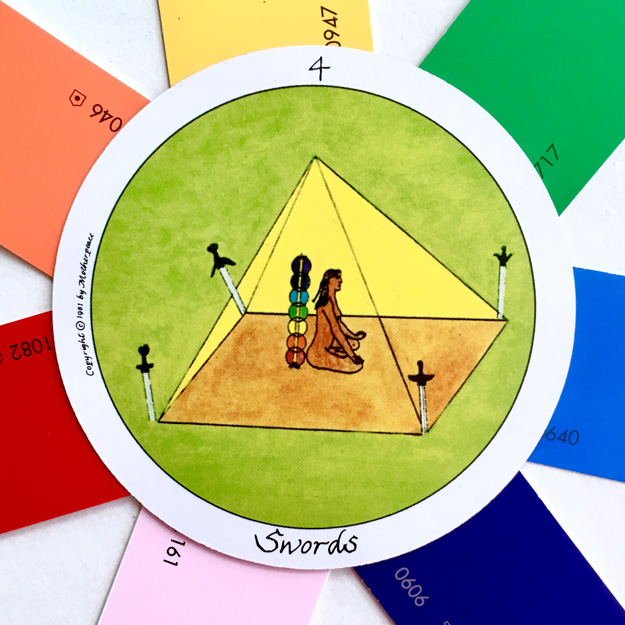
This week the Four of Swords confirms it’s time to rest and reflect as the dust settles on recent changes we have implemented. Any time big shifts occur in life, it’s necessary to take stock, checking in with the self to confirm aspects of identity and renew personal truths. In the discussions of the previous weeks’ cards, I’ve been using the example of moving homes to illustrate our theme of dealing with change. I actually did move homes recently, so these examples aren’t arbitrary! It was a huge change after spending five and a half years in one place (and came as a full-on Tower moment that I had been resisting). After the hard work of moving, I was tempted to reassemble my life as closely as possible to the old one, putting up the same pictures, recreating old furniture arrangements, but instead I took some time to get to know myself in the new situation. What still suited me, and what needed to be altered to fit these surroundings?
Exertion transforms us. We learn we are capable of a lot more than we thought, and it’s important to incorporate this new perspective into our identities. We also owe it to our minds and bodies to honor those efforts with recuperation. In the Motherpeace deck’s imagery, the Four of Swords shows a figure self-isolated inside a meditation pyramid designed for healing and chakra activation. Obviously, it’s not realistic for most of us to enjoy a fully sequestered retreat any time we need rest and recuperation. We have jobs, families, and other responsibilities than can’t be extensively put on hold. But even with those responsibilities, it is possible to find time for healing and reflection, often in connection with self-care activities that are already part of our regular routines. It’s just a matter of adding some extra awareness into these actions.
Exercise for this week: Realigning the self
How might you create mini-retreats inside of your busy life? Take a walk around the neighborhood, sit in silence in a favorite place, or enjoy a cup of tea at the local café while you write down your thoughts about recent experiences. If it’s too tough to carve out this extra time, turn one of the times you already spend alone taking care of your basic needs into a personal ritual. For example, use bath or shower time as a mini-retreat by increasing awareness of the activity as yours and yours alone. Be present with yourself instead of just going through the motions as a means to an end. Select a special scented soap or add salts and herbs to your bath. Play your favorite relaxing music. Be aware of each part of your body and how it feels as you honor it through cleansing. If you have trouble finding time alone, don’t be ashamed to ask for help; perhaps you can trade breaks with a co-parent or a friend who is also in need of a little self-care.
You might also take a suggestion from this illustration in the Motherpeace Tarot and give some attention to each of the chakras as a way to reconnect with the self. You can do this through meditation, if that is your practice. (Peacock Ore is said to be a great stone for realigning all the chakras, so consider incorporating a piece of it into your session.) If you prefer to engage with these concepts in a more cerebral way, try a journaling exercise exploring how each of the following are represented in your life. Give extra attention to any that seem underrepresented:
Tarot.com is Part of the Daily Insight Group ©2018
The Witches Magickal Journal for Monday, April 16th

The Witches Magickal Journal for Monday, April 16th

I think that there is incredible prejudice about witches while there is no prejudice about wizards. Words are very important, and I’m really into destroying myths.
–Yoko Ono

Today is Monday, April 16
Monday is the sacred day of the moon, personified as the goddesses Selene, Luna, and Mani. The moon is ruler of flow, affecting the changeable and impressionable aspects of people. If a full moon falls on a Monday, then the powers of the moon are at their most potent.
Deity: Mani
Zodiac Sign: Cancer
Planet: Moon
Tree: Willow
Herb: Chickweed
Stone: Agate
Animal: Crab
Element: Water
Color: Green
Rune: Lagu (L)
The Celtic Tree Month Saille (Willow) (April 14 – May 12)
Runic Half Month of Man(human being) (April 14 – April 28)
Goddess of the Month of Columbina (March 20 – April 17)
Source
The Pagan Book of Days
Nigel Pennick

The Pagan Book of Days for Monday, April 16
the Norse festival of Sommarsblot is celebrated to welcome the summer. The runic half-month of Man is a time when the archetypal reality of the human condition should be meditated upon.
Source
The Pagan Book of Days
Nigel Pennick

The Wicca Book of Days for Monday, April 16th
A Sacred Supplication
Some say that it was on this day that the Greek hero Theseus approached the God Apollo in supplication at Delphi for help in slaying the half-man, half-bull known as the Minotaur that roamed the Labyrinth on Crete. Theseus was advised, through the Delphic Oracle, to make a sacrifice to the Goddess Aphrodite (known as Venus in Rome) before setting sail. According to Greek tradition, supplicants like Theseus carried a ritual olive branch wound with white wool called the hiketeria, for it was said that this ensured that their please would not go unanswered.
The Seed Moon
Many Wiccans dedicate the April esbat to the “growing moon” or the “seed moon” (referring to the burgeoning natural growth at this time of year). Place some seeds on your altar, ask the Goddess to bless them, and then plant them in the earth by moonlight.
Source
The Wicca Book of Days
Observances, Traditions and Lore for Every Day of the Year
Selene Eilidh Ash

The Goddess Book of Days for Monday, April 16
Bernadette sees the Goddess at Lourdes (France), Church calendar. A place of Persephone in pre- Christian times. Also: Isis, Mary, Yemaya, Kwan Yin, Tonantzin, Coatlique, Chalchiuhtlique, Erzulie, and Aphrodite. The sixteenth day of the Moon belongs to Goddesses Levanah, Selene and Luna.
Source
The Goddess Book of Days
Diane Stein

Goddesses Associated with Mondays
Luna, Selene, Diana, Re, Gealach, Ida, Artemis, the Witches, Yemaya, Erzulie Tuesday Soorejnaree, Pinga1la, Anna, Aine, Danu, Yngona.
Source
The Goddess Book of Days
Diane Stein

On Monday, April 16th, We Celebrate…..
Ludi (Rome)
POMONA
Themes: Rest, Pleasure; Nature
Symbols: All Flowers; Gardens
About Pomona: A Roman Goddess of orchards and gardens, Pomona is symbolized by al gardening implements. Pomans’s consort was Vertumnus, who likewise presided over gardens. Together, they embody the fruitful earth from which we gather physical and spiritual sustenance. First fruits are traditionally offered to them in gratitude.
To Do Today: Public games in Ancient Rome were dedicated to taking a much-needed rest fromo toil and war. this particular segment of the festival celebrated the beauty of flowers before people returned to the fields and their labors. So, wear a floral- or leafy-print outfit today and visit a greenhouse or an arboretum. Take time out to literally smell the flowers and thank Pomona for the simple pleasure this provides.
Make yourself a Pomona oil to dab on anytime you want to better appreciate nature or cultivate some diversion from your normal routine. Prepare this from the petals of as many different flowers as you can find, gathered early in the day. Steep the petals in warm oil until they turn translucent, then strain. Repeat and add essential oils (fruits ones for Pomona are ideal) to accentuate the aroma and energy you’ve created.
Source
365 Goddess, A Daily Guide to the magic and inspiration to the Goddess
Patricia Telesco

Spellcrafting for Monday
Spirituality
Astral work
Dreams
Psychic talents
Lunar energy
Family
Emotions
Children
Pets
Fertility
Female Energy
Purification
Source
A Spell Crafter’s Compendium
Terri Paajanen

The Magickal Day of Mondays
Monday is the day of the moon itself, and it’s a day that’s connected to lunar colors like silver, white, or even a pale blue. Metals and gemstones like silver, pearl, opal and moonstone all come into play today.
There are plenty of deities associated with the moon – Thoth and Diana for instance – and herbal correspondences include many members of the mint family. Utilize wintergreen or peppermint, as well as catnip, comfrey, sage and chamomile in your workings.
When it comes to Monday magic, because of that lunar connection, it’s a good time to focus on workings related to childbearing and family life, purity and virginity, healing, wisdom, and intuition. Do a little bit of self exploration and work on developing your intuition – learn to trust your gut. Celebrate birth and life, and make some magic to fix what is broken.
Author
Patti Wigington, Paganism/Wicca Expert
Article published on & owned by ThoughtCo

Your Magickal Guide to Mondays
In the word Monday, we can see part of the word Moon. In the romance languages such as Italian or Spanish, this day of the week is called Lunes and clearly relates to the word lunar.On Mondays, a variety of magick may be worked. Because Monday centers on the energies of the Moon, things like psychism, dreams, feminine energy, health, success in spiritual pursuits, domestic matters, and things of family origin are especially important this day.
Mondays are best for love magick and anything concerning home or family, thus old saying, Mondays child is fair of face, which seems clearly to relate to the themes of love and health.
Angels of Monday are Gabriel, Arcan, Missabu, and Abuzaha. Arcan is known as the king of the angels of air and the “ruler” of Monday. Abuzaha (Abuzohar) serves Monday, and is very responsive to invocations and ritual magick. Missabu is a ministering angel of Arcan.
Check whether the moon is waning or waxing to determine what your spell will be. During waning moons, do spells to rid yourself of obstacles or for wisdom and protection. During waxing moons do magic for increase of any kind or to draw something into your life.
On Mondays, the best hour to work is moonrise. Get this information from your local newspaper, astrological calendar, or almanac.
Source
Gypsy Magic

Monday’s Witchery
Think for a moment on all of the witchery, magick and enchantments that you have discovered. Don’t be afraid to adjust spells to suit your own specific needs. Any gentle, illusory, and dreamy charms and spells can be enhanced when you work on the day of the week that is dedicated to the moon. Mondays are a fantastic day to boost your psychic abilities and to tune in to your intuition and empathy. It also gives you the opportunity to work with a different lunar phase each and every Monday, which means in one month you could work four different types of moon magicks on Mondays. How’s that for adding to your repertoire? You are going to have mad skills in no time at all.
So light up those lunar scented candles and add a little mystique to your outfit by wearing an enchanting lunar color. Wear your sparkling silver jewelry and maybe add a pair of dangling silver earrings or a pendant shaped like a crescent moon. Create lunar potions and philters; make a dream catcher and give it as a gift to someone you love. Burn some sandalwood or jasmine-scented incense today to inspire the glamour and magick of the moon. Slice up a favorite variety of fruit that is in season for a snack or share it with your love and enjoy his or her lunar and romantic qualities. Brew up a cup of chamomile tea, enchant it with a little moon magick, and relax and get a good night’s sleep.
Most importantly, get outside tonight and watch the moon for a while. What phase is she in? What color was the moon as she rose? Why not start a journal and write down at what location the moon rises and sets for a few seasons? This is a great way to teach you to tune in and to become more aware of the moon and the influence that she pulls into our lives. Try calling on Selene for her magickal assistance, and call Thoth for wisdom and strength. Get to know the Norse Mani and the Latvian Meness. These gods of the moon have plenty to teach, and if you allow their influence to cycle through your life, you’ll receive many blessings. Be imaginative, and create your own personal lunar magick and witchery. Go on….the moonlight becomes you.
Source
Book of Witchery: Spells, Charms & Correspondences for Every Day of the Week
Ellen Dugan

The Witches Almanac for Monday, April 16
Sechseläuten (Swiss)
Waxing Moon
Moon phase: First Quarter
Moon Sign: Aries
Moon enters Taurus 4: 51 pm
Incense: Narcissus
Color: White

The Witches Correspondences for Monday, April 16
Day: Monday ( Moon-day)
Planet: Moon
Colors: Silver and White and Grey
Crystals: Moonstone, Pearl, Aquamarine, Silver, Selenite
Aroma: Jasmine, Lemon, Sandalwood, Moon Oil, African violet, Honeysuckle, Myrtle, Willow, and Wormwood
Herb: Moonwart
The sacred day of the Moon, personified by such goddesses as Selene, Luna, Diana, and Artemis. The Moon is ruler of flow affecting the changeable aspects of people. If a full moon falls on a Monday, its powers are at theirmmost potent. Magical aspects: peace, sleep, healing, compassion, friendships, psychic awareness, purification, and fertility
Monday is ruled by the moon – an ancient symbol of mystery and peace. Monday is a special day for mothers as the cycle of the moon has long been associated with the female menstrual cycle. Those wishing to conceive a baby would be wise to try on a Monday as the magic of motherhood is strong and pregnancy is in the air.
This is the proper day of the week to perform spells and rituals involving agriculture, animals, female fertility, messages, reconciliation’s, theft, voyages, dreams, emotions, clairvoyance, home, family, medicine, cooking, personality, merchandising, psychic work, Faerie magic, and Goddess rituals.

Monday Is Ruled By the Moon
This day of the week is dedicated to the moon and all of her magic and mystery. Mondays are for women’s mysteries, illusion, prophetic dreaming, emotions, travel, and fertility.
Some suggestions for Monday enchantments would include:
*Getting outside and looking for the moon in the heavens. Sit under her light and absorb a little glamour. Call on the moon goddess Selene for practical help in magical issues.
*Invoking the god Thoth for wisdom and insight
*Empowering your silver jewelry under the light of the moon. Wear moonstone or pearl jewelry today to add a lunar and magical shimmer to your outfit. Be mysterious and subtle and wear moon-associated colors such as white, silver, and blue.
*Working spells for safe travel with a simple moonstone
*Gathering bluebells, jasmine, gardenias, or white roses to create a little garden witchery with the flowers that are associated with the moon
*Setting up a lunar Tarot spell today to increase your psychic powers
*Eating a lunar fruit such as a melon to be healthy, serene, and at peace
*Brewing up a cup of chamomile or mint tea and enchanting it for sweet dreams and restful sleep

DAILY MAGICKAL APPLICATIONS FOR MONDAY
Monday is named after the moon. The Latin term for Monday is Dies Lunae (“moon’s day”); in the Old English language, this day was Monandaeg; in Greek, it was Hermera Selenes. All of these different names and languages translate to the same thing: the “day of the moon.”
Working with the different phases of the moon is an important skill that takes a bit of time for Witches to learn. So why not cut to the chase and experiment with the day of the week that is dedicated to the moon in all of its magickal energies and aspects?
Magickally, Monday encourages the lunar energies of inspiration, illusion, prophetic dreams, emotions, psychic abilities, travel, women’s mysteries, and fertility.
Source
Book of Witchery: Spells, Charms & Correspondences for Every Day of the Week
Ellen Dugan

The Witches Magick for Monday, April 16th – Psychic Power Philter
You will need:
• One clear or blue glass bottle with a stopper or lid
• A clean dropper
• 6 inches silver ribbon
• A small moon-shaped charm
• A label and a pen (to list the ingredients and to decorate and mark the bottle)
• 8 cup almond base oil (almond is associated with the moon)
• 13 drops sandalwood oil (a lunar oil that is both spiritual and protective)
• 3 white rose petals
• 3 willow leaves or a pinch of dried willow bark
• A tiny moonstone chipPour the base oil into the bottle until the bottle is three quarters of the way full. Then add the moonstone chip, the rose petals, willow, and finally the essential sandalwood wood oil.
Close up the bottle with the lid, place your fingers over the lid, and carefully shake up the mixture.
Hold up the mixture to the moonlight and allow the moonbeams to illuminate the philter within. On the label, list the ingredients and the use for this potion. Decorate the label by drawing moons or whatever else you think would add to the moon magick. Attach the label to the glass bottle (wipe off the outside of the bottle first). Finish up by threading the moon charm onto the ribbon and then tying the silver ribbon around the neck of the bottle. As you finish tying on the bow, hold the bottle in your hands and repeat the charm below (Notice there is a place for you to insert which phase of the moon you happen to be currently in. This way, you can customize the philter for specific psychic abilities.)
This philter holds the powers of the moon
May it increase my psychic power soon
The stone adds lunar power and empathy
The herbs and oil increase the power times three
During this quarter’s enchanting moon phase
I’ll work easily with my powers through the day
This potion is enhanced by the moon’s magick so bright
My psychic talents will now blossom and come to light.
Store the philter bottle in a safe, dry place out of direct sunlight. Make sure that you keep all potion and philter bottles well out of reach of children. Now, if you want to get really creative, you can adapt the charm for the philter to work in any of the following lunar energies(which means you could literally create four different philters, one for each phase and psychic influence of the moon).
Source
—Ellen Dugan, Book of Witchery: Spells, Charms & Correspondences for Every Day of the Week

Home & Hearth Magick for Monday, April 16
On Monday, casts for matters concerning the home, emotions and nurturing.
Planetary Influence: The Moon
Household Symbols: Silver platters and bowls, moon shapes
Color: White and Silver
Kitchen Spices: Lemon rind and wintergreen.
Source
Cottage Witchery
Natural Magick for Hearth and Home
Ellen Dugan

Did You Know
It was in April of 1974 that the Council of American Witches released The Principles of Wiccan Belief. The council was a temporary alliance of 73 Wiccans from a variety of traditions.
It was spearheaded by Carl Weschcke (president of Llewellyn Publications) and they attempted to come up with a common set of principles to dispel misconceptions about Witchcraft. Many still hold to these principles, and they have been included in several editions of the handbook for chaplains in the U.S. Army.
Source
The Practical Witch’s Almanac 2018: Thirteen Months of Magic
Gladheart, Friday; Jensen, R..

Your Weekend Influences for April 13 – 15
Your Weekend Influences
Tarot Influence

The Hanged Man Reversed
The reversed Hanged Man represents a preoccupation with the worldly and wasted energy. This is the card of false prophecy and time wasted.
Astrological Influence

Aries
The Ram is energetic, courageous, optimistic and obstinate. The Ram is not a quitter! He will get his way!
Element Influence

Air
Air denotes freedom and the ability to transcent the mundane. You may be, or may soon experience a spiritual or secular liberation.
Your Daily Tarot Card for April 14th is Father of Water
Tarot Card of the Day
Father of Water

The man in this card doesn’t need to speak to communicate strength, passion and commitment. Sometimes he is robed like a priest or shaman. Intense and intuitive, he is a force to be reckoned with.
What Does Your Birth Date Mean? Born on the 14th

Born on a Saturday

Mercury Is Going Direct!
Kiss retrograde goodbye! Planet Mercury is turning direct!
If you’ve spent the last three weeks or so feeling mentally scrambled, misunderstood or just plain indecisive, relief is near. That’s because Mercury, the planet that rules the mind, is turning direct on April 15, 2018, after having gone through another one of its retrograde phases.
When Mercury is not operating smoothly there can be plenty of mishaps related to anything ruled by Mercury — whether its transportation, commerce or communication. Now that Mercury has stationed direct, it will need a few days to regulate its orbit and then you’ll be good to go. Any delay, frustration or confusion surrounding Mercury-ruled matters will soon find resolution.
So, what does it mean when Mercury goes direct?
A planet changing motion is a potent phenomenon. Remember, Mercury has been out of its usual forward orbit for three weeks, so turning direct again will not be as easy as declaring “On your mark, get set, go!” and watching Mercury zoom out. Ahhh, if only it were that simple.
What really happens when a planet moves from retrograde to direct motion is more akin to waking up from a deep slumber. Mercury will need time to drink some cosmic coffee and fully regain consciousness.
Full speed ahead
It won’t be until Mercury reaches the degree where it originally turned retrograde and then passes it that you’ll know Mercury truly has its full strength back. That tends to take a couple of weeks. But don’t stress — this time frame is nothing at all like the Mercury Retrograde cycle.
In fact, now you’ll be ready to apply whatever it is you’ve learned during the retrograde period into your current reality. It only takes a few days of Mercury being back on track for you to notice the difference. From here on out the planet will get stronger every day!
What’s interesting is that while Mercury will need time to regulate its orbit, the very day of its stationing direct can be a potent time. It’s like Merc will be jolted awake for a short time (remember Mom screaming at you to wake up or you’ll be late for school?). During this day or even the next, it’s likely you’ll experience incredible clarity about whatever issues you’ve been grappling with during Mercury Retrograde.
Be patient, though … it will take just a little more time before you’re ready to execute your newfound lucidity with success.
In the meantime, now that Mercury is direct, over the next few days you are free to sign contracts, schedule vital meetings, have a significant conversation and make important decisions or purchases. Remain confident as you push ahead with anything that requires cerebral muscle.
Mercury finally has its mojo back!
Tarot.com is Part of the Daily Insight Group ©2018
Magickal Tips & Hints for Saturday

Study of Pagan Gods and Goddesses: Mars, Roman God of War
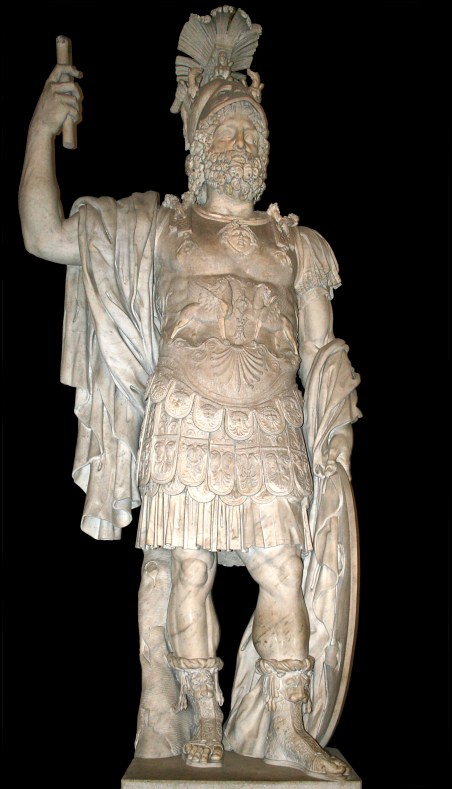
Mars, Roman God of War
Mars is the Roman god of war, and scholars say he was one of the most commonly worshiped deities in ancient Rome. Because of the nature of Roman society, nearly every healthy patrician male had some connection to the military, so it is logical that Mars was highly revered throughout the Empire.
Early History and Worship
In early incarnations, Mars was a fertility god, and a protector of cattle. As time went on, his role as an earth god expanded to include death and the underworld, and finally battle and war.
He is known as the father of twins Romulus and Remus, by the Vestal virgin Rhea Silvia. As the father of the men who later founded the city, Roman citizens often referred to themselves as “sons of Mars.”
Before going into battle, Roman soldiers often gathered at the temple of Mars Ultor (the avenger) on the Forum Augustus. The military also had a special training center dedicated to Mars, called the Campus Martius, where soldiers drilled and studied. Great horseraces were held at the Campus Martius, and after it was over, one of the horses of the winning team was sacrificed in Mars’ honor. The head was removed, and became a coveted prize among the spectators.
Festivals and Celebrations
The month of March is named in his honor, and several festivals each year were dedicated to Mars. Each year the Feriae Marti was held, beginning on the Kalends of March and continuing until the 24th. Dancing priests, called the Salii, performed elaborate rituals over and over again, and a sacred fast took place for the last nine days.
The dance of the Salii was complex, and involved a lot of jumping, spinning and chanting. On March 25, the celebration of Mars ended and the fast was broken at the celebration of the Hilaria, in which all the priests partook in an elaborate feast.
During the Suovetaurilia, held every five years, bulls, pigs and sheep were sacrificed in Mars’ honor.
This was part of an elaborate fertility ritual, designed to bring prosperity to the harvest. Cato the Elder wrote that as the sacrifice was made, the following invocation was called out:
“Father Mars, I pray and beseech thee
that thou be gracious and merciful to me,
my house, and my household;
to which intent I have bidden this suovetaurilia
to be led around my land, my ground, my farm;
that thou keep away, ward off, and remove sickness, seen and unseen,
barrenness and destruction, ruin and unseasonable influence;
and that thou permit my harvests, my grain, my vineyards,
and my plantations to flourish and to come to good issue,
preserve in health my shepherds and my flocks, and
give good health and strength to me, my house, and my household.
To this intent, to the intent of purifying my farm,
my land, my ground, and of making an expiation, as I have said,
deign to accept the offering of these suckling victims;
Father Mars, to the same intent deign to accept
the offering of these suckling offering.”
Mars the Warrior
As a warrior god, Mars is typically depicted in full battle gear, including a helmet, spear and shield. He is represented by the wolf, and is sometimes accompanied by two spirits known as Timor and Fuga, who personify fear and flight, as his enemies flee before him on the battlefield.
Early Roman writers associated Mars with not only warrior prowess, but virility and power. Because of this, he sometimes is tied to the planting season and agricultural bounty. It is possible that Cato’s invocation above connects the more wild and frenzied aspects of Mars with the need to tame, control and defend the agricultural environment.
In Greek legend, Mars is known as Ares, but was never as popular with the Greeks as he was with the Romans.
The third month of the calendar year, March, was named for Mars, and important ceremonies and festivals, especially those related to military campaigns, were held this month in his honor. Mark Cartwright of Ancient History Encyclopedia says, “These rites may also have been connected to agriculture but the nature of Mars’ role in this area of Roman life is disputed by scholars.”
______________________________
Mars
Roman God of War – Mars
Religion was an important part of daily life in Rome. It helped Romans make sense of good and bad things that happened. If terrible things like natural disasters or battle losses occurred, Romans believed it was evidence that the Gods were unhappy with the people of Rome. When good things like a battle victory or a good harvest happened, Romans believed it was evidence of help or approval from the Gods. To keep the Gods happy, Romans often participated in animal sacrifices of lambs, pigs or bulls. At one time, even prisoners of war were offered as human sacrifices, but this practice was discontinued. Romans also held festivals and built temples to celebrate the Gods.
Romans worshiped a pantheon, also thought of as a council, of 12 major gods. These 12 major gods were called the Dii Consentes. This group included six gods and six goddesses. The gods included: JUPITER, Neptune, Mars, Apollo, Vulcan and Mercury. The goddesses were Juno, Minerva, Venus, Diana, Vesta and Ceres. Jupiter ruled over the Pantheon.
In fact, the famous Pantheon in Rome was dedicated to the ROMAN GODS. The exact purpose of the building is unknown. Though it has been used as a church, historians are unsure of whether ancient Romans actually worshiped there. The Pantheon was built by the consul Agrippa between 27 B.C. and 25 B.C.
In Roman religion, Mars was a very important god. His role was second only to Jupiter, the leader of the pantheon. Mars was the son of the God Jupiter and the Goddess Juno. His father, Jupiter, was the God of the sky and thunder. Jupiter was considered the chief, or central, guardian of Rome and was often considered to be witness to solemn oaths such as those undertaken by government officials or soldiers. His mother, Juno, was the protector of Roman women and was the patron Goddess of Rome. Both his mother and father were renowned for strength and protection. Mars himself was the god of war and was, himself, seen as protector of the Roman Army. He was thought to be difficult, argumentative and unpopular among the gods, but was revered by men; especially soldiers. It was even reported that Mars was the father of Romulus and Remus, the twin brothers who were the founders of Rome.
Mars was known as the Roman god of war. He was said to love the violence and conflict. His persona represented military power and the noise and blood of battle. Since he was the father of Romulus and Remus it was believed he would come to the aid of Rome during times of conflict or war. He was the patron God of soldiers and was worshiped prior to battle. Soldiers in the Roman Army prayed to Mars before battle, asking that he might fight on their side. Soldiers hoped that their prayers would appeal to Mars and that he would protect them in battle and lead them to victory. They believed that ultimately it was Mars who decided who would win any battle. All aspects of war in Rome were associated with the God Mars. This did not only apply to military campaigns of conquest. Mars was said to protect cities from invading armies and help soldiers crush rebellion as well.
As the God of War, Mars had many symbols associated with him. The most recognizable was The Ancile. The Ancile was his sacred shield. Legend has it that this shield fell from heaven during the rule of Pompilius. It was said that if the shield remained in the city, Rome would be safe. Priests were commissioned to protect the shield and eleven copies were made, reportedly to confuse would-be thieves. The group of 12 ancilla were used in rituals. Mars was often depicted clothed on bronze armor. He carried a spear that was often depicted as covered in blood.
Other symbols surrounding the God of War included a burning torch, a vulture, dog, woodpecker, eagle and owl. Mars was a strong god and rode a chariot drawn by fire-breathing horses. The names of his horses were Aithon, Phlogios, Konabos and Phobos. Aithon means red fire, Phlogios means flame, Konabos means tumult – which is a loud confusing noise – and Phobos means fear.
Mars was celebrated twice a year in March and October. The old Roman calendar began with mensis Martius. This translates to Mars’ Month. This is what the month of March is named for. The Salii – the priests who protected and carried the ancilia – celebrated the new year on the first day of March by dressing and dancing in battle armor. This was said to be when Mars was born. Also in March, the twelve Salii carried the ancilia around the city in a parade with war trumpets, stopping at different sacred locations along the way.
Festivities complete with trumpets, dancing, feasts and sacrifices continued throughout the month of March. On the 23rd, The Tubilustrium festival was held in Mars’ honor in the Atrium Sutorium. This date was chosen because it coincided with the start of the military campaign season. This group of festivals and celebrations were called the Feriae Marti.
In February and March, horse races were held at the Campus Martius outside the walls of Rome in honor of Mars. These races were said to have been started by Romulus. In October, Mars’ parents Jupiter and Juno were celebrated. On the Ides – or 14th – of October, one of the winning horses from the races was sacrificed in honor of Mars for his continued protection.
As a nation of conquest and war, Gods such as Mars were important to Rome. It was believed that he kept enemies of the state at bay and protected the divine right of the state’s rule. At different times in history, he meant different things to the people. He was a military deity as Rome conquered its neighbors and a protector in times of peace.
Eventually, Mars became not just the protector of Rome, but the guardian and avenger of Emperor Caesar himself.
Reference
Patti Wigington, ThoughtCo.com
– Greek Gods & Goddesses, February 22, 2017 Mars: https://greekgodsandgoddesses.net
Friday 13th Chant
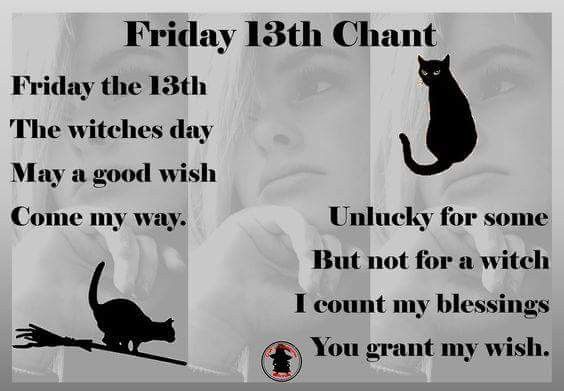
The Witches “Witchy” Journal for Friday the 13th

The Witches “Witchy” Journal for Friday the 13th

I’m not nearly as afraid of Friday the 13th as I am of the people who are afraid of Friday the 13th.
—Unknown

Friday: The day of beauty
Frigg was the Norse goddess of beauty, love, household, fertility and motherhood. She was Odin’s wife. She wonderfully balances out the dreadfulness of all the masculine gods sitting around our week table.
Derived from Latin Dies Veneris, Friday is viernes in Spanish, vendredi in French and venerdi in Italian. The day belongs to Venus, the Roman goddess of beauty, love and fertility..

Today is Friday, April 13
Friday is the day of Venus. It takes it name from Frigg, the Goddess of love and transformation. She rules the spiritual side of a person that manifests in the physical. Because of this, Friday is often thought of as dangerously unpredictable. This is expressed in an old East Anglian adage:
Friday’s day will have its trick
The fairest or foulest day of the week.
Deity: Frigg
Zodiac Sign: Taurus/Libra
Planet: Venus
Tree: Apple
Herb: Vervain
Stone: Sapphire/Chrsolite
Animal: Bull/Serpent
Element: Earth
Color: Yellow/Violet
Number: 7
Rune: Peorth(P)
The Celtic Tree Month of Fearn(Alder)(March 18 – April 14)
Runic Half Month of Ehwaz(horse) (March 30 – April 13)
Goddess of the Month of Columbina (March 20 – April 17)
Source
The Pagan Book of Days
Nigel Pennick

The Goddess Book of Days for April 13
Karno-Tama-Yori-Hime in Japan, the sacred fertility marriage of God O-yama- kui-no-kami and Goddess Kamo-tama-yori-hime, resulting in the birth of the child Kami. Dedicated to Goddesses of Birth and Fertility (Demeter, Yemaya, Kwan Yin, Isis, Spider Woman, Tonantzin, Carmen, Mawu, Erzulie, Aphrodite, Ishtar, Astoreth, Sheela, Mary).\
The Goddess Book of Days
Diane Stein

Goddesses Associated With Friday
Friday For Freya: Astarte, Aphrodite, Erzulie, Aida Wooo, Eve, Venus, Diana, Isis, the Witch of Gaeta, Chalchiuhtlique
Source
The Goddess Book of Days
Diane Stein

On Friday, April 13th, We Celebrate…..
Songkran (Thailand)
TOU MOU
Themes: Cleansing, luck, charity, karma, history
Symbols: Pen (or Quill), books, light
About Tou Mou: The Chinese/Thai goddess of record keeping takes specal notice of our actions (or inactions) today, keeping careful notes for the karmic bank account. In works of art, Tou Mou is depicted sitting behinds books and glowing with the beautiful light of the aurora. It is this brightness that shines on our lives today, revealing both the good and the bad. Suitable offerings for this goddess include rice, fruit, and all acts of goodness.
To Do Today: In Thailand, this water festival begins with tossing water down the street to chase away evil influences. I suggest using your driveway instead, or a glass of water on the kitchen floor that is judiciously mopped up later.
People in Thailand traditionally wash their parents’ hands with scented water today to bring them honor and long life. So remember your elders today, and do something nice for them—it’s good karma, and it definitely catches Tou Mou’s attention. Another activity extends good deeds to the natural world—that of freeing sonbirds, who then bear their liberator’s prayers directly to Tou Mou’s ear. You might want to simply scatter some birdseed instead for similar results.
Finally, it might be a good day to balance your checkbook to make sure your financial karma stays in good standing. Burn a green candle nearby for prosperity.
Source
365 Goddess, A Daily Guide to the magic and Inspiration to the Goddess
Patricia Telesco

Friday’s Conjuring
Friday – is associated with Venus
Candle colors – Green, Red, Blue, White, Purple
Spellwork – Love, Marriage, Money, Attraction, Luck, Healing, Prosperity, Change, Road Opening work, Bring Peace, Relationships, Power and Success
—Old Style Conjure Wisdoms, Workings and Remedies
Starr Casas

Ritual Influences for Friday, April 13
Friday Venus
Perfumes: Stephanotis, Apple Blossom, Musk, Ambergris
Incense: Saffron, Verbena
Wood: Myrtle
Color: Light Blue, Pale Green
Influences: All Love Matters, Friendships, Affection, Partnerships, Money, Sex
Reference
A Book of Pagan Rituals
Herman Slater

Friday–The Day of Freya
In the stories of the gods and goddesses of the Angles and Saxons we find two goddesses, Frigga, the wife of Odin and queen of the gods, and Freya, the Goddess of Love. Some people think that Friday was named after Frigga, and others that it was Freya’s day. Since very similar stories are told of each of them, it is quite probable that they were really the same person. The Roman name for the day was Dies Veneris, the day of Venus, who, it will be remembered, was the Goddess of Love, and so corresponded to Freya. The modern French name is taken from the Latin and is vendredi.
Frigga was the Goddess of the Clouds, and, when she was not with her husband Odin, spent her time in spinning clouds. Her spinning-wheel was studded with jewels, and at night could be seen in the sky as the constellation to which the Romans gave the name of Orion’s Belt, as we have seen in the story of Orion.
Frigga was also the Goddess of Spring, and as such was known as Eastre, whom we have already mentioned as giving us the word Easter.
Freya, the Goddess of Love and Beauty, like the Venus of the Romans, received a great welcome when she came to the home of the gods, and was given a special kingdom called Folk Meadow, where was a vast hall known as the Hall of Many Seats. Here she received half of those slain in battle, the other half being entertained by Odin, as we have seen.
Freya is depicted as having blue eyes and golden hair, and often as wearing a robe of feathers, which enabled her to fly through the air like a bird.
The goddess is said to have married Odur, who was probably Odin under another name. Odur once had occasion to leave Freya and travel over the world, and the goddess was broken-hearted at his departure. Her tears fell among the rocks and were changed to gold, while some which fell into the sea were transformed into amber. All nature mourned with her: the trees shed their leaves, the grass withered, and the flowers drooped their heads. At last Freya in her distress set out to find her husband, and, passing through many lands, where her golden tears were afterwards found, came to the sunny south, and there overtook the wandering Odur. As the lovers returned, the fields and the flowers rejoiced with them. The frost and snow fled before them, and the earth became green again as they passed.
“And Freya next came nigh, with golden tears;
The loveliest Goddess she in Heaven, by all
Most honour’d after Frea, Odin’s wife.
Her long ago the wandering Odur took
To mate, but left her to roam distant lands;
Since then she seeks him, and weeps tears of gold.”
MATTHEW ARNOLD–Balder Dead.
This story, of course, reminds us of Ceres and Persephone, and is only another fanciful explanation of summer and winter.
Freya was the proud possessor of a dazzling necklace of gold, which had been made by the dwarfs, and which she wore night and day. On one occasion only did she lend the necklace, when Thor, disguised as Freya, went to the land of the giants to recover his hammer, which had been stolen by the Giant Thrym. Loki, by borrowing Freya’s robe of feathers and flying over the country of the giants, had discovered the thief, but had also found that Thrym would only return the hammer on condition that Freya would become his wife. When Freya heard of the giant’s presumption, she became greatly enraged, and vowed that she would never leave her beloved Odur and go to live in that dreary and desolate land of cold. Heimdall, the guardian of the bridge Bifrost, then suggested that Thor should go to Thrym disguised as Freya, in company with Loki disguised as Freya’s attendant. The gods at last allowed themselves to be persuaded, and Thor, having borrowed Freya’s clothes and necklace and wearing a thick veil, set out with Loki, who was dressed as a handmaiden. On reaching the giant’s palace, they were welcomed by Thrym, who was delighted at the success of his plan, and who led them to the banqueting hall, where a great feast was held. At the end of the feast, Thrym ordered the famous hammer to be brought in, and he himself laid it in his bride’s lap as a marriage gift. Thor’s hand immediately closed over the hammer, and in a few moments Thrym and all the guests invited to the wedding feast lay dead.
Freya was greatly relieved to have her necklace returned in safety, but the evil Loki, attracted by its wonderful beauty, determined to steal it. One night the god, by changing himself into a fly, succeeded in entering Freya’s palace. He then resumed his own shape, and, creeping stealthily to Freya’s bed, gently removed the necklace from the goddess’s neck. The watchful Heimdall, however, had heard Loki’s footsteps, and, looking in the direction of the Folk Meadow, became a witness of the theft. He at once set off in pursuit of Loki, and, overtaking him, drew his sword and was about to kill the thief, when Loki changed himself into a flame. Heimdall immediately changed himself into a cloud, and sent down a shower of rain to put out the fire. Loki then took the form of a bear, and opened his mouth to catch the water. Heimdall also took the form of a bear and attacked Loki, who, finding that he was being overpowered, changed himself yet again, into a seal. Heimdall followed suit, and fought again with Loki, and at length compelled him to give up the necklace, which was returned to Freya.
On another occasion Freya was sought by one of the giants, and it was only by the cunning of Loki and by an act of bad faith on the part of the gods that she was saved. The gods, ever anxious lest the giants should invade Asgard, decided to build a stronghold which would prove impregnable. They received an offer from a stranger, who was willing to undertake the work in return for the sun, the moon, and the goddess Freya. By Loki’s advice they accepted the offer on condition that he should complete the work in one winter, aided only by his horse. To the surprise of the gods the stranger agreed to these conditions, and with the help of his horse, which could haul the heaviest stone, set to work. The gods, who at first felt sure that their conditions had made the task impossible, were alarmed to find as time went on that the stranger was working so quickly that it seemed certain that he would be able to keep his promise. The gods on their side had no intention whatever of keeping their promise, since they could not possibly part with the sun and the moon and the Goddess of Love, and they angrily pointed out to Loki that since it was he who had got them into this difficulty, he must find some way out of it. Loki replied that the gods need have no fear, for with his usual cunning he had thought of a plan whereby the stranger might be made to forfeit his reward. On the last day, when only one stone remained to be dragged into position, Loki changed himself into a horse, and, trotting out from the forest, neighed loudly to attract the attention of the stranger’s horse. Tired of his continual labour and longing for freedom and rest, the horse broke free from its load and galloped after Loki. The stranger, after pursuing it vainly through the forest, at last made his way to Asgard, and, full of anger at the trick which had been played upon him, took on his real shape, for he was a frost-giant, and was about to attack the gods when Thor hurled his hammer at him and killed him.
Frey, the god mentioned in the story of Loki and Sif’s golden hair, was Freya’s brother. He was the God of the Fields, and sacrifices were made to him for the crops. In the early spring his wooden image was driven in a chariot through the countryside, in order that he might bless the fields and bring a fruitful harvest: Frey, as we have seen, became the possessor of a ship which could travel over land and sea, and though large enough to contain all the gods, yet could be folded up like a cloth, and he also possessed a boar with golden bristles. The god often rode on this boar, which was swifter than a horse, and was no doubt a symbol of the sun, which ripened the crops. We find the same idea of sunshine in Frey’s flashing sword, which fought of its own accord as soon as it was drawn from its sheath.
The month of the Angles and Saxons which begins just before our Christmas was sacred to both Frey and Thor, and it was customary at that time, as we have already mentioned, to bind a huge wooden wheel with straw, and, setting fire to it, to roll it down a hill. The wheel was a symbol of the sun, which at that time began to chase away the winter. At this time, too, was held a great feast to all the gods, and the chief meat eaten was a boar’s head, in honour of Frey. The missionaries who first brought Christianity to the Northmen, finding this feast was of great importance and was celebrated by all the people, did not try to do away with it. Instead, they changed it from a heathen to a Christian festival by putting Christ in the place of the Norse gods, and calling it the Feast or Mass of Christ. A similar change was made, it will be remembered, in the case of the Easter festival, held in honour of Eastre or Frigga, the wife of Odin.

The Witches Guide to Friday
Freya’s Day
Ruler: Freya, Venus
Colors: Emerald green or pink
Power Hours: Sunrise and the 8th, 16th, and 24th hours following.
Key Words: Love, money, health
It is easy to spot the ruler of this day by its name. In the word Friday, we see the roots of the name of the Norse goddess Freya, a goddess of love and fertility, and the most beautiful and propitious of the goddesses thus the verse “Friday’s child is loving and giving.”
In Spanish this day of the week is called Viernes and is derived from the goddess Venus. Matters of love, human interaction, the fluidity of communication, sewing and the creation of artistic garments, household improvement, shopping, and party planning all fall under the aspects of Friday and its ruling planet, Venus.
Friday’s angels are Ariel/Uriel, Rachiel, and Sachiel. Rachiel also concerns himself with human sexuality and is a presiding spirit of the planet Venus.
On Fridays, the hour of sunrise and every eight hours after that are also ruled by Venus, and that makes these times of the day doubly blessed. These four hours are the strongest four hours for conducting ritual.
Check the local newspaper, astrological calendar, or almanac to determine your local sunrise.
Source

FRIDAY CORRESPONDENCES
Venus/Water/East/West/South/Dawn/Female/Libra/Taurus
Magickal Intentions: Love, Romance, Marriage, Sexual Matters, Physical Beauty, Friendship and Partnerships, Strangers, Heart
Color: aqua, blue, light blue, brown, green, pale green, magenta, peach, pink, rose, white, all pastels
Number: 5, 6
Metal: copper
Charm: green or white garments, scepter
Stone: alexandrite, amethyst, coral, diamond, emerald, jade, jet, black moonstone, peridot, smoky quartz, tiger’s-eye, pink tourmaline
Animal: camel, dove, elephant, goat, horse, pigeon, sparrow
Plant: apple, birch, cherry, clematis, clove, coriander, heather, hemlock, hibiscus, ivy, lotus, moss, myrtle, oats, pepperwort, peppermint, pinecone, quince, raspberry, rose, pink rose, red rose, rose hips, saffron, sage, savin, stephanotis, strawberry, thyme, vanilla, verbena, violet, water lily, yarrow, and all flowers
Incense: ambergris, camphor, mace, musk, myrrh, rose, saffron, sage, sandalwood, sweetgrass, vanilla, violet, all floral scents
Goddess: Aphrodite, Asherah, Baalith, Brigid, Erzulie, Freya (Passionate Queen), Frigg, Gefion, Harbor (Beautiful One), Hestia, Inanna, Ishtar (Lady of Passion and Desire), Lakshmi, Lilith, Mokosh, Nehalennia, Nerthus, Ostara, Pombagira, Sarasvati, Shakti, Shekinah, Sirtur, Al Uzza, Venus (Queen of Pleasure), Vesta
God: Allah, Bacchus, Bes, Cupid, the Dagda, Dionysus, El, Eros (God of Love), Freyr, Frit Ailek, Shukra
Evocation: Agrat Bat Mahalat, Anael, Hagiel, Mokosba, Rasbid, Sachiel, Uriel, Velas
Courtesy of Moonlight Musings

Friday Is Ruled By Venus
Friday belongs to Venus, both the planet and its namesake Roman goddess of love. This day is sacred to many other gods and goddesses of love such as Eros, Venus, Aphrodite, and the Norse goddess that gave the day its name, Freya. This day of the week is for magical topics such as love, birth, fertility, and romance. Colors for today include pink and aqua.
Some suggestions for Friday enchantments would include:
Carrying a rose quartz with you today to send out some gentle and loving vibes to those crabby co-workers
Working a loving Tarot spell to charm a friend’s pregnancy with good health and safety
Working a little flower magic to enchant a single pink rose for friendship and inner beauty, and setting it on your desk. Or try empowering a red rose for passion and placing it in your bedroom
Burning rose-scented candles to encourage the same effect. Call on Eros to “bring a passion for life” to your days.
Sharing a romantic snack with your partner. Feed each other ripe, red strawberries. Those strawberries are love-inducing food, and are sacred to many love goddesses, including today’s patroness, Freya.

The Energy of Venus
Weekday ruled by Venus: Friday
Stones:
Rose quartz
Moonstone
Pink tourmaline
Peridot
Emerald
Jade
Herbs and Plants:
Pink rose
Ivy
Birch
Heather
Clematis
Sage
Violet
Waterlily
Magickal intentions: Love, romance, marriage, sexual matters, physical beauty, friendship and partnerships, strangers and heart matters.

SIMPLE SPELLS FOR GOOD LUCK
In life it can sometimes seem that everyone else around us gets all of the luck! Whether it be always revealing the winning numbers on a scratch card, or constantly being in the right place at the right time, you might ask yourself “why is it never me?”!
It’s time to start welcoming more good luck into your life! There are many spells you can do to create good fortune. Yes! Spells really can be used to bring you more luck.
Spells have been used by people all over the world for many, many years with plenty of good results, but, of course, we do not guarantee that a spell will always work. Spells can take their time to produce results, and the outcomes will vary from person to person. Remember, a good luck spell will bring to you what is truly best for you, and that may come in unexpected ways! When performing a spell, remember to keep an open mind and look out for any opportunities and signs in the future.
Good luck!!
A Penny for Good Luck
This is one of the oldest, most simple spells you can perform for luck, and all you need is a penny!
When you are out and about, carry the penny in your pocket. When you feel ready, hold the penny in your hand and raise your hand towards your heart. This will help capture energy from your soul. Next, hold the penny to your third eye point (this is at your forehead, between your eyes) and say to yourself, out loud if you can, “penny for luck!” Kiss the hand in which you are holding the penny and leave it behind somewhere, such as a fountain or in a bed of flowers. You are done! Walk away from the penny and don’t look back.
The magical thing about this spell is that not only will it welcome luck into your own life, but for the person who finds the penny too! This is why you should always pick up a penny should you find one. Remember the phrase “find a penny, pick it up, for the rest of the day you’ll have good luck”?
The Full Moon Spell
The spell uses the extra powers of the full moon to bring you good luck.
Simply say the words below during the next full moon.
“Lady of luck come out of your hidden course, bless your light upon me as the light of the moon shines above and in the light luck will be bless I, when the moon is next to be full”
Repeat the spell every full moon for good luck!
Wiccan Good Luck Spell
For this good luck spell you will need three candles in orange or gold, frankincense, and a pen and paper. Draw a circle and light the frankincense, then set out the candles in a triangle (don’t light them just yet!).
Next, repeat the following words aloud…
“God and Goddess, Spirits and Guides. Thank you for all that I have. I ask you now for good luck (or replace with what you really want). Aid me as I work to achieve it. Please bring it to me when the time is right. So mote it be”.
Have clear in your mind what it is you want. Focus as deeply and as clearly as you can on feelings of good luck and success, joy and elation. Imagine those feelings of achievement and happiness in your chest. As you focus on these feelings, an image or symbol will eventually appear in your mind. Take note of this and draw it on your paper. Place the piece of paper inside the triangle of candles.
Now it is time to light the candles! As you light each of the three candles, say aloud “fire, ignite my dream, for the highest good”.
Sit for a moment with the candles and visualise good luck in your life.
Finally, you must bury your piece of paper with the drawing in the earth. As you do this, say aloud “Earth, seal my dream, for the highest good.”
Remember, these spells don’t guarantee success. Have fun and open your heart to the possibilities!
Reference
Wishingmoon, Author
Website: WishingMoon

Home & Hearth Magick for Friday, April 13
On Fridays cast for love, luxury, pleasure and entertainment
Planetary Influence: Venus
Household Symbols: A sea shell, a fountain, fresh flowers, your wedding ring or wedding photo, red or pink paper hearts, apples and cherries.
Color: Pink and aqua green
Kitchen Spices: Thyme and sugar
Source:
Cottage Witchery, Natural Magick for Hearth and Home
Ellen Dugan

Celebrating Legends, Folklore & Spirituality 365 Days A Year for April 13th
Thailand Water Festival
April 13 marks the annual three-day festival of water celebrated ebrated by the Buddhists in Thailand. The temples are cleaned and then purified with the smoke of incense. All of the Buddha statues are then ritually bathed, and the water is thrown on those attending the ceremony to “wash away” the evil spirits of the previous year.

Origin of the Fear of Friday 13th
The Knights Templar rose to prominence in Europe between 1096 and 1307. Their downfall came on Friday 13th October 1307. This date saw the catastrophic destruction of the Knights Templar at the hands of King Philip of France and his puppet Pope Clement V. Some say this event, in which the Templars were burnt at the stake, gave birth to the superstition associated with Friday 13th.
One superstition is that if 13 people sit down to dinner together, all will die within the year. One form of this legend dates back to the Norse god of mischief – Loki. The saga tells of Loki gate-crashing a party bringing the number of guests to 13. To cut a long saga short, Balder the good was killed. For this reason Norwegians believe that 13 at a dinner party is bad luck. Friday 13th Trivia
Beware naming your children with 13 letters in their name, they may be cursed for example, Jack the Ripper, Charles Manson.
Warning: count your women because there are precisely 13 witches in a coven.
How many loaves are there in a ‘Baker’s Dozen’? It is superstition that prevents this number be mentioned by name, in fact the extra loaf, presumably the runt of the litter, was baked as a special bribe for the devil not to spoil the batch of loaves.
Sportsmen are notoriously superstitious and many teams avoid using number 13 in their squads. Dan Marino broke most of the quarterback’s records, he fearlessly wore number 13 throughout his career with the Miami Dolphins. However, some say his number was his undoing and is responsible for his epithet, ‘The greatest quarterback never to win a Super Bowl’. Fate played it’s part in Super Bowl XIX, where Dan Marino (13) was beaten by his nemesis Joe Montana who preferred number 16 on his back
In the Bible, Luke’s Gospel Chapter 22, tells us that there were 13 present at the Last Supper. There is evidence that this Last Supper was held on a Friday, and of course this is when Judas Iscariot betrayed Jesus Christ to the Romans.
Some people are so afraid that they refuse to get out of bed, or go to work on Friday 13th. A study in the BMJ [British Medical Journal] in 1993 looked into the relationship between driving and road accidents in the UK on two separate Fridays: the 6th and the 13th. This study was carried out over a period of years. They eventually concluded that, ‘Friday 13th is unlucky for some. The risk of hospital admission as a result of a transport accident may be increased by as much as 52 percent. Staying at home is recommended.

In Magic Realms
In magic realms,
There exists a truth,
We forever searching,
In realms above,
Looking for this truth perfect,
Our mortal lives to reflect,
Upon the past,
We must let go,
To be re-born in the present,
The here and now,
Our journey through life,
Is all but a dream,
A blink of an eye,
In the great cosmic scheme,
In outer realms,
The search for perfection,
We will never find,
It’s only a figment,
In our mind,
This is the truth,
We must all realise,
Until we reach inner realms,
Where pure love and truth abide,
So seek not dear traveller,
Through time and space,
Accept what has been given,
With good grace,
For life is a cycle of re-birth,
Only hope exists,
In our lives on earth.
Julie Ann, Author
Published on The Blessed Be

You must be logged in to post a comment.