

Category: Articles
Born on a Wednesday

If You Were Born Today, April 25

If You Were Born Today, April 25
You are a sensual, intuitive, and emotional person who is sometimes misunderstood, generally because you don’t easily let others in on your deepest thoughts and feelings! However, you are very much respected. You tend to think before you speak or write. A calm exterior can hide some nervousness and worry, as well as an intensely emotional nature. In your work, you are a perfectionist. Famous people born today: Ella Fitzgerald, Renee Zellweger, Al Pacino, Jason Lee.
Your Birthday Year Forecast
With the Sun and Moon in harmony in your Solar Return chart, the year ahead should be satisfying and balanced overall. You are in comfortable demand and personally popular, and you are able to achieve a decent balance between work and play; personal and professional life. For the most part, you are on top of your game this year, and positive connections with others can be made fairly easily. With the ability to handle your emotions successfully, there is less stress on both your mind and body. Your self-confidence and positive attitude will reward you!
Until November, you continue to have a strong, protective, and stabilizing influence with you. It helps you stay on track and meet your responsibilities. Your popularity tends to be strong, and your leadership skills are valued. Work you have done in the past begins to pay off this year–not necessarily in dramatic ways, but in small, measurable ways. You may be recognized or rewarded in some manner for the efforts you put forth. Because you project a more responsible and credible “you”, people in authority are more inclined to appreciate you and recognize your work. This is a year in which you put your life in order in some significant manner. Improved concentration, a more realistic outlook, and a practical awareness of the limits of time all help you to make steady progress, particularly in your career. Your concern for your future this year is stronger than usual, and you may find that projects you start, or investments you make, this year will benefit you for years to come.
Something big is in the works regarding your love or social life. You’ll have a chance to heal old wounds with regards to love this year. You’re also bound to find new ways of making money.
Your ambition is stimulated now, and you are determined to meet or exceed your goals. You can bring great discipline and meaning to your life this year. You might totally revise an important project or area of your life, or you could be bent on getting rid of something in your life so that you can move forward. The tendency to be too willful this year should probably be avoided. You should also watch for overdoing to the point of exhaustion. This can be a compulsive time when power struggles are more likely. On the other hand, it can be a time when you enjoy a strong sense of purposefulness, focus, and determination.
The year ahead can be an ambitious time and a supportive period for reaching your goals. You might solve a long-standing problem, or capitalize upon a resource that was previously hidden.
You might experience some difficulties and delays in communications in the period ahead. It’s a strong year for recognizing flaws and errors. As long as you don’t forget the “big picture”, you could find you are motivated to channel your mental energy into tasks that require structured and organized thought, tackling projects that you may have found too mundane or downright boring in other years. It’s a strong year for polishing your skills and formal learning.
You are determined and focused in the year ahead, and you can move mountains in important areas of your life. As well, this can be a wonderful year for meeting new people or more thoroughly enjoying your current friendships. It’s a powerful year for relationships and excellent for making lifestyle changes.
2018 is a Number Four year for you. Ruled by Uranus. This is a year of work and development. It’s “nose to the grindstone” time. It’s a time to pay special attention to practical matters, and it’s not a time to be lazy or especially gregarious. Sometimes, it can be a year that feels hard, monotonous and routine, and/or lonely. Positive new relationships are often not formed in a Four personal year. However, it can be a wonderful year for building, development, and laying a solid foundation for future successes. Advice – get yourself organized, work to build your resources, keep busy.
2019 will be a Number Five year for you. Ruled by Mercury. This is a year of discovery and freedom. It’s a time when exploration and reaching out to others brings opportunities. It’s a good time to advertise, promote, and sell. Surprises are in store, and the routine is broken for the better. This is a year when exciting relationships can be formed; or, if you are already in a partnership, new life is breathed into the relationship. Advice – explore, look for adventure, keep your eyes open for opportunities, diversify, mingle.
Courtesy of Cafe Astrology
Classic Zodiac Chat-up Lines
Classic Zodiac Chat-up Lines
From The Astrology Room
Ever wondered how to spot a star sign from what they say? Here’s your rough guide to the zodiac chat-up lines based on daily horoscopes .
Here are the chat-up lines each star-sign is most likely to use on you based on their daily horoscopes
ARIES
Shall we go on?
TAURUS
I think you’re great. Let’s go eat.
GEMINI
Why don’t we dump these losers and you and me take off?
CANCER
Let’s go somewhere private.
LEO
I’d love to take you out, do you have anything smart to wear?
Or: Do you want to do your makeup before we leave?
VIRGO
I think I could really improve your life.
LIBRA
I love you for your mind as well as your body.
SCORPIO
Let’s change the world!
SAGITTARIUS
Fancy a bonk?
CAPRICORN
I think we’d work well together. I have a window on Thursday if you’d like to go for dinner.
AQUARIUS
Talk to me.
PISCES
Tell me everything about yourself.
May You

Now I Lay Me Down

The Study of Pagan Gods and Goddesses: Eris
Eris
(Greek)
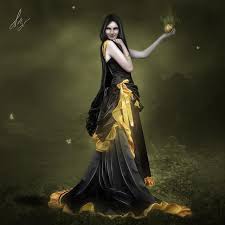
A goddess of chaos, Eris is often present in times of discord and strife. She loves to start trouble, just for her own sense of amusement, and perhaps one of the best known examples of this was a little dustup called the Trojan War.
It all started with the wedding of Thetis and Pelias, who would eventually have a son named Achilles. All of the gods of Olympus were invited, including Hera, Aphrodite and Athena – but Eris’ name got left off the guest list, because everyone knew how much she enjoyed causing a ruckus. Eris, the original wedding crasher, showed up anyway, and decided to have a little fun. She tossed a golden apple – the Apple of Discord – into the crowd, and said it was for the most beautiful of the goddesses. Naturally, Athena, Aphrodite and Hera had to bicker over who was the rightful owner of the apple.
Zeus, trying to be helpful, chose a young man named Paris, a prince of the city of Troy, to select a winner. Aphrodite offered Paris a bribe he couldn’t resist – Helen, the lovely young wife of King Menelaus of Sparta. Paris selected Aphrodite to receive the apple, and thus guaranteed that his hometown would be demolished by the end of the war.
*********
Eris
Eris is the Greek goddess of strife and discord. Her name is the equivalent of Latin Discordia, which means “discord”. Eris’ Greek opposite is Harmonia, whose Latin counterpart is Concordia. Homer equated her with the war-goddess Enyo, whose Roman counterpart is Bellona. The dwarf planet Eris is named after the goddess
Eris is of uncertain etymology; connections with the verb ὀρίνειν orinein, “to raise, stir, excite,” and the proper name Ἐρινύες Erinyes have been suggested. R. S. P. Beekes rejects these derivations and suggested a Pre-Greek origin.
Characteristics in Greek mythology
El Juicio de Paris by Enrique Simonet, 1904
Golden apple of discord by Jakob Jordaens, 1633
Das Urteil des Paris by Anton Raphael Mengs, c. 1757
In Hesiod’s Works and Days 11–24, two different goddesses named Eris are distinguished:
So, after all, there was not one kind of Strife alone, but all over the earth there are two. As for the one, a man would praise her when he came to understand her; but the other is blameworthy: and they are wholly different in nature. For one fosters evil war and battle, being cruel: her no man loves; but perforce, through the will of the deathless gods, men pay harsh Strife her honour due.
But the other is the elder daughter of dark Night (Nyx), and the son of Cronus who sits above and dwells in the aether, set her in the roots of the earth: and she is far kinder to men. She stirs up even the shiftless to toil; for a man grows eager to work when he considers his neighbour, a rich man who hastens to plough and plant and put his house in good order; and neighbour vies with his neighbour as he hurries after wealth. This Strife is wholesome for men. And potter is angry with potter, and craftsman with craftsman and beggar is jealous of beggar, and minstrel of minstrel.
In Hesiod’s Theogony (226–232), Strife, the daughter of Night, is less kindly spoken of as she brings forth other personifications as her children:
And hateful Eris bore painful Ponos (“Hardship”),
Lethe (“Forgetfulness”) and Limos (“Starvation”) and the tearful Algea (“Pains”),
Hysminai (“Battles”), Makhai (“Wars”), Phonoi (“Murders”), and Androktasiai (“Manslaughters”);
Neikea (“Quarrels”), Pseudea (“Lies”), Logoi (“Stories”), Amphillogiai (“Disputes”)
Dysnomia (“Anarchy”) and Ate (“Ruin”), near one another,
and Horkos (“Oath”), who most afflicts men on earth,
Then willing swears a false oath.
The other Strife is presumably she who appears in Homer’s Iliad Book IV; equated with Enyo as sister of Ares and so presumably daughter of Zeus and Hera:
Strife whose wrath is relentless, she is the sister and companion of murderous Ares, she who is only a little thing at the first, but thereafter grows until she strides on the earth with her head striking heaven. She then hurled down bitterness equally between both sides as she walked through the onslaught making men’s pain heavier. She also has a son whom she named Strife.
Enyo is mentioned in Book 5, and Zeus sends Strife to rouse the Achaeans in Book 11, of the same work.
The most famous tale of Eris recounts her initiating the Trojan War by causing the Judgement of Paris. The goddesses Hera, Athena and Aphrodite had been invited along with the rest of Olympus to the forced wedding of Peleus and Thetis, who would become the parents of Achilles, but Eris had been snubbed because of her troublemaking inclinations.
She therefore (as mentioned at the Kypria according to Proclus as part of a plan hatched by Zeus and Themis) tossed into the party the Apple of Discord, a golden apple inscribed Ancient Greek: τῇ καλλίστῃ, translit. tē(i) kallistē(i) – “For the most beautiful one”, or “To the Fairest One” – provoking the goddesses to begin quarreling about the appropriate recipient. The hapless Paris, Prince of Troy, was appointed to select the fairest by Zeus. The goddesses stripped naked to try to win Paris’ decision, and also attempted to bribe him. Hera offered political power; Athena promised infinite wisdom; and Aphrodite tempted him with the most beautiful woman in the world: Helen, wife of Menelaus of Sparta. While Greek culture placed a greater emphasis on prowess and power, Paris chose to award the apple to Aphrodite, thereby dooming his city, which was destroyed in the war that ensued.
In Nonnus’ Dionysiaca, 2.356, when Typhon prepares to battle with Zeus:
Eris (“Strife”) was Typhon’s escort in the melée, Nike (“Victory”) led Zeus to battle.
Another story of Eris includes Hera, and the love of Polytekhnos and Aedon. They claimed to love each other more than Hera and Zeus were in love. This angered Hera, so she sent Eris to rack discord upon them. Polytekhnos was finishing off a chariot board, and Aedon a web she had been weaving. Eris said to them, “Whosoever finishes thine task last shall have to present the other with a female servant!” Aedon won. But Polytekhnos was not happy by his defeat, so he came to Khelidon, Aedon’s sister, and raped her. He then disguised her as a slave, presenting her to Aedon. When Aedon discovered this was indeed her sister, she chopped up Polytekhnos’ son and fed him to Polytekhnos. The gods were not pleased, so they turned them all into birds.
Cultural influences
Discordianism
Eris has been adopted as the patron deity of the modern Discordian religion, which was begun in the late 1950s by Gregory Hill and Kerry Wendell Thornley under the pen names of “Malaclypse the Younger” and “Omar Khayyam Ravenhurst”. The Discordian version of Eris is considerably lighter in comparison to the rather malevolent Graeco-Roman original, wherein she is depicted as a positive (albeit mischievous) force of chaotic creation.
A quote from the Principia Discordia, the first holy book of Discordianism, attempts to clear up the matter:
One day Mal-2 consulted his Pineal Gland and asked Eris if She really created all of those terrible things. She told him that She had always liked the Old Greeks, but that they cannot be trusted with historic matters. “They were,” She added, “victims of indigestion, you know.”
Suffice it to say that Eris is not hateful or malicious. But she is mischievous, and does get a little bitchy at times.
The story of Eris being snubbed and indirectly starting the Trojan War is recorded in the Principia, and is referred to as the Original Snub. The Principia Discordia states that her parents may be as described in Greek legend, or that she may be the daughter of Void. She is the Goddess of Disorder and Being, whereas her sister Aneris (called the equivalent of Harmonia by the Mythics of Harmonia) is the goddess of Order and Non-Being. Their brother is Spirituality.
Discordian Eris is looked upon as a foil to the preoccupation of western philosophy in attempting find order in the chaos of reality, in prescribing order to be synonymous with truth. Discordian Eris teaches us that the only truth is chaos, and that order and disorder are simply temporary filters applied to the lenses we view the chaos through. This is known as the Aneristic Illusion.
In this telling, Eris becomes something of a patron saint of chaotic creation:
I am chaos. I am the substance from which your artists and scientists build rhythms. I am the spirit with which your children and clowns laugh in happy anarchy. I am chaos. I am alive, and I tell you that you are free.
The concept of Eris as developed by the Principia Discordia is used and expanded upon in the science fiction work The Illuminatus! Trilogy by Robert Shea and Robert Anton Wilson (in which characters from Principia Discordia appear). In this work, Eris is a major character.
Other
The classic fairy tale Sleeping Beauty is partly inspired by Eris’ role in the wedding of Peleus and Thetis. Like Eris, a malevolent fairy curses a princess after not being invited to the princess’ christening.
********
Reference
Patti Wigington, Published on ThoughtCo.com
Wikipedia
Make Me Strong In Spirit

The Witches Magickal Digest for Wednesday, April 25th

The Witches Magickal Digest for Wednesday, April 25th

It is an accurate statement that the followers of Witchcraft do not usually proselytize, which means you aren’t going to find us standing on your local street corner thumping our Books of Shadows. Nor do you have to worry about jumping out of the shower to answer our serene and smiling faces at the door with your clothes stuck to various uncomfortable places on your wet body. But just because we (hopefully) aren’t the forcible type doesn’t mean we don’t exist.
SILVER RAVENWOLF, To Ride a Silver Broomstick: New Generation Witchcraft
Today is Wednesday, April 25th
Wednesday is the day of the Teutonic deity known as Wodin or Odin, an aspect of the Allfather, god of knowledge, wisdom, enlightenment and combat, the parallel of Hermes, the planet Mercury.
Deity: Woden
Zodiac Sign: Gemini & Virgo
Planet: Mercury
Tree: Ash
Herb: Cinquefoil
Stone: Emerald & Sardonyx
Animal: Raven & Cat
Element: Air
Color: Red & Blue
Number: 6
Rune: Odal(O)
The Celtic Tree Month Saille (Willow) (April 14 – May 12)
Runic Half Month of Man(human being) (April 14 – April 28)
Goddess of the Month of Maia (April 18 – May 15th)
Source
The Pagan Book of Days
Nigel Pennick
The Pagan Book of Days for April 25th
St. Mark’s Day is the old Roman Festival of the Robigalia, the observance of which was magickally intended to avert the spirit of mildew, which threatens crops around this time. For many years, the Litania Major of the Catholic church for St. Mark’s Day at Rome followed the earlier festival. Its purpose, like the Robigalia, was to gain the blessing of heaven for the growing crops. In traditionally English lore, this is Cuckoo Day. The cuckoo, “St. Mark’s gowk,” heralds the arrival of migratory birds from the south, indicating the return of summer.
Source
The Pagan Book of Days
Nigel Pennick
The Goddess Book of Days for Wednesday, April 25
Day of the Robigalia of Rome, for Robigo, Goddess of Com and Harvests. (Demeter, Ceres, the Com Mothers, Tonantzin, Chicomecoatl, Spider Woman, Changing Woman.) Also, Passover, Hebrew spring festival originally dedicated to Baal
Source
The Goddess Book of Days
Diane Stein
Goddesses Associated with Wednesday
For Woden: Isis, Demeter, Ceres, Spider Woman, Bona Dea, Oya, Devi-Kali, Hella, Rhiannon, Coatlique, Maman Brigette
Source
The Goddess Book of Days
Diane Stein
Today is Wednesday, April 25th, We Celebrate….
Sechselauten (Switzerland)
LADA
Themes: Spring Protection; overcoming; kinship; energy; joy
Symbols: Birch, bells
About Lada: Lada bursts forth from her winter hiding place today in full Slavic costume and dances with joy, grateful for spring’s arrival. As Lada moves, her skirts sweep away sickness and usher in the earth’s blossoming beauty. She bears a birch tree and flowers to honor the earth’s fertility and to begin planting anew.
To Do Today: This spring festival is overflowing with Lada’s vibrancy and begins with the demolition of a snowman, symbolic of winter’s complete overthrow. If you live in a region where there’s no snow, take out an ice cube and put a flowering seed atop it. Let it melt, then plant the seed with “winter’s” water to welcome Lada back to the earth.
Bells ring throughout this day in Switzerland to proclaim spring and ring out any remaining winter maladies and shadows. Adapt this by taking a handheld bell (you can get small ones at craft stores) and ringing it in every room of the house, intoning Lada’s revitalizing energy. Or just ring your doorbell, open the door and bring some flowers as a way of offering Lada’s spirit hospitality.
Finally, wear something with a floral print today or enjoy a glass of birch beer. Better still, make a birch beer float so the ice cream(snow) melts amid Lada’s warmth, bringing that transformative power into you as you sip.
Source
365 Goddess: A Daily Guide To the Magic and Inspiration of the goddess
Patricia Telesco
.
Ritual Work Associated With Wednesday, The Day of Mercury
Perfumes: Sweetpea, Lavender, Mastic, Frankincense, Cloves
Incense: Cinnamon, Cinquefoil
Color: Yellow or Grey
Influences: Conjurations, Predictions, Knowledge, Writing, Eloquence
Reference:
A Book of Pagan Rituals
Herman Slater
Magickal Days of the Week – Wednesday
Wednesday is named for Woden himself, although the Romans called it dies Mercurii. This is a day associated with the color purple, the planet Mercury, and the metal quicksilver – which is also called mercury. See a pattern here?
When it comes to deities… yes, Mercury! However, there are a few other gods associated with Wednesday, including Odin and Hermes, Athena, and Lugh. Gemstones like adventurine and agate come in handy as well, as do plants such as aspen trees, lilies, lavender and even ferns.
Business and job-related issues, communication, loss and debt, traveling, and journeys are all tied in to Wednesday. This is a good day to do a working to open up lines of communication – especially if your own actions are preventing you from being an effective speaker or listener. Go someplace new or return to an old favorite stomping ground, step up your game, and settle up your accounts.
Reference
Patti Wigington, Paganism/Wicca Expert
Article originally published on & owned by ThoughtCo
Wednesday: On the way to the afterlife
The fourth day of the week is named after Odin (Wodan or Woden). In Anglo-Saxon world, Woden is not necessarily the mirror of the Norse Odin. Up to the seventh century, he was worshipped as the main deity. He was the psychopomp which is a word for someone who helps deliver human souls to the afterlife.
In Romance languages, the name of the day comes from Latin Dies Mercurii (miércoles in Spanish, mercoledi in Italian, mercredi in French), associated with Mercury, the Roman god of trade, profit and commerce.
In German, the word for Wednesday is simply Mittwoch, meaning the middle of the week
Wednesday–The Day of Woden
Woden, or Odin as the Norsemen called him, was the chief of the gods of our ancestors, and corresponds to the Jupiter of the Romans. Also, for reasons which we shall read later, he was similar to Mercury, and his name was given to the Roman Dies Mercurii, day of Mercury, which still survives in the French mercredi.
As in the case of Jupiter and the Titans, Odin led the Northern gods in a gigantic struggle with the giants of ice and frost, and finally overthrew them. With the help of the gods, he then fashioned the world from the body of the chief of the giants. From the flesh he made the earth, known as Midgard (middle garden), and from his blood the sea, while from his bones he made the mountains, from his teeth the cliffs, and from his hair the trees. The giant’s skull was then fixed over the earth to form the vault of the sky, and was held in place at the four corners by four dwarfs, Nordri, Sudri, Austri, and Westri, from whom we have obtained the names North, South, East, and West. Next the gods made the sun and moon, which were placed in golden chariots driven by Sol and Mani, the daughter and son of a giant who had named his children after the newly-created sun and moon. The Northmen thought that they could see on the moon the outline of two children carrying a pail, and the story goes that Mani, while travelling across the sky, one night caught up two children, Hiuki and Bil, who were compelled by their cruel father to carry water all night. Hiuki and Bil are still known to us in the familiar story of Jack and Jill. The sun and moon were said to be pursued continually by two fierce wolves, whose shapes could be seen in the clouds, and who, if they caught them up, would swallow them and plunge the world in darkness. Sometimes they nearly succeeded, and thus caused the eclipses.
Having completed the earth and peopled it with men and women, the gods, led by Odin, built magnificent palaces for themselves in Asgard, their home. The most famous of these was Valhalla, to which the bravest and mightiest of the mortals who fell in battle were summoned at their death. The walls of Valhalla were made of spears, and golden shields formed the roof. In the hall stood long tables, at which the dead heroes feasted.
The Northmen honoured a great fighter above all men, and they even thought it a disgrace for him to die in any other way than sword in hand. The great ambition of every fighting man was to be called to Valhalla after his death, there to spend his time in fighting and feasting. The fortunate ones were chosen from among the slain on the battle-fields by the Valkyries, Odin’s battle-maidens, whose horses carried them through the air and over the sea. They rode among the storm-clouds, and the flash of their spears was seen in the lightning.
Odin was often pictured as sitting on a throne from which he could see the whole world, and wearing a suit of armour, covered with a blue mantle, which represented the sky. In his hand he held a famous spear, Gungnir, which never missed its mark. On his shoulders sat two ravens, Thought and Memory, which he sent out into the world every day to obtain news of all that happened. Like Tiu, the God of War, Odin suffered from a disfigurement, having lost one of his eyes. This loss is explained in the following story.
After the creation of the world, Odin wished to obtain great wisdom which would place him far above the other gods. This he could only procure from Mimir’s spring, in whose clear waters the future was mirrored. Odin, therefore, visited Mimir and begged a draught of the wonderful water, but Mimir would only grant the request in return for one of Odin’s eyes. The god was willing to make even this sacrifice for the great knowledge the water would give him, and accordingly he plucked out one of his eyes and gave it to Mimir, who sank it deep in the spring where it could always be seen shining. Odin then drank deep of the water, and thus gained the wisdom for which he was always famous.
All the life of the world, including even the lives of the gods, was said to depend on an enormous ash tree, Yggdrasil, the Tree of Life. This tree was created by Odin, and had three roots, one in the Underworld, another in Midgard, near Mimir’s spring, and the third in Asgard. It grew to such a height that it overtopped the whole world, and in its topmost branches sat an eagle with a falcon between its eyes. The falcon could see all three kingdoms, and reported all that happened in them to the gods. In the Underworld was a dragon, which continually gnawed the roots of Yggdrasil in order to destroy it and so bring about the downfall of the gods. To prevent this disaster, the tree was daily watered from a fountain in Asgard, whose magic waters kept it continually green.
Joining Asgard and the earth was a bridge made of fire, earth, and water, whose colours were those of the rainbow. This bridge was guarded against the giants by a god named Heimdall, whose sight and hearing were so keen that he could see a hundred leagues by night as well as by day, and could hear the grass growing on the earth and the wool on the sheep’s back! He was armed with a flashing sword, and carried a horn with which he was to give warning when the giants should come against Asgard.
Odin was the inventor of Runes, the first alphabet of the Northmen. The letters consisted almost entirely of straight lines placed in different groups and positions, and were thought at first to have a magical meaning. Each god had a special rune or sign, and the use of the sign was supposed to bring help from the god. Thus all fighters carved the rune of Tiu on their swords in order that they might have his aid in battle. Runes were afterwards used in the ordinary way for writing, and very old runes have been found carved on stones in Scandinavia and in England. As the inventor of runes, Odin is like Mercury, who was supposed to have given the Romans their alphabet.
In addition to being the wisest of the gods, the inventor of runes, and the God of Eloquence, Odin was also the God of Poetry. The gift of poetry was guarded very jealously by the gods, and was only granted to mortals in special cases. Odin obtained the gift for himself and the other gods only with great difficulty. Hidden away in a hollow mountain, and carefully watched over by a giantess, were three vessels containing a magic fluid, which gave to anyone who drank of it the gift of poetry and song. Odin, knowing of this magic drink, determined to obtain it. Accordingly he set out for the land of the giants, dressed as a mortal, and wearing a broad-brimmed hat to hide the fact that he had only one eye. He hired himself as a servant to Baugi, the brother of the giant Suttung, to whom the vessels belonged, and asked as payment for his labour one draught of the magic fluid. As soon as his work was finished, Odin demanded payment, but Baugi was afraid to ask his brother for the drink, and suggested they should win it for themselves by trickery. They came to the mountain where the vessels were hidden, and bored a hole right through to the cave inside. Odin then changed himself into a snake and wriggled through the hole, just in time to escape the giant, who tried to kill him as he entered the hole. Having found his way into the cave, Odin again took on the form of a god, and begged the giantess who watched over the vessels to allow him just a sip of the magic drink. The giantess at last consented, but Odin, instead of taking a sip, quickly emptied all the vessels, and then, making his way out of the cave transformed himself into an eagle and flew swiftly towards Asgard. He soon discovered, however, that the giant Suttung was pursuing him, also in the form of an eagle. As he neared Asgard the gods caught sight of him, and, seeing that the giant was gaining on Odin, they gathered together a great quantity of fuel and piled it on the palace walls. Immediately Odin had passed over the wall the gods set fire to the fuel, and the flames rose so high that the wings of the pursuing giant were scorched, and he fell into the fire and was burnt.
Odin seldom used this precious gift of poetry himself, but imparted it to his son Bragi, who became the minstrel of the gods and sang many songs in honour of the gods and the great heroes in Valhalla. All the singers among men, the bards, or scalds, as they were sometimes called, were thought to have received the gift from Odin, and were greatly honoured for that reason.
The Witches Wednesday
Wednesday is the fourth day of the week, in the Judeo-Christian calendar between Tuesday and Thursday. The name comes from the Middle English Wednes dei, which is from Old English WÄ“dnes dæg, meaning the day of the Germanic god Woden (Wodan) who was a god of the Anglo-Saxons in England until about the 7th century. WÄ“dnes dæg is like the Old Norse Oðinsdagr (“Odin’s day”), which is an early translation of the Latin dies Mercurii (“Mercury’s day”). Although Mercury (the messenger of the gods) and Woden (the king of the Germanic gods) are not equivalent in most regards, both gods guided the souls of the dead to the underworld.
When Sunday is taken as the first of the week, the day in the middle of each week is Wednesday. Arising from this, the German name for Wednesday has been Mittwoch (literally: “mid-week”) since the 10th Century, having displaced the former name: Wodanstag (“Wodan’s day”). The Finnish name is similarly practical: Keskiviikko (literally: “middle of the week”) as is the Icelandic name: Miðvikudagur (“Mid-week day”).
According to the Hebrew Bible, Wednesday is the day when the Sun and Moon were created.
Wednesday is also in the middle of the common Western 5-day working week that starts on Monday and finishes on Friday.
In Romance languages it is derived from the name of the Roman god Mercury: mercredi (French), mercoledì (Italian), miércoles (Spanish), miercuri (Romanian), dimecres (Catalan), dies Mercurii (Latin). Similarly, the Hindi name for Wednesday, Budhvar is derived from the Vedic name for Mercury, Budh. Russian does not use pagan names but instead uses sredá, meaning “middle,” similar to the German Mittwoch. Likewise, Portuguese uses the word quarta-feira, meaning “fourth day.”
An English language idiom for Wednesday is “hump day”, a reference to making it through to the middle of the work week as getting “over the hump”. It is also informally referred to as “the peak of the week”.
Quakers traditionally refer to Wednesday as “Fourth Day”, eschewing the pagan origin of the name “Wednesday”. Most eastern languages also use a name with this meaning, for much the same reason.
Extremely faithful Orthodox Christians observe a vegetarian / fish-only fast on Wednesdays (and Fridays) in some countries such as Greece.
According to the Thai solar calendar, the color associated with Wednesday is green.
Wednesday in Popular Culture
* The nursery rhyme states, “Wednesday’s child is full of woe”. This line was the inspiration for the ‘Wednesday’ character, the daughter, in The Addams Family comic and TV Show.
* In the 19th century children’s rhyme Solomon Grundy, Solomon was ‘Married on Wednesday.’
* A song titled “Wednesday’s Song” is on the 2004 album Shadows Collide with People by John Frusciante
* Mr. Wednesday is a main character in Neil Gaiman’s novel American Gods. He is the employer of the protagonist Shadow, and is a variation on the god Odin.
Astrological Sign
The astrological sign of the planet Mercury represents Wednesday — Dies Mercurii to the Romans, with similar names in Latin-derived languages, such as the French Mercredi and the Spanish Miércoles. In English, this became “Woden’s Day”, since the Roman god Mercury was identified with Woden in northern Europe.
Wednesday’s Witchery
Be bold and daring today! Expand your knowledge of the Craft by working with the planetary energies of Mercury on this multifaceted day of the week. Consider the Greco-Roman gods Mercury and Hermes and all of the many lessons they have for you. Embrace change and movement, and work on your communication techniques. Conjure up a little good luck for yourself with that Mercury dime spell. Call on Athena to inspire you to try magickal arts and crafts and to be more creative in your own spellwork and witchery.
Meditate on Odin and see what you can discover about him. I wonder what sort of fabulous and fascinating magickal wisdom you will uncover? Odin is a shaman, after all; he may appear in many guises and faces. I guarantee that he will make you laugh at yourself before he is through with you, but you will learn. It’s up to you what you do with that knowledge. Will you let it shapeshift into wisdom?
Wednesday is the wild and wily day of the week, so try to go with the flow; don’t fight the quirky energies of the day. Most importantly, follow your heart, and always keep a good sense of humor, because of Wednesdays you will really need it.
Source
Book of Witchery: Spells, Charms & Correspondences for Every Day of the Week
Ellen Dugan
The Witches Almanac for Wednesday, April 25
Robigalia (Roman)
Waxing Moon
Moon phase: Second Quarter
Moon Sign: Virgo
Incense: Lilac
Color: Yellow
The Witches Correspondences for Wednesday, April 25th
Dedicated to the Teutonic god Woden or Odin, an aspect of the “All-Father” god of knowledge wisdom enlightenment and combat, the parallel of Hermes.
Element : Air
Planet: Mercury
Zodiac Sign : Virgo / Gemini
Angel : Raphael
Metal : Mercury
Incense / Perfumes : Jasmine, Lavender, Sweet Pea
Oil: Benzoin, Clary Sage, Eucalytus, Lavender
Color : Red, Orange, Light Blue
Stones : Bloodstone,Garnet, Aventurine, Hematite, Moss Agate and Sodalite
Plants/Herbs : Almond, Anise, Cherry, Clover, Dandelion, Dill, Fern, Hazel, Hyssop, Lavender, Lemongrass, Lilac, Mace, Peppermint, Rosemary, Vervain
Magick to Work: the conscious mind, study, travel, divination, consulting oracles, wisdom, communication ,cleverness, contracts, creativity, information, intellect, memory, erception, science, wisdom, writing
Wednesday Is Ruled By Mercury
Wednesdays are wild and wacky days. They are for communication, change, cunning, and the arts. This is a Mercury day, and just its patron god this day is full of contradictions, change, and excitement. Some suggestions for Wednesday enchantments would include:
Pulling a little Wednesday color magic into your life by wearing purples or orange
Carrying a multipurpose agate with you and tapping into its various charms
Working with magical plants such as the fern for protection. This plant will also boost the power of any other magical plants with which it is arranged.
Incorporating lavender into charms and spells for transformation
Using the charming scent of lily of the valley to improve your memory, or working with the aspen tree for communication
Calling on Athena, patron of arts and crafts, for inspiration for a new project
Fanning out a Tarot spell to increase you creativity
Calling on Hermes on a Wednesday night to bring movement and good luck into your life
Mercury’s Energy
*Notes: perform on a Wednesday and/or during the waxing Moon with the Full Moon being strongest. An orange or violet candle is associated with any magick cast on this day.
Day: Wednesday
Color: Orange, violet, multicolored, pale yellow
Metal: Quicksilver, alloys.
Stones: Carnelian, fire opal, agate
Plants: Anise, caraway , cassia, club mosss, dittany of Crete, lavender, licorice, parsley, sandalwood, storax
Rules: Gemini, Virgo
Oils: Lavender, lemon, lily of valley, nutmeg, sandalwood, styrax, vervain
Rituals Involving: Intellect, memory, science, creativity, business, magickal conjuration, divination, prediction, eloquence, gift of tongues, speed, speech, writing, poetry, inspiration, improvement of mind power, healing of nervous disorders.
Physical Chant for Mercury:
Magick, the Arts, success on my trade,
Business wisdom and divination,
These gifts I would gain for my physical growth
And to help in my conjurations.
Source
Dancing with Dragons, Invoking Their Ageless Wisdom and Power
D. J. Conway, Author
Magickal Applications for Wednesday
To the Romans, this day was called Dies Mercurii, or “Mercury’s day” Mercury was a popular character in the Roman pantheon. A messenger of the gods, he presided over commerce, trade, and anything that required skill or dexterity. The Celts also worshiped Mercury and eventually equated him with the Norse god Odin (some spelling variations on this name include Wotan, Wodin, and Wodan). In Norse mythologies, Odin, like Mercury, is associated with poetry and music. Interestingly enough, both Odin and Mercury were regarded as psychopomps, or the leaders of souls, in their individual mythologies.
Odin, one of the main gods in Norse mythology, was constantly seeking wisdom. He traveled the world in disguise as a one-eyed man with a long gray beard, wearing an old, beat-up hat and carrying a staff or a spear (which brings to my mind images of Gandalf from The Lord of the Rings). In the Old English language, this day of Mercury evolved into Wodnes daeg, “Woden’s day,” or Wednesday.
Wednesday carries all of the planetary and magickal energies and associations of the witty and nimble god Mercury himself. Some of these mercurial traits included good communication skills, cleverness, intelligence, creativity, business sense, writing, artistic talent, trickiness, and thievery. And don’t forget all of those wise and enigmatic qualities associated with the Norse god Odin/Wodin, not to mention the goddess Athena’s contributions of music, the arts, handmade crafts, and writing. Wednesdays afford excellent opportunities for seeking wisdom, changing your circumstances, and improving your skills, be they in trade and commerce, music and art, or in communication and writing.
Source
Book of Witchery: Spells, Charms & Correspondences for Every Day of the Week
Ellen Dugan
Wednesday & The Perfect Corresponding Spell
Wedesday is a good day to focus on getting over any slumps you may have. This day is considered the middle of the work week; and many people find themselves very tired by this point. That is why this day is a great day to do refresh, refrain, return, wake-up, and concentration spells. It is, also, another good day for meditation.
Refrain Spell – Do Not Act Spell
Items you will need:
1 sheet of paper
1 pen or pencil
1 piece of string
On a piece of paper, write down whatever your bad temptation is.
Below that, on the left side write down why you want to do this and on the right side, write down why you should not do it. When you are done, fold the paper in half and then fold it again. Say this chant three times:
“This is not to bind,
But to refrain.
The string I tie
Will help me find
The strength I need.
To keep my desires contained.”
Tie the string around the paper and tie a knot. Place this in a safe place, until the temptation passes and no longer is a threat.
Source
A Witch’s Week of Spells and Activities
Helga C. Loueen
Let’s Talk Witch: Working With the Gods and Goddesses
There are literally thousands of different deities out there in the Universe, and which ones you choose to honor will often depend significantly upon what pantheon your spiritual path follows. However, many modern Pagans and Wiccans describe themselves as eclectic, which means they may honor a god of one tradition beside a goddess of another. In some cases, we may choose to ask a deity for assistance in a magical working or in problem solving.
Regardless, at some point, you’re going to have to sit and sort them all out. If you don’t have a specific, written tradition, then how do you know which gods to call upon?
A good way to look at it is to figure out which deity of your pantheon would be interested in your purpose. In other words, what gods might take the time to look into your situation? This is where the concept of appropriate worship comes in handy — if you can’t take the time to get to know the deities of your path, then you probably shouldn’t be asking them for favors. So first, figure out your goal. Are you doing a working regarding home and domesticity? Then don’t call upon some masculine power deity. What if you’re celebrating the end of the harvest season, and the dying of the earth? Then you shouldn’t be offering milk and flowers to a spring goddess.
Consider your purpose carefully, before you make offerings or prayers to a particular god or goddess.
Although this is certainly not a comprehensive list of all the gods and their domains, it may help you a bit to get an idea of who is out there, and what sorts of things they may be able to help you with:
Artisanship
For assistance relating to skills, crafts, or handiwork, call upon the Celtic smith god, Lugh.
Many other pantheons have forge and craftsmanship gods as well.
Chaos
When it comes to matters of discord and upsetting the balance of things, some people choose to to check in with Loki, the Norse prankster god. However, it’s generally recommended that you don’t do this unless you’re a devotee of Loki in the first place – you may end up getting more than you bargained for.
Destruction
If you’re doing a working related to destruction, the Celtic war goddess the Morrighan may assist you, but don’t trifle with her lightly. A safer bet might be working with Demeter, the Dark Mother of the harvest season.
Fall Harvest
When you celebrate the fall harvest, you may want to take time to honor Herne, the god of the wild hunt, or Osiris, who is often connected with grain and the harvest. Demeter and her daughter, Persephone, are typically connected with the waning part of the year. Pomona is associated with fruit orchards and the bounty of trees in fall. There are also a number of other harvest gods and gods of the vine who may be interested in what you’re doing.
Feminine Energy
For workings related to the moon, lunar energy, or the sacred feminine, consider invoking Artemis or Venus.
Fertility
When it comes to fertility, there are plenty of deities out there to ask for assistance.
Consider Cernunnos, the wild stag of the forest, or Freya, a goddess of sexual power and energy. If you follow a Roman-based path, try honoring Bona Dea. There are a number of other fertility gods out there as well, each with their own specific domain.
Home and Marriage
Brighid is a protector of hearth and home, and Juno and Vesta are both patronesses of marriage.
Love and Lust
Aphrodite has long been associated with love and beauty, and so has her counterpart, Venus. Likewise, Eros and Cupid are considered representative of masculine lust. Priapus is a god of raw sexuality, including sexual violence.
Magic
Isis, the mother goddess of Egypt, is often called upon for magical workings, as is Hecate, a goddess of sorcery.
Masculine Energy
Cernunnos is a strong symbol of masculine energy and power, as is Herne, the god of the hunt.
Odin and Thor, both Norse gods, are known as powerful, masculine gods.
Motherhood
Isis is a mother goddess on a grand scale, and Juno watches over women in labor.
Prophecy and Divination
Brighid is known as a goddess of prophecy, and so is Cerridwen, with her cauldron of knowledge. Janus, the two-faced god, sees both the past and future.
The Underworld
Because of his harvest associations, Osiris is often connected with the underworld. There are a number of other deities of death and dying.
War and Conflict
The Morrighan is not only a goddess of war, but also of sovereignty and loyalty. Athena protects warriors and imparts them with wisdom. Freya and Thor guide fighters in battle.
Wisdom
Thoth was the Egyptian god of wisdom, and Athena and Odin may also be called upon, depending on your purpose.
Seasonal
There are a number of deities associated with the various times of the Wheel of the Year, including the Winter Solstice, Late winter, the Spring Equinox, and the Summer solstice.
Author:
Patti Wigington
Published on ThoughtCo.com
Celebrating Legends, Folklore & Spirituality 365 Days a Year for April 25th
Spring Garden
The Robigalia
“Warding off” was the entire purpose of this festival, celebrated annually on April 25. It focused on the deity Robigus, whose main attribute was the ability to destroy the dreaded rust or red mildew, a scourge that sometimes attacked the corn (the city’s principle food crop). As this deity was associated with the God Mars, all of this day’s activities were overseen by the Flamen Martialis, including the offerings of sheep and a red dog to appease Robigus.
Bless You

The Witches Astronomy Digest for Wednesday, April 25th

The Witches Astronomy Digest for Wednesday, April 25th
Children Of The Earth
We know they feared our Pagan ways,
They tried to wipe us out,
They tortured and they burned us,
If they had the slightest doubt,
They took away our festivals,
Replaced them with their own,
But we stood strong and carried on,
We’ve flourished and we’ve grown.
They said we worshiped Satan,
Stole babies and much worse,
And if by chance someone fell ill,
They said we laid a curse,
They took us in for “questioning”,
Tortured till we confessed,
But anyone would say the words,
Under such duress.
With bodies bruised and broken,
They put us on the stand,
The priests said we’d offended God,
And the devil took our hand,
The villagers believed them,
Our guilt was their desire,
Then everybody turned out to see,
The witch burned in the fire.
They never really understood,
And some to this day still,
Do not understand our craft,
We bear no one ill will,
We live a life of peace and love,
At one with Mother Earth,
So in secrecy the Hedgewitch lives,
Gathering berries, leaves and herbs.
I sometimes think that there are those,
Who live in those dark times still,
They do not wish to understand,
And I guess they never will,
But Pagans all around the world,
Are proud to carry on,
We practice the oldest religion,
In our deeds and in our song.
Be Joyful all ye Pagans,
For the road has been so long,
Remember the innocent martyrs,
That suffered in those days gone,
Give your praise to all the Gods,
And the Goddess of rebirth,
For they can never destroy our faith,
We are the children of the Earth.
—Pagan Ways
Alan Faraway
Your Daily Sun & Moon Data for Wednesday, April 25th
The Sun
Sun Direction: ↑ 76.05° ENE
Sun Altitude: 3.75°
Sun Distance: 93.513 million mi
Next Solstice: Jun 21, 2018 5:07 am (Summer)
Sunrise Today: 6:07 am↑ 73° East
Sunset Today: 7:38 pm↑ 288° West
Length of Daylight: 13 hours, 31 minutes
The Moon
Moon Direction: ↑ 310.65° NW
Moon Altitude: -28.37°
Moon Distance: 233153 mi
Next Full Moon: Apr 29, 20187:58 pm
Next New Moon: May 15, 20186:47 am
Next Moonrise: Today3:16 pm
Current Moon Phase: Waxing Gibbous
Moon’s Illumination: 77.6%
Source
Astrology of Today – Wednesday, April 25, 2018
The Moon is in Virgo.
The Moon is waxing and in its First Quarter phase.
The First Quarter Moon occurred on the 22nd, and the Full Moon will occur on April 29th.
Mercury is in its post-retrograde shadow until May 3.
Venus spends its first full day in Gemini (Venus is in Gemini from April 24-May 19).
Moon in Virgo
We instinctively gravitate towards practical activities under the influence of a Virgo Moon. In order to set things right, we might easily find ourselves re-organizing and rethinking plans. Emotional satisfaction comes from solving problems, making order out of confusion, and helping others. Health matters might come into focus. We notice the smaller parts that make up the whole, and instead of letting nagging details bother us, we might work on ironing them out so that we can feel more confident moving ahead.
The Moon in Virgo generally favors the following activities: Mental pursuits, work activities, services, and routines. Activities that would benefit from tending to details.
Daily Overview of Your Stars & Planets for April 25th
Mercury in Aries formed a square Saturn on March 11th before Mercury turned retrograde, and then connected this way again while Mercury was retrograde on April 5th. Now that Mercury is direct, this aspect forms again today. In effect, this aspect has been influencing us in varying degrees since early March, and we may have experienced, more than usual, criticism and pessimism, difficulties getting clear answers, and obstacles to getting our message across. We’re getting over this hump today. Even so, today can be a little tense. Getting from point A to point B can be a challenge. Communications may be blocked or delayed, and negative thinking could dominate. Projects we thought were complete may need revision, and people can be overly critical, insensitive, or sarcastic. It’s difficult to trust our instincts, and we second-guess things automatically under this influence.
The Moon spends the day in the sign of Virgo, and the nervous or picky side of the sign can be more prominent as Virgo’s ruler, Mercury, is challenged. However, once beyond this aspect, we may begin to form a more realistic vision of a project or situation.
The Sky This Week for April 25 to 29
The return of the Lyrid meteor shower, a slew of bright planets, and a full night of the Full Moon, all in the sky this week.
By Richard Talcott
Wednesday, April 25
Jupiter stands out among the background stars of central Libra from the time it rises around 9 p.m. local daylight time until morning twilight is well underway. The giant planet is near its best for the year right now, reaching opposition in two weeks (on May 8). Jupiter shines at magnitude –2.5, which makes it the brightest point of light in the evening sky once Venus sets around 10 p.m. The best time to view the planet through a telescope is when it climbs highest in the south, a position it reaches around 2 a.m. Jupiter’s spectacular disk spans 44″, and its dynamic atmosphere shows at least two parallel dark belts.
Thursday, April 26
Saturn rises before 1 a.m. local daylight time and climbs some 25° high in the south as morning twilight starts to paint the sky. The ringed planet shines at magnitude 0.4 against the backdrop of northern Sagittarius the Archer, some 12° west of Mars. When viewed through a telescope, Saturn shows a 17″-diameter disk surrounded by a stunning ring system that spans 39″ and tilts 25° to our line of sight.
Friday, April 27
It’s about time to grab your final evening views of Orion the Hunter. This bright constellation now hangs low in the west as darkness falls and starts to set around 9:30 p.m. local daylight time. The three 2nd-magnitude stars that form the Hunter’s Belt now appear parallel to the horizon. A line through these stars and extended to the left points directly to the sky’s brightest star, Sirius.
Saturday, April 28
Dwarf planet 1 Ceres is the largest object in the asteroid belt, which lies between the orbits of Mars and Jupiter. It currently shines at magnitude 8.4 and is an easy object to spot through binoculars or a telescope. Ceres resides in the northern part of the constellation Cancer the Crab, which appears high in the west-southwest after twilight fades to darkness. This evening, Ceres lies 0.7° north of 67 and 70 Cancri, a pair of stars that shine between 6th and 7th magnitude.
Sunday, April 29
Full Moon occurs at 8:58 p.m. EDT, but our satellite will look completely illuminated all night. You can find it rising in the east as the Sun sets and peaking in the south around 1 a.m. local daylight time. The Moon lies among the background stars of Libra, less than 10° from brilliant Jupiter.
Mercury reaches greatest elongation today, when it lies 27° west of the Sun and appears some 4° above the eastern horizon 30 minutes before sunrise. Unfortunately, this is one of the planet’s worst apparitions of the year for Northern Hemisphere observers. Mercury shines at magnitude 0.4 and appears as an inconspicuous dot even through binoculars.
Source
In the Sky This Month
The constellations of spring begin to dominate the evening sky this month. Leo, the celestial lion, stands in good view at nightfall and leaps high across the south later on. Virgo follows the lion across the sky, with their brightest stars, Regulus and Spica, respectively, separated by more than 50 degrees — more than five times the width of your fist held at arm’s length.
April 25: Corvus
Corvus, the crow, is low in the southeast at nightfall and arcs across the southern sky during the night. Corvus’s brightest stars form a small but distinct box. In mythology, the crow was a servant of the god Apollo.
April 26: Corona Borealis
Look well up in the east as darkness falls for yellow-orange Arcturus, the brightest star in the evening sky at this time of year. Well to its lower left is Corona Borealis, the northern crown, a semicircle of stars that opens to the upper left.
April 27: Moon and Spica
Two big stars with different futures stand below the Moon at nightfall. Their light blurs together into one point: Spica, the brightest star of Virgo. One of the stars will explode as a supernova, while the other faces a fate similar to the Sun’s.
April 28: Venus and Aldebaran
Two bright lights are passing close to each other in the western evening sky. The brighter light is Venus, the brilliant “evening star.” The other one, to the left or upper left of Venus tonight, is Aldebaran, the eye of Taurus, the bull.
April 29: Moon and Jupiter
The mighty planet Jupiter looks like a brilliant star. And tonight, it has a close companion: the full Moon. Jupiter is to the lower left of the Moon at nightfall, and follows the Moon across the sky later on.
April 30: Good Night, Orion
Orion, one of the most beautiful constellations, is putting in its final evening appearance of the season over the next few nights. It soon will disappear in the Sun’s glare. The next time we see it, it will be in the morning sky shortly before sunrise.
May 1: May Day
In Britain, today is known as May Day. In ancient times, it marked the beginning of summer, not the middle of spring. It is one of the year’s four cross-quarter days, which come roughly half way between a solstice and an equinox.
Source
COSMIC CALENDAR
APRIL 25, 2018
Just as a grand triangle in water signs aided your keen perception and higher-learning abilities last Saturday, now it is the earth sign trinity that holds the key to making great leaps forward with business and professional goals.
Last night’s lunar trine to the sun, energizing Virgo and Taurus, is now augmented by another lunar trine to Saturn in Capricorn (5:31am). Play your cards right and doors to financial abundance can open — particularly with any proclivity to working in a dedicated manner to reach long-sought aims.
While a trine between Mercury and Ceres in fire signs (11:03pm) is definitely a resource that can be an ace up your sleeve, Mercury forming a challenging square aspect to Saturn retrograde (2:29pm and a repeat from what occurred on April 5 when Saturn was direct) can represent an impediment in your path to success.
However, knowing the time of any potentially difficult aspect gives you an advantage to rise to the occasion and steer clear of creating any unnecessary problems.
[Note to readers: All times are now calculated for Pacific Daylight Time. Be sure to adjust all times according to your own local time so the alignments noted above will be exact for your location.]
Copyright 2018 Mark Lerner & Great Bear Enterprises
Astrology.com
The Witches Current Moon Phase for April 25
Waxing Gibbous
Illumination: 78%
Tomorow the Moon will be in a Waxing Gibbous phase. This phase is when the moon is more than 50% illuminated but not yet a Full Moon. The phase lasts round 7 days with the moon becoming more illuminated each day until the Full Moon. During a Waxing Gibbous the moon will rise in the east in mid-afternoon and will be high in the eastern sky at sunset. The moon is then visible though most of the night sky setting a few hour before sunrise. The word Gibbous first appeared in the 14th century and has its roots in the Latin word “gibbosus” meaning humpbacked.
PHASE DETAILS FOR – WEDNESDAY, APRIL 25, 2018
Phase: Waxing Gibbous
Illumination: 78%
Moon Age: 10.14 days
Moon Angle: 0.54
Moon Distance: 370,283.73 km
Sun Angle: 0.53
Sun Distance: 150,525,422.91 km
Source
Waxing Gibbous Moon
The Moon does not emit its own light, shining instead by reflecting sunlight. Depending on the relative positions of the Earth, Sun and Moon, varying amounts of the lunar surface appear to be illuminated.
A few days after the First Quarter Moon, the Moon’s disk is nearly completely illuminated as seen from the Earth (position D in the diagram below). The waxing (growing) gibbous Moon rises after noon, transits the meridian after sunset and sets after midnight. The waxing gibbous phase repeats every 29.531 days – one synodic month.
Have you ever thought about Planets having a smell? Take a look….
Uranus Smells Exactly How You Think It Does
By Nathaniel Scharping

Scientists confirm that Uranus’ atmosphere contains hydrogen sulfide, a compound long suspected to be swirling about in the planet’s clouds.
Using the Gemini North telescope in Hawaii, researchers from the United Kingdom analyzed Uranus using a technique known as spectroscopy to identify the elements contained within. They relied on the Near-Infrared Integral Field Spectrometer (NIFS) at Gemini for the task, which involves breaking down the light reflected from Uranus by wavelength to determine the composition of the planet.
What’s That Smell?
The data allowed them to determine that hydrogen sulfide was indeed present, and at much greater concentrations than ammonia (composed of nitrogen and hydrogen), which sets the green gas giant apart from its planetary companions Jupiter and Saturn. The two largest planets in the solar system have upper clouds made mostly of ammonia ice, and researchers weren’t previously sure whether Uranus looked similar or not.
The presence of hydrogen sulfide hints at some of the conditions of the early solar system when the gas giants were formed from clouds of gases swirling about the sun. That cloud was far from homogenous, a fact today’s research, published in Nature Astronomy reinforces.
Though the researchers were only able to observe chemical signatures from the uppermost layers of Uranus’ clouds, they were able to extrapolate their findings to the inner regions, where they say similarly elevated ratios of sulfur to nitrogen must exist. The clouds themselves are anywhere from .4 to .8 parts per million hydrogen sulfide, and Uranus has a ratio of sulfur to nitrogen potentially more than 5 times that Jupiter and Saturn, the researchers say.
The new information is interesting to researchers, but it also adds a unique bit of sensory information to our understanding of the solar system. Hydrogen sulfide is, after all, the compound that gives rotten eggs, and some more human out-gassings, their noxious odor. Human visitors to the third-largest planet in our solar system would be in for a smelly, though familiar, surprise if they went outside.
This article originally appeared on Discovermagazine.com.
A Pagan Prayer

Wishing All My Beautiful Brothers & Sisters of the Craft A Very Glorious & Blessed Wednesday Morn’!

Good Morning, my sweets! I will make this quick as possible, I promise. I know most of you know when we find something on the internet that might involve you, we try to inform you about it. I don’t know if you heard this or not, but….everyone knows about how Facebook was stealing everyones’ information and selling it. It has come out today that Google has been doing the same thing but apparently worse. I went and checked out the addy I am getting ready to give you and they had about a thousand pages on me. Pages that not only included my activity online but my activity on my cellphone, when i had ordered my prescriptions from the pharmacy and on and on. It is pitiful. There is a way that you can opt out of them collecting info on you. It is listed in one of those hundred of pages you will find out about yourself.
Personally, I don’t do a thing on the internet I am ashamed of but I don’t want to be watched 24/7 a day either. Is there no way we can protect our privacy anymore? Who am I kidding? We don’t have any privacy anymore! You get a minute today, check it. I am sure you will be a shocked as i was. The addy is:
The funny thing about it the page starts our “Control, protect, and secure your account, all in one place.” Scroll down and look for “My Activity.” Boy, oh boy, if that ain’t something, I don’t know what is. Just don’t let your jaw drop and hit the floor when you see what they have on you.
Now off to work….
Love ya,
Lady A
Till tomorrow, my sweets…….

First day back, I ‘m not going to over do it. I hope you understand. I have got to get my rump up and move, doctor’s orders.
See you tomorrow,
Love ya,
Lady A
If You Were Born Today, April 24

If You Were Born Today, April 24
You are a determined person and you intuitively know that with patience, you can accomplish anything you set out to do. You easily earn respect from others around you, due in part to your regal manner. Your family is extremely important to you, and many of your values are quite traditional, which keeps you grounded and responsible. However, you are unafraid of embracing the new, even if you do so slowly. Famous people born today: Shirley MacLaine, Barbara Streisand, Kelly Clarkson.
Your Birthday Year Forecast
With the Sun and Moon in harmony in your Solar Return chart, the year ahead should be satisfying and balanced overall. You are in comfortable demand and personally popular, and you are able to achieve a decent balance between work and play; personal and professional life. For the most part, you are on top of your game this year, and positive connections with others can be made fairly easily. With the ability to handle your emotions successfully, there is less stress on both your mind and body. Your self-confidence and positive attitude will reward you!
Until November, you continue to have a strong, protective, and stabilizing influence with you. It helps you stay on track and meet your responsibilities. Your popularity tends to be strong, and your leadership skills are valued. Work you have done in the past begins to pay off this year–not necessarily in dramatic ways, but in small, measurable ways. You may be recognized or rewarded in some manner for the efforts you put forth. Because you project a more responsible and credible “you”, people in authority are more inclined to appreciate you and recognize your work. This is a year in which you put your life in order in some significant manner. Improved concentration, a more realistic outlook, and a practical awareness of the limits of time all help you to make steady progress, particularly in your career. Your concern for your future this year is stronger than usual, and you may find that projects you start, or investments you make, this year will benefit you for years to come.
Something big is in the works regarding your love or social life. You’ll have a chance to heal old wounds with regards to love this year. You’re also bound to find new ways of making money.
Your ambition is stimulated now, and you are determined to meet or exceed your goals. You can bring great discipline and meaning to your life this year. You might totally revise an important project or area of your life, or you could be bent on getting rid of something in your life so that you can move forward. The tendency to be too willful this year should probably be avoided. You should also watch for overdoing to the point of exhaustion. This can be a compulsive time when power struggles are more likely. On the other hand, it can be a time when you enjoy a strong sense of purposefulness, focus, and determination.
The year ahead can be an ambitious time and a supportive period for reaching your goals. You might solve a long-standing problem, or capitalize upon a resource that was previously hidden.
You might experience some difficulties and delays in communications in the period ahead. It’s a strong year for recognizing flaws and errors. As long as you don’t forget the “big picture”, you could find you are motivated to channel your mental energy into tasks that require structured and organized thought, tackling projects that you may have found too mundane or downright boring in other years. It’s a strong year for polishing your skills and formal learning.
You are determined and focused in the year ahead, and you can move mountains in important areas of your life. As well, this can be a wonderful year for meeting new people or more thoroughly enjoying your current friendships. It’s a powerful year for relationships and excellent for making lifestyle changes.
2018 is a Number Three year for you. Ruled by Jupiter. This is a year of sociability. It is a friendly time when you find it natural and easy to enjoy life and other people. The focus is on personal freedom, reaching out to others, making new friends, and exploration. You are more enthusiastic and ready for adventure than you are in other years. It’s likely to be a rather lighthearted year when opportunities for “play” time are greater than usual. It’s also a favorable year for expressing your creativity. Advice – reach out and connect but avoid scattering your energies.
2019 will be a Number Four year for you. Ruled by Uranus. This is a year of work and development. It’s “nose to the grindstone” time. It’s a time to pay special attention to practical matters, and it’s not a time to be lazy or especially gregarious. Sometimes, it can be a year that feels hard, monotonous and routine, and/or lonely. Positive new relationships are often not formed in a Four personal year. However, it can be a wonderful year for building, development, and laying a solid foundation for future successes. Advice – get yourself organized, work to build your resources, keep busy.
Your Weekly Karmic Forecast for April 22 to 28
Weekly Forecast: April 22 – 28, 2018

To view more of Kelly’s insight, please visit her website, www. KarmicTools.com
The Karmic Tools Weekly Forecast covers the current planetary transits which affect people in different ways and to various degrees of intensity. Take notice when it is a Personal planet (Sun / Moon / Mercury / Venus / Mars) interacting with a Social (Jupiter/Saturn) or Collective planet (Uranus / Neptune/Pluto). And pay extremely close attention when it is a Social planet interacting with a Collective planet because that means something *big* is brewing that will move large groups of people along their evolutionary paths. Tuning in to the energy and rhythm of the planets can serve as a useful *guide* as you move along your Individual Path. It also helps to understand your place within the context of the larger Social & Collective Story. Below, you will find out how these energies tend to manifest, as well as guidance and direction.
*NOTE* There are some days when there are NO CONTACTS (besides the Moon), please note that there are no missing entries, we just list the actual Activations of each week + the day they happen.
Weekly Forecast: April 22 – 28, 2018
4/22 ~ Pluto Retrograde @21* CAPRICORN:
Pluto is in a long process (2008-2024) and retrogrades annually, facilitating transformation on a more subtle level, although if your chart is activated, it may not *feel* subtle. On a personal level, Pluto helps you dig up any destructive unconscious patterns, strips you raw and confronts you with who you are and how you will survive when nothing and no one else is available to help or support you. I like to think of Pluto as our ‘buried treasures’ and like diamonds, it requires a very special task to release from within and bring into the Light. Often, because Pluto rules death, rebirth & transformation, something is sacrificed for your own greater good. Although it is sometimes painful and debilitating, it doesn’t have to be, but is almost always (a) necessary and (b) ultimately *liberating*!!
Pluto is traveling through the Capricorn sector of your chart, digging deep and activating any other planets you may have in Capricorn (and Cancer/Aries & Libra by default). So, it’s good to look at this as an on-going purification & transformation of this department in life (and, subsequently the other three areas too). Pluto moves generations and great numbers of people along their evolutionary path, however, every year when it retrogrades, it turns that energy inward, giving us unique access to our own depths, where our SoulSelf resides. When it goes forward, it is a very gradual awakening process that develops from there. Transformation happens behind the scenes and often out of the prying eyes of others, as well as your own conscious mind, this is deep Soul Work that only you can do. What have you really purified & transformed this year? or what would you like to?
Use this time to set intentions for purification in the sense that you are supported to strip away the non-essential and reconnect with your purest, original intent. Change is greatly supported at this time, so anything that you are really ready, truly willing & finally able to change, can be transformed forever. Capricorn gets everyone focused on choices & responsibilities, as well as the structure of your life that supports & protects you and the overall stability of whatever House it rules.
4/24 ~ Mars (your desire) ~sextile~ Jupiter (your Truth):
This energy will help you figure out what your deepest desires and authentic Truth really are for you. If you are not sure, this expansion will illuminate the possibilities for you. This is a potent opportunity to take things to the next level. Mars often lends a boost of energy, so definitely be active, work in some physical activity (but don’t over-do it), make any presentations you need to make, negotiate any contracts or deals you need to because all is supported for you knowing who you are and what you want in a way that conveys without much effort on your part. The effort required to activate this easy energy is to actively pursue your desires, to expand your horizons by learning something new, by being around other like-minded souls and putting that extra energy behind some worthy project … YOU!
4/25 ~ Mercury (communication/expression) ~square~ Saturn (limits/reality):
(3 of 3: 3/11 ~ 4/5 ~ 4/25)
This energy is good for deep thinking rather than negotiating with others as it is more of a solitary energy making communications with others a little harder than usual. You may feel like people don’t understand what you’re trying to convey or that you’re coming across more negative than positive. This is not a good energy for business negotiations unless every detail is very clear to all involved. This energy makes you most critical of your Self, but it could trickle over onto others as well. Beware of a tendency toward apathy, pessimism and/or depression, that’s Saturn & Mercury, which makes it more mental than literal. Try to stay focused on all the blessings that you do have and all that you have accomplished instead of what’s still on the list of things to do (in life). This energy is not intended to make you feel bad about all the things left yet to do, but encourage you to begin the necessary steps and be okay with small measures of progress for now. This energy just makes you focus on the practical side of manifesting. Clear the mental & emotional debris, and begin to lay a new, clean, solid foundation beneath your goals and strategize about the details of bringing it to fruition.
4/26 ~ Mars (desires) ~conjunct~ Pluto (transformation):
This is an extremely powerful combination of energy. If it is properly channeled, magical results are possible. If your ego is engaged, tragic results are possible. This is ‘lower will’ versus ‘higher will’ together, increases each other’s strength and potency. So if you know who you are and what you want, then this energy can catapult you to the next level, giving you endless energy, power and drive to accomplish your goals. Restriction of any kind will make you angry & frustrated, so anticipate as much as you can and get creative. You may have to work within certain limitations, but don’t let your ego (or wanting your way) block the blessing of this transit. Any time Pluto is involved, complete transformation is at work, so go with it. Be clear about your desires, commit to release any/all blockages and own your power in a positive way, no victim consciousness lest you attract a victim circumstance.
Study of Pagan Gods & Goddesses: Tawaret

Tawaret
Tawaret is the Egyptian goddess of fertility, maternity and childbirth as well as the patron of women and children. She is traditionally believed to be the wife of the demon god Apep. She is often seen as represented by some of the most ferocious yet respected animals in Egypt – she has the head and body of a pregnant hippopotamus, the back of the crocodile and the arms and legs of a lioness. She is seen as a hippopotamus with one arm resting (a symbol of protection) and the other carrying the ankh (the symbol of life) or the ivory knife used to drive away evil spirits. Her name, may also be spelled as Tuat, Taueret, Taurt, Ta-weret, Tawaret, Tuart, and Taueret, and in Greek, Thoeris and Toeri, translates into “she who is great”.
Originally, she was viewed as a maleficent and dangerous deity. Like Bes, she was a considered as a ferocious demon with nurturing and protective qualities. She resides in the northern sky abode of her husband, Apep, thus she is known as the Nebetakhet or the “Mistress of the Horizon” – a group of stars of Ursa Minor and Draco that serves as guardians of the northern sky. In some legend, Apep could only come out during the night, so Tawaret was considered the evil that dwelt during the day.
However, during the Old Kingdom, her role significantly changed from an aggressive force into a protective deity. Like the hippopotamus that represent her, she is protective of her young thus becoming the patron of childbirth. She became the mother goddess who becomes the wet nurse of the pharaoh. Eventually, her nurturing role extended to all households as she helps both the rich and the poor alike.
During childbirth, she is believed to be the deity who wards off evil spirits who intends to harm the baby and the mother. She also became of assistance in matters of pregnancy and sexuality thus forming a link between her and Hathor. In this aspect, she may be seen as a woman wearing her headdress bearing the Sa for protection. Expectant mother often brought with them amulets depicting the goddess to protect them. Her depiction are often motifs to birth beds. She was also associated with magic wands and knives, often made of hippopotamus ivory, which were used to fend off evil especially during labor. Facience vases likened to her shape are used to serve milk in order to add extra potency to the drink.
Her fertility duties focused on the inundation in the area of Gebel el-Silsila. In the Book of the Dead, she is mentioned as the guardian of the mountain paths in the West that led to the Underworld. She also assisted souls into passing safely into the dangerous and frightening land of Osiris especially to the recently deceased.
Her area in the northern sky and her hippopotamus appearance linked her to Set. She is believed to be a concubine of Set who is loyal to Horus. In one of the myths, she helped Isis protect her young child from the attacks of Set by trapping him in the northern sky.
She was also related to Sobek probably because of her crocodile features. In this form, she has a small crocodile on her back. Sometimes, she is the wife of another demon god, Bes, who is linked to childbirth.
She was also known by two other names: Ipet meaning harem and Reret meaning the sow. Her cult achieved significant importance until the Ptolemaic era and Late Period especially in the area of Karnak.
***************
Taweret
Goddess Demoness of Birth
Rebirth and the Northern Sky
Taweret (Taueret, Taurt, Toeris, Ipy, Ipet, Apet, Opet, Reret) – The Great Female – was the ancient Egyptian goddess of maternity and childbirth, protector of women and children. Like Bes, she was both a fierce demonic fighter as well as a popular deity who guarded the mother and her newborn child.
She was depicted as a combination of a crocodile, a pregnant hippopotamus standing on her hind legs with large breasts and a lion. Unlike the composite demoness Ammut, her head and body were that of the hippo, her paws were that of the lion, and her back was the back of a crocodile. All of these animals were man killers, and as such she was a demoness.
All three animals were regarded as fierce creatures who would kill to protect their young.
It was in her role of a protector that she was seen as a goddess. As the mother hippo is protective of her young, Taweret was believed to be protective of Egyptian children. She was often shown holding the sa hieroglyph of protection or the ankh hieroglyph of life. She was thought to assist women in labour and scare off demons that might harm the mother or child.
… because hippos are denizens of the fertile Nile mud, Egyptians also saw them as symbols of rebirth and rejuvenation. The birth-related aspect of the hippo’s powers also appears in the complicated shape of the goddess Taweret, who protects women in childbirth.
She was also a goddess relating to fertility. She was goddess of harvests as well as a goddess who helped with female sexuality and pregnancy. In this capacity, she was linked with the goddess Hathor. As a fertility goddess, she was closely associated with the inundation of the Nile especially at Jabal al-Silsila.
Amulets of Taweret were popular, used by the expectant mother because of Taweret’s protective powers. These were even found at Akhetaten – Akenaten had no power to stop his people from needing the protection of this goddess (or of Bes), despite his attempts to replace the gods and goddesses of Egypt with the Aten. Her picture was also found on women’s cosmetic tools, headrests, jewelry. There were even vessels in the shape of the goddess, with a hole in one of her nipples for pouring. It was thought that she would assign magical protection, when accompanied with a spell, to the milk poured through these vessels.
Another way that Taweret was thought to scare away evil that could hurt a mother and child was through the use of magic. She was associated with the magic ‘wand’ or ‘knife’ that the Egyptians used because she was a hippopotamus goddess:
Childbirth and early infancy were felt to be particularly threatening to both mother and baby. Magic played the primary role in countering these threats; various evil spirits needed to be warned off, and deities invoked to protect the vulnerable. These magic knives, also known as apotropaic (that is, acting to ward off evil) wands, were one of the devices used. They are usually made of hippopotamus ivory, thus enlisting the support of that fearsome beast against evil.
The depictions on this knife encompass a range of protective images. They include a grotesque dwarf, probably known as Aha at this date, but later the more famous Bes, and Taweret … both of whom are associated with childbirth.
Taweret was a household deity, rather than a specific deity of the pharaoh, and she enjoyed huge popularity with the every day Egyptian. She wore a low, cylindrical headdress surmounted by two plumes or sometimes she wore the horns and solar disk of Hathor. Although her popularity was strongest in later periods, she first appeared in the Old Kingdom as the mother of the pharaoh, offering to suckle him with her divine milk. In later times, the pharaoh Hatshepsut depicted the goddess attending to her birth along side other deities of childbirth. During Egyptian history, she was called by three names – Ipet (‘harem’), Taweret (‘great one’) and Reret (‘the sow’). Of the three, the cult of Taweret assimilated the other two versions of this goddess, despite the Temple of Ipet (often translated to be ‘Harem’ rather than the name of the goddess) at Karnak.
In Egyptian astronomy, Taweret was linked to the northern sky. In this role she was known as Nebetakhet, the Mistress of the Horizon – the ceiling painting of the constellations in the tomb of Seti I showed her in this capacity. She was thought to keep the northern sky – a place of darkness, cold, mist, and rain to the Egyptians – free of evil. She was shown to represent the never-setting circumpolar stars of Ursa Minor and Draco. The seven stars lined down her back are the stars of the Little Dipper. She was believed to be a guardian of the north, stopping all who were unworthy before they could pass her by.
In all of the ancient Egyptian astronomical diagrams there is one figure which is always larger than all the rest, and most frequently found at the center of what appears to be a horizontal parade of figures. This figure is Taweret “The Great One”, a goddess depicted as a pregnant hippopotamus standing upright. It is no mystery that this figure represents a northern constellation associated, at least in part, with our modern constellation of Draco the dragon.
In the Book of the Dead Taweret, the ‘Lady of Magical Protection’, was seen as a goddess who guided the dead into the afterlife. As with her double nature of protector and guardian, she was also a guard to the mountains of the west where the deceased entered the land of the dead. Many of the deities relating to birth also appear in the underworld to help with the rebirth of the souls into their life after death.
She was thought to be the wife of a few gods, mostly because of her physical characteristics. She was linked to the god Sobek, because of his crocodile form. Occasionally Taweret was depicted with a crocodile on her back, and this was seen as Taweret with her consort Sobek. Bes, because the Egyptians thought they worked together when birthing of a child, was thought to be her husband in earlier times.
At Thebes, she was also thought to be the mother of Osiris, and so linked to the sky goddess Nut. Another part of this theology was that it was Amen, who became the supreme god rather than Ra, who was the father of Osiris. It was believed that Amen came to Taweret (called Ipet at this particular time) and joined with her to ensure the renewal of the cycle of life. Ipet herself had become linked with the original wife of Amen, Amaunet (invisibility). It was at Karnak that she was believed to have given birth to Osiris. In later times, Ipet was assimilated by Mut who took her place as the wife of Amen and mother goddess.
Plutarch described Taweret as a concubine of Set who had changed her ways to become a follower of Horus. In this form, she was linked to the goddess Isis. It was thought that the goddess kept Set’s powers of evil fettered by a chain. This is probably because she was a hippo goddess while Set was sometimes seen as a male hippo. The male hippopotamus was seen by the Egyptians as a very destructive creature, yet the female hippopotamus came to symbolise protection. This is probably why Set was, in later times, regarded as evil while Taweret was thought to be a helpful goddess, deity of motherhood and protector of women and children.
Reference
Egyptian Gods & Goddesses
Caroline Seawright, Published on Tour Egypt
Don’t take off your crown

Blessed Are We

The Witches Digest for Tuesday, April 24

The Witches Digest for Tuesday, April 24

a Witch’s garden
a Witch’s garden
grows with the sun, flows with the rain
a flowering of air and earth
ancient is the knowledge of herbs
their properties and powers
a thing for Grandmothers, Midwives, Witches
flowers speak their own language
all but a few phrases forgotten
but Witches know more than roses mean love
how now? the drought comes
but the Witch’s garden still grows green
though elsewhere even the weeds are wilting
through magic and the hard work of her hands
a Witch brings the rich earth to bloom
making the world a more beautiful place
the only secret is this
many a woman talks to her plants
but a Witch also listens
by Elizabeth Barrette
This poem was originally published in Crystal Sands catazine 1997
Tuesday’s Spellcrafting
Strength
Anger
Independence
Motivation
Conquest
Action
Education
Force
Handling conflict
A Spell Crafter’s Compendium
Terri Paajanen
Magickal Days of the Week – Tuesday
Named for the Norse god Tyr, who was a deity of heroism and combat, Tuesday is a very martial sort of day – color associations include bright red and oranges, as well as warrior-like metals such as iron and steel.
The ancient Romans called this day Martis, after the warrior god Mars – other deities associated with Tuesday include Ares, the Morrighan, and other gods of battle and glory. Red gemstones like rubies and garnets come into play on Tuesdays, as do herbs and plants such as thistles, holly, coneflowers and cacti – you’ll notice these are all sharp, prickly plants!
One of the interesting – and more than a little amusing – aspects of Tuesday magic is that in addition to war and conflict against your enemies, this is a day also associated with marriage. You can also use this day of the week for magical workings connected to protection and initiation. Use Tuesday to assert yourself, make a mark and stake your claims.
Author
Patti Wigington, Paganism/Wicca Expert
Article published on & owned by ThoughtCo.com
Today Is Tuesday, April 24th
Tuesday is dedicated to the powers of the planet Mars, personified in Ares, Tiwaz, Tiw, Tuisco and Tyr. Tuesday rules controlled power, energy and endurance.
Deity: Tiwaz
Zodiac Sign: Aries
Planet: Mars
Tree: Holly
Herb: Plantain
Stone: Agate
Animal: Crab
Element: Fire
Color: White
Number: 2
Rune: Tyr (T)
Celtic Tree Month of Saille (Willow) (April 14 – May 12)
The Runic Half Month of Man (April 14 – April 28)
Goddess of the Month of Maia (April 18 – May15)
Source
The Pagan Book of Days
Nigel Pennick
The Pagan Book of Days for Tuesday, April 24th
St. Mark’s Eve
The eve of St. Mark’s Day is one of the traditional nights for divining the future. Any young woman wishing to see her future love should fast from sunset and then during the night make and bake a cake containing an eggshell full of salt, wheat meal and barley meal. Then she should open the door of her dwelling place. Her future lover should come in and turn the cake.
Source
The Pagan Book of Days
Nigel Pennick
The Wicca Book of Days for Tuesday, April 24th
Vennsian Vervain
The herb vervain shares it planetary governor with this day. Indeed, the Romans named it Veneris herba. Its oil is said to be an aphrodisiac(even when worn as an amulet in a miniature container), which is why vervain was carried by Roman brides and was once a vital ingredient in love philters. It is most often used today to banish feelings of anxiety, to stimulate the liver, and to increase breastfeeding mothers’ milk flow(note that it should be avoided in pregnancy, however).
Crystallize Violets
Crystallize violets, Venus’s flowers, by cooking 1 lb of sugar with 3 1/2 fl. oz. water until the mixture starts to harden. Add 5 oz freshly picked violets and stir gently over a high heat until the syrup dries around the flowers. Transfer to an airtight container and store until required for decoration.
Source
The Wicca Book of Days
Selena Eilidh Ash
Tuesday: Shake the only hand of Tyr
Tyr (referred to as Tiw, Tiu or Tew in Old English) was the god of combat. He had just one hand and the story behind it is as follows.
The prophecy of the sybil that three siblings would bring troubles to gods alarmed the pantheon and Odin (see also the section for Wednesday) decided to get rid of them. One of them was Fenrir, a huge mythological wolf. They tried to bound him, but he was too strong and tore any chain they used.
Finally they asked dwarves to make a special, untearable binding called Gleipnir. It consisted of six wondrous ingredients which do not exist any longer because the gods took them from the world for good. These were the sound of a cat’s footfall, the beard of a woman, the breath of a fish, the roots of a mountain, the sinews of a bear (meaning rather sensibilities in this case) and the spittle of a bird.
Fenrir did not believe them that they would set him free again after having tried the binding on him. Tyr had to put his arm in his mouth as the guarantee. That is why one of his arms is missing. And again, when Ragnarok begins, the wolf will free himself from Gleipnir and avenge this deception by devouring Odin.
In Romance languages, this day belongs to Mars, the Roman god of war (martes in Spanish, mardi in French).
Tuesday–The Day of Tiu
Tuesday is the first day of the week which is named after a god of the Angles and Saxons–Tiu, the God of War. The Angles and Saxons, like the Greeks and Romans, worshiped many gods, and though these gods were in a great number of ways similar to those of the Greeks and Romans, we also find very great differences. These differences are due to the fact that the Angles and Saxons lived in a very different kind of country, led a very different kind of life, and consequently had different ideas. Their chief enemies were frost and cold, and they imagined the freezing winds to be caused by frost-giants who lived in a land of ice and waged continual warfare with the gods who befriended man and protected him as far as they could against the frost-giants and all the suffering which they caused. The chief of these gods was Woden or Odin, the All-father, of whom we read in the following chapter, and next to him in importance came Thor, the God of Thunder, the bitterest enemy of the giants. The god after whom Tuesday is named was known as Tiu among the Angles and Saxons, and as Tyr among the Norsemen. He was the God of War, and corresponds to Mars among the Romans, whose name for this day was Dies Martis, the day of Mars. The French have kept the Roman name in the form mardi.
Tiu was a great fighter and knew no fear, and was naturally always called upon in time of battle. He was usually represented as having no right hand, owing to a misfortune which befell him in the following way. From his lofty throne Odin, the chief of the gods, one day saw in the land of the giants three terrible monsters, which grew so rapidly that he was filled with fear lest they should invade the home of the gods. Accordingly he determined to get rid of them before they became any stronger. One Hel, an enormous giantess, he flung into the Underworld, where, as the Goddess of Death, she ruled over the kingdom of the dead. Another, Iormungandr, a serpent, he cast into the sea, where it grew so huge that it encircled the whole earth. The third was Fenrir, a wolf, whom Odin brought to Asgard, the home of the gods, hoping that he might eventually tame him. Fenrir, however, grew stronger and fiercer each day, until the gods, of whom Tiu alone was brave enough to go near him, decided at last to bind him in such a way that he could do no harm. A very strong chain was obtained, and the gods suggested to Fenrir, who often boasted of his great strength, that he should allow himself to be bound with it in order to prove whether he was really as strong as he claimed to be. Fenrir agreed, and then by merely stretching himself easily brohe his bonds. Again the gods put him to the test with a still stronger chain, but as before he succeeded in breaking it. Seeing that no ordinary chain would be strong enough to bind Fenrir, the gods sent one of their servants to the home of the dwarfs, a race of little people who lived underground, and who were very clever workers in metal. They also possessed great powers of magic, as we shall see in a later story. At the bidding of the gods, the dwarfs made a silken rope out of the voice of fishes, a woman’s beard, the roots of a mountain, and the footsteps of a cat, which was so strong that no power could break it! A third time the gods challenged Fenrir to show his strength by allowing himself to be bound with this new cord, but Fenrir became suspicious, and at last consented only on condition that one of the gods should put his hand in his mouth, and hold it there as a pledge that the gods were not deceiving him. This condition greatly alarmed the gods, who began to fear that their trick was not going to succeed, but the bold war-god Tiu stepped forward and, without any hesitation, placed his right hand in the wolf’s mouth. The gods at once bound Fenrir with the magic cord made by the dwarfs, and, in spite of all his struggles, the wolf was unable to free himself. Great was the delight of the gods at their success, a delight shared by all but Tiu, who had little cause to be pleased with the result of the trick, for Fenrir, finding he was trapped, immediately bit off the hand of the god. Thus Tiu was deprived of his sword hand, but so clever was he that he wielded his sword equally well with his left hand, and still remained invincible in battle.
On one occasion Tiu and Thor, the God of Thunder, set out for the land of the giants to obtain an enormous kettle, which the gods required for a feast. They came at last to the home of a giant, Hymir, who possessed a kettle a mile deep and a mile wide, and were hospitably received by the giant’s wife. When she learned the errand on which they had come, she warned them that her husband was very fierce and hot-tempered, and advised them to hide themselves when Hymir returned, lest he should kill them with a glance. No sooner had the gods taken refuge behind some kettles, which were kept on a beam at the end of the hall, than Hymir came in. When he heard that visitors had called, he flashed his eyes round the hall so fiercely that, as his glance lighted on the gods’ hiding-place, the beam split in two, the kettles came crashing to the ground, and Tiu and Thor were discovered. Hymir, however, was persuaded by his wife to receive the gods kindly; he prepared a meal of three oxen in their honour, but was astonished and dismayed to see Thor eat two of them himself. The next day the gods gave the giant many proofs of their great strength and skill, and Hymir consented to give them the kettle they were seeking. Tiu at once tried to lift it but failed; then Thor, after a mighty struggle, raised it from the ground, and, as he gave the final pull, his feet broke through the floor of the giant’s house. As soon as the gods had departed, Thor carrying the kettle on his head, Hymir called his brothers together, and pursued after them. Thor, however, attacked them with his famous hammer, and killed them one by one. Tiu and Thor then continued their journey, and brought the huge kettle safely to their own land.
There are few stories told of Tiu, yet he held a high place among the gods, as the name Tuesday shows. He is most famous for his share in the binding of Fenrir, whereby was put off the dreaded Ragnarok, the day of the final battle between the gods and the giants.
Tuesday’s Witchery
Tuesday is the day to work any magick that falls in the category of increasing strength, courage, bravery, and passion. All of these intense emotions are linked to this day’s energies, and spells designed around these themes will have extra punch when performed on this magickal day.
So, let’s add a little passion and conviction into your life! Break out the daring red pieces of your wardrobe, and put a little pizzazz into your day. Work with Lilith, and see what she has to teach you about personal power and sexuality. Meditate onTiw/Tyr and Mars, and see what those ancient warrior gods will show you about new tactics, strategies, and claiming personal victories in your life. Practice conjuring up that astral weapon from the meditation and use it wisely for protection and for courage.
Create a philter for courage and protection or handcraft your own Witch’s jar to remove negativity from your home. See what other Witch crafts you can conjure up with Tuesday’s magick. Create some kitchen magick on this Tuesday by whipping up a spicy stew-add in a few Mars-associated ingredients such as carrots, peppers, and garlic. Empower the stew for success, and then treat yourself and your family to a good, hearty meal. Try working with a little aromatherapy and burn some spicy or coffee-scented candles to increase your energy level.
Check the sky at night, and see if you can find the reddish planet Mars up in the heavens. Not sure where to look? Check an astronomy magazine or search the Web for more information. Become a magickal warrior and move forward in your life with strength, courage, and compassion. Embrace the side of yourself that loves a good challenge and that is passionate and daring! Banish fear, and face your future with strength and conviction. Believe in yourself and in your dreams, work hard, and you will win every time.
Source
Book of Witchery: Spells, Charms & Correspondences for Every Day of the Week
Ellen Dugan
The Witches Almanac for Tuesday, April 24
St. Mark’s Eve
Waxing Moon
Moon phase: Second Quarter
Moon Sign: Leo
Moon enters Virgo 4: 40 pm
Incense: Cedar
Color: Red
Moon in Leo
The Moon is traveling through Leo today. Shine and be proud! You rule right now!
The Moon in Leo speaks to our “inner child”. It’s a warm, generous, whole-heartedly loving position. Pride keeps us from pettiness, but it can also prevent us from opening up and revealing how we are truly feeling. We are on stage, our feelings are grand, and we appreciate some drama in our lives. We are easily threatened by anything that seems to be impersonal. This is a time when we seek attention–when we want to stand out for our special qualities. It’s a strong time for romance and any creative activity as well.
The Moon in Leo generally favors the following activities: Creative activities, activities involving children, generous undertakings, undertakings in which personal recognition is desired, and risk-taking.
The Witches Correspondences for Tuesday, April 24
Dedicated to the powers of the planet Mars, personified as Ares, Tiwaz, Tiw, and Tyr.
Element : Water
Planet : Mars
Zodiac Sign : Aries / Scorpio
Angel : Samuel
Metal : Iron, Steel
Incense / Perfumes : Dragon’s Blood, Patchouli
Oil : Basil, Coriander, Ginger
Color : Red, Orange
Stones : Bloodstone, Garnet, Carnelian,
Plants/Herbs : Allspice, Blessed Thistle, Cayenne, Daisy, Garlic, Ginger, Pepper, Pine, Red Rose, Thyme, Tobacco, Wormwood
Magick to work: self-assertion, energy, and courage, victory, endurance, passion, masculine goals in general, sex, aggression, protection, controlled power, ambition, arguments, competition, conflict, destruction, lust, male sexuality, sports, strife, struggle, surgery, medical issues, upheaval, war
The Energy of Mars
Weekday ruled by Mars: Tuesday
Stones:
Bloodstone
Garnet
Carnelian
Pink Tourmaline
Herbs and Plants:
Red Rose
Cock’ comb
Mugwort
Mullien
Nettle
Thistle
Wormwood
Magickal Intention: Courage, physical strength, revenge, military honors, surgery, breaking negative cycles, war, vitality, Assertiveness.
Daily Magickal Applications for Tuesday, April 24
The Latin term for Sunday, our first day of the week, is Dies Solis (“sun’s day”). In ancient Greek, it was called Hemera Heliou. In the Old English language, it was known as Sunnandaeg; in Middle English, Sonenday. All of these titles mean the same thing: the day of the sun.
What do you think of when you feel the sun shine down on you? What sorts of enchantments and energies do you think would be complementary to a day named after our closest star? Sunday brings those bright solar energies into your life and has the magickal correspondences of success, promotion, leadership, pride, light, generosity, warmth, fitness, and personal growth. Astrologically, the sun symbolizes the conscious self and rules the zodiac sign of Leo.
The charms and spells that would complement this magickal day of the sun are ones for personal achievements of any kind-such as if you are seeking fame and wealth, working for that much-deserved promotion at work, or being acknowledged for a job well done. Health issues, increasing personal power, or simply sticking to your diet and being proud of what you have accomplished all fall under the sun’s golden influence
—Book of Witchery: Spells, Charms & Correspondences for Every Day of the Week
Ellen Dugan
Protection Oil
To make a personal protection oil blend together the oils of rosemary, rose geranium, and
cypress. This oil is also used to anoint candles and is added to protective cleansing baths.
Magickal Protection Charm
At Dawn, set out and seek for three dried Twigs, with lengths of the same sizes, small enough to be kept as a charm, and bind them with a Vine. Carry them home and on a table, place the bundles of twigs in the midst of a lighted White Candle, anointed with Oils for Protection. In addition, you will need to burn Incense with appropriate scent for Protection.
As the smoke starts to arise from the Incense,pick the Twigs up and pass them over the smoke of the Incense, several times, as you incant:
Smoke of Incense Bless these Twigs for Protection
That it may protect me from all harm
Hold me, Shield me, Defend me So mote it be!
The twigs must be placed on a bag and kept always near you, or rather, it can be hung on the threshold of the house, to prevent any Evil from entering.
Spell for Long Term Protection
This form of summoning is closer to permanent as we would perceive it. Yet in this for you must still work with a time frame in mind, however distant it may be.
Guardian Dragons may be summoned in this fashion for protection of people places and things needing or deserving long term care (such as children, houses, spouses, etc). Multiple objects can be protected with but a change in grammar, but they must be together for a single dragon to protect
(the objects become a mini-horde).
“Dragon brave and Dragon wise, let nothing escape your eyes.
I summon your from your hidden lair, (name object here) is entrusted to your care.
Permit no harm to come to (named object) within your sight, in your presence let all evils take flight.
No baneful creature born of flesh or spirit, may touch (name object) nor even come near it.
Let those that would bring harm, be filled with fright and alarm.
So Mote It Be
Celebrating Legends, Folklore & Spirituality 365 Days A Year for April 24th
April 24
St. George’s Day
St. George is the patron saint of England—as well as Greece, Portugal, and Aragon—as of soldiers and boy scouts. As are most of the saints, George was a mysterious character. He was reputed to have rescued the daughter of the king of Silene-the end of the third century A.D. The princess was a sacrificial victim being offered to a dragon that was devouring the people. Saint George arrived on his white horse and beheaded the dragon with one swift blow of his mighty sword.
During the late medieval period this date was widely celebrated throughout London, Norwich, Chester, Leicester, and York. The festivities began on the evening of the 23rd and proceeded throughout the following day. There were civic presentations, parades, and horse races. It was believed that if you dreamed of a man on this night, he would become your love.
Home & Hearth Magick for Tuesday, April 24th
On Sunday, work for success, healing and blessings.
Planetary Influence: The Sun
Household Symbols: A rooster, a sun, gold jewelry
Colors: Yellow and gold
Kitchen Spices: Cinnamon and orange peels
Source:
Cottage Witchery Natural Magick for Hearth and Home
Author: Ellen Dugan


You must be logged in to post a comment.