Let’s Talk Witch – Spells Create Change That You Can’t Always See

wicca

Spells Create Change That You Can’t Always See


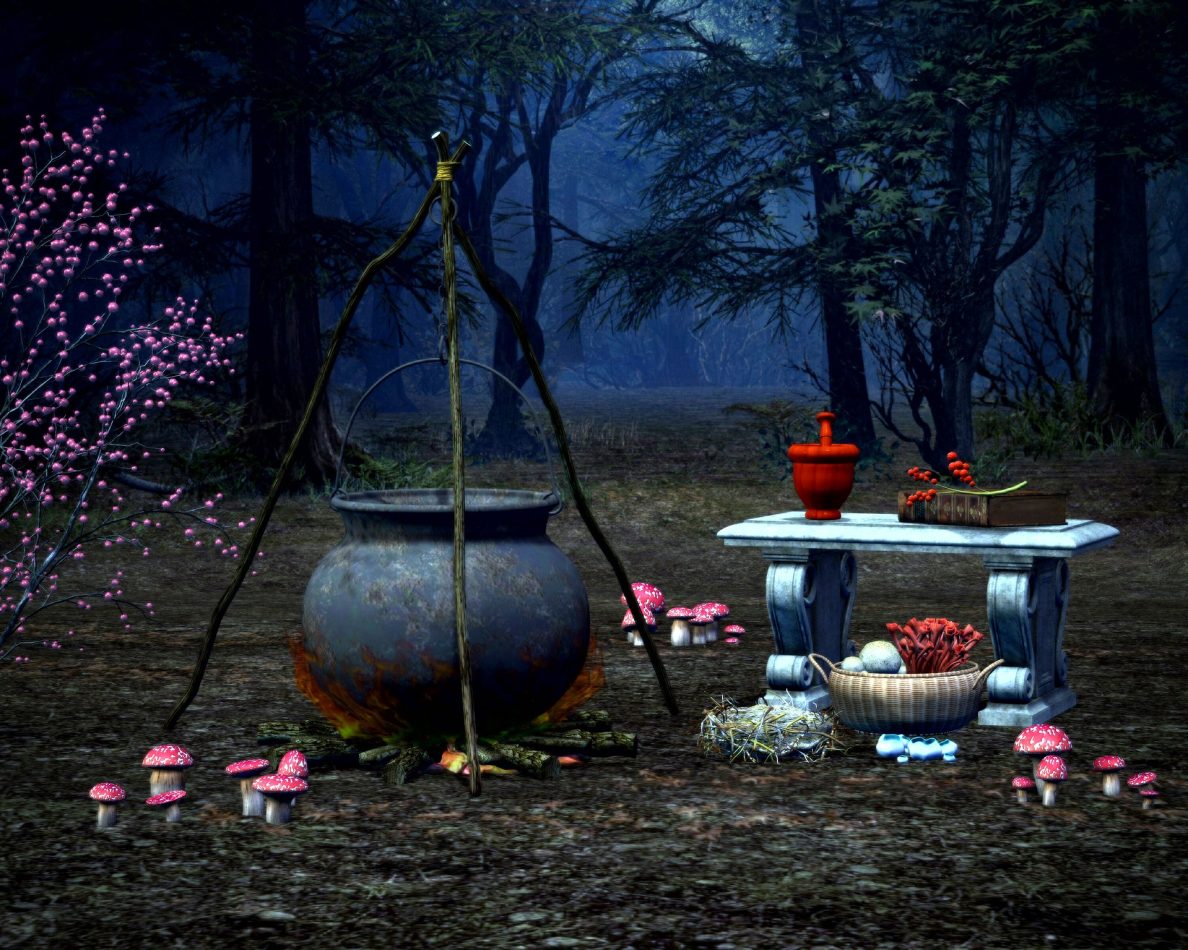
When you think about witches casting spell you probably see an image in your mind of black clad women stirring a steaming large black pot over a fire. Or maybe you think of a witch waving a wand and turning a prince into a frog, or vice versa. But that’s Disney magic. Real magic is often very subtle and hard to detect. So you have to be on the lookout for small changes after you cast a spell.

When you cast a spell you are directing energy that will create change like the ripples in a pond. The changes that are created often won’t be obvious or dramatic. But the spells that you cast will result in events unfolding to give you the opportunity to make huge changes in your life. You have to be paying attention and you have to seize the opportunities.

Often people who are new to Wicca will think that a spell they cast didn’t work because they won’t be looking for the signs that it did work. For example if you cast a spell to get a new job you probably will not get a call out of the blue from the company you have been dying to work for. But, you might find yourself talking to a stranger at a party or on the train who works at that company and can recommend you for a job to HR department. Or if you want to move up at your current company a job might open up that would be perfect for you.

If you cast a spell for more money a stack of money won’t just appear, and the winning lottery numbers probably won’t either. But you might find a unique opportunity for a part time income like teaching something that you love. Be ready for all the opportunities that spells will create for you.


Wicca: Wicca Mastery: 38 Essential Wiccan Laws and Principles To Live By, The Definitive Guide!

Desmond Blair


Celebrating Other Spirituality 365 Days A Year – Neptunalia

mystica

July 23

Neptunalia


The Neptunalia venerates the divine God of the Sea, Neptune. Originally a freshwater God, Neptune acquired his maritime status when we was identified with the Greek Poseidon At Rome, there was a temple dedicated to Neptune in the circus cus Flaminius within the Campus Martius where his festivals were held on July 23 and December 1.

Neptune was one of only three Gods to whom a bull might be sacrificed (the others were Mars and Apollo). According to legend, he had a wife whose name was Salacia, Goddess of the salty sea and inland guardian of springs. It is believed that the Goddess Sulis, who is still worshiped at the sacred hot springs at Bath, may have been an aspect of Salacia.

Mighty Neptune, may it please,

Thee, the Rector of the Seas.

That my Barque may safely runne,

Through thy watrie-region;

And A Tunnie-fish shall be,

Offer’d up, with thanks to thee

—Robert Herrick, “To Neptune, Hesperides” (1648)


Seasons of the Witch – Legends and Lore, Ancient Holidays And Some Not So Ancient!

celtic cross


Seasons of the Witch – Legends and Lore, Ancient Holidays And Some Not So Ancient!


Today Is …

Salacia (Greek Amphitrite) was the Roman Goddess of Salt Water and wife of Neptune. The celebration was linked with the need for fresh water in the summer.

Swedish Feast of St. Brigit. Kindle a fire or light a candle in Her honor.

The Festival of Neptunalia was celebrated annually on this date in ancient Rome to honor Neptune, the lord of the sea. In Italy, many modern Witches honor Neptune on this day by lighting a blue candle, inscribed with his trident symbol and anointed with seawater, and placing it on an altar along with various objects from the sea (such as seashells, pieces of driftwood, and so forth).

Mayan Sun Festival. This celebration honors the Sun God Ahau Kin. Devotions of food, song, prayer are offered, and devotees make a ritual procession that symbolically travels to the four quarters of the universe.

Thunder God -On the 24th day of the 6th lunar month, the Chinese celebrate the Thunder-god (Leigong) or God of War by setting off fireworks. This is also the Birthday of the Lotus. Blackburn, Bonnie & Leofranc Holford-Strevens, The Oxford Companion to the Year, Oxford University Press 1999

Ice Cream Day – As far as I know, this holiday doesn’t have any ancient roots, but it seems like a particularly summer festival and a good excuse for going and getting some ice cream.

Neptunalia – In ancient Rome, this holiday was usually celebrated with alfresco revelries. However Horace (Odes 3.28) preferred to stay home with a girlfriend and superior wine. Blackburn, Bonnie & Leofranc Holford-Strevens, The Oxford Companion to the Year, Oxford University Press 1999

Remember The Ancient Ways and Keep Them Holy!

• • • •.

Courtesy of GrannyMoonsMorningFeast


The WItches Correspondences for Thursday, July 23

Enjoy Nature

The WItches Correspondences for Thursday, July 23

Thursday (Thor’s day)


Planet: Jupiter

Colors: Purple, Deep Blue

Crystals: Amethyst, Lepidolite, Sugilite, Tin

Aroma: Melissa, Clove, Oakmoss, Jupiter Oil, Cinnamon, Musk, Nutmeg, and Sage

Herb: Cinquefoil

Ruled by the planet Jupiter and dedicated to Thor, god of thunder and agricultural work. His parallels in various European Traditions include Zeus, Taranis, Perun, and Perkunas.

Magical aspects: controlled optimism, energetic growth, physical well-being, material succss, expansion, money/wealth, prosperity, leadership, and generosity.

Thursday is the day of Jupiter, the largest of the planets and said to be the most powerful. Spellcasters would be wise to use this day for attempting wealth, success and prosperity spells.

Thursday is also associated (in Greek mythology) to Thor – Thor’s day – and some even say that Jupiter and Thor are one in the same. Both are strong and powerful, yet wise and just. Try a small prayer to

Jupiter before commencing any ritual on Thursday as a sign of respect.

This is the proper day of the week to perform spells and rituals involving luck, happiness, health, legal matters, male fertility, treasure, wealth, honour, riches, clothing, money, desires, business, group pursuits, joy, laughter, and expansion


Correspondences for the Moon In Scorpio

Lady Annabella

Correspondences for the Moon In Scorpio


General: Loyalty, ownership (but watch out for suspicion and anger), matters requiring insight, increasing your libido or to attract passionate love (be careful though as relationships with a Scorpio influence are likely to be transformational and not always predictable!), healing of the mind and emotions, scrying, concentration, single mindedness, rebirth, transformation, wisdom, karma and instinct.

Watch out for secrets, lies, jealousy and suspicion, lack of forgiveness, grudges and hate.

New Moon: Power, transformation, karma, instincts, clarity, wisdom, stop gossip, emotions, endings, death, rebirth and past life work.

Full Moon: energy, resources and transformation

Element: Water

Color: Deep red

Incense: Basil, sage, catnip, coriander, sandalwood, thyme, nettle

Scorpio Incense Blend: Equal parts of sandalwood, thyme and safe with a few drops of coriander essential oil.


Moon Magic – Pagan Portals

Rachel Patterson


The Witches Almanac for Thursday, July 23

Moonlight Flight

The Witches Almanac for Thursday, July 23

Thursday (Jupiter): Expansion, money, prosperity, and generosity.

Mysteries of Santa Cristina (Italian)


Waxing Moon

The Waxing Moon is the ideal time for magick to draw things toward you.

Moon phase: First Quarter

Moon Sign: Libra

Libra: Favors cooperation, social activities, beautification of surroundings, balance, and partnership.

Moon enters Scorpio 10: 07 pm

Scorpio: Increases awareness of psychic power. Precipitates psychic crises and ends connections thoroughly. People tend to brood and become secretive.

Incense: Mulberry

Color: Crimson


Thursday’s Witchery

Love Spell


Thursday’s Witchery


Today is the day for prosperity work of all kinds. It can also be used for healing work, whether that is a physical healing of an illness or an emotional healing. Also remember that you have to follow up your healing work and prosperity magick and physical action.

I can’t tell you the number of times I have met new witches who complain to me that their prosperity spell or “I need a better job” spell did not work as they expected. They’ll ramble on and on about how much time and money they spent working their magick….but, alas, they had no glorious manifestion of wealth or fabulous job that suddenly dropped out of the sky and landed in their laps.

Then, when I gently ask them, “Did you enchant your resume or application when you filled it out? Did you do a little confidence-boosting spellwork when you went to apply for the job or went to the interview?” typically they give me a blank, confused stare.

Nine times out of ten, their response is, “You mean I have to go out and actually look for the job too?” Um, yes, my dear, you certainly do. Magick follows the path of least resistance, which means it’s going to manifest along the simplest, quickest route. Get out there and hit the pavement. See what you can find. Times are tough and competition for good jobs is fierce, so you need whatever edge you can get. For folks like us, we’re going to get the edge by using our magick and our spellcraft.

Thursdays have such a rich source of magick for us to draw upon that, honestly, the sky is the limit. This is the day associated with the gods of the sky and heavens, after all. Get to know these deities and add their wisdom and magick into your days


Book of Witchery: Spells, Charms & Correspondences for Every Day of the Week

Ellen Dugan


Thursday

Blessed Be in Autumn


Thursday

Jupiter’s (Thor’s) day


The name is derived from Old English Þūnresdæg and Middle English Thuresday (with loss of -n-, first in northern dialects, from influence of Old Norse Þorsdagr) meaning “Thor’s Day”. Thunor, Donar (German, Donnerstag) and Thor are derived from the name of the Germanic god of thunder, Thunraz, equivalent to Jupiter in the interpretatio romana.

In most Romance languages, the day is named after the Roman god Jupiter, who was the god of sky and thunder. In Latin, the day was known as Iovis Dies, “Jupiter’s Day”. In Latin, the genitive or possessive case of Jupiter was Iovis/Jovis and thus in most Romance languages it became the word for Thursday: Italian giovedì, Spanish jueves, French jeudi, Sardinian jòvia, Catalan dijous, and Romanian joi. This is also reflected in the p-Celtic Welsh dydd Iau.

The astrological and astronomical sign of the planet Jupiter is sometimes used to represent Thursday.

Since the Roman god Jupiter was identified with Thunor (Norse Thor in northern Europe), most Germanic languages name the day after this god: Torsdag in Danish, Norwegian, and Swedish, Hósdagur/Tórsdagur in Faroese, Donnerstag in German or Donderdag in Dutch. Finnish and Northern Sami, both non-Germanic (Uralic) languages, uses the borrowing “Torstai” and “Duorastat”. In the extinct Polabian Slavic language, it was perundan, Perun being the Slavic equivalent of Thor.

There are a number of modern names imitating the naming of Thursday after an equivalent of “Jupiter” in local tradition. In most of the languages of India, the word for Thursday is Guruvar- var meaning day and guru being the style for Bṛhaspati, guru to the gods and regent of the planet Jupiter. In Thai, the word is Wan Pharuehatsabodi – referring to the Hindu deity Bṛhaspati, also associated with Jupiter. En was an old Illyrian deity and in his honor in the Albanian language Thursday is called “Enjte”. In the Nahuatl language, Thursday is Tezcatlipotōnal meaning “day of Tezcatlipoca”.

Tasha’s Day by Day Planner for July 2015

Celtic Fire

Tasha’s Day by Day Planner for July 2015


Thu. 7/23 Arbitrating Libra Moon brings out fair mindedness. Mercury enters Leo enhancing romantic communication. Sun/Mercury speeds our words.

Fri. 7/24 Passionate Scorpio Moon heightens feelings today.

Sat. 7/25 Intense Scorpio Moon suggests a tight rein on feelings especially with Venus turning retrograde and a strong Mars/Uranus aspect. Watch out!

Sun. 7/26 Adventuresome Sagittarius Moon is enhanced by Uranus turning retrograde. Almost anything could happen.

Mon. 7/27 Philosophical Sagittarius Moon helps us cope.


Contact tashahal@gmail.com

Courtesy of GrannyMoonsMorningFeast


Lunabar Moon Almanack for Thursday, 23 July, 2015

fc58b-wish-upon-a-harvest-moon

Lunabar Moon Almanack for Thursday, 23 July, 2015


First Quarter Moon, at 11h. 59m. evening.

Moon in Via Combusta.

Moon in 0th degree of the Sign Scorpio, the Scorpion;

also in 37th deg. of the Constellation Virgo, the Virgin.

Moonset: 12:00 morn. Moonrise: 1:01 eve. Souths: 6:48 eve.

Waxing Moon

Time: From New Moon To Full (Approx. 14 Days)

Goddess Aspect: Maiden

Associated Goddesses: Artemis, Branwen, Eriu, Nymph, Epona

Magickal Attributes: Invoking Beginnings, New Projects, Ideas, Inspiriation, Energy, Vitality, Freedom. Workings On This Day Are For “Constructive” Magick (Love, Wealth,

Success, Courage, Friendship, Luck Or Health.)

Perform magic on waxing moons to attract a new quality or behavior, to increase the light within, to attain personal and spiritual growth and greater awareness. The quarter moon suggests a period of overcoming obstacles and continuing on the path to growth.

Spells and rituals involving the Air Element should be performed when the Moon is in the Air sign: Gemini, Libra, Aquarius.

Aspects of Scorpio ~ Yin, Feminine, Lunar, Negative, Nocturnal, Watery, Fixed, Fruitful, Horary Northern, Autumnal, Austral, Obeying, Moist, Dumb, Mute, Cold.

• • • •

Moon Moon, Mother Moon

Lunar Lore

The Moon in conjunction with Jupiter,

is found to be a good day in all humane affairs.

– Bethem’s “Centiloquium”

)0(

The Moon in opposition to Mars,

you are advised to begin nothing of weight that day.

~ Bethem’s “Centiloquium”.

• • • •

It’s the first day of a new astrological month as the Sun enters the midsummer sign of Leo the Lion. The Sun is most at home in Leo, where it represents the open heart experiencing pure love. One problem associated with Leo is being so full of our own energy that we lose sight of others. We can feel like a beautiful garden flower in full bloom, but we crave appreciation. We need to be seen.

• • • •

Courtesy of GrannyMoonsMorningFeast


Lunabar Sun Almanack for Thursday, 23 July, 2015

Sun+Wallpapers

Lunabar Sun Almanack for Thursday, 23 July, 2015


Sunrise: 6:01 morn. Sunset: 8:27 eve.

Length of Day: 14h. 26m.

Dawn: 5:30 morn. Dusk: 8:58 eve.

Length of Twilight: 0h. 30m.

Sun in 0th degree of the Sign Leo, the Lion;

also in 3rd degree of the Constellation Crabba, the Crab;


Solar Lore

Sun set in a clear,

Easterly wind’s near;

Sun set in a bank,

Westerly will not lack.

~ St. Andrews, Scotland


Aspects of Yang, Masculine, Solar, Positive, Diurnal, Fiery, Fixed, Barren, Horary Eastern, Summery, Boreal, Commanding, Feral, Bestial, Animal, Four-footed, Dry, Bitter, Hot

• • • •

Courtesy of GrannyMoonsMorningFeast


A Very Glorious & Blessed Thursday Is Our Wish For All Of Our Dear Brothers & Sisters Of The Craft!

celtic doves

Blessed lady

Loving and wise

Help us to let go of hatred

And open our heart to compassion instead.


Let us be patient

With the shortcomings of others

And let us have tolerance

For those who are different.


Help us to remember

That we are all your children

More alike than not

And equally loved in your eyes.


Banish the darkness

And negativity from our thoughts

Wash away prejudice

With the purity of your waters.


Let us love others

Let us love ourselves

As all are loved

By your encompassing spirit.

So mote it be.


Poppet Construction – How to Make Your Own Magical Doll

Poppet Construction – How to Make Your Own Magical Doll


A poppet can be as simple or as elaborate as you like — it all depends on how much time and effort you want to put into it. You can construct one out of just about any material — cloth, clay, wood, wax. Use your imagination! In some magical traditions, it’s believed that the more work you put into it, and the more complex it is, the stronger your link will be to your goal. Because a poppet is a device for sympathetic magic, all of its components will be symbols of what it is you hope to achieve.

You can do your poppet-making as part of the working itself, or it can be made ahead of time so you can use the poppet later on. Which method you choose is really up to you.

Remember, your poppet represents a person, so figure out before you begin who it symbolizes. Is it you? A friend who’s asked you for help? An un-named lover you want to bring into your life? A gossip you want to shut up? The possibilities are endless, but just like in any spell working, you’ll need to set a goal before you begin. It keeps you from having to deal with “do-overs” later. These instructions are for a basic poppet construction, using fabric. Feel free to modify your design as you need to.

Selecting Your Fabric

There are no real rules when it comes to choosing your material, but it’s not a bad idea to select fabric based on your goal. If you’re doing a money spell, use a piece of green or gold cloth. If you’re looking at healing, perhaps something in a soft blue or silver would be best. Check out fabric stores around the holidays, and you can find all kinds of neat patterns.

Valentine’s Day designs are perfect for matters of the heart, and there are plenty of prints with dollar signs, coins, stars and moons, and other fun designs.

Another option is to use fabric that links the poppet to the person it represents. Doing a healing spell for a friend? Ask the person for an old t-shirt. If you’re trying to draw love into your life, consider using a scrap from that sexy lingerie you wore last night. If you just can’t find the right material, use a plain muslin or white felt. Here are a few ideas for designs and colors for poppet magic.

  • Animals: Brown or green fabrics, patterns with cats or dogs, anything pet-related
  • Banishing: Black fabric, designs such as swords or wands, dragons or fire
  • Creativity: Orange or yellow fabric, prints of suns or other fire symbols
  • Healing: Silver, white or blue, with designs of clouds or other air symbols
  • Love: Pink or red material, designs like hearts, roses or other flowers, Cupids
  • Money: Silver, gold or green fabric, or designs of dollar bills or coins, cups or earthy symbols
  • Protection: Red or white material, with patterns of shields, keys or locks, fences, mistletoe

When it comes to types of fabric, use what’s easiest for you to work with. Cotton prints are easy to sew, but if you’ve never used a needle and thread before, you might want to try something stiffer like felt — it comes in every color you can imagine, and will hold its shape as you sew. If you’re an experienced sewer, use anything you like.

A poppet represents a person, so ideally it should look (sort of) like a person. Give it a head, two arms, two legs, a torso. You can make your own outline or you can use the ultimate poppet pattern — a gingerbread man. If you’re doing a spell for an animal — such as a healing spell for a sick pet — make the poppet shape accordingly. Your poppet doesn’t have to be huge, but it should be big enough that you can stuff it with your ingredients later.

Take two pieces of your fabric, and place them right side together on a flat surface. Place the pattern on top, pin it in place, and cut it out. Leave a little room around the edges for a seam allowance — usually a 3/8″ margin is good. Remove the pattern, and there are your two poppet shapes. Time to start sewing!

If you’ve never sewn anything by hand before, don’t panic. It’s not hard, but it does require some patience. You could always use a sewing machine if you’re pressed for time, but most experienced poppet-makers agree that it’s worth the effort to do it by hand. Pin the two pieces of material with the right sides together, and stitch around the edges. Leave an opening somewhere, wide enough to stick a couple of fingers in. Turn the poppet inside out, and begin stuffing.

Personalize Your Poppet

Fill your poppet with something soft, like polyfill or cotton balls. Old pantyhose work nicely too. Work the stuffing all the way into the nooks and crannies of the arms and legs, and then fill the torso and head.

This is where you’ll place your spell components — herbs, stones, whatever. In some magical traditions, something from the person represented goes inside the poppet. This is alternately referred to as a taglock or a magical link — it can be bits of hair, nail clippings, body fluids, a business card, or even a photograph. Once everything is inside, sew the poppet completely shut.

The more you can customize your poppet, the better. Even if you’ve placed a magical link, or taglock, inside, you’ll want to decorate the outside too. Draw or paint or sew a face onto your doll. Add yard or string for hair. Dress your poppet in something that looks like the person’s clothing. Copy any tattoos, scars, or distinguishing features onto the poppet as well. Add magical or astrological symbols if you like. While you’re doing this, tell the poppet who it represents. You can say something along the lines of, “I have made you, and you are Jane Jones.”

Your poppet can be used for any number of things — love, money, protection, healing, to get a job. Anything you can imagine, you can make a poppet to bring it about. Simply figure out your goal and the means to achieve it. The only limits on poppet construction are your own creativity and imagination.
Source:

 Article found on & owned by About.com

Poppet History – Global Poppet Magic

Poppet History – Global Poppet Magic

Ramses and the Poppets:

When most people think of a poppet, they automatically think of the Voodoo doll, thanks to this item’s negative portrayal in movies and on television. However, the use of dolls in sympathetic magic goes back several millennia. Back in the days of ancient Egypt, the enemies of Ramses III (who were numerous, and included some of his harem women and at least one high-ranking official) used wax images of the Pharaoh, to bring about his death.

Greek Kolossi:

It wasn’t uncommon for the Greeks to use sympathetic magic in workings related to love or war. Christopher Faraone, Professor of Classical Languages and Literatures at the University of Chicago, is one of the foremost authorities on Greek magic today, and says that Greek poppets called Kolossoi were sometimes used to restrain a ghost or even a dangerous deity, or to bind two lovers together. In Idyll 2, The Witch (Pharmakeutria), written about 200 b.c.e., the tragedian Theocritus refers to melting and burning wax dolls. He relates the tale of Simaetha, rejected by Delphis, attempts to get her lover back with magic.

The Princess Who Played with Dolls:

Wax dolls certainly weren’t limited to the ancient classical world. The one-time Princess of Wales, Caroline of Brunswick, was married to the man who later became King George IV, and evidently couldn’t stand him. She spent many hours forming wax dolls of her husband and jabbing them with pins. Although there’s no concrete evidence as to what this may have done to George, when Caroline ran off to Italy with her young lover, George didn’t object.

The royal couple remained married but lived separately until Caroline’s death in 1821, according to Witchcraft and Evidence in Early Modern England by Malcolm Gaskill.

West African Fetish Magic:

West African slaves brought with them a doll called a fetish when they were forced to leave their homes and come to the American colonies. In this case, the doll is not so much representative of an individual, but is in fact possessed by spirits connected to the doll’s owner. A fetish contains significant power and is typically worn or carried by its owner as a talisman. During America’s Colonial period, slave owners were allowed to kill any slave found with a fetish in his possession.

American Hoodoo and Folk Magic:

In American Hoodoo and folk magic, the use of poppets as a magical tool became popular following the Civil War. There is some dispute as to whether the dolls are used at all in Haiti, which is the home of Vodoun religion, and a few sources disagree on whether the use of poppets is truly a Vodoun practice or not. However, the Voodoo Museum of New Orleans does stock a variety of dolls in their gift shop.

Regardless of how you make your poppet — out of cloth, a chunk of meat, or a glob of wax, remember that poppets have a long tradition behind them, and that tradition is influences by the magical practices of a wide range of cultures. Treat your poppets well, and they will do the same for you.


Source:

Are Voodoo Dolls Real?

Are Voodoo Dolls Real?


Question: Are Voodoo Dolls Real?

Answer:

The Myth

Popular culture depicts the “Voodoo doll” as a poppet bearing the resemblance of an enemy. The target is cursed with misfortune, pain and even death via the thrusting of pins into the doll. Such items are not a part of traditional Vodou, although some Vodouisants, primarily in New Orleans, have now adopted them, often for sale to tourists.

Possible Origin

Tales of similar poppets have existed in European witch folklore for centuries.

It’s certainly possible that Europeans, knowing very little about Vodou and commonly decrying it as evil and Satanic, merged rumors of Vodou with familiar witchcraft rumors from back home.

Pwen

In Vodou, a pwen is an item filled with particular components that appeal to a particular lwa. They are meant to attract a lwa and gain its influences for a person or place. Pwen come in a variety of forms, including dolls. Pwen dolls can be found in a variety of forms, from crude poppets to elaborate works of art.


Source:

Vodou, an Introduction for Beginners

Vodou, an Introduction for Beginners

Vodou (Also spelled Vodoun, Voodoo, and several other variants) is a syncretic religion combining Roman Catholicism and native African religion, particularly the religion of the Dahomey region of Africa (the modern day nation of Benin). It is primarily found in Haiti, New Orleans, and other locations within the Caribbean.

Monotheistic Religion:

Followers of Vodou, known as Vodouisants, believe in a single, supreme godhead that can be equated with the Catholic God.

This deity is known as Bondye.

The Lwa:

Vodouisants also accept the existence of lesser beings, which they call loa or lwa, which are more intimately involved in day-to-day life, (as opposed to Bondye, who is a remote figure). The lwa are frequently invited to possess a believer during ritual so that the community can directly interact with them.

The relationship between humans and lwa is a reciprocal one. Believers provide food and other items that appeal to the lwa in exchange for their assistance.

Vilokan:

Vilokan is the home of the lwa and the deceased. It is commonly described as a submerged and forested island. It is guarded by the lwa Legba, who must be appeased before practitioners can speak to any other Vilokan resident.


Animal Sacrifice:

A variety of animals might be killed during a Vodou ritual, depending upon the lwa being addressed. It provides spiritual sustenance for the lwa, while the flesh of the animal is then cooked and eaten by participants.

Veves:

Rituals commonly involve the drawing of certain symbols known as veves with cornmeal or other powder. Each lwa has its own symbol, and some have multiple symbols associated with them.

Voodoo Dolls:

The common perception of Vodouisants poking pins into dolls does not reflect traditional Vodou.

However, Vodouisants do dedicate dolls to particular lwa and use them to attract a lwa’s influence.

Non-Standardized Practices:

There is no standardized dogma within Vodou. Two temples within the same city might therefore teach different mythologies and appeal to the lwa in different ways. As such, the information provided here cannot always reflect the beliefs of all Vodou believers. For example, sometimes lwa are associated with different families, Catholic saints, or veves. Some common variations are included here.

History:

African slaves brought their native traditions with them when they were forcefully transported to the new world. However, they were generally forbidden from practicing their religion, so they started to equate their gods with Catholic saints and perform their rituals using the items and imagery of the Catholic Church.

Relationship with Christianity:

If a Vodou practitioner considers himself Christian, he generally professes to be a Catholic Christian, and many Vodou practitioners do also consider themselves Catholics. Some see the saints and spirits to be one and the same, while others even today still hold that the Catholic accouterments are primarily for appearance.

Misconceptions:

Popular culture has strongly associated Vodou with devil worship, torture, cannibalism and malevolent magical workings. This is largely the product of Hollywood coupled with historical misrepresentations and misunderstandings of the faith. Slave uprisings in Vodou-influenced areas such as Haiti were violent and brutal, and white settlers came to associate the religion with the violence, as well as embrace many unfounded rumors about them.


Source:

What is Vodou?

What is Vodou?


Vodou, sometimes referred to as Voodoo, is a religion that blends Catholicism with West African diasporic faiths. Primarily practiced in the Caribbean, Vodoun incorporates ancestor worship and animism alongside saints and African gods. Many of the traditions followed today are directly related to those brought to Haiti by enslaved Africans hundreds of years ago. During the colonization of Hispaniola, Africans from many different tribes brought their customs with them.

These beliefs were blended with the native Taino Indians of Haiti, along with the influence of Spanish and French Catholicism.

During the late 18th century, there were a number of slave rebellions in Haiti, and former slave Touissaint L’Ouverture led battles against the French colonists. Haitian lore attributes L’Ouverture’s success to a Vodou ceremony — according to legend, this was the beginning of the revolution. Today, while many of Haiti’s people identify as either Protestant or Catholic, nearly all acknowledge the country’s connection with Vodou.

Bob Corbett of Webster University has a wonderful outline of the basic beliefs of Vodou on his page at Introduction to Voodoo in Haiti. He describes the basic concepts of Vodou, as well as the deities and ritual format. Corbett reminds his students “to recognize that Voodoo is Haiti’s religion, it is taken very seriously not merely by unlettered peasants, but many intelligent and learned members of the Haitian society believe as sincerely in Voodoo as do German theology professors in their Christianity.”

Following the January 2010 earthquake that devastated Haiti, Vodou was brought to the forefront of the public’s attention. A scholarly association for the study of Haitian Vodou was formed at University of California, Santa Barbara, and named Kosanba. Their website says, “The presence, role, and importance of Vodou in Haitian history, society, and culture are unarguable, and recognizably a part of the national ethos. The impact of the religion qua spiritual and intellectual disciplines on popular national institutions, human and gender relations, the family, that plastic arts, philosophy and ethics, oral and written literature, language, popular and sacred music, science and technology and the healing arts, is indisputable.”


Source:

Ebbos in Santeria – Sacrifices and Offerings

Ebbos in Santeria – Sacrifices and Offerings


Ebbos (or Ebos) are a central part of Santeria practice. Humans and orishas both need an energy force known as ashe in order to succeed; orishas, in fact, need it in order to survive. So if one would like to be favored by the orishas, or even just pay respect to these beings that are intimately involved with forces in the physical world, one must offer ashe. All things have some quantity of ashe, but nothing is more potent than blood.

Sacrifice is a method of delivering that ashe to the orishas so they, in turn, can use ashe for the petitioner’s benefit.

Types of Offerings:

Animal sacrifices are by far the most known type of offerings. However, there are many others. One may need to pledge to do a particular action, or abstain from certain foods or activities. Candles and other items may be burned, or fruits or flowers may be offered. Singing, drumming and dancing also contribute ashe to the orishas.

Creating Talismans:

Food is the usual offering in the creation of talismans. A talisman provides certain magical qualities to the person wearing it. In order to infuse as item with such influence, ashe must first be sacrificed.

Votive Offerings:

Those who wish to more generally attract the positive aspects of an orisha might make a votive offering. These are items that are left at a shrine or otherwise put on display as a gift to the orishas.

Animal Sacrifice Where the Meat is Eaten:

Most ceremonies that involve animal sacrifice also involve the participants eating the flesh of the slaughtered animal.

The orishas are only interested in the blood. As such, once the blood is drained and offered, the meat is eaten. Indeed, the preparation of such a meal is an aspect of the overall ritual.

There’s a variety of purposes for such a sacrifice. Initiations require blood sacrifice because the new santero or santera must be able to be possessed by the orishas and interpret their wishes.

Santeria believers do not merely approach the orishas when they want something. It is a continual reciprocal arrangement. Blood may therefore be sacrificed as a way of saying thank you after the receiving of good fortune or the resolution of a difficult matter.

Animal Sacrifice When Meat is Discarded:

When the sacrifice is made as part of purification rituals, the meat is not eaten. It is understood that the animal takes the impurity upon itself. Eating its flesh would simply put the impurity back into everyone who partook of the meal. In these cases the animal is discarded and left to rot, often in a location of importance to the orisha being approached.

Legality:

The Supreme Court of the United States has ruled that religious animal sacrifice cannot be made illegal, as it falls under freedom of religion. However, those that perform animal sacrifices do need to follow certain rules to limit the suffering of the animals, just as slaughterhouses have to do the same. Santeria communities do not find these rules to be burdensome, as they have no interest in making the animals suffer.

What is becoming more controversial is the discarding of purification sacrifices. The discarding of carcasses in certain locations is important to many believers, but that leaves local city workers the task of cleaning up the rotten bodies. City governments and Santeria communities need to work together to find compromises on the subject, and the Supreme Court also ruled that related ordinances should not be overly burdensome to believers.


Source:

The Orishas

The Orishas

Gods of Santeria

The orishas are the gods of Santeria, the beings that believers interact with on a regular basis. Each orisha has its own distinct personality and has a wide variety of strengths, weaknesses and interests. In many ways, therefore, understanding an orisha is like understanding another human being.

Olodumare

There is also a more removed being known as Olodumare, who created the orishas but later retreated from his creations.

Some describe the orishas as being manifestations or aspects of Olodumare.Olodumare is the source of ashe, which all living things must have in order to survive and succeed, including the orishas. Olodumare alone is self-sustaining, not needing ashe to be provided by another source.

Humans and orishas, however, provide ashe to each other through a variety of rituals. The best source of ashe is in sacrificial blood, which is why animal sacrifice plays such a prominent role in Santeria. Humans provide ashe through blood or other ritual actions, and the orisha becomes a conduit of ashe from Olodumare to the petitioner to assist in the petitioner’s endeavors.

Old World and New World

The number of orishas varies among believers. In the original African belief system from which Santeria originates, there are hundreds of orishas. New World Santeria believers, on the other hand, generally only work with a handful of them.In the New World these beings are commonly seen as family: they marry each other, give birth to others, and so forth.

In that sense they work more like Western pantheons like those of the Greeks or Romans.

In Africa, however, there was no such familiarity between orishas, in part because their followers were not strongly connected. Each African city-state had its own single, patron deity. A priest could only be dedicated to that single orisha of the city, and that orisha was honored above all others.

In the New World, Africans from many city-states were thrown together into common slavery. It made little sense or practicality for a slave community to to focus on a single orisha in that scenario. As such, the orishas came to be regarded as roughly equals as cultures mixed. Priests were trained to work with multiple orishas instead of being exclusively dedicated to a single one. This helped the religion to survive. Even if a priest of one orisha died, there would be others in the community trained to work with that same orisha.

The Patakis

The patakis, or stories of the orishas, are not standardized and are frequently contradictory. Part of this comes from the fact that these stories come from a variety of different African cities, each of which had their own ideas about the nature of the orishas. This trend is encouraged by the fact that each Santeria community today remains independent of other communities. There is no expectation that each community would function exactly alike or understand the orishas in exactly the same way.As such, these stories give multiple origin stories for the orishas. Sometimes they are depicted as once-mortal figures, often leaders, who were elevated by Olodumare to divinity. Other times they are birthed as higher beings.

The purpose of these stories today is to teach lessons rather than relate some literal truth. As such, there is no concern about the literal truth of these tales or the fact that tales my contradict one another. Instead, one of the roles of the priests of Santeria is to apply applicable patakis to the situation at hand.

Catholic Masks

The orishas are equated with a variety of Catholic saints. This was a necessity when slave-owners refused to allow slaves to practice African religion. It is understood that the orishas wear many masks in order for people to better understand them. Santeros (Santeria priests) do not believe that the orishas and the saints are identical. The saint is a mask of the orisha, and it does no work the other way around. However, many of their clients are also Catholic, and they understand that such clients better identify with these beings under the guise of the saintly counterparts.

Source:
Article found on & probably owned by About.com