Herb of the Day for May 17th is Flax

Herb of the Day

Flax


                                                                         (Linum usitatissimum)


Mecicinal Uses: Flax is used as an aid to achieving cardiovascular health, to help in menopause, and as a mild laxative. The seed and the seed oil are being studied as a possible cure for cancer. The oil helps slow the kidney disease that accompanies lupus.      
                                                                                                                                       
The ground seed mixed with boiling water to make a thick mush is used for poultices. Any herb, such as smartweed, elm bark, hops, mullein, or any other herbs recommended, can be added. Use as a poultice on old sores, boils, inflammations, skin ulcers, wounds, and tumors. Poultices should be changed at least every 2 hours; have a new, hot poultice ready to apply before the old one is removed.                                                                                                  

Also used for female disorders, colon problems. Promotes strong nails, bones, and teeth and healthy skin. A decoction of the seeds can be used for coughs, catarrh, chronic bronchitis, asthma, pleurisy, fever, dropsy, leprosy, pimples, age spots, burns, scalds, gout, inflammation, cystitis, lung and chest problems, and digestive, gastritis, dyspepsia, diarrhea, and urinary disorders. To eliminate gallstones, take 1 1/2 to 2 tbsp. linseed oil and lie down on your left side for a half hour. The gallstones will pass into the intestines and be eliminated from there. Eating the seeds intact is useful for chronic constipation. The seeds swell up in the intestines, encouraging elimination by increasing the volume of fecal matter. For emollient uses and for rheumatic complaints, apply a linseed poultice. The oil was a folk remedy used for pleurisy and pneumonia.                                                                                             

The seed has been used for ages as a medicine. Take 1 tsp. of the whole seed mixed with water, orange juice, vegetable juice, etc., to provide a gentle lubricant laxative. Or use this mixture as an enema.                                       

To remove foreign bodies from the eye: place a grain of whole flaxseed under the lower lid, close the lids. The seed becomes surrounded by a thick, adherent mucilage, which entraps the foreign body, and soon carries it out from the angle of the eye.

Magickal uses: Flax is used to attract money and wealth, and is used in healing spells and rituals. When performinghealing rituals, sprinkle the altar with flax seeds and include in healing mixtures.

Properties: Antiseptic, anti-inflammatory, anti-tussive, demulcent, emollient, laxative, mucilaginous, pectoral, purgative, tonic. Contains Glycosides, gum, linamarin, linoleic acid, linolenic acids, mucilage, oleic acid, protein, saturated acids, tannins, and wax, vitamins A, B, D, E, minerals and amino acids.

Growth: Flax grows in a wide range through North America. Flax is a delicate annual plant 8-22 inches high; the slender, wiry, glabrous, single, leafy, stem has few branches and bears alternate, sessile, simple, entire, lanceolate to oblong, linear, leaves. The numerous leaves are stalk less, alternate, linear with three parallel nerves. Each branch has one or two, delicate, blue or violet-blue, five-petaled, funnel-shaped, slightly overlapping petals (1/2-3/4 inches across), flowers from June to August. The fruit is an 8- to 10-seeded capsule; the seeds are smooth, flattened, shiny, oval beaked, and light brown. Widely cultivated in the United States (mostly the northwestern states), Canada, and Europe but also found wild along roadsides, railroad lines, old fields, and in waste places. Native to Europe.
Author: Crick

Allergies: Anaphylaxis

As much as I talk about there being so much in nature’s bounty to help mitigate if not cure a person of the many ailments we can have with far fewer side-effects, there are some things that are just too much to be left to the less potent and subsequently slower acting natural remedies.  Here is where high-tech conventional medicine shines in all its fast-acting synthetic glory.

These are the times in which herbs are just not enough:

~~~

Anaphylaxis (an-a-fi-LAK-sis) is a serious, life-threatening allergic reaction most commonly experienced in reaction to foods, insect stings, medications and latex.

If you are allergic to a substance, your immune system overreacts to this allergen by releasing chemicals that cause allergy symptoms. Typically, these bothersome symptoms occur in one location of the body. However, some people are susceptible to a much more serious anaphylactic reaction. This reaction typically affects more than one part of the body at the same time.

Anaphylaxis or anaphylactic shock requires immediate medical treatment, including an injection of epinephrine and a trip to a hospital emergency room. If it isn’t treated properly, anaphylaxis can be fatal.

Certain people are more at risk of anaphylaxis. If you have allergies or asthma and have a family history of anaphylaxis, your risk is higher. And, if you’ve experienced anaphylaxis your risk of having another anaphylactic reaction is increased.

Accurate diagnosis and successful management of allergies is essential. An allergist / immunologist, often referred to as an allergist, has specialized training and experience to diagnose the problem and help you develop a plan to protect you in the future.

Symptoms
Symptoms of anaphylaxis typically start within 5 to 30 minutes of coming into contact with the allergen to which you are allergic. In some cases it may take more than an hour for you to notice anaphylactic symptoms.

Warning signs typically affect more than one part of the body and may include:

•    Red rash, with hives/welts, that is usually itchy
•    Swollen throat or swollen areas of the body
•    Wheezing
•    Passing out
•    Chest tightness
•    Trouble breathing
•    Hoarse voice
•    Trouble swallowing
•    Vomiting
•    Diarrhea
•    Stomach cramping
•    Pale or red color to the face and body
•    Feeling of impending doom

Diagnosis
To diagnose your risk of anaphylaxis or to determine whether previous symptoms were anaphylaxis-related, your allergist / immunologist will conduct a thorough investigation of all potential causes. Your allergist will ask for specific details regarding all past allergic reactions.
Treatment and Management

The best ways to manage your condition are:
•    Avoid allergens that trigger your allergic reactions
•    Be prepared for an emergency

If you are at risk of anaphylaxis, carry autoinjectable epinephrine (adrenaline). This is a single dose of medication that is injected into the thigh during an anaphylactic emergency.

It is important for you, family members and others in close contact with you to know how to use the autoinjector.

Complete an Anaphylaxis Action Plan and keep on file at work, school or other places where others may need to recognize your symptoms and provide treatment.

Important Reminder
If you think you are having an anaphylactic reaction, use your autoinjectable epinephrine and call 911 immediately. Your life depends on this. Don’t take an antihistamine or wait to see if symptoms get better.

Herbal Spirituality: Homegrown Smudge Sticks

If you like incorporating nature into your spiritual practices, growing your own herbs for creating smudge sticks may be up your cobblestone path.

Here is a nifty instructional from YouGrowGirl.com that gives step-by-step advice on how to put these together.

~~~

Smudge sticks are tightly bound bundles of dried woody, resinous herbs, that are slowly burned as a way to purify and cleanse the air. While the roots of burning a smudge stick, or smudging, is in North American Native purification rites and ceremony, they can be used by anyone to bring the woody smell of the outdoors inside.

If you have a garden, chances are good that you have enough ingredients to make at least one smudge stick. The traditional and most popular herbs used in smudging ceremonies are white sage (Salvia apiana), Cedar (Thuja), Sweetgrass (Hierochloe odorata), sagebrush (Artemisia californica), and mugwort (Artemisia vulgaris). However, in my travels I have noticed that the smudging sticks available vary by region and there seems to be a lot of opportunity to branch out (so to speak) with other woody, resinous herbs including, but not limited to:

Thyme (Thymus vulgaris), lavender, yarrow, juniper, pine, mullein (Verbascum thapsus), rosemary, lemon balm (Melissa officinalis), mint (Mentha), Bee Balm (Monarda), and catnip (Nepeta cataria) to name a few.

Make Your Own Homegrown Smudge Sticks

From Left to Right: white sage; cedar and white sage; cedar, white sage, and lavender; white sage; lavender and white sage; white sage bound with two different threads; cedar, white sage, and a very woody and resinous, heady orange-scented thyme (Thymus vulgaris ‘Orange Balsam’); pine and ‘Orange Balsam’ thyme. Top: Lavender (Lavandula angustifolia ‘Hidcote’). I used two varieties of lavender here, but I can’t recall the name of the other.

On Growing White Sage in a Cold Climate: The other day I harvested a large white sage (Salvia apiana) plant that I have been growing in my garden’s sandy, dry bed. This plant is on the cusp of hardy in my area (I am in zone 5-5bish and its hardiness begins at zone 6), but this year I decided to free it from life in a pot to see how it did in the ground. Unlike the specimens I saw growing wild in Northern Mexico, my plant grew gigantic leaves, most likely the result of the wet season we’ve had. Still, it has a very strong, medicinal odour typical of the plant. I’ve left enough in that soil that should we have a mild winter, it just might live through to the next season.

When Choosing and Harvesting Herbs: Please be careful as some herbs — even the culinary types — don’t lend themselves well to burning and can be toxic or set off dangerous allergic or asthmatic reactions in some people. I have often seen common garden sage (Salvia officinalis) used to make smudges. Years ago I tried to burn some and did not like the smell. I have since read that this is not a safe herb to burn despite its safety in a host of other applications. When in doubt, burn a very small amount outdoors, in order to test the smell and indicate whether you might have a problem with a particular herb. I also have a dangerously strong negative reaction toyarrow, so again, please use caution with this herb.

Harvest herbs on a sunny and dry day. Moist herbs will grow mouldy inside the bundle where there is very little air. Pick herbs on the day you plan to use them; resinous herbs tend to dry very quickly and are nearly impossible to wrap tightly once dry. A final note that when harvesting from the wild please leave enough plant behind that it may live on happily and healthfully. Use a sharp knife or clippers to cut stems and never dig up the root.

Choosing String: Remember that anything you use to bind the bundle will eventually burn so it is advisable to stick with natural materials that will not give off a toxic fume or compete with the smudge smells. I try to use as little string as possible to avoid creating a strong burning string smell. I suggest using thin, organic cotton string when you can. Embroidery floss separated into 4 threads (they typically come as 6 threads) is strong enough. Use a single color of string or experiment by mixing colors. I like using a simple color to bind and a subtle colour that compliments the foliage to make the handle. Red is a common colour for ceremonial usage, which is why you will see many commercially sold bundles bound with it.

How to Bind an Herbal Smudge Stick

Make Your Own Homegrown Smudge Sticks

The key to making a successful smudge stick is in binding tightly. I liken it to cigar making in that a tight bundle of leaves burns more slowly. I also find that the plant materials shrink as they dry and a loosely tied bundle is more likely to lose bits and pieces along the way or fall apart completely. With that in mind, grasp plants firmly and give the string a tight yank each time you turn or tie.

  • Step 1. Clip herbs into similarly sized lengths. Don’t skimp out — thick bundles smoulder slowly and are better looking. Pluck off any diseased or ugly leaves. Arrange the stems into a bundle and tie a tight knot around the stem end to secure. Wrap the string around the stems a few more times and then tie another knot to secure.
  • Step 2. Grasp the bundle with one hand and begin winding the string on an angle up to the tip of the bundle. Try to use as little string as possible and pull tightly as you go. I find that large-leaved herbs don’t need much binding, while very thin leaved herbs, especially conifers require more winding to prevent the leaves from falling out. You can leave the foliage loose at the end or fold under to keep everything tight.
  • Step 3. Turn the bundle around and begin winding down back to the start, creating a criss cross pattern overtop the first strings.
  • Step 4. You can choose now to either go back up and down again, retracing the path you took with another layer of string, or you can bind off and complete. I find that the pass tends to create a tighter bundle and is a good way to pull in and secure any pieces that got away the first time around. Wind plenty of string around the base of the bundle to create a handle. You can use as much string as you want here since this part will not burn. Tie off and clip any loose strings to create a neat and finished look.
  • Step 5. Set the bundles aside somewhere dry and dark where there is good air circulation. You can hang them using thin wires or Holiday tree ornament hooks wedged underneath the handles. You can also lay them out flat to dry, but here I suggest setting them on top of a screen or very loosely woven basket that is raised up off of any solid surfaces so that air can flow underneath and around the bundles.

Wait until your bundles are completely dry (this usually takes a few weeks at least) before burning them.

How to Use a Smudge Stick

Holding the “handle” of your smudge stick, light the end (a candle works best), being careful to avoid flyaway ends and falling embers or particularly combustable herbs. Hold the burning end over a clay bowl, ashtray, or other non-flammable container at all times. Allow the stick to burn for a few seconds and when it seems like it is going, carefully, gently blow or wave it to put out the flame. Allow the stick to smoulder for a few minutes; never leave its attendance. To extinguish, smother or crush the smouldering end until it goes out. Try to avoid using water as this can ruin the stick for further use.

~~~

Do you have a favorite smudge you like to make?  Share with us!

For the original article, check out Gifts from the Garden: Homegrown Smudge Sticks.

For dried herbs and smudge kits, pay a visit to Eupterra’s Store and subscribe for special coupons.


The Essential Series: Essential Pregnancy and Fertility

For all women out there interested in tidbits the natural world has to offer on pregnancy, fertility, and helping with conception especially at a later age, here is a detailed account chock full of good info to read on a real-life woman’s attempt and how she became pregnant in very quick time.

By using specific blends of essential oils, doing yoga stretches, and eating a healthy diet, women (and men – it doesn’t hurt for them to join in on this) can increase their fertility and virility by a lot, naturally.

Read on for the whole story!

~~~

HOW I GOT PREGNANT IN 1 CYCLE (…..AT THE AGE OF 34)

by Ashlee at The CrunchyMoose.com

DISCLOSURE: Please note these statements have not been evaluated by the Food and Drug Administration. This is for informational purposes only and is not intended to diagnose, treat, cure or prevent disease. I am not a doctor. I am simply sharing my experiences.

fb-preg1

My husband and I were beyond shocked to find out that we were pregnant already. I mean, I’m 34 1/2 and the internet & doctors act like that’s ancient. They said “at that age,” it could take up to 2 years. And while I didn’t think it would take that long, I didn’t think it would take a matter of weeks. So here’s how it happened.
First I need to give a disclaimer. My husband (Ryan) and I have never tried to get pregnant before now. As far as we know, we didn’t have any fertility issues. However, we are still SHOCKED that it happened so fast. I got pregnant in just 1 cycle. Especially since I was 34 and 1/2 when it happened. Not that 34 is old, but a woman’s chances of getting pregnant start declining quickly at 35.

Ryan & I agreed a long time ago that we were going to have 2 kids. We didn’t really discuss it much because we agreed and we knew it would happen when it should happen. Then we got married.

Two months later, I injured my back. The next 3 years were full of hospitals and surgeries. We were ready for baby #1 but I was not strong enough or healthy enough to carry a pregnancy. So we chose adoption. The adoption process was a little over a year and a half, which relatively speaking for adoptions, was quick. But at the time it felt like an eternity. Lots of disappointments and lots of sleepless nights. Now I know it was all because we were waiting on our perfect match, our son Morrison!

So after 3 years of surgeries and almost 2 years of the adoption process, we were tired. My plan was to still have 2 kids and they would be 2 years apart. Ryan’s plans had changed. He decided we were done.

When Morrison turned 1, I started suggesting (or….ummmmmmm……nagging) that it was time for baby #2. I was much healthier, stronger, and felt able to carry a pregnancy. For over a year, Ryan didn’t change his mind. Then one day he did!

The night Ryan told me he was ready, it was past my fertile time of my cycle. I had my period about a week later and then I was pregnant that month. A woman in her 30s has about a 15% chance of getting pregnant in a single cycle (source). And by doing these things, I was in that 15% chance in the first month trying.

ESSENTIAL OILS
When Ryan came home and said he was ready, I ran straight to the computer and ordered & rush shipped just about every essential oil listed in the fertility section of my Essential Oils Pocket Reference ( <<<—- Yep that’s the book I send to your for free when you sign up as a wholesale member with a premium starter kit with Young Living!). Young Living oils are the only oils I ever use and especially when I’m dealing with something as sensitive as my reproductive system. And I’m sure not going to gamble planning a family using adulterated essential oils that, well, just don’t work as well.

According the the Essential Oils Pocket Reference, essential oils and products for fertility in women are:

  • Clary Sage
  • Ylang Ylang
  • Sage
  • Anise Seed
  • Fennel
  • Yarrow
  • Geranium
  • Dragon Time – (blend of fennel, clary sage, marjoram, lavender, yarrow, jasmine)
  • Acceptance – (blend of almond oil, coriander, geranium, bergamot, frankincense, sandalwood, blue tansy, neroli, ylang ylang)
  • Mister – (blend of sesame seed oil, sage, fennel, lavender, myrtle, yarrow, peppermint)
  • SclarEssence – (blend of coriander, ylang ylang, bergamot, jasmine, geranium)
  • Lady Sclareol – (blend of coriander, geranium, vetiver, orange, clary sage, bergamot, ylang ylang, sandalwood, Spanish sage, jasmine, Idaho tansy)
  • EndoFlex – (blend of sesame seed oil, spearmint, sage, geranium, myrtle, German chamomile, nutmeg)
  • Progessence Plus- (“This is the first-ever PURE progesterone serum to enter the market. It supports balanced hormone levels. Pure, USP-grade, super-micornized progesterone from wild yam infused into pure, therapeutic-grade essential oils, creating a smooth, revitalizing serum that is easily absorbed into the skin.”* Blended with copaiba, sacred frankincense, cedarwood, bergamot, peppermint, rosewood, clove, coconut oil, vitamin E.)
  • Prenolone Plus Body Cream – (“This cream is a broad-spectrum hormone supplement that helps boost insufficient levels of estrogen and progesterone in both men and women.”* Blended with ylang ylang, clary sage, geranium, bergamot, fennel, sage, and yarrow.)

Believe me, once you do get pregnant, you’ll need those 11 oils to help you with a healthy pregnancy to combat everything from morning sickness to stretch marks.

Pregnancy Routine

I did this routine twice a day:

I rubbed Prenolone Plus Body Cream on my lower back and abdomen (about 1/2 – 1 teaspoon total, a small amount).
I put a roller ball on my Progessence Plus bottle. I rolled it on my neck (front and back) and on the Vita Flex points on my feet. I followed a U-shape. I started at my big toe, rolled up to my ankle along the outside of my foot, across my ankle bone, then along the outside of my foot to my little toe (see video below).
I used 1-2 essential oils topically and I varied which ones I used. I used whichever oils from the above list that “spoke” to me. I used Dragon Time during my period (some women prefer to use this the week before their period). The oils I used most were sage, ylang ylang, geranium, EndoFlex, and Lady Sclareol. I would fill my palm with carrier oil and then add 3-4 drops of essential oil (usually just 1 oil or blend, but sometimes would mix 2 oils together). I would rub that on my lower abdomen, lower back, and neck. I would also dab a little oil (neat) where I wear perfume on my neck and wrists (I like Lady Sclareol for that. It’s my all time favorite smelling blend.)

YOGA STRETCHES
I did these stretches twice a day – in the morning when I woke up and before bed. I held each stretch for 10 deep breaths. The routine takes about 15-20 minutes.

I am not a yogi. I am not flexible. I don’t work out much beyond gentle stretches and walking. These are easy, gentle stretches that anyone can do!

Cobra Pose (If you are able to straighten your arms and arch your back more, go for it! Given my back history, my arch was about as deep as the picture below.)


Cobbler’s Pose (heels together)


Lotus Pose (ankles crossed)


Supported Bridge Pose


Legs on the Wall Pose


Crescent Lunge (10 breaths each leg)


Cat / Cow Stretch (arch and release your back)


Side Stretch (10 breaths each side)


Child’s Pose


Pigeon Pose (10 breaths each side; My hip flexors are not as flexible as I would like. I placed a small pillow under the hip of the bent leg to level my hips.)


DETOX
About 5 months before becoming pregnant, I did a thorough whole body detox. I did not do this in anticipation of getting pregnant, but I’m sooooo glad I did it! I have no doubt that resetting my body and giving myself a clean slate to start with was very influential to becoming pregnant so quickly. I highly recommend a good detox program before trying to conceive.


NUTRITION
Nutrition, of course, is also important. I eat a whole food diet and follow the Weston A. Price diet laid out in The Nourishing Traditions book. Grass-fed & pasture raised meats, raw milk, fermented foods, eggs, lots of good fats, and of course fruits & vegetables. Some food I try to eat every day (preconception and during pregnancy):

Eggs from my local farm (I like boiled eggs and keep a bowl of them ready to go in my fridge for a snack.)
Avocados
A smoothie made with homemade kefir, greens like spinach or kale, gelatin, nuts, and fruit of choice
Fermented cod liver oil (I like the cinnamon flavor. Fermented cod liver oil is full of vitamin A, D, DHA, and EPA.)
Liver pills (Gram for gram, liver is the most nutritious part of the animal. Get them from grass-fed cows. Lots of vitamin A, B, folate, and iron.)
Homemade bone broth
Probiotics (I drink homemade kefir and kombucha regularly, which has probiotics in it. So normally, I don’t take a probiotic supplement unless I didn’t have any probiotic rich foods or drinks that day. But while trying to conceive and while pregnant, I added a probiotic supplement daily in addition to my fermented foods.)

~~~

Beats going through expensive fertility treatments and the cost of IVF, doesn’t it?

For the original article and full-picture explanations, check out Eupterra Foundation’s page.

To check out more healthy tidbits and essential oils for living, check out Eupterra’s Essential Series.

For more information on women’s health, look for Eupterra’s “Women’s Health” category of

Ayurveda remedies for Erectile dysfunction

Erectile dysfunction (ED) is the inability of a man to achieve or maintain an erection sufficient for his sexual needs or the needs of his partner. Erectile dysfunction is sometimes called “impotence”.

The term “erectile dysfunction” can mean the inability to achieve erection, an inconsistent ability to do so, or the ability to achieve only brief erections.

Ayurveda defines Erectile dysfunction or ED as follows.

Sankalpapravano nityam priyaam vashyaamapi sthreeyam

na yaathi lingashaithilyaath kadaachidyaathi vaa yadi

Shwaasaarthaha swinnagaatrshcha moghasankalpacheshtitaha

mlaanashishnashcha nirbeejaha syodetat klaibyalaxanam

This means even though a man has a strong desire to perform sexual act with a cooperative partner, he cannot perform sexual act because of looseness (absence of erection) of his phallus (penis). Even if he tries with great determination, he will suffer from tiredness, excessive perspiration, and frustration in his performance.

Physiology of erection

The two chambers of the penis (corpora cavernosa,) which run through the organ are filled with spongy tissue. The corpora cavernosa are surrounded by a membrane called the tunica albuginea. The spongy tissue contains smooth muscles, fibrous tissues, spaces, veins, and arteries. The urethra, which is the channel for urine and semen, runs along underside of the corpora cavernosa.

Due to sensory or mental stimulation, or both, the erection begins. Due to impulses from brain and local nerves the muscles of corpora cavernosa relax and allow blood to flow in and fill the spaces of spongy tissue.

The flow of blood creates pressure in the corpora cavernosa, making the penis expand. The tunica albuginea helps trap the blood in the chambers, thereby sustaining erection. When muscles in the penis contract to stop the inflow of blood and open outflow channels, erection recedes.


In Ayurveda, physiology of erection and ejaculation is described as follows


Vrishunow basthimedram cha naabhyuuru vankshnow gudam

Apaanasthaanamantrasthaha shukra mootra shakrunti cha


The “apaanavayu” is one of the five types of vayu is located in the testicles, urinary bladder, phallus, umbilicus, thighs, groin, anus, and colon. Its functions are ejaculation of semen, voiding of urine, and stool.

Shushruta explains the process of erection and ejaculation as “When a man has desire (iccha) to have sex, his response to touch increases (Vayu located in skin causes flow of signals from skin to brain, thus causing sensation of touch). This causes arousal or “harsha”.  Arousal or Harsha intensifies actions of vayu and at this moment highly active vayu liberates the “teja “or heat of pitta. Thus tejas and vayu increase body temperature, heartbeat, and blood flow.


Ayurveda’s take on the Causes of ED

Erection requires a sequence of events. Erectile dysfunction can occur when any of the events is disturbed. Nerve impulses in the brain, spinal column, around the penis and response in muscles, fibrous tissues, veins, and arteries in and around the corpora cavernosa constitute this sequence of events. Injury to any of these parts which are part of this sequence (nerves, arteries, smooth muscles, fibrous tissue ) can cause ED.

On lowered level of testosterone hormone:

The primary male hormone is testosterone. After age 40, a man’s testosterone level gradually declines. About 5% of men that doctors see for erectile dysfunction have low testosterone levels. In many of these cases, low testosterone causes lower sexual interest, not erectile dysfunction as the whole male body responds to testosterone.


On over-exertion:

Physically and mentally: Working for long hours in an office, experiencing mental stress at office and home, short temperedness, and insufficient sleep cause erectile dysfunction.

These causes are explained in ayurveda as “shoka  chintaa, bhaya, traasaat …. ” which means that erectile dysfunction or impotence occurs due to grief, fear, anxiety, and terror/trauma.


Strained relationship with sexual partner:

Erectile dysfunction also occurs when there is a disliking towards sexual partner. Ayurveda describes this as “naarinaamarasamjnatwaat…” means disliking for your spouse or women.


Diseases that cause erectile dysfunction:


Neurological disorders, hypothyroidism, Parkinson’s disease, anemia, depression, arthritis, endocrine disorders, diabetes, diseases related to the cardiovascular system also become reasons for erectile dysfunction.

Apart from these, the imbalance in tridoshas also cause impotence or erectile dysfunction.


Consumption of medicines, drugs, and tobacco:

Using antidepressants, tranquilizers, and antihypertensive medicines for a long time, addiction to tobacco especially smoking, excessive consumption of alcohol, addiction to harmful illegal substances also cause erectile dysfunction.

In Ayurveda texts, these causes have been said in brief as “rukshamannapaanam tathoushadham” – “dry food , drinks, and medicines” causing impotence or erectile dysfunction. Modern medicine has certainly backed this up in much more detail over the course of numerous studies.


Trauma to the pelvic region:

Accidental injury to pelvic region and surgeries for the conditions of prostate, bladder, colon, or rectal area may lead to erectile dysfunction.

These causes are mentioned as abhighata (trauma), shastradantanakhakshataha (injury from weapons, teeth and nail) in Ayurveda.


Other reasons:

Obesity, past history of sexual abuse, and old age also are causes of ED. Ayurveda describes the cause of impotence or erectile dysfunction due to old age as follows “diminution of –  tissue elements, strength, energy, span of life, inability to take nourishing food, physical and mental fatigue lead to impotence”


Remedies for ED

ED is treatable at any age. The total treatment in for impotence is called “ Vajikarana therapy”. As this therapy increases the strength of a man to perform sexual act, like a horse, it is called ‘Vaajikarana’. (‘ Vaaji’=Horse.)

Vaajikarana therapy leads to

  • Balanced feelings and emotions.
  • Increased strength.
  • Potency to produce healthy offspring.
  • Increased span of erection.

Eligibility for Vajikarana therapy.

  1. The vajikarana therapy should be administered to persons who are between 18 to 70 years of age.
  2. These therapies should be administered only to a self-controlled person. If this therapy is administered to a person who does not have self-control, he could develop a far higher sex drive than desired.


Psychotherapy

Decreasing anxiety associated with intercourse with psychologically based treatment helps to cure ED. The patient’s partner can help with the techniques, which include gradual development of intimacy and stimulation. Such techniques also can help relieve anxiety when ED from physical causes is being treated as well.

This form of treatment is illustrated in Ayurveda – It has been said “A woman who understands a man and is liked by him, along with an erotic environment acts as best aphrodisiac.”


Drug Therapy

Numerous herbal preparations are mentioned in Ayurveda to treat ED or impotence. It has been said that people who are wanting to develop an increased rhythm to their intimate routines have to consume these preparations regularly to replenish the energy, vigor, stamina, and strength they expend. These preparations also supply the nutrients which are necessary for production of semen.  It is good to note, each of these herbs treats a different aspect that could be the cause of ED.  It is best to discover first what an individual’s cause is before then taking the subsequent herb for it.

These include:

  • Panax Ginseng (Red Ginseng) – overall helper
  • Rhodiola Rosea – endurance booster
  • Dehydroepiandrosterone (DHEA) – testosterone booster (note – if your testosterone is already high, increasing it further will not have much effect on ED)
  • L-Arginine – circulation booster
  • Horny Goat Weed – energy booster


Overall Ayurveda tips to overcome ED

  1. Consuming herbal preparations to rejuvenate the reproductive organs.
  2. Massaging the body with a herbal oil which gives a relief from physical exertion and also acts as aphrodisiac.
  3. Practicing Yoga and Meditation to overcome mental exertion and to cope up with stress.
  4. Sleep at least for 8 hours a day.
  5. Avoiding the consumption of alcohol, tobacco, drugs, etc.
  6. Exercise regularly.
  7. Avoid hot, spicy, and bitter foods.
  8. Favor fruits, milk products, and nuts for energy.
  9. Add a little ghee in your diet.
  10. Give a gap of four days between two consecutive intimate acts (this timing appears to help many men alone).

Ayurveda body types and diet recommendations

Ayurveda recommends foods for people according to their primary body type. The reason this is done is because it is believed foods can be both healing and the source of imbalance and difficulties. By eating foods according to our Ayurvedic body type, the belief is that we will accumulate less Ama, or waste, in the body.

In Ayurveda, people are classified according to three principles: vata, kapha, and pitta. It’s important to understand that although we may be dominant in one principle, we actually have all three present in our body. The others are in a smaller ration. Most people will actually be a combination of two of these principles, with the third only playing a minor role. But because we all contain the three, any of them can get out of balance.

So, let’s see what body type are you!

Dratini_to_Dragonite_by_Iahdo

Pitta

Characteristics of Pitta dominant body types

  • determination
  • strong willed
  • good digestion
  • initiative
  • energy
  • passionate about many things


Ayurveda’s Pitta constitution is calmed by cooling foods, such as fresh fruit and vegetables. Bitter green vegetables like watercress, parsley, collards, and most greens suit pitta. Fruits that suit pitta body types include sweet berries, sweet apples and apricots, coconut, figs, mango, sweet oranges and pineapples, plums, watermelon, pomegranates, and prunes.

Other cooling foods include most dairy products, though sour cream, hard cheeses, and yoghurt don’t really suit pitta due to their being too high in fat, salt, or sourness. But dairy that suits pitta includes milk, cottage cheese, soft cheeses, and ice cream.

Grains that suit pitta body types include barley, basmati rice, and wheat (unless you are allergic or gluten sensitive).


Pitta body types generally like a lot of protein, and they probably need a little more than the other Ayurvedic body types. Spices that are cooling in nature are also important. These include coriander, cumin, mint, parsley, dill, and fennel. Garlic should be avoided though as it is too heating.

In terms of sweets, Pitta body types should use maple syrup, barley malt, brown rice syrup, and honey that is 6 months or less old, preferably raw.


Things that can imbalance Pitta body types:

  • excess heat, hot climates, and hot times of day
  • humidity
  • vacations and times when there is increased mobility
  • excess oil in the diet
  • too many hot foods, including spicy foods. But this can also mean too many cooked meals
  • excess caffeine, salt, red meat and alcohol


Vata

Characteristics of people with a dominant Vata body type:

  • flexibility
  • quick mind
  • creative
  • always on the go – mentally and physically


Dietary choices that support vata aim at grounding this energy-in-motion. Routine is also very helpful, though not naturally something vata body type people will create. Vata people benefit from meditation, warmth, soothing music, taking breaks, and resting (again, not a natural vata inclination!).

With regards to food, vata body types should include warming spices, including ginger and cloves, anise, cayenne, cinnamon, garlic, horseradish, caraway, mint, mustard seeds, parsley, cooked onion, paprika, rose water, vanilla, tarragon, thyme, and rosemary.

People with the vata body type should minimize raw food, including salad, though salads should not be eliminated completely as they provide valuable nutrients. Vata should ground the salad with a dressing made from oil and vinegar, and be aware of the weather at the time of eating it. Being more sensitive to cold, vata’s should have salads on warmer days.

Icy cold drinks are not balancing for vata – in fact quite the opposite. Sugar also throws vata types off balance, though vata are lucky in that they can enjoy other sweets.


Vata generally love fruit, and it suits their ayurvedic constitution. The exceptions are apples, pears, cranberries, watermelon, and dried fruit. Vata types should go for sweet and moist fruit, like mangoes, nectarines, bananas, coconut, fresh figs, peaches, and strawberries.

Cooked grains like oatmeal, basmati rice, and brown rice, are very grounding for the vata ayurvedic constitution. Beans (legumes), on the other hand, are not! Beans are cold, dry, and heavy – not the attributes that support vata.


Things that can imbalance vata dominant body types include:

  • a lot of travel, especially by plane
  • loud noises
  • constant stimulation
  • drugs, sugar, and alcohol
  • cold climates (especially extremely cold ones) and cold food
  • frozen and dried food


Kapha

Characteristics of people with a kapha dominant body type:

  • strength
  • stamina
  • endurance
  • groundedness
  • calm
  • fluid


Kapha body types are not suited to a high protein diet like the Atkins diet. Not only should they avoid too much fat, but also, excessive heavy protein. The kapha quality is already heavy, and although this doesn’t sound great, it is what provides Kapha body types with a wonderful stability and strength.

Kapha should have light and low fat protein. Beans, with the exception of soy and soy products, are great for kapha. Soy milk is preferable to dairy though, for kapha. Beans help move kapha’s energy, and digestive system, a bit. Barley is also excellent. In terms of meat, chicken and turkey suit kapha.

Kapha body types should have plenty of vegetables, including bitter vegetables, peppers, broccoli, brussel sprouts, cauliflower, eggplant, lettuce, onions, potatoes, mushrooms, corn cobs, peas, beets, and celery.


Dairy is heavy and cooling, and it does not suit the Kapha ayurvedic body type. Light and crispy food, like corn tortillas and popcorn, suit kapha. Kapha people should make sure they have variety in their diet, as kapha body types have a danger of falling into a rut more than others.

Asian and Latin American style meals are great for kapha. They are spicy and light, free of dairy, and have plenty of vegetables in them.


Things that can imbalance Kapha body types:

  • inertia
  • too much fat in the diet, including oil we cook with!
  • dairy products
  • not enough stimulation and challenge
  • not enough variety
  • not enough exercise
  • too much bread, iced foods and drinks, and sweets

Understanding one’s self can have a major impact on the quality of your health and life.

For more on body types and Ayurveda or Ayurveda cook books, click here.

Chinese skullcap herb

More ethnobotany at work!

Scientists have recently unravelled one of the secrets of a plant used in traditional Chinese medicine.  The Chinese skullcap – known as Huang-Qin – is traditionally used for fever, liver, and lung problems.They have discovered that the plant uses a special pathway to make chemicals with potential cancer-fighting properties.

They say it is a step towards being able to scale up production to make new drugs.

Prof Cathie Martin, of the John Innes Centre in Norwich, is lead researcher of the study, published in Science Advances.

Working in collaboration with Chinese scientists, her team deduced how the plant, Scutellaria baicalensi, synthesises the chemicals, known as flavones.

Flavones are found widely in the plant kingdom, giving some plants vivid blue flowers.

The root is thought to have anti-viral properties
Image copyright: Qing Zhao, Chinese Academy of Sciences. Image caption: The root is thought to have anti-viral properties

“Understanding the pathway should help us to produce these special flavones in large quantities, which will enable further research into their potential medicinal uses,” said Prof Martin.

“It’s exciting to consider that the plants which have been used as traditional Chinese remedies for thousands of years may lead to effective modern medicines.”

Ancient remedy

Previous lab research suggests that flavones have anti-cancer properties, offering hope that they may one day lead to effective cancer treatments.

Commenting on the study, Dr Alan Worsley of Cancer Research UK, said: “This paper answers a very interesting biological question about how these plants are able to make particular molecules, but the study doesn’t look at whether the molecules can be used to treat cancer.

“Instead it looks at how this compound is made in nature, which may allow scientists to make more of it in the lab and be able to research its potential uses.”

This herb is a member of the mint family and native to China.

In traditional Chinese medicine, the root was used in combination with other plants to treat fever and other ailments.

With more concern being had for conventional medicine, there is increasing scientific interest in ancient medicinal plants and their traditional remedies.

A good example of this – in 2015, Tu Youyou was awarded the Nobel Prize for Medicine for her work on artemisinin, an antimalarial drug derived from the sweet wormwood plant, Artemisia annua.  The fever-reducing properties of the plant were first recognised in the 4th Century by Chinese physicians.

For the original article, go here.

Herbal Medicinal Syrups

Ever been not a fan of the taste of some medicines?  Well, nature has a reply to that!

Medicinal syrups, herbal style~

Follow below for a step-by-step guide to making herbal medicinal syrups you can enjoy and heal yourself with.  For more information on this, visit Eupterra Foundation!

Herbal syrups are a great way to administer not so pleasant tasting herbs to young ones and bothered adults alike, or a great way to let your favorite herbs come to life in beverages and food dishes. Finding a nice combination of herbs can leave you with a tasty concoction perfect for many occasions and recipes! Herbal syrups make great additions to teas, desserts, bubbly beverages and cocktails, or all on their own by the spoonful.

Syrups can be prepared with sugar or honey. If prepared with honey, my preferred method, herbal syrup can be soothing and coating to the digestive tract membranes it comes into contact with, such as the throat. Besides being absolutely great for you, who doesn’t love a good honey coat when it’s cold outside? For proper preservation and a shelf stable syrup, it is recommended to use a ratio of 1:1 (tea to honey). However, you can cut back to 2:1 or 3:1. If you use less sweetener to tea parts, you will need to keep your syrup refrigerated and use quickly. You can also add some tincture to help preserve your syrup longer, as well as give an extra boost.

The best thing about syrups is that like tea or tinctures, you can formulate with any combination of herbs to create a preparation for your needs. While elderberry syrup is the most popular, I also love to have individual or combinations of ginger, thyme, elecampane, chamomile, peppermint, marshmallow root, schisandra berry, echinacea root, elder flower, hawthorn berry, holy basil, and hop flower syrups around!

How to Make Herbal Syrups

Ingredients

These two ingredients are good for helping with the mild mood changes we all experience from time to time. This syrup goes great drizzled on top of dessert, spooned into tea or hot toddies, or taken by the spoonful throughout the day.

  • Ashwagandha
  • Damiana
  • Honey
  • Water

Directions

  • First make a very strong decoction, using 1 oz of herb per 16 oz of water. Warm over low heat, bring to a simmer, cover partially, and reduce the liquid down to half the original volume.
  • When you have 8 oz of liquid, add 8 oz of honey.
  • Warm the mixture over low heat, stirring well. *Do not heat above 110 degrees.*
  • Optional: Add 1 part tincture or brandy to 3 parts syrup for a boost and longer shelf life.
  • Pour syrup into bottles and label. Store in the refrigerator, where it will last for up to six months.

Powders and Potions good for your diet

In our busy lives, it can be at times too much to think about and figure out what we can grab as a quick “to-go” snacks/drinks/something to fidget with.  To help with this, here is a list of 6 powders and potions (drink mixtures) that can be added to your diet real quick and cheap that will seriously benefit your health: diet, allergies, energy-levels, immune system, and many other things.

For the original article, visit Eupterra Foundation’s herbal section!

6 Simple (but Powerful) Potions and Powders You Need to Add to your diet NOW

Let us not converge under false pretenses here: There are more powerful powders and potions on the market than anyone can keep up with. In one way, this is great: there are quick, chockablock sources of all the targeted vitamins, antioxidants, nutrients and so on we are all after.

However, it can be a bit overwhelming, too. Do we actually need all these powders and potions? Are they natural? Overly processed? Is one enough? Should it be a concentrated source of one superfood or a milled mixture? It seems one’s entire life could become consumed with which health craze to consume.

In order to narrow this discussion though, let’s assume we aren’t using these to replace meals or a healthy, plant-based, whole food diet. Let’s say we are simply after natural, nonchalant boosts to incorporate into our good habits, and let’s consider simple foods rather than complicated products.

These powerful powders and potions are perfect for sliding into our daily routines and providing something a bit beyond what a balanced diet does.

Potions

ACV-1200x797

Apple Cider Vinegar is old school, like back to Hippocrates, and has been used to promote good health for millennia. The important thing to remember is that its raw, organic ACV that gets the job done best, stuff with debris floating around in it rather than the more processed clear versions. It cleans up and balances your systems inside and out. Use it everyday on beans, salads, sandwiches and sauces, or you can make a tonic by mixing it with water.

Kombucha, also used for thousands of years, is a fermented tea, which can be a bit of an acquired taste but equally a very beneficial drink to sip with lunch. Again, we are after kombucha that is raw, not pasteurized, as the process nullifies all the benefits it can provide. It provides important probiotics, helping with detoxification, digestion and other bodily functions. It’s as easy as a glass a day.

You can buy a SCOBY, the mother bacteria, for next to nothing and start making your own.


Cafe-Style-Matcha-Tea-Latte-1040x800-1039x800

Green Tea is nothing new either and has been used for thousands of years as a medicine. Here we should look for organic, fair trade varieties to keep things clean and ethical. The boost provided from a three times a day habit means a healthier heart, a stronger brain and less disease. And, green tea can be counted towards your daily dosage of water.

To boost the magic of green tea, be sure to squeeze a bit of citrus into it as the vitamin C gives the antioxidants staying power.

Powders

Healing-Turmeric-Smoothie-Vegan-1200x800

Turmeric has been used — you guessed it — for centuries upon centuries as a powerful dietary addition, especially in Ayurvedic practices. It turns out science has found curcumin, a compound in turmeric, has major anti-inflammatory and antioxidant attributes. It protects the brain, shields the heart, prevents cancer and helps the body do all the things a healthy body needs to do. Put it on fatty foods and combine it with black pepper.

Ideally, you can find fresh turmeric to make your own powder, but there is quality organic turmeric powder available.

Raw-Cacao-Sea-Salt-Caramel-Cups

Cacao has been used since for many years throughout history as an important health-promoting powder, even to the point of being given divine powers.It’s healthiest at its organic and raw state, remember. So raw cacao powder (versus heated cocoa) provides possibly the highest amount of antioxidants (and magnesium) of any food, in addition to a rich combination of nutrients.

Another great thing about cacao powder is that it makes for fantastic raw desserts with loads of other great nutrients.

Moringa is the last of our proven potions and powder and has also been cultivated as a medicinal, highly nutritious food for ages. Moringa is rich in antioxidants, nutrients, minerals and vitamins, so much so that it’s currently being revitalized as a crop to battle malnutrition.  What’s more is that most of the benefits are multiplied in its powdered form.

Moringa is widely available as a powder, but it’s an easy growing tree that can be harvested from year-round.

This, by no means, is a comprehensive list. After all, food is medicine, and as is evident by these short profiles, this has been the case for thousands and thousands of years all over the world. So, by all means, feel free to comment below with your favorites.

Herb Lore

Do you find plant’s names interesting?

For all Medieval, Renaissance, and folk history lovers out there, here is a list of herbs, fungi, and plants with “olde” names associated to add to your collection of kitchen lore:

981a79d06ea6d96b747d9b4d7ddc48f2


Like more herbal lore and ethnobotany, visit Eupterra Foundation’s section on this!

Essential Oil Herbal Healing Salve

For all of you DIY gardeners out there,

Here is a quick “how-to” on how to make an essential oil herbal healing salve.  The step-by-step process shows you how to make an herbal salve with herbs that you can forage or are able to grow in your garden.  The best part about it is that you can use any number of herbs, it doesn’t have to be the exact ones that I shown here to best suit your needs.

The first step in the process is to make an herbal oil infusion.  There are a few different ways to do this, but the first thing you need are herbs.  This particular salve used plantain leaves, comfrey leaves, yarrow leaves and flowers, lavender flowers and lemon balm leaves.

herbs for salve

Once you have your herbs, you need to dry them.  Hang them upside down for several weeks, use a drying screen.  It’s important to make sure that your  herbs are completely dry before you make your oil infusion or else mold can form and it will go rancid.

Now it’s time to make your infused herbal oil.  There are a couple of ways to do this, the first is to simply put your dried herbs in oil and let it sit for several weeks.  You can use several different types of oil, but olive oil is the most common.  If you need your infused oil sooner, or if you want to use coconut oil which is usually solid at room temperature, you can gently heat the herbs in the oil over a double boiler or in a slow cooker on low heat.
Crush up your dried herbs a bit and put them in your vessel, then cover with oil.  The more oil you make, the more salve you can make.  Heat for several hours, making sure that it doesn’t get too hot and cook the herbs.  I did this in the evening and turned off the heat before bed, letting the herbs continue to steep overnight.

Strain it with a sieve and cheesecloth into a bowl that you will be able to use as a double boiler.

Use the cheesecloth and squeeze every last bit of oil into the bowl.  Now that you have your herbal infusion, it’s time to gather the rest of the necessary ingredients.

Beeswax (or carnauba wax for vegans), essential oils of your choice, and some sort of vessel to put your finished salve in (such as these tins) is all that you’ll need.  Use about 1 ounce of beeswax (one small stick) and lavender and lemon essential oils, to accentuate the lavender flowers and lemon balm in the salve.

Now everything comes together quite quickly.  Put your bowl of herb infused oil onto a pot of boiling water, double boiler style.  Cut your wax into chunks and add it to the warm oil.
Add drops of the essential oils you chose, such as 12 drops of lavender and 6 drops of lemon.  Once the oil heats up the wax should melt fairly quickly.  When it’s completely melted, take the bowl off the heat (it’s probably hot!) and carefully pour it into your tins or vessel of choice.
This batch that I made yielded two 4 ounce and two 2 ounce containers.  I like to make various sizes so that I can stash them in different places such as my purse or the car.  Once the tins are full let them sit undisturbed for a few hours to solidify.

It’s pretty amazing what we can make at home with just a few simple ingredients and a bit of time.

This salve is good for minor cuts, scrapes, bruises, bites, stings, rashes and dry skin.  I use it on my hands and feet all the time.  Not only does it have astounding healing powers with all of the medicinal herbs that it contains, but it smells divine!

For the full article and pictures, go to Eupterra’s page!


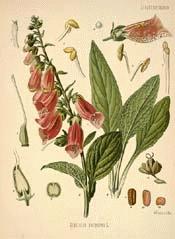
Herb of the Day for April 20th is Foxglove

Herb of the Day

Foxglove

POISON!

Steadman Shorter’s Medical Dictionary, Poisons & Antidotes: Digitalis

Botanical: Digitalis purpurea (LINN.)
Family: N.O. Scrophulariaceae

—Synonyms—Witches’ Gloves. Dead Men’s Bells. Fairy’s Glove. Gloves of Our Lady. Bloody Fingers. Virgin’s Glove. Fairy Caps. Folk’s Glove. Fairy Thimbles.
(Norwegian) Revbielde.
(German) Fingerhut.
—Part Used—Leaves.
—Habitat—The Common Foxglove of the woods (Digitalis purpurea), perhaps the handsomest of our indigenous plants, is widely distributed throughout Europe and is common as a wild-flower in Great Britain, growing freely in woods and lanes, particularly in South Devon, ranging from Cornwall and Kent to Orkney, but not occurring in Shetland, or in some of the eastern counties of England. It flourishes best in siliceous soil and grows well in loam, but is entirely absent from some calcareous districts, such as the chain of the Jura, and is also not found in the Swiss Alps. It occurs in Madeira and the Azores, but is, perhaps, introduced there. The genus contains only this one indigenous species, though several are found on the Continent.

Needing little soil, it is found often in the crevices of granite walls, as well as in dry hilly pastures, rocky places and by roadsides. Seedling Foxgloves spring up rapidly from recently-turned earth. Turner (1548), says that it grows round rabbitholes freely.

–Description—The normal life of a Foxglove plant is two seasons, but sometimes the roots, which are formed of numerous, long, thick fibres, persist and throw up flowers for several seasons.

In the first year a rosette of leaves, but no stem, is sent up. In the second year, one or more flowering stems are thrown up, which are from 3 to 4 feet high, though even sometimes more, and bear long spikes of drooping flowers, which bloom in the early summer, though the time of flowering differs much, according to the locality. As a rule the flowers are in perfection in July. As the blossoms on the main stem gradually fall away, smaller lateral shoots are often thrown out from its lower parts, which remain in flower after the principal stem has shed its blossoms. These are also promptly developed if by mischance the central stem sustains any serious injury.

The radical leaves are often a foot or more long, contracted at the base into a long, winged footstalk, the wings formed by the lower veins running down into it some distance. They have slightly indented margins and sloping lateral veins, which are a very prominent feature. The flowering stems give off a few leaves, that gradually diminish in size from below upwards. All the leaves are covered with small, simple, unbranched hairs.

The flowers are bell-shaped and tubular, 1 1/2 to 2 1/2 inches long, flattened above, inflated beneath, crimson outside above and paler beneath, the lower lip furnished with long hairs inside and marked with numerous dark crimson spots, each surrounded with a white border. The shade of the flowers varies much, especially under cultivation, sometimes the corollas being found perfectly white.

In cultivated plants there frequently occurs a malformation, whereby one or two of the uppermost flowers become united, and form an erect, regular, cup-shaped flower, through the centre of which the upper extremity of the stem is more or less prolonged.

The Foxglove is a favourite flower of the honey-bee, and is entirely developed by the visits of this insect. For that reason, its tall and stately spikes of flowers are at their best in those sunny, midsummer days when the bees are busiest. The projecting lower lip of the corolla forms an alighting platform for the bee, and as he pushes his way up the bell, to get at the honey which lies in a ring round the seed vessel at the top of the flower, the anthers of the stamens which lie flat on the corolla above him, are rubbed against his back. Going from flower to flower up the spike, he rubs pollen thus from one blossom on to the cleft stigma of another blossom, and thus the flower is fertilized and seeds are able to be produced. The life of each flower, from the time the bud opens till the time it slips off its corolla, is about six days. An almost incredible number of seeds are produced, a single Foxglove plant providing from one to two million seeds to ensure its propagation.

It is noteworthy that although the flower is such a favourite with bees and is much visited by other smaller insects, who may be seen taking refuge from cold and wet in its drooping blossoms on chilly evenings, yet no animals will browse upon the plant, perhaps instinctively recognizing its poisonous character.

The Foxglove derives its common name from the shape of the flowers resembling the finger of a glove. It was originally Folksglove – the glove of the ‘good folk’ or fairies, whose favourite haunts were supposed to be in the deep hollows and woody dells, where the Foxglove delights to grow. Folksglove is one of its oldest names, and is mentioned in a list of plants in the time of Edward III. Its Norwegian name, Revbielde(Foxbell), is the only foreign one that alludes to the Fox, though there is a northern legend that bad fairies gave these blossoms to the fox that he might put them on his toes to soften his tread when he prowled among the roosts.

The earliest known form of the word is the Anglo-Saxon foxes glofa (the glove of the fox).

The mottlings of the blossoms of the Foxglove and the Cowslip, like the spots on butterfly wings and on the tails of peacocks and pheasants, were said to mark where the elves had placed their fingers, and one legend ran that the marks on the Foxglove were a warning sign of the baneful juices secreted by the plant, which in Ireland gain it the popular name of ‘Dead Man’s Thimbles.’ In Scotland, it forms the badge of the Farquharsons, as the Thistle does of the Stuarts. The German name Fingerhut (thimble) suggested to Leonhard Fuchs (the well-known German herbalist of the sixteenth century, after whom the Fuchsia has been named) the employment of the Latin adjective Digitalis (from Digitabulum, a thimble) as a designation for the plant, which, as he remarked, up to the time when he thus named it, in 1542, had had no name in either Greek or Latin.

The Foxglove was employed by the old herbalists for various purposes in medicine, most of them wholly without reference to those valuable properties which render it useful as a remedy in the hands of modern physicians. Gerard recommends it to those ‘who have fallen from high places,’ and Parkinson speaks highly of the bruised herb or of its expressed juice for scrofulous swellings, when applied outwardly in the form of an ointment, and the bruised leaves for cleansing for old sores and ulcers. Dodoens (1554) prescribed it boiled in wine as an expectorant, and it seems to have been in frequent use in cases in which the practitioners of the present day would consider it highly dangerous. Culpepper says it is of: ‘a gentle, cleansing nature and withal very friendly to nature. The Herb is familiarly and frequently used by the Italians to heal any fresh or green wound, the leaves being but bruised and bound thereon and the juice thereof is also used in old sores, to cleanse, dry and heal them. It has been found by experience to be available for the King’s evil, the herb bruised and applied, or an ointment made with the juice thereof, and so used…. I am confident that an ointment of it is one of the best remedies for a scabby head that is.’ Strangely enough, the Foxglove, so handsome and striking in our landscape, is not mentioned by Shakespeare, or by any of the old English poets. The earliest known descriptions of it are those given about the middle of the sixteenth century by Fuchs and Tragus in their Herbals. According to an old manuscript, the Welsh physicians of the thirteenth century appear to have frequently made use of it in the preparation of external medicines. Gerard and Parkinson advocate its use for a number of complaints, and later Salmon, in the New London Dispensatory, praised the plant. It was introduced into the London Pharmacopoeia in 1650, though it did not come into frequent use until a century later, and was first brought prominently under the notice of the medical profession by Dr. W. Withering, who in his Acount of the Foxglove, 1785, gave details of upwards of 200 cases, chiefly dropsical, in which it was used.

A domestic use of the Foxglove was general throughout North Wales at one time, when the leaves were used to darken the lines engraved on the stone floors which were fashionable then. This gave them a mosaiclike appearance.

The plant is both cultivated and collected in quantities for commercial purposes in the Harz Mountains and the Thuringian Forest.


—Cultivation—The Foxglove is cultivated by a few growers in this country in order to provide a drug of uniform activity from a true type of Digitalis purpurea. It is absolutely necessary to have the true medicinal seeds to supply the drug market: crops must be obtained from carefully selected wild seed and all variations from the new type struck out.

The plant will flourish best in welldrained loose soil, preferably of siliceous origin, with some slight shade. The plants growing in sunny situations possess the active qualities of the herb in a much greater degree than those shaded by trees, and it has been proved that those grown on a hot, sunny bank, protected by a wood, give the best results.

It grows best when allowed to seed itself, but if it is desired to raise it by sown seed, 2 lb. of seed to the acre are required. As the seeds are so small and light, they should be mixed with fine sand in order to ensure even distribution. They should be thinly covered with soil. The seeds are uncertain in germination, but the seedlings may be readily and safely transplanted in damp weather, and should be pricked out to 6 to 9 inches apart. Sown in spring, the plant will not blossom till the following year. Seeds must be gathered as soon as ripe. The flowers of the true medicinal type must be pure, dull pink or magenta, not pale-coloured, white or spotted externally.

It is estimated that one acre of good soil will grow at least two tons of the Foxglove foliage, producing about 1/2 ton of the dried leaves.


—Preparation for Market—The leaves alone are now used for the extraction of the drug, although formerly the seeds were also official.

No leaves are to be used for medicinal purposes that are not taken from the twoyear-old plants, picked when the bloom spike has run up and about two-thirds of the flowers are expanded, because at this time, before the ripening of the seeds, the leaves are in the most active state. They may be collected as long as they are in good condition: only green, perfect leaves being picked, all those that are insect-eaten or diseased, or tinged with purple or otherwise discoloured, must be discarded. Leaves from seedlings are valueless, and they must also not be collected in the spring, before the plant flowers, or in the autumn, when it has seeded, as the activity of the alkaloids is in each case too low.

If the fresh leaves are sent to the manufacturing druggists for Extract-making, they should be in 1/2 cwt. bundles, packed in aircovered railway cattle-trucks, or if in an open truck, must be covered with tarpaulin. The fresh crop should, if possible, be delivered to the wholesale buyer the same day as cut, but if this is impossible, on account of distance, they should be picked before the dew falls in the late afternoon and despatched the same evening, packed loosely in wicker baskets, lined with an open kind of muslin. Consignments by rail should be labelled: ‘Urgent, Medicinal Herbs,’ to ensure quick delivery. The weather for picking must be absolutely dry – no damp or rain in the air and the leaves must be kept out of the sun and not packed too closely, or they may heat and turn yellow.

The odour of the fresh leaves is unpleasant, and the taste of both fresh and dried leaves is disagreeably bitter.

Foxglove leaves have in some places been recklessly gathered by over-zealous and thoughtless collectors without due regard to the future supply of the plants. The plant should not be roughly treated and never cut off just above the root, but the bottom leaves should in all cases be left to nourish the flower-spikes, in order that the seed may be ripened. In patches where Foxgloves grow thickly, the collection and redistribution of seed in likely places is much to be recommended.

The dried leaves as imported have occasionally been found adulterated with the leaves of various other plants. The chief of these are Inula Conyza (Ploughman’s Spikenard), which may be distinguished by their greater roughness, the less-divided margins, the teeth of which have horny points, and odour when rubbed; I. Helenium (Elecampane), the leaves of which resemble Foxglove leaves, though they are less pointed, and the lower lateral veins do not form a ‘wing’ as in the Foxglove, the leaves of Symphytum officinale (Comfrey), which, however, may be recognized by the isolated stiff hairs they bear, and Verbascum Thapsus (Great Mullein), the leaves of which, unlike those of the Foxglove, have woolly upper and under surfaces, and the hairs of which, examined under a lens, are seen to be branched. Primrose leaves are also sometimes mingled with the drug, though they are much smaller than the average Foxglove leaf, and may be readily distinguished by the straight, lateral veins, which divide near the margins of the leaves. Foxglove leaves are easy to distinguish by their veins running down the leaf.

There is no reason why Foxglove leaves, properly prepared, should not become a national export.

Digitalis has lately been grown in Government Cinchona plantations in the Nilgiris, Madras, India. The leaves are coarser and rather darker in colour than British or German-grown leaves, wild or cultivated, but tests show that the tincture prepared from them contains glucosides of more than average value.


—Constituents—Digitalis contains four important glucosides of which three arecardiac stimulants. The most powerful is Digitoxin, an extremely poisonous and cumulative drug, insoluble in water, Digitalin, which is crystalline and also insoluble in water; Digitalein, amorphous, but readily soluble in water, rendering it, therefore, capable of being administered subcutaneously, in doses so minute as rarely to exceed of a grain; Digitonin, which is a cardiac depressant, containing none of the physiological action peculiar to Digitalis, and is identical with Saponin, the chief constituent of Senega root. Other constituents are volatile oil, fatty matter, starch, gum, sugar, etc.

The amount and character of the active constituents vary according to season and soil: 100 parts of dried leaves yield about 1.25 of Digitalin, which is generally found in a larger proportion in the wild than in the cultivated plants.

The active constituents of Digitalis are not yet sufficiently explored to render a chemical assay effective in standardizing for therapeutic activity. The different glucosides contained varying from each other in their physiological action, it is impossible to assay the leaves by determining one only of these, such as Digitoxin. No method of determining Digitalin is known. Hence the chemical means of assay fail, and the drug is usually standardized by a physiological test. One of our oldest firms of manufacturing druggists standardizes preparations of this extremely powerful and important drug by testing their action upon frogs.

—Preparations—The preparations of Foxglove on the market vary considerably in composition and strength. Powdered Digitalis leaf is administered in pill form. The pharmacopoeial tincture, which is the preparation in commonest use, is given in doses of 5.15 minims, and the infusion is the unusually small dose of 2 to 4 drachms, the dose of other infusions being an ounce or more. The tincture contains a fair proportion of both Digitalin and Digitoxin.

The following note from the (December 30, 1922) is of interest here:owing note from the (December 30, 1922) is of interest here:

‘Cultivation of Digitalis
‘As is well known, for many years prior to the War digitalis was successfully cultivated on a large scale in various parts of the former Austro-Hungarian monarchy, and indeed the Government actively promoted the cultivation of this as well as of other medicinal plants. B. Pater, of Klausenburg, gives a résumé of his experiences in this direction (Pharmazeutische Monatshefte, 7, 1922), dealing not only with the best methods for cultivating digitalis from the seeds of this plant, but also with his investigations into certain differences and abnormalities peculiar to Digitalis purpurea. Apart from the fact that, occasionally, some plants bear flowers already in the first year of growth, the observation was made that the colour of the flowers showed a wide scale of variation, ranging from the well-known distinctive purple shade through dark rose, light rose, to white. These variations in colour of the flowers of cultivated digitalis plants induced the author to undertake a study of the activity of the several varieties, based on the digitoxin content of the stem leaves collected from flowering plants. In the case of Digitalis purpurea with normal purple flowers, the content of purified digitoxin, ascertained by Keller’s method, averaged 0.17 per cent, while the leaves of plants bearing white flowers showed a slightly lower content, i.e. an average of 0.155 per cent of purified digitoxin. On the other hand, the plants with rose-coloured flowers were found to possess a very low content of digitoxin, averaging only 0.059 per cent. In the course of these investigations the fact was confirmed that the upper stem leaves are more active than the lower leaves.’


—Medicinal Action and Uses—Digitalis has been used from early times in heart cases. It increases the activity of all forms of muscle tissue, but more especially that of the heart and arterioles, the all-important property of the drug being its action on the circulation. The first consequence of its absorption is a contraction of the heart and arteries, causing a very high rise in the blood pressure.

After the taking of a moderate dose, the pulse is markedly slowed. Digitalis also causes an irregular pulse to become regular. Added to the greater force of cardiac contraction is a permanent tonic contraction of the organ, so that its internal capacity is reduced, which is a beneficial effect in cases of cardiac dilatation, and it improves the nutrition of the heart by increasing the amount of blood.

In ordinary conditions it takes about twelve hours or more before its effects on the heart muscle is appreciated, and it must thus always be combined with other remedies to tide the patient over this period and never prescribed in large doses at first, as some patients are unable to take it, the drug being apt to cause considerable digestive disturbances, varying in different cases. This action is probably due to the Digitonin, an undesirable constituent.

The action of the drug on the kidneys is of importance only second to its action on the circulation. In small or moderate doses, it is a powerful diuretic and a valuable remedy in dropsy, especially when this is connected with affections of the heart.

It has also been employed in the treatment of internal haemorrhage, in inflammatory diseases, in delirium tremens, in epilepsy, in acute mania and various other diseases, with real or supposed benefits.

The action of Digitalis in all the forms in which it is administered should be carefully watched, and when given over a prolonged period it should be employed with caution, as it is liable to accumulate in the system and to manifest its presence all at once by its poisonous action, indicated by the pulse becoming irregular, the blood-pressure low and gastro-intestinal irritation setting in. The constant use of Digitalis, also, by increasing the activity of the heart, leads to hypertrophy of that organ.

Digitalis is an excellent antidote in Aconite poisoning, given as a hypodermic injection.

When Digitalis fails to act on the heart as desired, Lily-of-the-Valley may be substituted and will often be found of service.

In large doses, the action of Digitalis on the circulation will cause various cerebral symptoms, such as seeing all objects blue, and various other disturbances of the special senses. In cases of poisoning by Digitalis, with a very slow and irregular pulse, the administration of Atropine is generally all that is necessary. In the more severe cases, with the very rapid heart-beat, the stomach pump must be used, and drugs may be used which depress and diminish the irritability of the heart, such as chloral and chloroform.

Preparations of Digitalis come under Table II of the Poison Schedule.


—Preparations and Dosages—Tincture, B.P., 5 to 15 drops. Infusion, B.P., 2 to 4 drachms. Powdered leaves, 1/2 to 2 grains. Fluid extract, 1 to 3 drops. Solid extract, U.S.P., 1/8 grain.

A method of preparing the drug in a noninJurious manner is given in the Chemist and Druggist (December 30, 1922):
‘Digitalis Maceration
‘On preparing an infusion of digitalis leaves in the usual manner, one of the active principles, gitalin, is destroyed by the action of the boiling water. To obviate the possibility of destroying any of the active principles in the leaves, Th. Koch (Süddeutsche Apotheker-Zeitung, 63, 1922) has for some years past adopted the following procedure: 20 gm. powdered standardized digitalis leaves, 1000 gm. chloroform water (7.1000) and 40 drops of 10 per cent. Solution of Sodium Carbonate are shaken for four hours. The liquid is then passed through a flannel cloth, and, after standing for some time, filtered in the ordinary way, taking the precaution to cover the filter with a glass plate. The use of chloroform water as the solvent serves a threefold purpose: It promotes the solution of the gitalin present in the leaves, ensures the stability and keeping properties of the maceration, and prevents the occurrence of gastric troubles. The presence of Sodium Carbonate prevents the plant acid from reacting with the chloroform to produce hydrochloric acid. In this maceration no digitoxin is present, the principle which is assumed to exert a deleterious action on the heart as well as a cumulative effect.’


Source

Botanical.com
